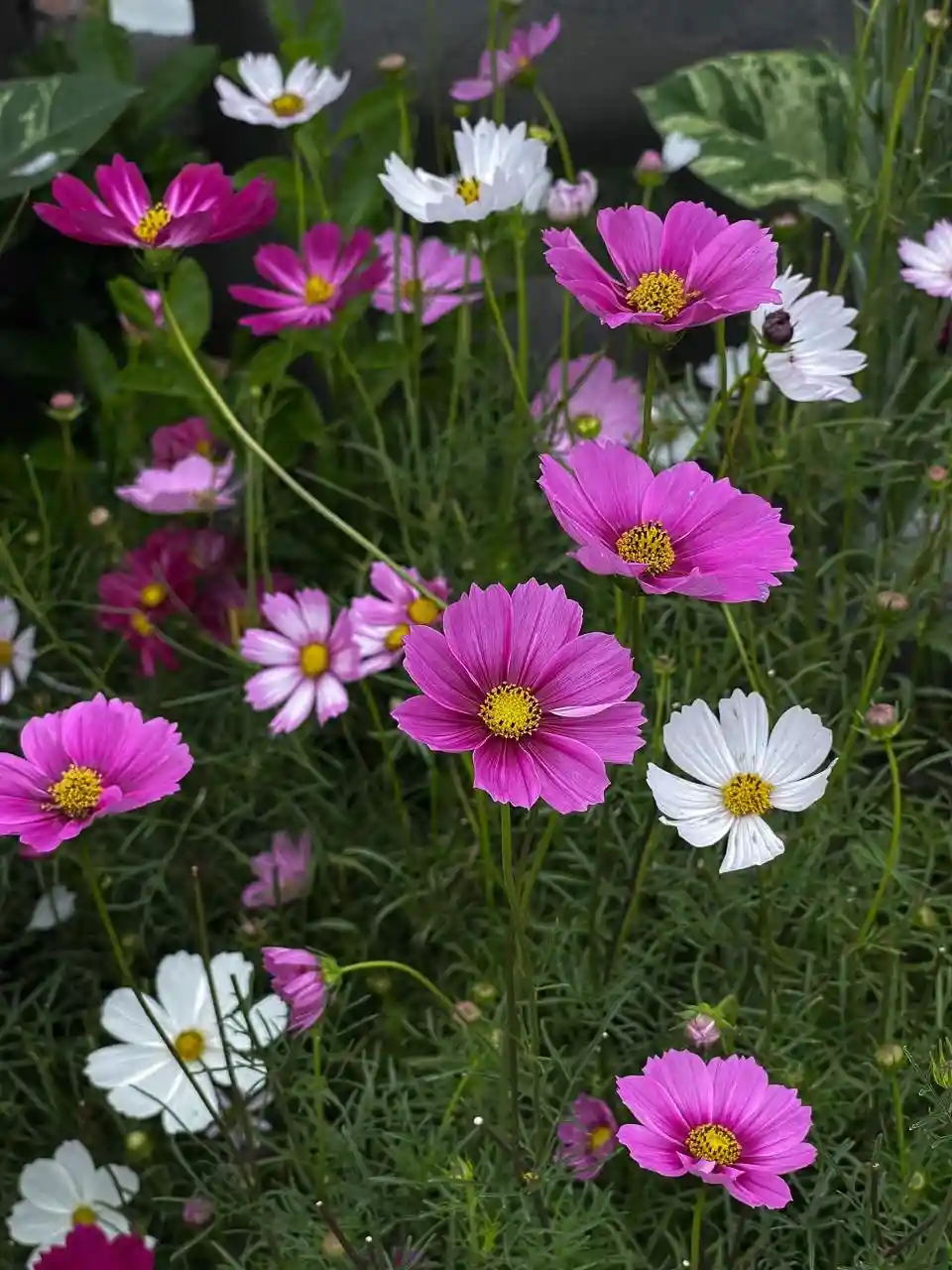
21 Perennials That Bloom All Summer
A garden can stay colorful all summer when you choose perennials with long or repeating bloom cycles. Some flower continuously, while others pause briefly before producing another flush.
The exact season depends on your climate, weather, and plant variety. Removing faded flowers can also extend the display. These 21 long-blooming perennials can provide color through June, July, August, and often into fall.
1. Geranium Rozanne

Rozanne hardy geranium produces violet-blue flowers with pale centers above spreading green foliage. Its flexible stems weave between neighboring plants and cover open soil without hiding taller flowers. Blooming often begins in late spring and continues until the first hard frost. This long season makes Rozanne useful along pathways, at the front of borders, and beneath roses.
- Botanical name: Geranium ‘Rozanne’
- USDA zones: 5–8
- Mature size: 18–24 inches tall
- Light: Full sun to partial shade
- Typical bloom: Late spring through fall
- Best for: Border fronts and ground cover
2. Walker’s Low Catmint

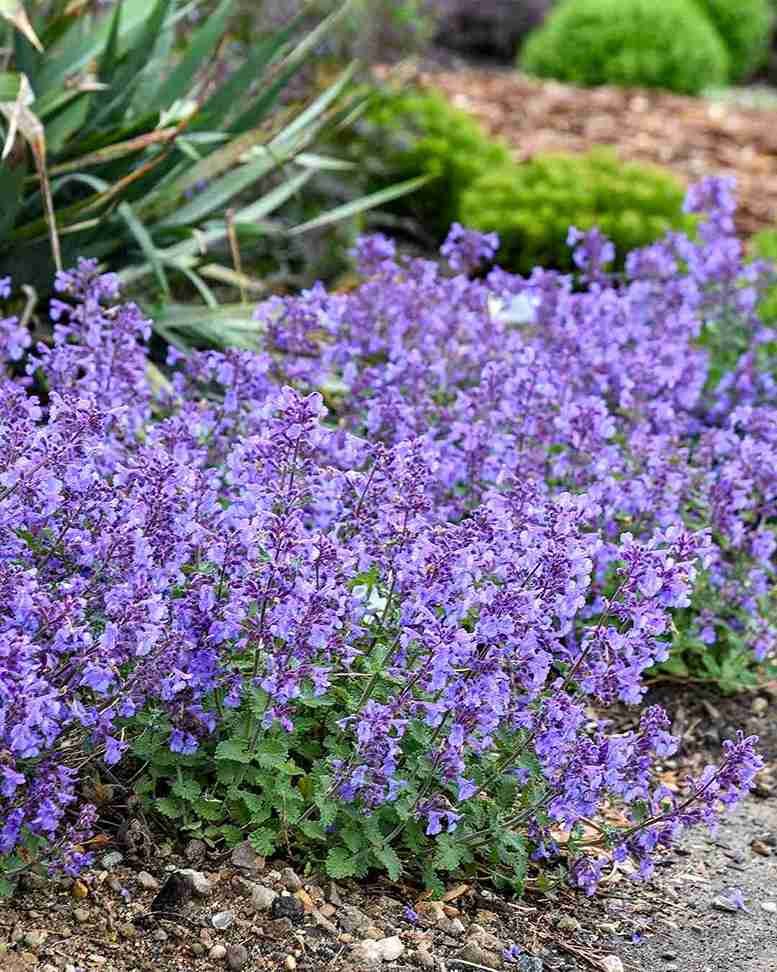
Walker’s Low catmint creates a wide mound of grey-green foliage covered with blue-purple flowers. Its soft shape looks natural beside roses, white daisies, and upright ornamental grasses. The first heavy flower display starts in late spring. Cutting the stems back after that flush can encourage fresh foliage and another round of blooms that continues through summer.
- Botanical name: Nepeta racemosa ‘Walker’s Low’
- USDA zones: 4–8
- Mature size: 2–3 feet tall
- Light: Full sun to partial shade
- Typical bloom: Late spring through early fall
- Best for: Rose beds and pathway edges
3. Moonbeam Coreopsis

Moonbeam coreopsis produces soft yellow flowers over fine, thread-like foliage. Its light color blends easily with blue, purple, pink, and white garden flowers. The rounded plant stays airy and does not create a heavy block in the border. Flowers appear during early summer and can continue into fall, particularly when the faded blooms are removed before seeds develop.
- Botanical name: Coreopsis verticillata ‘Moonbeam’
- USDA zones: 3–9
- Mature size: 18–24 inches tall
- Light: Full sun
- Typical bloom: Early summer through fall
- Best for: Cottage gardens and border fronts
4. Blanket Flower

Blanket flower brings strong red, orange, and yellow color to hot summer beds. Many varieties have two-tone petals arranged around raised brown or burgundy centers. The flowers attract bees and butterflies and look beautiful beside blue salvia or ornamental grasses. Blooming usually begins in early summer and can continue until fall frost when the old flowers are removed regularly.
- Botanical name: Gaillardia × grandiflora
- USDA zones: 3–10
- Mature size: 1–3 feet tall
- Light: Full sun
- Typical bloom: Early summer through fall
- Best for: Hot borders and pollinator gardens
5. Gaura

Gaura produces delicate white or pink flowers on thin, arching stems. The small blooms move in the wind and resemble butterflies floating above the foliage. Its open growth can soften walls, walkways, and formal garden edges without covering plants behind it. Flowering often begins during late spring and continues in loose waves through summer and into fall.
- Botanical name: Oenothera lindheimeri
- USDA zones: 5–9
- Mature size: 2–4 feet tall
- Light: Full sun
- Typical bloom: Late spring through fall
- Best for: Cottage gardens and informal borders
6. Butterfly Blue Pincushion Flower

Butterfly Blue pincushion flower carries lavender-blue blooms on thin stems above compact grey-green foliage. Each flower has a raised center surrounded by small, frilled petals. Its manageable size fits easily near the front of a border or beside a sunny path. New buds can continue appearing throughout summer when faded flowers are removed before they begin producing seeds.
- Botanical name: Scabiosa columbaria ‘Butterfly Blue’
- USDA zones: 3–9
- Mature size: 12–18 inches tall
- Light: Full sun
- Typical bloom: Late spring through fall
- Best for: Border edges and pollinator beds
7. Perennial Salvia

Perennial salvia sends up narrow flower spikes in blue, purple, pink, or white. Its vertical shape adds contrast beside rounded daisies, low ground covers, and broad-leaved plants. Bees, butterflies, and hummingbirds frequently visit the flowers. The first flush appears around late spring or early summer, with additional blooms possible after the faded flower spikes are trimmed.
- Botanical name: Salvia nemorosa
- USDA zones: 4–9
- Mature size: 1–3 feet tall
- Light: Full sun
- Typical bloom: Late spring through early fall
- Best for: Pollinator gardens and sunny borders
8. Yarrow
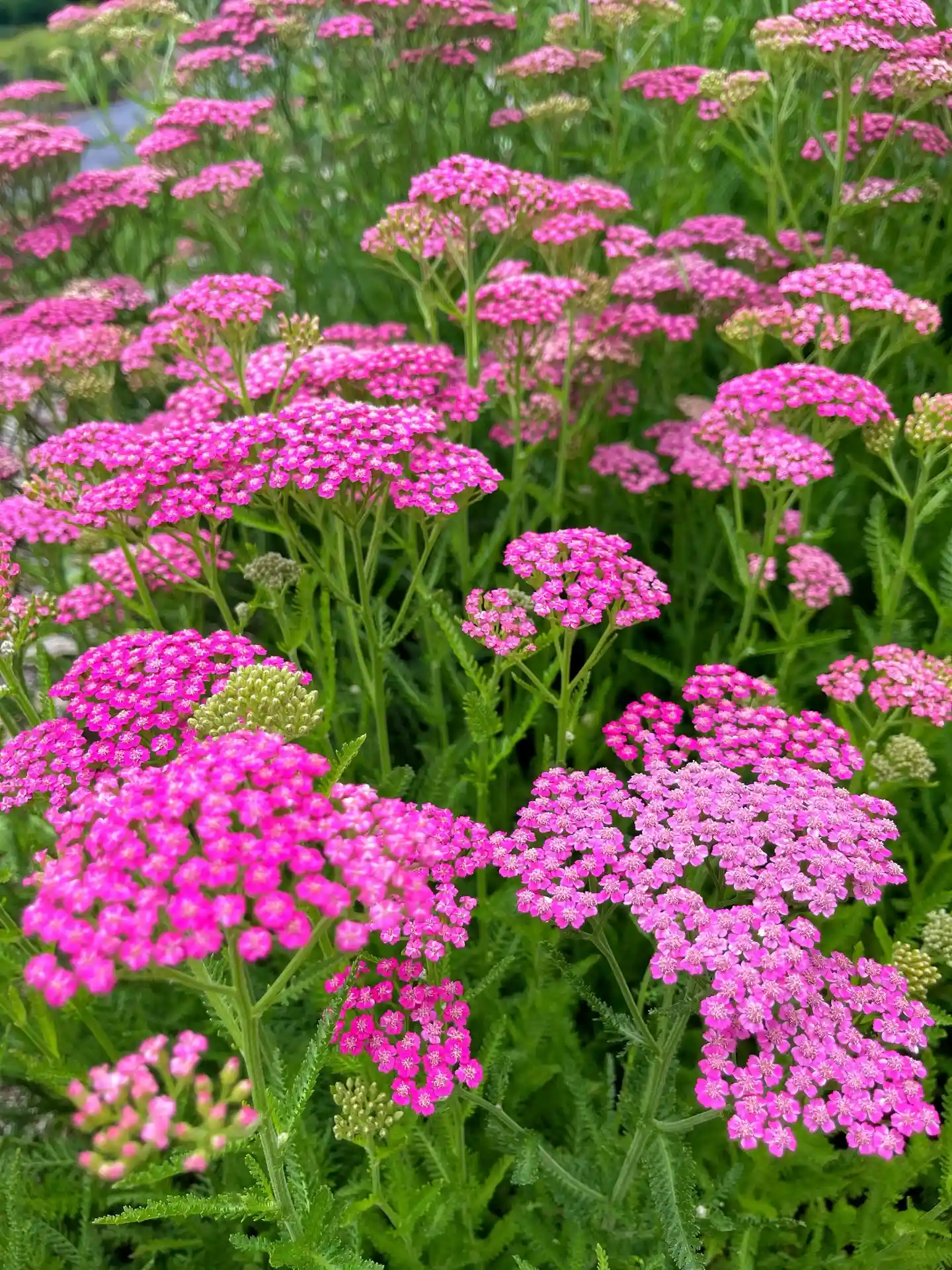
Yarrow produces flat clusters of tiny flowers above soft, fern-like leaves. Garden varieties are available in white, yellow, pink, red, orange, and peach. The broad flower heads provide a useful contrast to narrow spikes and rounded blooms. Yarrow begins flowering in late spring or early summer, and many varieties produce another display after their first flower stems are removed.
- Botanical name: Achillea millefolium
- USDA zones: 3–9
- Mature size: 2–3 feet tall
- Light: Full sun
- Typical bloom: Late spring through early fall
- Best for: Dry borders and pollinator gardens
9. Garden Phlox

Garden phlox carries large flower clusters on tall, leafy stems. Its flowers may be white, pink, purple, red, or striped, and some varieties have a light fragrance. The upright growth works well behind lower summer flowers such as catmint and coreopsis. Combining early, middle, and late-flowering phlox varieties can provide color through most of the summer.
- Botanical name: Phlox paniculata
- USDA zones: 4–8
- Mature size: 2–5 feet tall
- Light: Full sun to partial shade
- Typical bloom: Early summer through early fall
- Best for: Cottage gardens and border backgrounds
10. Stella de Oro Daylily

Stella de Oro is a compact daylily with golden yellow, trumpet-shaped flowers above arching green leaves. Unlike many daylilies with shorter flowering periods, this variety can produce repeated flushes throughout summer. Its low height works well along paths, around mailboxes, or near the front of mixed borders. The tidy foliage also provides shape between flowering periods.
- Botanical name: Hemerocallis ‘Stella de Oro’
- USDA zones: 3–9
- Mature size: 12–18 inches tall
- Light: Full sun to partial shade
- Typical bloom: Early summer through fall
- Best for: Pathways and mass planting
11. Calamint

Calamint forms loose mounds of scented green foliage covered with tiny white or pale lavender flowers. The many small blooms create a soft, misty appearance that pairs well with roses, coneflowers, and ornamental grasses. Bees often cover the plant during its long flowering season. It usually begins blooming around midsummer and continues steadily until cold fall weather arrives.
- Botanical name: Clinopodium nepeta
- USDA zones: 5–9
- Mature size: 1–2 feet tall
- Light: Full sun
- Typical bloom: Midsummer through fall
- Best for: Pollinator beds and border edges
12. False Sunflower

False sunflower produces bright yellow, daisy-shaped blooms with golden or brown centers. Its tall stems add cheerful color to the middle or back of a sunny border. The flowers begin opening around early summer, earlier than many other tall yellow perennials. Removing older blooms can help the plant continue producing flowers through late summer and into early fall.
- Botanical name: Heliopsis helianthoides
- USDA zones: 3–9
- Mature size: 3–5 feet tall
- Light: Full sun
- Typical bloom: Early summer through fall
- Best for: Border backgrounds and cutting gardens
13. Macedonian Scabious

Macedonian scabious carries small burgundy-red pincushion flowers on thin, branching stems. Its airy shape allows it to mingle naturally among grasses, daisies, and cottage garden plants. The flowers appear to float above the surrounding foliage and attract visiting pollinators. Blooming usually begins around early summer and can continue into fall when finished flower heads are removed.
- Botanical name: Knautia macedonica
- USDA zones: 5–9
- Mature size: 2–3 feet tall
- Light: Full sun
- Typical bloom: Early summer through fall
- Best for: Cottage gardens and loose borders
14. Red Valerian

Red valerian produces rounded clusters of small red, pink, or white flowers above blue-green leaves. Its upright but relaxed shape works especially well near gravel paths, stone walls, and informal cottage beds. Butterflies often visit the flower clusters. The main display starts in late spring, followed by additional summer blooms when the older flower stems are removed.
- Botanical name: Centranthus ruber
- USDA zones: 5–8
- Mature size: 2–3 feet tall
- Light: Full sun
- Typical bloom: Late spring through early fall
- Best for: Gravel beds and cottage gardens
15. Spike Speedwell

Spike speedwell produces slender blue, purple, pink, or white flowers above compact green foliage. The upright spikes add height without taking up much room in the garden. They look attractive between rounded catmint, low geraniums, and broad daisy flowers. The first blooms appear during early summer, with later flushes possible after the faded spikes are cut back.
- Botanical name: Veronica spicata
- USDA zones: 3–8
- Mature size: 1–3 feet tall
- Light: Full sun
- Typical bloom: Early summer through early fall
- Best for: Narrow borders and pollinator beds
16. Hardy Ice Plant

Hardy ice plant creates a low mat of fleshy green foliage covered with bright daisy-shaped flowers. Colors include pink, purple, red, orange, yellow, and white. The blooms often open in direct sunlight and close as evening approaches. Its spreading growth fits rock gardens, slopes, pathway edges, and spaces between stones. Flowering can continue from early summer into fall.
- Botanical name: Delosperma
- USDA zones: 5–9, depending on the variety
- Mature size: 3–6 inches tall
- Light: Full sun
- Typical bloom: Early summer through fall
- Best for: Rock gardens and dry ground cover
17. Purple Coneflower

Purple coneflower produces pink-purple petals around raised orange-brown centers. Bees and butterflies visit the blooms, while birds may feed on the seed heads later in the year. Its upright shape works well in mixed borders, prairie gardens, and pollinator beds. Combining early and late-flowering cultivars can keep coneflowers blooming across a larger part of summer.
- Botanical name: Echinacea purpurea
- USDA zones: 3–9
- Mature size: 2–4 feet tall
- Light: Full sun
- Typical bloom: Early summer through fall
- Best for: Pollinator and prairie gardens
18. Shasta Daisy

Shasta daisy provides the classic combination of white petals and bright yellow centers. Its simple coloring blends with nearly every summer flower, including purple salvia, pink phlox, and blue catmint. Varieties range from short border plants to tall flowers suited to cutting. Removing faded blooms can extend the display and keep new flowers opening later in summer.
- Botanical name: Leucanthemum × superbum
- USDA zones: 5–9
- Mature size: 1–4 feet tall
- Light: Full sun
- Typical bloom: Early through late summer
- Best for: Cottage gardens and cutting beds
19. Masterwort

Masterwort produces small, pincushion-like flowers surrounded by papery bracts. White, pale pink, deep pink, red, and green varieties are available. The slender stems give it an airy appearance that suits woodland edges and softly planted borders. In cooler regions, masterwort can bloom across much of summer and may produce a second display after the old flowers are removed.
- Botanical name: Astrantia major
- USDA zones: 4–7
- Mature size: 1–3 feet tall
- Light: Partial shade
- Typical bloom: Late spring through early fall
- Best for: Moist borders and woodland gardens
20. Serbian Bellflower

Serbian bellflower forms a low carpet of star-shaped blue-purple flowers. Its trailing stems spread over rocks, slopes, walls, and pathway edges. The compact plant can fill space beneath taller perennials without hiding their lower stems. Flowering begins around early summer and may continue in smaller waves through August and September, depending on the local weather.
- Botanical name: Campanula poscharskyana
- USDA zones: 3–8
- Mature size: 6–12 inches tall
- Light: Full sun to partial shade
- Typical bloom: Early summer through early fall
- Best for: Rock gardens and ground cover
21. Bowles’s Mauve Wallflower

Bowles’s Mauve wallflower produces upright purple flower clusters above narrow grey-green leaves. Its woody, open shape adds color without making the bed appear crowded. In mild climates, flowering may begin in spring and continue through summer into fall. This short-lived perennial works especially well in gravel gardens, cottage borders, and sunny areas beside warm stone walls.
- Botanical name: Erysimum ‘Bowles’s Mauve’
- USDA zones: 6–9
- Mature size: 2–3 feet tall
- Light: Full sun
- Typical bloom: Spring through fall in mild climates
- Best for: Gravel beds and cottage borders
Frequently Asked Questions
Do any perennials bloom continuously all summer?
A few long-blooming perennials can produce flowers through most of summer. However, many flower in waves rather than blooming nonstop every day.
Which perennial flowers bloom the longest?
Geranium ‘Rozanne,’ catmint, pincushion flower, gaura, coreopsis, and perennial salvia have some of the longest flowering seasons. Their exact bloom period depends on the variety and local climate.
Does deadheading help perennials bloom longer?
Yes. Deadheading means removing faded flowers before they produce seeds. It can encourage coreopsis, blanket flower, pincushion flower, yarrow, speedwell, and Shasta daisy to form more buds.
What perennials bloom all summer in full sun?
Coreopsis, catmint, blanket flower, gaura, perennial salvia, yarrow, and false sunflower perform well in full sun. Most require at least six hours of direct sunlight each day.
Are there summer-blooming perennials for partial shade?
Geranium ‘Rozanne,’ masterwort, Serbian bellflower, garden phlox, and some catmint varieties can flower in partial shade. Plants growing in heavier shade may produce fewer blooms.
Do summer-blooming perennials flower during their first year?
Starter plants may flower during their first growing season. Perennials started from seeds may need one or two years before producing a full display.
When should I plant summer-blooming perennials?
Plant them in spring or early fall when temperatures are mild. This gives the roots time to settle before summer heat or winter cold arrives.
How can I keep a perennial garden blooming all summer?
Combine plants with early, middle, and late-summer flowering periods. Use repeat bloomers to fill gaps, and remove faded flowers from varieties that respond well to deadheading.
Can summer-blooming perennials grow in containers?
Yes. Compact coreopsis, catmint, pincushion flower, hardy geranium, ice plant, and Serbian bellflower can grow in containers with good drainage.