30 Types of Hoya You Can Grow at Home
Hoyas are easy plants to collect because no two seem quite alike. Some have thick heart-shaped leaves, others grow long bean-like foliage, and a few look almost nothing like the classic wax plant.
These types of Hoya also bring plenty of flower variety, from tiny white stars to large fuzzy blooms. Most enjoy bright indirect light, airy soil, and time to dry between waterings.
Here are 30 beautiful Hoyas worth growing at home, including easy starter plants and a few unusual choices for collectors.
1. Hoya Carnosa
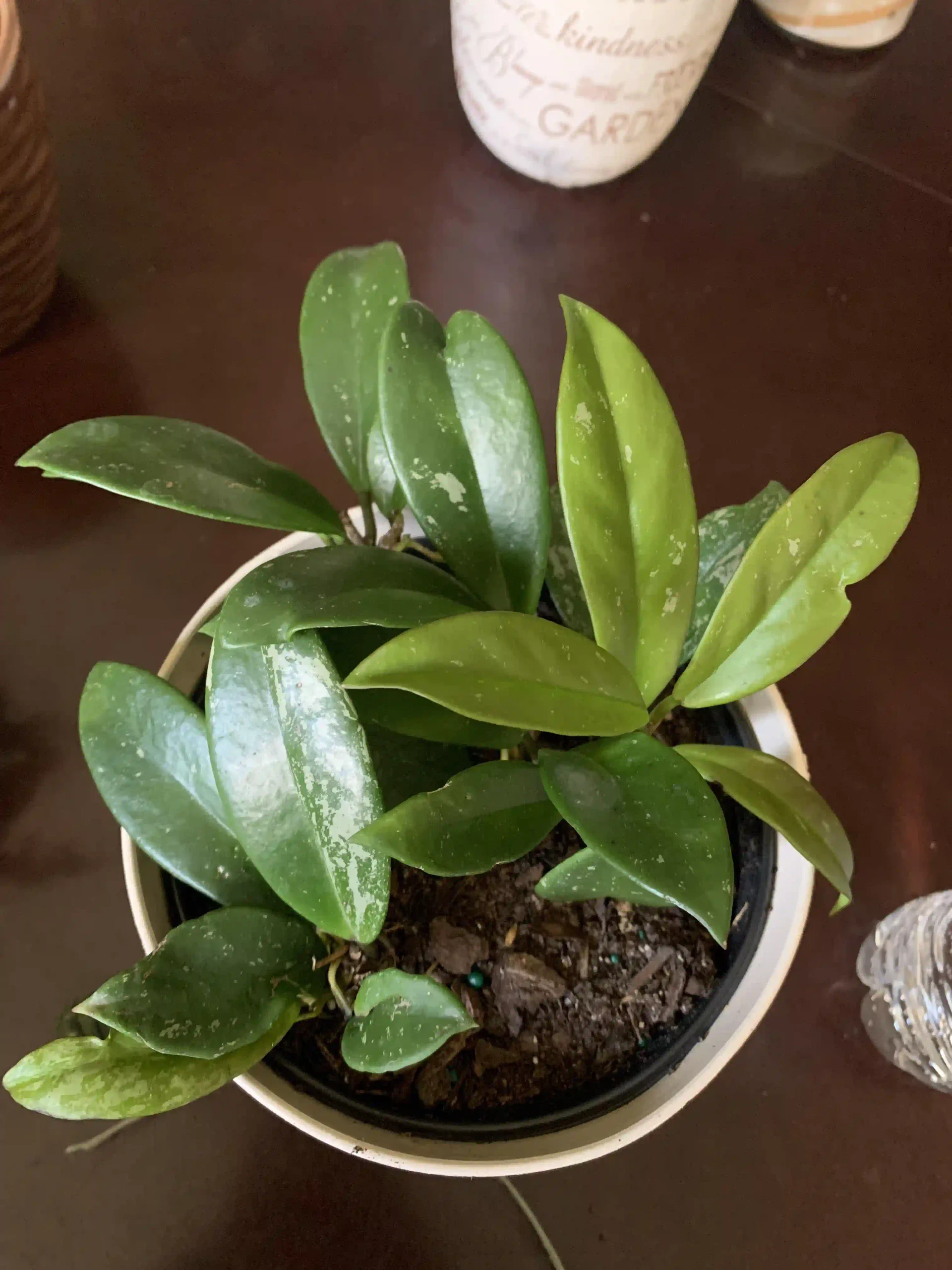
If you’re buying your first Hoya, Hoya carnosa is one of the safest places to start. It has thick, glossy green leaves on long vines that work equally well trailing from a shelf or wrapped around a small trellis.
Mature plants can produce round clusters of pale pink to white star-shaped flowers with darker centers. The blooms can also be fragrant.
Give it bright indirect light and let the potting mix dry between waterings. It handles normal indoor conditions better than many fussier Hoyas.
Best for: Beginners, hanging baskets, and trellises
Light: Bright indirect light
Growth habit: Climbing or trailing
2. Hoya Carnosa Compacta
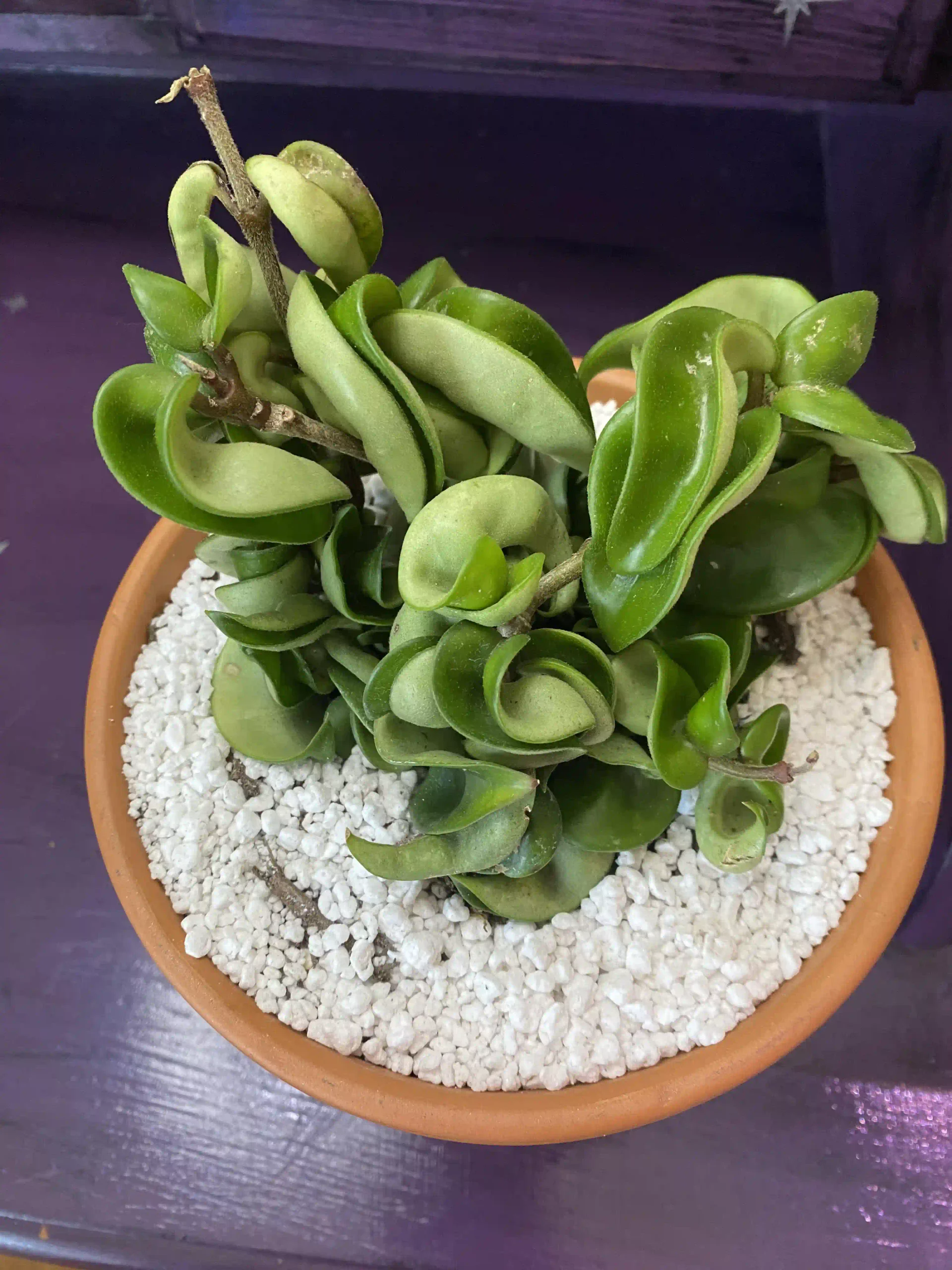
Often called the Hindu rope plant, Hoya carnosa ‘Compacta’ is easy to recognize by its tightly twisted and curled leaves.
The thick foliage grows closely along long stems, eventually forming rope-like trails. I particularly like this one in a hanging planter where you can actually see the unusual leaf shape instead of hiding the vines on a crowded shelf.
Growth can be slower than standard Hoya carnosa. Check inside the curled leaves regularly too, since their tight shape gives pests such as mealybugs plenty of places to hide.
Best for: Hanging displays
Light: Bright indirect light
Growth habit: Slow trailing vines
3. Hoya Carnosa Krimson Princess
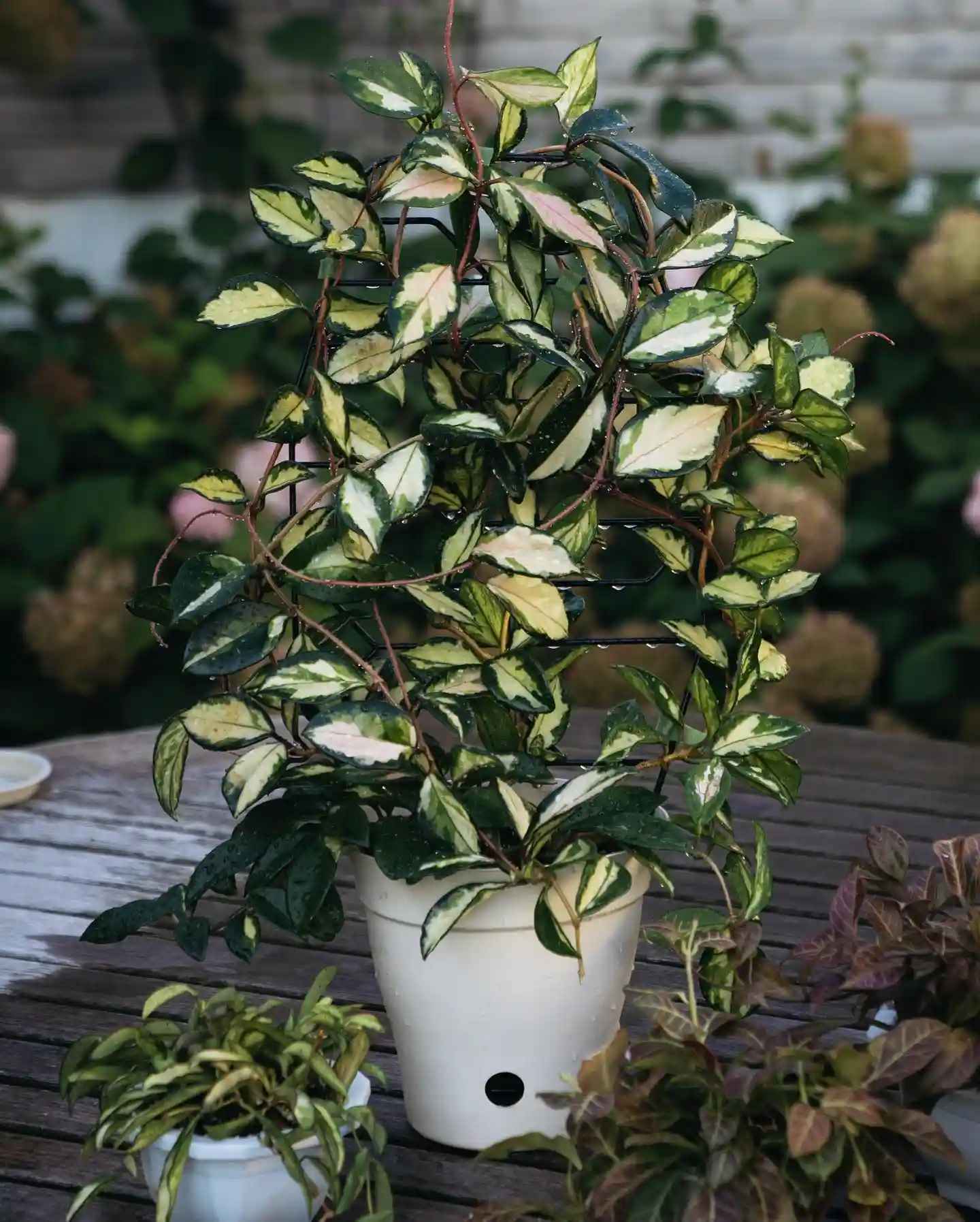
‘Krimson Princess’ is a colorful form of Hoya carnosa with green leaf margins and cream, white, or pink coloring through the center.
New leaves can appear especially pink before their colors settle. Give this variety a bright position because variegated plants generally need plenty of light to maintain strong coloring.
The care is otherwise much like standard Hoya carnosa. Use an airy potting mix, avoid constantly wet soil, and let the vines climb or trail.
It’s a good choice when you want a Hoya that looks decorative even before it flowers.
Best for: Colorful foliage
Light: Bright indirect light
Growth habit: Vining
4. Hoya Carnosa Tricolor
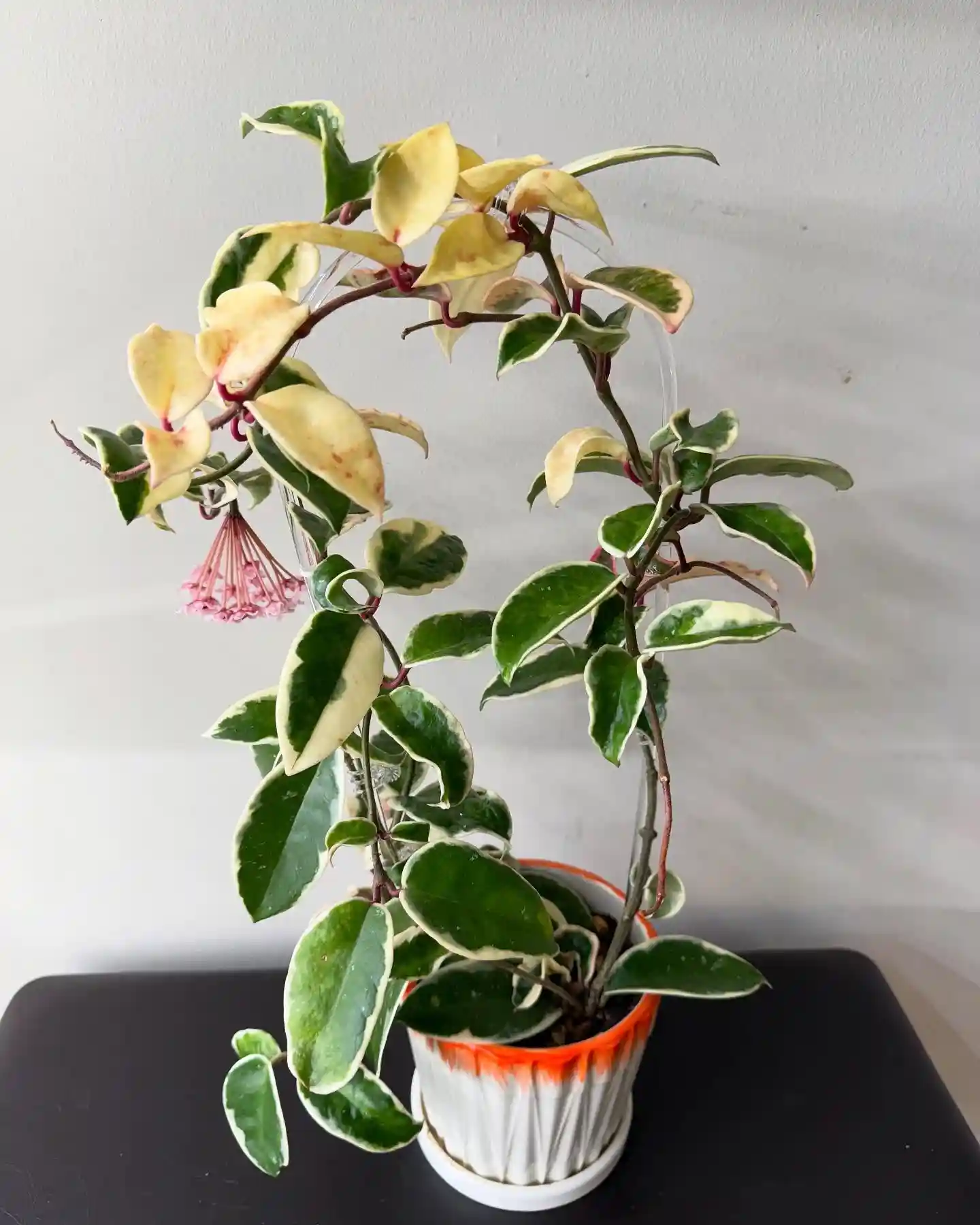
Hoya carnosa ‘Tricolor’ gives you green, cream, and pink on the same plant. Unlike ‘Krimson Princess’, this cultivar is associated with pale variegation around the outer portions of the leaves, while green remains toward the center.
The pink coloring tends to be strongest on fresh growth.
Keep it near a bright window without baking it in strong afternoon sun. A little gentle morning light can work nicely.
The long vines are easy to train over a hoop trellis, which also keeps the colorful foliage where you can see it.
Best for: Variegated plant collections
Light: Bright indirect light
Growth habit: Climbing vine
5. Hoya Australis
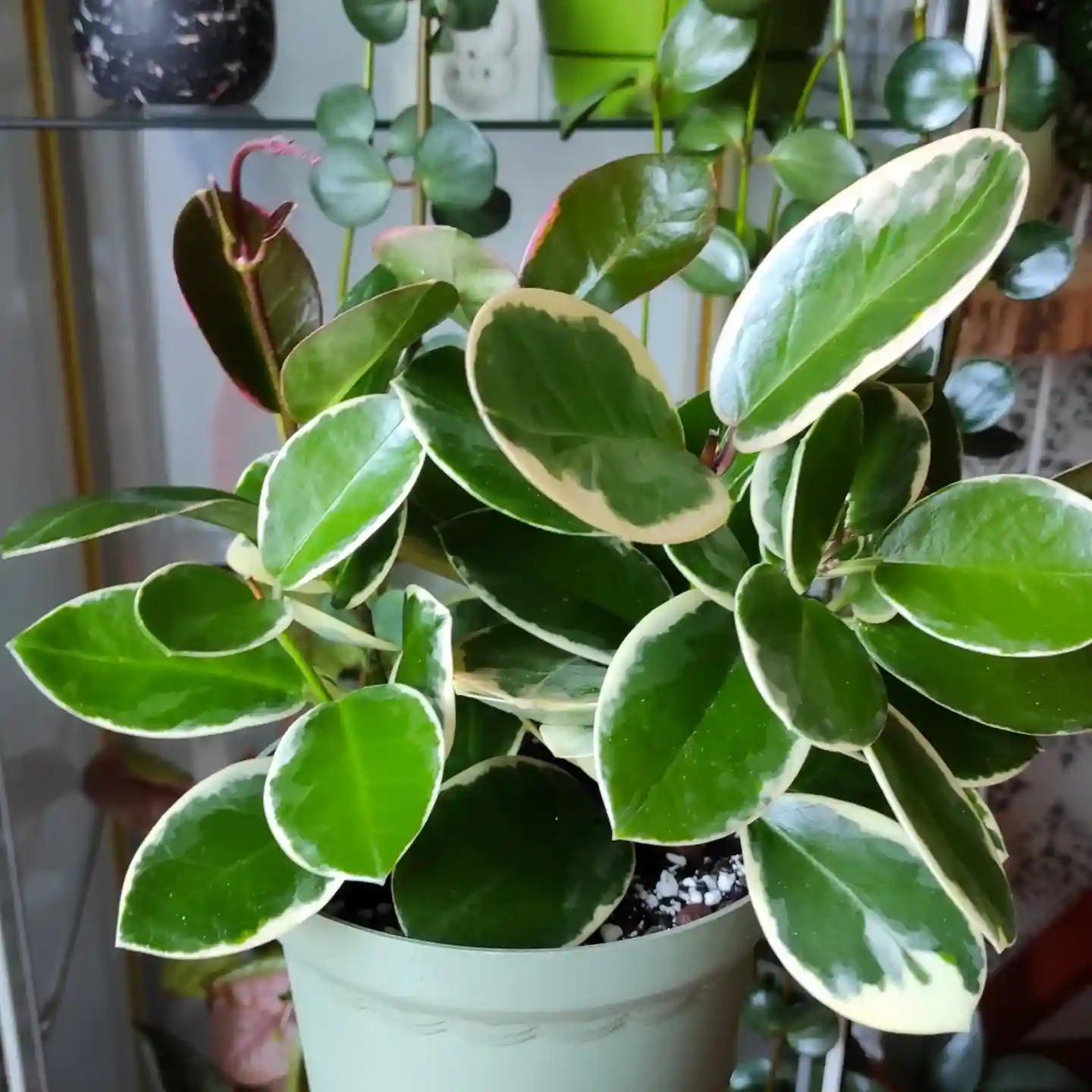
Hoya australis is a vigorous choice with rounded to oval green leaves and long climbing stems.
It tends to look cleaner and simpler than heavily patterned Hoyas, which makes the clusters of white flowers with reddish centers even more noticeable when they arrive. The flowers can be pleasantly fragrant.
This species likes strong light without being left in hot full sun all day. Give new vines a trellis or hoop instead of continually cutting them back.
Hoya australis is also known for being a relatively willing grower under good indoor conditions.
Best for: Fast-growing indoor vines
Light: Bright light
Growth habit: Climbing
6. Hoya Pubicalyx
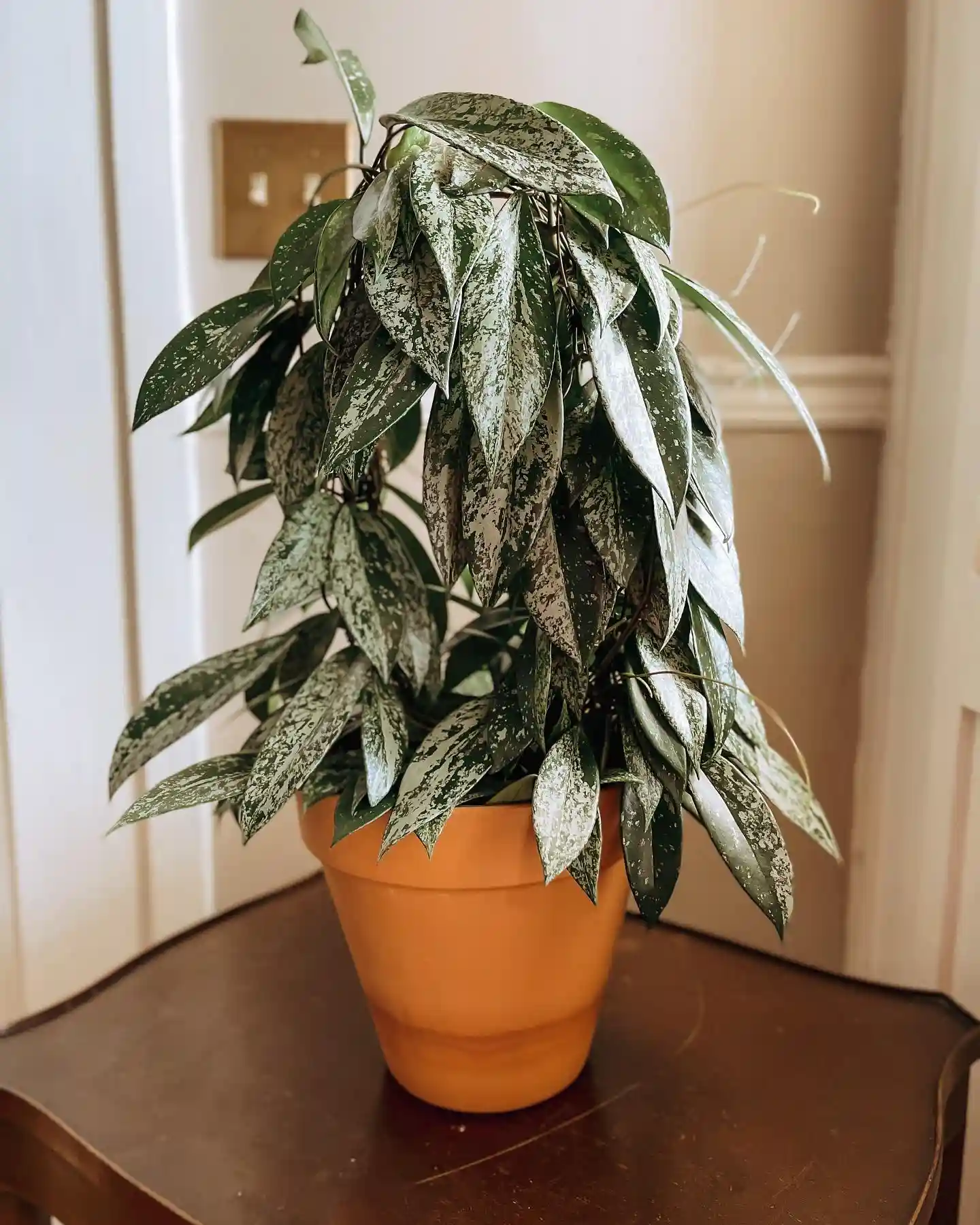
Hoya pubicalyx is another good option if you want plenty of vine growth.
Its narrow, dark green leaves often develop attractive silver flecks. Some forms become slightly reddish or purple when grown in stronger light.
The flowers grow in rounded clusters and may range from pinkish shades to much darker colors depending on the plant.
Give Hoya pubicalyx filtered bright light, an airy mix, and something to climb. It can become a substantial plant, so I would start training the vines while they’re still flexible rather than waiting until they tangle together.
Best for: Trellises and larger collections
Light: Bright filtered light
Growth habit: Vigorous climber
7. Hoya Kentiana
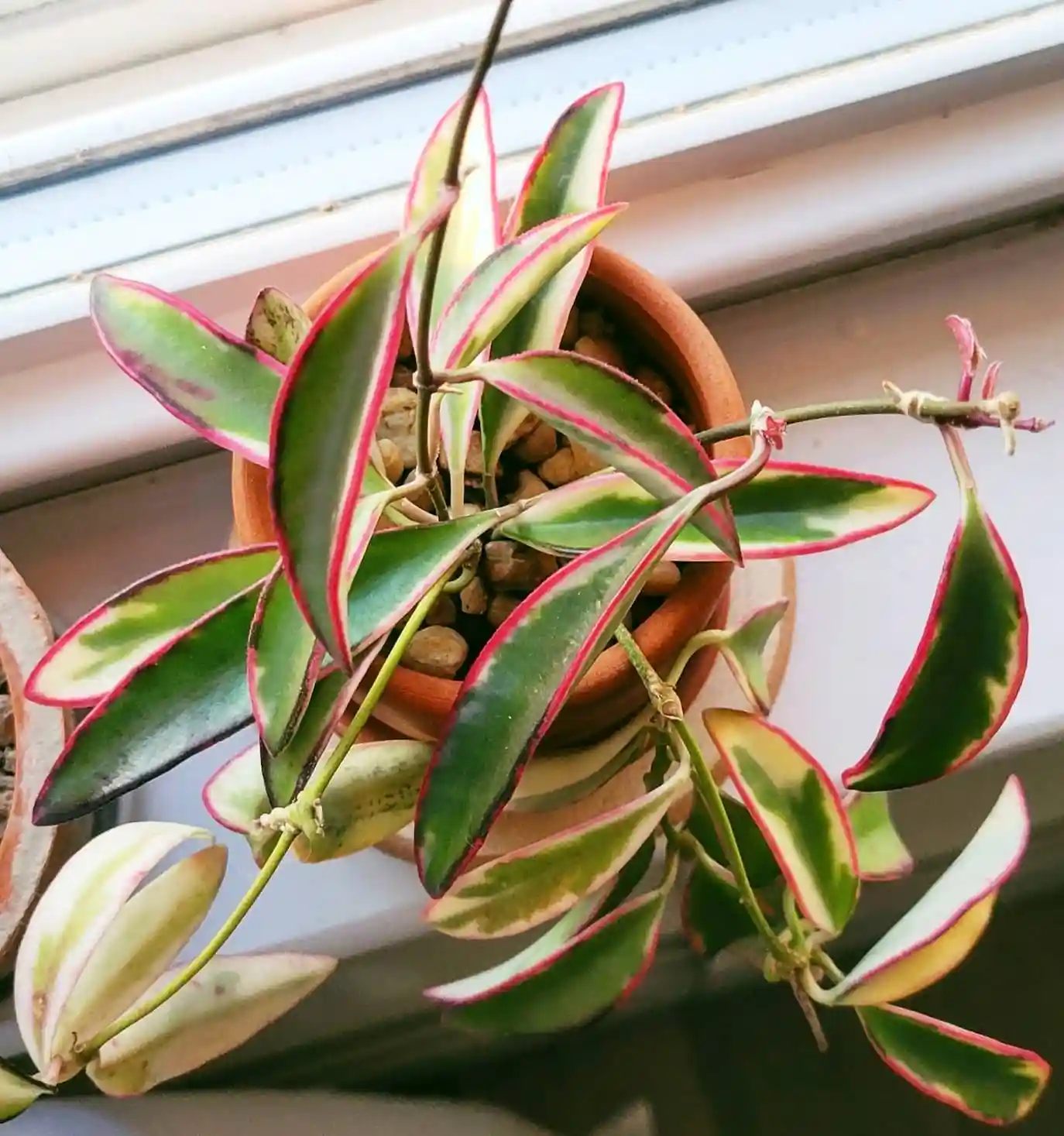
Long, narrow leaves give Hoya kentiana a completely different look from round-leaved Hoyas.
The foliage is slim and pointed, with darker margins that can become more noticeable under brighter conditions. Its trailing shape works beautifully in a hanging pot.
Give it bright indirect light and let the potting mix dry partly before watering again. A chunky mix also helps protect the fine root system from staying wet for too long.
This is a nice middle ground if you’re ready for something less common but don’t want one of the most demanding collector Hoyas.
Best for: Hanging pots
Light: Bright indirect light
Growth habit: Trailing
8. Hoya Kerrii
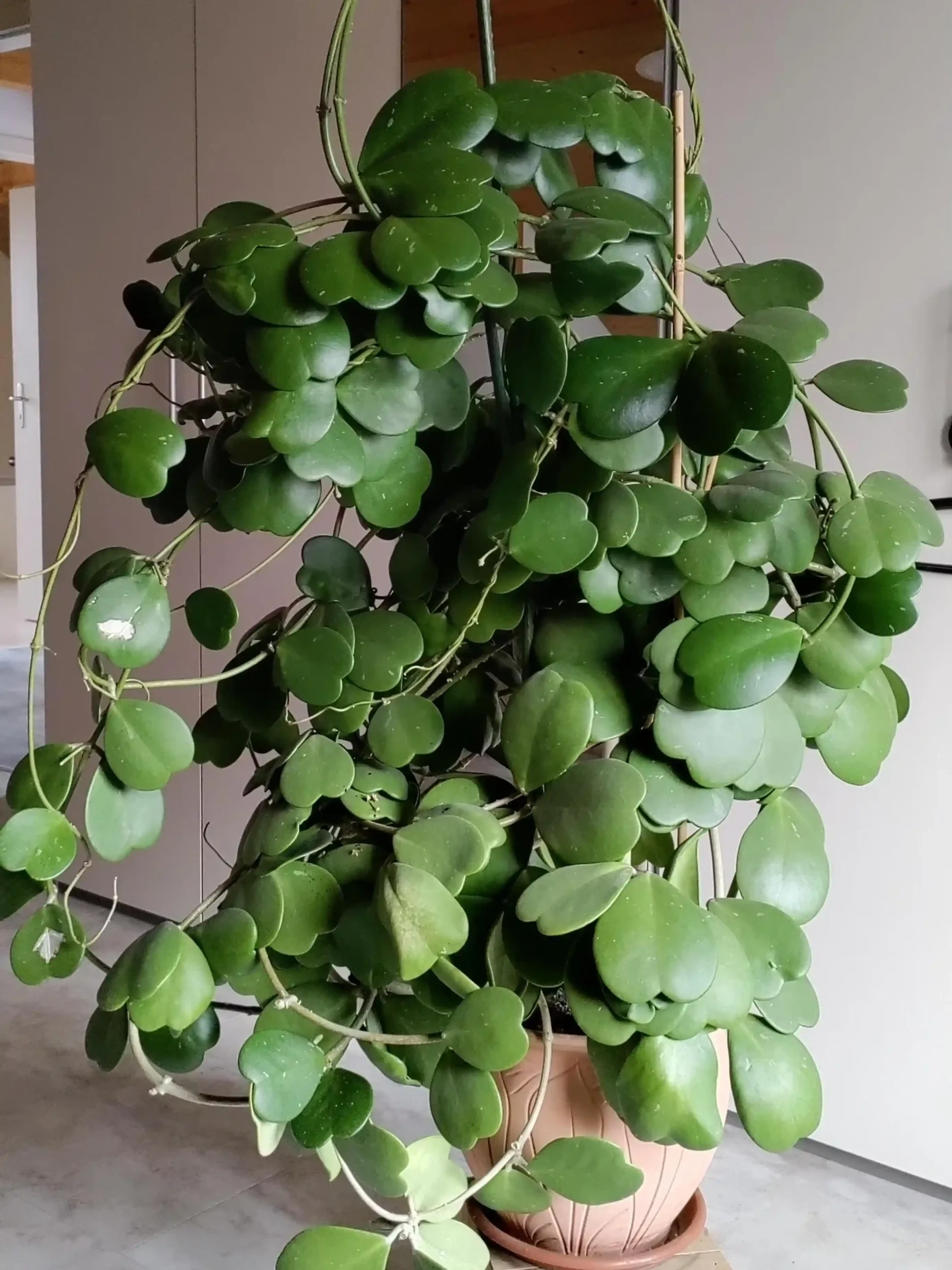
You probably know Hoya kerrii by its thick heart-shaped leaves.
It’s commonly sold around Valentine’s Day as a single rooted leaf, but there’s an important catch. A lone leaf without a piece of stem and a node may remain a single heart instead of developing into a full vine. Penn State Extension specifically warns about this when buying sweetheart Hoyas.
For a plant you can actually grow larger, choose one with a visible stem and several leaves.
Once established, Hoya kerrii becomes a sturdy climbing vine that does well on a support.
Best for: Heart-shaped foliage
Light: Bright indirect light
Growth habit: Slow climbing vine
9. Hoya Obovata
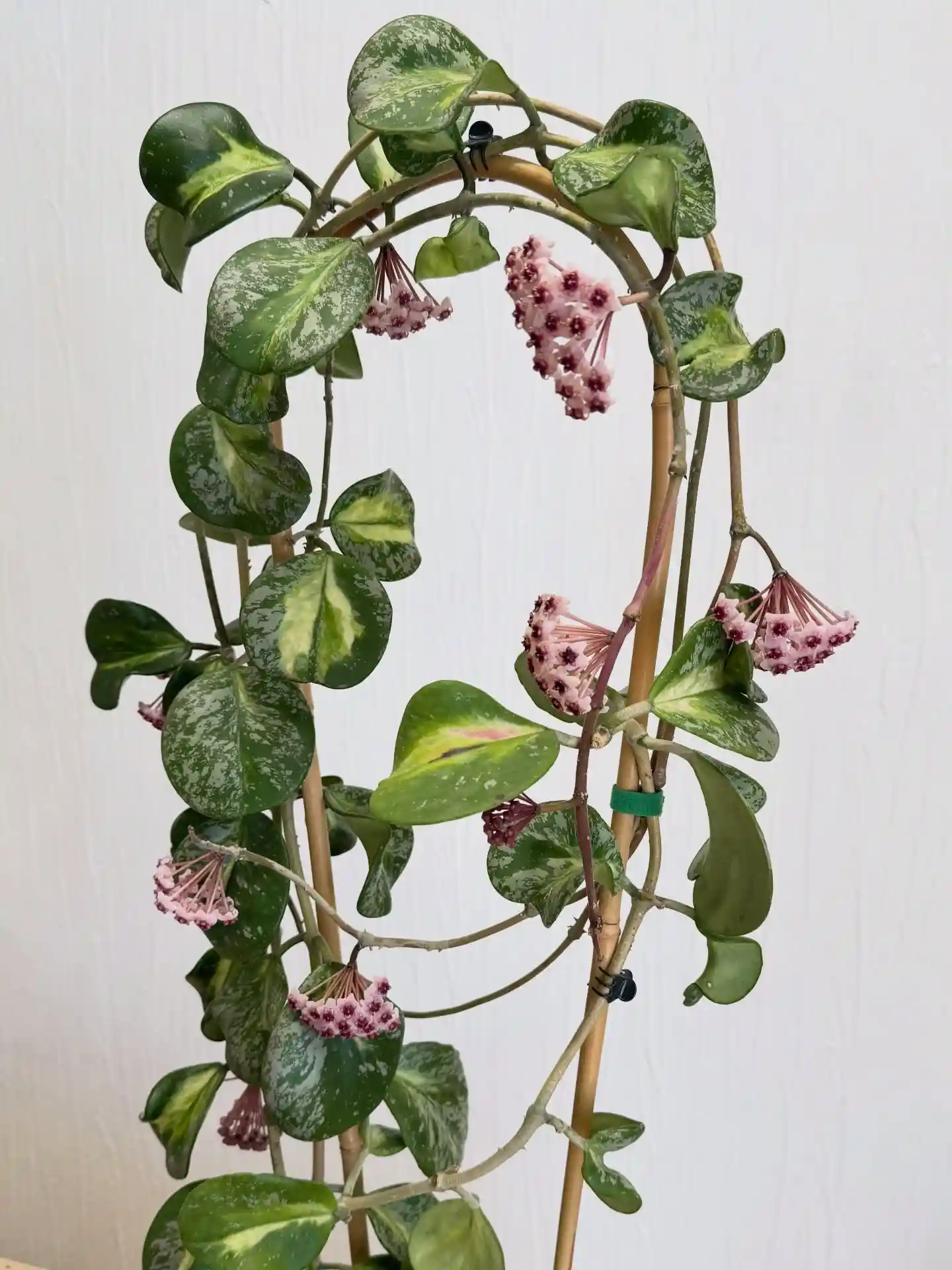
Hoya obovata has some of the best leaves in the genus if you like bold foliage.
Its thick leaves are almost round and often dotted with irregular silver splashes. Even a young plant can look good before it starts producing flowers.
The vines can get long, so give them something to climb or let them hang from a high shelf.
Avoid watering simply because the surface looks dry. Check deeper into the pot first. Those thick leaves hold moisture well, and an overly wet root zone is much more troublesome than letting the plant dry slightly.
Best for: Large round foliage
Light: Bright indirect light
Growth habit: Climbing or trailing
10. Hoya Mathilde
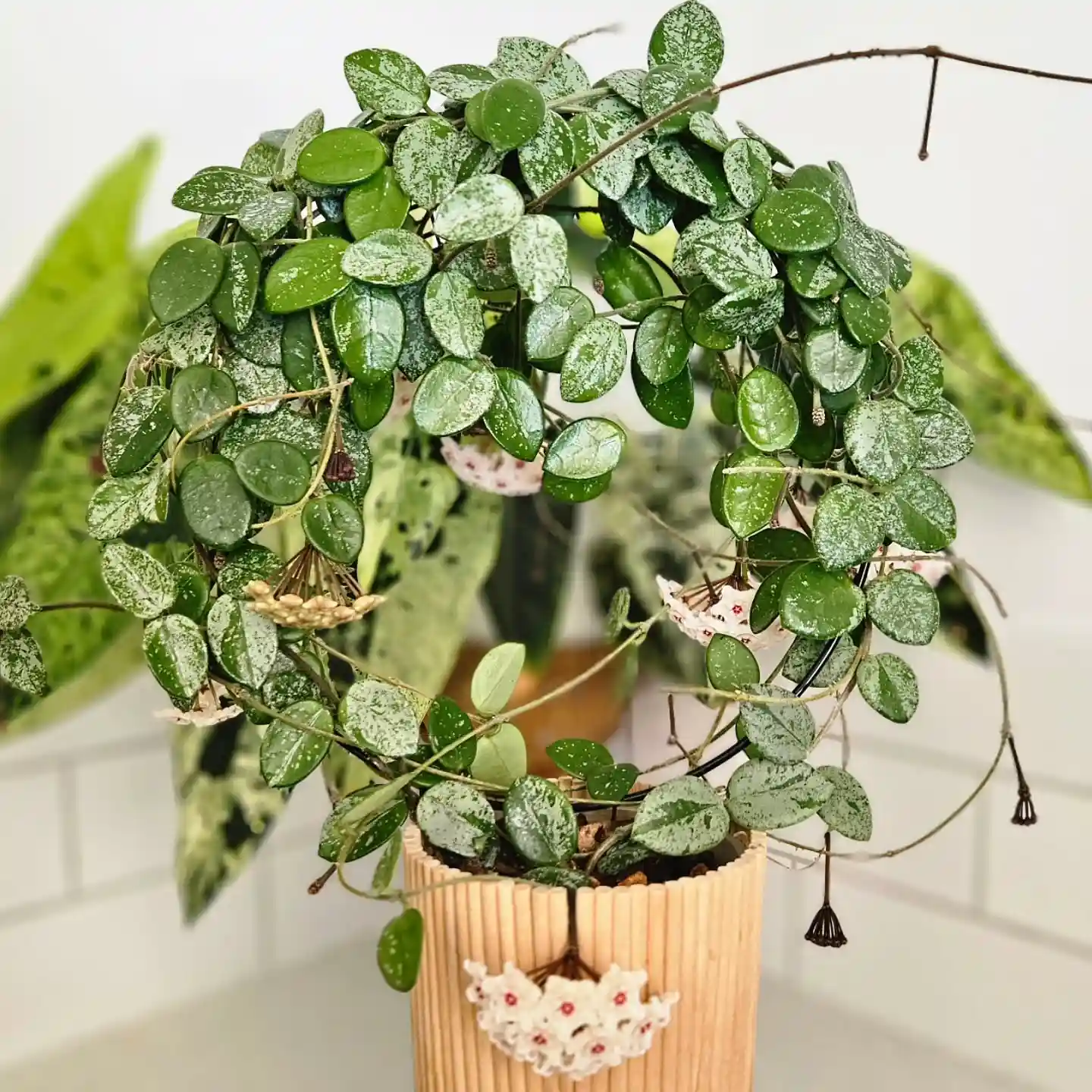
Hoya ‘Mathilde’ combines features of Hoya carnosa and Hoya serpens, its parent species. It was introduced as a hybrid from that cross.
The small rounded leaves often have silver flecking, giving you a much finer texture than standard Hoya carnosa.
It’s particularly pretty once several vines fill a hanging pot.
Give it bright filtered light and a loose mix that doesn’t remain wet for long. The small leaves make it look delicate, but an established plant can be reasonably manageable once you’ve found the right watering rhythm.
Best for: Small-leaf Hoya fans
Light: Bright indirect light
Growth habit: Trailing and climbing hybrid
11. Hoya Retusa
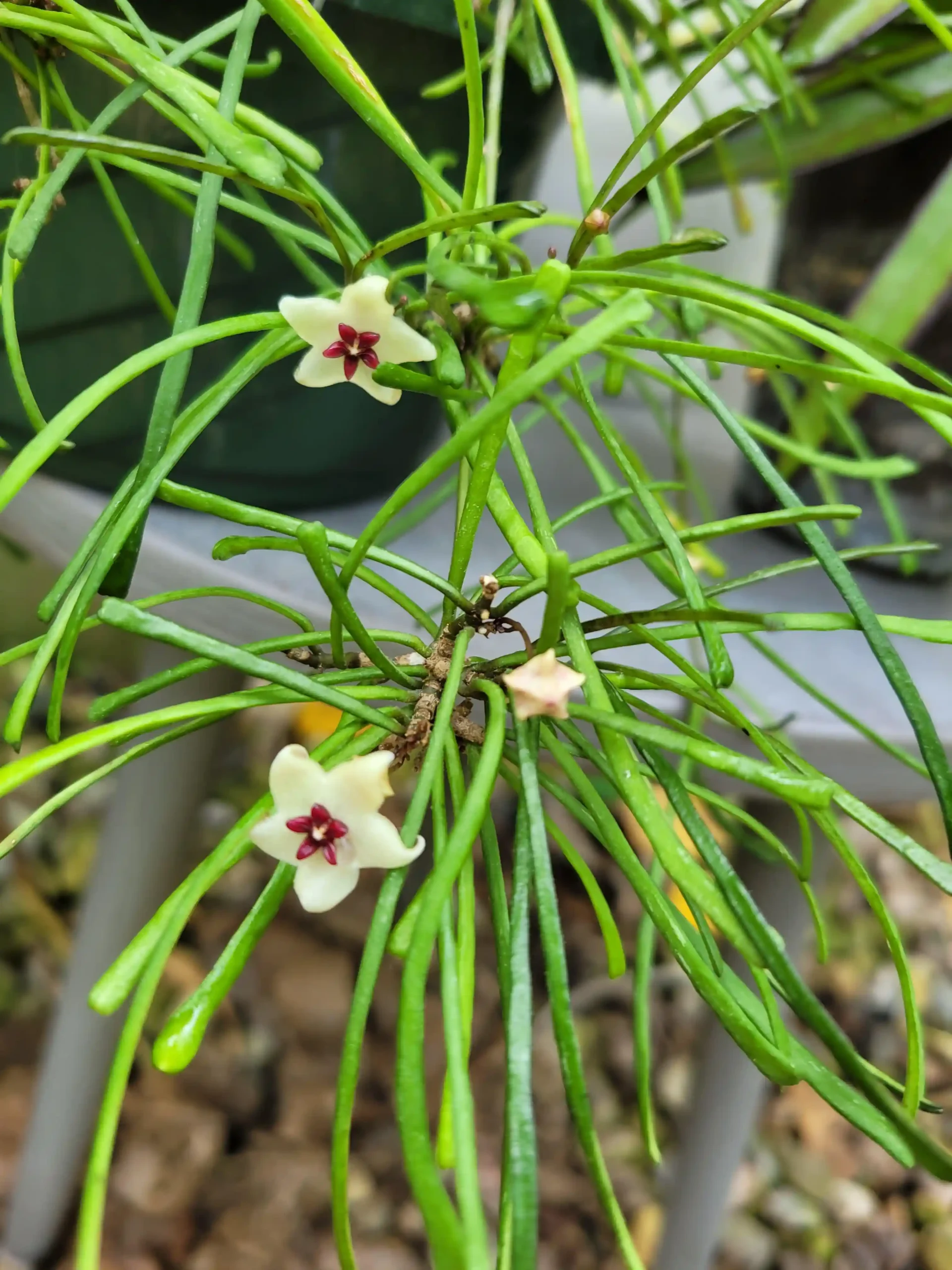
Hoya retusa can fool people who expect every Hoya to have broad waxy leaves.
Its foliage is extremely narrow and grass-like, growing along thin cascading stems. The ends of the leaves have a slightly flattened appearance.
Instead of large round flower clusters, its white flowers with dark centers can appear more individually spaced across the plant.
This is one I’d hang rather than train tightly around a trellis. Letting the stems fall naturally makes the unusual foliage much easier to appreciate.
Give it filtered light and don’t allow heavy soil to stay saturated around the roots.
Best for: Unusual foliage
Light: Bright indirect light
Growth habit: Cascading
12. Hoya Wayetii
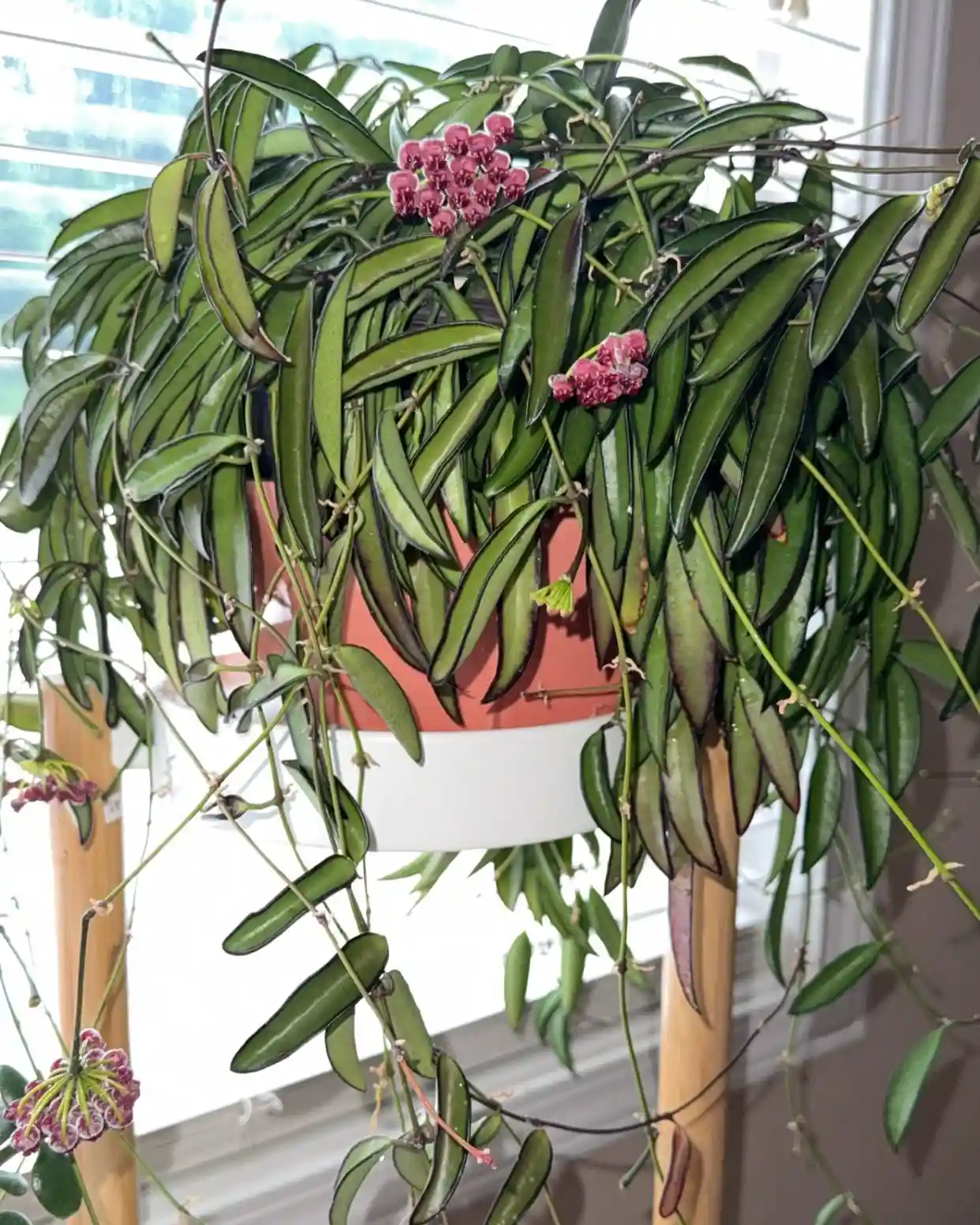
Hoya wayetii grows narrow, slightly canoe-shaped leaves with darker edges.
Under brighter light, those margins can develop attractive reddish tones, giving the plant plenty of color without variegation.
It stays relatively neat compared with some large-leaf climbers, making it practical for shelves and small hanging planters.
The flower clusters can be deep pink to burgundy.
I’d give this one a bright spot and avoid keeping its roots constantly damp. The thick leaves provide a useful clue that the plant doesn’t need the same frequent watering as a thin-leaved tropical houseplant.
Best for: Small hanging planters
Light: Bright indirect light
Growth habit: Trailing
13. Hoya Curtisii
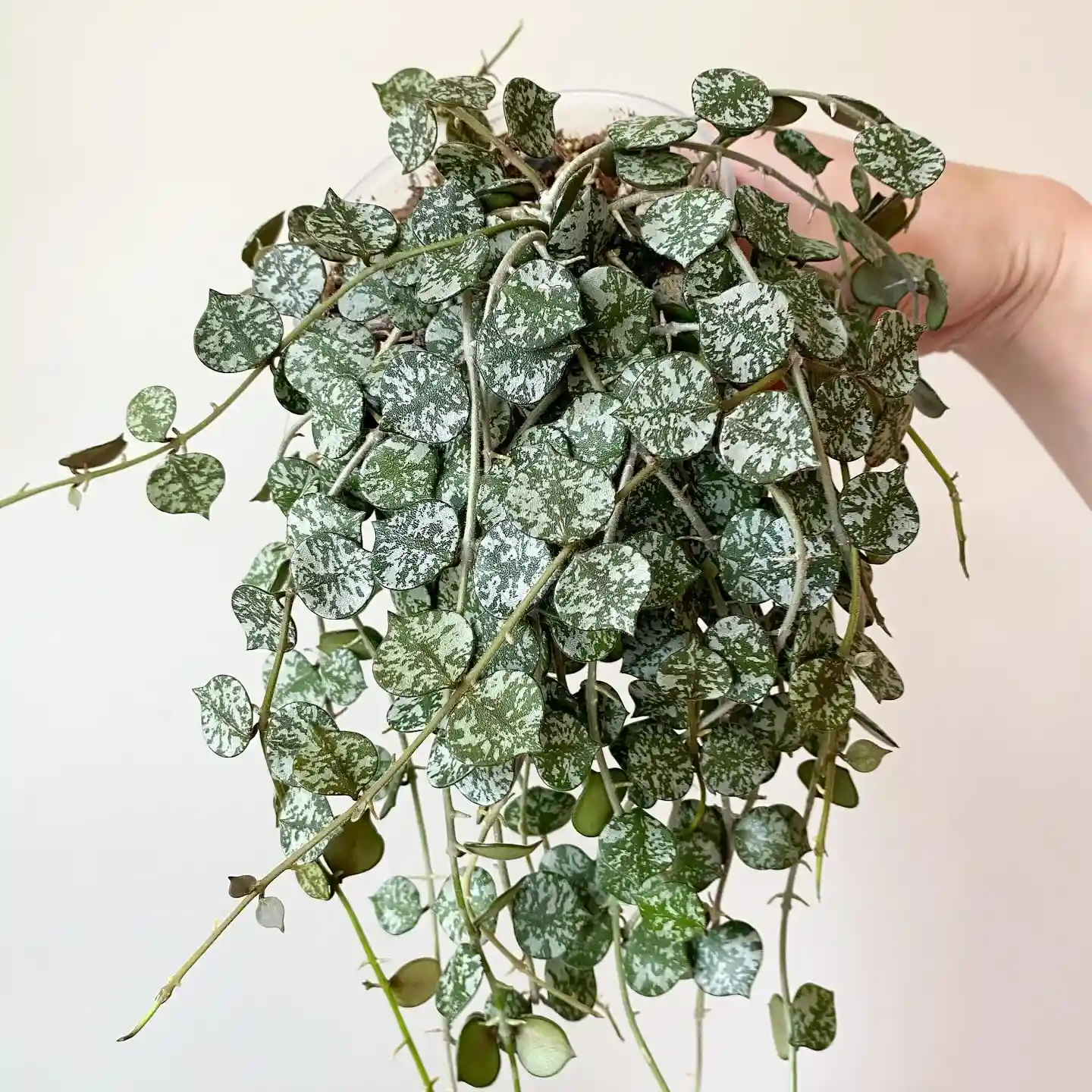
Tiny patterned leaves are the main reason to grow Hoya curtisii.
Each little leaf is olive to dark green with silvery mottling, creating a dense pattern once the stems begin spreading across the pot. NC State describes it as a miniature trailing Hoya with small leaves mottled in gray.
It works beautifully in a shallow hanging pot where stems can spread before spilling over the sides.
Give it very good drainage and let the mix dry before another thorough watering. Overwatering is one of the easiest ways to lose this otherwise charming little plant.
Best for: Tiny foliage
Light: Bright indirect light
Growth habit: Creeping and trailing
14. Hoya Latifolia
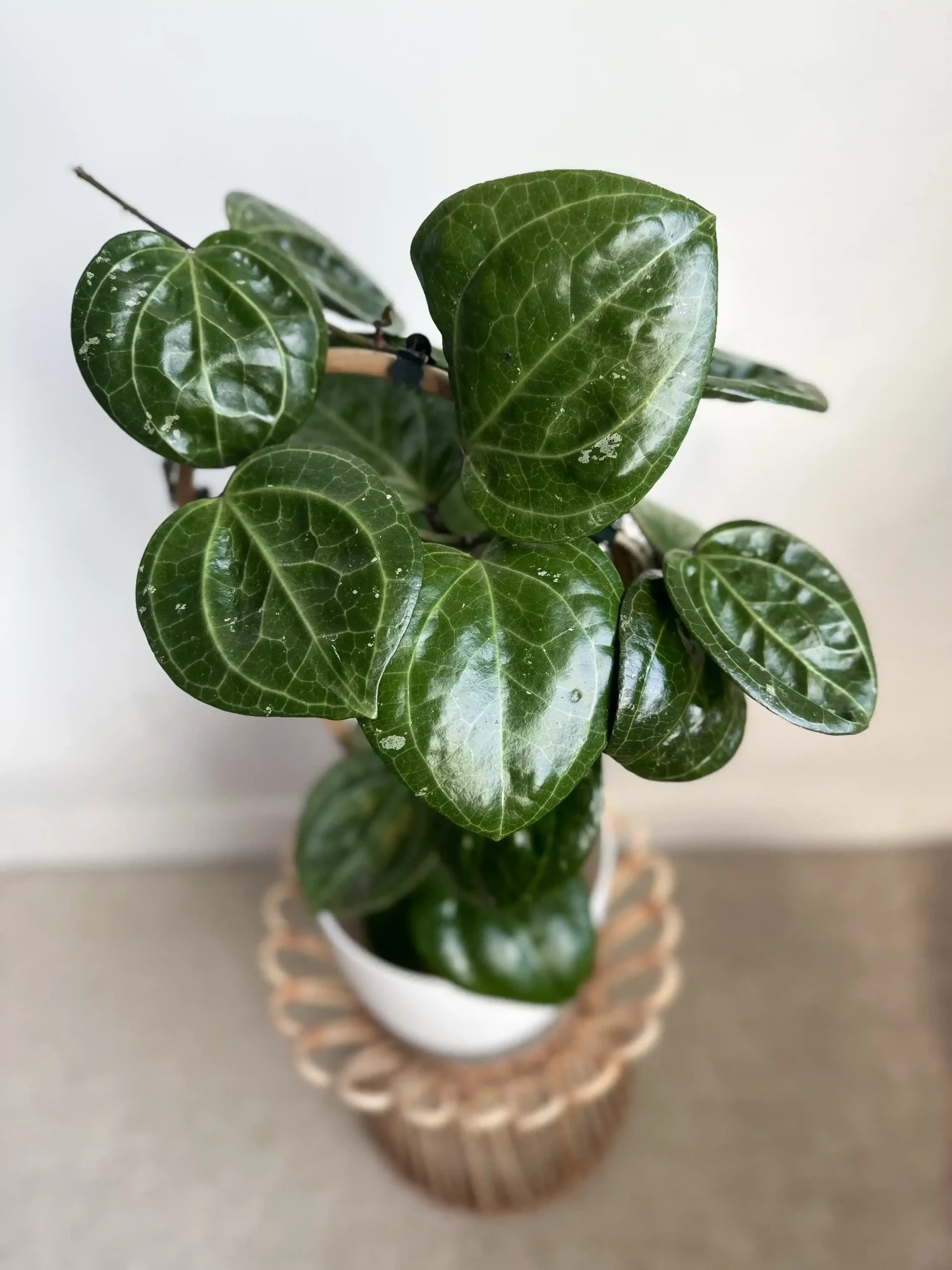
If tiny leaves aren’t your thing, go in the opposite direction with Hoya latifolia.
This species is known for broad, substantial foliage that can become a major part of the display. You may also see plants sold under the older name Hoya macrophylla, which Kew lists as a synonym of Hoya latifolia.
Many cultivated forms have strongly marked veins or lighter margins.
Use a sturdy trellis because mature leaves can make the vines surprisingly heavy. Bright filtered light helps the plant keep compact growth without exposing those large leaves to harsh midday sun.
Best for: Big-leaf collections
Light: Bright filtered light
Growth habit: Climbing
15. Hoya Fitchii
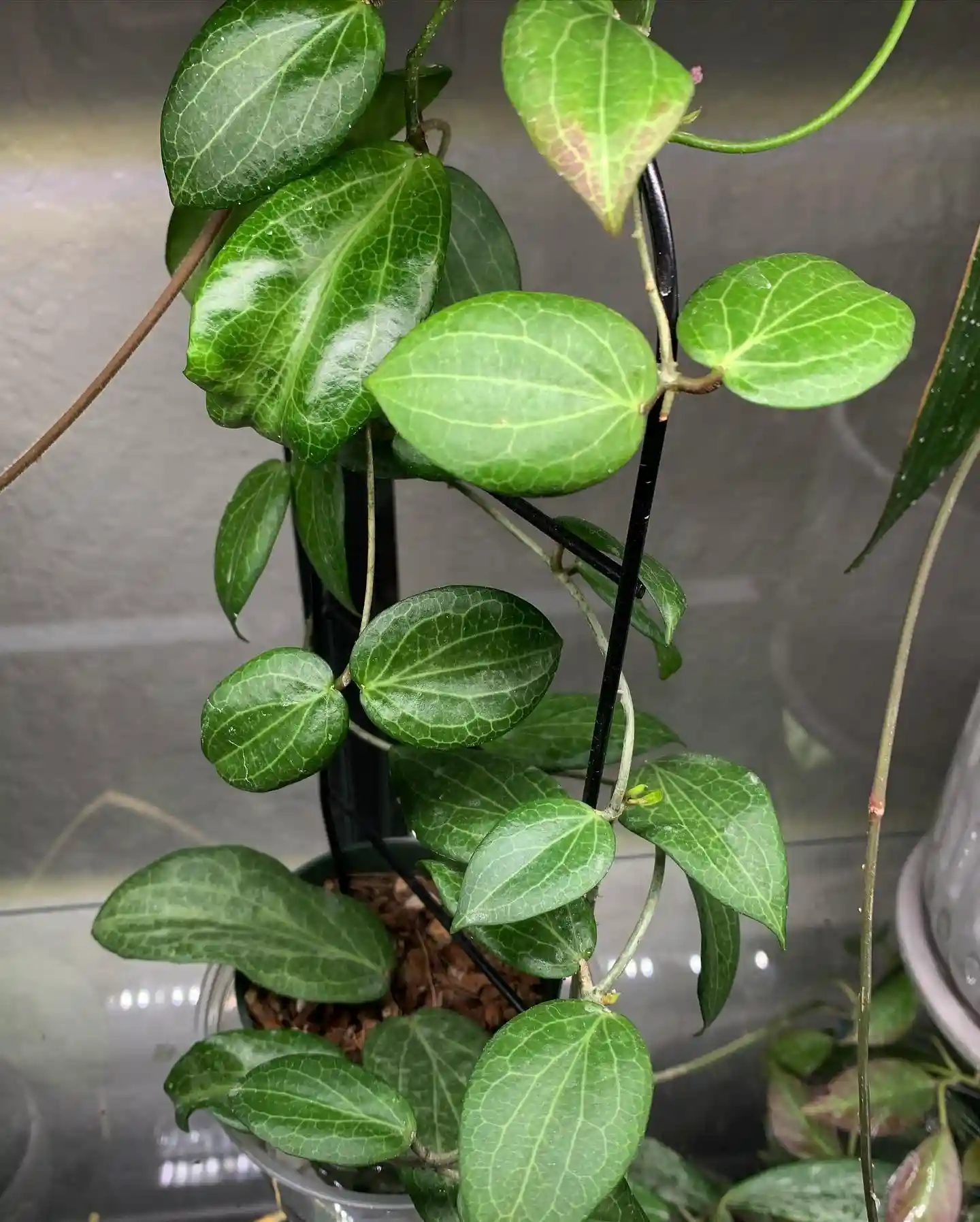
Hoya fitchii has attractive green leaves marked by a network of visible veins.
But the flowers are what can make this species particularly fun to grow. The blooms may carry warm coral, orange, pink, or reddish tones rather than the softer whites associated with many common Hoyas.
Its foliage isn’t huge, making it manageable on a small trellis.
Give it warm conditions, good humidity, and bright indirect light. I would also use an airy potting mix and be careful with winter watering, when indoor pots often take much longer to dry.
Best for: Colorful flowers
Light: Bright indirect light
Growth habit: Climbing
16. Hoya Shepherdii
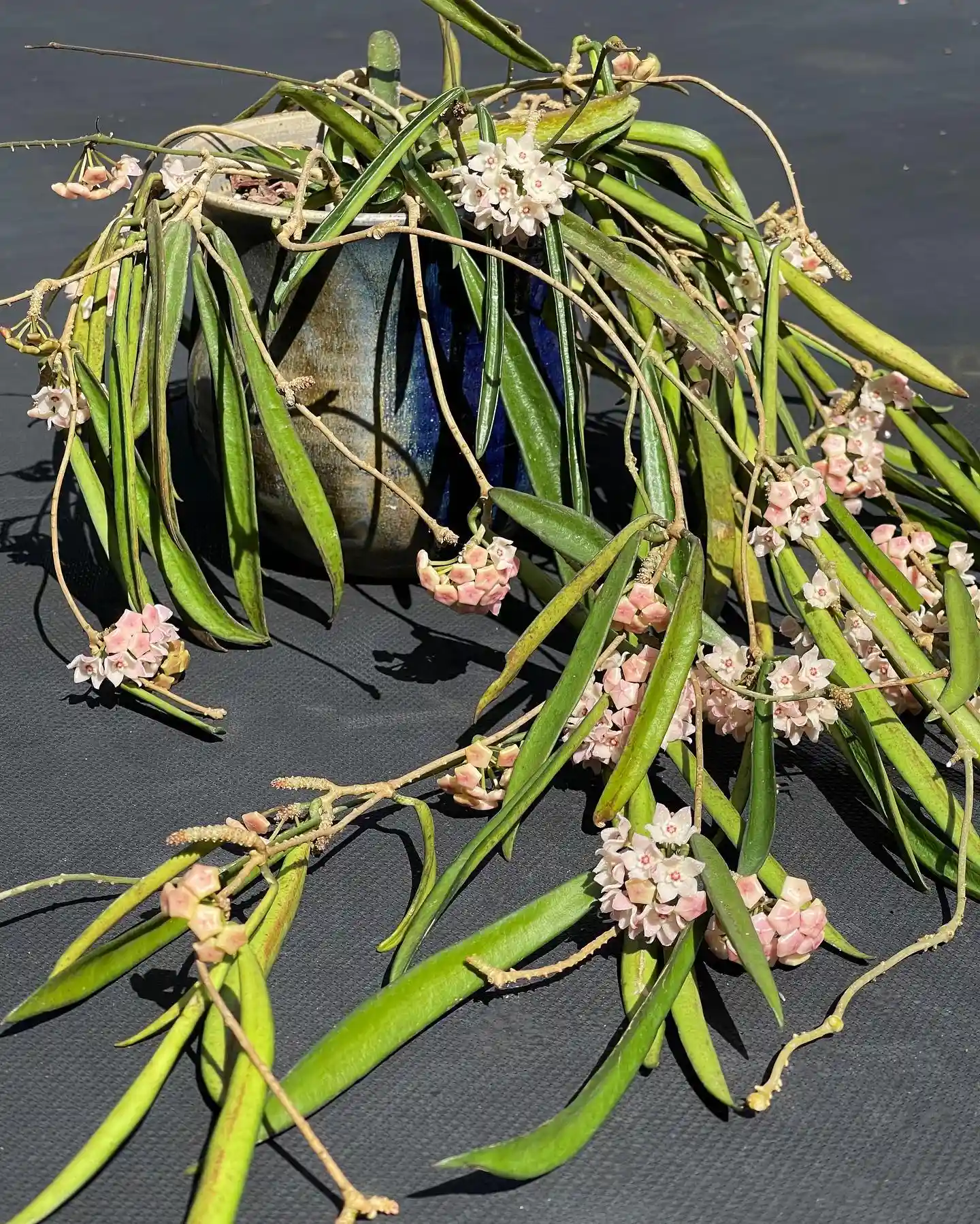
Hoya shepherdii is often called string bean Hoya because of its long, narrow foliage.
Its dark green leaves are thicker and more succulent than they first appear, growing along flexible vines that look good cascading or wrapped loosely around support.
The contrast gets even better when clusters of pale flowers appear.
It’s a useful choice if you want unusual leaf shapes without taking up much shelf width. Give it bright indirect light, don’t oversize its container, and wait until the growing mix has dried before watering heavily again.
Best for: Narrow foliage
Light: Bright indirect light
Growth habit: Trailing or climbing
17. Hoya Burtoniae
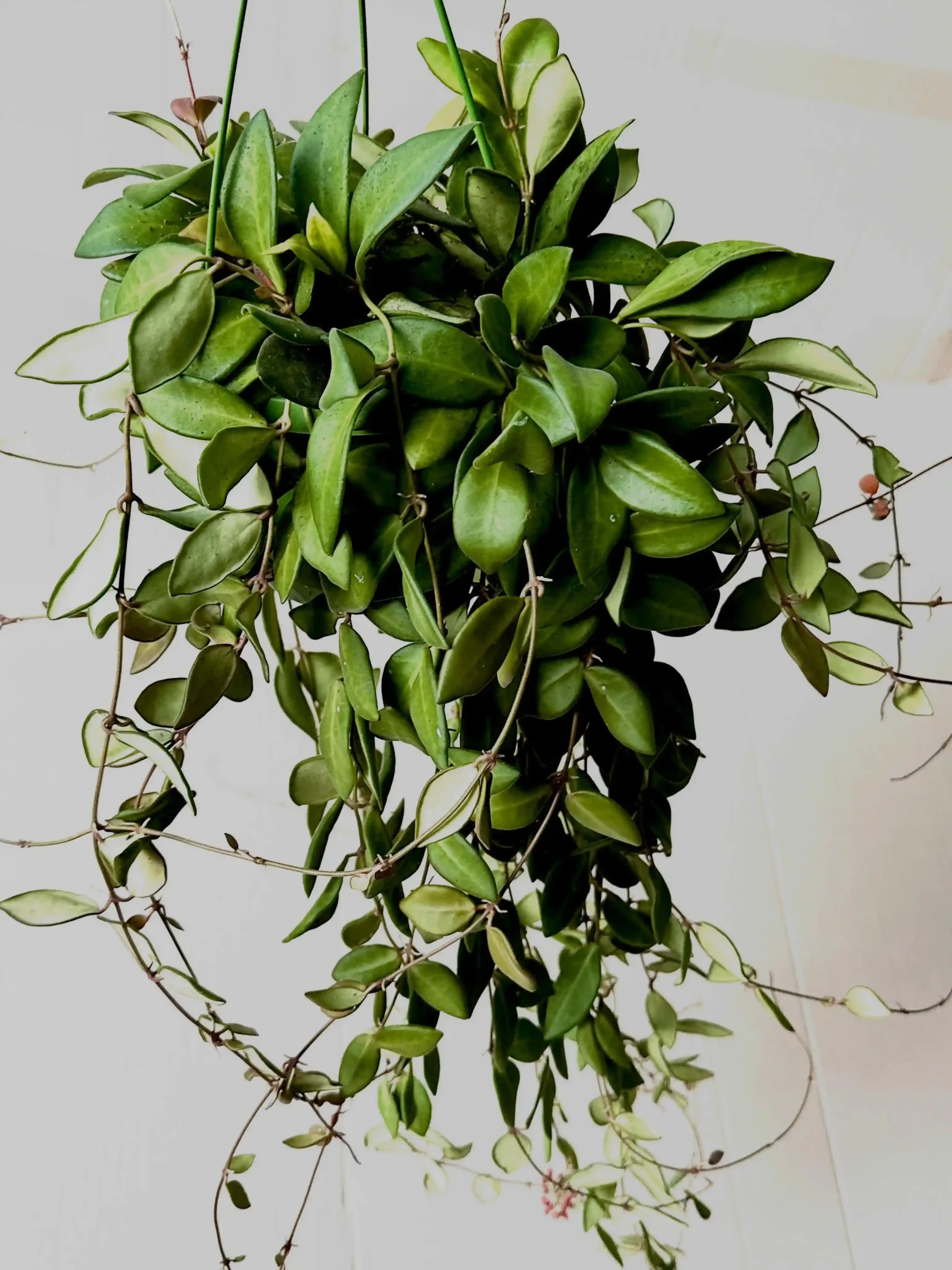
Hoya burtoniae is a compact-looking Philippine species with small fuzzy to softly textured leaves.
The foliage can develop reddish or bronze tones when the plant receives stronger light, making it one of those Hoyas that changes character depending on where you grow it.
Kew recognizes Hoya burtoniae as an accepted species native to Luzon in the Philippines.
Let it trail from a hanging pot or small shelf planter. Bright filtered light will usually give you better color, but increase light gradually rather than suddenly putting a shade-grown plant into hot direct sun.
Best for: Sun-stressed foliage color
Light: Bright filtered light
Growth habit: Trailing
18. Hoya Linearis
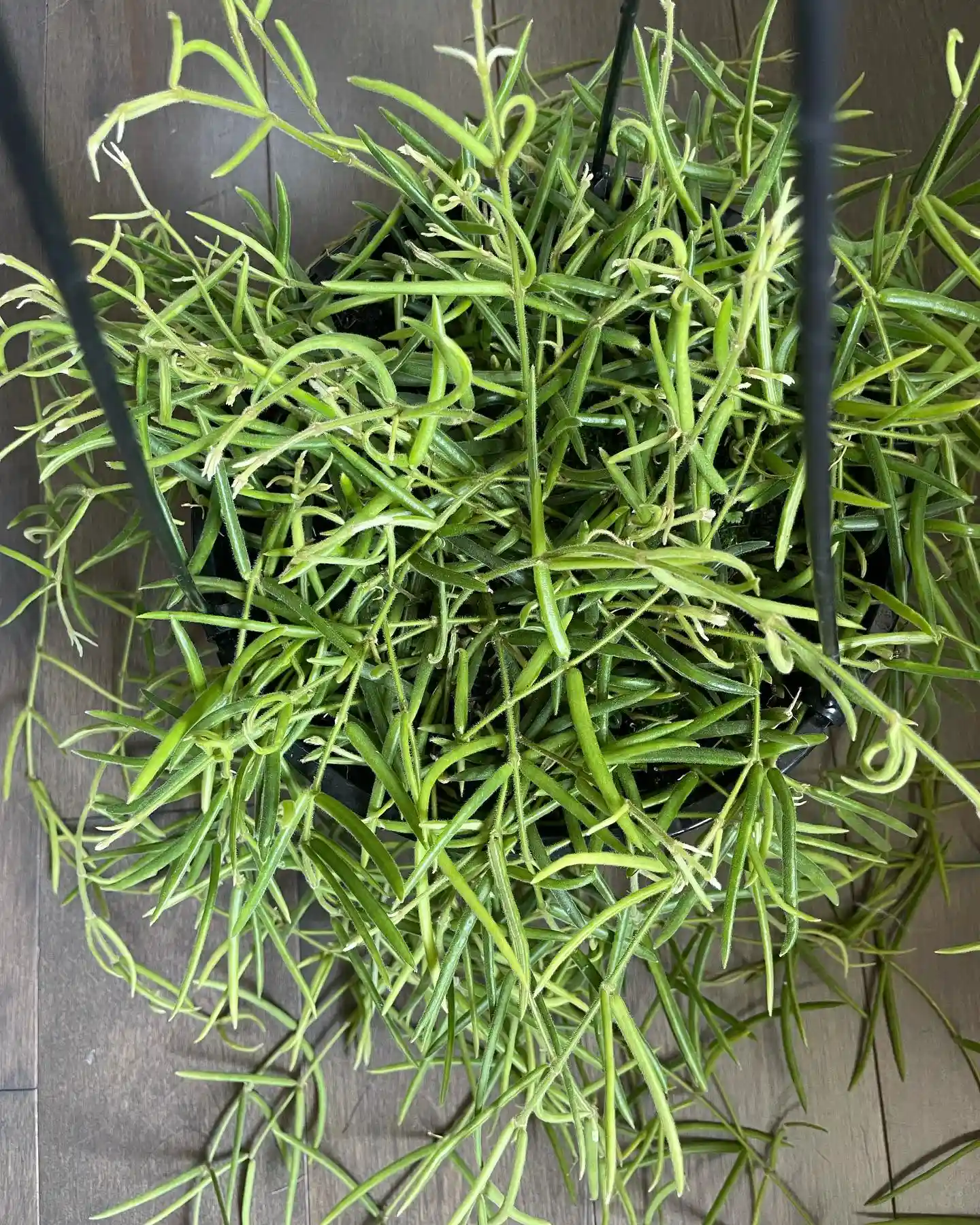
Hoya linearis looks more like a curtain of soft green strands than a typical Hoya.
Long stems carry narrow, slightly fuzzy leaves and can eventually cascade well below the pot. When it flowers, clusters of pale star-shaped blooms appear among the hanging foliage.
It’s beautiful, but I wouldn’t choose it as my very first Hoya. NC State describes Hoya linearis as a more difficult species to grow than common beginner Hoyas.
Give it good indirect light, airflow, and careful watering. Avoid letting it stay waterlogged or baking it in intense heat.
Best for: Hanging baskets
Light: Bright indirect light
Growth habit: Long cascading stems
19. Hoya Finlaysonii
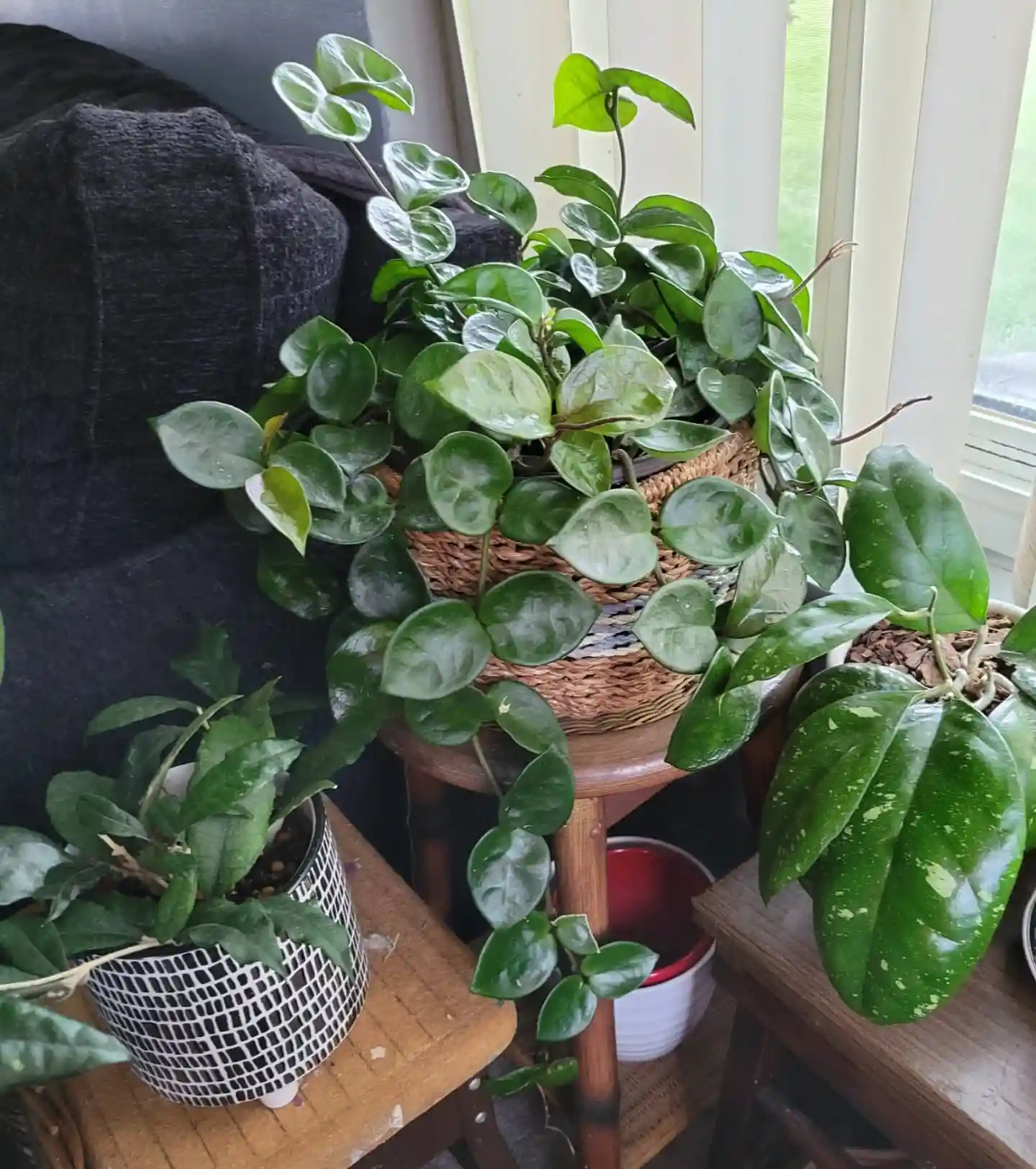
Hoya finlaysonii deserves attention for its dramatic leaf pattern.
The thick green foliage carries dark, highly visible veins that can make each leaf look almost hand-drawn. It has a stronger, more architectural appearance than the softer-looking small-leaf Hoyas.
Give the vines a support so the patterned leaves aren’t hidden inside a tangled hanging basket.
This species appreciates warmth, humidity, and an airy growing medium. Let the roots breathe between waterings rather than keeping the mix continuously damp.
It’s a good collector plant when foliage matters to you just as much as flowers.
Best for: Strong leaf veining
Light: Bright indirect light
Growth habit: Climbing
20. Hoya Rosita
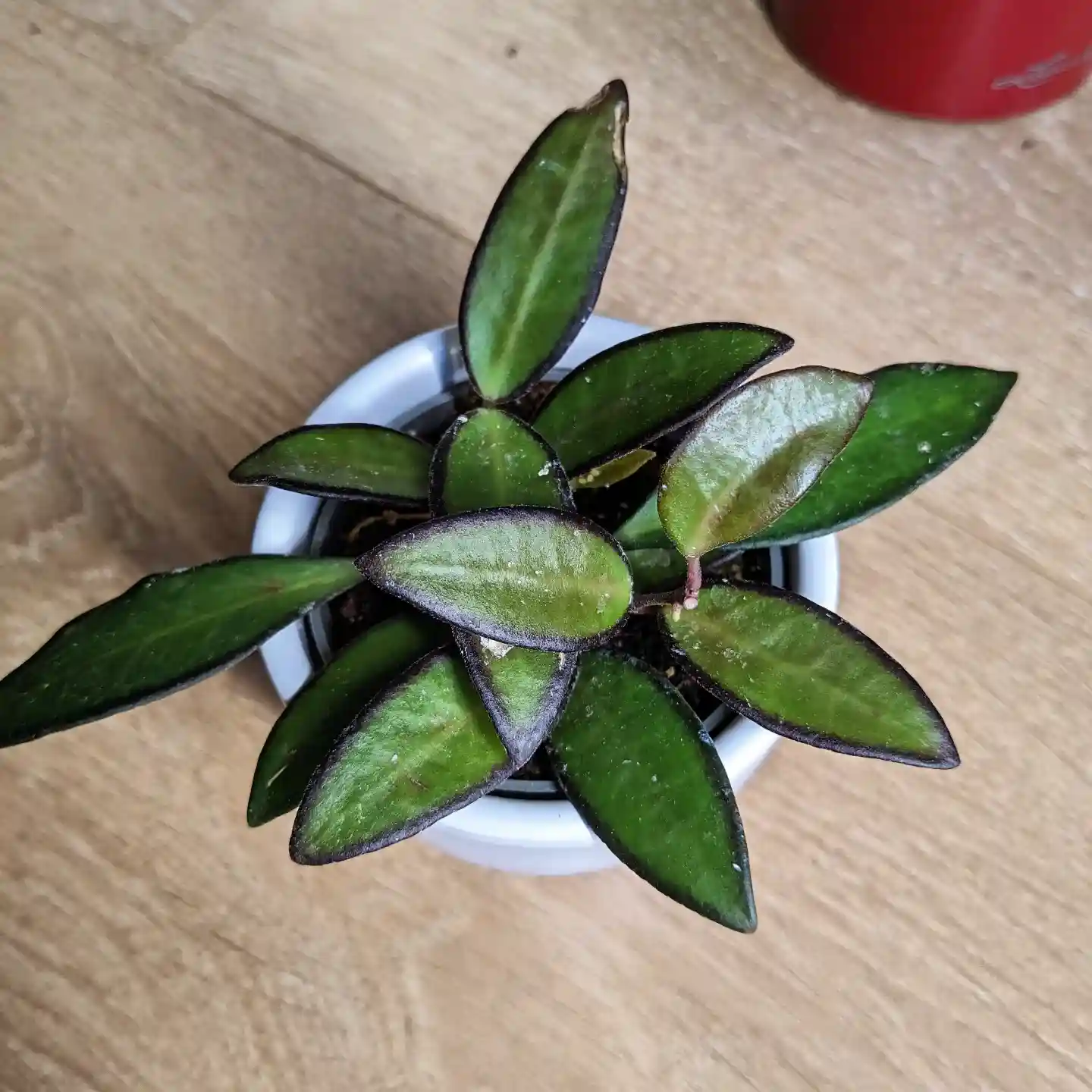
Hoya ‘Rosita’ is a cultivated hybrid with narrow green leaves that can develop deep reddish coloring around the margins under strong filtered light.
Its foliage is a big part of the appeal, but mature plants can also produce rounded clusters of dark pink to reddish flowers.
Rosita looks particularly good on a hoop trellis because the leaves sit close enough together to create a full outline around the support.
Give it bright indirect light and warmth. Don’t force the red coloring by moving it straight into harsh sun. Increase exposure slowly so the foliage has time to adjust.
Best for: Red-edged foliage
Light: Bright filtered light
Growth habit: Climbing hybrid
21. Hoya Krohniana
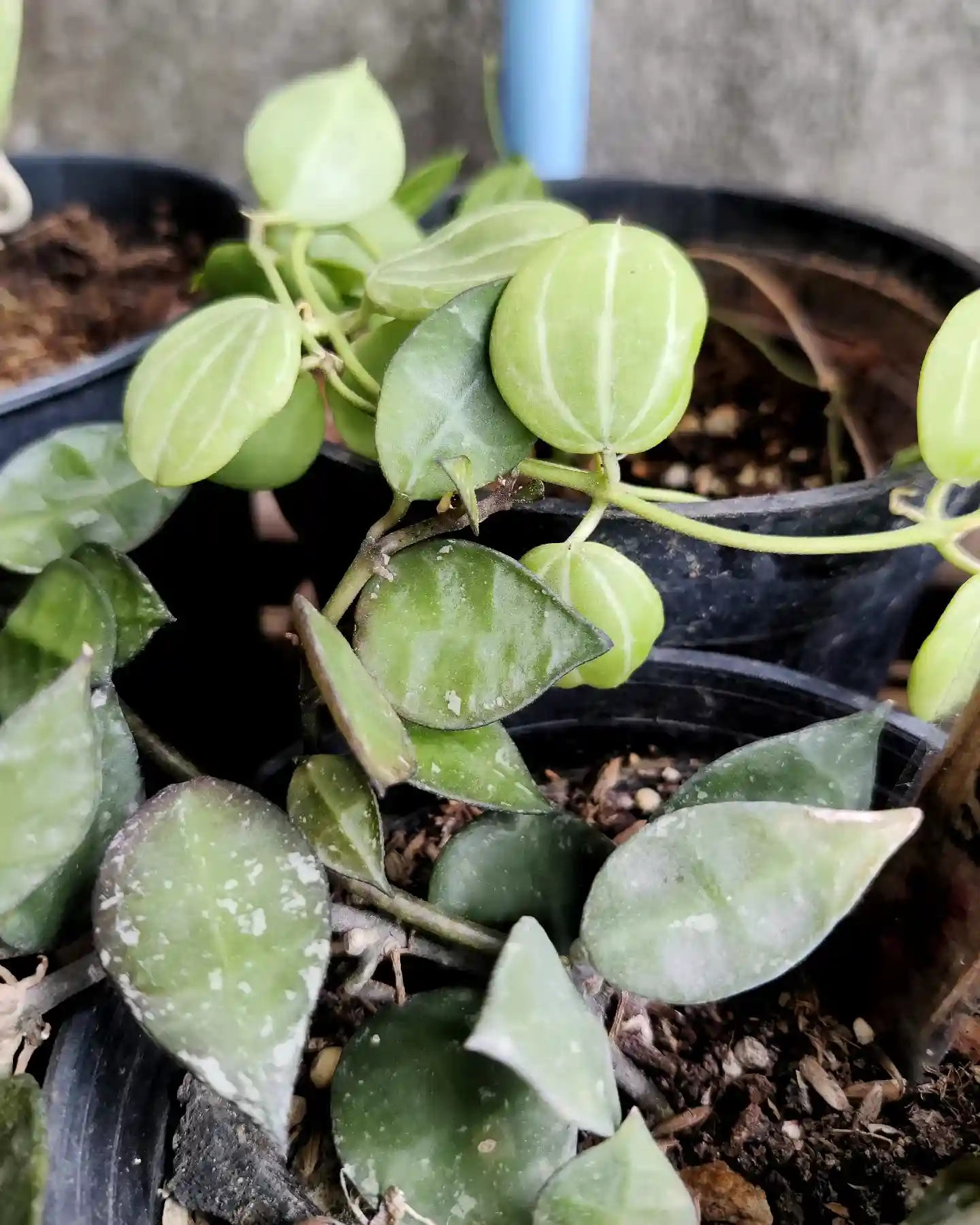
Hoya krohniana is a small-leaf Hoya with compact vines and attractive foliage.
Depending on the form, leaves can be plain green or heavily flecked with silver. Its smaller size makes it easier to fit into a growing Hoya collection when shelf space starts disappearing.
The flowers are also small and grouped into rounded clusters.
I’d grow it in a hanging pot or on a small trellis close to a bright window.
Because the leaves are smaller and less heavily succulent than some chunky Hoyas, watch the plant rather than automatically giving it the same watering interval as Hoya kerrii or obovata.
Best for: Small spaces
Light: Bright indirect light
Growth habit: Compact trailing vine
22. Hoya Multiflora
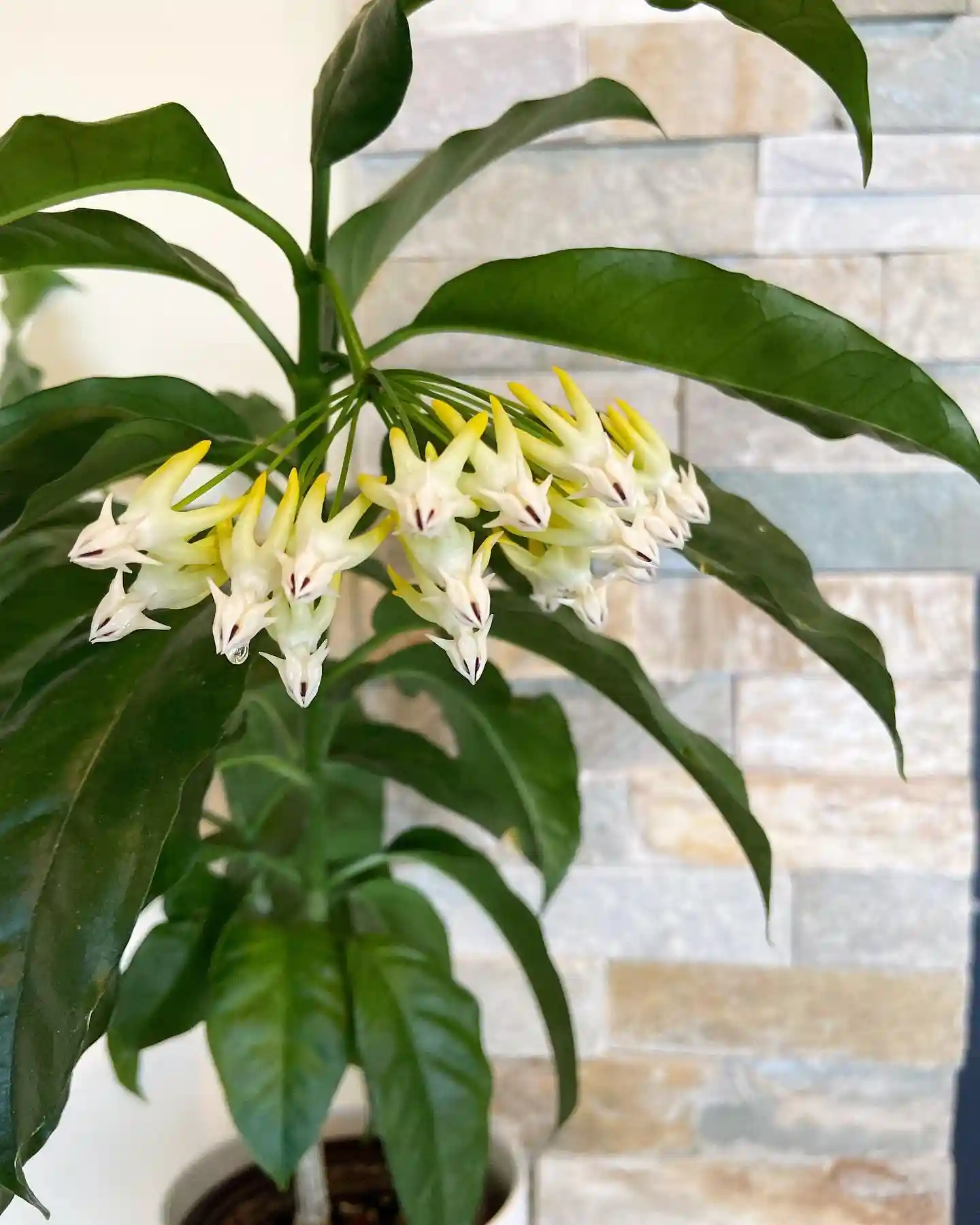
Hoya multiflora breaks another Hoya stereotype.
Instead of being grown mainly as a long trailing vine, it develops a more upright, shrubby form. Its unusual flowers have narrow swept-back petals and are often compared to shooting stars.
That makes it a useful choice when you love Hoya flowers but don’t want another plant that needs several feet of climbing space.
This species also tends to appreciate a little more consistent moisture than the very thick-leaved types. Keep the mix airy, but don’t leave it bone dry for long stretches.
Best for: Unusual flowers
Light: Bright indirect light
Growth habit: Upright to shrubby
23. Hoya Merrillii
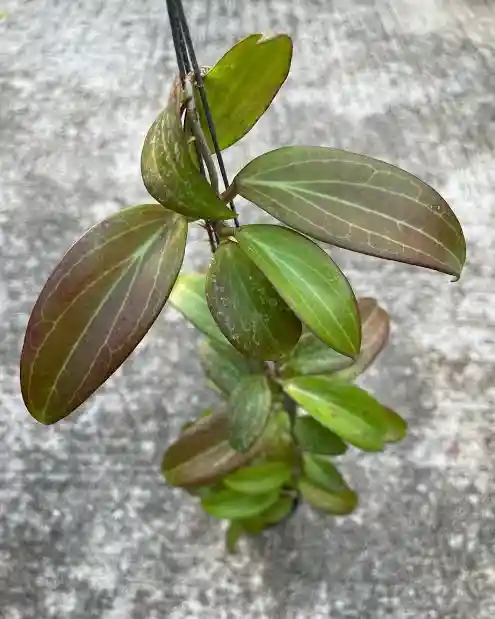
Hoya merrillii is worth growing for its glossy rounded foliage.
The leaves have visible venation and can take on bronze or red tones when grown in stronger filtered light. That color change gives the plant a completely different appearance without needing variegation.
Train the vines along a small trellis so each leaf gets enough light and doesn’t disappear inside a dense tangle.
Use a quick-draining mix and allow the root zone to dry before another deep watering.
This one fits nicely between common beginner Hoyas and the truly demanding collector species.
Best for: Glossy colorful foliage
Light: Bright indirect light
Growth habit: Climbing
24. Hoya Thomsonii
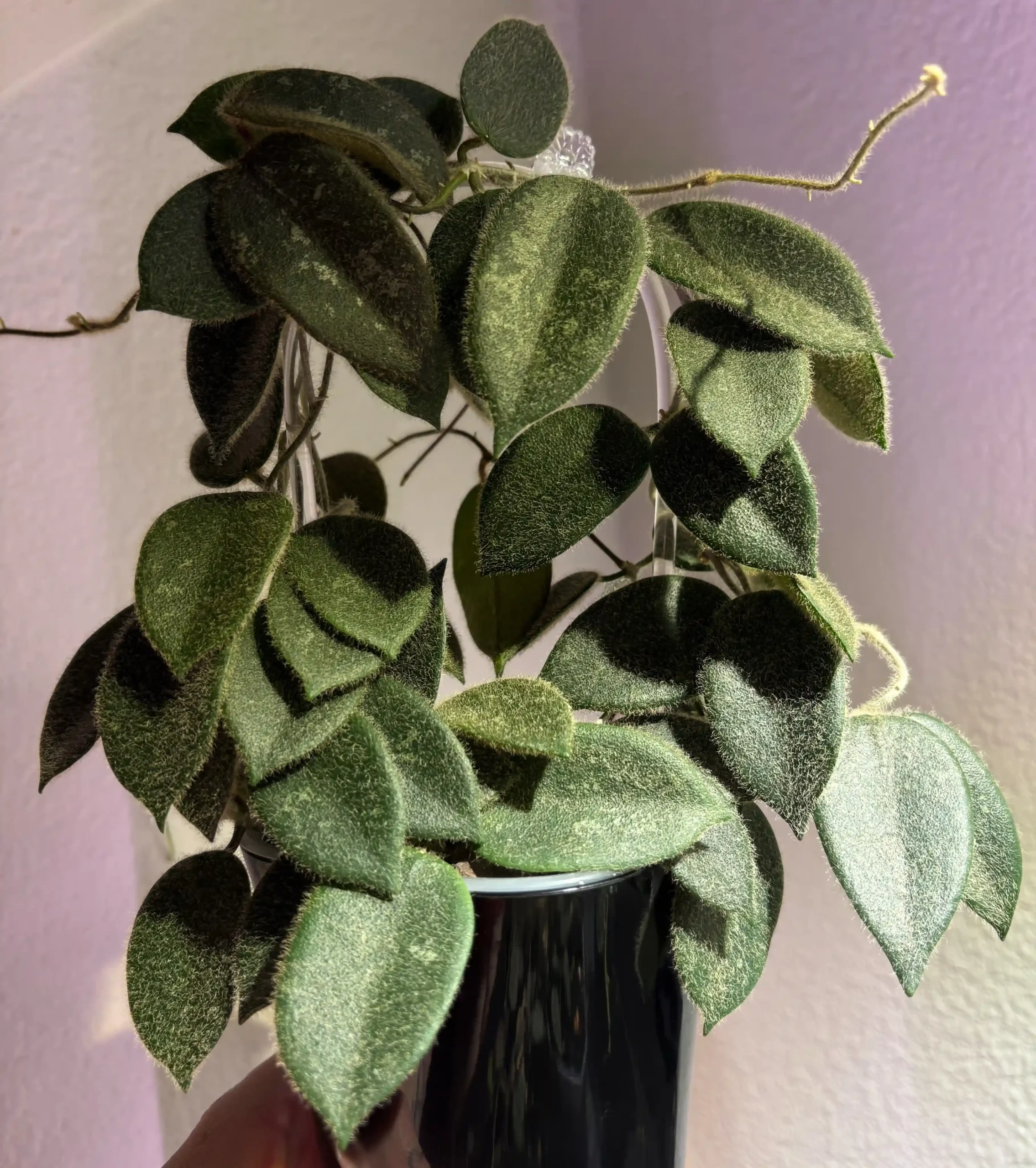
Hoya thomsonii has softer-looking leaves than the slick, glossy foliage associated with many Hoyas.
The leaves can have a slightly fuzzy surface, while its flower clusters create a soft, almost fluffy appearance.
This species tends to appreciate good humidity, making it a better choice for a naturally humid room or a plant area supported by a humidifier.
I wouldn’t keep the pot continually wet to create humidity around the roots. Those are two different things.
Keep the growing medium loose and drained while providing moisture in the surrounding air.
Best for: Fuzzy foliage and flowers
Light: Bright indirect light
Growth habit: Vining
25. Hoya Globulosa
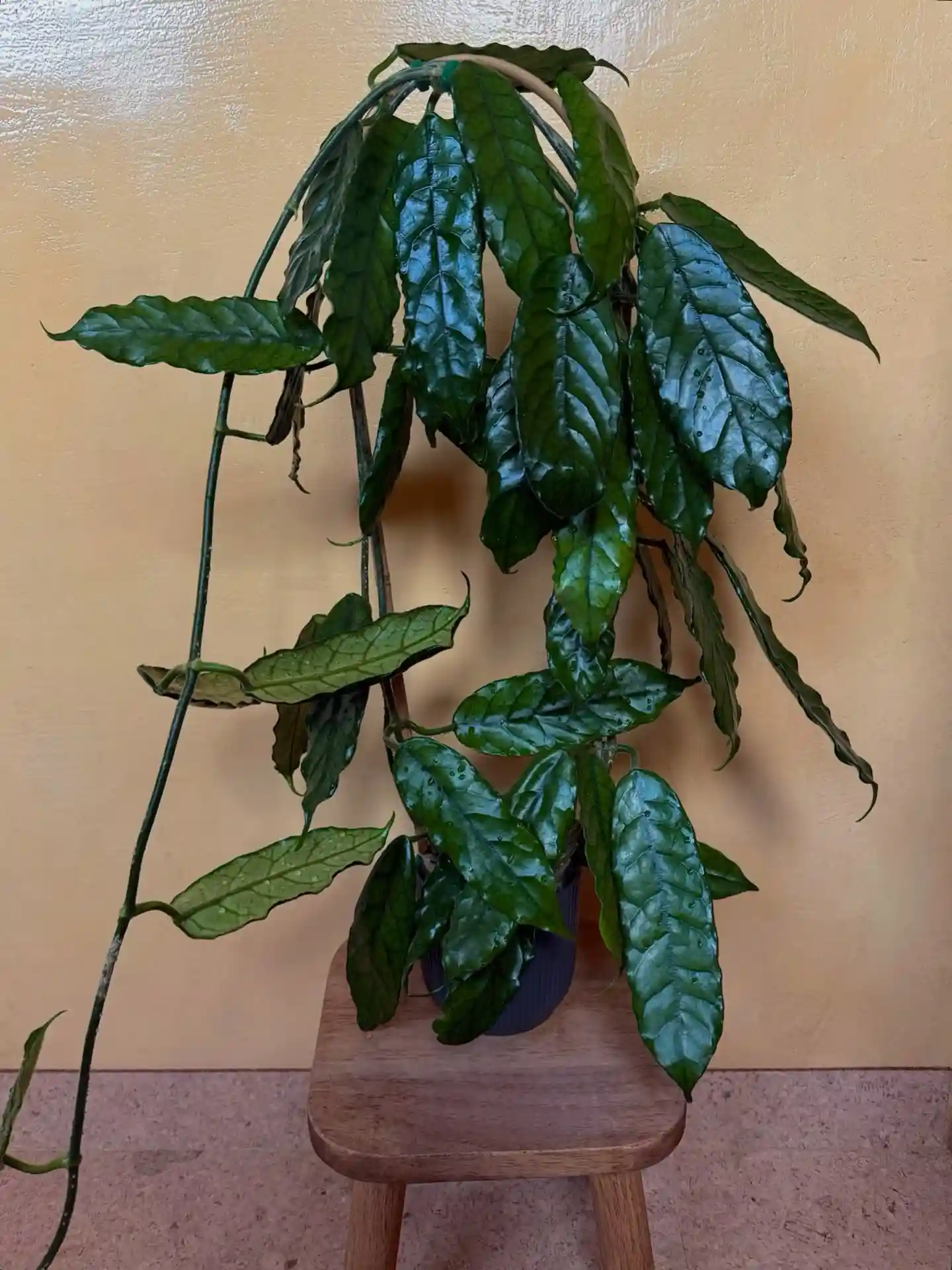
Hoya globulosa combines elongated leaves with deep, visible venation.
The foliage has a textured appearance, and some plants develop softly hairy leaf surfaces or stems.
Kew recognizes Hoya globulosa as an accepted species and lists the older Hoya villosa as a synonym. Its native range stretches from parts of the Himalayas into southern China and Indochina.
Give it good humidity without sacrificing airflow. This is not a plant I would squeeze into a dark corner simply because Hoyas can tolerate indoor conditions.
Bright filtered light will give it a much better start.
Best for: Textured foliage
Light: Bright filtered light
Growth habit: Climbing
26. Hoya Lauterbachii
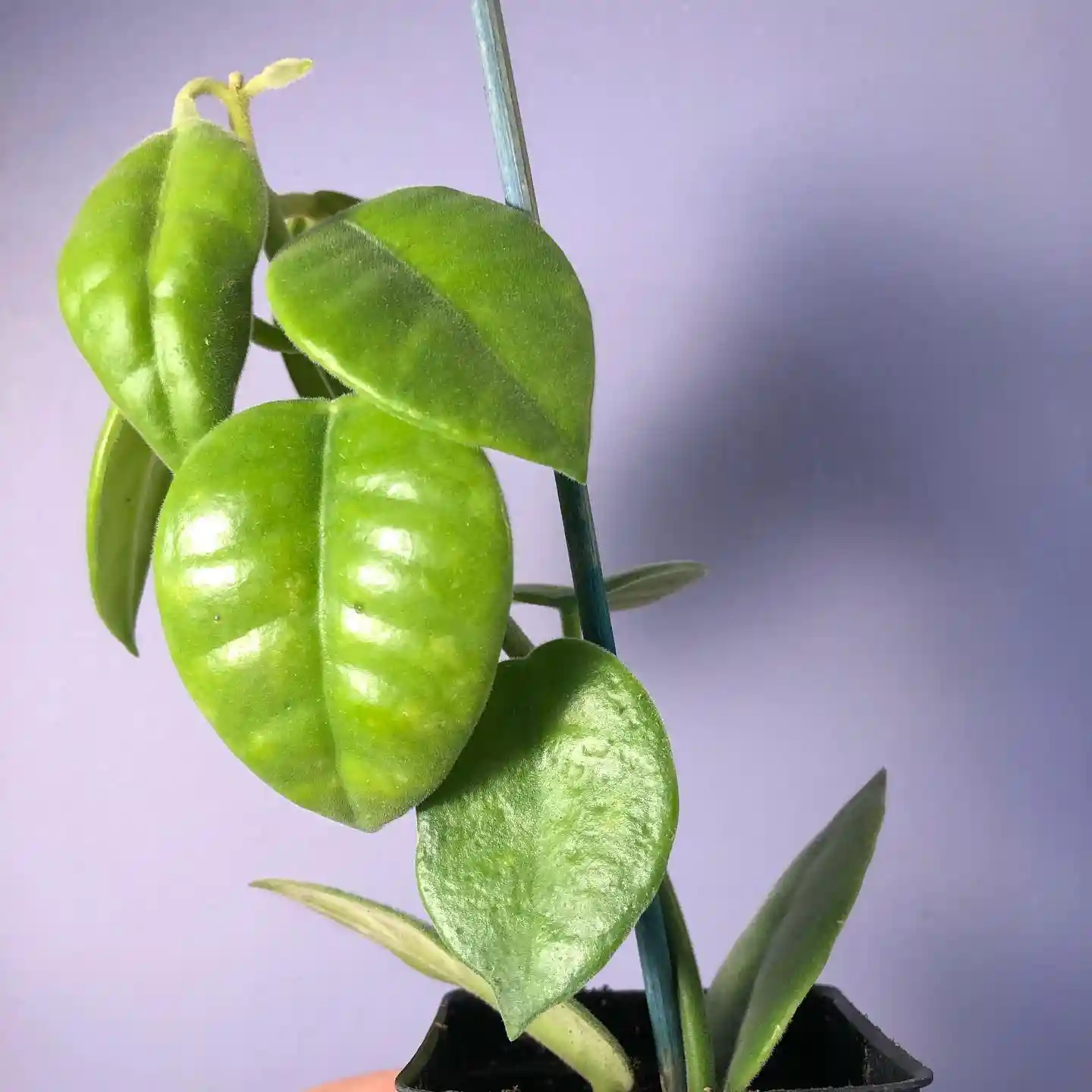
If you want a Hoya mainly for impressive flowers, Hoya lauterbachii belongs on the shortlist.
This species is known for producing unusually large flowers compared with the small starry clusters many people associate with Hoyas. The blooms can have warm reddish, copper, or yellow-brown coloring.
The trade-off is space and patience.
It’s a vigorous tropical plant that needs warmth, strong filtered light, and room to mature before you should expect its best flowering.
Give the vines a sturdy support early. This isn’t the Hoya I’d choose for a tiny desk planter.
Best for: Large flowers
Light: Very bright filtered light
Growth habit: Large climber
27. Hoya Callistophylla
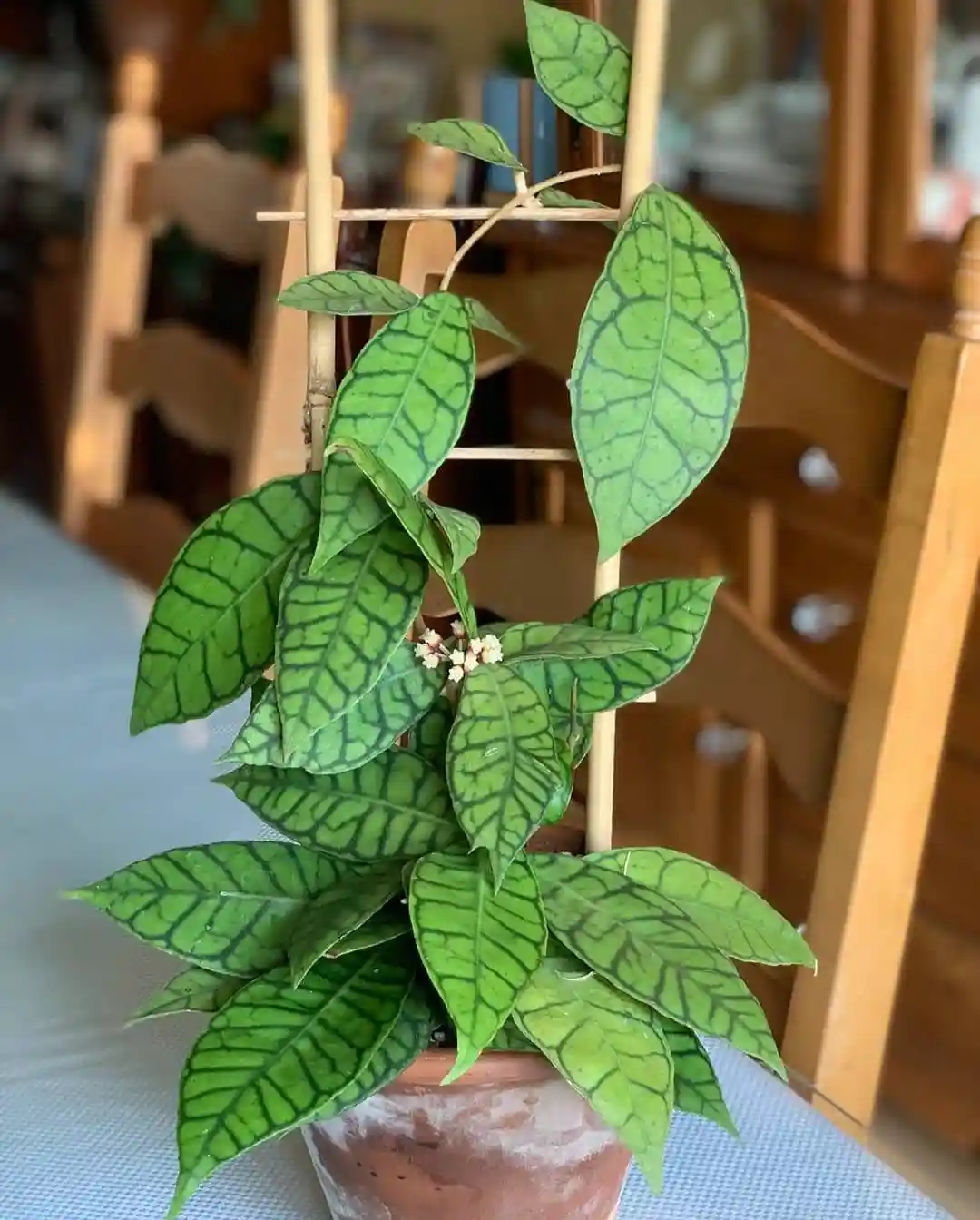
Few Hoyas have veins as bold as Hoya callistophylla.
Its pale to medium green leaves are crossed by dark green veins that form a striking pattern across the surface. Even without flowers, it easily works as a foliage plant.
Let the stems climb rather than burying those leaves in a hanging tangle.
Bright indirect light helps keep growth strong, while a chunky mix helps prevent water from sitting around the roots.
If you’re building a collection based on dramatically patterned leaves, I’d put callistophylla near the top of the list along with Hoya finlaysonii.
Best for: Dramatic leaf patterns
Light: Bright indirect light
Growth habit: Climbing
28. Hoya Serpens
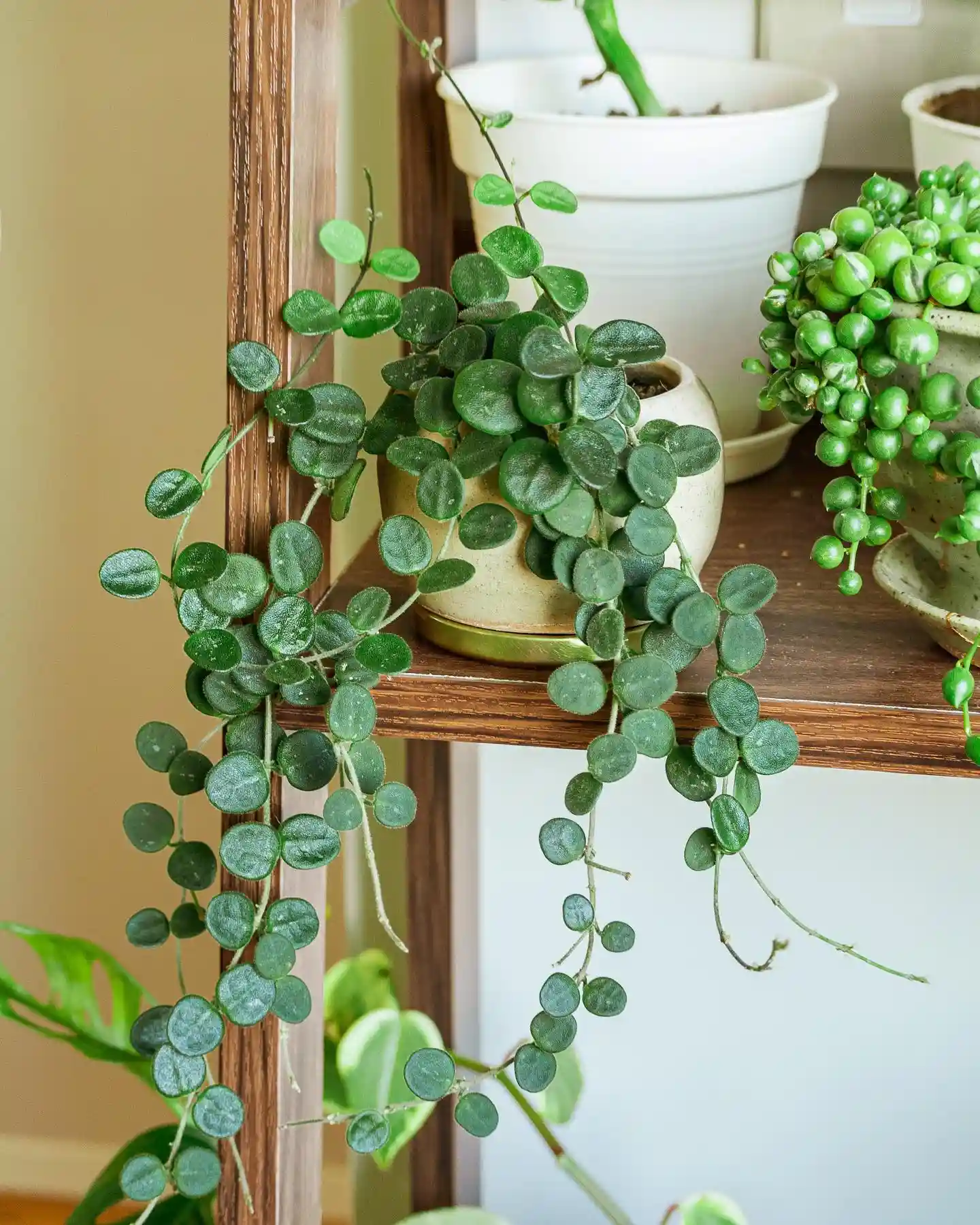
Hoya serpens is a miniature-looking species with small, rounded green leaves packed along thin stems.
Those tiny leaves can create a dense mat around a hanging pot, especially once multiple vines become established. The flowers are also small and fuzzy-looking, usually appearing in pale greenish to white shades.
This Hoya appreciates humidity and can be less forgiving of very dry indoor air than Hoya carnosa.
Use a loose mix and a smaller container that doesn’t hold huge amounts of wet soil.
It’s particularly useful for collectors who want contrast next to giant-leaf species.
Best for: Miniature foliage
Light: Bright indirect light
Growth habit: Creeping and trailing
29. Hoya Imbricata
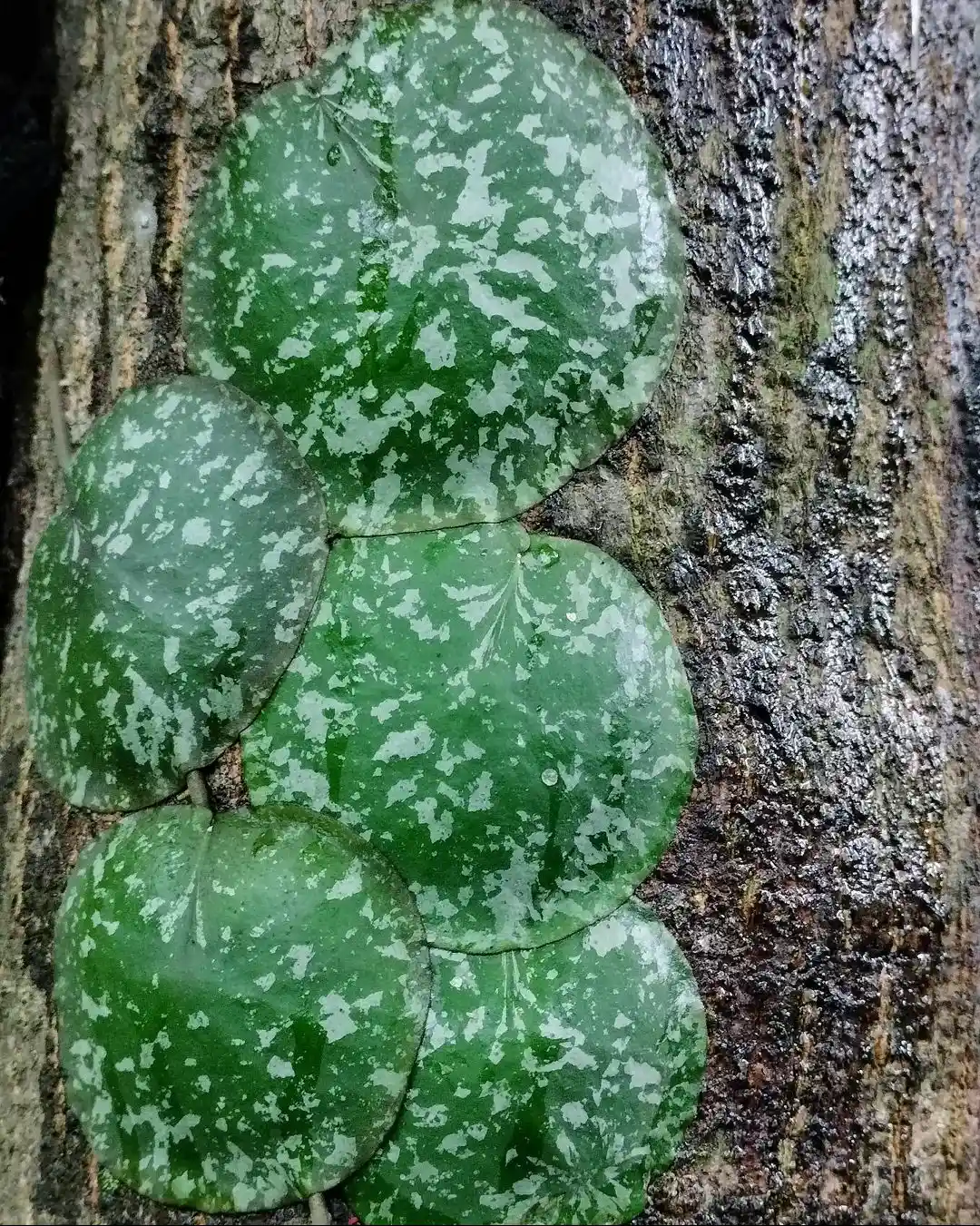
Hoya imbricata may be the strangest plant on this list.
In nature, its broad leaves can grow pressed closely against tree trunks and other climbing surfaces. That growth habit gives it an appearance very different from a standard hanging Hoya.
It’s best treated as a collector plant rather than a beginner choice.
Provide high humidity, warmth, and a surface it can climb against if you want to mimic its natural growth style. A mounted setup or carefully planned support makes much more sense than leaving the vines hanging freely.
Best for: Experienced collectors
Light: Bright filtered light
Growth habit: Clinging climber
30. Hoya Elliptica
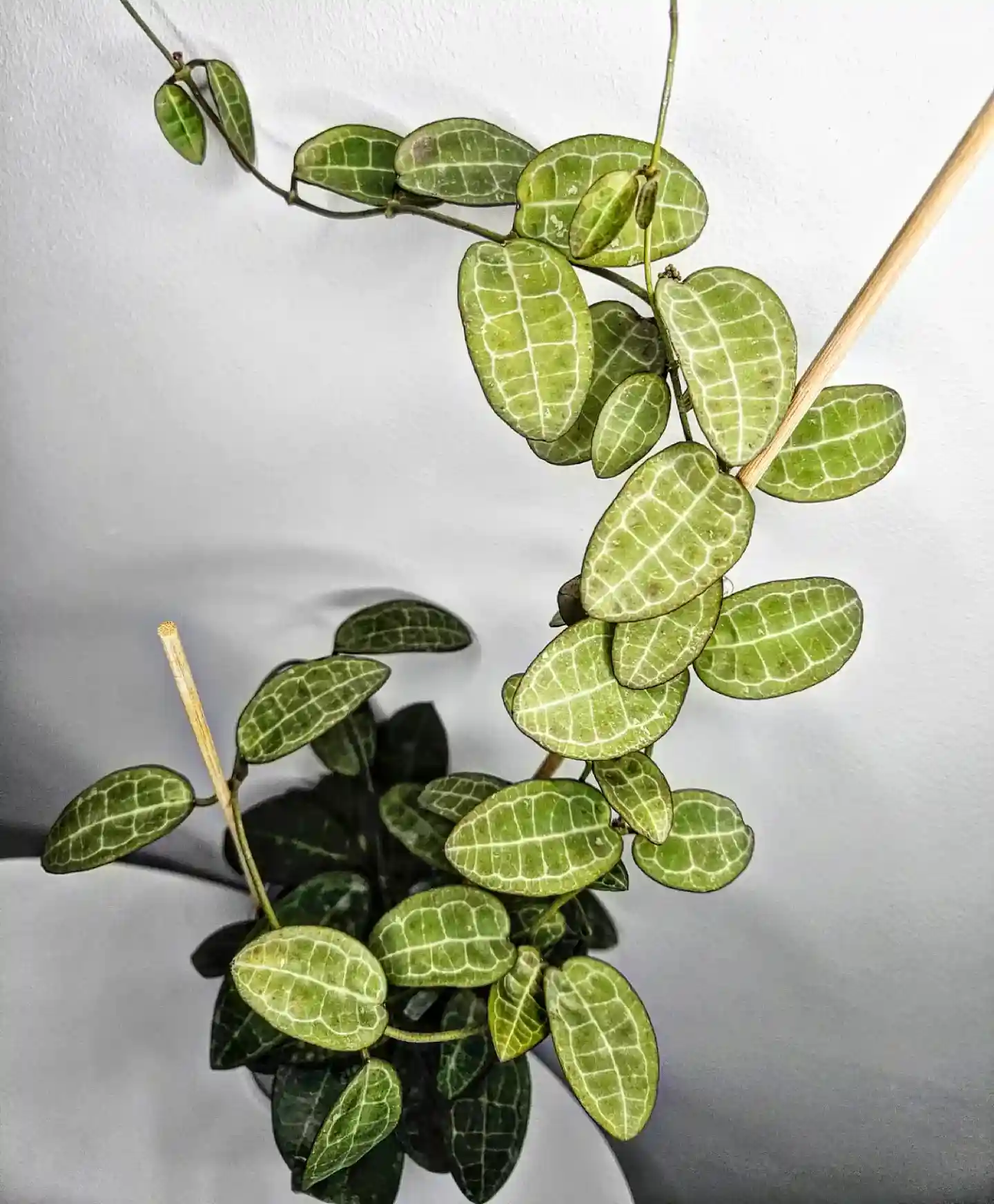
Hoya elliptica finishes the list with some of the most recognizable patterned foliage.
Its oval green leaves have a web of pale veins that creates a turtle-shell-like pattern across the surface.
That alone makes it worth growing, even before the plant produces its pale fuzzy flower clusters.
Keep it somewhere warm with higher humidity and good indirect light. I would avoid letting this one stay extremely dry for long periods, but the roots still need an airy mix that drains quickly.
A small trellis keeps the patterned leaves facing outward where you can enjoy them.
Best for: Veined foliage
Light: Bright indirect light
Growth habit: Climbing
Which Hoya Is Best for Beginners?
If this is your first Hoya, start with one of the tougher and easier-to-find varieties rather than beginning with a rare humidity-loving species.
My first choices would be:
- Hoya carnosa for easy all-around care
- Hoya australis for quicker vine growth
- Hoya pubicalyx for silver-flecked foliage
- Hoya obovata for large round leaves
- Hoya wayetii for a compact hanging plant
- Hoya carnosa ‘Krimson Princess’ if you want variegation
Common Hoyas generally do well with medium to bright indirect light, good drainage, and time for the potting mix to dry between waterings. They also tend to prefer being slightly snug in their pots rather than moved into oversized containers.
Basic Hoya Care
You don’t need a different care routine for every plant on this list, but you do need to pay attention to leaf thickness and where each species naturally grows.
Light
Aim for bright indirect light for most Hoyas.
Gentle morning sun can work for many types, but strong afternoon sunlight through hot glass can burn foliage.
Variegated and sun-stressed varieties generally need stronger light to produce their best coloring.
Water
Let the potting mix dry before watering again, especially with thick-leaved species such as Hoya carnosa, kerrii, and obovata.
Don’t follow a strict weekly schedule.
Feel the soil and lift the pot. A noticeably lighter container is often a better signal than counting days between waterings.
Soil
Hoyas are commonly epiphytic plants, so their roots do better in an open, well-drained medium rather than dense wet soil. NC State and Clemson both recommend loose, fast-draining growing media.
A simple Hoya mix can contain:
- Potting mix
- Orchid bark
- Perlite
Humidity
Common varieties often cope well with average indoor humidity.
Species such as linearis, serpens, thomsonii, and elliptica may appreciate more humidity.
Use a humidifier if necessary rather than compensating with constantly wet soil.
Don’t Remove Old Flower Spurs
This is one Hoya care rule worth remembering.
Many Hoyas rebloom from the same peduncles, or flower spurs. Don’t cut these short stalks off after the flowers fall unless they are clearly dead or damaged.
Hoya carnosa can produce flowers from the same peduncle for several years.
FAQs
How many types of Hoya are there?
The genus is much larger than the varieties normally sold as houseplants. NC State lists more than 550 Hoya species, and there are also many cultivated forms and hybrids.
What is the easiest Hoya to grow?
Hoya carnosa is one of the easiest starting choices. It handles normal household conditions well and is widely available.
Hoya australis and Hoya pubicalyx are also good choices for beginners who can provide strong indirect light.
Which Hoya has heart-shaped leaves?
Hoya kerrii is the famous heart-leaf or sweetheart Hoya.
Buy a rooted plant with a stem and nodes if you want it to develop into a vine. A single decorative leaf may remain as one leaf for years.
Which Hoya has the biggest leaves?
Several Hoyas develop large foliage, but Hoya latifolia is one of the best-known large-leaf species commonly collected indoors.
Give it sturdy support as it matures.
Which Hoya has the smallest leaves?
Hoya serpens, Hoya curtisii, Hoya krohniana, and Hoya ‘Mathilde’ are good options if you prefer small foliage.
They work particularly well in smaller hanging pots.
Do all Hoyas flower?
Hoyas are flowering plants, but indoor flowering depends on the species, plant maturity, light, and growing conditions.
Some plants may need several years before producing their first flowers.
Should Hoyas climb or trail?
Either can work.
Species with long climbing vines, such as australis, pubicalyx, finlaysonii, and latifolia, look good on trellises. Hoya linearis, curtisii, retusa, and wayetii are particularly attractive when allowed to hang.