ZZ Plant Care: A Complete Indoor Growing Guide

ZZ plant care is simple once you understand one rule: let the soil dry before watering again. Its thick stems and underground rhizomes store moisture, helping it survive missed watering, dry indoor air, and changing household conditions.
The glossy leaflets also stay attractive without frequent pruning. A ZZ plant tolerates lower light, but it grows faster and produces sturdier stems in bright indirect light.
This guide covers watering, light, soil, propagation, repotting, and the common problems that can damage an otherwise resilient plant.
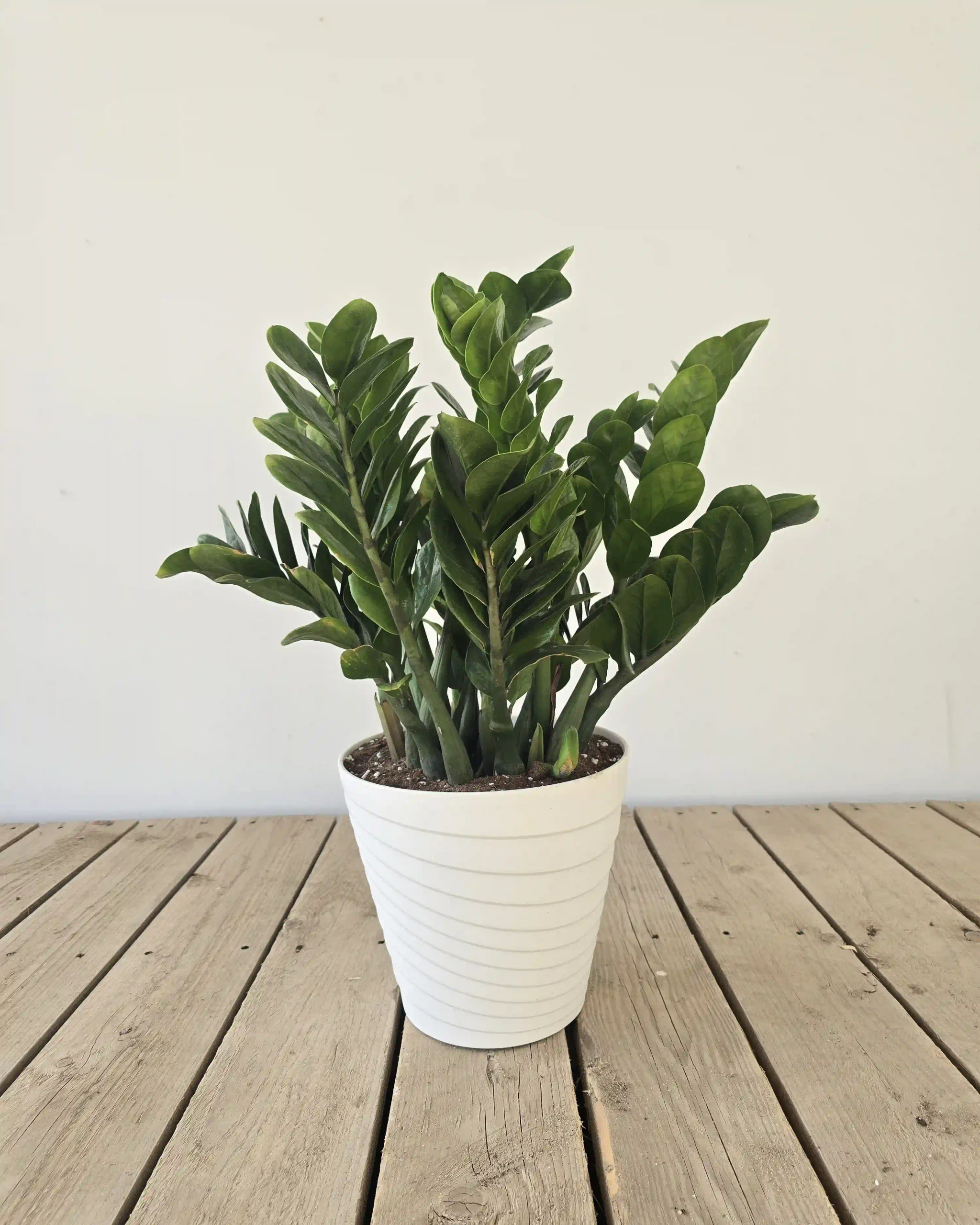
ZZ Plant at a Glance
| Care Requirement | Recommended Conditions |
| Botanical name | Zamioculcas zamiifolia |
| Common name | ZZ plant, Zanzibar gem |
| Plant type | Tropical perennial |
| Mature indoor size | Usually 2 to 4 feet |
| Light | Medium to bright indirect light |
| Water | After the soil dries fully or almost fully |
| Soil | Loose, fast-draining potting mix |
| Temperature | 65°F to 85°F |
| Humidity | Average household humidity |
| Growth rate | Slow to moderate |
| Difficulty | Easy |
| Main feature | Glossy foliage and water-storing rhizomes |
Why Grow a ZZ Plant?
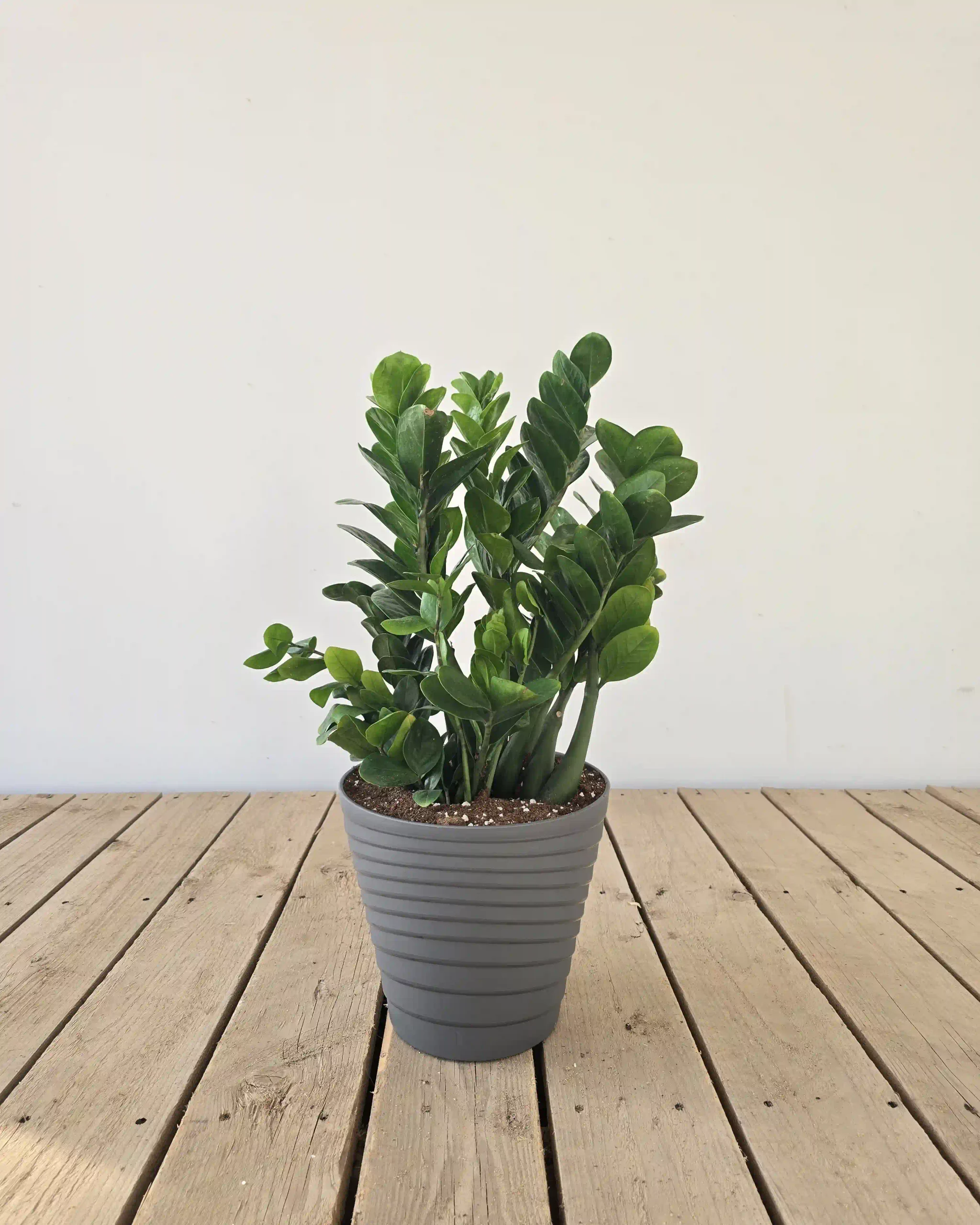
The ZZ plant has smooth, shiny leaflets arranged along thick upright stems. Its tidy growth adds structure to bedrooms, living rooms, offices, and entryways without creating a loose or untidy display.
Underground rhizomes store water and nutrients, helping the plant cope with periods of neglect. This makes it a good choice for busy owners, frequent travelers, and anyone who tends to water too little rather than too often.
- Tolerates irregular watering
- Adapts to several indoor light levels
- Handles average household humidity
- Requires little pruning
- Grows well in offices and apartments
How Much Light Does a ZZ Plant Need?
Medium to bright indirect light provides the best balance between steady growth and healthy color. An east-facing window or a position a few feet from a brighter window usually works well.
ZZ plants tolerate low light, but this does not mean they can grow in complete darkness. In a dim room, growth becomes much slower, stems may stretch, and the soil takes longer to dry.
Protect the foliage from intense afternoon sun. Strong direct light may leave pale or brown scorched patches, particularly if the plant has been grown in shade.
- Low light: The plant survives, but new growth may be slow.
- Suitable light: Stems remain sturdy and growth is more regular.
- Excessive sun: Leaflets may bleach, yellow, or develop dry patches.
Rotate the container every few weeks so the stems grow more evenly rather than leaning toward one side.
How Often Should You Water a ZZ Plant?
Allow the potting mix to dry fully or nearly fully before watering again. Push a finger or wooden stick several inches into the soil rather than judging only the surface.
When the soil is dry, water thoroughly until excess moisture drains from the bottom. Empty the saucer or decorative outer pot so the roots are not left standing in water.
A fixed weekly schedule is rarely suitable. Watering frequency changes according to:
- Available light
- Pot size
- Soil composition
- Indoor temperature
- Season
- Root-to-soil ratio
A plant in bright summer light may need water water sooner than one growing in a dim winter room. Always check the soil first.
Read also: 30 Easy Care Indoor Plants for Beginners
Signs Your ZZ Plant Needs Water
A thirsty ZZ plant may develop slightly wrinkled stems, curling leaflets, dry soil, or a container that feels noticeably lighter when lifted.
Do not wait for severe shrivelling before watering every time. Although the rhizomes store moisture, repeated extreme drying may slow growth and cause older leaflets to fall.
Dry soil combined with yellow foliage can be confusing. Check the rhizomes and roots before adding water, because yellowing is more commonly associated with excess moisture than thirst.
Signs You Are Overwatering
Overwatering is the most common ZZ plant care mistake. The rhizomes need oxygen around them and can rot when surrounded by wet, compacted soil for long periods.
Warning signs include:
- Yellowing stems or leaflets
- Soft, collapsing stems
- A sour smell from the soil
- Dark, mushy roots
- Soft or discolored rhizomes
- Fungus gnats around the pot
- Soil that remains wet for many days
If the damage is minor, stop watering and let the mix dry. For widespread rot, remove the plant, cut away soft roots and rhizomes with a clean tool, and repot the healthy sections in fresh, dry soil.
Best Soil for a ZZ Plant
Use a loose potting mix that drains quickly but does not become hard and compacted. Standard indoor potting soil may hold too much moisture when used alone.
A practical mixture is:
- Two parts indoor potting soil
- One part perlite or pumice
- One part fine orchid bark or succulent mix
The exact ingredients are less important than the result. Water should move through the pot easily while the mix retains enough structure to support the thick stems.
Do not place stones at the bottom to create drainage. Use a container with open drainage holes and an airy potting mix throughout.
Choosing the Right Pot
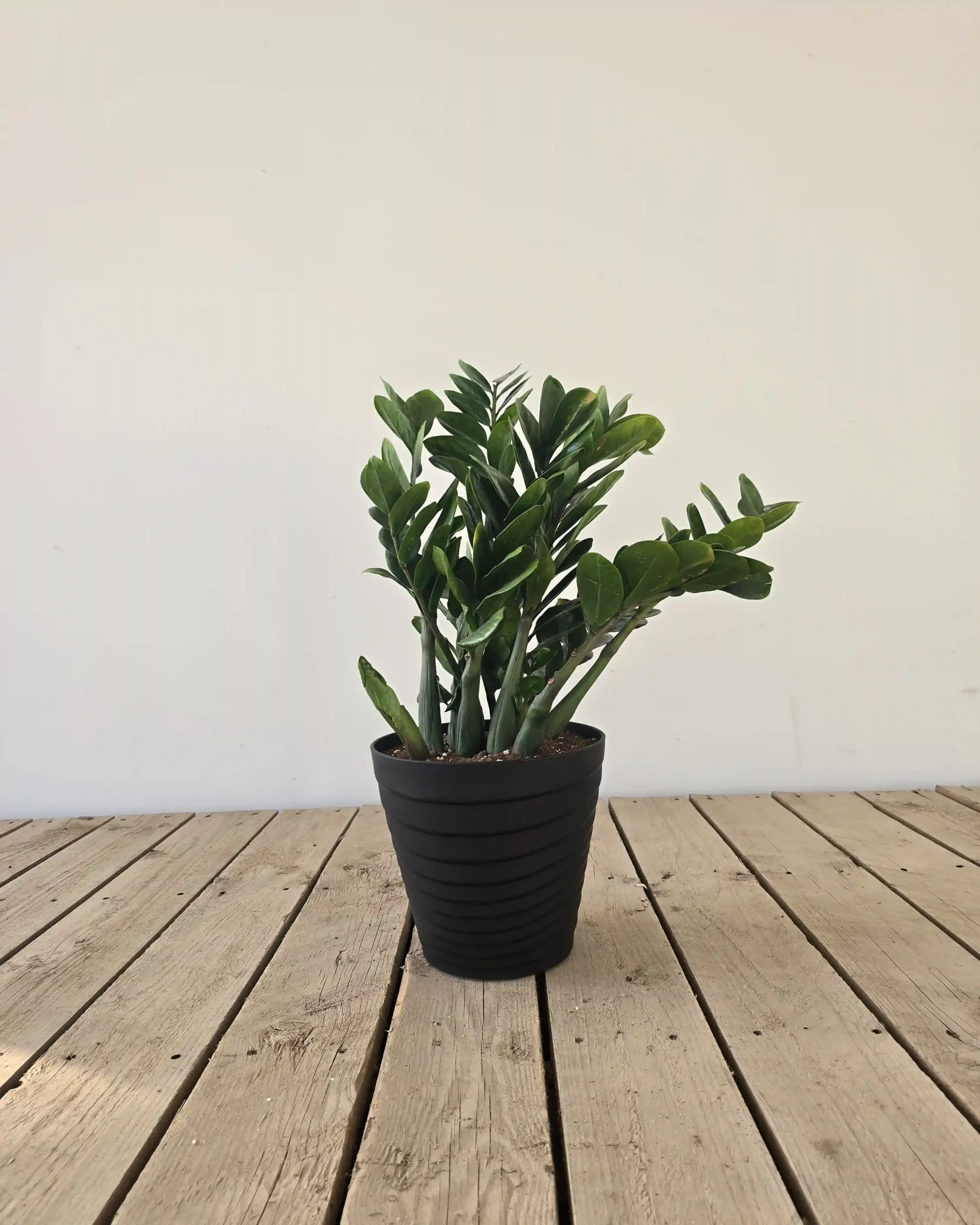
A ZZ plant performs well in a container that is only slightly wider than its rhizome cluster. An oversized pot surrounds the plant with excess soil that takes too long to dry.
Terracotta allows moisture to escape more quickly, making it helpful for people who tend to overwater. Plastic and glazed ceramic pots retain moisture longer and may suit warmer, brighter rooms.
The expanding rhizomes can press firmly against the container and may eventually distort or crack a thin plastic pot. Check crowded plants regularly rather than waiting for the pot to split.
Temperature and Humidity
ZZ plants prefer temperatures between 65°F and 85°F. Ordinary household temperatures are generally suitable, provided the plant is protected from cold drafts and sudden changes.
Keep it away from:
- Air-conditioning vents
- Cold exterior doors
- Open winter windows
- Direct airflow from heaters
- Unheated rooms during cold weather
Average indoor humidity is usually sufficient. A ZZ plant does not need regular misting or a humidifier. Dusty leaves benefit more from gentle cleaning than from frequent spraying.
Read also: 21 Low Light Houseplants for Rooms
How to Clean ZZ Plant Leaves
Dust can dull the naturally glossy foliage and reduce the amount of light reaching the leaves. Wipe each leaflet with a soft damp cloth every few weeks or whenever a visible layer develops.
You can also rinse a manageable plant under a gentle shower. Allow the excess water to drain fully before returning it to its normal position.
Avoid commercial leaf-shine products. The plant is naturally glossy and does not need an oily coating. Support each stem while cleaning so it does not bend under pressure.
Fertilizing a ZZ Plant
Feed lightly during spring and summer when the plant is actively producing new growth. A balanced liquid houseplant fertilizer diluted according to its label is enough every four to eight weeks.
ZZ plants grow slowly and do not need heavy feeding. Too much fertilizer can produce salt buildup, brown tips, or damaged roots.
Reduce or stop feeding during autumn and winter if growth has slowed. Never fertilize a plant with rotten roots, extremely dry soil, or active pest damage. Correct the underlying problem first.
How Fast Does a ZZ Plant Grow?
ZZ plants grow slowly to moderately indoors. New stems usually emerge directly from the soil rather than branching from existing stems.
A new shoot may grow quickly once it appears, but the plant can pause for long periods between shoots. This is normal, particularly in winter or lower light.
To support steady growth:
- Provide bright indirect light
- Keep the plant warm
- Water only after the soil dries
- Use an airy potting mix
- Feed lightly during active growth
- Repot only when genuinely crowded
Do not expect fertilizer to turn a naturally slow plant into a fast grower.
How to Repot a ZZ Plant
Repot when the rhizomes crowd the container, roots grow through the drainage holes, or the pot becomes distorted. This may be needed every two to three years, though timing depends on growth.
Spring or early summer is the easiest time because warmth supports root recovery.
- Water only if the soil is extremely dry and difficult to remove.
- Slide the root ball carefully from the container.
- Check the roots and rhizomes for soft or dark sections.
- Remove damaged material with a clean cutting tool.
- Choose a pot only 1 to 2 inches wider.
- Add fresh, fast-draining potting mix.
- Position the rhizomes just below the soil surface.
- Wait several days before watering if roots were cut.
Wear gloves because the plant’s sap may irritate sensitive skin.
How to Propagate a ZZ Plant
ZZ plants can be propagated by division, stem cuttings, or individual leaflets. Division is the fastest method, while leaf propagation requires patience.
Propagation by Division
Division works well when a mature plant has several established rhizome clusters.
- Remove the plant from its pot.
- Gently separate the rhizome clusters.
- Use a clean knife if the roots cannot be pulled apart.
- Let cut surfaces dry briefly.
- Plant each division in an appropriately sized pot.
- Wait a few days before watering heavily.
Each division should have healthy roots, a firm rhizome, and at least one established stem.
Propagation From Stem Cuttings
Cut a healthy stem close to the soil line and place it in water or a loose, lightly moist potting mix.
Water propagation lets you watch the roots develop, but rhizome formation can take several months. Change the water periodically and keep the cutting in bright indirect light.
Transfer it to soil after it has formed roots and a small rhizome. Use a small pot to avoid surrounding the young root system with too much wet soil.
Propagation From Individual Leaves
Remove a healthy leaflet with a small portion of its base. Allow the cut end to dry briefly, then insert it into a loose propagation mix.
Keep the medium only slightly moist. A tiny rhizome and roots may eventually form beneath the soil, but new shoots can take many months.
This method is interesting but slow. Use division if you want a larger plant more quickly.
How to Prune a ZZ Plant
ZZ plants do not need routine shaping because each stem grows directly from the rhizome. Cutting the top from a stem will not make it branch like a ficus or philodendron.
Remove an unwanted stem at soil level with a clean cutting tool. This is suitable for stems that are:
- Completely yellow
- Broken or bent
- Soft from damage
- Severely scorched
- Growing in an unwanted direction
Do not remove healthy green stems simply because the plant grows slowly. Each one supports the rhizomes through photosynthesis.
Common ZZ Plant Problems
Yellow Leaves
Yellow foliage most often results from excessive watering, poor drainage, or soil that stays wet too long.
Check moisture below the surface. If the soil is wet and stems feel soft, inspect the roots and rhizomes for rot.
A single older lower leaflet may yellow naturally. Widespread yellowing deserves closer attention.
Brown Leaf Tips
Brown tips may result from extreme dryness, fertilizer buildup, damaged roots, or intense sunlight.
Review the full care routine rather than immediately adding more water. Flush accumulated fertilizer salts from healthy soil and move the plant away from harsh sun if necessary.
Drooping Stems
Some older stems naturally arch outward as they become long. Sudden collapse, however, may indicate rotten rhizomes or severe thirst.
Check whether the stem base is firm. A soft, dark base usually points to rot, while dry soil and wrinkled stems suggest the plant needs water.
Wrinkled Stems
Wrinkling generally means the plant has used much of the water stored in its stems and rhizomes.
If the soil is completely dry and the rhizomes remain firm, water thoroughly. If the soil is wet, root damage may be preventing the plant from absorbing moisture.
No New Growth
Slow growth is normal for ZZ plants. Low light, cool temperatures, winter conditions, an oversized pot, or damaged roots can extend the pause between new shoots.
Move the plant to brighter indirect light and review its watering. Do not compensate with heavy fertilizer.
Brown or Bleached Patches
Pale brown patches commonly appear after exposure to strong direct sunlight. The damaged areas will not turn green again.
Move the plant gradually into filtered light. Retain partly damaged leaves if they still contain enough healthy green tissue.
Common ZZ Plant Pests
ZZ plants are not especially prone to pests, but they can develop spider mites, mealybugs, scale, or aphids.
Inspect:
- Leaflet undersides
- Stem joints
- New shoots
- Areas close to the soil
- Sticky or discolored foliage
Isolate an affected plant and wipe away visible pests. Apply a suitable treatment according to its label, repeating as directed because one application may not remove every life stage.
Is a ZZ Plant Toxic?
ZZ plants contain insoluble calcium oxalate crystals. Chewing the plant can irritate the mouth and may cause drooling, discomfort, or digestive upset in people and pets.
Place it beyond the reach of children, cats, and dogs. Wear gloves when dividing or pruning if you have sensitive skin, and wash your hands afterward.
Contact a medical professional, veterinarian, or poison service if ingestion occurs. Do not rely on home remedies.
Best Places to Display a ZZ Plant
A ZZ plant’s upright stems and glossy foliage work well in uncluttered spaces. Its narrow footprint makes it useful where a spreading palm or monstera would feel too large.
Suitable positions include:
- Beside a home-office desk
- In a bright bedroom corner
- Near an east-facing window
- On a wide entryway console
- Beside a bookcase
- In a living room with filtered light
A darker room can work temporarily, but some natural or grow light is still needed for long-term health.
Final Thoughts
Successful ZZ plant care depends more on restraint than constant attention. Give the plant filtered light, an airy potting mix, and a container with drainage. Then wait until the soil has dried before watering thoroughly.
Do not worry if weeks pass without visible growth. New stems emerge from stored energy in the rhizomes and may appear in short bursts. Stable conditions are more helpful than repeated moving, heavy feeding, or frequent watering.
Frequently Asked Questions
How often should I water a ZZ plant?
Water only after the potting mix has dried fully or almost fully. This may be every few weeks, but the correct timing depends on light, temperature, pot size, and season.
Can a ZZ plant live in low light?
It can tolerate low light, but growth will be slow. Medium to bright indirect light produces stronger stems and more regular new growth.
Does a ZZ plant like to be root-bound?
It tolerates a slightly snug pot, but severely crowded rhizomes may distort or crack the container. Repot into a container only 1 to 2 inches wider.
Why are my ZZ plant leaves turning yellow?
Overwatering and poor drainage are the most common reasons. Check whether the soil is still wet and inspect soft stems or rhizomes for rot.
Can I grow a ZZ plant from one leaf?
Yes, a single leaflet can eventually form roots and a small rhizome. The process is slow and may take many months before a new shoot appears.