Spider Plant Care: How to Keep It Healthy Indoors

Spider plant care is easier when you stop watering by the calendar. This tough houseplant can handle an occasional missed drink, yet soggy soil, harsh sun, and too much fertilizer quickly leave marks on its leaves.
Give it bright indirect light, water after the top inch of soil dries, and use a pot with drainage. This guide covers the full routine, from choosing a healthy plant to fixing brown tips and growing new spider plants from its babies.
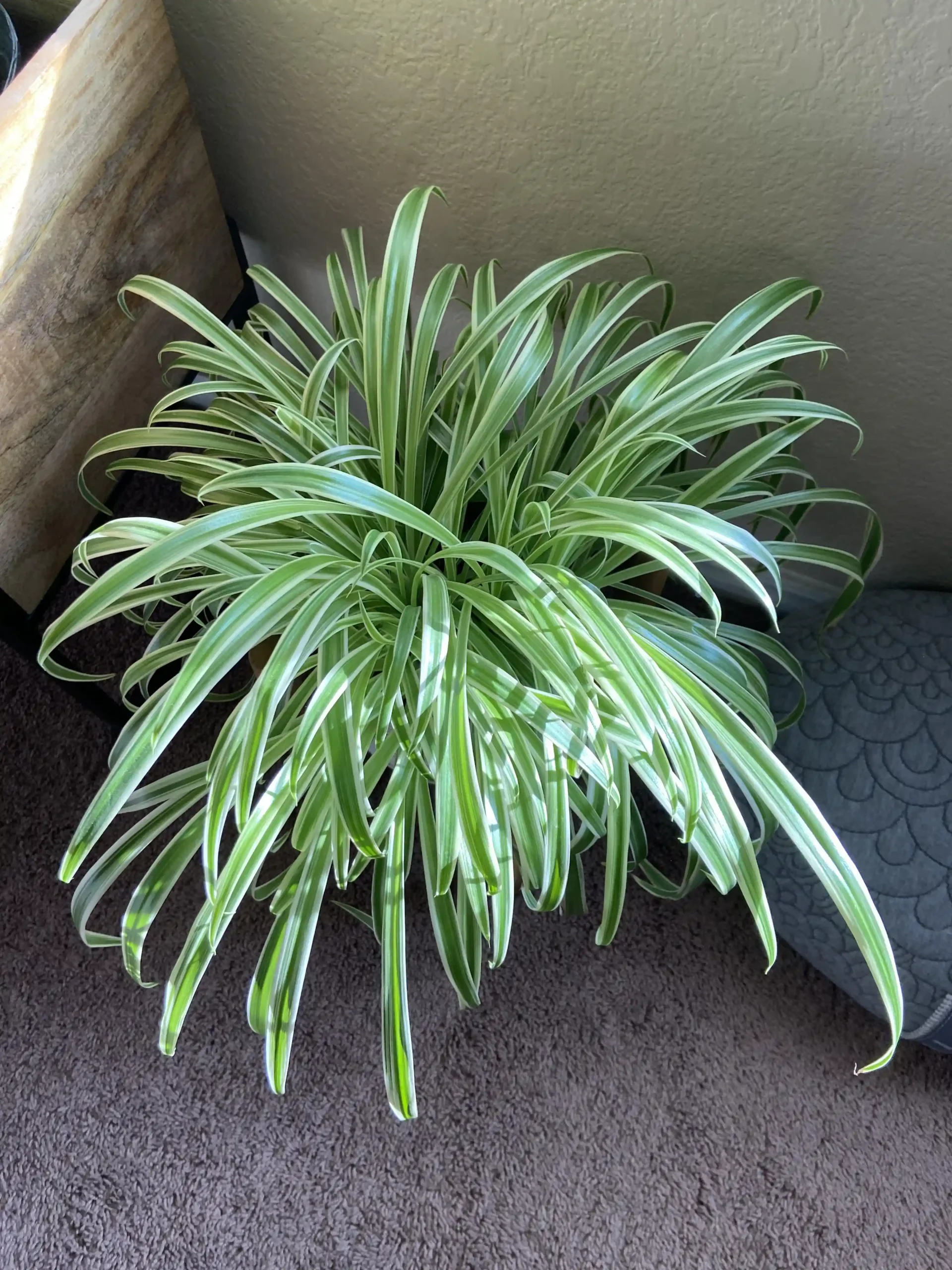
Spider Plant Care at a Glance
| Care need | Best conditions |
| Botanical name | Chlorophytum comosum |
| Common names | Spider plant, ribbon plant, airplane plant, spider ivy |
| Mature indoor size | About 12 to 15 inches tall, with runners up to 2 feet long |
| Light | Bright, indirect light; tolerates lower light |
| Water | Water when the top 1 inch of soil feels dry |
| Soil | Loose, well-draining indoor potting mix |
| Temperature | Normal room temperatures; protect from temperatures below 45°F (7°C) |
| Humidity | Average household humidity |
| Fertilizer | Half-strength balanced liquid feed every 6 to 8 weeks in spring and summer |
| Pet safety | Listed as non-toxic to cats and dogs by the ASPCA |
What Is a Spider Plant?
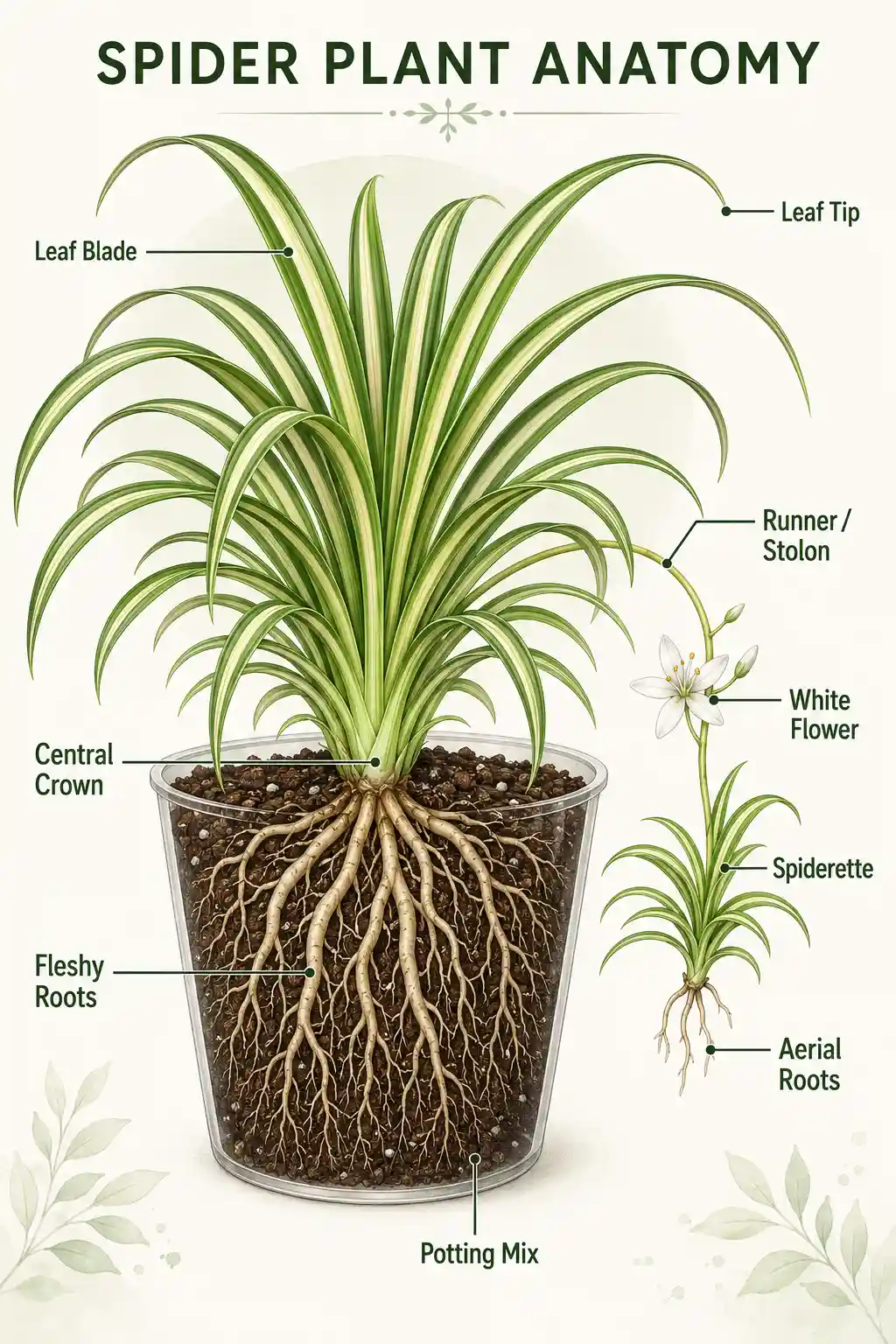
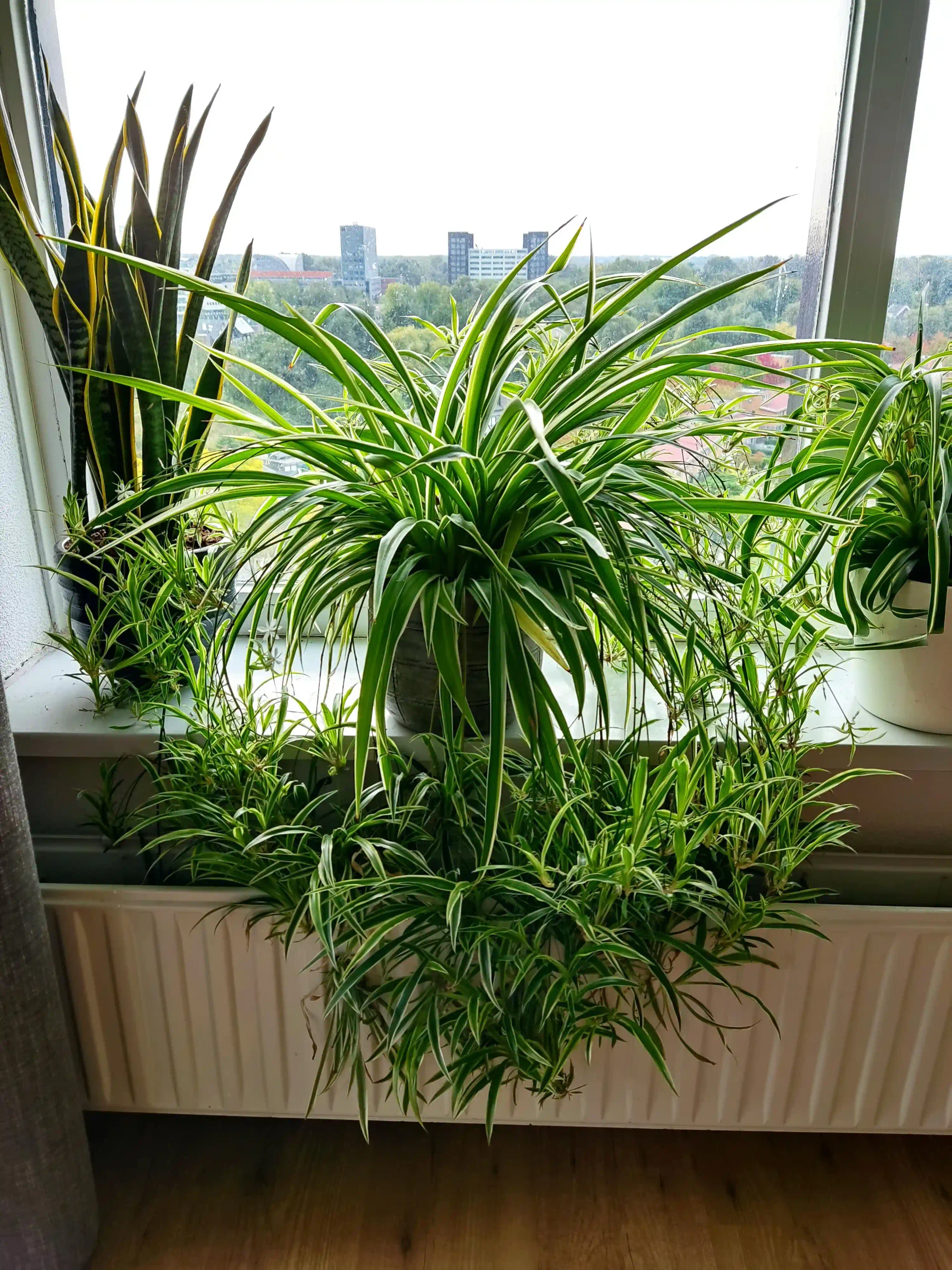
The spider plant is a clump-forming perennial native to coastal South Africa. Its narrow leaves grow from a central crown and bend outward like a fountain. Mature plants send out long stems with small white flowers, followed by rooted plantlets often called spider babies or spiderettes.
Those thick, pale roots store water, which helps the plant survive an occasional missed drink. They still rot in wet soil.
The University of Wisconsin Extension notes that spider plants usually reach 12 to 15 inches tall and grow well in medium to bright indoor light. When I check an unhappy plant, I look at its soil and drainage first.
Choosing a Spider Plant Variety
Common Chlorophytum comosum cultivars need similar care, so choose one for its leaf pattern and shape.
| Variety | Leaf pattern | Growth habit | Best use |
| ‘Variegatum’ | Green center, white margins | Broad and arching | Hanging basket |
| ‘Vittatum’ | Cream center, green margins | Long leaves | High shelf |
| ‘Bonnie’ | Curled green-and-white leaves | Compact | Small space |
| ‘Ocean’ | Green center, cream margins | Neat clump | Tabletop |
| ‘Milky Way’ | Broad cream center | Pale appearance | Bright shelf |
| Green form | Solid green | Leafy clump | Lower-light room |
The Royal Horticultural Society’s spider plant guide lists compact, curled, solid-green, and reverse-variegated forms. ‘Bonnie’ suits a small shelf, while ‘Vittatum’ looks best trailing from above.
How Much Light Does a Spider Plant Need?
Bright indirect light gives the best mix of fast growth, clear striping, and plantlet production. A spot near an east-facing window often works without adjustment.
Near a sunny south- or west-facing window, move the plant several feet back or filter the light with a sheer curtain.
Low light will not kill a spider plant, but growth slows and variegated leaves may become greener. Direct midday or afternoon sun can bleach the foliage, create crisp brown patches, or turn leaves yellow. The RHS also warns that strong summer sun can scorch variegated plants.
Faded stripes and stretched growth point to too little light. Dry tan patches on the window-facing side point to too much. Rotate the pot every week or two for even growth.
How Often Should You Water a Spider Plant?
Water when the top inch of potting mix feels dry, not because a set number of days has passed. Push a finger into the soil near the edge of the pot.
If it feels cool and damp, wait. If it feels dry and the pot seems light when lifted, it is time to water.
Pour water slowly across the soil until it runs from the drainage holes. Let the pot drain, then empty its saucer or cover pot.
Watering may be weekly in a warm, bright room and much less frequent in winter or low light. Let the soil test decide.
Pale, folding leaves in dry soil usually mean thirst. Soft yellow leaves, wet soil, and a sour smell point to overwatering. Soil that stays wet for a week may be too dense, or the pot may be too large or blocked.
Does a Spider Plant Need Filtered Water?
Tap water is often fine. If new leaves keep developing brown tips, try rainwater, distilled water, or suitable filtered water.
Water deeply enough to carry salts through the drainage holes. Iowa State University Extension lists water quality and salt buildup among several causes of brown tips.
Best Soil and Pot for Spider Plants
Use fresh indoor potting mix that holds some moisture without becoming muddy. Add perlite or fine orchid bark if the mix stays wet too long.
The pot needs an open drainage hole. I prefer a light nursery pot inside a decorative cover pot because it is easy to lift, water, and drain.
A slightly snug pot can support plantlet production. Roots pushing through the holes, a cracked pot, very fast drying, or stalled growth mean it is time to move up 1 to 2 inches.
How to Repot a Spider Plant
Spring is a good repotting time, but a badly crowded plant can be moved whenever needed. The RHS suggests repotting every one or two years once roots fill the container.
- Water the plant lightly the day before repotting if the soil is very dry.
- Choose a clean pot with drainage that is only 1 to 2 inches wider.
- Slide out the root ball and loosen only the tightly circling outer roots.
- Cut away any black, mushy, or bad-smelling roots with clean scissors.
- Add fresh potting mix and set the crown at the same level it grew before.
- Fill around the roots without pressing the mix into a hard block.
- Water thoroughly, let the pot drain, and return it to bright indirect light.
Keep the crown, where leaves meet roots, at soil level. A very large pot holds too much wet mix and raises the risk of rot.
Temperature and Humidity
Normal indoor temperatures suit spider plants. Keep them away from cold windows in winter, strong air-conditioning drafts, and direct heat from radiators.
North Carolina Extension advises keeping Chlorophytum comosum above 45°F (7°C).
Average household humidity is usually enough. In very dry winter air, group plants or use a humidifier. Misting does not raise room humidity for long.
How to Fertilize a Spider Plant
A spider plant needs little fertilizer. Use a balanced liquid houseplant feed at half strength every 6 to 8 weeks in spring and summer.
Wait several weeks after repotting because fresh mix may already contain nutrients.
Stop feeding in fall and winter. Too much can leave salt crust, burn tips, and reduce plantlets. If crust appears, pause fertilizer and flush the mix with clean water. Replace heavily crusted or compacted soil.
Pruning and Cleaning
Trim brown tips with clean scissors, following the leaf’s pointed shape. Leave a thin brown edge so you do not cut healthy tissue. Remove a fully yellow leaf at its base.
Wipe dusty leaves with a damp cloth or rinse them with lukewarm water. Skip leaf-shine products.
A badly damaged plant can be cut back to 2 to 3 inches above the soil. Correct the cause and let new leaves grow from the firm center. This is a rescue step, not routine pruning.
How to Propagate Spider Plant Babies
The easiest method is to root a baby in soil while it remains attached to the mother plant.
- Choose a healthy spiderette with small root nubs below its leaves.
- Fill a 3- to 4-inch pot with lightly moist potting mix.
- Set the baby on the surface and pin its base down with bent wire or a paper clip.
- Keep the mix lightly moist in bright indirect light.
- Tug very gently after two or three weeks. Resistance means roots have formed.
- Cut the runner between the rooted baby and the mother plant.
You can also plant a detached spiderette with root nubs. For water propagation, submerge only its root area, change cloudy water, and pot it once several roots form.
To divide a crowded plant, separate the root ball into sections. Each needs healthy roots and a leafy growing point. Pot each piece at its former depth.
Why Is My Spider Plant Not Making Babies?
A young plant may need a year before it forms plantlets. Low light, cool conditions, an oversized pot, and heavy feeding can also delay them. Some types do not make hanging babies.
Give a mature plant brighter indirect light, keep it mildly root-bound, and feed lightly. Leave healthy runners after their first flowers fade because babies form along those stems.
Do not use severe drought to force growth.
Spider Plant Care Through the Seasons
Spring
Check for crowded roots, repot or divide if needed, and restart light feeding.
Summer
Check small hanging pots more often and shade them from hot sun. Introduce outdoor bright shade gradually.
Fall
Bring outdoor plants in before cold nights. Inspect the leaves and pot for pests, then reduce feeding.
Winter
Water less often, give the brightest indirect light available, and keep the pot away from heaters. Hold fertilizer until spring growth returns.
Common Spider Plant Problems
| Symptom | Likely cause | What to do |
| Brown leaf tips | Dry air, inconsistent watering, salt buildup, or water quality | Correct watering first, flush the mix, and try rainwater or filtered water |
| Soft yellow leaves with wet soil | Overwatering or poor drainage | Let the mix dry, clear drainage holes, and inspect roots if the smell is sour |
| Pale, folded, limp leaves with dry soil | Underwatering | Water fully and adjust how often you check the pot |
| Tan or bleached patches | Direct sun scorch | Move the plant behind a sheer curtain or farther from the window |
| Fading white stripes | Light is too low | Move it into brighter indirect light |
| No new growth despite proper care | Roots are severely crowded | Repot one size larger or divide the clump |
| Cottony clusters or sticky leaves | Mealybugs, scale, or aphids | Isolate the plant, rinse it, remove visible pests, and use a labeled houseplant treatment |
| Black, mushy roots or crown | Root rot | Remove rotten tissue and repot healthy parts in fresh, draining mix |
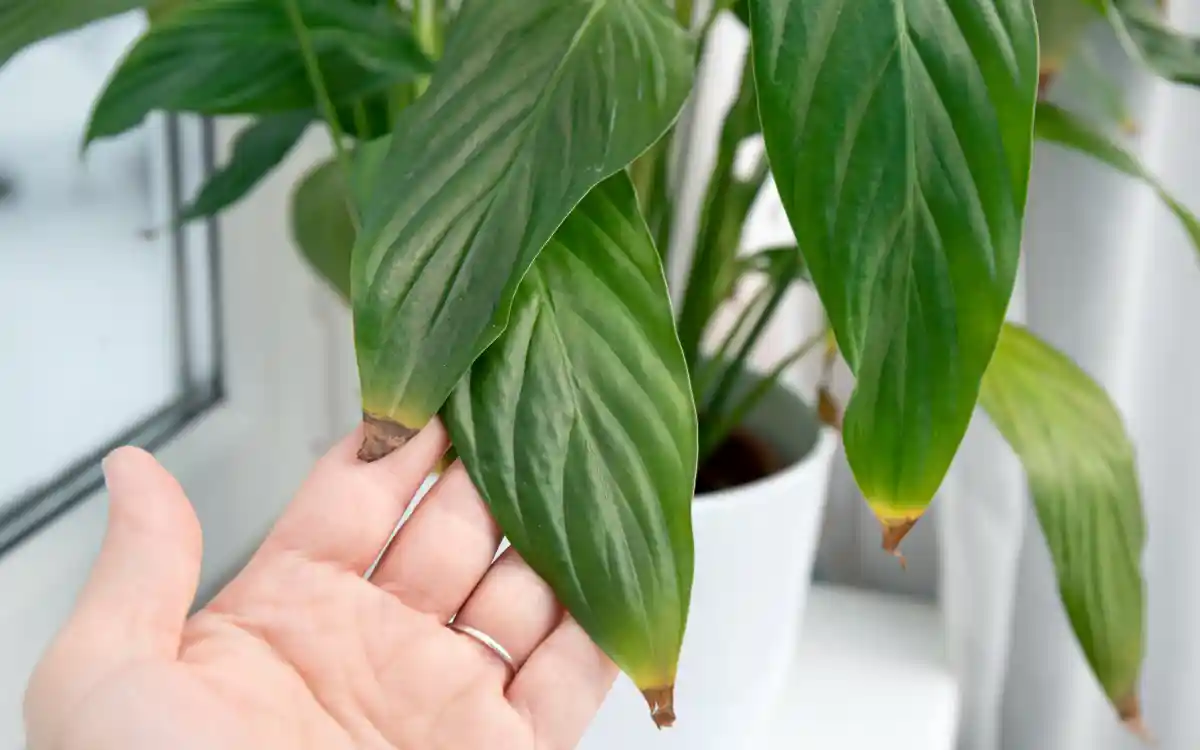
Brown tips may have several causes. Check moisture and drainage first, followed by fertilizer, dry air, and water quality.
For pests, inspect inside the leaf cluster, isolate the pot, and repeat treatment according to its label.
Are Spider Plants Safe for Cats and Dogs?
The ASPCA lists spider plants as non-toxic to cats and dogs. Chewing a large amount of plant material may still upset a pet’s stomach, so call a vet if symptoms develop.
Cats may play with the long leaves and babies. Use a secure hanging basket that can hold the plant’s wet weight.
Spider Plant Care
Can a spider plant live in low light?
Yes, but growth slows and striped leaves may lose contrast. Bright indirect light produces a fuller clump and more babies.
Should I cut the babies off my spider plant?
Leave them for a trailing look, or remove and root them. Trim heavy babies if they pull the pot sideways.
Why is my spider plant turning yellow?
Check for wet soil first. Low light can make leaves pale, while direct sun may bleach them. Inspect the roots before adding fertilizer.
Can spider plants grow outdoors?
Yes. Place them in bright shade after a gradual adjustment, then bring them inside before frost or nights near 45°F (7°C).
How long does a spider plant live?
A healthy clump can live for many years with timely repotting or division. Its plantlets also let you replace an old, untidy plant.