How to Water Houseplants: 11 Tips for Healthier Plants
Watering seems simple until leaves start turning yellow, stems droop, or soil stays wet for days. The problem is that houseplants don’t all need water at the same time. Their needs change with the plant type, pot, soil, light, temperature, and season.
Learning how to water houseplants means checking what each plant needs before reaching for the watering can. These 11 practical tips will help you keep roots healthy without leaving the soil too wet or too dry.
How Often Should You Water Houseplants?
There isn’t one watering schedule that works for every houseplant. A fern may need water while a succulent sitting beside it still has plenty stored in its leaves.
Instead of watering every plant once a week, check them once or twice a week. Water only those showing that the soil has dried to the right level for that species.
Some plants need water when the surface begins to feel dry. Others should sit in dry soil for several days. The goal is to respond to the plant rather than the calendar.
1. Learn Each Plant’s Needs
Before watering a new plant, find out whether it prefers moist soil, partial drying, or a completely dry potting mix.
Houseplants generally fall into three loose groups:
| Moisture preference | Common examples | When to water |
| Evenly moist soil | Boston fern, calathea, peace lily | When the surface begins to feel dry |
| Partial drying | Pothos, monstera, spider plant | When the top 1–2 inches are dry |
| Mostly dry soil | Snake plant, aloe, echeveria | After most or all of the soil has dried |
These are starting points, not strict schedules. Two identical plants may dry at different speeds when one sits beside a bright window and the other grows across the room.
Keep the nursery label when you bring a plant home. If it only says “water regularly,” look up the botanical name. Common names can refer to several plants with different needs.
2. Check the Soil First
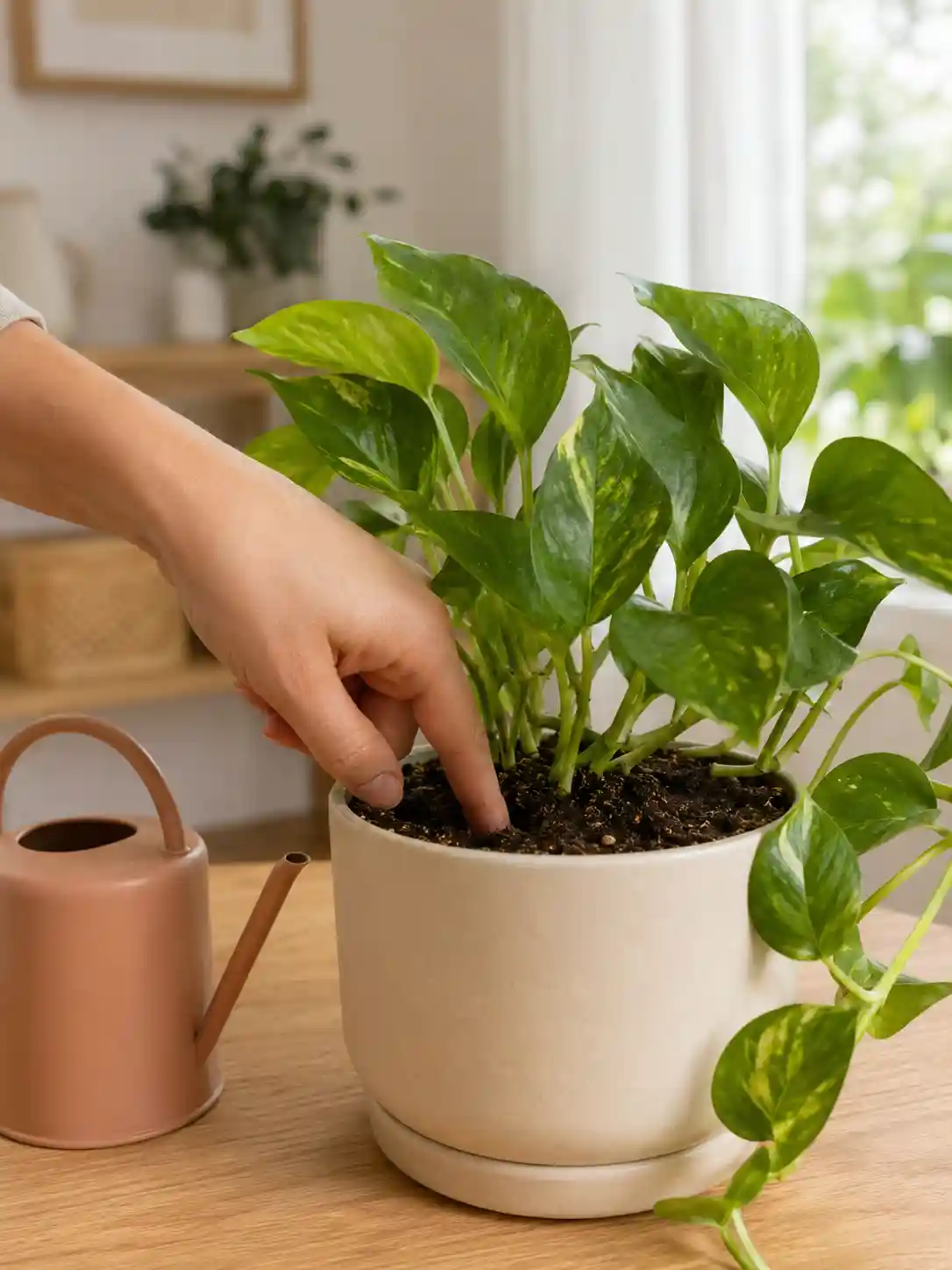
Touching the soil is more reliable than guessing from the number of days since the last watering. Push your finger about one or two inches into the potting mix. If it feels damp and sticks to your skin, the plant may not need water yet.
For deeper pots, a wooden skewer can help. Insert it toward the bottom of the pot, leave it for a moment, and pull it out. Damp soil will darken the wood or cling to it.
You can also lift smaller pots. Freshly watered soil feels noticeably heavier. After checking the same plant several times, you’ll learn how its pot feels when the soil is approaching dryness.
A moisture meter can be useful for large or deep containers, but it shouldn’t be your only test. Dense soil, mineral buildup, and poor probe placement can produce misleading readings.
3. Skip the Fixed Schedule
“Water every Sunday” sounds convenient, but plants rarely dry at a steady rate throughout the year. A fixed schedule can leave a plant dry during hot weather and waterlogged during a cool, cloudy week.
Use a regular checking routine instead. For example, inspect your plants every Wednesday and Sunday, but only water the ones that need it.
Recently repotted plants also deserve closer attention. A small plant moved into a much larger pot is surrounded by extra soil that may remain wet for a long time. Watering it as often as before can quickly cause root trouble.
If you’re unsure whether a plant needs water, check again the following day. Waiting a little is usually safer than adding water to soil that is already damp.
4. Water the Soil Thoroughly
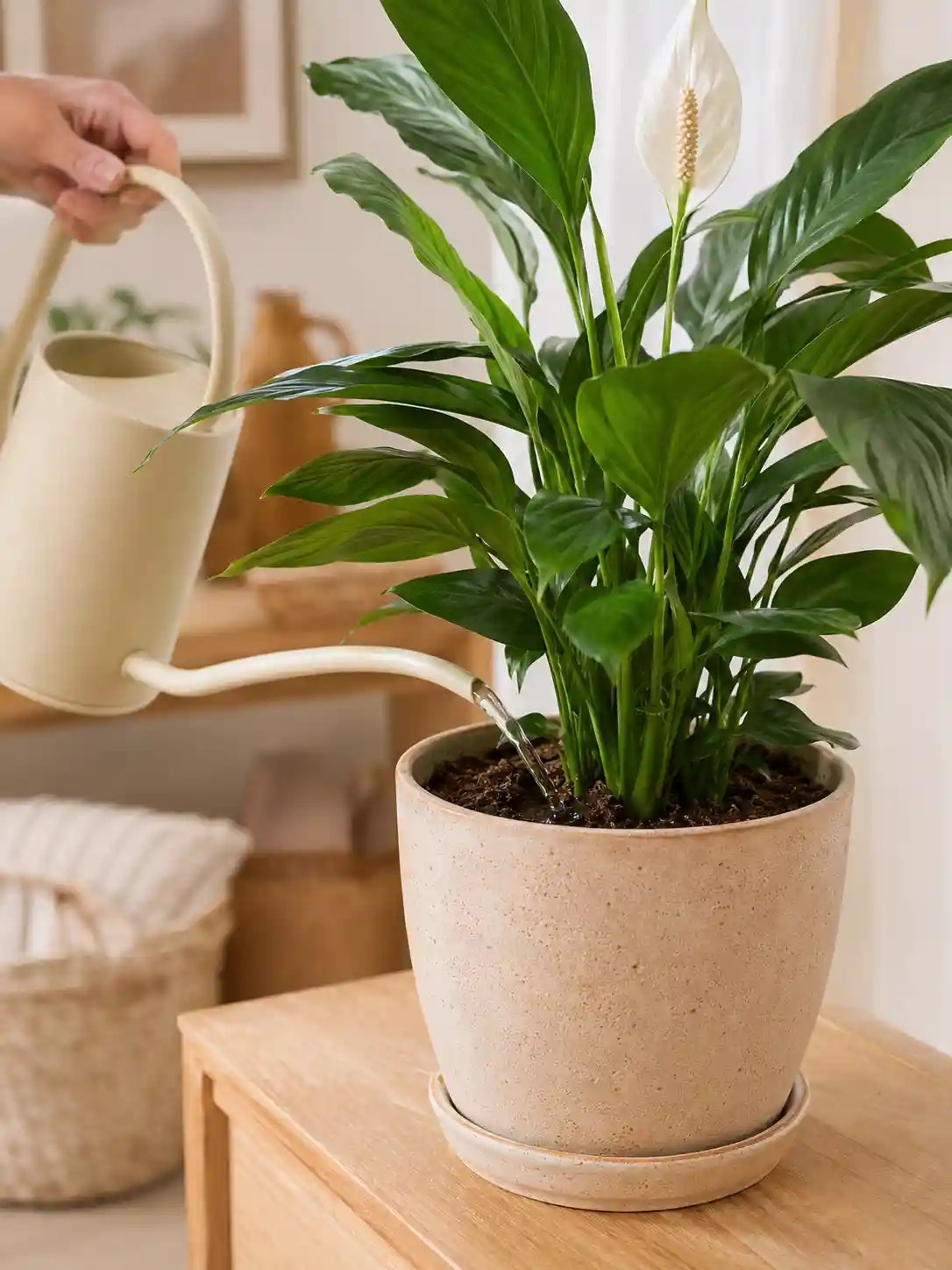
When a plant needs water, give the entire root area a proper drink. Pour slowly across the surface until a small amount begins flowing from the drainage holes.
Avoid tipping a little water into the same spot each day. Small sips may moisten only the upper soil while deeper roots remain dry. They can also encourage roots to stay close to the surface.
Move the spout around the pot so the mix becomes evenly moist. This matters when potting soil has become very dry because water may run down gaps near the edge without soaking the center.
If water passes through immediately and the pot still feels light, the mix may have become water-repellent. Set the pot in a shallow container of water for 15 to 30 minutes, then remove it and let it drain.
5. Let Extra Water Drain
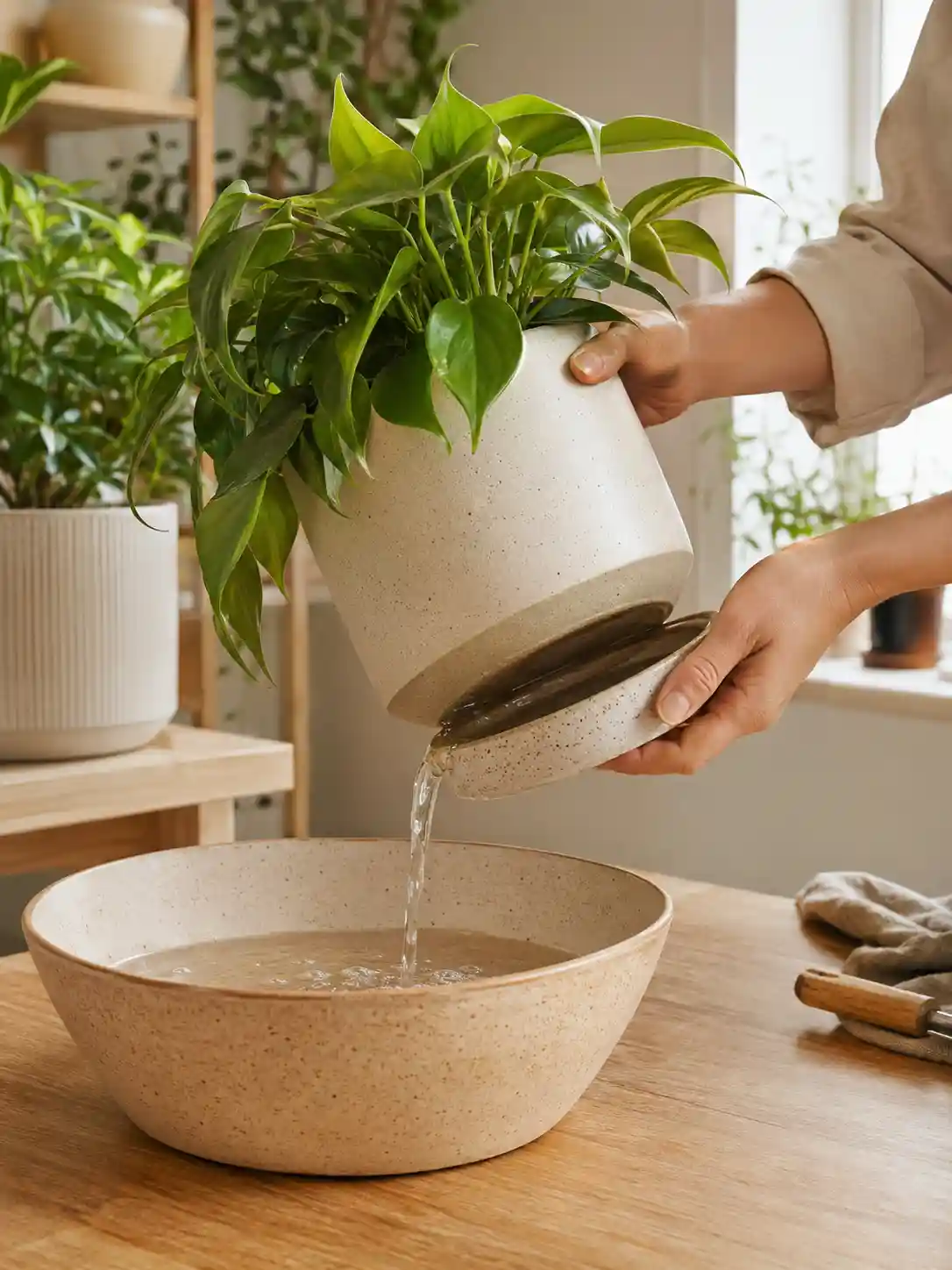
Water draining from the bottom of a pot needs somewhere to go. Leave the plant over a sink, bathtub, or drainage saucer until the flow slows. Empty any water left beneath it afterward.
Never allow a nursery pot to sit in water inside a decorative cover pot. The surface can appear normal while the lower roots remain submerged.
This hidden water is a common problem with decorative planters. Take the inner pot out before watering, let it drain fully, and return it only when water has stopped dripping.
If the soil stays wet for many days despite proper draining, watering may not be the only problem. The pot could be too large, the mix too dense, or the plant may be receiving very little light.
6. Use Drainage Holes
A drainage hole gives excess water an escape route and lets you water the whole root ball with less risk. For most houseplants, it is much easier to manage than a sealed decorative pot.
If you love a planter without holes, use it as a cover pot. Keep the plant in a slightly smaller plastic nursery pot that can be lifted out for watering.
Adding gravel to the bottom of a sealed pot doesn’t replace a drainage hole. Water can still collect inside, and the roots may eventually reach the wet lower layer.
Make sure the existing holes aren’t blocked by compacted soil or roots. A piece of mesh over a large hole can keep potting mix inside while still allowing water to leave.
7. Aim Water at the Soil
Pour water onto the potting mix rather than over the foliage. This places moisture where the roots can use it and keeps water from sitting in leaf joints or plant crowns.
African violets may develop marks when cold water rests on their fuzzy leaves. Water trapped in the center of orchids, succulents, and bird’s nest ferns can also encourage rot.
Leaves still need occasional cleaning. Wipe broad foliage with a damp cloth or rinse sturdy plants gently, then let them dry somewhere with good airflow.
Bottom watering is another option. Place the pot in shallow water and let the mix absorb moisture through its drainage holes. Remove it after the upper soil feels slightly damp, then allow it to drain.
Bottom watering works well for African violets and soil that has pulled away from the pot. However, water from the top occasionally to help wash accumulated salts through the mix.
8. Change With the Seasons
Most houseplants use more water during bright, warm periods when they are actively producing leaves. Soil may dry faster in spring and summer, but you should still check it before watering.
Growth often slows during cooler months. Shorter days mean the plant uses water more slowly, so the potting mix stays damp longer. Continuing a summer watering routine through winter can leave roots sitting in wet soil.
Indoor heating complicates this pattern. A plant near a radiator or hot air vent may dry quickly even in winter. Move it away from direct heat and inspect the soil rather than making assumptions based on the month.
Seasonal adjustment doesn’t mean stopping water in winter. It normally means checking at the same intervals but watering less often.
9. Watch the Growing Conditions
Light, temperature, airflow, humidity, pot size, and soil all affect how quickly a plant needs another drink.
A plant near a bright window often dries faster than one in a dark corner. Warm rooms and moving air can also remove moisture quickly. High humidity usually slows water loss from the leaves and soil.
Pot material makes a difference too. Unglazed terracotta allows moisture to escape through its sides, while plastic and glazed ceramic hold water longer. A plant moved from terracotta into plastic may suddenly need less frequent watering.
Larger pots usually dry slowly, especially when the plant has a small root system. Dense garden soil also holds too much moisture for many indoor containers. Use a potting mix suited to the plant and a container that is only slightly larger than its roots.
10. Choose Suitable Water
Room-temperature tap water works for many common houseplants. Very cold water can shock warm roots, so let it reach room temperature before use.
Some plants react to minerals or chemicals found in tap water. Calatheas, prayer plants, dracaenas, and certain carnivorous plants may develop brown tips or struggle when the water contains high levels of dissolved minerals.
Filtered water or collected rainwater may help sensitive plants. Carnivorous plants often need distilled, rain, or reverse-osmosis water because their roots are adapted to nutrient-poor conditions.
If you use tap water successfully, there is no reason to change it for every plant. First check other causes of brown tips, including dry air, excess fertilizer, damaged roots, and inconsistent watering.
11. Read the Warning Signs
Drooping doesn’t automatically mean a plant needs water. Both dry and waterlogged roots can cause leaves to wilt, so check the soil before responding.
| Possible overwatering signs | Possible underwatering signs |
| Yellow lower leaves | Dry or crisp leaf edges |
| Wet soil that doesn’t dry | Dry soil pulling from the pot |
| Soft or dark stems | Lightweight pot |
| Musty smell | Limp leaves with dry soil |
| Fungus gnats | Brittle or curling foliage |
Symptoms can overlap. Yellow leaves, for example, may come from poor light, nutrient problems, natural aging, or damaged roots. Soil condition provides the most useful clue.
If the mix is constantly wet, pause before watering again and inspect the drainage. Our guide to signs you’re overwatering your houseplants explains what to look for and how to help the plant recover.
It also helps to check whether your routine is causing the problem. These houseplant watering mistakes cover issues such as watering by calendar, giving small daily sips, and letting pots stand in drainage water.
Best Time to Water Houseplants
Morning is a convenient time to water houseplants. You can watch how the soil drains, empty the saucer, and clean up spills before the end of the day.
Still, a dry plant doesn’t need to wait until the next morning. Indoor conditions are controlled enough that you can water later when the plant genuinely needs moisture.
Try to avoid soaking foliage late at night, particularly in cool rooms with poor airflow. Wet leaves and crowns take longer to dry under those conditions.
Top Watering or Bottom Watering?
Top watering is the best everyday method for most houseplants. It wets the soil evenly and helps carry excess fertilizer salts out through the drainage holes.
Bottom watering is useful when:
- The soil has become very dry and resists water
- The plant has fuzzy leaves that you want to keep dry
- Water poured from above runs straight down the pot’s edges
- Fungus gnats are gathering around moist surface soil
Don’t leave a pot soaking for hours. Once moisture reaches the upper part of the mix, lift it out and let the extra water drain.
Using both methods when appropriate is better than treating either one as a strict rule.
A Simple Watering Routine
A useful routine takes only a few minutes:
- Look at the leaves and soil surface.
- Feel the soil at the depth recommended for that plant.
- Lift smaller pots to judge their weight.
- Water only when the plant is ready.
- Pour slowly until a little water drains.
- Empty the saucer or cover pot.
- Make a note if the plant is drying unusually fast or slowly.
You don’t need to record every watering forever. A short note can be helpful while learning a new plant or noticing seasonal changes.
FAQs
How much water should I give a houseplant?
Use enough water to moisten the whole root ball and produce a small amount of drainage. The exact volume depends on the pot size and soil. Avoid measuring one fixed cup for every plant because larger pots require more water than small ones.
How can I tell if a houseplant needs water?
Check below the soil surface with your finger or a wooden skewer. You can also look at the soil color and lift the pot to judge its weight. Compare the result with the moisture needs of that plant instead of relying only on drooping leaves.
Should I mist my houseplants?
Misting raises humidity only briefly and cannot replace proper watering. It may help clean foliage, but a humidifier or grouping compatible plants together is more useful for plants that need steady humidity. Avoid frequently misting fuzzy leaves or plants with crowns that can trap water.
Can I water houseplants with tap water?
Most common houseplants can be watered with room-temperature tap water. Filtered, distilled, reverse-osmosis, or rainwater may be better for mineral-sensitive plants. Check the plant’s needs before buying special water for your entire collection.
Do houseplants need less water in winter?
Many do because shorter days and slower growth reduce water use. However, heating and dry indoor air may cause some pots to dry faster. Check the soil and conditions around each plant rather than automatically reducing water on a set date.
Why does water run straight through the pot?
The soil may be extremely dry, compacted, or separated from the sides of the container. Soak the pot from below for 15 to 30 minutes, then let it drain. If the problem keeps returning, the plant may need fresh potting mix.
Can a pot without drainage holes work?
It can, but the chance of overwatering is much higher because you cannot see or remove water collected at the bottom. The safer choice is to keep the plant in a nursery pot with holes and place that inside the decorative container.
Build the Habit Around Checking
Healthy watering starts with one small change: check the plant before adding water. Once you learn how the soil looks, feels, and weighs as it dries, deciding when to water becomes much easier.
Water thoroughly when needed, let the pot drain, and adjust as the room and seasons change. That flexible routine will serve your plants far better than any universal weekly schedule.