9 Signs of Root Rot in Houseplants and How to Save Your Plant
A houseplant can look thirsty even when its roots are sitting in wet soil. The leaves droop, so you add more water. A few days later, they turn yellow and the plant looks worse. That confusing cycle is why root rot can spread before you know what is happening.
A plant with some firm roots may still recover. This guide covers how to spot root rot, confirm it, and repot the plant safely.
What Is Root Rot?
Root rot is the decay and death of plant roots. It often begins when potting mix stays wet for too long. Water fills the air spaces in the mix, leaving roots short of oxygen and open to disease.
Fungi and fungus-like organisms such as Pythium, Phytophthora, Rhizoctonia, and Fusarium do well in wet, poorly drained mix. Dense soil, poor drainage, low light, and an oversized pot can all help create those conditions.
One heavy watering is not the problem if excess water can drain away. Trouble starts when the root zone remains saturated.
Root Rot Signs at a Glance
| Sign | What You May Notice | How Strong Is the Clue? |
| Wilting in wet soil | Leaves droop although the mix is damp | Strong warning |
| Yellow lower leaves | Several older leaves fade together | Common but not proof |
| Leaf drop | Soft yellow or brown leaves fall | Common in later stages |
| Stalled growth | New leaves stay small or stop appearing | Supporting clue |
| Slow-drying soil | Pot remains wet and heavy for many days | High-risk condition |
| Bad smell | Mix smells sour, swampy, or rotten | Strong warning |
| Loose plant base | Stem rocks because roots have broken down | Advanced warning |
| Dark, soft roots | Roots are brown or black and mushy | Strong evidence |
| Soft crown | Tissue at soil level is dark and mushy | Severe damage |
Leaves tell you that something is wrong, but the roots give you the clearest answer. Do not diagnose root rot from one yellow leaf alone.
1. The Plant Wilts While the Soil Is Wet
Wilting often makes people reach for the watering can. With root rot, that can make the damage worse.
Rotten roots cannot move enough water into the leaves, even when the pot is wet. University of Maryland Extension notes that this can cause a plant to wilt in moist potting mix.
Check several inches below the surface. If the mix is damp and the plant is limp, inspect the roots instead of adding water.
2. Several Lower Leaves Turn Yellow
Root trouble often appears first on older leaves near the bottom or center of the plant. They may fade evenly, develop brown areas, or fall after turning yellow.
Yellow leaves also come from low light, pests, nutrient trouble, or normal aging. Root rot is more likely when several leaves yellow at once while the potting mix stays wet.
3. Leaves Drop Without a Dry Spell
A plant with failing roots may shed leaves, often starting low on the plant. Soft yellow leaves with damp soil suggest excess moisture. Crisp leaves and a light pot point more toward drought, though advanced rot can also cause brown edges.
4. New Growth Slows or Stops
Damaged roots cannot supply new leaves well. Growth may stall, or new leaves may stay small. Slow winter growth is normal, so treat this as a supporting clue. Check other reasons a houseplant may not be growing before disturbing healthy roots.
5. The Potting Mix Stays Wet for Days
Mix that remains soggy creates the conditions root rot needs. The pot may stay heavy, algae may grow, or fungus gnats may gather near the soil. Gnats do not prove the roots are rotten, but they do point to damp mix. Check for blocked drainage, standing water, or an oversized pot. See these houseplant watering mistakes for more help.
6. The Soil Smells Sour or Rotten
Healthy potting mix smells earthy. A sour, swampy, or decaying odor can mean the root zone has lacked air and plant tissue is breaking down.
Smell is a warning, not a complete diagnosis. Remove the plant and check the roots before deciding what to cut.
7. The Plant Feels Loose in Its Pot
When many roots decay, the stem may wobble or lift out with little resistance. Tip the pot on its side and support the stem near its base rather than pulling it.
8. The Roots Are Dark and Mushy
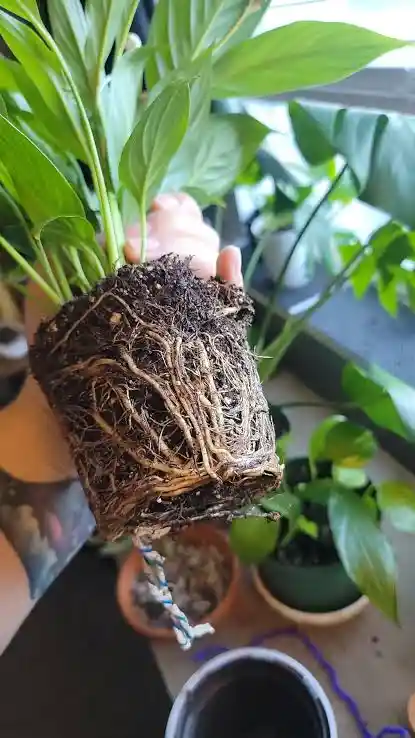
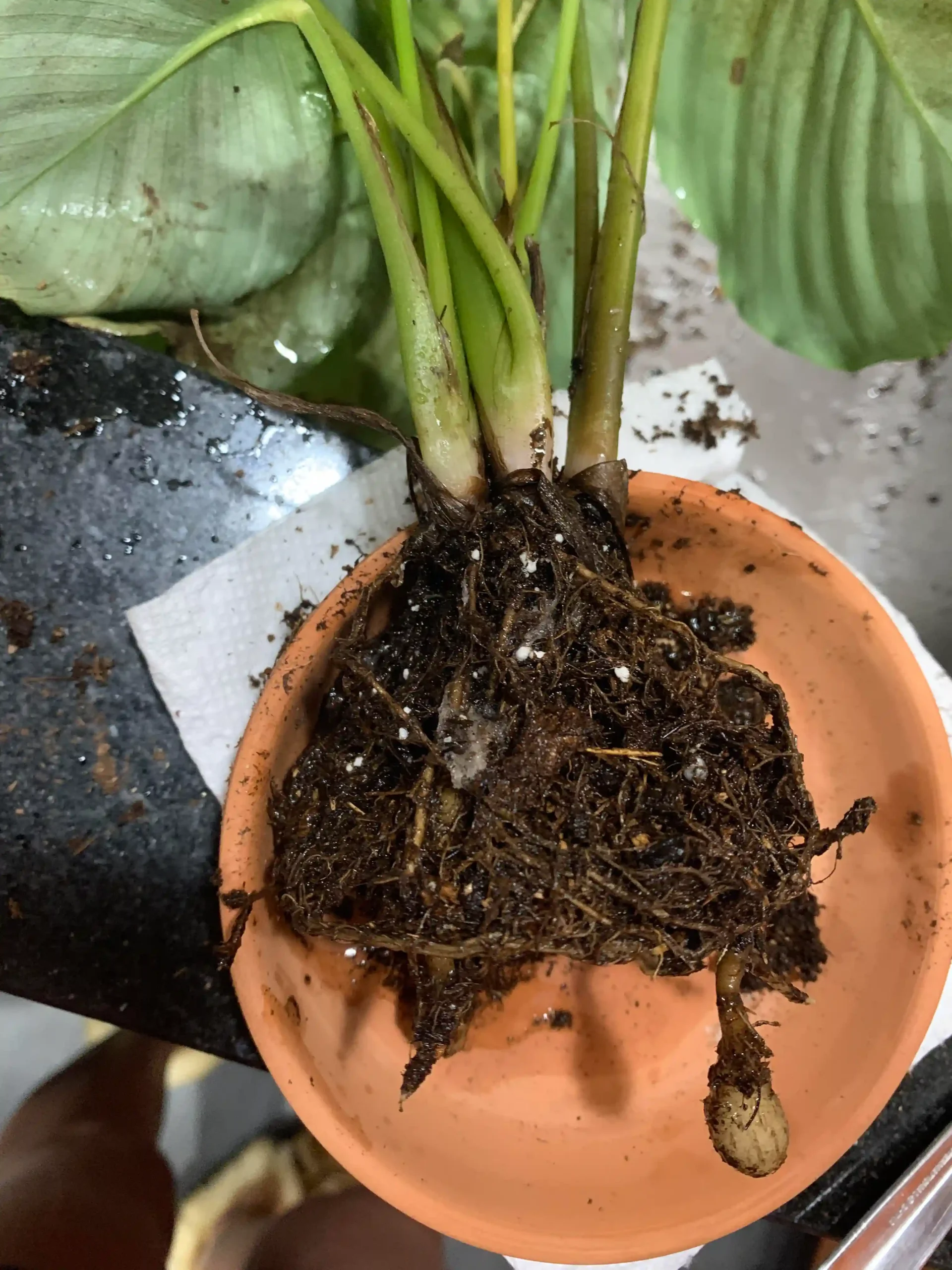
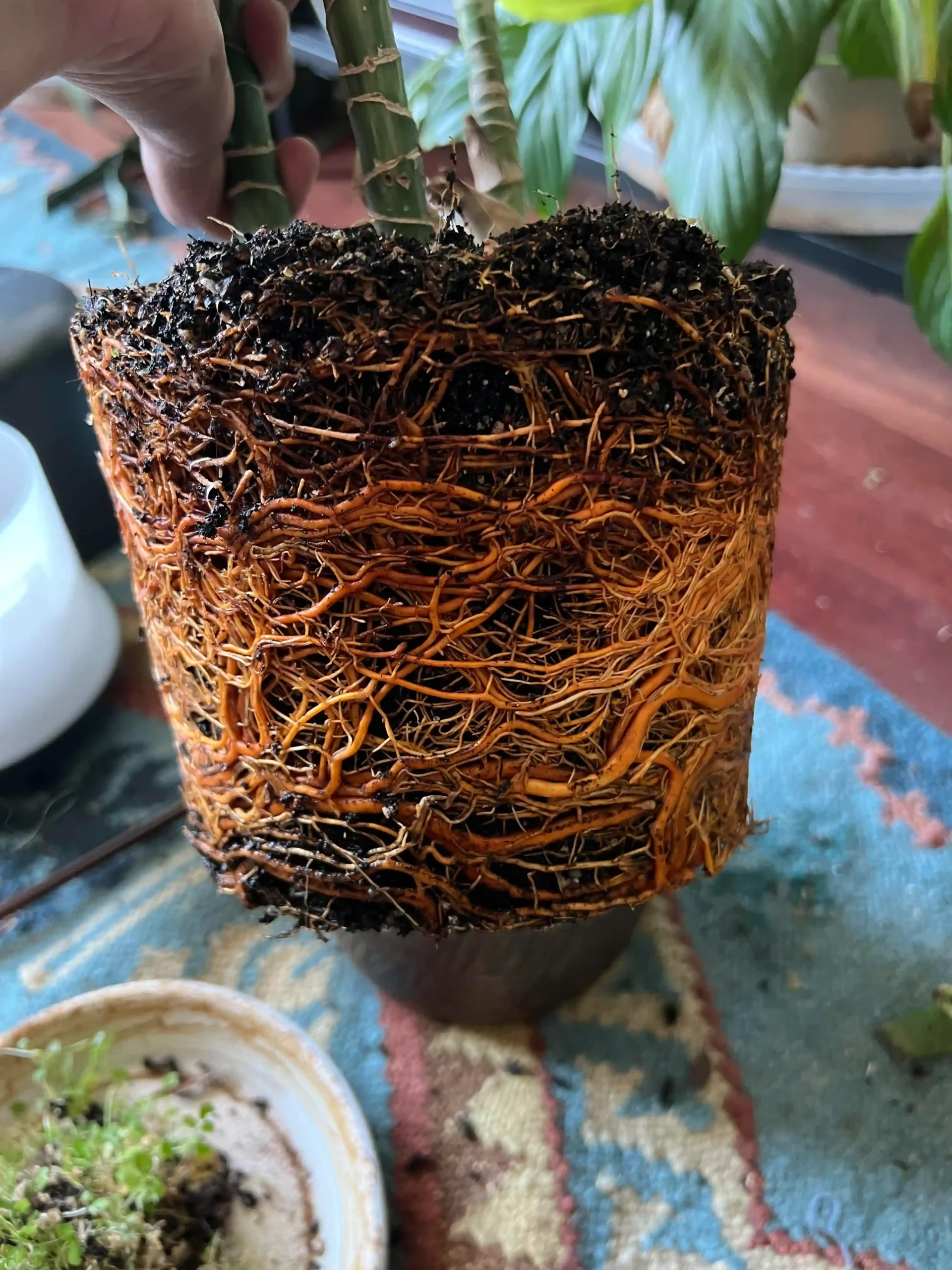
This is the clearest sign. Healthy roots are firm and often light-colored, though color varies. Rotted roots feel soft, slimy, hollow, or easy to break.
Iowa State University Extension describes healthy roots as firm with many fine feeder roots. Rotten roots are generally brown or reddish and mushy. In some cases, the soft outer layer slips off and leaves a thin, threadlike center.
9. The Crown or Stem Base Is Soft
Check where the stems meet the soil. A firm crown may still produce new roots. A brown, black, water-soaked, or mushy crown means the decay has entered the main plant tissue.
A fully rotten crown is rarely saved by repotting. If upper stems are firm and healthy, take cuttings well above the damaged area.
Root Rot, Overwatering, or Underwatering?
These problems can look alike above the soil. Use pot weight, soil moisture, and root texture to tell them apart.
| Check | Underwatered | Overwatered, Roots Still Healthy | Root Rot |
| Potting mix | Dry through much of the pot | Wet for too long | Wet, stale, or sour-smelling |
| Pot weight | Light | Heavy | Often heavy |
| Leaves | Limp, dry, or crisp | Yellowing and soft | Yellowing, wilting, drop, or dieback |
| Roots | Firm but may be dry | Firm and intact | Dark, soft, slimy, or hollow |
| After watering | Often perks up | May keep declining | Cannot recover normally |
An overwatered plant may improve after the mix dries. Root rot means tissue has decayed and must be removed.
How to Check the Roots
- Stop watering and isolate the plant. Keep its soil and drainage water away from other pots.
- Slide out the root ball. Lay the pot on its side and support the stem near the soil line.
- Remove enough mix to see the roots. Tease it away gently. Rinse off stubborn wet mix if needed.
- Test the roots. Keep tissue that feels solid. Look for mushy, hollow, slimy, or foul-smelling parts.
- Check the crown. Firm tissue gives the plant a chance. Soft rot through the whole base usually does not.
Do not cut a root only because it is tan or stained by soil. Texture is a better test than color alone.
How to Save a Houseplant From Root Rot
Act as soon as you confirm the problem. A plant with a firm crown and part of its root system intact has the best chance.
1. Remove the Old Potting Mix
Loosen the root ball and discard the wet mix. Do not reuse it or return it to a bag of clean soil. Work over a washable surface, then clean the area.
2. Trim Rotten Roots
Disinfect sharp scissors or pruners. Cut each soft, dark, hollow root back to firm tissue. Clean the blades again after cutting badly decayed areas. Keep every firm root you can.
3. Remove Rotten Stems and Take Backup Cuttings
Cut off dead leaves and mushy stems. If healthy vines or stems remain above a rotten crown, take clean cuttings with no soft spots or dark streaks.
4. Choose a Clean Pot With Drainage
Use a new pot or wash and disinfect the old one. The container should have an open drainage hole and be only a little larger than the remaining roots. A plant that lost many roots may need a smaller pot.
Do not add gravel at the bottom. Iowa State University Extension explains that rocks can create a wetter zone higher in the pot instead of improving drainage.
5. Repot in Fresh Mix
Use fresh indoor mix made for the plant type. Succulents need a faster-draining blend than moisture-loving plants. Avoid garden soil because it compacts in containers.
Set the plant at its old depth and keep the crown above the mix.
6. Water Carefully
If the new mix is dry, water once until a little drains out, then empty the saucer. Wait to water again until the mix reaches the dryness level that the species prefers. Do not return to a fixed weekly schedule.
Succulents with cut roots may need a short dry period first. Do not leave moisture-loving plants bone-dry for long.
7. Help the Plant Recover
Place it in bright, indirect light unless that species needs different conditions. Keep it away from hot vents, cold drafts, and strong afternoon sun.
Do not fertilize for at least two to four weeks, and wait longer if no new growth appears. Fertilizer cannot repair dead roots and may stress the ones that remain.
Can the Plant Be Saved?
| What You Find | Best Choice |
| Several firm roots and a firm crown | Trim the rot and repot |
| Few roots but healthy stems | Repot and take backup cuttings |
| No firm roots but healthy upper growth | Propagate clean cuttings |
| Entire crown or stem base is mushy | Discard the plant and old mix |
| Rot returns after repotting | Discard it or contact a plant clinic |
University of Maryland Extension advises discarding severely infected plants and taking cuttings only from healthy tissue. Removing one badly rotten plant may protect the rest of your collection.
What Causes Root Rot?
Common causes include:
- Watering again before enough soil has dried
- A container with no drainage hole
- Water left in a saucer or decorative outer pot
- Old, dense, or compacted potting mix
- A pot much larger than the root system
- Low light or cool temperatures that slow water use
- A moisture-holding mix used for a plant that needs fast drainage
- Contaminated pots, tools, soil, or drainage water
Overwatering is usually about frequency, not the amount poured at once. Soak a thirsty root ball, let it drain, and wait for the species-specific moisture level before watering again.
How to Prevent Root Rot
Check moisture on a schedule, but do not water on one. Feel below the surface, use a wooden stick, or lift small pots to judge their weight.
Use pots with drainage holes and empty saucers after watering. Replace old mix when it becomes compacted and slow to drain.
Adjust watering when light and temperature change. Most houseplants use less water during dark winter weeks than during active spring and summer growth.
Inspect the roots when a plant wilts in wet soil. More water can turn early damage into a lost plant.
Root Rot FAQs
How Long Does Recovery Take?
A mild case may improve within a few weeks. Severe damage can take months. Old yellow leaves will not turn green, so watch for firm stems and healthy new growth.
Should I Water Right After Repotting?
Most tropical foliage plants can be watered once to settle dry mix, with all excess drained. Succulents with cut roots may need a short dry period first.
Can Hydrogen Peroxide or Cinnamon Cure Root Rot?
Neither can bring dead roots back or fix waterlogged soil. Strong peroxide may damage living roots. Removing rotten tissue, using fresh mix, improving drainage, and changing the watering routine are the main steps.
Can Root Rot Spread to Other Plants?
Some disease organisms can move in contaminated soil, drainage water, pots, and tools. Isolate the plant, clean your work area, and do not reuse the old mix.
Should I Use a Fungicide?
Not as the first step. Different organisms require different products, and fungicide cannot repair dead roots. For a rare plant that keeps declining, ask a plant diagnostic clinic to identify the cause before using a treatment labeled for indoor plants.
Check the Roots Before Watering Again
Wilting does not always mean a houseplant is thirsty. When the soil is wet, stop and look below the surface. Firm roots may recover; soft roots need to be removed before the plant goes into clean mix.
After repotting, give the plant steady light, careful watering, and time. If the crown is gone, save a healthy cutting instead of keeping decaying roots beside your other plants.