17 RV Organization Ideas to Maximize Every Inch of Space

Organizing an RV is easier when every item has a designated place. The best solutions use empty walls, cabinet doors, corners and spaces beneath furniture without making the interior feel crowded.
Whether you live in your RV full-time or take occasional road trips, these 17 RV organization ideas will help you reduce clutter, secure your belongings and make daily routines more comfortable.
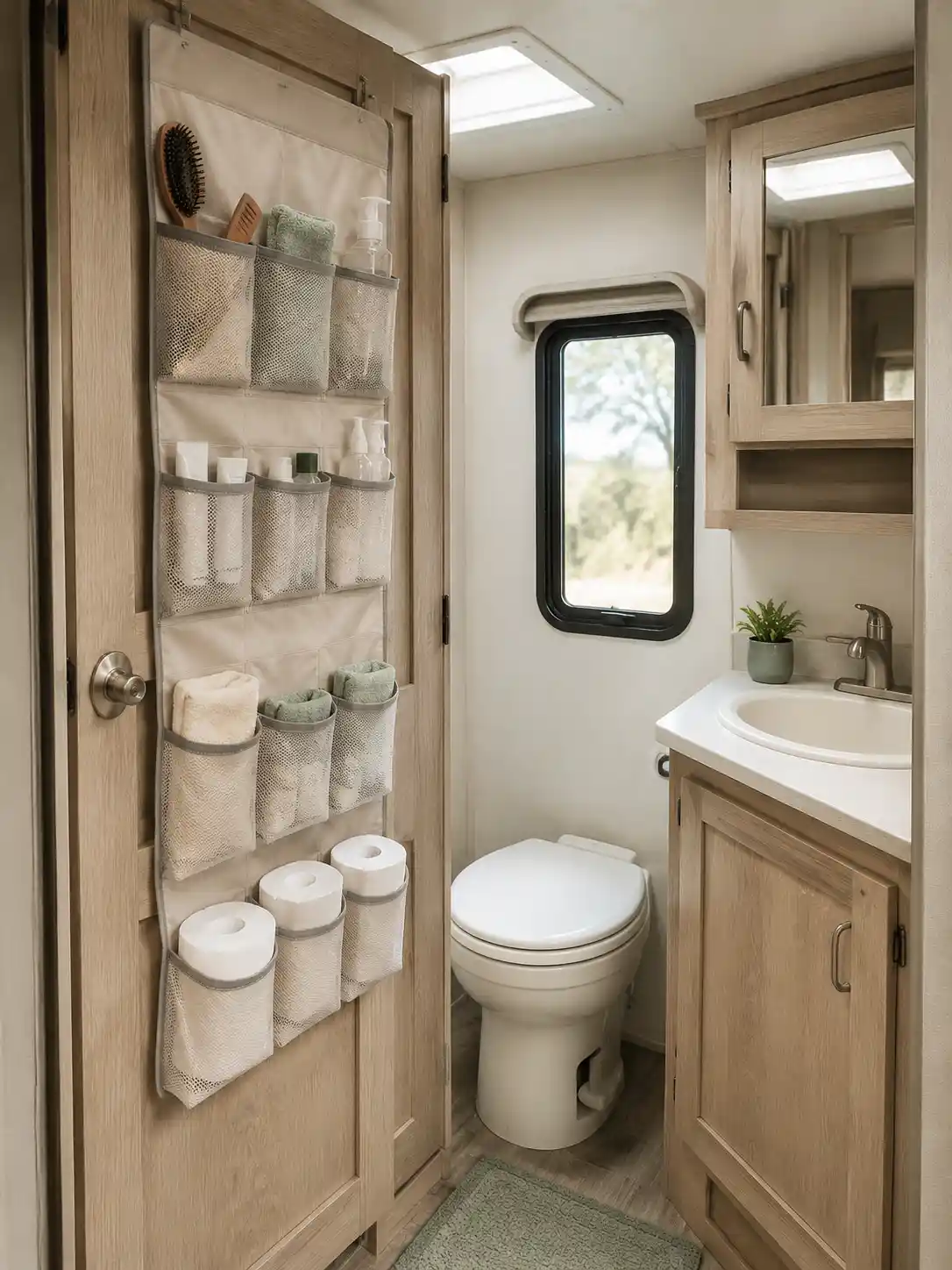
1. Install an Over-the-Door Organizer
An over-the-door organizer adds storage without occupying valuable floor or cabinet space. Hang one over the bathroom, bedroom or pantry door to hold toiletries, shoes, cleaning supplies and small travel essentials.
Choose an organizer with transparent or mesh pockets so you can quickly see what each compartment contains. Before installing it, check that the hooks do not interfere with the doorframe. Models with adjustable straps are especially useful because they can be secured at the bottom and kept from swinging while the RV is moving.
2. Use Stackable Pantry Containers
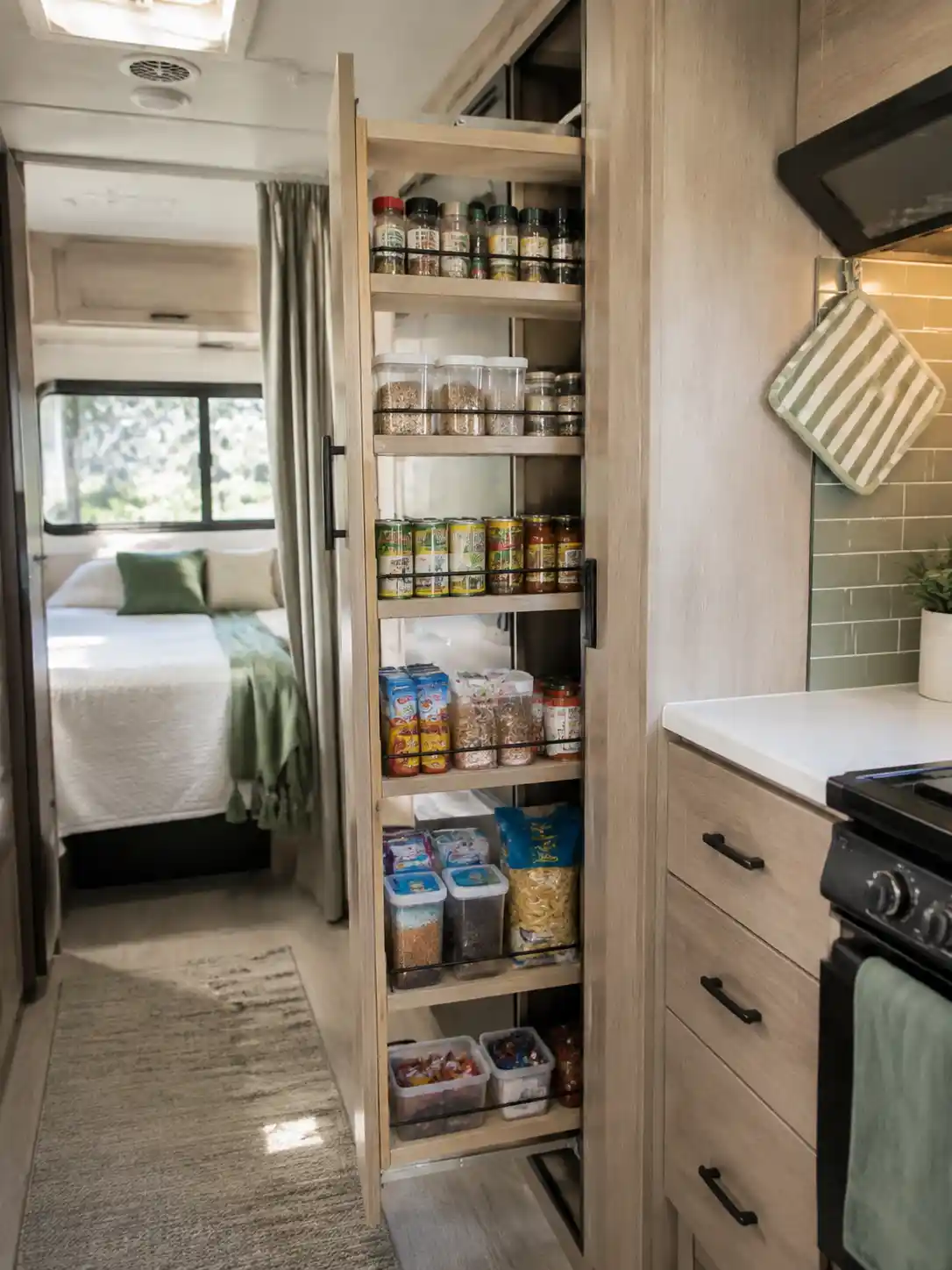
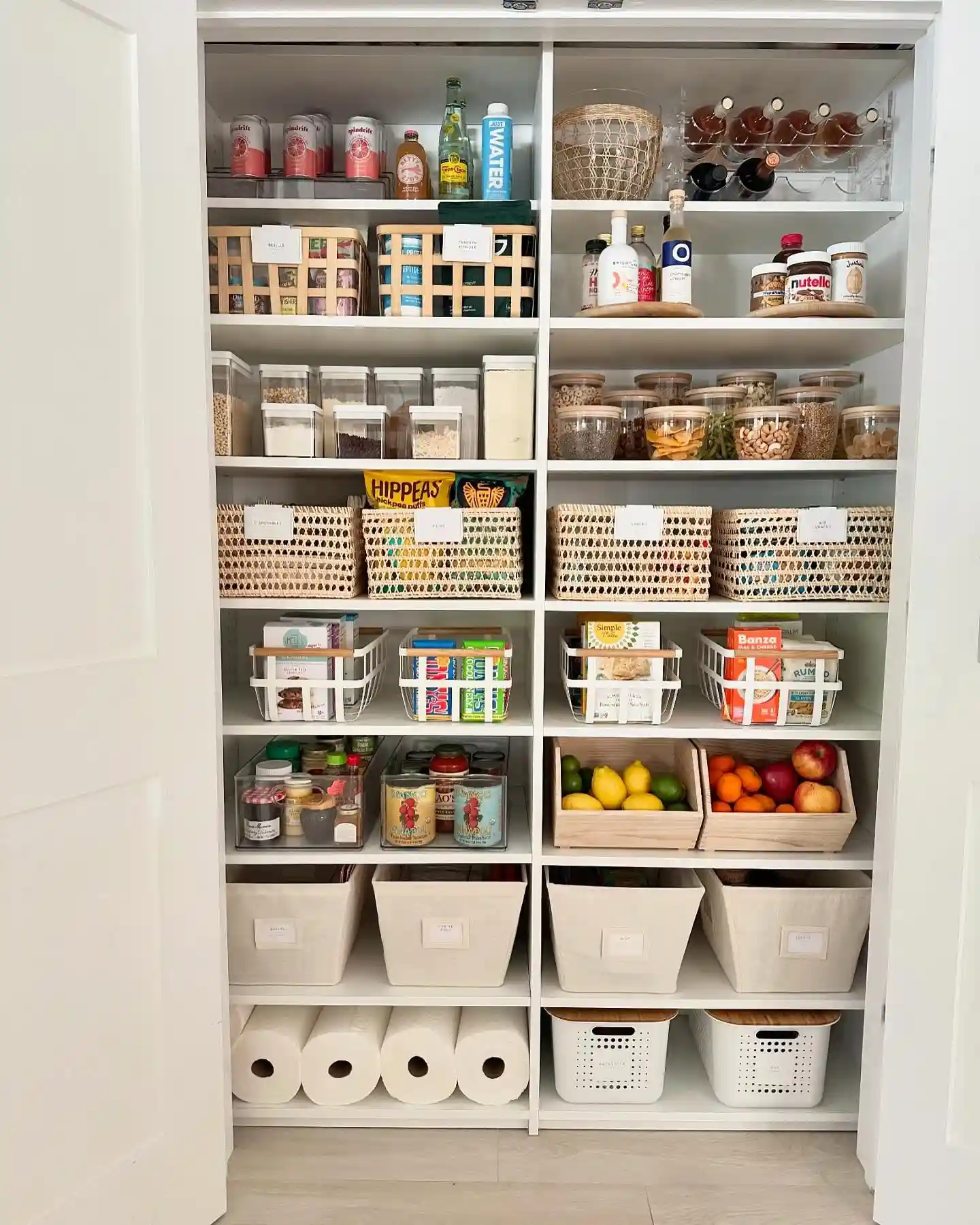
Food packaging wastes space and makes it difficult to see what is available. Transfer cereal, pasta, rice, snacks and baking supplies into airtight stackable containers that fit your RV pantry shelves.
Rectangular containers usually make better use of narrow cabinets than round ones. Measure the height, width and depth of each shelf before buying a set. Add simple labels and expiration dates to prevent forgotten food. Avoid filling every container to the top because lighter containers are easier to remove while traveling.
3. Add Adjustable Cabinet Shelf Risers
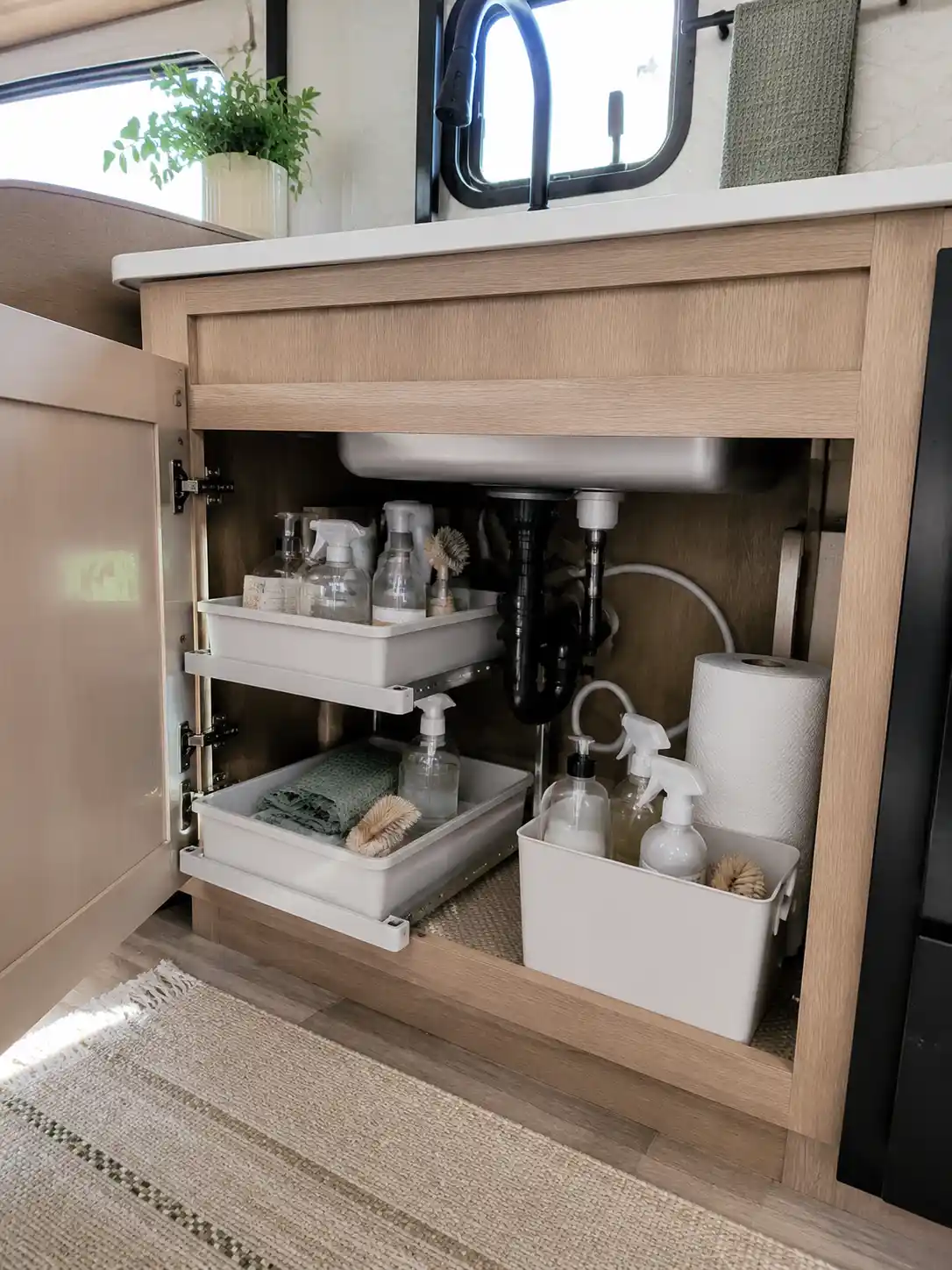
Tall RV cabinets often contain a large amount of unused vertical space. Shelf risers create a second level for plates, bowls, mugs, canned goods or bathroom supplies without requiring permanent modifications.
Select adjustable risers that fit around pipes, hinges and unusual cabinet shapes. Nonslip feet will help prevent movement on the road. Place lighter items on the upper level and heavier pieces below to improve stability. This simple addition makes cabinet contents easier to reach and prevents small items from disappearing behind larger containers.
Read also: 25 Small Pantry Organization Ideas That Save So Much Space
4. Organize Drawers With Dividers
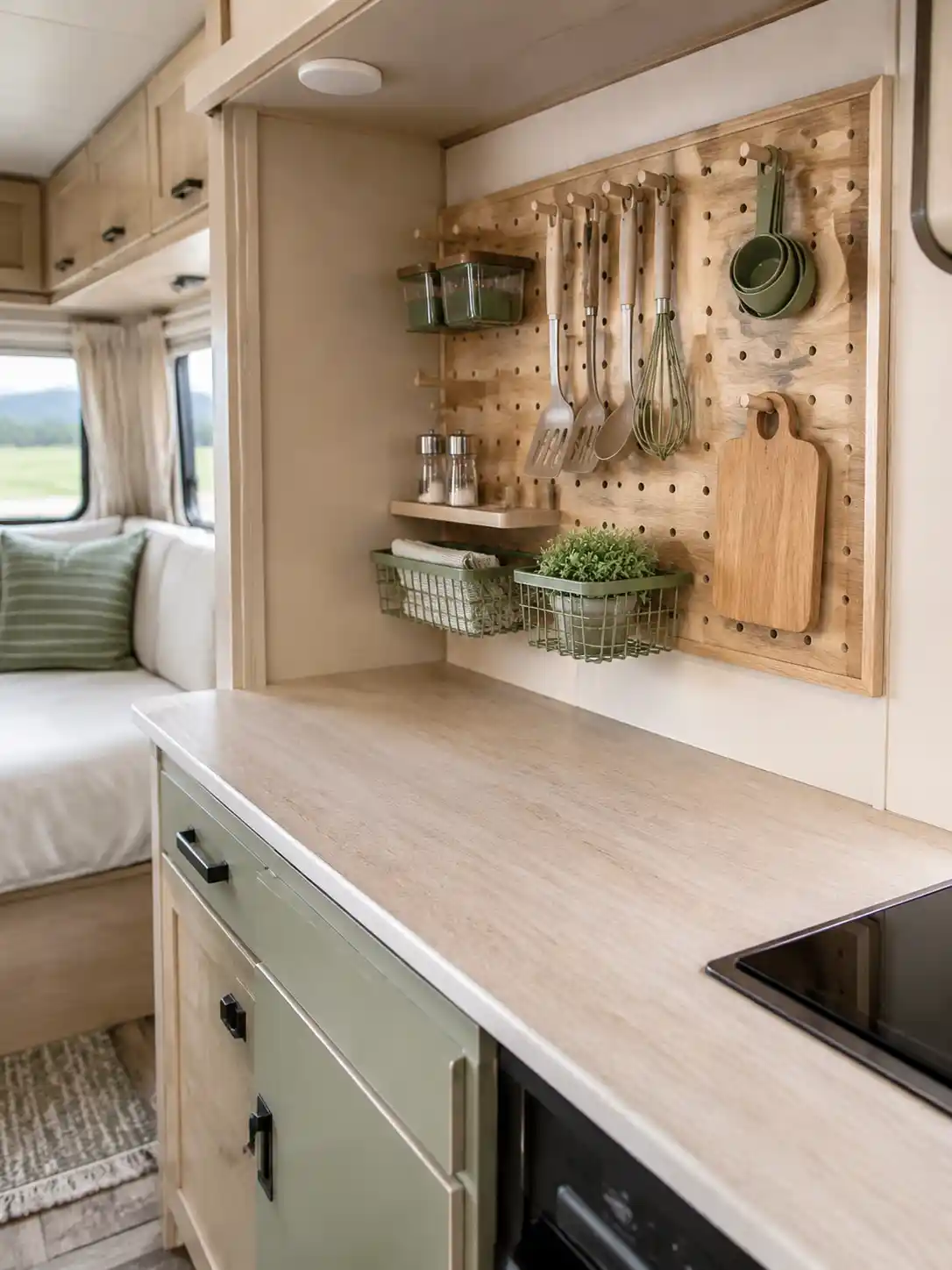
RV drawers can quickly become crowded with utensils, tools, chargers and miscellaneous supplies. Adjustable dividers separate these items into practical categories and stop them from sliding into a tangled pile during travel.
Use shallow trays for silverware and deeper dividers for cooking tools or maintenance equipment. Measure the drawer carefully, including its height, before purchasing an organizer. Leave a little open space instead of packing every section tightly. A drawer that closes easily is more useful than one containing too many rarely used objects.
5. Mount Magnetic Storage in the Kitchen
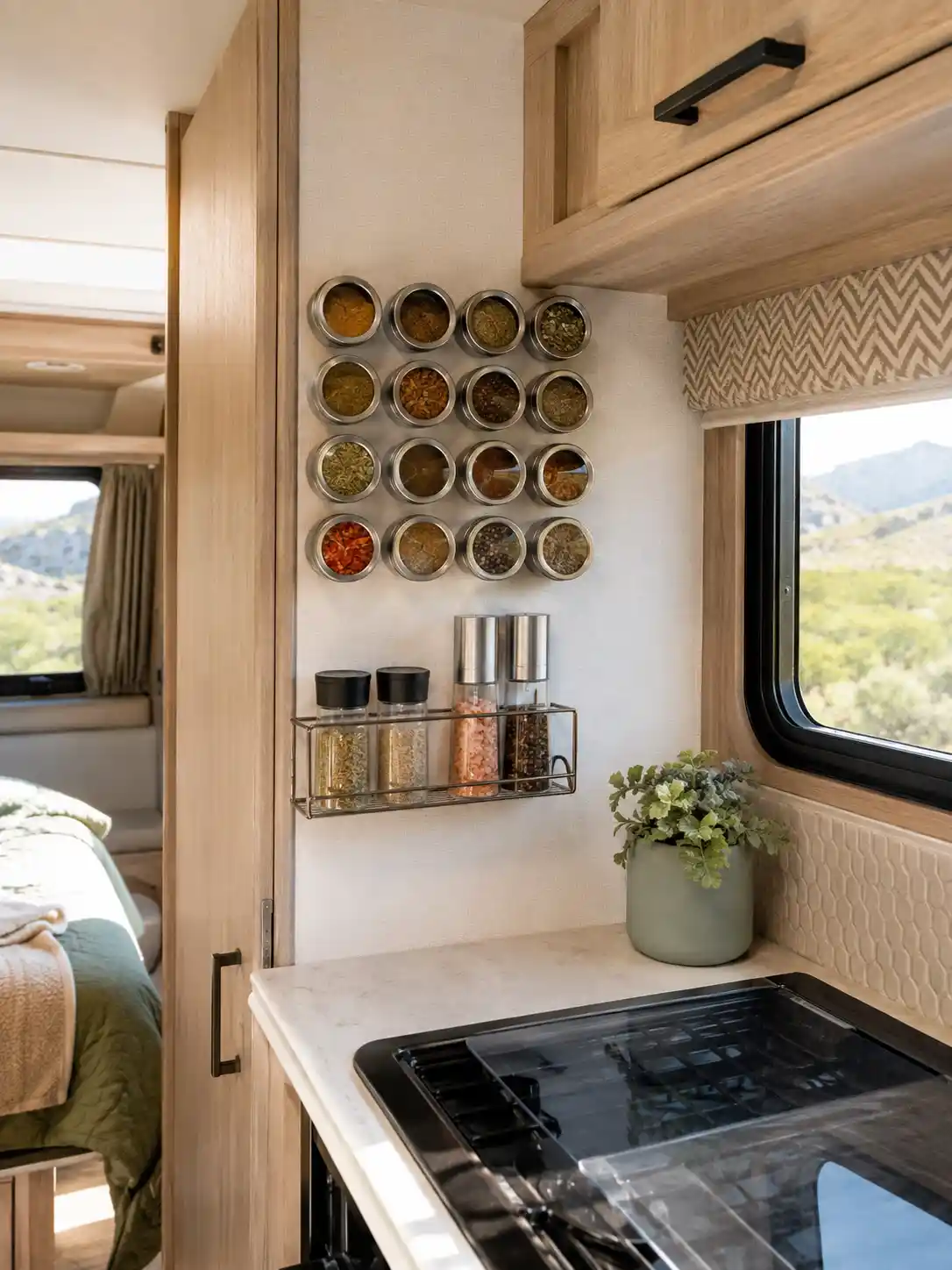
Magnetic storage keeps frequently used kitchen items within reach while freeing up drawers and countertops. A strong magnetic strip can hold metal utensils, spice tins, bottle openers and other lightweight accessories.
Install the strip on a secure wall or backsplash where it will not become a safety hazard. Use mounting hardware suitable for the RV’s wall material and avoid storing heavy knives on a weak adhesive strip. Test every item before driving. Magnetic containers with locking lids are particularly helpful because they reduce the risk of spills.
Read also: 20 Small Laundry Room Ideas That Maximize Space
6. Install Tension Rods Inside Cabinets
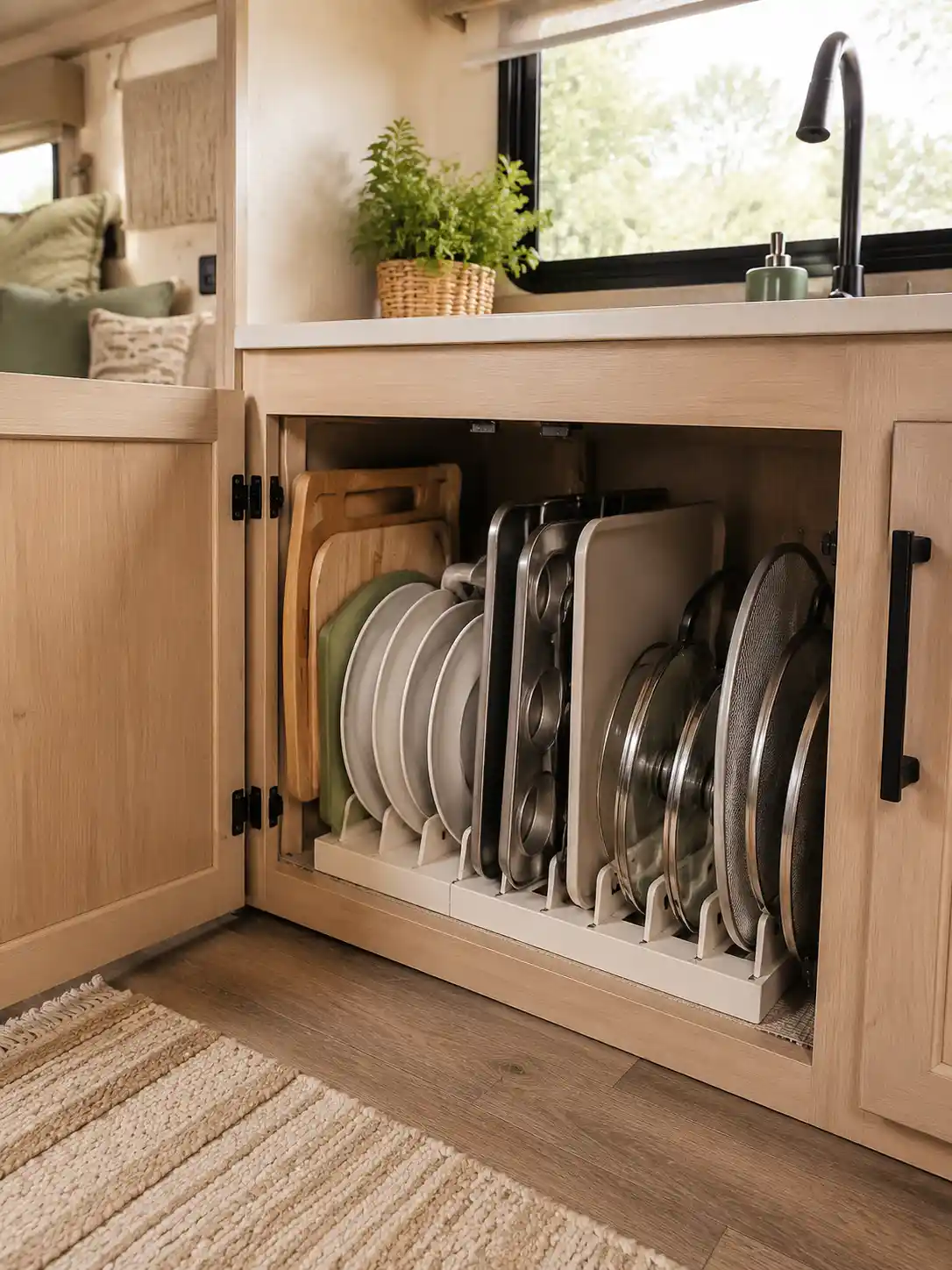
Tension rods are inexpensive, removable and useful in several areas of an RV. Position them vertically in a kitchen cabinet to keep cutting boards, baking trays and pan lids upright. A horizontal rod can help stop bottles or food containers from falling forward.
Rubber-ended rods provide better grip without damaging cabinet surfaces. Tighten each rod firmly and test it before traveling. For additional security, pair the rod with nonslip shelf liner. This arrangement keeps supplies separated while allowing you to remove or adjust the system whenever your storage needs change.
7. Use the Space Under the Bed
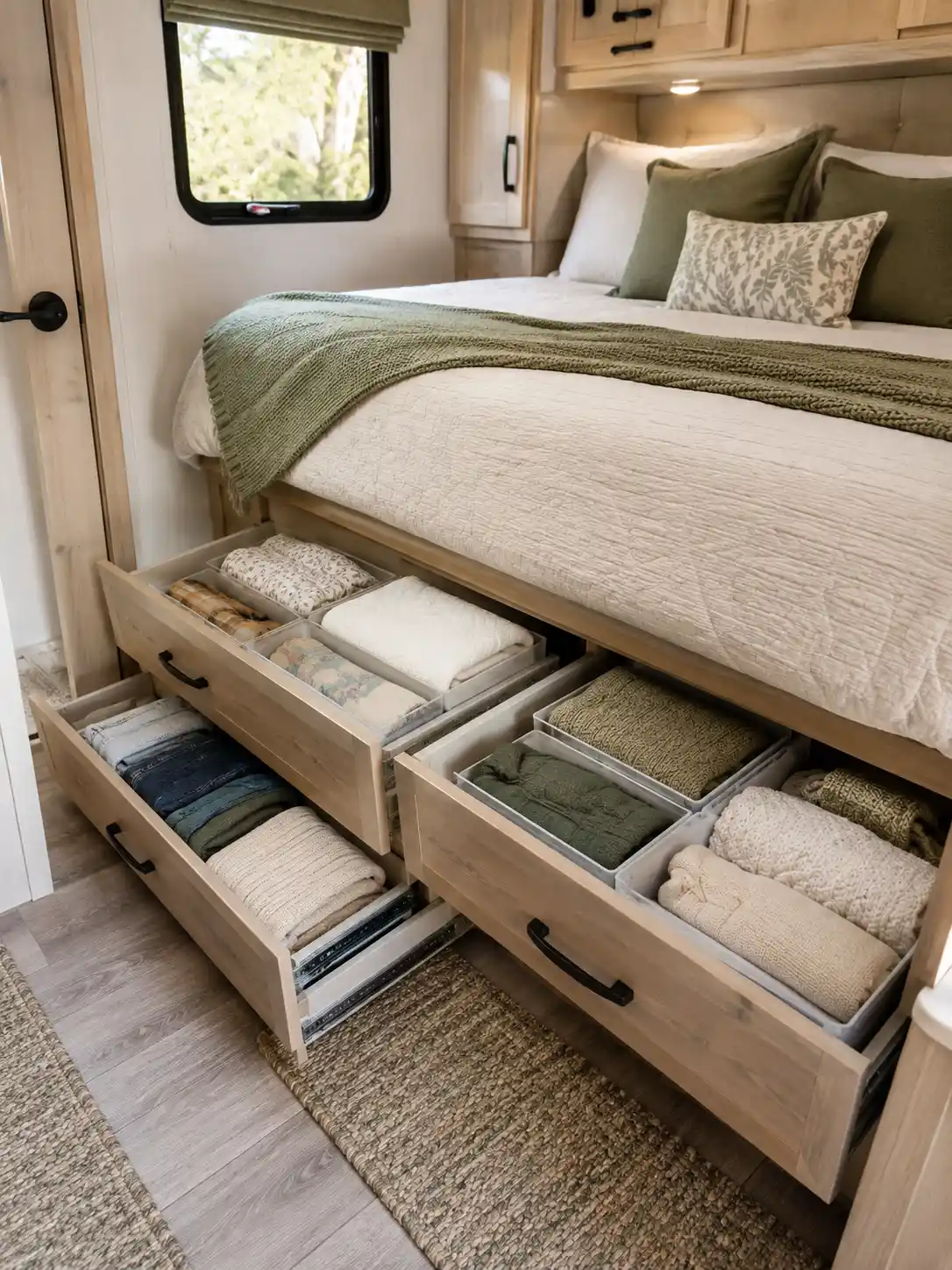
The area beneath an RV bed can provide some of the largest hidden storage in the vehicle. Use it for extra bedding, seasonal clothing, outdoor equipment and supplies that are not needed every day.
Pack belongings in lidded bins, vacuum bags or soft zippered containers that fit the available space. Clear containers make contents easy to identify, while fabric bags work well around mechanical components. Keep heavier items near the center of the RV to support balanced weight distribution. Store frequently used belongings close to the access point so you do not have to unload everything.
8. Hang a Bedside Pocket Organizer
Many RV bedrooms have little or no room for conventional nightstands. A bedside pocket organizer offers a convenient place for glasses, phones, books, charging cables and other nighttime necessities.
Tuck the organizer beneath the mattress or attach it securely to the bedframe. Select a design with reinforced seams and several pocket sizes. Avoid overloading it with heavy electronics, as this can pull the organizer loose. Keeping small essentials beside the bed also reduces countertop clutter and prevents phones or glasses from falling into difficult-to-reach spaces overnight.
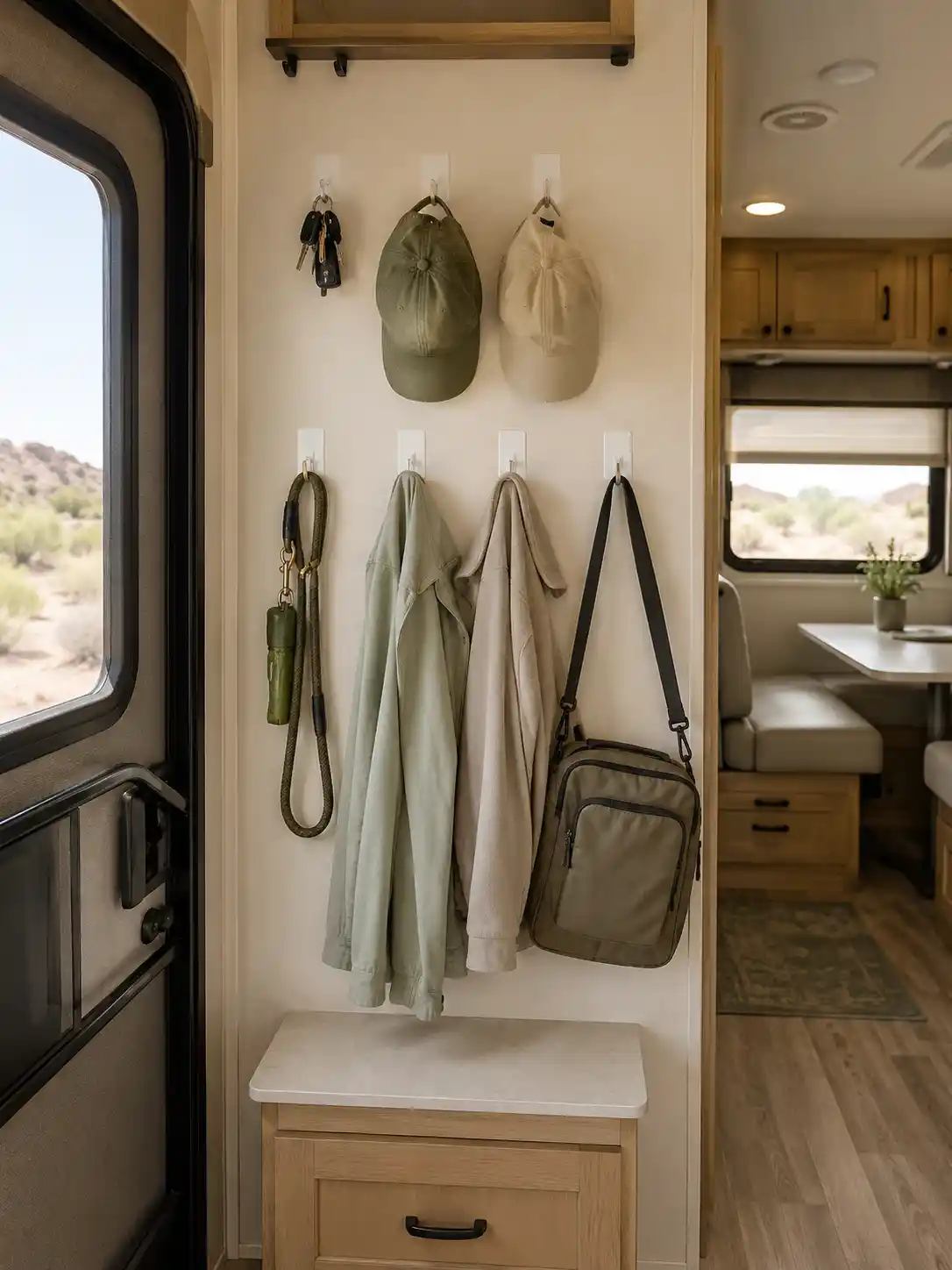
9. Add Adhesive Hooks to Empty Walls
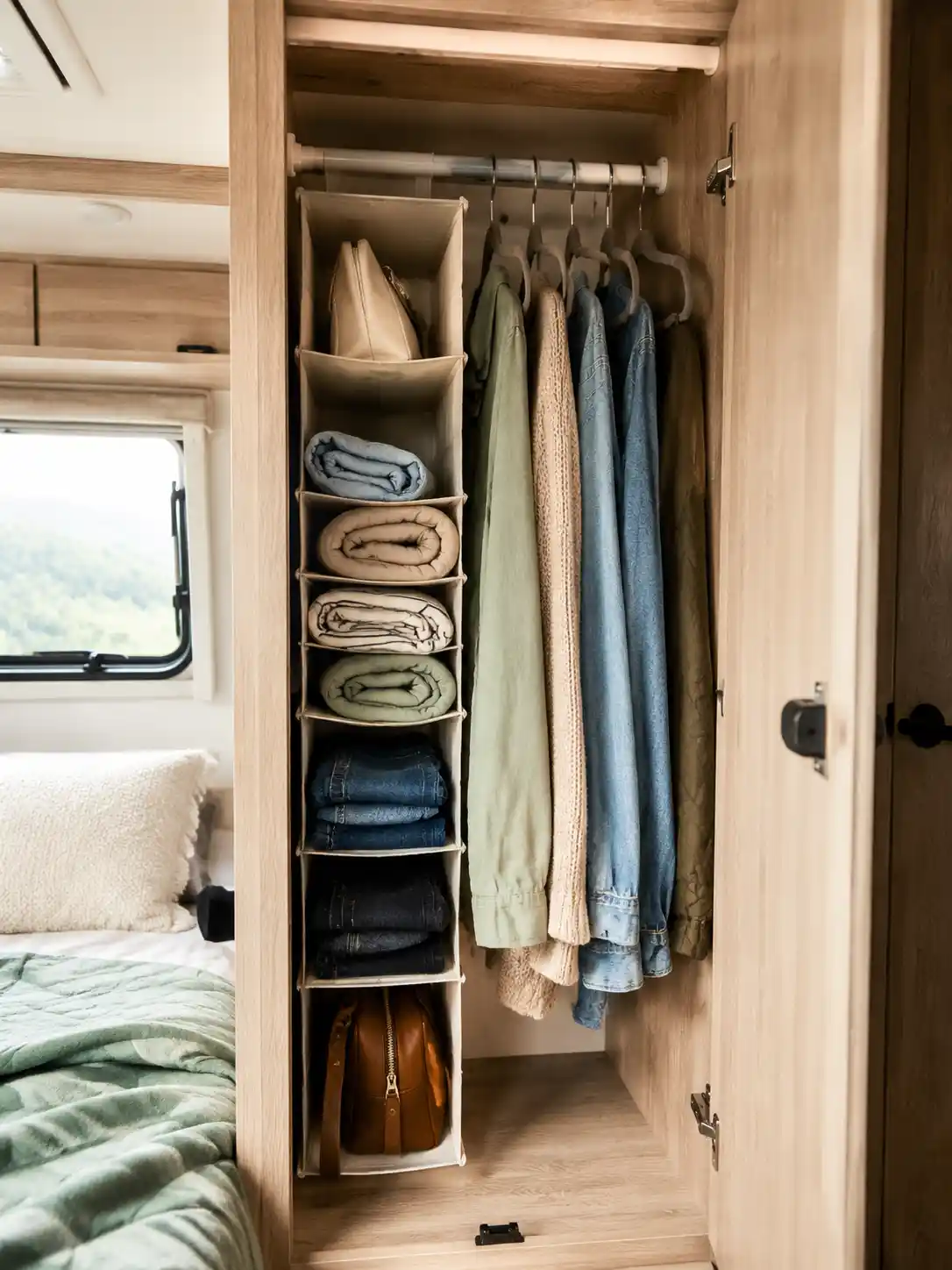
Adhesive hooks can turn narrow walls, cabinet sides and unused corners into useful storage. They are ideal for keys, hats, lightweight jackets, towels, reusable shopping bags and cooking accessories.
Choose hooks rated for the weight of the items you plan to hang. Clean the surface properly and allow the adhesive to cure for the recommended time before using it. Avoid placing hooks where hanging objects could block a walkway or cabinet. Removable adhesive products are a smart choice for rented RVs or interiors where drilling is not practical.
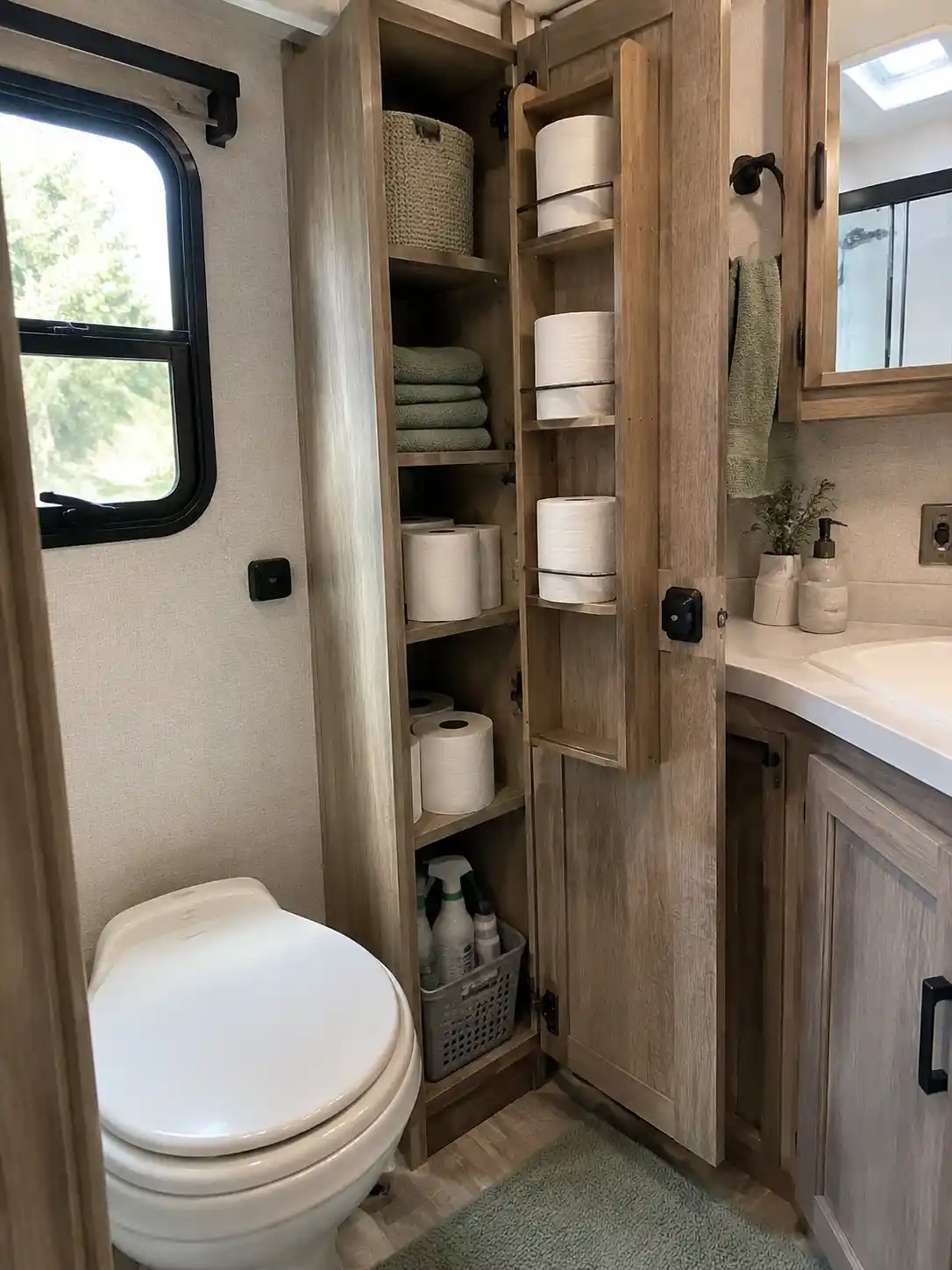
10. Organize the Bathroom With Wall-Mounted Baskets
Small RV bathrooms rarely provide enough countertop space. Wall-mounted baskets keep toiletries, toilet paper, washcloths and grooming products accessible without covering the sink.
Use rust-resistant plastic, stainless steel or coated wire baskets designed for damp environments. Place frequently used products at a comfortable height and keep heavier bottles on lower shelves. Self-adhesive baskets may work for lightweight supplies, but heavier storage should be mounted securely. Check that baskets will not interfere with doors, shower curtains or movement through the narrow bathroom.
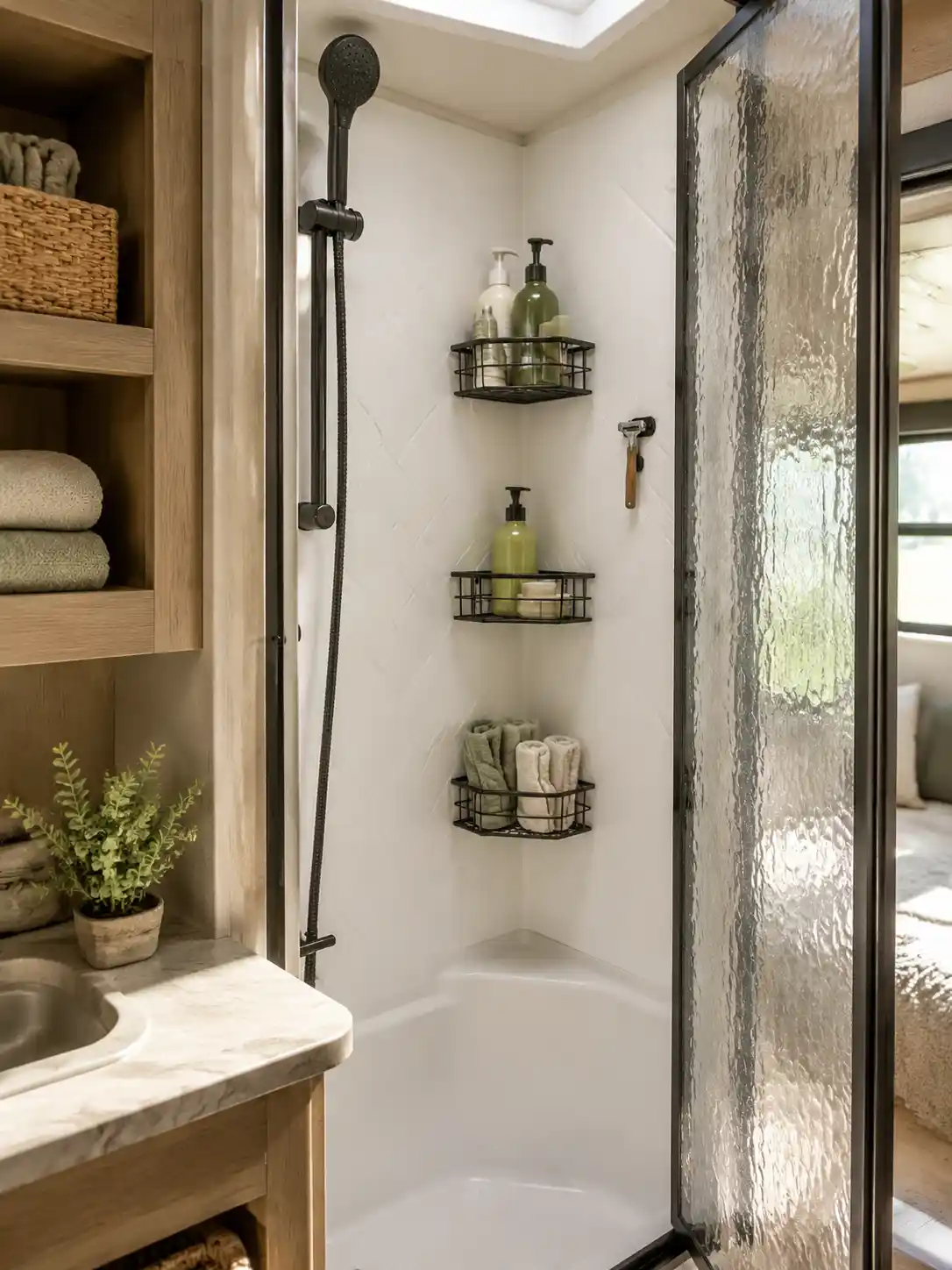
11. Install a Hanging Shower Caddy
A hanging shower caddy brings order to shampoo bottles, soap, razors and other bathing products. Choose a compact model that hangs from the showerhead or attaches to a solid shower wall.
Look for drainage holes and rust-resistant materials to reduce mildew and water buildup. Secure the bottom with suction cups or adhesive clips so the caddy does not swing while driving. Transfer oversized products into smaller refillable bottles to save additional space. Remove unnecessary duplicates regularly, since even a well-designed caddy becomes inconvenient when it is overloaded.
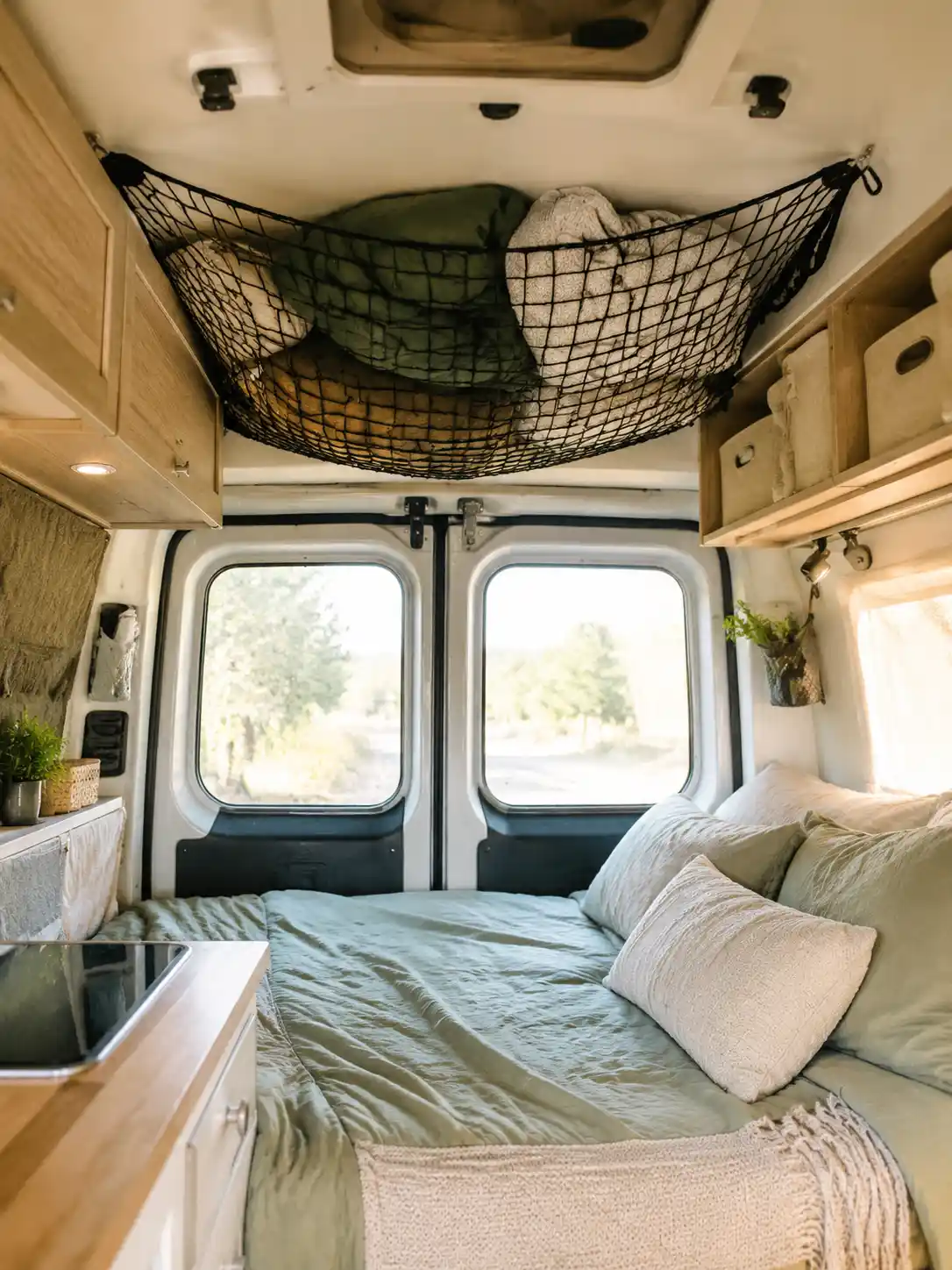
12. Use Clear Bins in Overhead Cabinets
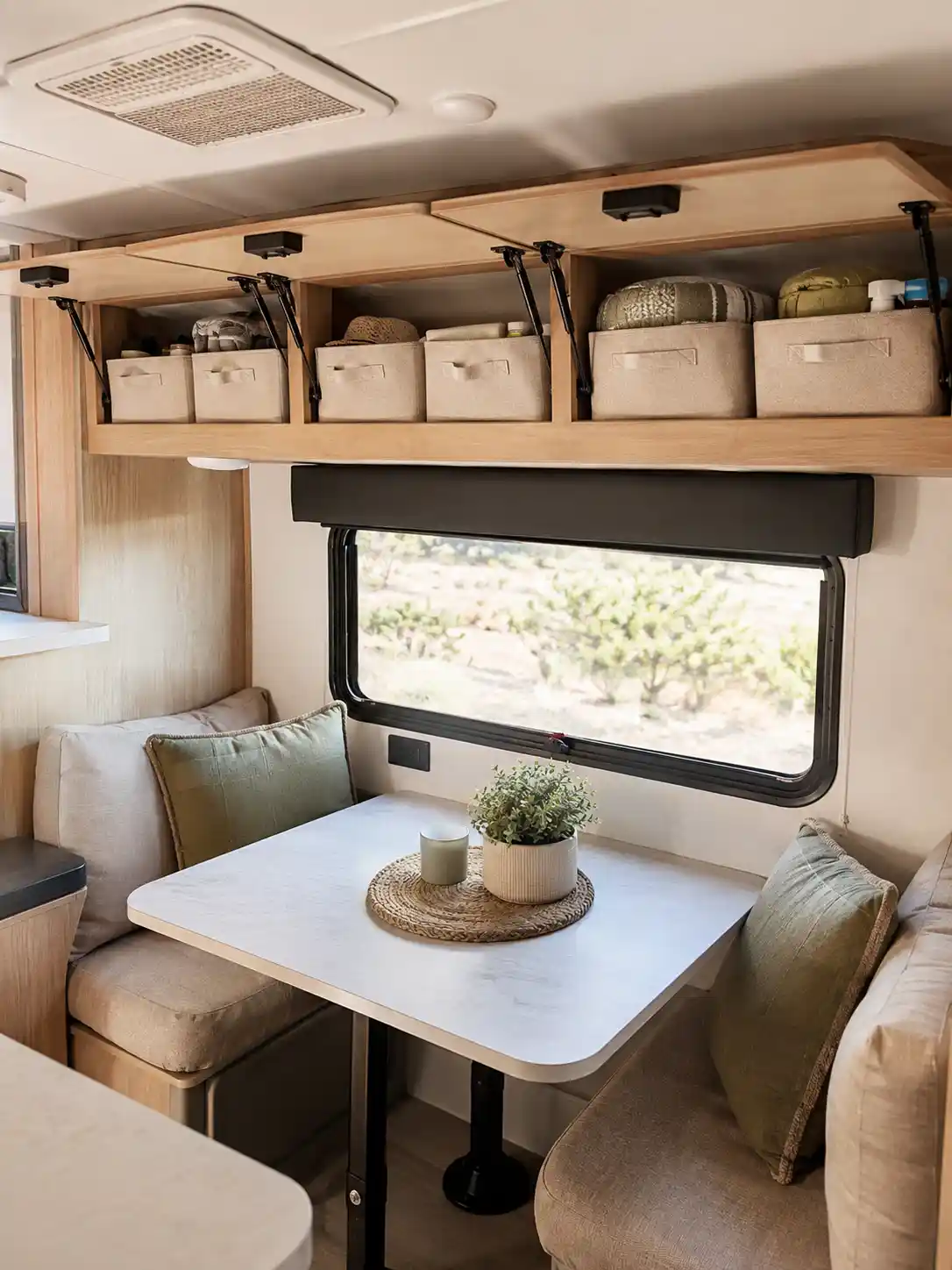
Overhead cabinets can be deep and difficult to search. Clear handled bins group related items together and allow you to pull out an entire category instead of reaching past loose objects.
Create separate bins for snacks, medicines, electronics, pet supplies or travel documents. Select containers that fit snugly but remain easy to remove. Lidded bins offer better protection during travel, while open bins provide faster access when parked. Do not place heavy objects in overhead storage because they can fall when the cabinet is opened and may raise the RV’s center of gravity.
13. Create a Dedicated Entryway Station
A small entryway station prevents keys, sunglasses, flashlights and dog leashes from spreading throughout the RV. Combine a few hooks with a shallow basket or wall-mounted pocket near the door.
Assign each family member a hook or compartment if space allows. Keep the arrangement slim so it does not obstruct the entrance. A small washable mat can collect dirt from shoes, while a nearby lidded container holds footwear. Secure everything firmly because this is a high-traffic area that experiences frequent movement whenever people enter or leave.
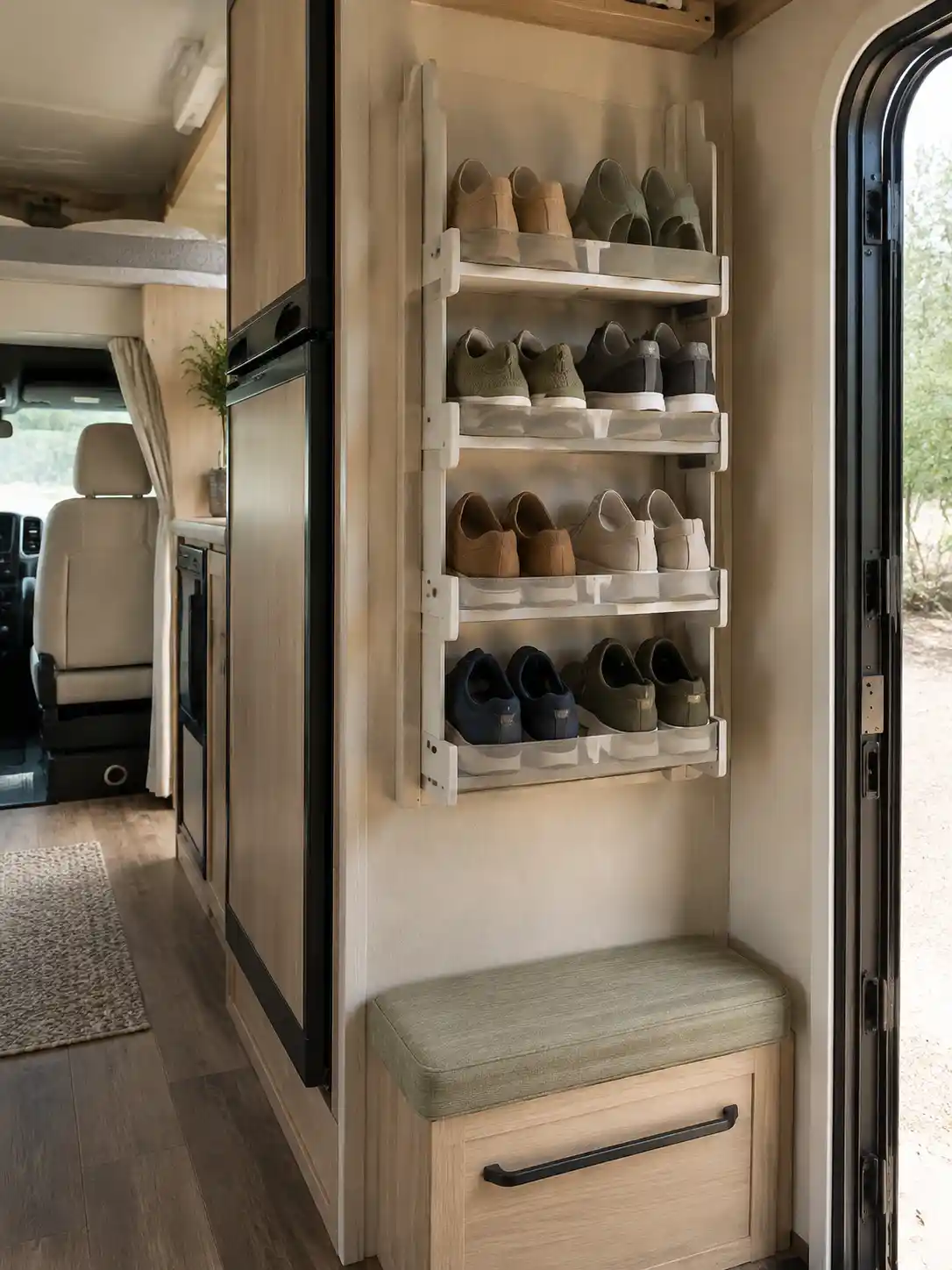
14. Store Shoes in Slim Vertical Compartments
Loose shoes take up floor space and can become a tripping hazard in a narrow RV. Use a slim vertical organizer, hanging shoe pockets or compact cubbies to keep pairs together.
Place everyday shoes near the entrance and store special-purpose footwear under the bed or inside a bench. Clean muddy shoes before placing them in fabric organizers, or select washable plastic compartments. Avoid storing too many pairs inside the RV. Limiting each traveler to a practical selection creates more room for essential gear and makes the interior easier to clean.
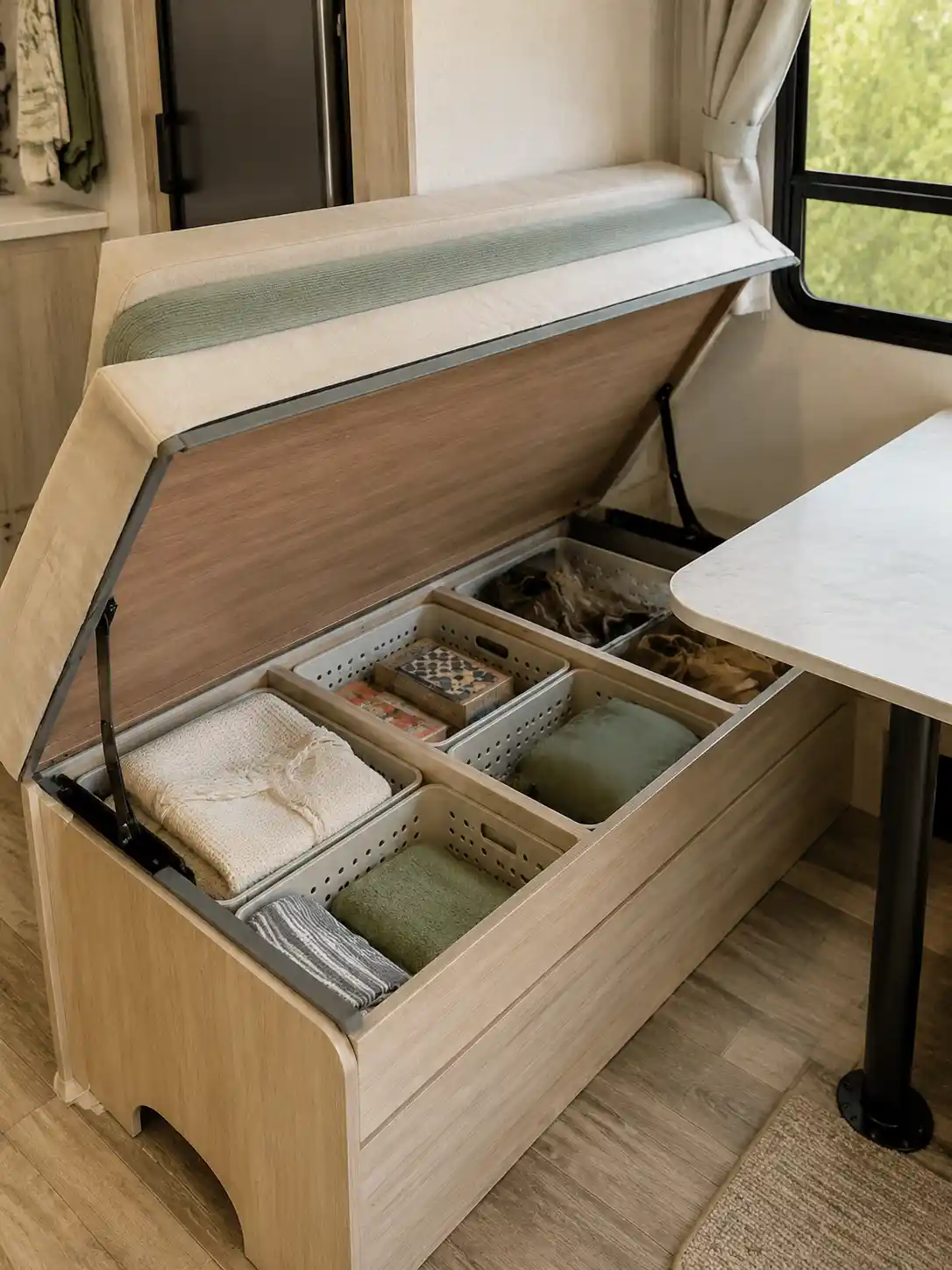
15. Add Storage Beneath Dinette Seats
Dinette benches often conceal valuable storage space. Use these compartments for games, paper goods, kitchen appliances, tools or emergency supplies that do not need to be accessed constantly.
Place smaller items in labeled bins so they do not scatter throughout the compartment. Soft-sided containers can be easier to fit around seat supports and wiring. If lifting the seat cushions is inconvenient, consider adding a safe access panel where construction permits. Keep an updated inventory on your phone so you can locate stored items without repeatedly opening both benches.
16. Organize the Exterior Storage Bays
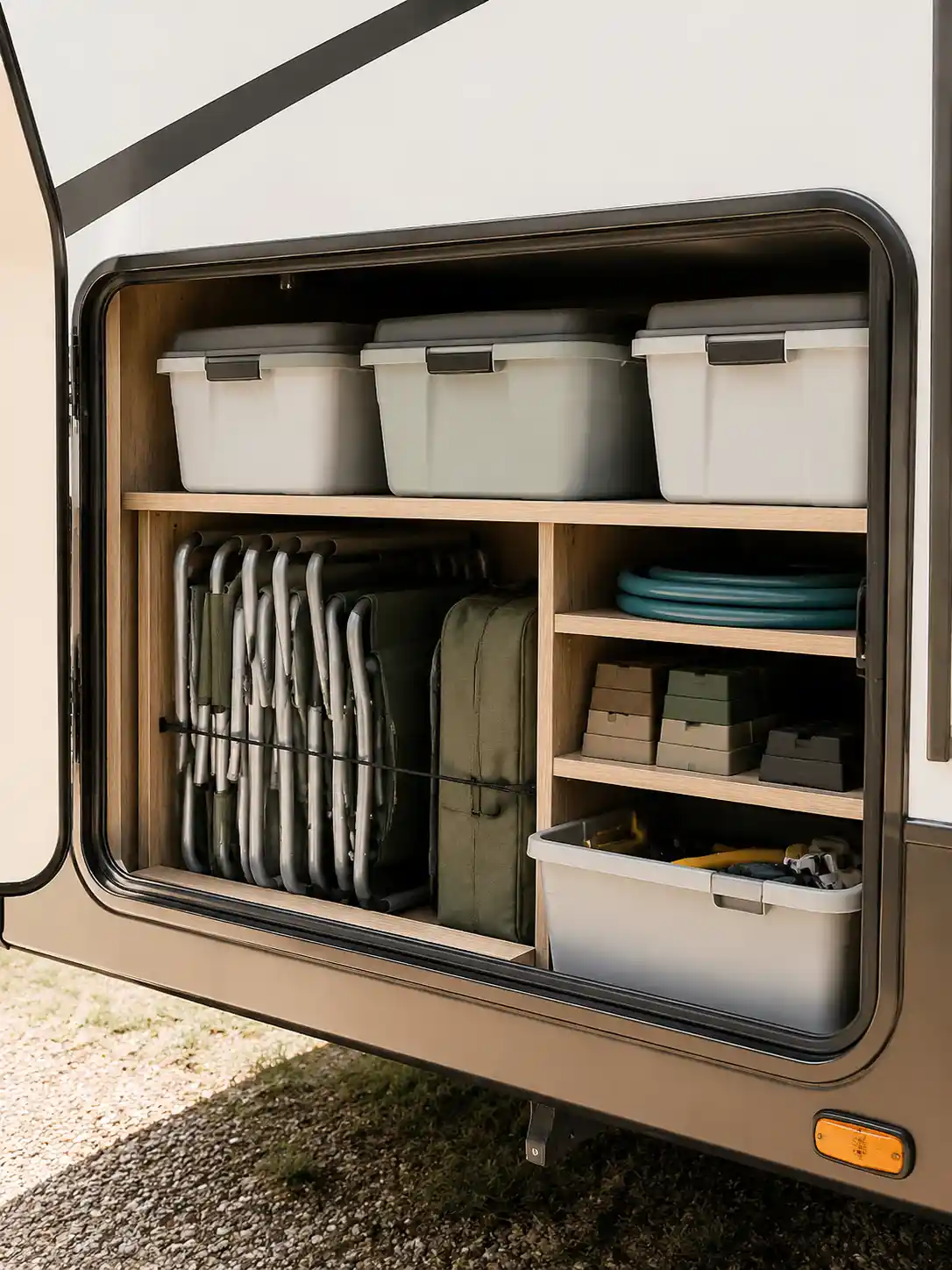
Exterior compartments are best suited to hoses, leveling equipment, folding chairs, electrical accessories and outdoor cooking supplies. Divide each bay into categories instead of placing everything in one large pile.
Use weather-resistant bins with secure lids and label them on the top and side. Store dirty equipment separately from clean textiles or cooking items. Wind cords and hoses with straps to prevent tangles. Place heavier gear low and close to the RV’s center when possible. Review the total cargo weight and avoid exceeding the vehicle manufacturer’s storage or axle limits.
17. Create a Travel-Day Storage Routine
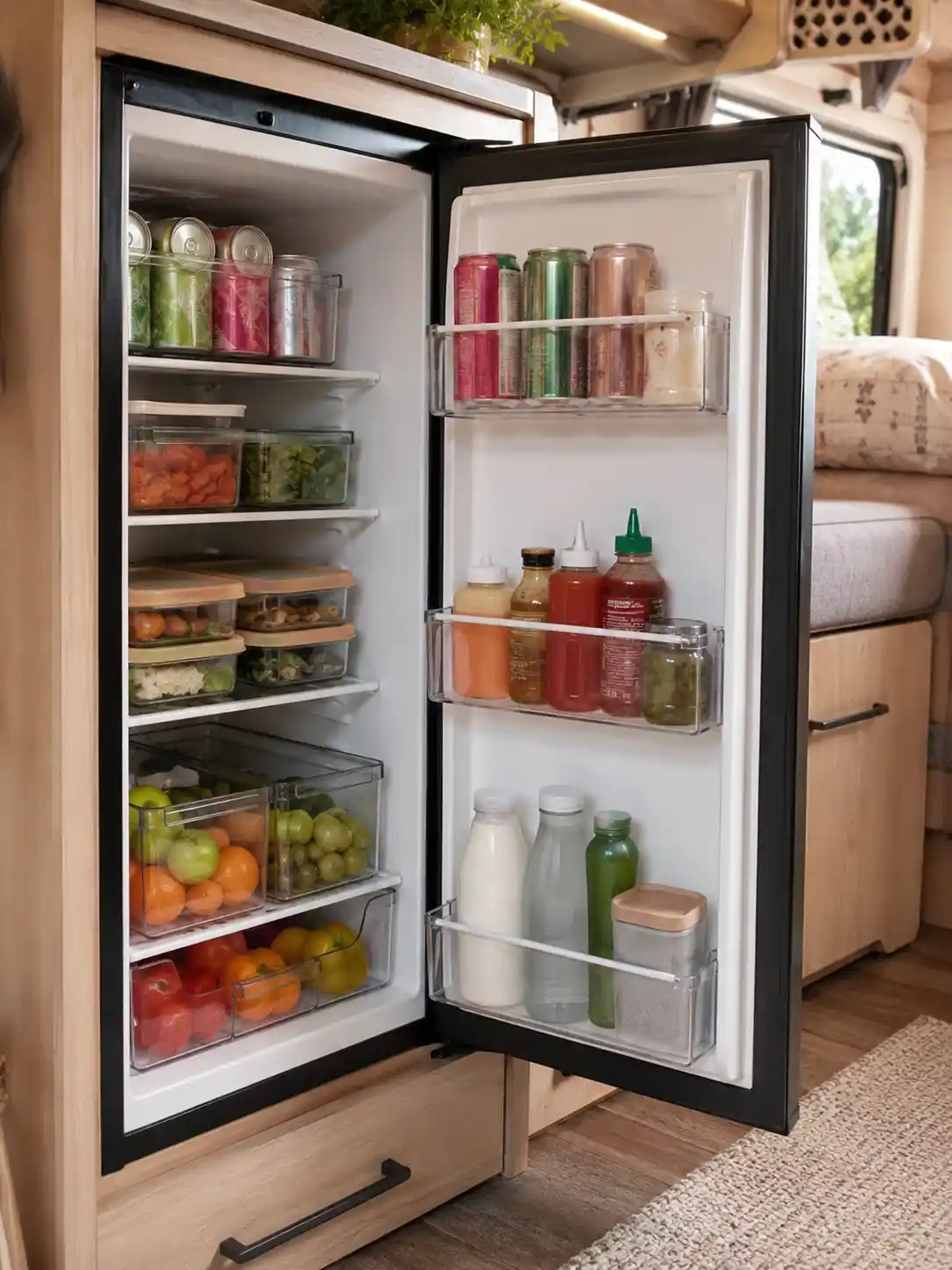
Even an organized RV needs to be prepared before it moves. Create a short checklist for securing cabinets, counters, bathroom products, electronics and loose decorative items before every departure.
Use cabinet latches, tension rods, nonslip liners and reusable storage straps where needed. Return belongings to their designated places instead of placing them temporarily on the bed or floor. Walk through the RV from front to back before leaving. A consistent routine prevents damage, reduces rattling and makes setting up at the next campsite considerably faster.
Read also: 25 IKEA Closet Ideas That Make Small Spaces Feel Bigger
How to Choose RV Storage Solutions
Begin by measuring the exact dimensions of every cabinet, drawer and hidden compartment. RV walls, doors and furniture may have irregular shapes, so household organizers do not always fit correctly.
Prioritize lightweight, multipurpose products that can be secured during travel. Consider how often each item is used and place daily essentials within easy reach. Less frequently used belongings can go under the bed, beneath dinette seats or in exterior storage.
Weight distribution matters as much as available space. Heavy objects should generally be stored low and close to the RV’s center. Consult your vehicle manual for cargo capacity and weight limitations.
Common RV Organization Mistakes
Buying containers before measuring the available space is one of the most common mistakes. Even a small difference can prevent an organizer from fitting inside an RV cabinet.
Another problem is filling every available compartment. Extra storage should improve accessibility, not provide an excuse to carry unnecessary belongings. Leave room for groceries, travel purchases and items that need to be stored temporarily.
Do not assume adhesive products will hold under every condition. Heat, moisture and road vibration can weaken them. Test mounted organizers carefully and use appropriate mechanical fasteners when heavier storage requires stronger support.
Frequently Asked Questions
How do I keep items from moving in RV cabinets?
Use nonslip shelf liner, adjustable tension rods, storage bins and secure cabinet latches. Pack containers closely enough to limit movement, but avoid forcing too many objects into one cabinet.
What should not be stored in an RV overhead cabinet?
Avoid storing heavy cookware, tools, glass containers or other objects that could cause an injury if they fall. Reserve overhead cabinets for lightweight food, clothing, linens and soft supplies.
How can I organize a very small RV?
Use vertical surfaces, cabinet doors, under-bed compartments and multipurpose furniture. Limit duplicates and remove items that are rarely used. Small, clearly labeled containers are usually more practical than several large bins.
Are adhesive hooks safe for RV walls?
They can work for lightweight items when applied to a clean, compatible surface. Heat and humidity may weaken the adhesive, so follow the manufacturer’s weight limit and check the hooks regularly.
How often should I reorganize my RV?
Review your storage after each major trip or at least once per season. Remove expired food, unused equipment and clothing that does not suit upcoming travel. Adjust the system when you notice items repeatedly being left out.
What is the best way to organize an RV pantry?
Group food by category, use stackable airtight containers and place frequently used ingredients at eye level. Keep heavier cans on lower shelves and add tension rods or guard rails to stop products from falling.