19 Backpack Storage Ideas for an Organized Home

Backpacks often end up on chairs, floors, and kitchen counters because they don’t have a proper home. These backpack storage ideas use hooks, cubbies, baskets, closets, doors, and unused corners to keep bags accessible without crowding the room.
The right solution depends on how many bags you own, who uses them, and where they’re dropped each day. Choose a storage spot near the natural entry point, and it’ll be much easier for everyone to put bags away.
1. Hang Backpacks on a Wooden Peg Rail
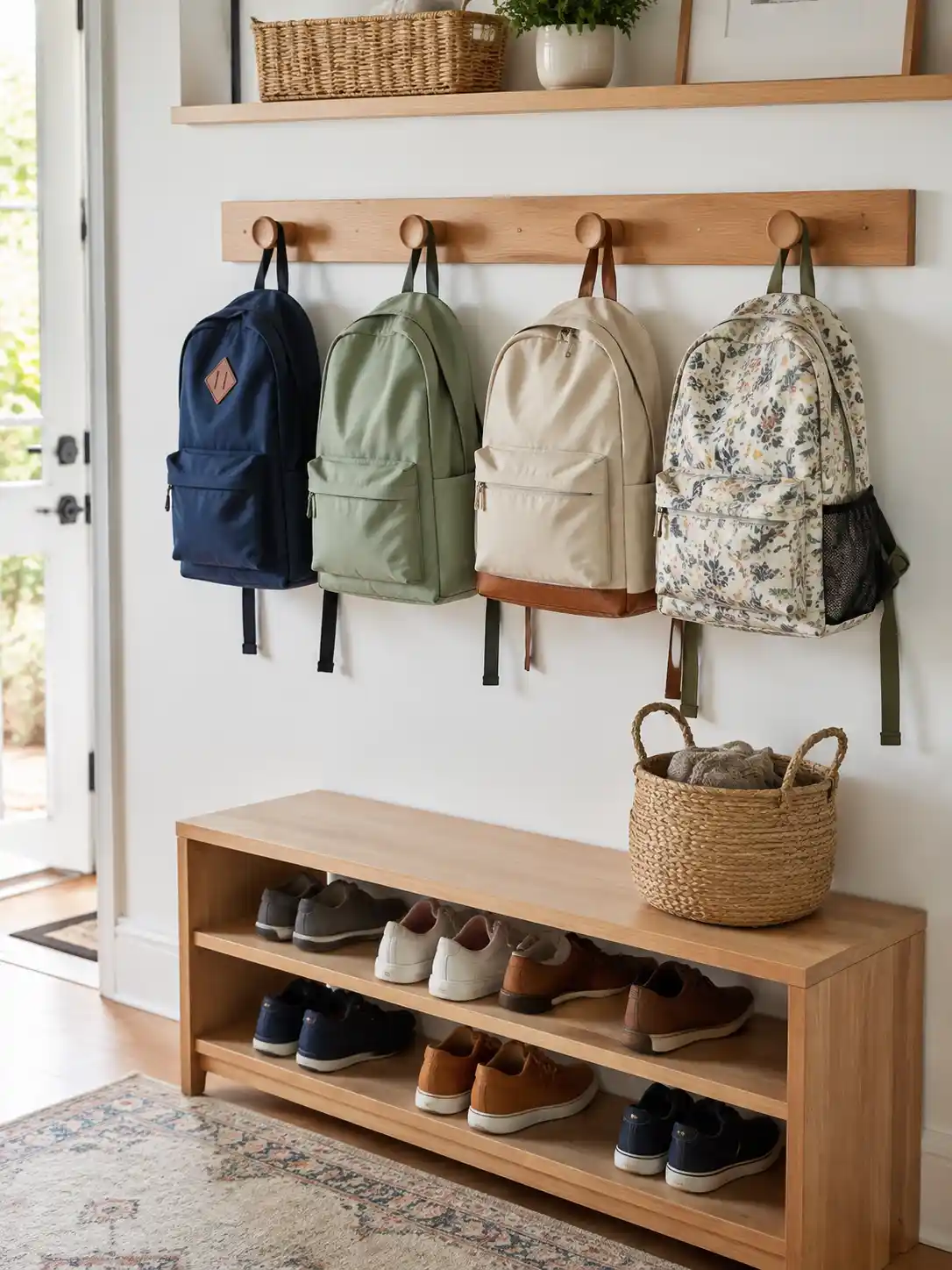
A sturdy wooden peg rail creates simple backpack storage without taking up floor space. Install it near the entryway so bags can be hung up as soon as everyone comes home.
Use wide pegs that support the backpack’s top loop without stretching it. Space the pegs far enough apart that full bags don’t overlap. A bench or shoe rack underneath can complete the drop zone while keeping the walkway open. Secure the rail to wall studs because school and work bags can become surprisingly heavy when filled with books, laptops, and water bottles.
2. Give Each Backpack Its Own Cubby
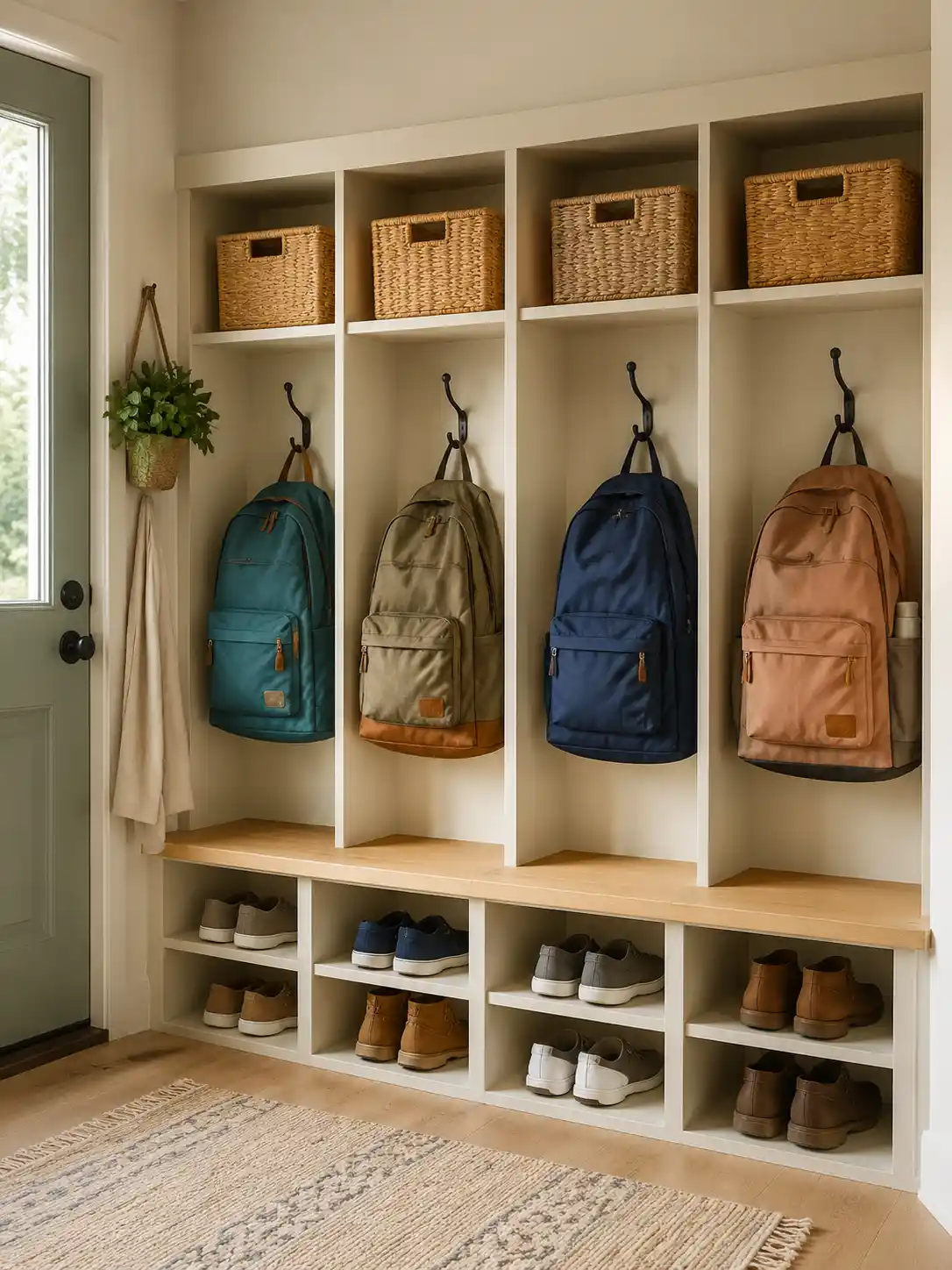
Individual cubbies prevent backpacks from becoming mixed together in a busy family entryway. Give each person one open compartment where their bag can remain upright and easy to grab.
Add a strong hook inside each cubby if you prefer hanging bags rather than placing them on the shelf. Use the lower compartments for shoes and the upper shelves for baskets containing hats, gloves, or smaller accessories. Keep the main backpack section open instead of filling it with extra items. A clear, dedicated space makes the system easier for children to follow without needing reminders.
3. Store Backpacks in Under-Bench Baskets
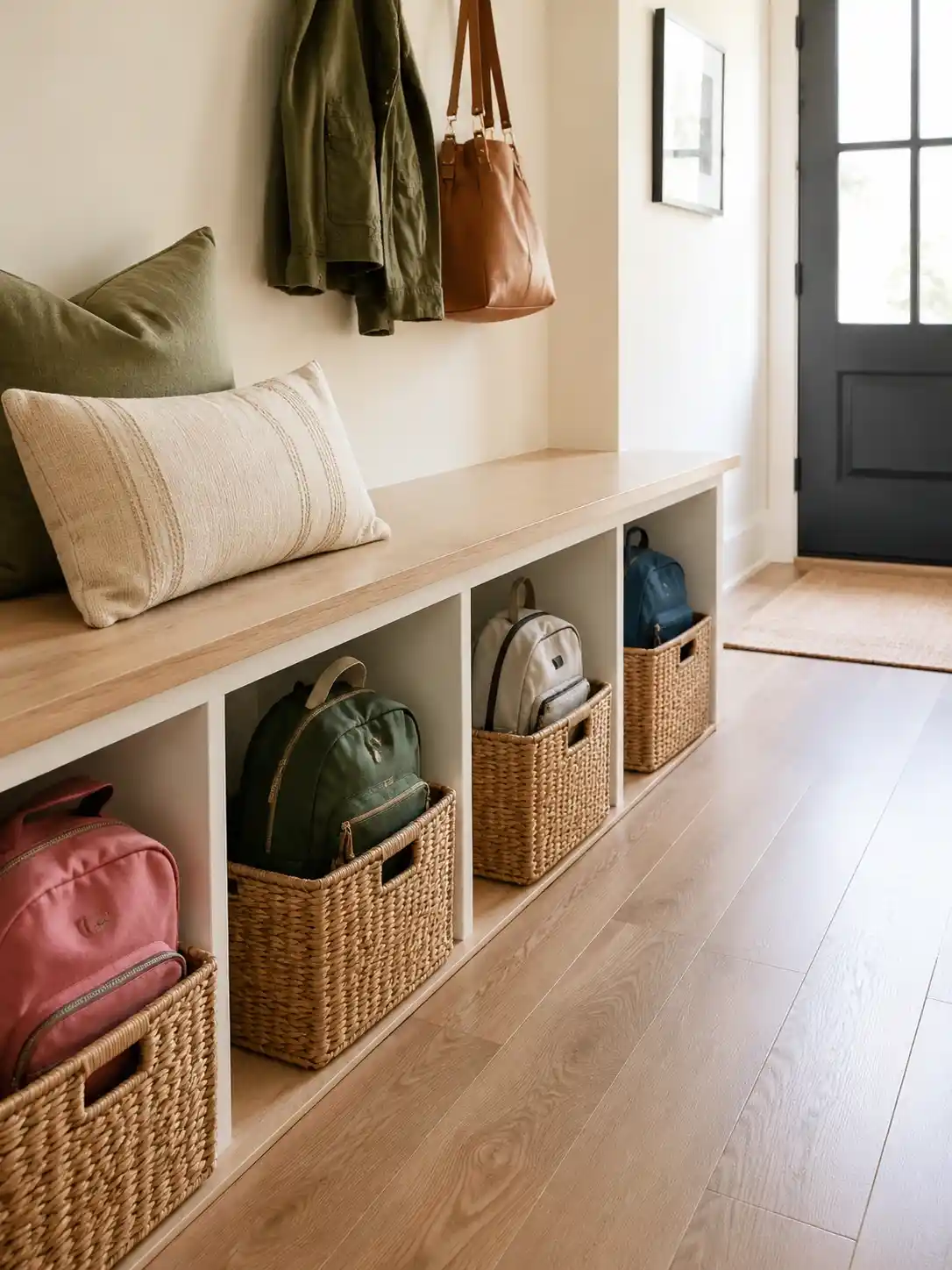
A storage bench can provide seating and hide backpacks at the same time. Deep open compartments beneath the seat are especially useful in narrow hallways where freestanding bag racks would block the path.
Place one backpack upright inside each large handled basket. Choose baskets that slide easily and are wide enough to prevent straps from catching. Woven baskets soften the look of the entryway, while plastic bins may be easier to wipe clean. Avoid stuffing several heavy bags into one container because children may struggle to pull it out or return it properly.
Read also:
- 25 Desk Setup Ideas to Upgrade Your Workspace Instantly
- 25 Home Office Organization Ideas That Actually Work
4. Create Backpack Lockers
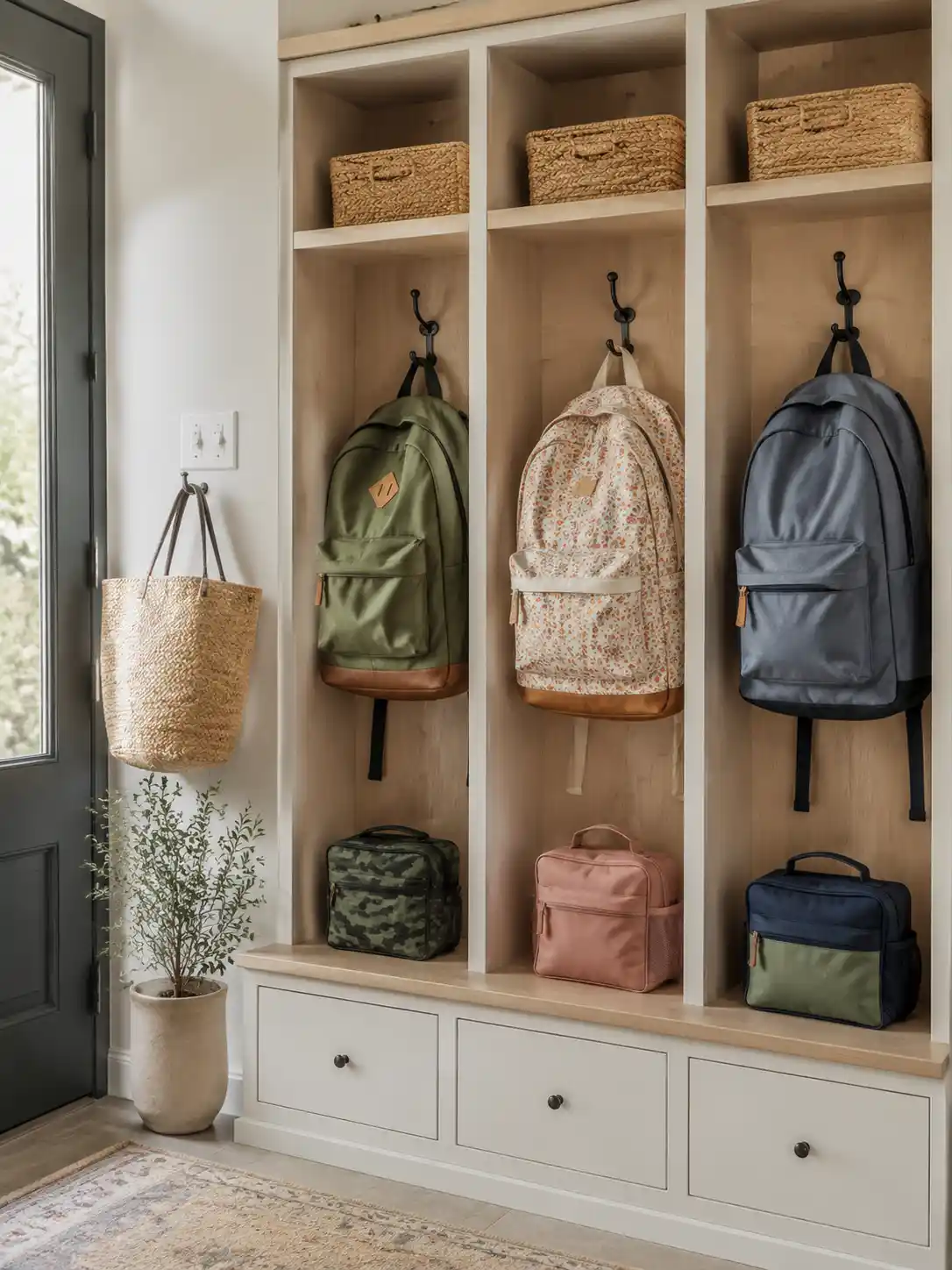
Locker-style storage gives each family member a complete drop zone for backpacks, jackets, shoes, and lunch bags. This works well in mudrooms or wide entryways where you have enough wall depth for built-in units.
Install a heavy-duty hook inside each compartment and leave space below the bag for shoes. A small upper shelf can hold a basket for seasonal accessories. Keep lunch boxes on a separate ledge so spills don’t reach books or electronics. Ventilation is helpful when bags contain sportswear or damp items. Open-front lockers are usually easier for children to use than closed cabinets.
5. Use a Vertical Column of Hooks
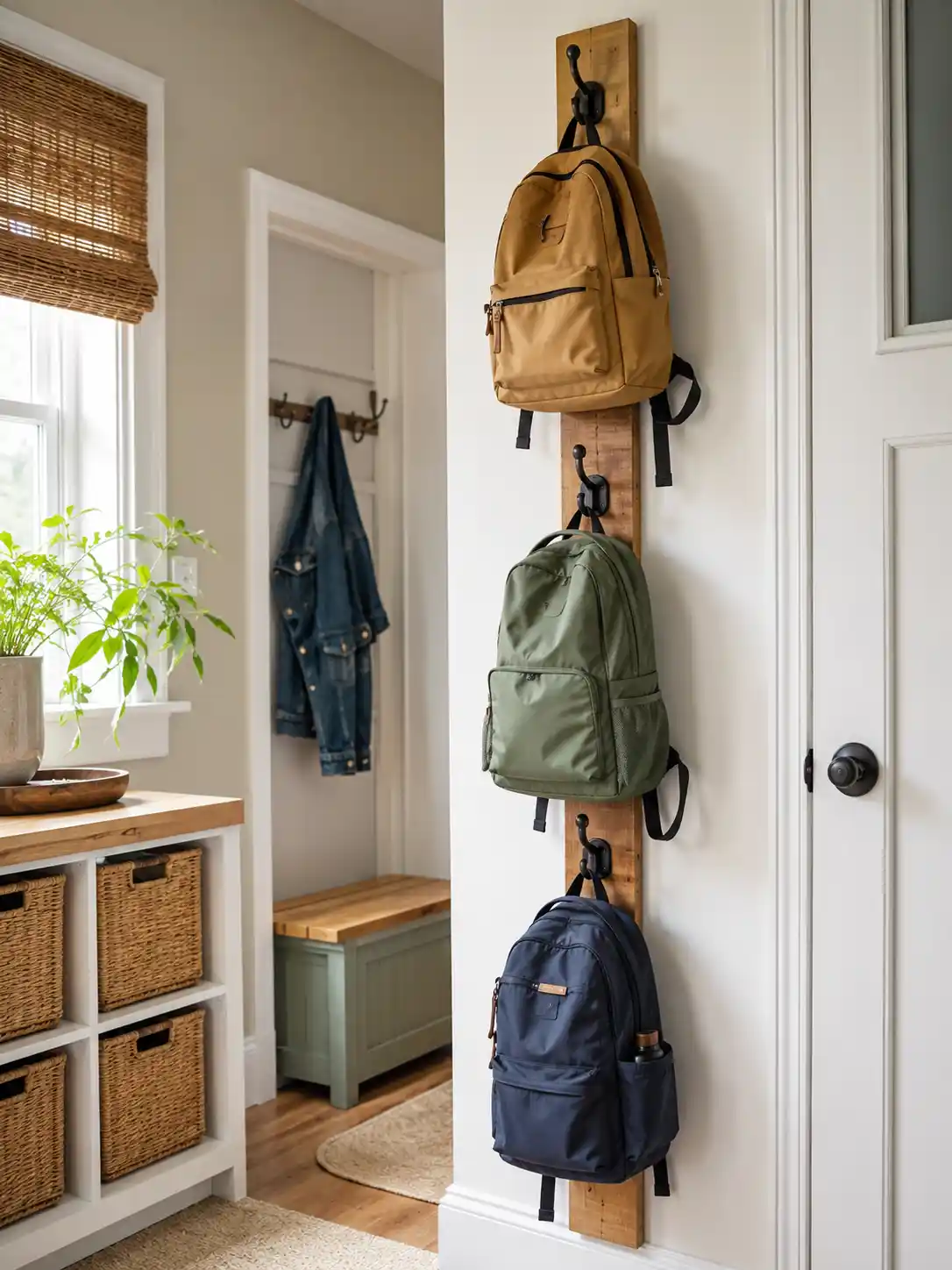
A vertical row of hooks turns a narrow strip of wall into useful backpack storage. This is a practical option beside a doorway, at the end of a hallway, or between two pieces of furniture.
Stagger the hooks from high to low so backpacks don’t sit directly on top of each other. Keep heavier adult bags on stronger upper hooks and children’s bags at a comfortable reaching height. Mount every hook into a stud or suitable wall anchor. Leave enough clearance from nearby doors, switches, and furniture so full bags won’t interfere with everyday movement.
6. Add an Over-the-Door Backpack Rack
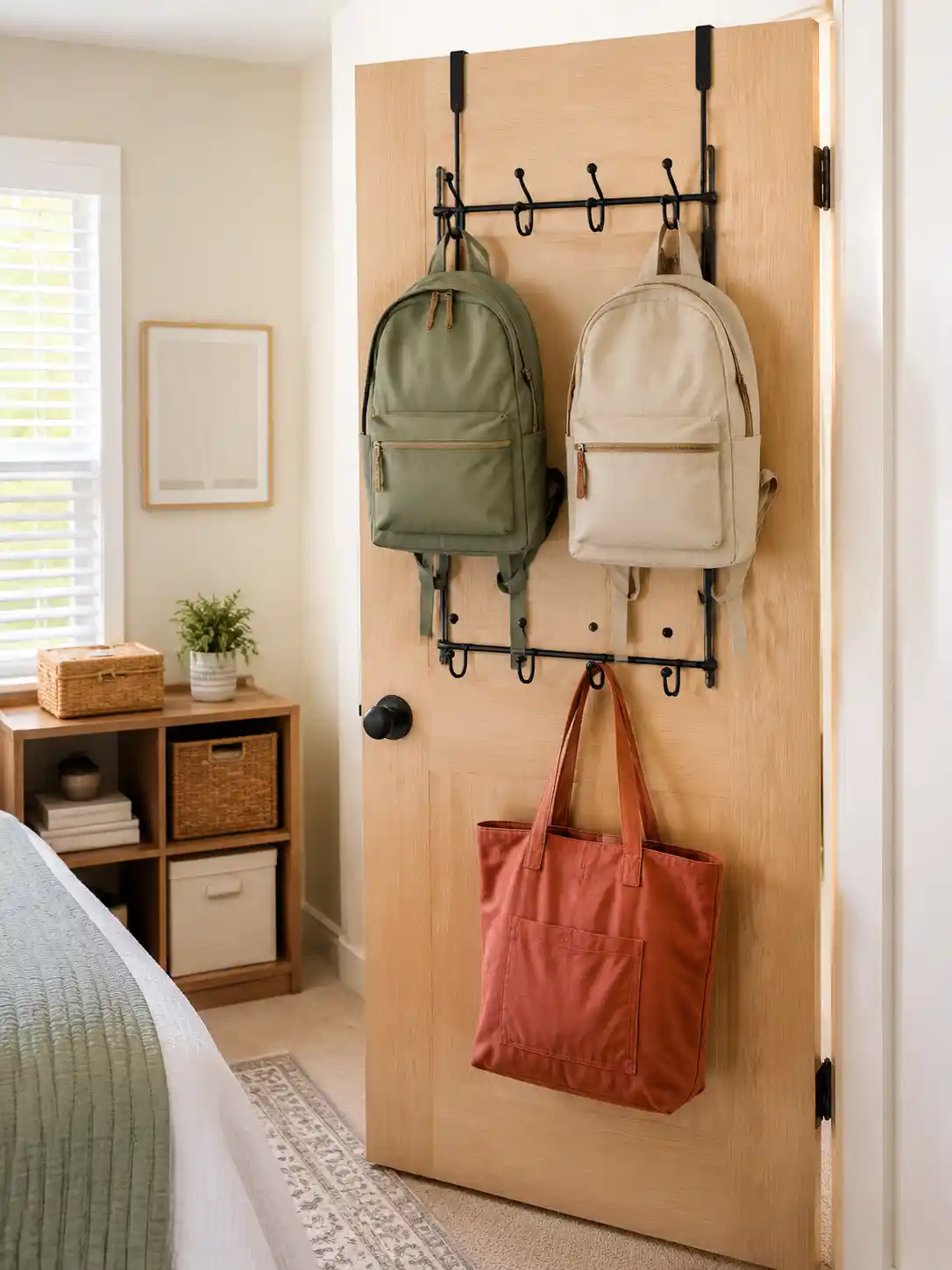
The back of a bedroom or closet door can hold lightweight backpacks without using wall or floor space. Choose an over-the-door rack with padded contact points to protect the surface.
Check that the hooks fit the door thickness and don’t prevent it from closing. Limit the rack to one or two everyday bags because too much weight can strain the hinges. Arrange bags so straps don’t catch in the door frame. This solution works best for empty or lightly packed bags. Heavier school bags should be stored on wall-mounted hooks or shelves designed for greater weight.
7. Build a Backpack and Homework Station
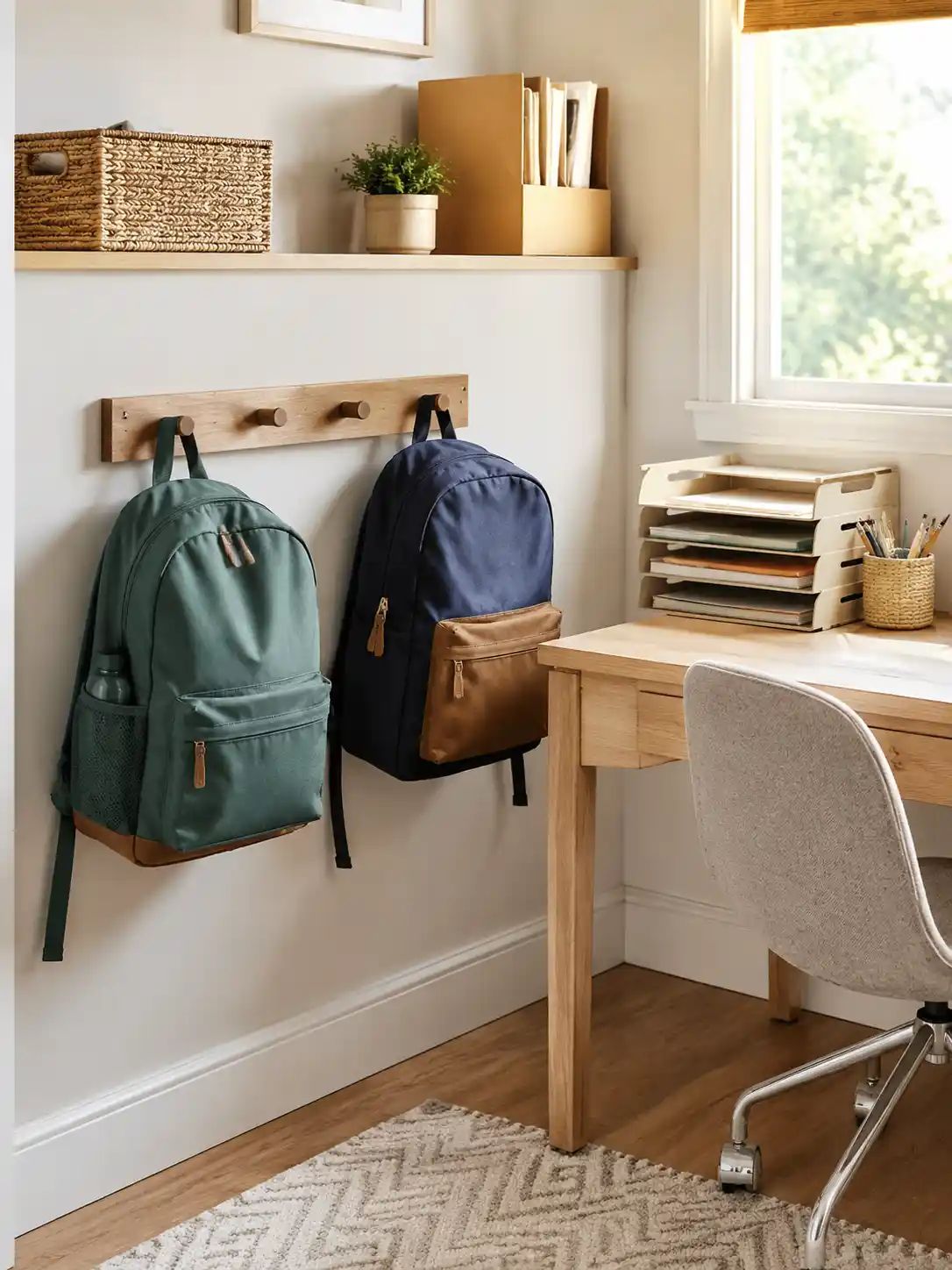
Placing backpack storage beside a desk creates one organized area for homework, school supplies, and daily bags. Children can unpack assignments and return everything to the same location when they finish.
Mount low hooks beside the desk and leave enough space so backpacks don’t interfere with the chair. Use a paper tray for active assignments and one container for basic stationery. Keep the system simple because too many categories may be difficult to maintain. A nearby charging point can support school devices, but route the cables safely so they don’t hang across the backpack hooks.
8. Use a Rolling Cart for Smaller Backpacks
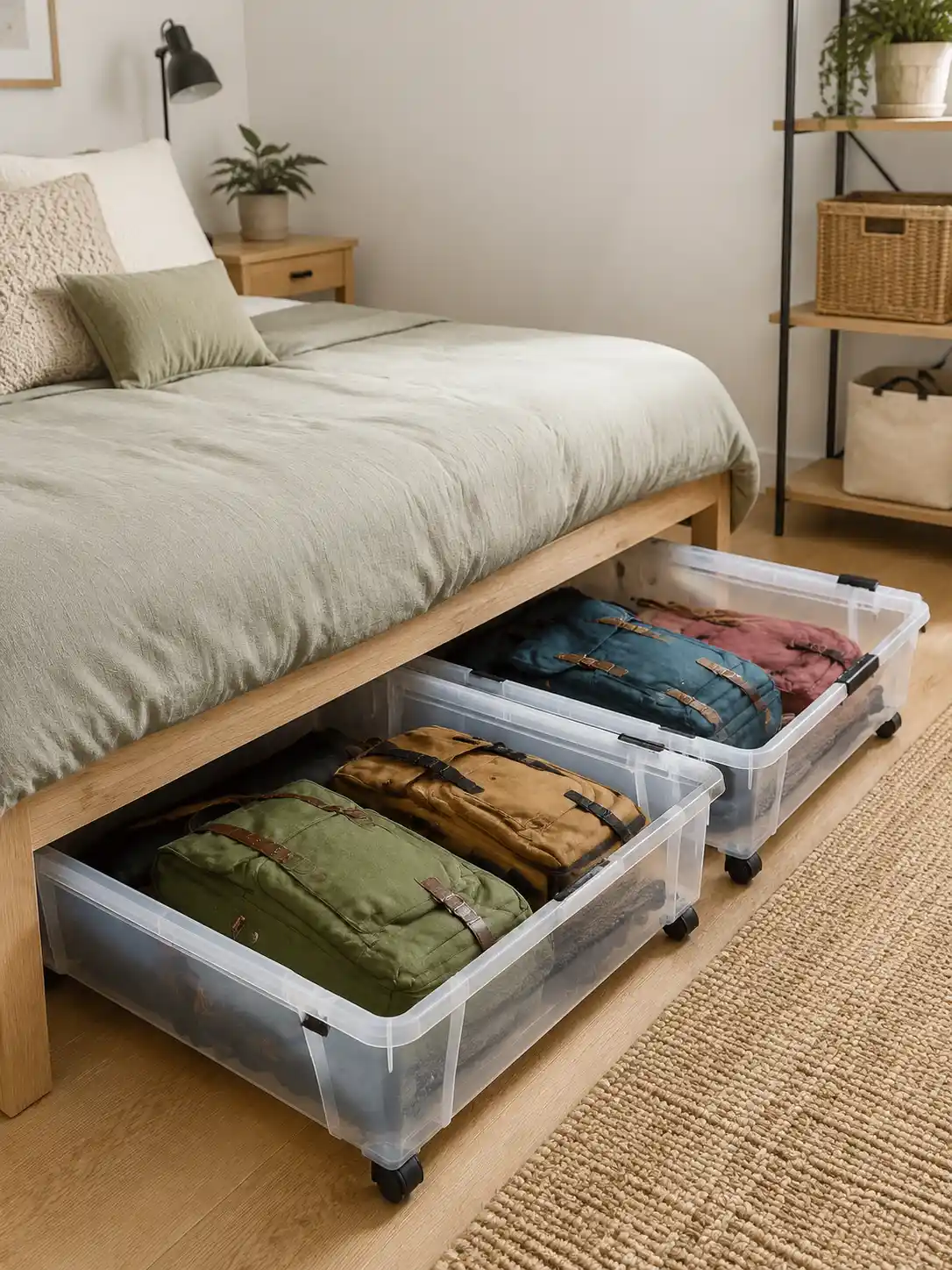
A three-tier rolling cart can organize smaller backpacks, school supplies, and daily accessories. It’s a flexible choice for bedrooms, study corners, or homes where storage needs change throughout the week.
Place lightweight backpacks upright on the lower shelves and use the top level for notebooks, chargers, or pencil containers. Choose a cart with raised shelf edges so items don’t fall when it moves. Locking wheels can keep it stable beside the desk. Avoid hanging heavy bags from the side because the uneven weight may cause the cart to tip.
9. Add Hooks Inside a Coat Closet
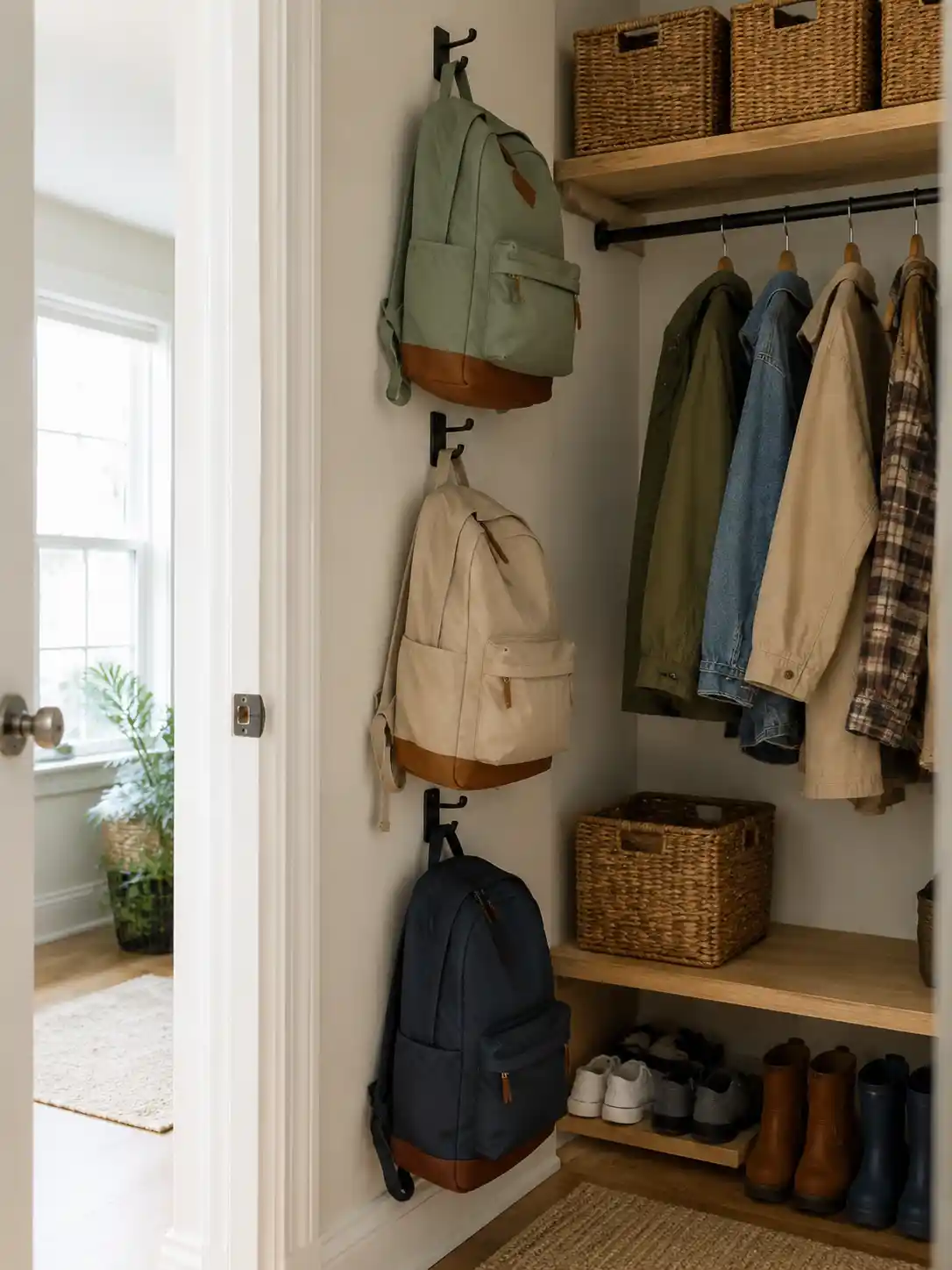
The side walls of a coat closet often remain unused. Installing hooks there creates backpack storage without reducing much hanging space for jackets.
Place the hooks at different heights and check that the closet door can close when the bags are full. Keep coats on the main rail and shoes beneath them. If the closet is shallow, use low-profile hooks so backpacks sit closer to the wall. Leave some airflow around damp bags and unpack food containers before storage. Regularly clear the closet floor so straps don’t become tangled with shoes or cleaning supplies.
10. Store Extra Backpacks Under the Bed
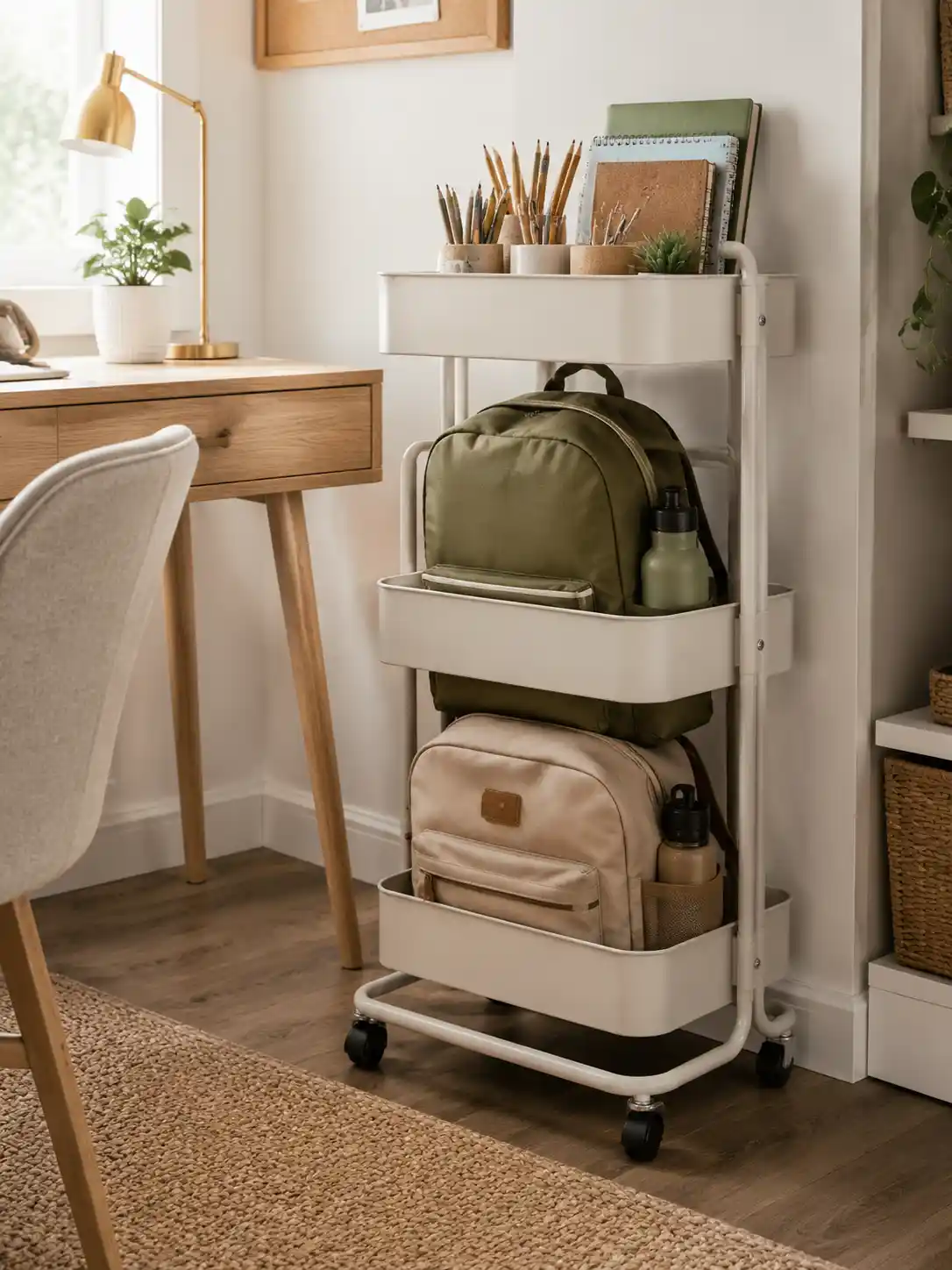
Under-bed bins are suitable for backpacks that aren’t used every day, such as hiking packs, travel bags, and bags for different seasons. They keep the items protected while using an area that might otherwise remain empty.
Clean and dry each backpack before storing it. Empty every pocket, loosen the straps, and lay the bag flat inside a shallow lidded container. Choose bins with wheels or handles so they’re easy to retrieve. Avoid crushing structured laptop bags or backpacks with stiff frames. A small moisture absorber can help in humid rooms, but it should never touch the fabric directly.
11. Stand Backpacks Upright With Shelf Dividers
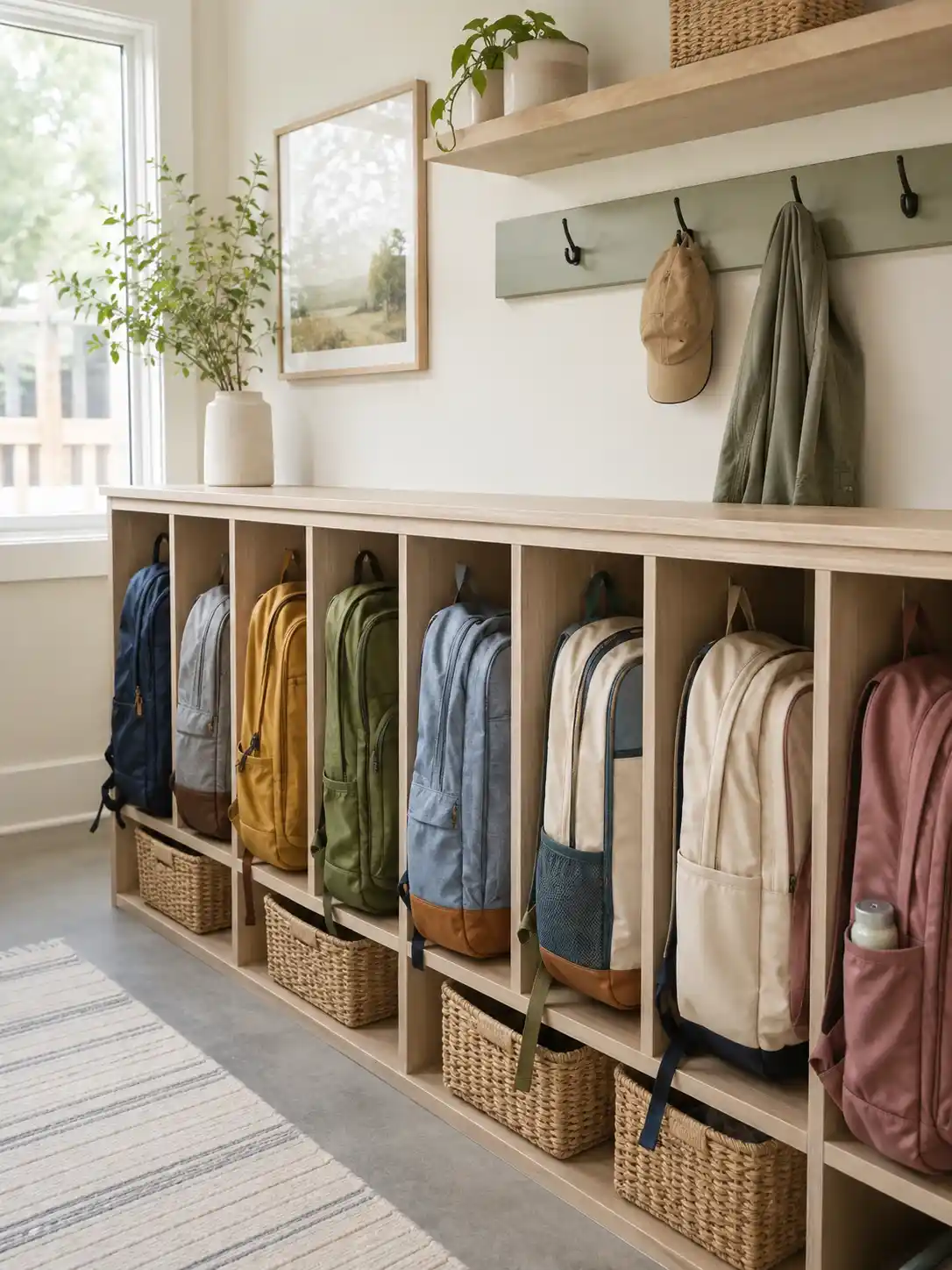
Wide shelves can become untidy when backpacks collapse and slide into one another. Vertical dividers create individual sections that keep each bag upright and easy to remove.
Adjust the spacing to suit the width of your bags. Store everyday backpacks with the handles facing outward and tuck loose straps inside their sections. This approach works well in utility rooms, mudrooms, and large closets. Make sure the shelf is deep enough to support the bags without letting them hang over the edge. Keep heavy bags on lower shelves so they’re safer and easier to lift.
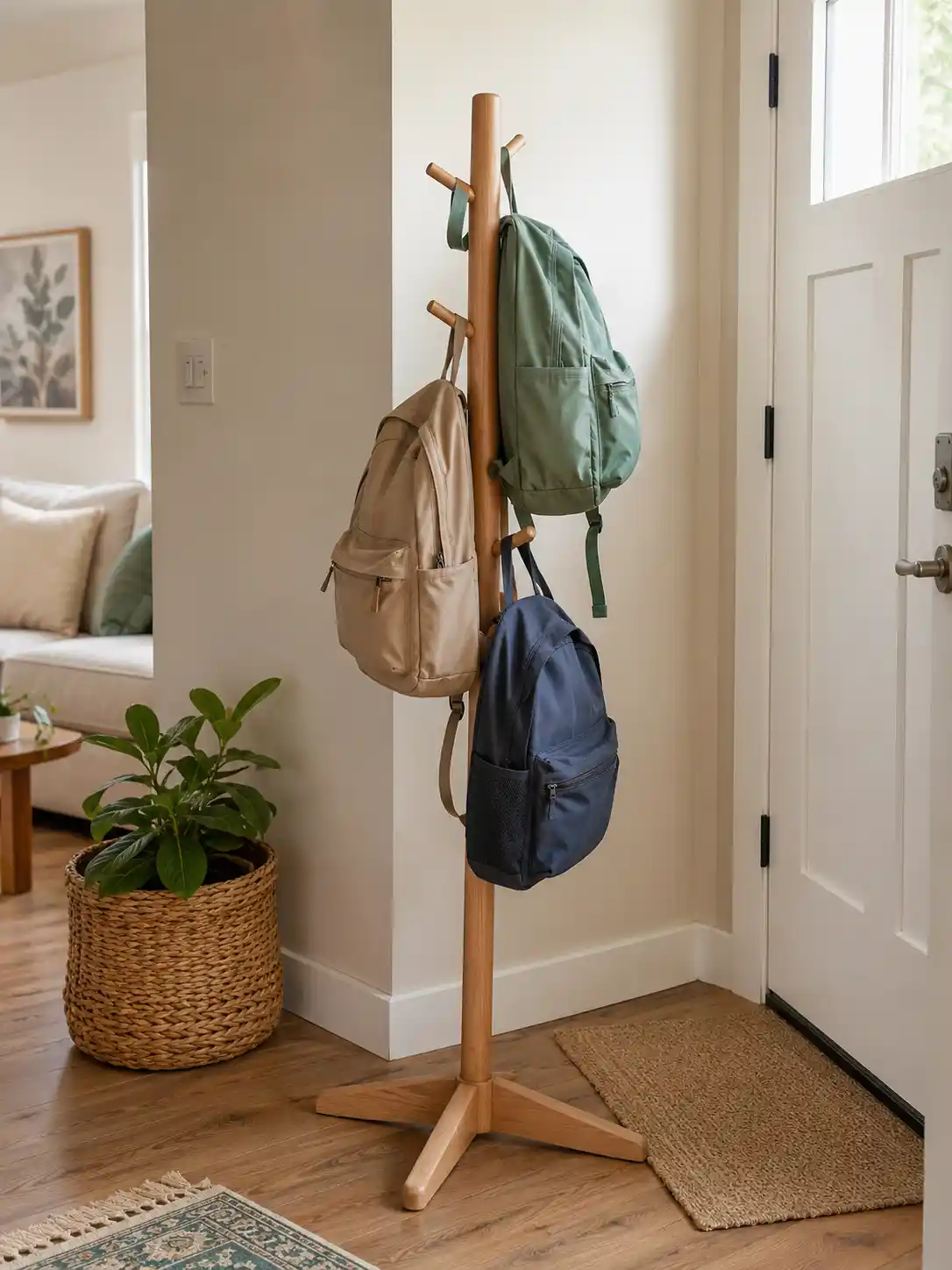
12. Try a Freestanding Backpack Tree
A freestanding hall tree provides backpack storage without drilling into the wall. It’s a useful option for renters or entryways where permanent hooks aren’t possible.
Choose a design with a wide, weighted base that won’t tip when bags are removed unevenly. Distribute backpacks around the stand instead of loading them all on one side. Place heavier bags on lower pegs and lightweight bags higher up. Keep the stand outside the main walking route and away from doors. A solid wooden design is usually more stable than a narrow decorative coat tree with a lightweight base.
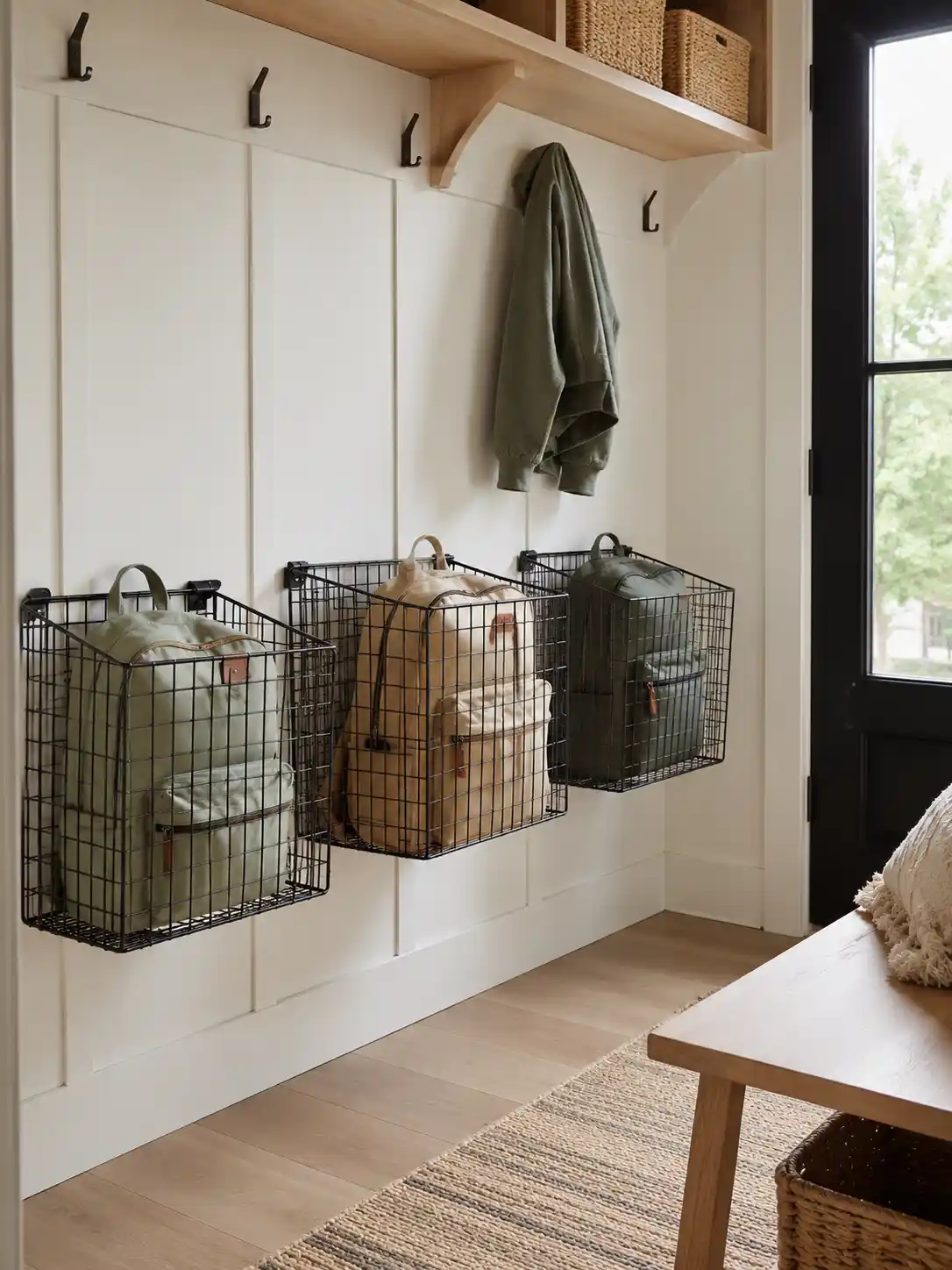
13. Mount Large Wire Baskets
Deep wire baskets keep backpacks contained while allowing air to circulate around them. They can be mounted at child height in a mudroom or along an entryway wall.
Choose baskets deep enough to hold bags upright without letting them fall forward. Secure them to studs or heavy-duty anchors, especially if the backpacks contain books. Leave space above each basket so the bag can be lifted out easily. The open design makes contents visible, which helps prevent forgotten lunch boxes and damp clothes. Add a lower shelf only if it won’t obstruct access to the baskets.
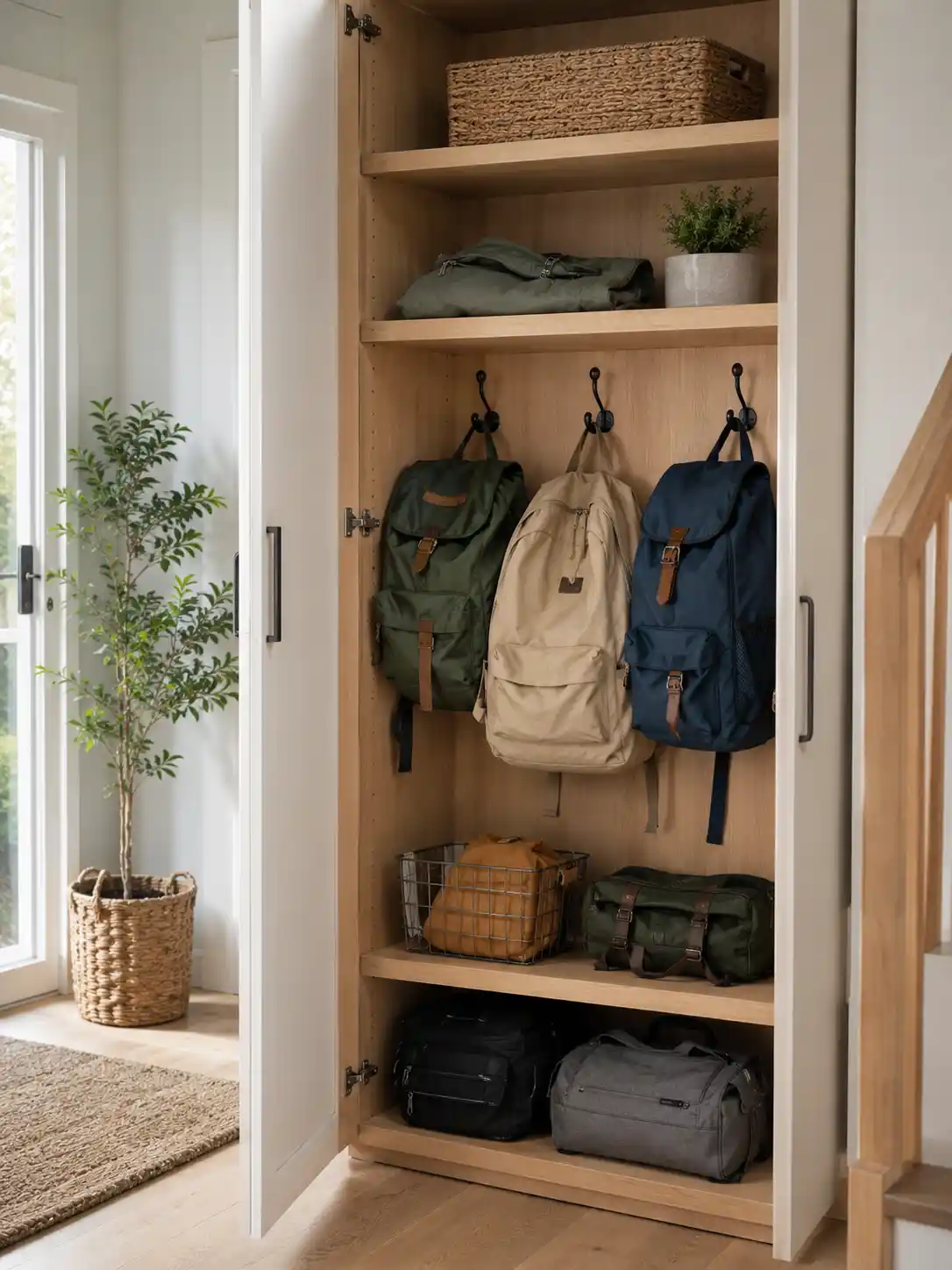
14. Hide Backpacks Inside a Cabinet
A slim cabinet can conceal backpacks and other bags when you want the entryway to look quieter. Adjustable shelves and interior hooks allow the storage to change as your needs change.
Install strong hooks on the back panel and keep frequently used bags at waist or shoulder height. Use lower shelves for laptop bags or duffels that store better when laid flat. Check the cabinet depth before buying because full backpacks need more room than empty ones. Keep food containers and wet sports equipment elsewhere. Leaving a little open space inside also helps prevent bags from being crushed.
15. Organize Sports Backpacks in the Garage
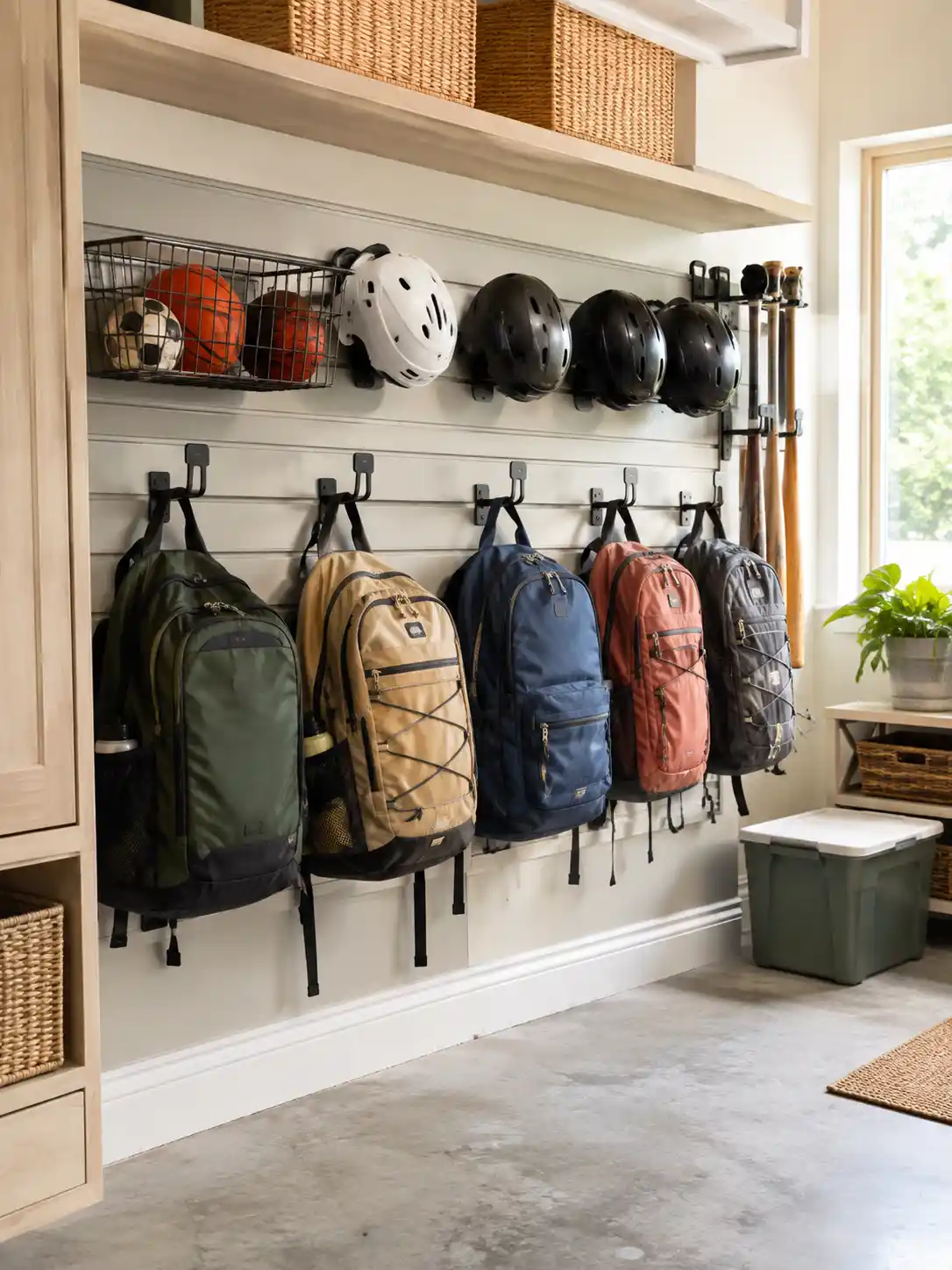
The garage is a practical storage area for sports backpacks, gym bags, helmets, and outdoor equipment. A slatwall or heavy-duty rail system lets you adjust hooks as the gear changes.
Hang backpacks from wide hooks and store helmets or balls in separate wire baskets. Keep muddy bags away from clean school bags and allow damp equipment to dry before closing it inside a cabinet. Install the rack above the floor but low enough for children to reach safely. Don’t place fabric bags beside chemicals, sharp tools, or areas where water may enter under the garage door.
16. Use Removable Hooks in a Dorm Room
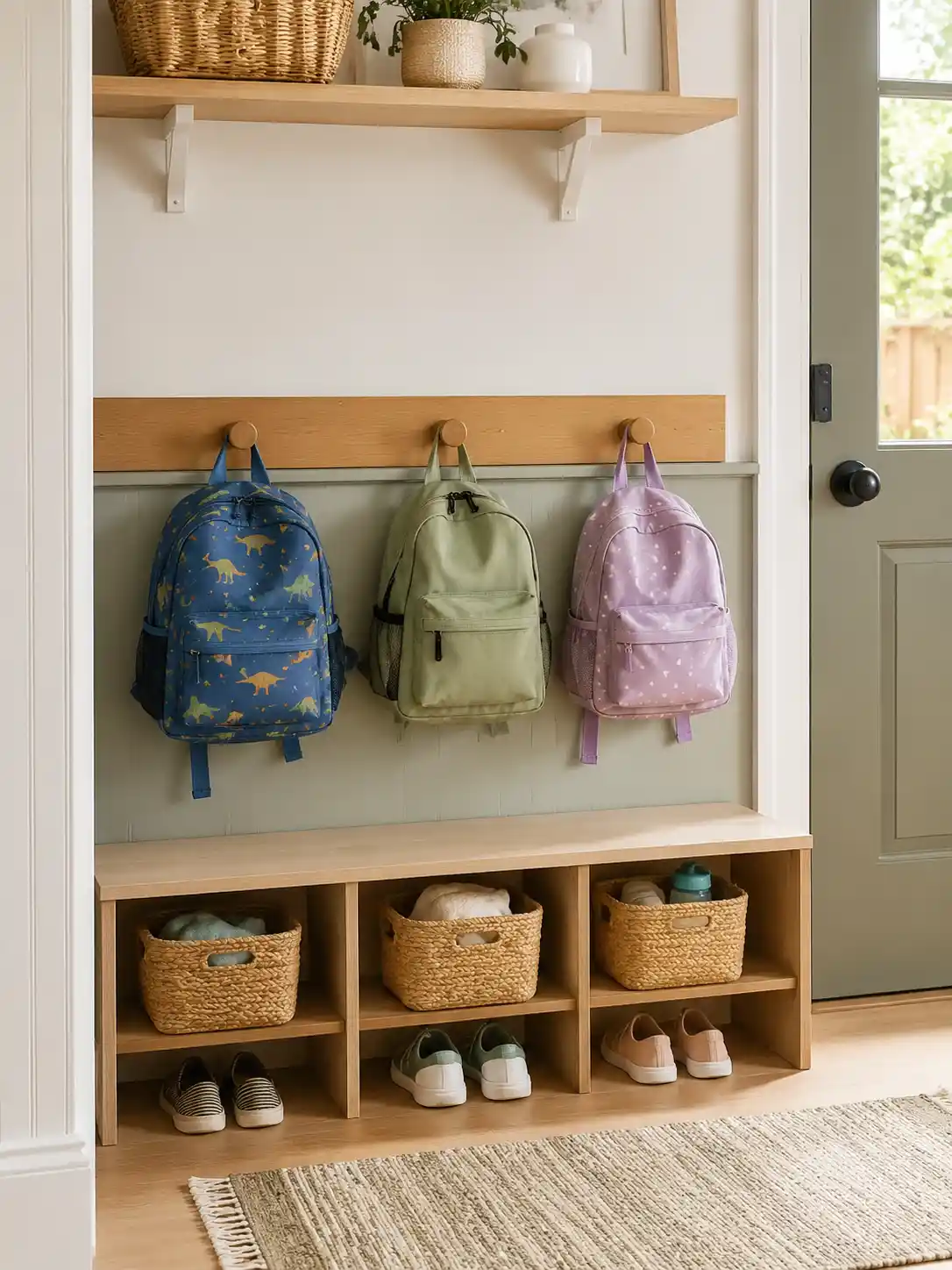
Removable adhesive hooks can create a backpack zone beside a dorm desk or wardrobe without damaging the wall. They’re best for lightweight or mostly empty bags.
Clean the wall before installation and follow the recommended curing time. Check the hook’s weight rating rather than assuming it can support textbooks or a laptop. Hang one bag per hook and avoid pulling downward when removing it. Adhesive hooks may not hold well on textured, dusty, or freshly painted walls. For a heavily packed backpack, use a freestanding rack or place it inside an open floor basket instead.
17. Install Low Hooks for Children
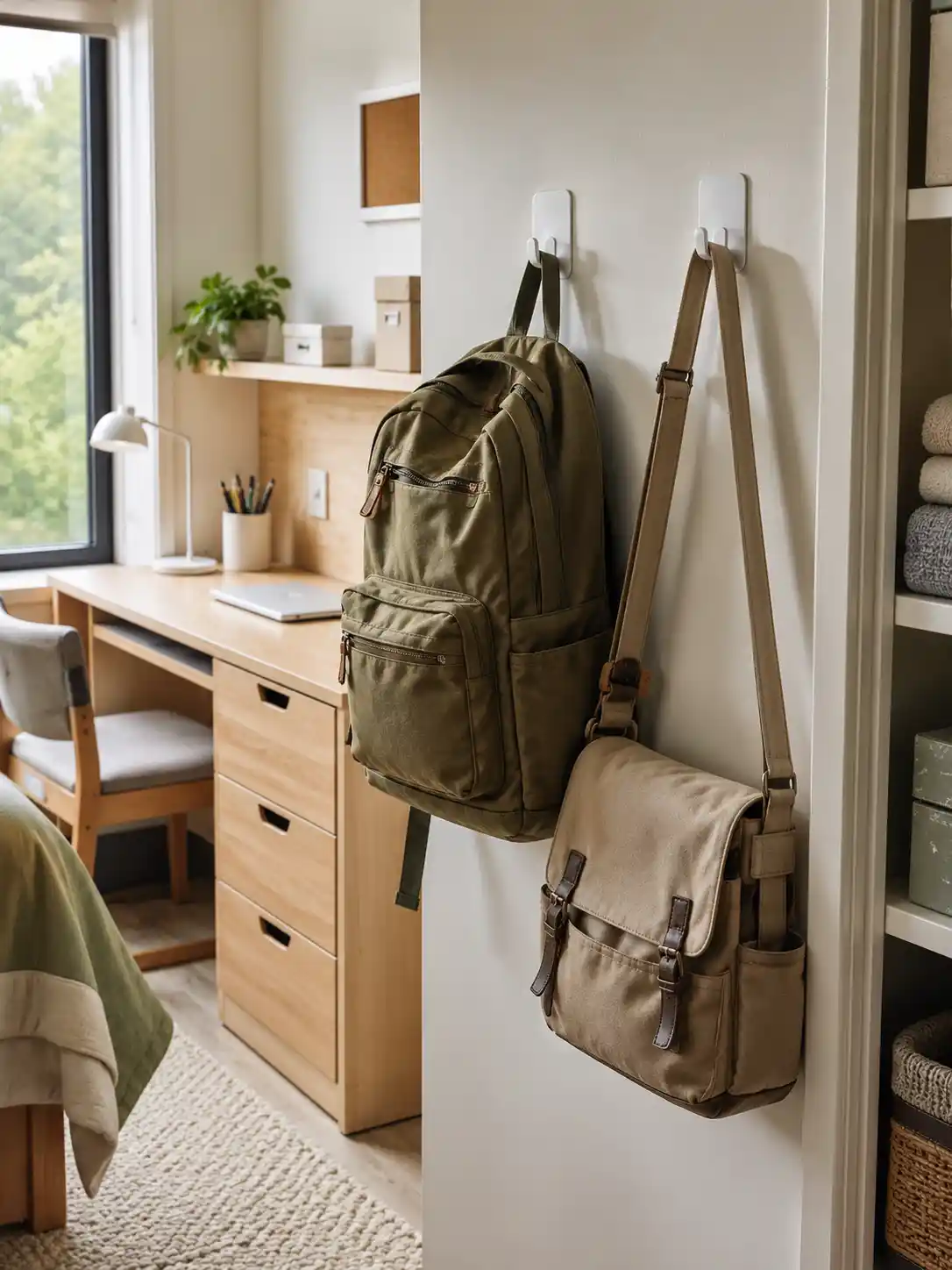
Child-height hooks make it easier for younger family members to put away their own school bags. Install them near the main entrance and pair them with low shoe cubbies for a complete daily drop zone.
Use rounded wooden pegs or smooth metal hooks that won’t catch clothing. Leave enough space between backpacks and keep the hooks away from the edge of an open door. Secure them firmly because children may pull on bags rather than lift them carefully. As they grow, move the hooks higher or add a second row for jackets and sports bags.
18. Use a Ladder Shelf for Backpack Storage
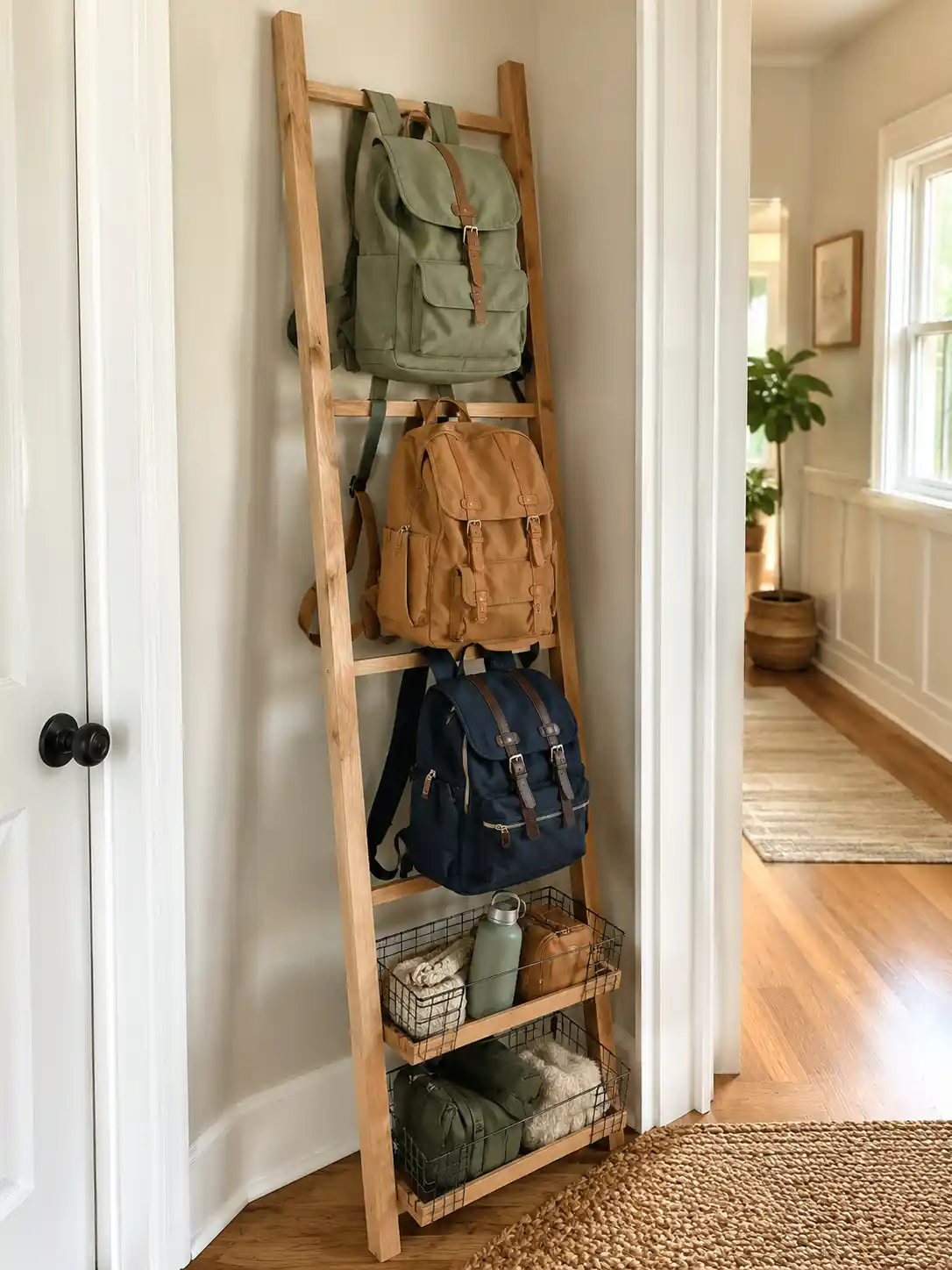
A leaning ladder shelf can turn an unused corner into vertical backpack storage. Wide rungs provide places for bag handles, while lower wire baskets can hold smaller travel accessories.
Choose a ladder designed for storage rather than using a real climbing ladder. Anchor the top to the wall so it can’t slip or tip forward. Place heavier backpacks on lower rungs and lighter bags higher up. Keep straps tucked in to prevent tangling. This option works best for empty bags or light travel packs because too much weight can make the ladder unstable.
19. Add Cubbies Behind the Sofa
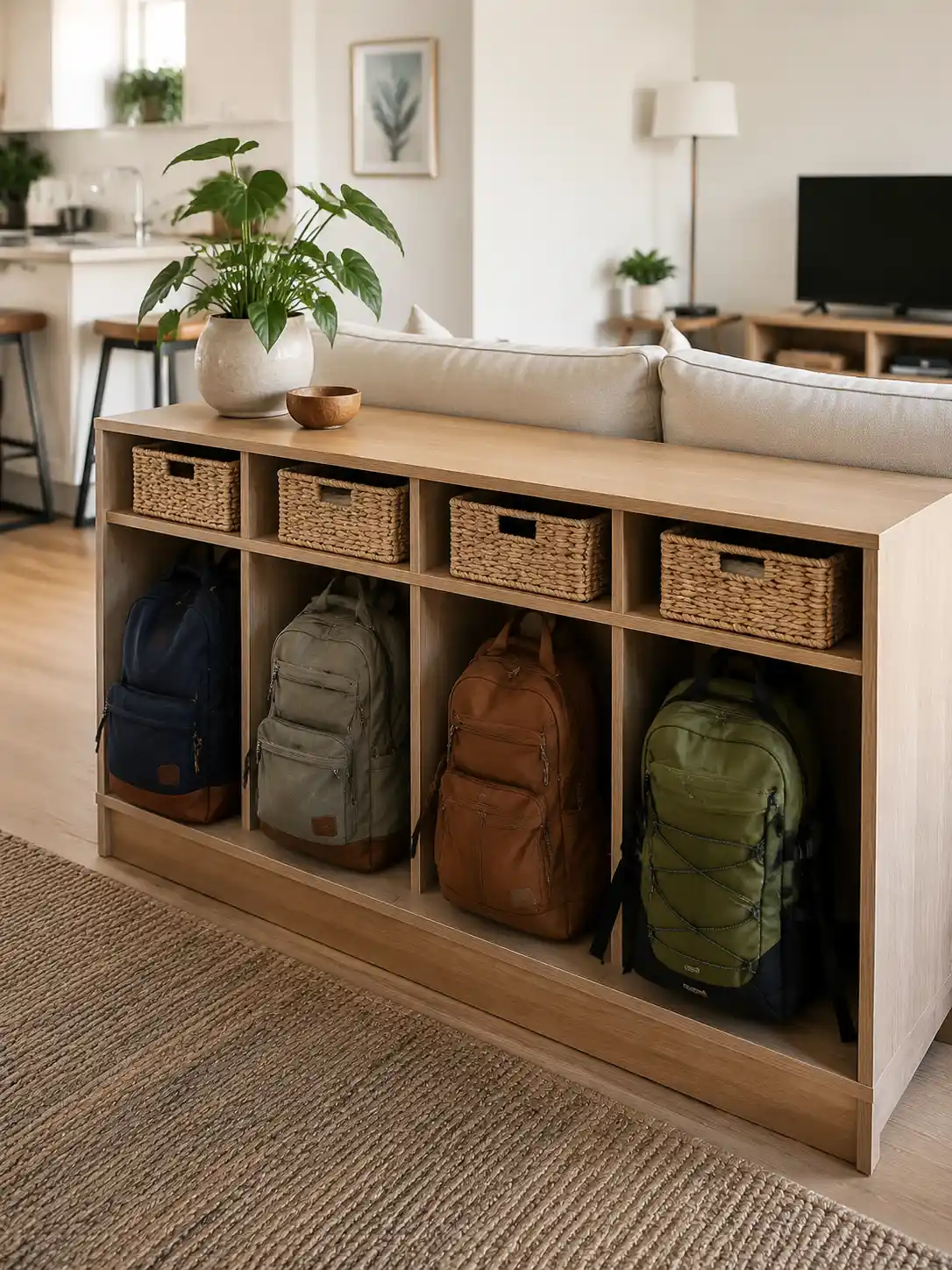
A slim console behind the sofa can create discreet backpack storage in an open-plan apartment. Deep lower cubbies keep bags upright while the top serves as a narrow display or drop surface.
Measure the space carefully so the console doesn’t restrict the walkway. Give each backpack its own compartment and keep the handles facing outward. Small baskets above the bags can hold chargers, keys, or headphones. Avoid placing drinks directly over electronics stored inside the backpacks. Keeping the console close to the entrance also makes it more likely that bags will be returned after use.
How to Choose the Best Backpack Storage
Start with the place where backpacks naturally get dropped. If they usually land near the front door, create storage there instead of expecting everyone to carry them into another room.
Think about the weight of the bags. A lightly packed preschool backpack can hang from an adhesive hook, while a school bag filled with books needs a rail, cubby, or hook secured to a wall stud.
Also consider who will use the storage. Children need low, open systems they can manage independently. Adults may prefer closed cabinets or higher hooks that keep the entryway looking less busy.
What to Store Near Backpacks
A backpack station works better when related items remain nearby. Depending on your household, you may want space for:
- Shoes and outdoor clothing
- Lunch bags and water bottles
- Keys, wallets, and headphones
- Homework folders and school devices
- Sports equipment
- Travel accessories
- Chargers and power banks
Avoid turning the area into general storage. Keep only items that are regularly used with the backpacks.
Backpack Storage Mistakes to Avoid
Don’t hang heavy backpacks from weak adhesive hooks. The hook may fall, damage the wall, or drop the bag onto someone below.
Avoid storing backpacks while they contain food, wet clothing, or leaking bottles. Empty lunch containers and let damp bags dry before putting them inside cabinets or baskets.
Don’t place hooks too close together. Crowded bags become difficult to remove, and straps can tangle. Leaving a clear gap between each one makes the system easier to use.
Finally, avoid creating storage too far from the usual drop point. Even an attractive system won’t remain organized if it requires extra effort every day.
Frequently Asked Questions
What is the best way to store school backpacks?
Open cubbies or wall-mounted hooks near the entryway are usually the easiest options. They keep the bags visible and allow children to put them away without opening cabinets.
How high should backpack hooks be?
Hooks for young children should sit around their shoulder height. Adult hooks can be higher, but the backpack should still be easy to lift without stretching.
Can adhesive hooks hold backpacks?
Adhesive hooks can hold lightweight, mostly empty backpacks when installed correctly. Heavy bags containing books or laptops should be placed on securely mounted hooks, shelves, or cubbies.
How do I store backpacks in a small apartment?
Use over-the-door racks, vertical hook rails, under-bed containers, or a slim console with lower cubbies. Choose storage that uses wall height without blocking the walkway.
Should backpacks be hung or placed on shelves?
Either method can work. Hanging provides easy access and allows airflow, while shelves prevent heavy bags from putting stress on their top loops.
How do I keep backpack storage organized?
Give every bag a specific hook, cubby, or basket. Empty food and wet items daily, tuck in loose straps, and remove bags that are no longer being used.