22 Corner Garden Design Ideas
An unused garden corner can become a structured planting bed, a private seating area, or even a small water garden.
These corner garden design ideas use layered plants, practical furniture, vertical growing space, and simple landscaping materials to make awkward areas feel intentional.
Whether your corner is sunny, shaded, narrow, or overlooked, the right layout can turn it into one of the most inviting parts of your yard.
1. Sculpted Evergreen Corner
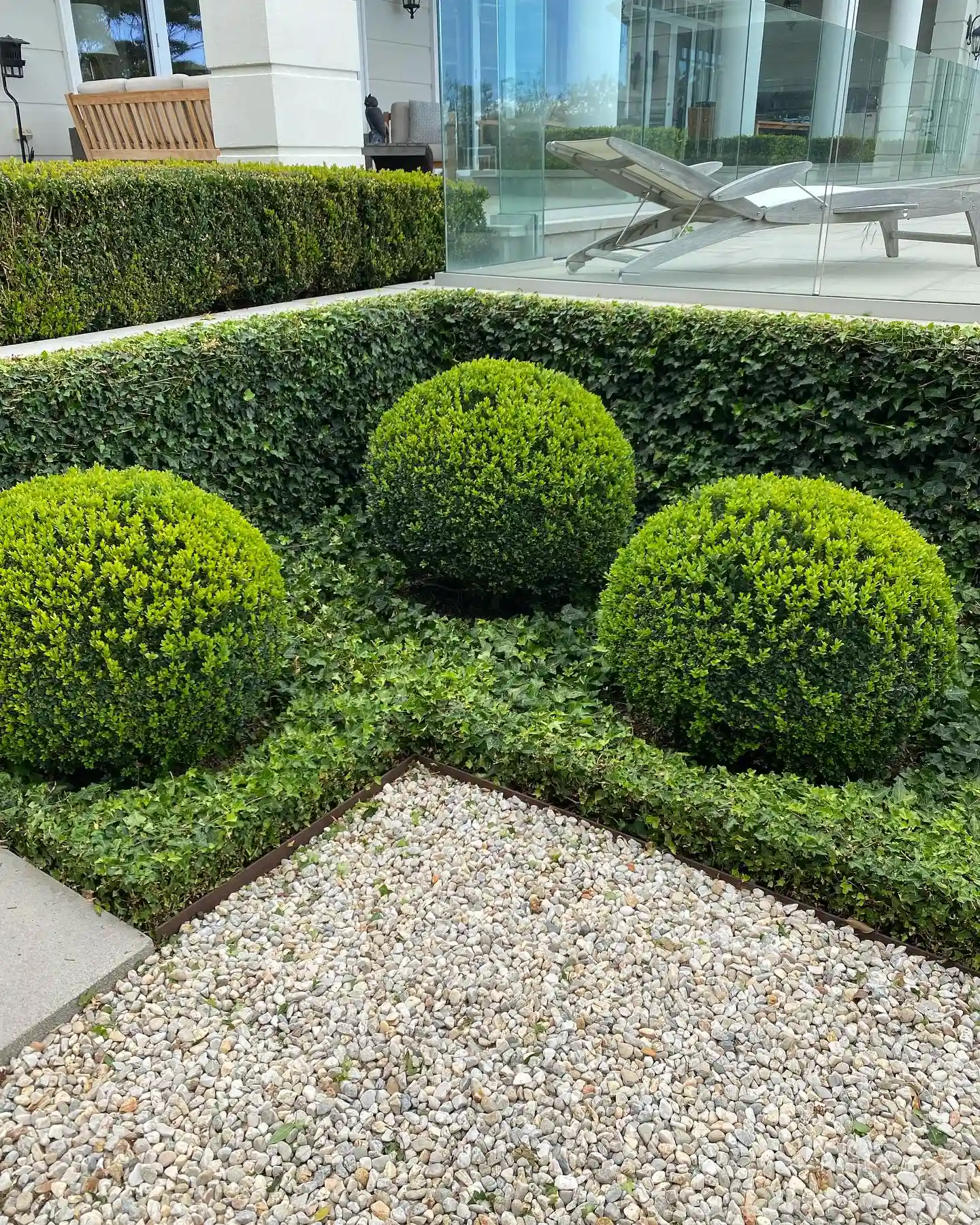
Three rounded boxwood shrubs create a strong focal point in this formal corner garden design. Low-growing ivy fills the soil, while clipped hedging forms a tidy green backdrop. Pale gravel provides contrast and keeps the area from feeling too heavy. This layout works especially well beside a modern patio, entrance, or swimming pool.
- Plant odd numbers of shrubs for a balanced but natural arrangement.
- Choose slow-growing boxwood varieties that need less frequent trimming.
- Leave enough room between shrubs for their mature width.
- Install steel edging to stop gravel from spreading into the ground cover.
- Trim the topiary lightly two or three times during the growing season.
2. Potted Tropical Border
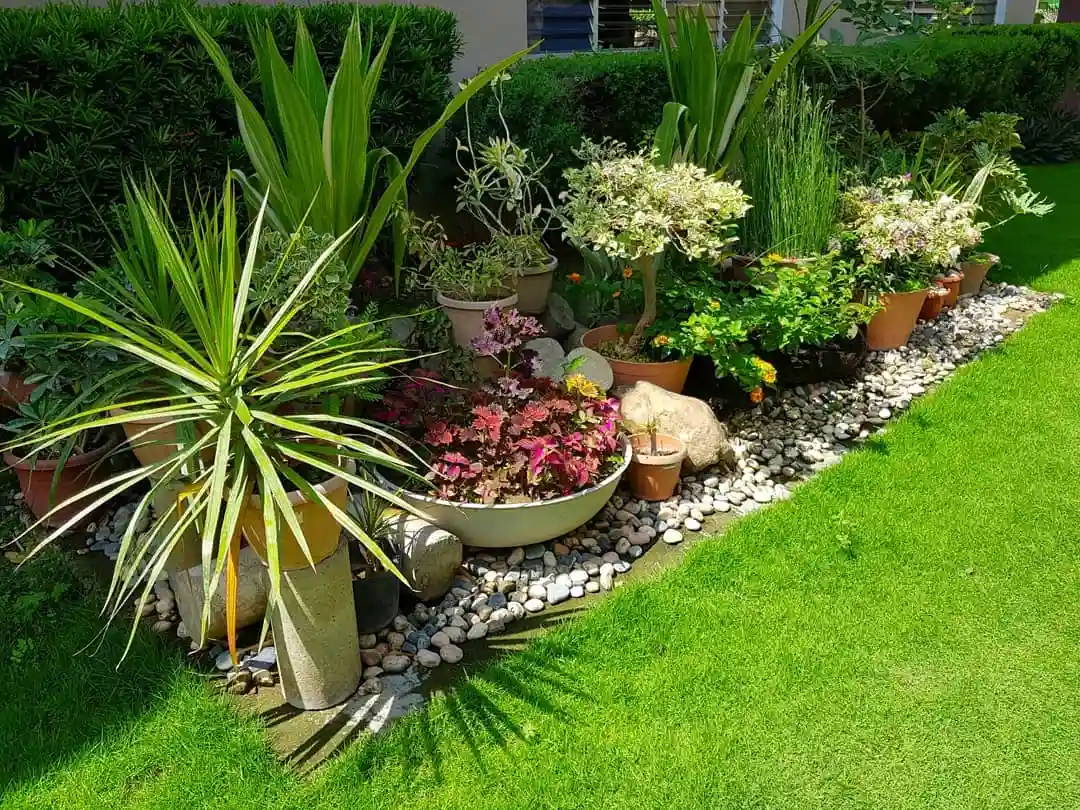
A narrow corner can hold an impressive collection when plants are arranged at several heights. Tall, spiky foliage forms the background, flowering pots fill the middle, and a broad bowl planter adds color near the front. River pebbles connect the mismatched containers and create a clear border against the bright green lawn.
- Place the tallest plants where they will not shade smaller flowers.
- Group pots with similar watering needs to make care easier.
- Raise selected containers on sturdy blocks for added height.
- Use pebbles over landscape fabric to slow weed growth.
- Repeat two or three pot colors so the collection feels connected.
Read also:
- 20 Fairy Garden Ideas
- 35 Cheap Backyard Makeover Ideas
- 20 Easy Garden Borders Ideas That Look Expensive
- 22 Narrow Backyard Garden Ideas for Awkward Spaces
3. Built-In Corner Bench
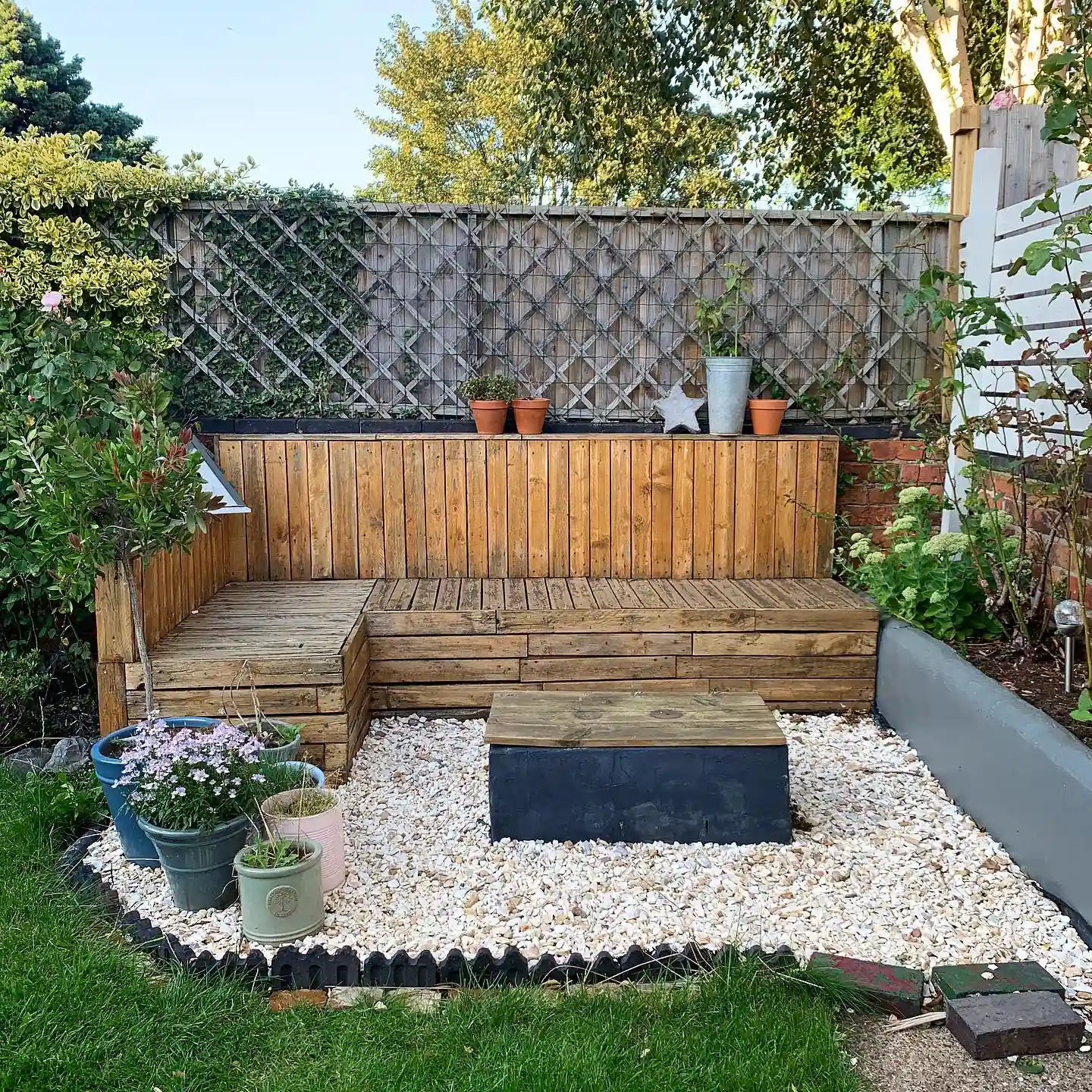
This wooden corner bench turns a tight boundary into a useful outdoor room. Its L-shaped form uses both sides of the fence without taking over the lawn. White gravel brightens the floor, while a low table provides a practical surface. Trellis panels above the backrest leave room for climbing plants and added privacy.
- Measure the corner carefully before building the bench frame.
- Use pressure-treated or naturally rot-resistant outdoor timber.
- Include hinged seats if hidden garden storage would be useful.
- Grow clematis or climbing roses across the fence trellis.
- Add fitted cushions to make the deep wooden seats comfortable.
4. Layered Tropical Corner
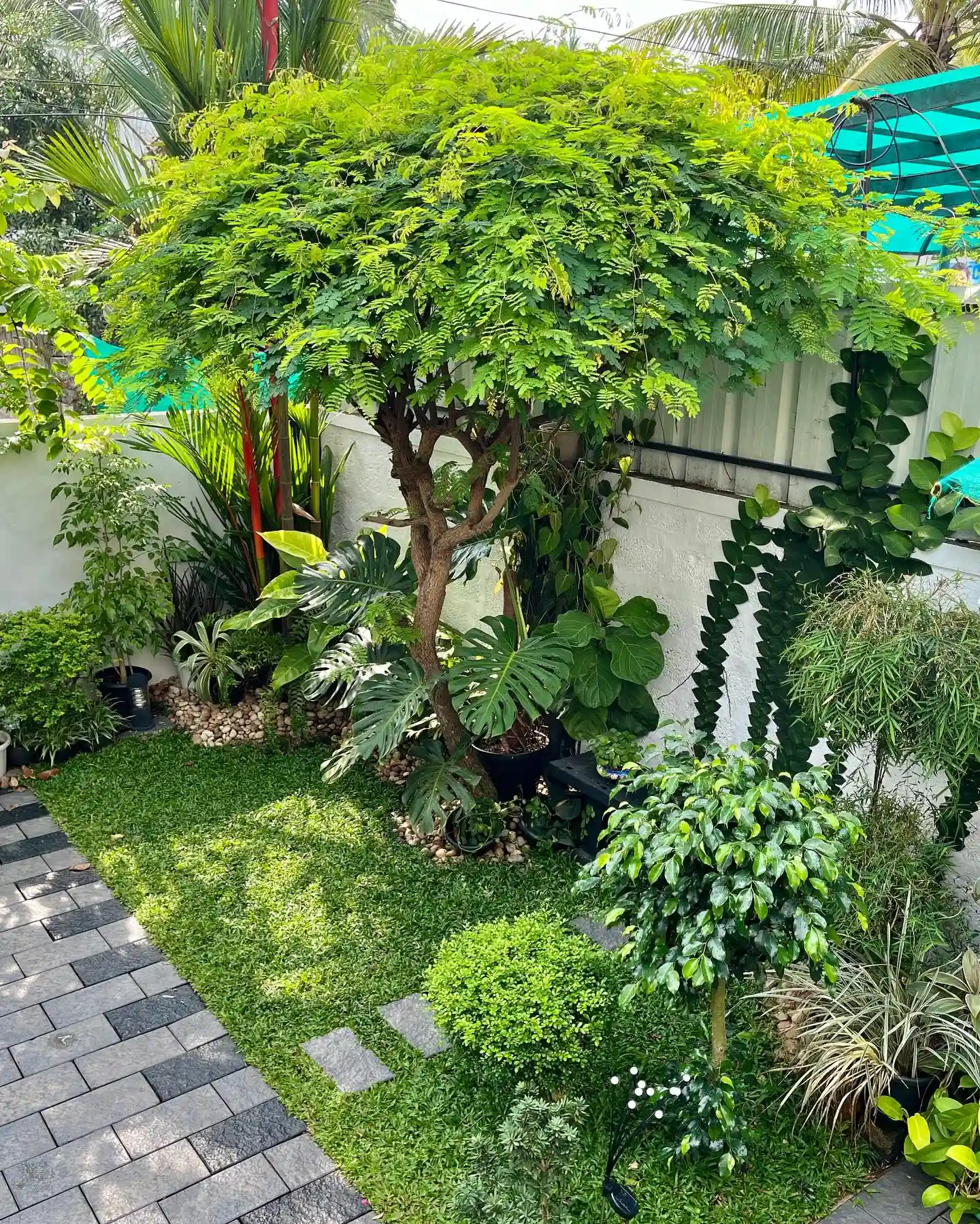
A small tree creates the canopy in this lush tropical corner garden design. Monstera, palms, vines, and clipped shrubs fill the lower layers, making the boundary wall almost disappear. Ground cover softens the soil, while a paved path provides a crisp edge. The varied leaf sizes keep an all-green planting scheme visually rich.
- Start with one small tree as the main structural plant.
- Place broad leaves near the front where their shapes stay visible.
- Fill gaps with ferns, philodendrons, or shade-tolerant ground cover.
- Check mature plant sizes before creating such a closely layered bed.
- Add low garden lights beneath the canopy for gentle evening depth.
5. Vertical Fence Garden
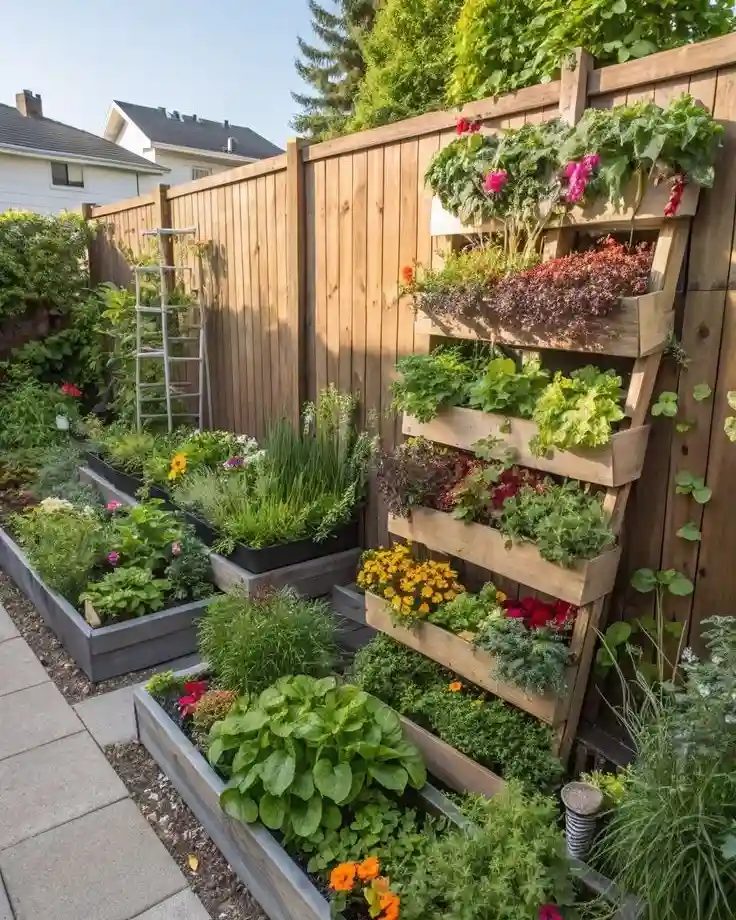
Raised beds and wall-mounted planters make this narrow garden corner highly productive. Herbs, leafy plants, and flowers occupy several levels instead of competing for limited ground space. The warm wooden planters also soften the tall fence. This is a smart option for growing fresh herbs near a kitchen or outdoor dining area.
- Secure vertical planters directly into strong fence posts.
- Use lined boxes with drainage holes to protect the timber.
- Keep thirsty herbs together so watering remains consistent.
- Plant trailing varieties near the edges of upper containers.
- Leave a narrow path for watering, pruning, and harvesting.
6. Hydrangea Tree Corner
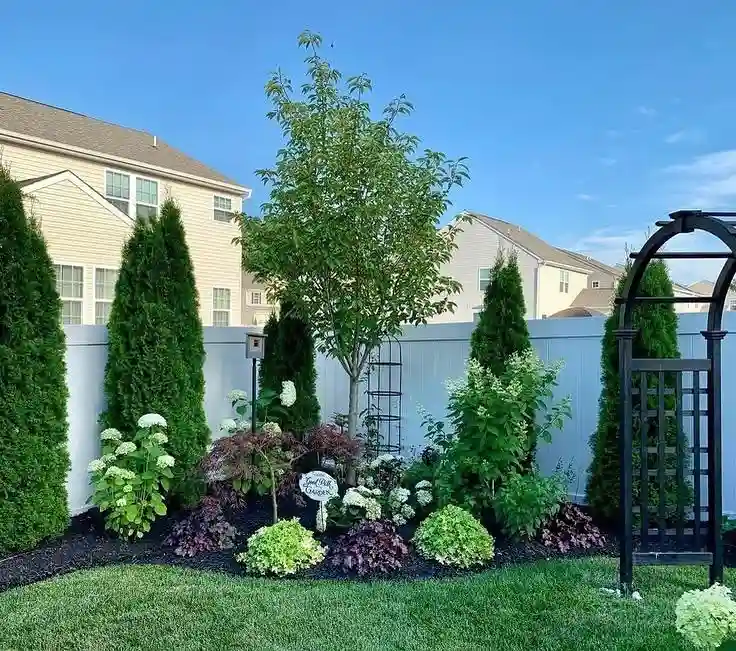
A young ornamental tree anchors this curved corner bed, while hydrangeas and dark-leaved perennials create layers beneath it. Tall evergreens provide year-round privacy against the white fence. Black mulch makes the pale flowers and lime foliage appear brighter. The nearby arbor gives the planting a clear entrance and stronger garden structure.
- Position the tree away from the fence to allow its canopy to develop.
- Test the soil before choosing pink or blue hydrangea varieties.
- Use evergreens where screening is needed throughout the year.
- Repeat low plants across the front for a calm, connected border.
- Refresh organic mulch yearly without piling it against plant stems.
7. Private Dining Corner
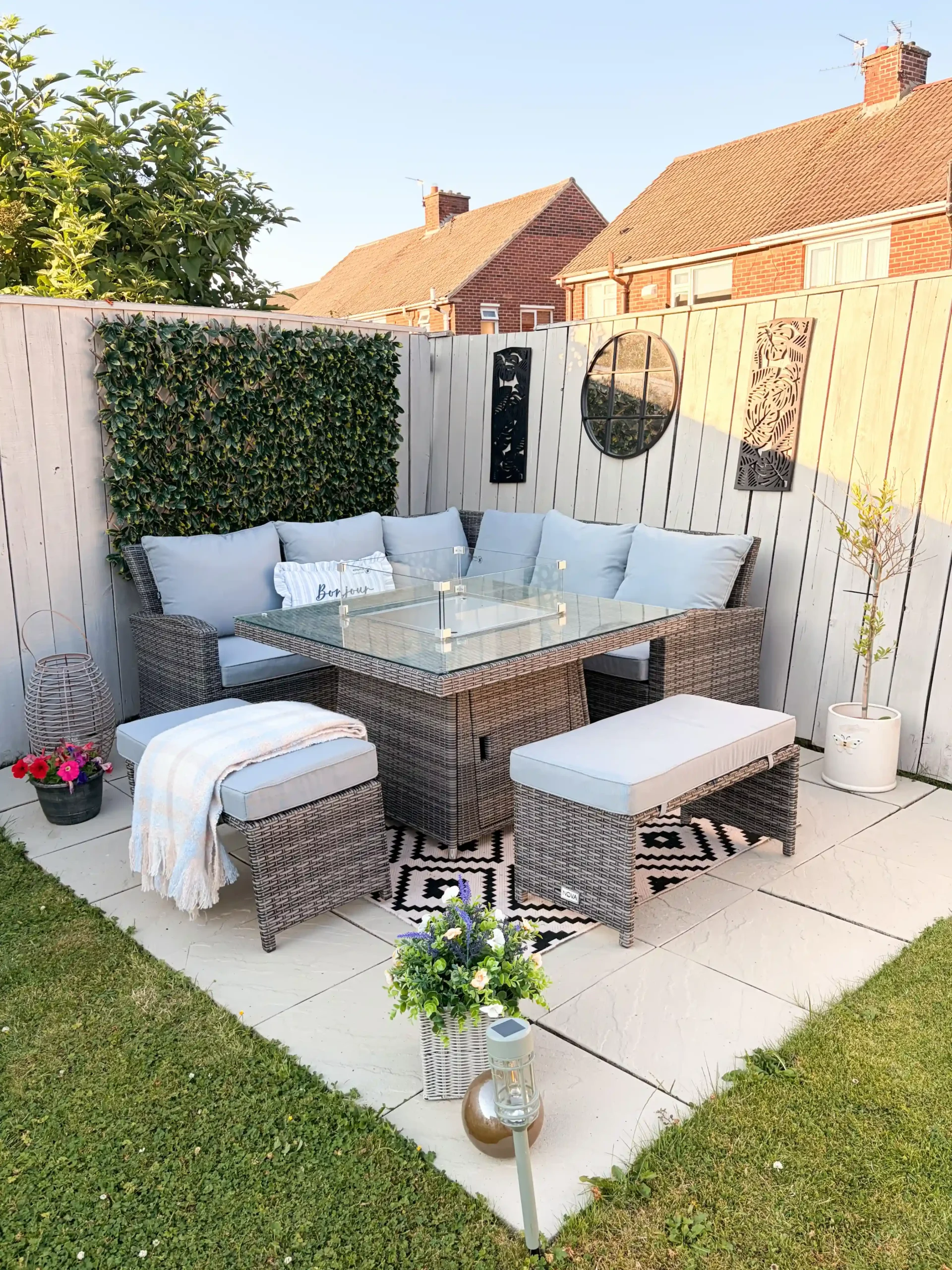
An L-shaped outdoor sofa turns this fenced corner into a comfortable dining space. The glass-topped table keeps the arrangement visually light, while pale cushions brighten the grey woven furniture. A leafy screen softens one fence panel, and wall décor draws attention upward. It feels private without requiring a large patio or permanent structure.
- Choose a table height that works comfortably with the sofa seats.
- Leave a clear route around at least one side of the furniture.
- Use outdoor cushions with washable, water-resistant covers.
- Add climbing greenery to the sunniest fence panel.
- Bring blankets and soft accessories indoors during wet weather.
8. Flower-Filled Pergola
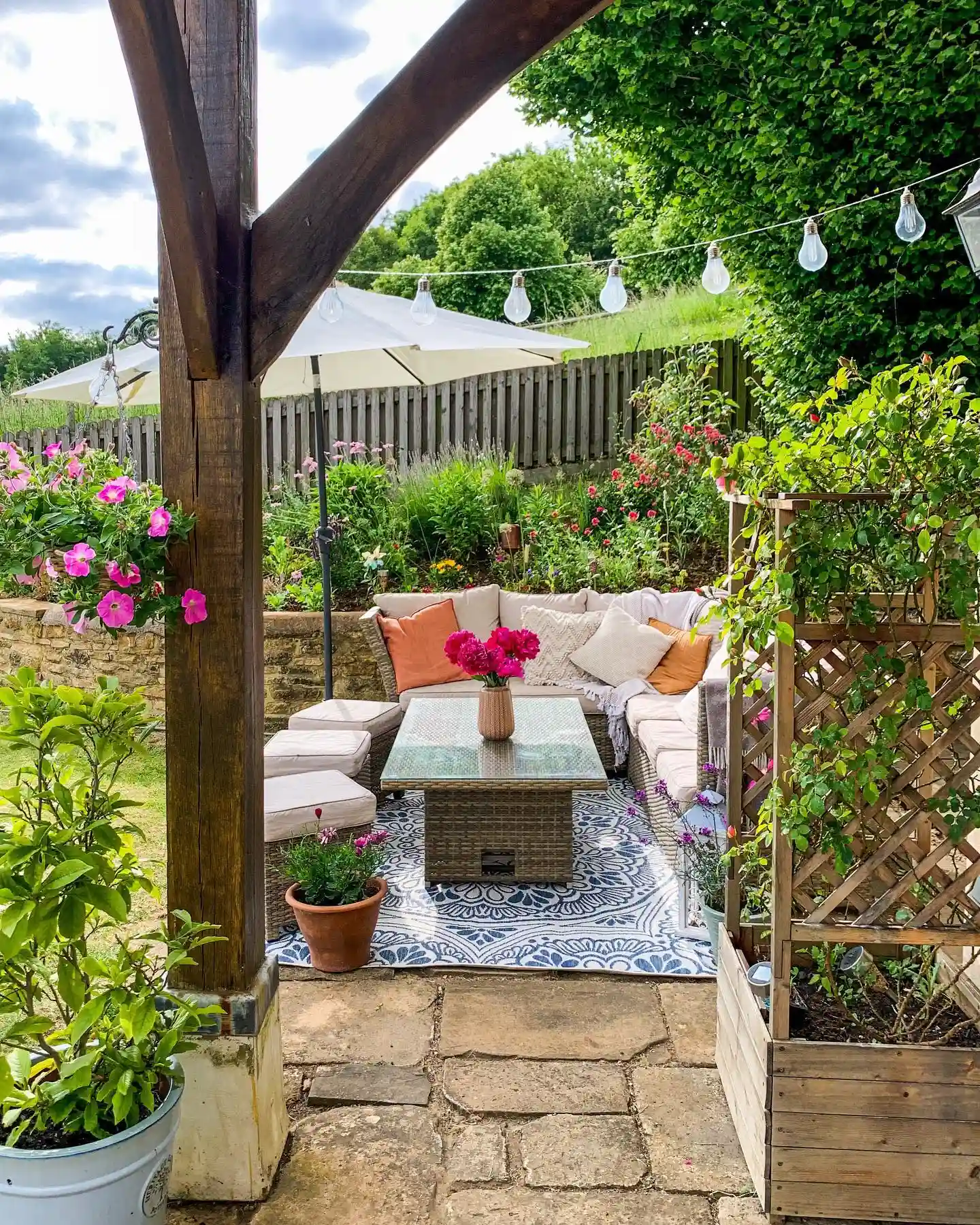
A timber pergola frames this generous corner seating area, while string lights, roses, and surrounding flowers give it a relaxed cottage mood. The outdoor rug defines the space and softens the hard paving. An umbrella supplies flexible shade until climbing plants mature. Warm cushions connect the furniture with the flower colors behind it.
- Train climbing roses along lattice rather than around seating furniture.
- Check that pergola posts are securely fixed below ground level.
- Select an outdoor rug that drains quickly after rain.
- Hang weather-rated lights with slight slack between fixing points.
- Keep thorny stems pruned away from entrances and sitting areas.
9. Wooden Garden Hideaway
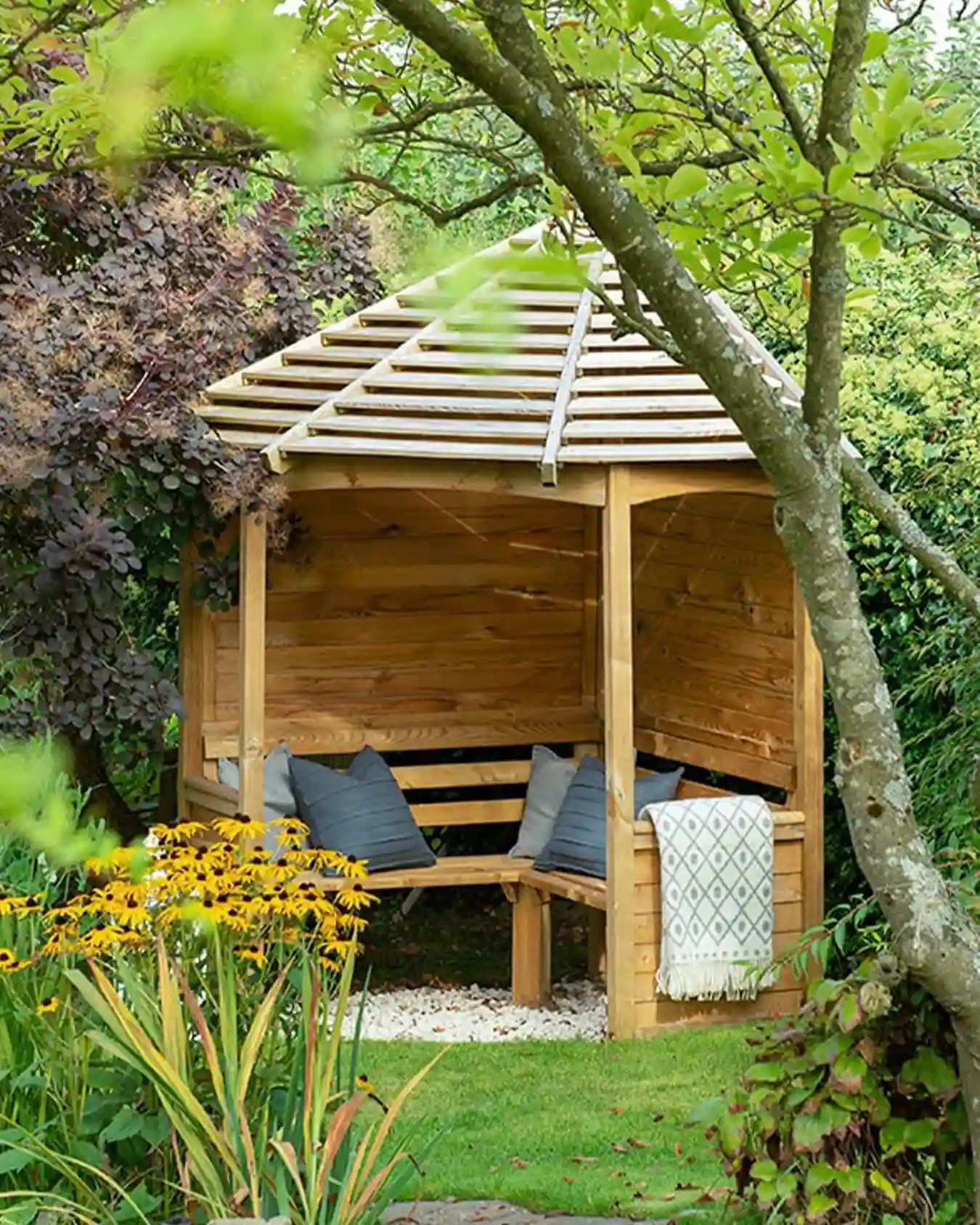
This roofed wooden shelter fits neatly beneath established trees and provides a quiet corner for reading or conversation. Built-in benches make good use of its angular shape, while side panels block wind and unwanted views. White gravel beneath the structure improves drainage and separates the retreat from the surrounding lawn and planting.
- Confirm that construction will not damage major tree roots.
- Face the opening toward the best garden view.
- Treat the timber regularly to prevent moisture damage.
- Add seat pads instead of oversized cushions in the compact interior.
- Keep nearby planting low enough to preserve an open entrance.
10. Hanging Chair Retreat
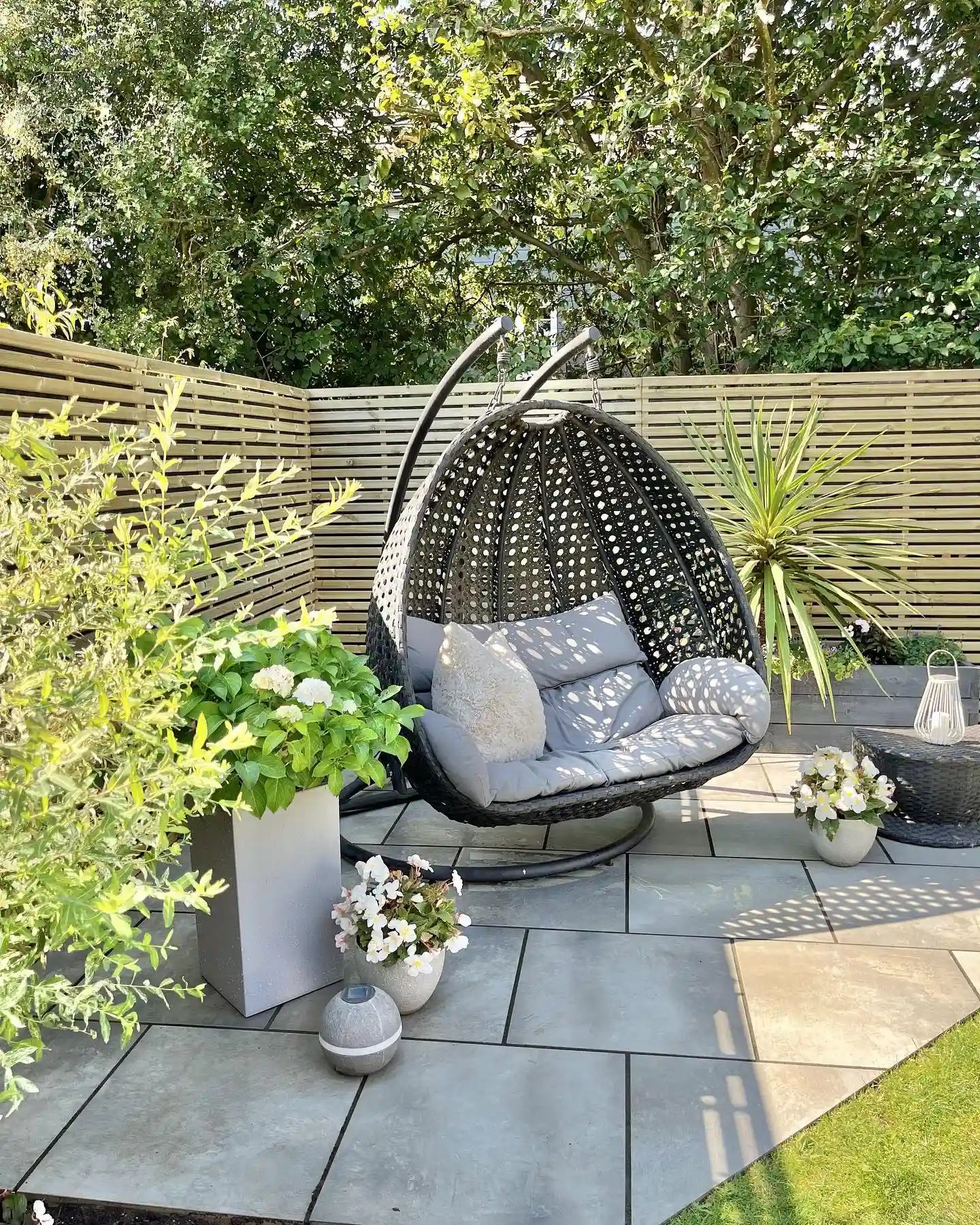
A double hanging chair gives this paved corner one clear purpose: relaxing. The black woven frame contrasts with soft grey cushions, while tall pots and white flowers soften the modern setting. Horizontal timber screening adds privacy without making the area feel enclosed. Dappled sunlight passing through the chair creates another layer of visual texture.
- Set the chair on a level surface to prevent rocking or tipping.
- Check the frame’s weight limit before adding extra cushions.
- Allow enough clearance behind and beside the seat for movement.
- Use tall planters to soften the corners of the privacy screen.
- Add a small side table within easy reach of the chair.
11. Colorful Container Island
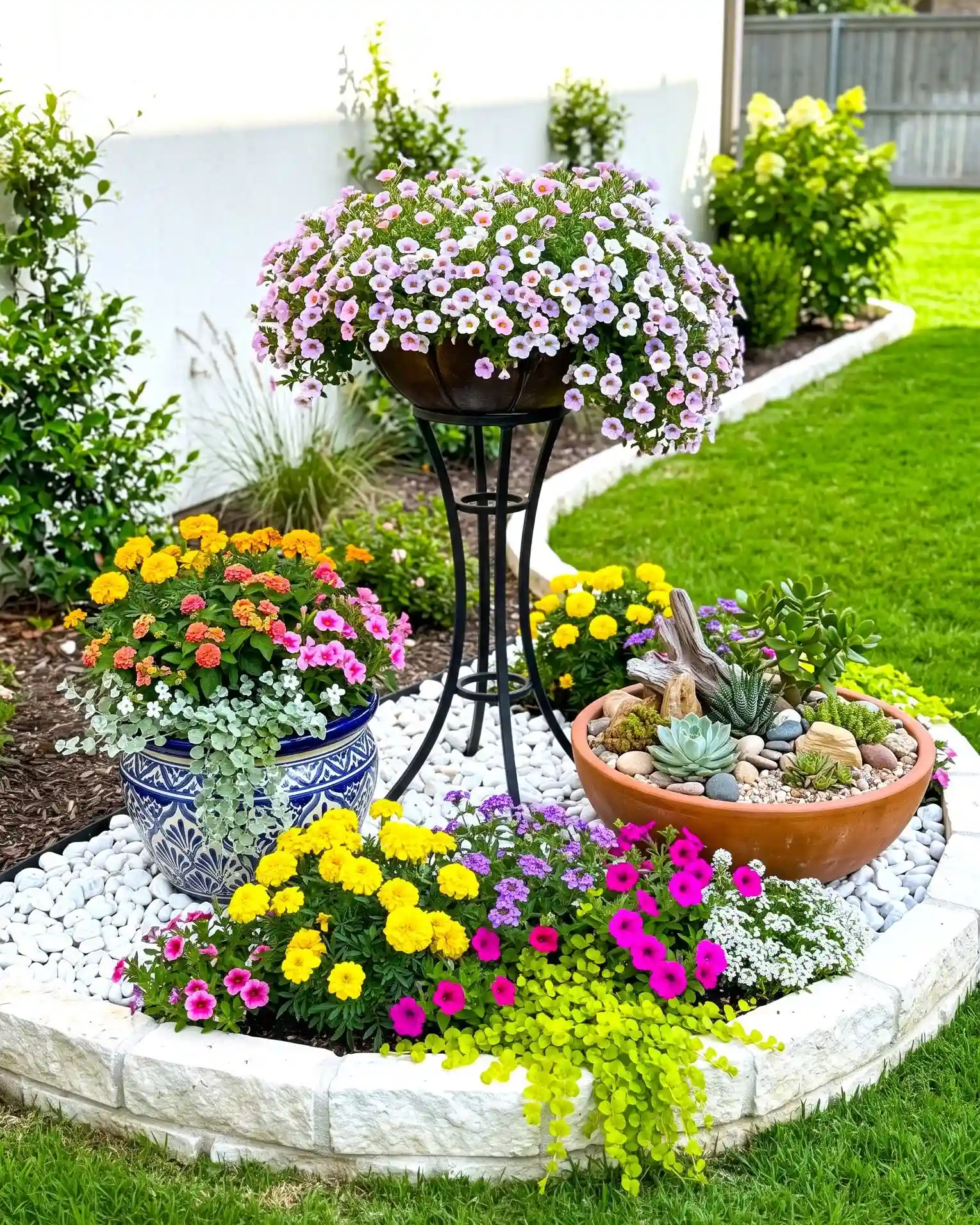
This raised corner bed combines planted borders with decorative containers to create color at several heights. A tall bowl of pale pink flowers forms the centerpiece, while marigolds, petunias, and trailing foliage spread around its base. White pebbles separate the pots and bring a clean finish to the otherwise playful, flower-heavy arrangement.
- Pick three main flower colors to keep the display from becoming chaotic.
- Combine upright, mounding, and trailing plants in each large container.
- Check pots daily during hot weather because raised containers dry quickly.
- Deadhead flowering annuals regularly to support repeat blooming.
- Keep succulents in a separate container with faster-draining soil.
12. Shaded Bench Corner
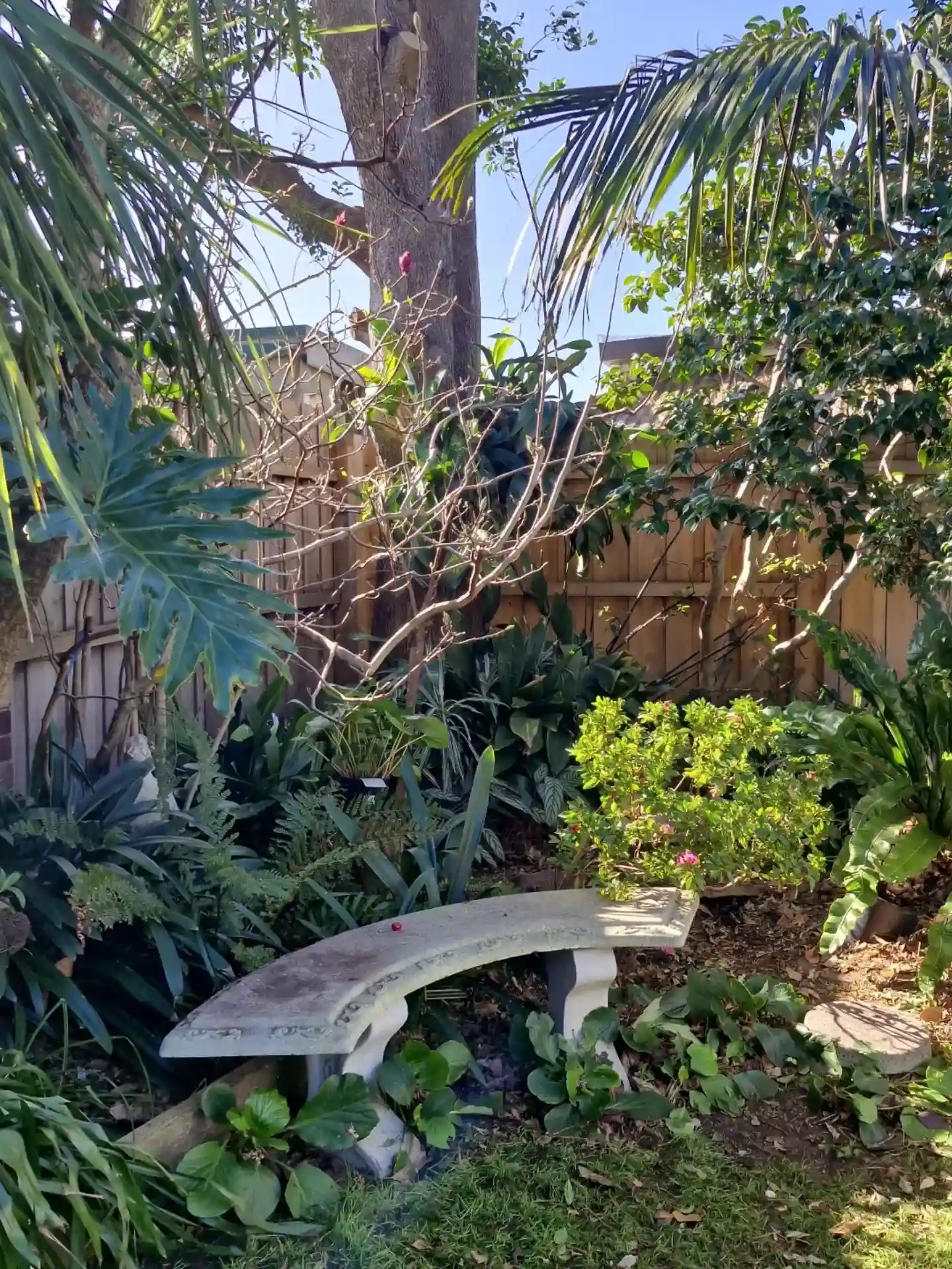
A curved stone bench nestles naturally among large-leaved plants, ferns, palms, and mature trees. The dense planting creates shade and privacy without needing a roof or fence screen. Its pale surface stands out gently against the dark foliage. This corner garden design feels hidden, calm, and suited to quiet morning seating.
- Use a curved bench to follow the shape of an informal planting bed.
- Select shade plants according to whether the corner is dry or damp.
- Clear enough ground around the bench to prevent slippery footing.
- Keep thorny or irritating plants away from the sitting area.
- Add woodland bulbs for seasonal color beneath deciduous trees.
13. Japanese Maple Nook
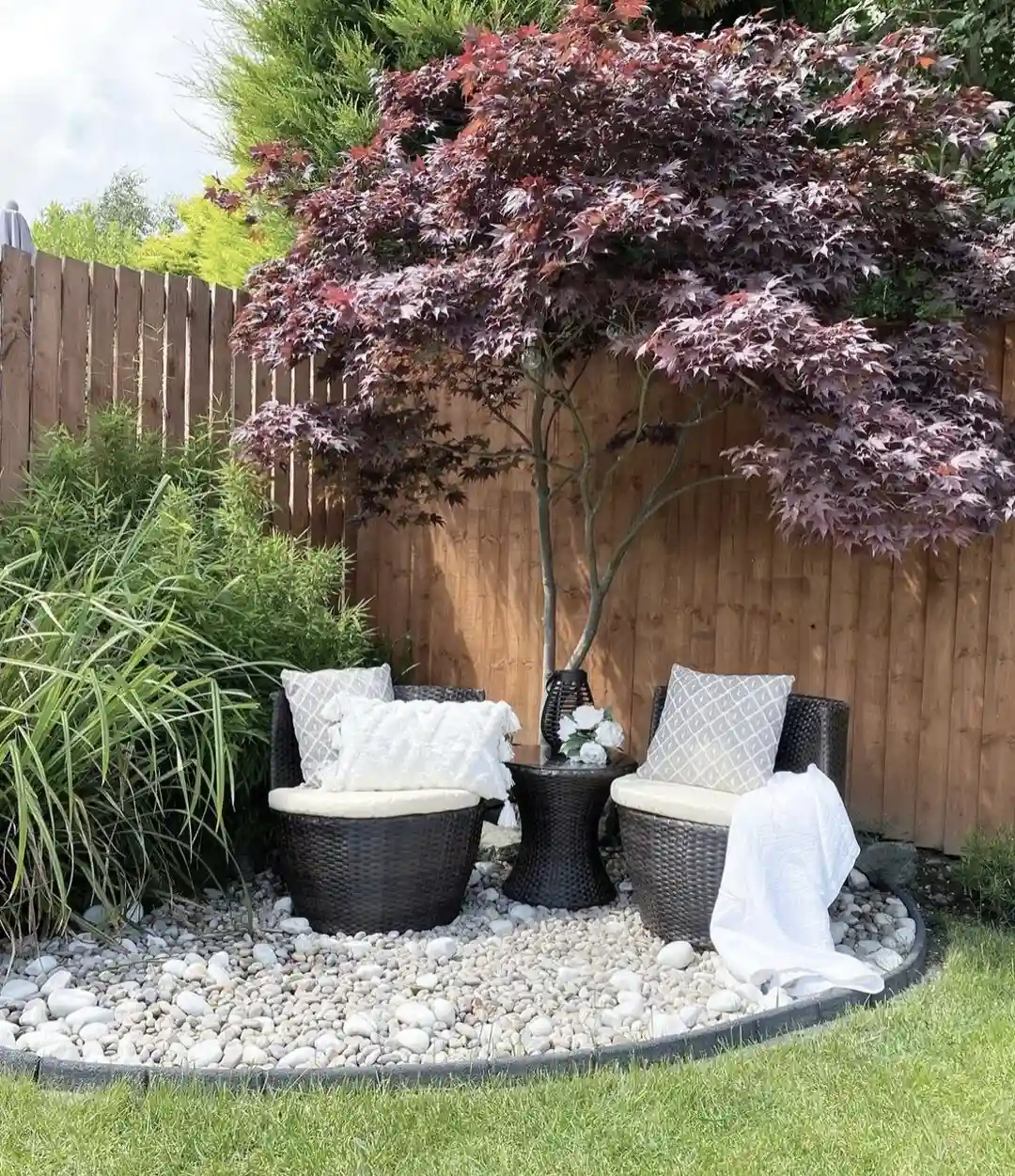
A burgundy Japanese maple forms a beautiful natural canopy over two woven chairs. White stones brighten the shady corner and help the dark furniture stand out. A small table makes the layout useful for coffee or conversation, while grasses and bamboo-like foliage fill the remaining boundary. The result feels private without appearing crowded.
- Choose a Japanese maple suited to your local heat and sunlight.
- Protect delicate foliage from strong afternoon sun and drying winds.
- Lay landscape fabric beneath stones while leaving space around trunks.
- Use compact furniture so the tree remains the main feature.
- Rake fallen leaves from the stones before they begin to break down.
14. Bromeliad Corner Bed
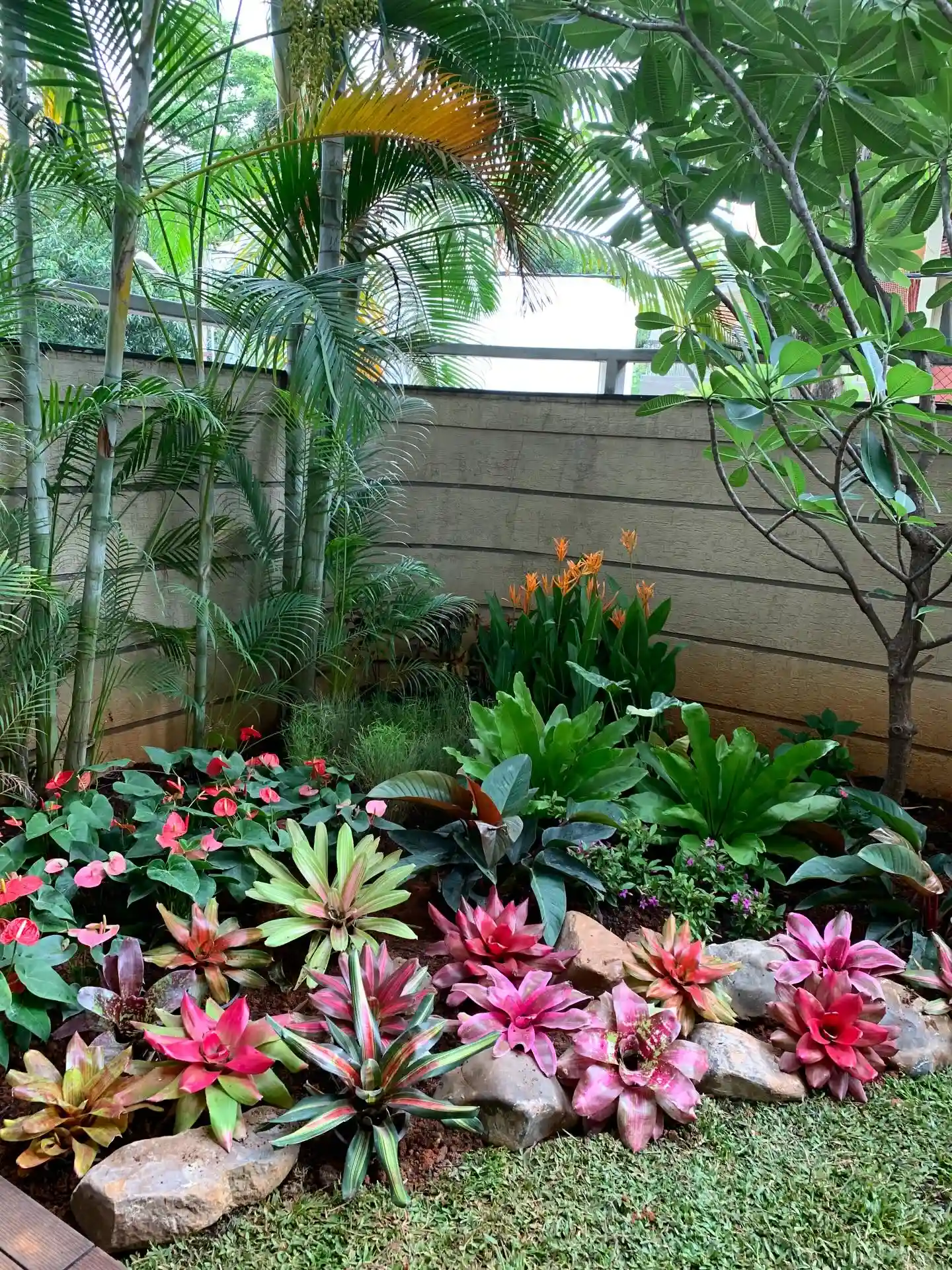
Pink and red bromeliads form a vivid front layer beneath palms and tropical trees. Anthuriums, bird’s nest ferns, and orange flowers continue the rich planting toward the wall. Natural rocks provide an informal border between the bed and lawn. This design relies on foliage color as much as flowers, so it stays interesting for longer.
- Plant bromeliads high enough that their crowns do not remain buried.
- Use filtered light to prevent colorful leaves from scorching.
- Space plants according to their mature width, not their nursery size.
- Remove old water and debris from bromeliad cups when needed.
- Repeat the brightest foliage colors across the front of the bed.
15. Cottage Flower Seat
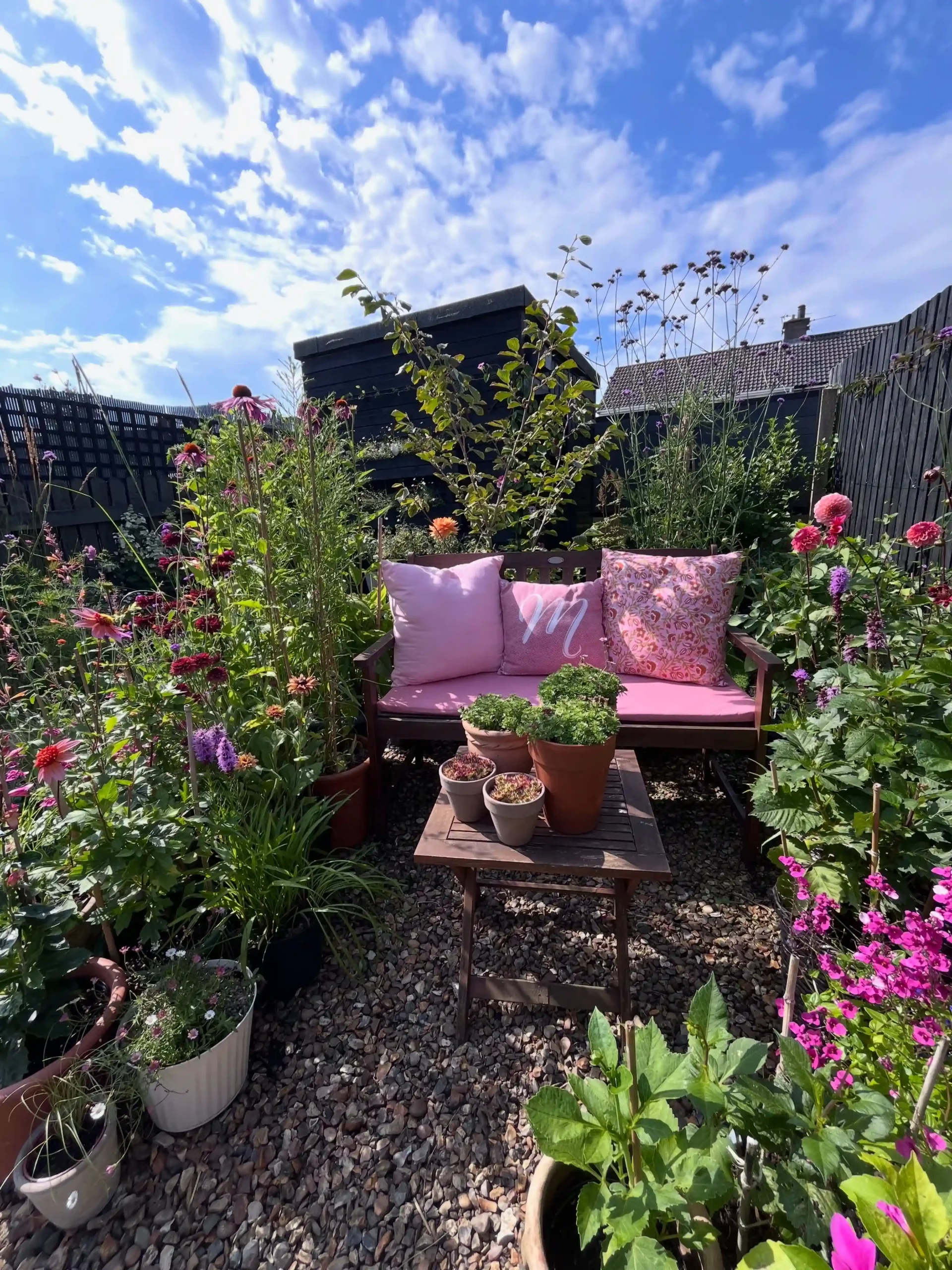
A simple wooden bench feels completely surrounded by tall cottage flowers in this sunny corner. Coneflowers, dahlias, verbena, and other upright blooms create a loose enclosure without blocking the open sky. Pink cushions continue the garden’s color palette. Gravel beneath the seating keeps feet dry and makes the small area easier to maintain.
- Leave a narrow access path behind or beside the flower border.
- Use plant supports before tall stems begin leaning toward the bench.
- Mix early, midsummer, and late bloomers for lasting color.
- Position shorter flowers near the front of the gravel area.
- Choose washable cushion covers because pollen will collect on the seat.
16. Whimsical Statue Garden
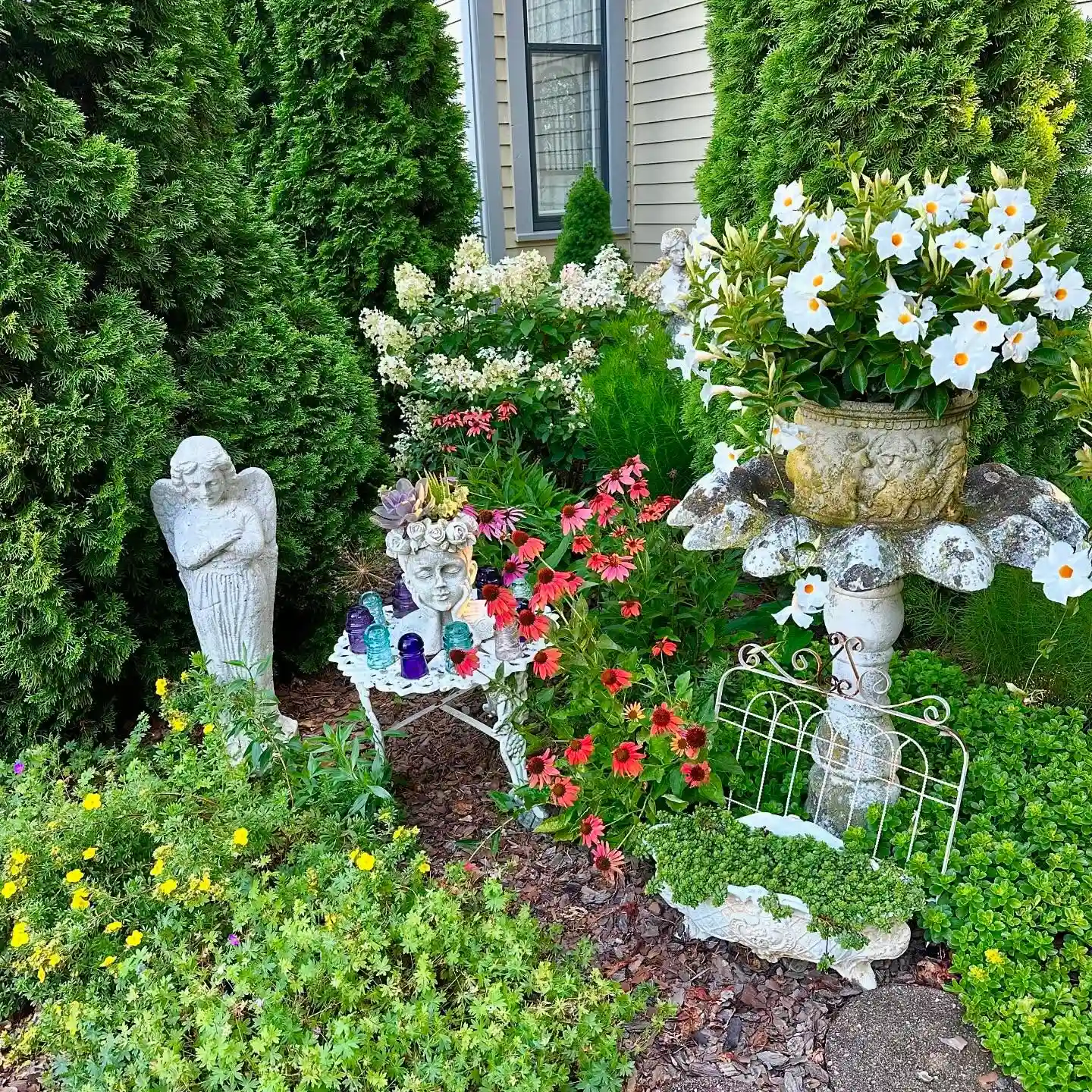
Garden statues, vintage containers, colorful glass pieces, and flowering plants give this corner plenty of personality. Tall evergreens form a living wall around the display, while pink coneflowers connect the ornaments with the surrounding bed. The pieces sit at different heights, creating small discoveries rather than one stiff decorative arrangement.
- Begin with one main ornament and build smaller details around it.
- Repeat similar materials or colors to connect unrelated vintage pieces.
- Keep ornaments clear of crowded foliage so their shapes remain visible.
- Use weather-resistant items that can handle rain and winter temperatures.
- Remove a few pieces if the garden becomes hard to weed or maintain.
17. Corner Water Garden
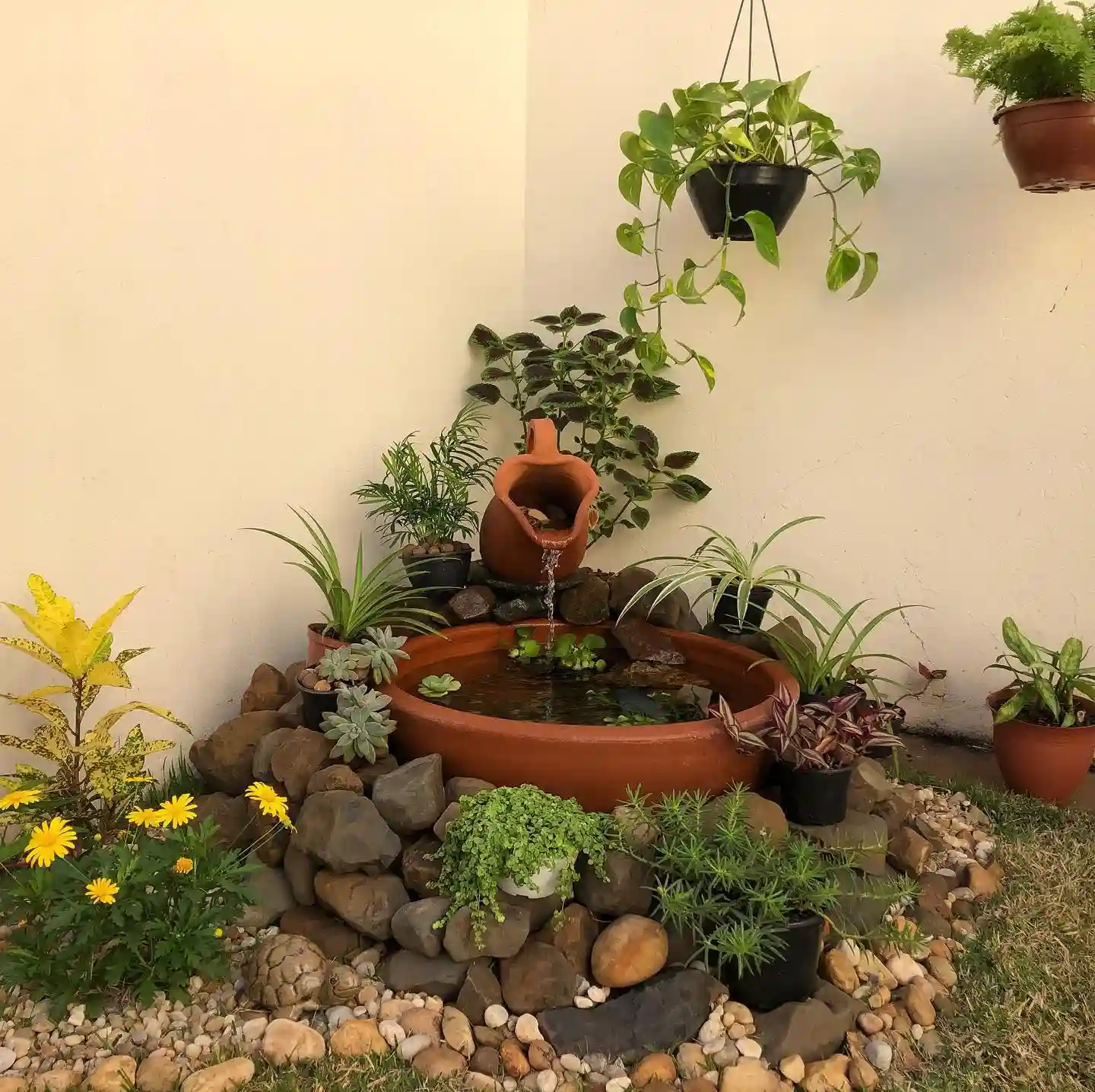
A wide terracotta basin becomes a compact pond beneath a simple clay-pot waterfall. Rocks hide the base and help the water feature blend into the garden. Spider plants, succulents, trailing foliage, and yellow flowers soften the hard edges. The plain cream walls reflect light and keep this detailed arrangement from feeling visually crowded.
- Place the basin on a solid, completely level foundation.
- Use a small recirculating pump designed for outdoor water features.
- Add aquatic plants without covering the entire water surface.
- Check the pump intake often for fallen leaves and roots.
- Top up the basin during hot weather as water evaporates quickly.
18. Flowering Trellis Café
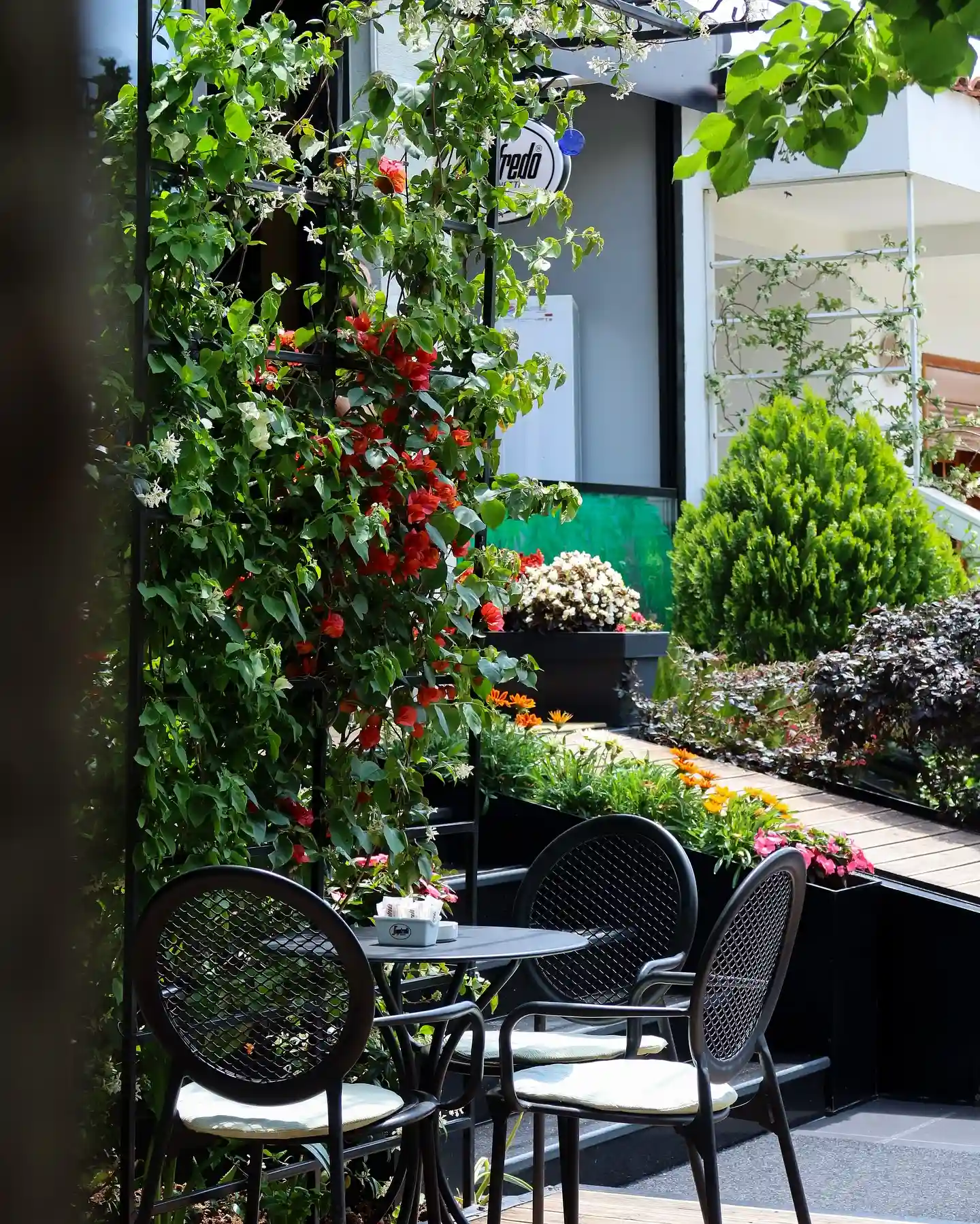
A flowering trellis wraps this small café table in greenery and bright red blooms. Black metal furniture suits the clean paving and connects with the dark planters used around the border. Upright shrubs and layered flowers add separation from nearby spaces. It is a practical corner for breakfast, coffee, or casual outdoor work.
- Use a sturdy trellis that can support mature climbing plants.
- Guide young stems with soft garden ties instead of wire.
- Keep the table compact enough to preserve an easy walking route.
- Combine fragrant climbers with lower flowers for a fuller display.
- Prune overhead growth so fallen petals do not constantly cover the table.
19. Bohemian Garden Room
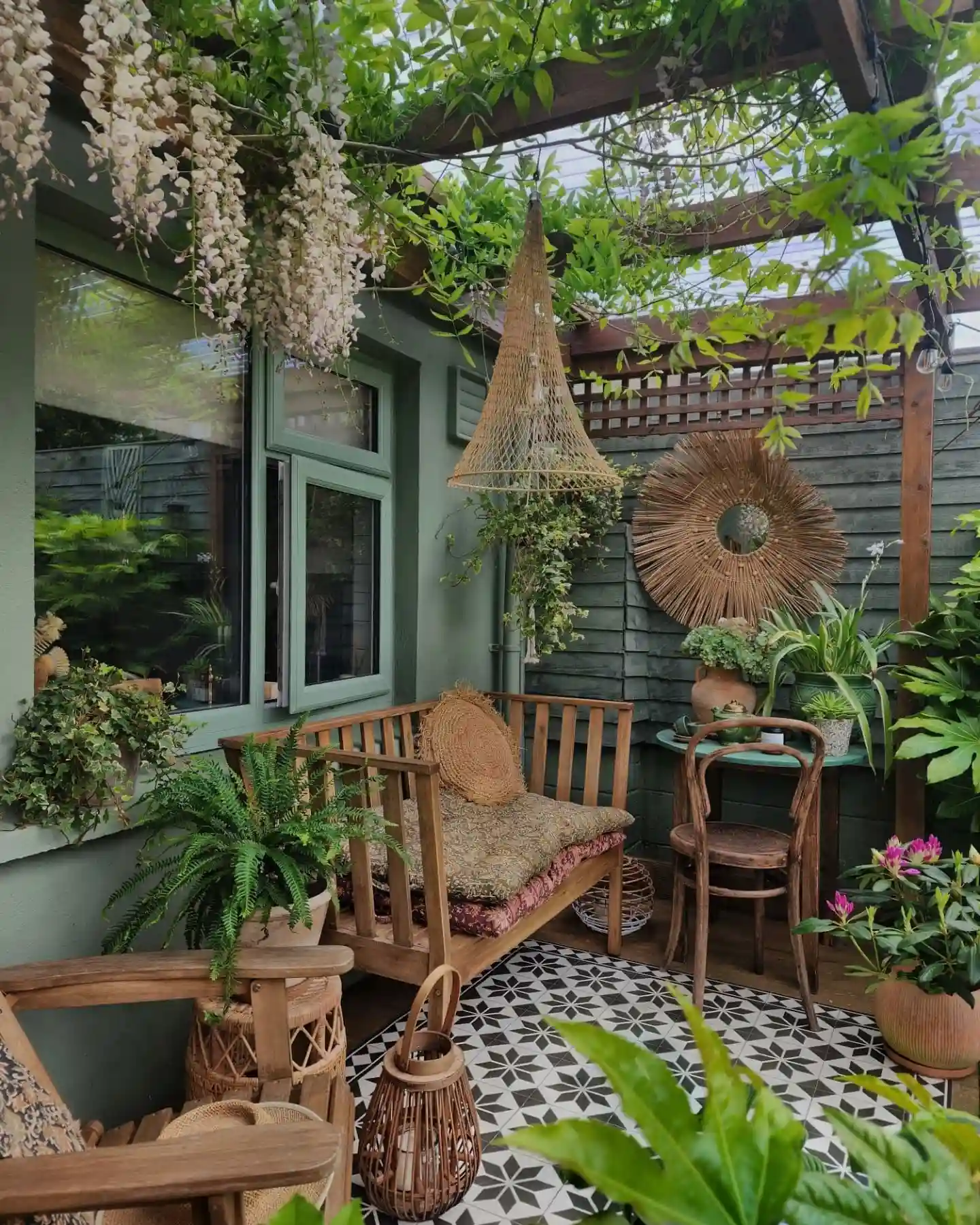
Deep green walls, timber seating, patterned flooring, and woven accessories give this covered corner the feeling of an outdoor living room. Wisteria and other climbing plants form a leafy ceiling across the pergola. Ferns and potted foliage blur the line between seating and garden, while layered cushions bring softness to the wooden furniture.
- Use exterior paint suited to timber walls and changing weather.
- Balance patterned flooring with quieter, earthy furniture colors.
- Train vigorous climbers away from gutters, windows, and roof joints.
- Choose lightweight woven decorations that can be stored in winter.
- Leave space between pots so air can circulate around the plants.
20. Modern Topiary Corner
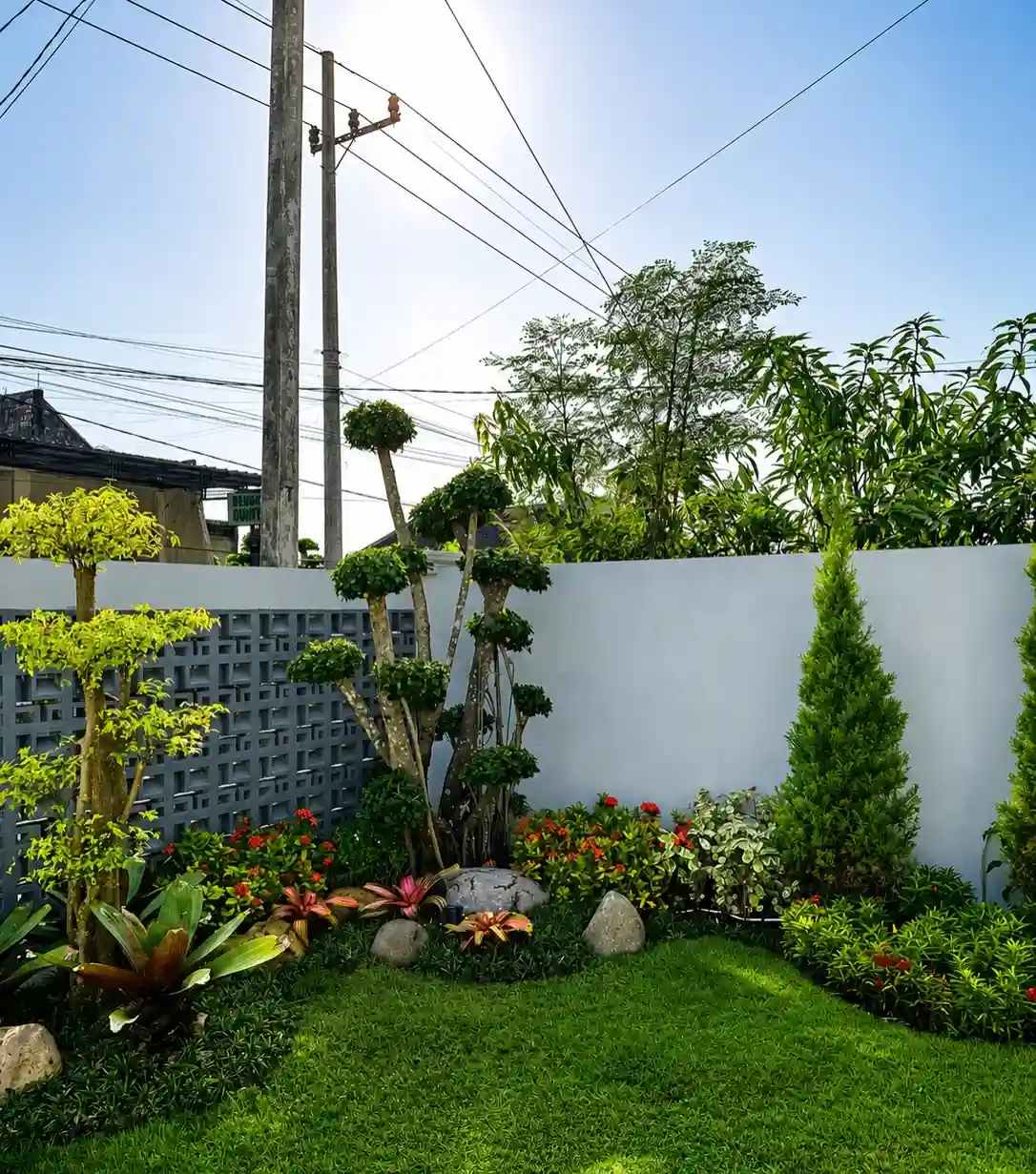
Sculpted trees, conical evergreens, bromeliads, flowering shrubs, and decorative rocks give this corner a clean but lively appearance. The white wall reflects sunlight, while a grey breeze-block section adds texture. Instead of relying on one flower type, the design uses strong plant shapes to create structure throughout the year.
- Use one sculpted tree as the main focal point.
- Repeat red flowers in small groups rather than one large patch.
- Keep shrubs away from the wall to allow airflow and maintenance.
- Prune topiary gradually so bare sections do not develop.
- Install low uplights to reveal the shaped branches after dark.
21. Shaded Fern Corner
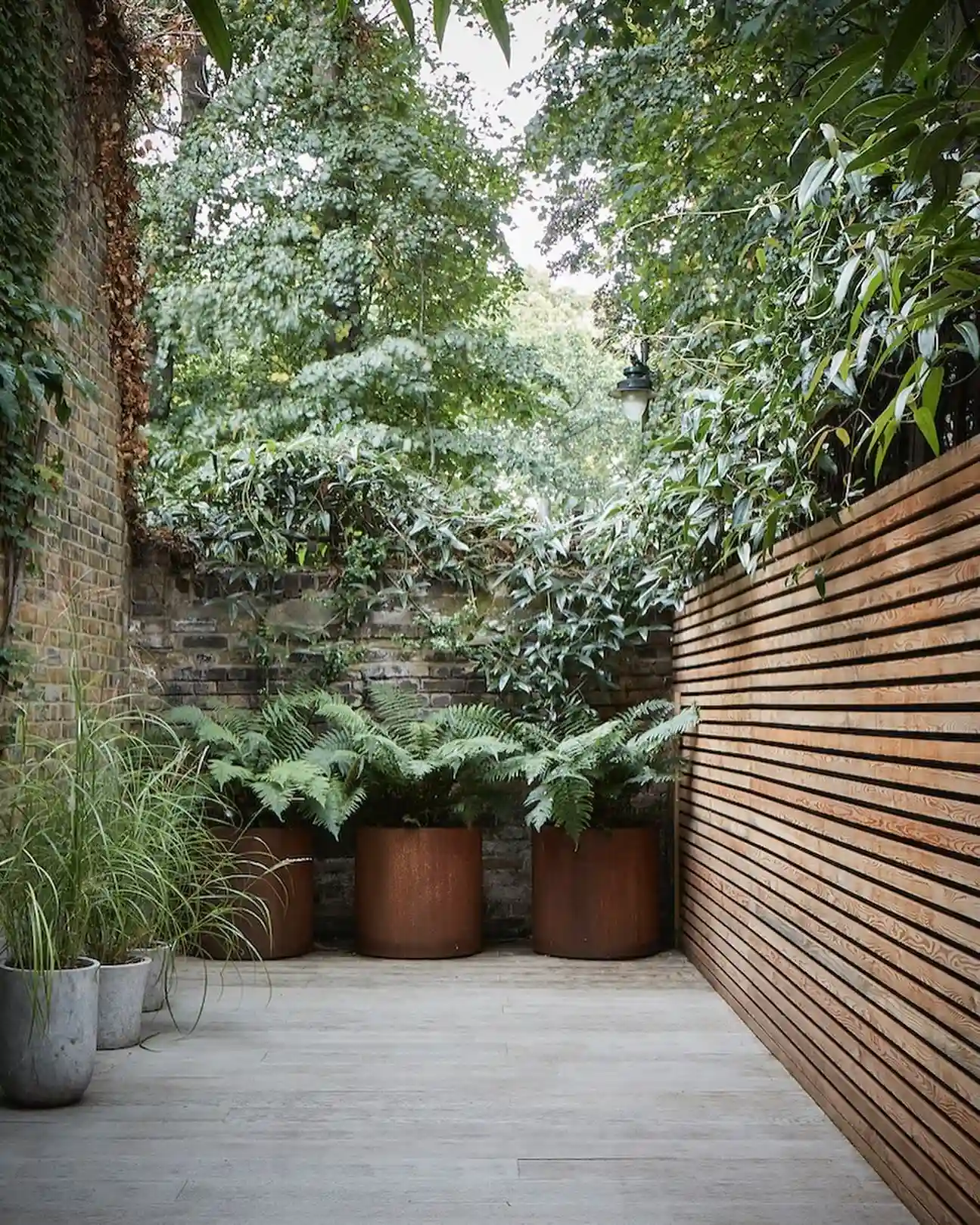
This narrow, shaded corner uses oversized fern planters to create a calm woodland feel without filling the entire floor. Horizontal timber slats add warmth and privacy, while the pale paving keeps the area bright beneath the tree canopy. Smaller ornamental grasses provide softer movement along the opposite wall.
- Choose ferns that suit deep or partial shade in your garden.
- Use large planters so the soil stays moist for longer.
- Raise containers slightly to keep their drainage holes clear.
- Treat timber screening regularly to protect it from damp conditions.
- Add one warm outdoor light for safe evening access.
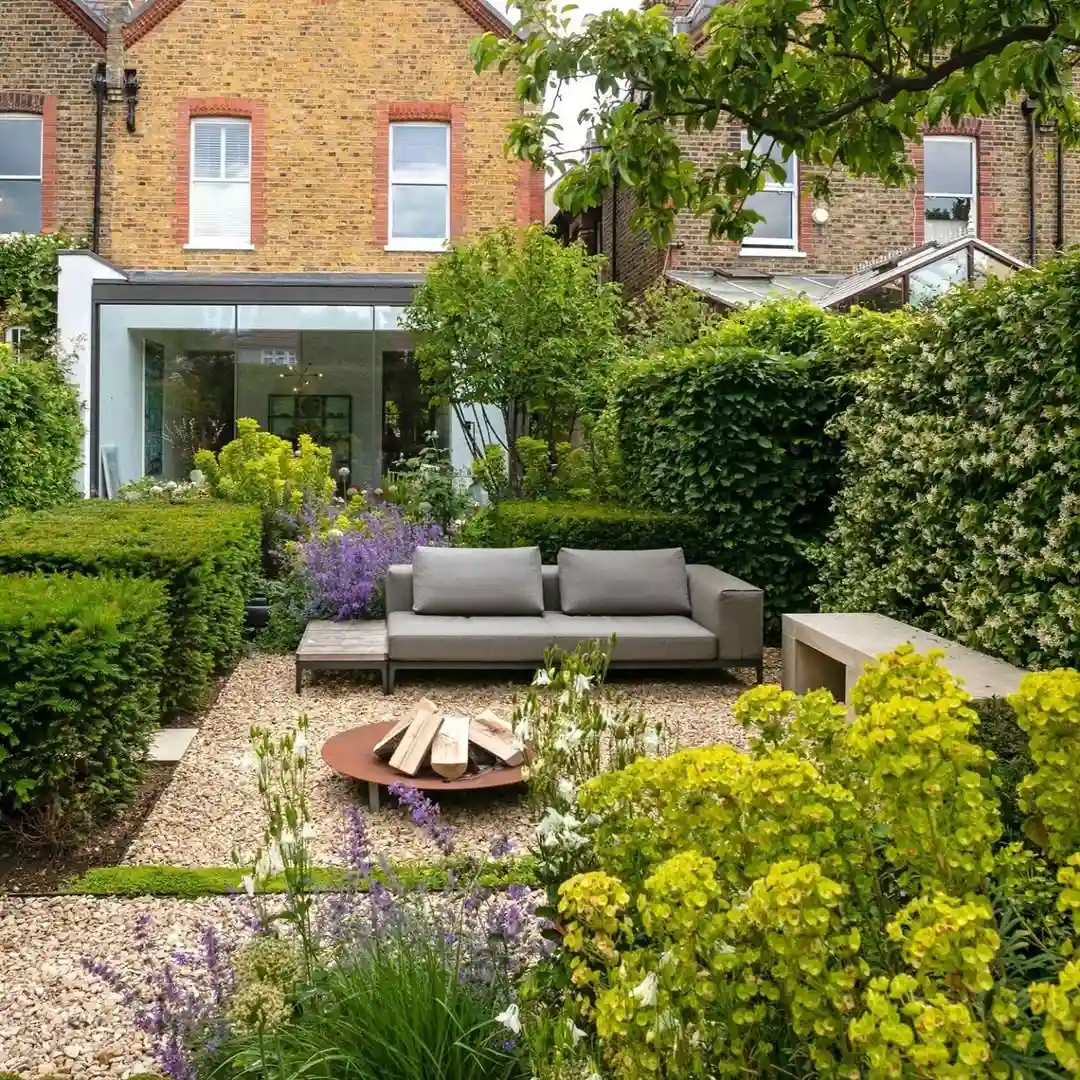
22. Gravel Lounge Corner
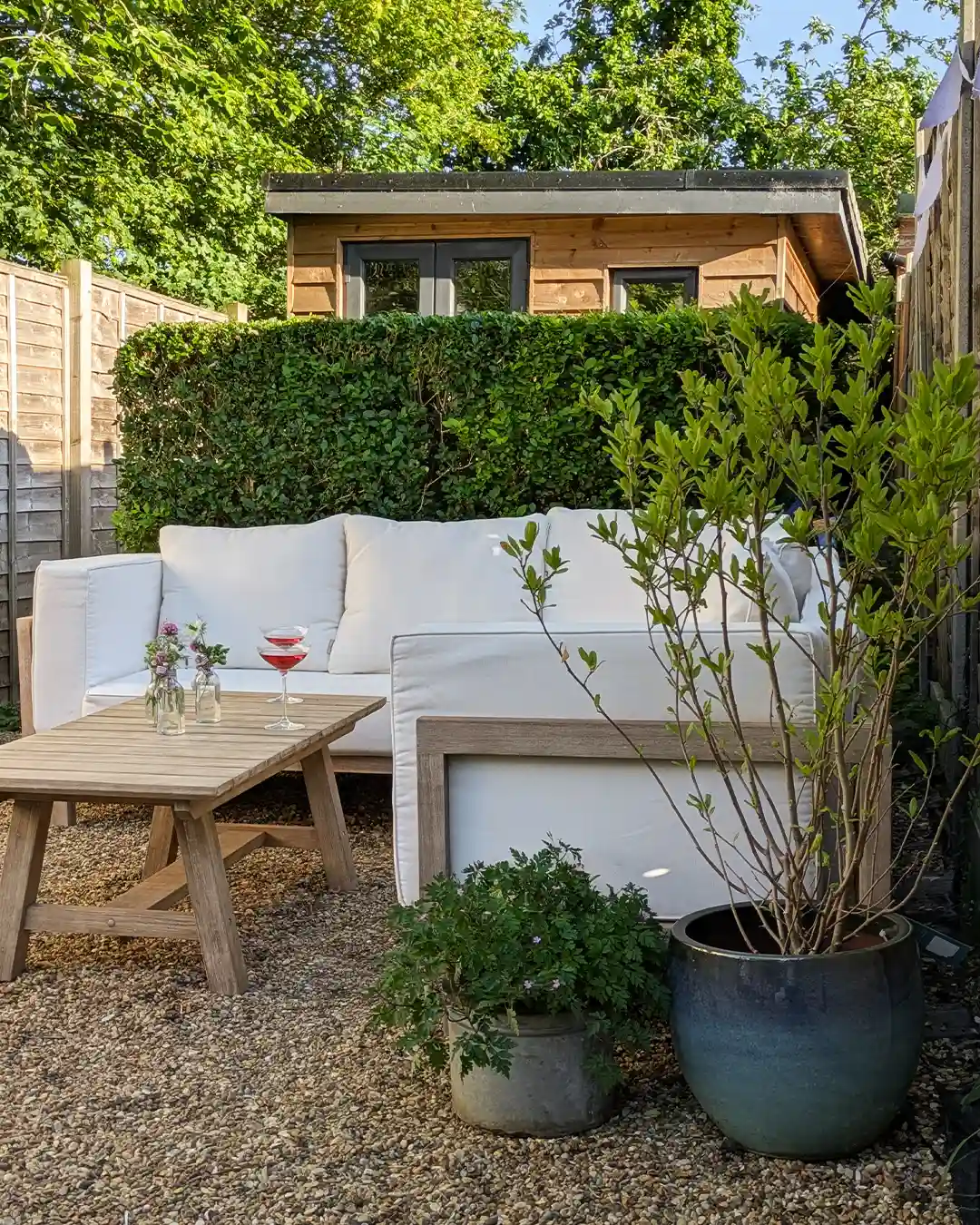
Large white sofas turn this overlooked corner into a comfortable outdoor lounge. A clipped hedge hides the garden building and provides a rich green background. Fine gravel allows rainwater to drain, while a low wooden table suits the relaxed seating height. Two simple containers soften the furniture without reducing valuable floor space.
- Lay gravel over a compacted base to prevent sinking furniture legs.
- Choose quick-drying outdoor cushions with removable covers.
- Place pots near the entrance rather than crowding the seating area.
- Keep the hedge trimmed above sofa height for reliable privacy.
- Leave enough room between the table and seats for easy movement.