20 Fairy Garden Ideas
Fairy gardens turn ordinary planters, flower beds, and quiet backyard corners into tiny storybook scenes.
These fairy garden ideas combine miniature houses, natural stones, compact plants, pathways, and playful accessories.
The best designs still work as living gardens, so plant size, drainage, sunlight, and watering needs matter just as much as the decorative details.
1. Rustic Birdhouse Village
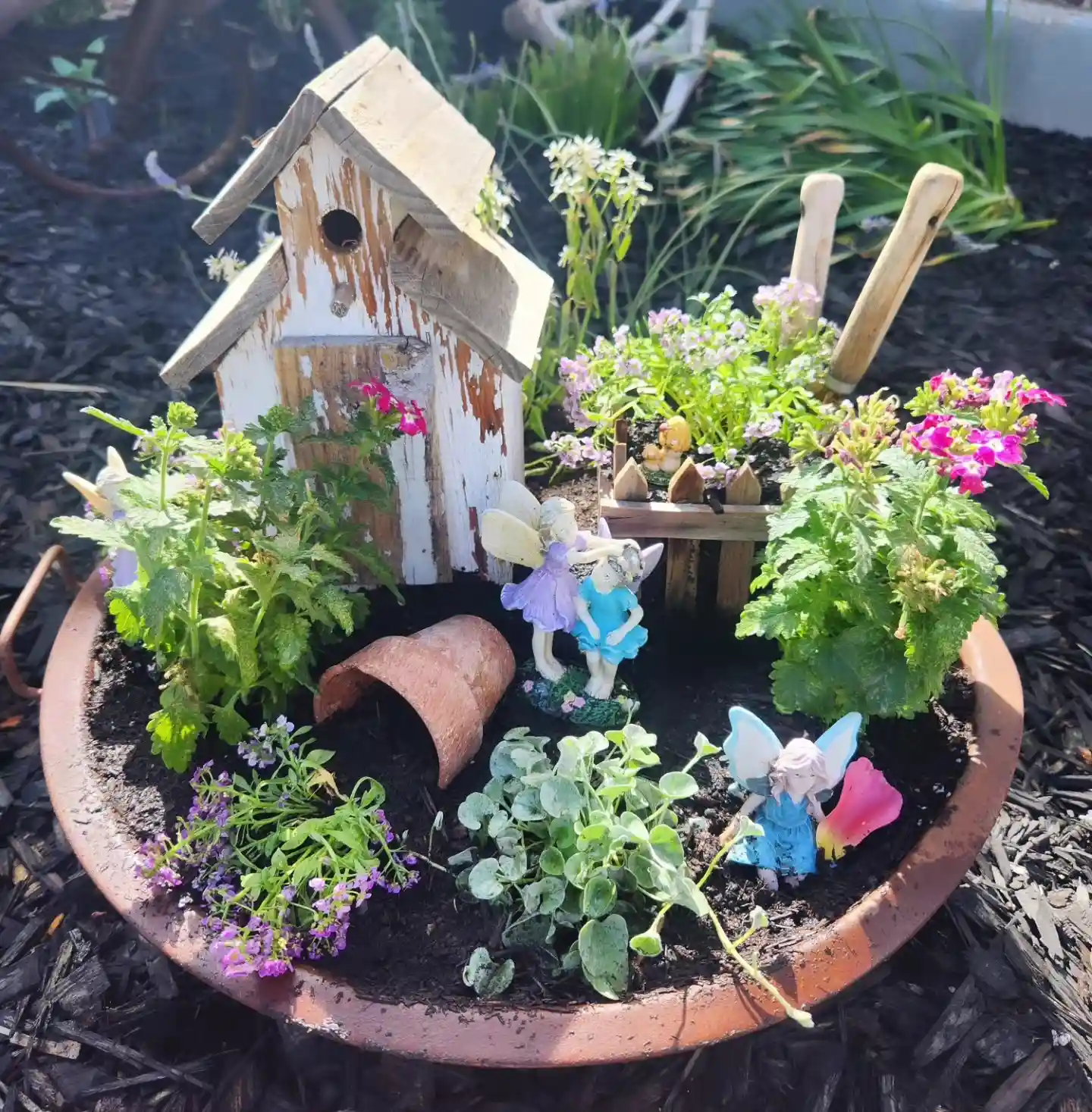
A weathered wooden birdhouse gives this shallow container fairy garden a charming farmhouse feel. Flowering plants frame the miniature building, while three fairy figures create a playful scene near the front. The tipped terracotta pot works as a tiny tunnel and helps the arrangement look collected rather than overly polished.
- Place the tallest building toward the back to preserve the view.
- Choose compact flowers that will not quickly cover the figures.
- Bury the broken pot slightly so it remains stable.
- Leave exposed soil for pathways and easier watering.
- Seal unfinished wooden pieces before leaving them outdoors.
2. Mushroom Cottage Path
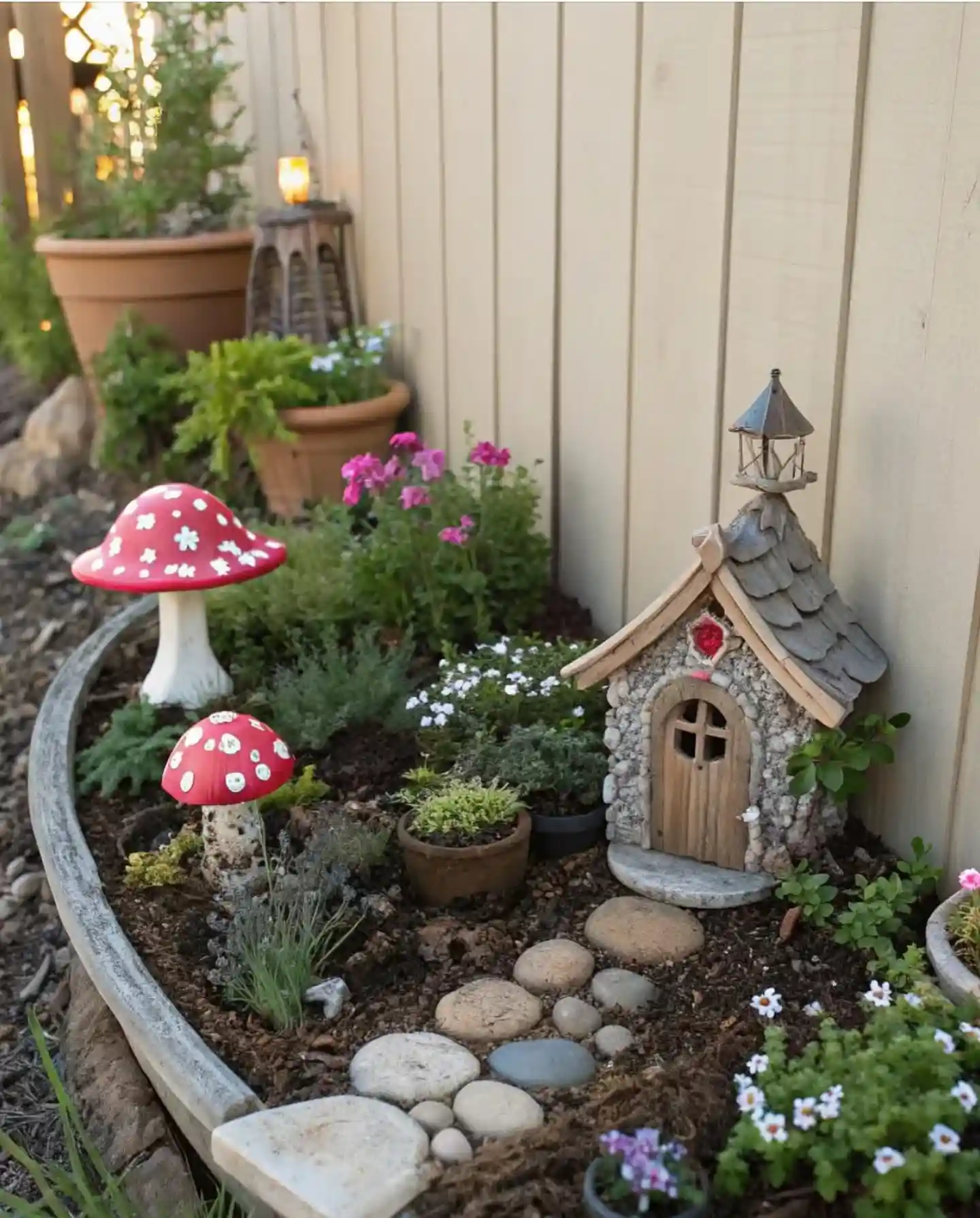
This narrow raised bed becomes a fairy neighborhood with a stone cottage, oversized red mushrooms, and a stepping-stone path. Small flowering plants soften the structures without hiding them. The house sits against the fence like a destination, while the curved garden border naturally guides the eye through the entire miniature landscape.
- Lay the pathway before planting to create a clear layout.
- Use flat river stones that will not shift during watering.
- Repeat red details to connect the mushrooms with the cottage.
- Select low-growing thyme or alyssum for open spaces.
- Keep wooden fencing clear of damp soil to slow decay.
Read also:
- 35 Cheap Backyard Makeover Ideas
- 20 Easy Garden Borders Ideas That Look Expensive
- 22 Narrow Backyard Garden Ideas for Awkward Spaces
3. Fairy Garden Village
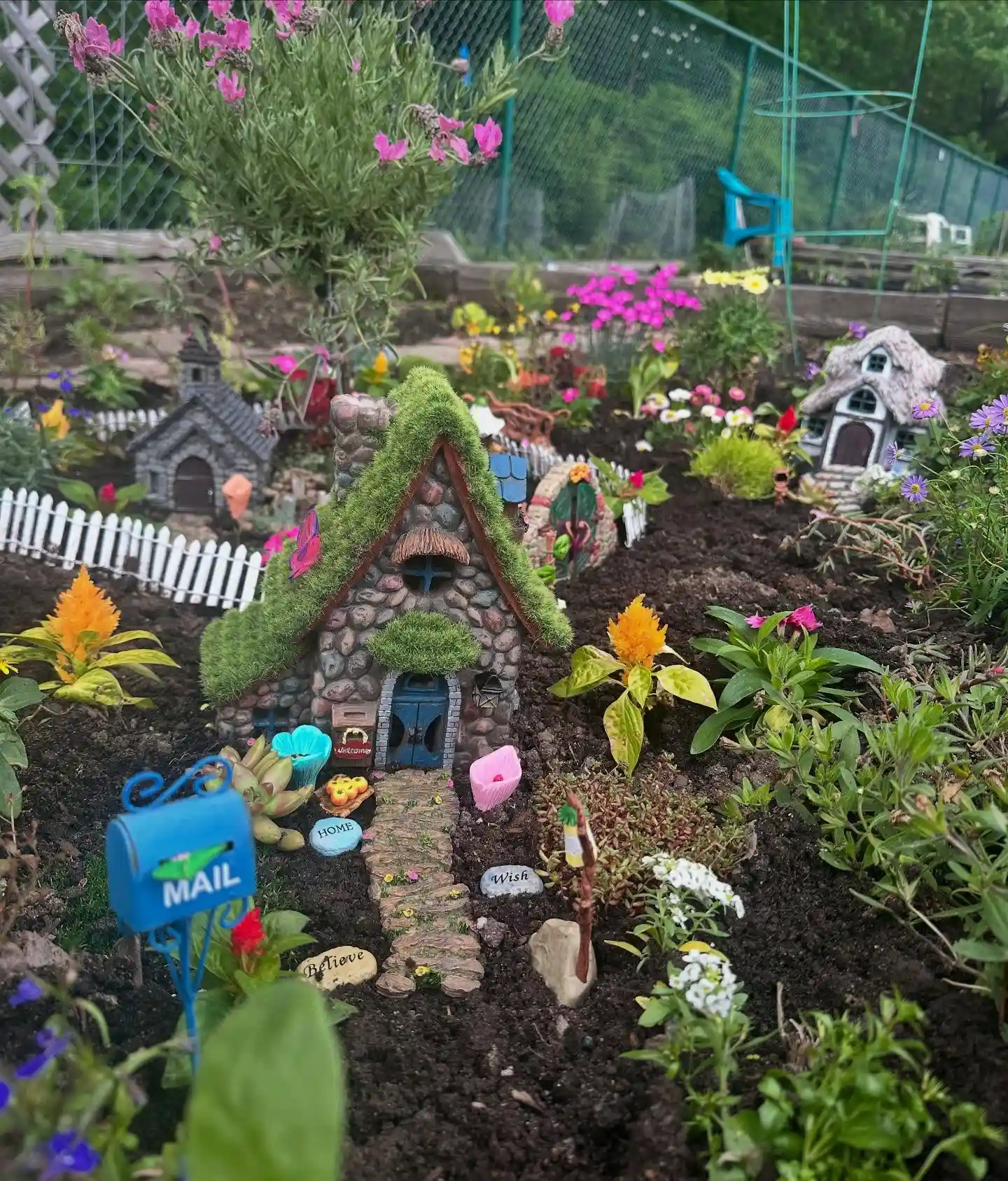
Several miniature cottages turn this existing flower bed into a complete fairy village. A moss-roofed stone house acts as the main feature, while smaller homes sit farther back to create depth. White fences divide the planting into tiny yards, and bright flowers make the village feel lively rather than purely decorative.
- Use one large house and smaller pieces to suggest distance.
- Separate buildings so every cottage remains easy to see.
- Create paths before installing fences and fragile accessories.
- Use real plants as miniature trees, hedges, and flower borders.
- Avoid placing delicate pieces where garden tools may damage them.
4. Fairy Pond Planter
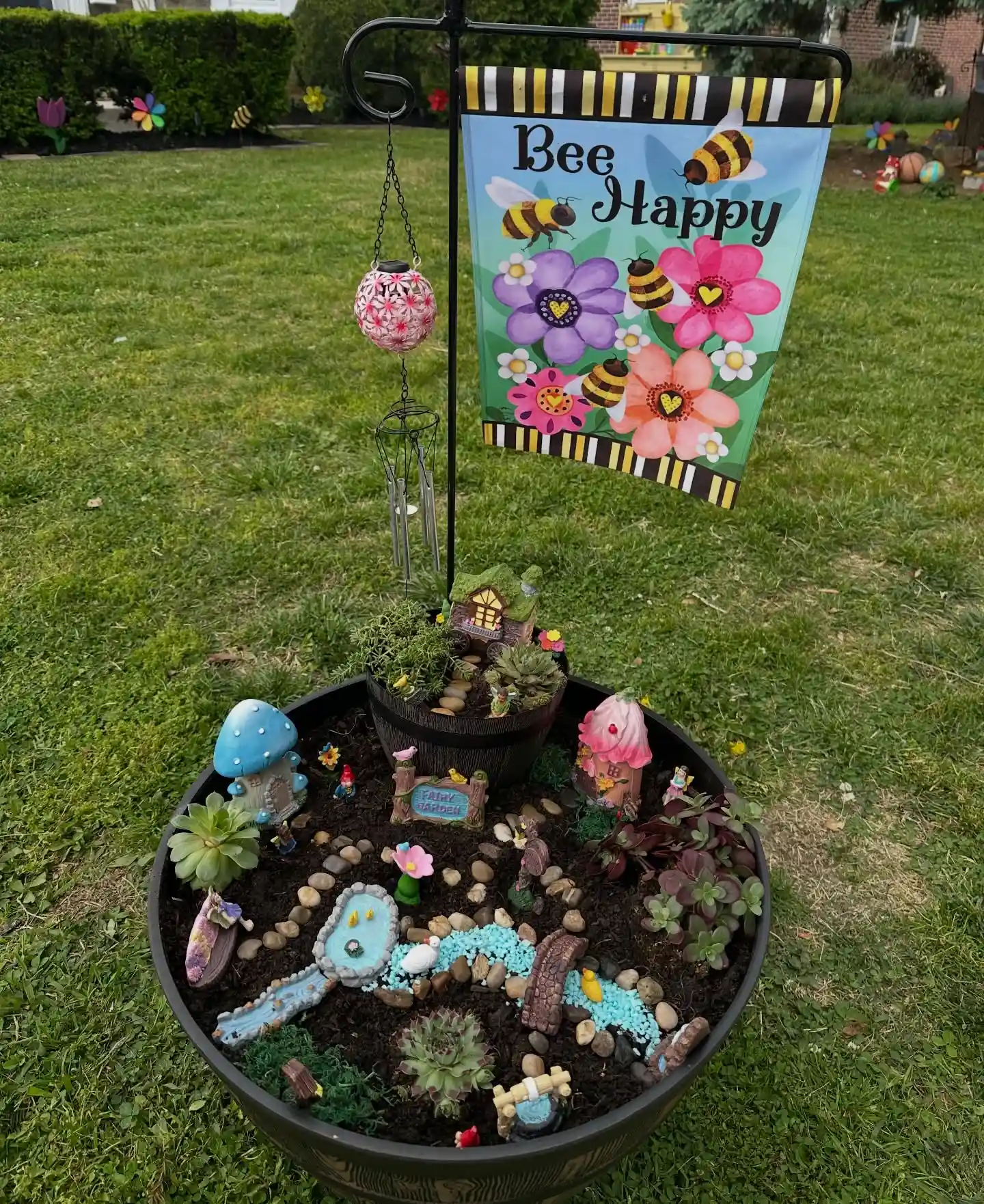
A large circular planter provides enough space for a winding blue stream, a tiny pond, several cottages, and patches of succulents. Raised sections make the landscape feel more realistic, while stones define the water’s edge. A garden flag and wind chime extend the cheerful theme above the miniature scene.
- Use colored gravel instead of standing water for easier care.
- Separate decorative gravel from soil with flexible plastic edging.
- Plant succulents only if the container receives strong sunlight.
- Elevate one cottage on an overturned nursery pot.
- Secure the flag stand so wind cannot tip the planter.
5. Succulent Cottage Bowl
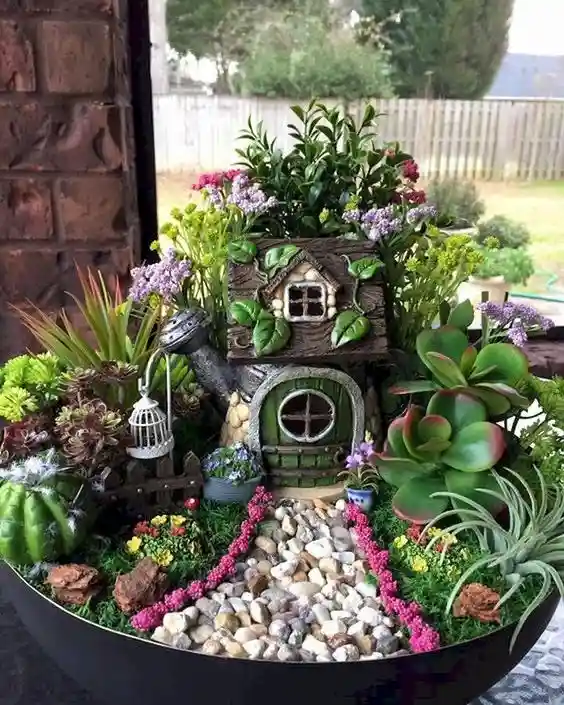
A dark metal bowl gives this fairy garden a clean, contained shape. The tall cottage forms the background, while a pebble path leads directly to its round door. Succulents, air plants, cactus forms, and tiny flowers create varied texture without needing much room. The color stays mostly natural and easy on the eye.
- Use cactus mix if most of the plants are succulents.
- Check that the metal container has several drainage holes.
- Keep the path wide enough to remain visible as plants spread.
- Choose slow-growing varieties for less frequent replanting.
- Water the soil directly instead of soaking the miniature house.
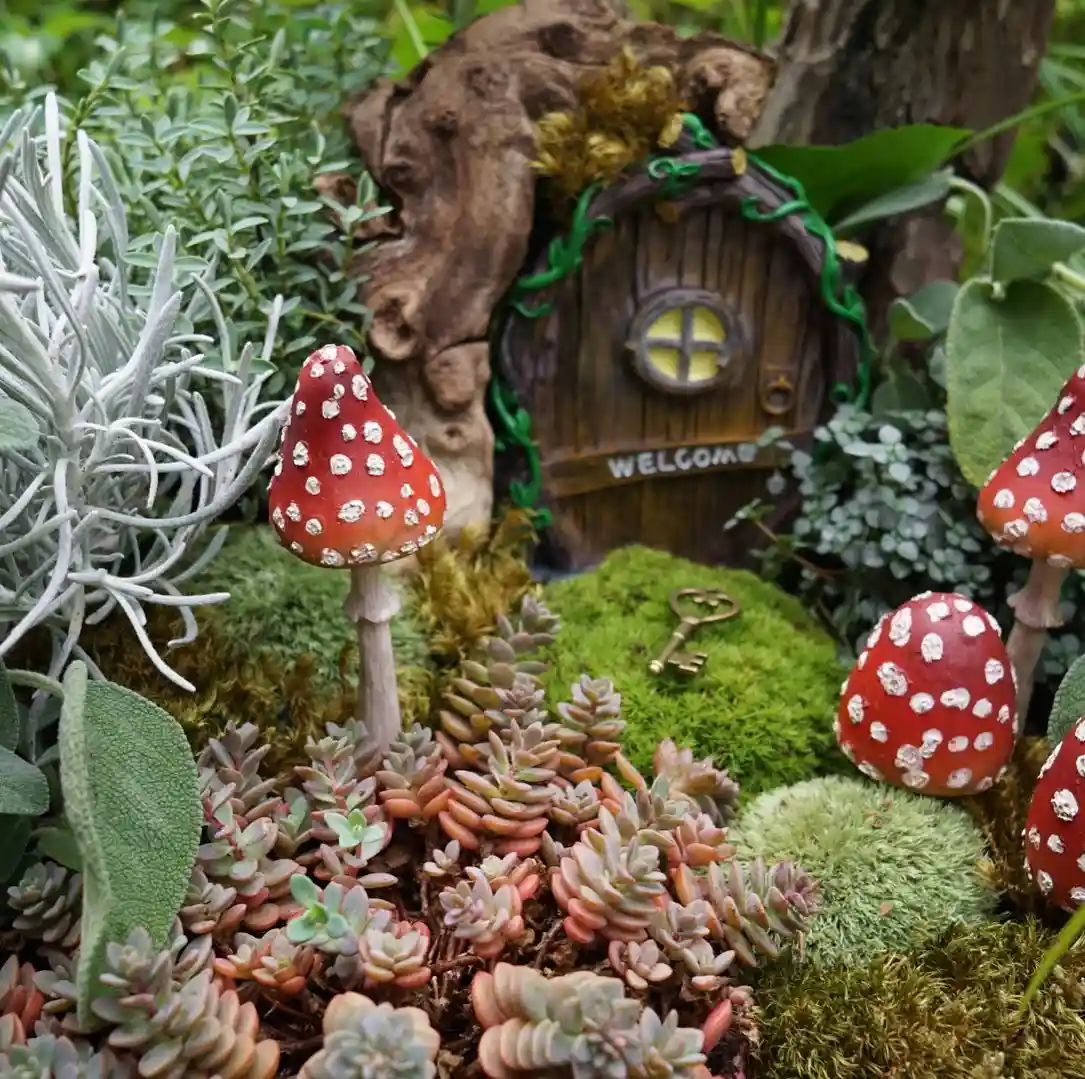
A small door tucked against natural wood makes this fairy garden feel discovered rather than deliberately displayed. Moss, silvery foliage, tiny succulents, and spotted mushrooms create a believable woodland floor. The loose key adds a clever story detail, suggesting that the hidden fairy homeowner may return at any moment.
- Position the door against a stump, root, or piece of driftwood.
- Use preserved moss in dry areas and living moss in damp shade.
- Repeat mushroom sizes to make the scene appear more natural.
- Partially bury decorative pieces so they do not look loosely placed.
- Keep the key attached if children or pets use the garden.
7. Mini Succulent Homestead
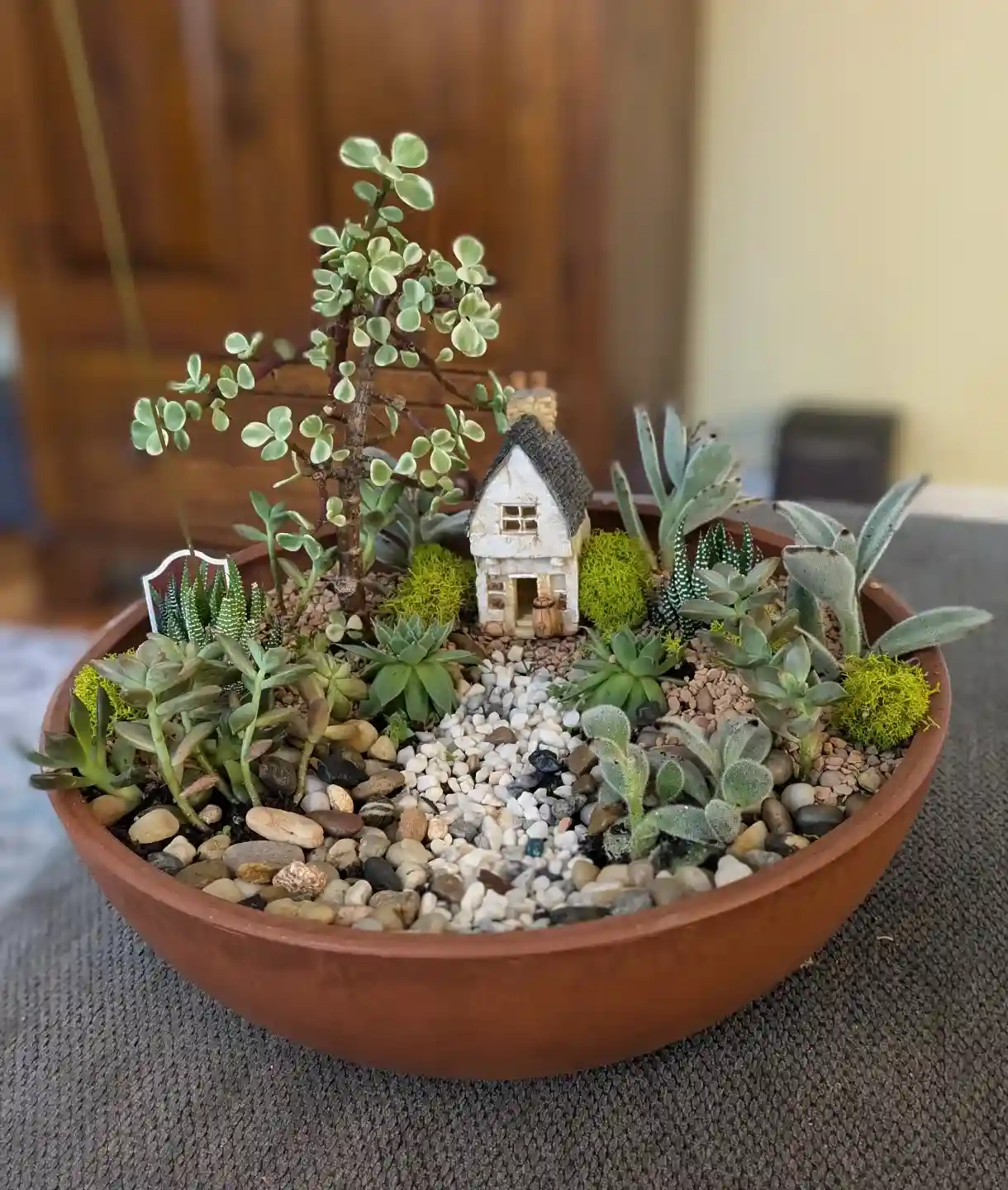
This wide terracotta bowl uses succulents as a complete miniature landscape. A variegated shrub becomes the main tree, moss forms rounded bushes, and white pebbles create a clean path to the cottage. Mixed river stones add texture around the front without competing with the restrained green and neutral color palette.
- Combine succulents with similar sunlight and watering needs.
- Use one taller plant to create a believable miniature tree.
- Add gravel mulch to stop soil splashing onto the cottage.
- Leave growing room around rosette-forming succulents.
- Rotate an indoor container regularly for even plant growth.
8. Pedestal Fairy Estate
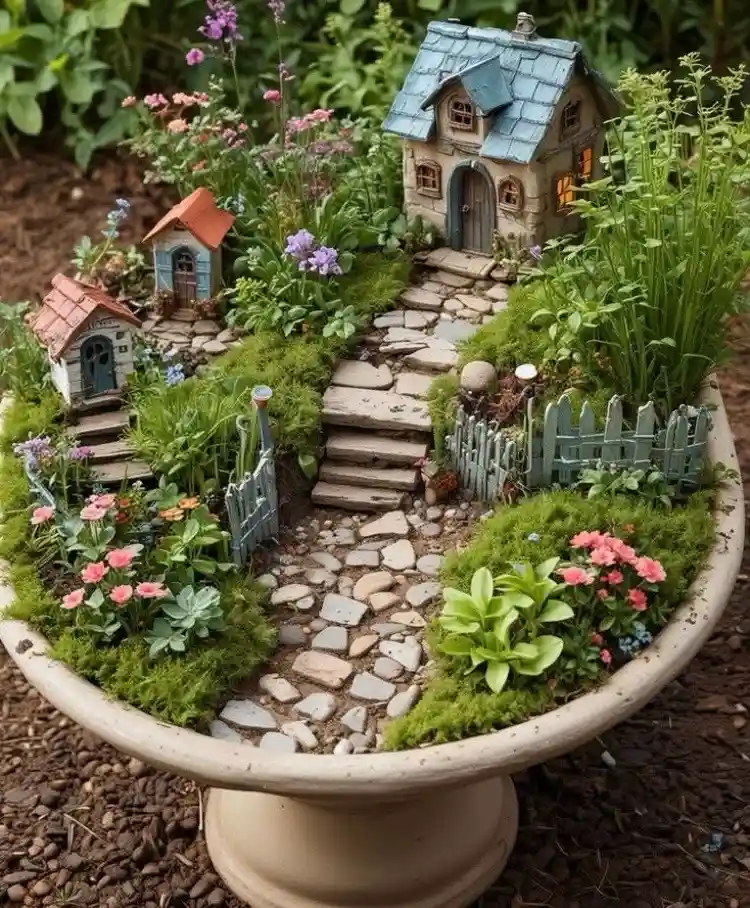
A pedestal planter raises this detailed fairy garden closer to eye level. Stone pathways climb through several planted zones toward the main house, while smaller cottages make the scene feel like a private estate. Moss, flowers, fences, and steps create layers, turning one container into a miniature garden that rewards closer inspection.
- Build raised areas with lightweight filler beneath the soil.
- Secure miniature steps so they do not slide after rain.
- Use moss between stones to soften hard pathway edges.
- Keep tall plants toward the back and sides.
- Display the planter where viewers can walk around it safely.
9. Tree-Stump Playground
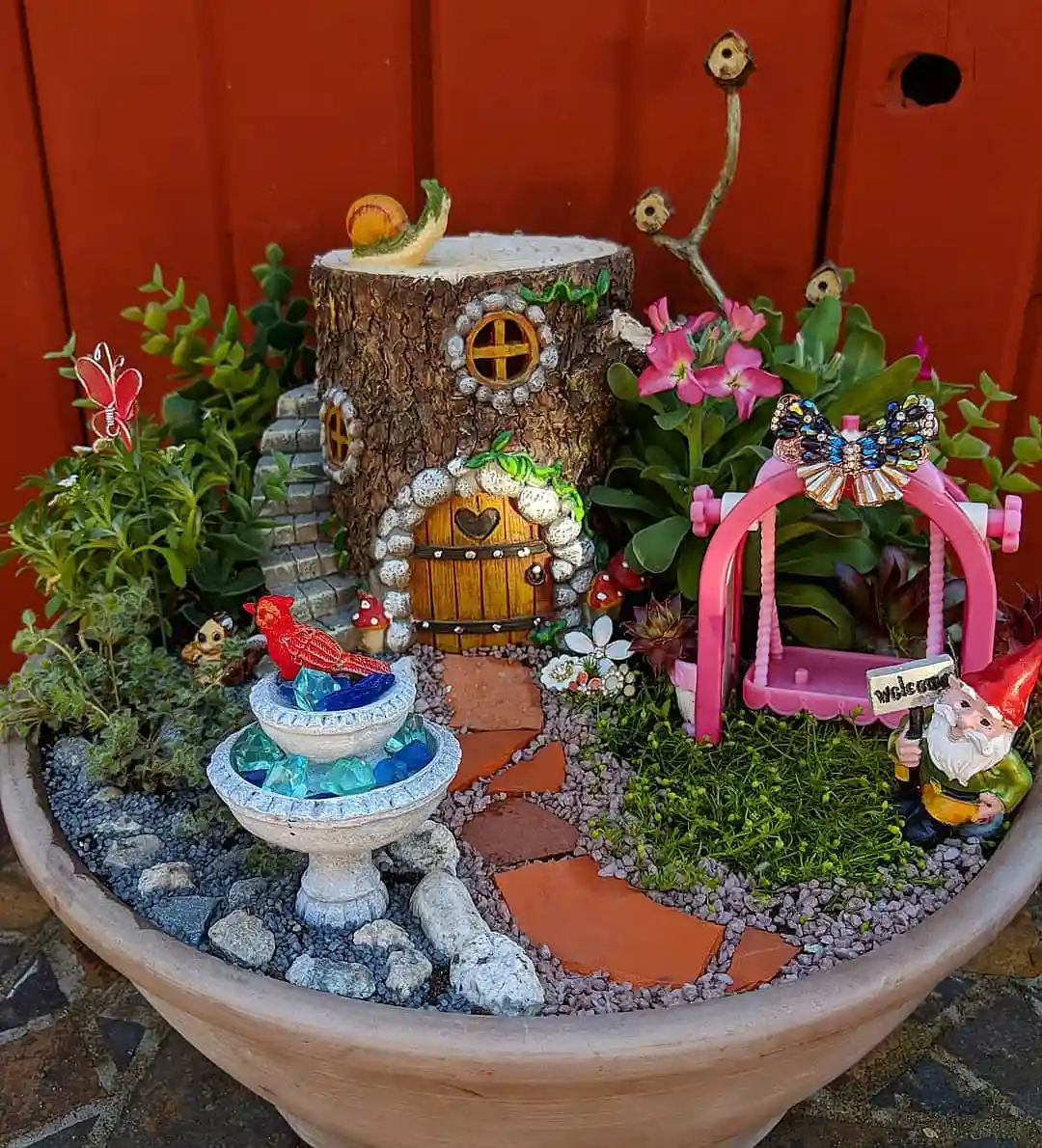
A tree-stump house anchors this colorful fairy playground. A broken-tile path connects the front door with a blue fountain, while a pink swing and small gnome add personality. The red fence behind it increases the woodland colors, and thick ground cover makes each miniature area feel connected rather than scattered.
- Use rounded or sanded tile pieces to avoid sharp edges.
- Place the swing on firm soil so it stays upright.
- Fill the fountain with glass stones instead of water.
- Leave a clear path between the house and play area.
- Trim ground cover before it hides smaller accessories.
10. Pinecone Fairy Home
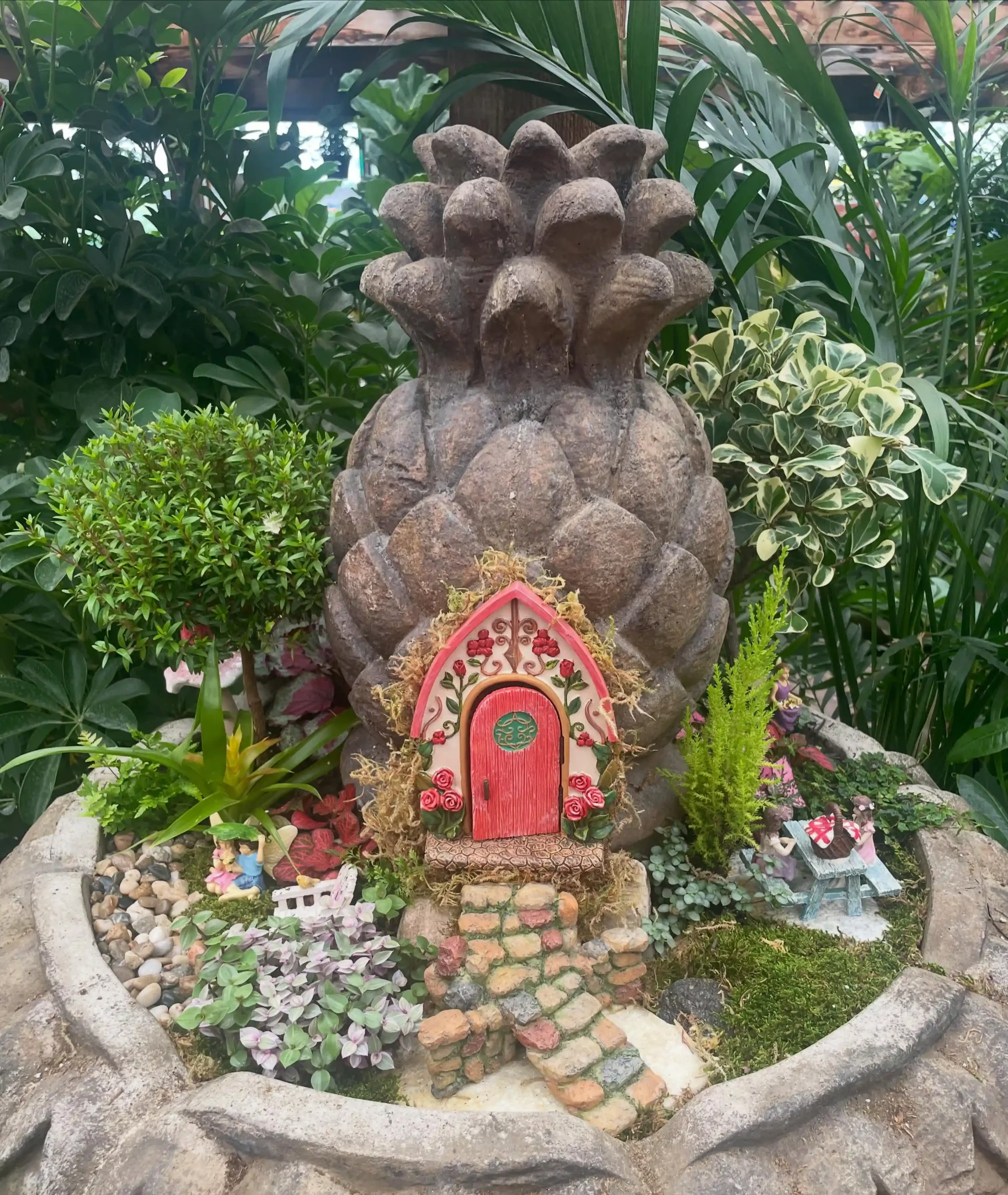
A large pinecone-shaped ornament becomes an unexpected fairy house when paired with a bright door, stone steps, and tiny figures. Tropical foliage surrounds the structure and makes it feel almost life-sized within the miniature setting. Moss and trailing ground cover soften the concrete border while connecting the house to its planted surroundings.
- Repurpose sturdy garden ornaments as oversized fairy buildings.
- Match plant scale to the height of the main feature.
- Use contrasting door colors so the entrance remains easy to see.
- Add miniature steps where the ornament has a raised base.
- Choose shade-friendly plants beneath dense tropical foliage.
11. Bee-Themed Fairy Garden
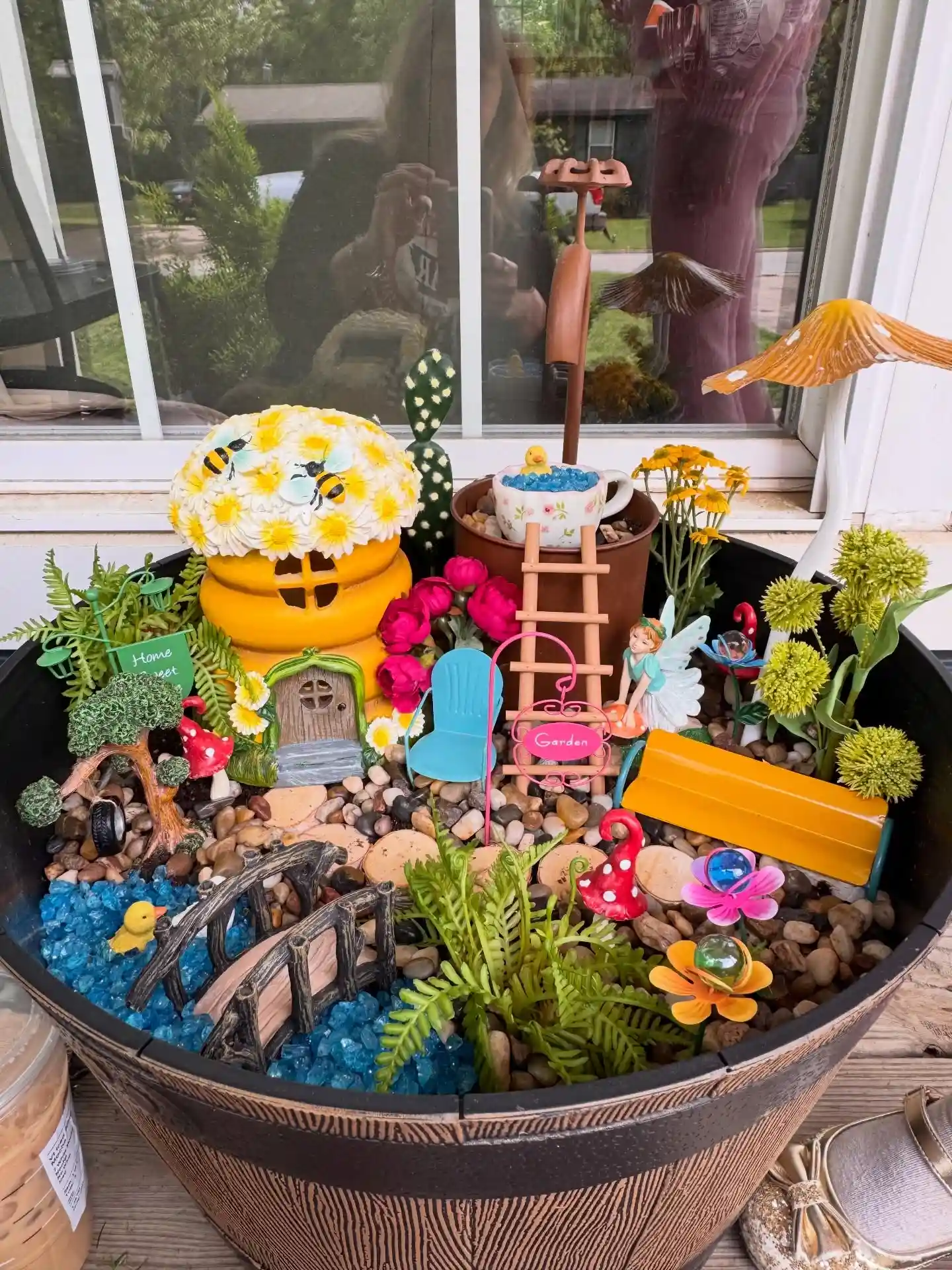
Yellow, blue, and pink accessories make this bee-themed fairy garden cheerful and easy for children to enjoy. A flower-covered hive house forms the focal point, while a pebble path, bridge, pond, ladder, and bench create several small activity areas. The limited color palette keeps the busy container from appearing completely random.
- Repeat yellow details to strengthen the bee theme.
- Group accessories into small scenes instead of spreading them evenly.
- Use blue glass gravel to create a dry miniature stream.
- Keep ladders and bridges securely pressed into the soil.
- Include living flowers that can attract real bees outdoors.
12. Tiered Succulent Retreat
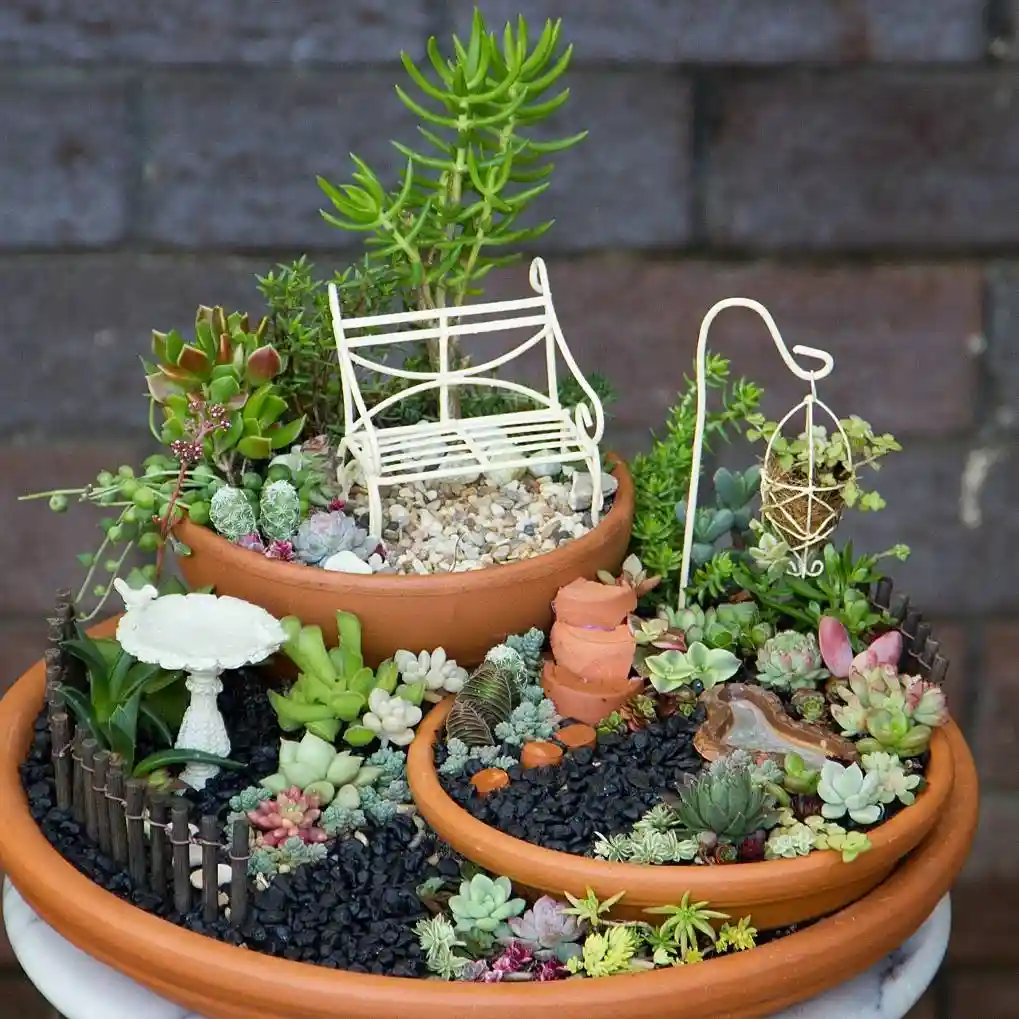
Stacked terracotta saucers create several levels for this compact succulent fairy garden. A white bench sits on the highest terrace, while a birdbath, hanging basket, small pots, and dark gravel fill the lower sections. The stepped design provides depth without needing one oversized container or a complicated supporting structure.
- Place the largest saucer on a wide, stable base.
- Offset each upper level to preserve planting space below.
- Fill unused gaps beneath saucers with lightweight material.
- Use gritty soil and avoid overwatering closely planted succulents.
- Choose metal accessories that match in color and scale.
13. Tree and Pond Garden
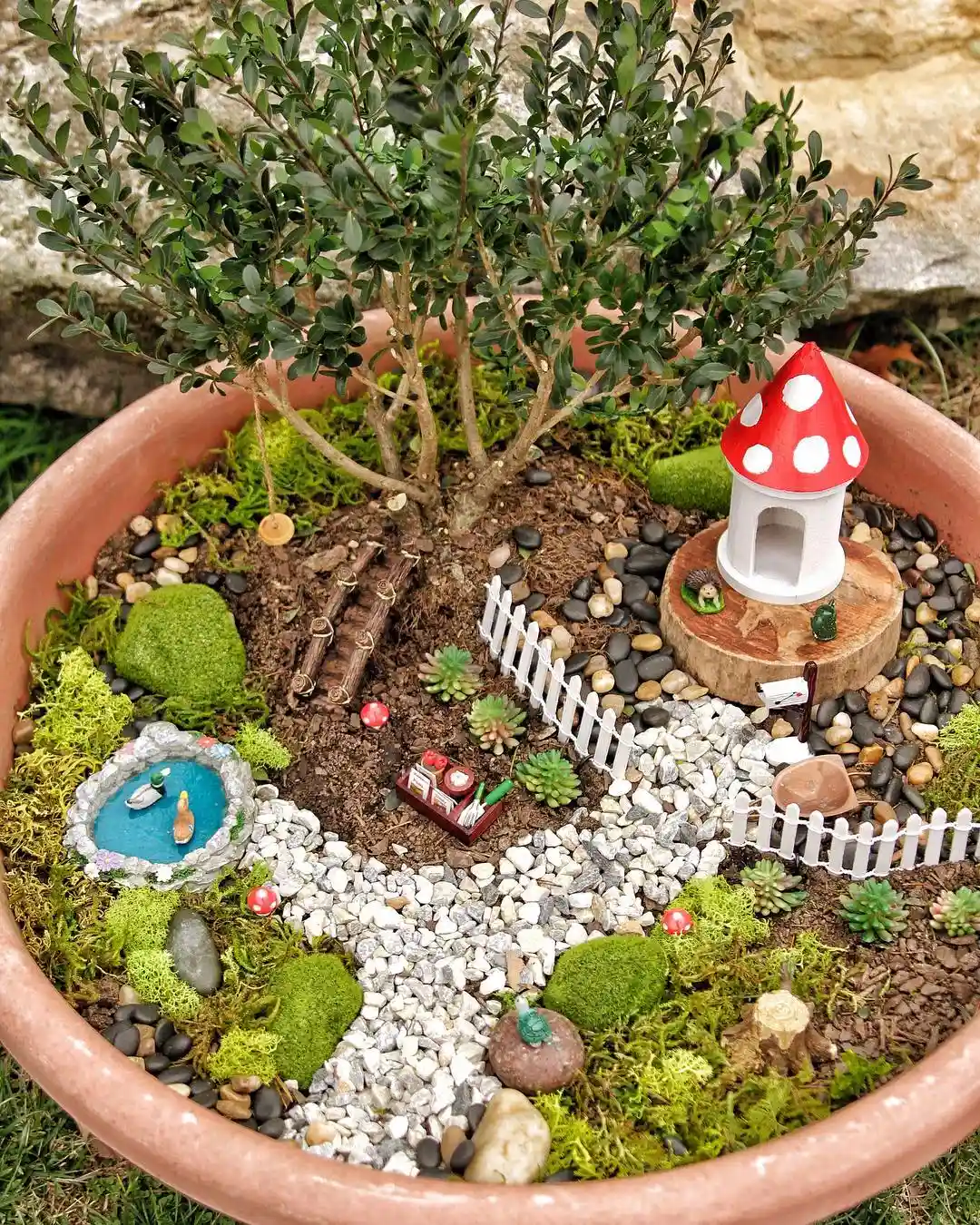
A small shrub becomes the centerpiece of this fairy garden, providing shade, height, and a natural sense of scale. White gravel paths split around mossy beds before reaching a mushroom-roof cottage. A tiny blue pond, miniature fence, swing, and outdoor table turn the planter into a complete little backyard.
- Select a shrub that tolerates regular root and branch pruning.
- Keep the trunk visible so the plant reads as a miniature tree.
- Create separate zones with different pebble colors.
- Install the swing on a strong lower branch.
- Refresh moss when it becomes faded or brittle.
14. Woodland Waterfall Scene
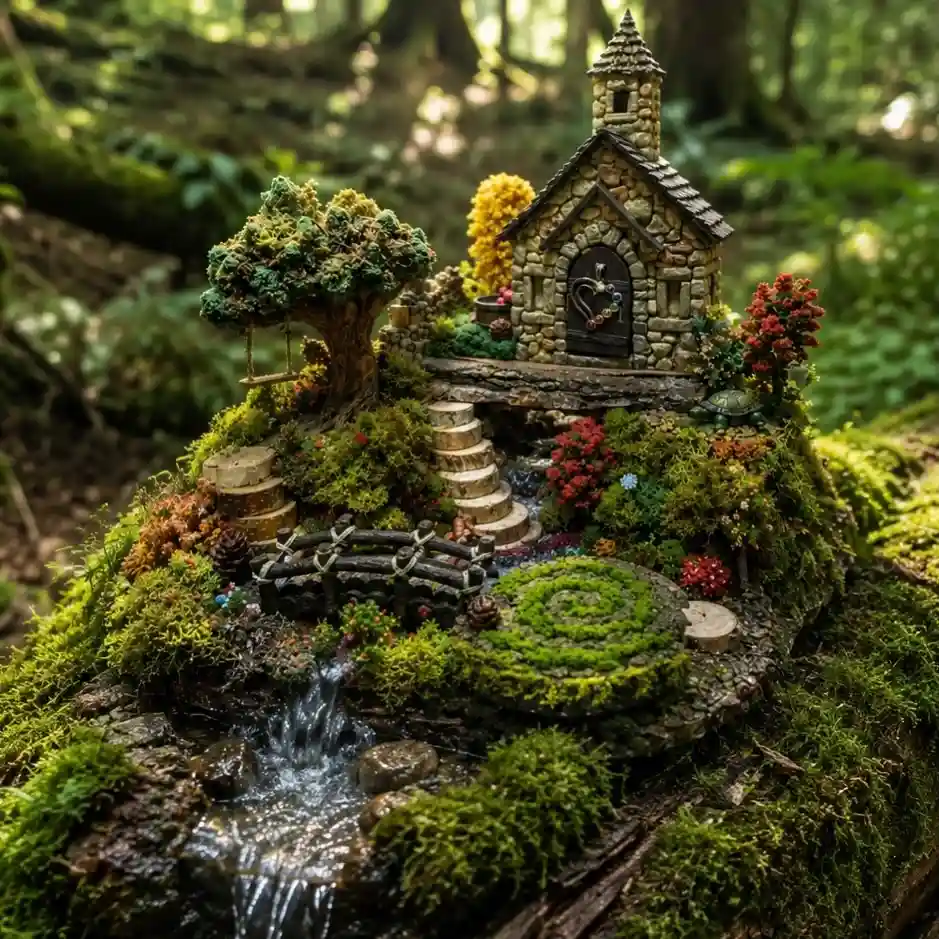
This woodland fairy garden uses a moss-covered mound to create a tiny hillside setting. A stone chapel sits at the top, while curved steps, a bridge, and a flowing stream lead toward the lower edge. The layered layout tells a clear visual story and looks most natural in a damp, shaded garden.
- Build the mound around a stable waterproof base.
- Use a very small pump if creating a working waterfall.
- Provide a hidden reservoir to recirculate the water.
- Choose moss suited to the site’s moisture and sunlight.
- Keep electrical connections rated for outdoor use and raised above water.
15. Pansy Cottage Courtyard
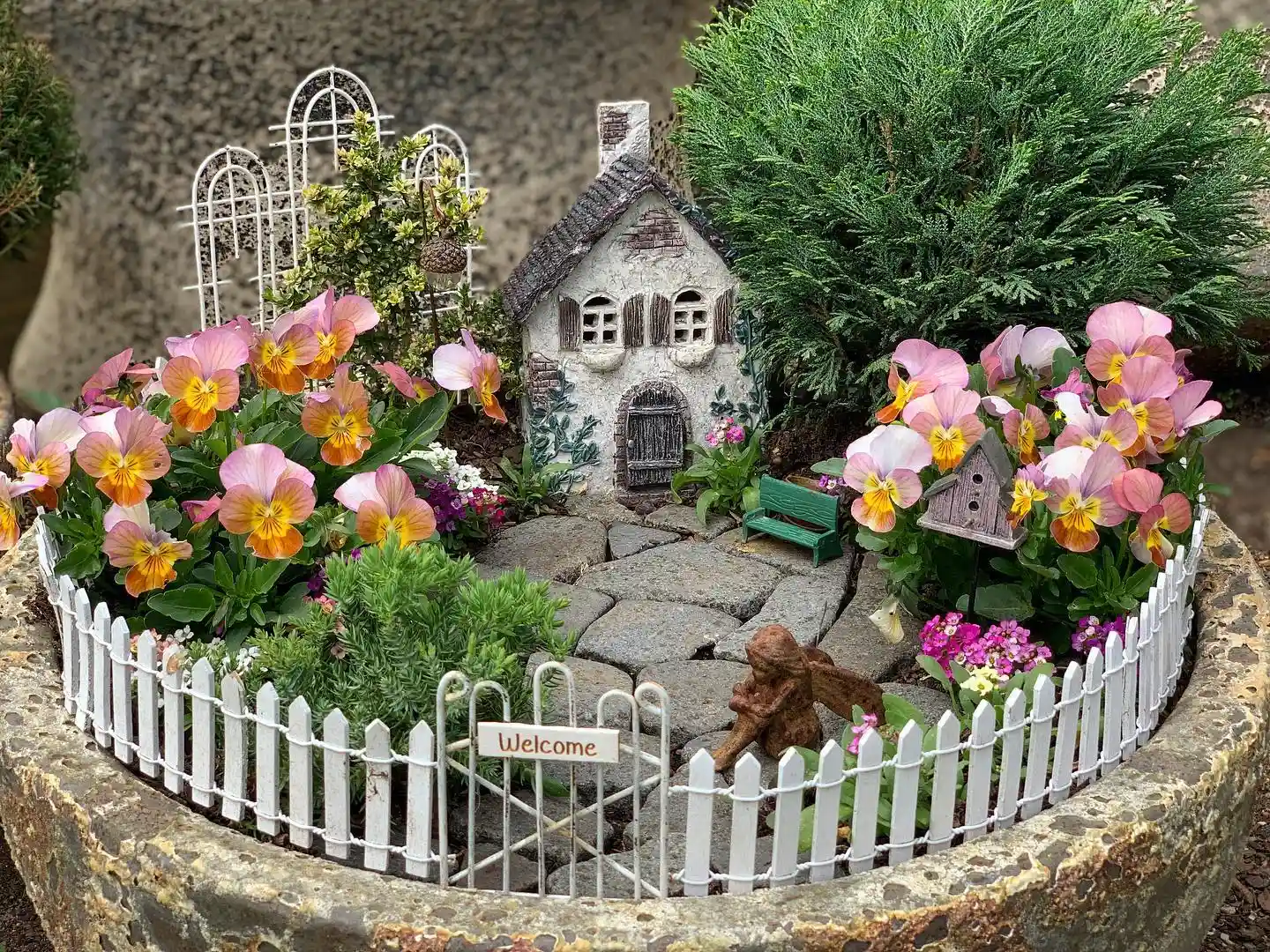
Pink and golden pansies create a bright living border around this miniature cottage. A paved courtyard, bench, birdhouse, gate, and white fencing make the arrangement feel like a tiny front garden. The large evergreen at the back acts as a mature tree and gives the fairy house protection and scale.
- Choose compact flowers that tolerate the container’s light level.
- Leave ventilation space around the base of the evergreen.
- Use flat stone pieces to form a stable courtyard.
- Deadhead pansies to keep them blooming longer.
- Remove fencing temporarily when replanting seasonal flowers.
16. Fairy Flower Village
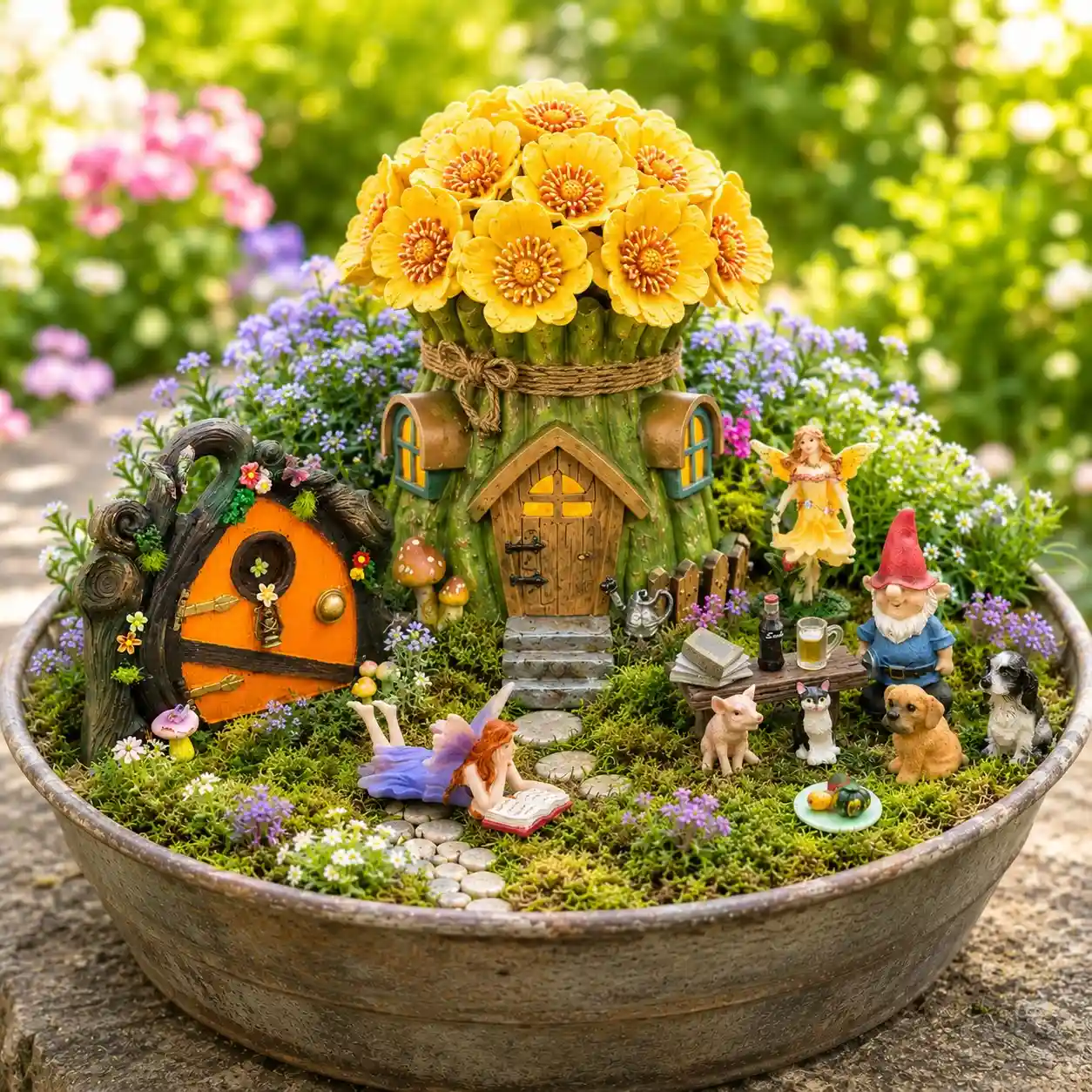
A flower-shaped cottage and orange door give this fairy garden a bold storybook style. Tiny residents, pets, books, drinks, and garden furniture make the scene feel actively lived in. Moss covers most of the soil, while small purple and white flowers form a colorful background without blocking the detailed characters.
- Start with one unusual house as the visual centerpiece.
- Arrange figures in small groups that suggest simple activities.
- Keep accessories proportional to one another for a believable scene.
- Use living moss only where moisture remains consistent.
- Remove loose miniature food pieces before strong wind or rain.
17. Woodland Stump House
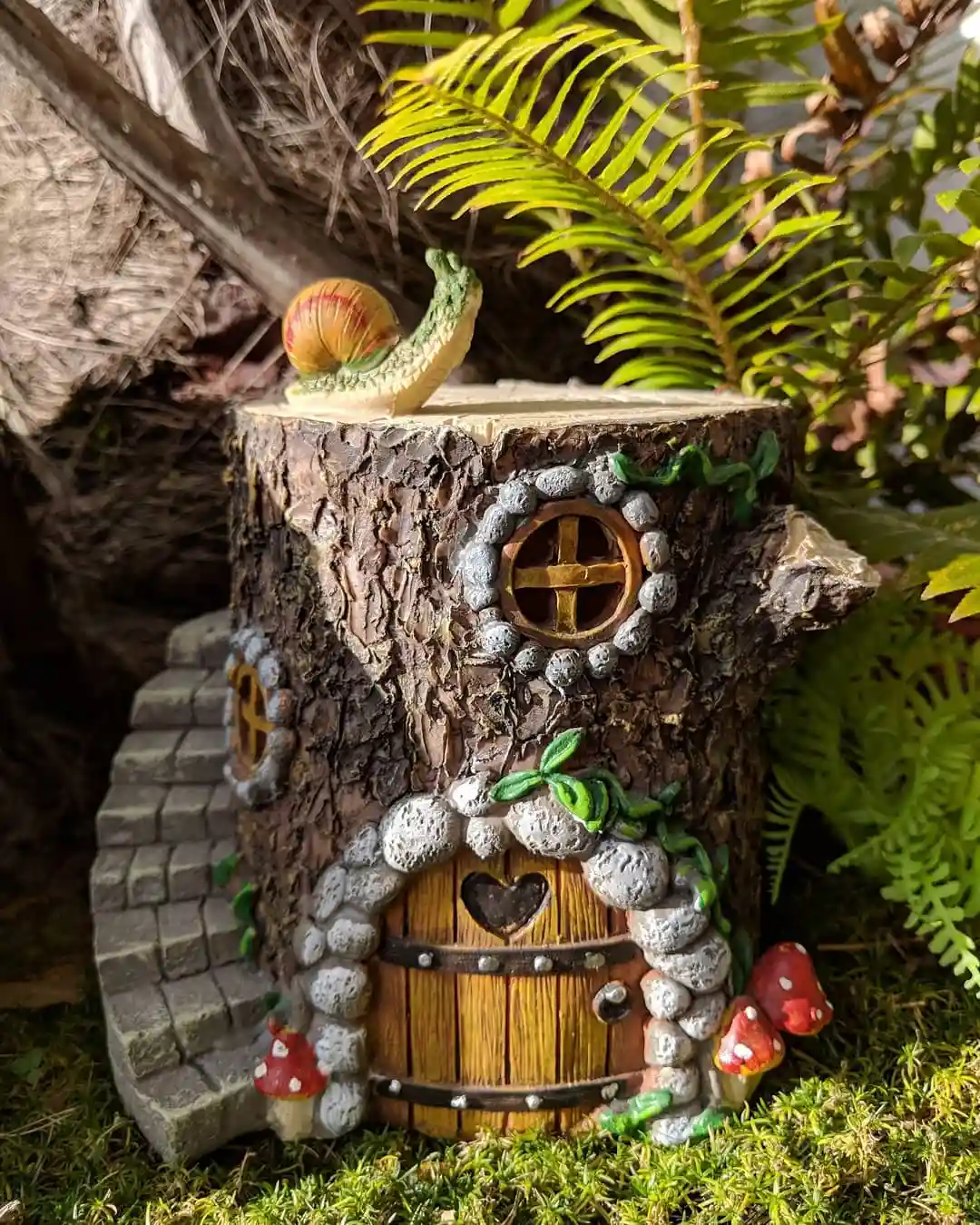
This simple stump house looks convincing because it sits among real ferns, moss, and tree roots. A round window, heart-shaped door, stone trim, and tiny red mushrooms supply just enough detail. The snail resting on the roof strengthens the slow, quiet woodland mood without making the arrangement feel overly decorated.
- Place the house in filtered shade near natural roots or bark.
- Use ferns and moss to hide the base of the ornament.
- Limit bright decorations to a few small mushrooms.
- Brush fallen leaves away from the doorway regularly.
- Choose weatherproof resin if the house stays outdoors all year.
18. Rose Arbor Hideaway
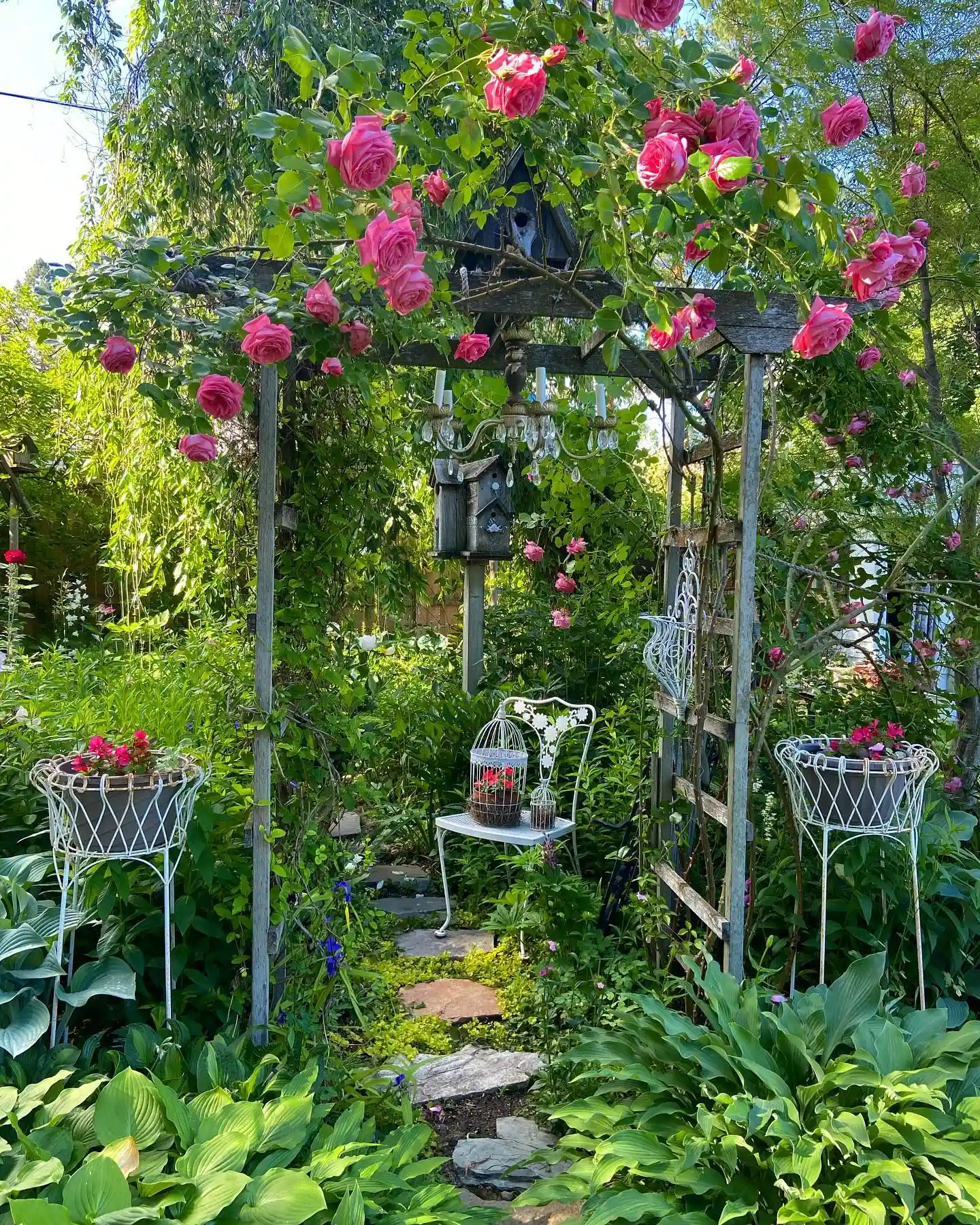
A mature climbing rose transforms this garden arbor into a full-size fairy retreat. White metal furniture, birdcages, a chandelier, weathered timber, and stepping stones add romantic vintage detail beneath the pink flowers. Unlike a container display, this idea creates an immersive space where visitors can step inside the fairy-garden atmosphere.
- Train rose canes horizontally for more flowering side shoots.
- Secure the arbor before the mature vine becomes heavy.
- Keep thorny stems away from the walking path.
- Use battery candles rather than real flames in the chandelier.
- Choose outdoor-safe metal furniture and decorative cages.
19. Broken-Pot Fairy Garden
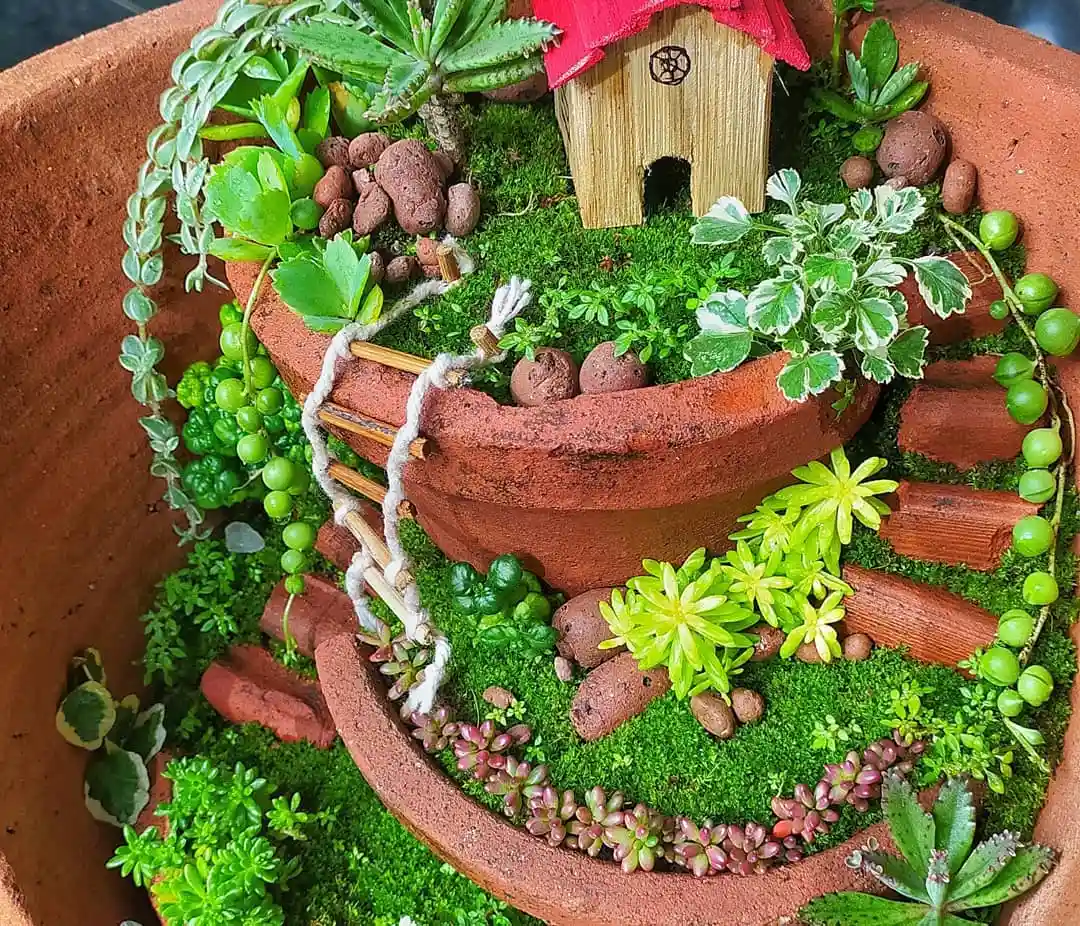
Broken terracotta pieces become terraces in this clever fairy garden idea. Curved pot sections form retaining walls, while brick steps and a rope ladder connect the levels. Succulents, moss, and trailing stems fill narrow planting pockets. A small house at the top gives the design a clear destination and strong vertical movement.
- Sand sharp terracotta edges before assembling the planter.
- Anchor large broken pieces firmly into compacted soil.
- Add soil gradually while building each raised level.
- Plant trailing succulents near the upper terrace edges.
- Water gently to stop soil washing down the steps.
20. Fairy Tea Party
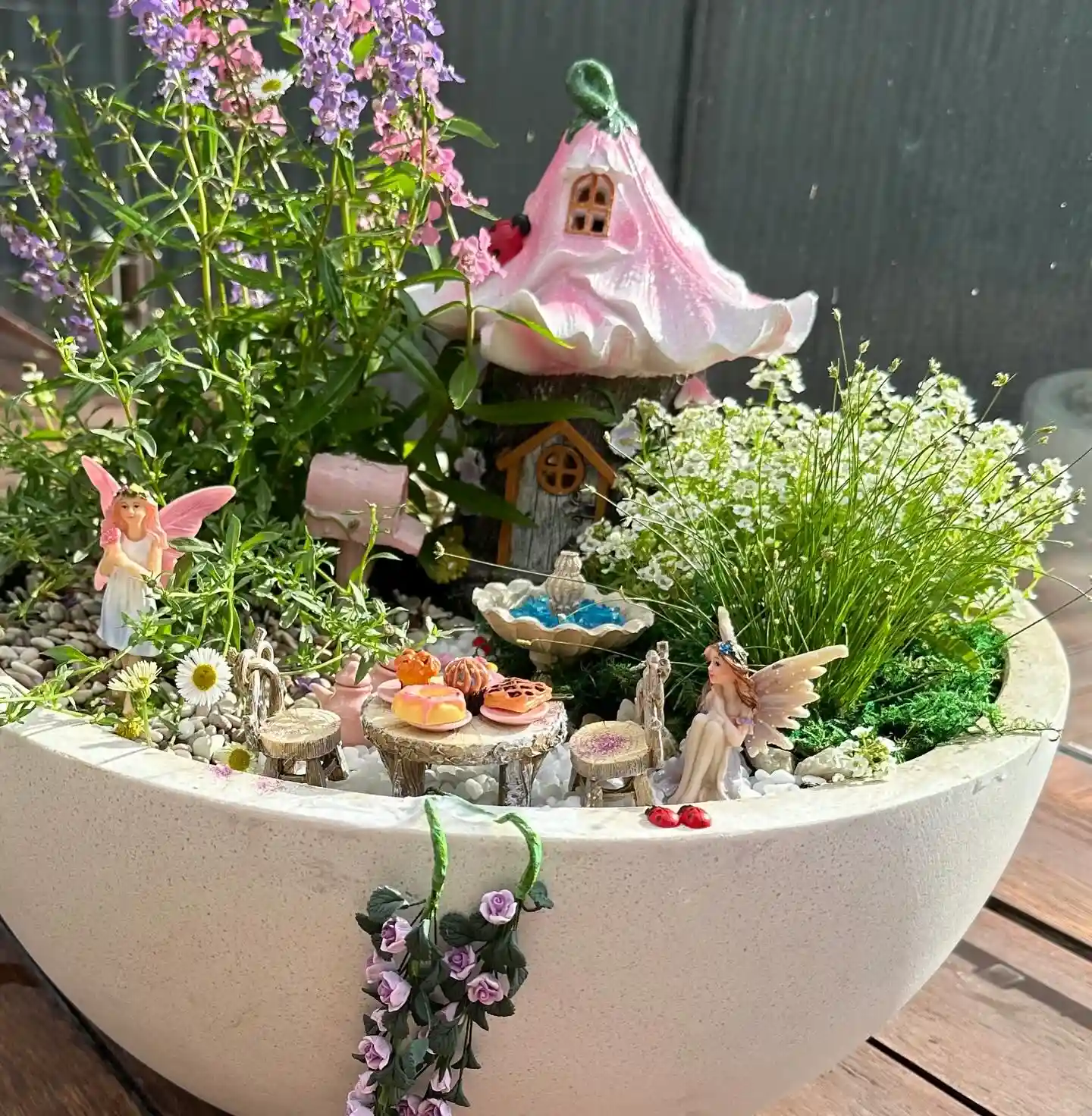
This pale planter creates a gentle fairy tea-party scene surrounded by pink, purple, and white flowers. A mushroom-style house sits behind a miniature table covered with pastries, while fairy figures gather near tiny chairs and a fountain. White gravel brightens the arrangement and separates the entertaining area from the planting.
- Keep the table near the front so its small details remain visible.
- Use compact flowers with fine stems to preserve the miniature scale.
- Add gravel beneath furniture to keep it level.
- Group the fairies around one activity for clearer storytelling.
- Place the planter where morning light illuminates the pale accessories.