20 Easy Garden Borders Ideas That Look Expensive

If you want your garden to look polished without spending a fortune, the right garden borders can make all the difference. A simple edge can turn an ordinary lawn or flower bed into something that feels structured, neat, and well-designed.
In this guide, you’ll find easy garden borders that look expensive but are actually practical and beginner-friendly. From bricks and gravel to wood and stone, these ideas help you create a clean, finished look without overcomplicating the space.
Brick Raised Bed Borders
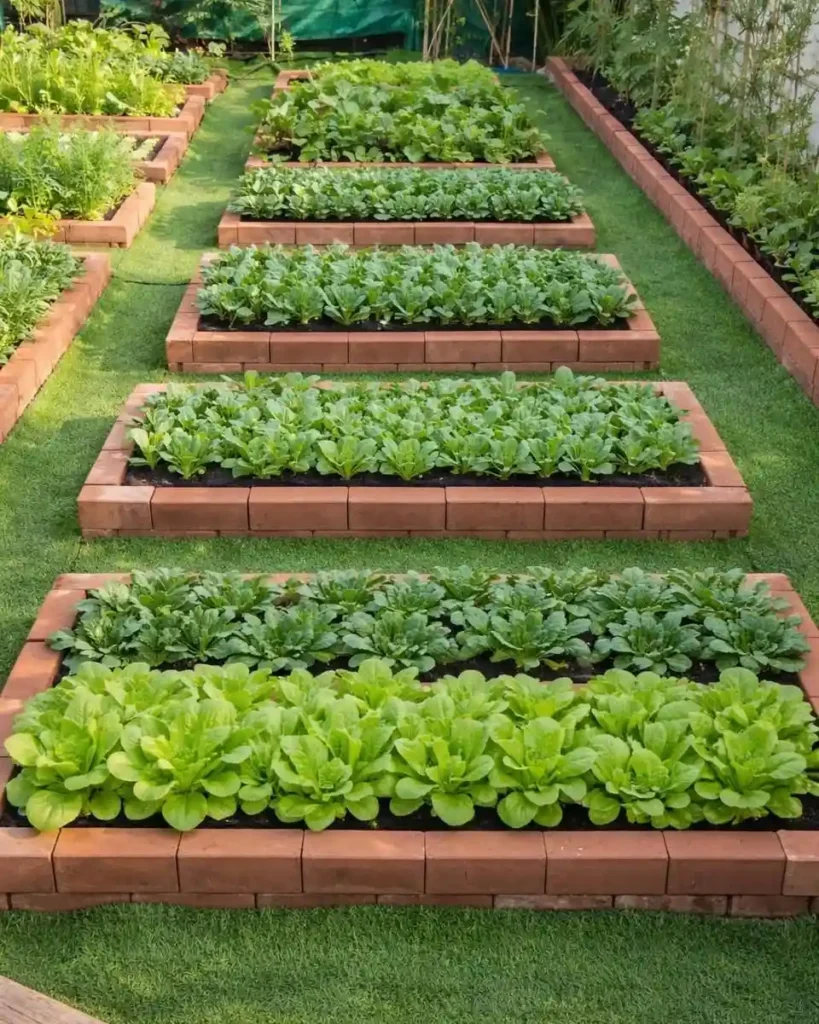
This layout feels clean and planned, almost like a kitchen garden you’d see in a magazine. The low brick borders frame each bed perfectly, making the greens look fuller and more organized. The straight lines, paired with the lush planting, give a neat and slightly formal look while still feeling fresh and easy to maintain. It’s one of those setups that instantly makes your garden look “finished” without trying too hard.
If you want this look, focus on symmetry and spacing. Keep paths wide enough to walk comfortably and choose the same brick style for consistency.
- Use standard bricks for a budget-friendly build
- Keep beds 3–4 feet wide for easy reach
- Add weed barrier under paths to reduce maintenance
Tropical Layered Plant Borders
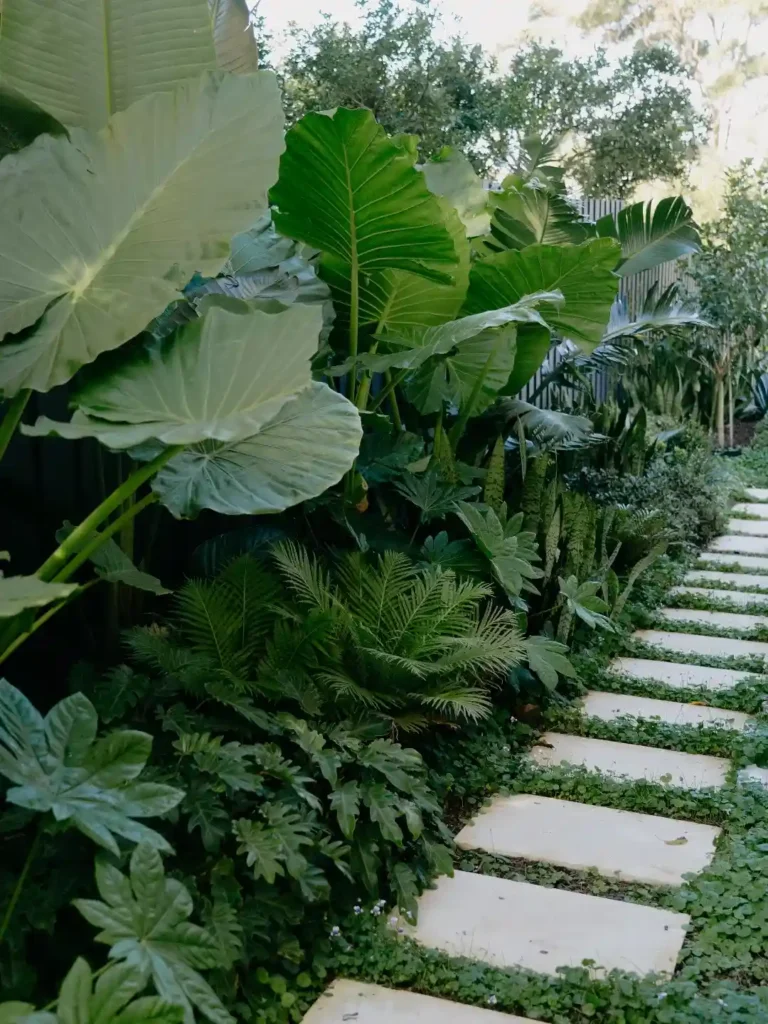
This border has that lush, almost jungle-like feel where everything looks layered and full. Large leafy plants at the back create height, while mid and low plants fill in the space beautifully. The stepping stones soften the look and make the whole path feel relaxed and natural instead of overly structured.
What really works here is the mix of textures. Big leaves, fine foliage, and ground cover all play together, making the border look rich without needing flowers everywhere.
- Place tallest plants at the back for depth
- Mix leaf shapes for a fuller look
- Use stepping stones instead of solid paths for a softer feel
Stone Path with Flower Borders
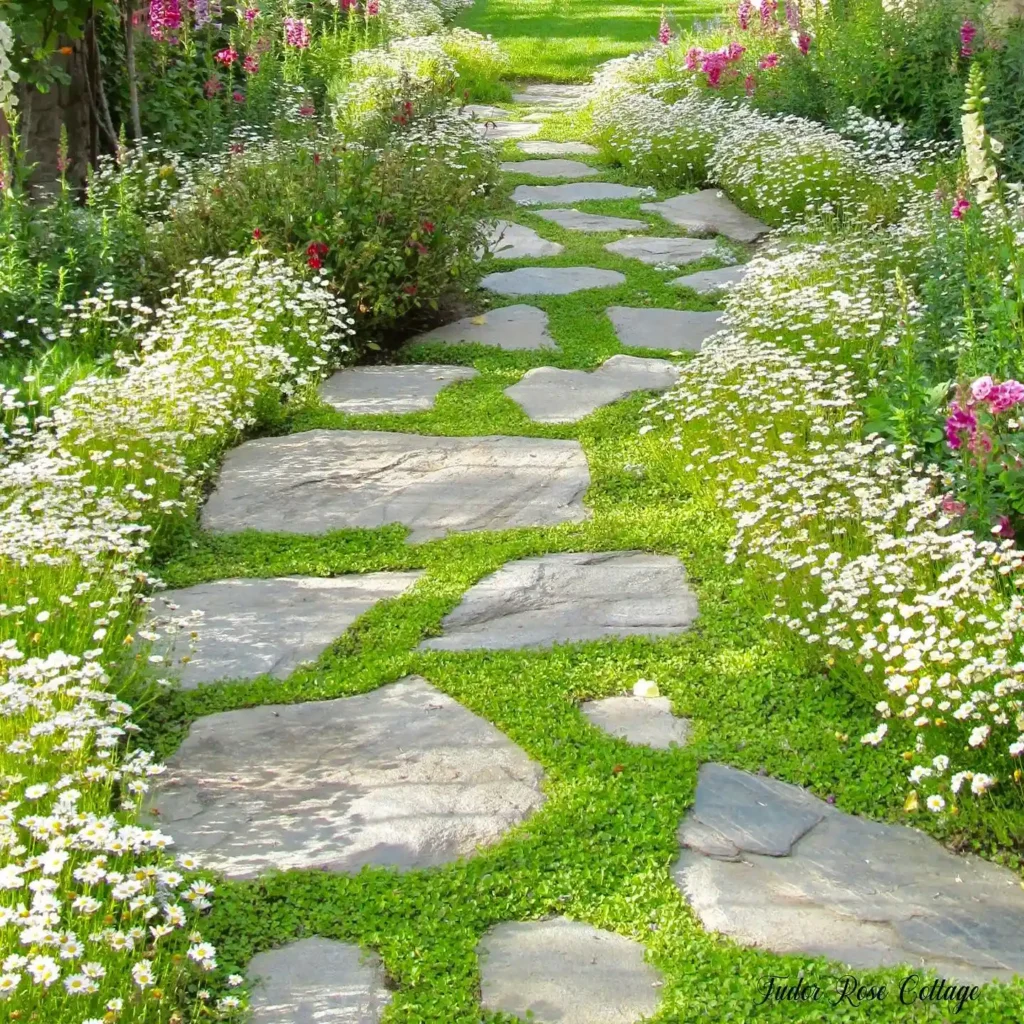
This one feels straight out of a cottage garden. The irregular stone path keeps things casual, while the soft white flowers spilling over the edges make the border look dreamy and welcoming. It doesn’t feel rigid at all, which is exactly why it looks expensive and natural at the same time.
The trick here is letting plants slightly overflow the edges. It blurs the hard lines of the stones and creates that effortless garden vibe most people try to achieve.
- Use irregular stones for a natural layout
- Plant low-growing flowers along edges
- Let plants spill slightly over the path for softness
For more Garden ideas:-
Curved Timber Garden Borders
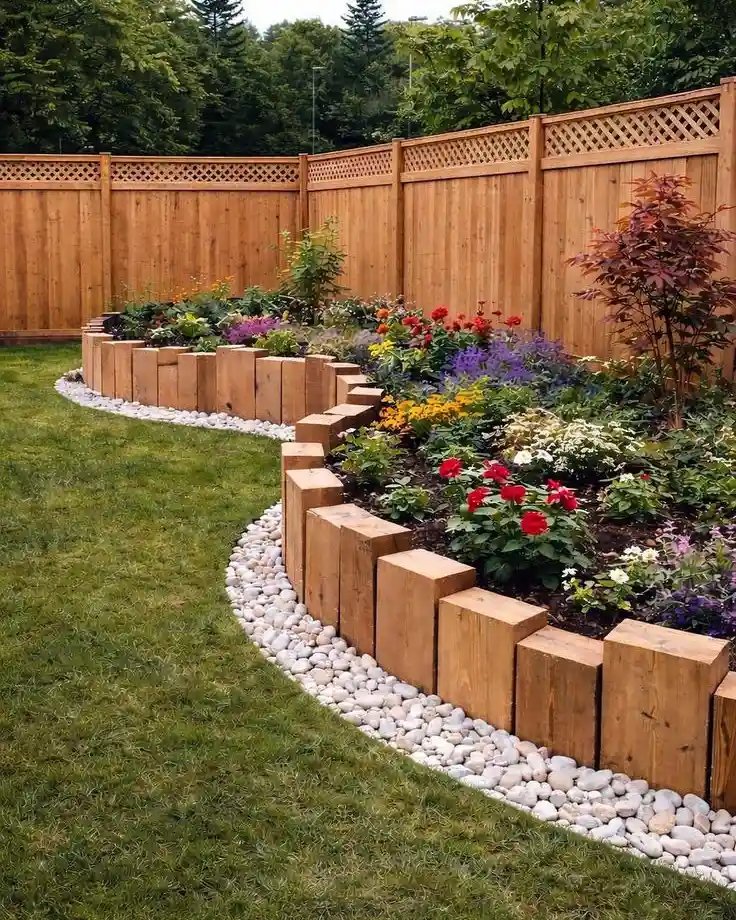
The curved wooden edging adds movement to the space, which instantly makes the garden feel more designed. Instead of straight lines, this gentle curve guides your eye through the flower bed. The mix of colorful plants against warm wood creates a cozy and inviting look.
It’s simple, but the curve is doing all the heavy lifting here. Even a basic garden bed looks custom with this kind of shape.
- Use treated wood to prevent rot
- Create curves using shorter timber pieces
- Add white stones for contrast and a clean finish
Mediterranean Pathway Borders
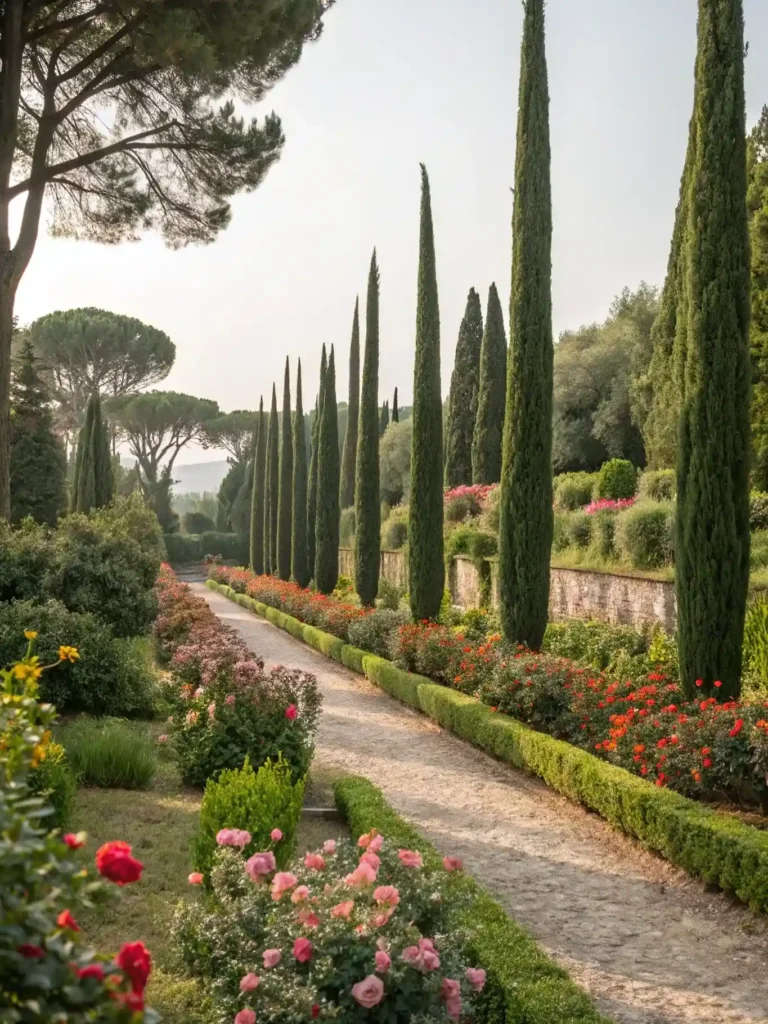
Tall, narrow trees lined up along the path give this space a very elegant and structured feel. The gravel path keeps things low maintenance, while the neatly trimmed hedges and flowering plants add color without looking messy. It feels calm, balanced, and thoughtfully planned.
This style works best when you repeat elements. The repeated trees and borders make everything look intentional and high-end.
- Choose columnar trees for vertical interest
- Use gravel paths for easy upkeep
- Repeat plants for a cohesive look
Modern Gravel Path Borders
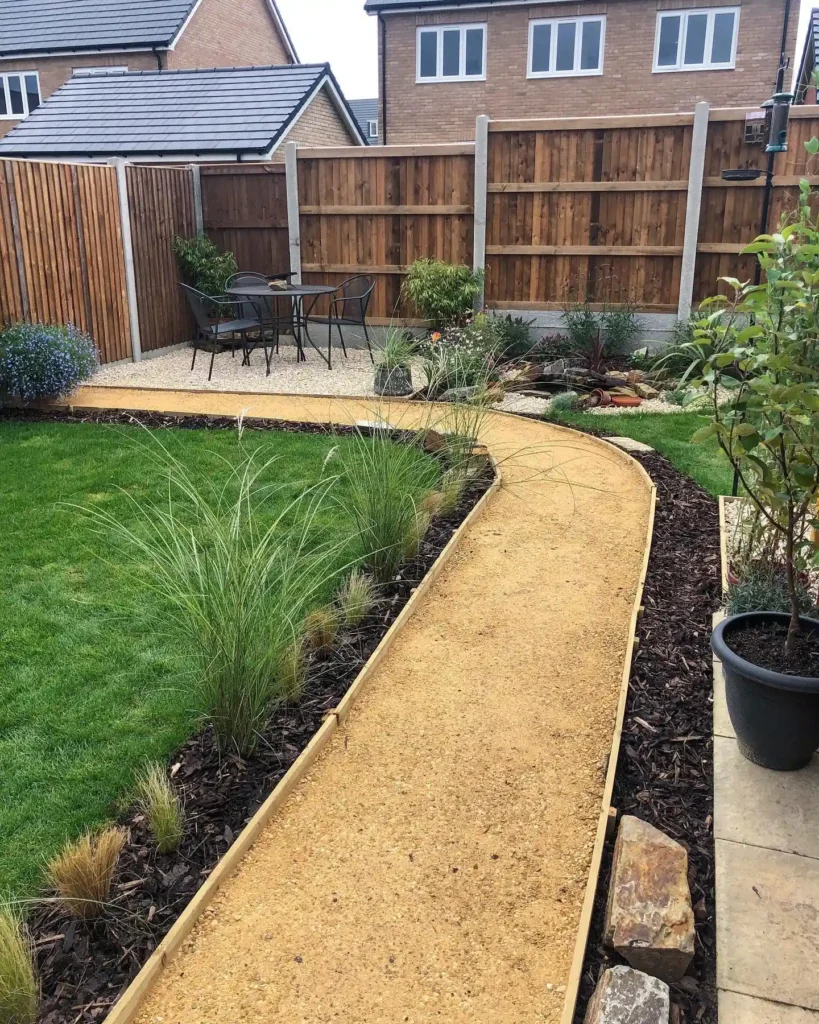
This border leans more modern and minimal. The clean gravel path with simple edging creates a smooth flow through the garden. The planting is more controlled, with grasses and small shrubs placed carefully rather than packed tightly.
It’s a great option if you want something stylish but easy to maintain. Less clutter means less work.
- Use landscape edging to keep gravel in place
- Stick to 2–3 plant types for a clean look
- Add mulch to reduce weeds and watering
Mixed Foliage Garden Border
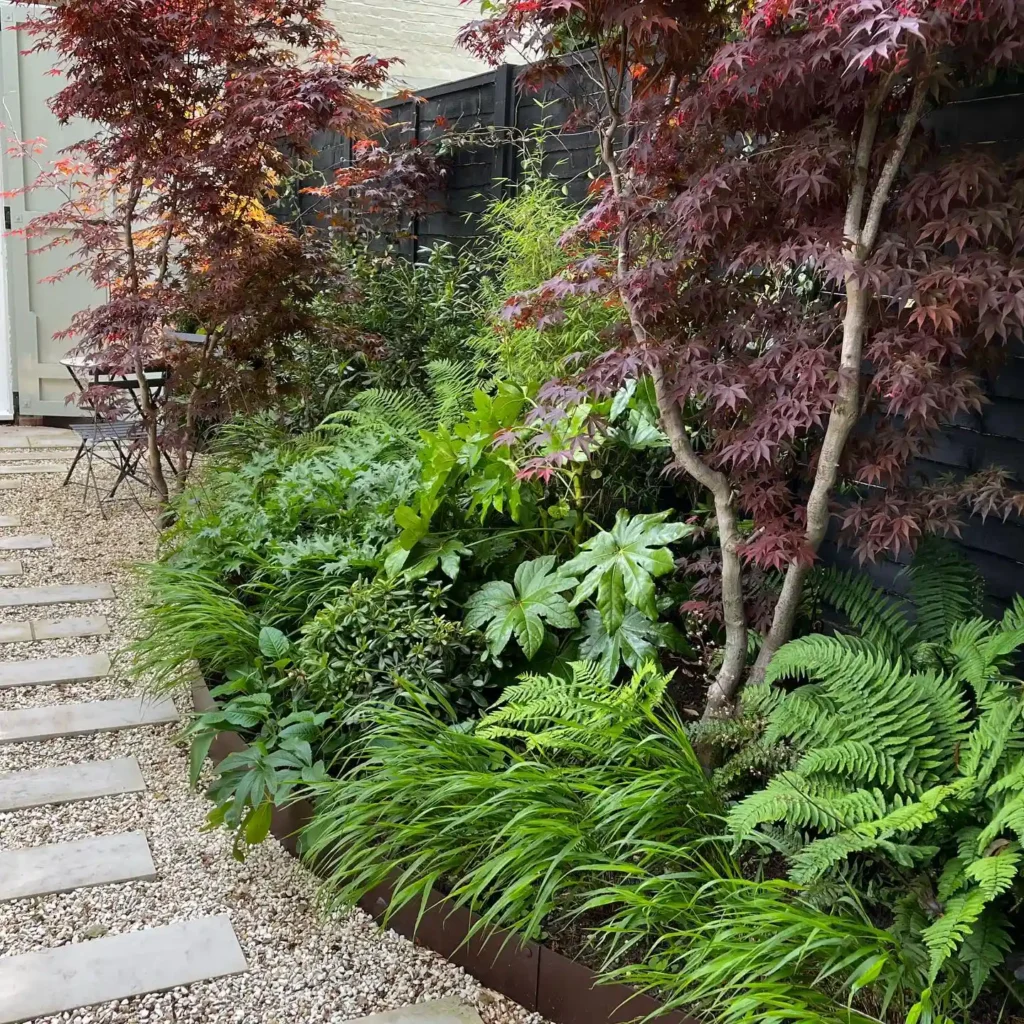
This border is all about texture and color contrast. Deep red leaves, bright greens, and soft ferns create a layered look that feels rich without needing many flowers. It works especially well along fences where you want to soften hard surfaces.
You don’t need a huge space for this. Even a narrow strip can look full with the right mix.
- Combine different leaf colors for depth
- Use shade-loving plants if near walls
- Add mulch to keep moisture in and finish the look
Long Fence Flower Borders
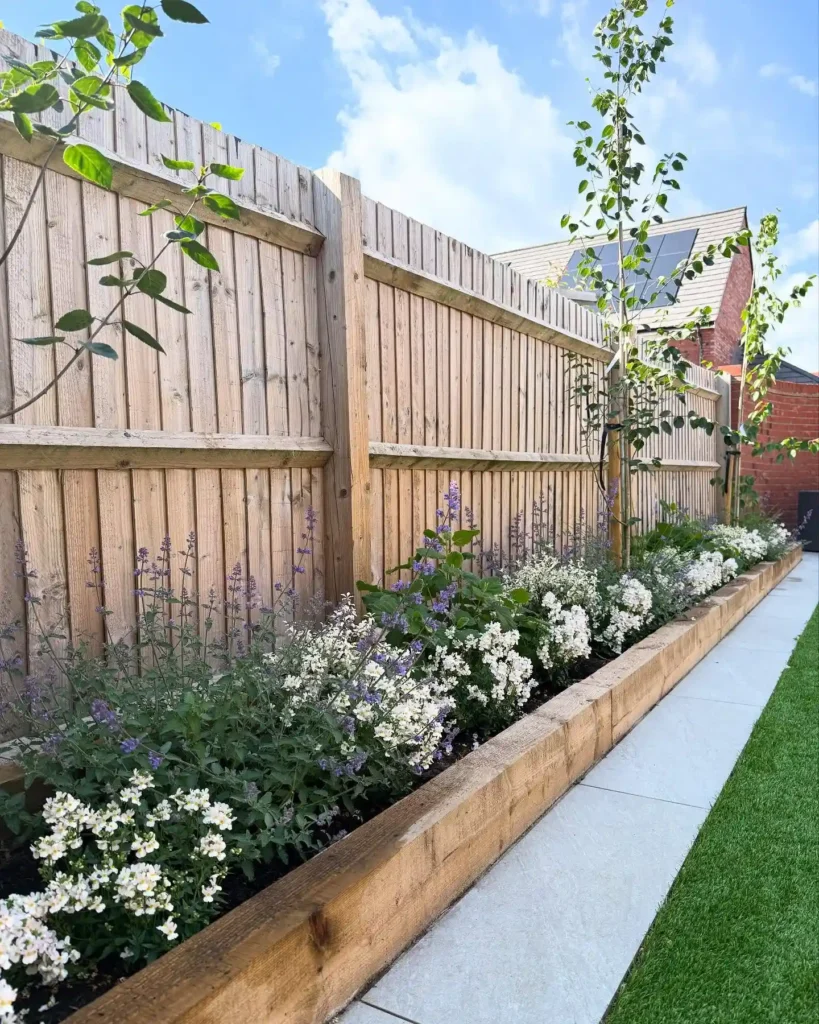
A long, narrow bed along the fence can easily look plain, but this one feels balanced and fresh. The mix of white and purple flowers keeps it light and airy, while the wooden border adds structure without being too heavy.
This is perfect if you want something simple that still looks put together. The key is spacing and repetition.
- Plant in small clusters instead of single plants
- Stick to 2–3 colors for a calm look
- Use wooden edging for a natural finish
Smooth Concrete Garden Edging
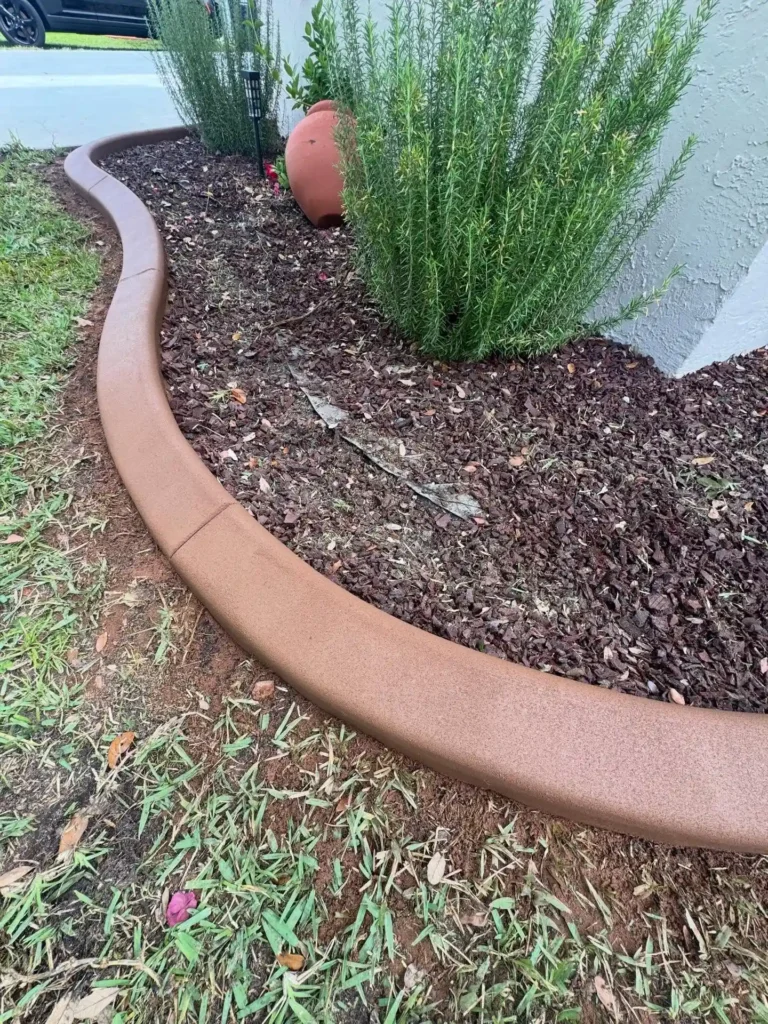
This curved concrete edging looks super clean and polished. It creates a clear separation between lawn and planting area, which instantly makes everything look tidy. The soft curve keeps it from feeling too harsh or industrial.
It’s one of the easiest ways to make your garden look professionally done with minimal effort.
- Use pre-made concrete edging for easy install
- Follow natural curves instead of straight lines
- Keep edges flush with lawn for easy mowing
River Rock Garden Borders
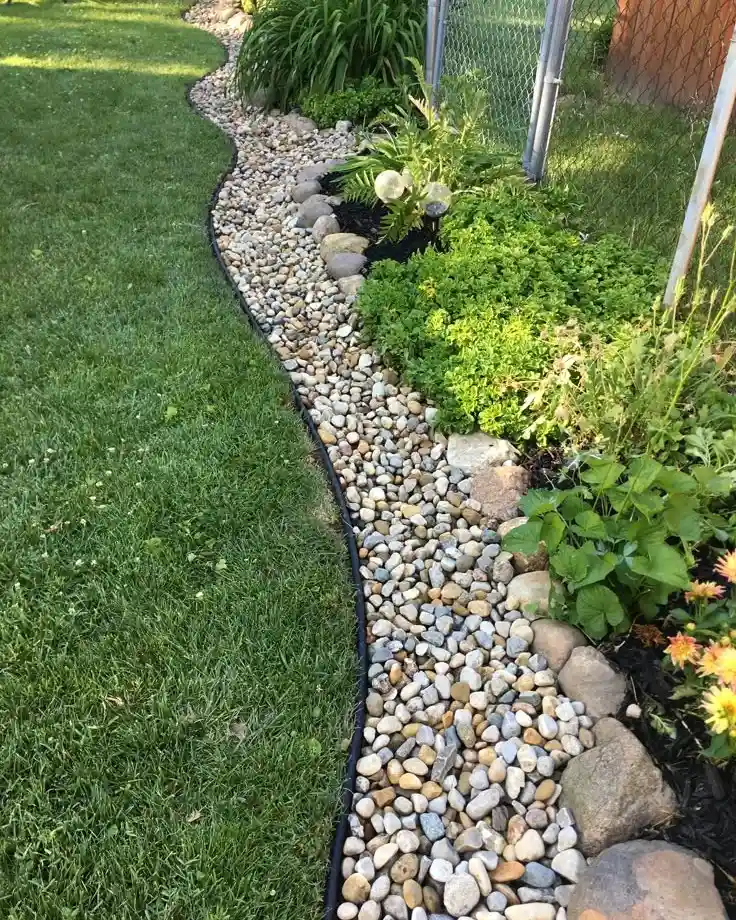
This border uses small river rocks to create a natural transition between grass and plants. The mix of stone sizes adds texture, while the soft curve keeps it from looking stiff. It’s practical too, helping with drainage and reducing mud around plants.
It’s a great choice if you want something low maintenance but still visually interesting.
- Lay landscape fabric before adding rocks
- Mix small and medium stones for texture
- Use metal or plastic edging to keep rocks in place
Minimal Gravel + Metal Edge Borders
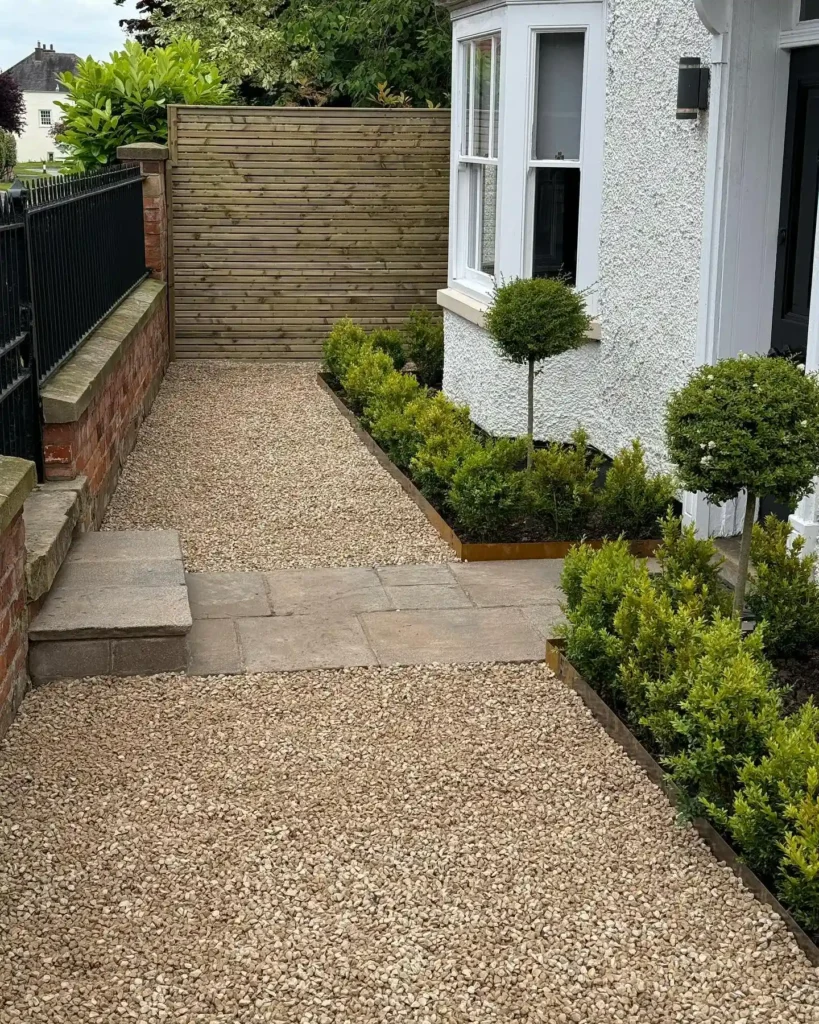
This setup feels crisp and intentional. The light gravel brightens the space, while the slim metal edging keeps everything perfectly contained. The greenery is trimmed and spaced just right, which gives the whole entryway a polished, high-end feel without being complicated.
What makes this work is the contrast between soft plants and sharp edges. It looks clean, modern, and super easy to maintain.
- Use metal edging for a sharp, clean line
- Choose light gravel to brighten small spaces
- Keep plants trimmed for a structured look
Curved Brick Garden Borders
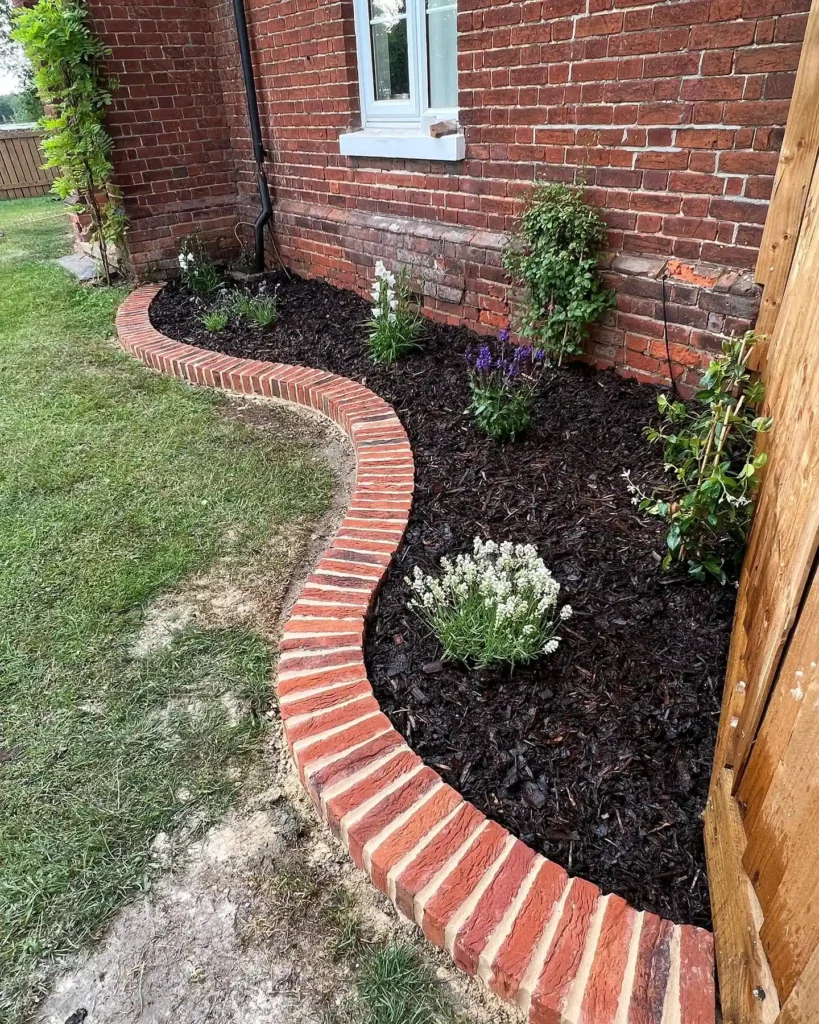
The soft curve of these bricks instantly adds character. Instead of straight lines, the gentle wave makes the garden feel more natural and relaxed. The rich red brick also pairs beautifully with mulch and greenery, giving that classic, timeless look.
It’s a simple upgrade, but the curve makes it feel custom. Even a small bed looks more thoughtful with this shape.
- Lay bricks on edge for a taller border look
- Follow a garden hose line to create smooth curves
- Use dark mulch to highlight the brick color
Rustic Stone Raised Borders
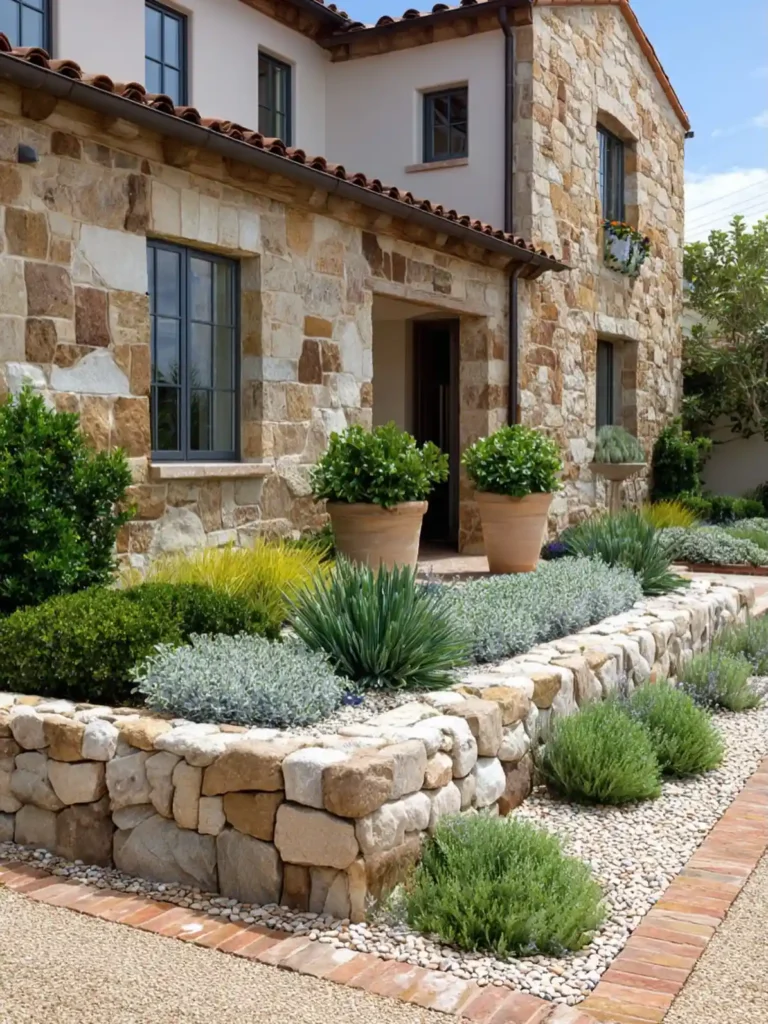
This one feels solid and premium right away. The stacked stone creates depth and height, turning a simple border into a feature. Paired with gravel and structured planting, it gives off that Mediterranean, villa-style vibe.
It’s slightly more effort, but the result looks expensive and long-lasting.
- Use mixed-size stones for a natural finish
- Add gravel around the base for drainage
- Keep planting simple to let the stone stand out
Timber Planter Wall Borders
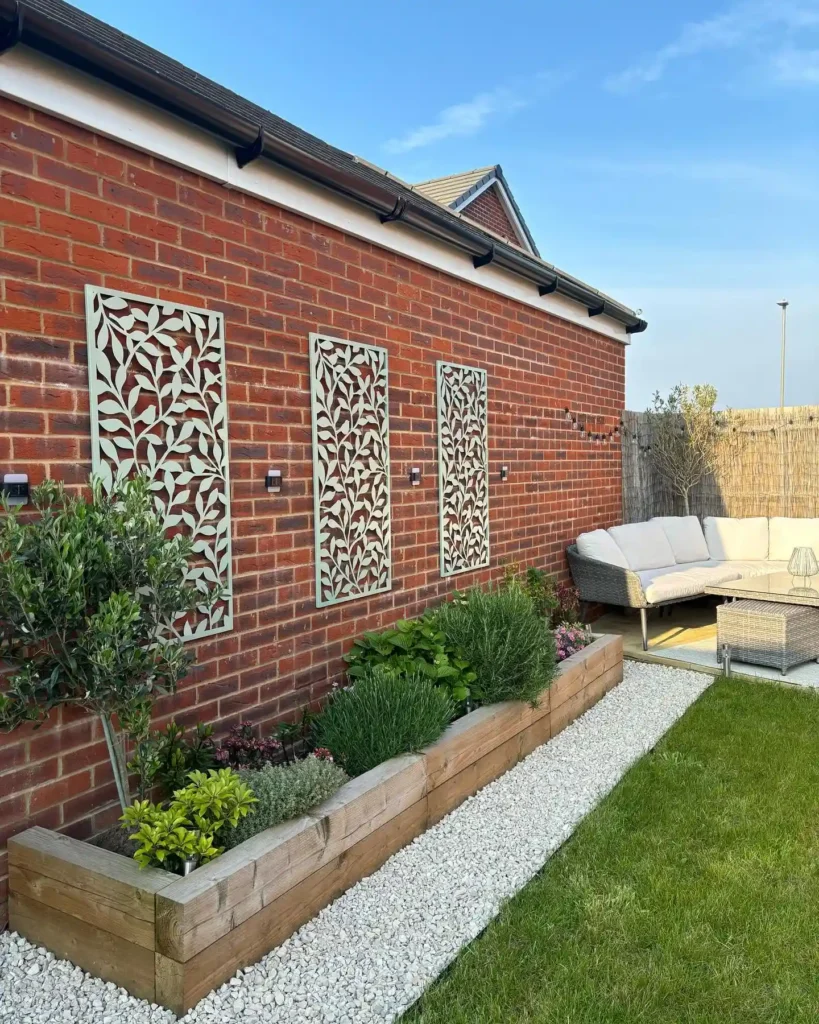
This long wooden planter keeps everything neat and contained while doubling as a design feature. The straight lines match the house wall, and the layered plants soften the space so it doesn’t feel too rigid.
It’s a great solution for narrow areas where you want greenery without taking over the lawn.
- Build with treated wood for durability
- Line inside with plastic to protect timber
- Mix herbs, shrubs, and flowers for variety
Modern Rendered Raised Borders
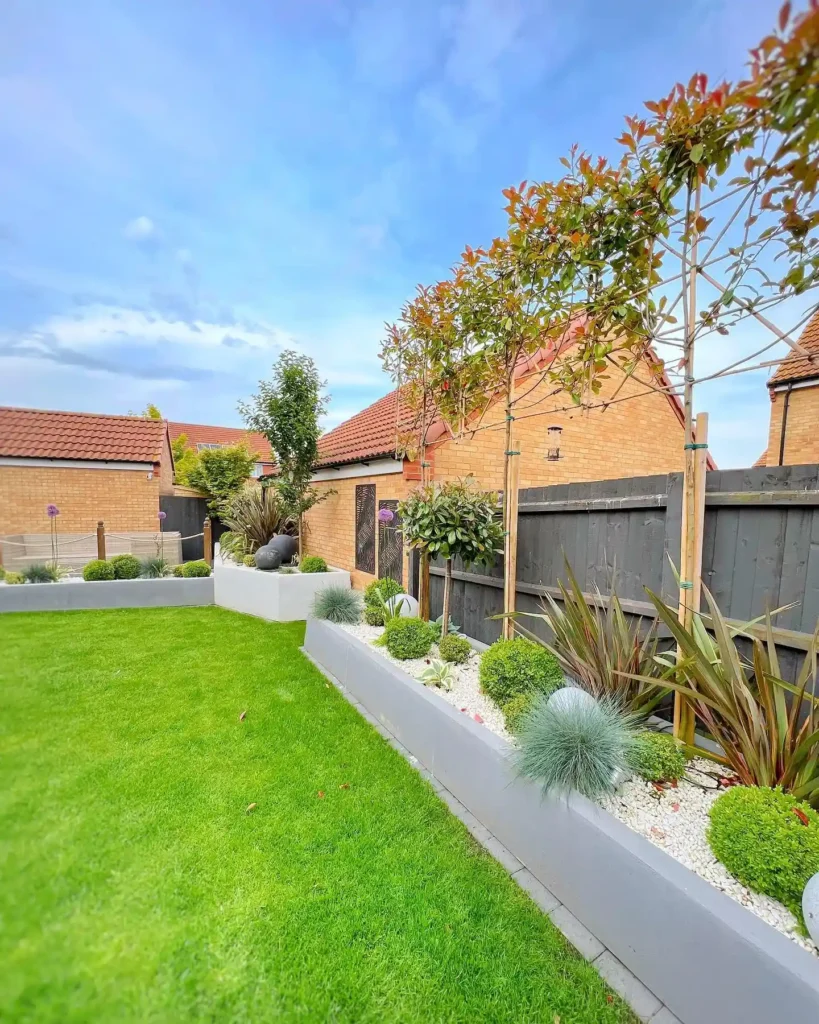
These smooth, grey rendered borders feel clean and contemporary. The straight edges and raised height create a clear separation between lawn and plants, making everything look more designed and less random.
It’s perfect if you like a minimal garden with strong structure.
- Use concrete blocks with render for a smooth finish
- Stick to simple plant shapes like spheres and grasses
- Add white stones for contrast
Steel Edging Landscape Borders
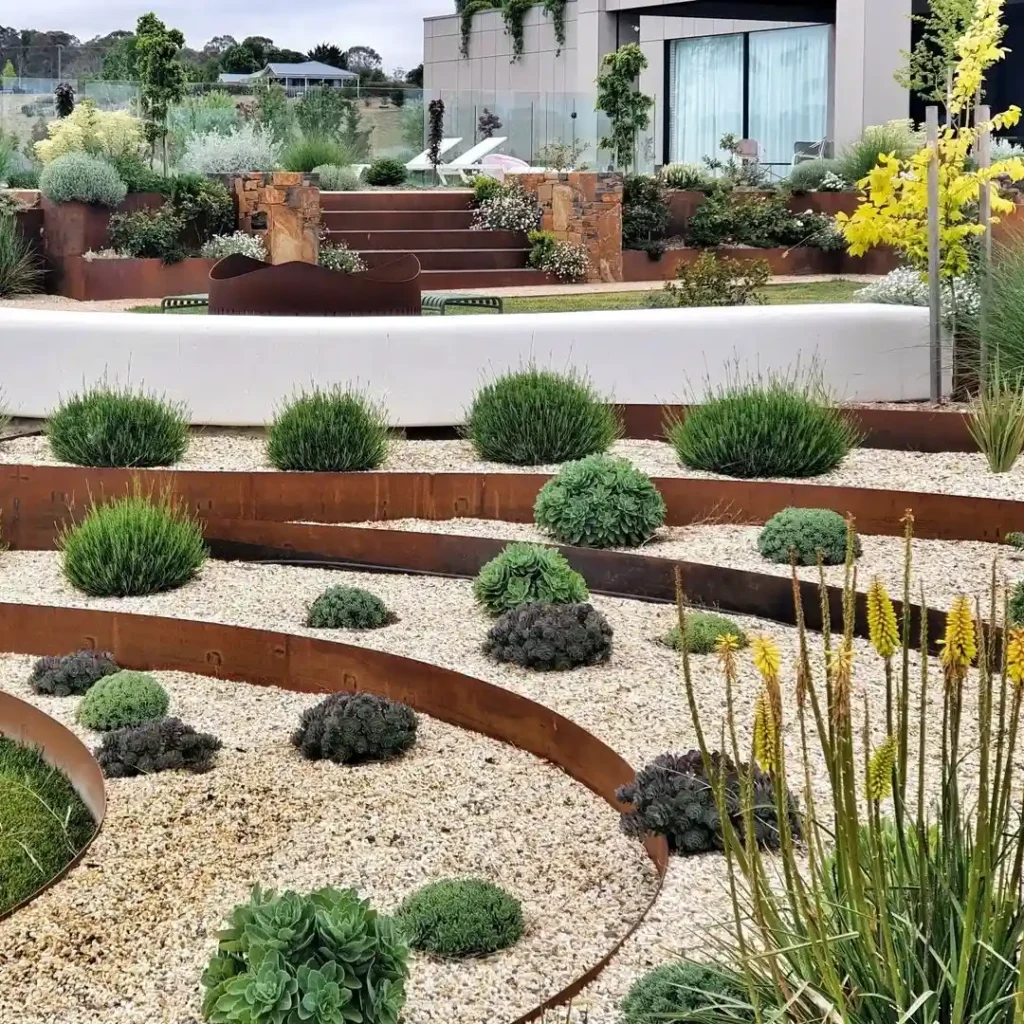
The rust-toned steel edging creates flowing curves that guide your eye across the garden. Paired with gravel and low plants, it gives a modern, landscaped look without needing lots of color or flowers.
It’s subtle but very effective. The curves make the whole space feel designed.
- Use corten steel for a natural rust finish
- Create gentle curves instead of sharp turns
- Space plants evenly for a balanced look
Sleek White Planter Borders
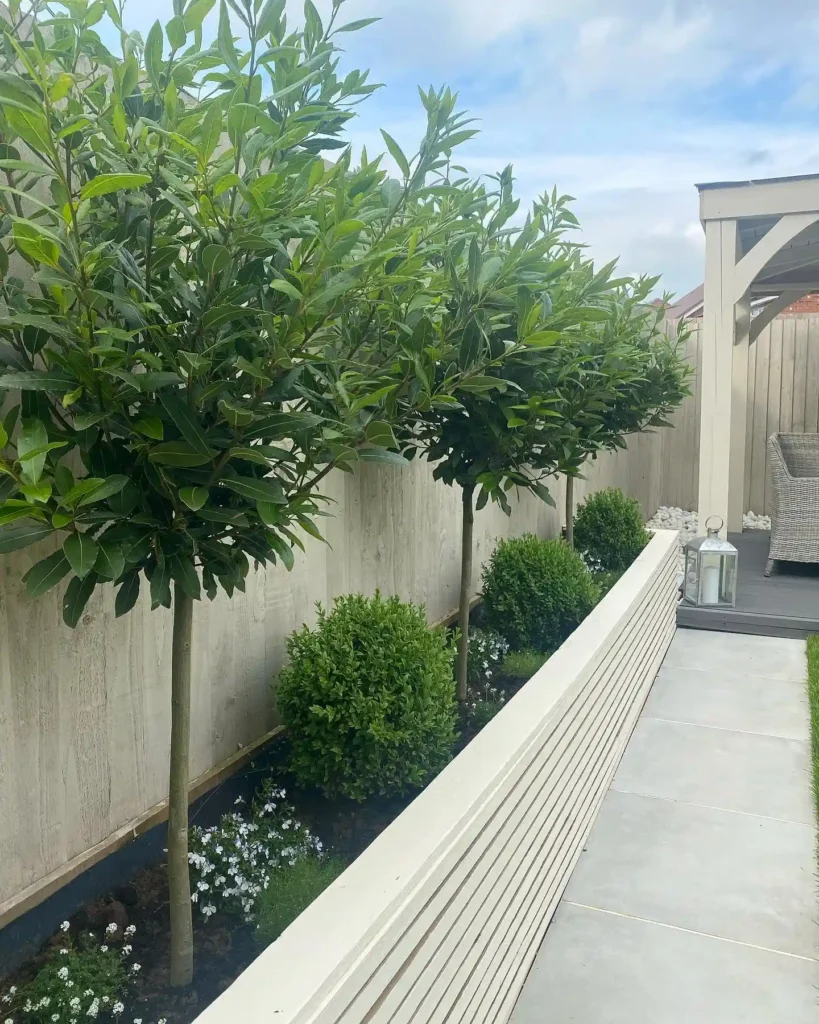
These white raised planters feel bright and fresh, especially next to a clean patio. The structured planting with small trees and rounded shrubs keeps everything tidy while still feeling soft and inviting.
It’s a strong choice for modern homes where you want a clean finish.
- Paint or use composite boards for a clean white look
- Choose compact trees for height without clutter
- Keep spacing even for symmetry
Wooden Slat Fence Border Style
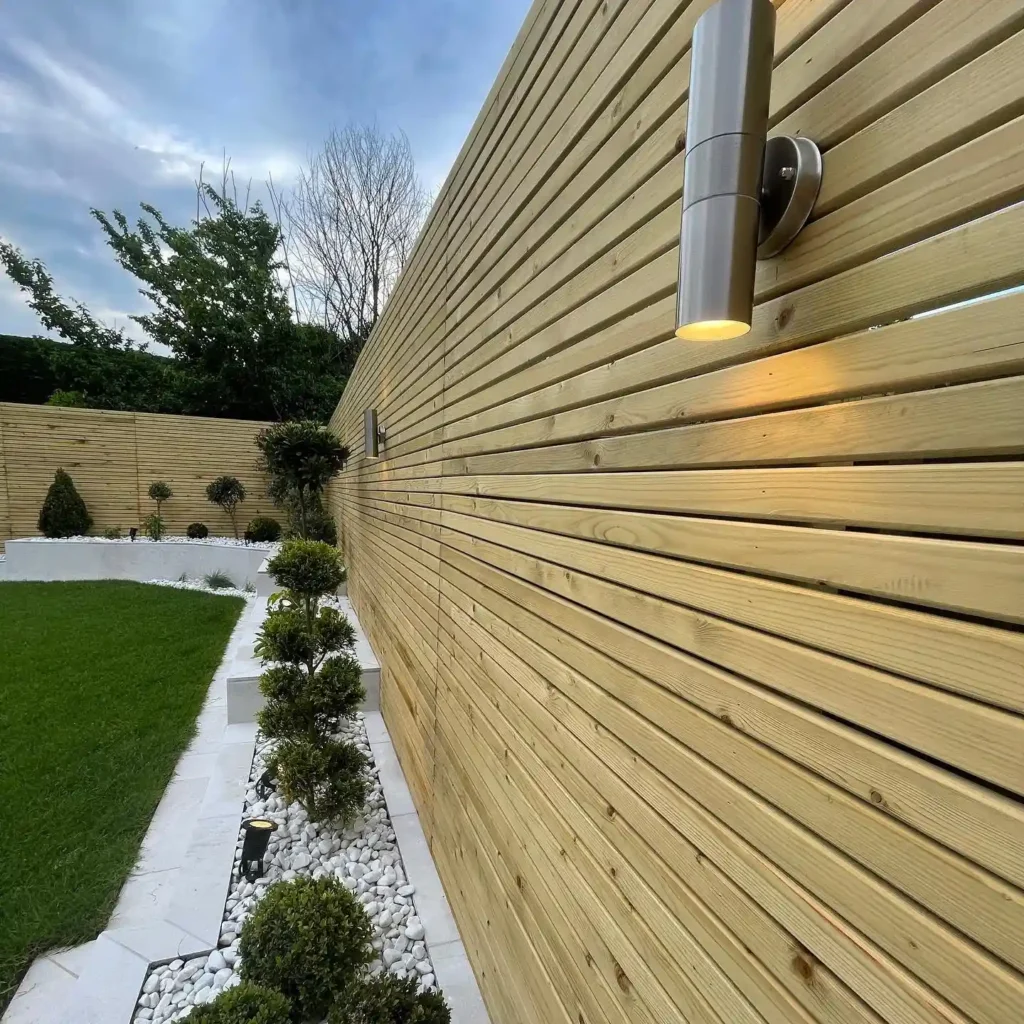
Here, the border works together with the fence to create a cohesive look. The white stones and trimmed shrubs keep it minimal, while the warm wood adds texture and warmth.
It’s a simple combo, but it looks very put together.
- Match edging style with your fence material
- Use white stones for contrast
- Add small shrubs for a neat, repeating pattern
Decorative Pebble Garden Borders
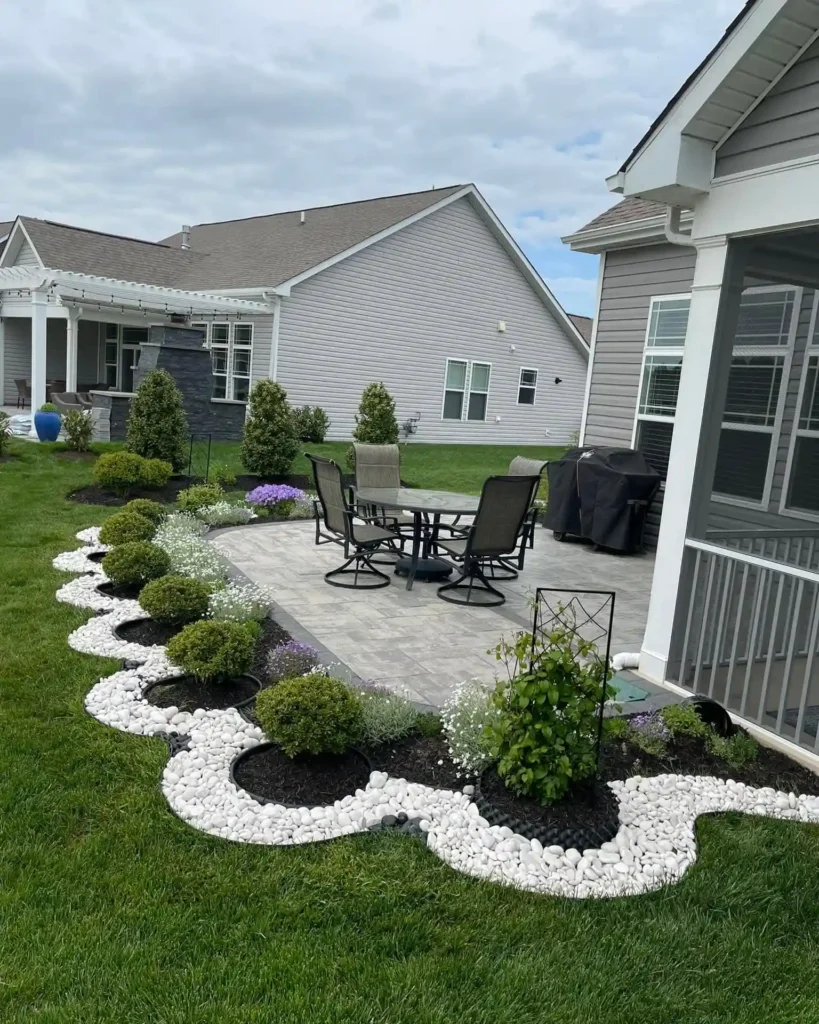
This border uses pebbles to create a soft, flowing edge around the patio. The repeating plant circles add rhythm, while the light stones keep everything looking bright and clean.
It’s one of the easiest ways to upgrade a basic lawn edge.
- Use edging rings to define plant areas
- Choose similar-sized pebbles for a clean look
- Repeat plant shapes for consistency
Rock Edge with Lighting Borders
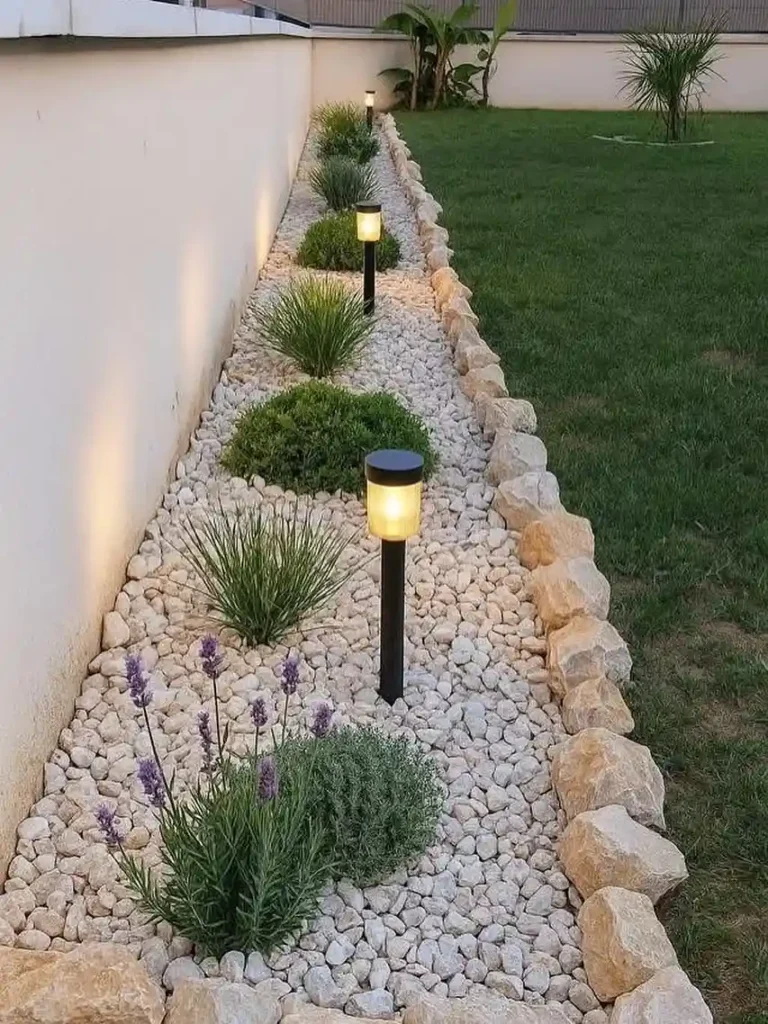
This border feels calm and practical, especially in the evening. The natural rocks define the edge, while small lights add both safety and style. It’s simple, but the lighting makes a big difference once the sun goes down.
It’s perfect for side yards or narrow spaces that need a bit of life.
- Use solar lights for easy installation
- Mix larger rocks for a natural edge
- Keep planting low for a clean finish
FAQs
What is the cheapest way to create garden borders?
Gravel, bricks, and basic plastic or metal edging are some of the most budget-friendly options. Gravel is especially affordable and easy to install, while bricks can often be reused or sourced locally. If you want something simple, even a clean trench edge can look neat with proper maintenance.
How do I make my garden borders look more expensive?
Keep things consistent and tidy. Use one material throughout instead of mixing too many styles. Clean lines, proper spacing, and well-trimmed plants instantly make any border look more high-end. Adding mulch or stones also gives that finished look.
Are raised garden borders better than flat ones?
Raised borders add depth and structure, so they often look more premium. They also help with drainage and make planting easier. Flat borders, however, are quicker and cheaper to install, so it depends on your budget and space.
What plants work best for garden borders?
Low-maintenance plants like boxwood, lavender, ornamental grasses, and ground covers work really well. They stay neat, fill space nicely, and don’t require constant trimming. Mixing heights also helps create a fuller look.
How do I keep garden borders low maintenance?
Use landscape fabric under gravel or stones to reduce weeds. Choose hardy plants that don’t need frequent care, and add mulch to keep moisture in. Simple layouts with fewer plant varieties are much easier to manage long term.
Can I install garden borders myself?
Yes, most of these ideas are beginner-friendly. Gravel borders, brick edges, and simple wooden frames can all be done with basic tools. The key is taking time to measure and keep lines straight or smoothly curved for a clean finish.