How to Plant and Care for Rubber Plant
Rubber plants are hard to ignore. Their large, glossy leaves can make even a simple corner of a room feel greener and more finished.
Good rubber plant care is fairly simple once you understand its watering and light needs. Give your plant bright indirect light, let the soil dry slightly before watering again, and keep it away from cold drafts. Rubber plants can grow several feet tall indoors, so a little pruning also helps control their shape as they mature.
Rubber Plant at a Glance
- Botanical name: Ficus elastica
- Common name: Rubber plant, rubber tree
- Plant type: Tropical evergreen tree
- Light: Bright indirect light
- Water: Allow the soil to dry slightly between waterings
- Soil: Loose, well-draining houseplant mix
- Indoor height: Commonly 6–10 feet with enough room
- Temperature: Warm indoor conditions, above 55°F (13°C)
- Difficulty: Beginner-friendly
Rubber plants are grown mainly for their large, thick leaves. Depending on the variety, foliage may be deep green, burgundy, cream, pink, or a mix of several colors.
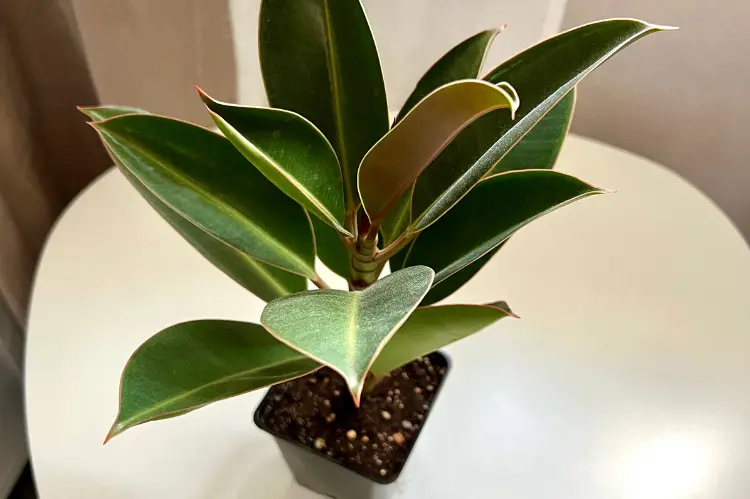
How to Plant a Rubber Plant
The container and soil you choose have a big effect on how easy the plant is to care for later.
Rubber plants don’t like sitting in wet soil, so drainage should be your first concern.
1. Choose a Pot With Drainage
Use a pot with drainage holes at the bottom.
When repotting an existing plant, choose a container only a little larger than its current pot. Moving a small root system into a huge container leaves a lot of unused soil that may stay wet for too long.
If you love a decorative planter without drainage, place the rubber plant in a plastic nursery pot inside it.
2. Use Well-Draining Potting Mix
A good indoor houseplant mix works well for rubber plants.
The soil should hold enough moisture for the roots while still allowing extra water to drain freely. Clemson Extension recommends a well-drained houseplant mix for Ficus elastica. If your potting soil feels heavy, mix in some perlite or fine orchid bark to loosen it.
3. Position the Plant
Remove the rubber plant gently from its old container and inspect the roots.
Place a little fresh potting mix in the bottom of the new pot. Set the plant so it sits at roughly the same depth as before.
Fill around the roots with fresh soil without packing it tightly.
4. Water Thoroughly
Water after planting until excess moisture runs through the bottom of the pot.
Empty any water that collects in the saucer.
Then return the plant to a warm spot with plenty of indirect light.
What Rubber Plant needs
Bright indirect light is the easiest choice for a rubber plant.
A spot near an east-facing window often works particularly well because the plant receives gentle morning light without hours of harsh afternoon sun. Rubber plants can handle lower light, but growth may become slower and less full.
Variegated rubber plants usually benefit from brighter conditions because their cream, pink, or pale markings contain less green tissue.
Try placing your rubber plant:
- Near an east-facing window
- A few feet from a bright south-facing window
- Close to a filtered west-facing window
- In a bright living room
- Near a window covered with a sheer curtain
Avoid suddenly moving a plant from a darker corner into strong direct sunlight.
Increase the light gradually so the leaves have time to adjust.
Related: How to Plant and Care for Pothos
How Often Should You Water a Rubber Plant?
One of the easiest rubber plant mistakes is watering according to the calendar.
Check the soil first.
Let the upper part of the potting mix dry slightly before watering again. Then water thoroughly and allow the extra water to leave through the drainage holes. Clemson Extension recommends letting the soil become slightly dry to the touch between waterings.
Your plant may need water more often during warm, bright months than during winter.
Signs Your Rubber Plant Needs Water
Look for:
- Dry upper soil
- Slightly drooping leaves
- A pot that feels noticeably lighter
- Leaves losing some firmness
Don’t purposely let the plant wilt badly before every watering.
Signs of Too Much Water
Watch for:
- Yellow leaves
- Constantly damp soil
- Soft stems near the soil
- Leaf drop
- Dark or soft roots
- A musty smell from the potting mix
Root rot is often linked to soil that drains poorly or watering too often.If the soil stays wet for many days, don’t just change your watering schedule. Check the drainage holes, pot size, and potting mix too.
Temperature and Humidity
Rubber plants prefer warm indoor temperatures.
Clemson Extension recommends keeping them above 55°F (13°C) and protecting them from sudden temperature drops and cold drafts.
Avoid placing yours directly beside:
- Air-conditioning vents
- Cold windows during winter
- Exterior doors that open frequently
- Radiators
- Heating vents
Rubber plants enjoy humidity but normally cope with average indoor air.
If your home becomes very dry during winter, a humidifier can help.
How to Fertilize a Rubber Plant
Feed rubber plants mainly while they are actively growing in spring and summer.
A regular water-soluble or balanced houseplant fertilizer works well when used according to the product label. Clemson Extension recommends feeding during active spring and summer growth and reducing fertilizer for plants kept in lower light.
I wouldn’t fertilize a struggling plant automatically.
First check:
- Light
- Soil moisture
- Drainage
- Root condition
- Temperature
Extra fertilizer won’t fix wet roots or poor light.
How to Make a Rubber Plant Bushier
Rubber plants naturally want to grow upward, often producing one strong central stem.
If you want a fuller shape, pruning helps.
Cut the main stem just above a leaf node. New shoots can then develop below the cut, giving the plant a more branched appearance.
Clemson Extension also recommends pruning the main branches when a bushier form is wanted. Leaving the plant unpruned creates a taller, narrower tree shape.
Spring is a useful time for bigger pruning jobs because active growth is starting.
Wear gloves when pruning. Rubber plants release a sticky white sap when stems or leaves are cut, and this sap can irritate skin.
How to Keep Rubber Plant Leaves Shiny
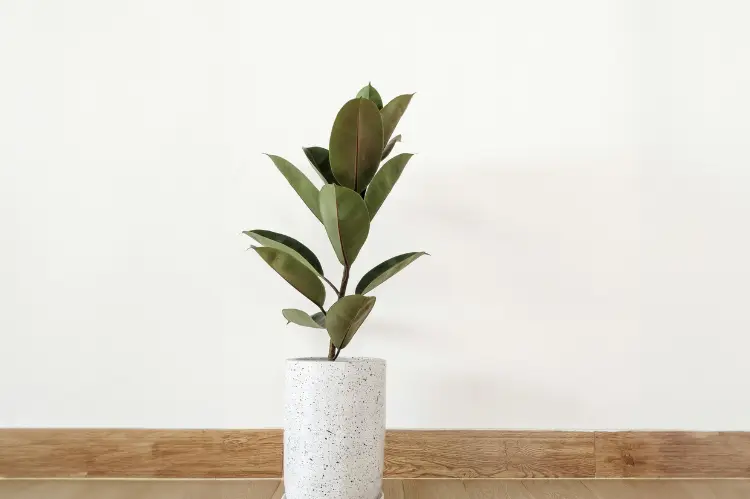
Those large leaves collect dust surprisingly quickly.
Wipe each leaf gently with a soft, damp cloth every few weeks or whenever you notice a layer of dust.
You don’t need leaf-shine products.
Plain water works well and keeps the leaves clean without leaving an oily coating. Both Clemson and University of Minnesota Extension recommend wiping dusty rubber plant foliage with a damp cloth. Remember to support each leaf with your other hand while wiping so you don’t accidentally bend or tear it.
When to Repot a Rubber Plant
You don’t need to repot every year.
Instead, watch what the plant and roots are doing.
Consider repotting when:
- Roots grow from the drainage holes
- The root ball fills most of the pot
- Water runs through extremely quickly
- The plant dries much faster than before
- Growth slows despite good care
- The plant becomes unstable in its container
Late winter or early spring is a good time to repot if your plant needs more room. Choose a pot only slightly larger than the current container.
A huge pot may look convenient, but all that extra damp soil can make watering harder to judge.
How to Propagate a Rubber Plant
Rubber plants can be propagated from stem or tip cuttings. Air layering is another method often used for larger plants. For a simple stem cutting:
- Choose a healthy stem.
- Cut below a leaf node using clean pruning shears.
- Keep one or two healthy leaves on the cutting.
- Allow excess milky sap to stop dripping.
- Place the cutting into a moist, airy propagation mix.
- Keep it warm with bright indirect light.
- Keep the mix lightly moist rather than soaking wet.
Large leaves can lose a lot of moisture, so some growers loosely roll or support the leaf while the cutting establishes roots.
Propagation takes patience. Don’t keep pulling the cutting from the soil to check for roots.
Common Rubber Plant Problems
Yellow Leaves
Start by checking the soil.
If it feels wet well below the surface and remains damp for days, the roots may be getting too much water.
Allow the soil to dry more before watering again and check that the container drains properly.
Rubber Plant Dropping Leaves
Leaf drop can have several causes, including:
- Cold drafts
- Too little light
- Dry air
- Watering problems
- Sudden environmental changes
Rubber plants also prefer staying in a fairly consistent location rather than being moved repeatedly.
Brown Leaf Edges
Brown or crispy edges can point to dry conditions.
Check whether the soil is becoming extremely dry between waterings. Also look for heat vents or very dry indoor air nearby.
Leaves Curling
Curling leaves deserve a full care check rather than an immediate watering.
Look at soil moisture, temperature, drafts, pests, and light.
If the soil is wet, don’t assume curled leaves mean the plant needs more water.
Rubber Plant Leaning Toward the Window
The plant is growing toward its strongest light source.
Rotate the pot a quarter turn occasionally to encourage more even growth.
Very tall plants may also need a stake for temporary support.
Small New Leaves
Smaller growth can happen when the plant doesn’t receive enough light or nutrients.
Move it gradually to brighter indirect light and check whether the roots have filled the pot.
Mealybugs
Look closely around:
- Leaf joints
- Stems
- Leaf undersides
- New growth
Small white cottony clusters may indicate mealybugs.
Separate an affected plant from your other houseplants while dealing with the infestation.
Popular Rubber Plant Varieties
Ficus elastica ‘Robusta’
‘Robusta’ is one of the classic rubber plant varieties.
It has large, glossy green leaves and works especially well when you want a simple indoor tree.
Ficus elastica ‘Burgundy’
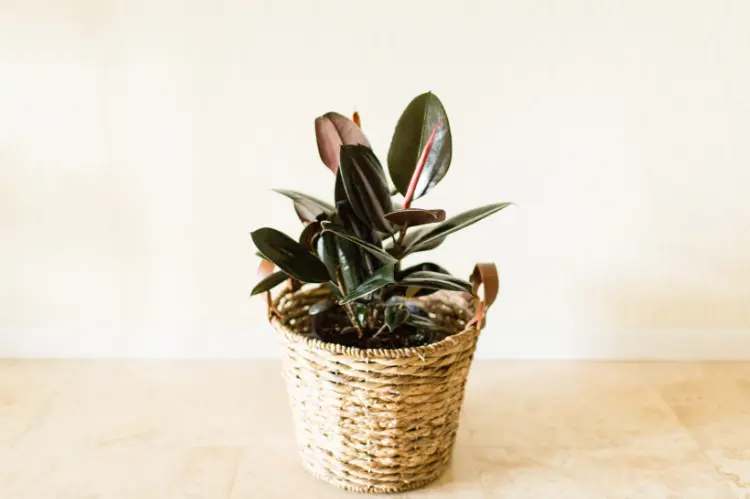
This variety has very dark green to burgundy foliage.
The rich leaf color looks especially good in bright rooms with light walls or natural wood furniture.
Ficus elastica ‘Tineke’
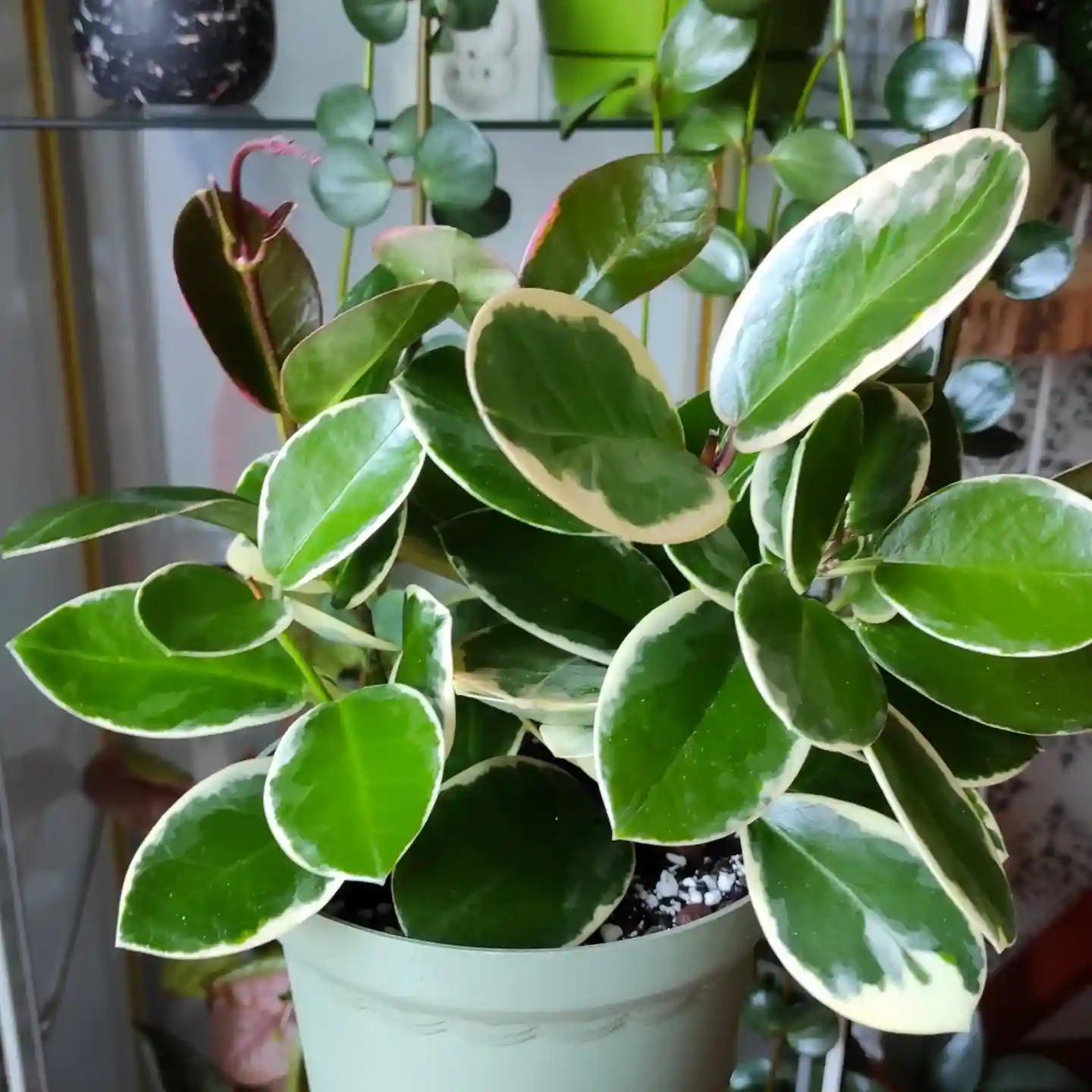
‘Tineke’ produces variegated green leaves edged and patterned with cream.
Give it plenty of bright indirect light to help maintain the variegation.
Ficus elastica ‘Ruby’
‘Ruby’ adds pink and reddish tones to cream-and-green variegated leaves.
New growth can be especially colorful.
Is Rubber Plant Safe for Pets?
I wouldn’t place a Ficus elastica where a pet or young child is likely to chew it.
Its cut leaves and stems produce sticky white sap, which Clemson Extension notes can irritate the skin and may irritate the stomach if eaten.
A floor plant may therefore not be the best choice for a pet that regularly chews leaves.
FAQs
Does a rubber plant need direct sunlight?
Not necessarily.
Bright indirect light works very well. Gentle morning sun can also suit rubber plants, but protect them from harsh afternoon sunlight, especially if they aren’t used to it.
How often should I water my rubber plant?
Water when the upper soil has dried slightly.
Don’t follow a fixed seven-day schedule because temperature, light, pot size, and season all change how quickly the soil dries.
Where should I put a rubber plant?
A bright room close to a window is usually ideal.
Keep it away from cold drafts, air-conditioning vents, and places where temperatures change suddenly.
Why are my rubber plant leaves falling off?
Check for watering problems, cold air, very low light, or a recent change in location.
Rubber plants prefer fairly steady growing conditions.
Can rubber plants grow in low light?
They can tolerate lower light, but bright light usually produces stronger growth.
If the plant starts becoming sparse or stretched, move it gradually closer to brighter indirect light.
How tall does a rubber plant grow indoors?
With enough room, an indoor rubber plant can reach around 6–10 feet or more. Regular pruning can keep it much smaller.
Should I mist my rubber plant?
Misting isn’t required.
If your home is very dry, a room humidifier is a more dependable way to raise humidity around the plant.