21 Full Sun Perennials That Love Bright Gardens
Full sun perennials can fill bright garden beds with color year after year. Most need at least six hours of direct sunlight each day. Some bloom in spring, while others keep flowering through summer and fall.
This list includes compact border plants, tall background flowers, pollinator favorites, and choices for dry soil. Use the quick facts to compare their size, color, flowering season, and best garden placement.
1. Purple Coneflower

Purple coneflower is a familiar summer perennial with pink-purple petals and raised orange centers. Its upright shape fits easily into cottage gardens, mixed borders, and natural planting areas. Bees and butterflies visit the open flowers, while birds may feed on the dry seed heads later in the year. Newer varieties are also available in white, yellow, orange, red, and softer shades of pink.
- Botanical name: Echinacea purpurea
- USDA zones: 3–9
- Mature size: 2–4 feet tall
- Bloom time: Early summer through fall
- Flower colors: Purple, pink, white, yellow, orange and red
- Best for: Pollinator beds and cottage gardens
2. Black-Eyed Susan
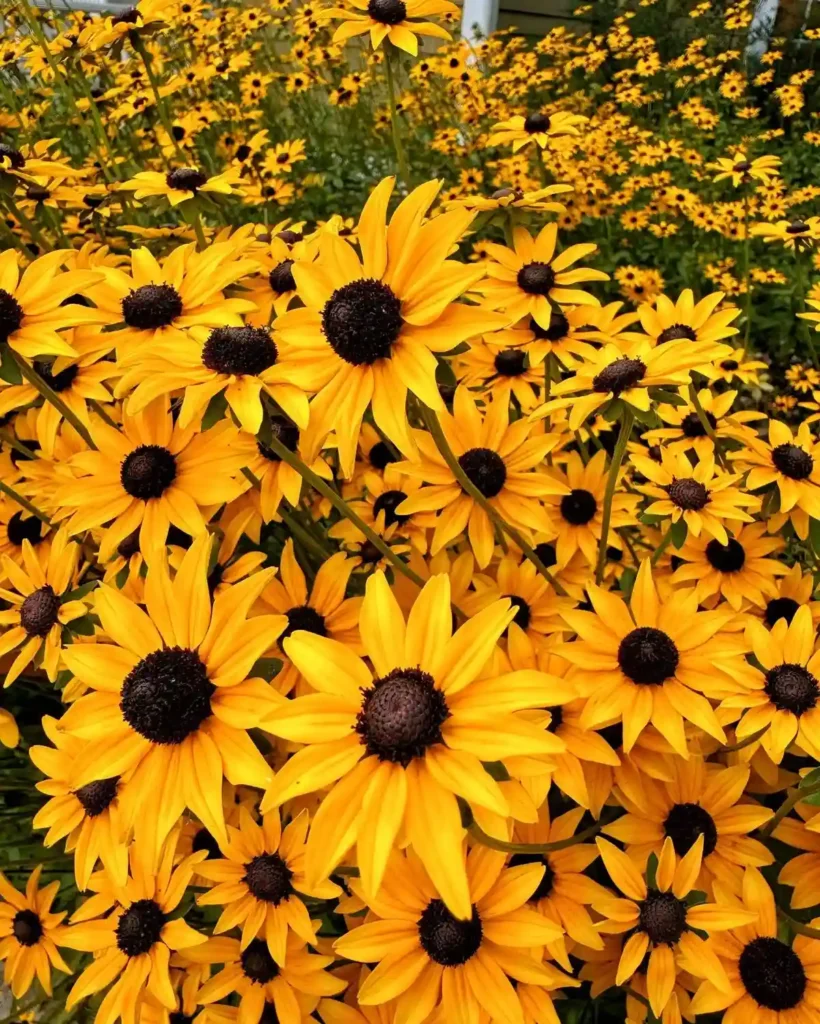
Black-eyed Susan adds a bright splash of yellow to sunny beds. Its golden petals surround a dark brown center, creating a bold look that remains easy to pair with other flowers. It works especially well beside purple coneflowers, ornamental grasses, and blue salvia. Butterflies visit the blooms in summer, and birds may eat the seeds after the flowers have dried.
- Botanical name: Rudbeckia fulgida
- USDA zones: 3–9
- Mature size: 2–3 feet tall
- Bloom time: Midsummer through fall
- Flower color: Golden yellow
- Best for: Borders, wildflower gardens and mass planting
3. Yarrow
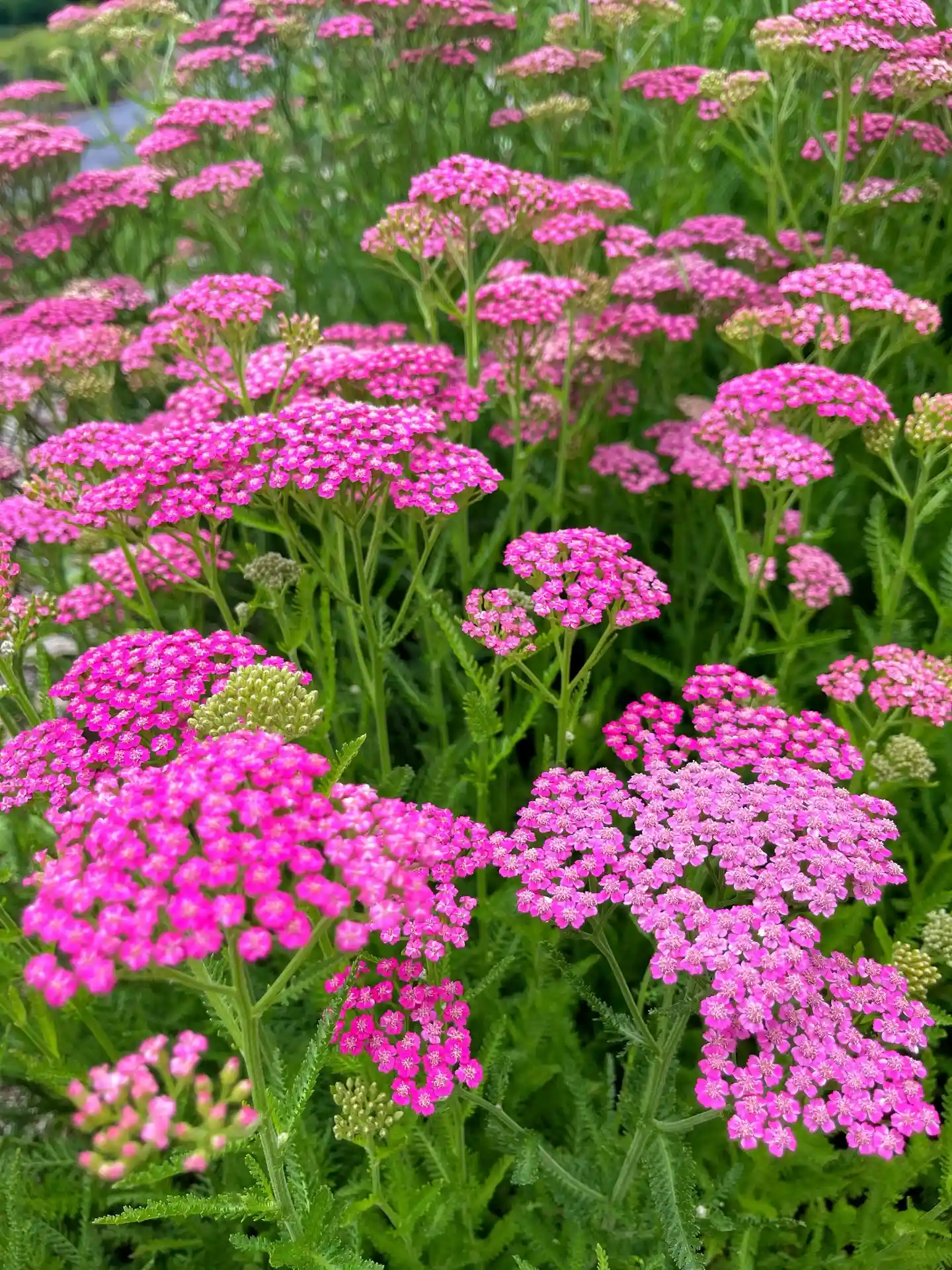
Yarrow produces broad clusters of tiny flowers above soft, fern-like foliage. Its flat flower heads give sunny beds a different shape from traditional daisies and flower spikes. White and yellow are common, but garden varieties also come in pink, red, orange, and peach. Yarrow looks at home in cottage gardens, prairie-style beds, and relaxed borders filled with pollinator-friendly plants.
- Botanical name: Achillea millefolium
- USDA zones: 3–9
- Mature size: 2–3 feet tall
- Bloom time: Early through late summer
- Flower colors: White, yellow, pink, red, orange and peach
- Best for: Dry borders and pollinator gardens
4. Blanket Flower

Blanket flower brings warm red, yellow, and orange shades to full sun gardens. Many varieties have two-tone petals that create a ring of color around a raised center. Its loose shape works well in casual borders and wildflower-style plantings. The cheerful flowers attract bees and butterflies, while the long flowering period keeps sunny beds colorful during the hottest part of summer.
- Botanical name: Gaillardia aristata
- USDA zones: 3–9
- Mature size: 1–3 feet tall
- Bloom time: Early summer through fall
- Flower colors: Red, yellow, orange and mixed shades
- Best for: Dry gardens and sunny borders
5. Perennial Salvia

Perennial salvia produces upright flower spikes that add height and structure to a sunny border. Blue-purple varieties are the most familiar, although pink and white choices are also available. The narrow spikes contrast nicely with rounded flowers such as peonies and coneflowers. Bees, butterflies, and hummingbirds often visit the blooms, making salvia a useful addition to a pollinator garden.
- Botanical name: Salvia nemorosa
- USDA zones: 4–9
- Mature size: 1–3 feet tall
- Bloom time: Late spring through summer
- Flower colors: Blue, purple, pink and white
- Best for: Pollinator beds and border edges
6. Coreopsis
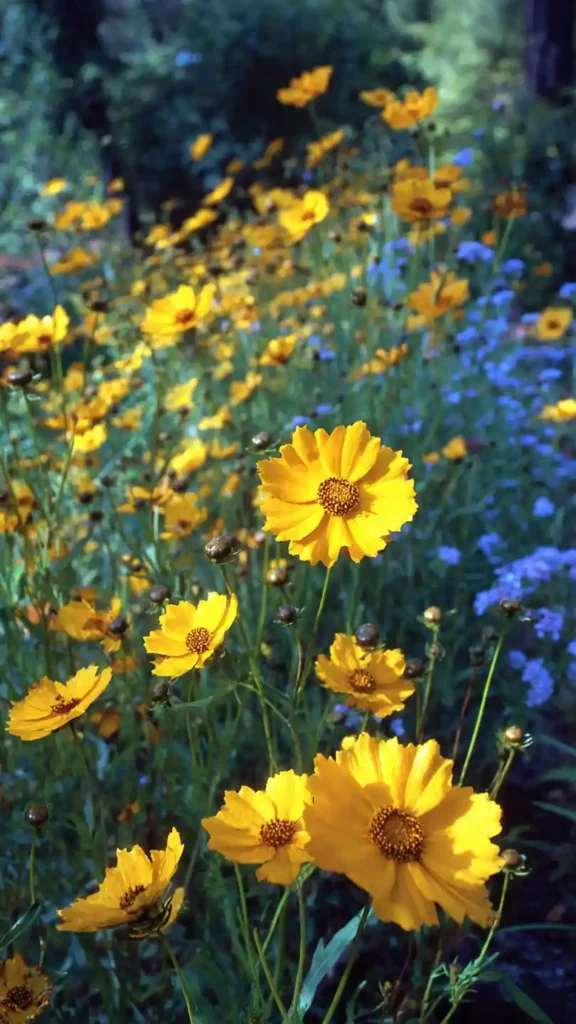
Coreopsis covers sunny garden beds with small, daisy-shaped flowers. Yellow is the most common color, but some varieties produce red, pink, cream, or two-tone blooms. Its light foliage and relaxed shape help soften the edges of pathways and formal borders. Coreopsis pairs well with salvia, catmint, and ornamental grasses without making a planting area feel crowded or overly heavy.
- Botanical name: Coreopsis
- USDA zones: 3–9
- Mature size: 1–3 feet tall
- Bloom time: Early summer through fall
- Flower colors: Yellow, red, pink, cream and mixed shades
- Best for: Border fronts and cottage gardens
7. Catmint
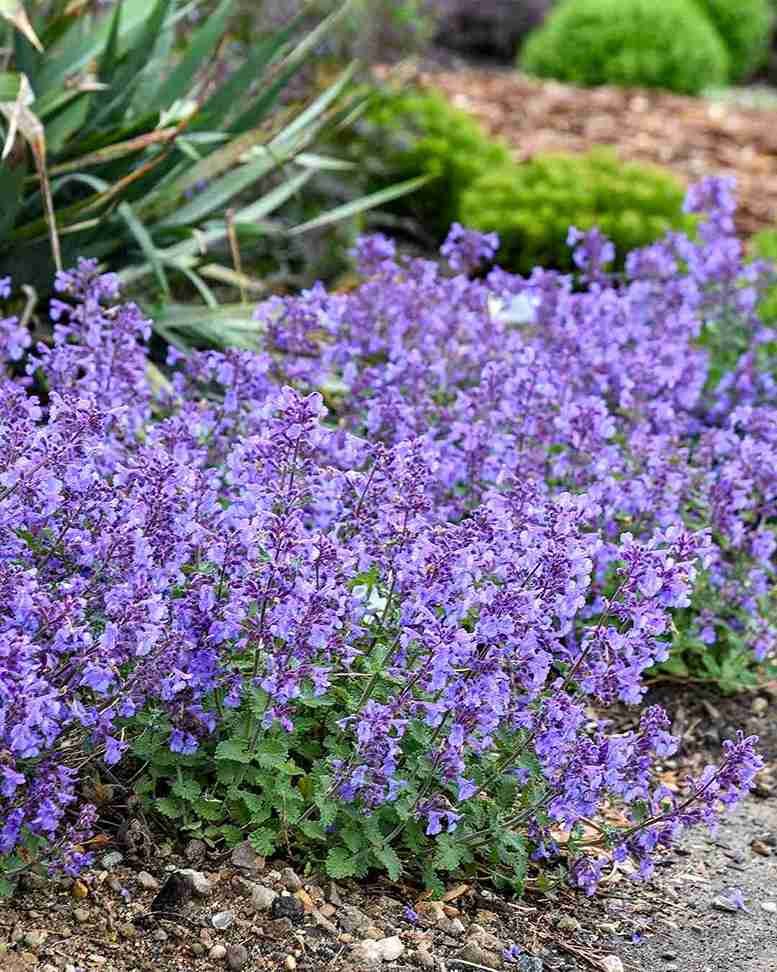
Catmint forms wide mounds of grey-green foliage topped with blue-purple flowers. Its soft color looks especially pretty beside roses, white daisies, and plants with deep green leaves. The loose stems can spill gently over the edge of a pathway or raised bed. Bees regularly visit the flowers, while the scented foliage may make the plant less appealing to deer and rabbits.
- Botanical name: Nepeta × faassenii
- USDA zones: 3–8
- Mature size: 1–3 feet tall
- Bloom time: Late spring through early fall
- Flower color: Blue-purple
- Best for: Pathway edges, rose beds and pollinator gardens
8. English Lavender
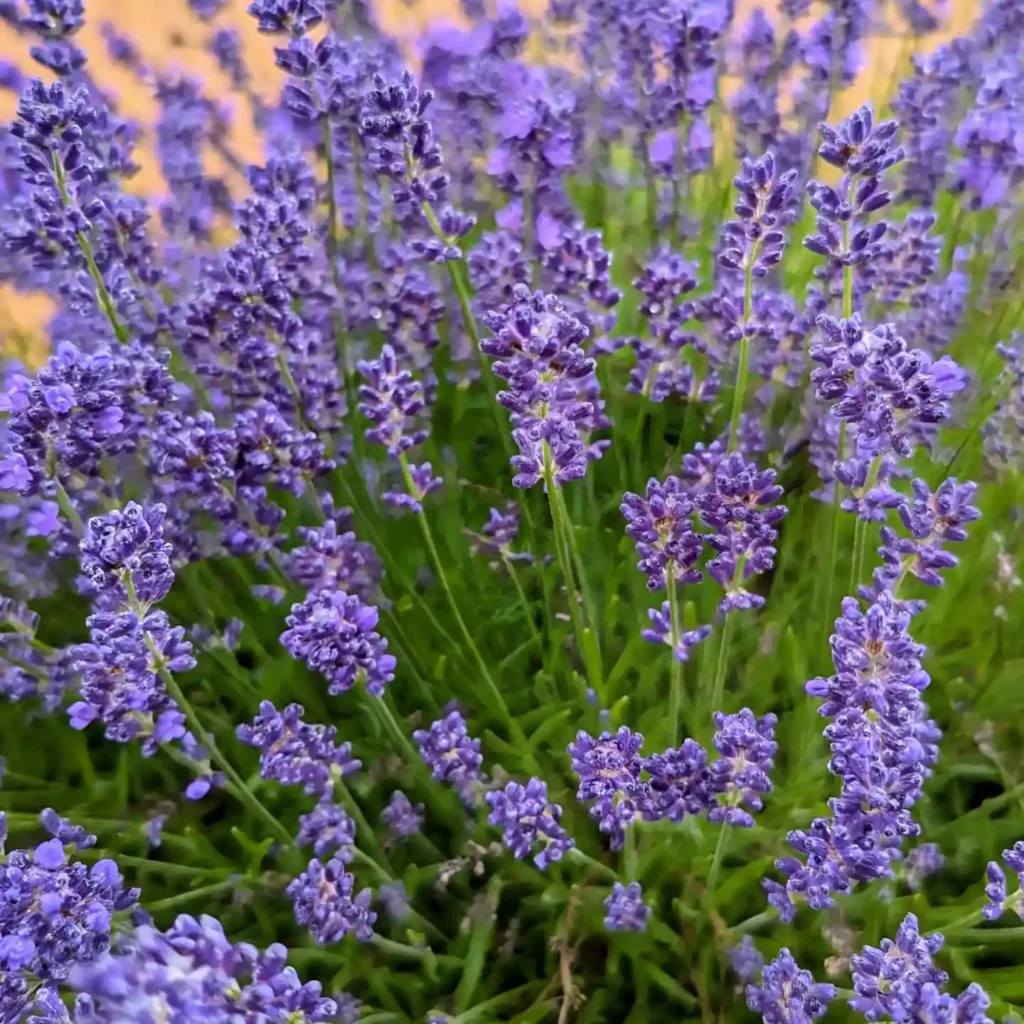
English lavender combines fragrant purple flowers with narrow silver-green leaves. Its tidy, rounded shape works well along walkways, in gravel gardens, or near outdoor seating areas where the scent can be enjoyed. The pale foliage provides color even when the plant is not flowering. Bees are drawn to its flower spikes, and the cut blooms can be used in small bouquets or dried arrangements.
- Botanical name: Lavandula angustifolia
- USDA zones: 5–9
- Mature size: 1–3 feet tall
- Bloom time: Early to midsummer
- Flower colors: Purple, pink and white
- Best for: Gravel gardens, pathways and dry borders
9. Bee Balm
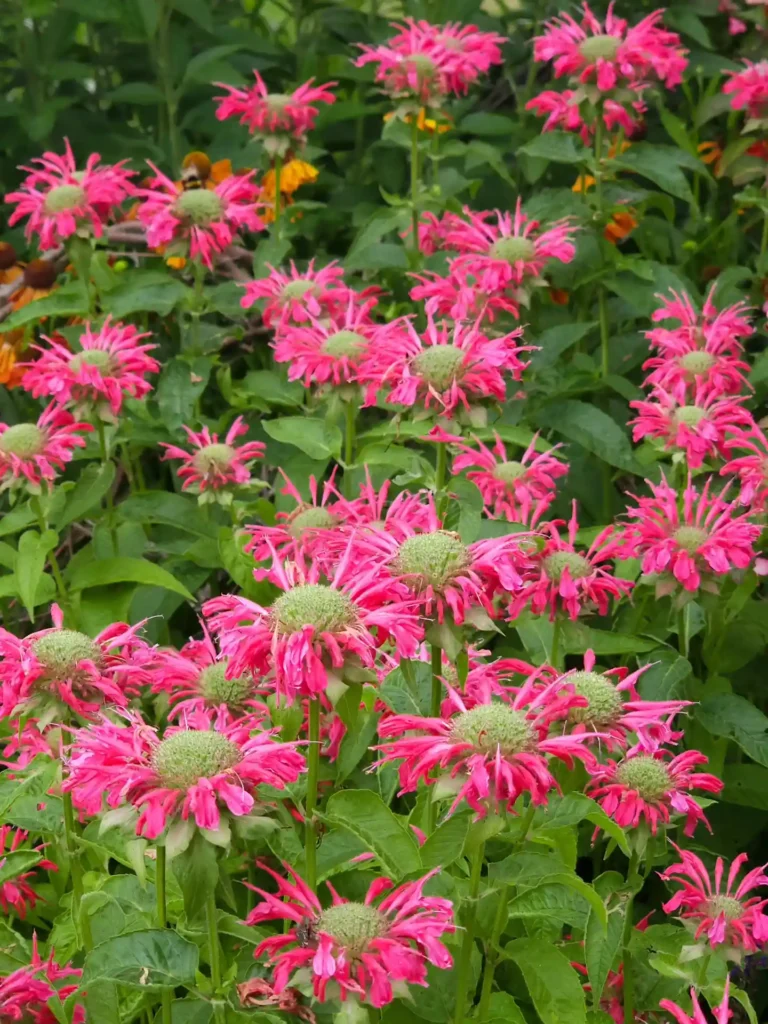
Bee balm has unusual flowers made from narrow petals arranged in rounded clusters. The blooms sit above fragrant green foliage and come in bright shades of red, pink, purple, or white. Hummingbirds are especially drawn to red varieties, while bees and butterflies visit many of the other colors. Its upright growth works well in the middle or back of a sunny flower bed.
- Botanical name: Monarda didyma
- USDA zones: 4–9
- Mature size: 2–4 feet tall
- Bloom time: Early through late summer
- Flower colors: Red, pink, purple and white
- Best for: Hummingbird and pollinator gardens
10. Garden Phlox

Garden phlox produces large, rounded clusters of flowers on tall stems. Its blooms appear when many spring flowers have already finished, helping carry color through the middle and end of summer. The flowers may be white, pink, purple, red, or striped, with some varieties giving off a light fragrance. Garden phlox works nicely behind shorter plants such as catmint, coreopsis, and hardy geranium.
- Botanical name: Phlox paniculata
- USDA zones: 4–8
- Mature size: 2–5 feet tall
- Bloom time: Midsummer through early fall
- Flower colors: White, pink, purple, red and mixed shades
- Best for: Cottage gardens and border backgrounds
11. Russian Sage
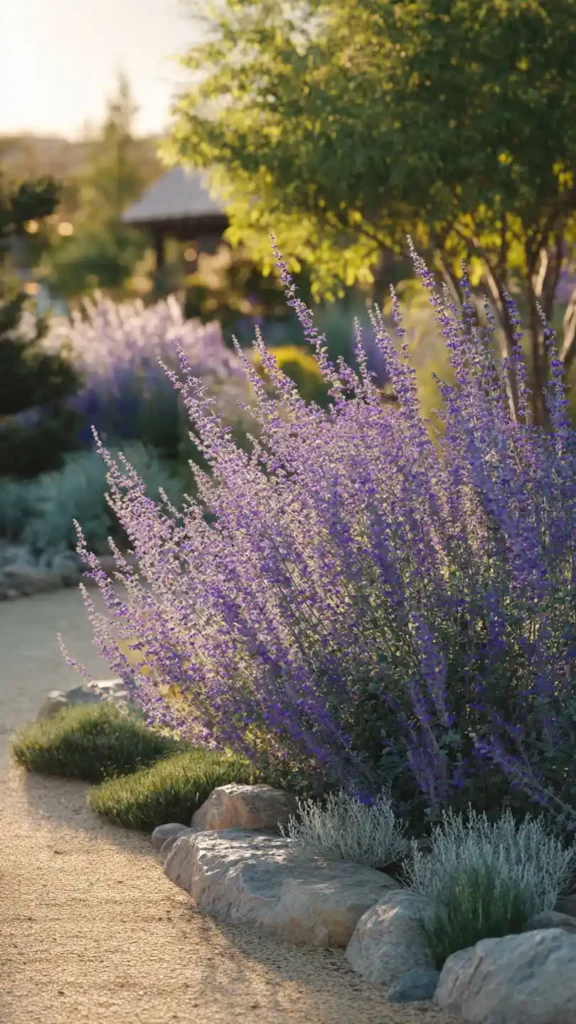
Russian sage creates a cloud of blue-purple flowers above finely divided silver foliage. Its open shape allows nearby plants to remain visible, even when it reaches several feet tall. The cool flower color pairs well with yellow black-eyed Susans and orange blanket flowers. Its pale leaves also look attractive beside dark foliage, stone paths, and gravel-covered planting areas.
- Botanical name: Salvia yangii
- USDA zones: 4–9
- Mature size: 2–4 feet tall
- Bloom time: Midsummer through fall
- Flower color: Blue-purple
- Best for: Dry borders and prairie-style gardens
12. Autumn Joy Sedum
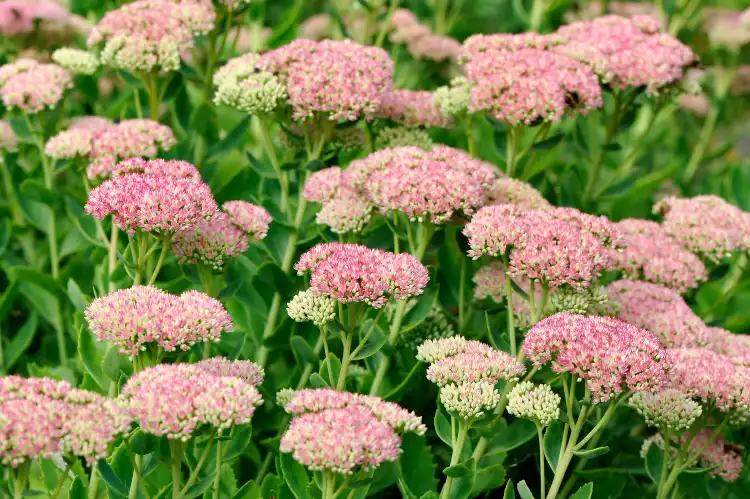
Autumn Joy sedum provides color near the end of the growing season. Its broad flower heads begin green, turn pink, and deepen to a warm copper-red as fall arrives. Thick green leaves give the plant a solid, rounded shape throughout summer. The fading flowers can remain attractive into winter, making this perennial useful when you want structure after softer summer plants have finished.
- Botanical name: Hylotelephium ‘Herbstfreude’
- USDA zones: 3–9
- Mature size: 18–24 inches tall
- Bloom time: Late summer through fall
- Flower colors: Pink, rose and copper-red
- Best for: Fall borders and dry gardens
13. Daylily

Daylilies produce trumpet-shaped flowers above arching green leaves. Each flower lasts for only one day, but an established plant develops many buds that open across several weeks. Available colors include yellow, orange, red, pink, purple, cream, and mixed shades. Their curved foliage and wide color range make daylilies easy to use along slopes, fences, pathways, and mixed borders.
- Botanical name: Hemerocallis
- USDA zones: 3–9
- Mature size: 1–4 feet tall
- Bloom time: Early through late summer
- Flower colors: Yellow, orange, red, pink, purple and cream
- Best for: Borders, slopes and mass planting
14. Shasta Daisy

Shasta daisy offers the classic combination of white petals and sunny yellow centers. The clean flower color looks fresh in cottage gardens and helps separate brighter shades planted nearby. Depending on the variety, the flowers may be simple and open or full and layered. Their upright stems also make Shasta daisies suitable for cutting gardens and the middle section of a flower border.
- Botanical name: Leucanthemum × superbum
- USDA zones: 5–9
- Mature size: 1–4 feet tall
- Bloom time: Early through late summer
- Flower color: White with yellow centers
- Best for: Cottage gardens and cut-flower beds
15. Blazing Star

Blazing star produces tall flower spikes covered with small purple blooms. The flowers open from the top downward, which is unusual among spike-shaped perennials. Its narrow form adds height without taking up much ground space. Blazing star looks especially attractive when planted in groups among coneflowers, ornamental grasses, and black-eyed Susans. Butterflies often gather on the flowers during warm summer days.
- Botanical name: Liatris spicata
- USDA zones: 3–9
- Mature size: 2–4 feet tall
- Bloom time: Midsummer through early fall
- Flower colors: Purple and white
- Best for: Prairie gardens and pollinator beds
16. Butterfly Weed

Butterfly weed produces flat clusters of bright orange flowers above narrow green leaves. Its color stands out clearly in sunny borders and natural planting areas. This North American native is part of the milkweed family and provides food for monarch butterfly caterpillars. The flowers also attract adult butterflies and other pollinators. Its upright size fits well between short border plants and taller background flowers.
- Botanical name: Asclepias tuberosa
- USDA zones: 3–9
- Mature size: 1–3 feet tall
- Bloom time: Early through late summer
- Flower colors: Orange, yellow and red-orange
- Best for: Native and butterfly gardens
17. Red Hot Poker

Red hot poker sends up tall flower spikes above clumps of narrow, arching leaves. The tubular flowers often change from red or orange at the top to yellow or cream near the bottom. This two-tone effect gives the plant a bold, tropical appearance. It works well as a focal point in sunny beds, especially when surrounded by lower plants with softer colors and rounded flowers.
- Botanical name: Kniphofia
- USDA zones: 5–9
- Mature size: 2–5 feet tall
- Bloom time: Late spring through early fall
- Flower colors: Red, orange, yellow and cream
- Best for: Focal points and hot-color borders
18. False Indigo

False indigo develops tall flower spikes above a rounded mound of blue-green foliage. Blue-purple is the traditional flower color, but newer varieties include yellow, white, pink, brown, and mixed shades. Decorative seedpods follow the flowers and can remain attractive later in the season. A mature plant has the size and shape of a small shrub, making it useful for filling the middle of a wide border.
- Botanical name: Baptisia australis
- USDA zones: 3–9
- Mature size: 3–4 feet tall and wide
- Bloom time: Late spring through early summer
- Flower colors: Blue, purple, white, yellow and mixed shades
- Best for: Wide borders and native gardens
19. Peony

Peonies produce large flowers in late spring and early summer. Depending on the variety, the blooms may be simple and open or packed with layers of soft petals. Pink, white, and red are familiar choices, but coral, cream, and yellow varieties are also available. Their dark green foliage forms a rounded clump that remains attractive after the short flowering season has ended.
- Botanical name: Paeonia lactiflora
- USDA zones: 3–8
- Mature size: 2–4 feet tall
- Bloom time: Late spring through early summer
- Flower colors: Pink, white, red, coral, cream and yellow
- Best for: Cottage gardens and cut-flower beds
20. Hardy Geranium

Hardy geranium forms low mounds of divided green leaves covered with small, cup-shaped flowers. It is different from the tender red geraniums often grown in summer containers. Blue, purple, pink, and white varieties are available. Its spreading shape makes it useful for covering bare soil beneath taller perennials or softening the front edge of a sunny flower bed.
- Botanical name: Geranium
- USDA zones: 3–9, depending on the variety
- Mature size: 6–24 inches tall
- Bloom time: Late spring through summer
- Flower colors: Blue, purple, pink and white
- Best for: Ground cover and border fronts
21. Lamb’s Ear

Lamb’s ear is grown mainly for its soft, silver-grey foliage. The thick, fuzzy leaves form low clusters that brighten sunny borders and contrast with dark green plants. Tall stems carrying small purple flowers may appear from late spring into summer. Its low shape works well along paths, at the front of flower beds, or between brighter perennials that need a calm background.
- Botanical name: Stachys byzantina
- USDA zones: 4–9
- Mature size: 6–18 inches tall
- Bloom time: Late spring through summer
- Flower color: Purple
- Best for: Pathway edges and silver foliage gardens
FAQ’s
What are the easiest full sun perennials to grow?
Coneflower, black-eyed Susan, yarrow, catmint, daylily, and Autumn Joy sedum are among the easiest choices. Once established, they need little attention and can handle short dry periods.
How many hours of sunlight do full sun perennials need?
Full sun perennials need at least six hours of direct sunlight each day. Plants that receive eight hours often produce more flowers, though intense afternoon sun may be too strong for some plants in very hot climates.
Which full sun perennials bloom the longest?
Coreopsis, catmint, blanket flower, perennial salvia, and coneflower have long flowering periods. Removing faded flowers can encourage some varieties to produce another flush of blooms.
What full sun perennials are best for dry soil?
Yarrow, English lavender, Russian sage, butterfly weed, blanket flower, and sedum grow well in dry soil. These plants still need regular watering during their first growing season while their roots become established.
Can full sun perennials grow in containers?
Many full sun perennials can grow in containers. Compact catmint, lavender, coreopsis, salvia, and sedum are good choices. Use a large container with drainage holes and check the soil often because pots dry out faster than garden beds.
When should I plant full sun perennials?
Spring and early fall are usually the best planting times. Mild temperatures allow roots to settle before summer heat or winter cold arrives. Gardeners in very cold regions may have better results with spring planting.
Do full sun perennials return every year?
Yes, healthy perennials return for several years when planted within their suitable growing zones. Some are long-lived, while others may last only a few seasons or need dividing as the clumps become crowded.
How do I keep a sunny perennial garden blooming all season?
Combine plants with different flowering times. Peonies and false indigo provide spring flowers, coneflowers and coreopsis cover summer, and sedum or black-eyed Susan brings color into fall.