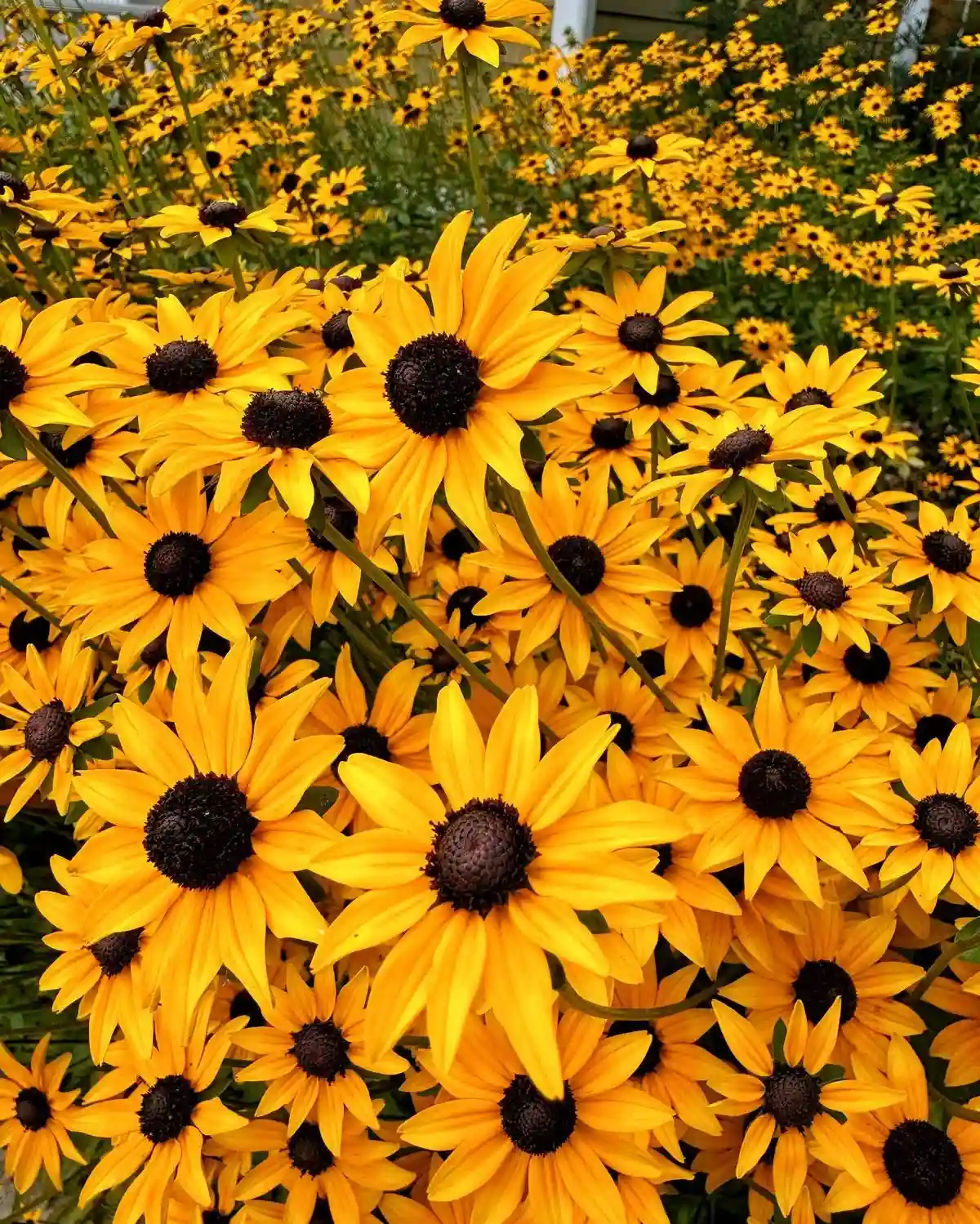
19 Perennials That Attract Hummingbirds
Hummingbirds will visit many flowers, but they often favor blooms that make feeding quick and easy. Tubular flowers in red, pink, orange, and purple give their long bills direct access to nectar.
The best hummingbird garden does not depend on one plant. It combines spring, summer, and fall flowers so nectar remains available for several months. These 19 perennials can help you build that steady food supply while adding height, movement, and bright color to your garden.
Quick List of Perennials That Attract Hummingbirds
Hardiness can change by species and variety. Check the plant label before buying, especially if you live near the edge of a listed USDA zone.
| Plant | USDA Zones | Main Bloom Time | Light | Moisture |
| Cardinal flower | 3–9 | Late summer–fall | Sun–part shade | Moist–wet |
| Bee balm | 3–9 | Summer | Sun–part shade | Average–moist |
| Red columbine | 3–8 | Spring–early summer | Part shade–sun | Average |
| Penstemon | 3–9 | Late spring–summer | Full sun | Dry–average |
| Anise hyssop | 4–9 | Summer–fall | Full sun | Dry–average |
| Garden phlox | 4–8 | Summer–early fall | Sun–part shade | Average–moist |
| Coral bells | 4–9 | Late spring–summer | Part shade | Average |
| Perennial salvia | 4–9 | Late spring–summer | Full sun | Dry–average |
| Lupine | 4–8 | Late spring–early summer | Full sun | Average |
| Indian pink | 5–9 | Late spring–summer | Part shade | Average–moist |
| Crocosmia | 6–9 | Midsummer–fall | Full sun | Average |
| Red hot poker | 5–9 | Summer–fall | Full sun | Dry–average |
| Obedient plant | 3–9 | Late summer–fall | Sun–part shade | Average–moist |
| Fire pink | 4–8 | Spring–early summer | Part shade | Dry–average |
| Royal catchfly | 4–8 | Summer | Full sun | Dry–average |
| Canada lily | 3–8 | Early–midsummer | Sun–part shade | Average–moist |
| Great blue lobelia | 4–9 | Late summer–fall | Sun–part shade | Moist |
| Turtlehead | 3–8 | Late summer–fall | Sun–part shade | Moist–wet |
| Daylily | 3–9 | Early–late summer | Full sun | Average |
1. Cardinal Flower
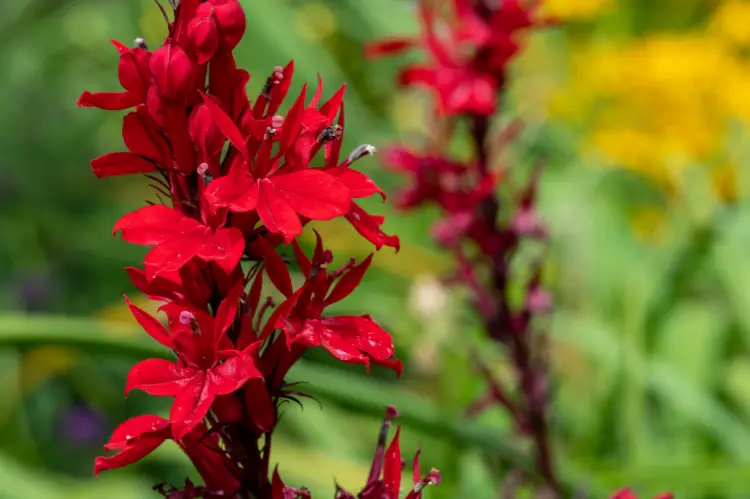
Cardinal flower is one of the strongest hummingbird plants for a damp garden. Tall stems carry vivid scarlet flowers that open from the bottom upward. The narrow blooms suit a hummingbird’s long bill, while their intense color is easy to notice.
This native perennial works well beside ponds, rain gardens, streams, or any bed that stays consistently moist.
- Hummingbird value: Rich nectar inside bright tubular flowers
- Light: Full sun in cool climates or partial shade in hot areas
- Soil: Rich soil that remains moist or wet
- Size and bloom: Around 2–4 feet tall; late summer into fall
- Care tip: Do not allow the roots to dry out during hot weather
2. Bee Balm
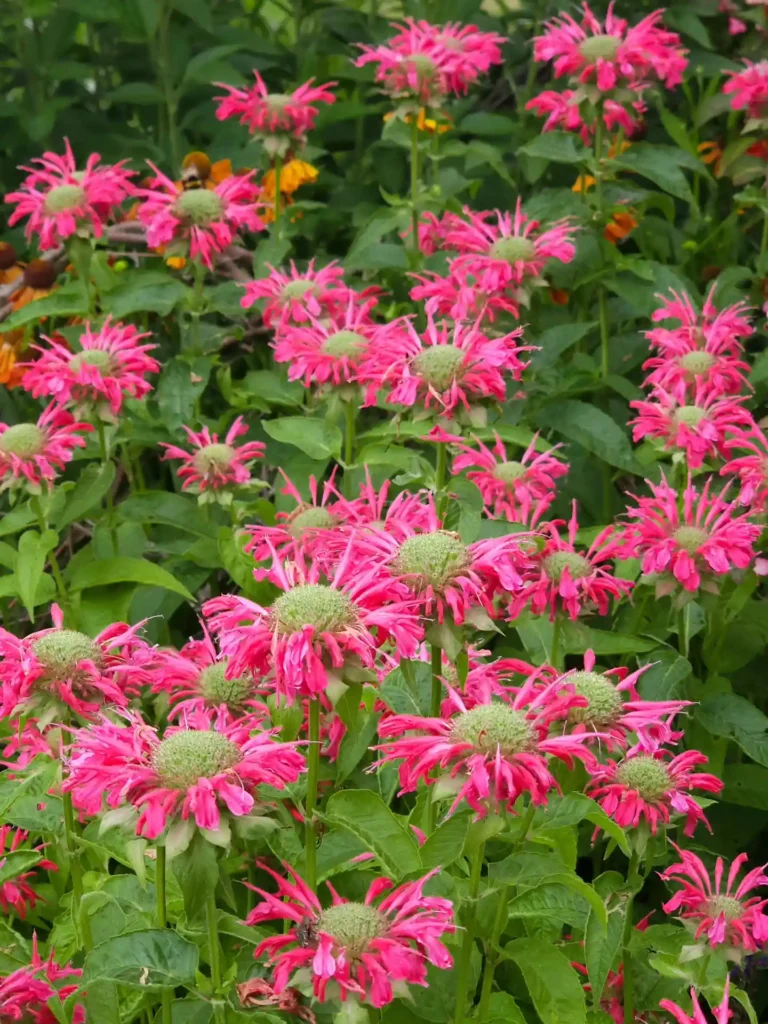
Bee balm creates shaggy flower heads filled with narrow tubes. Hummingbirds can move around one flower head and feed several times without leaving the plant. Red varieties are especially noticeable, though pink and purple forms also receive visits.
Place bee balm where air can move around its leaves. Crowded plants and wet foliage may lead to powdery mildew.
- Hummingbird value: Numerous nectar tubes on every flower head
- Light: Full sun to partial shade
- Soil: Moist, well-drained soil
- Size and bloom: Around 2–4 feet tall; summer
- Care tip: Choose a mildew-resistant variety and divide crowded clumps
3. Red Columbine
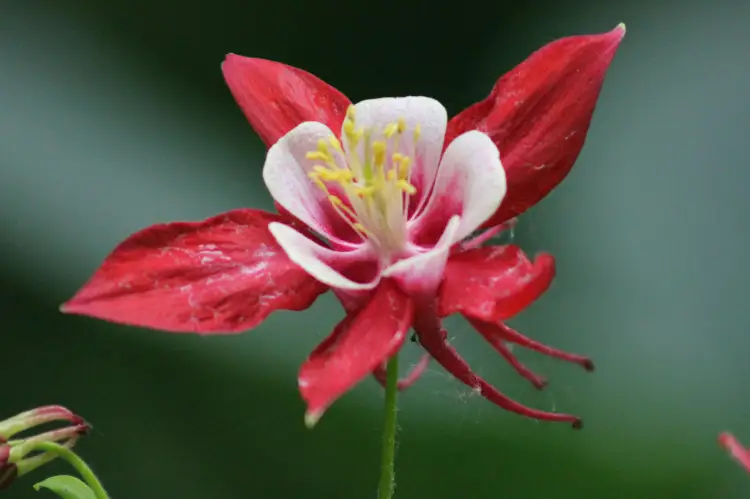
Red columbine can provide nectar when hummingbirds arrive during spring migration. Its nodding red and yellow flowers have long backward-pointing spurs filled with nectar.
The airy plant fits naturally under deciduous trees, along woodland edges, or among other spring perennials. It may self-seed when it likes its location, creating a relaxed group of plants over time.
- Hummingbird value: Early nectar from long, spurred flowers
- Light: Partial shade or gentle morning sun
- Soil: Average, well-drained soil
- Size and bloom: Around 1–3 feet tall; spring to early summer
- Care tip: Let a few seedheads mature if you want more plants
Related:-
4. Penstemon

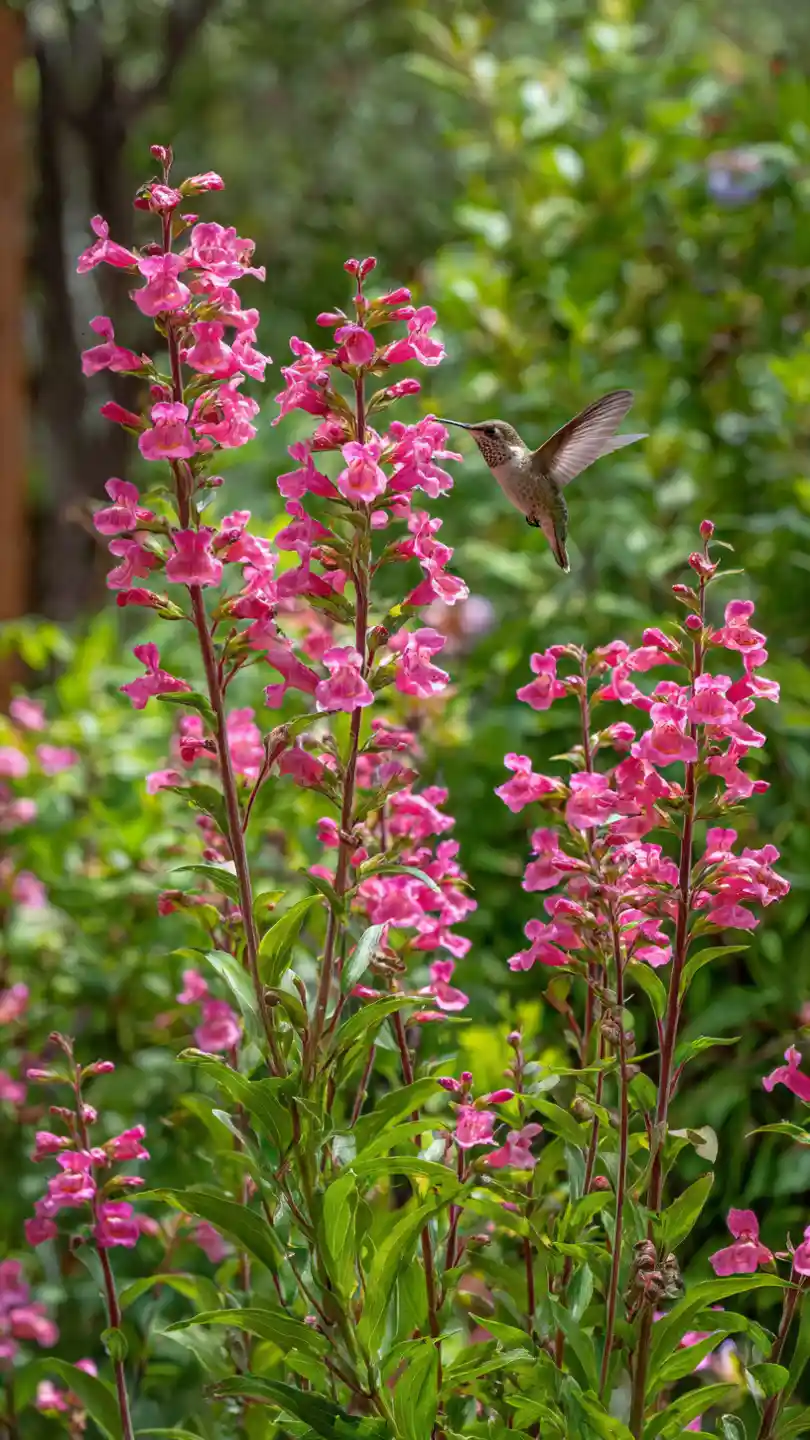
Penstemon, commonly called beardtongue, grows upright stems lined with tubular flowers. Colors include red, coral, pink, lavender, and white. Red-flowered native species are usually the strongest choices for hummingbirds.
Different penstemons suit different regions, from moist eastern gardens to dry western beds. Choose a species adapted to your soil instead of treating every penstemon the same.
- Hummingbird value: Rows of narrow, nectar-bearing flowers
- Light: Full sun
- Soil: Well-drained soil; moisture needs vary by species
- Size and bloom: Around 1–4 feet tall; late spring through summer
- Care tip: Avoid rich fertilizer, which can cause weak growth
5. Anise Hyssop

Anise hyssop produces tall flower spikes that may stay in bloom for weeks. The blue, lavender, pink, or orange tubes draw hummingbirds while bees gather around the same plant.
Its scented leaves and upright shape make it useful near paths or through the middle of a sunny border. Once established, many varieties cope well with short dry periods.
- Hummingbird value: Long-lasting spikes packed with small nectar flowers
- Light: Full sun
- Soil: Dry to average soil with good drainage
- Size and bloom: Around 2–4 feet tall; summer into fall
- Care tip: Leave enough space around the crown to prevent wet winter soil
6. Garden Phlox

Garden phlox carries large clusters of fragrant flowers above upright stems. The long flower tubes suit hummingbirds, while the broad clusters give the birds many feeding points in one place.
Use red, coral, hot pink, or magenta varieties where possible. Garden phlox also fills the midsummer gap between early flowers and late-blooming plants.
- Hummingbird value: Dense flower clusters with narrow nectar tubes
- Light: Full sun or light afternoon shade
- Soil: Fertile, evenly moist, well-drained soil
- Size and bloom: Around 2–4 feet tall; midsummer into early fall
- Care tip: Water near the ground and select mildew-resistant varieties
7. Coral Bells

Coral bells are often grown for their colorful leaves, but their slender flower stalks are the part hummingbirds notice. Tiny bell-shaped blooms rise above the foliage in spring and summer.
Red and coral-flowered varieties usually draw more attention than pale green or cream forms. Their compact size makes them useful along shaded paths and at the front of flower beds.
- Hummingbird value: Fine flower stems covered in small bells
- Light: Partial shade; some varieties accept morning sun
- Soil: Moist but well-drained soil
- Size and bloom: Foliage around 8–18 inches; flowers rise higher
- Care tip: Keep the crown slightly above the soil to reduce rot
8. Perennial Salvia

Perennial salvia sends up narrow flower spikes in purple, blue, pink, red, or white. Hummingbirds can hover beside the stems and move quickly between the tubular blooms.
Many varieties begin flowering in late spring. Cutting away faded spikes may produce another round of flowers, giving the birds more nectar later in the season.
- Hummingbird value: Repeated tubular flowers on upright stems
- Light: Full sun
- Soil: Average to dry soil with good drainage
- Size and bloom: Around 1–3 feet tall; late spring through summer
- Care tip: Trim old flower spikes to encourage a second bloom
9. Lupine

Lupines bring bold flower spires to the garden during late spring and early summer. Their pea-like flowers are arranged closely along tall stems, giving hummingbirds many feeding stops.
Native lupines vary widely by region. Some prefer cool climates and sandy soil, while others handle mountain or coastal conditions. Check which species naturally grows near you before planting.
- Hummingbird value: Early-season nectar arranged along tall spikes
- Light: Full sun
- Soil: Loose, well-drained soil
- Size and bloom: Around 1–4 feet tall; late spring to early summer
- Care tip: Lupines have deep roots and dislike being moved after establishment
10. Indian Pink
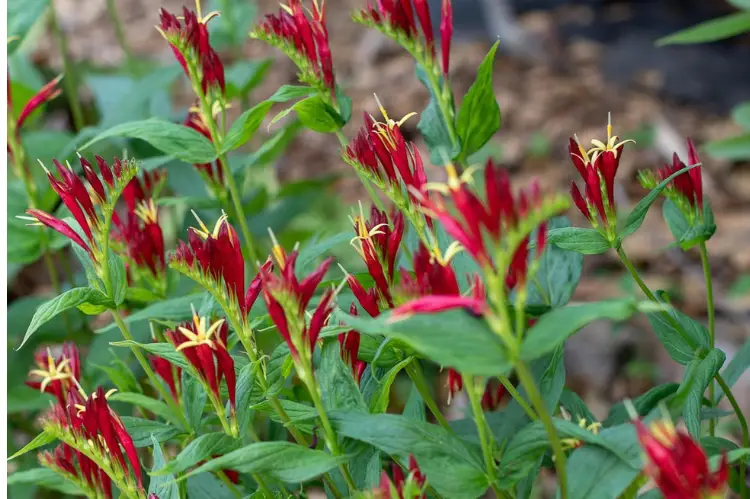
Indian pink brings strong hummingbird color into a partially shaded garden. Its red tubular flowers open into yellow star-shaped tips, creating a striking two-color display.
This clump-forming native perennial fits woodland borders where many full-sun hummingbird flowers struggle. Buy nursery-grown plants rather than collecting them from wild populations.
- Hummingbird value: Red nectar tubes made for long bills
- Light: Partial shade
- Soil: Rich, moist, well-drained soil
- Size and bloom: Around 1–2 feet tall; late spring into summer
- Care tip: Keep young plants watered while their roots become established
11. Crocosmia
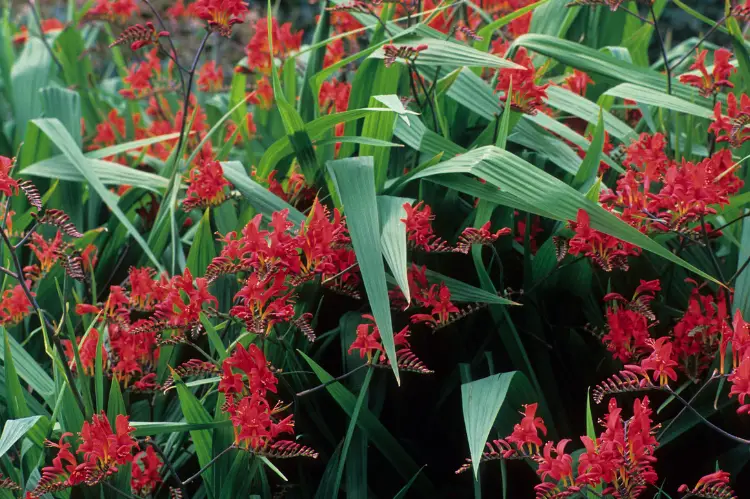
Crocosmia produces arching stems lined with fiery red, orange, or yellow flowers. The blooms face outward, making them easy for hummingbirds to reach while hovering.
The sword-shaped foliage gives sunny borders a clean vertical shape. In colder areas, gardeners may need to protect the corms with mulch or lift them before winter.
- Hummingbird value: Bright, outward-facing tubular flowers
- Light: Full sun
- Soil: Average, well-drained soil
- Size and bloom: Around 2–4 feet tall; midsummer into fall
- Care tip: Divide overcrowded clumps when flowering begins to decline
12. Red Hot Poker

Red hot poker produces tall flower spikes that fade from red or orange into yellow. Its blooms open gradually, keeping fresh nectar available over an extended period.
This plant is a good match for sunny, dry-looking borders. The roots still need drainage, especially in winter, when wet soil can damage the crown.
- Hummingbird value: Tall spikes filled with narrow nectar tubes
- Light: Full sun
- Soil: Average to dry, sharply drained soil
- Size and bloom: Around 2–4 feet tall; summer into fall
- Care tip: Keep mulch and wet leaves away from the crown
13. Obedient Plant
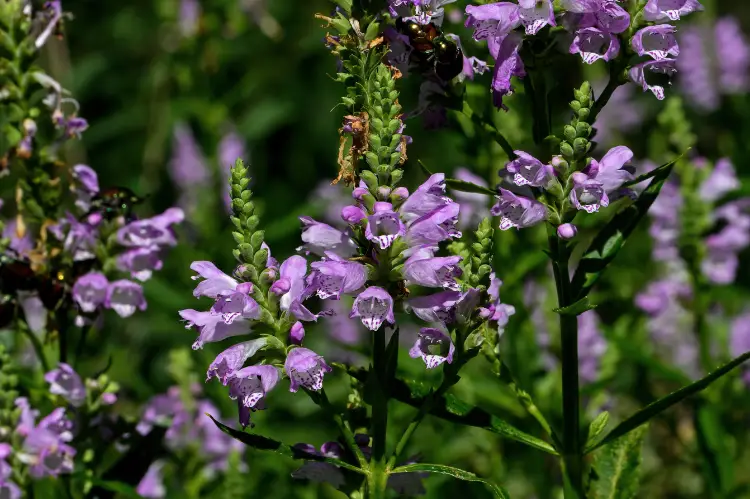
Obedient plant carries pink, lavender, or white tubular flowers on tall square stems. It blooms late in the season, when some summer nectar plants have already finished.
Despite its polite name, this perennial can spread quickly through underground stems. Place it in a large border, meadow garden, or contained bed where a growing colony will not become a problem.
- Hummingbird value: Late-season nectar from rows of tubular flowers
- Light: Full sun to partial shade
- Soil: Average to moist soil
- Size and bloom: Around 2–4 feet tall; late summer into fall
- Care tip: Remove unwanted shoots each spring to control spreading
14. Fire Pink
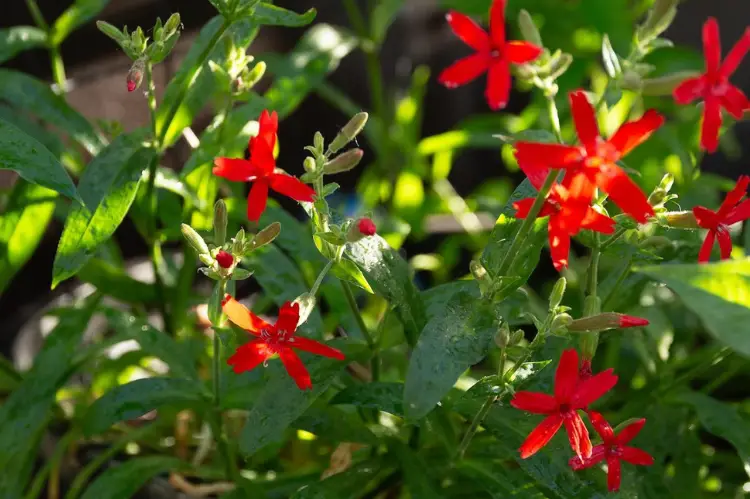
Fire pink carries brilliant red flowers on slender stems above low green foliage. Each flower has narrow petals and a tubular base where hummingbirds can reach nectar.
This native plant suits woodland edges and rocky areas with good drainage. It is sometimes short-lived, but it may reseed when the ground is left lightly disturbed.
- Hummingbird value: Vivid red flowers with an accessible nectar tube
- Light: Partial shade or dappled sun
- Soil: Rocky or sandy soil with good drainage
- Size and bloom: Around 1–2 feet tall; spring into early summer
- Care tip: Avoid heavy, wet soil and thick mulch around seedlings
15. Royal Catchfly
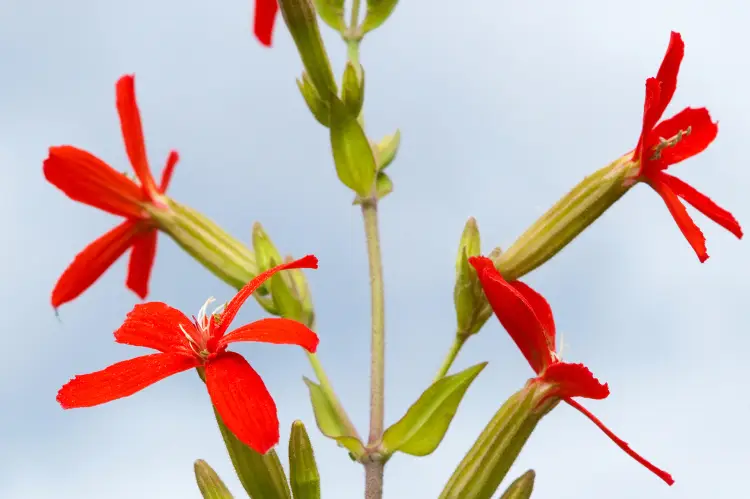
Royal catchfly produces clusters of rich red flowers on tall stems. Its sticky upper stems can trap small insects, which explains the plant’s unusual name.
This native prairie perennial needs patience during establishment but can become a strong summer hummingbird flower. It works best among grasses and other upright prairie plants.
- Hummingbird value: Scarlet tubular blooms during summer
- Light: Full sun
- Soil: Average to dry, well-drained soil
- Size and bloom: Around 2–4 feet tall; summer
- Care tip: Avoid moving established plants once their deep roots develop
16. Canada Lily
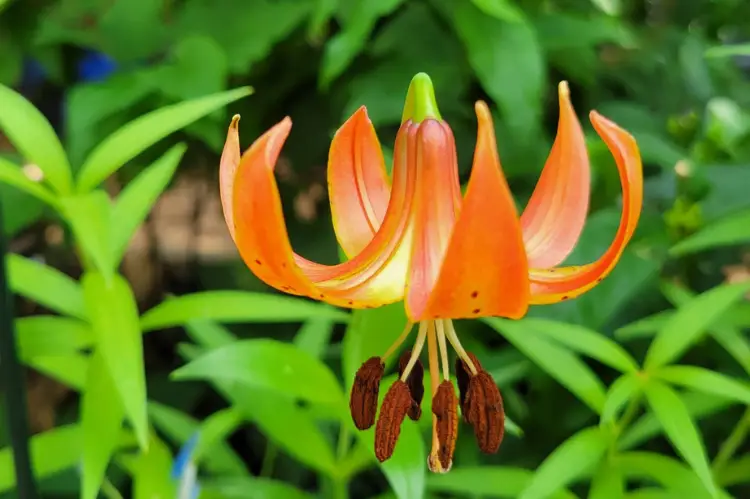
Canada lily carries nodding orange, red, or yellow flowers with curved petals. The blooms hang below the stems, leaving room for hummingbirds to approach from underneath.
This lily works well in natural-looking gardens with moist soil and gentle sunlight. It is different from the common Asiatic lilies found in many garden centers, so check the botanical name before buying.
- Hummingbird value: Hanging flowers rich in accessible nectar
- Light: Partial shade to full sun
- Soil: Moist, rich, well-drained soil
- Size and bloom: Around 3–6 feet tall; early to midsummer
- Care tip: Protect young shoots from deer and avoid disturbing the bulbs
17. Great Blue Lobelia
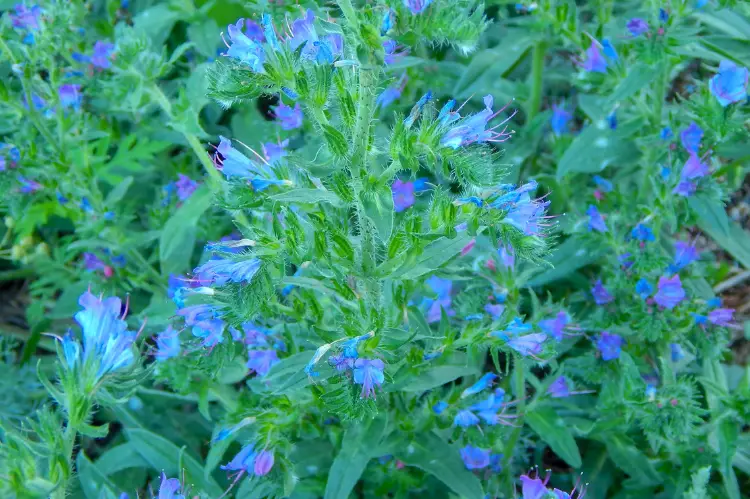
Great blue lobelia is closely related to cardinal flower but carries blue-violet blooms. The flower spikes arrive from late summer into fall and can help extend the garden’s nectar season.
It grows naturally in moist areas and pairs well with cardinal flower for a mix of red and blue. The two plants also share similar moisture needs.
- Hummingbird value: Late tubular flowers when summer blooms are fading
- Light: Full sun to partial shade
- Soil: Moist to wet soil
- Size and bloom: Around 2–3 feet tall; late summer into fall
- Care tip: Water during dry spells and do not place it in a hot, dry bed
18. Turtlehead

Turtlehead gets its name from flowers shaped like small turtle heads. Those pink or white blooms appear near the end of summer and contain nectar that attracts hummingbirds.
This is a useful choice for rain gardens, damp borders, and low spots where dry-loving perennials fail. Pink cultivars usually create a stronger color signal for visiting birds.
- Hummingbird value: Late-season nectar inside snapdragon-like flowers
- Light: Partial shade or full sun with steady moisture
- Soil: Rich, consistently moist soil
- Size and bloom: Around 2–4 feet tall; late summer into fall
- Care tip: Pinch the stems in spring if you want shorter, fuller plants
19. Daylily
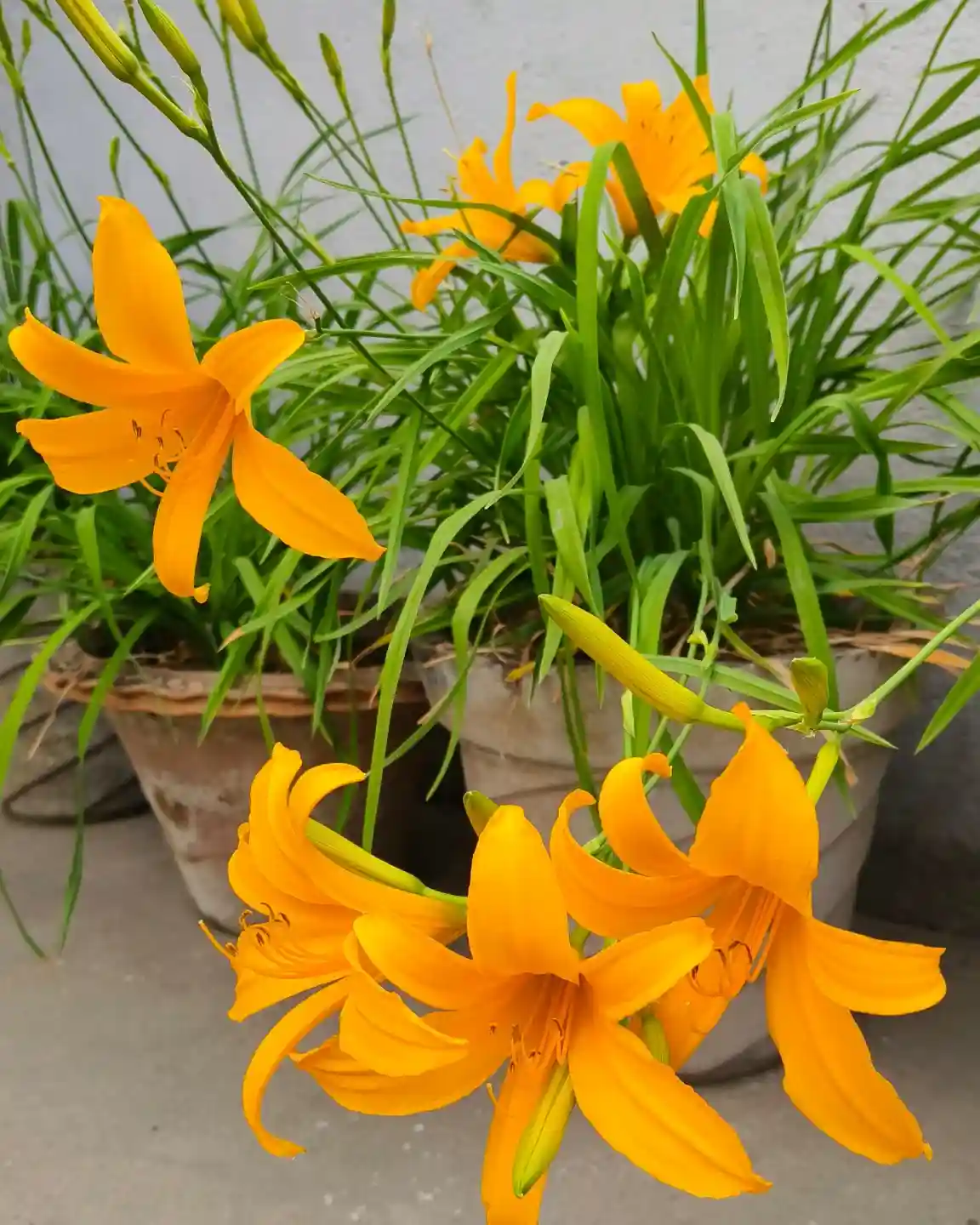
Daylilies produce trumpet-shaped flowers that hummingbirds can enter easily. Red, orange, coral, and deep pink varieties are more suitable than heavily ruffled forms with tight flower centers.
Each bloom lasts for only one day, but a healthy clump can open new flowers for several weeks. Reblooming varieties can stretch the nectar season further.
- Hummingbird value: Large trumpet-shaped blooms with easy access
- Light: Full sun
- Soil: Average, well-drained soil
- Size and bloom: Around 1–4 feet tall; early through late summer
- Care tip: Combine early, midseason, and reblooming varieties
How to Plan a Hummingbird Garden That Keeps Blooming
One flower may bring a quick visit. A garden with overlapping bloom periods gives hummingbirds a reason to return.
Start the season with red columbine, coral bells, fire pink, lupine, and early penstemons. Follow them with bee balm, phlox, salvia, lilies, and anise hyssop. Finish with cardinal flower, obedient plant, great blue lobelia, turtlehead, and late crocosmia.
Plant several flowers of the same kind together instead of scattering single plants throughout the yard. Larger groups are easier for flying hummingbirds to notice.
The National Audubon Society’s native plant database can help you find bird-friendly plants suited to your region. Native choices are often better matched to local weather, soil, birds, and insects.
Simple Ways to Bring More Hummingbirds Into Your Garden
Flowers are the main attraction, but the surrounding space also matters.
- Grow several tubular flowers together in visible groups.
- Include red, coral, orange, pink, and purple blooms.
- Provide flowers from spring until fall.
- Choose native plants suited to your state or region.
- Avoid spraying flowers with broad-spectrum pesticides.
- Add shrubs or small trees where hummingbirds can perch.
- Leave some open space around flower beds for easy flight.
- Water new perennials regularly until their roots become established.
Choose plants for the conditions you already have. Cardinal flower will struggle in a dry bed, while penstemon and red hot poker may rot in wet soil. Matching each plant to its preferred location is more useful than choosing by flower color alone.
Best Hummingbird Perennials for Full Sun
For a sunny garden, start with:
- Penstemon
- Anise hyssop
- Garden phlox
- Perennial salvia
- Crocosmia
- Red hot poker
- Royal catchfly
- Daylily
Most of these plants need at least six hours of direct sunlight. Good drainage is especially important for penstemon, salvia, red hot poker, and royal catchfly.
[INTERNAL LINK: Link “full sun perennials” to your Full Sun Perennials article]
Best Hummingbird Perennials for Partial Shade
A shaded garden can still support hummingbirds. Strong choices include:
- Red columbine
- Coral bells
- Indian pink
- Fire pink
- Canada lily
- Cardinal flower
- Turtlehead
Morning sun followed by afternoon shade works well for many of these plants. Woodland perennials also benefit from soil that contains leaf mold or composted organic matter.
[INTERNAL LINK: Link “shade-loving perennials” to your Shade-Loving Perennials article]
Frequently Asked Questions
What perennial attracts the most hummingbirds?
Cardinal flower is one of the strongest choices because it produces brilliant red tubes filled with nectar. Bee balm, penstemon, salvia, and trumpet-shaped daylilies are also dependable options.
Are hummingbirds attracted only to red flowers?
No. Hummingbirds also feed from orange, pink, purple, blue, yellow, and white flowers. Red is easy for them to notice, but flower shape, nectar supply, and bloom timing matter too.
Should I plant native perennials for hummingbirds?
Native plants are usually a smart starting point because they are suited to local growing conditions and food relationships. Plant ranges differ, so use a regional native plant database or ask a local extension office before buying.
Can hummingbird perennials grow in containers?
Yes. Coral bells, compact bee balm, dwarf salvia, smaller penstemons, and some crocosmia varieties can grow in containers. Use a pot with drainage holes and water more often than you would water plants in the ground.
How many hummingbird plants should I grow?
Begin with at least three plant types that bloom at different times. Planting three or more of each variety together makes the flowers easier to notice and creates a larger feeding area.
Do hummingbirds need a feeder if I grow flowers?
A feeder is optional. A flower-filled garden can provide natural nectar, while a clean feeder can supply extra food when few plants are blooming. Flowers also support insects, which are another part of a hummingbird’s diet.
Should I deadhead hummingbird flowers?
Deadheading can encourage more flowers on salvia, garden phlox, bee balm, anise hyssop, and some daylilies. Stop removing every faded flower near the end of the season if you want plants to form seeds or reseed naturally.