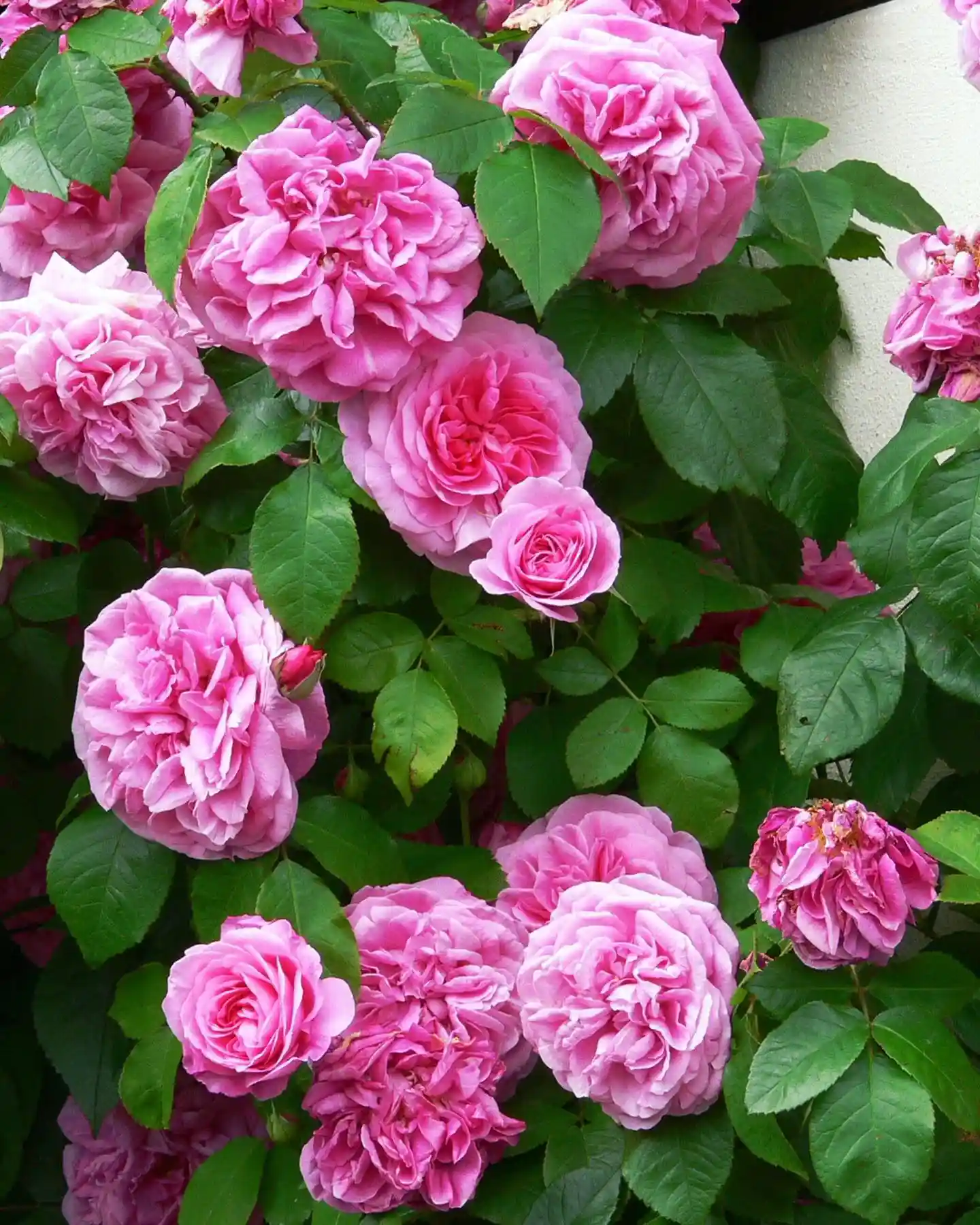
17 Perennials That Attract Bees All Season
A garden buzzing with bees feels healthy, lively, and full of movement. But one short burst of flowers won’t feed them for the whole growing season.
The best bee-friendly gardens combine spring, summer, and fall bloomers. These 17 perennials that attract bees return each year and provide a steady supply of pollen and nectar.
Plant a mix of them together, and your garden can support hungry pollinators from the first warm days of spring until the final flowers fade in fall.
17 Perennials That Attract Bees
Plant sizes and growing information were checked against the NC State Extension Gardener Plant Toolbox. Hardiness ranges may differ by cultivar and local climate.
| Plant | Zones | Main Bloom | Light | Soil Moisture |
| Lenten rose | 4-9 | Winter-early spring | Partial shade | Moist |
| Lungwort | 3-8 | Early spring | Partial shade | Moist |
| Wild columbine | 3-8 | Spring | Sun-part shade | Average-dry |
| Wild geranium | 3-8 | Spring | Part shade | Average-moist |
| Foxglove beardtongue | 3-8 | Late spring | Sun-part shade | Average |
| Blue wild indigo | 3-9 | Late spring | Full sun | Dry-average |
| Catmint | 3-8 | Late spring-summer | Full sun | Dry-average |
| Perennial salvia | 4-8 | Late spring-summer | Full sun | Dry-average |
| Bee balm | 4-9 | Summer | Sun-part shade | Moist |
| Anise hyssop | 4-8 | Midsummer-fall | Full sun | Dry-average |
| Mountain mint | 4-8 | Summer | Sun-part shade | Average-moist |
| Purple coneflower | 3-8 | Summer-fall | Sun-part shade | Average-dry |
| Threadleaf coreopsis | 3-9 | Late spring-summer | Full sun | Dry-average |
| Sneezeweed | 3-8 | Late summer-fall | Sun-part shade | Moist-wet |
| Goldenrod | 3-9 | Late summer-fall | Full sun | Dry-average |
| New England aster | 4-8 | Late summer-frost | Full sun | Average-moist |
| Autumn Joy stonecrop | 3-9 | Late summer-fall | Full sun | Dry-average |
1. Lenten Rose
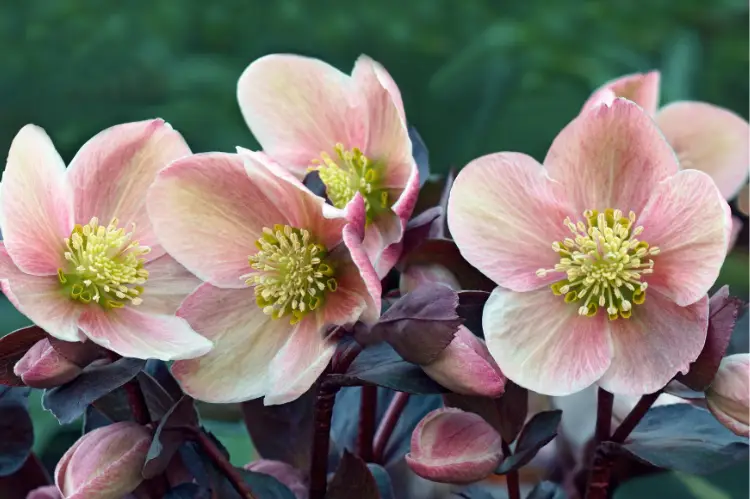
Lenten rose opens while much of the perennial bed is still asleep. On mild late-winter and early-spring days, its cup-shaped flowers provide food for early foraging bees. Choose single or semi-double forms with visible centers instead of heavily layered blooms.
- Bee value: Early nectar and pollen when few perennials are flowering.
- Light: Partial shade or dappled sunlight.
- Soil: Rich, moist, well-drained soil.
- Size and zones: About 1-2 feet tall; Zones 4-9.
- Care tip: Remove damaged older leaves before flowering. All parts are harmful if eaten, so place carefully around children and pets.
2. Lungwort

Lungwort provides early flowers in shady areas where many bee plants will not grow. Pink buds often open into blue or violet flowers, sometimes creating several colors on one plant. The spotted leaves remain attractive after the spring flowers fade.
- Bee value: Early-season food for bumblebees and other active spring bees.
- Light: Partial to full shade.
- Soil: Moist, well-drained soil with organic matter.
- Size and zones: Approximately 9-18 inches tall; Zones 3-8.
- Care tip: Provide airflow and steady moisture. Hot, dry conditions can lead to damaged foliage and powdery mildew.
3. Wild Columbine
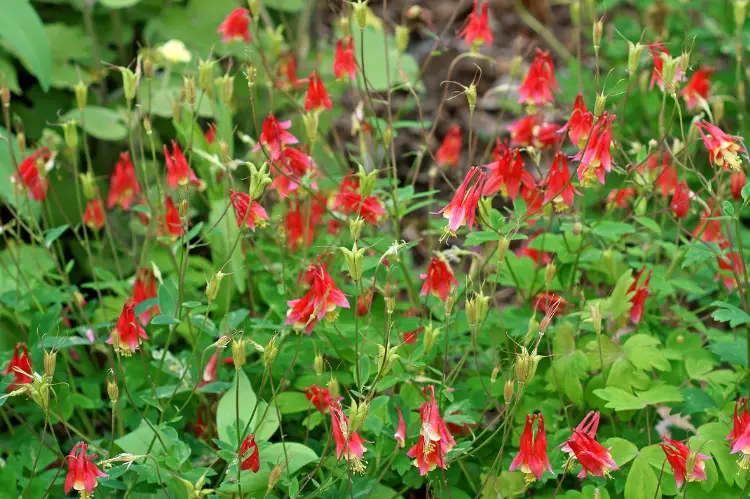
Wild columbine hangs red and yellow flowers above soft, divided leaves. The flowers have long spurs that hold nectar, making them useful for long-tongued bees. It also brings color into woodland edges before most summer perennials begin blooming.
- Bee value: Spring nectar for bumblebees and other long-tongued visitors.
- Light: Partial shade or full sun in cooler regions.
- Soil: Average to dry, well-drained soil.
- Size and zones: Around 1-3 feet tall; Zones 3-8.
- Care tip: Allow some seedheads to mature if you want a loose colony. Individual plants can be short-lived but may replace themselves through seed.
4. Wild Geranium
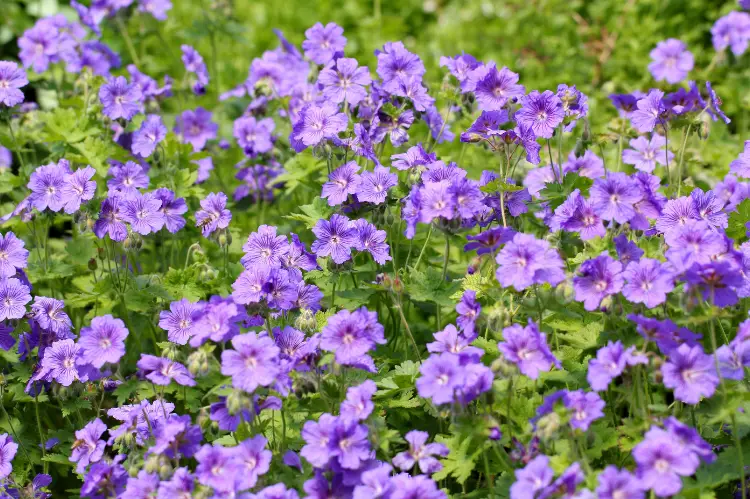
Wild geranium produces open pink, lavender, or rose-purple flowers that are easy for small native bees to enter. It forms a rounded leafy clump and fits naturally beneath open trees or along a partly shaded path.
- Bee value: Accessible spring pollen and nectar.
- Light: Partial shade, with morning sun accepted.
- Soil: Average to moist soil with good drainage.
- Size and zones: Approximately 1-2 feet tall; Zones 3-8.
- Care tip: The plant may become dormant during a hot, dry summer. Mark its position so the resting crown is not accidentally disturbed.
Related:-
5. Foxglove Beardtongue
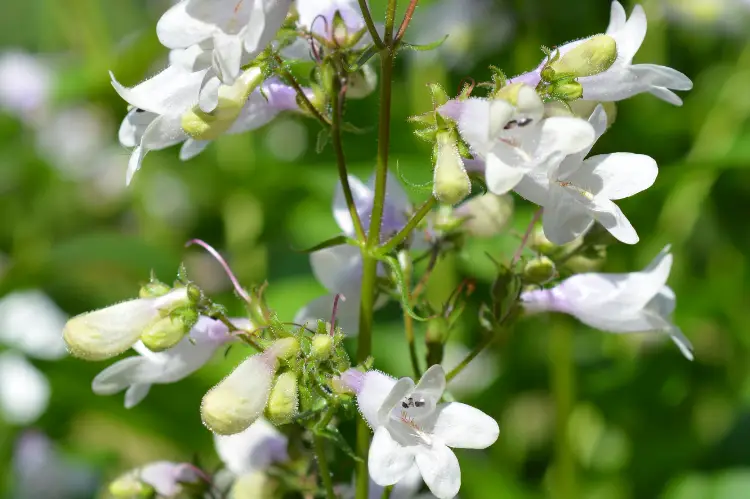
Foxglove beardtongue carries white or pale pink tubular flowers on upright stems. Bumblebees can crawl inside the tubes to gather food, often disappearing almost completely before backing out covered in pollen.
- Bee value: Late-spring nectar and pollen for bumblebees.
- Light: Full sun to partial shade.
- Soil: Average, well-drained soil that may become slightly dry.
- Size and zones: About 2-4 feet tall; Zones 3-8.
- Care tip: Leave some dry stems standing through winter because hollow stems may provide nesting spaces for small native bees.
6. Blue Wild Indigo

Blue wild indigo becomes a substantial shrub-like perennial without developing woody branches. Blue-purple pea-shaped flowers appear above rounded foliage in late spring. Bumblebees have enough weight and strength to enter the flowers and reach the pollen.
- Bee value: Late-spring food for larger native bees.
- Light: Full sun, with light shade accepted.
- Soil: Average to dry soil with good drainage.
- Size and zones: Usually 3-4 feet tall and wide; Zones 3-9.
- Care tip: Give it a permanent position. Its deep roots make established plants difficult to move successfully.
7. Catmint
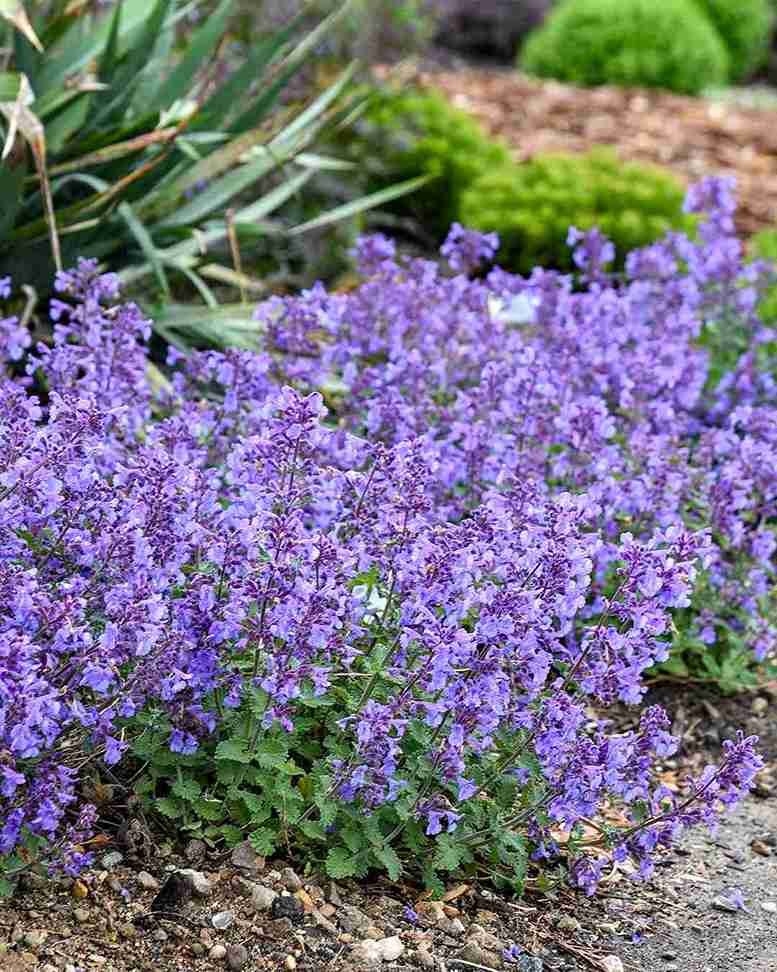
Catmint creates a long haze of lavender-blue flowers from late spring into summer. Bees move steadily between its small tubular blooms, while the gray-green leaves release a minty scent when touched.
- Bee value: A long-lasting nectar source between spring and summer bloomers.
- Light: Full sun.
- Soil: Dry to average, well-drained soil.
- Size and zones: Depending on the cultivar, 1-3 feet tall; Zones 3-8.
- Care tip: Shear the plant after its first heavy flowering period. Fresh leaves and a second round of blooms should follow.
8. Perennial Salvia

Perennial salvia sends up blue, violet, pink, or white flower spikes during late spring. Its timing helps feed bees after early woodland flowers fade but before midsummer plants reach full bloom.
- Bee value: Late-spring and early-summer nectar.
- Light: Full sun.
- Soil: Average to dry soil with good drainage.
- Size and zones: Common cultivars reach 1-2 feet tall; Zones 4-8.
- Care tip: Cut faded flower spikes back without removing the low leafy growth. Many cultivars will flower again later.
9. Bee Balm
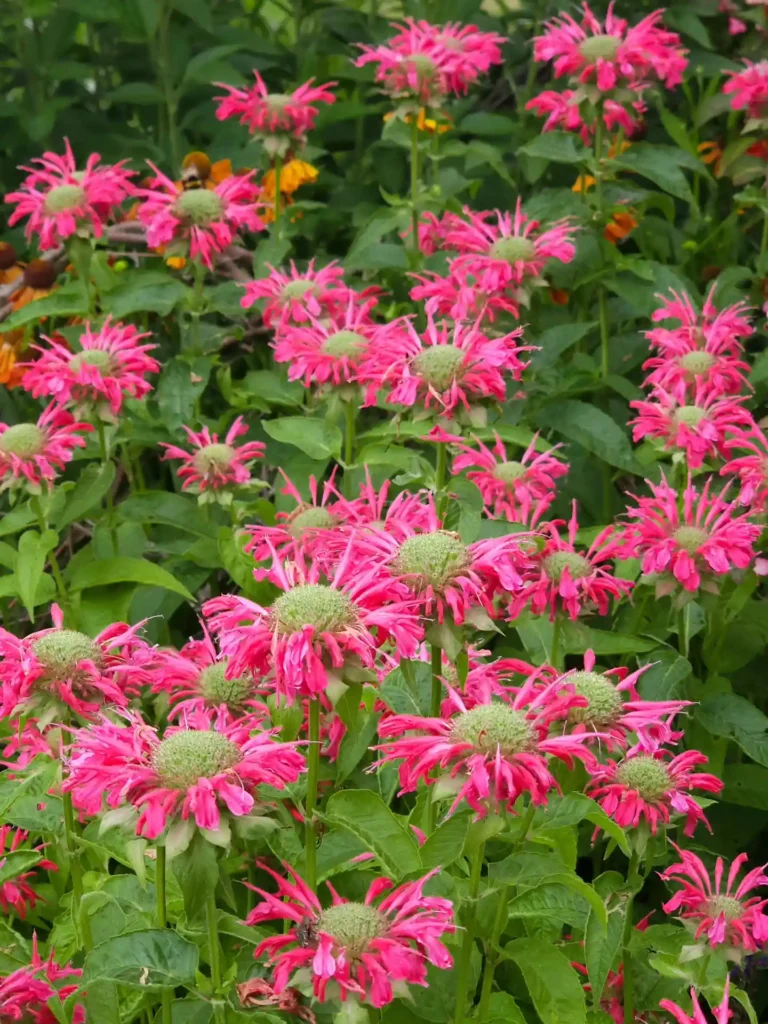
Bee balm earns its name from the steady activity around its red, pink, purple, or white flowers. Its shaggy flower heads contain many narrow tubes, and each one can hold nectar for visiting bees.
- Bee value: Summer food for bumblebees, honeybees, and other pollinators.
- Light: Full sun to partial shade.
- Soil: Moist, well-drained soil.
- Size and zones: About 2-4 feet tall; Zones 4-9.
- Care tip: Choose mildew-resistant cultivars and avoid overhead watering. Leave 12-24 inches of old hollow stems for nesting insects.
10. Anise Hyssop

Anise hyssop carries lavender-blue flower spikes above leaves that smell faintly of licorice. It begins flowering during summer and can continue into early fall, providing weeks of feeding activity.
- Bee value: Nectar for bumblebees, honeybees, and smaller native bees.
- Light: Full sun.
- Soil: Dry to average soil with good drainage.
- Size and zones: Approximately 2-4 feet tall; Zones 4-8.
- Care tip: It can produce plenty of seedlings. Remove unwanted plants while small or cut selected flower spikes before the seeds mature.
11. Mountain Mint

Mountain mint has small flowers, but the number of insects visiting them can be impressive. Pale blooms surrounded by silvery leaves create broad feeding areas where bees can move between flowers with little effort.
- Bee value: Summer nectar and pollen for many bee species.
- Light: Full sun to partial shade.
- Soil: Average to moist soil with good drainage.
- Size and zones: Usually 2-3 feet tall; Zones 4-8.
- Care tip: Mountain mint spreads through underground stems. Give it room or remove wandering sections during spring.
12. Purple Coneflower

Purple coneflower has a raised center made from many tiny flowers. This gives bees multiple feeding points on a single flower head. The broad petals also form a useful landing platform.
- Bee value: Summer nectar and pollen for small and large bees.
- Light: Full sun to partial shade.
- Soil: Average to dry, well-drained soil.
- Size and zones: Around 2-5 feet tall; Zones 3-8.
- Care tip: Choose single-flowered forms with open central cones. Leave some seedheads standing for birds and winter structure.
13. Threadleaf Coreopsis

Threadleaf coreopsis produces masses of yellow daisy-like flowers above fine green foliage. The open centers are easy for smaller bees to reach, while the long bloom period helps bridge late spring and midsummer.
- Bee value: Accessible nectar and pollen for small native bees.
- Light: Full sun.
- Soil: Sandy, rocky, or average soil with good drainage.
- Size and zones: Approximately 2-3 feet tall; Zones 3-9.
- Care tip: Shear faded flowers after the first flush. Rich or constantly wet soil can produce floppy growth.
14. Sneezeweed
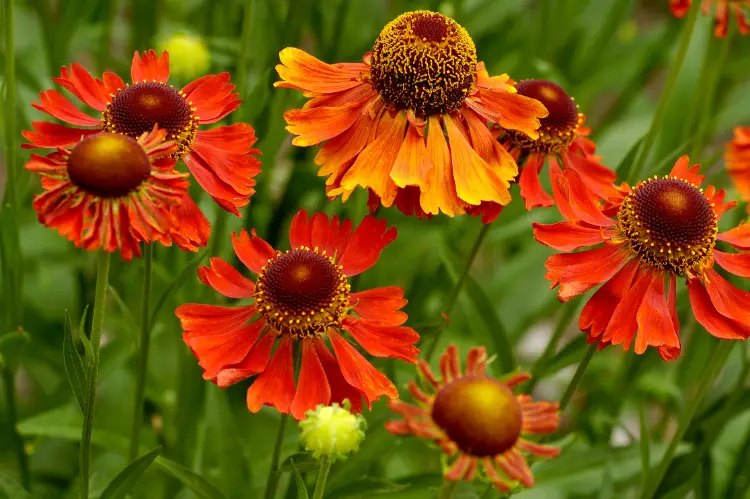
Sneezeweed produces yellow, orange, or reddish flowers around a raised central disk. That central area contains numerous small florets where bees can collect pollen and nectar during late summer.
- Bee value: Late-season food before asters and goldenrod reach their peak.
- Light: Full sun to partial shade.
- Soil: Moist to wet soil.
- Size and zones: Around 3-5 feet tall; Zones 3-8.
- Care tip: Cut stems back in early summer to encourage branching and shorter growth. Tall plants may need support in exposed areas.
15. Goldenrod

Goldenrod arrives when many summer flowers are slowing down. Its branching yellow flower clusters contain large numbers of small blooms, giving bees an abundant late-season food source before cold weather arrives.
- Bee value: Fall nectar and pollen for native bees, bumblebees, and honeybees.
- Light: Full sun.
- Soil: Dry to average soil, depending on the species.
- Size and zones: From 1-5 feet tall; commonly grown in Zones 3-9.
- Care tip: Choose a compact, clump-forming type for a small bed. Spreading species need space where they will not crowd slower plants.
16. New England Aster

New England aster covers tall stems with purple, pink, or violet flowers near the end of the growing season. The yellow centers provide pollen and nectar when bee colonies are preparing for colder weather.
- Bee value: Late-season food that may continue until frost.
- Light: Full sun.
- Soil: Average to moist, well-drained soil.
- Size and zones: Approximately 3-6 feet tall; Zones 4-8.
- Care tip: Pinch stems before midsummer for shorter, fuller plants. Keep the lower leaves hidden behind shorter flowers if they become untidy.
17. Autumn Joy Stonecrop
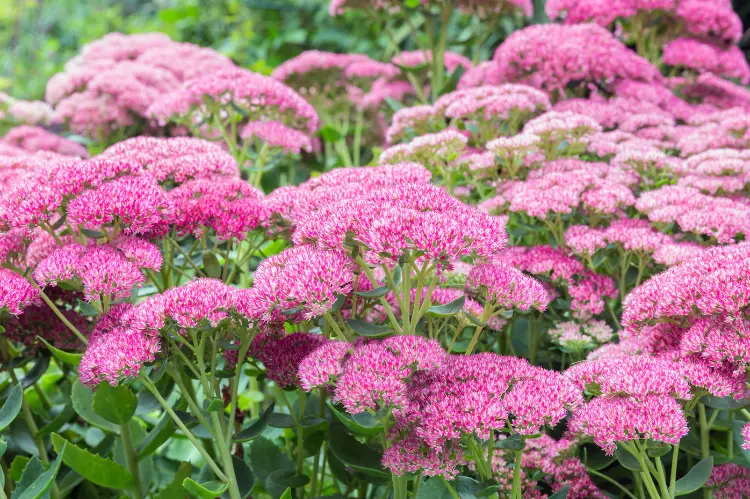
Autumn Joy stonecrop forms wide flower heads that change from pale green to pink and copper. The flat clusters become convenient feeding platforms for bees during late summer and fall.
- Bee value: Dependable late-season nectar.
- Light: Full sun.
- Soil: Average to dry soil with excellent drainage.
- Size and zones: About 18-24 inches tall; Zones 3-9.
- Care tip: Avoid rich fertilizer and excessive watering. Both can cause weak stems that open or collapse under the flower heads.
What Makes a Flower Useful to Bees?
A plant is more helpful when bees can reach its pollen and nectar. Large double flowers may look impressive but can contain fewer usable flower parts or block access with extra petals.
Flowering time matters just as much. Plant early, middle, and late bloomers so there is not a long food gap between seasons.
- Select several flower shapes rather than relying on one type.
- Group the same plants together so bees spend less energy searching.
- Include locally native flowers when they suit the site.
- Choose single or semi-double blooms with visible centers.
- Avoid plants treated with long-lasting systemic insecticides.
Give Bees Somewhere to Nest
Flowers provide food, but bees also need safe nesting places. Many native bees tunnel into bare soil, while others use hollow stems or holes left by beetles.
Leave a few patches of uncovered, undisturbed ground in a sunny and well-drained area. Thick mulch across every inch of soil can remove possible nesting sites.
Do not cut every perennial stem at ground level during fall. Leave some stems standing through winter, then cut them to different heights during spring.
The University of Minnesota Extension nesting guide recommends leaving bare ground, fallen leaves, hollow stems, and small sheltered areas for native bees.
Pesticide Safety Around Bees
Avoid spraying flowers while bees are visiting. Even products described as natural can harm insects when sprayed directly.
Start by identifying the pest. Hand removal, pruning, water sprays, and targeted treatment may solve the problem without covering the entire plant.
If treatment is necessary, follow the product label and avoid applying it to open flowers. Treat late in the evening when bee activity is lower, unless the label directs otherwise.
Frequently Asked Questions
Which perennial attracts the most bees?
There is no single winner for every region. Mountain mint, bee balm, anise hyssop, coneflower, goldenrod, and asters can all receive heavy bee activity when planted in suitable conditions.
A mixture of early, summer, and fall flowers will feed more bees than one plant with a short bloom period.
What flowers are best for bumblebees?
Bumblebees can use deeper flowers that smaller bees may struggle to enter. Foxglove beardtongue, wild columbine, blue wild indigo, bee balm, catmint, salvia, and anise hyssop are useful choices.
Open flowers such as coneflower and asters also give bumblebees easy feeding access.
Can I attract bees in a shady garden?
Yes. Lenten rose, lungwort, wild geranium, and wild columbine can provide flowers in partial shade.
Bee balm and foxglove beardtongue can also accept some shade, although they usually flower more heavily with several hours of sunlight.
Are bee-friendly perennials safe near a patio?
Most are suitable near seating areas. Bees gathering food are normally focused on flowers, but they should never be handled or disturbed.
Place tall, heavily visited flowers a short distance from narrow walkways, doors, and children’s play areas.
Are double flowers bad for bees?
Some double flowers have extra petals replacing the pollen-producing parts. Others make the center difficult for bees to reach.
Not every double cultivar is useless, but single and semi-double flowers are the safer choice when feeding bees is the main goal.
Should I plant native or non-native perennials?
Locally native flowers should form the foundation because they have long relationships with regional bee species. A plant described as native to North America may still fall outside your local area.
Non-native perennials such as catmint and perennial salvia can supply nectar, but they should not replace every local flower.
Start With Three Bloom Periods
You do not need all 17 plants. Begin with one early bloomer, two or three summer flowers, and at least one fall plant.
For partial shade, try lungwort, wild geranium, and bee balm. For a dry sunny bed, combine catmint, salvia, coreopsis, and stonecrop.
Add goldenrod or New England aster for fall food, then leave a little bare soil and several hollow stems. The goal is not simply to bring bees in for a photograph. It is to give them a place where they can feed and nest throughout the year.