How to Grow Russian Sage
Russian sage is a great choice if you want beautiful purple-blue flowers without spending hours watering and feeding your garden. This hardy perennial loves sunshine, handles dry conditions once established, and produces airy flower spikes from summer into fall.
Learning how to grow Russian sage starts with three things: plenty of sunlight, soil that drains quickly, and careful watering during its first growing season. Get these right, and the plant needs surprisingly little attention. Here’s everything you need to know about planting, pruning, and keeping Russian sage healthy year after year.

What Is Russian Sage?
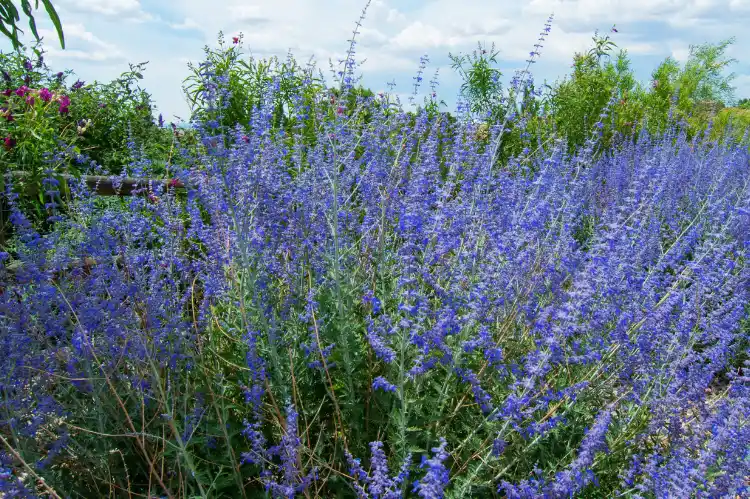
Russian sage (Salvia yangii, formerly Perovskia atriplicifolia) is a flowering perennial with silvery-green leaves, pale stems, and tall sprays of tiny lavender-blue flowers. It belongs to the mint family and is native to parts of Central and Southwest Asia.
Despite its name, Russian sage isn’t native to Russia, and it isn’t the same plant as the common sage used in cooking.
Its leaves have a strong herbal scent when touched, while the flowers attract bees, butterflies, and other pollinators.
Russian sage grows as a woody-based perennial, meaning the lower stems become woody while fresh growth appears during the warmer months. In colder areas, the upper stems may die back in winter before new shoots emerge in spring.
Russian Sage Plant Overview
| Feature | Details |
| Botanical name | Salvia yangii |
| Former botanical name | Perovskia atriplicifolia |
| Plant type | Woody-based perennial |
| USDA hardiness zones | Generally 5–9; some varieties tolerate Zone 4 |
| Sunlight | Full sun, at least 6 hours daily |
| Soil | Dry to moderately moist, well-drained |
| Mature height | Usually 2–4 feet |
| Mature spread | Usually 2–4 feet |
| Flower color | Lavender-blue to violet-blue |
| Blooming season | Midsummer through fall |
| Watering | Regular while establishing, low once established |
| Maintenance | Low |
| Wildlife benefits | Attracts bees and butterflies |
Plant size and winter hardiness vary by variety, so check the label before choosing one for your garden.
When to Plant Russian Sage
Spring is usually the best time to plant Russian sage. Once the danger of hard frost has passed and the soil begins warming, young plants have a full growing season to develop roots before winter.
Early summer planting can also work, although newly planted Russian sage needs closer attention during hot, dry weather.
In mild climates, early fall planting may be possible if the soil stays warm long enough for roots to establish. Avoid planting just before freezing weather, especially in areas with wet winters.
Container-grown nursery plants are generally the easiest choice for beginners. They already have an established root system and usually settle into garden beds more reliably than plants started from seed.
Where to Grow Russian Sage
Choosing the right location makes a bigger difference than almost anything you do afterward.
Russian sage prefers an open, sunny position where the soil dries between waterings. A hot border, gravel garden, or south-facing planting bed can work especially well.
How Much Sun Does Russian Sage Need?
Russian sage grows best with at least six hours of direct sunlight daily, and more sunlight is usually better.
Full sun helps produce strong stems, compact growth, and plenty of flowers.
In partial shade, the plant may survive, but its stems often grow longer and weaker. This can cause the branches to lean outward or fall over when the plant becomes heavy with flowers.
Avoid placing Russian sage underneath trees or along heavily shaded fences.
If your garden has a shaded area instead, consider plants better suited to those conditions, such as the varieties covered in our guide to growing hostas.
Best Soil for Russian Sage
Russian sage prefers sandy, gravelly, or loamy soil that drains well. It can tolerate relatively poor soil and usually doesn’t need rich compost or frequent fertilizer.
The most important requirement is drainage.
If rainwater remains around the roots for long periods, Russian sage can develop root rot. This is particularly troublesome during cold, wet winters.
Before planting, check how your soil behaves after heavy rain. If the area stays soggy for a day or longer, choose a better-drained spot or use a raised planting bed.
Russian sage tolerates acidic, neutral, and alkaline soils, so improving drainage is usually more useful than trying to change the soil’s pH.
How Far Apart Should You Plant Russian Sage?
Most full-sized Russian sage plants need around 2–4 feet of space, depending on their mature width.
Compact varieties can be planted closer together, but avoid crowding the stems against neighboring plants.
For a natural-looking border, leave enough room for the silvery foliage to spread outward. This also allows air to move around the plants, which helps leaves dry after rain.
How to Plant Russian Sage Step by Step
Planting Russian sage is straightforward once you’ve found the right location. Follow these steps to give young plants a healthy start.
Step 1: Choose a Healthy Plant
Look for a nursery-grown Russian sage with firm stems, healthy foliage, and no signs of rotting around the base.
A compact plant with several strong shoots is often a better choice than a tall, weak-looking one.
If you’re planting in a small garden, choose a compact variety rather than buying a full-sized plant and repeatedly cutting it back.
Step 2: Prepare the Planting Area
Remove weeds and loosen the surrounding soil.
If your soil is extremely heavy or stays wet after rain, improve drainage across the planting area or create a raised bed. Adding a little sand to one planting hole won’t fix a larger drainage problem.
Avoid mixing large quantities of manure or rich compost into the soil. Russian sage doesn’t need highly fertile ground.
Step 3: Dig the Planting Hole
Dig a hole about twice as wide as the plant’s root ball, but no deeper than the root ball itself.
The extra width gives roots room to move into the surrounding soil.
Keep the top of the root ball level with the surrounding ground. Planting too deeply can leave the woody crown sitting in damp soil.
Step 4: Remove the Plant From Its Container
Gently slide the plant out of its nursery pot.
If roots are tightly circling the outside of the root ball, carefully loosen the outer roots with your fingers.
Handle the root system gently. Russian sage can be slow to settle in after major root disturbance.
Step 5: Position and Backfill
Place the plant in the center of the hole.
Fill around the roots with the original soil, pressing lightly to remove large air pockets.
Check that the crown remains at the correct level before finishing.
Step 6: Water Thoroughly
Water the newly planted Russian sage slowly so moisture reaches the entire root ball.
Continue checking soil moisture regularly during the first growing season.
The goal is to help roots establish without keeping the soil constantly wet.
Step 7: Add Mulch Carefully
A thin layer of gravel mulch can help keep the soil surface tidy while allowing moisture to drain.
Organic mulch may also be used sparingly, but keep it away from the plant’s woody crown.
Avoid piling thick, damp mulch directly around the stems.
How Often Should You Water Russian Sage?
Russian sage needs more water when it is newly planted than it does after becoming established.
Watering During the First Growing Season
Check the soil regularly, particularly during hot weather.
If the soil around the root ball is drying out, water deeply so moisture reaches the developing roots.
Let the surface begin drying between waterings.
There is no perfect watering schedule for every garden. Sandy soil may dry quickly, while heavier soil holds moisture longer.
A newly planted Russian sage in a hot, windy location will also need more attention than one growing in cooler conditions.
Watering Established Russian Sage
Once established, Russian sage is highly drought-tolerant.
Plants growing in the ground may need little supplemental watering when rainfall is adequate. During long periods of intense drought, a deep watering can still help prevent severe stress.
Avoid giving established Russian sage frequent, shallow waterings simply because nearby flowers need them.
Too much moisture can cause weak growth, yellowing leaves, and root problems.
A useful rule: Check the soil before watering. Russian sage generally copes better with a short dry spell than with continuously wet roots.
Does Russian Sage Need Fertilizer?
Russian sage usually grows well without regular fertilizer.
In fact, adding too much fertilizer can create more problems than it solves.
Highly fertile soil encourages soft, fast-growing stems that may become too tall to support themselves. The result can be a floppy plant with fewer attractive upright flower spikes.
If your Russian sage has healthy leaves, grows steadily, and flowers normally, there’s usually no reason to feed it.
When growth is unusually poor, check sunlight, soil drainage, and root health first. A soil test can help determine whether nutrients are actually lacking.
Avoid heavy nitrogen feeding.
How to Prune Russian Sage
Pruning is one of the few regular jobs Russian sage benefits from.
Without occasional cutting back, older stems can become woody, untidy, and less attractive.
When Should You Cut Back Russian Sage?
Early to mid-spring is generally the best time to prune Russian sage, when new shoots begin appearing near the base.
Leaving the old stems standing through winter has several benefits. They provide some winter structure, make the plant easier to locate, and help protect the crown from unnecessary disturbance.
In spring, look for small new shoots or swelling buds close to the lower stems before pruning.
Russian sage can start growing later than some other perennials, especially after a cold winter. Don’t assume the plant has died simply because nearby flowers have already started growing.
How Far Back Should You Cut Russian Sage?
For many established plants, cutting the old stems to approximately 6–12 inches above the ground works well.
Depending on the plant and local conditions, pruning can be lower when strong new shoots are visible near the base.
Follow these steps:
- Check for healthy new shoots near the crown.
- Remove dead or broken stems.
- Cut old stems back just above healthy new growth.
- Remove weak stems that crowd the center.
- Clear away the cut material without damaging fresh shoots.
Use clean, sharp pruning shears for neat cuts.
The plant should produce new growth from its lower framework as temperatures rise.
Should You Deadhead Russian Sage?
Russian sage generally doesn’t need deadheading.
Its small flowers and colorful flower structures maintain an attractive appearance over a long period, even as individual blooms fade.
Removing spent flowers usually doesn’t produce a major increase in flowering.
For most gardeners, leaving the flower spikes alone until spring is easier and preserves some winter interest.
How to Keep Russian Sage From Flopping Over
Russian sage naturally has an airy, somewhat loose shape. However, excessive leaning can make the plant look messy or cover nearby flowers.
Three growing conditions commonly cause this problem.
Too much shade: Stems stretch toward the light and become less sturdy.
Overly rich soil: Excess nutrients encourage fast, weak growth.
A naturally spreading variety: Some older varieties have a wider, looser habit than modern compact selections.
To keep Russian sage upright, plant it in full sun, avoid heavy feeding, and prune properly in spring.
If your plant is already established in a sunny location but still spreads outward, you can give it temporary support or choose a more upright cultivar when replacing it.
Popular Russian Sage Varieties to Grow
Not every Russian sage grows to the same size. Some varieties have a compact shape suitable for small gardens, while others spread several feet across.
| Variety | Approximate mature size | Best for |
| Blue Jean Baby | 30 inches tall, 32 inches wide | Small borders and compact plantings |
| Denim ‘n Lace | 33 inches tall, 48 inches wide | Wide borders and full flower displays |
| Blue Spritzer | 30 inches tall, 32 inches wide | Rounded, bushy plantings |
| Little Spire | Around 2 feet tall | Small spaces and front borders |
| Longin | Around 4 feet tall and wide | Taller, more upright garden accents |
Actual plant sizes depend on growing conditions.
For a small garden, Blue Jean Baby is a particularly useful choice because of its compact habit and dense flower spikes.
If you have more room, Denim ‘n Lace produces a fuller display and works well in larger mixed borders.
Can You Grow Russian Sage in Pots?
Yes, Russian sage can grow in containers, especially the smaller varieties.
Choose a large, sturdy container with drainage holes. The pot needs enough room for the plant’s developing roots and enough weight to stop tall stems from tipping it over.
Use a free-draining potting mix rather than dense garden soil.
Place the container in a sunny spot where the plant receives at least six hours of direct sunlight.
Container-grown Russian sage needs more frequent soil checks than plants in the ground because potting mix dries out faster.
Water thoroughly when needed, then allow excess water to escape through the drainage holes. Never leave the container sitting in a saucer of water.
In cold climates, remember that roots in containers are less protected from freezing temperatures than roots planted in the ground. Move pots to a suitable sheltered outdoor location during harsh winter weather.
Russian Sage Care Through the Seasons
Russian sage doesn’t require the same care throughout the year. A few small changes with each season are usually enough.
Spring
Watch for fresh shoots near the base of the plant.
Once new growth appears, prune away the previous year’s stems. Remove any damaged branches and check that water drains freely around the crown.
Spring is also the preferred time to plant new Russian sage.
Summer
Russian sage produces fresh foliage and begins developing its tall flowering spikes.
Established plants usually need little attention beyond occasional watering during extended drought.
Avoid feeding heavily, and check young plants more often during dry weather.
Fall
Flowers may continue into early fall, depending on the climate and variety.
You can leave the fading flower spikes standing rather than cutting the entire plant down.
Reduce supplemental watering as growth slows, and avoid late-season fertilizer that encourages soft new shoots.
Winter
Russian sage usually loses its leaves and may die back toward its woody base.
Leave the stems in place until spring if possible.
The main concern during winter is often excess moisture around the roots, especially where cold weather is combined with poorly drained soil.
How to Propagate Russian Sage
Russian sage can be propagated from stem cuttings or seeds. Stem cuttings are a useful option when you want another plant with the same characteristics as an existing named variety.
Growing Russian Sage From Cuttings
Late spring to early summer is a good time to take cuttings from fresh, healthy growth.
- Select a healthy, non-flowering shoot.
- Cut a short section of soft new growth.
- Remove the leaves from the lower portion.
- Insert the cutting into a small pot of free-draining propagation mix.
- Keep it in bright, indirect light while roots develop.
- Keep the mix lightly moist, avoiding soggy conditions.
Once the cutting develops a healthy root system, gradually introduce it to stronger outdoor light before planting it in its permanent location.
Growing Russian Sage From Seeds
Russian sage can also be grown from seed, but this method is less predictable.
Seed-grown plants may differ from the parent plant in size, shape, and flower color. Some named cultivars may not produce viable or true-to-type seed.
For a specific variety, buying a nursery plant or taking cuttings is usually the better choice.
Can You Divide Russian Sage?
Russian sage generally doesn’t need routine division.
Its woody base and established root system can make dividing or moving mature plants difficult.
Some plants produce rooted shoots around the original clump. These can sometimes be separated and replanted, but propagation by cuttings is often simpler.
Common Russian Sage Problems and How to Fix Them
Russian sage is generally resistant to serious pest problems, but unsuitable growing conditions can still affect its health.
| Problem | Possible cause | What to do |
| No flowers or very few flowers | Too much shade, immature plant, or poor growing conditions | Move to full sun if possible and allow young plants time to establish |
| Stems falling over | Shade, excess fertilizer, or naturally loose growth | Improve sunlight, avoid feeding, and prune in spring |
| Yellowing leaves | Too much water, poor drainage, or occasionally severe drought | Check soil moisture and root conditions before watering |
| Brown, dry leaves | Extended drought or seasonal dieback | Check the soil and examine whether stems remain healthy |
| Rotting stems near the base | Waterlogged soil or root rot | Improve drainage and remove badly affected material |
| Weak growth after winter | Cold damage or wet winter soil | Wait for spring regrowth and check crown health |
| Leaves with spots or powdery patches | Possible fungal disease | Improve airflow, avoid wetting foliage repeatedly, and remove badly affected leaves |
Why Is My Russian Sage Not Blooming?
Lack of sunlight is one of the first things to check.
A plant growing in partial shade may produce plenty of stems but fewer flowers than one receiving direct sun for most of the day.
Young plants may also need time to establish before producing a full display.
Check whether the plant receives at least six hours of sunlight, and avoid excessive fertilizer.
Why Are My Russian Sage Leaves Turning Yellow?
Yellow leaves can have several causes, but wet soil is an important possibility.
Check the soil a few inches below the surface. If it remains damp for long periods, reduce watering and look for drainage problems.
Severe drought can sometimes cause similar symptoms, so don’t assume yellow leaves automatically mean the plant needs more water.
Why Didn’t My Russian Sage Come Back After Winter?
Russian sage can look dead for part of spring because new growth sometimes appears later than expected.
Before removing the plant, look carefully for living shoots emerging near the crown.
If there is no new growth after the weather has warmed, examine the crown for signs of decay or damage.
Plants growing in poorly drained soil may suffer more during wet winters than those in drier beds.
Best Companion Plants for Russian Sage
Russian sage works well with flowers that enjoy sunshine, especially those with yellow, pink, orange, or white blooms.
Its silvery foliage and light blue flowers provide a soft contrast against stronger colors.
Black-Eyed Susans
Yellow black-eyed Susans look especially striking beside Russian sage.
The golden flowers provide a warm contrast to the lavender-blue spikes, making this combination a good choice for sunny late-summer borders.
Coneflowers
Pink and purple coneflowers pair nicely with Russian sage.
Their larger, rounded flower heads contrast with the plant’s thin, airy spikes. Both can attract pollinators.
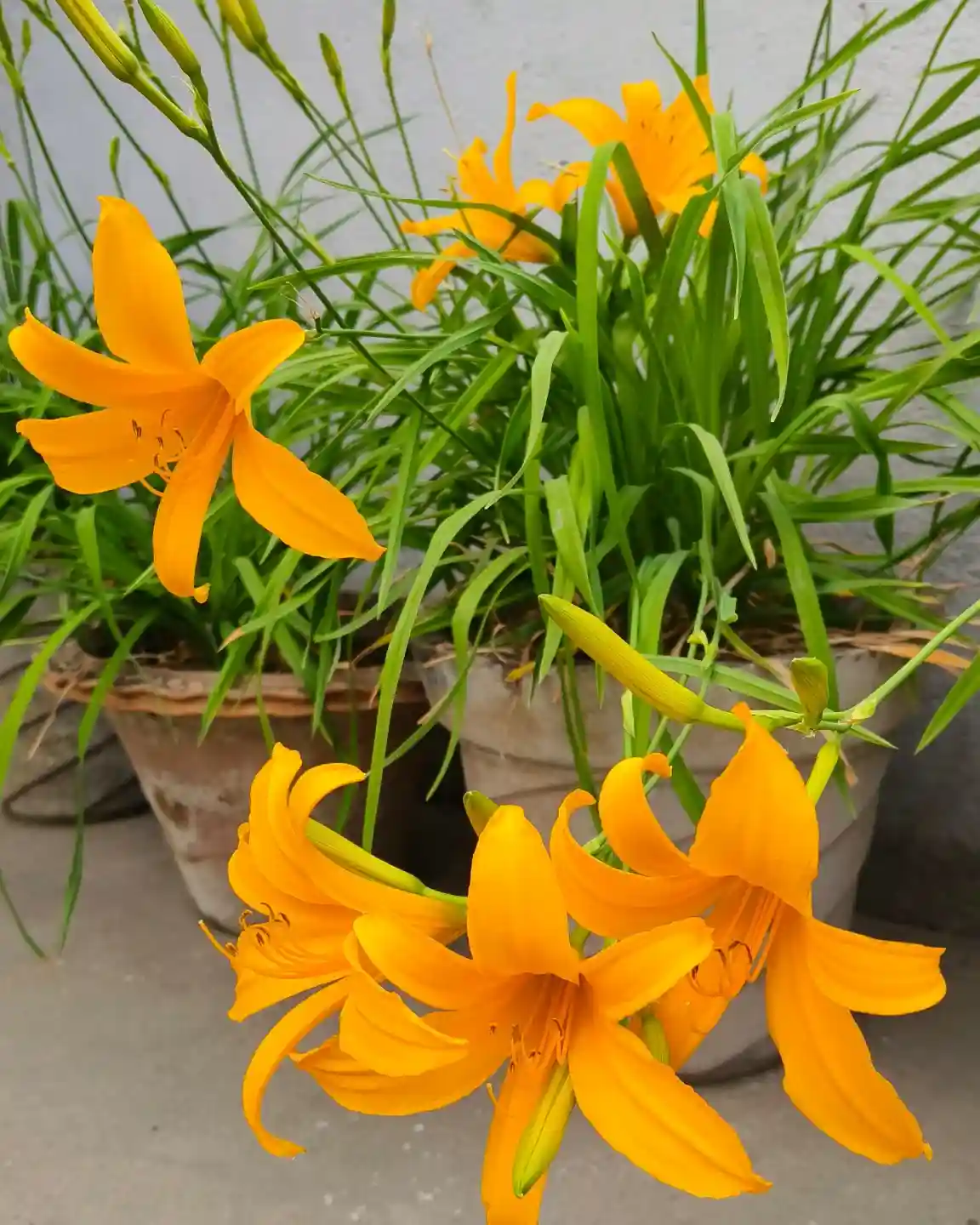
Daylilies
Daylilies bring bold flowers and arching green leaves to a mixed perennial bed.
Russian sage adds a lighter texture behind them, while daylilies provide a fuller appearance near the front.
For more planting and maintenance advice, see our guide to growing daylilies.
Daylilies generally appreciate more moisture than established Russian sage, so arrange the bed to allow different watering needs.
Shasta Daisies
White Shasta daisies create a fresh, simple combination with the blue flowers and silver foliage of Russian sage.
They work particularly well in sunny cottage-style flower beds.
Our Shasta daisy growing guide covers planting, sunlight, and seasonal care.
Give Shasta daisies their own suitable moisture conditions rather than assuming they need as little water as Russian sage.
Ornamental Grasses
Fine-textured ornamental grasses pair naturally with Russian sage.
Their soft foliage and seed heads create movement around the taller flower spikes, particularly in gravel gardens and informal borders.
Choose grasses suited to your local climate and soil conditions.
Does Russian Sage Spread?
Russian sage forms a spreading clump, and some plants may produce new shoots from underground stems or occasionally self-seed.
How much it spreads depends on the variety and growing conditions.
In smaller beds, check for unwanted shoots around the parent plant and remove them while they’re young.
Some compact cultivars have a tidier growth habit and are easier to fit into limited spaces.
If unwanted spreading is a concern, check local gardening advice before planting Russian sage in open ground.
Frequently Asked Questions About Growing Russian Sage
Does Russian sage come back every year?
Yes. Russian sage is a perennial and can return each spring when grown in a suitable climate with good drainage. The upper stems may die back during winter, while fresh shoots emerge from the lower parts of the plant.
Does Russian sage need full sun?
Russian sage performs best in full sun, with at least six hours of direct sunlight daily. Too much shade can lead to fewer flowers and weak stems that lean or fall over.
How long does Russian sage take to grow?
Russian sage may take a growing season or more to establish a strong root system. Many plants become fuller over the following seasons, with the mature size depending on the variety and growing conditions.
Should Russian sage be cut back in fall or spring?
Spring is generally the better time. Leaving the old stems standing through winter provides some protection and structure. Cut them back once you can see fresh growth near the base.
Is Russian sage drought-tolerant?
Yes, established Russian sage handles dry conditions very well. Newly planted Russian sage still needs regular moisture while roots develop, so don’t treat a young plant as fully drought-tolerant.
Do bees like Russian sage?
Yes. Russian sage flowers attract bees and other pollinating insects. Its long flowering period makes it a useful addition to a sunny pollinator garden.
Can Russian sage grow in clay soil?
It can grow in clay-containing soil if drainage is good. Heavy, compacted clay that stays wet is a poor choice. A raised bed or better-drained planting location is often safer.
Is Russian sage the same as culinary sage?
No. Although Russian sage now belongs to the Salvia genus, it is different from common culinary sage (Salvia officinalis). Grow Russian sage as an ornamental plant rather than using it as a cooking herb.