21 Blue Perennial Flowers for Your Garden
True blue is one of the hardest flower colors to find, which makes it feel extra special in a garden. Blue perennial flowers can cool down a sunny border, brighten a shaded path, or soften stronger red and orange blooms.
Some flowers on this list are sky blue or deep indigo, while others may lean violet under certain light. With the right mix, you can enjoy blue flowers from early spring through fall.
Blue Perennial Flowers at a Glance
Growing zones, sizes, and flower colors can differ between species and named varieties. Always check the plant label before buying.
| Blue perennial | USDA zones | Main bloom time | Light | Typical height |
| Blue false indigo | 3–9 | Late spring–early summer | Full sun | 3–4 feet |
| Delphinium | 3–7 | Early–midsummer | Full sun | 3–6 feet |
| Virginia bluebells | 3–8 | Spring | Part–full shade | 1–2 feet |
| Siberian iris | 3–9 | Late spring–early summer | Sun–part shade | 2–4 feet |
| Balloon flower | 3–8 | Summer | Sun–part shade | 1–3 feet |
| Blue star | 3–9 | Late spring | Sun–part shade | 2–3 feet |
| Himalayan blue poppy | 5–8 | Late spring–summer | Part shade | 2–4 feet |
| Brunnera | 3–8 | Spring | Part–full shade | 1–2 feet |
| Jacob’s ladder | 3–8 | Spring–early summer | Part shade | 1–3 feet |
| Rocky Mountain columbine | 3–8 | Late spring–summer | Sun–part shade | 1–2 feet |
| Hardy geranium | 5–8 | Late spring–fall | Sun–part shade | 1–2 feet |
| Globe thistle | 3–9 | Summer | Full sun | 2–4 feet |
| Sea holly | 4–9 | Summer | Full sun | 2–3 feet |
| Great blue lobelia | 4–9 | Late summer–fall | Sun–part shade | 2–3 feet |
| Blue flax | 4–9 | Late spring–summer | Full sun | 1–2 feet |
| Gentian | 3–8 | Summer–fall | Sun–part shade | 4 inches–2 feet |
| Italian bugloss | 3–8 | Late spring–summer | Full sun | 3–5 feet |
| Blue-eyed grass | 4–9 | Late spring–summer | Sun–part shade | 6–18 inches |
| Bellflower | 3–8 | Summer | Sun–part shade | 6 inches–3 feet |
| Monkshood | 3–8 | Late summer–fall | Part shade | 3–5 feet |
| Catmint | 3–9 | Late spring–fall | Full sun | 1–3 feet |
1. Blue False Indigo

Blue false indigo develops into a broad, shrub-like perennial covered with indigo-blue flower spikes. The pea-shaped flowers rise above blue-green leaves in late spring, giving a young border height and structure.
The plant may take a few years to reach full size, but established clumps can live for decades with little attention.
- Botanical name: Baptisia australis
- Light: Full sun
- Soil: Average to dry soil with good drainage
- Size: Around 3–4 feet tall and wide
- Care tip: Choose its location carefully because the deep roots make transplanting difficult
2. Delphinium

Delphiniums produce some of the clearest blue flowers available for a perennial garden. Their tall spires can carry dozens of blooms in shades ranging from pale sky blue to rich cobalt.
These flowers look beautiful at the back of a cottage border, but they need more attention than many plants on this list. Tall varieties often require staking.
- Botanical name: Delphinium species and hybrids
- Light: Full sun with protection from hot afternoon heat
- Soil: Rich, moist, well-drained soil
- Size: Around 3–6 feet tall
- Care tip: Stake tall stems early so wind and heavy rain do not flatten them
3. Virginia Bluebells

Virginia bluebells are among the first blue perennial flowers to appear in spring. Pink buds open into hanging, trumpet-shaped flowers that mature to a soft blue.
The foliage dies back after flowering, leaving an empty space by summer. Plant bluebells between ferns, hostas, or other shade plants that will grow later and cover the gap.
- Botanical name: Mertensia virginica
- Light: Partial to full shade
- Soil: Rich, moist soil with good drainage
- Size: Around 1–2 feet tall
- Care tip: Mark the planting area so you do not accidentally dig into dormant roots
Related article: 21 Pink Perennial Flowers for Every Garden Spot
4. Siberian Iris

Siberian iris brings slim leaves and graceful blue flowers to beds with average or slightly damp soil. The blooms stand above the foliage in late spring and may appear in blue, violet-blue, or blue and white combinations.
Unlike bearded iris, Siberian iris does not need its rhizomes exposed at the soil surface. It also has fewer problems with iris borers.
- Botanical name: Iris sibirica
- Light: Full sun to partial shade
- Soil: Average to moist soil
- Size: Around 2–4 feet tall
- Care tip: Divide older clumps when flowering becomes sparse
5. Balloon Flower
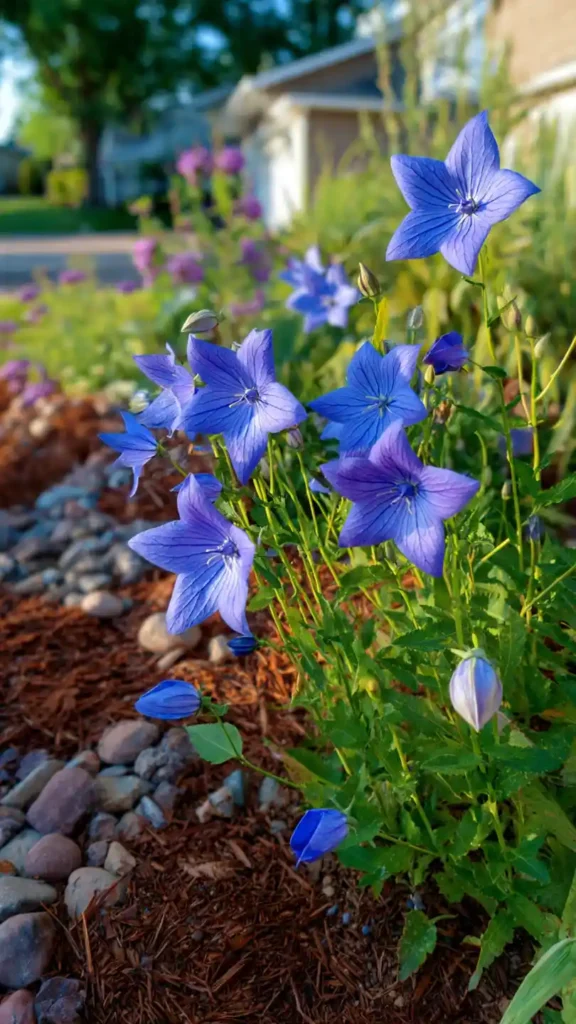
Balloon flower gets its name from the round buds that swell before opening into star-shaped flowers. Blue is the classic color, though white and pink varieties are also available.
This compact perennial fits small flower beds and containers. It emerges late in spring, so give it time before assuming it did not survive winter.
- Botanical name: Platycodon grandiflorus
- Light: Full sun to partial shade
- Soil: Average, well-drained soil
- Size: Around 1–3 feet tall
- Care tip: Mark its position because the new growth appears later than many perennials
6. Blue Star
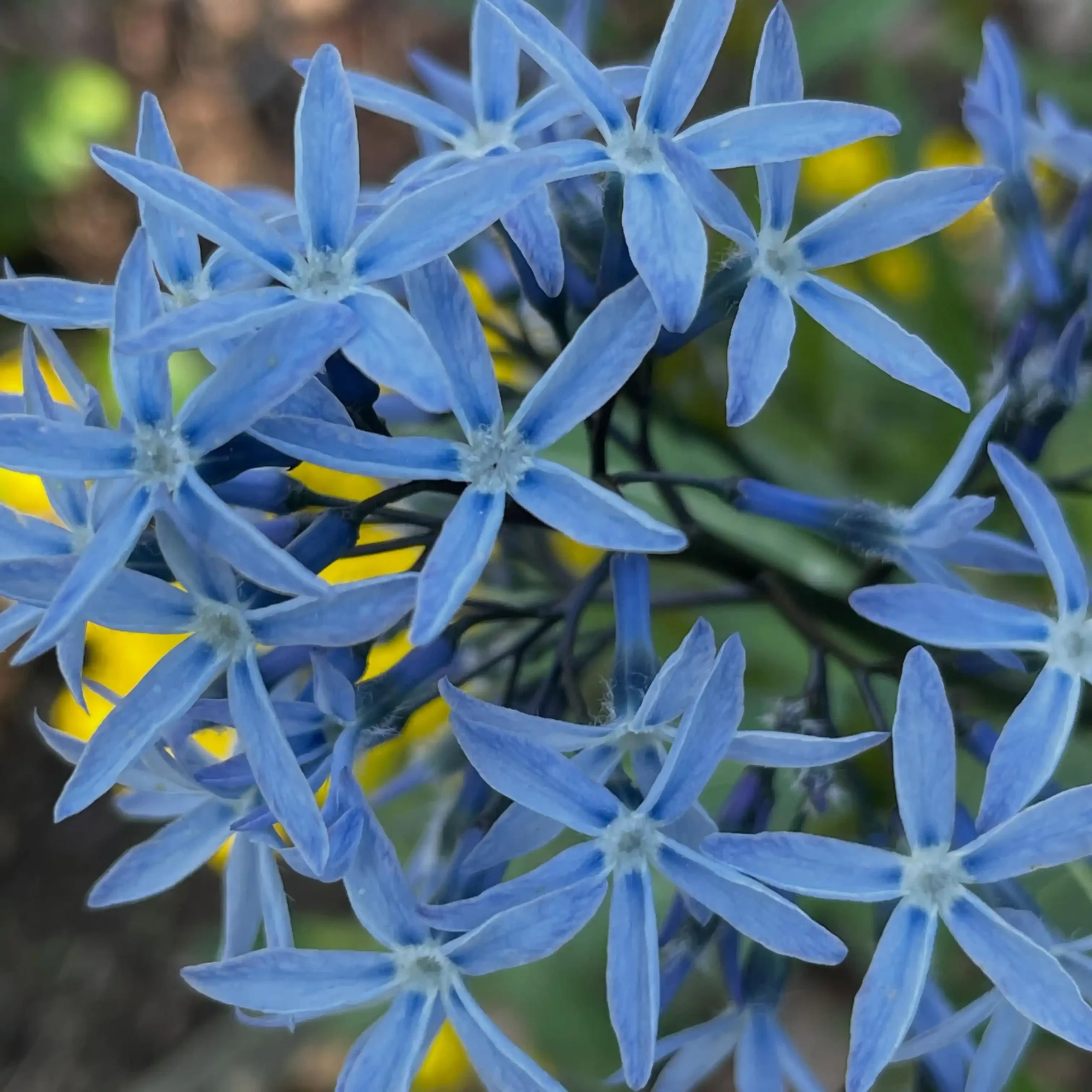
Blue star produces loose clusters of pale blue, star-shaped flowers above narrow green leaves. The fine foliage turns golden yellow in fall, giving the plant another season of color.
Its rounded shape works well in relaxed borders, native gardens, and foundation beds. Established plants tolerate heat and short dry periods.
- Botanical name: Amsonia species
- Light: Full sun to partial shade
- Soil: Average, well-drained soil
- Size: Around 2–3 feet tall and wide
- Care tip: Grow it in full sun for a denser shape that is less likely to flop
7. Himalayan Blue Poppy
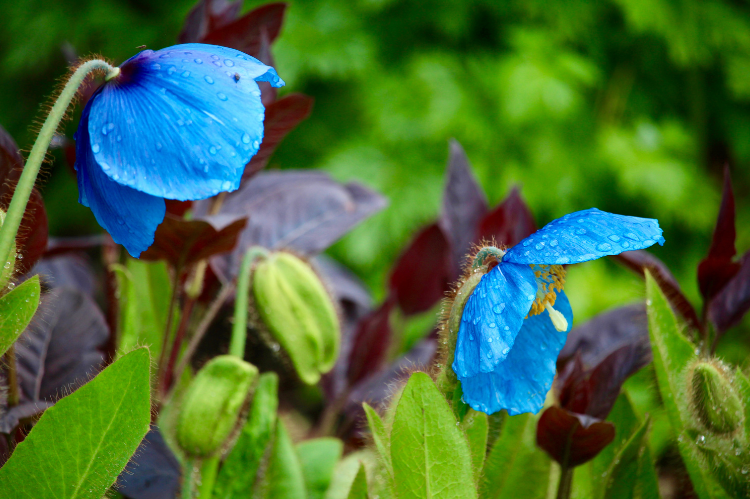
Himalayan blue poppy has large, silky flowers in a color that is difficult to match. The blue petals surround golden stamens, creating a flower that looks almost unreal.
This is not an easy plant for hot or dry regions. It prefers cool summers, shelter from strong afternoon sun, and soil that stays moist without becoming waterlogged.
- Botanical name: Meconopsis species
- Light: Partial shade
- Soil: Rich, acidic, consistently moist soil
- Size: Around 2–4 feet tall
- Care tip: Skip this plant if your summers are hot, dry, or humid
8. Brunnera
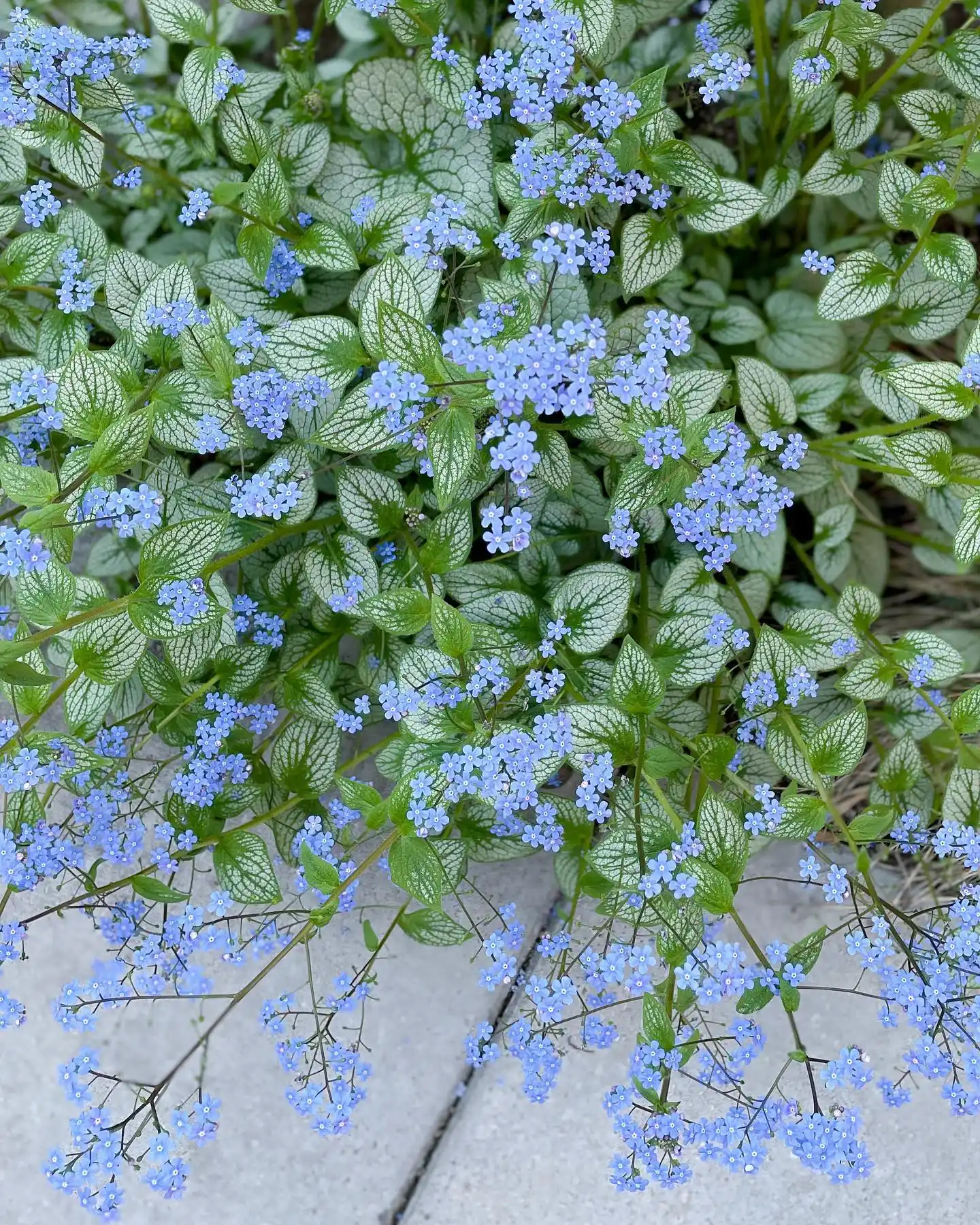
Brunnera carries clouds of tiny blue flowers that resemble forget-me-nots. Heart-shaped leaves remain after the spring flowers finish, and silver-leaved varieties can brighten shaded beds for months.
The plant grows neatly beneath trees, beside paths, and around larger shade perennials. It handles deep shade better than many flowering plants.
- Botanical name: Brunnera macrophylla
- Light: Partial to full shade
- Soil: Moist, rich, well-drained soil
- Size: Around 1–2 feet tall
- Care tip: Give silver-leaved varieties protection from hot afternoon sun
9. Jacob’s Ladder
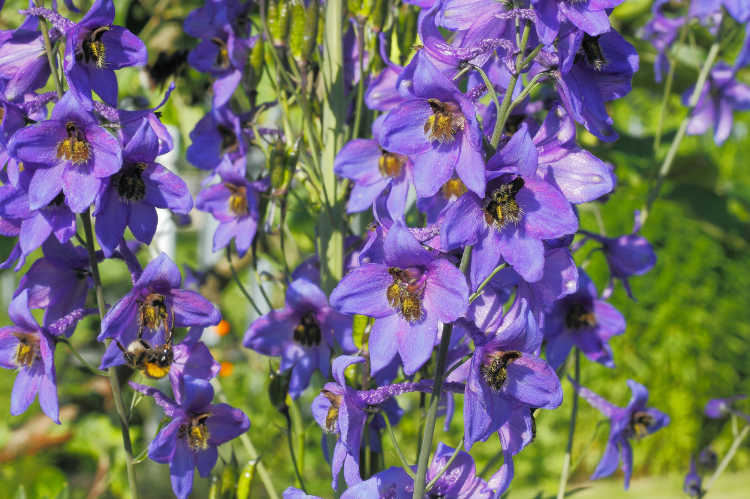
Jacob’s ladder combines fern-like leaves with clusters of small blue or violet-blue flowers. The leaflets sit along each stem like the steps of a ladder, giving the plant its common name.
It grows best in cool woodland borders where the soil does not dry completely. Some varieties may produce another light bloom after trimming.
- Botanical name: Polemonium species
- Light: Partial shade
- Soil: Rich, moist, well-drained soil
- Size: Around 1–3 feet tall
- Care tip: Cut back faded flowers to tidy the plant and limit unwanted seedlings
10. Rocky Mountain Columbine
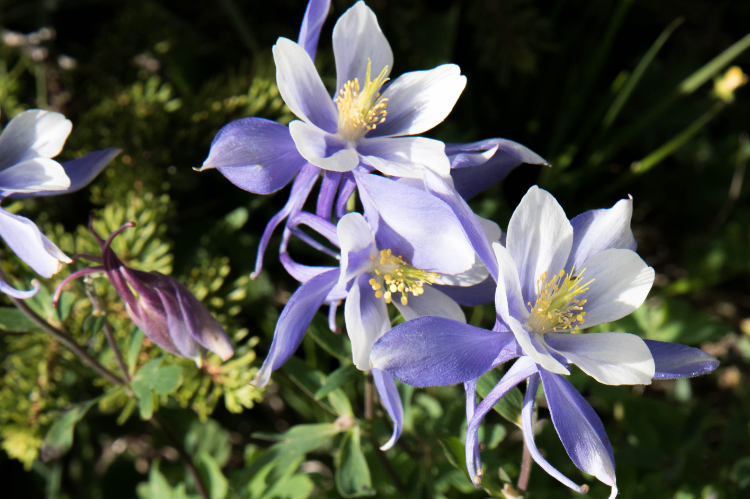
Rocky Mountain columbine carries blue and white flowers above soft, divided leaves. Its nodding flowers have long backward-pointing spurs that give them a light, airy shape.
This short-lived perennial may reseed when it likes its growing conditions. The original plant might not live for many years, but new seedlings can keep the display going.
- Botanical name: Aquilegia caerulea
- Light: Full sun in cool areas or partial shade in warmer climates
- Soil: Average, well-drained soil
- Size: Around 1–2 feet tall
- Care tip: Leave a few seedheads standing if you want new plants
11. Hardy Geranium

Hardy geraniums form spreading mounds covered with open, saucer-shaped flowers. ‘Rozanne’ is a popular variety with violet-blue blooms and a long flowering period that can continue from early summer into fall.
This is not the same plant as the tender geranium commonly grown in patio pots. Hardy geranium returns after winter in suitable zones.
- Botanical name: Geranium species and hybrids
- Light: Full sun to partial shade
- Soil: Average, well-drained soil
- Size: Around 1–2 feet tall
- Care tip: Shear untidy growth after the first heavy bloom to encourage fresh leaves
12. Globe Thistle

Globe thistle produces round, steel-blue flower heads on stiff stems. The spiky flowers and silver-green foliage bring a strong shape to sunny borders.
The plant tolerates dry soil after its roots are established. Bees and butterflies often gather on the flower heads, making it a useful choice for a pollinator garden.
- Botanical name: Echinops species
- Light: Full sun
- Soil: Dry to average soil with good drainage
- Size: Around 2–4 feet tall
- Care tip: Avoid rich soil and excess fertilizer, which can make the stems weak
13. Sea Holly

Sea holly looks different from soft cottage flowers. Its cone-shaped flower heads are surrounded by pointed blue or silver bracts, and the stems may also take on a blue tone.
It is an excellent plant for hot, sunny beds with poor soil. Once established, its long taproot helps it cope with dry periods.
- Botanical name: Eryngium species
- Light: Full sun
- Soil: Sandy or rocky soil with sharp drainage
- Size: Around 2–3 feet tall
- Care tip: Do not move established plants because their taproots dislike disturbance
14. Great Blue Lobelia
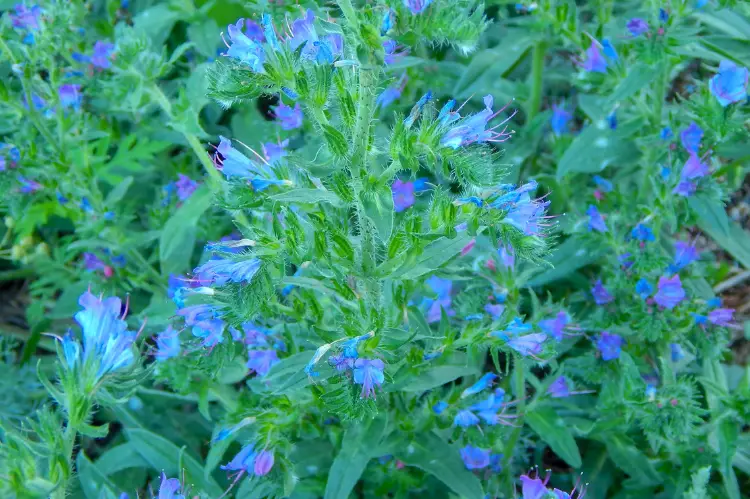
Great blue lobelia sends up tall stems lined with blue-violet tubular flowers. It blooms late in the season when many spring and early-summer perennials have finished.
This native perennial prefers damp soil and can grow near rain gardens, streams, ponds, or low areas that hold moisture.
- Botanical name: Lobelia siphilitica
- Light: Full sun to partial shade
- Soil: Moist to wet, rich soil
- Size: Around 2–3 feet tall
- Care tip: Water during dry weather because this plant dislikes dry roots
15. Blue Flax
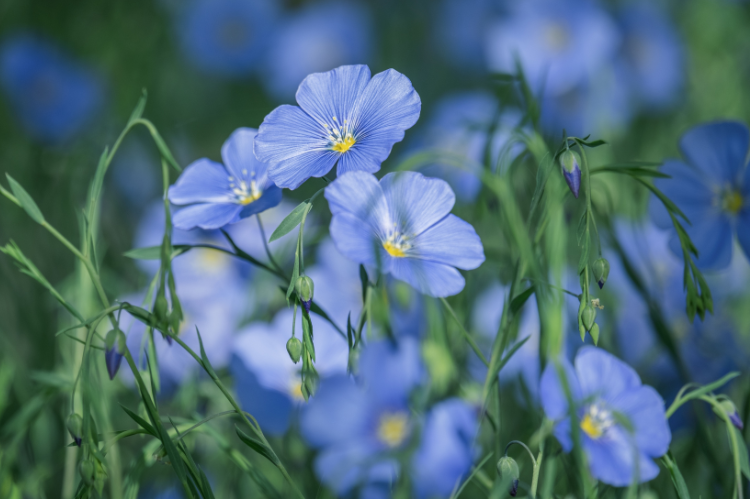
Blue flax produces fine stems topped with delicate sky-blue flowers. Individual flowers may last for only one day, but the plant keeps opening new buds over several weeks.
Its soft, moving shape looks natural in meadow gardens, rock gardens, and informal borders. It performs best where the soil drains quickly.
- Botanical name: Linum perenne
- Light: Full sun
- Soil: Dry, sandy, or rocky soil
- Size: Around 1–2 feet tall
- Care tip: Allow a few flowers to form seeds if you want the plant to spread naturally
16. Gentian
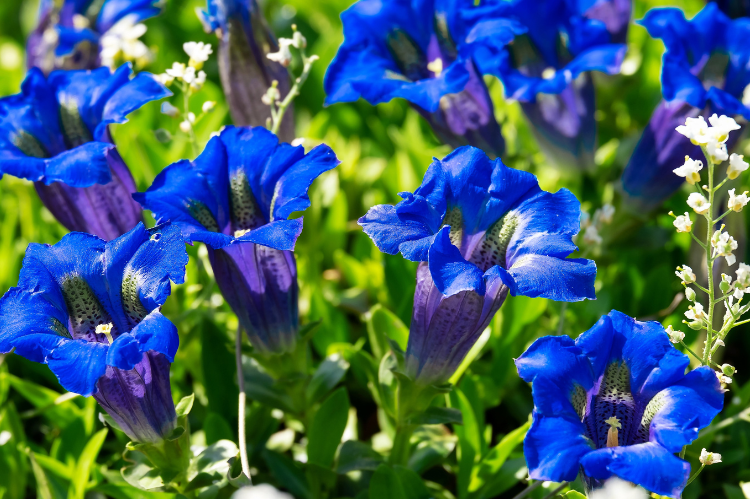
Gentians are loved for their deep blue, trumpet-shaped flowers. Some types grow as tiny alpine plants, while others form taller clumps that bloom near the end of summer.
Their needs vary greatly by species. Alpine gentians often need cool conditions and fast drainage, while bottle gentian grows best in moist meadow-like soil.
- Botanical name: Gentiana species
- Light: Full sun to partial shade
- Soil: Needs vary by species
- Size: From about 4 inches to 2 feet tall
- Care tip: Select a gentian suited to your climate instead of choosing by flower color alone
17. Italian Bugloss
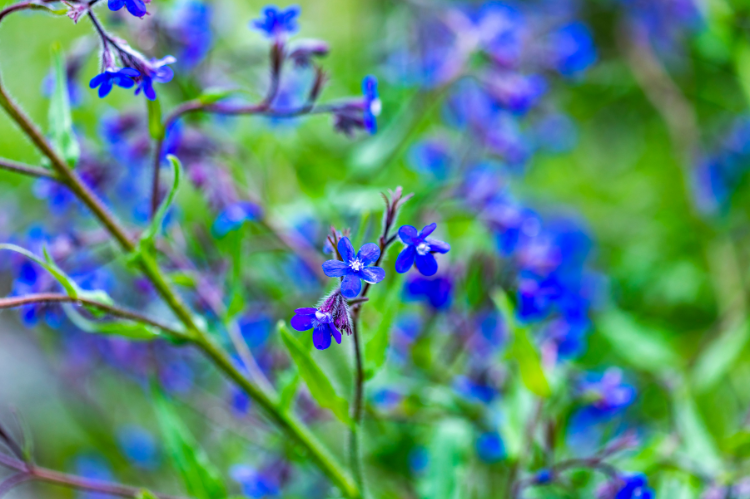
Italian bugloss produces branched stems covered with small, intense blue flowers. It creates a tall, informal display that fits cottage gardens and pollinator beds.
Although often sold as a perennial, some varieties are short-lived. Allowing a small number of seedlings to grow can help maintain the display from year to year.
- Botanical name: Anchusa azurea
- Light: Full sun
- Soil: Average to dry, well-drained soil
- Size: Around 3–5 feet tall
- Care tip: Cut the plant back after flowering if it becomes floppy or untidy
18. Blue Eyed Grass
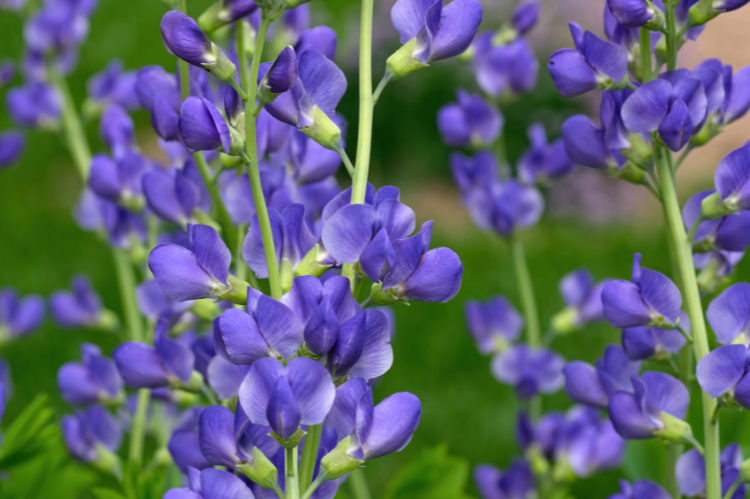
Blue-eyed grass is not a true grass. It belongs to the iris family and produces small blue-violet flowers above narrow, grass-like leaves.
Its compact size makes it useful along paths, at the front of borders, and in small native gardens. The flowers open best during bright daylight.
- Botanical name: Sisyrinchium species
- Light: Full sun to partial shade
- Soil: Average to moist, well-drained soil
- Size: Around 6–18 inches tall
- Care tip: Divide dense clumps every few years to keep them flowering well
19. Bellflower

Bellflowers come in trailing, mounding, and upright forms. Their bell-shaped blooms range from pale blue to violet-blue, depending on the species and variety.
Low-growing bellflowers can spill over stones or garden edges, while taller types work through the middle of a cottage border. Check the growth habit carefully because some types spread faster than others.
- Botanical name: Campanula species
- Light: Full sun to partial shade
- Soil: Average, well-drained soil
- Size: Around 6 inches to 3 feet tall
- Care tip: Research the exact species before planting because a few bellflowers spread aggressively
20. Monkshood
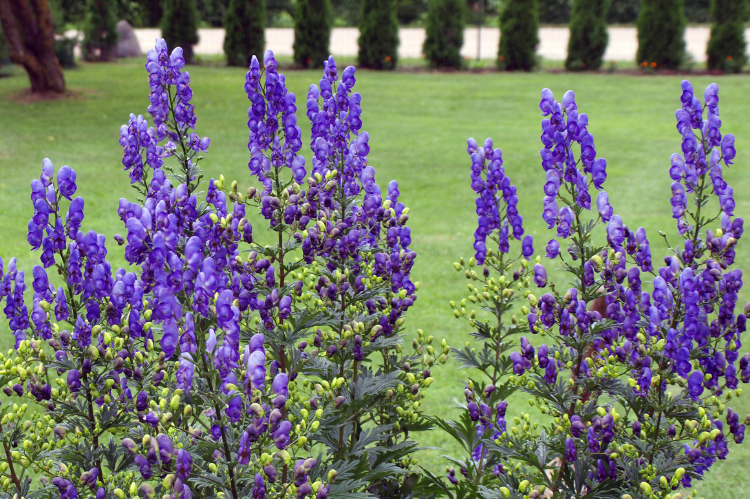
Monkshood carries tall stems of hood-shaped flowers in deep blue or blue-purple. It blooms during late summer and fall, bringing color to partially shaded borders when many earlier plants are fading.
Every part of monkshood is highly poisonous if eaten, and its sap may irritate skin. It is not suitable for gardens used by young children or curious pets.
- Botanical name: Aconitum species
- Light: Partial shade or gentle sun
- Soil: Rich, moist, well-drained soil
- Size: Around 3–5 feet tall
- Care tip: Wear gloves when handling it and never plant it near edible crops
21. Catmint
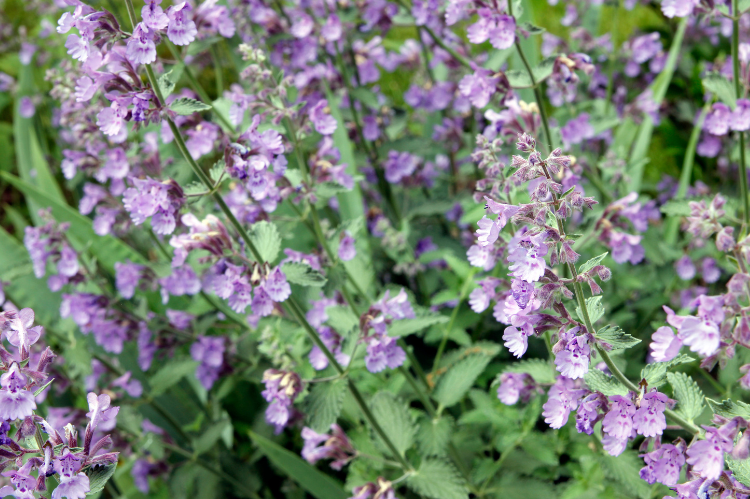
Catmint forms soft mounds of grey-green leaves covered with lavender-blue flower spikes. It has one of the longest flowering periods on this list and can bloom from late spring into fall with trimming.
The plant looks good along paths, around roses, and at the front of sunny borders. Its scented leaves are usually ignored by deer and rabbits.
- Botanical name: Nepeta species and hybrids
- Light: Full sun
- Soil: Average to dry, well-drained soil
- Size: Around 1–3 feet tall
- Care tip: Shear the plant after its first bloom to encourage another flush of flowers
Which Blue Perennial Flowers Are Truly Blue?
Blue false indigo, Virginia bluebells, balloon flower, brunnera, blue flax, Himalayan blue poppy, and selected delphiniums can produce some of the clearest blue flowers.
Other plants, including catmint, hardy geranium, bellflower, columbine, and lobelia, may appear blue, blue-purple, or violet depending on the variety, growing conditions, and light. Check flowers in person when matching a precise garden color.
Best Blue Perennials for Full Sun
For a sunny border, try:
- Blue false indigo
- Delphinium
- Siberian iris
- Balloon flower
- Globe thistle
- Sea holly
- Blue flax
- Italian bugloss
- Catmint
Combine plants with different heights instead of placing every blue flower in one row. Catmint and blue flax can soften the front, while blue false indigo, delphinium, and globe thistle create height behind them.
[INTERNAL LINK: Link “full sun perennials” to your Full Sun Perennials article]
Best Blue Perennials for Shade
For a shaded or woodland-style garden, choose:
- Virginia bluebells
- Brunnera
- Jacob’s ladder
- Rocky Mountain columbine
- Great blue lobelia
- Monkshood
- Himalayan blue poppy in a suitable cool climate
Virginia bluebells and brunnera flower in spring. Great blue lobelia and monkshood can add color much later, helping the bed avoid a long gap without flowers.
[INTERNAL LINK: Link “shade-loving perennials” to your Shade-Loving Perennials article]
How to Use Blue Flowers in the Garden
Blue can make a small garden feel calmer and more open. Repeat the same blue flower in several parts of the bed to connect the planting instead of using every variety only once.
For a soft palette, combine blue flowers with white, silver, pale pink, and lavender. For stronger contrast, place blue beside yellow, orange, coral, or warm red.
Flower shape also matters. Mix rounded globe thistle, tall delphinium, open geranium flowers, and airy blue flax so the border does not look flat.
Frequently Asked Questions
What blue perennial flowers bloom the longest?
Catmint and hardy geranium ‘Rozanne’ are two of the longest-flowering choices. Balloon flower, salvia-like catmint varieties, and some bellflowers may also rebloom when faded flowers are removed.
Are there any true blue perennial flowers?
Yes. Himalayan blue poppy, blue flax, Virginia bluebells, brunnera, and some delphinium varieties can appear genuinely blue. Many flowers sold as blue have a slight violet or purple tone.
What blue perennials grow in full sun?
Blue false indigo, globe thistle, sea holly, blue flax, catmint, balloon flower, Siberian iris, and Italian bugloss perform well in sunny locations. Most need good drainage.
What blue perennial flowers grow in shade?
Brunnera, Virginia bluebells, Jacob’s ladder, monkshood, and Himalayan blue poppy grow in partial shade. Great blue lobelia also accepts partial shade when its soil remains moist.
Which blue perennial is easiest for beginners?
Catmint is one of the easiest choices for a sunny, well-drained garden. Brunnera is a dependable option for shade, while blue false indigo needs little care once its roots are established.
Can I grow blue perennials in containers?
Yes. Balloon flower, catmint, compact bellflowers, hardy geraniums, and smaller columbines grow well in containers. Select a frost-resistant pot with drainage holes and check the soil regularly because containers dry faster than garden beds.
Do blue flowers stay the same color every year?
Usually, but flower color can look different under changing light and weather. Variety also matters. A plant labeled simply as bellflower or delphinium may produce violet-blue flowers instead of the clear blue shown in a nursery photo.