11 Causes of Brown Tips on Houseplants and How to Fix Them

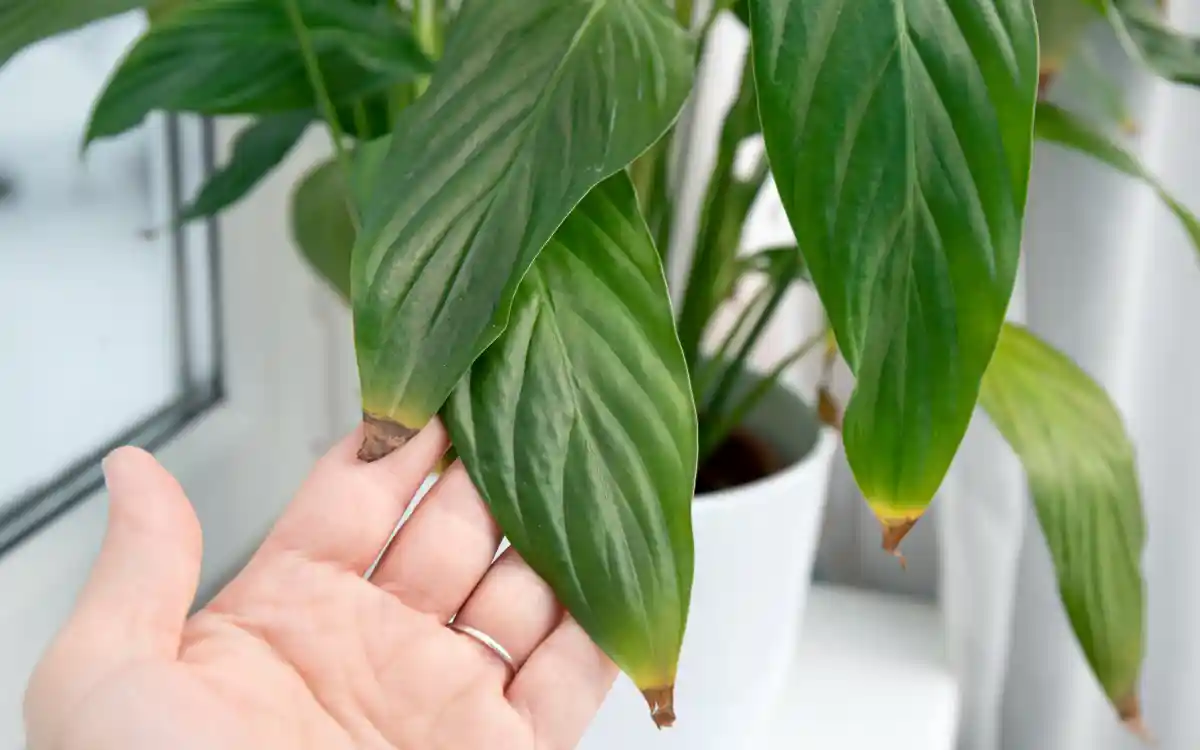
Brown tips have an annoying way of making an otherwise healthy houseplant look neglected. You trim one leaf, then another develops the same dry edge a week later.
The damage is rarely random. Brown tips on houseplants usually point to trouble with moisture, dry air, mineral salts, roots, or temperature.
The brown tissue will not turn green again, but you can stop fresh leaves from developing the same problem once you find the cause. Start with the soil and drainage, then work through the signs below.
How to Identify the Cause of Brown Leaf Tips
Several problems create similar damage. Check the soil, roots, leaf color, and location before changing the plant’s care.
| What you notice | Likely cause | Check first |
| Dry tips with very dry soil | Underwatering | Moisture below the surface |
| Brown tips with wet soil and yellow leaves | Overwatering or root damage | Root color and smell |
| White crust on the soil or pot | Fertilizer salts | Feeding amount and frequency |
| Repeated brown tips on sensitive plants | Tap water minerals | Water source |
| Pale or tan patches facing a window | Sun scorch | Direct-light exposure |
| Browning during winter | Dry air or cold drafts | Humidity and temperature |
| Fast drying and crowded roots | Root-bound plant | Roots inside and below the pot |
I start by lifting the pot and feeling the soil. This quickly separates dry roots from soil that stays wet too long.
1. The Soil Stays Dry Too Long
Leaf ends often dry first when roots cannot supply enough water. The leaves may droop or fold, the pot will feel light, and the soil may pull away from its sides. Repeated severe dryness can also leave new growth smaller.
Water slowly until the full root ball is moist and excess drains from the bottom. Learn how dry the species prefers to become instead of using one weekly schedule for every plant.
2. You Are Only Wetting the Top of the Soil
A quick splash can dampen the surface while deeper roots remain dry. Water may also run through gaps around a shrunken root ball without soaking it. Test deeper soil with a wooden skewer after watering.
Pour slowly across the full surface until water leaves the drainage hole. If the mix repels water, soak the pot briefly from below, then remove it and let it drain fully.
3. The Plant Is Being Overwatered
Constantly wet soil limits air around the roots and may cause rot. Damaged roots cannot supply enough moisture to the leaves, even while the potting mix remains wet.
Look for yellow lower leaves, soft stems, a sour smell, or wilting in damp soil. Wisconsin Horticulture lists soft brown roots and stunted growth among the signs of root rot. Let mild cases dry. Remove rotten roots and use fresh soil when damage is serious.
4. The Pot Has Poor Drainage
Pots without holes, blocked openings, and water left inside decorative cover pots keep roots wet longer than expected. I prefer a nursery pot inside a decorative container because it can be lifted out and drained.
Stones beneath the soil do not replace a drainage hole. Use a pot with an open hole and empty its saucer or cover pot after watering.
5. The Air Is Too Dry
Dry indoor air pulls moisture from thin leaves quickly. Brown tips often appear when heaters run or air-conditioning blows across spider plants, calatheas, palms, dracaenas, and prayer plants.
Move the pot away from radiators and direct airflow. Use a room humidifier for plants that need moist air. Grouping may help slightly, but occasional misting does not fix a dry room.
6. Fertilizer Salts Have Collected in the Soil
Unused fertilizer salts may form a pale crust on the soil, pot rim, or tray. They damage fine roots and can leave tips dry, especially when frequent feeding is paired with shallow watering.
Stop feeding and flush clean water through the pot. Replace heavily crusted mix. Resume fertilizer at the label rate only after healthy growth returns.
7. The Plant Is Sensitive to Tap Water
Tap water suits many houseplants, but some react to fluoride or dissolved minerals left in the potting mix. Damage may return after watering and humidity are corrected.
Iowa State University Extension names spider plants, dracaenas, prayer plants, and calatheas among the plants that may develop brown tips because of water quality.
Check moisture, drainage, and fertilizer first. If those look right, test rainwater, distilled water, or a suitable filtered source for several weeks. Water thoroughly so salts can leave through the drainage hole.
8. Strong Sunlight Is Scorching the Leaves
Sun scorch may begin at the tips before forming larger tan or bleached patches on the window-facing side. Plants moved suddenly from shade into direct sun are most likely to burn.
Move the pot farther from the glass or use a sheer curtain. Increase sun exposure gradually. Damaged tissue will remain, but new leaves should grow without the same dry patches.
9. Heat or Cold Is Stressing the Plant
Radiators, heating vents, and hot windows can dry leaf tips quickly. Cold glass, exterior doors, and air-conditioning vents may damage tropical foliage even when the rest of the room feels comfortable.
Check the temperature beside the plant during day and night. Move it away from direct airflow and choose a stable location suited to the species.
10. The Plant Is Root-Bound
Crowded roots make even watering difficult. Water may rush through without soaking the root ball, or the little remaining soil may dry very quickly. Check for thick circling roots, slowed growth, and roots leaving several drainage holes.
Move a crowded plant into a pot only 1 to 2 inches wider and loosen tightly circling roots. Check the species first because some plants prefer a snug container.
11. The Potting Mix Is Old or Compacted
Old potting mix loses air spaces. It may stay wet in the center, harden on top, or pull from the pot and let water run around the root ball. This gives roots uneven moisture.
Repot with fresh soil suited to the plant. Use loose indoor mix for most tropical foliage and a faster-draining blend for succulents. Avoid dense garden soil.
Can Brown Houseplant Tips Turn Green Again?
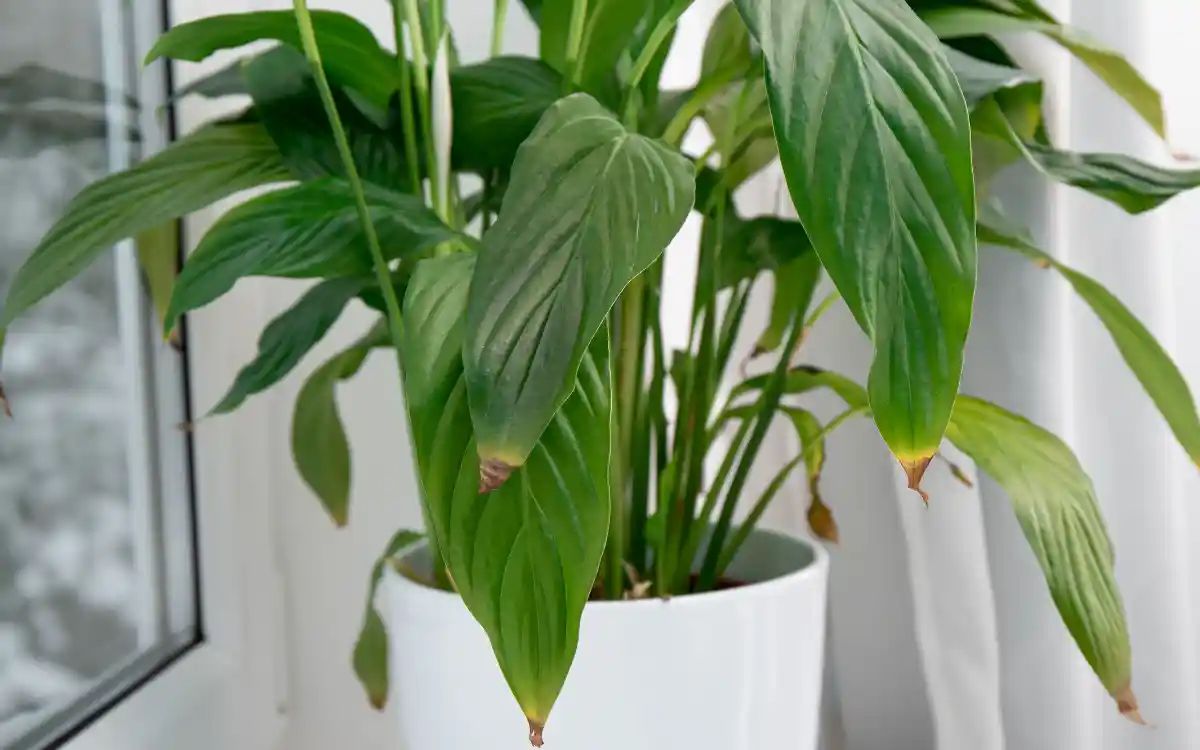
No. Brown tissue is dead and cannot turn green again. Judge a correction by the newest growth. Fresh leaves without damaged ends mean the change is working.
One old leaf with a brown tip is not always a warning. Repeated browning across several leaves deserves investigation.
How to Trim Brown Tips Safely
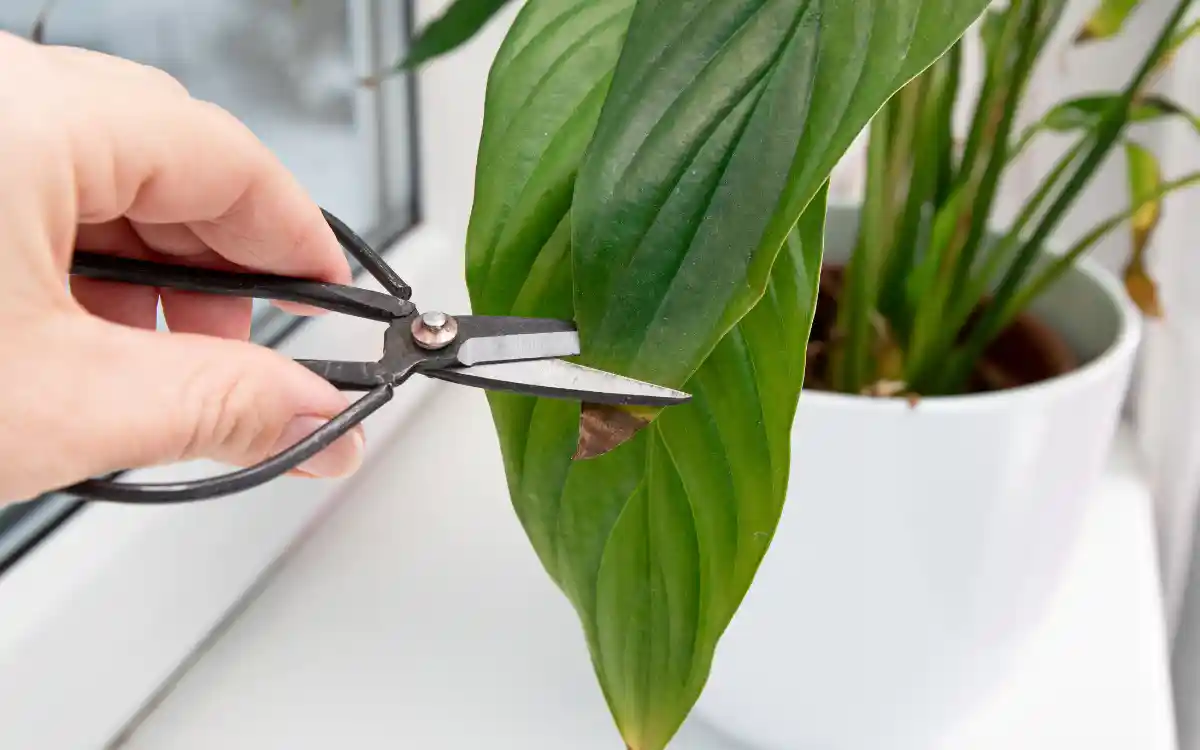
Trimming improves appearance but does not fix the cause. Correct the moisture, root, or placement problem first.
- Clean a sharp pair of scissors with rubbing alcohol and let them dry.
- Follow the leaf’s natural pointed or rounded shape.
- Leave a very narrow brown edge instead of cutting into healthy green tissue.
- Remove the entire leaf at its base only when most of it is damaged.
- Clean the scissors again before using them on another plant.
Avoid removing healthy leaves merely to make the plant look even. Their green tissue is still feeding it.
How to Prevent Brown Tips From Returning
Check below the soil surface before watering, soak the root ball fully, and let excess drain. Feed only during active growth and follow the product rate.
Keep sensitive plants away from hot sun, cold glass, heaters, and air-conditioning vents. Change one condition at a time so you can tell what stops the browning.
Frequently Asked Questions
Should I Cut Brown Tips Off My Houseplant?
Yes. Use clean scissors, follow the leaf’s shape, and leave a thin brown line to avoid cutting healthy tissue.
Do Brown Tips Always Mean Underwatering?
No. Wet roots, low humidity, fertilizer salts, water quality, and temperature can create similar damage. Check the soil first.
Can Overwatering Cause Brown Leaf Tips?
Yes. Waterlogged soil damages roots. Brown tips may appear with yellow leaves, soft stems, or wilting in damp soil.
Does Misting Prevent Brown Tips?
Misting changes moisture only briefly. A humidifier or a location away from dry airflow is more useful.
Should I Use Filtered Water for Houseplants?
Most do not. Test another source when a sensitive species keeps browning after its watering, drainage, fertilizer, and humidity are corrected.
Why Do Brown Tips Appear During Winter?
Heated air is dry while winter soil often stays wet longer. Adjust watering and move the plant away from heaters and cold drafts.