How to Grow Impatiens: Care Guide
Impatiens are one of the easiest ways to fill a shaded garden with color. Their soft green leaves and bright flowers can cover borders, containers, window boxes, and hanging baskets from late spring until frost.
Learning how to grow impatiens mostly comes down to choosing the right variety, avoiding harsh afternoon sun, and keeping the soil evenly moist without leaving the roots waterlogged.
This guide covers every step, from selecting plants and preparing the soil to watering, feeding, pruning, overwintering, and fixing common problems.
What Are Impatiens?
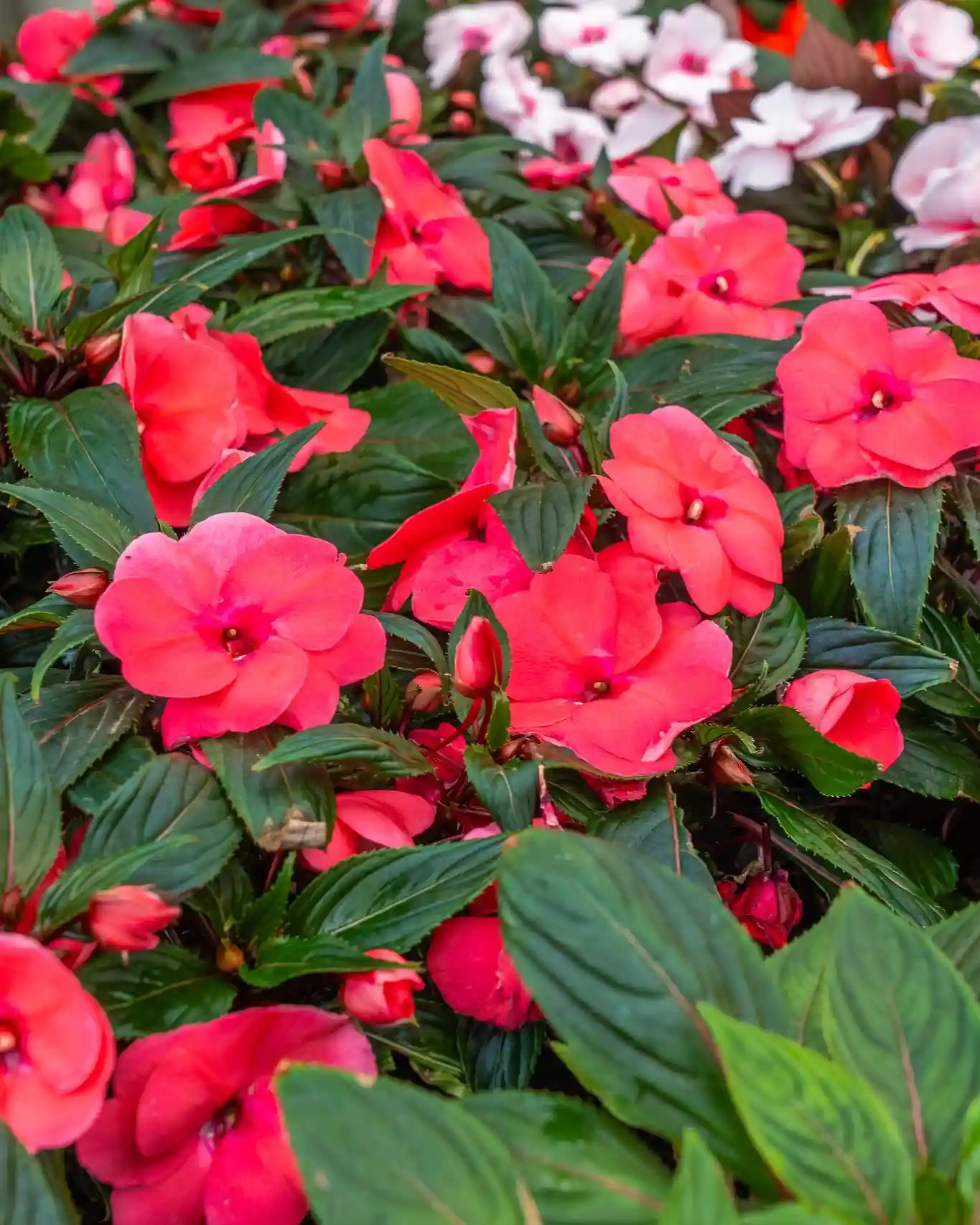
Impatiens are tender flowering plants from the balsam family. Most ornamental types come from tropical parts of Africa, Asia, New Guinea, and nearby islands. Although they are technically tender perennials in warm climates, most gardeners grow them as annuals.
Common impatiens usually form neat, rounded mounds covered with flowers in pink, red, coral, orange, purple, and white. Depending on the variety, plants may grow anywhere from 6 to 30 inches tall.
Their ability to bloom in shade makes them especially useful under trees, along covered porches, beside north-facing walls, and in other spots where sun-loving annuals struggle.
Impatiens Quick Care Guide
| Care Requirement | What Impatiens Need |
| Plant type | Tender perennial, commonly grown as an annual |
| Light | Partial shade to full shade; some hybrids tolerate sun |
| Soil | Moist, fertile, rich in organic matter |
| Soil pH | Around 6.0 to 6.5 |
| Water | Whenever the top 1–2 inches of soil feel dry |
| Spacing | Usually 8–12 inches apart |
| Blooming period | Late spring until frost |
| Mature height | About 6–30 inches, depending on type |
| Hardiness | Usually perennial only in Zones 10–12 |
| Deadheading | Usually unnecessary |
Choosing the Right Type of Impatiens
Not every impatiens plant needs the same amount of shade. Check the plant label before choosing a location, especially when buying New Guinea impatiens or sun-tolerant hybrids.
| Impatiens Type | Typical Size | Best Light | Best Use | Disease Notes |
| Common impatiens | 6–24 inches | Partial to full shade | Shady beds, edging and containers | More likely to develop downy mildew |
| New Guinea impatiens | 6–20 inches | Partial shade or gentle sun | Containers, borders and patios | Resistant to impatiens downy mildew |
| SunPatiens | 18–36 inches | Sun to partial shade | Large containers and open beds | Handles heat and brighter conditions well |
| Double impatiens | 10–20 inches | Partial shade | Pots, baskets and decorative borders | Resistance depends on the cultivar |
| Interspecific hybrids | 15–24 inches | Partial shade to partial sun | Containers and mass planting | Often stronger than traditional types |
Common impatiens, or Impatiens walleriana, are the classic choice for shade. New Guinea impatiens have larger flowers, thicker stems, and colorful foliage. They can accept more sunlight but still perform well with afternoon shade.
SunPatiens are larger hybrids made for brighter spaces. Compact types work well in pots, while vigorous varieties can reach about 30 to 36 inches tall.
Best Impatiens for Beginners
New gardeners should start with healthy transplants rather than seeds. Look for compact plants with green leaves, firm stems, and no yellowing or white growth beneath the foliage.
In areas where impatiens downy mildew has caused trouble, choose New Guinea impatiens, interspecific hybrids, or resistant cultivars. Avoid buying plants with dropping leaves, weak stems, or crowded roots.
Where to Plant Impatiens
Light Requirements
Traditional common impatiens grow best in partial shade, dappled shade, or full shade. A location with two to four hours of gentle morning sun followed by afternoon shade usually works well.
Deep shade is possible, but plants may grow more slowly and produce fewer flowers. Heavy shade beneath dense trees can also be dry because tree roots take moisture from the soil.
New Guinea impatiens accept brighter light. Some can grow in full sun when temperatures are moderate and the soil stays moist, but they will need more water as sunlight increases. All types benefit from shade during the hottest part of the afternoon.
Soil Requirements
Impatiens like fertile soil that holds moisture while still allowing extra water to drain away. Heavy, compacted ground can cause root problems, while very sandy soil may dry too quickly.
Mix compost or well-rotted organic matter into the top 6 to 8 inches of soil before planting. This helps clay soil drain more freely and helps sandy soil hold moisture for longer.
A soil pH between 6.0 and 6.5 suits impatiens well. A soil test can tell you whether any changes are needed.
Spacing
Most common impatiens should be spaced about 8 to 12 inches apart. Close spacing creates a solid carpet of flowers sooner, while wider spacing allows better airflow.
Check the mature width shown on the plant label when growing larger New Guinea or SunPatiens varieties. Some spreading types may need 18 inches or more between plants.
When to Plant Impatiens
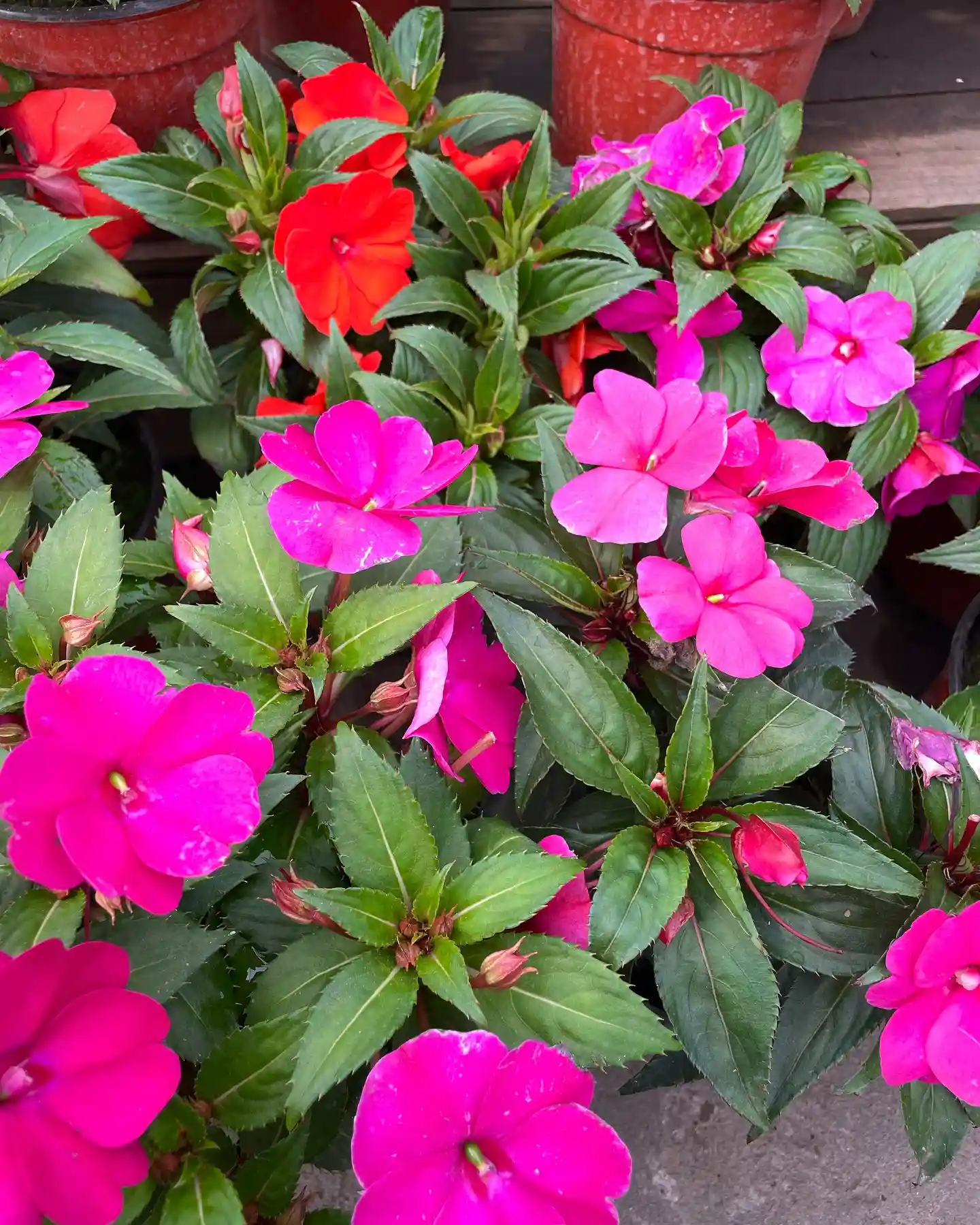
Plant impatiens outside after the final frost has passed and the soil has warmed to at least 60°F, or about 16°C. These tropical plants are sensitive to cold and can be damaged by chilly nights.
Gardeners in warm regions can plant earlier, while colder areas may need to wait until late spring. Do not rush plants outdoors during the first warm week if cold nights are still expected.
If you started plants indoors, harden them off for seven to ten days before planting. Place them outside in a shaded, protected spot for a few hours, then slowly increase their outdoor time.
How to Plant Impatiens Step by Step
1. Choose a Shaded Location
Pick a bed that receives morning sun, filtered light, or afternoon shade. Avoid areas beside hot brick walls or paving that reflects afternoon heat onto the plants.
2. Check the Drainage
Dig a small test hole and fill it with water. If the water remains for many hours, improve the soil or choose a raised bed or container.
Impatiens need moisture, but their roots should not remain in soggy ground.
3. Prepare the Soil
Loosen the soil to a depth of around 6 to 8 inches. Mix in compost, leaf mould, or another finished organic amendment.
Break up hard clumps and remove weeds before planting.
4. Water the Plants in Their Pots
Water the nursery plants before removing them from their containers. A moist root ball is less likely to crumble or suffer damage during planting.
5. Dig the Planting Holes
Make each hole slightly wider than the root ball and about the same depth. Impatiens should sit at the same level they were growing in their nursery pots.
Planting too deeply can hold moisture around the stem and increase the risk of rot.
6. Remove the Plant Carefully
Turn the pot on its side and gently slide the plant free. Avoid pulling it by its soft stem because impatiens stems can snap easily.
Loosen any tightly circling roots with your fingers.
7. Position the Plant
Place the root ball in the hole with the top level with the surrounding soil. Backfill around it and press gently to remove large air pockets.
Do not pack the ground tightly.
8. Water Thoroughly
Water the entire planting area after all the impatiens are in place. This settles the soil around the roots and helps the plants recover.
9. Add a Thin Mulch Layer
Apply about 1 to 2 inches of shredded leaves, fine bark, or compost around the plants. Keep mulch slightly away from the stems.
Mulch slows moisture loss and reduces weeds, but a deep layer pressed against the plant can trap too much moisture.
How to Grow Impatiens from Seed
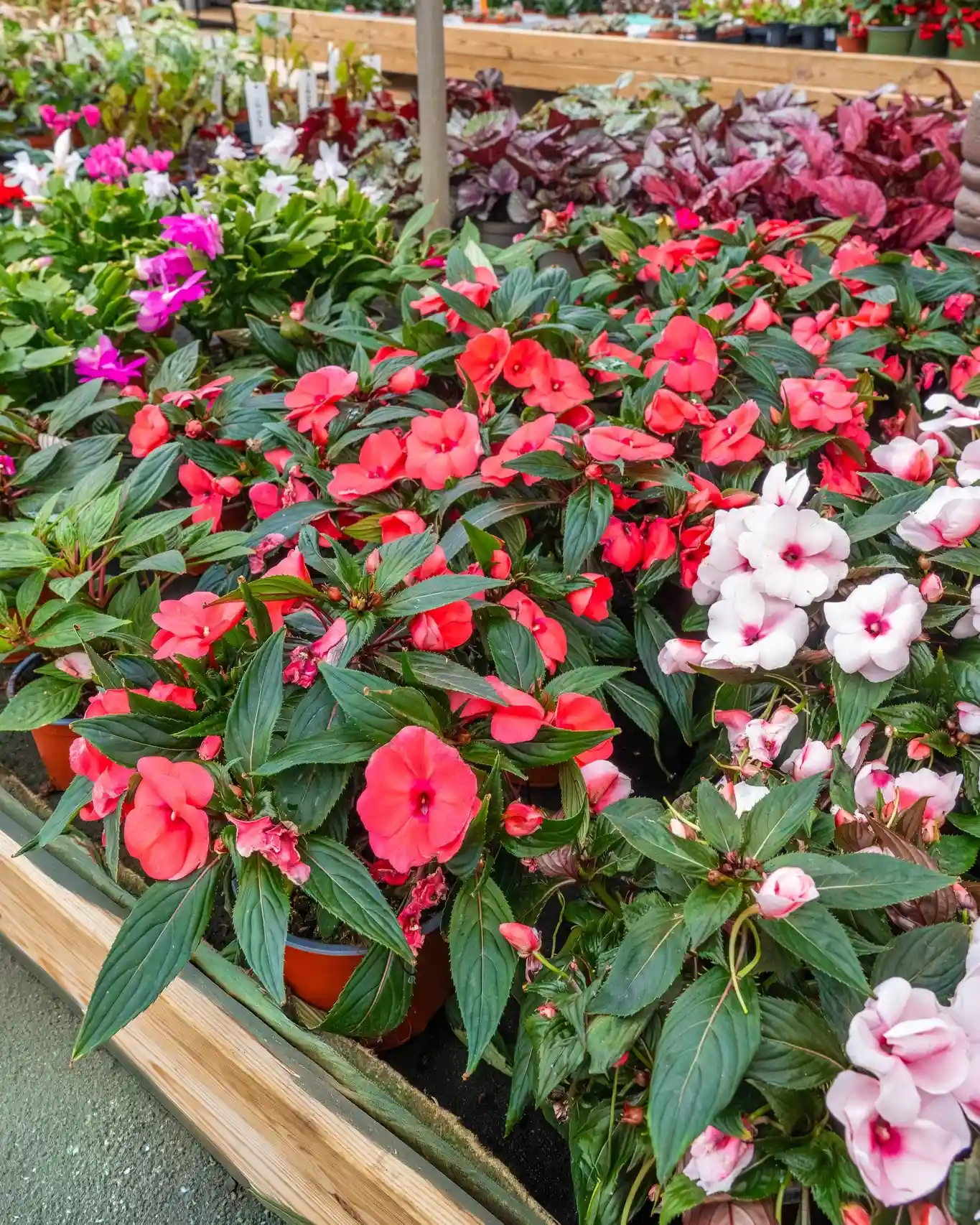
Impatiens seeds are small and need warmth, moisture, and light to germinate. Common impatiens should usually be started about 10 weeks before the planned outdoor planting date. New Guinea impatiens may need around 12 weeks.
Fill a seed tray with a clean seed-starting mix. Sprinkle the seeds across the surface, then cover them very lightly with fine vermiculite. Do not bury them deeply because light helps germination.
Keep common impatiens seeds at about 72–77°F. They may germinate in 5–15 days. New Guinea seeds prefer around 75–80°F and may take 12–25 days.
After the seedlings appear:
- Remove the humidity cover.
- Place the tray under bright grow lights.
- Keep the mix lightly moist.
- Provide gentle air movement.
- Transplant seedlings after they develop several true leaves.
- Harden them off before moving them outdoors.
Damping-off can cause young seedlings to collapse. Use clean trays, fresh seed-starting mix, and avoid soaking the soil.
Growing Impatiens in Containers
Impatiens are well suited to pots, window boxes, and hanging baskets. Containers also let you move the plants when a location becomes too sunny or exposed.
Choose a pot with drainage holes and fill it with fresh, good-quality potting mix. Garden soil is too heavy for most containers and may drain poorly.
Space plants according to their mature size. Three common impatiens can usually fill a medium container, while one large New Guinea impatiens may be enough for the same pot.
Container plants dry faster than garden plants. Check them daily during warm weather, especially hanging baskets. Water until moisture flows through the drainage holes, then let the extra water drain away.
Avoid leaving pots in trays filled with water. Constantly wet roots can turn brown and begin to rot.
How to Water Impatiens
Impatiens grow best when the soil remains evenly moist. Letting the plants dry until they collapse repeatedly can weaken growth and reduce flowering.
For garden beds, push a finger 1 to 2 inches into the soil. Water when this layer begins to feel dry. Give the bed a slow, deep soaking rather than lightly wetting the surface every few hours.
Water early in the morning and direct the water toward the soil rather than over the leaves. This gives wet foliage time to dry and may lower the chance of disease.
Plants in sunny locations need water more often than shaded plants. Containers and hanging baskets may need daily watering during hot weather.
Signs Impatiens Need Water
- Leaves and stems droop during the morning
- The pot feels unusually light
- The soil pulls away from the edge of the container
- Lower leaves begin to drop
- Flower production slows
A plant that wilts briefly during a very hot afternoon may recover after temperatures fall. Check the soil before adding water because wilting can also happen when damaged roots are sitting in wet soil.
How to Fertilize Impatiens
Mix a general-purpose granular fertilizer into the bed at planting time, following the rate printed on the package. Never add more than the label recommends.
Garden-grown impatiens can be fed about once a month during active growth. Container plants may need more regular feeding because nutrients wash through the potting mix with repeated watering.
Water before applying liquid fertilizer if the soil is dry. Feeding a badly wilted plant can place more stress on its roots.
Too much nitrogen may produce large amounts of soft foliage with fewer flowers. If plants look healthy and are blooming well, extra fertilizer may not be needed.
Pinching, Pruning and Deadheading
Most modern impatiens naturally branch and do not need much pruning. However, common impatiens can become taller and thinner in deep shade or crowded beds.
When a young common impatiens reaches about 6 inches tall, remove the top 2 inches just above a leaf joint. This encourages more side shoots and produces a fuller plant.
If plants become leggy in midsummer, trim long stems back by about one-third. Water afterward and give the plants time to produce fresh growth.
Impatiens clean away their old flowers naturally, so regular deadheading is not required. Removing damaged flowers is still useful when wet petals begin sticking to the foliage.
Impatiens Care Through the Seasons
Spring
Wait until frost danger has passed before planting. Prepare the soil with compost, check drainage, and inspect nursery plants for signs of disease.
Pinch young common impatiens after they settle into the garden if you want bushier growth.
Summer
Check the soil regularly during warm weather. Containers may need daily attention, while shaded beds often stay moist longer.
Remove yellow leaves and fallen plant debris. Keep enough space between plants for air to move through the bed.
Fall
Impatiens will continue flowering until frost if they receive enough water. Stop heavy feeding as temperatures begin falling.
Take stem cuttings from favorite plants before cold weather arrives. This is often easier than moving a large outdoor plant indoors.
Winter
Common and New Guinea impatiens are usually hardy only in Zones 10–12. In colder regions, frost kills the outdoor plants and new ones are planted the following spring.
Rooted cuttings may be kept indoors near a bright window. Reduce watering slightly during winter, but do not allow the potting mix to dry completely.
How to Propagate Impatiens from Cuttings
Impatiens root easily from healthy stem cuttings.
- Cut a healthy stem about 4 inches long.
- Make the cut just below a leaf joint.
- Remove the leaves from the lower half.
- Place the cutting in moist vermiculite or a lightweight potting mix.
- Keep it in bright, indirect light.
- Maintain steady moisture while roots develop.
- Move the rooted cutting into its own small pot.
Take cuttings only from vigorous plants with no leaf spots, yellowing, pests, or signs of mildew. Bringing infected material indoors can spread problems to houseplants.
Common Impatiens Problems
| Problem | Likely Cause | What to Do |
| Pale yellow leaves with white growth underneath | Impatiens downy mildew | Remove affected plants and choose resistant varieties |
| Yellow leaves and constant wilting | Root rot or poorly drained soil | Reduce watering and improve drainage |
| Bleached white or brown leaf patches | Too much direct sun | Move containers or provide afternoon shade |
| Fine pale spots and webbing | Spider mites | Rinse leaves and use an approved treatment if needed |
| Brown flowers with gray fuzzy growth | Gray mold | Remove damaged growth and keep foliage drier |
| Ragged holes in leaves | Slugs or snails | Check plants at night and use suitable control methods |
| Missing stems and flowers | Deer or rabbits | Use barriers or a labelled garden repellent |
| Few flowers with weak, stretched stems | Too much shade or excess nitrogen | Provide brighter filtered light and reduce feeding |
Impatiens Downy Mildew
Downy mildew is the most serious problem affecting traditional common impatiens. Early signs include pale green or yellow leaves, downward-curled foliage, and white or light-gray growth on the undersides of leaves. Infected plants may quickly lose their foliage, leaving bare stems.
There is no reliable cure once a plant is infected. Remove affected plants promptly. If the problem has been severe, avoid planting susceptible common impatiens in the same bed for a year or two.
New Guinea impatiens and resistant hybrids are safer choices for gardens with a history of the disease. Water at soil level in the morning and avoid keeping the leaves wet for long periods.
Root Rot
Impatiens with root rot may wilt even though the soil is wet. Their leaves often turn yellow, growth becomes stunted, and the roots develop brown, damaged areas.
Poor drainage and constantly wet soil are common causes. Remove badly affected plants and correct the drainage before planting replacements.
Spider Mites
Spider mites are more common during hot, dry weather. They cause pale stippling, yellow or bronze leaves, and fine webbing when the infestation becomes heavy.
Check the undersides of leaves and separate affected container plants from healthy ones.
Sunscald
Traditional impatiens can develop white, bleached, or brittle patches when exposed to strong sun. Damage often becomes worse during hot, dry weather.
Move potted plants into partial shade. For garden beds, use a shade cloth temporarily or replace affected plants with a more sun-tolerant type.
Why Are My Impatiens Not Blooming?
Poor flowering is usually connected to one of four conditions.
Too much shade: Deep shade may keep the leaves healthy but reduce flower production. Try a location with brighter filtered light or gentle morning sun.
Too much fertilizer: Heavy nitrogen feeding produces soft green growth instead of flowers.
Dry soil: Repeated wilting can slow growth and cause buds to drop.
Heat stress: Traditional impatiens may stop blooming during very hot periods, especially when planted in direct afternoon sun.
Correct one problem at a time and watch the plant for one to two weeks before making another change.
Best Companion Plants for Impatiens
Impatiens look best beside plants with contrasting leaf shapes and colors.
- Coleus: Its patterned leaves add color even in deep shade.
- Begonias: Both plants enjoy moist soil and partial shade.
- Caladiums: Large leaves create height behind lower impatiens.
- Ferns: Their fine foliage softens the edges of shaded beds.
- Heuchera: Dark or lime-colored leaves work well with bright flowers.
- Sweet potato vine: Trailing foliage is useful in mixed containers.
- Lobelia: Small blue or white flowers fill gaps around impatiens.
Place shade-loving plants together rather than mixing impatiens with flowers that need long hours of strong sun.
For the sunnier parts of your garden, read our guides to growing petunias, marigolds, and zinnias. These flowers can carry the color from shaded borders into brighter beds.
Can Impatiens Grow Indoors?
Impatiens can grow indoors for a while, but they need bright indirect light, steady warmth, and careful watering. A bright east-facing window is often better than a dark room or a hot south-facing window.
Indoor plants may become thin during winter because natural light is weaker. A grow light can help maintain compact growth.
Check regularly for aphids, spider mites, and other pests before placing an outdoor plant near established houseplants.
Are Impatiens Safe for Dogs and Cats?
The ASPCA lists Impatiens species as non-toxic to dogs and cats. Even so, pets should not be encouraged to chew garden plants because eating a large amount of plant material may still cause an upset stomach.
FAQ‘s
Do impatiens come back every year?
Impatiens are tender perennials in very warm regions, generally around Zones 10–12. In most climates, they are grown as annuals and are killed by frost.
How much sun can impatiens tolerate?
Common impatiens prefer partial to full shade. New Guinea impatiens accept more sun, while SunPatiens can grow in full sun when they receive enough water. Afternoon shade is still helpful during very hot weather.
How often should I water impatiens?
Water garden plants when the top 1–2 inches of soil feel dry. Check containers and hanging baskets daily during warm weather because they lose moisture much faster.
Should I deadhead impatiens?
No. Impatiens usually drop faded flowers on their own and continue forming new buds without deadheading.
Why do my impatiens wilt every afternoon?
Hot temperatures, direct sun, dry soil, or root damage may cause afternoon wilting. Check the soil before watering. If it is already wet, adding more water could make a root problem worse.
Can impatiens grow in full shade?
Yes, common impatiens can grow in full shade. However, they may flower less heavily when the location is extremely dark.
How far apart should impatiens be planted?
Most common varieties can be spaced 8–12 inches apart. Larger New Guinea and SunPatiens varieties may need more room, so check the mature width on the label.