30 Calathea Varieties to grow indoor
Calatheas bring color into a room without relying on flowers. Their leaves can be striped, spotted, silver, deep purple, or brushed with pink, and many gently lift or fold as daylight changes.
Some Calathea varieties stay small enough for a shelf, while others grow into wide floor plants that need plenty of space.
Although many are now botanically called Goeppertia, plant shops still use the familiar Calathea name. Here are 30 beautiful types to consider for your home.
1. Calathea Orbifolia
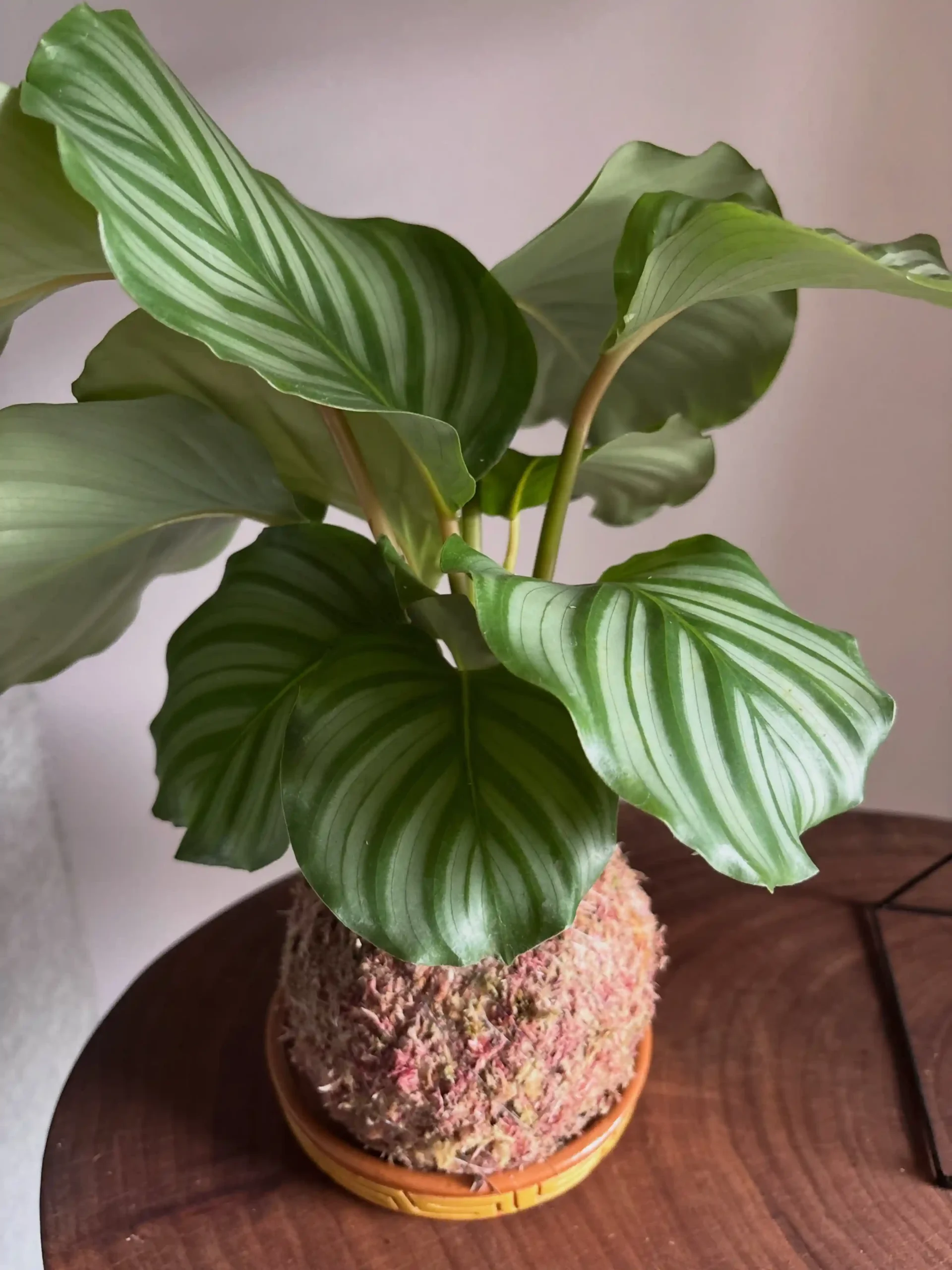
Calathea Orbifolia is hard to miss once its large, rounded leaves begin filling out. Wide silver bands run across soft green foliage, giving the plant a calm look that works beautifully in neutral rooms. It can become quite broad indoors, so I prefer placing it on a low stand where the leaves have space to spread. Orbifolia dislikes dry air and inconsistent watering, but its oversized foliage makes the extra attention worthwhile.
- Care level: Moderate
- Light: Bright, indirect light
- Growth habit: Broad upright clump
- Best feature: Large silver-striped leaves
- Best for: Spacious living rooms and humid bedrooms
- Helpful tip: Keep it away from heaters, air conditioners, and cold drafts.
2. Rattlesnake Calathea
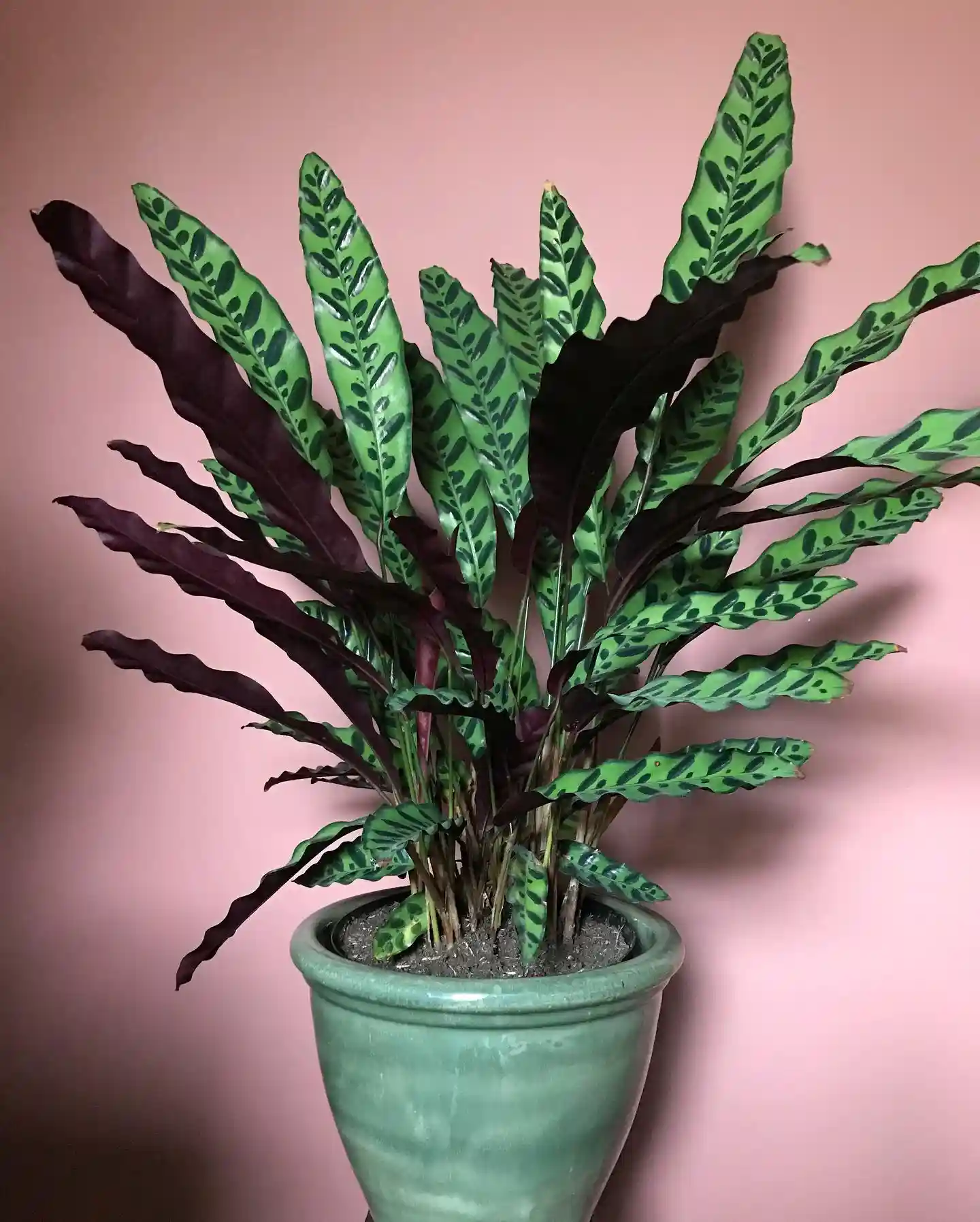
The Rattlesnake Calathea has long, wavy leaves marked with dark green ovals that resemble brushstrokes. Turn a leaf over and you will find a rich purple underside that makes the plant look colorful from every angle. Its narrow shape takes up less room than Orbifolia, making it easier to place on a plant stand or side table. This is one of the more forgiving Calathea varieties when humidity and watering remain fairly steady.
- Care level: Easy to moderate
- Light: Medium to bright indirect light
- Growth habit: Upright and narrow
- Best feature: Wavy spotted leaves with purple backs
- Best for: First-time Calathea growers
- Helpful tip: Water when the soil surface begins to feel slightly dry.
3. Peacock Calathea
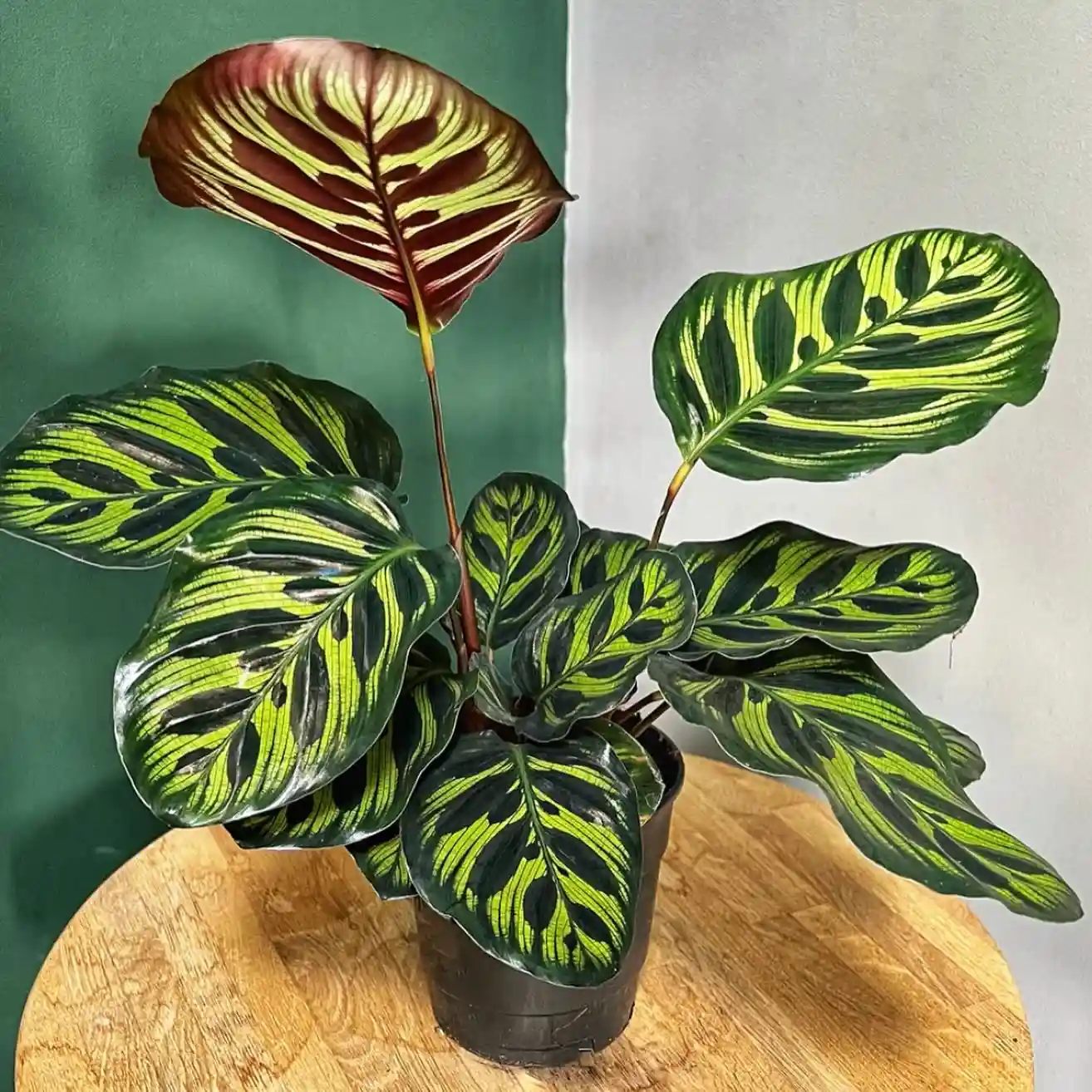
Peacock Calathea earns its name from the feather-like markings spread across each pale green leaf. Dark green lines extend from the center, while the undersides carry purple tones that become more visible when the leaves lift at night. It stays more compact than many large Calatheas and fits comfortably on shelves or raised plant stands. The detailed pattern looks best when dust is gently removed with a soft damp cloth.
- Care level: Moderate
- Light: Bright, indirect light
- Growth habit: Compact clump
- Best feature: Feathered peacock-like leaf markings
- Best for: Shelves and medium tabletop pots
- Helpful tip: Avoid hard tap water if brown tips appear repeatedly.
4. Zebra Calathea
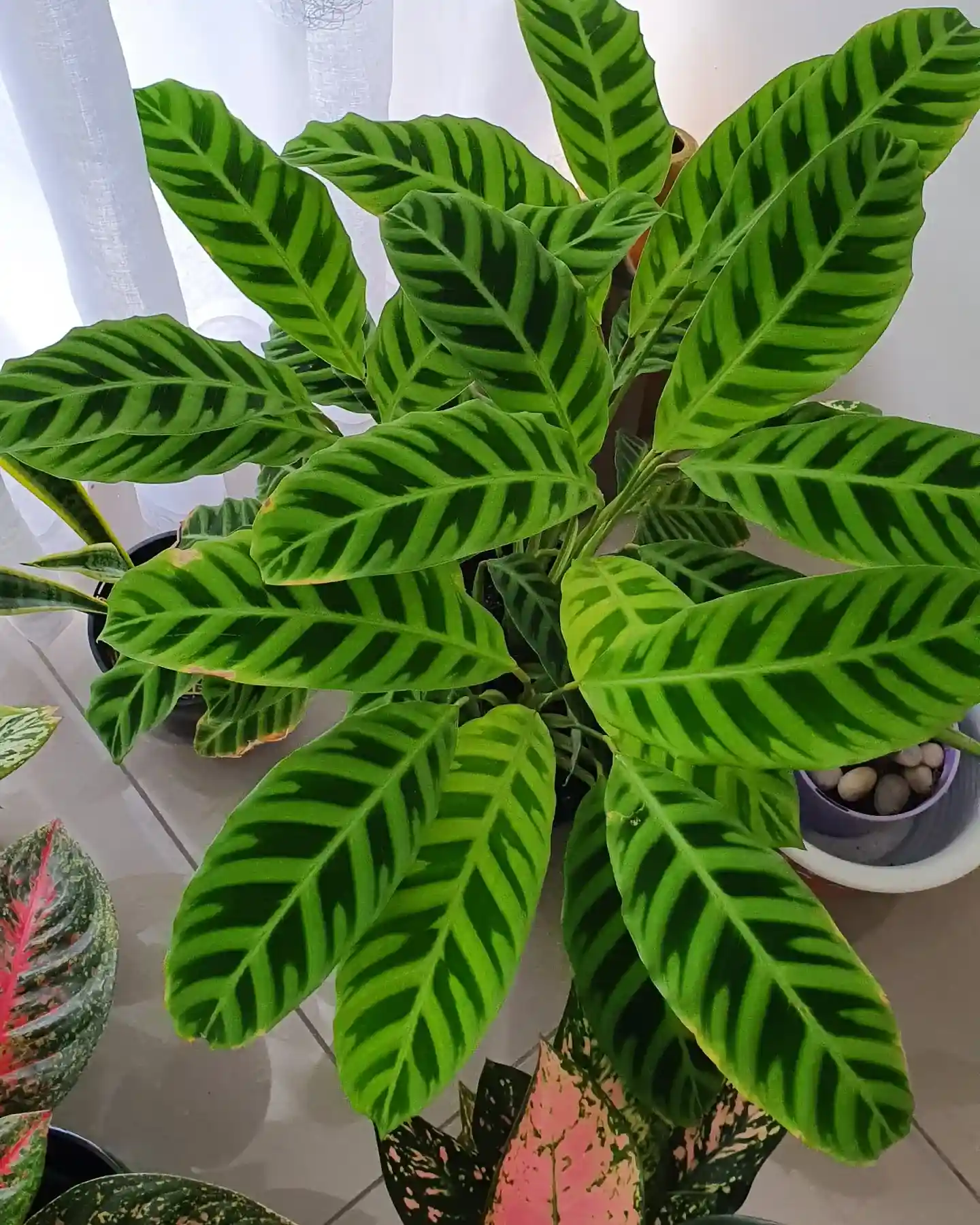
Zebra Calathea has broad, velvety leaves with bold light and dark green stripes. The soft texture gives it a richer look than smoother-leaved varieties, especially when morning light falls across the foliage. It grows upright and can become a full floor plant with time. This variety enjoys warmth and moisture but reacts quickly to dry soil, low humidity, or cold air.
- Care level: Moderate
- Light: Bright, filtered light
- Growth habit: Full upright clump
- Best feature: Velvety zebra-striped foliage
- Best for: Warm bathrooms and humid living areas
- Helpful tip: Check the soil regularly because the large leaves lose moisture quickly.
5. Velvet Calathea
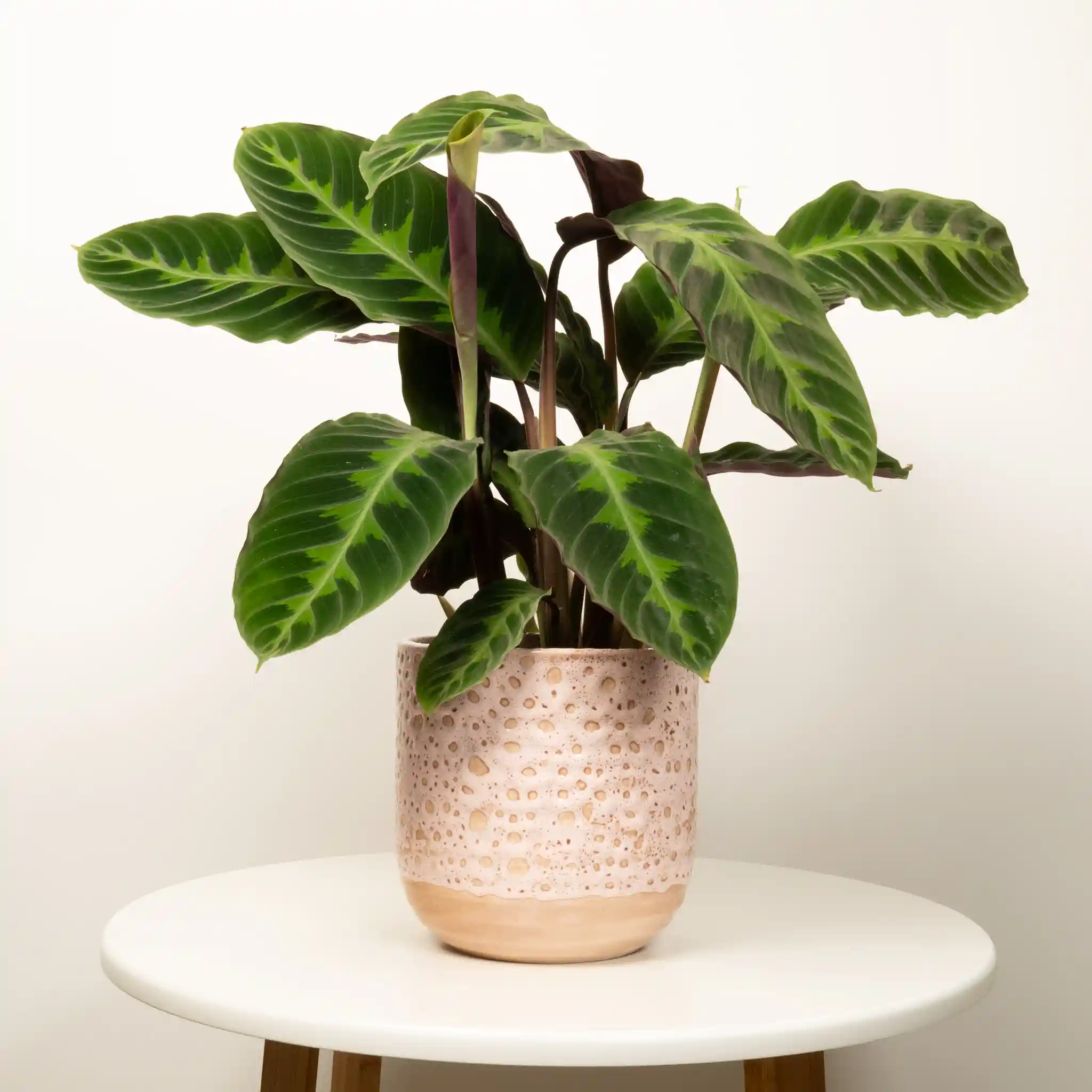
Jungle Velvet Calathea has deep green foliage marked with pale feather-like patterns along the center. Its leaves feel soft and slightly velvety, while the burgundy-purple undersides add a second layer of color. Mature plants can become wide and full, making this a strong choice for an empty floor corner. It prefers stable warmth and humidity, so sudden changes may lead to curling or crisp edges.
- Care level: Moderate
- Light: Medium to bright indirect light
- Growth habit: Large upright clump
- Best feature: Dark velvety leaves with purple undersides
- Best for: Dramatic floor displays
- Helpful tip: Give the leaves room so they do not rub against walls or furniture.
6. Pinstripe Calathea
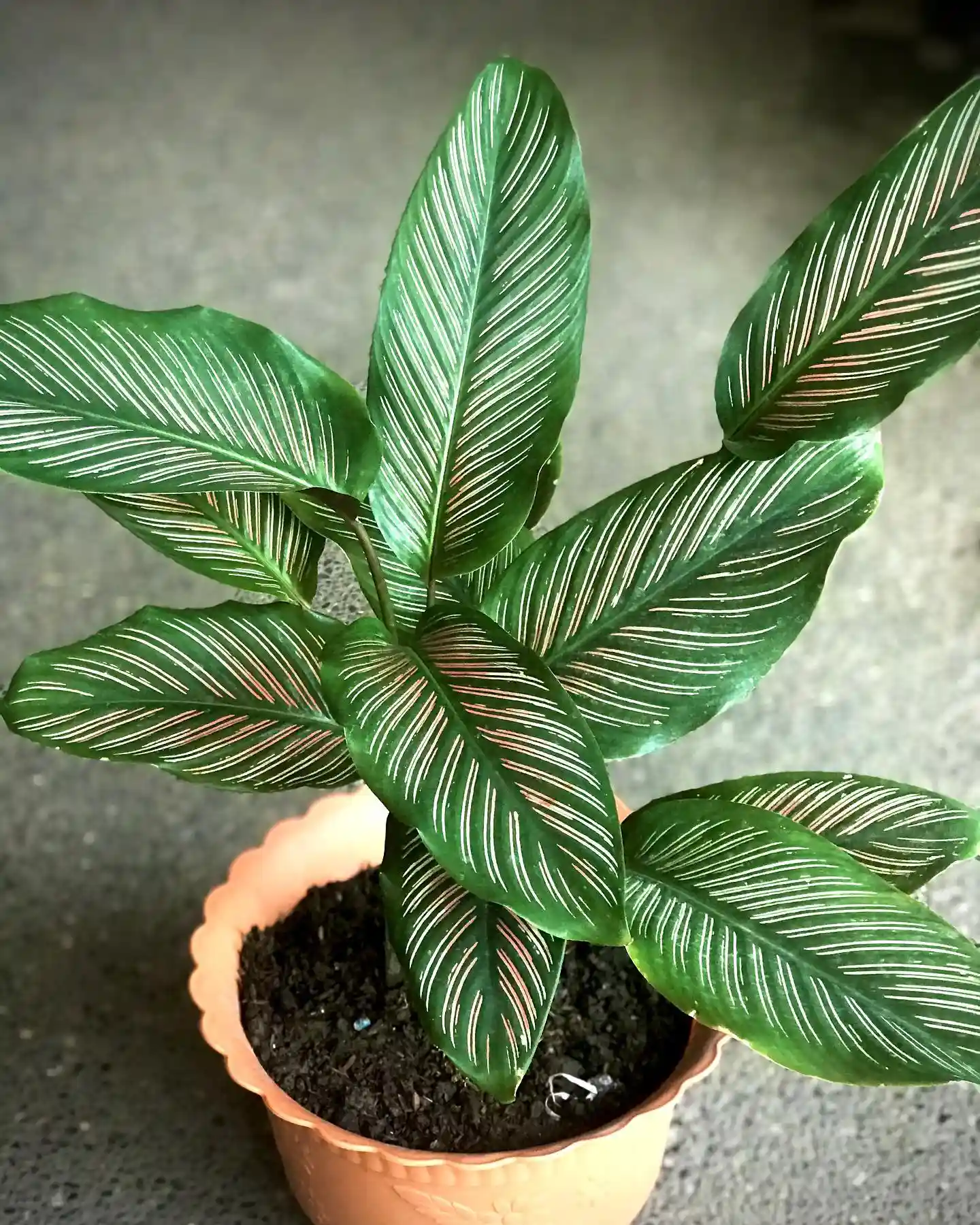
Pinstripe Calathea has dark green leaves covered with thin pink or pale lines that look hand-drawn. New foliage often carries stronger pink coloring, which may soften as the leaves age. Its upright shape works well in modern rooms, especially when paired with a plain white, black, or terracotta pot. This plant can be sensitive to dry air, so it performs better away from heating vents and sunny windows.
- Care level: Moderate
- Light: Bright, indirect light
- Growth habit: Upright clump
- Best feature: Fine pink pinstripes
- Best for: Modern bedrooms and office displays
- Helpful tip: Keep direct sun off the leaves to prevent faded coloring.
7. Calathea Beauty Star
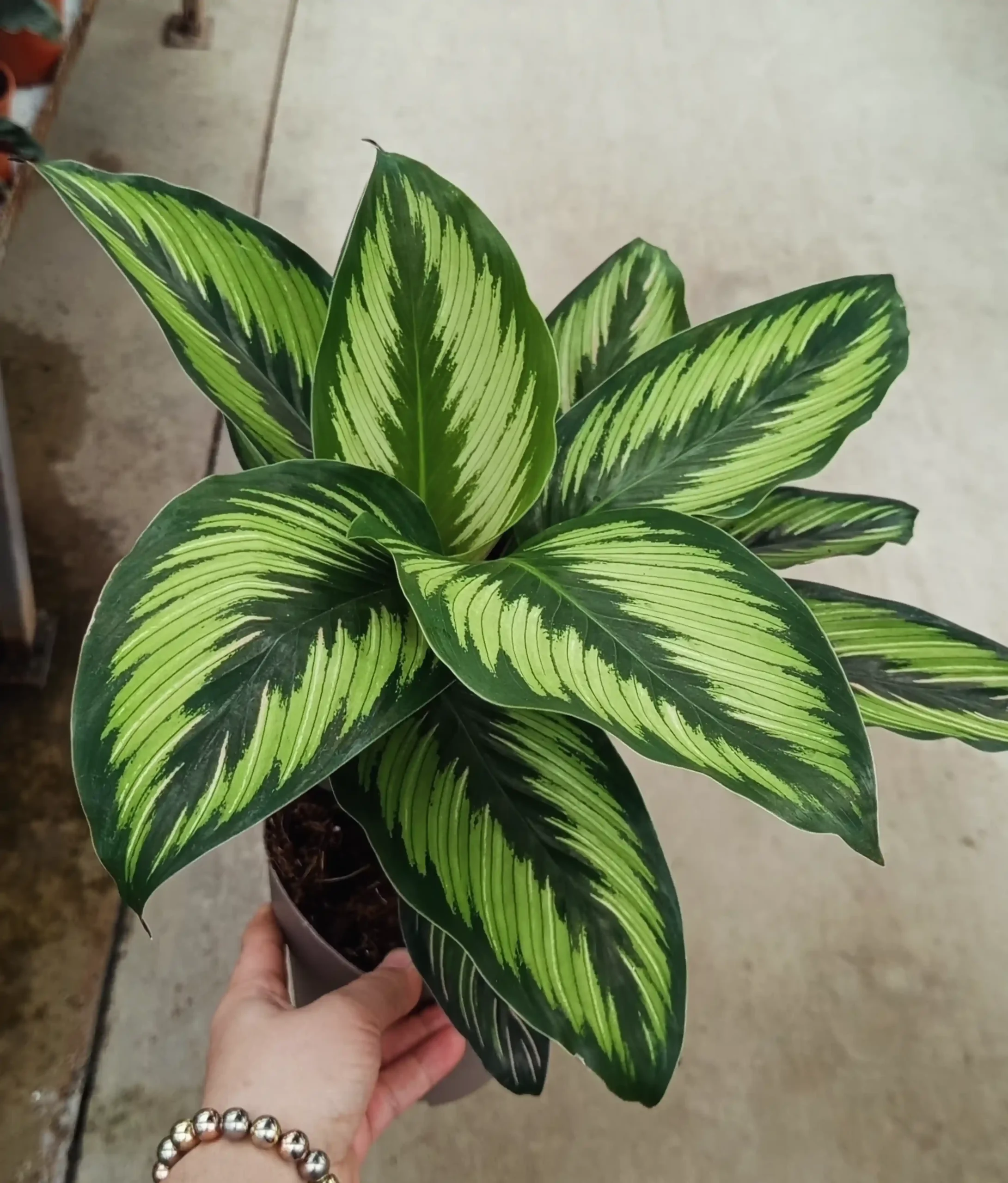
Beauty Star Calathea has long, narrow leaves striped with dark green, pale green, cream, and soft pink. The multiple colors create movement without making the plant feel too bright. It grows upward rather than spreading widely, so it fits nicely beside furniture or on a narrow plant stand. I like this variety for rooms where a regular green plant feels too plain but a heavily pink Calathea would feel too bold.
- Care level: Moderate
- Light: Bright, indirect light
- Growth habit: Narrow upright clump
- Best feature: Green, cream, and pink striping
- Best for: Small floor pots and plant stands
- Helpful tip: Turn the pot every few weeks for balanced growth.
8. Calathea Sanderiana
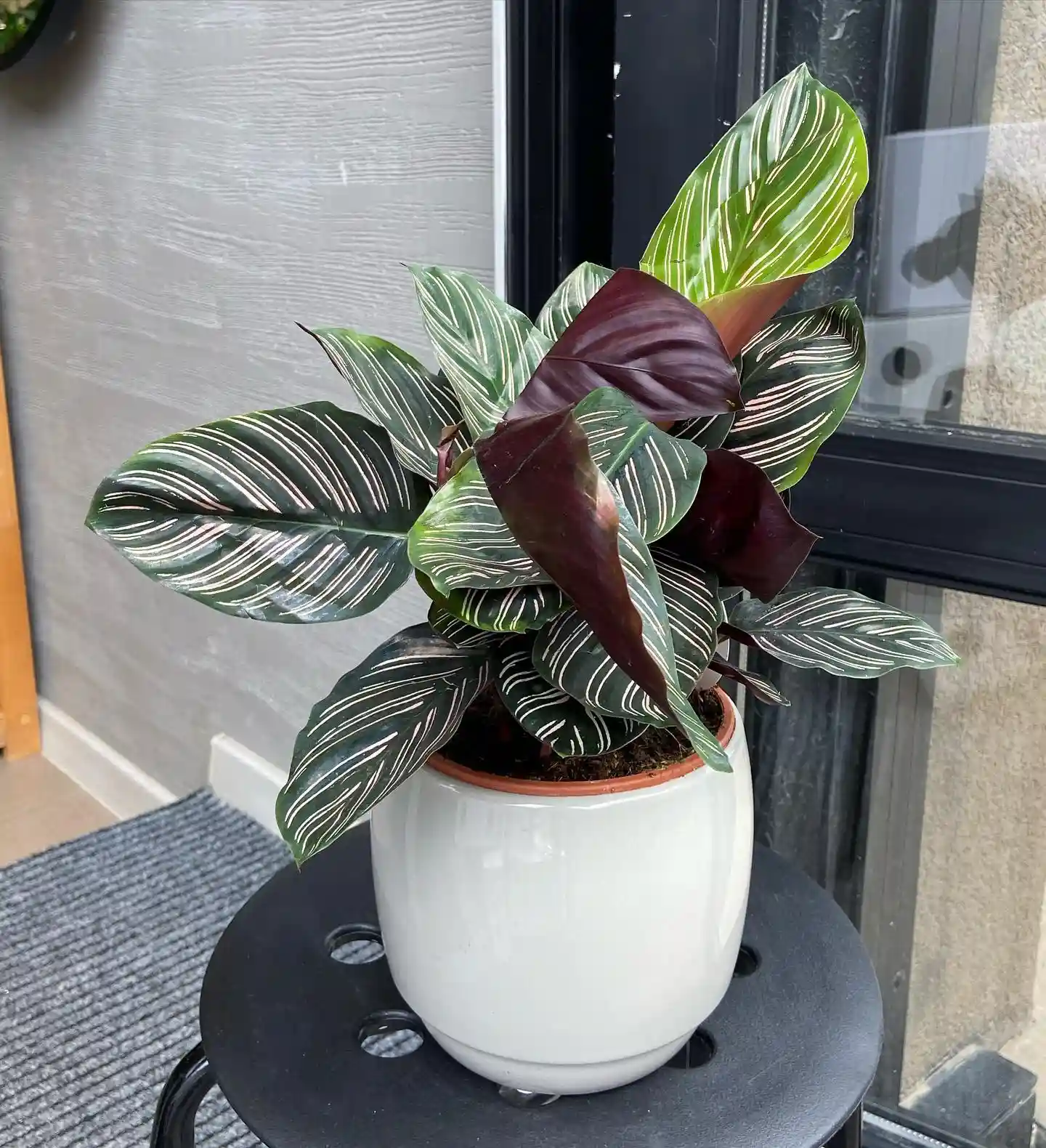
Sanderiana Calathea has dark green leaves marked with fine pale pink or white stripes. It closely resembles Pinstripe Calathea and is often sold under the same group of names. The leaf undersides are usually purple, adding more color when the plant moves throughout the day. It stays fairly upright and works well in a bright bathroom where warm, humid air can help prevent dry edges.
- Care level: Moderate
- Light: Bright, filtered light
- Growth habit: Upright clump
- Best feature: Thin pale stripes over dark leaves
- Best for: Bright bathrooms and warm bedrooms
- Helpful tip: Keep it away from cold windows during winter.
9. Rose Painted Calathea
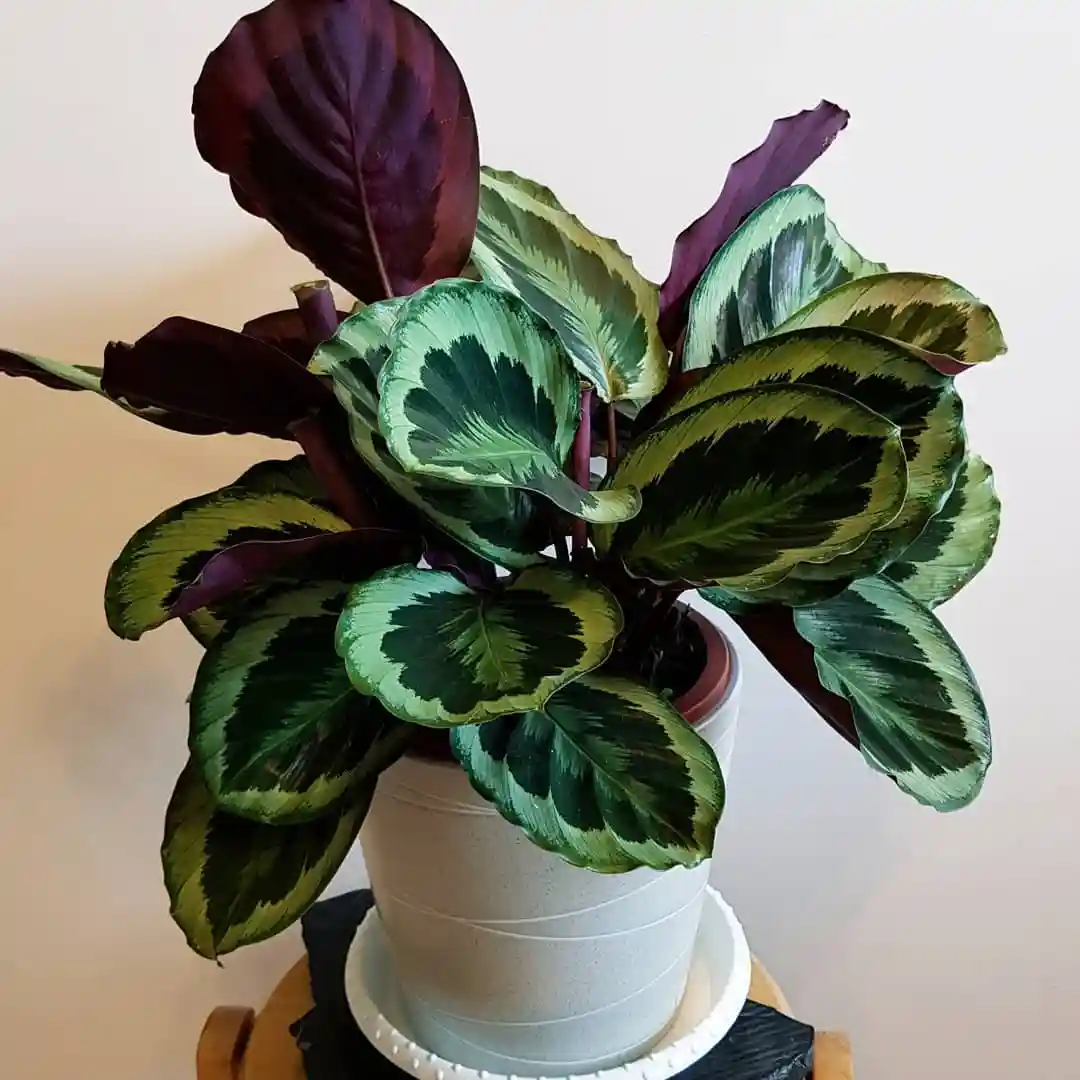
Rose-Painted Calathea is a broad name used for plants with rounded leaves that appear brushed with green, pink, cream, or silver. Many popular cultivars, including Medallion and Dottie, come from this group. The leaves often have deep purple undersides and a painted border around the surface. These plants stay manageable indoors but need consistent conditions to keep their foliage smooth and colorful.
- Care level: Moderate
- Light: Bright, indirect light
- Growth habit: Rounded clumping plant
- Best feature: Painted-looking leaf patterns
- Best for: Colorful indoor plant collections
- Helpful tip: Avoid moving it frequently once you find a spot where it grows well.
10. Calathea Medallion
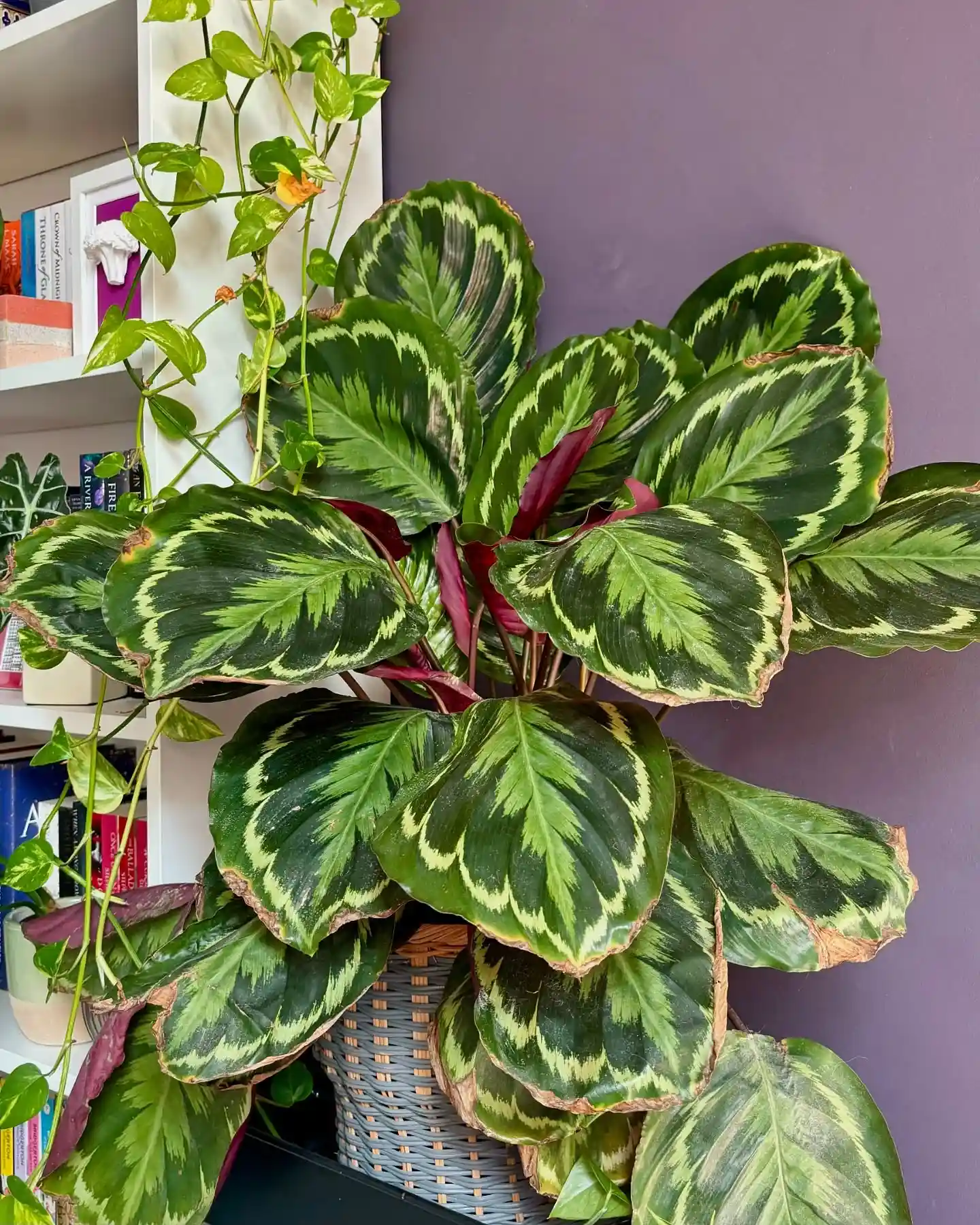
Medallion Calathea has rounded leaves with dark green edges, silvery centers, and feathered markings that resemble a decorative medallion. The purple undersides are especially noticeable when the leaves rise in the evening. It grows into a full but manageable clump and looks attractive on a medium plant stand. This is one of the most widely available patterned Calatheas, though it still prefers steady humidity.
- Care level: Moderate
- Light: Medium to bright indirect light
- Growth habit: Compact rounded clump
- Best feature: Silver-green medallion pattern
- Best for: Side tables and medium plant stands
- Helpful tip: Keep the soil lightly moist without leaving the roots waterlogged.
11. Dottie Calathea
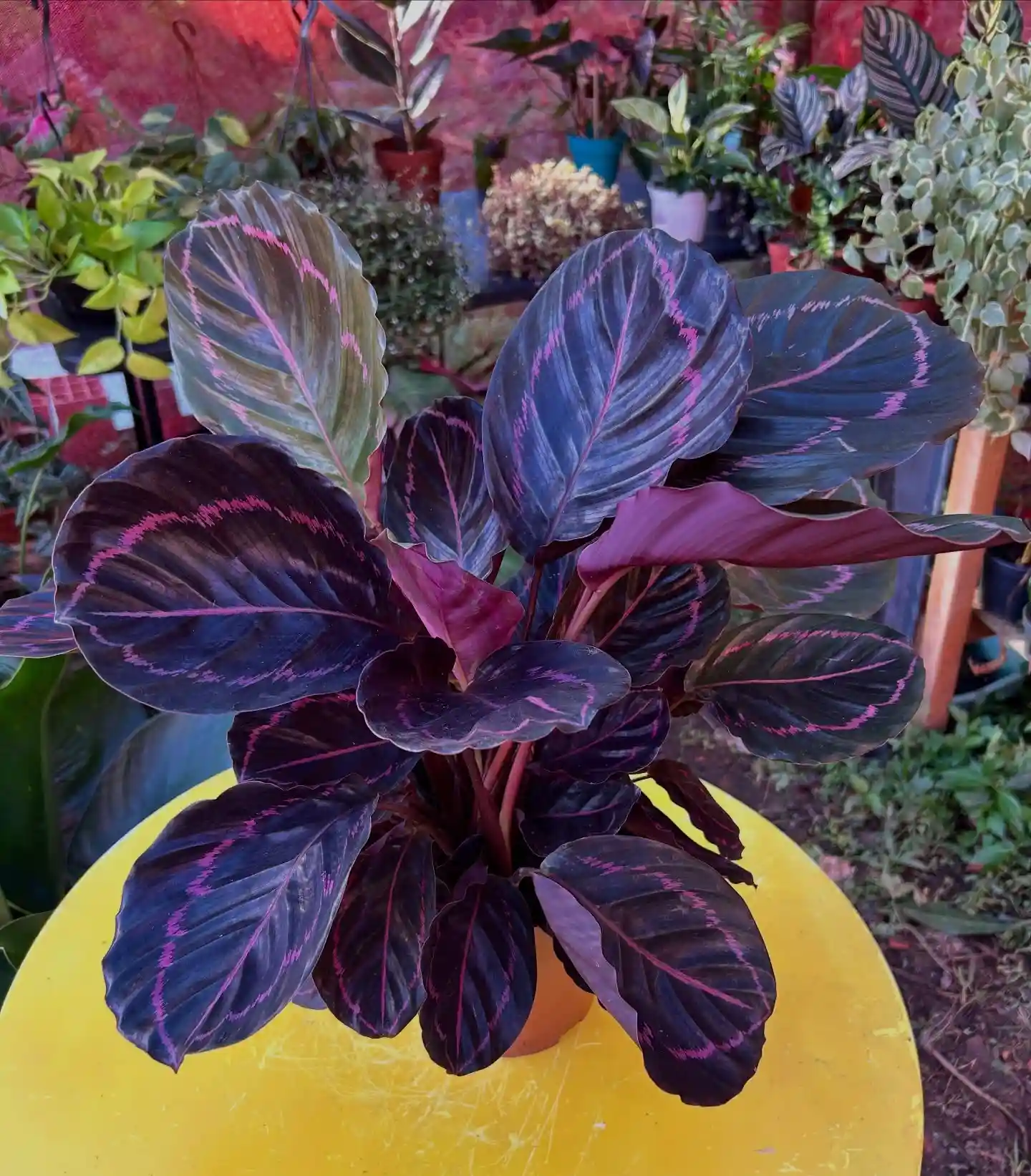
Dottie Calathea has deep green leaves that can look almost black, edged with a bright pink outline. A second pink ring follows the center of each leaf, creating a bold pattern that stands out against lighter walls. It stays fairly compact, making it easy to display on a shelf or small table. The dark foliage can fade in strong sun, so filtered light is a much safer choice.
- Care level: Moderate
- Light: Bright, indirect light
- Growth habit: Compact clump
- Best feature: Dark leaves outlined in pink
- Best for: Bold shelves and colorful room accents
- Helpful tip: Use a light-colored pot to make the dark leaves look even deeper.
12. Rosy Calathea
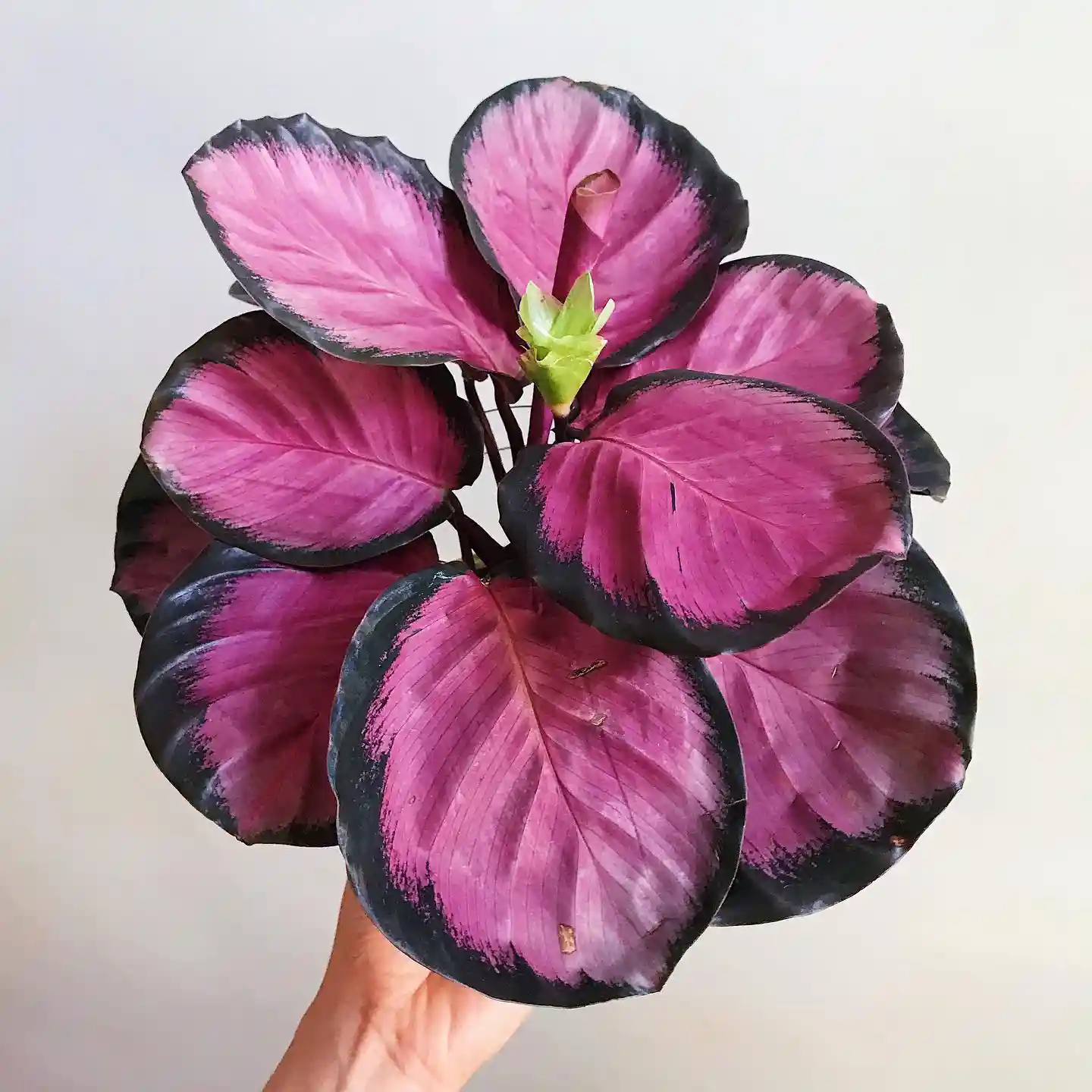
Rosy Calathea has wide leaves with soft pink centers surrounded by deep green borders. The pink areas can range from pale rose to a stronger magenta depending on light, age, and growing conditions. It stays compact and brings plenty of color to a tabletop without taking over the room. Bright indirect light helps maintain the pink tones, but direct sun may leave faded or dry patches.
- Care level: Moderate
- Light: Bright, indirect light
- Growth habit: Compact rounded clump
- Best feature: Broad pink-centered leaves
- Best for: Bright rooms and colorful displays
- Helpful tip: Keep it close to a bright window but behind a sheer curtain.
13. Corona Calathea
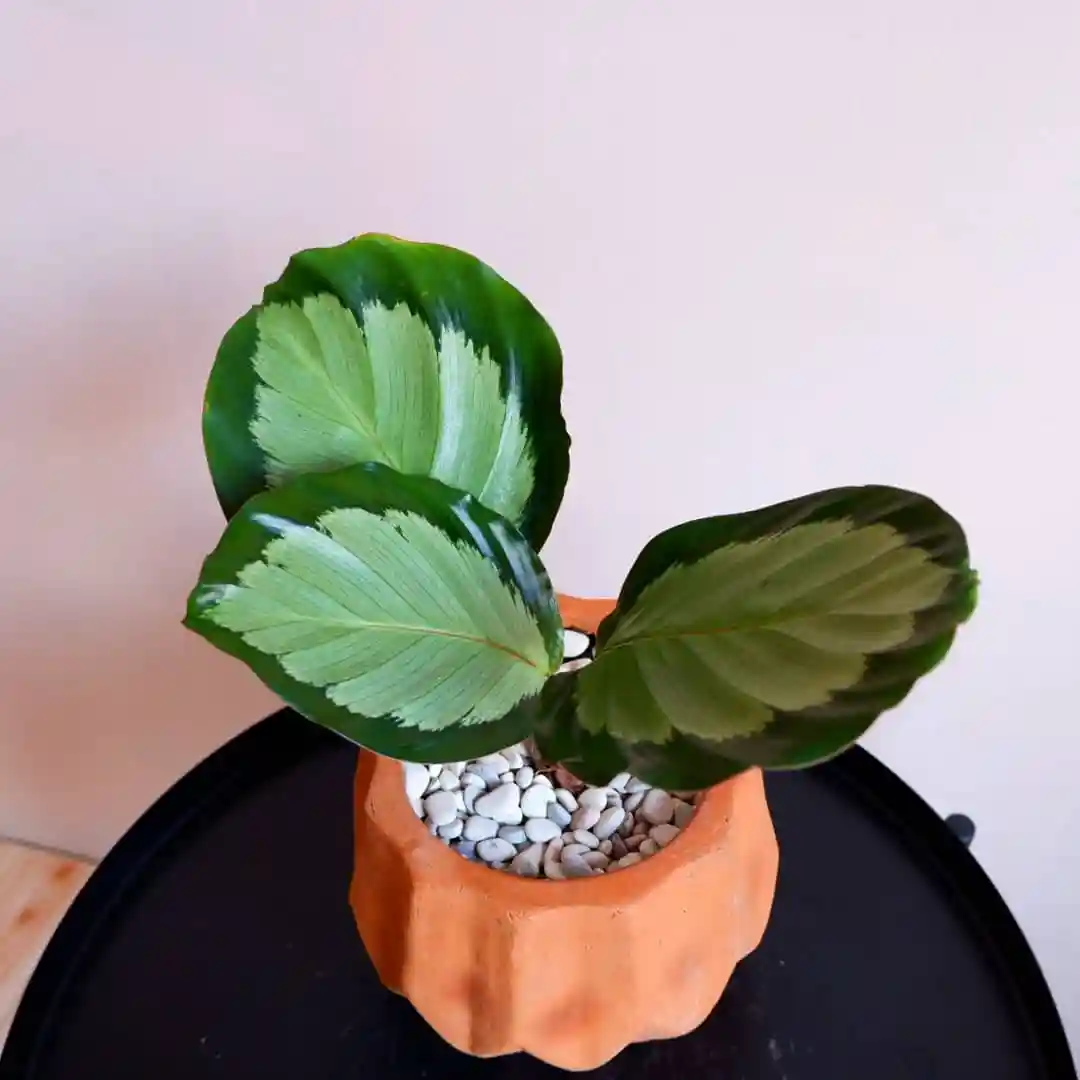
Corona Calathea has wide silvery-green centers surrounded by dark green edges. The pattern is softer than the sharper pink lines found on Dottie or Pinstripe Calathea, making it a good fit for quiet, neutral rooms. It forms a tidy clump and does not usually need a large floor area. The broad pale sections can show water marks easily, so gently clean the leaves when needed.
- Care level: Moderate
- Light: Medium to bright indirect light
- Growth habit: Compact clump
- Best feature: Silver centers with dark green borders
- Best for: Neutral interiors and calm bedroom displays
- Helpful tip: Use a soft cloth rather than leaf-shine products.
14. Illustris Calathea
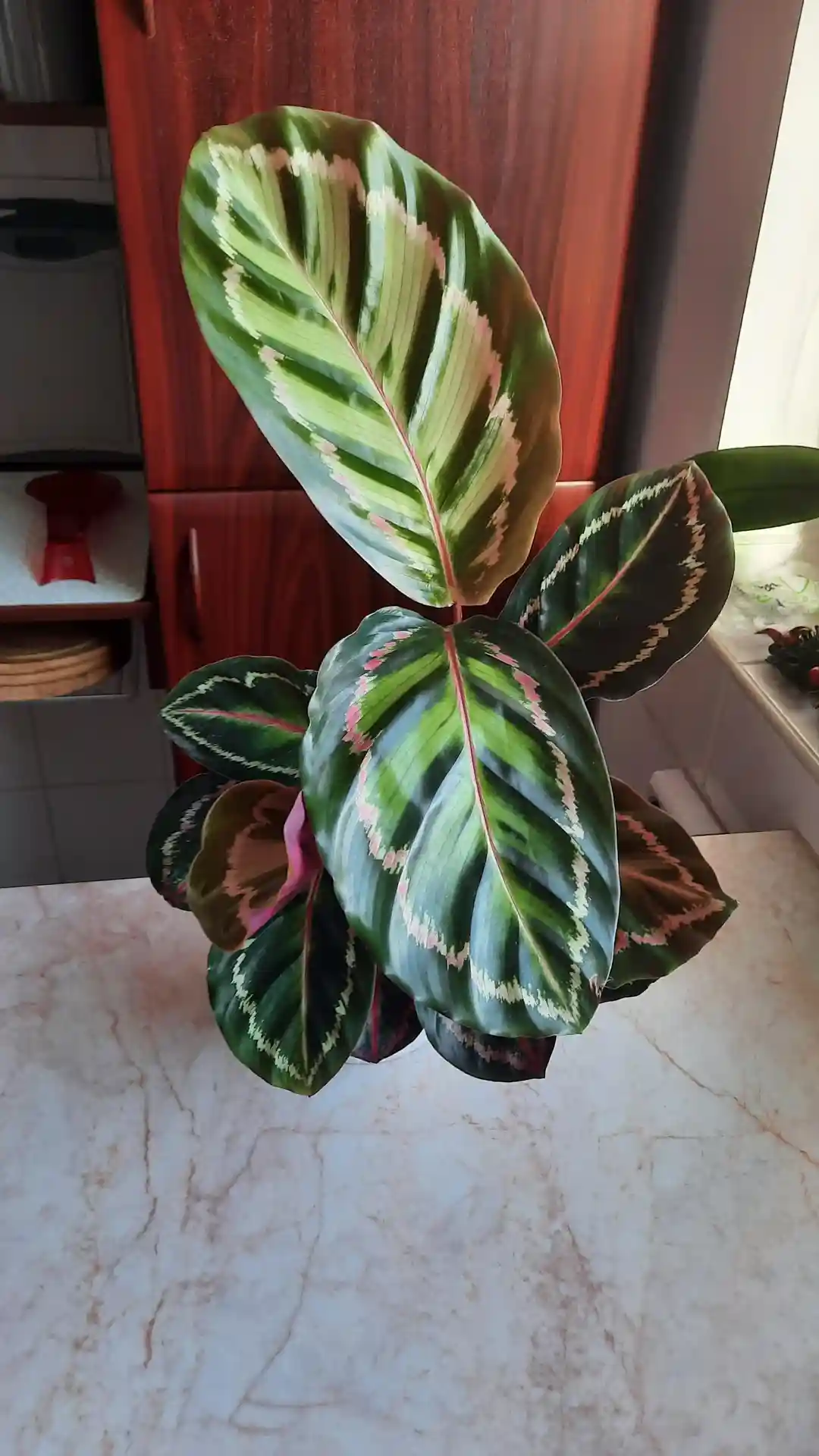
Illustris Calathea has deep green outer leaves with lighter feathered markings spreading from the center. Pink or purple tones may appear underneath, giving the foliage more depth as it moves. This variety is sometimes confused with other Rose-Painted Calatheas because nursery labels can vary. It stays reasonably compact and looks best where its pattern can be viewed from above.
- Care level: Moderate
- Light: Bright, indirect light
- Growth habit: Rounded clump
- Best feature: Feathered light and dark leaf pattern
- Best for: Collectors and tabletop displays
- Helpful tip: Check the actual leaf pattern rather than relying only on the label.
15. Crimson Calathea
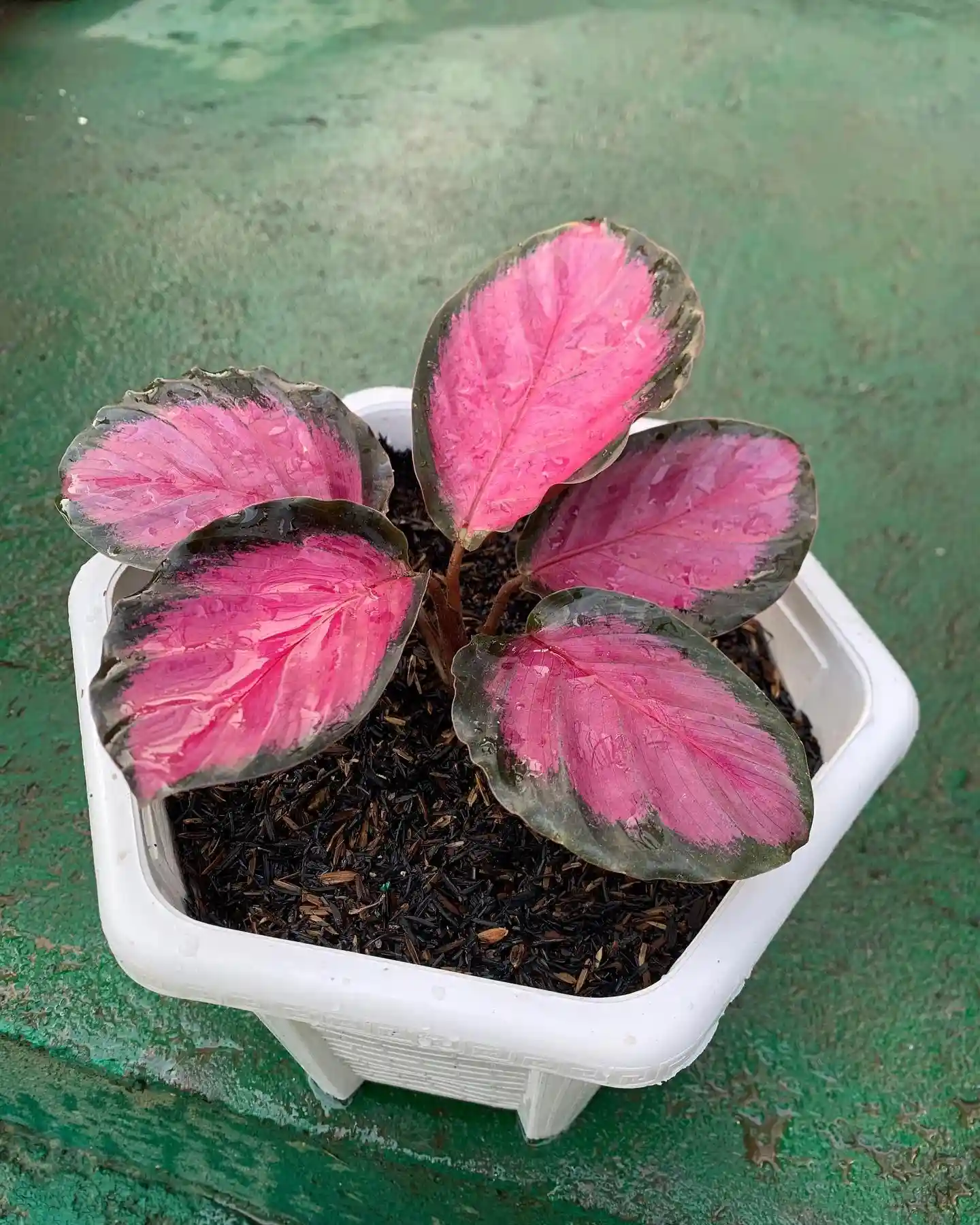
Crimson Calathea combines dark green, burgundy, and pink tones in a compact plant. The leaf centers can appear bright pink, while the outer sections stay much darker. It creates a strong color contrast without needing flowers. This variety works well on shelves where it receives bright filtered light and steady warmth. Its colorful foliage can become dull if the room is too dark.
- Care level: Moderate
- Light: Bright, filtered light
- Growth habit: Compact clumping plant
- Best feature: Deep burgundy and pink coloring
- Best for: Colorful shelves and small tables
- Helpful tip: Keep it away from cold glass and strong afternoon sunlight.
16. White Fusion Calathea
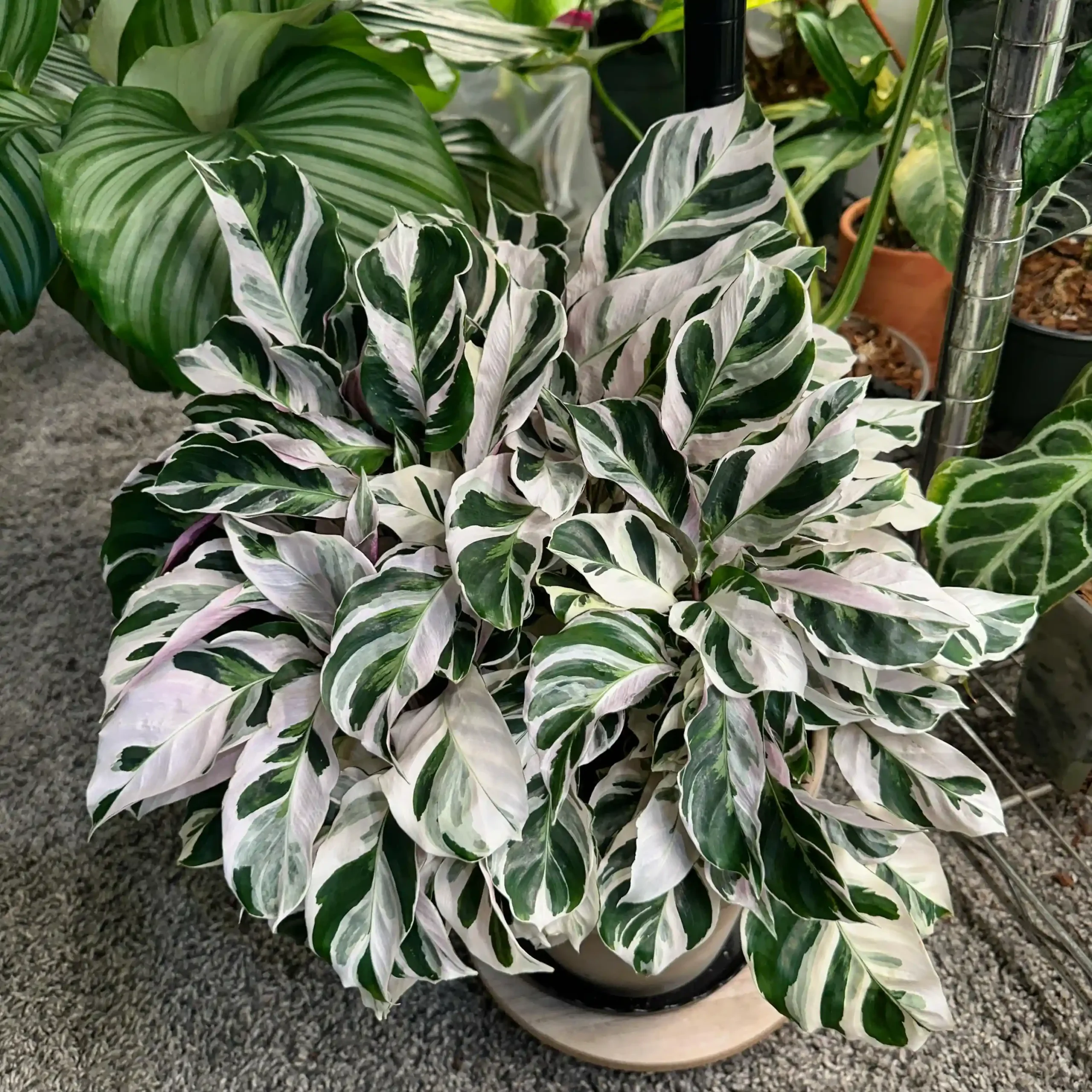
White Fusion Calathea has marbled leaves brushed with white, green, pale gray, and soft lavender. The undersides often carry purple coloring, giving every leaf a different appearance. It is one of the most eye-catching Calathea varieties, but it is also one of the more sensitive. Dry air, mineral-heavy water, or uneven watering can quickly leave brown marks on the pale foliage.
- Care level: Difficult
- Light: Bright, indirect light
- Growth habit: Compact clump
- Best feature: White, green, and lavender marbling
- Best for: Experienced Calathea growers
- Helpful tip: Use filtered or rainwater and keep humidity steady.
17. Stella Calathea
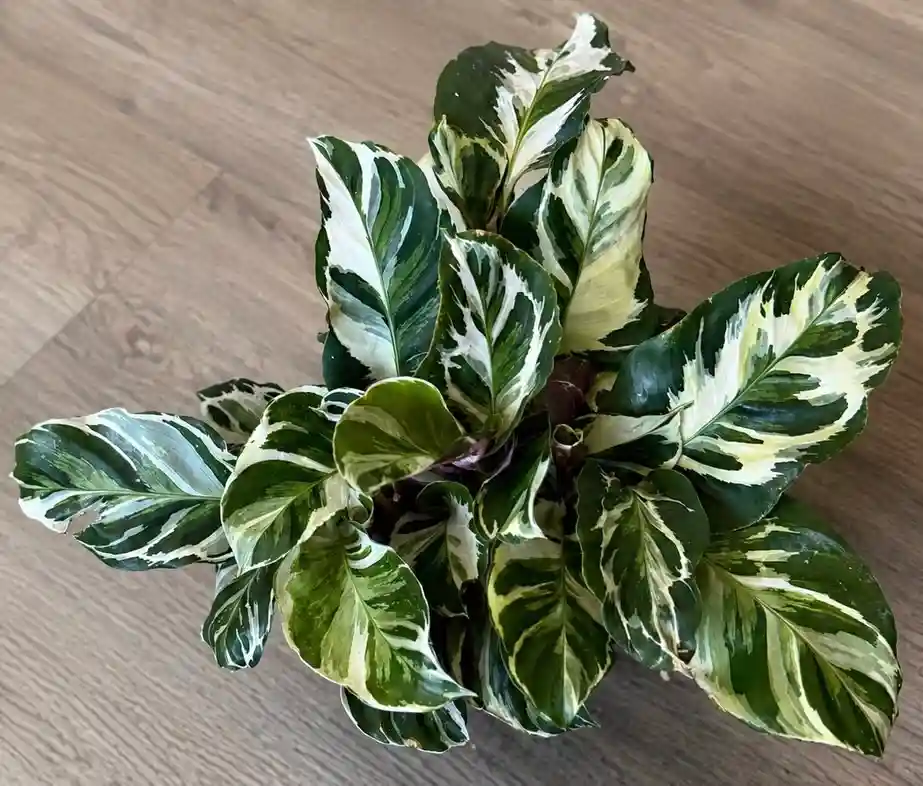
Stella Calathea has green and creamy white variegation with a more balanced pattern than many White Fusion plants. The leaves are narrow, softly wavy, and often backed with purple. It still needs careful watering and humidity, but many growers find the stronger green sections slightly easier to manage. The pale pattern looks best in bright filtered light where the leaves remain colorful without scorching.
- Care level: Moderate to difficult
- Light: Bright, indirect light
- Growth habit: Compact upright clump
- Best feature: Balanced green and white marbling
- Best for: Variegated plant collectors
- Helpful tip: Inspect new plants carefully for spider mites around the leaf undersides.
18. Network Calathea
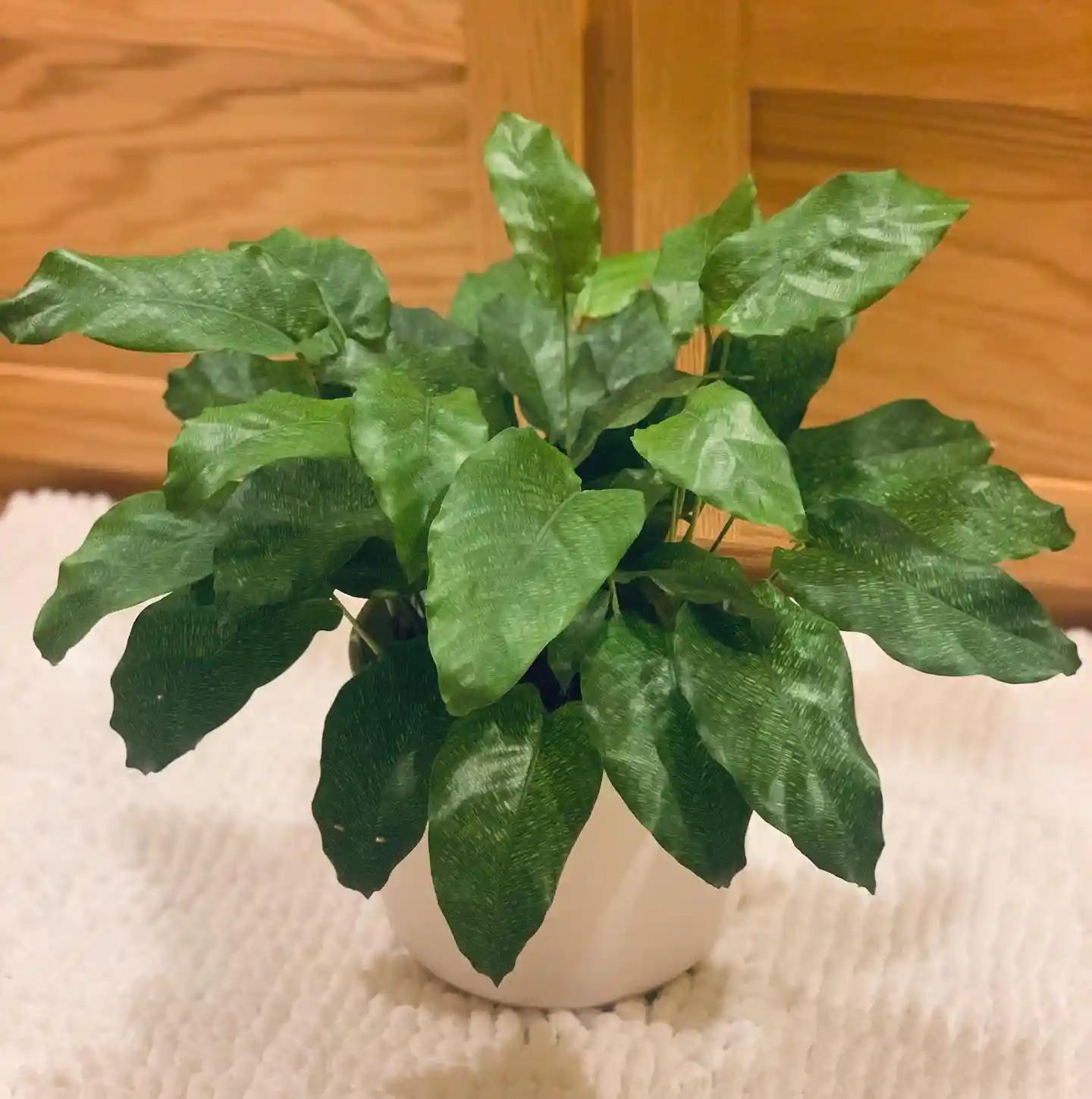
Network Calathea has a fine mosaic pattern covering each bright green leaf. Instead of bold stripes or pink patches, the foliage looks like it has been drawn with hundreds of tiny green lines. The pattern is subtle from across the room but fascinating when viewed closely. This variety is often considered a little less dramatic and easier to place than heavily colored Calatheas.
- Care level: Easy to moderate
- Light: Medium to bright indirect light
- Growth habit: Full rounded clump
- Best feature: Fine network-like leaf pattern
- Best for: Offices and all-green plant displays
- Helpful tip: Clean the leaves regularly so the detailed pattern remains visible.
19. Freddie Calathea
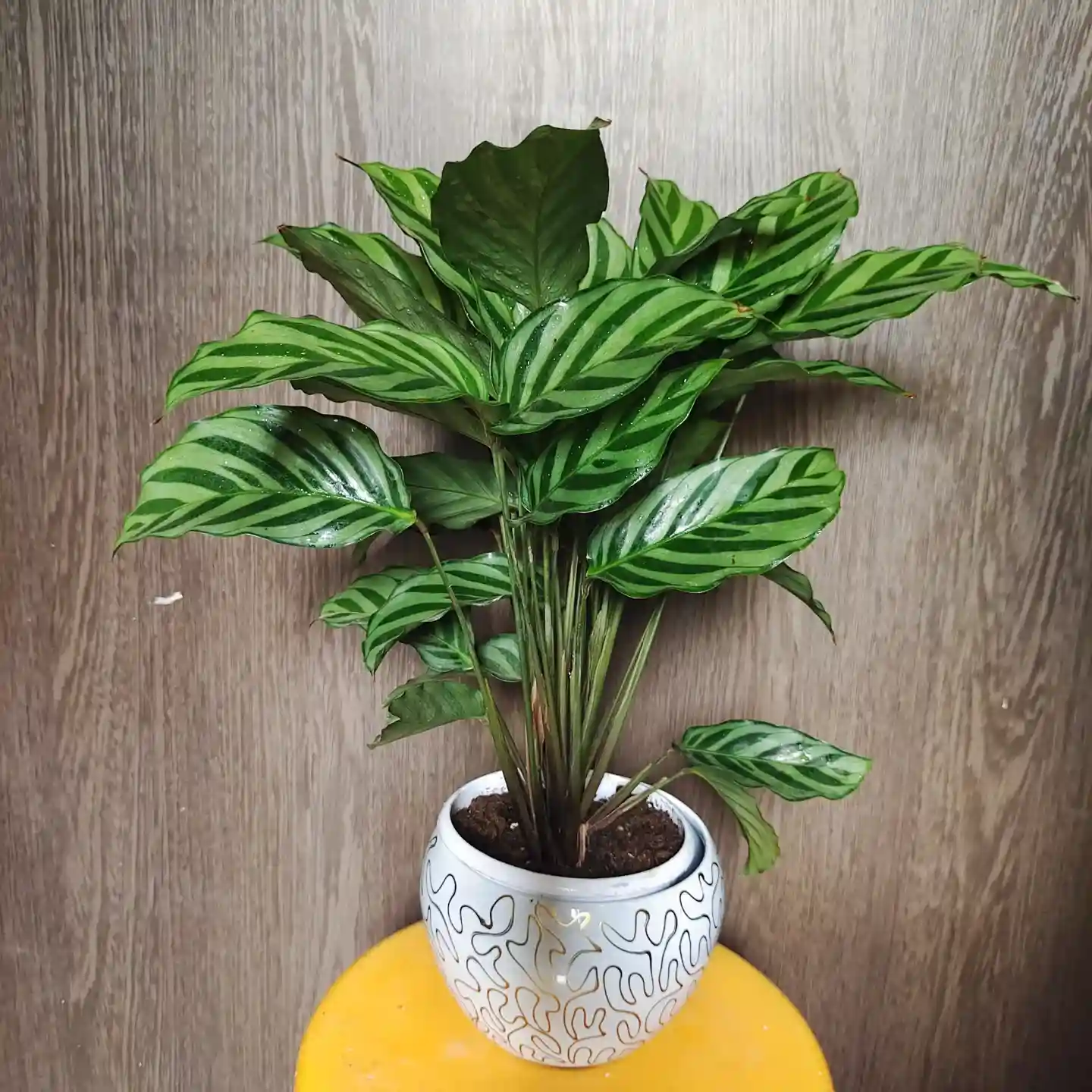
Freddie Calathea has narrow pale green leaves marked with dark feathered stripes. It grows into a bushy clump without becoming as broad as Orbifolia or Zebra Calathea. The softer coloring makes it easy to mix with other houseplants. Among the Calathea varieties I would suggest for a first attempt, Freddie is near the top because it tends to be less dramatic when conditions change slightly.
- Care level: Easy to moderate
- Light: Medium to bright indirect light
- Growth habit: Compact bushy clump
- Best feature: Fine feathered green striping
- Best for: Beginners and smaller rooms
- Helpful tip: Keep it in a warm spot with no sudden temperature drops.
20. Misto Calathea
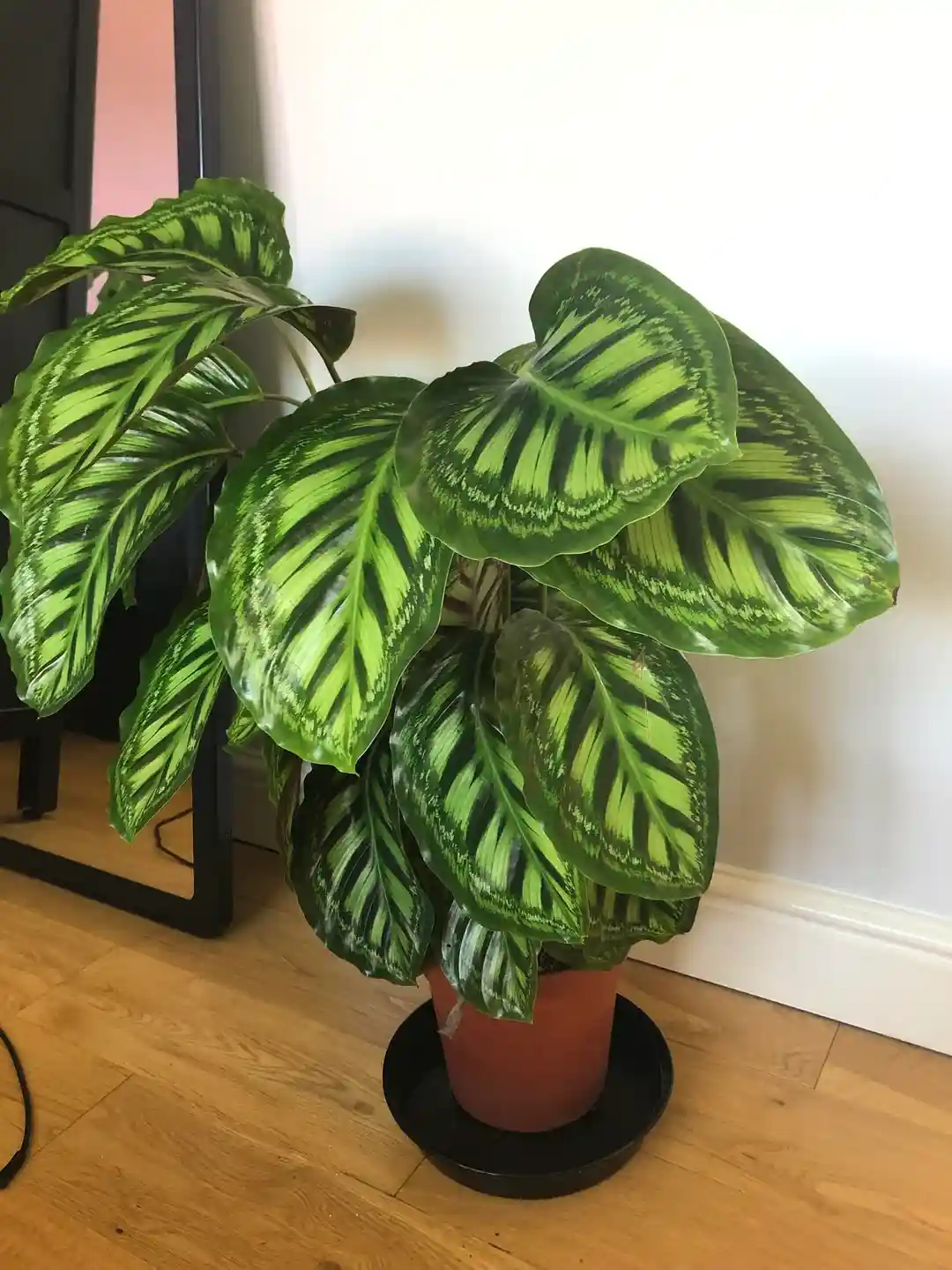
Misto Calathea has dark green leaf edges surrounding a lighter green center. Its pattern is simple compared with Medallion or White Fusion, but that gives the plant a fresh, calm appearance. It grows upright and fits nicely on narrow plant stands or office shelves. Misto is a good step between an easy foliage plant and a more demanding patterned Calathea.
- Care level: Easy to moderate
- Light: Medium to bright indirect light
- Growth habit: Upright compact clump
- Best feature: Pale center with dark green margins
- Best for: New Calathea growers
- Helpful tip: Do not allow the soil to become completely dry for long periods.
21. Maui Queen Calathea
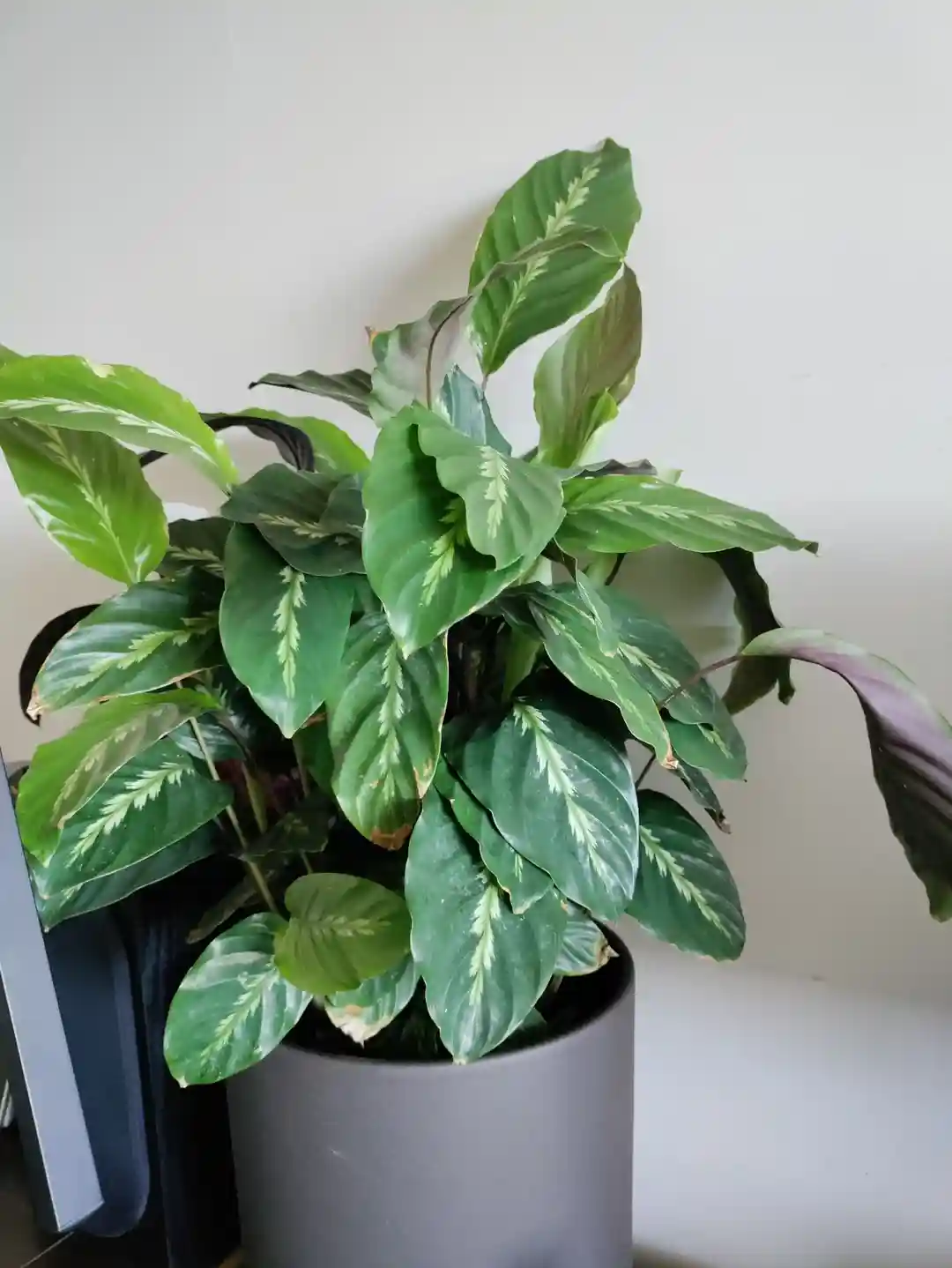
Maui Queen Calathea has long dark green leaves marked with a pale feather-shaped design down the center. The strong central pattern gives the foliage a clean, organized look without bright pink or white coloring. It grows upright and stays narrow enough for desks, hall tables, and plant stands. Purple undersides add more color when the leaves lift later in the day.
- Care level: Moderate
- Light: Bright, indirect light
- Growth habit: Narrow upright clump
- Best feature: Pale feathered center pattern
- Best for: Desks and slim plant stands
- Helpful tip: Place it where you can see both the leaf tops and undersides.
22. Furry Feather Calathea
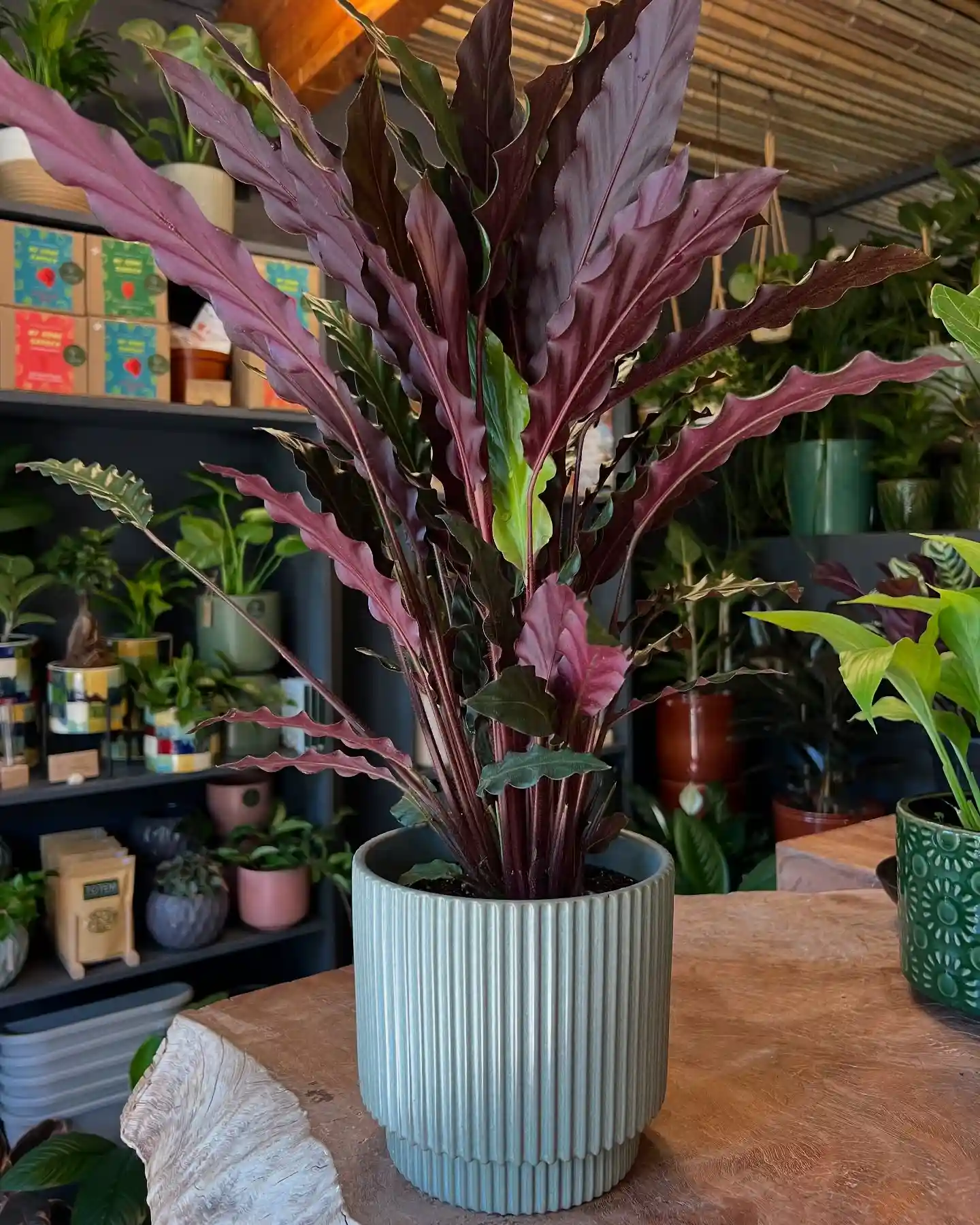
Furry Feather Calathea has long, narrow leaves with wavy edges and a slightly fuzzy texture. The upper foliage is green, while the stems and undersides often carry rich burgundy tones. Its leaves rise more vertically than many rounded Calathea types, giving the plant a soft, feathery shape. It works well in rooms where you want texture rather than bold variegation.
- Care level: Easy to moderate
- Light: Medium to bright indirect light
- Growth habit: Upright feathery clump
- Best feature: Soft wavy foliage with burgundy backs
- Best for: Textured plant displays
- Helpful tip: Avoid rubbing the fuzzy leaf surface when cleaning it.
23. Eternal Flame Calathea
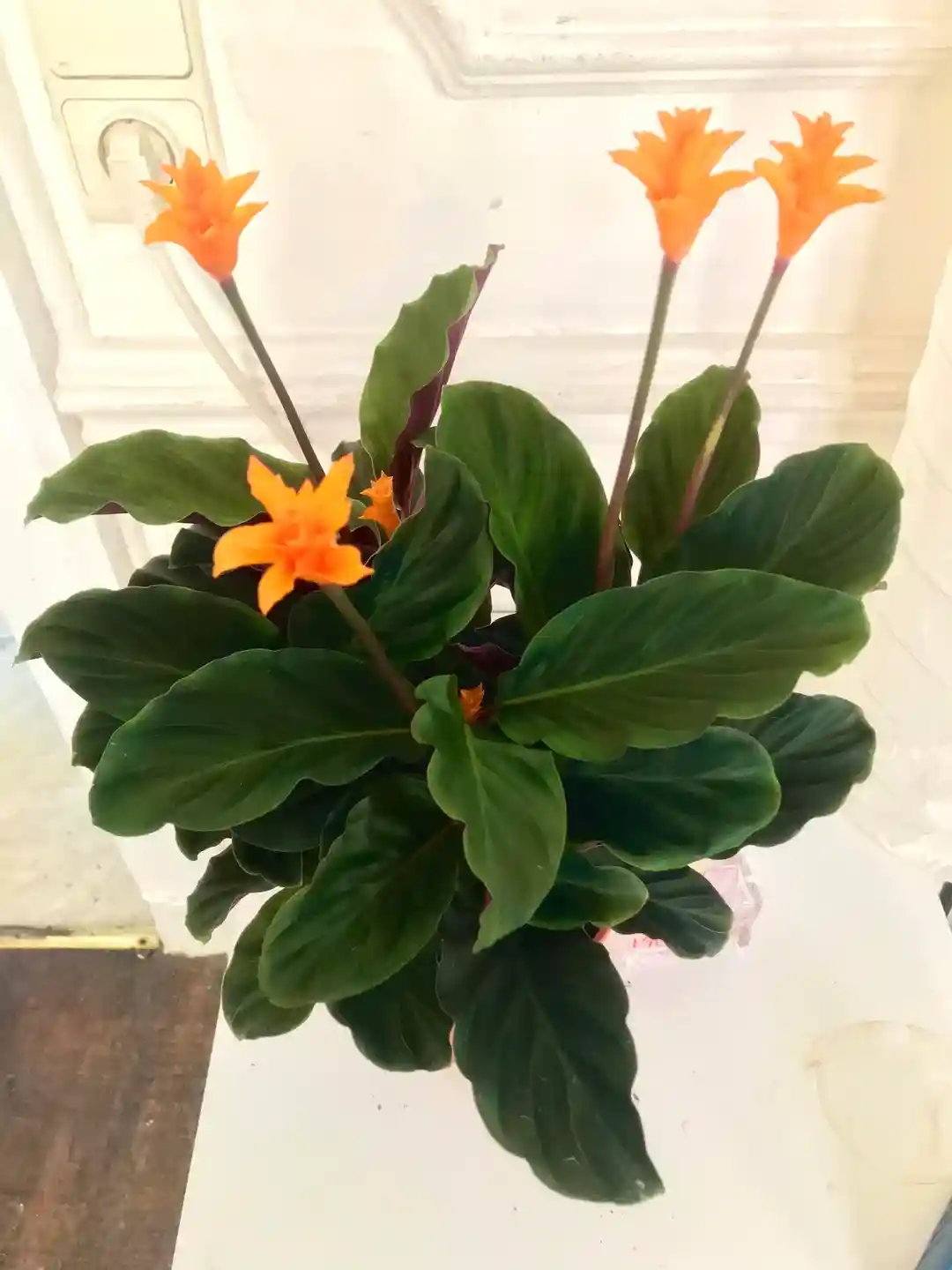
Eternal Flame Calathea is one of the few types grown for both foliage and flowers. Its dark green leaves have softly wavy edges, while bright orange flower spikes rise above the plant when conditions are right. The blooms add warmth to a collection that is usually focused only on patterned leaves. It stays compact and enjoys bright filtered light, warmth, and steady humidity.
- Care level: Moderate
- Light: Bright, indirect light
- Growth habit: Compact flowering clump
- Best feature: Bright orange flower spikes
- Best for: Anyone wanting a flowering Calathea
- Helpful tip: Remove faded flower stems close to the base.
24. Calathea Fasciata
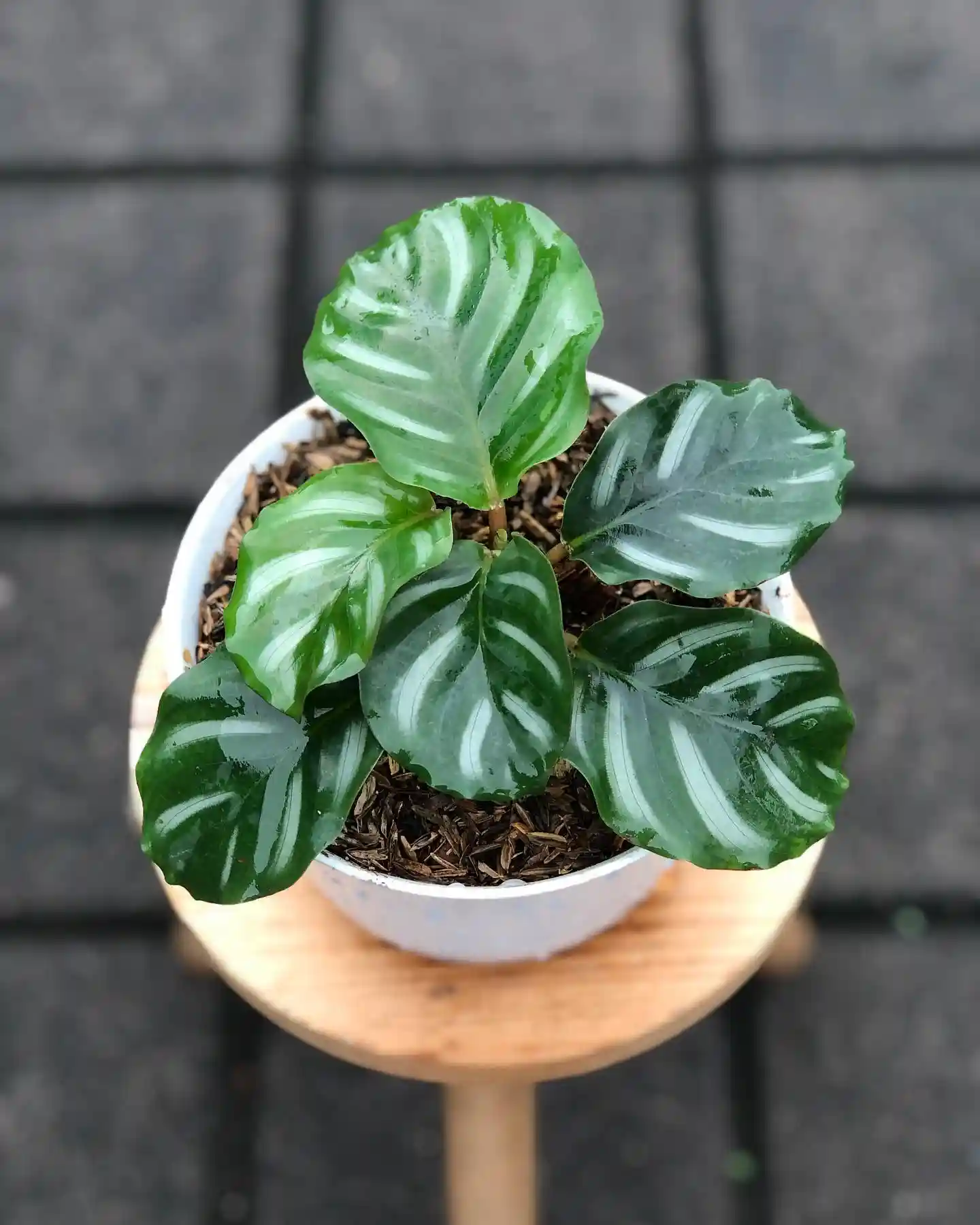
Calathea Fasciata has rounded leaves marked with broad silver-green and dark green bands. It resembles Orbifolia but usually has a more compact shape and slightly darker coloring. This makes it a practical option for someone who loves wide striped foliage but lacks space for a large floor plant. The rounded leaves look especially good in low pots that allow the foliage to spread naturally.
- Care level: Moderate
- Light: Bright, indirect light
- Growth habit: Rounded clump
- Best feature: Broad silver-green bands
- Best for: Medium pots and smaller rooms
- Helpful tip: Leave space around the pot so new leaves can open without damage.
25. Calathea Vittata
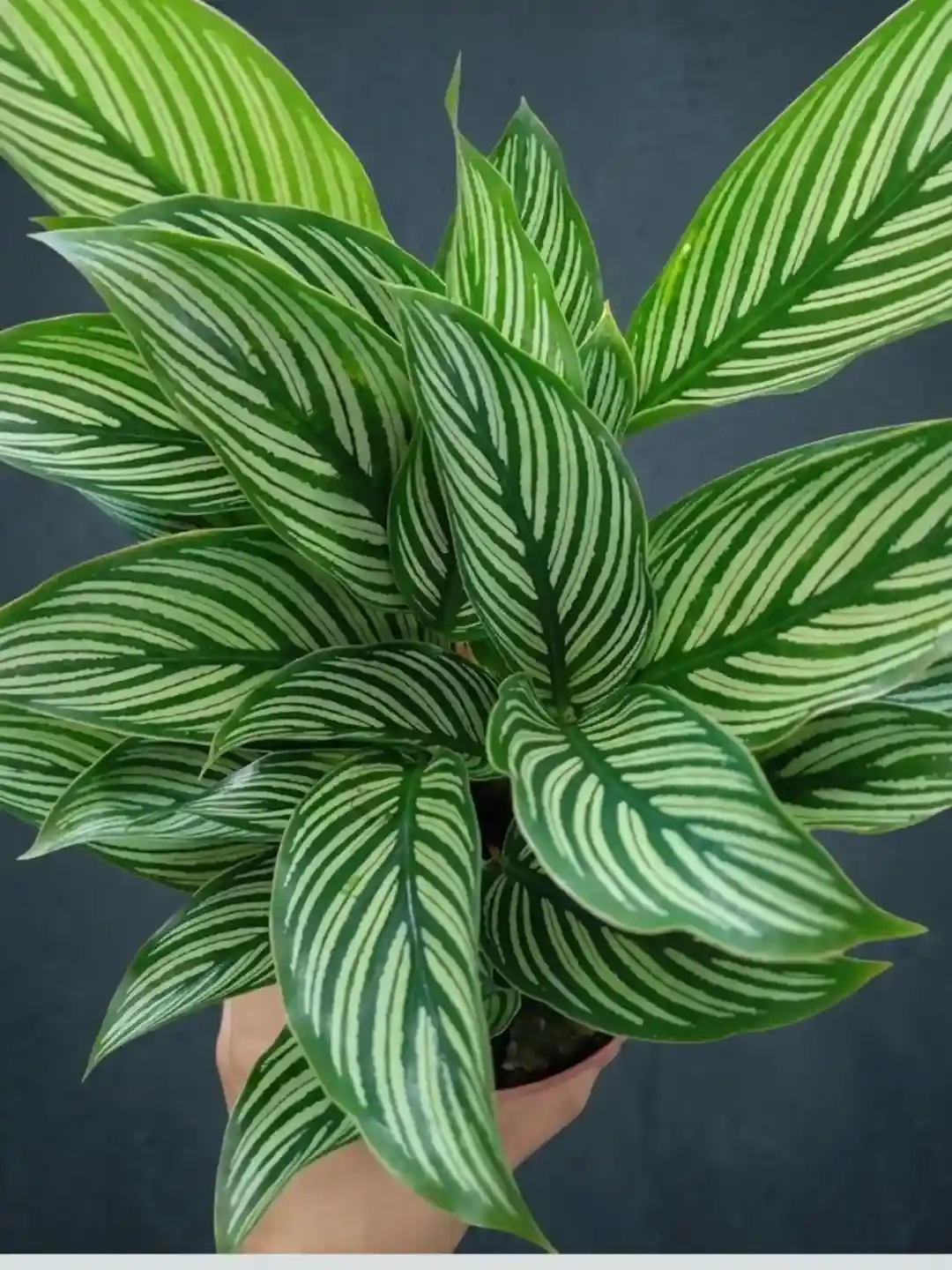
Calathea Vittata has pale green leaves covered with thin white stripes running from the center toward the edges. Its clean pattern feels lighter and simpler than dark varieties such as Dottie or Pinstripe Calathea. The narrow leaves grow upward in a tidy clump, making it easy to place in minimalist rooms. The white striping stays clearer when the plant receives good indirect light.
- Care level: Moderate
- Light: Bright, indirect light
- Growth habit: Narrow upright clump
- Best feature: Fine white stripes on pale leaves
- Best for: Minimal and light-colored rooms
- Helpful tip: Protect the leaves from direct sun, which may turn the pale areas brown.
26. WhiteStar Calathea
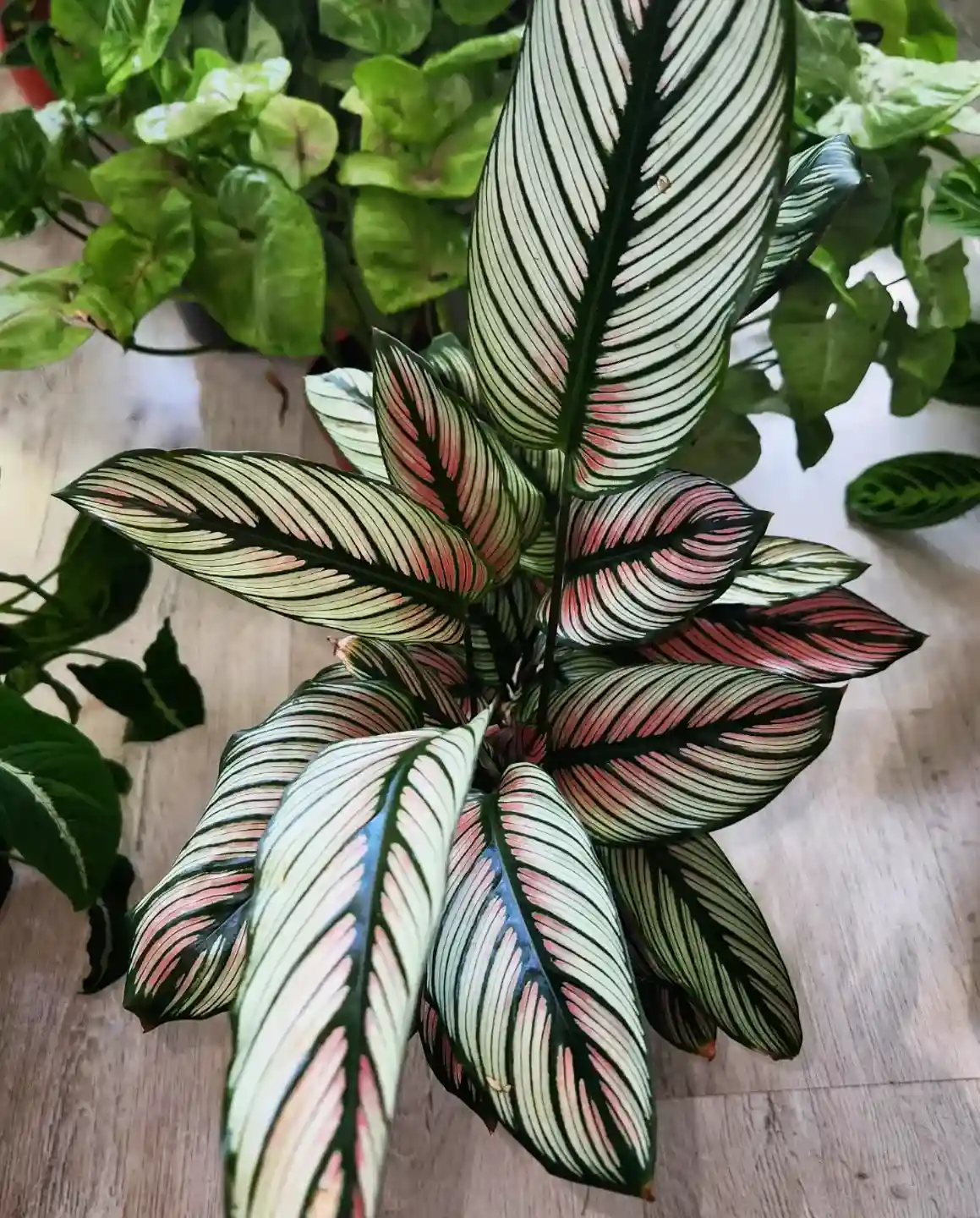
White Star Calathea has long dark green leaves covered with fine white and pale pink lines. Young foliage may carry stronger pink tones before becoming lighter with age. The leaves grow upright and give the plant an elegant shape without spreading too widely. It looks beautiful in a warm bathroom or near a bright window protected by a sheer curtain.
- Care level: Moderate
- Light: Bright, filtered light
- Growth habit: Tall narrow clump
- Best feature: White and pink striped foliage
- Best for: Bright bathrooms and narrow floor spaces
- Helpful tip: Maintain steady moisture while allowing excess water to drain fully.
27. Calathea Picturata ‘Argentea’
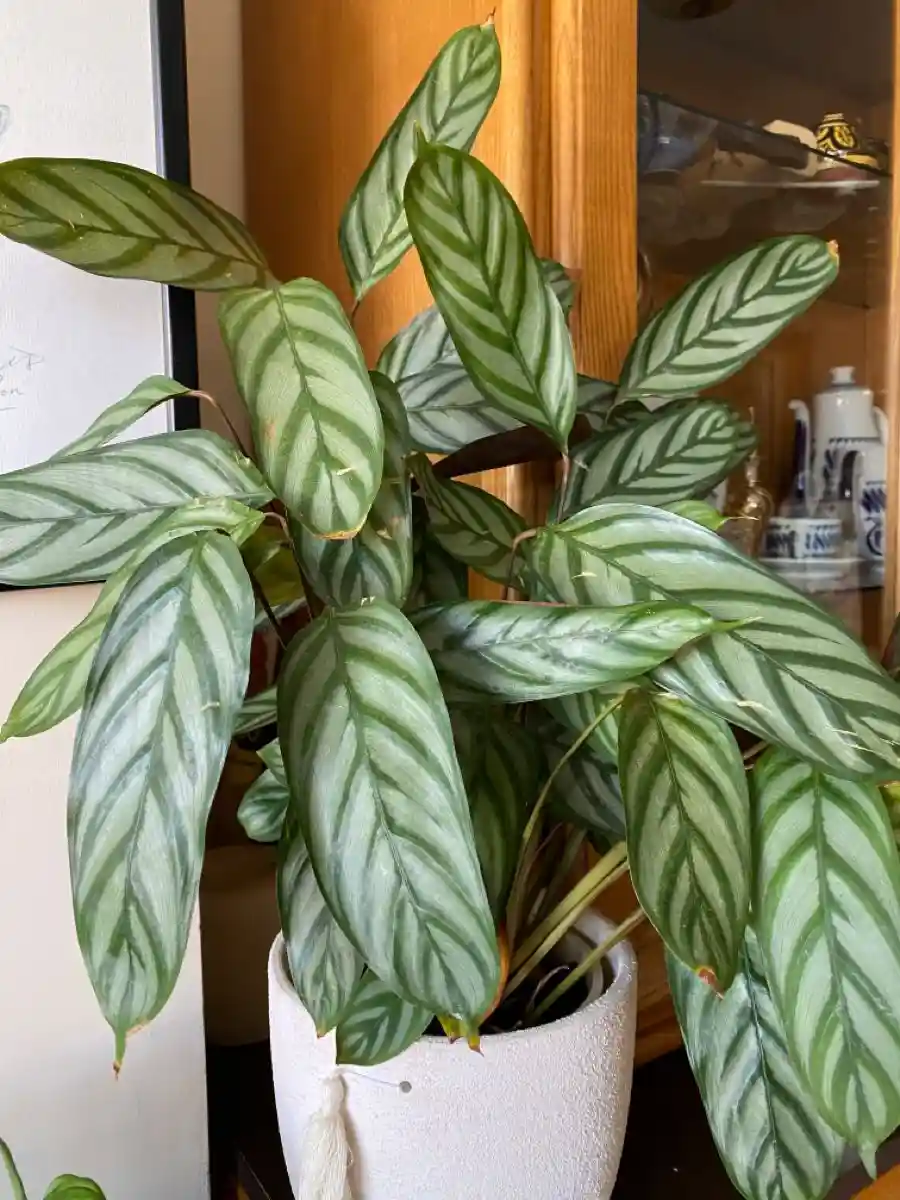
Calathea Picturata ‘Argentea’ has silvery centers surrounded by deep green margins. Purple undersides add contrast, especially when the leaves lift during the evening. Its rounded foliage stays fairly compact and fits well on tables, shelves, or low plant stands. The simple two-tone pattern works nicely for anyone who wants something decorative without strong pink or white stripes.
- Care level: Moderate
- Light: Medium to bright indirect light
- Growth habit: Compact rounded clump
- Best feature: Silver centers with dark borders
- Best for: Tabletops and neutral interiors
- Helpful tip: Keep the leaves dry when watering to reduce visible spotting.
28. Calathea Leopardina
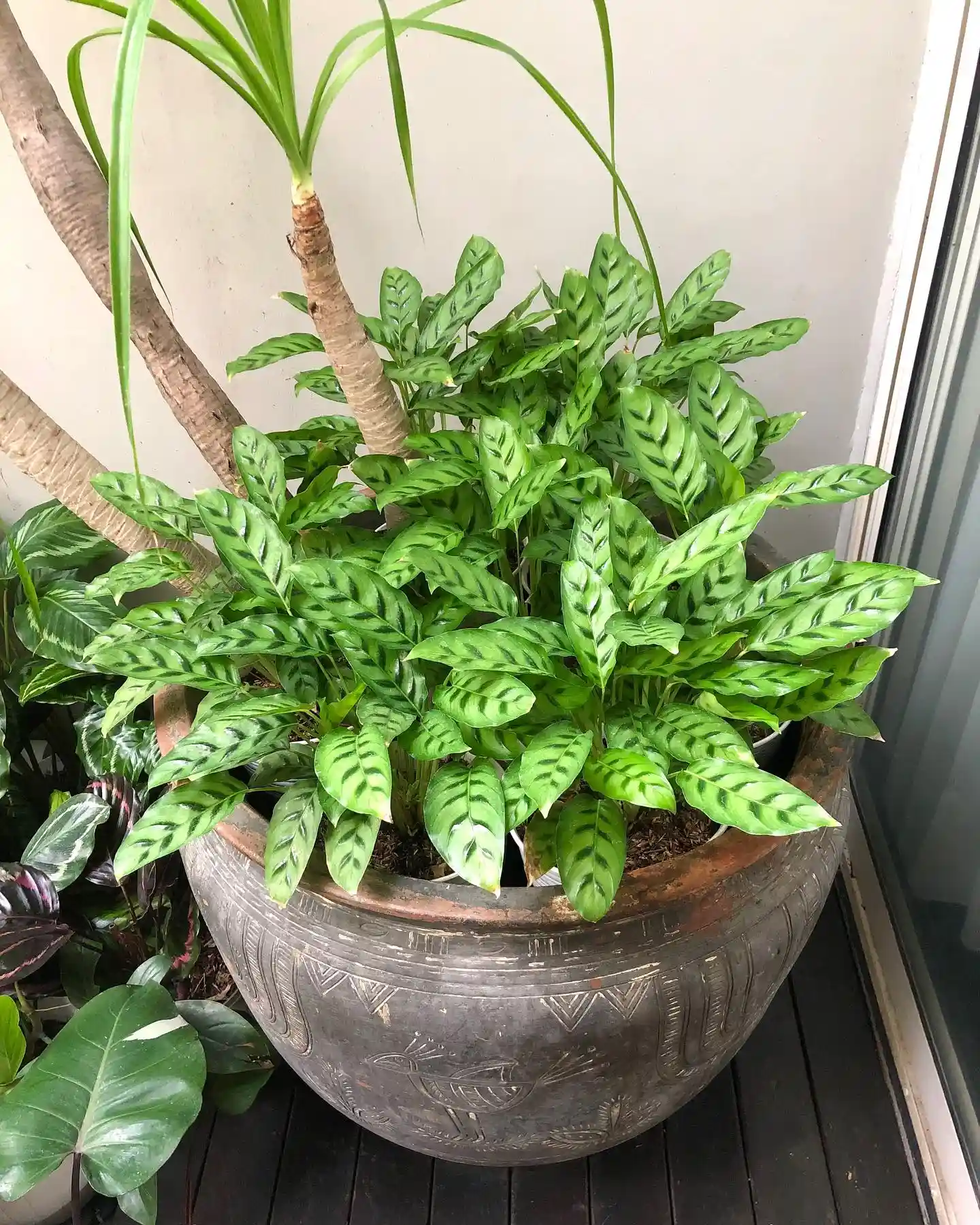
Calathea Leopardina has light green leaves marked with darker feather-like spots along the center. The long foliage grows upright, creating a soft and airy shape. Its pattern is less heavy than the markings on Rattlesnake Calathea, making the plant easy to pair with simple green houseplants. It prefers warm rooms and consistent moisture but should never sit in soggy soil.
- Care level: Moderate
- Light: Bright, indirect light
- Growth habit: Upright clump
- Best feature: Soft leopard-like green markings
- Best for: Fresh green plant collections
- Helpful tip: Use a breathable potting mix that holds some moisture without becoming dense.
29. Calathea Albertii
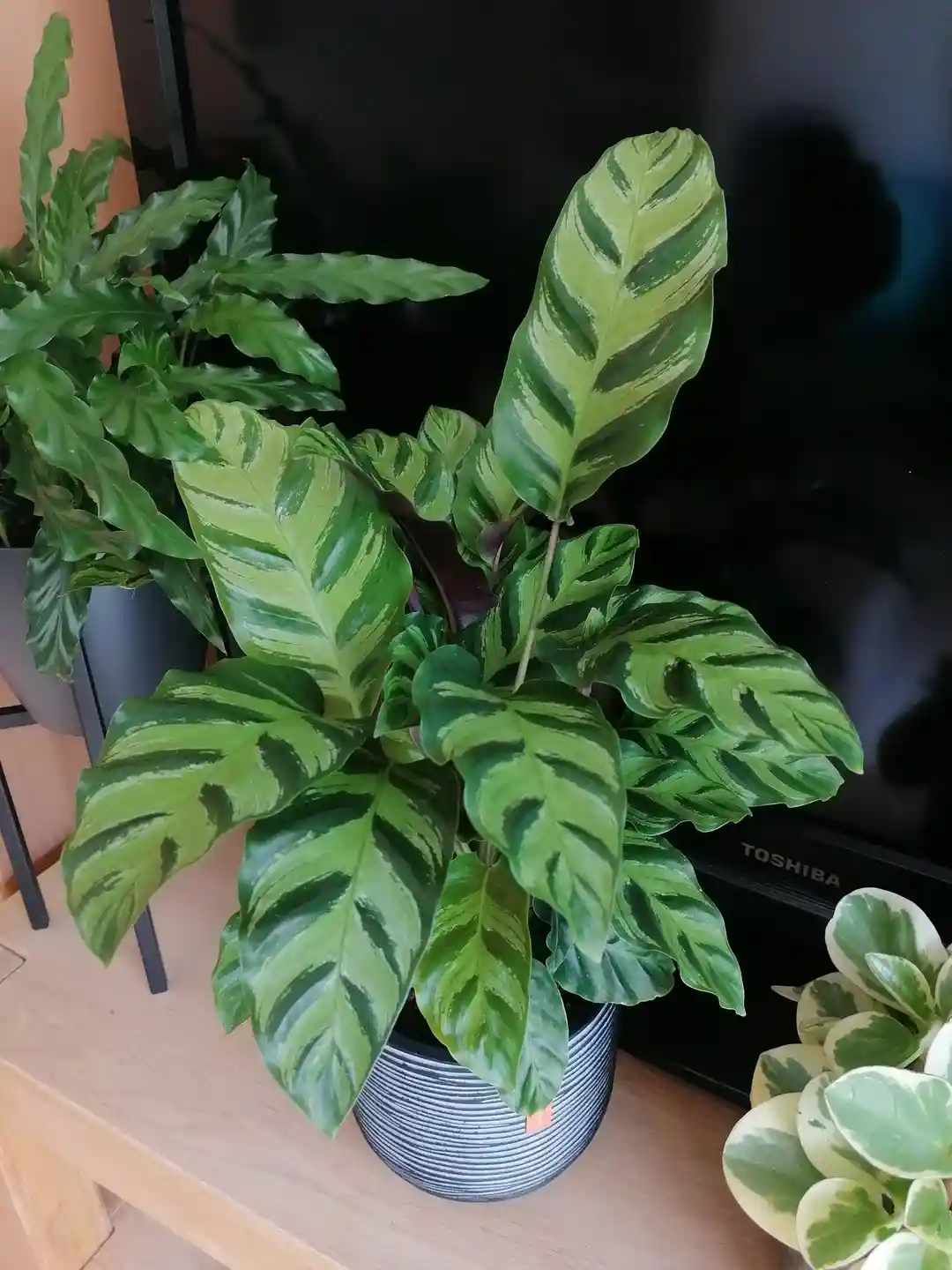
Calathea Albertii has oval green leaves marked with dark brushstroke patterns near the center. It is less common in regular garden centers than Peacock or Medallion Calathea, which gives it more appeal for collectors. The plant stays reasonably compact indoors and works well in a medium decorative pot. Its simple green pattern is detailed without being overly bright.
- Care level: Moderate
- Light: Medium to bright indirect light
- Growth habit: Compact clump
- Best feature: Dark painted center markings
- Best for: Collectors and grouped plant displays
- Helpful tip: Check specialist sellers if local shops regularly mislabel similar plants.
30. Cigar Calathea
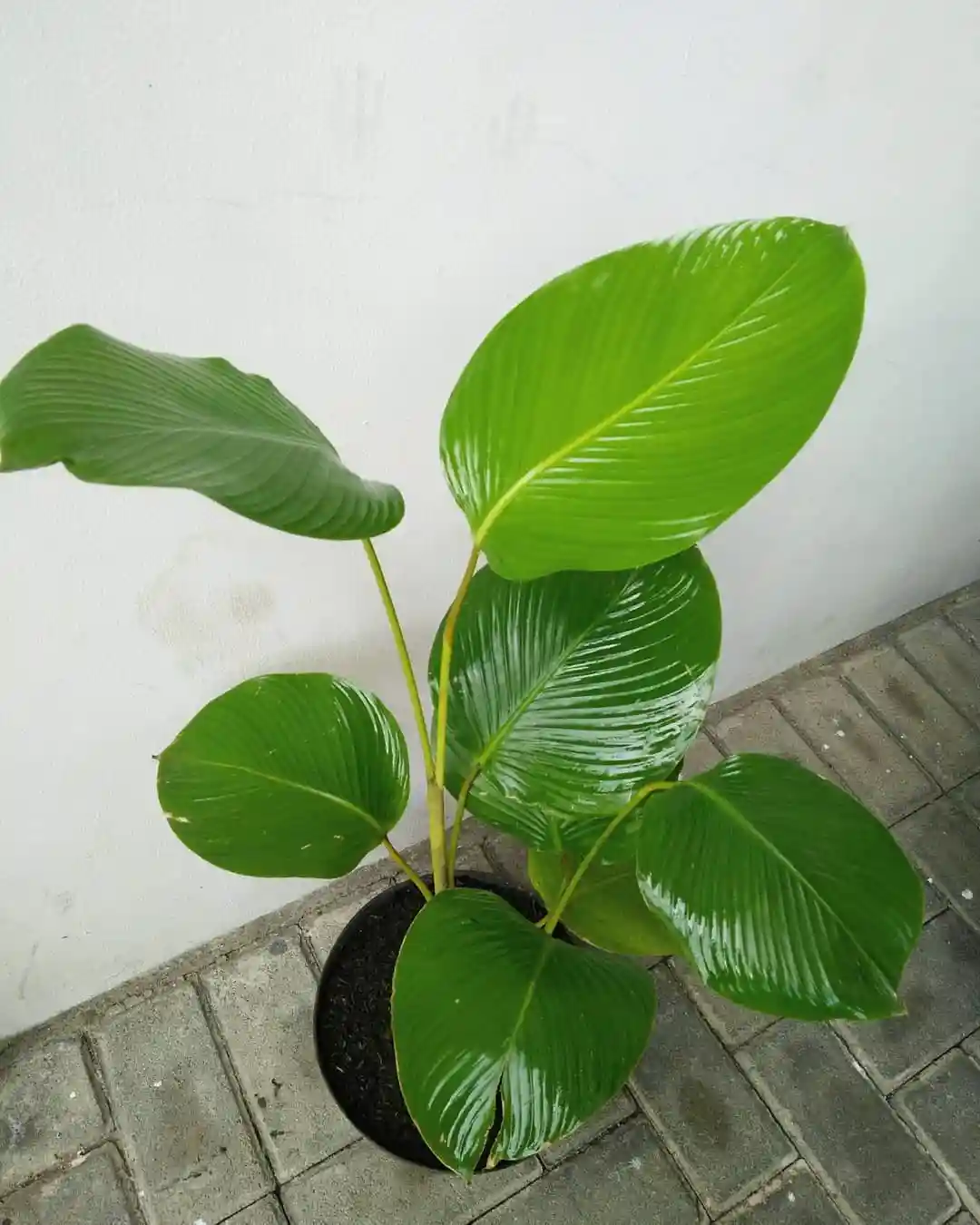
Cigar Calathea is much larger than the compact patterned plants commonly grown indoors. It produces broad paddle-shaped leaves with silvery undersides and can eventually need more room than an ordinary houseplant corner provides. In warm climates it is often grown outdoors, while indoors it suits conservatories, sunrooms, or large open spaces. This is not the easiest Calathea for a small apartment, but it makes a bold tropical plant where space allows.
- Care level: Moderate
- Light: Bright, filtered light
- Growth habit: Large upright plant
- Best feature: Oversized paddle-shaped leaves
- Best for: Sunrooms and spacious indoor areas
- Helpful tip: Choose this variety only if you can provide enough height and width.
Best Calathea Varieties for Different Homes
Best for Beginners
Start with varieties that handle small changes in humidity and watering more calmly.
- Rattlesnake Calathea
- Freddie Calathea
- Network Calathea
- Misto Calathea
- Furry Feather Calathea
Best for Small Spaces
These varieties stay compact enough for shelves, desks, and small stands.
- Dottie Calathea
- Rosy Calathea
- Freddie Calathea
- Peacock Calathea
- Picturata ‘Argentea’
Best Pink Calathea Varieties
Choose one of these when you want color without waiting for flowers.
- Dottie Calathea
- Rosy Calathea
- Crimson Calathea
- Pinstripe Calathea
- White Star Calathea
Best Large Calathea Varieties
These plants need more room but create a fuller indoor display.
- Calathea Orbifolia
- Jungle Velvet Calathea
- Zebra Calathea
- Cigar Calathea
Best Calatheas for Collectors
These are less common, more sensitive, or harder to identify correctly.
- White Fusion Calathea
- Stella Calathea
- Calathea Albertii
- Calathea Leopardina
- Illustris Calathea
How to Choose the Right Calathea
Do not choose only by leaf color. A beautiful Calathea can quickly become frustrating when the room is too dry or dark.
- Check the humidity in your room
- Consider the mature width of the plant
- Choose compact varieties for shelves
- Pick green varieties before sensitive white ones
- Look for clean leaves without pests or webbing
- Avoid plants with wet soil and soft yellow stems
Basic Calathea Care
Calatheas do not need complicated routines, but they prefer consistency. Sudden changes in water, temperature, or humidity often appear quickly on the leaves.
- Provide bright, indirect light
- Keep the soil lightly moist, not soaked
- Use a pot with drainage holes
- Maintain warm indoor temperatures
- Protect the plant from cold drafts
- Increase humidity around the foliage
- Use filtered or rainwater when possible
- Check leaf undersides for spider mites
Common Calathea Problems
Brown Leaf Tips
Dry air, mineral-heavy water, or inconsistent watering can cause brown tips. Trim only the damaged edge and correct the care problem before removing a whole leaf.
Curling Leaves
Leaves may curl when the soil is too dry, the room is cold, or the plant receives harsh light. Check the soil before automatically adding water.
Yellow Leaves
One older yellow leaf may be normal, but several yellow leaves can point to wet soil or poor drainage. Let the soil breathe and inspect the roots if the problem continues.
Faded Leaf Patterns
Too little light can make patterns less clear, while direct sunlight may bleach the leaves. Bright filtered light gives most Calatheas the best color.
Spider Mites
Spider mites often hide beneath the foliage and around new growth. Fine webbing, pale speckles, and dusty-looking leaves are early warning signs.
Plants Commonly Confused With Calathea
These plants belong to the same wider prayer plant family and need similar care, but they are not true Calatheas.
- Stromanthe Triostar
- Ctenanthe Burle-Marxii
- Ctenanthe Grey Star
- Maranta Red Prayer Plant
- Maranta Lemon Lime
Frequently Asked Questions About Calathea Varieties
What is the easiest Calathea variety to grow?
Rattlesnake, Freddie, Network, and Furry Feather Calatheas are often easier than heavily variegated varieties. They still need steady moisture and warmth, but they usually handle average home conditions better.
Which Calathea has the pinkest leaves?
Rosy Calathea has broad pink centers, while Dottie has bright pink outlines over very dark foliage. Crimson and White Star also carry noticeable pink coloring.
Which Calathea grows the largest?
Cigar Calathea can grow much larger than typical indoor varieties. Orbifolia, Jungle Velvet, and Zebra Calathea can also become broad floor plants indoors.
Which Calathea stays small?
Dottie, Rosy, Freddie, Peacock, and Picturata ‘Argentea’ remain more manageable than large types. Pot size, light, and growing conditions will still affect their final size.
Is Goeppertia the same as Calathea?
Many plants once classified as Calathea are now placed in the Goeppertia genus. Garden centers and home growers continue using Calathea because it remains the more familiar name.
Why do Calathea leaves move at night?
Calathea leaves naturally change position as light levels shift. Many lift or fold upward in the evening and open again during the day.
Can Calatheas grow in low light?
They can tolerate medium or lower indirect light, but growth may slow and leaf patterns may become less clear. A very dark room is not suitable for healthy long-term growth.
Why are my Calathea leaves turning brown?
Brown leaves are commonly linked to low humidity, dry soil, strong sun, cold air, or minerals in tap water. Check the full growing setup rather than changing several things at once.
Can different Calathea varieties grow together?
Different varieties can share the same room, but keeping them in separate pots is easier. Each plant can then be watered, moved, and repotted based on its own condition.
Which Calathea flowers indoors?
Eternal Flame Calathea is the best-known flowering choice and can produce orange blooms indoors. Other Calatheas may flower, but their blooms are usually less noticeable.
Are Calathea plants safe around pets?
Calatheas are generally considered pet-friendly houseplants. Even so, keeping pets from chewing the leaves helps protect both the plant and your pet from stomach discomfort.
Final Picks
- Best overall: Rattlesnake Calathea
- Best for beginners: Freddie Calathea
- Best large variety: Calathea Orbifolia
- Best pink variety: Dottie Calathea
- Best white variety: White Fusion Calathea
- Best flowering variety: Eternal Flame Calathea
- Best collector variety: Stella Calathea
The article is ready for separate internal links to individual Calathea care guides, brown-leaf troubleshooting, humidity tips, and spider-mite control.