20 Pothos Varieties Worth Growing at Home
Pothos plants come in far more colors and patterns than the familiar green-and-gold variety. Some have white marbling, lime leaves, silver tones, or deep green patterns, while others develop split leaves when allowed to climb.
Most pothos varieties are easy to grow and fit nicely on shelves, hanging baskets, or moss poles.
This guide covers 20 beautiful options, with quick details to help you choose the right pothos for your light, space, and experience level.
1. Golden Pothos
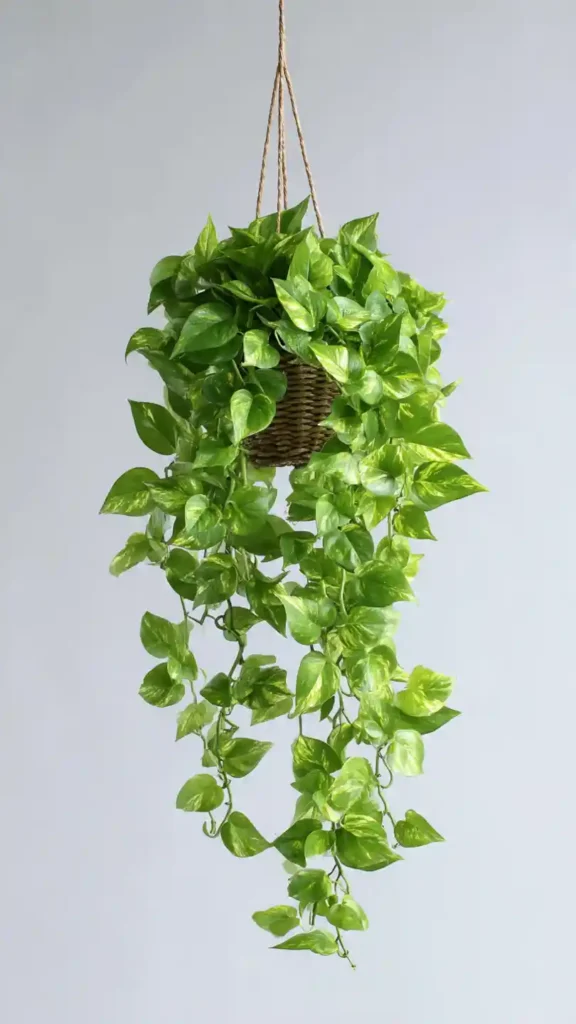
Golden Pothos is the classic variety most people recognize. Its heart-shaped green leaves are covered with yellow or cream marbling, with each leaf developing a slightly different pattern.
It grows quickly, handles occasional missed waterings, and looks good trailing from a shelf or climbing a support.
Brighter indirect light usually creates stronger variegation, while lower light may produce greener leaves.
- Care level: Easy
- Light: Low to bright indirect light
- Growth habit: Trailing or climbing
- Best feature: Green leaves with golden marbling
- Best for: Beginners and fast-growing displays
- Helpful tip: Trim long bare vines to encourage fuller growth near the pot.
2. Marble Queen Pothos
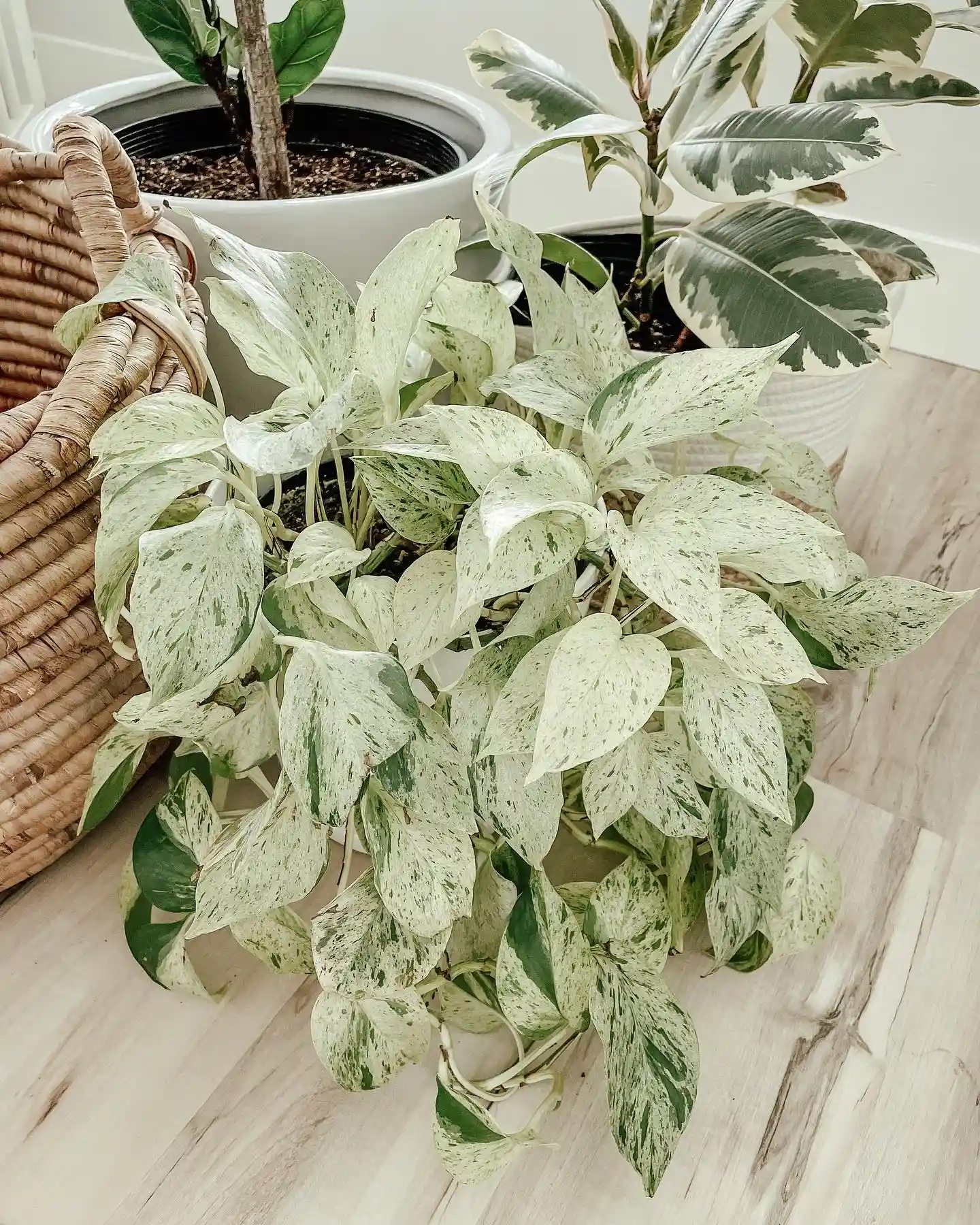
Marble Queen Pothos has green leaves covered with cream and white marbling. Some leaves may appear mostly green, while others can be heavily patterned.
It grows more slowly than Golden Pothos because the pale areas contain less green tissue.
Bright, indirect light helps maintain the marbled coloring, making this variety a good choice for shelves near a bright window.
- Care level: Easy to moderate
- Light: Bright, indirect light
- Growth habit: Trailing or climbing
- Best feature: Creamy marbled foliage
- Best for: Bright shelves and hanging pots
- Helpful tip: Move it closer to filtered light if new leaves become mostly green.
3. Snow Queen Pothos

Snow Queen Pothos has heavily white or cream leaves with smaller patches of green.
It is often sold as a very highly variegated form of Marble Queen rather than a completely separate cultivar. The lighter foliage gives it a clean, bright appearance, but growth is usually slower.
It needs plenty of filtered light to support healthy leaves without burning the pale sections.
- Care level: Moderate
- Light: Bright, indirect light
- Growth habit: Slow trailing vine
- Best feature: Heavily white foliage
- Best for: Bright rooms and white plant displays
- Helpful tip: Keep enough green foliage on the plant to support steady growth.
4. Neon Pothos
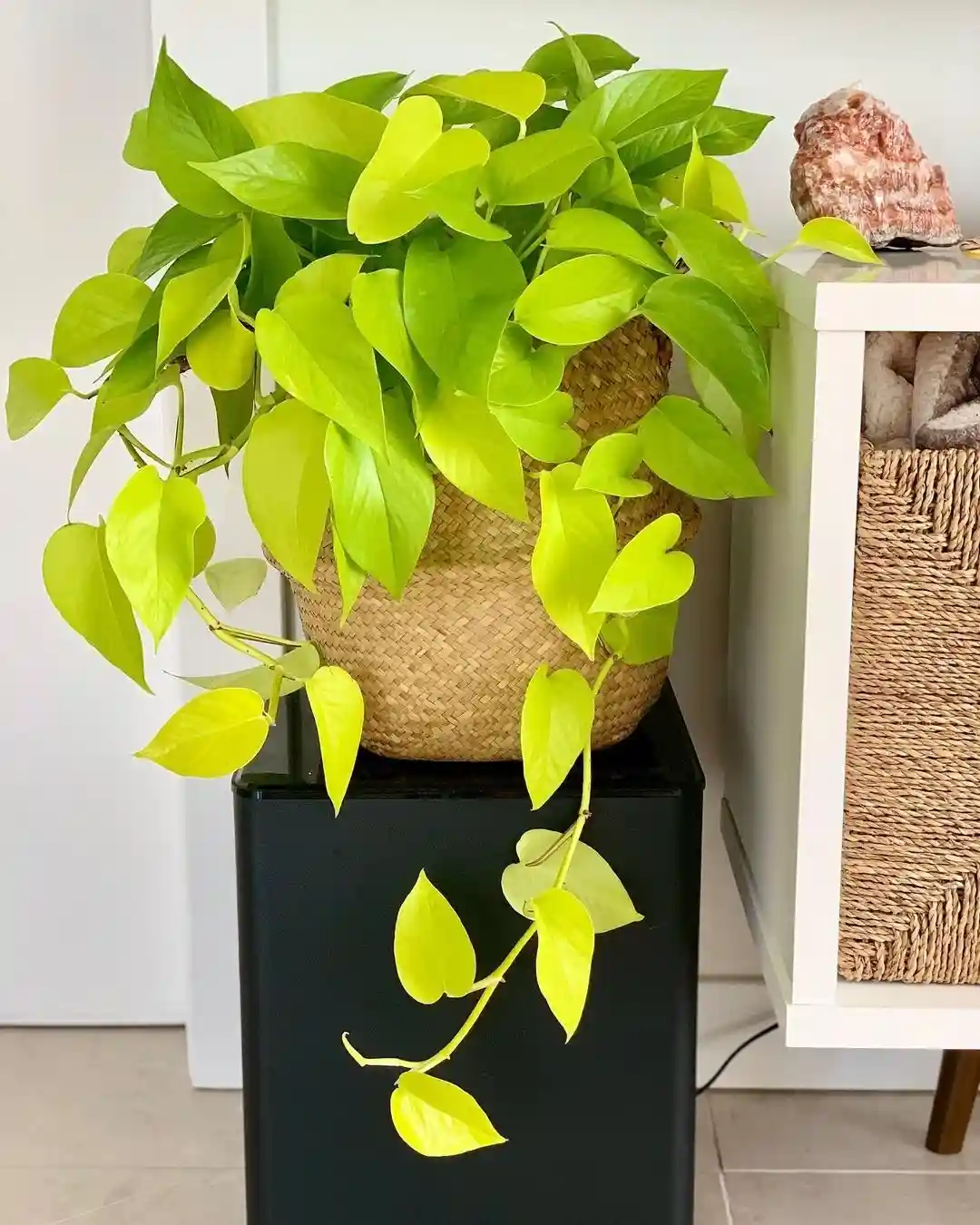
Neon Pothos has solid lime-green leaves that add bright color without patterned variegation.
New leaves may appear almost yellow before deepening into a stronger green shade. It grows quickly and looks especially good against dark furniture, white walls, or simple ceramic pots.
Too little light can make the foliage look darker, while harsh direct sun may leave faded or burned areas.
- Care level: Easy
- Light: Medium to bright indirect light
- Growth habit: Fast trailing vine
- Best feature: Bright lime-green leaves
- Best for: Neutral rooms and darker shelves
- Helpful tip: Pair it with a dark-colored pot to make the leaf color more noticeable.
More Indoor Plants explore:-
- 30 Easy Care Indoor Plants for Beginners
- 25 Best Hanging Plants For Balcony
- 15 Monstera Types Worth Growing at Home
5. Jade Pothos
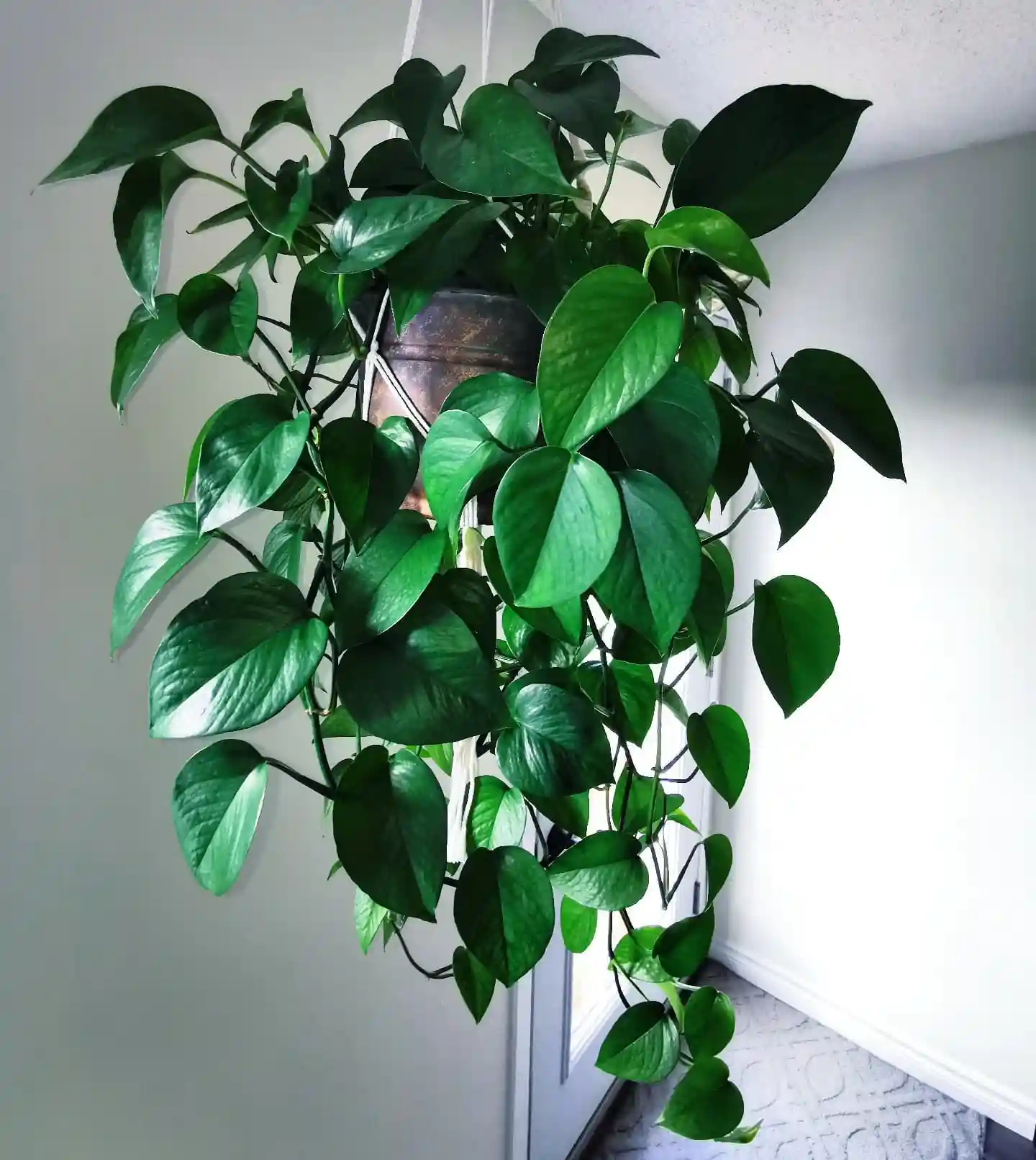
Jade Pothos has solid deep green leaves without yellow, white, or cream markings. Its simple coloring makes it one of the most forgiving pothos varieties for rooms with moderate light.
The vines can trail from a hanging basket or climb a moss pole when you want larger foliage. It is a good choice for offices, bedrooms, and anyone who prefers a calm all-green plant.
- Care level: Easy
- Light: Low to bright indirect light
- Growth habit: Trailing or climbing
- Best feature: Solid dark green leaves
- Best for: Beginners and moderate-light rooms
- Helpful tip: Give it brighter light if the stems become long with wide spaces between leaves.
6. N’Joy Pothos
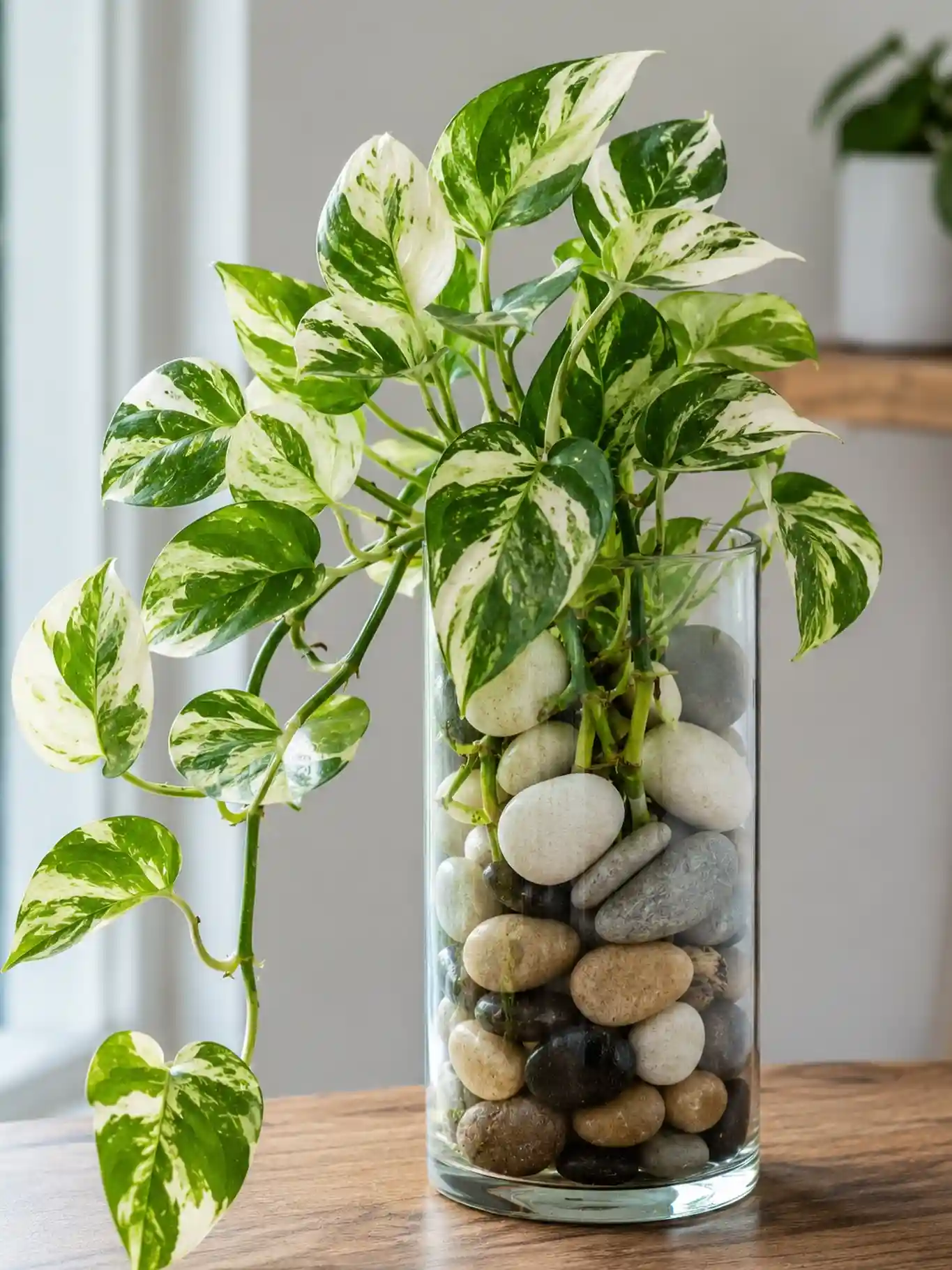
N’Joy Pothos has small leaves with clean blocks of green and white, usually concentrated around the edges.
The pattern looks sharper than the softer marbling found on Marble Queen. Its compact leaves and shorter spaces between nodes make it a neat choice for desks, shelves, and small hanging pots.
It grows more slowly than Golden Pothos and needs bright, indirect light to keep its white markings.
- Care level: Easy to moderate
- Light: Bright, indirect light
- Growth habit: Compact trailing vine
- Best feature: Crisp green and white pattern
- Best for: Desks and small shelves
- Helpful tip: Avoid keeping the soil wet, since compact pots may dry more slowly.
7. Pearls and Jade Pothos
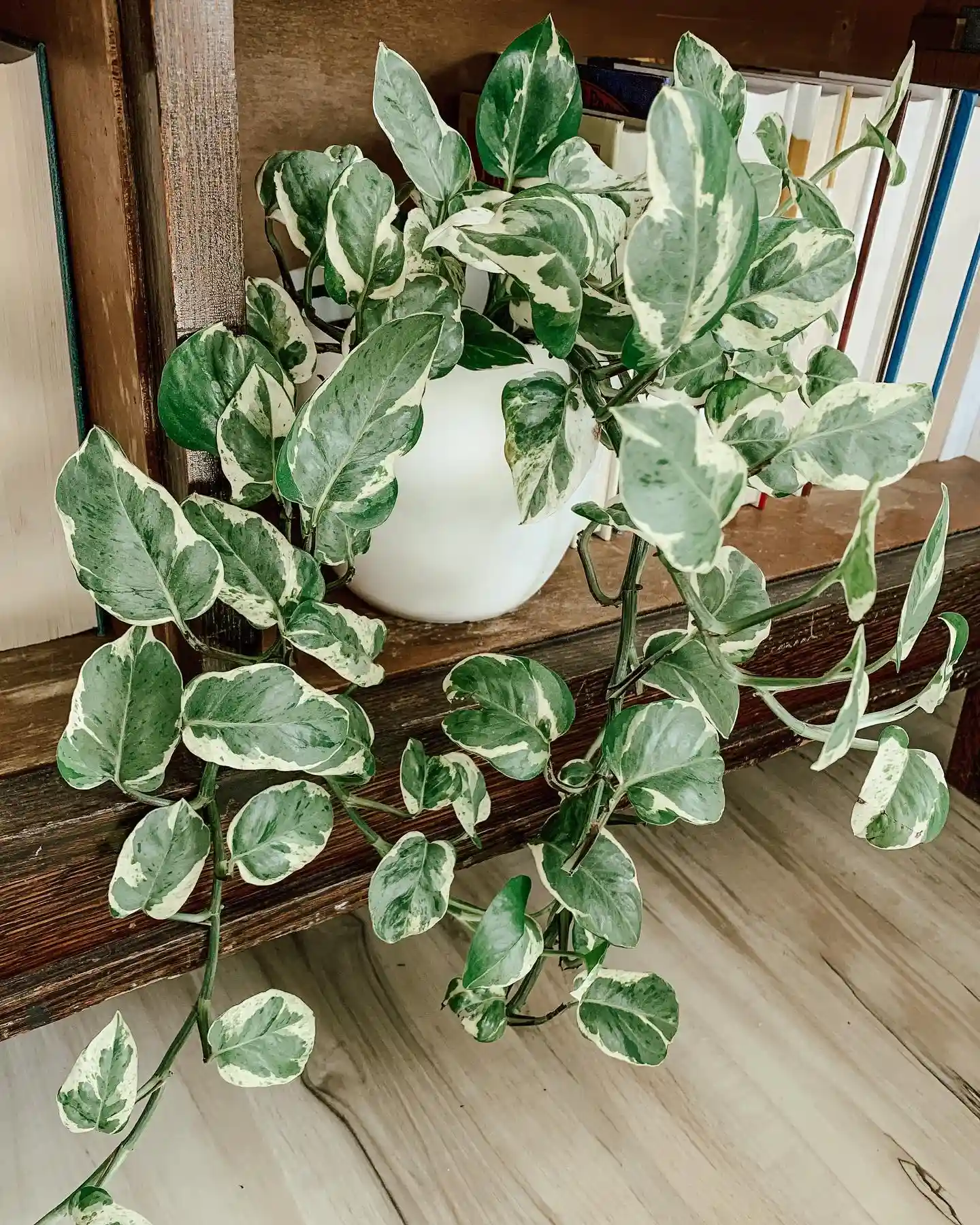
Pearls and Jade Pothos has green, white, cream, and gray-green markings across its small leaves.
Unlike N’Joy, the pale areas often contain fine green speckles, giving the foliage a softer and more detailed appearance. It stays compact and grows at a slower pace, which works well for smaller rooms.
Bright filtered light helps keep the pattern clear without damaging the white sections.
- Care level: Easy to moderate
- Light: Bright, indirect light
- Growth habit: Compact trailing vine
- Best feature: Speckled green and white foliage
- Best for: Decorative pots and small spaces
- Helpful tip: Check the pale sections for green speckles when identifying it.
8. Manjula Pothos
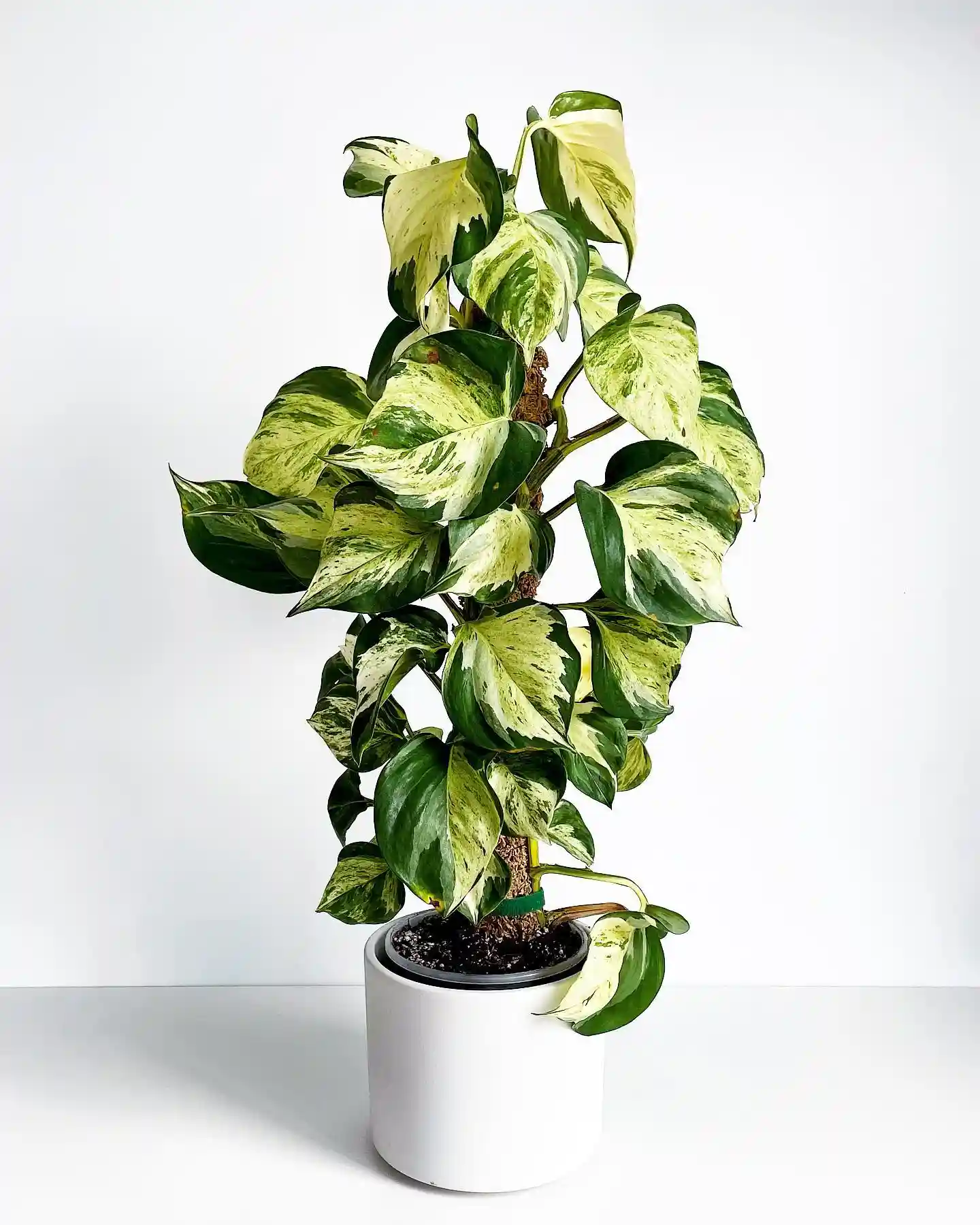
Manjula Pothos has broad, slightly wavy leaves marked with cream, white, pale green, and dark green patches.
The coloring often appears in large sections rather than fine marbling, and every leaf can look different. Its leaves feel fuller than many other small variegated pothos types.
The plant grows at a moderate pace and looks best where the patterned foliage can be viewed up close.
- Care level: Easy to moderate
- Light: Bright, indirect light
- Growth habit: Full trailing vine
- Best feature: Wide leaves with mixed variegation
- Best for: Variegated plant lovers
- Helpful tip: Let the upper soil dry before watering to avoid yellow leaves.
9. Global Green Pothos
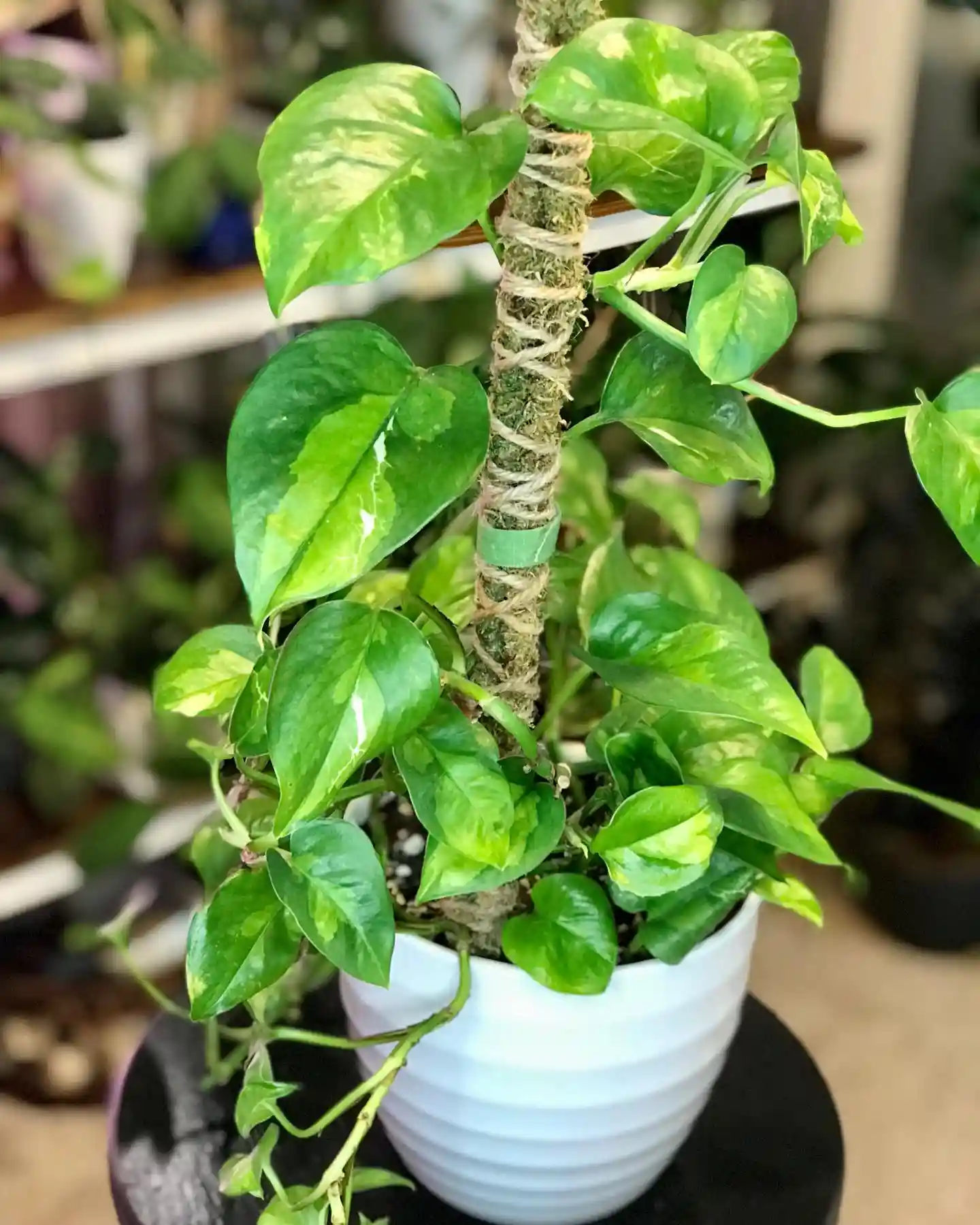
Global Green Pothos has two shades of green, with darker edges surrounding lighter green centers.
Since it has no white or cream sections, it usually grows faster than heavily variegated varieties.
The plant forms a dense, full-looking vine and works well in rooms where you want patterned leaves without pale coloring. Its green-on-green foliage is also less likely to scorch in bright filtered light.
- Care level: Easy
- Light: Medium to bright indirect light
- Growth habit: Full trailing vine
- Best feature: Dark edges with light green centers
- Best for: Easy-care green displays
- Helpful tip: Prune the longest vines to keep the plant dense around the pot.
10. Emerald Pothos
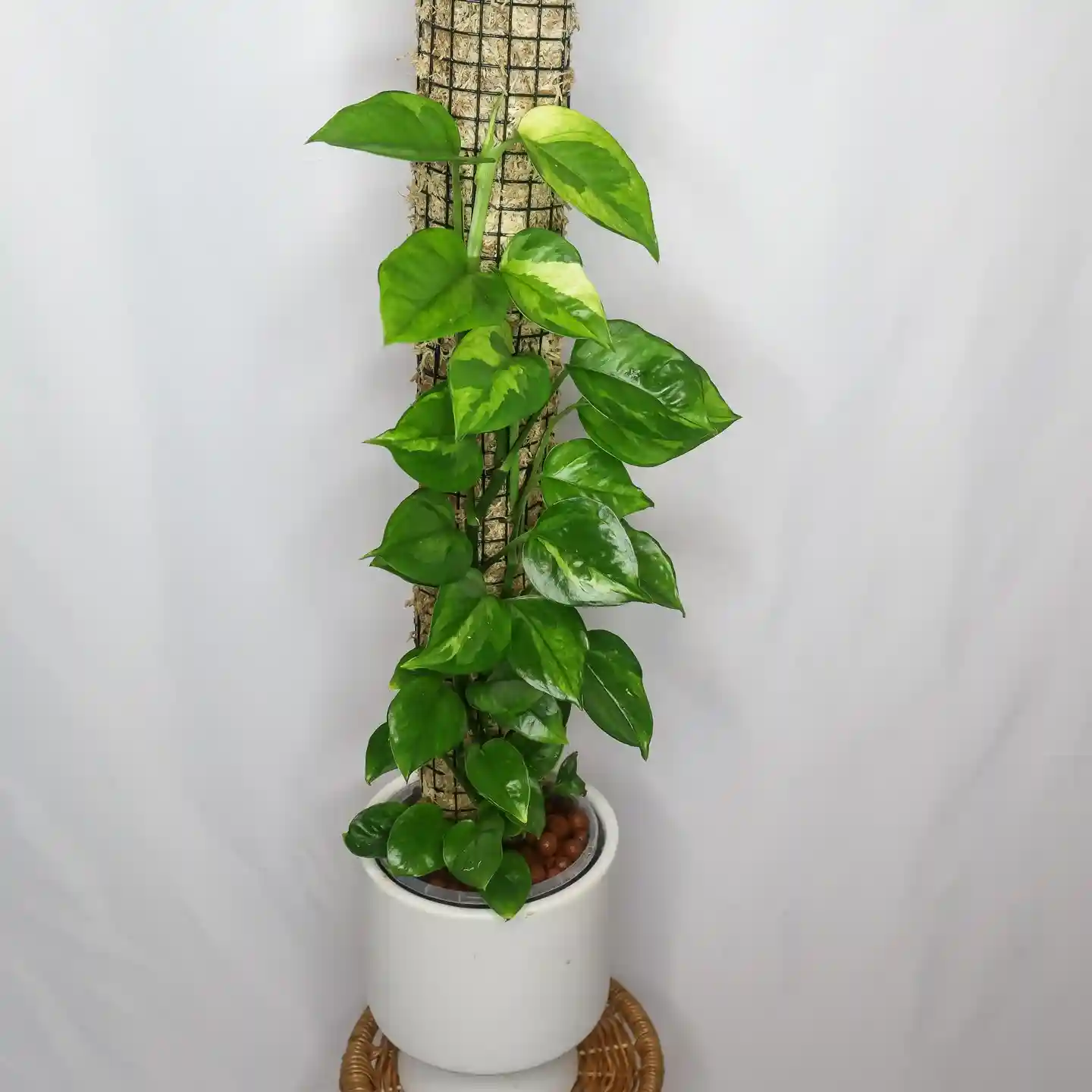
Emerald Pothos has soft green-on-green variegation, usually with darker green areas near the center and lighter green around the edges.
It is often confused with Global Green, which normally has the opposite pattern. Its muted coloring gives it a calm appearance that works well in bedrooms, offices, and grouped plant displays.
Like other green pothos varieties, it can grow steadily in average household conditions.
- Care level: Easy
- Light: Medium to bright indirect light
- Growth habit: Trailing or climbing
- Best feature: Soft two-tone green leaves
- Best for: Green plant collections
- Helpful tip: Compare the center and edge colors before buying, since labels are often mixed up.
11. Jessenia Pothos
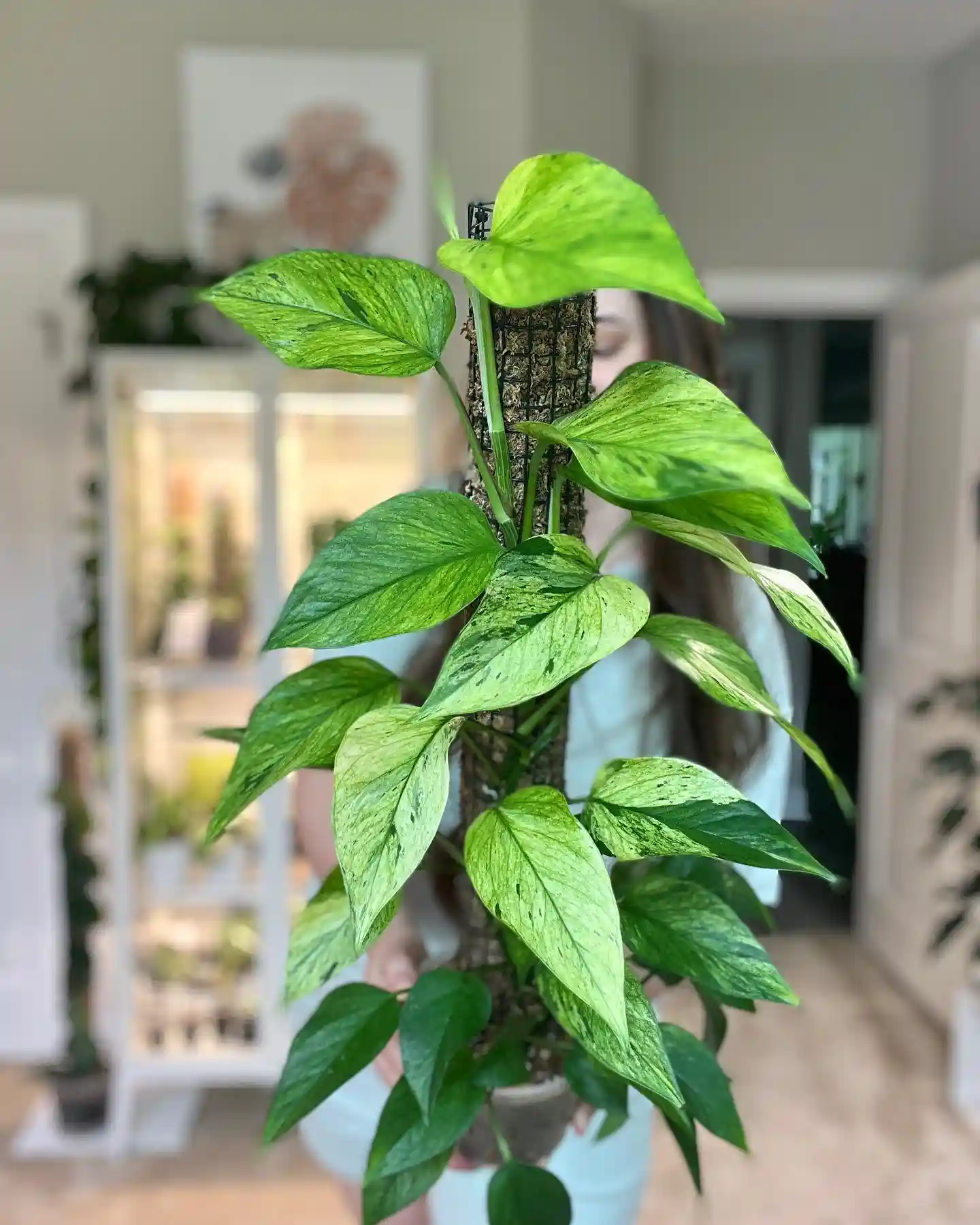
Jessenia Pothos has green leaves covered with chartreuse and yellow-green marbling.
The pattern is softer than Golden Pothos and often spreads across much of the leaf. It grows more slowly than solid green varieties but still makes an easy trailing plant for bright rooms.
Strong filtered light helps the lighter markings remain visible, while darker placement may lead to greener new growth.
- Care level: Easy to moderate
- Light: Bright, indirect light
- Growth habit: Trailing or climbing
- Best feature: Chartreuse marbled foliage
- Best for: Bright plant shelves
- Helpful tip: Avoid harsh direct sun, which can fade or mark the lighter areas.
12. Glacier Pothos
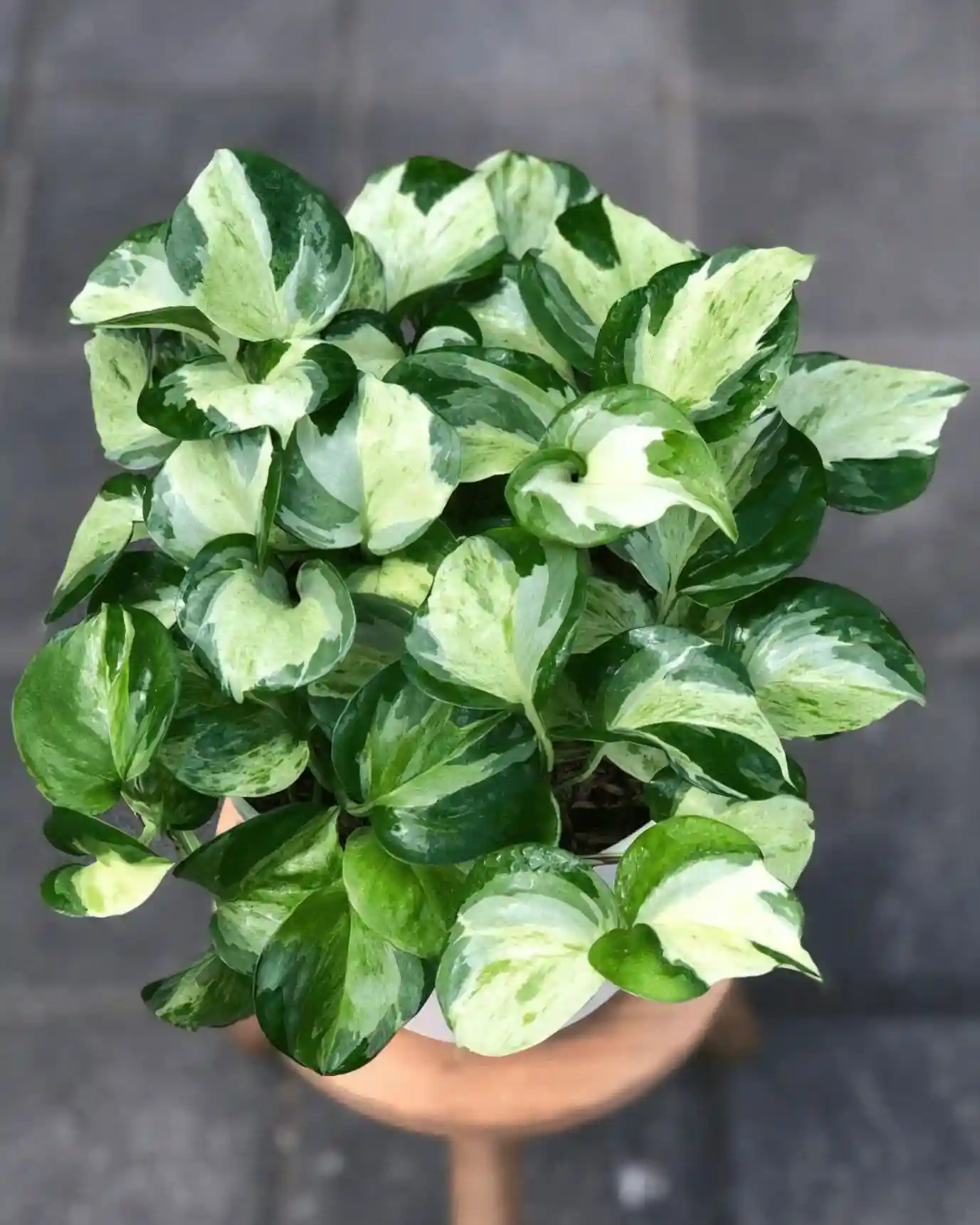
Glacier Pothos has small leaves marked with dark green, pale green, white, and silver-gray sections.
Its coloring can resemble N’Joy or Pearls and Jade, so plant-shop labels are not always reliable. The leaves often have a softer silver tone and a compact trailing shape.
It grows slowly and suits small shelves, hanging pots, or mixed displays where its detailed foliage can be seen clearly.
- Care level: Moderate
- Light: Bright, indirect light
- Growth habit: Compact trailing vine
- Best feature: Green, white, and silver coloring
- Best for: Small hanging pots and shelves
- Helpful tip: Use leaf pattern and growth shape together when identifying it.
13. Harlequin Pothos
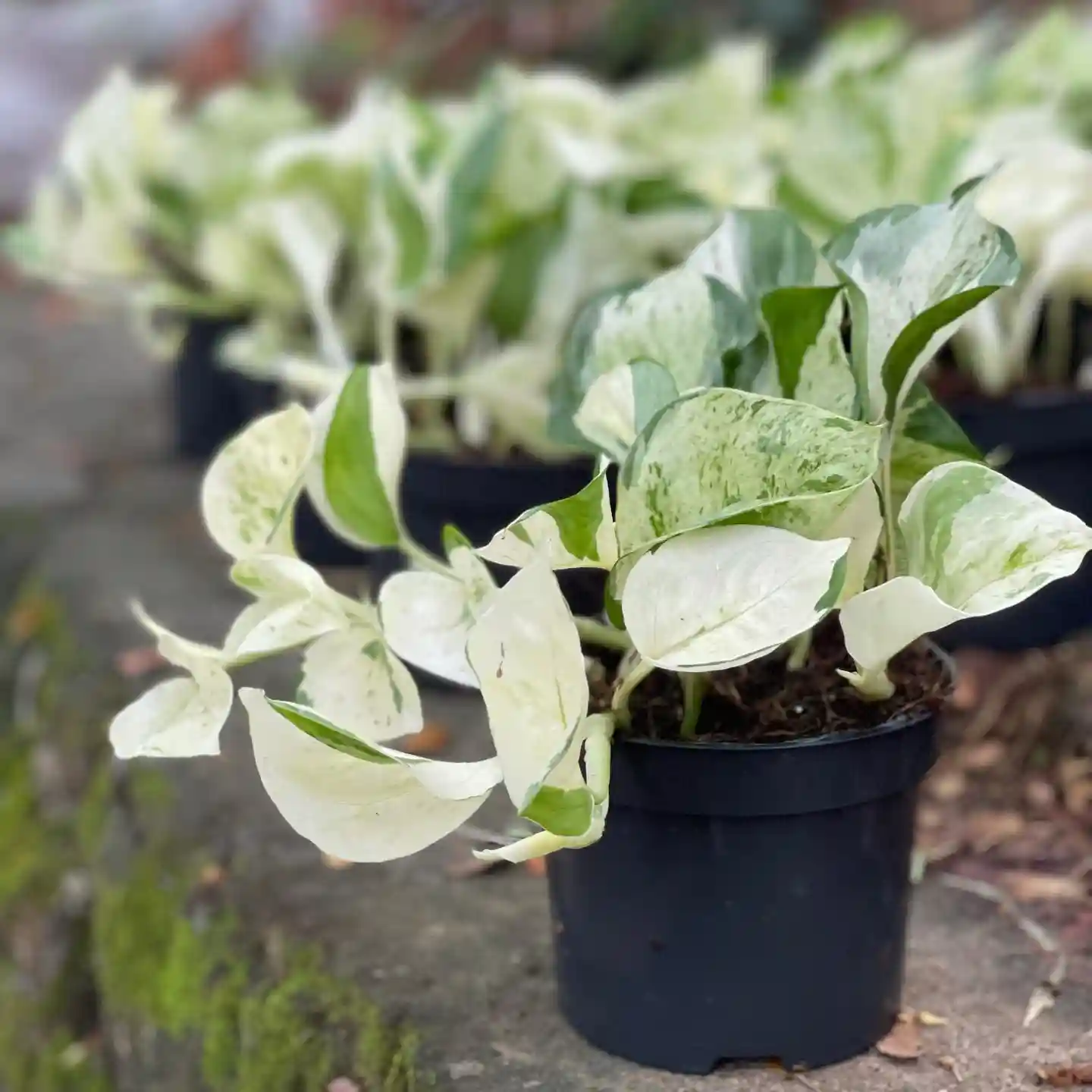
Harlequin Pothos is usually sold as a highly variegated pothos with large white and green areas.
The name is used differently by some sellers, and certain plants may closely resemble heavily variegated Manjula or Marble Queen.
Its pale foliage needs strong filtered light, but direct sunlight may burn the white sections. This is better treated as a collector plant than a clearly defined beginner variety.
- Care level: Moderate
- Light: Bright, filtered light
- Growth habit: Slow trailing vine
- Best feature: Bold white and green leaves
- Best for: Variegated plant collectors
- Helpful tip: Buy based on the actual leaf pattern rather than the nursery name alone.
14. Lemon Meringue Pothos
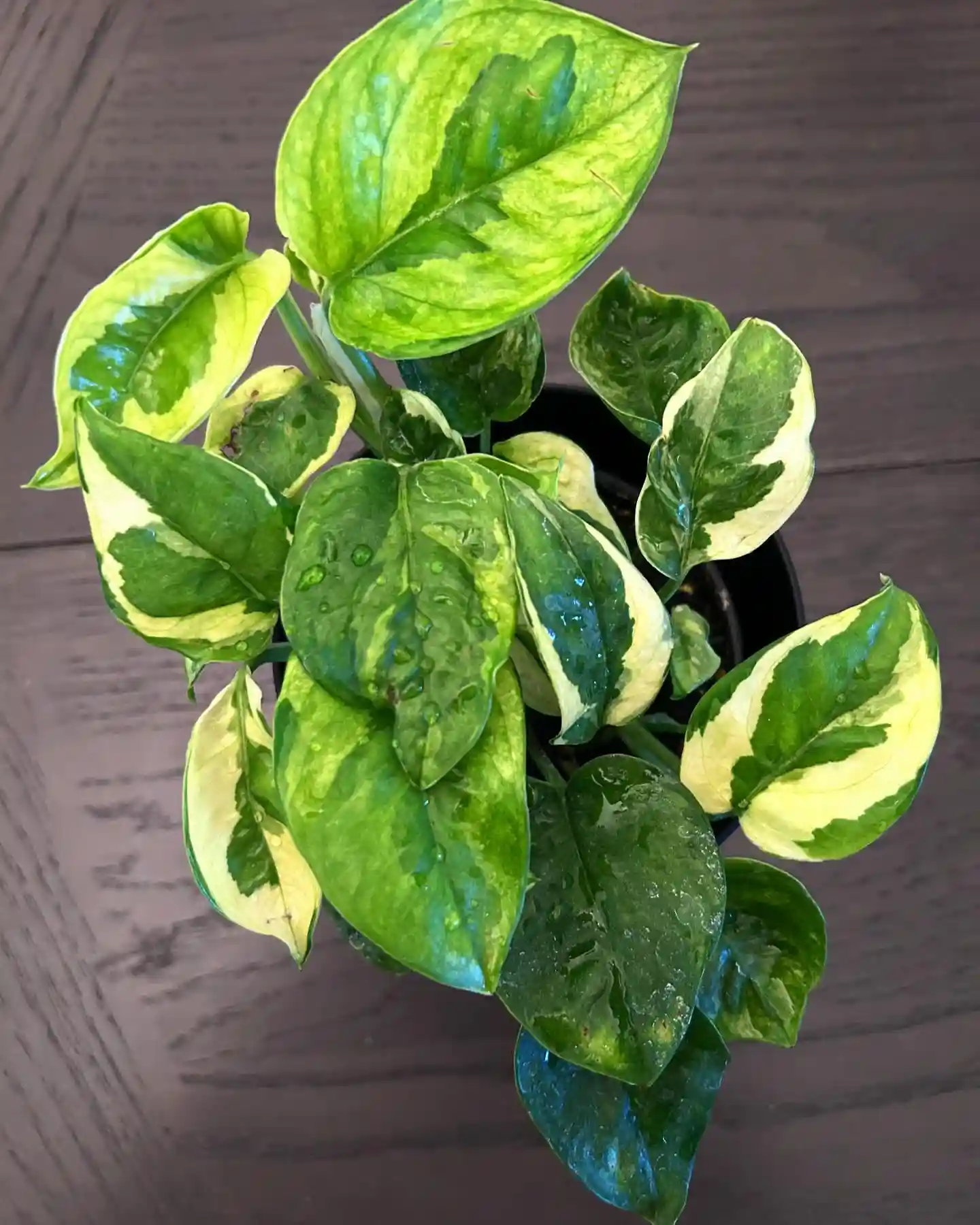
Lemon Meringue Pothos has medium green leaves with yellow or golden coloring near the outer sections.
The contrast is cleaner than the scattered marbling found on Golden Pothos. New foliage may appear brighter before settling into its mature color.
Its compact growth makes it easy to use on tables and shelves where the yellow-edged pattern receives enough light to remain clear.
- Care level: Easy to moderate
- Light: Bright, indirect light
- Growth habit: Compact trailing vine
- Best feature: Golden outer leaf sections
- Best for: Bright tabletop displays
- Helpful tip: Rotate the pot regularly so the coloring develops evenly on all sides.
15. Cebu Blue Pothos
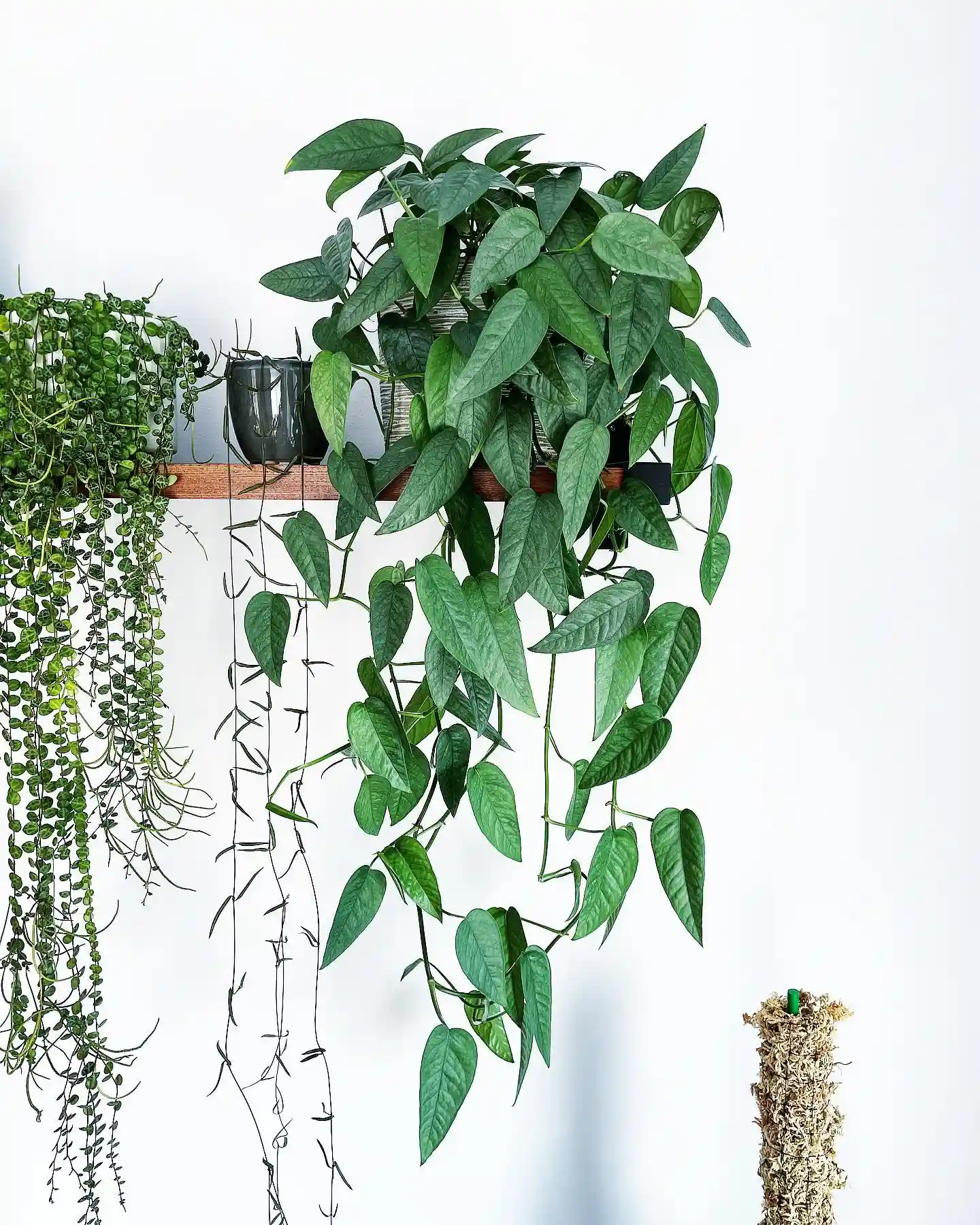
Cebu Blue Pothos has long, narrow leaves with a blue-green or metallic tone. Young plants do not have the heart-shaped foliage seen on Golden Pothos.
The vines can trail attractively, but the plant produces larger and more mature leaves when allowed to climb.
Under the right conditions, older foliage may begin developing splits along the sides.
- Care level: Easy to moderate
- Light: Bright, indirect light
- Growth habit: Fast trailing or climbing vine
- Best feature: Blue-green metallic leaves
- Best for: Hanging baskets and moss poles
- Helpful tip: Let it climb if you want larger leaves and mature splits.
16. Baltic Blue Pothos
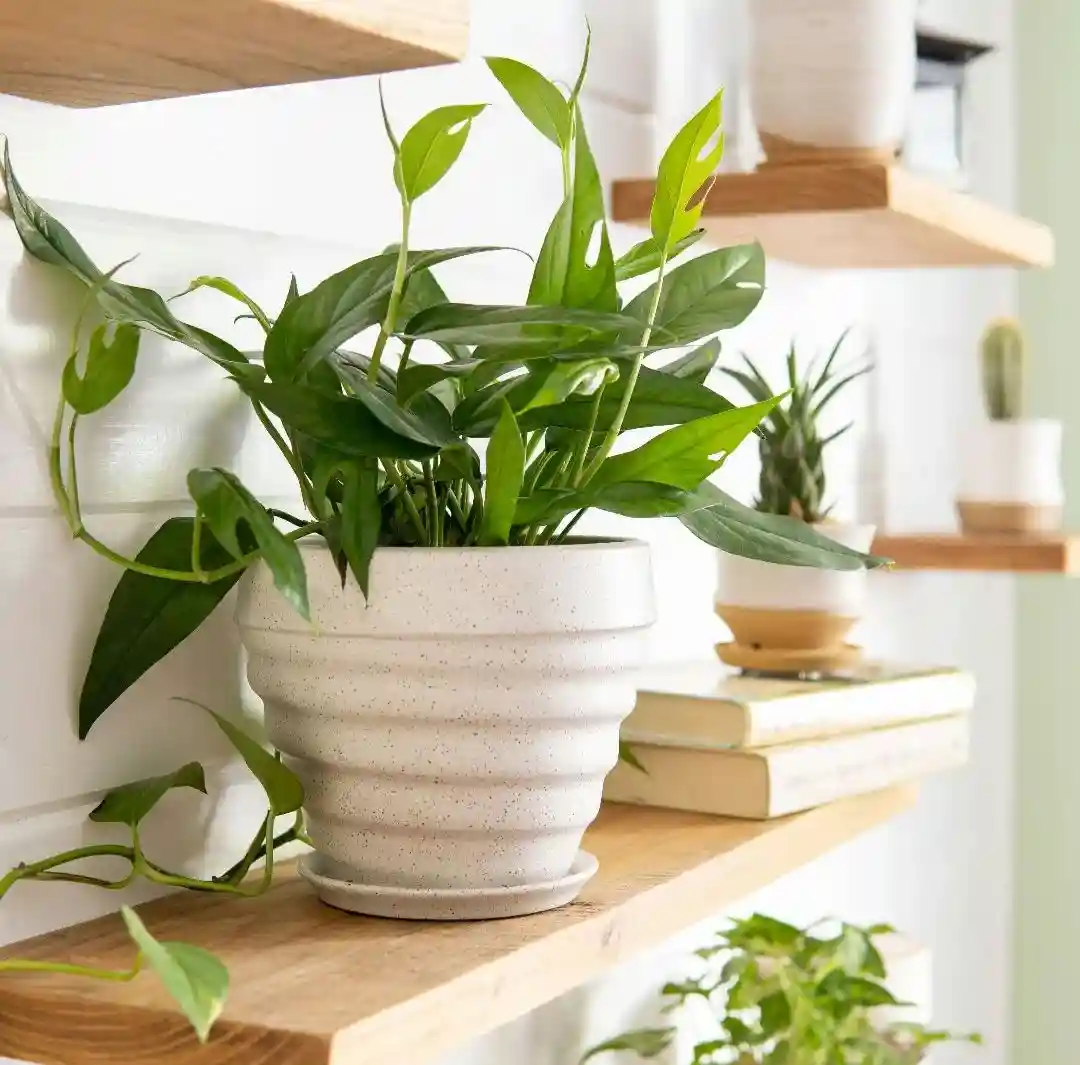
Baltic Blue Pothos has dark green leaves with a cool blue cast and often develops splits earlier than Cebu Blue.
Its foliage is broader and darker, giving the plant a fuller appearance on a moss pole. It grows quickly in bright filtered light and can also trail from a high shelf.
This is a good choice for anyone who wants split leaves without waiting for a very mature plant.
- Care level: Easy to moderate
- Light: Bright, indirect light
- Growth habit: Fast climbing vine
- Best feature: Dark leaves with early splits
- Best for: Vertical indoor displays
- Helpful tip: Attach new vines to a support before they begin hanging downward.
17. Dragon Tail Pothos
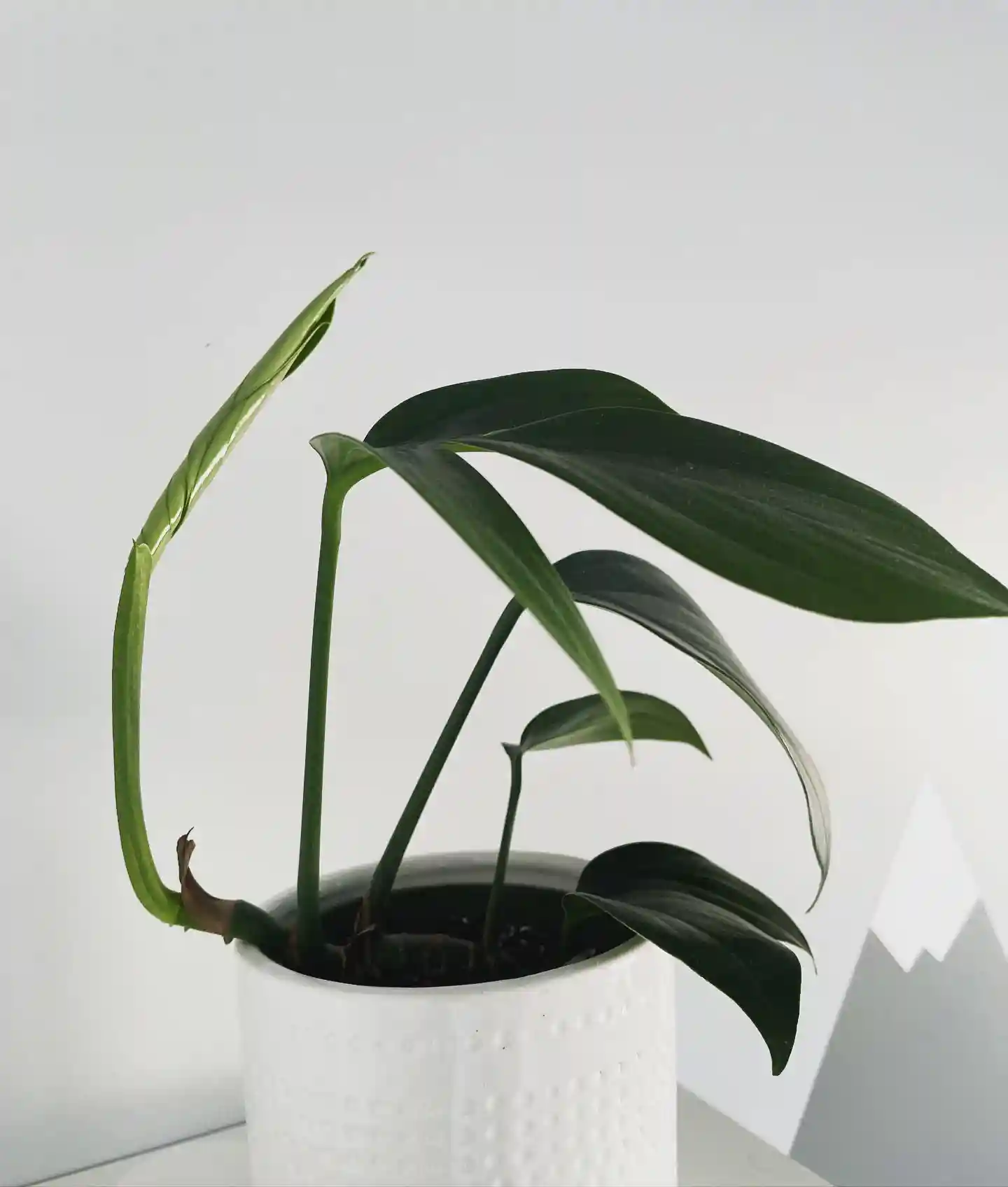
Dragon Tail Pothos begins with long green leaves that develop deep cuts and divisions as the plant climbs and matures.
Juvenile plants may look simple, so the dramatic leaf shape takes time and the right support.
It needs enough vertical room to grow upward and works better as a floor plant than a small tabletop vine once established.
- Care level: Easy to moderate
- Light: Bright, indirect light
- Growth habit: Large climbing vine
- Best feature: Deeply divided mature leaves
- Best for: Large rooms and tall moss poles
- Helpful tip: Keep the stem attached to a sturdy support to encourage mature foliage.
18. Skeleton Key Pothos
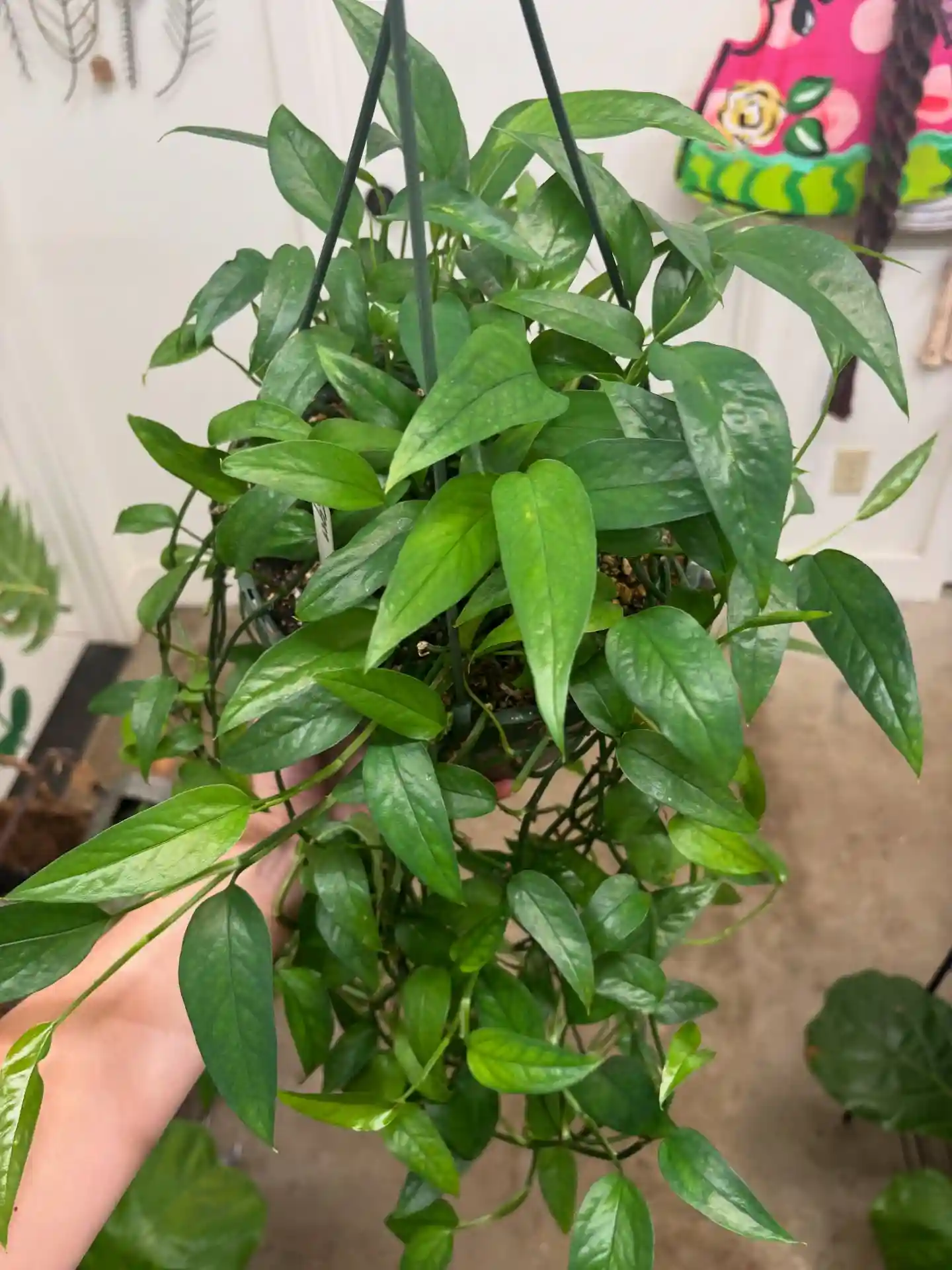
Skeleton Key Pothos develops narrow leaves with a wider upper section, creating a shape that resembles an old-fashioned key.
Young leaves may not show this form clearly, and the shape becomes stronger as the plant climbs.
It needs bright indirect light and a moss pole or wooden support. This less common variety is best for growers who enjoy watching foliage change as a plant matures.
- Care level: Moderate
- Light: Bright, indirect light
- Growth habit: Upright climbing vine
- Best feature: Unusual key-shaped mature leaves
- Best for: Experienced collectors
- Helpful tip: Do not judge young growth too quickly, since the mature shape takes time to appear.
19. Epipremnum Pinnatum Albo
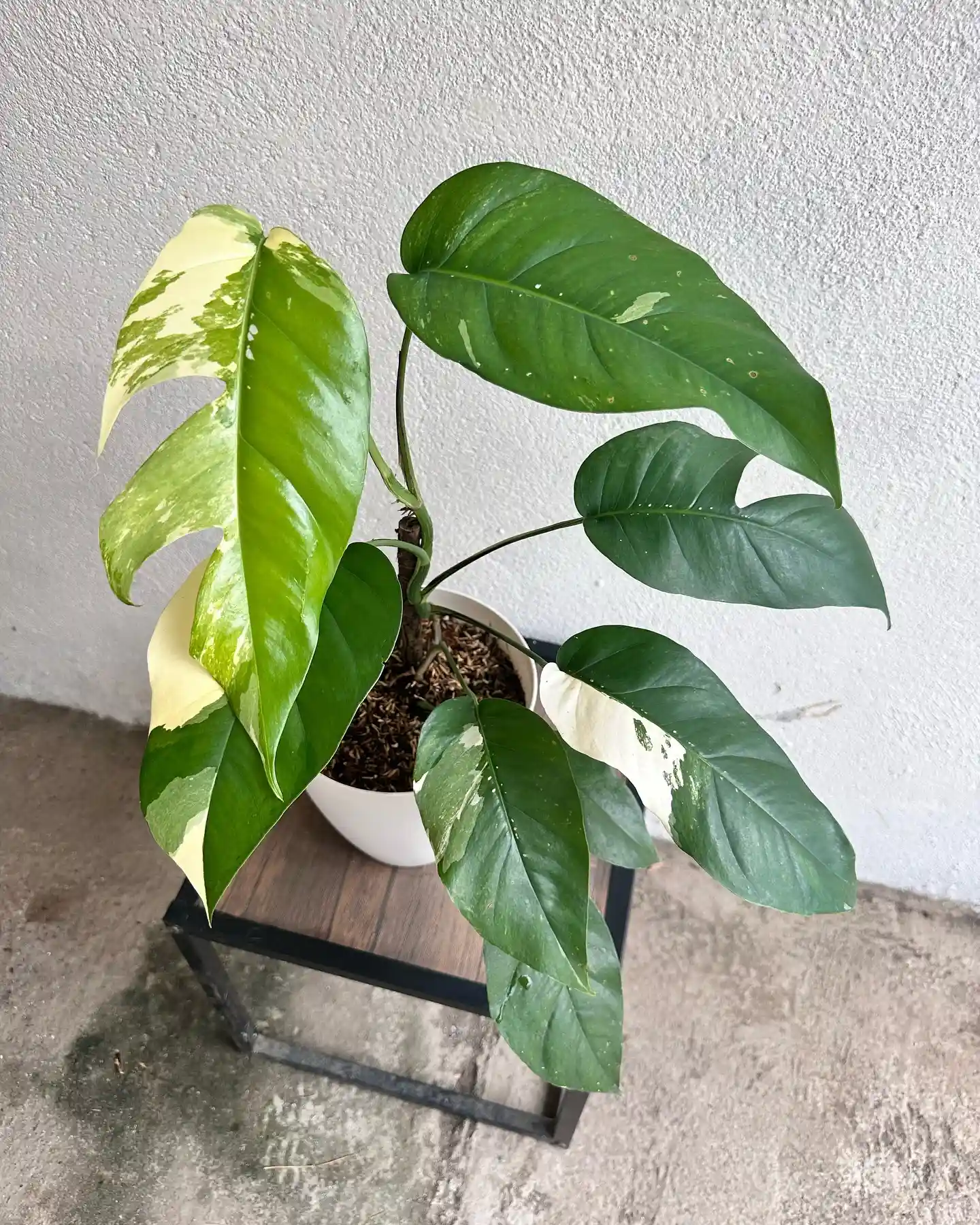
Epipremnum pinnatum Albo has long green leaves marked with white or cream variegation.
Mature foliage can develop deep splits when the plant climbs in good light. Since the white areas contain less chlorophyll, growth may be slower and more sensitive than the solid green form.
A tall support helps the plant develop larger leaves and keeps the variegated vines growing upright.
- Care level: Moderate
- Light: Bright, indirect light
- Growth habit: Variegated climbing vine
- Best feature: White leaves that develop mature splits
- Best for: Variegated plant collectors
- Helpful tip: Choose a plant with a healthy balance of green and white stem tissue.
20. Epipremnum Amplissimum Silver Stripe
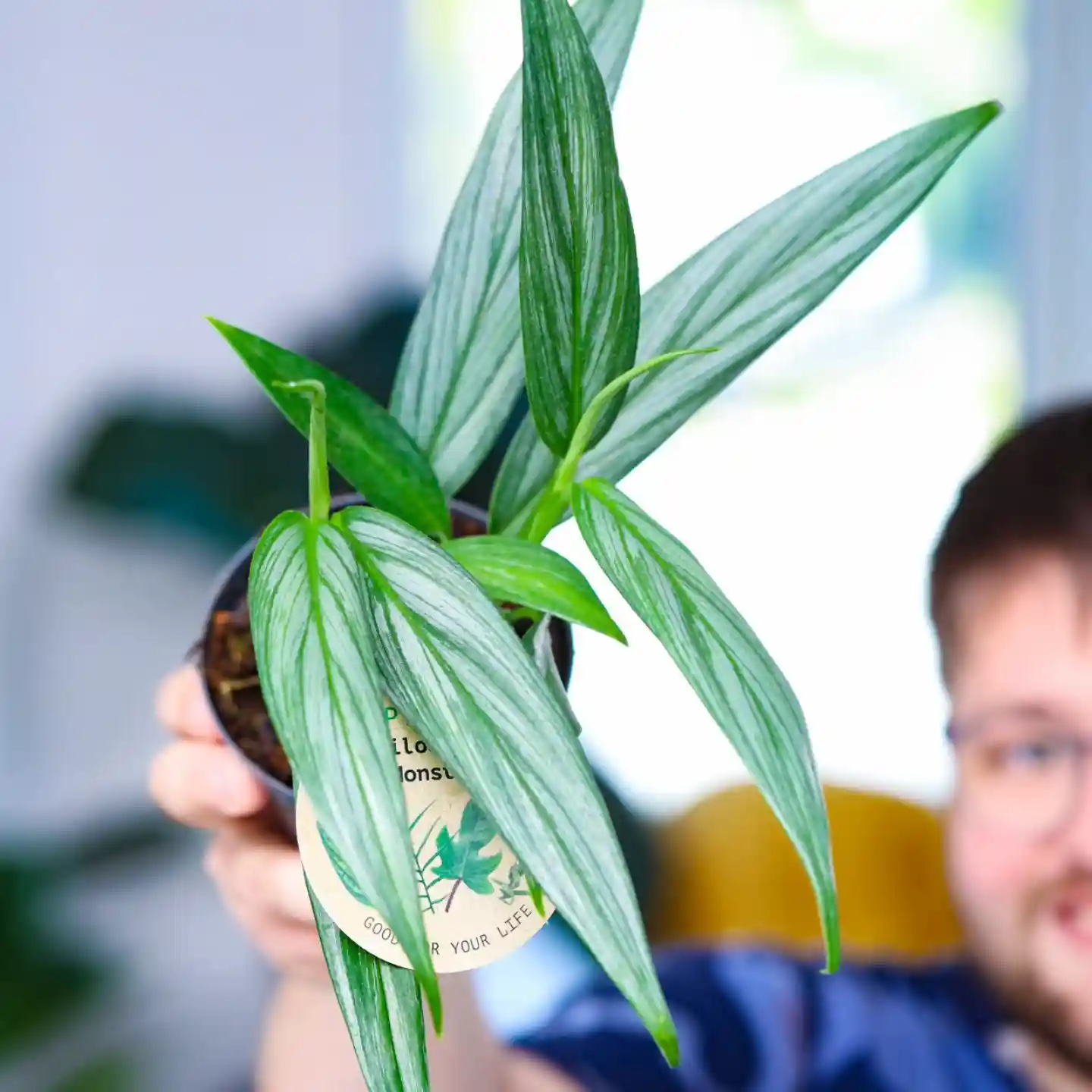
Epipremnum amplissimum Silver Stripe has long, narrow green leaves brushed with pale silver or blue-gray stripes.
Its upright climbing growth looks different from the heart-shaped vines commonly associated with pothos. It needs a moss pole or similar support to produce stronger, larger foliage.
This less common plant works well in narrow spaces where height is available but broad leaves would feel crowded.
- Care level: Moderate
- Light: Bright, indirect light
- Growth habit: Narrow climbing vine
- Best feature: Long leaves with silver striping
- Best for: Collectors and vertical displays
- Helpful tip: Keep the leaves clean so the soft silver pattern remains visible.
Frequently Asked Questions
What is the easiest pothos variety to grow?
Golden Pothos is usually the easiest choice for beginners. Jade, Neon, and Global Green Pothos are also forgiving because they have plenty of green tissue and grow well in average indoor conditions.
Which pothos variety grows the fastest?
Golden Pothos, Jade Pothos, Neon Pothos, and Baltic Blue usually grow quickly when given warmth and bright, indirect light. Heavily white-variegated plants often grow more slowly.
Which pothos stays the smallest?
N’Joy, Pearls and Jade, Glacier, and Lemon Meringue have compact leaves and shorter growth than many large climbing varieties. Pruning also helps keep their vines manageable.
What is the difference between N’Joy and Pearls and Jade?
N’Joy usually has cleaner blocks of green and white with little speckling. Pearls and Jade often has green or gray-green speckles inside the cream and white sections.
Is Snow Queen different from Marble Queen?
Snow Queen is commonly used as a selling name for a heavily white Marble Queen. The exact label may vary, so leaf color alone does not always prove that they are separate cultivars.
Which pothos develops split leaves?
Cebu Blue, Baltic Blue, Dragon Tail, Skeleton Key, and Epipremnum pinnatum Albo may develop splits or divided mature leaves when given climbing support and good growing conditions.
Why is my variegated pothos turning green?
Low light can lead to greener new growth because green leaves produce energy more easily. Move the plant closer to bright, indirect light and prune fully green vines if they continue taking over.
Can different pothos varieties grow in one pot?
Yes, varieties with similar light and watering needs can share a pot. Keeping them separate is often easier because fast-growing vines may crowd slower, heavily variegated types.
Can pothos grow without a moss pole?
Yes. Pothos can trail from shelves and hanging baskets, but climbing support often helps the plant produce larger leaves and shorter spaces between them.
Are pothos plants safe for pets?
Pothos plants should be kept away from cats and dogs that may chew their leaves. Place trailing vines where pets cannot reach them.