17 Drought Tolerant Annual Flowers for Dry, Sunny Gardens
A dry garden does not have to look bare or dusty. These 17 drought-tolerant annual flowers bring lasting color to borders, gravel beds, pots, and hot areas beside paving once their roots are settled.
They still need regular water after planting, and containers need checking more often than garden soil. The real water-saving trick is matching each flower to the site, providing good drainage, and watering deeply enough to guide roots downward.
A practical note: Drought-tolerant does not mean no-water. Keep new plants evenly moist until they begin making fresh growth, then lengthen the time between thorough waterings. Heat, wind, soil type, and pot size determine how quickly they dry.
Some selections here, including annual vinca, gazania, lantana, mealycup sage, and fan flower, are tender perennials commonly grown as annuals where winter temperatures kill the plants.
1. Moss Rose
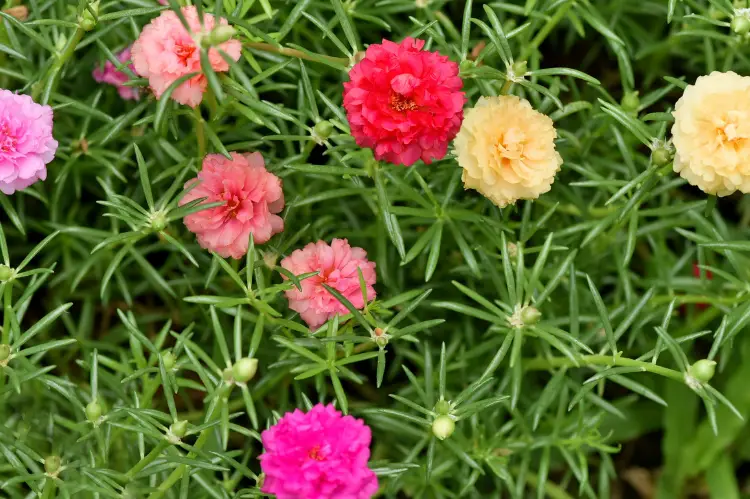
Moss rose forms a low carpet of succulent leaves and jewel-toned flowers. It is one of the best choices for the baked edge of a path, a shallow trough, or a sunny bed where ordinary annuals wilt. Its spreading habit softens gravel and hard corners without hiding nearby plants.
- Best position: Give it full sun and fast-draining, sandy or gritty soil. Flowers may stay closed on dull days.
- Water wisely: Soak the root area, then let the upper soil dry before watering again. Constant dampness invites stem and crown rot.
- Use it low: Place moss rose at the front of a border, between warm stones, or along a raised-bed rim where its flowers remain visible.
- Build contrast: Pair its rounded mat with upright salvia, celosia, or ornamental grass for a clearer shape and stronger height change.
- Skip rich feeding: Heavy fertilizer makes soft growth at the expense of flowers. A lean bed is usually all this plant needs.
2. Annual Vinca
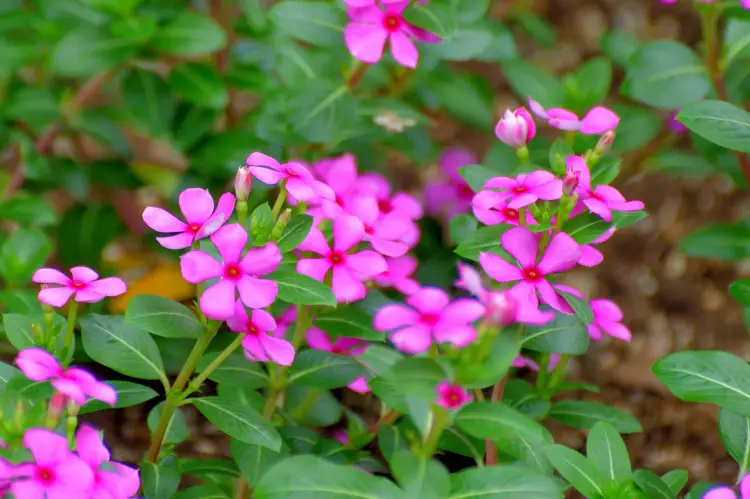
Annual vinca keeps a tidy, glossy mound when summer turns hot and rain becomes unreliable. Its clean shape suits front walks, formal edging, and simple container groupings. White, blush, coral, and deep pink flowers are especially useful where a dry bed needs color without a loose, meadow-like look.
- Wait for warmth: Plant after the soil has warmed. Chilly, wet ground can stall plants and increase the chance of root disease.
- Drain the bed: Choose a raised or freely draining spot rather than a low area that remains wet after rain.
- Water at soil level: A slow morning soak keeps foliage drier and encourages roots to move below the hot surface.
- Repeat one color: A ribbon of matching plants looks calmer and more intentional than scattering every color through a small bed.
- Allow airflow: Follow the mature spacing on the label. Crowded plants dry slowly after watering and lose their naturally neat outline.
3. Globe Amaranth
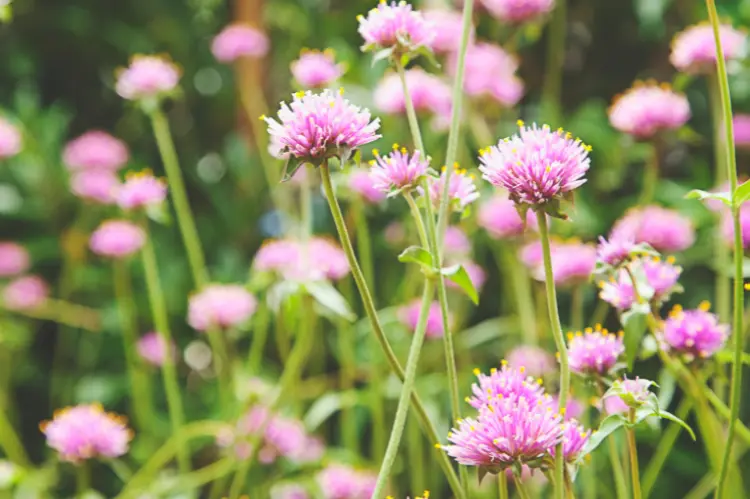
Globe amaranth carries small, papery flower heads above a branching mound, so it keeps its texture even during hot, dry weather. The round blooms add a playful detail among finer flowers and remain useful after cutting. It works well in pollinator beds, cottage borders, and sunny cutting gardens.
- Choose open sun: Strong light produces sturdier stems and more flowers. Shade can leave the plant loose and sparse.
- Establish it first: Water regularly after planting, then switch to deeper, less frequent soaking once new growth shows that roots have settled.
- Cut for more: Harvesting stems or removing old heads encourages branching and keeps the planting from looking top-heavy.
- Dry a few stems: Cut flowers before they fade, strip the leaves, and hang small bundles upside down in a dry, dim room.
- Pair by shape: Set the round heads beside feathery cosmos, narrow salvia spikes, or flat zinnia blooms for an easy mixed-border rhythm.
Related: 21 Low Maintenance Annual Flowers
4. Gazania
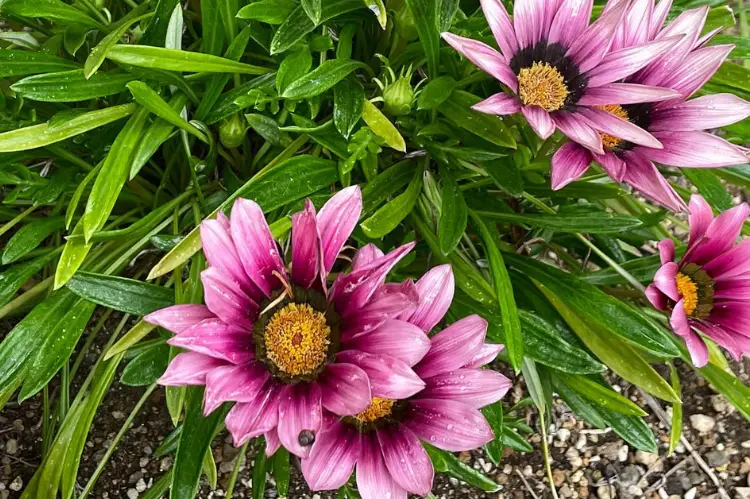
Gazania makes a crisp edging plant with silver-green leaves and bold daisy flowers. It is at home beside pale gravel, concrete steps, and south-facing walls where reflected heat is intense. The blooms often close in low light, so use gazania where its foliage can still carry the composition on cloudy days.
- Prioritize drainage: Gritty soil and a slightly raised position protect the crown during wet spells, especially in humid regions.
- Give maximum light: Six or more hours of direct sun helps the flowers open fully and keeps the plant compact.
- Water below the leaves: A focused soak at the root zone is better than frequent surface sprinkling.
- Echo the foliage: Silver artemisia, dusty miller, or a pale stone mulch can connect gazania to the rest of a dry planting.
- Trim spent blooms: Snip old stems near the base to keep the clump orderly and direct energy toward new buds.
5. California Poppy
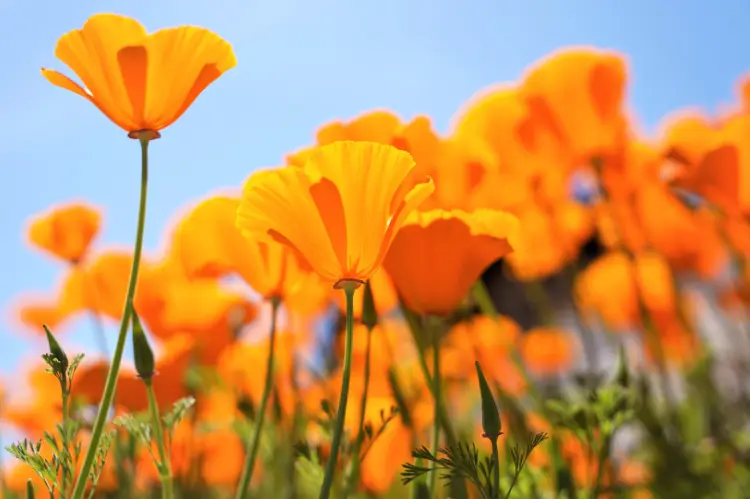
California poppy brings a loose, sunlit look to gravel gardens and dry border gaps. Its ferny blue-green foliage is almost as useful as its cup-shaped flowers. Because its taproot dislikes disturbance, it is far easier to sow in place than to move later, making it ideal for informal, self-renewing patches.
- Sow directly: Scatter seed onto prepared soil, press it in lightly, and avoid burying it deeply. Thin crowded seedlings instead of transplanting them.
- Keep soil lean: Fertile, heavily amended ground can produce more leaves and fewer flowers.
- Water young plants: Provide light, steady moisture during germination, then reduce watering as roots grow deeper.
- Expect seasonal pauses: Plants may slow or go dormant during extreme summer heat, especially where nights stay hot and humid.
- Let some seed: Remove most faded flowers for neatness, but leave a few pods if you want another natural-looking patch next season.
6. Zinnias
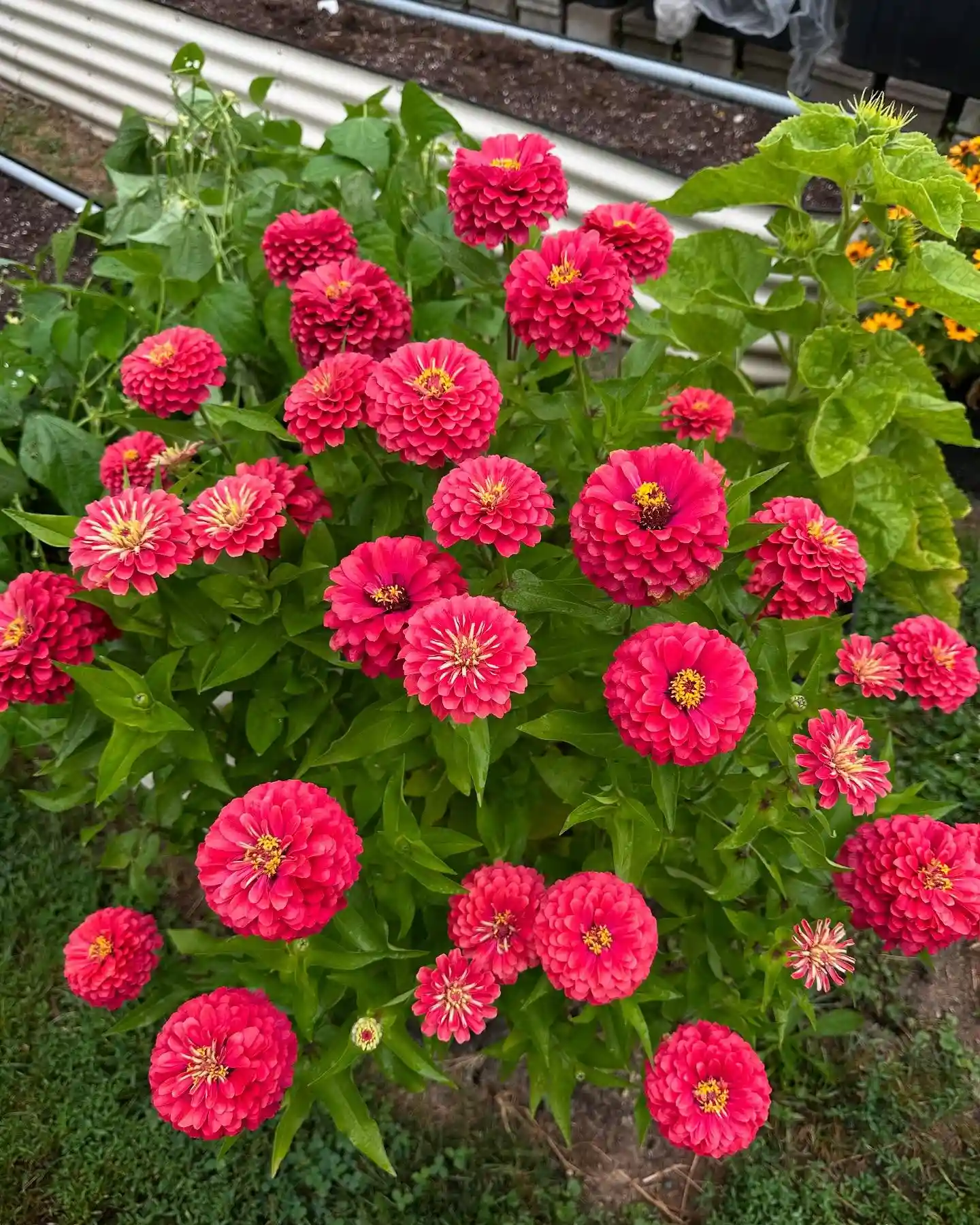
Zinnias give a dry summer bed strong blocks of color and dependable cut flowers. Established plants can handle short rainless periods, though they bloom better with an occasional deep soak. Their broad flower heads make an effective visual anchor for airier plants, especially when two or three related colors are repeated through the bed.
- Start with spacing: Good air movement helps leaves dry quickly and lowers the risk of powdery mildew.
- Soak, then pause: Water deeply at the base when the soil is dry several inches down instead of wetting the surface every day.
- Choose suitable sizes: Use dwarf types along paths and taller cutting varieties behind them so no row shades the next.
- Cut above a branch: Removing flowers just above a strong leaf pair encourages side shoots and a fuller plant.
- Keep leaves dry: Drip tubing or a watering wand aimed low is safer than an evening sprinkler in tightly planted beds.
Related: 21 Annual Flowers for Full Sun
7. Cosmos
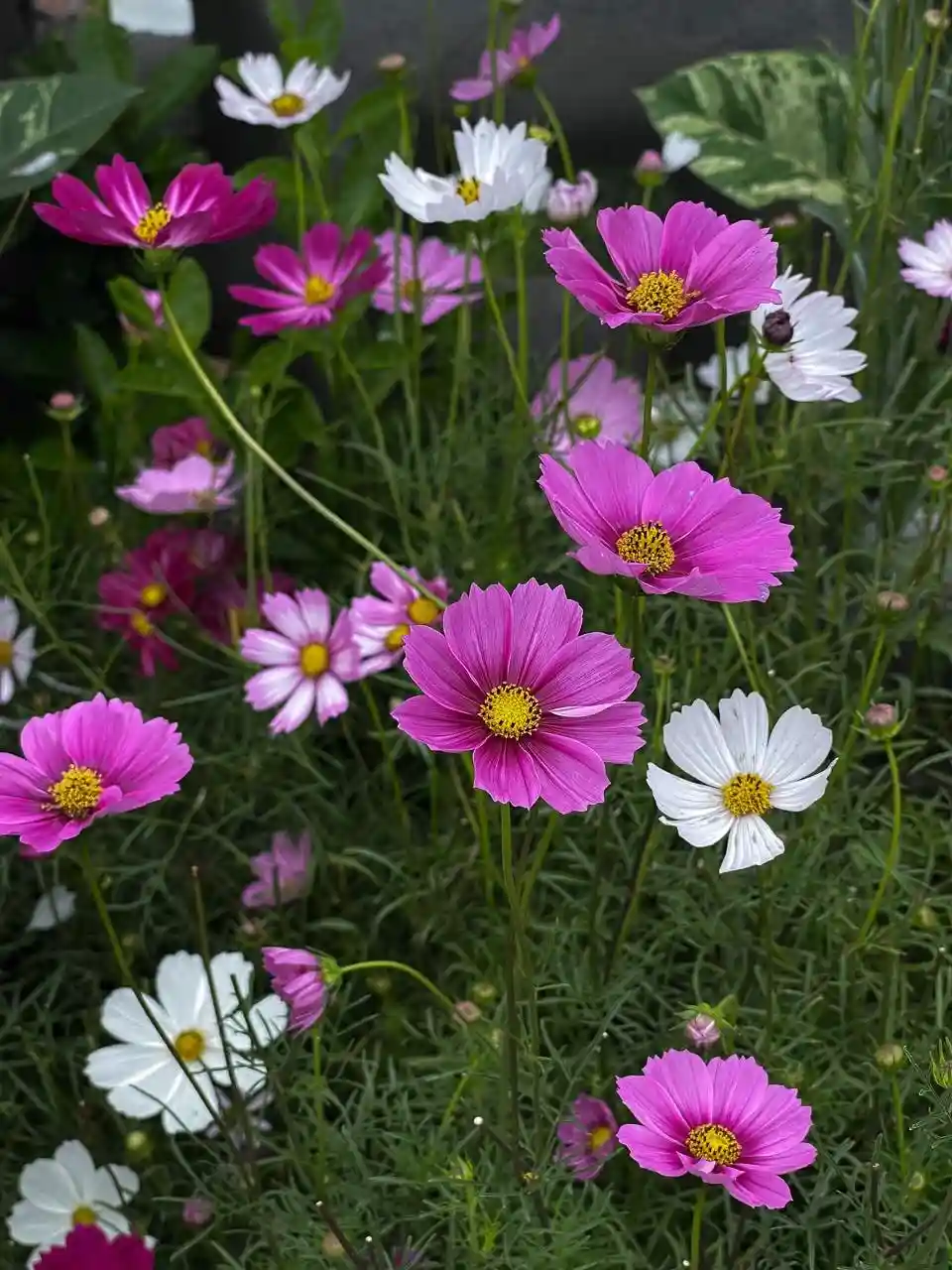
Cosmos is a good answer for a large, dry space that needs height without visual weight. Fine leaves and nodding flowers allow light to pass through, so the planting feels loose rather than bulky. It also fills new beds quickly while slower shrubs or perennials are still too small to carry the area.
- Resist overfeeding: Rich soil and high-nitrogen fertilizer create tall, leafy stems with fewer flowers.
- Water to establish: Once rooted, soak only when the soil is dry well below the surface or plants begin to lose firmness.
- Use hidden support: Thread stems through a low grow-through ring before they become tall enough to flop after wind.
- Pinch young plants: Removing the top growth at about 12 inches encourages more branches and a broader flowering shape.
- Control self-seeding: Deadhead before seeds ripen if you want the planting to remain in one defined area.
8. Mexican Sunflower
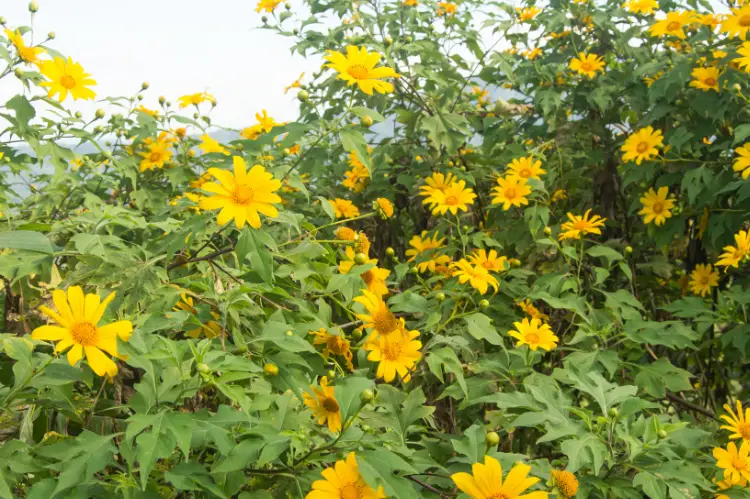
Mexican sunflower supplies the height and warm color of a small flowering screen. Its orange blooms sit above large, slightly coarse leaves and draw attention from across the yard. Place it behind shorter annuals, beside a plain fence, or at the back of a hot border where its scale has room to work.
- Give it space: Plants can become wide as well as tall. Keep them away from narrow paths and low windows.
- Choose lean soil: Too much compost or fertilizer can make stems lush, weak, and harder to support.
- Water deeply at first: Help roots move down before asking the plant to cope with longer dry intervals.
- Stake early: Add a discreet cane or ring while the plant is young in exposed sites, rather than tying up a bent mature stem.
- Place with purpose: Orange flowers look especially clear beside blue salvia, purple verbena, or a dark green hedge.
9. Lantana
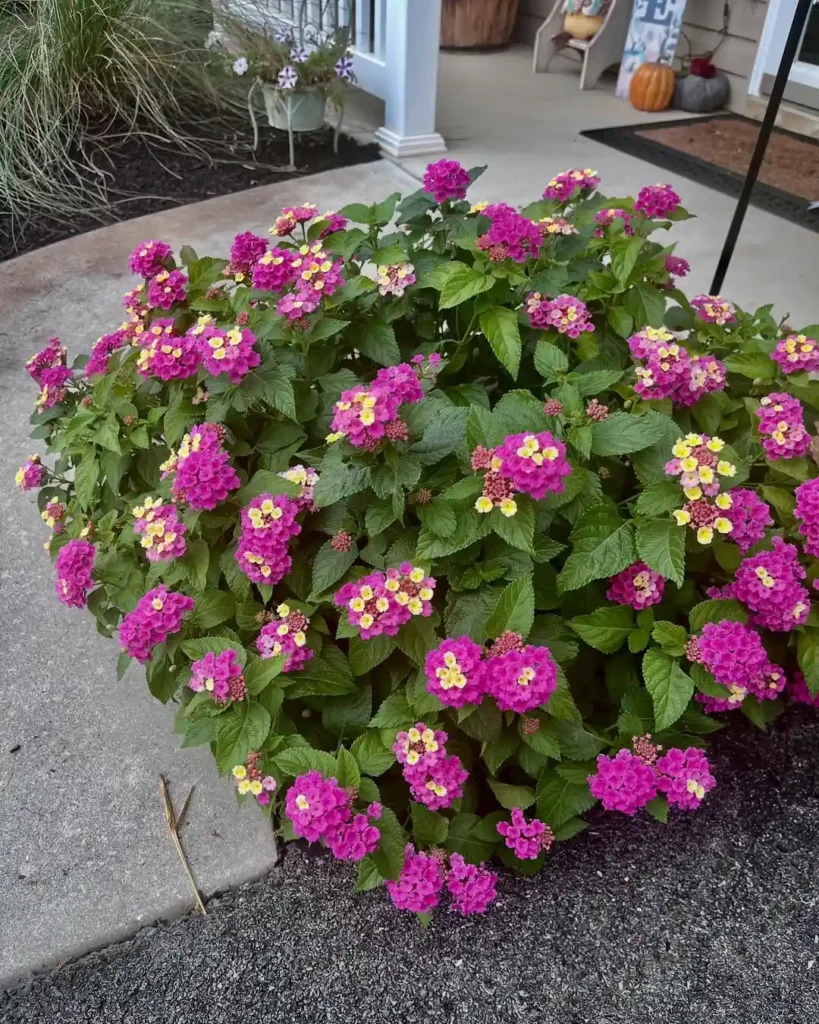
Lantana forms a dense mound covered with clustered flowers that often change color as they age. It handles heat well after establishment and is useful in large pots, curbside beds, and sunny entries. Its woody-looking stems give a planting more structure than soft annuals, even when nearby flowers pause during hot weather.
- Treat it by climate: Lantana is grown as an annual in cold regions but may behave as a perennial in warm areas.
- Check local guidance: Some lantana types can spread aggressively in frost-free regions, so choose locally recommended cultivars.
- Use a roomy pot: A larger container holds moisture longer and balances the plant’s broad, branching top.
- Prune lightly: Shorten long tips to keep the mound dense, but avoid constant hard cutting that removes developing flowers.
- Place carefully: Foliage and berries can be harmful if eaten. Consider children, pets, and grazing animals when choosing a site.
10. Mealycup Sage
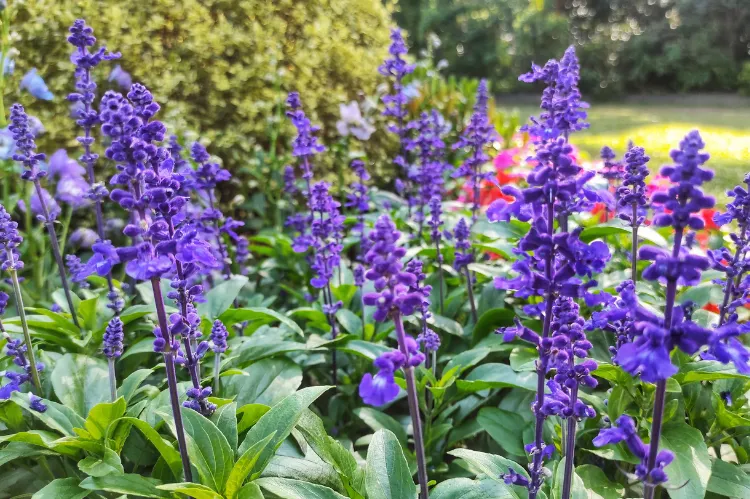
Mealycup sage adds cool blue, violet, or white flower spikes to a dry, sun-baked scheme. Its upright shape is useful between rounded mounds and daisy flowers, and the repeated vertical lines make a border feel organized. It is a tender perennial in warm areas but commonly grown as an annual elsewhere.
- Plant in groups: Three or five plants read as one strong column of color and are easier to see from a patio or window.
- Drain around roots: Average soil is fine, but a site that stays soggy after irrigation can shorten the plant’s life.
- Shear after a lull: Removing faded spikes and a little stem growth can prompt a fresh, compact flush.
- Use color contrast: Blue forms cool down orange marigolds, Mexican sunflower, and warm-toned zinnias without making the bed busy.
- Watch new transplants: Established plants accept dry periods, while small root balls can still dry rapidly during their first hot weeks.
11. Cleome
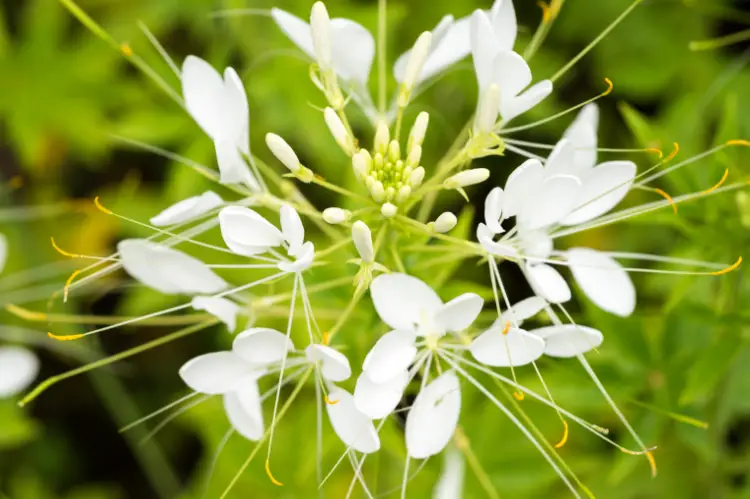
Cleome creates an airy upper layer with spider-like flowers and long seedpods. It suits the middle or back of an informal border, where bare lower stems can be screened by shorter plants. Once established, its deep roots help it handle dry spells, but young plants still need dependable moisture during early growth.
- Site it once: Cleome can resent root disturbance, so direct sow or transplant small seedlings before roots circle their pots.
- Screen the base: Use zinnias, gomphrena, or compact marigolds in front to hide lower stems late in the season.
- Allow shoulder room: Good spacing keeps the branching shape graceful and makes it easier to move around the bed.
- Choose modern forms: Thornless, less freely seeding cultivars are easier to manage beside paths and small patios.
- Remove seedpods early: Clip them before they mature if you do not want volunteer plants appearing throughout the garden.
12. Celosia
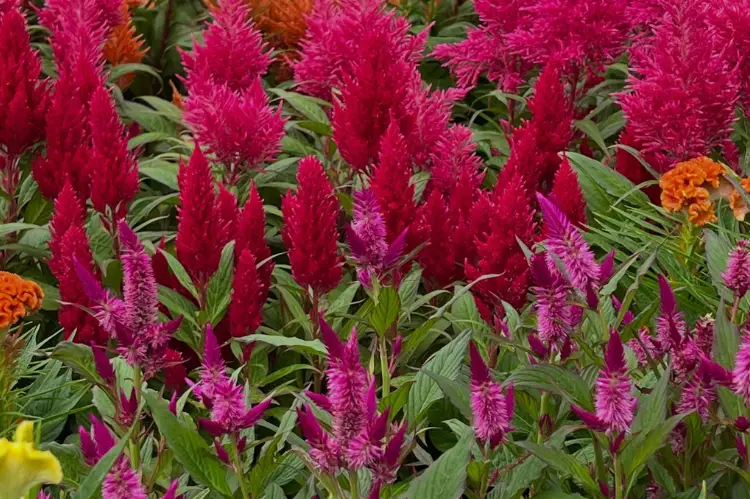
Celosia brings strong texture to dry summer displays through plumes, crests, or narrow wheat-like flowers. The blooms hold their color for a long time and stand up well beside simple foliage plants. Use one flower form repeatedly rather than mixing every type, which keeps the bed polished while the unusual shapes do the talking.
- Plant into warm soil: Celosia dislikes cold, wet conditions and grows faster once nights have settled into mild temperatures.
- Balance the water: It tolerates a short dry spell after rooting but flowers best when deep watering prevents prolonged stress.
- Avoid wet feet: Improve heavy soil drainage or grow plants in raised beds where excess rain can move away.
- Pinch branching types: An early pinch produces more stems, though large crested varieties may be best left with one main flower.
- Harvest at peak color: Cut firm stems before flowers brown and dry them upright or upside down in a well-aired room.
13. Strawflower
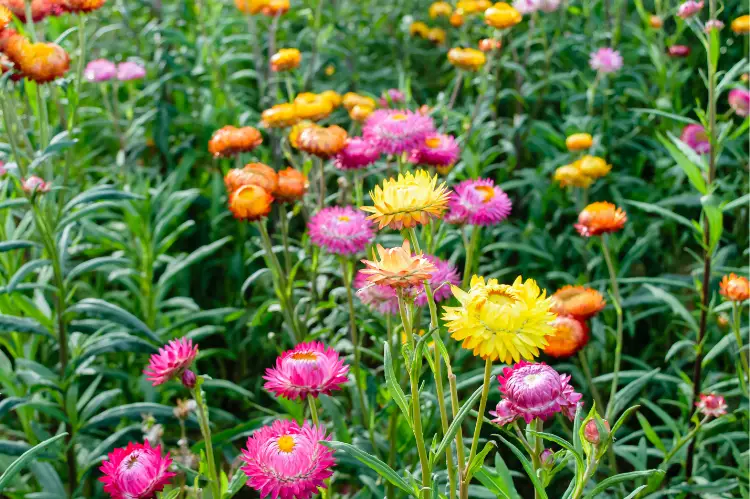
Strawflower has crisp, papery petals that suit both fresh garden displays and dried arrangements. The upright stems bring lasting color to cutting beds, gravel borders, and large containers. A free-draining site helps flowers stay clean after rain and keeps the roots healthier than a heavily watered, moisture-holding bed would.
- Choose full sun: Direct light supports strong stems and helps newly opened flowers develop their best color.
- Water the root zone: Let the surface dry between thorough soakings once plants are established.
- Support tall cultivars: A short net or discreet ring installed early prevents a summer storm from flattening the whole row.
- Cut before fully open: Harvest when a few inner rows of petals remain tight if the stems are intended for drying.
- Simplify the palette: Apricot, cream, and soft pink types make a calm scheme; red, gold, and orange create a hotter one.
14. Sunflowers
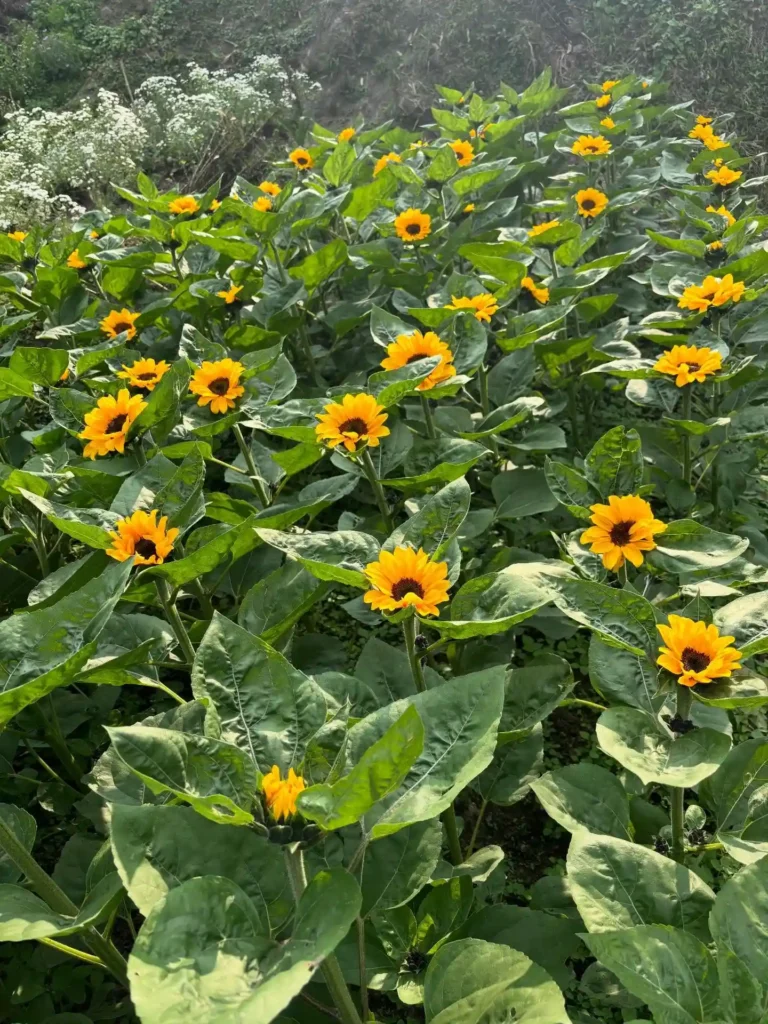
Sunflowers tolerate heat and brief dry periods once their roots reach into the soil, but they are not indestructible. Large plants and developing seed heads still use considerable water. Choose branching or dwarf cultivars for a lower-water ornamental bed, then reserve giant single-stem forms for places where occasional deep irrigation is easy.
- Match size to site: Read the mature height before sowing so plants do not shade windows, paths, or smaller flowers.
- Sow where they grow: Direct sowing allows the taproot to develop without being bent or disturbed during transplanting.
- Water at key stages: Do not let young seedlings or plants forming buds and seeds remain severely dry.
- Group with restraint: A short row or repeated cluster looks designed; random single plants can feel accidental in a small yard.
- Plan for mature heads: Stake tall types in windy sites and decide whether seed heads will be saved for birds or removed.
15. Marigolds
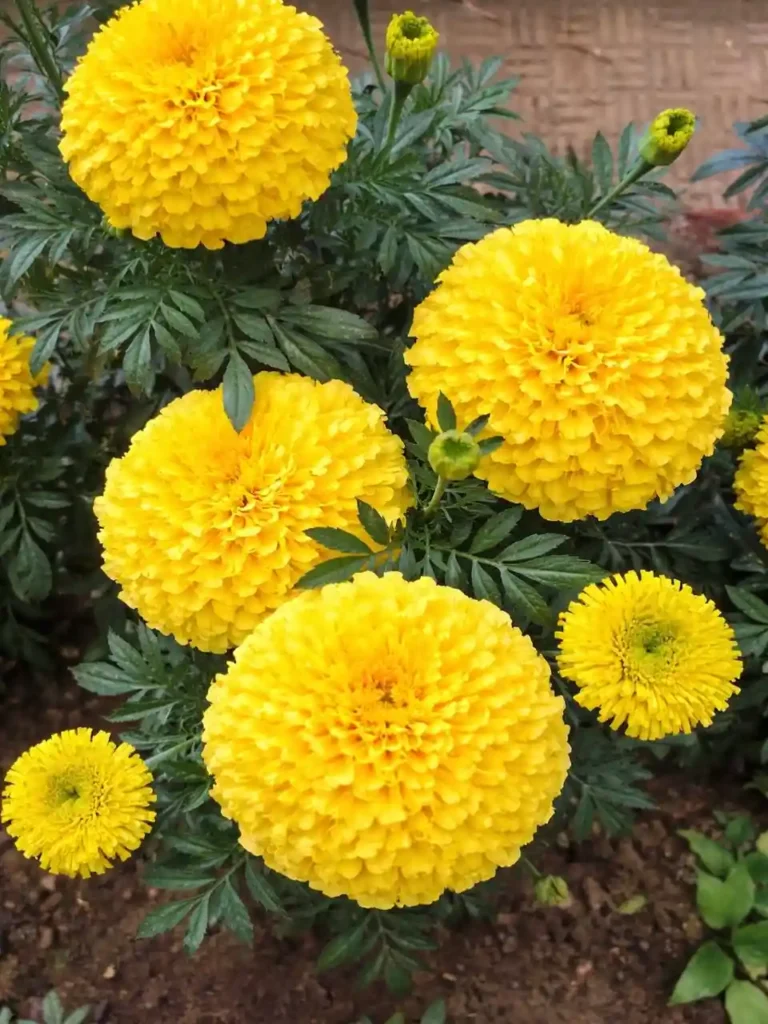
Marigolds bring compact structure and warm color to a bed that receives little supplemental water. French types are especially useful along paths and around larger drought-tolerant flowers because they stay low and branch freely. Their dense flower shape balances fine foliage, while golden tones connect brick, terracotta, timber, and warm gravel.
- Pick the right type: Compact French marigolds edge beds neatly; taller African marigolds need more room and may need support.
- Water below: Direct water to the soil and allow the surface to dry before the next thorough soak.
- Remove old heads: Deadheading keeps the mound tidy and prevents seed production from slowing new flowers.
- Skip excess fertilizer: Rich feeding can produce soft leaves and fewer blooms, especially in already improved soil.
- Inspect in dry heat: Spider mites can build up on stressed foliage, so check leaf undersides when plants look dusty or stippled.
16. Fan Flower
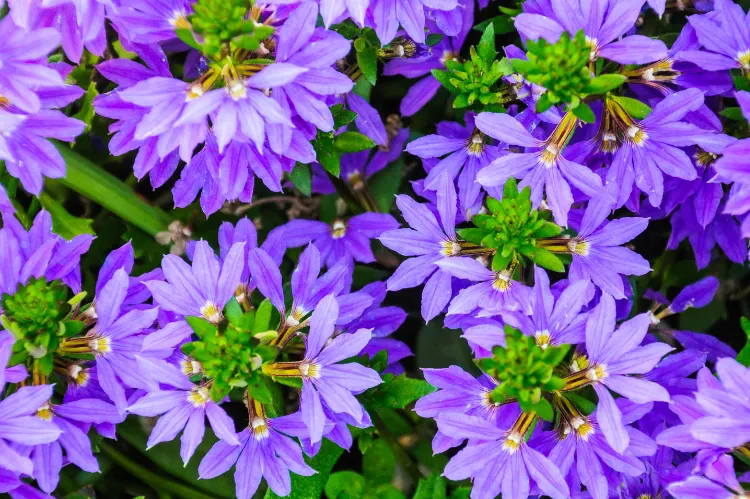
Fan flower spills over a pot or wall in a thick curtain of blue, violet, pink, or white blooms. Its naturally trailing shape softens hard edges without constant deadheading. Established plants handle heat and short dry periods, making this tender perennial a useful annual for exposed balconies and bright container groupings.
- Use a broad container: A wide pot gives stems room to spread and holds more moisture than a tiny hanging basket.
- Keep drainage open: Use a free-draining potting mix and make sure excess water can leave through uncovered holes.
- Check pots often: Drought tolerance cannot prevent a container root ball from drying completely during wind and intense heat.
- Trim uneven growth: Cut back a few long stems to restore a rounded outline and encourage fresh branching.
- Combine thoughtfully: Let fan flower trail below an upright lantana or salvia, using two main colors rather than a crowded mix.
17. Blanket Flower

Annual blanket flower, or Gaillardia pulchella, gives dry beds a relaxed sweep of red, rust, and yellow daisies. It favors sun, lean soil, and good drainage, so it fits gravel gardens and prairie-inspired planting. The warm rings on each bloom can tie several flower colors together without needing perfect color matching.
- Check the label: Choose Gaillardia pulchella when you want an annual, since many commonly sold gaillardias are perennial hybrids.
- Avoid rich soil: Heavy feeding can create floppy growth and fewer of the sturdy stems this flower is known for.
- Water until rooted: Provide regular moisture early, then use a deep soak only after the soil has dried well down.
- Deadhead selectively: Remove most spent flowers for continued bloom, but leave some seed heads for birds or possible volunteers.
- Use repeated drifts: Small groups placed at intervals look more connected than one isolated patch at the far end of a border.
How to Build a Water-Wise Annual Bed
Start with the soil, because drought tolerance means little when roots sit in water after every storm. Loosen compacted ground and correct poor drainage before planting.
Compost can help very sandy soil hold moisture, but desert-style flowers such as moss rose and gazania should not sit in a rich, damp pocket.
Group plants with similar needs and run drip line or a soaker hose through each group. Water slowly enough to moisten the full root zone, then wait until the soil has begun to dry at depth. A finger test or narrow trowel gives better information than a fixed calendar.
Use roughly two inches of organic mulch around most annuals to slow surface evaporation, leaving a small clear ring around stems. In very dry, sharply drained beds, fine gravel can suit low plants that dislike damp crowns. Remember that stone also reflects heat, so check new plants closely while they settle.
Containers follow different rules. Even a drought-tolerant flower may need daily checking in a small dark pot during hot, windy weather. Choose larger containers, use fresh potting mix, keep drainage holes open, and water until excess drains from the bottom instead of giving frequent sips.
Frequently Asked Questions
Do drought-tolerant annuals still need water?
Yes. Seeds, seedlings, and new transplants need reliable moisture while roots develop. Once established, these annuals can go longer between waterings than thirstier plants, but they may still need a deep soak during extended heat, flowering, or seed production. Drought tolerance describes survival through dry periods, not a life without water.
Which annuals cope best with heat and dry soil?
Moss rose, annual vinca, globe amaranth, gazania, lantana, and annual blanket flower are strong starting points for hot, fast-draining sites. The best choice still depends on humidity, soil, and rainfall. A plant that thrives in a dry gravel bed may struggle in heavy clay that remains wet around its roots.
Can I grow them in containers?
Yes, and moss rose, annual vinca, lantana, fan flower, gazania, and compact gomphrena are especially useful in pots. Containers lose water faster than garden beds, so choose a generous pot and check the mix regularly. Water fully when needed, then allow appropriate drying rather than offering a small daily splash.
What soil works best?
Most drought-tolerant annual flowers prefer soil that drains freely. Sandy loam or an average garden bed with an open texture works for many of them. Improve compacted clay before planting, and avoid burying each plant in a small pocket of soft compost that holds water differently from the surrounding ground.
Should I fertilize a dry annual bed?
Use fertilizer lightly. Cosmos, California poppy, Mexican sunflower, blanket flower, and moss rose often grow and flower better in lean soil. If growth is pale or weak, use a soil test or a modest, balanced feed. Repeated high-nitrogen feeding can create thirsty leaves, long stems, and fewer flowers.