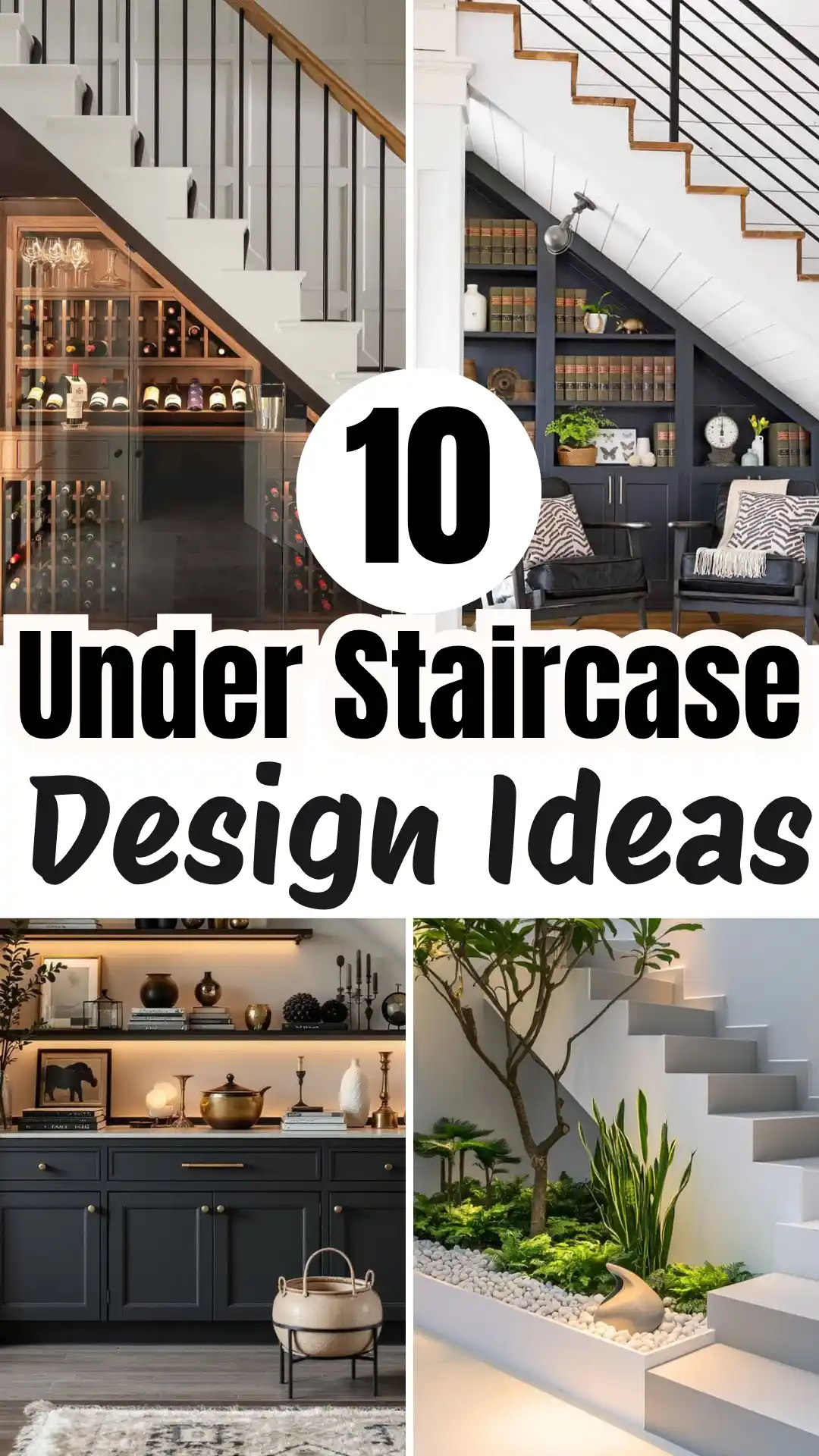
10 Under Staircase Design Ideas

The space below a staircase often becomes an awkward, unused corner, but it can handle far more than basic storage.
These under staircase design ideas turn that sloping area into cabinetry, a home office, an indoor garden, or even a cozy reading seat.
The best choice depends on the staircase depth, nearby rooms, and what your home currently lacks.
1. Display Cabinetry
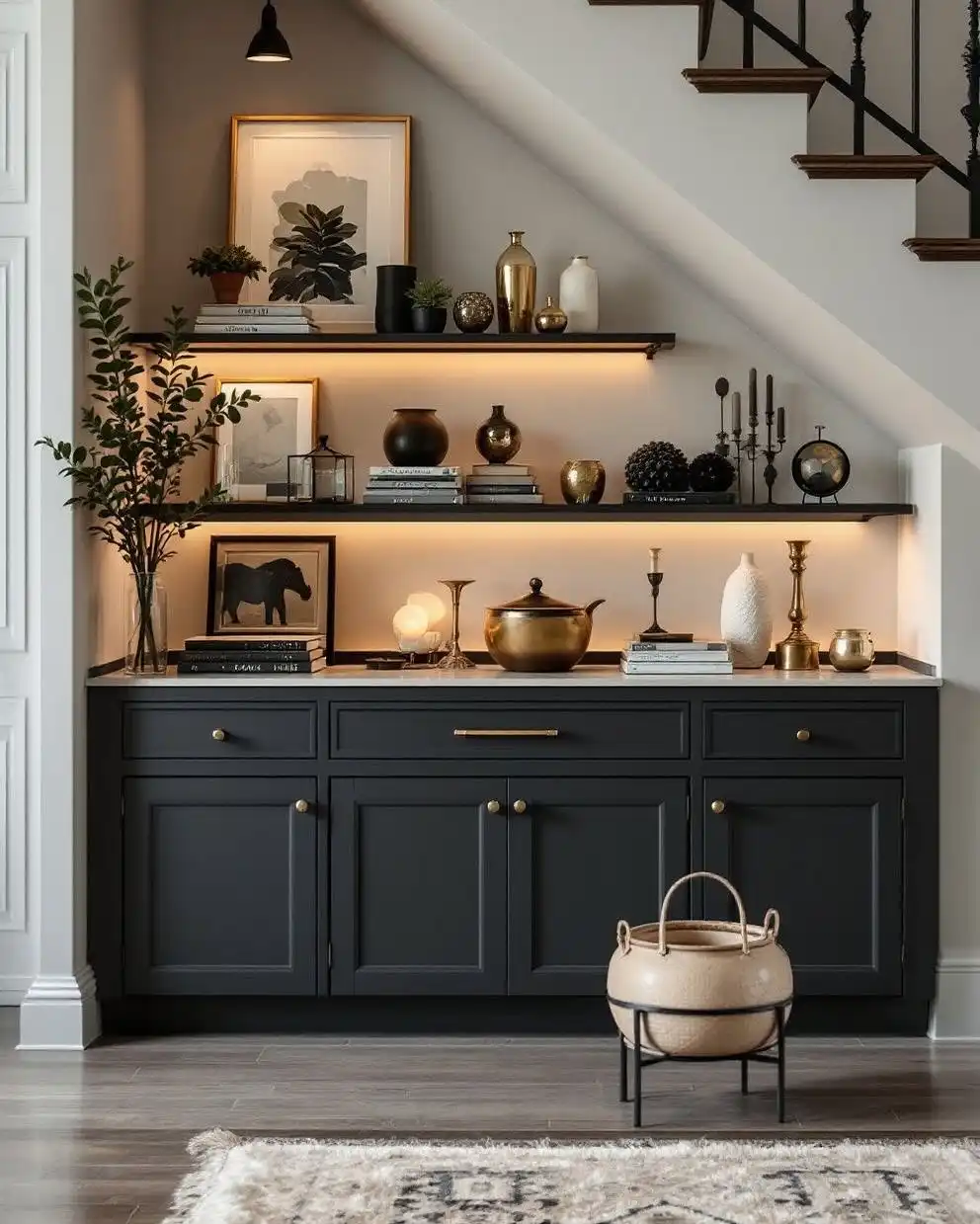
This under-stair cabinet combines practical closed storage with a carefully styled display. Charcoal cabinetry grounds the pale walls, while black shelves follow the staircase line without making the arrangement feel cramped.
Warm shelf lighting brings out the brass vessels, framed artwork, books, and greenery. Keeping the larger storage below also means the open shelves can remain decorative instead of becoming crowded with everyday clutter.
- Ask a carpenter to cut the countertop and upper shelves precisely around the staircase angle.
- Install drawers near the top for keys, chargers, paperwork, and other small items.
- Use cupboards below for bulkier belongings that would look untidy on open shelves.
- Choose warm-white LED strips to soften dark cabinetry and metallic decorations.
- Leave open space around each object so the shelves feel collected, not crowded.
Read also:-
2. Under-Stair Office
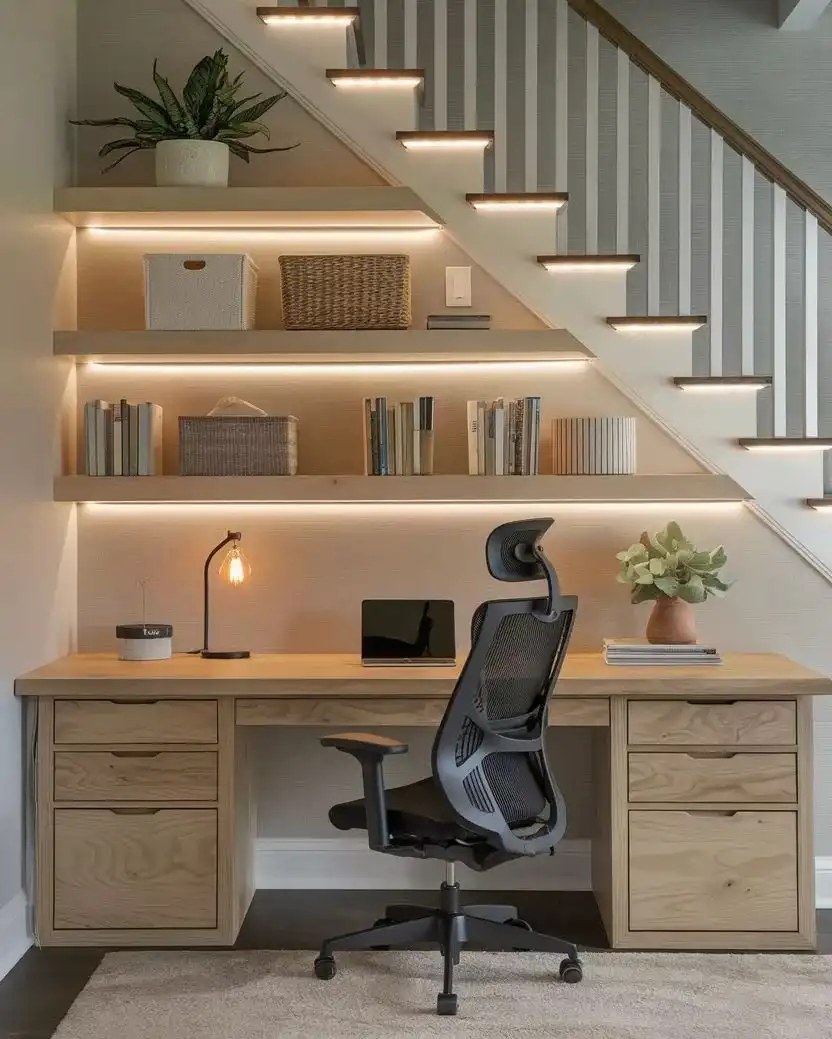
A fitted desk turns this deep under-stair recess into a comfortable home office. Pale wood cabinetry keeps the narrow area light, while the long worktop supplies enough room for a laptop, lamp, notebooks, and daily paperwork.
The floating shelves make clever use of the sloping wall. Their built-in lighting prevents the desk from feeling shadowy, and the mix of books, baskets, and a plant keeps the workspace useful without looking overly businesslike.
- Allow at least 24 inches of desk depth for comfortable laptop or monitor use.
- Position the chair beneath the tallest part of the staircase for better headroom.
- Add outlets at desk height to avoid extension cords running across the floor.
- Use closed drawers for office supplies and open shelves for frequently used books.
- Choose an adjustable ergonomic chair that can slide fully under the worktop.
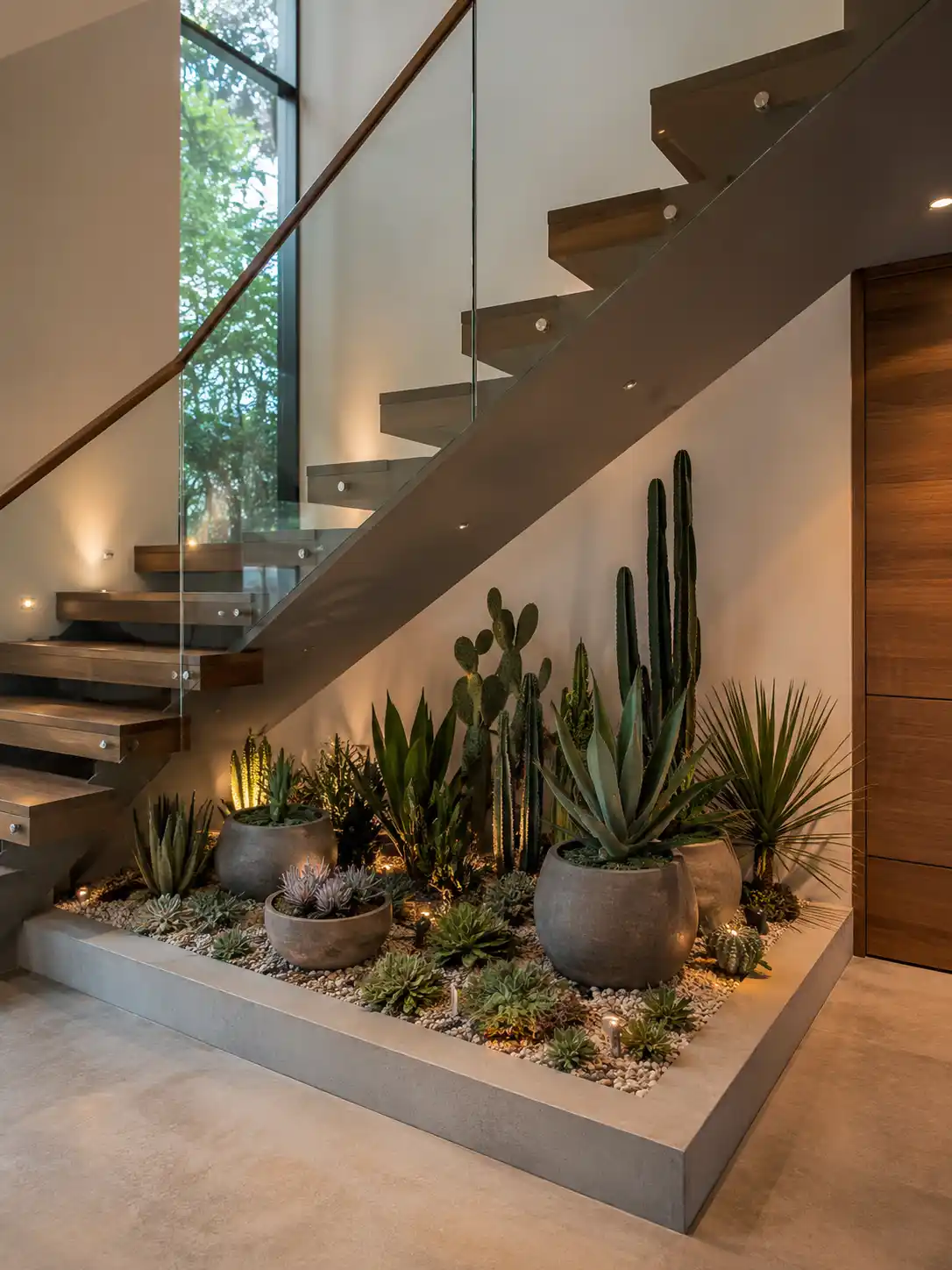
3. Indoor Stair Garden
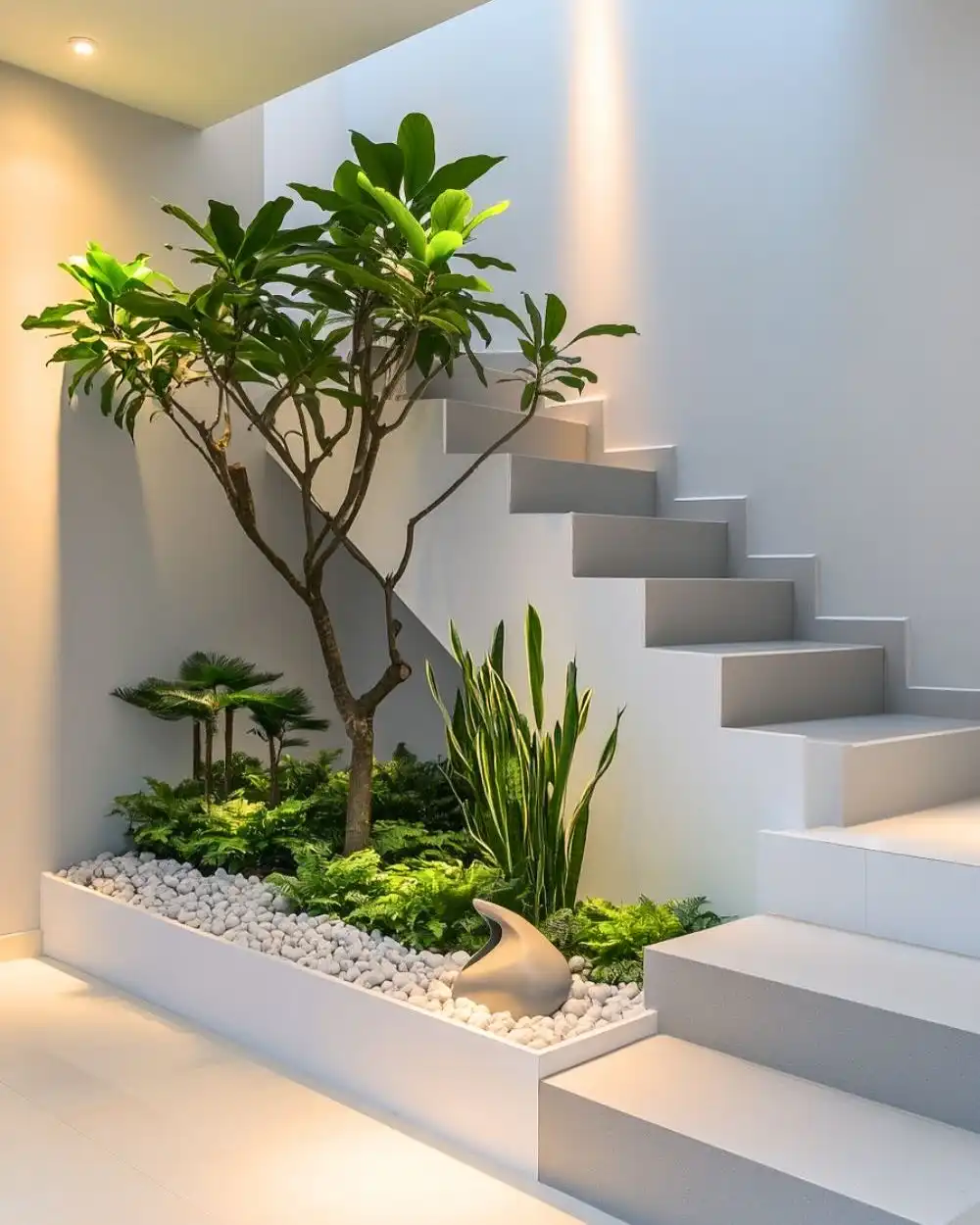
This indoor garden makes the staircase feel like part of a calm, modern courtyard. A raised white planter mirrors the crisp stair structure, while the tall tree and layered foliage soften the hard architectural lines.
White pebbles give the planting bed a clean finish and reflect the overhead light. The strongest detail is the variation in height: ground-cover plants, upright snake plants, and a taller tree create depth without requiring several separate pots.
- Confirm that the planting area receives enough natural or grow-light illumination.
- Choose plants with similar watering needs so maintenance stays manageable.
- Protect the planter with waterproof lining and a reliable drainage system.
- Keep taller branches away from the stair path and nearby lighting.
- Use removable pebble trays to make cleaning and plant replacement easier.
4. Staircase Drawers
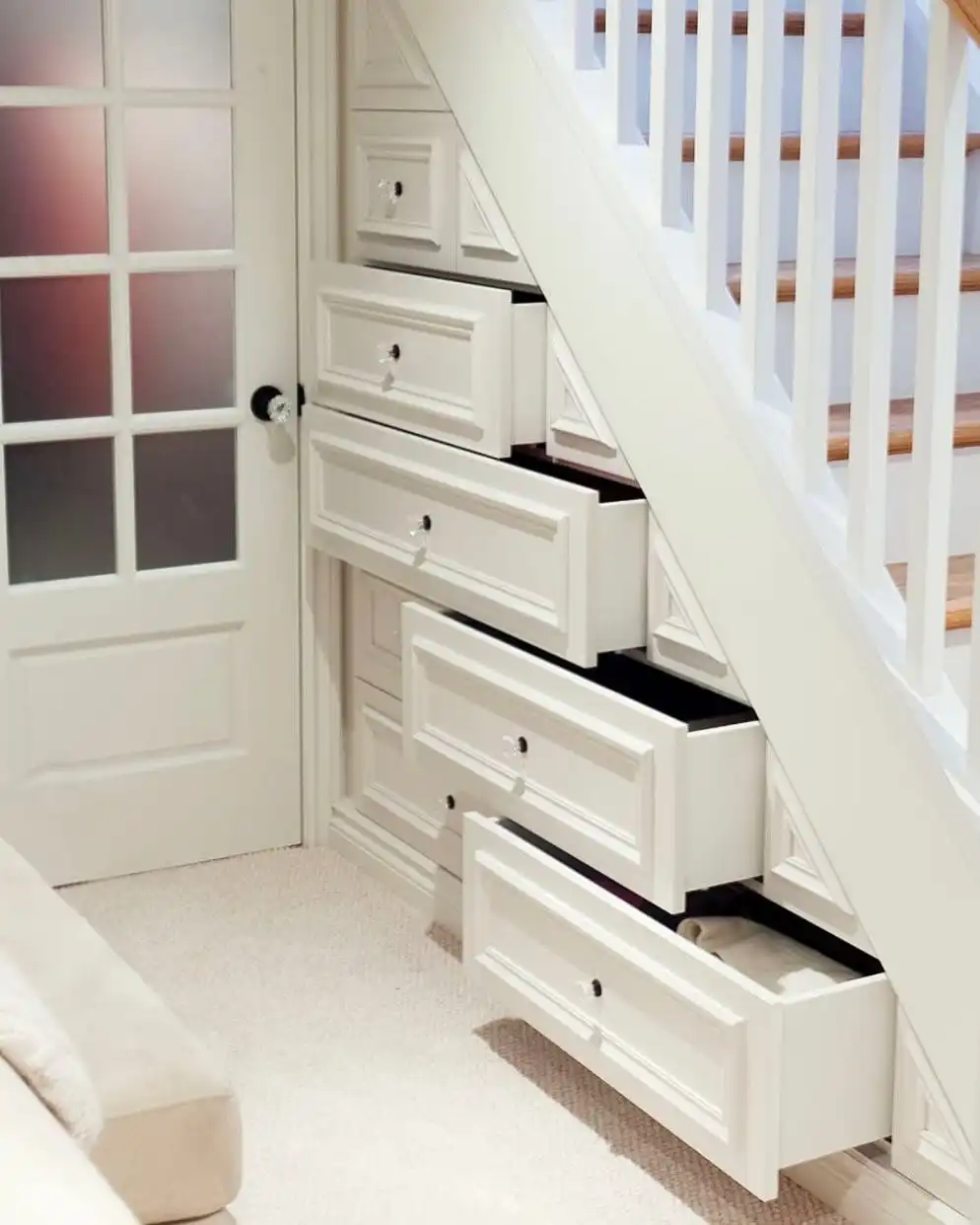
Individual drawers fitted beneath each section of the staircase provide more useful storage than one large, deep cupboard. Different drawer sizes naturally suit different belongings, from small accessories at the top to blankets, linens, and seasonal items below.
Matching the drawer fronts to the surrounding white millwork makes the storage almost disappear. Traditional panel detailing also helps the new addition look original to the house rather than like a later modification.
- Use full-extension runners so items at the back remain easy to reach.
- Reserve shallow upper drawers for scarves, gloves, paperwork, or small tools.
- Store heavier items in lower drawers to reduce strain on the runners.
- Add internal dividers before drawers become mixed catchall spaces.
- Install soft-close hardware to prevent slamming beneath frequently used stairs.
5. Built-In Reading Bench
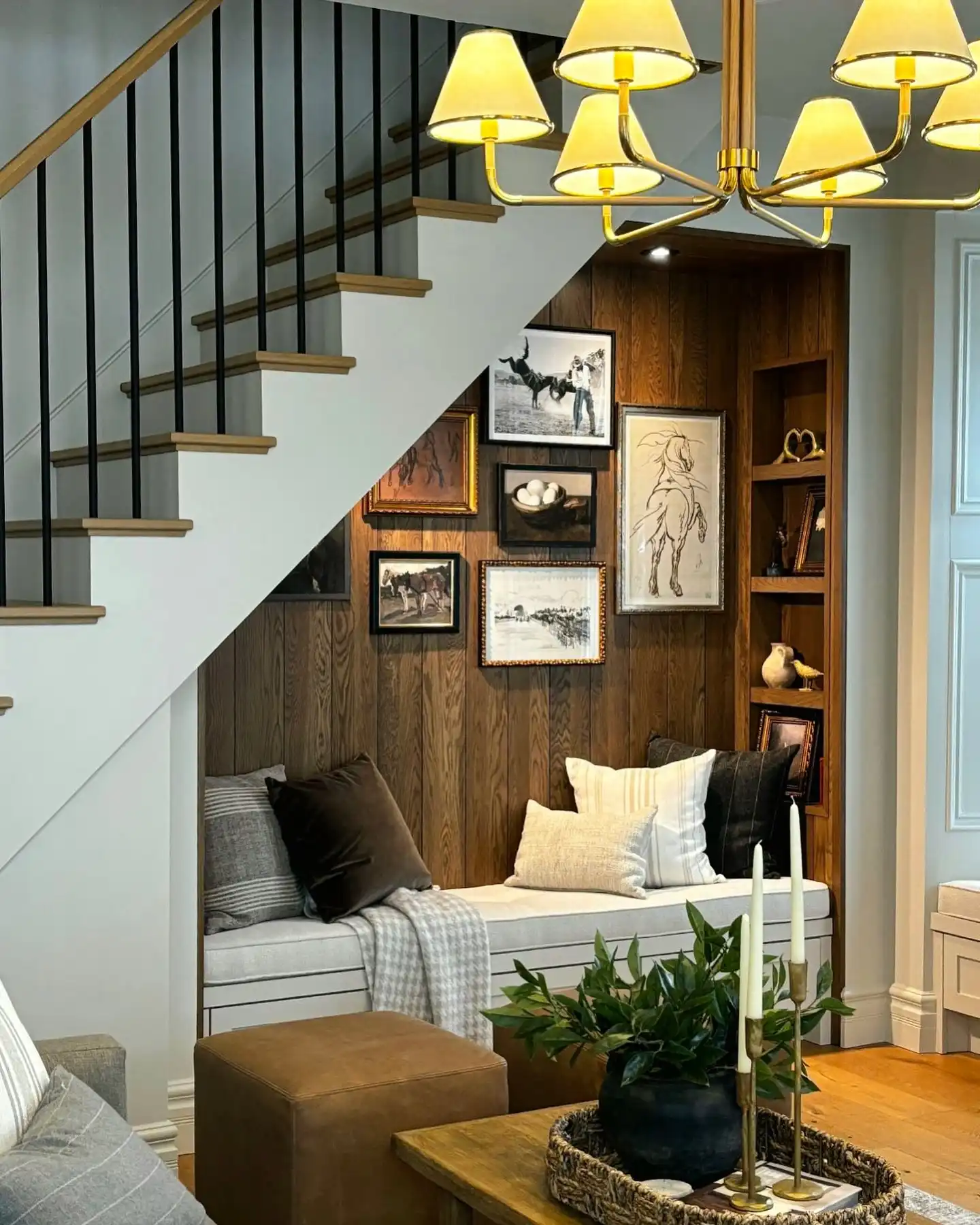
A bench beneath the stairs can turn a pass-through area into one of the most inviting spots in the room. Here, rich wood paneling, framed equestrian artwork, and warm lighting create the mood of a small library or private lounge.
The long upholstered seat follows the wall and offers more seating without placing another bulky chair in the room. Built-in shelves at the taller end use the available height for books, photographs, and decorative objects.
- Order a firm, made-to-measure cushion that will not slide off the bench.
- Use washable or performance fabric if this seat will be used every day.
- Add pillows in several sizes to support the back beneath the sloping ceiling.
- Install a small spotlight or reading sconce above one end of the bench.
- Include drawers beneath the seat for throws, games, and spare cushions.
6. Under-Stair Wine Room
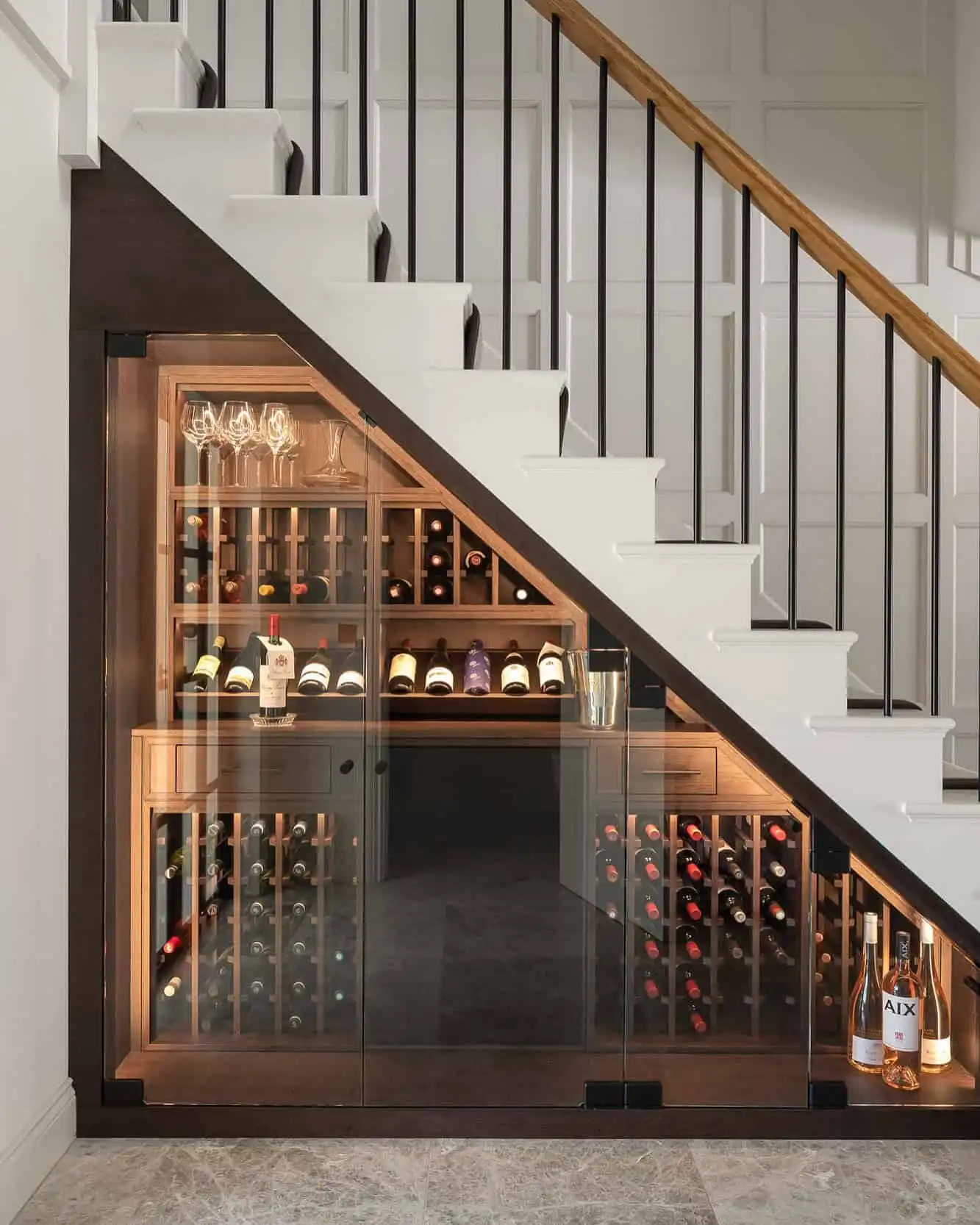
A glass-fronted wine room is a striking choice when the staircase sits near a dining or entertaining area. Custom bottle racks fill the triangular footprint, while stemware storage and a small serving counter make the space practical for hosting.
The dark wood interior and warm lighting give the collection a refined look. Clear glass keeps the staircase visually open, though the success of this design depends on proper temperature control rather than cabinetry alone.
- Add dedicated cooling if you plan to store valuable wine for long periods.
- Keep bottles horizontal so corks remain moist during storage.
- Use UV-filtering glass when the staircase receives strong daylight.
- Include ventilation space around cooling equipment and cabinetry.
- Store frequently served bottles near the counter for easier access.
7. Mini Reading Library
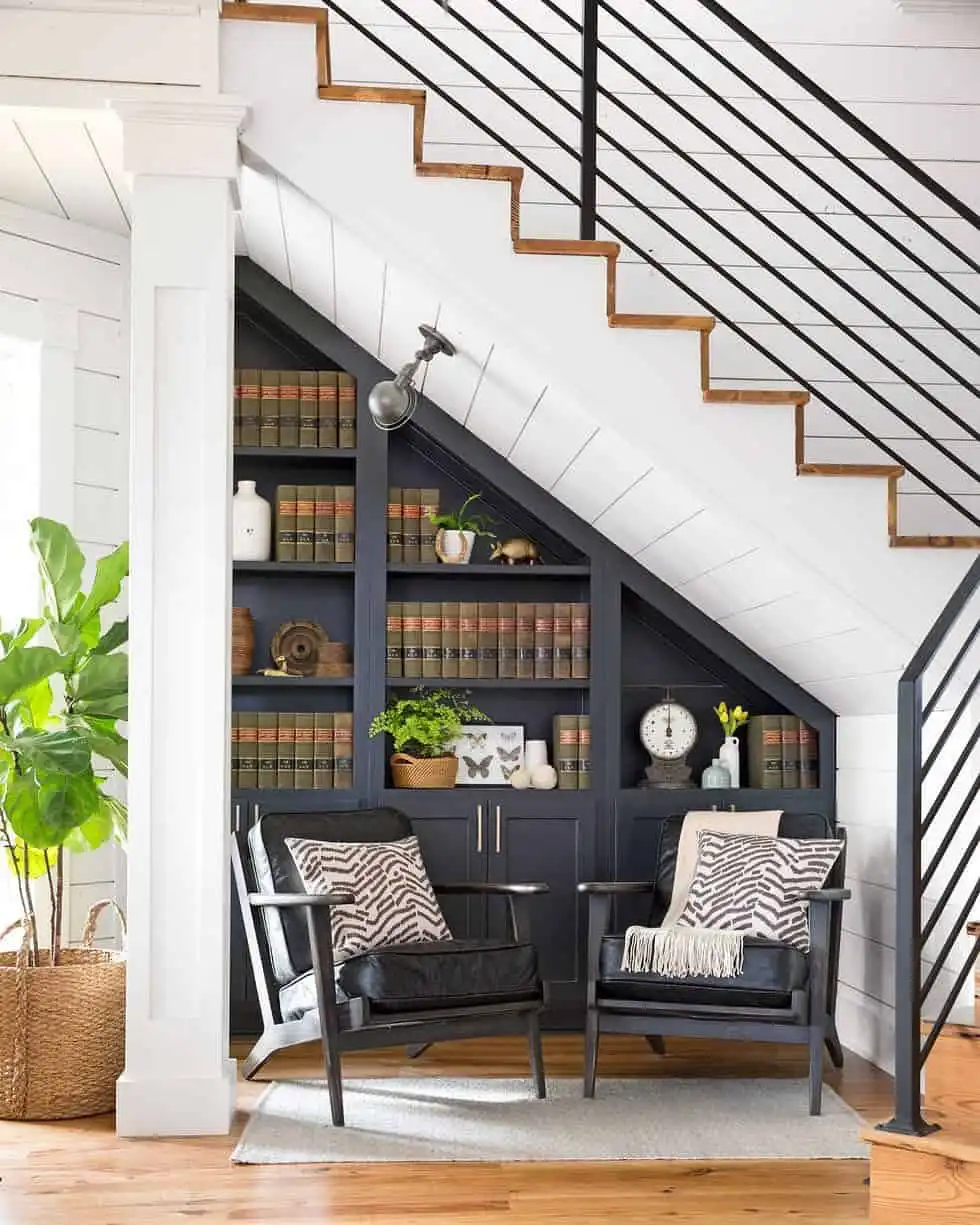
This under-stair library uses the full wall rather than treating the lowest section as wasted space. Dark built-in shelving outlines the staircase angle, giving the small corner a strong visual identity against the white shiplap walls.
Two compact armchairs make the area comfortable for reading or conversation. Lower cupboards hide less attractive belongings, while books, plants, a clock, and small objects add personality to the shelves above.
- Choose chairs with narrow arms so the corner does not feel blocked.
- Fit cabinetry tightly to the stair angle for a polished, intentional finish.
- Place taller books where the shelf height allows and smaller objects below.
- Use cupboard doors at floor level to hide cables, games, and spare items.
- Add a directed wall light so reading does not depend on overhead lighting.
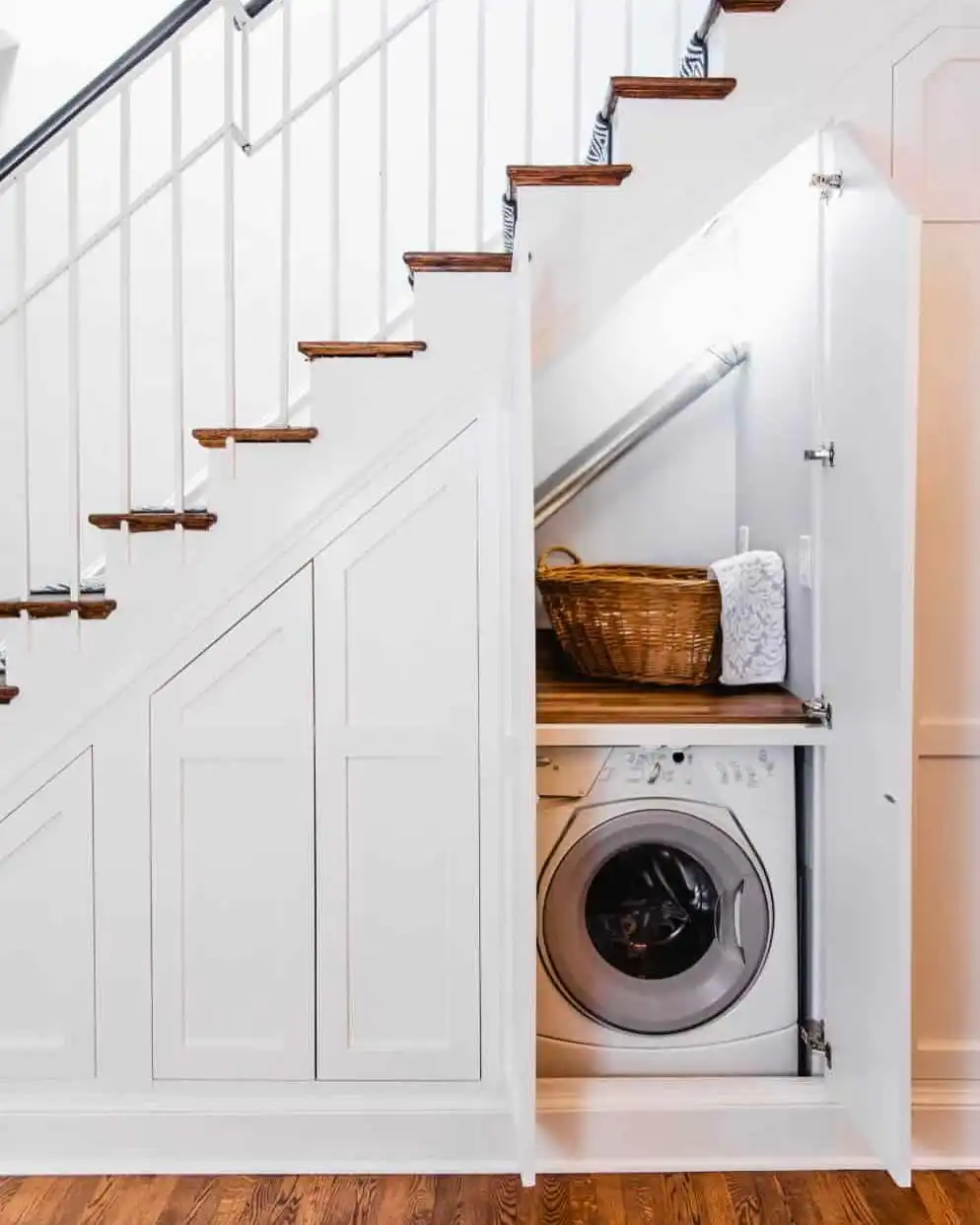
Placing a washing machine beneath the stairs can free up valuable space in a kitchen, bathroom, or utility room. Here, paneled doors follow the staircase profile, allowing the entire laundry station to disappear when it is not being used.
A wood counter above the machine creates a useful folding surface, while a basket and towel stay within reach. This is a strong idea for a compact home, but plumbing access and ventilation need to be planned carefully.
- Measure the appliance with its hoses and connections before building the cabinet.
- Leave ventilation gaps to prevent heat and dampness from collecting inside.
- Use water-resistant flooring and protect the surrounding joinery from leaks.
- Install an accessible shutoff valve rather than sealing it behind fixed panels.
- Add vibration pads to reduce noise traveling through the staircase structure.
9. Illuminated Bench
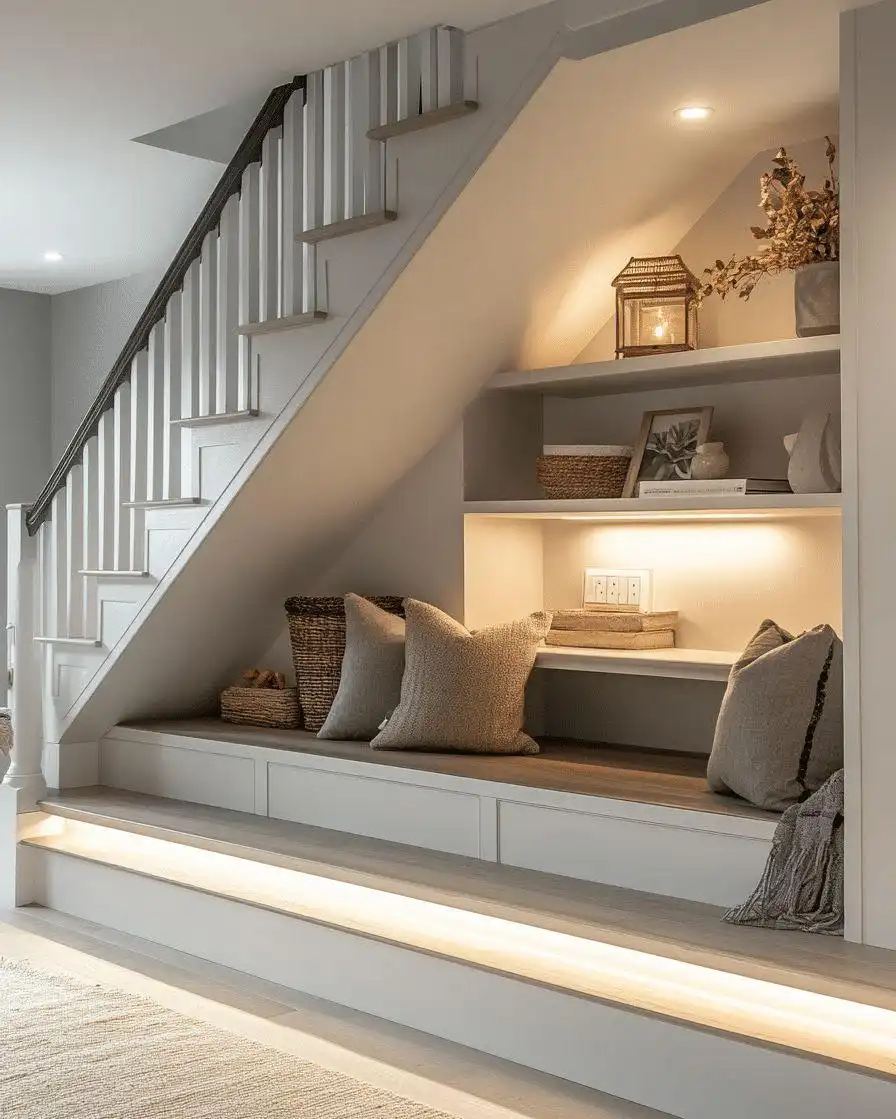
This built-in bench stretches below the staircase and creates a generous spot for reading, relaxing, or putting on shoes. Neutral cushions blend with the soft gray walls, while a wood seat adds warmth to the otherwise pale finish.
Recessed shelves use the deeper end of the staircase for baskets, books, and soft lighting. Drawers beneath the bench provide concealed storage, and the lit platform makes the area feel more like a planned architectural feature.
- Keep the seat height between roughly 17 and 19 inches for everyday comfort.
- Use deep drawers for shoes, bags, throws, or children’s toys.
- Add dimmable shelf lighting to create softer evening illumination.
- Select textured cushions in similar tones to make the neutral palette feel layered.
- Keep the walkway clear by avoiding cushions that extend past the bench edge.
10. Cozy Daybed Nook
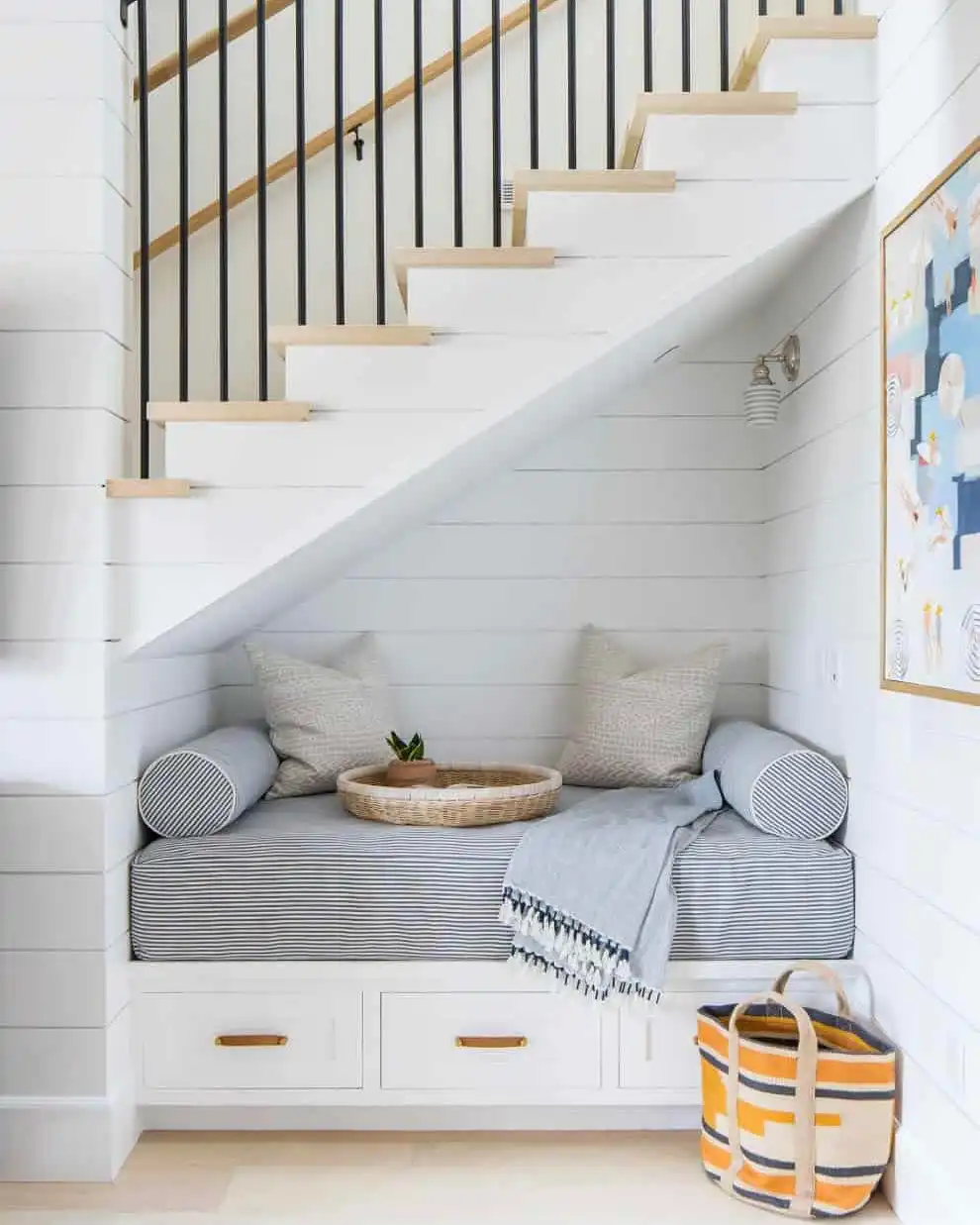
A fitted daybed makes excellent use of a wide but low under-stair space. The striped mattress, bolster cushions, and soft throw give this nook a relaxed coastal feel, while white shiplap helps it blend into the staircase wall.
Two drawers beneath the mattress offer easy-access storage without interrupting the clean layout. The nearby wall sconce and artwork make the nook feel finished, so it works for reading, afternoon naps, or extra seating when guests arrive.
- Use a custom mattress to prevent awkward gaps around the wall and staircase.
- Check sitting headroom before deciding the final mattress thickness.
- Add a wall-mounted light with a covered bulb for safe reading.
- Choose removable cushion covers that can be washed regularly.
- Fit deep drawers below for bedding, books, board games, or seasonal accessories.
FAQs
What can I put under a staircase?
You can add storage drawers, cabinets, a reading nook, home office, bookshelf, indoor garden, laundry station, or wine storage.
How do I maximize under-stair storage?
Use custom cabinetry that follows the staircase angle. Combine deep lower drawers, shallow upper cabinets, and open shelves.
Can I create an office under the stairs?
Yes. Add a fitted desk, task lighting, outlets, drawers, and a comfortable chair beneath the tallest section.
Is an under-stair reading nook practical?
Yes, especially in family rooms or hallways. Include a cushioned bench, good lighting, pillows, and storage underneath.
How much does under-stair cabinetry cost?
The price depends on size, materials, hardware, and customization. Made-to-measure cabinetry usually costs more than modular storage.
Can a washing machine go under the stairs?
Yes, if plumbing, drainage, ventilation, electrical access, and enough appliance clearance are available.
Does under-stair storage need ventilation?
Ventilation is necessary for laundry appliances, wine storage, pet areas, and spaces that may collect heat or moisture.
How do I light a dark under-stair area?
Use warm LED strips, recessed spotlights, wall sconces, or shelf lighting. Dimmable lights offer more control.
What colors work best beneath stairs?
Light neutrals make tight spaces feel open, while charcoal, navy, or wood tones create a cozy built-in appearance.
Do I need permission to renovate under the stairs?
Minor decorating may not require permission, but structural, electrical, plumbing, or fire-safety changes should be checked with a qualified professional.