17 Under Stairs Garden Ideas

The unused space below a staircase can become one of the most memorable areas in your home. These under stairs garden ideas range from compact herb shelves to tropical planting beds, quiet Zen gardens, and enclosed plant displays.
Each design responds to a different level of light, space, and maintenance, helping you choose an indoor garden that looks beautiful while remaining practical to water and care for.
1. Layered Tropical Planter
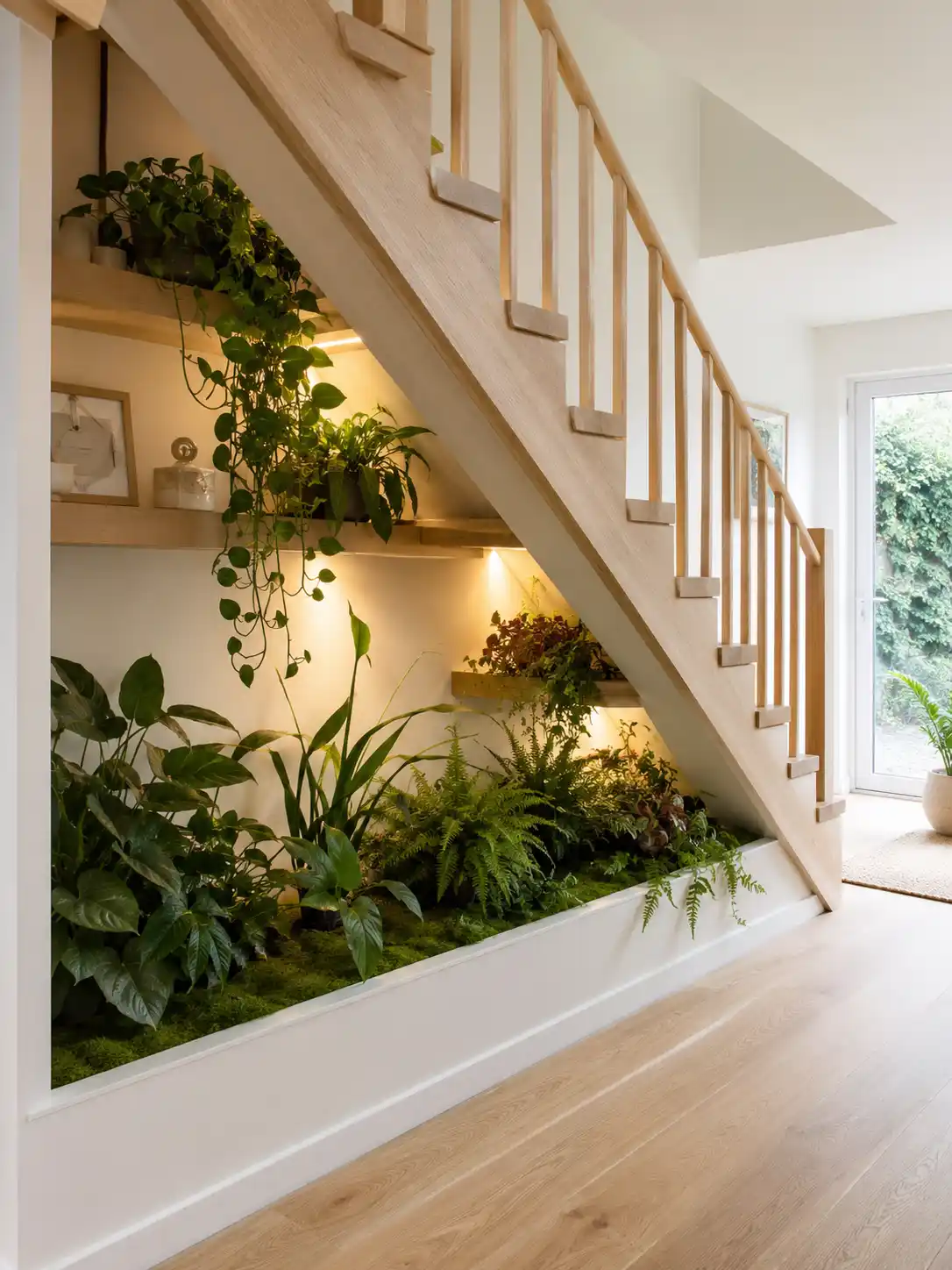
A long white planter fills the entire space beneath this light wood staircase. Peace lilies, philodendrons, pothos, and ferns create layers of different heights, while trailing vines soften the wooden shelves. Warm spotlights brighten the foliage and make the garden feel welcoming from the hallway.
Use a waterproof planter liner, drainage layer, and removable nursery pots rather than planting directly into the structure. A full-spectrum grow light may be needed if the nearby door provides limited daylight. This idea suits homeowners who want lush greenery without adding furniture or loose pots to a narrow passage.
2. Tropical Garden With Misting Feature
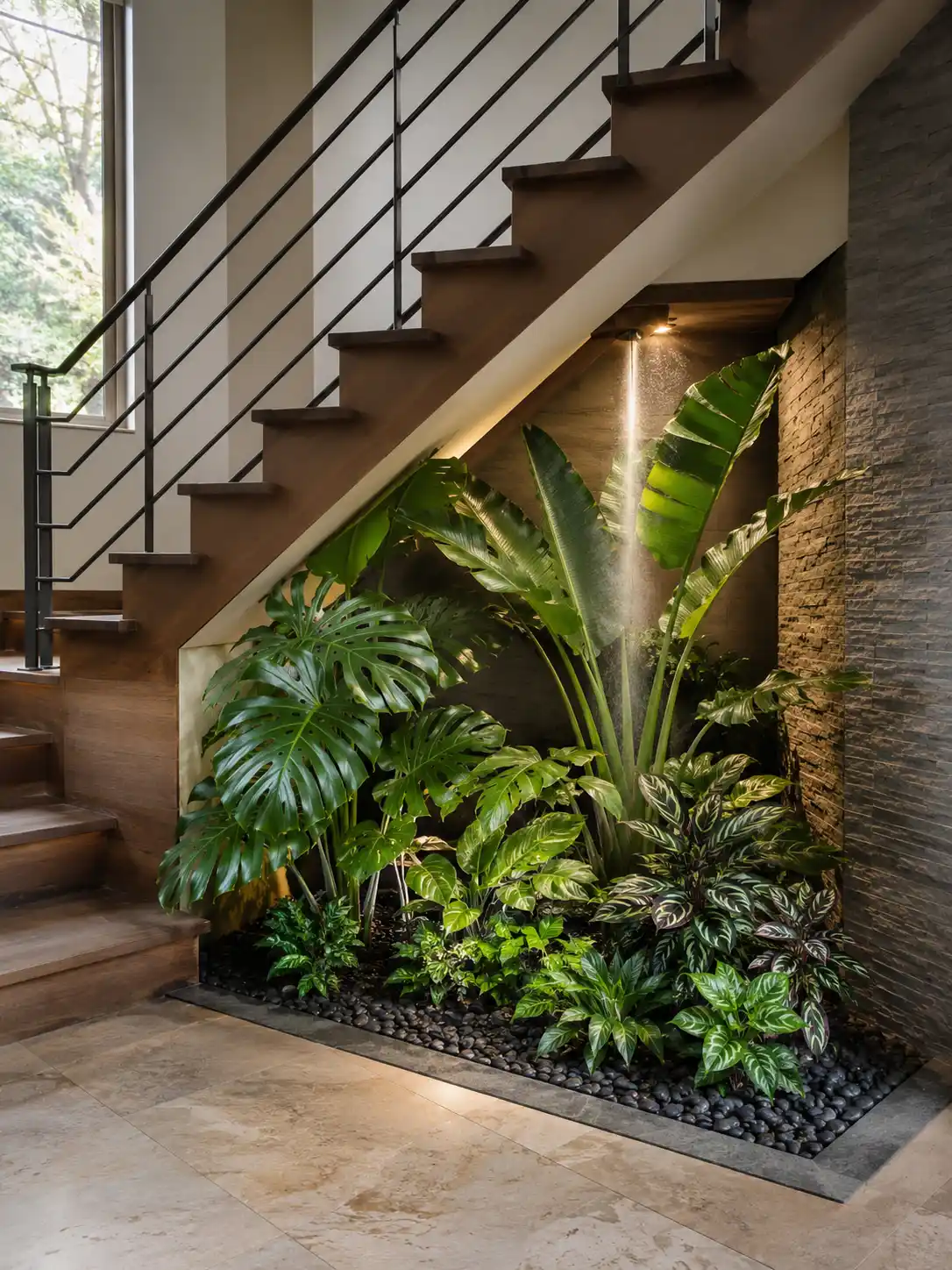
Large monstera and banana-like leaves create a bold tropical display beneath the dark wood staircase. Smaller patterned plants fill the lower level, while black pebbles give the planting bed a neat finish. A fine overhead mist catches the warm light and adds movement against the textured charcoal wall.
This arrangement needs waterproof walls, sealed flooring, proper drainage, and good airflow. Constant misting can encourage fungal problems, so use it briefly rather than continuously. Choose humidity-loving plants such as calathea, philodendron, and bird of paradise. It is best for homeowners prepared to manage moisture and provide strong filtered light.
3. Indoor Zen Garden
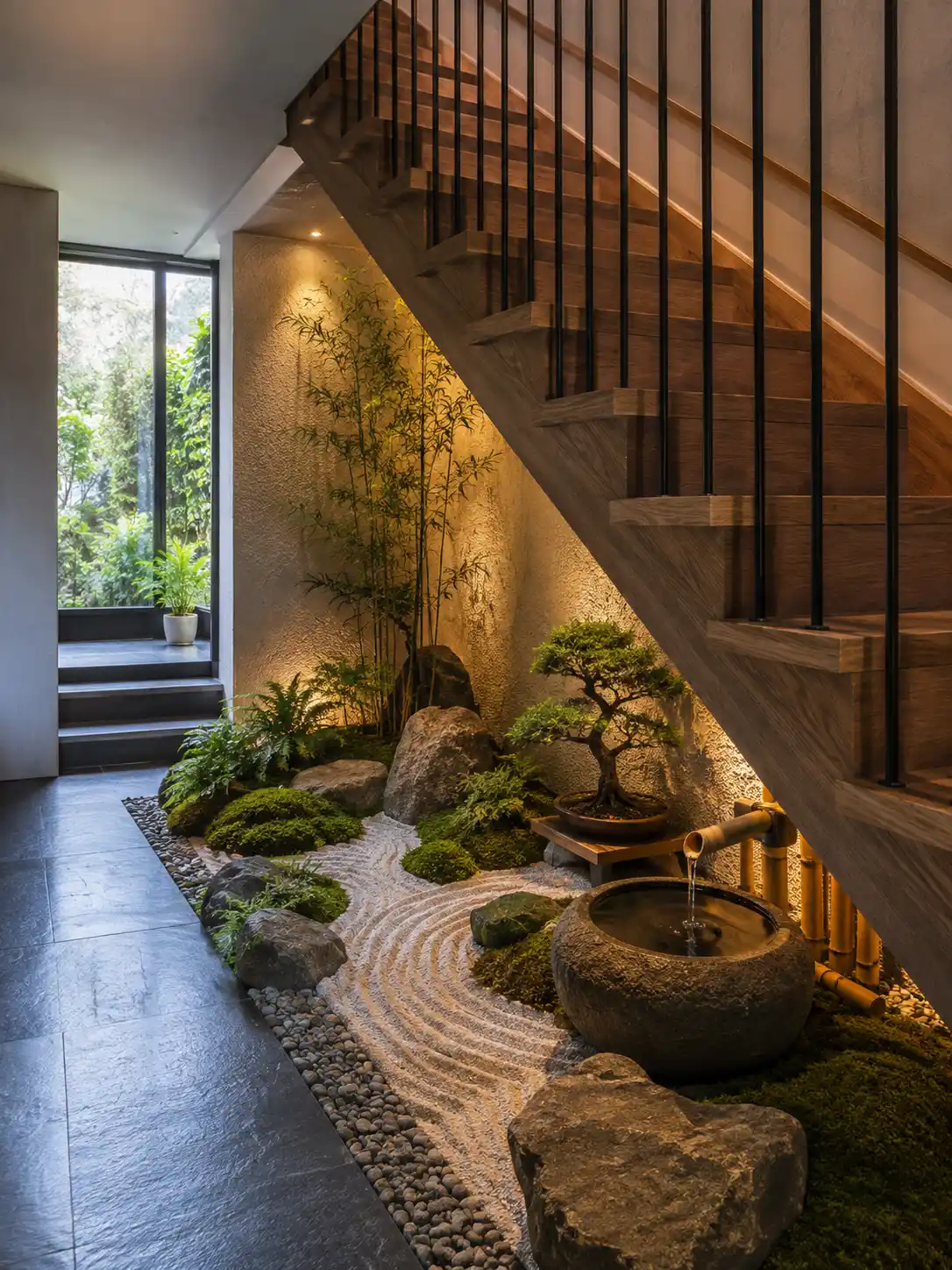
Raked pale gravel, mossy mounds, natural rocks, bamboo, and a carefully shaped bonsai turn this under-stair space into a quiet Zen garden. A stone water bowl and bamboo spout add a gentle focal point, while low amber lighting reveals the textured wall and sculptural planting.
Keep the gravel and planted areas separated with concealed edging. Live moss needs humidity and consistent moisture, while most bonsai trees require stronger light than this position may naturally receive. Install a focused grow light and use a recirculating pump for the water feature. This design is best for homeowners who enjoy regular, detailed maintenance.
For more Entryway ideas:
4. Under-Stair Herb Shelves
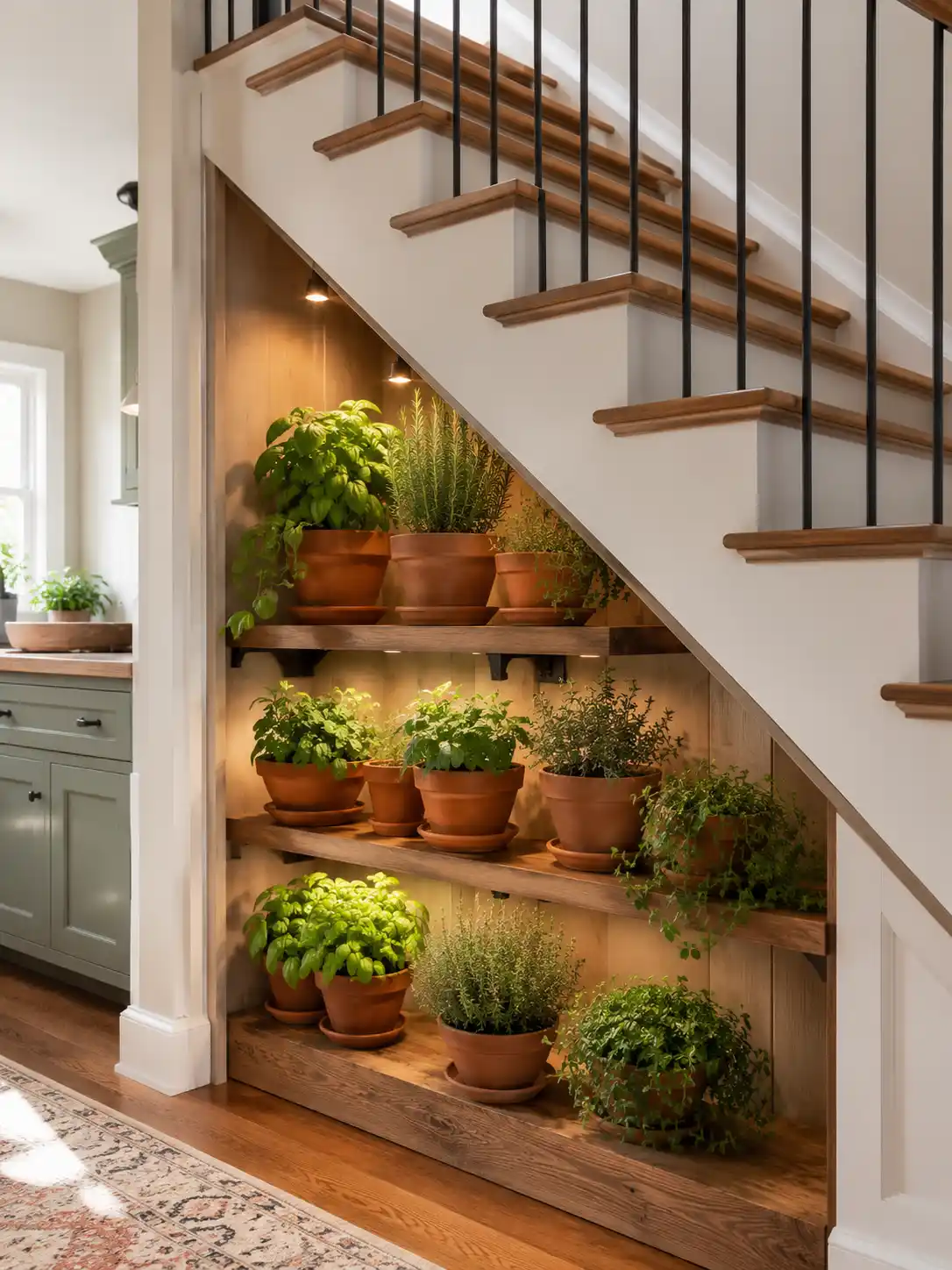
Three sturdy timber shelves hold terracotta pots filled with basil, rosemary, thyme, mint, and other kitchen herbs. The sloping staircase naturally determines the shelf lengths, creating a practical tiered layout beside the kitchen. Warm lights under each shelf give every level a bright, inviting appearance.
Herbs need stronger light than decorative houseplants, so install full-spectrum grow bars and run them for around 12 to 14 hours daily. Place waterproof trays beneath every pot and keep mint in its own container. This productive under stairs garden is ideal for home cooks who want fresh herbs within easy reach.
5. Fern Living Wall
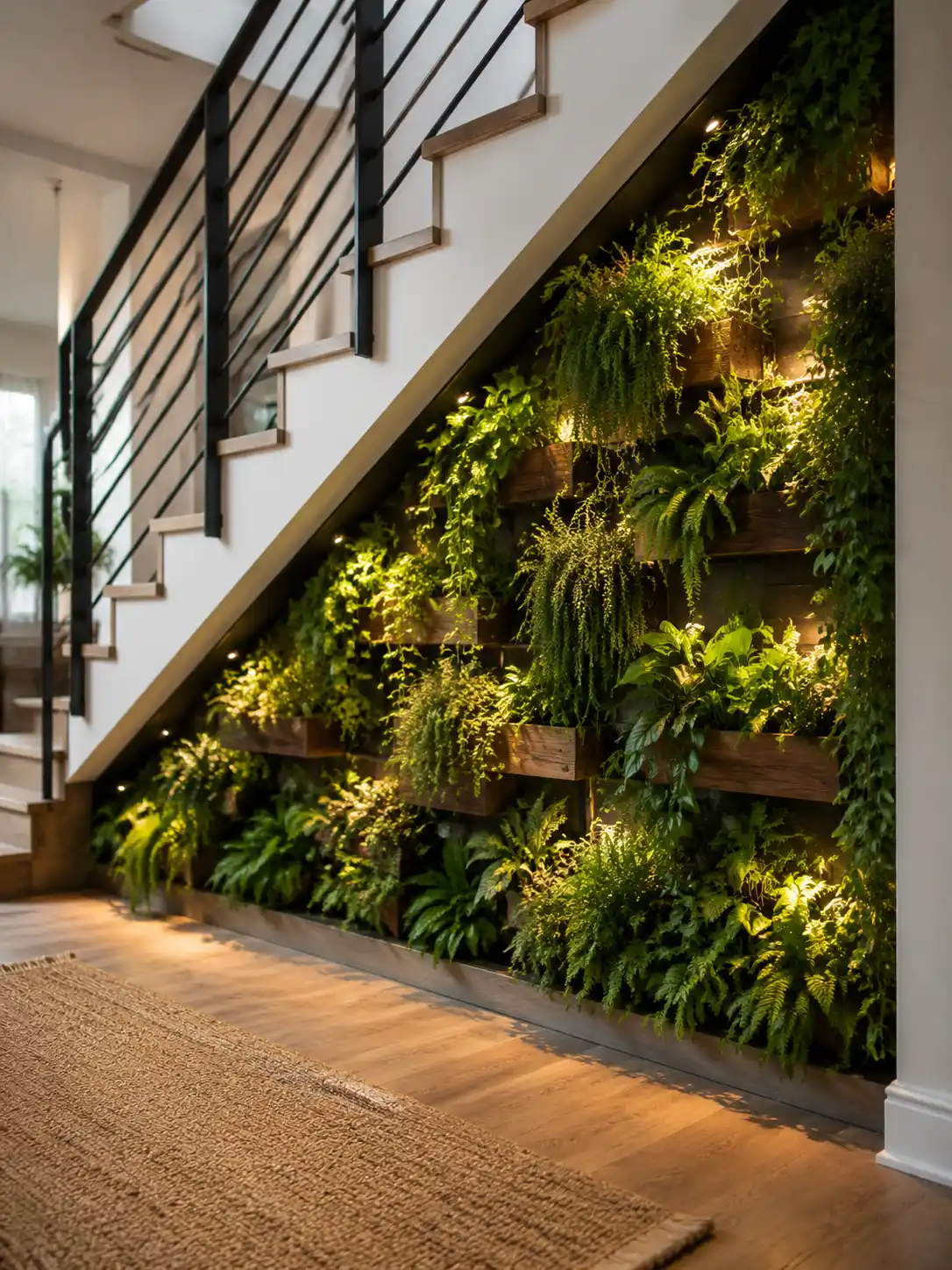
Wooden planting boxes mounted across a dark wall create a dense vertical garden beneath the stairs. Ferns and trailing plants spill over each box, covering much of the background without occupying the walkway. Small spotlights placed under the staircase illuminate separate sections and bring out the many leaf textures.
Use lightweight planters with waterproof liners and secure them to wall studs. A drip-irrigation line makes watering easier, but it should feed into a collection tray or drain. Ferns, pothos, and heartleaf philodendrons suit this shaded display. This idea works best for homeowners who want maximum greenery in a narrow space.
6. Desert Garden Bed
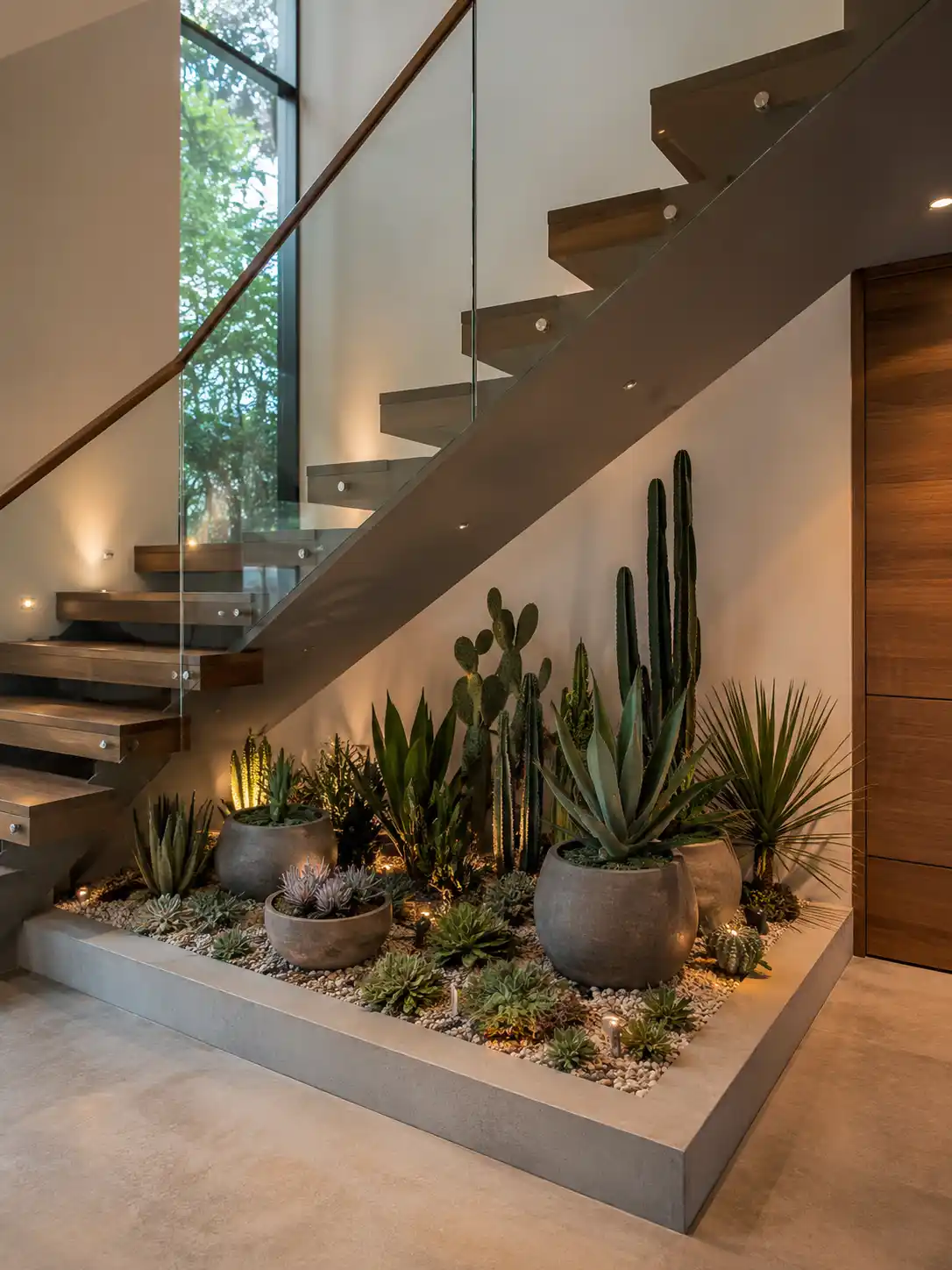
Tall columnar cacti, paddle cacti, agaves, snake plants, and compact succulents form a sculptural desert garden below the floating staircase. Pale gravel and large gray pots suit the clean concrete border, while small uplights cast striking plant shadows across the plain wall.
Cacti need much brighter light than a typical stairwell receives. Position this garden beside a tall window or add powerful full-spectrum grow lights. Use gritty cactus mix, pots with drainage holes, and a waterproof base that allows excess water to escape. This low-watering idea suits busy homeowners, but it is less suitable for homes with small children or curious pets.
7. Enclosed Tropical Terrarium
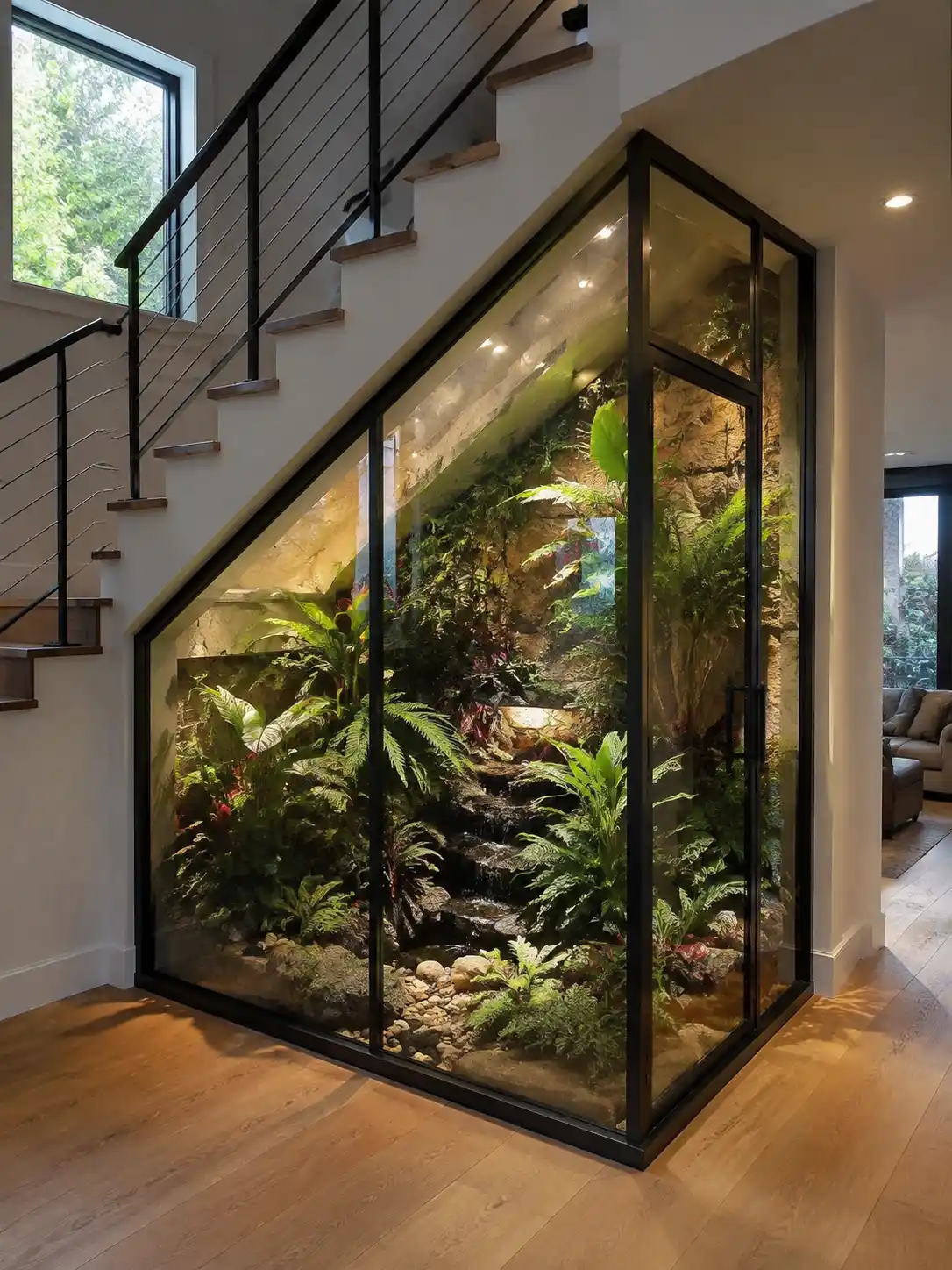
Black-framed glass walls enclose a miniature tropical landscape beneath the staircase. Ferns, broad-leaved plants, rocks, and a small stream create the feeling of a forest display while protecting the surrounding wood floor from splashes. Overhead lights brighten the planting and draw attention to the deep interior.
An enclosed garden requires ventilation, waterproof tanking, drainage, and access for pruning and cleaning. Use humidity-tolerant plants such as ferns, fittonia, and compact philodendrons. A recirculating pump can operate the stream, but include an accessible filter. This ambitious design is best for homeowners working with an experienced indoor landscape installer.
8. Rustic Flower Pot Display
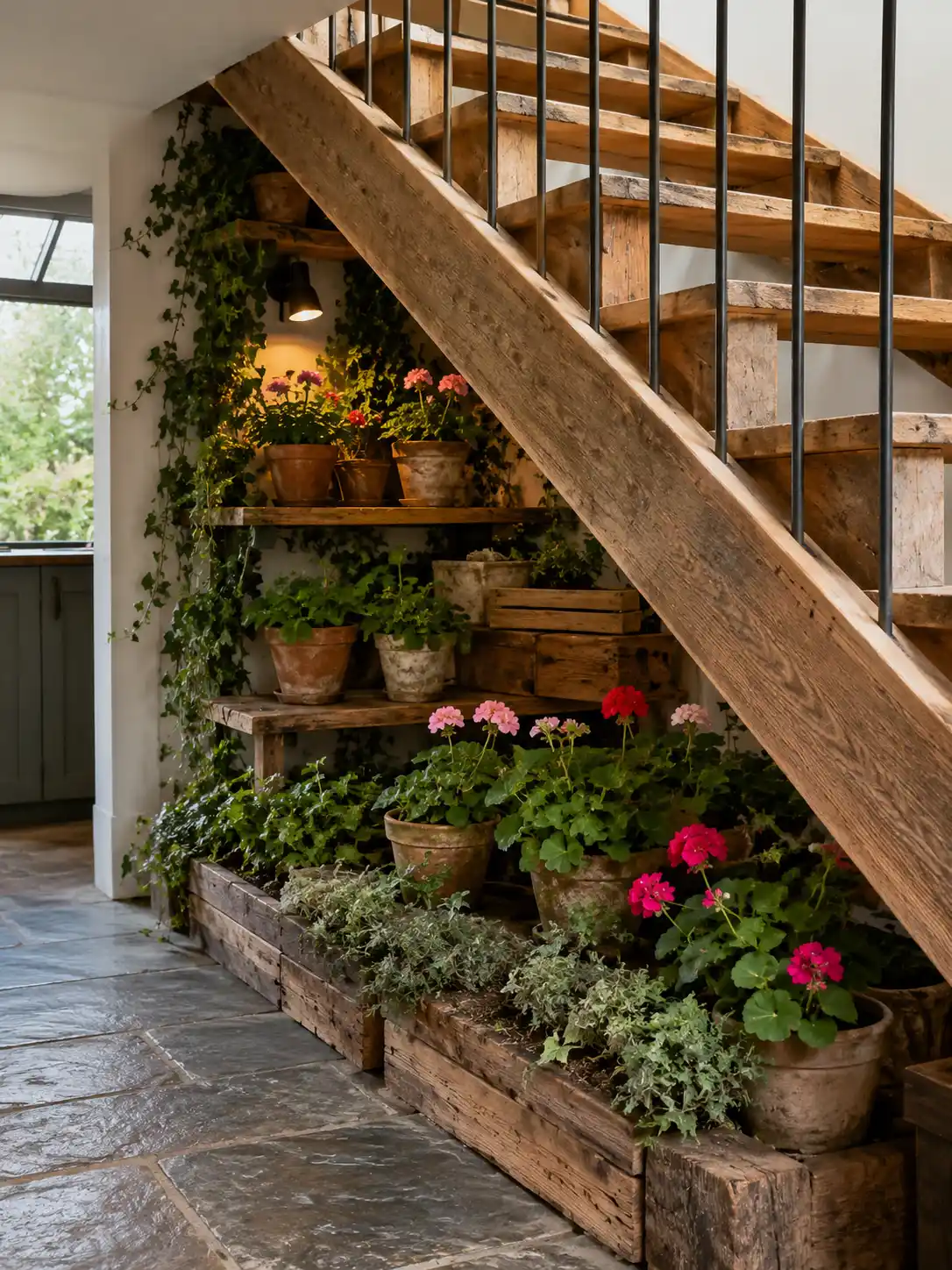
Weathered timber shelves, aged terracotta pots, wooden crates, and bright flowering plants give this under-stair garden a relaxed cottage character. Ivy climbs around the wall edges, while geranium-like flowers introduce cheerful pink and red color. A single black wall light supports the rustic mood.
Most flowering plants need several hours of strong light, so this arrangement works best beside a sunny window. Otherwise, fit full-spectrum grow lights above each shelf. Water pots at a sink or use deep saucers to protect the timber and stone floor. This flexible setup suits renters because the containers can move without altering the staircase.
9. Olive Tree Rock Garden
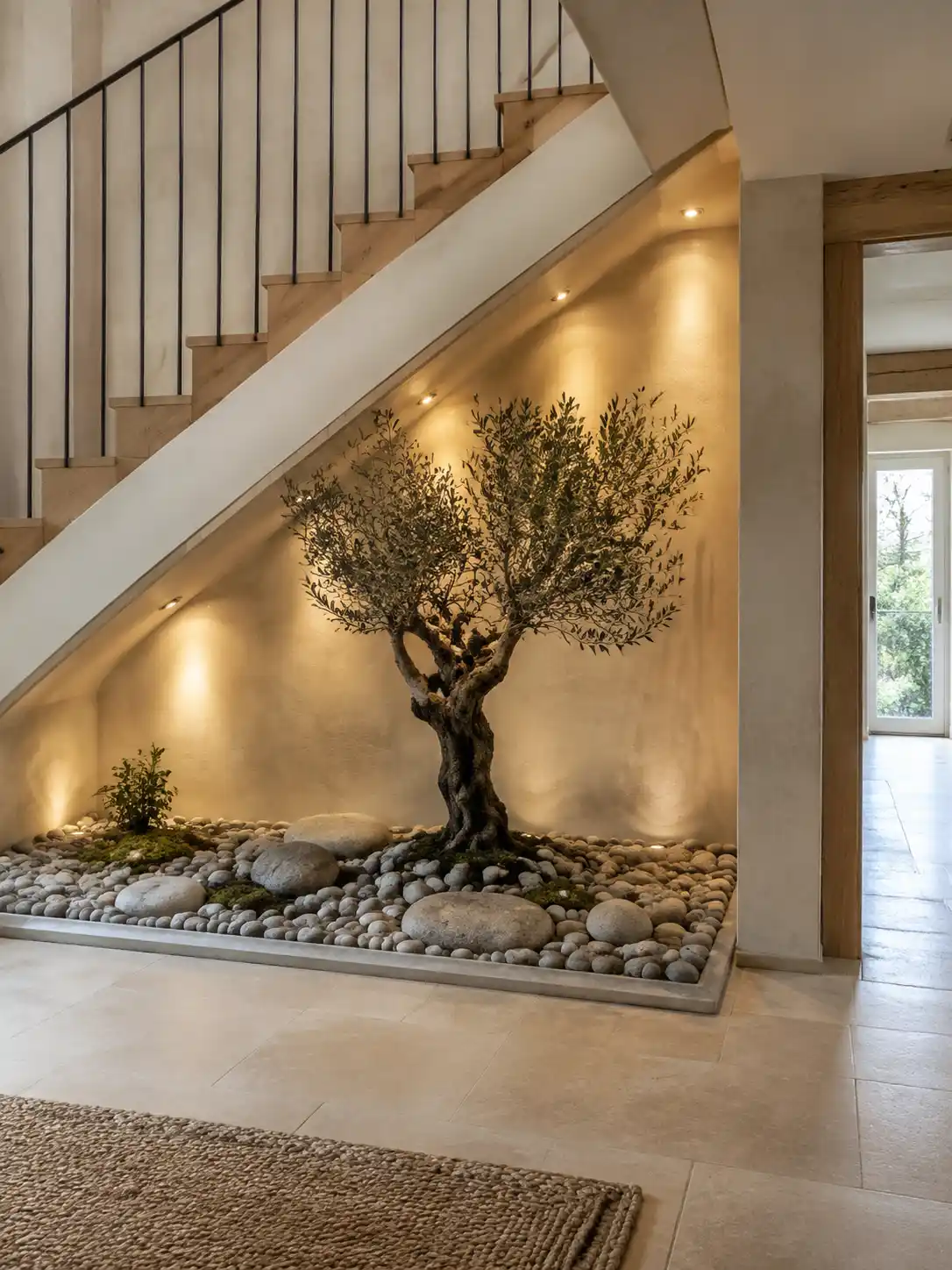
A mature olive tree stands alone in a bed of smooth river stones, with a few smaller plants and mossy patches near its base. The twisted trunk and airy canopy create a sculptural focal point, while recessed lights wash the warm textured wall and cast beautiful shadows.
Olive trees need abundant direct light, making this idea suitable only for a very bright stairwell or a space supported by a powerful grow light. Use a large concealed container with free-draining soil rather than planting into a sealed floor bed. Homeowners should also allow room for pruning, root inspection, and eventual repotting.
10. Colorful Tropical Pot Garden
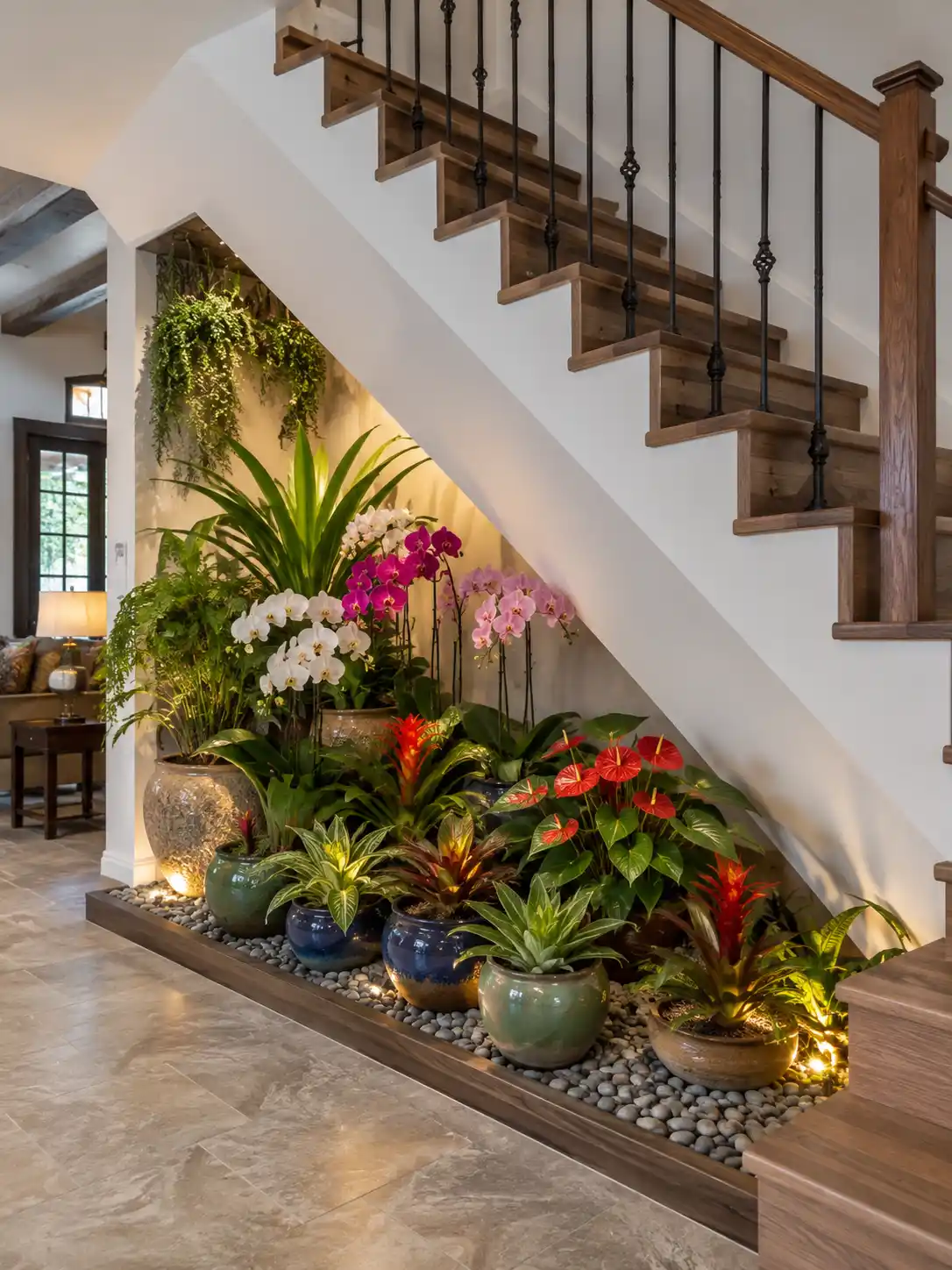
Glossy ceramic pots in green, blue, and neutral finishes hold orchids, bromeliads, anthuriums, ferns, and broad-leaved tropical plants. White, pink, and red flowers create a lively display against the simple staircase, while pebbles conceal gaps between containers and help the collection appear unified.
Keep every plant in a draining nursery pot placed inside its decorative container. Empty collected water after watering to prevent root rot and mosquitoes. Orchids and bromeliads appreciate bright filtered light, while ferns tolerate slightly shadier positions. This garden suits plant collectors who enjoy adjusting individual watering schedules and rotating plants as they flower.
11. Garden Reading Nook
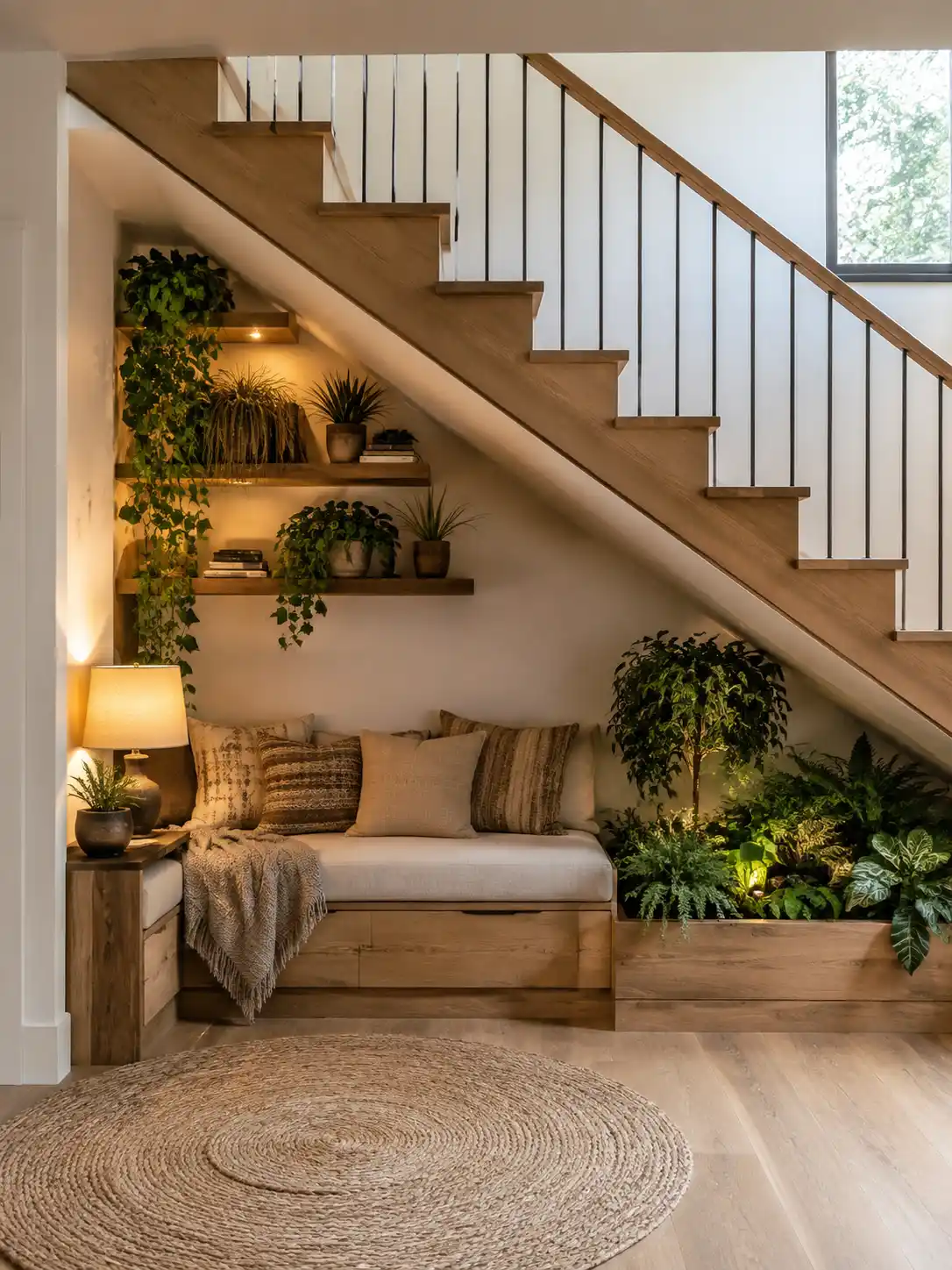
A cushioned bench with built-in drawers turns the under-stair area into a comfortable reading nook surrounded by plants. Trailing greenery fills the floating shelves, while a raised timber planter beside the seat holds ferns and patterned foliage. Warm lamps and natural wood create a calm, lived-in mood.
Keep the planting bed fully lined and separated from the upholstered seat to prevent moisture damage. Select low-light plants such as pothos, ZZ plants, and bird’s nest ferns, or add discreet grow lights beneath the shelves. This multifunctional idea is excellent for small homes that need seating, storage, and greenery in one compact area.
12. Indoor Hydroponic Garden
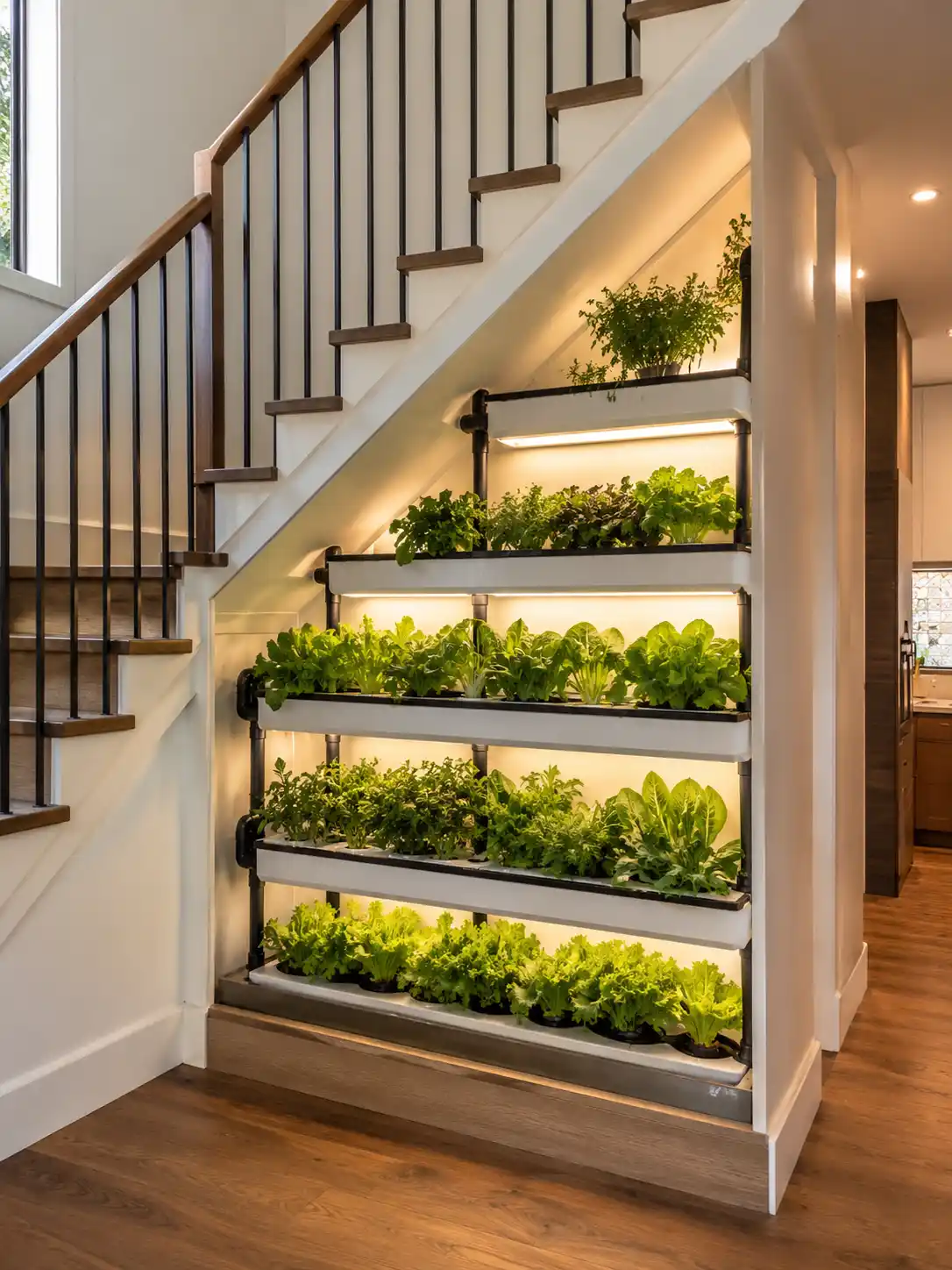
Five narrow growing channels make productive use of the staircase’s triangular wall. Rows of leafy greens sit beneath bright grow bars, creating a compact indoor farm without using soil. The open tiered layout keeps every crop visible and makes harvesting easy from the hallway.
Use a food-safe hydroponic system with a covered reservoir, timer, circulation pump, and leak detector. Waterproof the floor and leave enough clearance to inspect tubing and clean each channel. Lettuce, spinach, basil, and other shallow-rooted crops are sensible choices. This under stairs garden idea is best for homeowners who value fresh produce more than decorative planting.
13. Woodland Garden
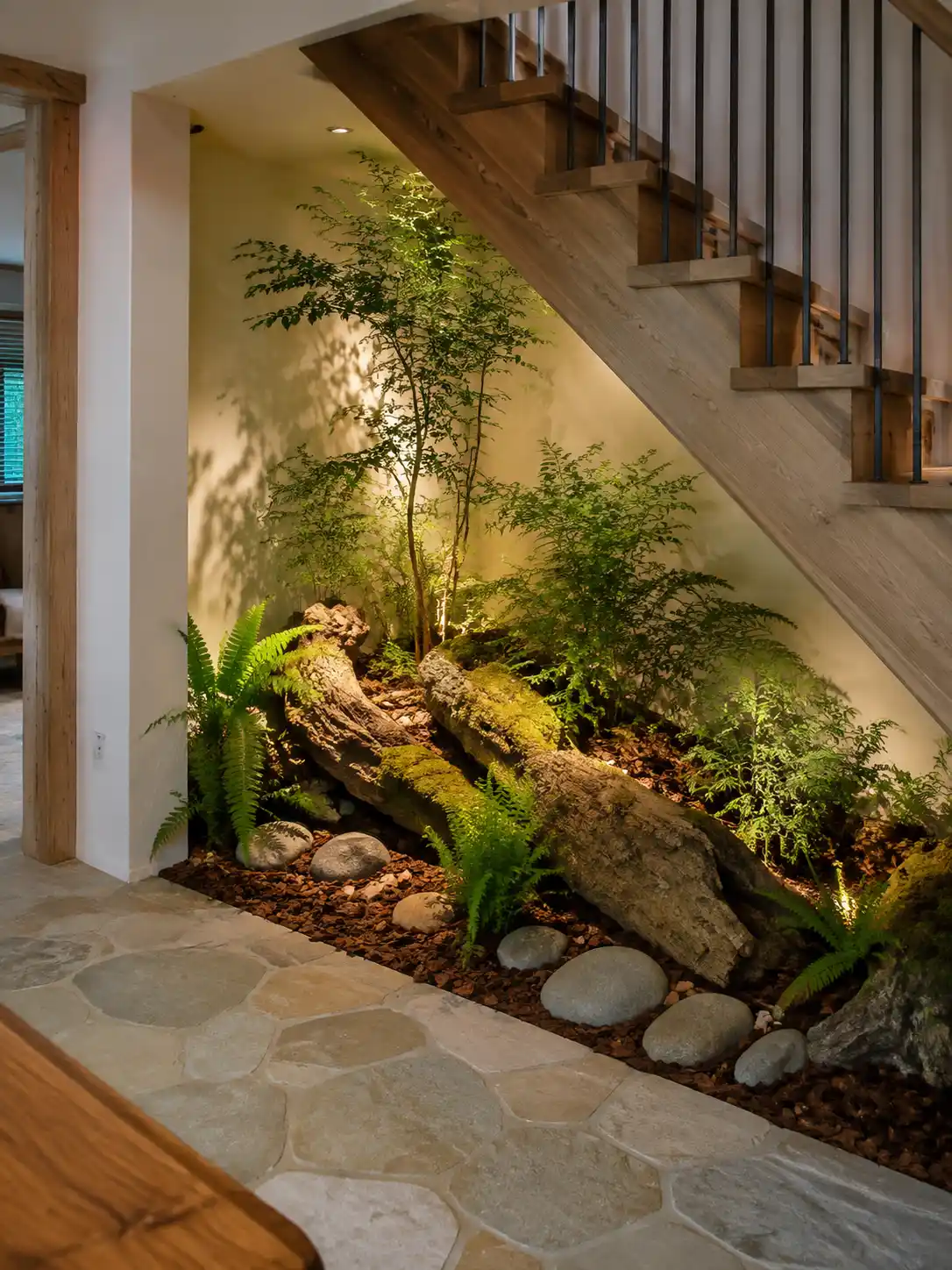
Ferns, delicate woodland plants, moss-covered logs, bark mulch, and rounded stones create the feeling of a shaded forest floor. Taller plants rise toward the highest section of the staircase, while smaller ferns occupy the low edge. Focused uplighting produces layered shadows and draws attention to the weathered timber.
Line the bed carefully and include an accessible drainage outlet before adding soil or mulch. Woodland plants usually prefer even moisture, cooler conditions, and indirect light. Check natural logs for pests before bringing them indoors. This garden suits homeowners who enjoy a natural appearance and do not mind trimming, misting, and clearing fallen leaves.
14. Waterfall Garden
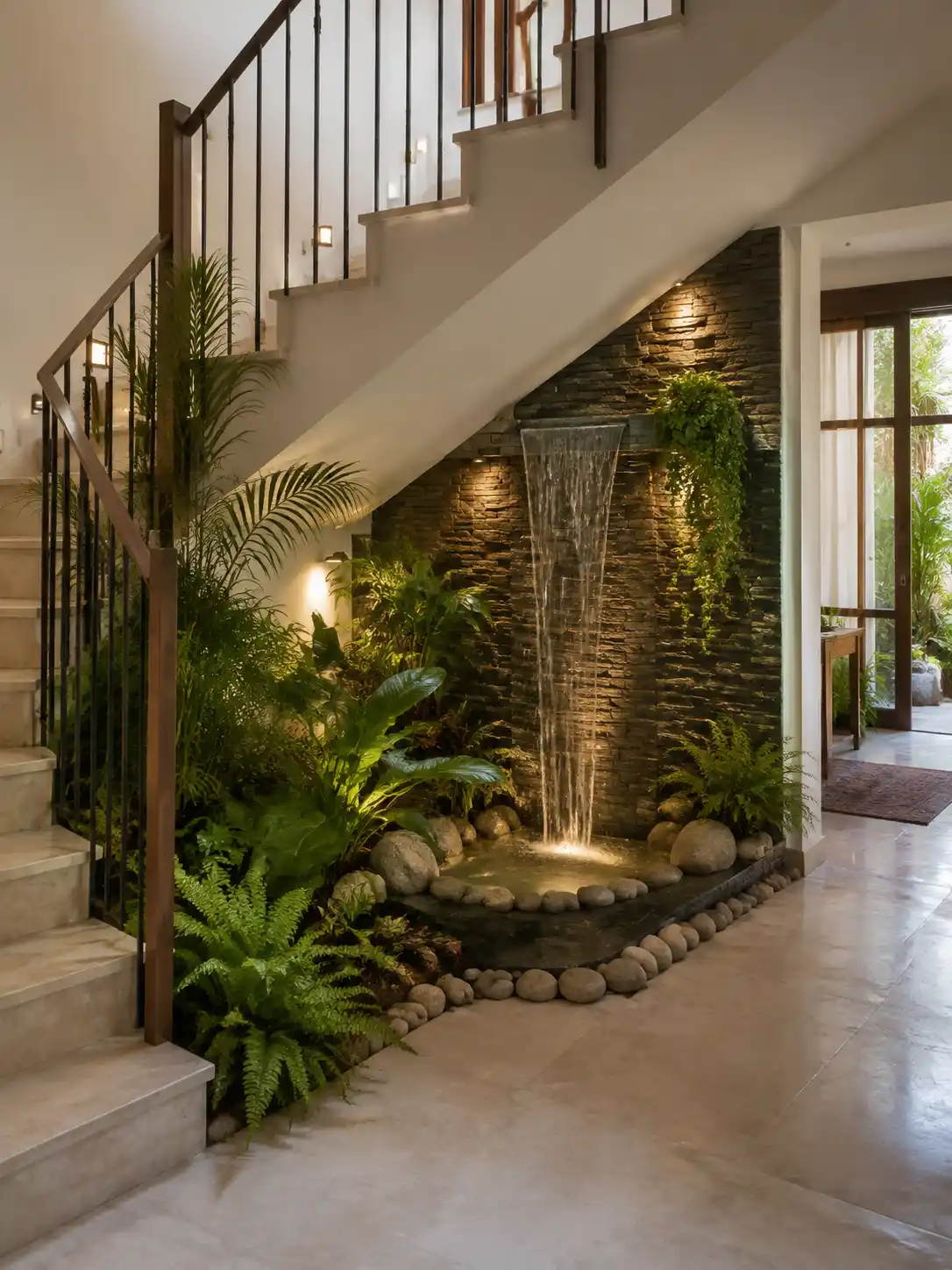
A narrow sheet of water falls down a dark stacked-stone wall into a shallow pond edged with rounded rocks. Ferns, palms, and broad foliage surround the feature, making the staircase feel connected to a tropical courtyard. Warm wall lights reveal the stone texture and add a soft glow to the moving water.
Professional waterproofing is essential because leaks can affect the staircase, walls, and nearby flooring. Use a recirculating pump, accessible filter, overflow drain, and splash-resistant lighting. Regularly clean mineral deposits and check humidity levels. This dramatic under stairs garden is best for homeowners willing to handle higher installation and maintenance costs.
15. Snake Plant Pebble Garden
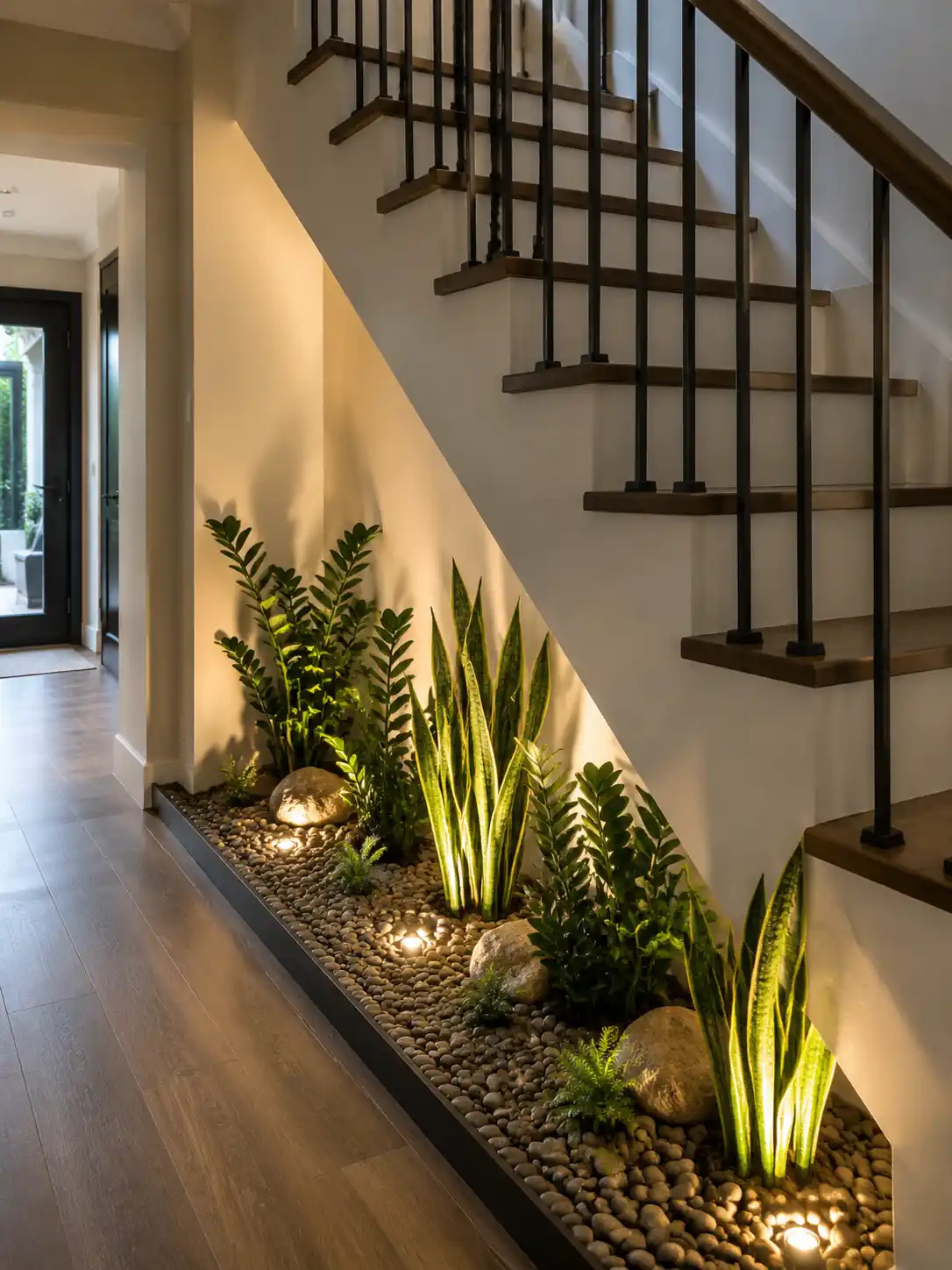
Rows of snake plants and ZZ plants grow through a long bed of smooth pebbles below the staircase. Their upright forms follow the changing ceiling height, while scattered boulders and recessed uplights create a clean, architectural display. The limited plant palette keeps the narrow hallway from feeling crowded.
Both plants tolerate lower light, but a discreet grow light will support healthier growth in a dark corridor. Keep them in separate draining pots hidden beneath the stones rather than filling the entire bed with soil. Water sparingly and prevent water from collecting around the roots. This idea suits beginners and busy homeowners seeking easier maintenance.
16. Enclosed Seedling Room
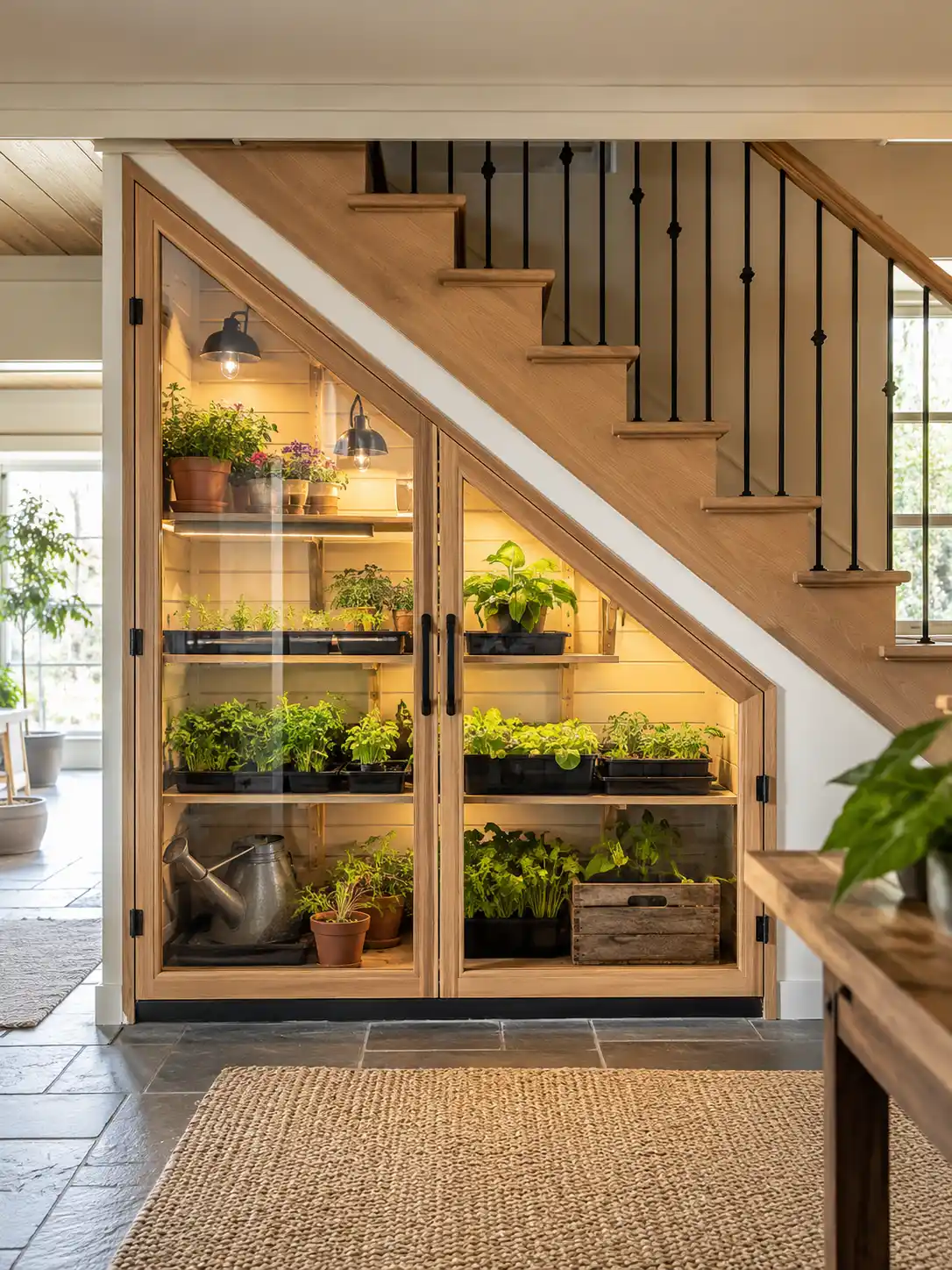
Glass doors transform the unused under-stair cavity into a tidy indoor propagation room. Wooden shelves hold trays of seedlings, herbs, and small pots beneath dedicated grow lights. Watering cans and garden supplies sit on the lower shelf, keeping everything needed for plant care in one protected place.
Fit ventilation fans or adjustable vents because enclosed grow lights can quickly raise heat and humidity. Use waterproof trays, washable wall surfaces, timers, and a floor leak sensor. Leave enough clearance between the lights and plant tops to prevent scorching. This design is ideal for serious gardeners who start seeds, propagate cuttings, or grow herbs throughout the year.
17. Mediterranean Lemon Garden
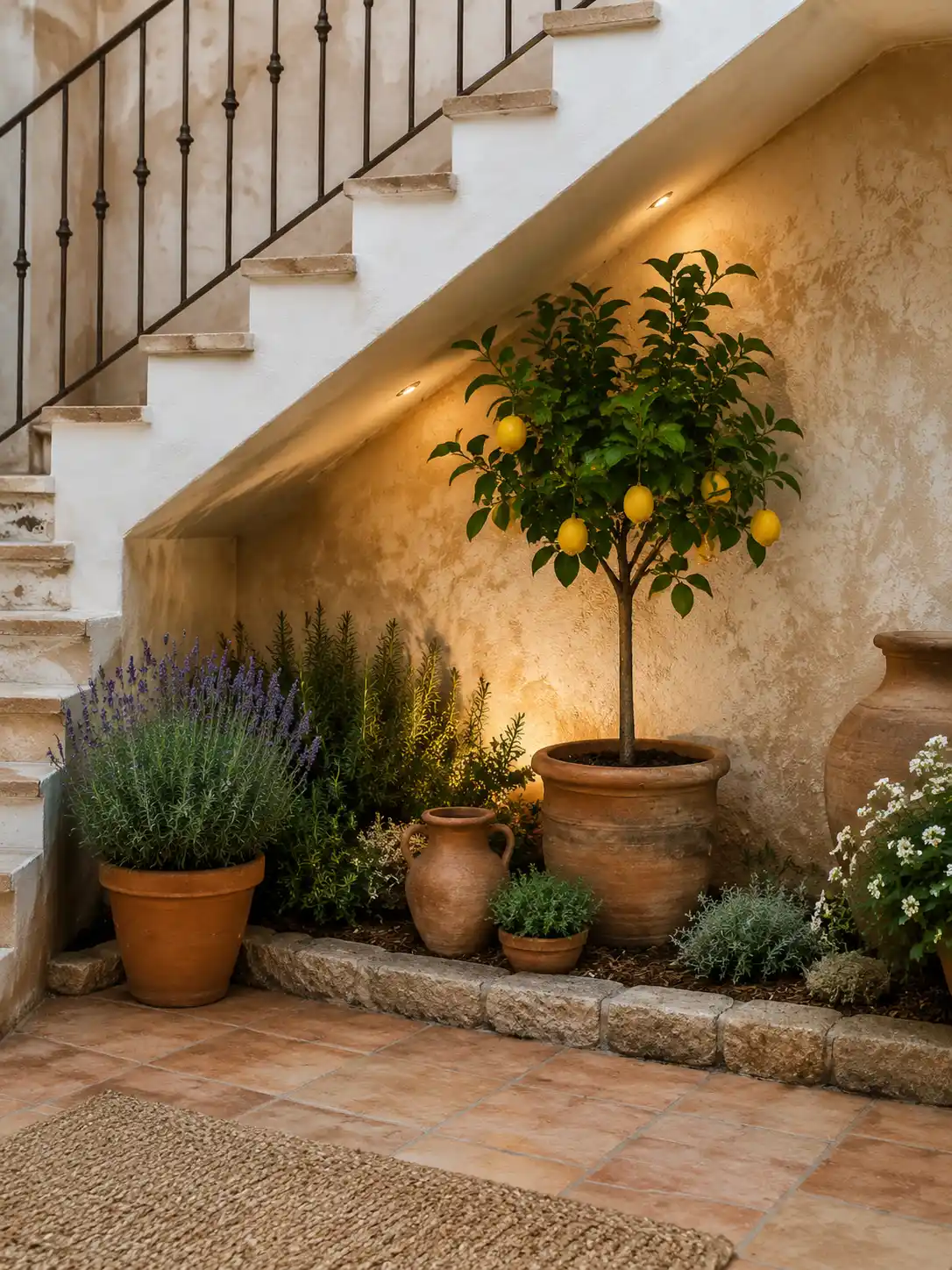
A potted lemon tree anchors this warm Mediterranean-style garden beneath the staircase. Lavender, rosemary, small flowering plants, terracotta pots, clay vessels, and a rough stone border create a sun-baked courtyard feeling. Soft spotlights bring out the textured plaster wall and yellow fruit.
Citrus, lavender, and rosemary require strong light, so place this display near a sunny window or install high-output grow lights. Use free-draining soil and never leave terracotta pots standing in water. A wheeled base will make the lemon tree easier to rotate and move. This idea is best for bright homes and attentive gardeners.
FAQs
What plants grow well under stairs?
Pothos, ZZ plants, snake plants, peace lilies, philodendrons, and many ferns handle indoor conditions well. The right choice depends on available light, humidity, and space. Dark stairwells will still need grow lights for reliable long-term growth.
Do I need a grow light for an under-stair garden?
Most under-stair areas receive limited natural light, so a grow light is usually helpful. Use full-spectrum LEDs on a timer and position them according to the manufacturer’s guidance. Flowering plants, herbs, succulents, and citrus need much stronger light than low-light foliage plants.
How do I waterproof an indoor garden?
Use a continuous waterproof membrane, sealed joints, drainage outlet, and removable drip trays. Raised beds and water features should be professionally tanked. Adding a leak sensor provides extra protection, especially near timber floors, electrical wiring, and enclosed walls.
Can renters create an under-stair garden?
Yes. Use freestanding shelves, plant stands, removable grow lights, and pots with deep saucers. Avoid built-in beds, wall-mounted irrigation, or permanent electrical work. A movable container display can still fill the triangular space without damaging the property.
How can I prevent mold and pests?
Avoid overwatering, remove dead leaves quickly, and provide gentle airflow. Inspect new plants before placing them indoors and keep foliage from remaining wet overnight. Clean saucers regularly, use sterile potting mix, and treat pest problems before they spread through the entire garden.