20 Snake Plant Varieties Worth Growing at Home
Snake plants are often pictured as tall green leaves with yellow edges, but there are many more shapes and colors to choose from.
Some varieties grow into compact rosettes for desks and shelves, while others produce cylindrical spears, wide paddle-shaped leaves, or dark foliage with silver markings.
Most snake plant varieties are easy to manage and do not need frequent watering. This guide covers 20 options worth growing at home, with quick details to help you choose one that suits your room, plant stand, or indoor collection.
1. Classic Green Snake Plant
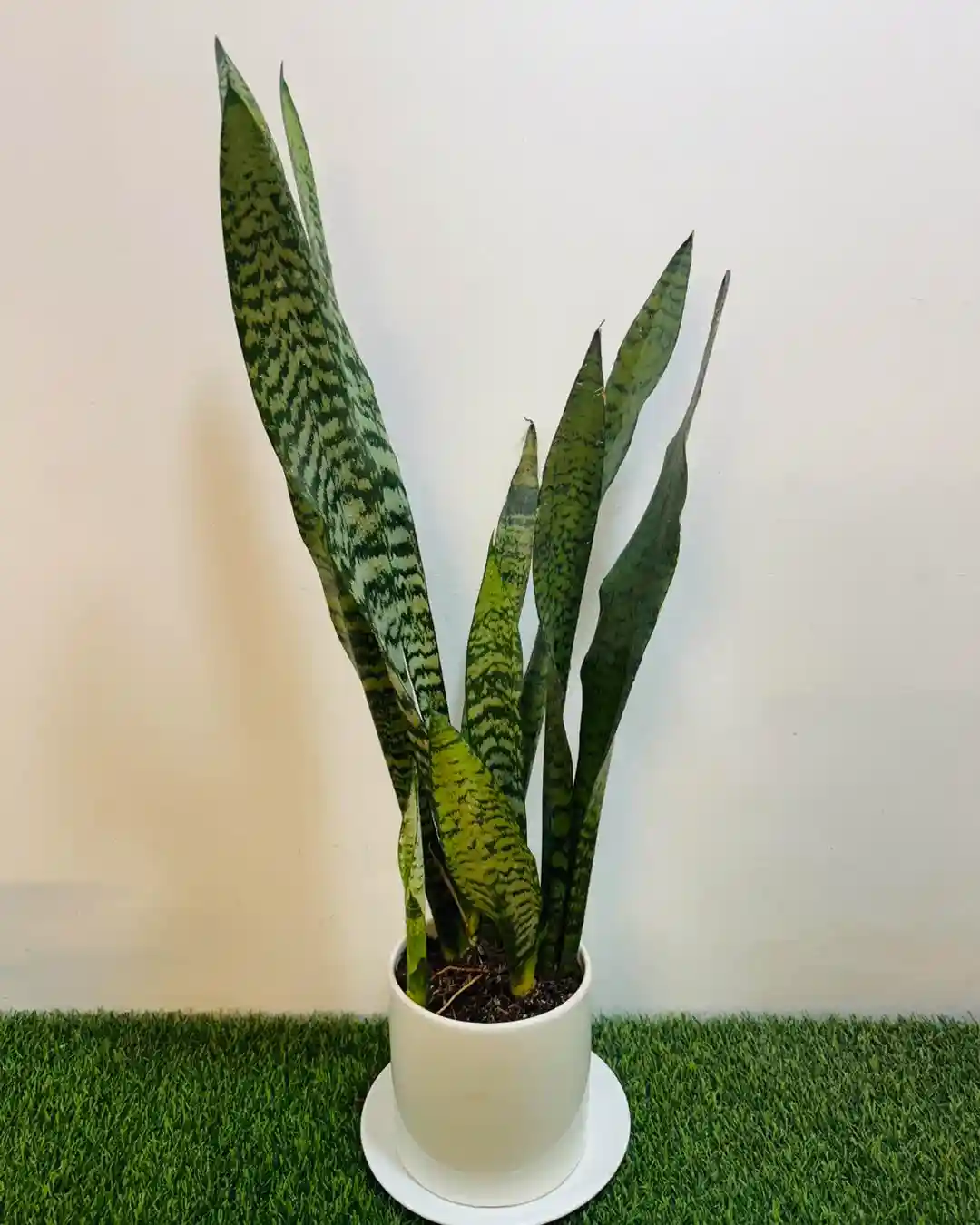
The classic green snake plant has tall, sword-shaped leaves marked with pale horizontal bands. It has a clean upright shape that fits easily beside sofas, cabinets, and empty room corners. This variety is forgiving when watering is occasionally missed, making it one of the safest choices for beginners. It can tolerate lower light, although brighter indirect light usually supports stronger and faster growth.
- Care level: Easy
- Light: Low to bright indirect light
- Growth habit: Tall and upright
- Best feature: Green leaves with soft horizontal markings
- Best for: Beginners and empty floor corners
- Helpful tip: Wait until the soil has dried well before watering again.
2. Laurentii Snake Plant
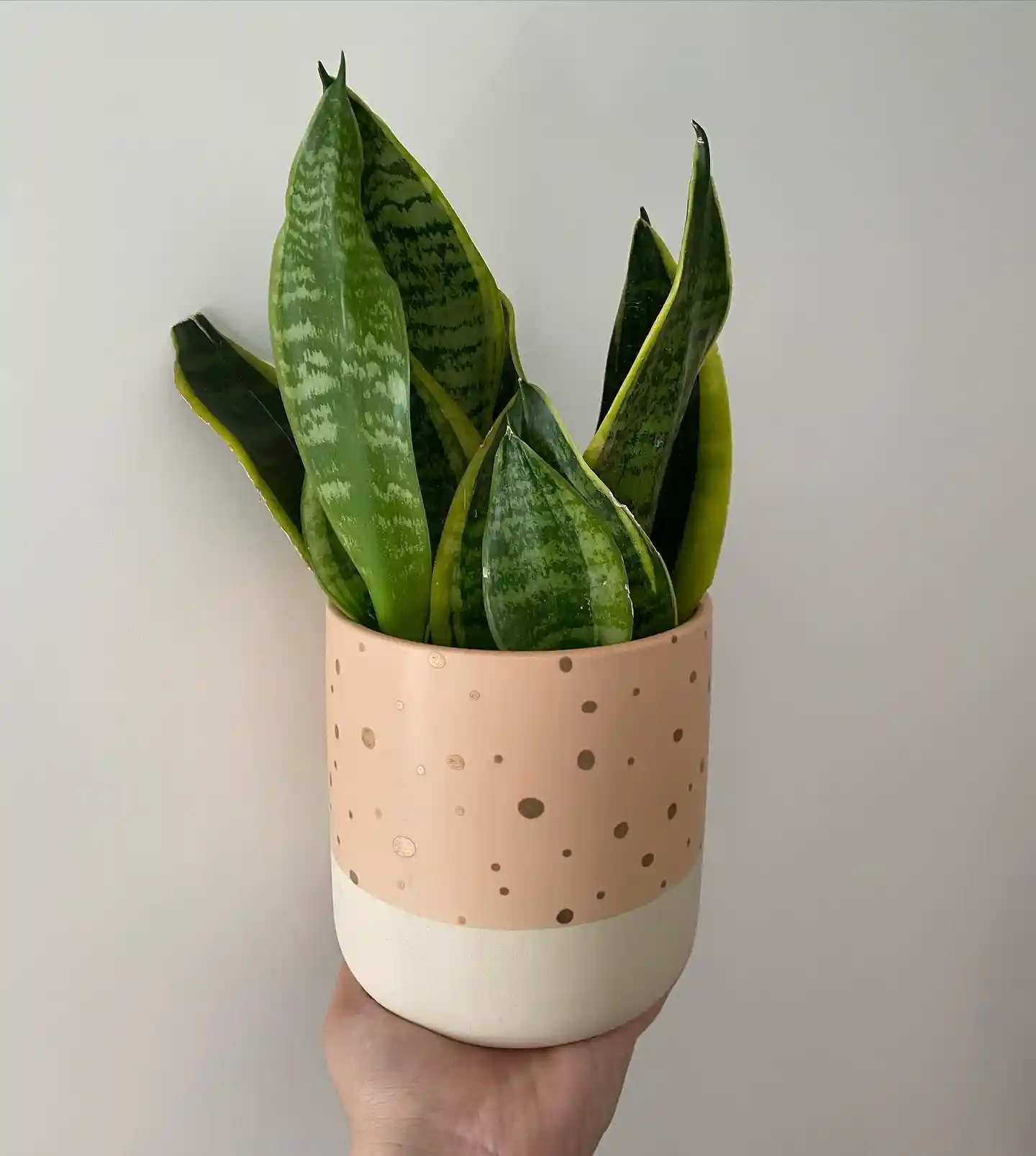
Laurentii is one of the most recognizable snake plant varieties. Its upright green leaves have gray-green banding and wide yellow edges that brighten the entire plant. The bold border makes it a good choice for plain rooms that need a little more color without adding flowers. It grows slowly indoors and looks especially neat in a simple ceramic or terracotta pot.
- Care level: Easy
- Light: Medium to bright indirect light
- Growth habit: Tall and upright
- Best feature: Bright yellow leaf margins
- Best for: Living rooms and office corners
- Helpful tip: Give it brighter light to help the yellow edges stay clear.
3. Moonshine Snake Plant
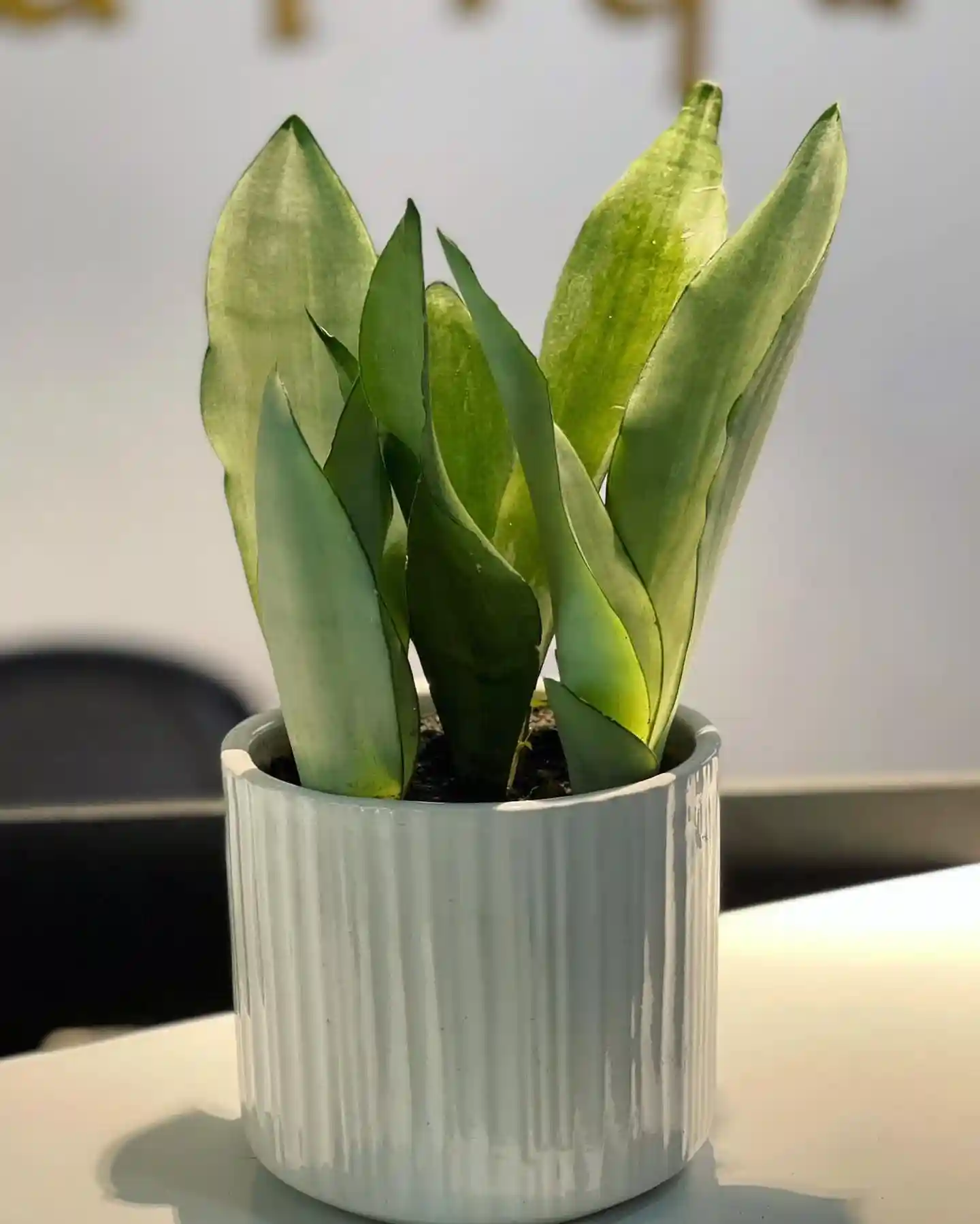
Moonshine has pale silver-green leaves that look softer and calmer than the darker foliage found on most snake plants. New growth often appears almost silvery before becoming slightly greener with age. Its clean coloring works well in modern, neutral, and minimalist rooms. This variety can handle average household conditions, but brighter filtered light helps preserve its light leaf color.
- Care level: Easy
- Light: Bright, indirect light
- Growth habit: Upright rosette
- Best feature: Smooth silver-green leaves
- Best for: Modern and neutral interiors
- Helpful tip: Avoid placing it in a very dark corner, where the leaves may become greener.
More Houseplants varieties:-
4. Hahnii Snake Plant
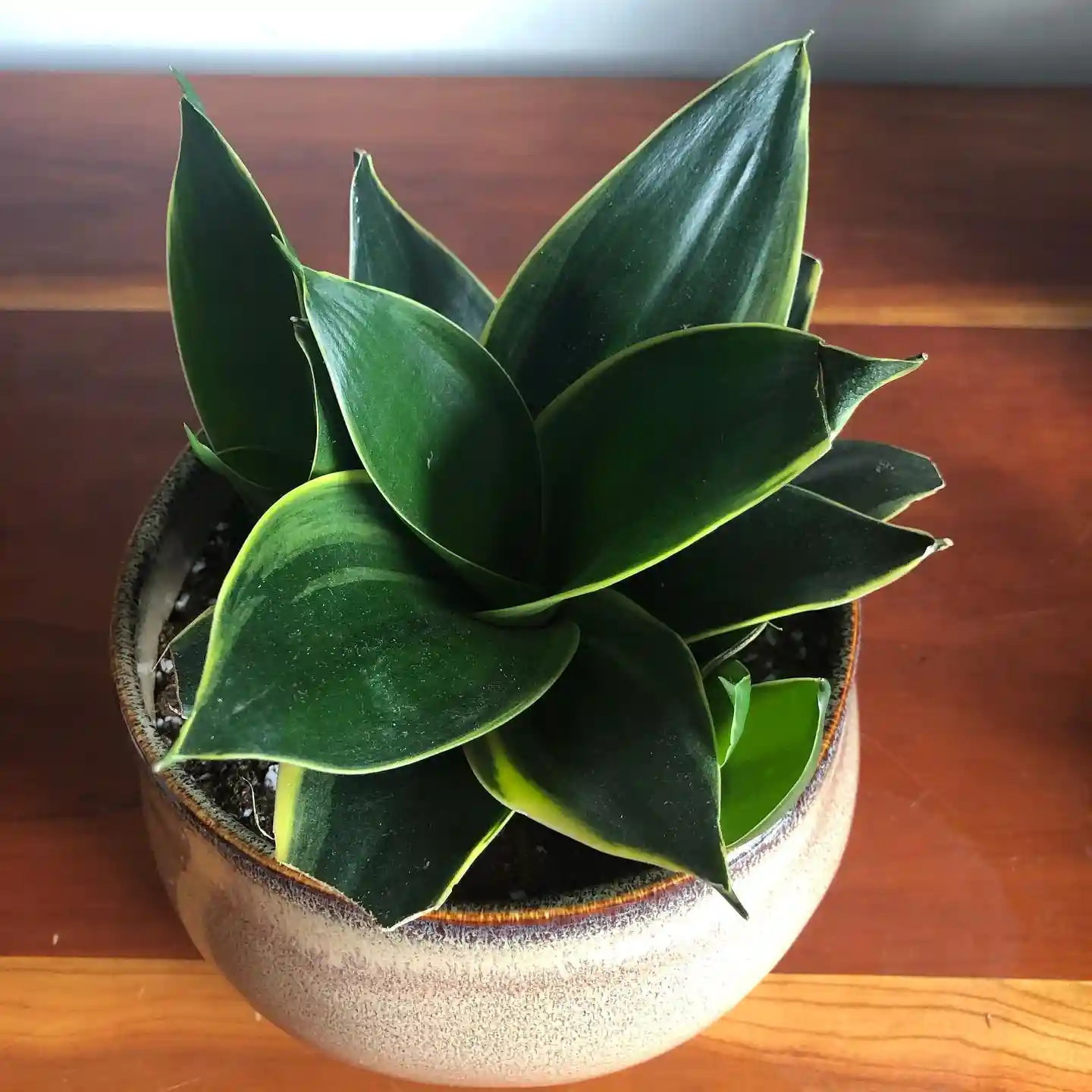
Hahnii, often called the bird’s nest snake plant, forms a low rosette instead of producing tall vertical leaves. Its short green foliage curls outward from the center, creating a shape that resembles an open nest. The compact size makes it easy to place on desks, bookshelves, window ledges, and bathroom counters. It has the same drought-tolerant nature as taller snake plants but takes up much less room.
- Care level: Easy
- Light: Medium to bright indirect light
- Growth habit: Compact rosette
- Best feature: Small bird’s nest shape
- Best for: Desks, shelves, and small rooms
- Helpful tip: Keep water from collecting in the center of the rosette.
5. Golden Hahnii Snake Plant
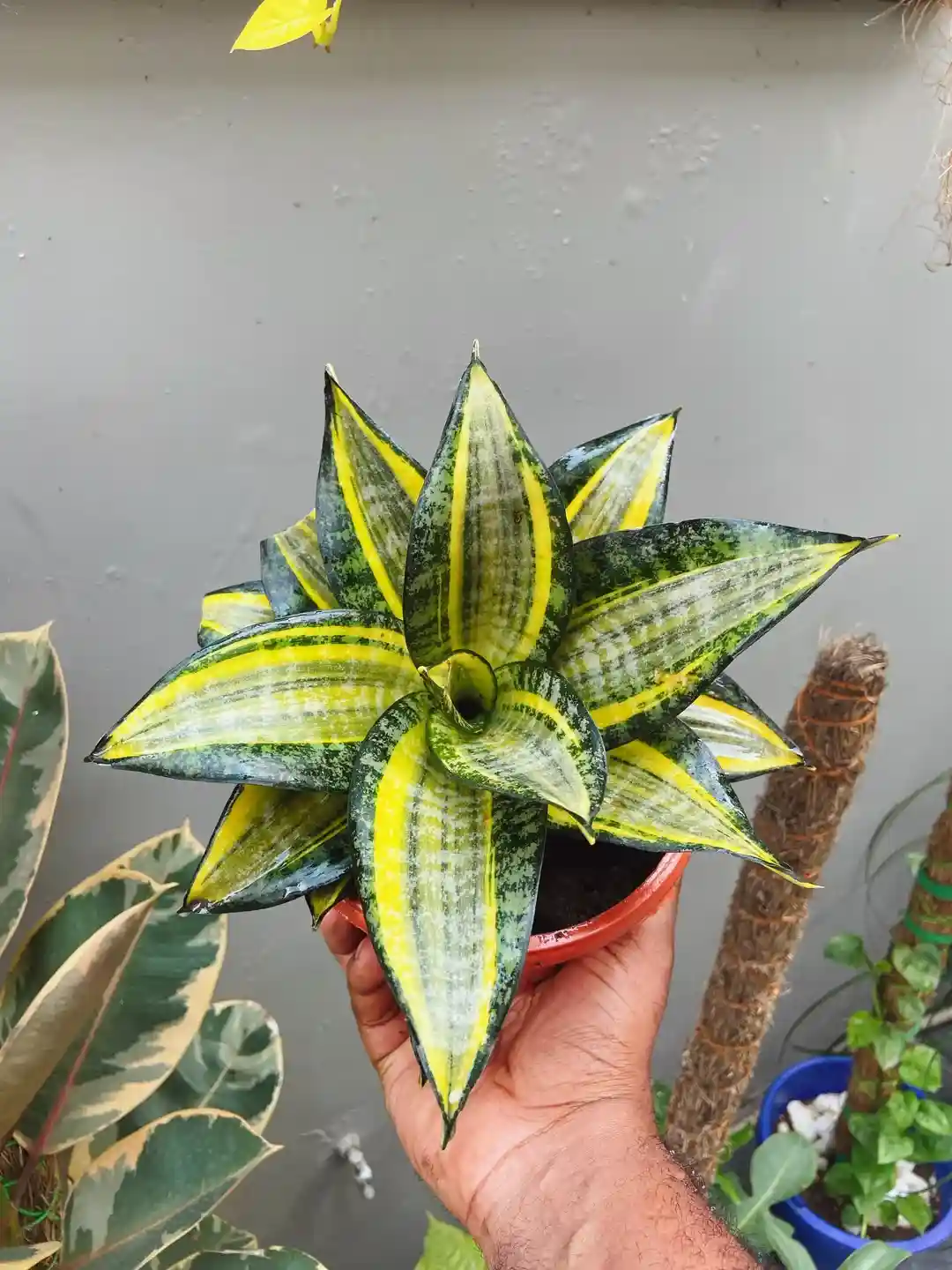
Golden Hahnii has the compact shape of the regular Hahnii but adds bright yellow or cream coloring around the leaves. The green centers and golden edges create a cheerful plant that works well in small decorative pots. It stays low and slowly forms new rosettes around the parent plant. Because it contains more variegation, it looks its best when placed near bright, filtered light.
- Care level: Easy
- Light: Bright, indirect light
- Growth habit: Dwarf rosette
- Best feature: Green leaves with golden edges
- Best for: Small tables and bright shelves
- Helpful tip: Divide crowded pups when the pot becomes tightly packed.
6. Bantel’s Sensation Snake Plant
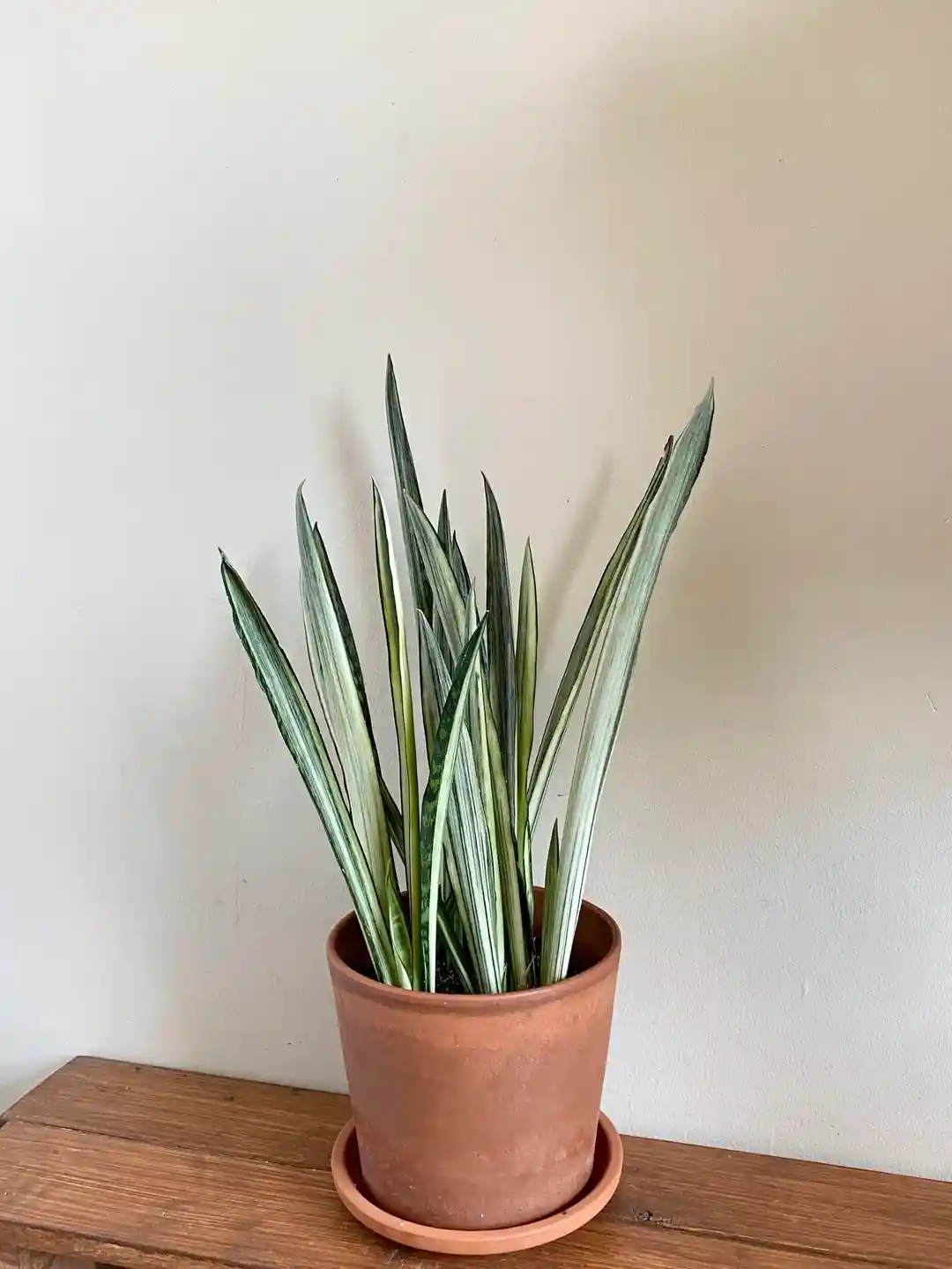
Bantel’s Sensation has narrow upright leaves marked with fine white and green vertical stripes. Its slender foliage creates a lighter, more delicate look than the broad leaves of a standard snake plant. The striped pattern works well in simple rooms where a tall plant is needed without too much visual weight. It grows slowly and may need brighter light than darker green varieties.
- Care level: Easy to moderate
- Light: Bright, indirect light
- Growth habit: Narrow and upright
- Best feature: Fine white vertical stripes
- Best for: Narrow corners and modern interiors
- Helpful tip: Wipe the thin leaves carefully so they do not bend or split.
7. Black Coral Snake Plant
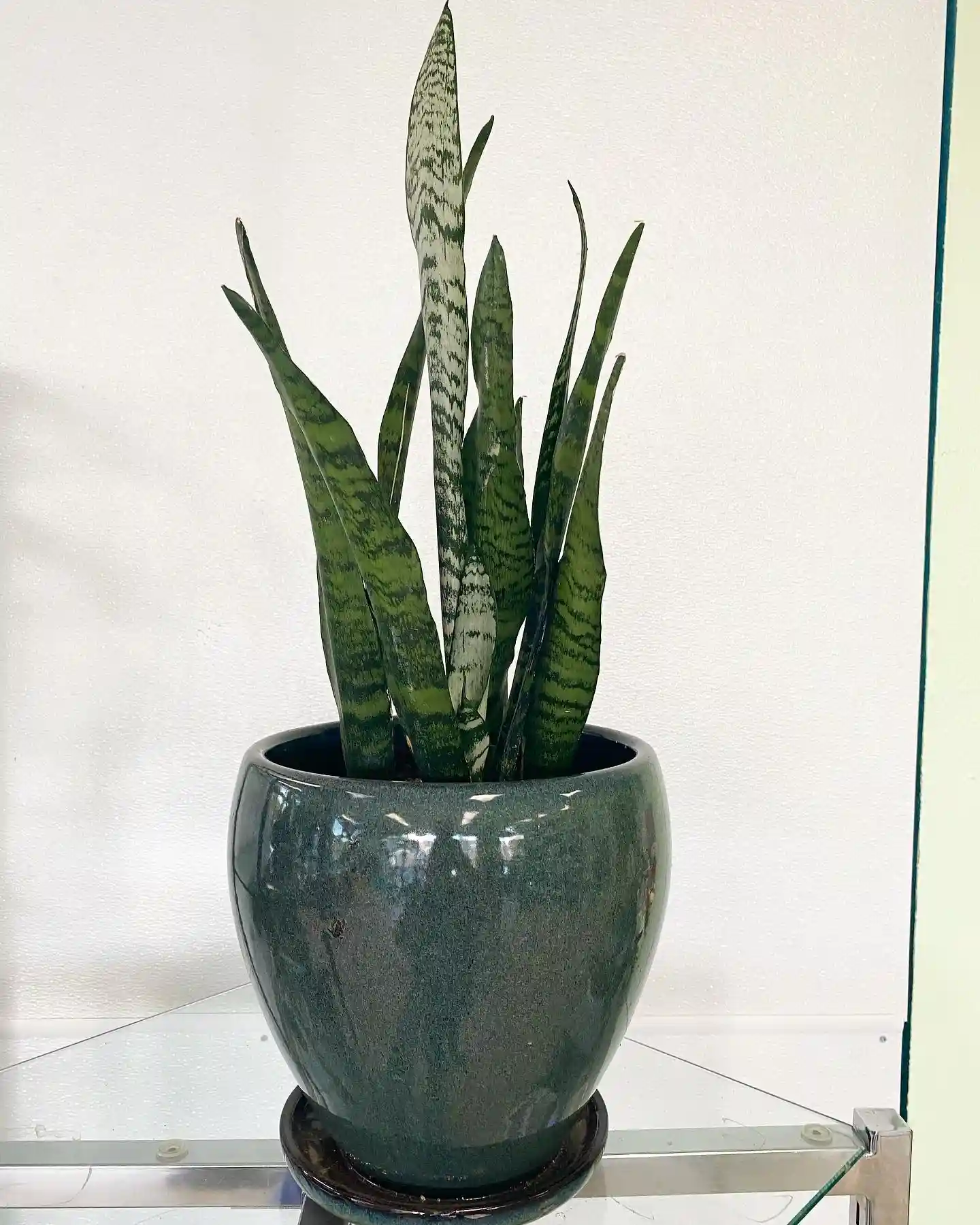
Black Coral has tall, dark green leaves crossed with lighter silver-green bands. The contrast becomes more noticeable as the plant matures, giving it a deep and polished appearance. It is a good option when the common yellow-edged Laurentii feels too bright for the room. The upright form suits floor pots, offices, and darker furniture arrangements.
- Care level: Easy
- Light: Medium to bright indirect light
- Growth habit: Tall and upright
- Best feature: Dark leaves with silver banding
- Best for: Moody or modern room designs
- Helpful tip: Use a light-colored pot to make the dark foliage more noticeable.
8. Black Robusta Snake Plant
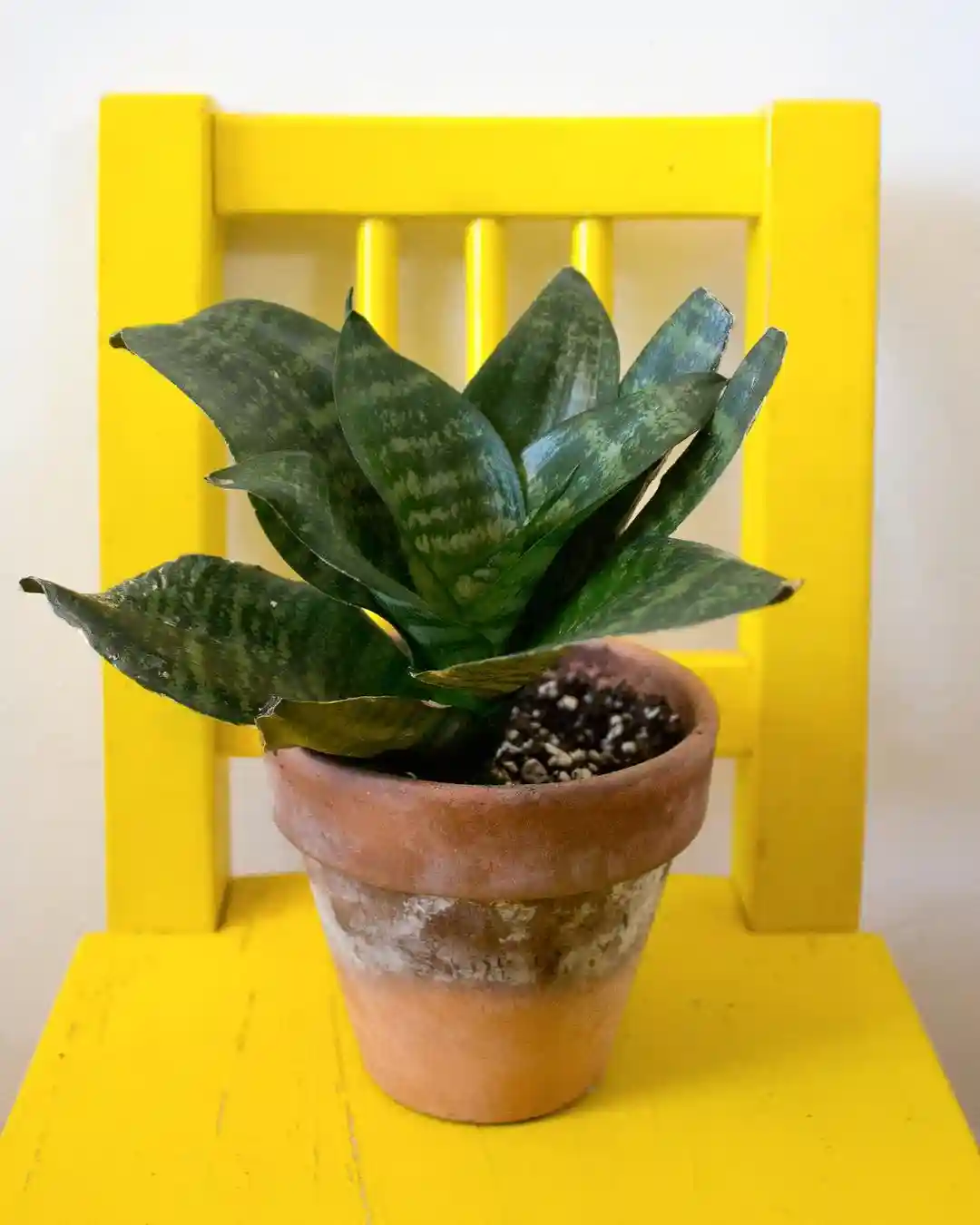
Black Robusta produces broad, dark green leaves with subtle horizontal markings. Its foliage looks heavier and fuller than many narrow-leaved snake plants, giving a small pot a strong presence. The deep coloring pairs well with wooden furniture, woven baskets, and warm neutral rooms. It remains easy to care for as long as the soil is allowed to dry between waterings.
- Care level: Easy
- Light: Medium to bright indirect light
- Growth habit: Broad upright clump
- Best feature: Wide, dark green foliage
- Best for: Floor pots and warm neutral rooms
- Helpful tip: Choose a heavy pot once the plant becomes tall and top-heavy.
9. Black Star Snake Plant
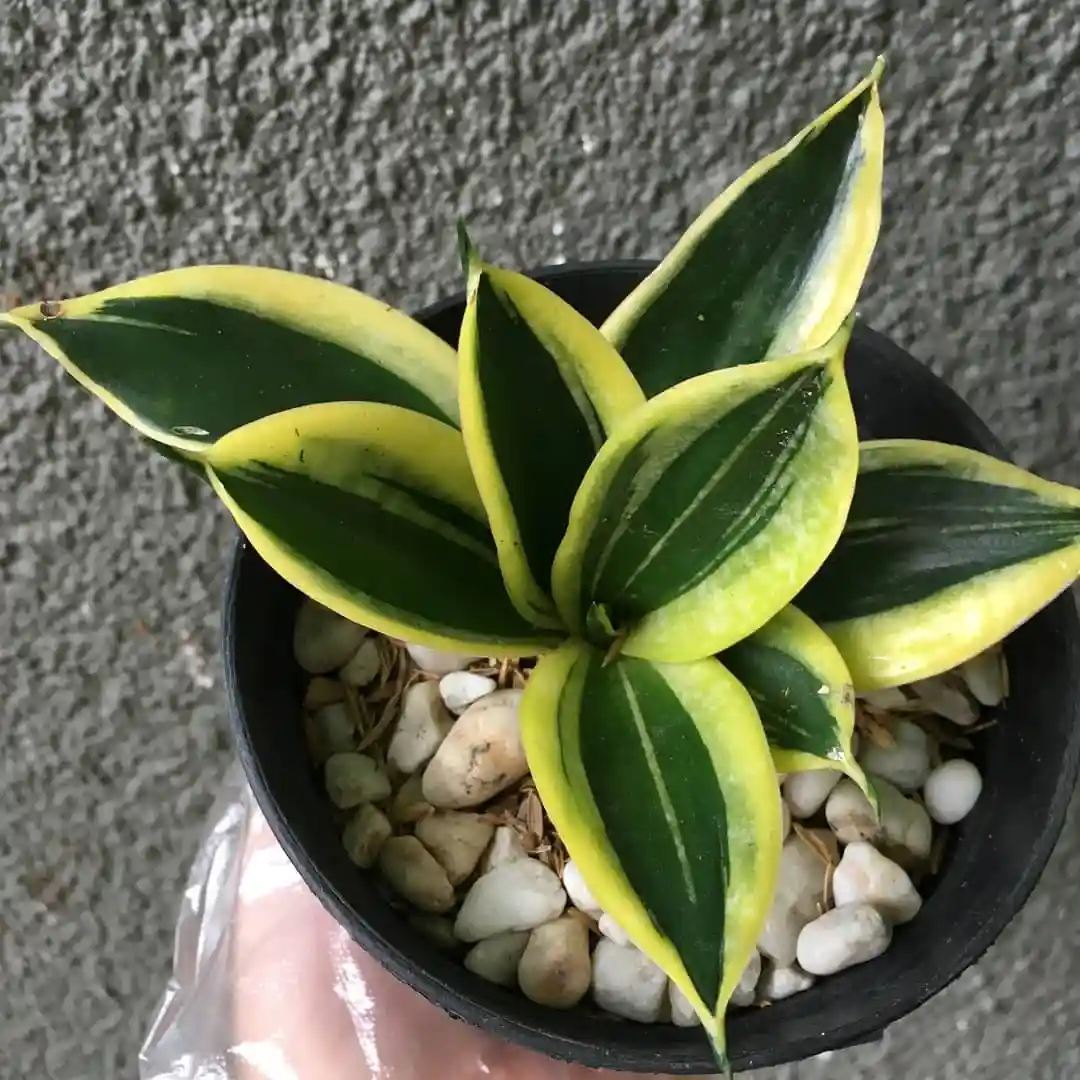
Black Star has dark green leaves edged with bright yellow-green margins. The leaves usually form a neat upright clump, creating a bold combination of deep centers and lighter borders. It offers more contrast than an all-green snake plant without looking as bright as some heavily golden cultivars. This variety works nicely as a compact floor plant or a larger tabletop feature.
- Care level: Easy
- Light: Medium to bright indirect light
- Growth habit: Compact and upright
- Best feature: Dark centers with yellow-green edges
- Best for: Tabletops and smaller floor pots
- Helpful tip: Turn the pot occasionally to keep the clump growing evenly.
10. Dwarf Laurentii Snake Plant
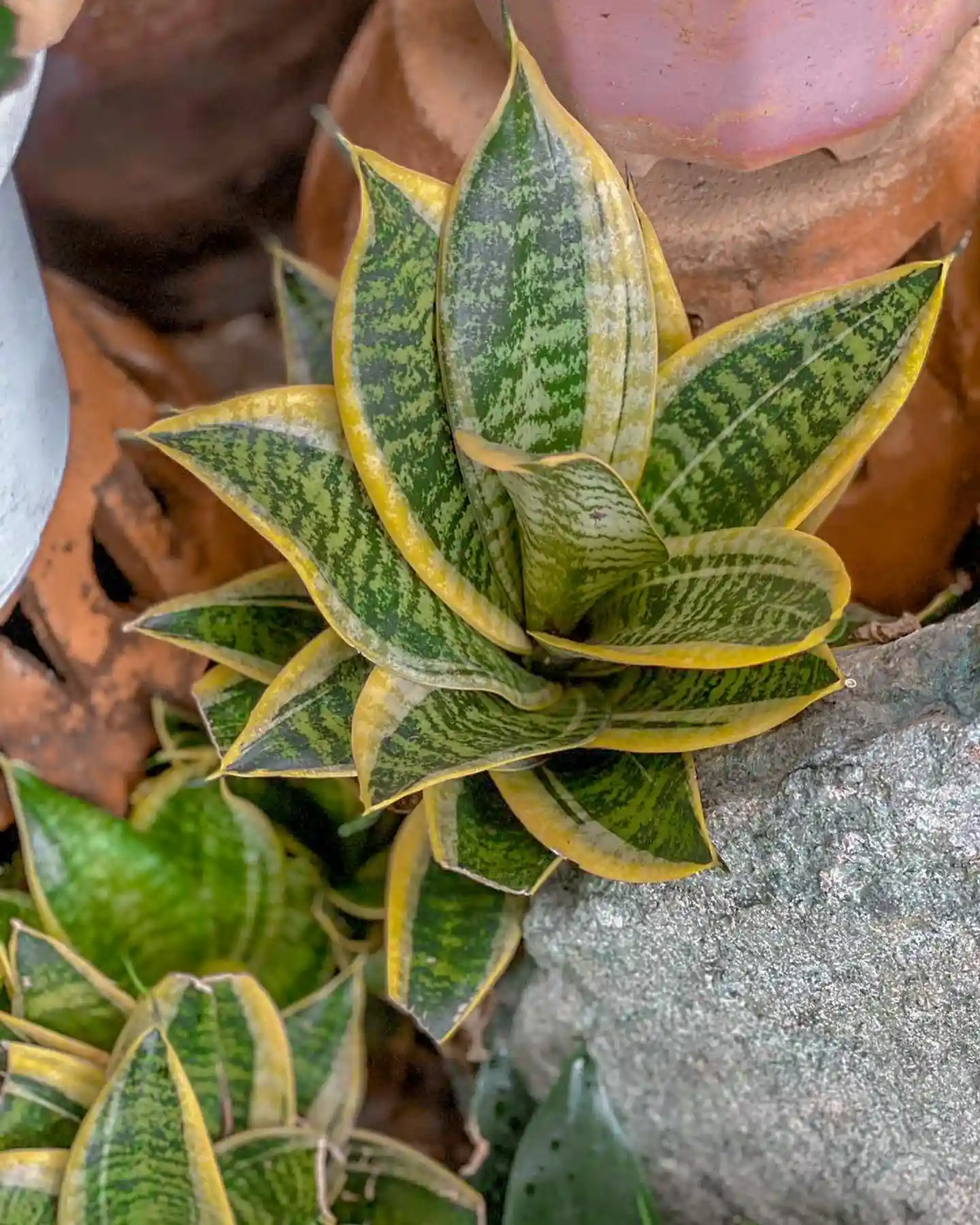
Dwarf Laurentii offers the familiar yellow-edged pattern of Laurentii in a much shorter form. Its compact leaves grow in a dense clump, making it easier to use on shelves, desks, or narrow plant stands. It is a good choice for anyone who likes the classic variegated look but does not have room for a tall floor plant.
- Care level: Easy
- Light: Medium to bright indirect light
- Growth habit: Short upright clump
- Best feature: Classic Laurentii coloring in a smaller size
- Best for: Apartments and tabletop displays
- Helpful tip: Do not move it into an oversized pot, since extra wet soil can cause problems.
11. Gold Flame Snake Plant
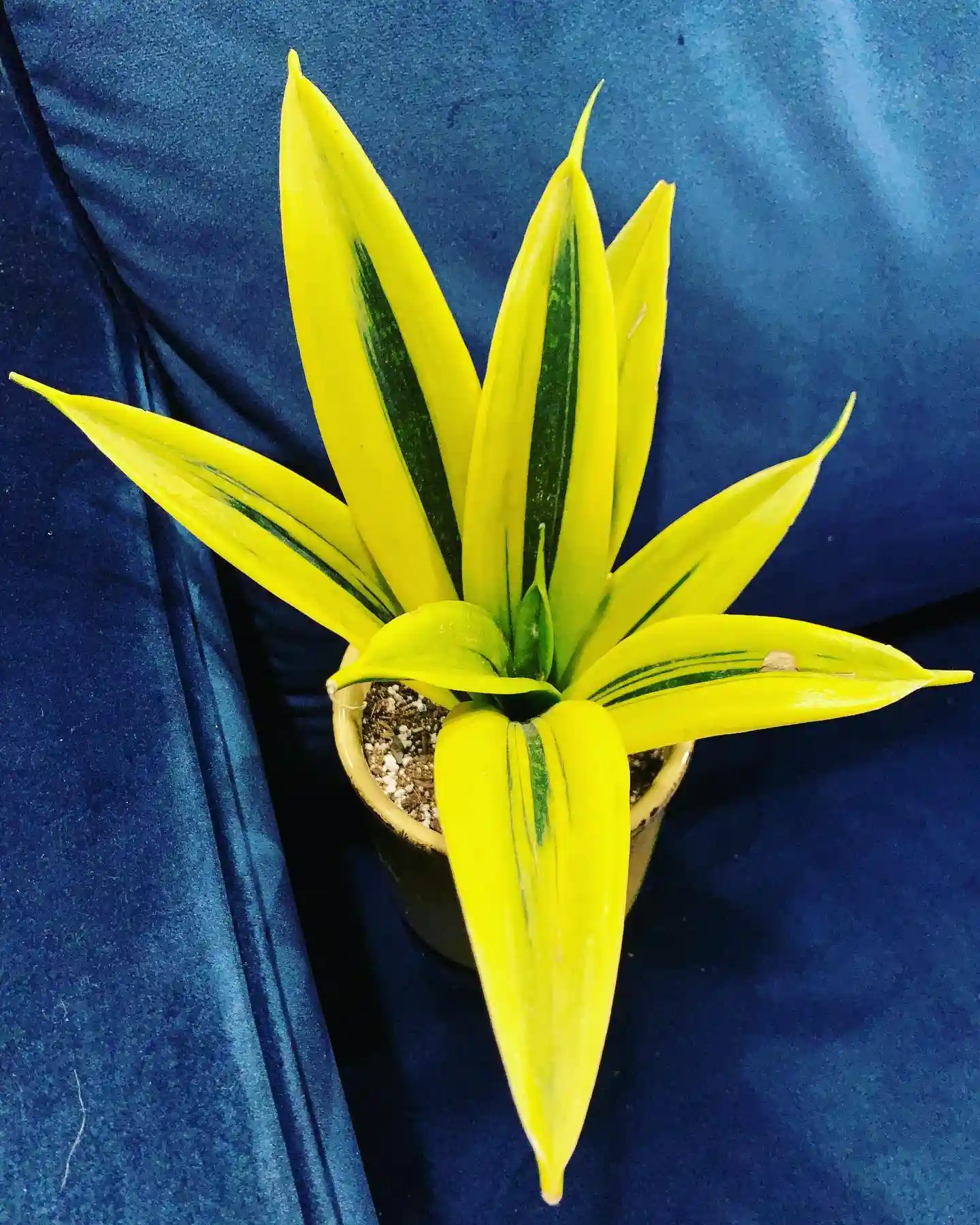
Gold Flame has dark green leaves covered with strong yellow-green vertical markings. New leaves may appear mostly yellow before developing more green as they mature. Its curved foliage forms a full, vase-like clump rather than a completely straight column. The bright coloring makes this one of the better snake plant varieties for adding warmth to plain shelves or corners.
- Care level: Easy to moderate
- Light: Bright, indirect light
- Growth habit: Upright and gently curved
- Best feature: Strong golden variegation
- Best for: Bright rooms and colorful plant collections
- Helpful tip: Give it steady filtered light to support balanced green and yellow growth.
12. Twisted Sister Snake Plant
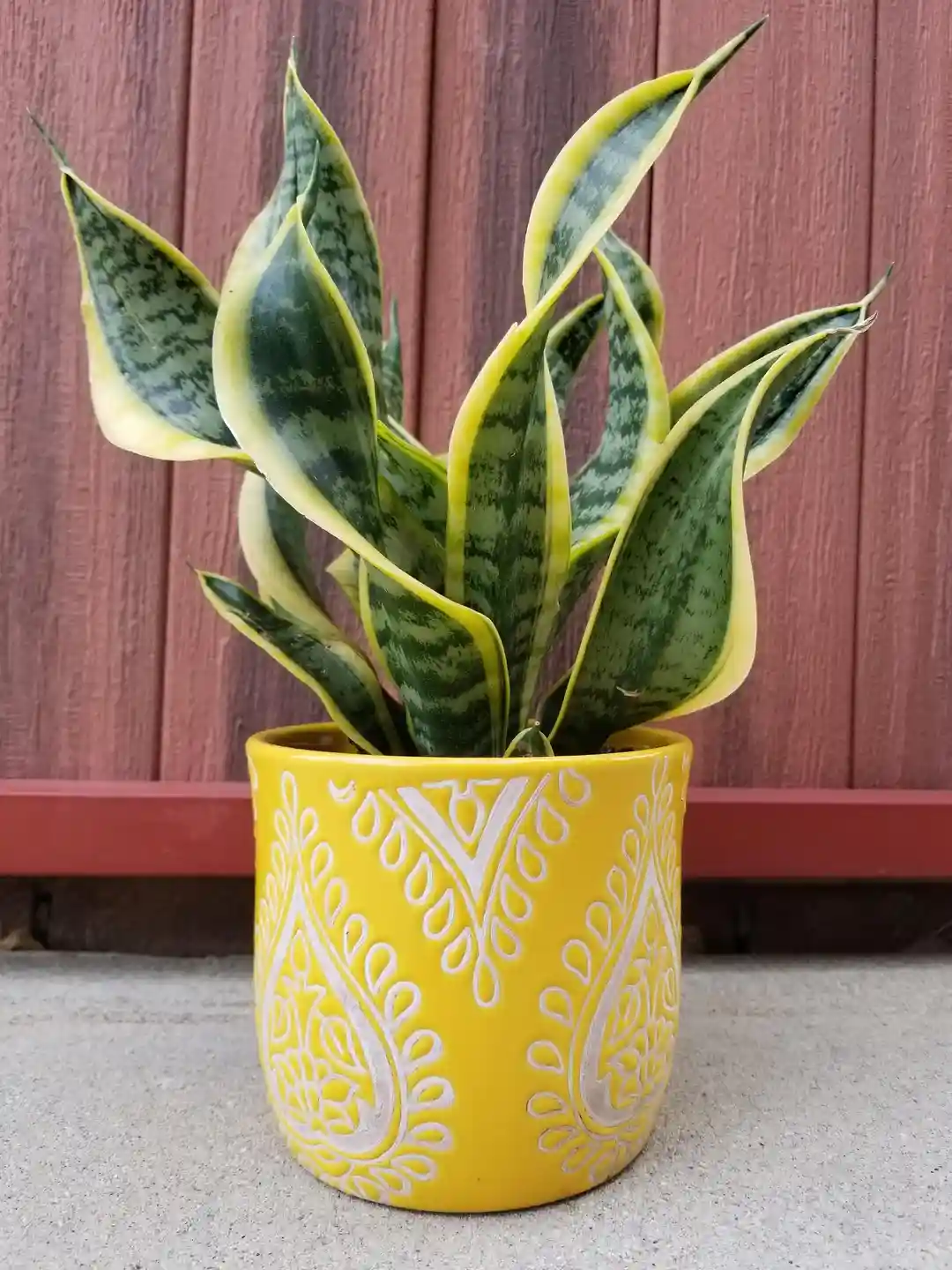
Twisted Sister has short leaves that curl and twist as they grow, giving the plant a playful shape. Green centers, pale horizontal patterns, and yellow edges add even more movement to the foliage. It stays relatively compact and looks best where its unusual form can be viewed closely. Every rosette develops a slightly different shape, so mature plants rarely look perfectly uniform.
- Care level: Easy
- Light: Bright, indirect light
- Growth habit: Compact twisted rosette
- Best feature: Curling yellow-edged leaves
- Best for: Desks and unusual plant displays
- Helpful tip: Avoid pressing it against other pots, which can flatten the curved leaves.
13. Silver Hahnii Snake Plant
Silver Hahnii is a compact bird’s nest type with muted silver-green foliage. Its leaves form a tidy rosette that feels softer than the darker standard Hahnii. The small size makes it easy to group with other houseplants without overcrowding the shelf. It also works well in bedrooms and offices where a simple, low-profile plant is preferred.
- Care level: Easy
- Light: Medium to bright indirect light
- Growth habit: Small rosette
- Best feature: Soft silver-green coloring
- Best for: Shelves, desks, and grouped plant displays
- Helpful tip: Use a small pot with a drainage hole rather than a deep decorative container.
14. Cylindrical Snake Plant
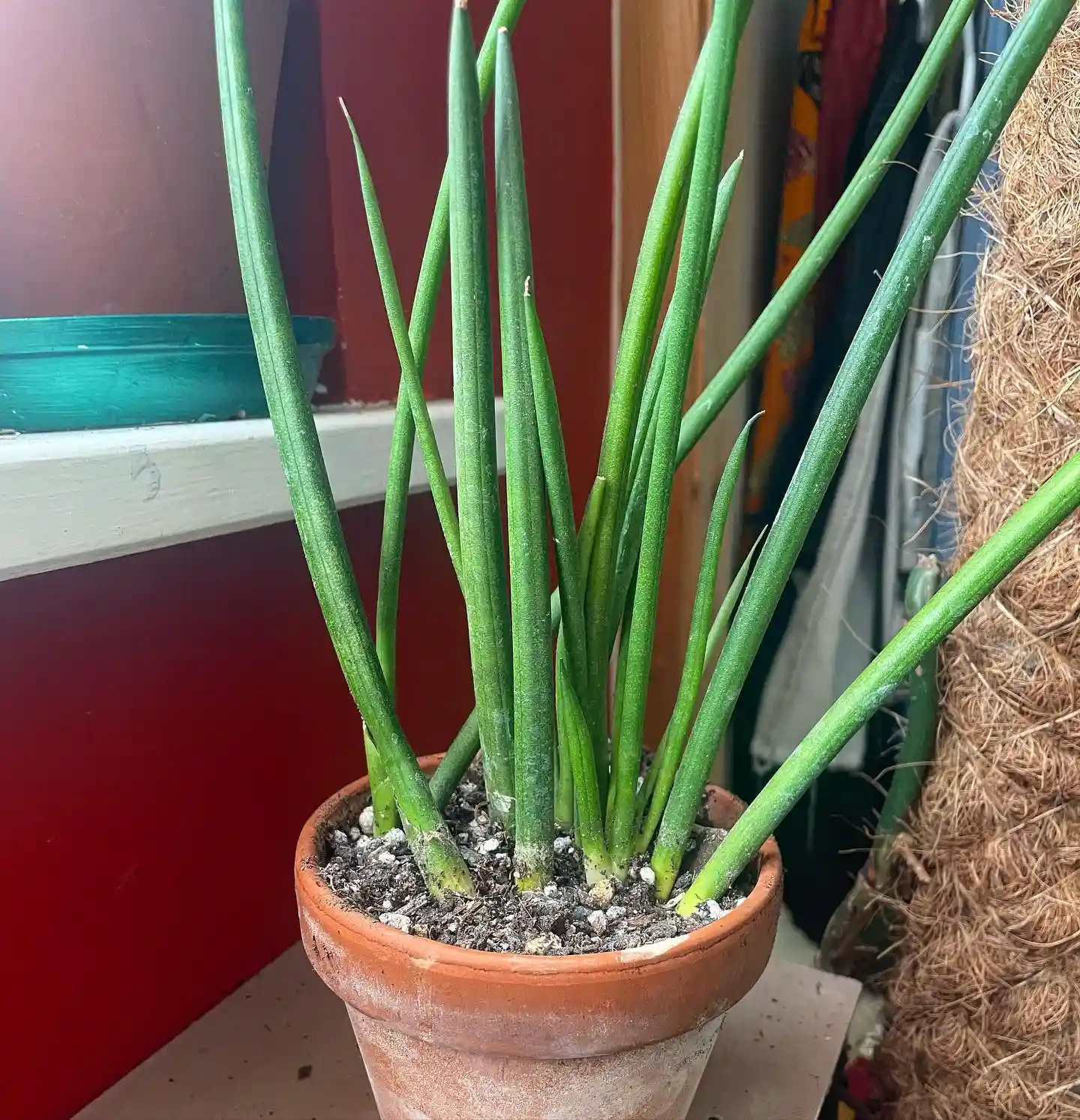
The cylindrical snake plant, also called African spear, produces thick rounded leaves rather than flat sword-shaped foliage. The spears rise from the soil in a fan-like or upright arrangement and may have pale horizontal bands. Its sculptural form makes it feel closer to a living decoration than a typical leafy houseplant.
- Care level: Easy
- Light: Medium to bright indirect light
- Growth habit: Upright cylindrical spears
- Best feature: Thick rounded leaves
- Best for: Modern rooms and sculptural displays
- Helpful tip: Do not force or tightly braid mature leaves, as this can damage them.
15. Starfish Snake Plant
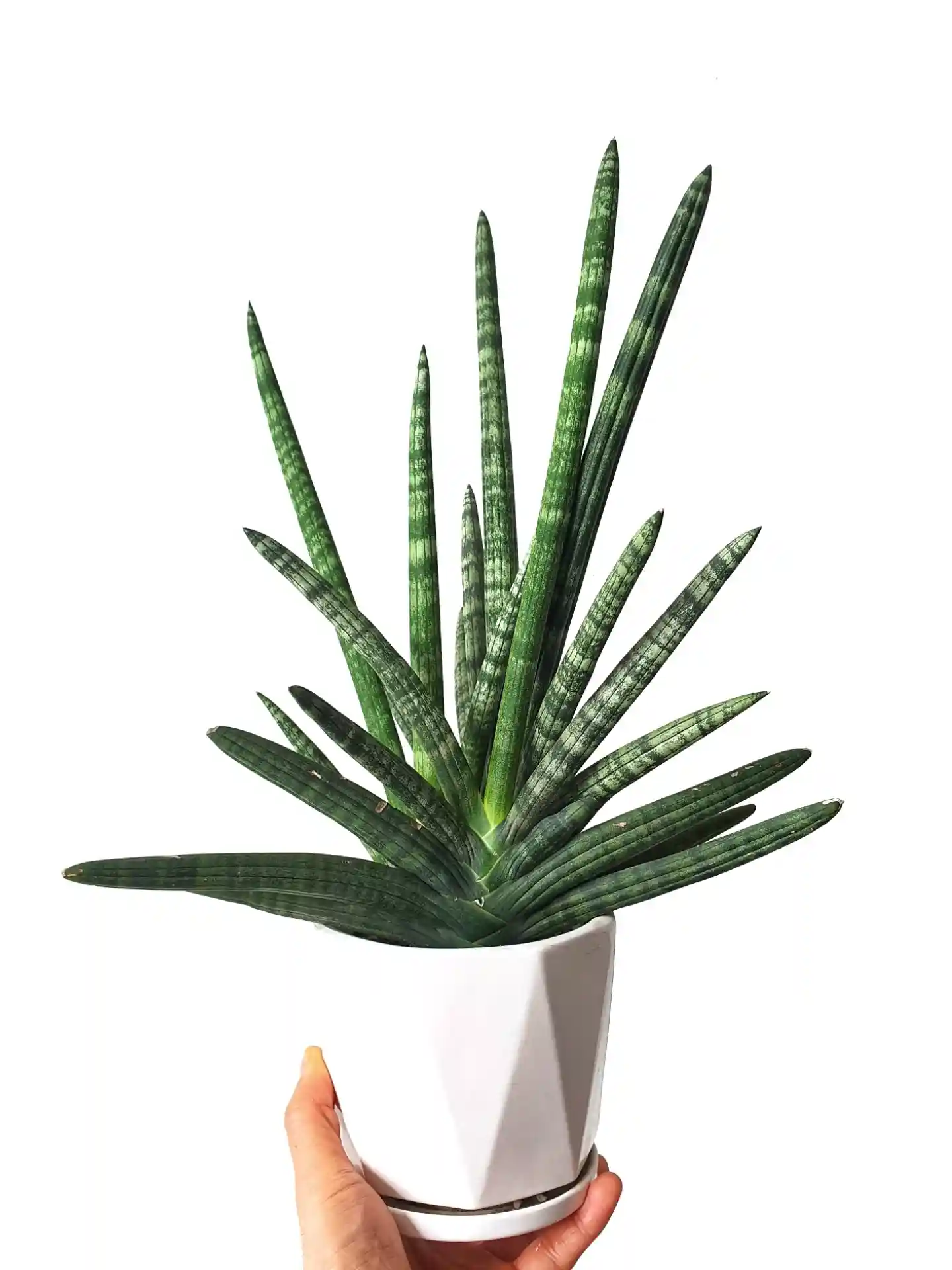
Starfish snake plant has short, thick cylindrical leaves that spread outward from the center. The shape resembles a starfish resting above the soil, which gives the plant its common name. It stays more compact than a full-sized cylindrical snake plant and fits easily on tables or wide shelves. The strong leaf shape looks especially good in a low, simple pot.
- Care level: Easy
- Light: Bright, indirect light
- Growth habit: Spreading fan or star shape
- Best feature: Short outward-facing spears
- Best for: Tabletop statement pots
- Helpful tip: Leave open space around the pot so the spreading leaves are not damaged.
16. Bacularis Snake Plant
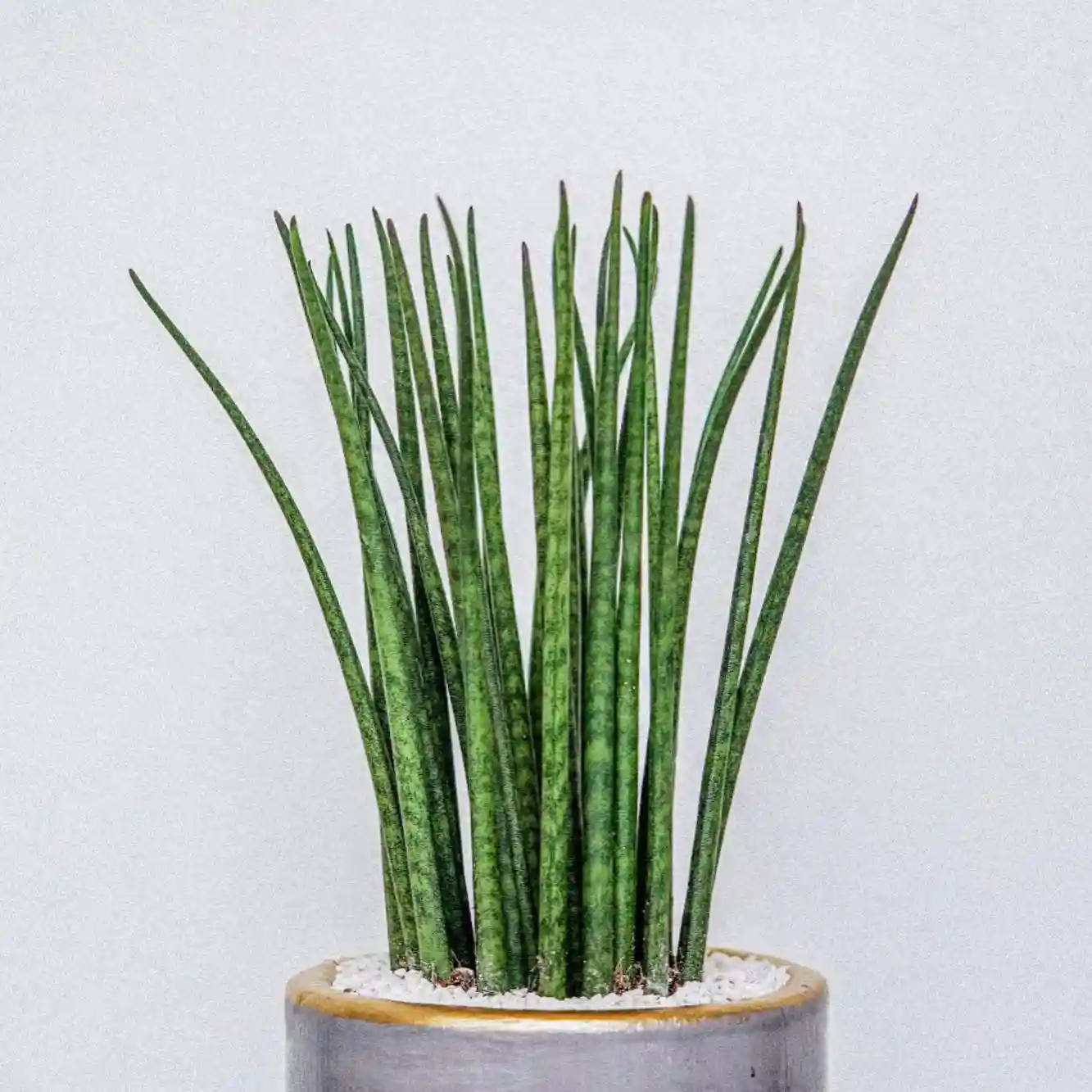
Bacularis produces thin cylindrical leaves that grow more closely together than the thicker African spear plant. Its narrow stems create a clean vertical shape that works well in tight spaces. The leaves are usually green with softer horizontal banding and may form a dense clump over time. This variety is useful when you want height without broad foliage.
- Care level: Easy
- Light: Medium to bright indirect light
- Growth habit: Thin upright spears
- Best feature: Slim cylindrical foliage
- Best for: Narrow shelves and small floor areas
- Helpful tip: Water around the edge of the pot instead of soaking the center of the clump.
17. Fernwood Mikado Snake Plant
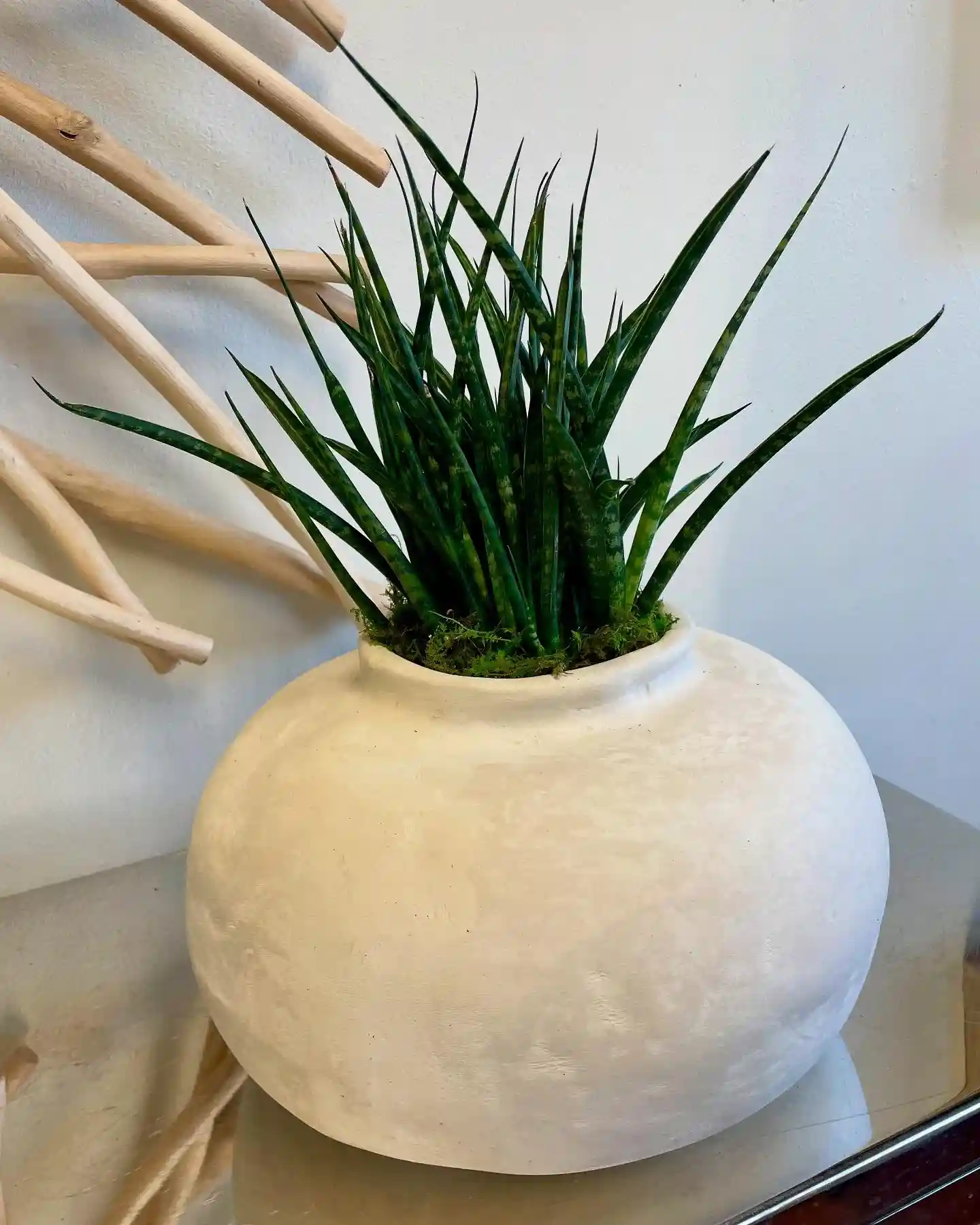
Fernwood Mikado has many thin, pointed leaves that rise from the soil like a cluster of green spikes. The narrow foliage carries subtle banding and forms a fuller display than varieties with only a few thick spears. Its upright shape works well in modern pots and small floor planters. It remains manageable indoors and does not need a wide area to spread.
- Care level: Easy
- Light: Medium to bright indirect light
- Growth habit: Dense cluster of narrow leaves
- Best feature: Fine spiky appearance
- Best for: Modern planters and tight spaces
- Helpful tip: Remove only fully damaged leaves, since cut tips will not regrow.
18. Whale Fin Snake Plant
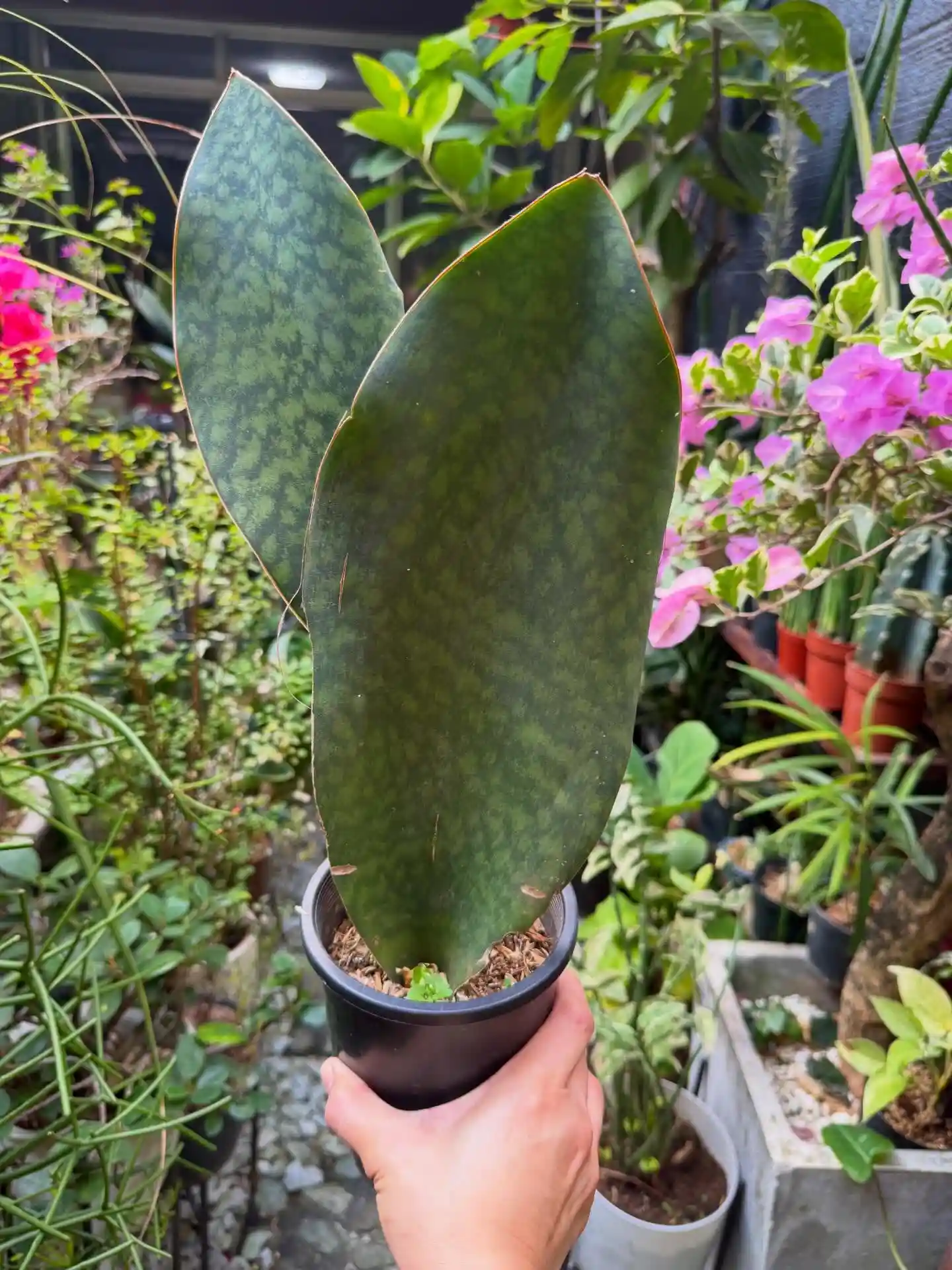
Whale Fin snake plant produces unusually wide, paddle-shaped leaves marked with mottled shades of green. A young plant may be sold with a single dramatic leaf, while established plants slowly produce new growth from underground rhizomes. Its broad shape makes it very different from the usual narrow snake plant. This is a slow-growing choice for anyone who wants one strong leaf to act as a decorative feature.
- Care level: Easy to moderate
- Light: Bright, indirect light
- Growth habit: Wide upright paddles
- Best feature: Large whale-fin-shaped leaves
- Best for: Minimal plant displays and collectors
- Helpful tip: Be patient, since new leaves can take time to appear.
19. Samurai Dwarf Snake Plant
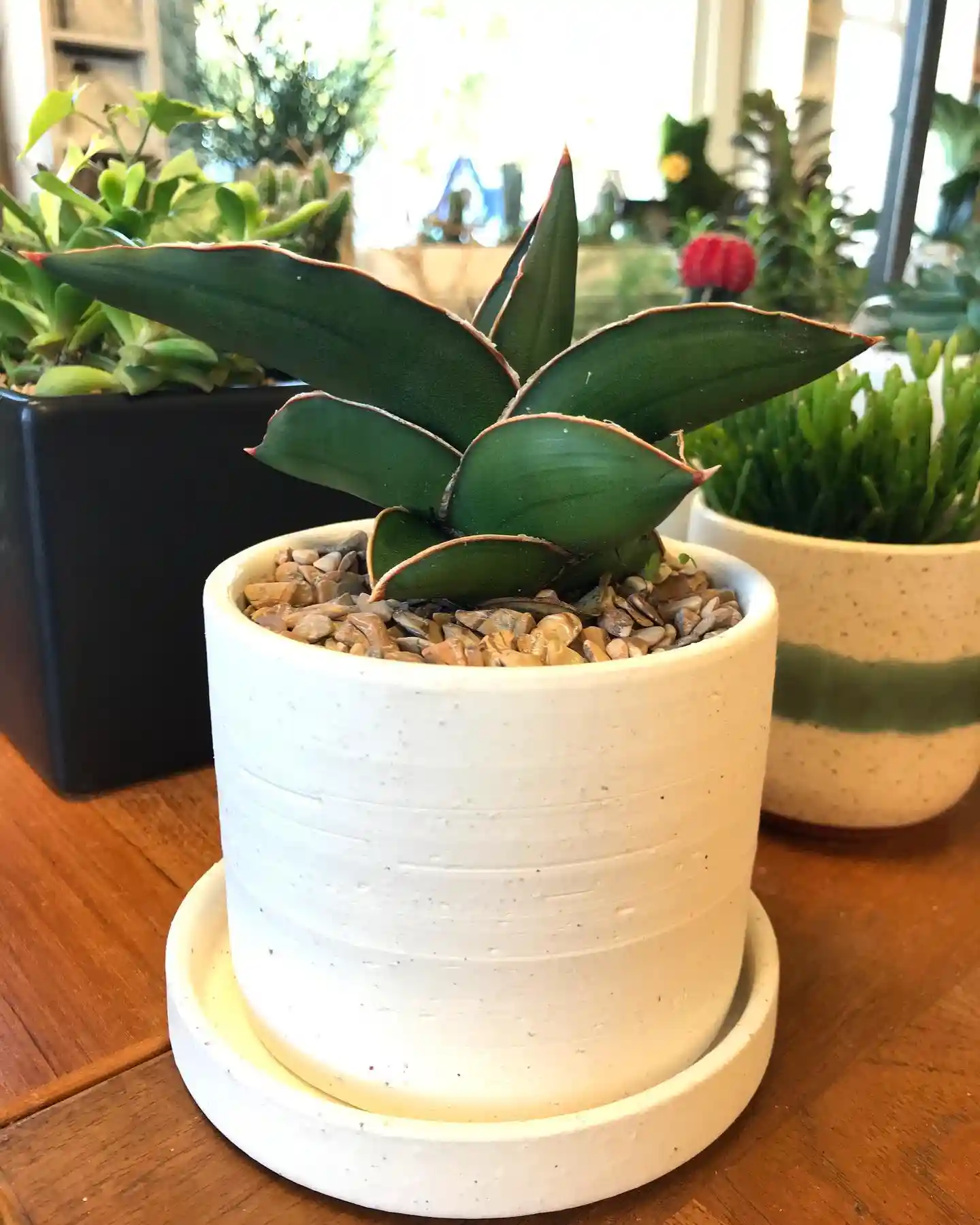
Samurai Dwarf forms a compact stack of thick, pointed leaves. The foliage grows in alternating layers, creating a shape that looks almost carved or folded. Its smaller size makes it suitable for desks and close-up displays where the leaf structure can be appreciated. This variety prefers good light and especially careful watering because moisture can remain trapped around its tightly packed base.
- Care level: Moderate
- Light: Bright, indirect light
- Growth habit: Compact stacked rosette
- Best feature: Layered architectural leaves
- Best for: Collectors and small display pots
- Helpful tip: Keep the crown dry and use a very free-draining potting mix.
20. Silver Blue Snake Plant
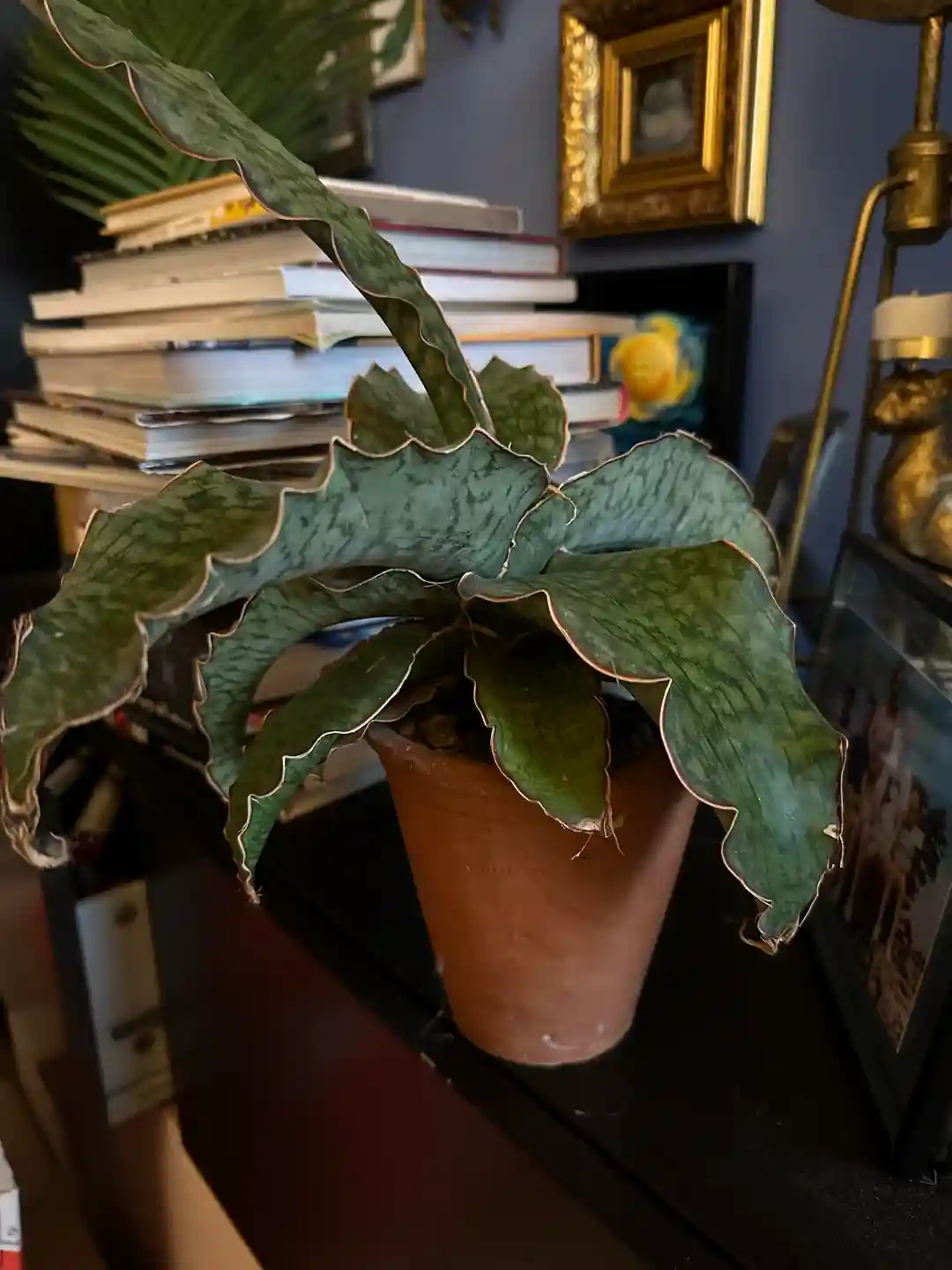
Silver Blue has thick, blue-gray leaves marked with dark horizontal and vertical lines. The slightly wavy edges may carry pale or reddish tones, adding more detail when viewed closely. It forms a low rosette rather than a tall clump, making it easy to display on a table or low shelf. Its unusual coloring gives it a strong collector look without requiring a large amount of space.
- Care level: Easy to moderate
- Light: Bright, indirect light
- Growth habit: Low spreading rosette
- Best feature: Blue-gray textured foliage
- Best for: Collectors and tabletop displays
- Helpful tip: Allow the potting mix to dry well, especially during cooler months.
Frequently Asked Questions
What is the easiest snake plant variety to grow?
The classic green snake plant and Laurentii are two of the easiest choices for beginners. Both handle missed waterings and a wide range of indoor light, although they grow better in brighter filtered light.
Which snake plant stays the smallest?
Hahnii, Golden Hahnii, Silver Hahnii, and Samurai Dwarf stay much smaller than tall snake plants. Their compact rosette shapes work well on shelves, desks, and small tables.
Which snake plant grows the tallest?
Classic green snake plants, Laurentii, Black Coral, Bacularis, and cylindrical snake plants can all develop tall upright leaves. Their final size depends on the variety, pot size, light, and growing conditions.
Which snake plant is best for low light?
Green snake plants such as the classic Dracaena trifasciata and Black Coral usually handle lower light better than heavily variegated types. Low light slows growth, so the soil will also take longer to dry.
Do colorful snake plants need more light?
Variegated varieties such as Laurentii, Golden Hahnii, Gold Flame, and Bantel’s Sensation usually keep their coloring better in bright, indirect light. Very dark conditions may lead to weaker growth or less noticeable patterns.
How often should snake plants be watered?
Allow most of the potting mix to dry before watering again. The exact timing changes with light, temperature, pot size, and season, so checking the soil is safer than following a fixed weekly schedule.
Why is my snake plant turning yellow?
Yellowing is commonly connected to soil staying wet for too long. Check the drainage hole, roots, soil texture, and watering frequency before adding more water.
Can different snake plant varieties grow in one pot?
They can, but varieties with similar sizes and growth rates work best together. Keeping them in separate pots is usually easier because each plant can be watered and repotted when needed.
Do snake plants need direct sunlight?
No. Most grow well in bright, indirect light and can tolerate some lower light. Harsh direct sunlight may scorch leaves, especially when a plant has not been slowly introduced to it.
Are snake plants safe for pets?
Snake plants should be placed away from cats and dogs that may chew the foliage. A high shelf or room with limited pet access is safer.