15 Monstera Types Worth Growing at Home
Monstera plants are loved for their bold leaves, easygoing nature, and tropical look, but there is far more variety than the classic split-leaf plant.
Some Monstera types stay compact and trail neatly from shelves, while others climb high and grow into large statement plants.
You can also choose from textured green leaves, dramatic holes, or cream and white variegation.
This guide covers 15 Monstera types worth growing at home, with quick details to help you find the right one for your space and experience level.
1. Monstera Deliciosa
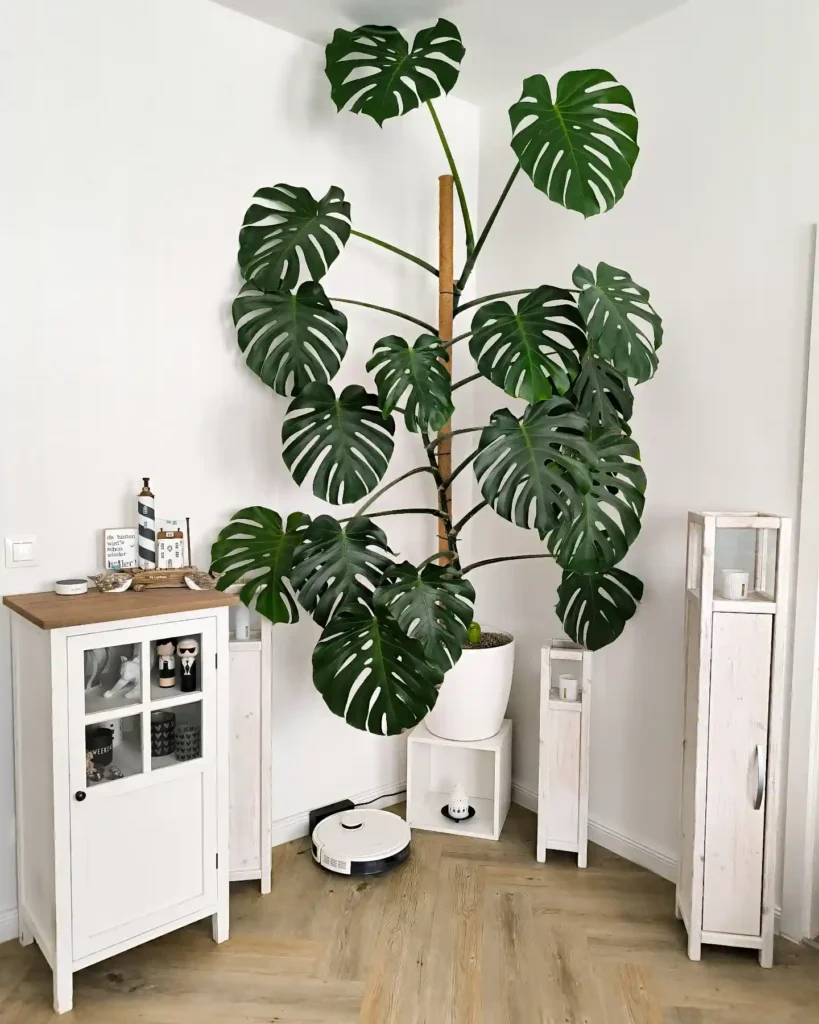
Monstera deliciosa is the classic choice for anyone starting an indoor plant collection. Its young leaves are smooth and heart-shaped, but as the plant matures, they develop the deep splits that make this Monstera type so easy to recognize.
It grows quickly in bright, indirect light and looks best when trained up a moss pole or sturdy support.
Because the leaves can become quite large, place it where it has enough room to spread without pressing against walls or furniture.
- Care level: Easy
- Light: Bright, indirect light
- Growth habit: Large climbing plant
- Best feature: Big leaves with deep natural splits
- Best for: Beginners, living rooms, and empty corners
- Helpful tip: Add support early so the plant grows upright and produces larger leaves.
2. Thai Constellation Monstera
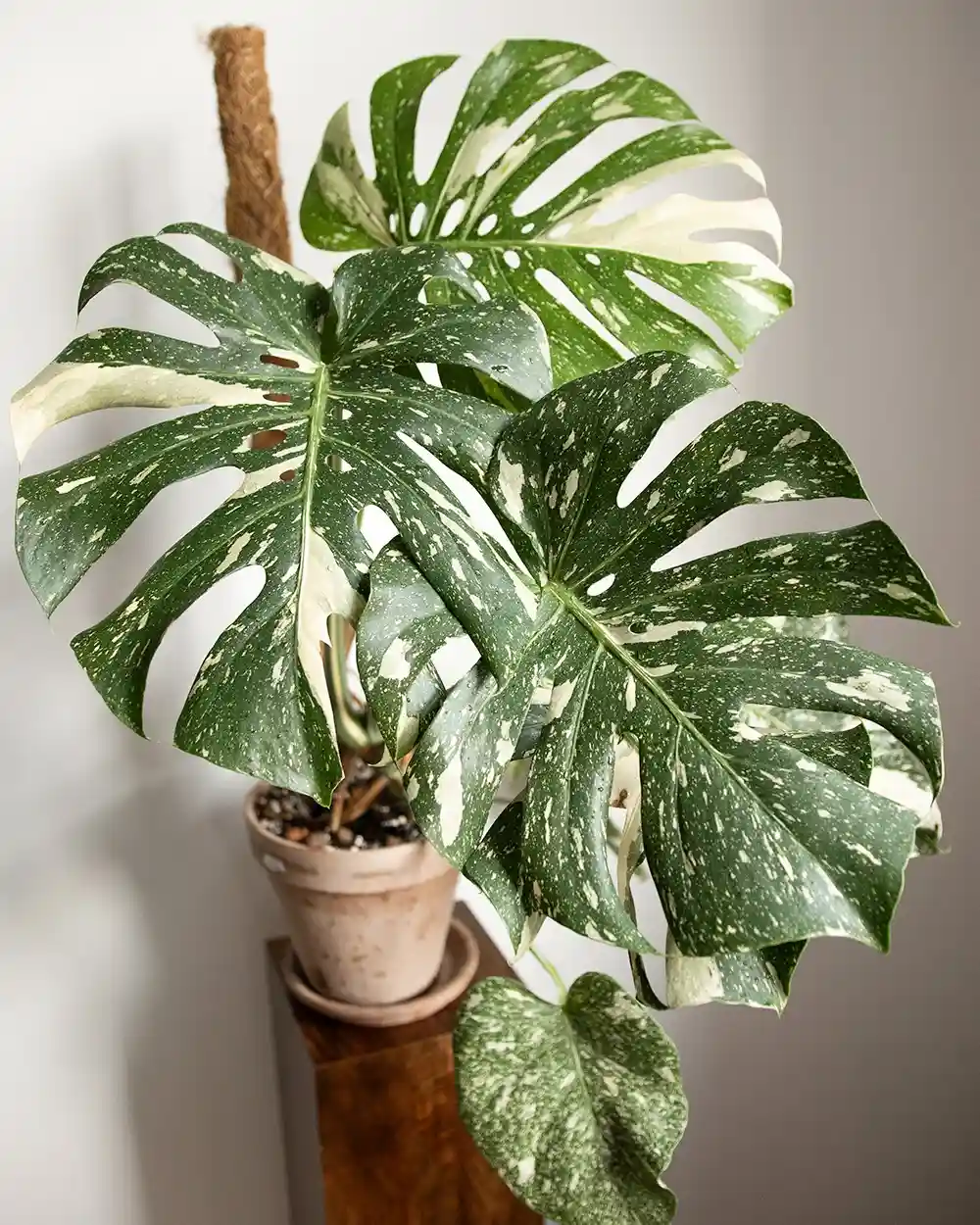
Thai Constellation Monstera is known for its cream-speckled leaves that look like tiny stars scattered across the foliage.
The variegation is usually stable, making it a better first choice than some other variegated Monstera types.
It grows more slowly than green Monstera deliciosa and needs plenty of bright, indirect light to keep its pattern clear. Keep it away from strong afternoon sun, which can burn the pale sections.
- Care level: Moderate
- Light: Bright, indirect light
- Growth habit: Slow-growing climber
- Best feature: Cream-speckled variegation
- Best for: Variegated plant beginners
- Helpful tip: Let the top layer of soil dry before watering again.
3. Monstera Albo Variegata
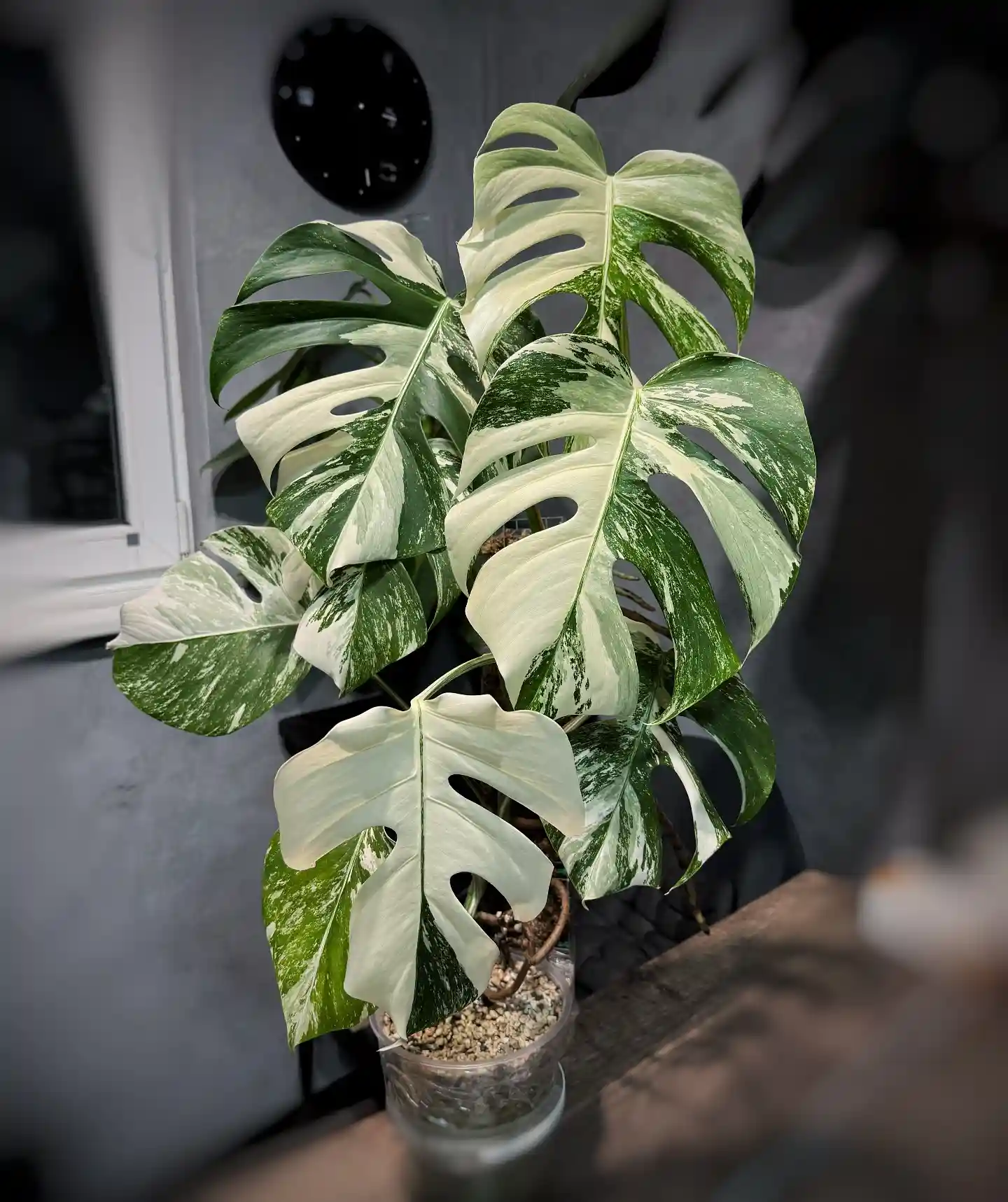
Monstera Albo Variegata has bold white patches, marbling, and sometimes half-moon leaves.
Every new leaf can look different, which is part of its appeal. Since the white areas contain less chlorophyll, the plant grows more slowly and needs brighter filtered light than a green Monstera.
Too much white on the stem can weaken future growth, so look for a balanced mix of green and white when choosing a cutting.
- Care level: Moderate to difficult
- Light: Bright, indirect light
- Growth habit: Climbing plant
- Best feature: White marbled leaves
- Best for: Experienced indoor plant growers
- Helpful tip: Avoid buying a cutting without a healthy node.
4. Monstera Aurea
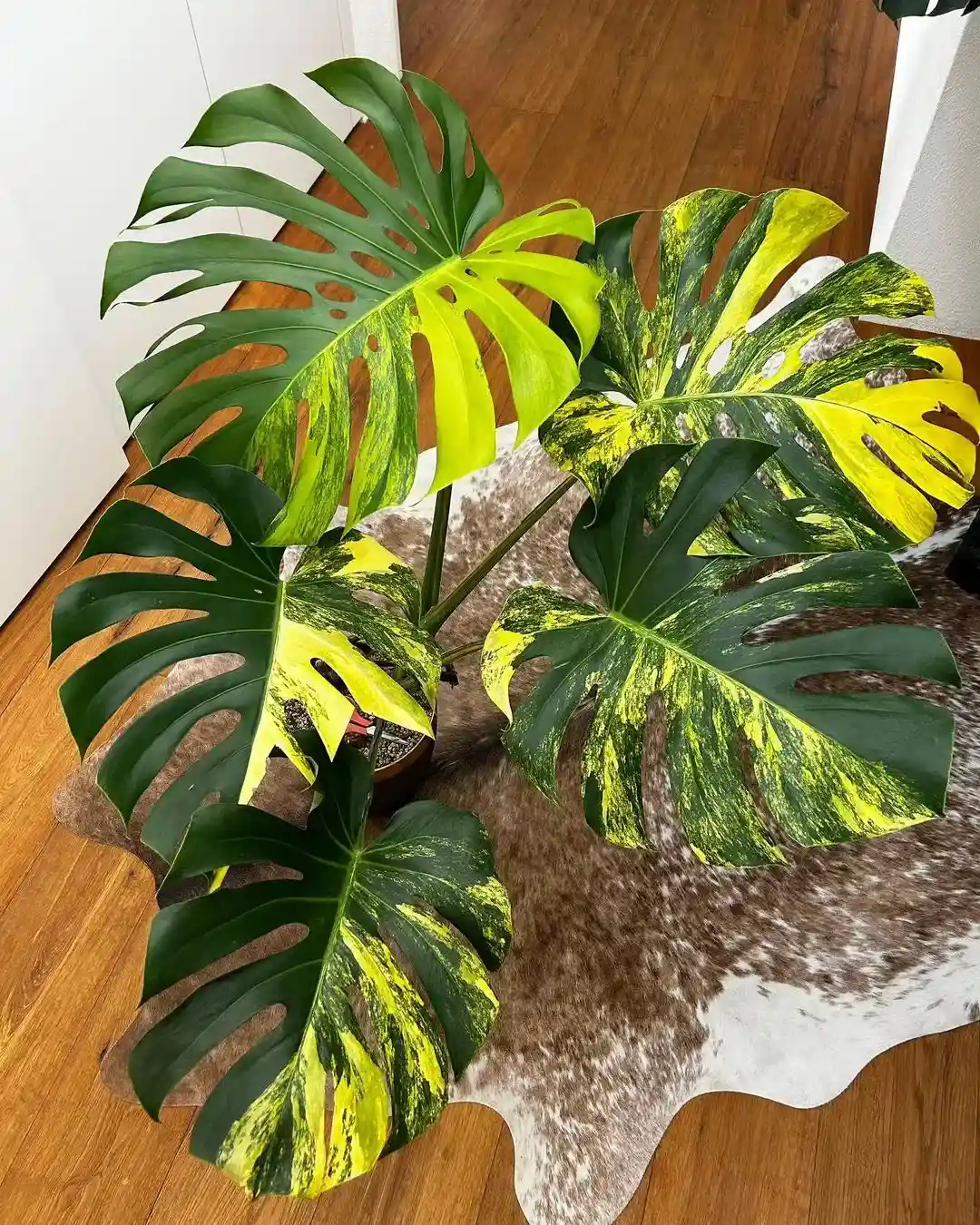
Monstera Aurea has yellow, lime, or golden variegation that may become clearer as each leaf matures. Its pattern is less common than the white coloring found on Monstera Albo, making it popular with collectors.
It needs bright, indirect light to support healthy growth, but direct sunlight may scorch the yellow sections. Growth can be uneven, so regular rotation helps the plant receive light from every side.
- Care level: Moderate
- Light: Bright, indirect light
- Growth habit: Large climbing plant
- Best feature: Yellow and lime variegation
- Best for: Variegated plant collectors
- Helpful tip: Choose a plant with visible variegation along the stem.
5. Monstera Adansonii
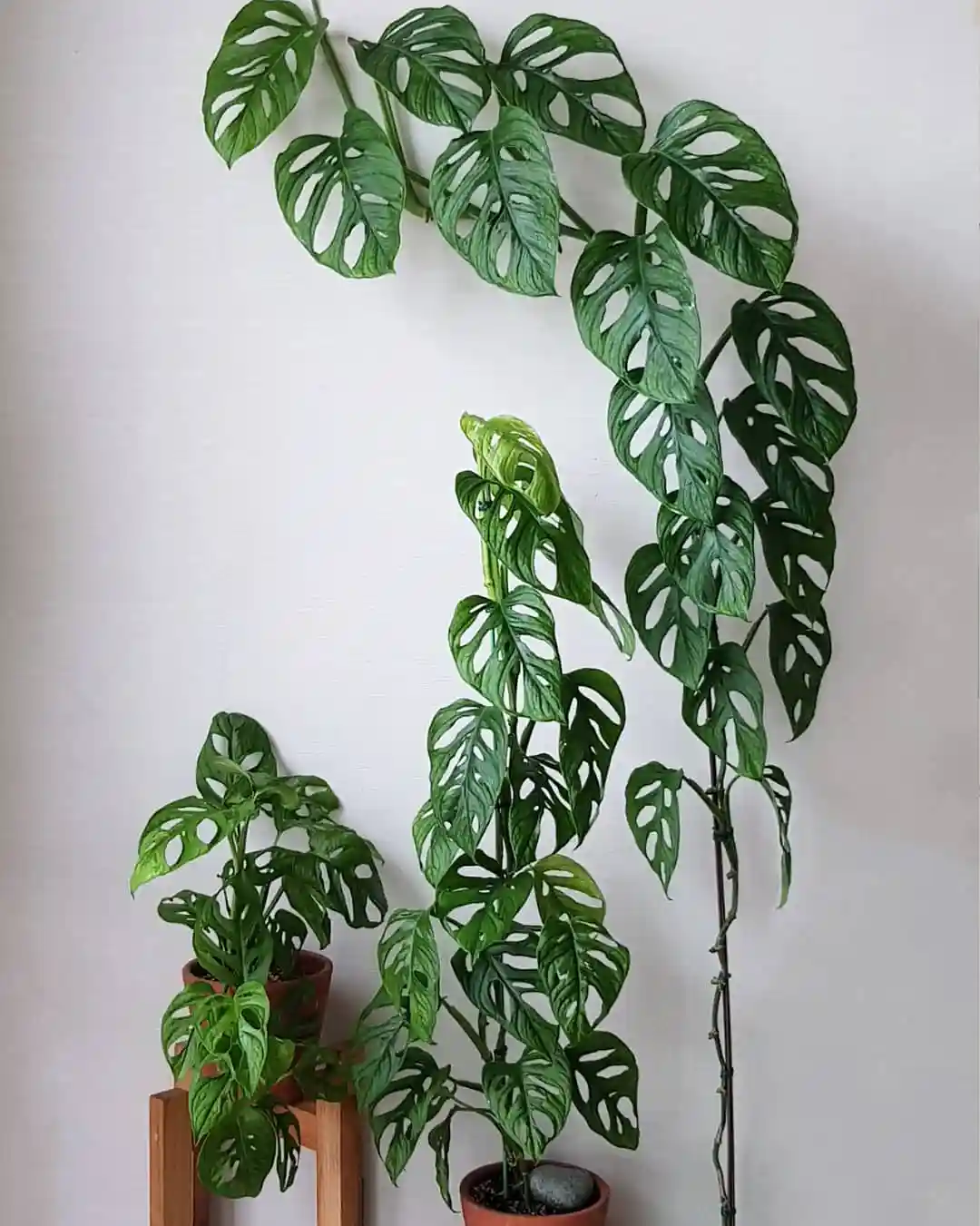
Monstera adansonii is a smaller Monstera type with oval holes running through its leaves. It can trail from a shelf or climb a moss pole, though climbing often helps it produce larger foliage.
This plant grows quickly in warm rooms with bright, indirect light and slightly moist soil. Its manageable size makes it a good option for apartments, bedrooms, and home offices.
- Care level: Easy
- Light: Bright, indirect light
- Growth habit: Trailing or climbing
- Best feature: Small leaves filled with holes
- Best for: Small rooms and shelves
- Helpful tip: Pinch back long stems to encourage fuller growth.
6. Monstera adansonii variegated
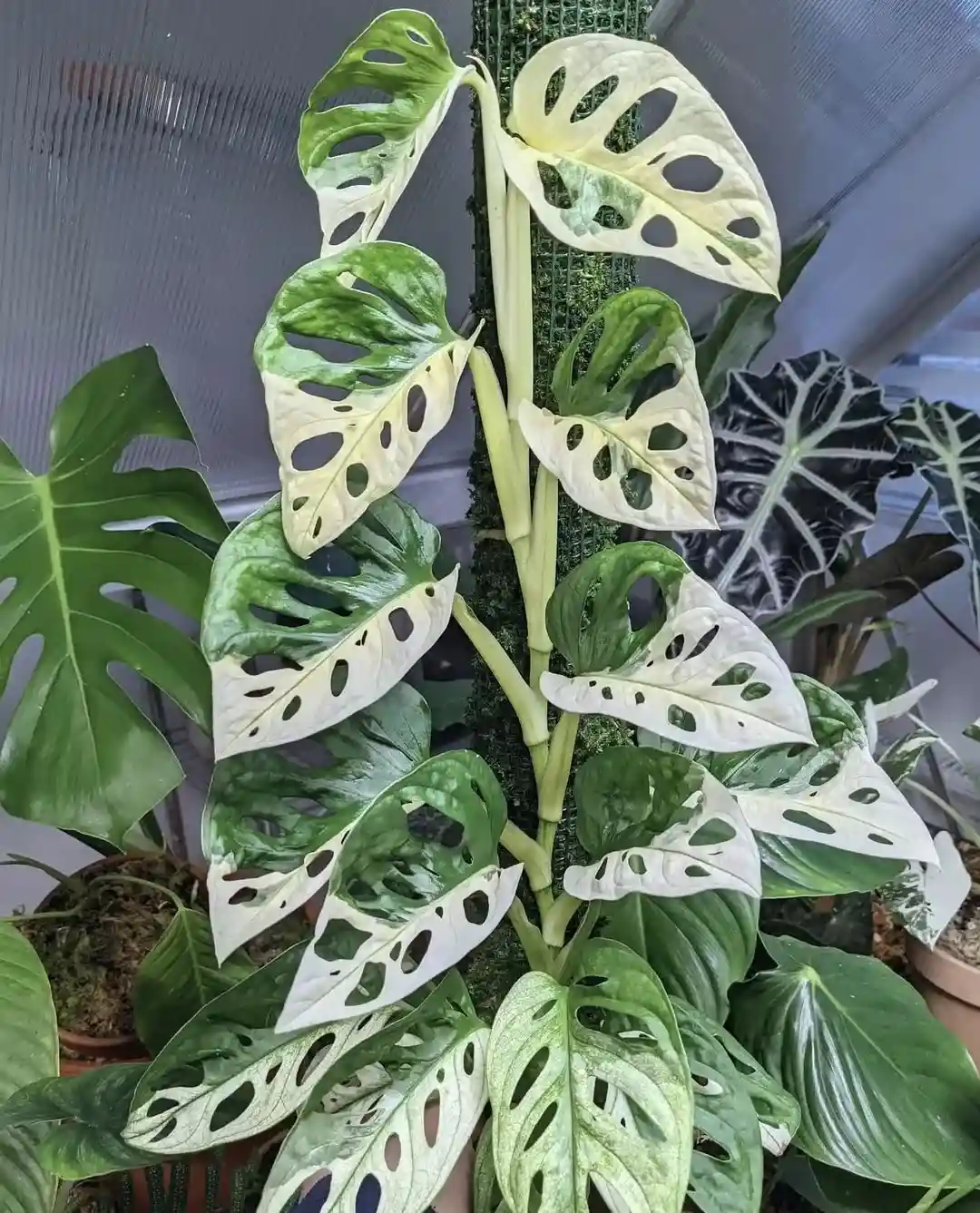
Variegated Monstera adansonii combines the familiar perforated leaves of the green form with white, cream, or mint markings.
It stays smaller than Monstera deliciosa but grows more slowly because of its reduced green tissue.
Bright, indirect light helps maintain the coloring, while strong sun can damage the pale areas. This plant works well in a small display but needs more attention than a regular adansonii.
- Care level: Moderate to difficult
- Light: Bright, filtered light
- Growth habit: Trailing or climbing
- Best feature: Variegated leaves with natural holes
- Best for: Small collector displays
- Helpful tip: Keep at least some green growth on every stem.
7. Monstera Dubia
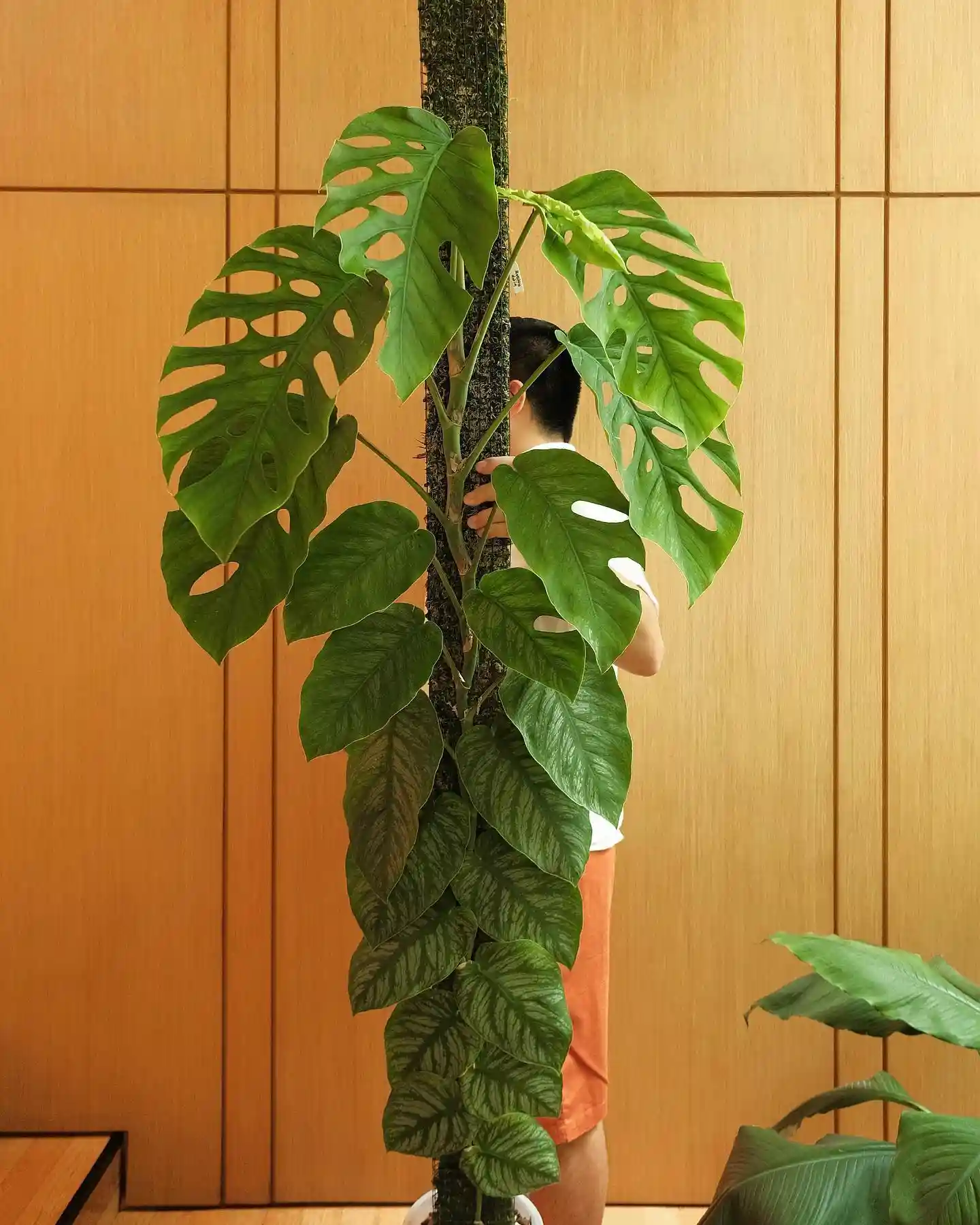
Monstera dubia is different from most Monstera types because its young leaves grow flat against a wooden board, wall support, or tree-like surface.
The juvenile foliage has silver markings and forms a neat, overlapping pattern as it climbs. Mature plants can develop much larger leaves with splits, though this takes time indoors.
It is a good choice for anyone who wants a vertical plant that uses less floor space.
- Care level: Moderate
- Light: Bright, indirect light
- Growth habit: Shingling climber
- Best feature: Leaves that grow flat against support
- Best for: Vertical indoor displays
- Helpful tip: Give it a flat wooden board rather than a thin pole.
8. Monstera Siltepecana
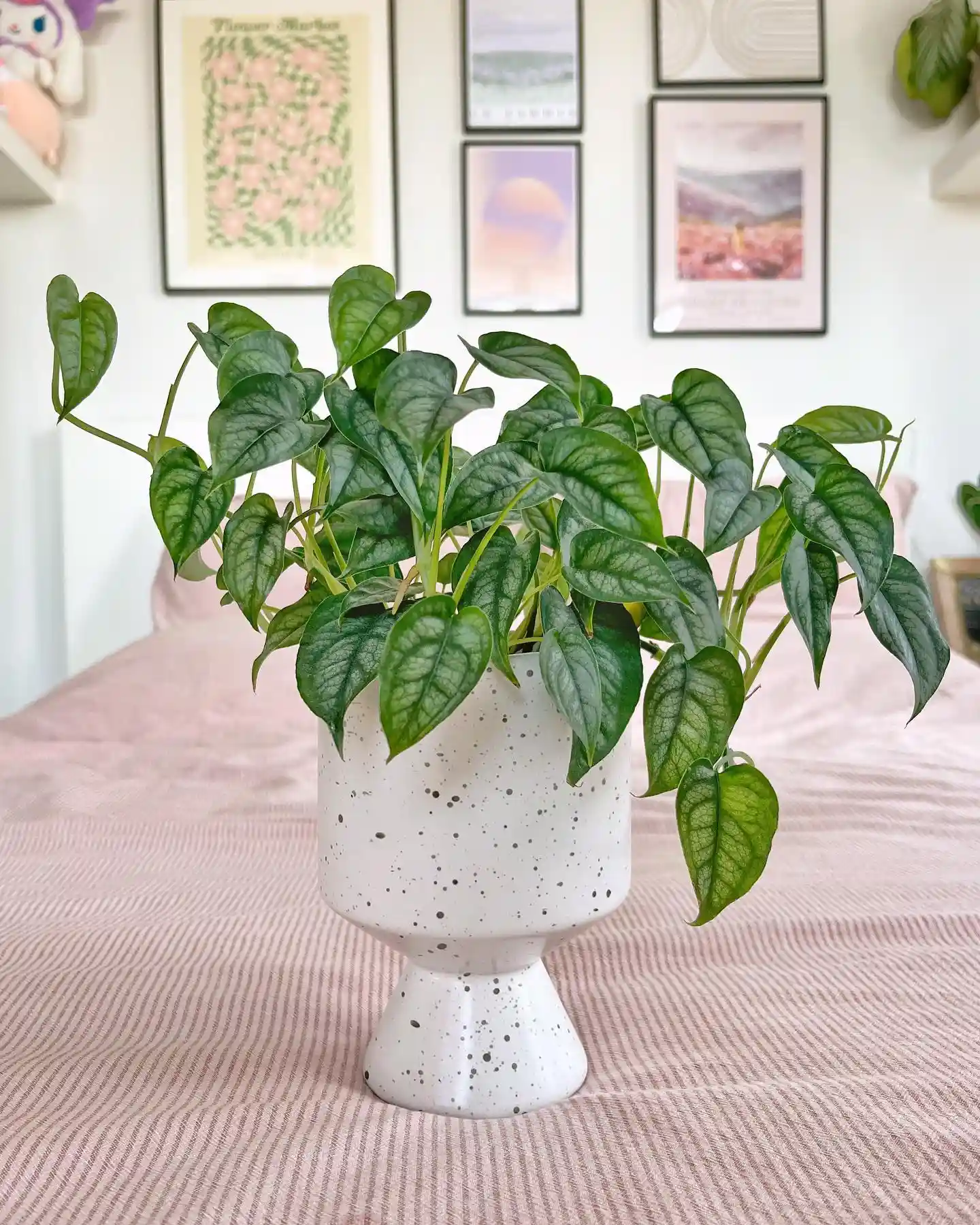
Monstera siltepecana has narrow silver leaves with dark green veins during its younger stage. As it climbs and matures, the leaves become larger and may begin developing holes.
It stays more manageable than Monstera deliciosa, making it easier to fit into bedrooms, offices, or smaller living spaces. Warm temperatures, filtered light, and a moss pole help it grow into its mature form.
- Care level: Easy to moderate
- Light: Bright, indirect light
- Growth habit: Trailing or climbing
- Best feature: Silver leaves with dark veins
- Best for: Shelves and small spaces
- Helpful tip: Let it climb if you want larger mature leaves.
9. Monstera Standleyana
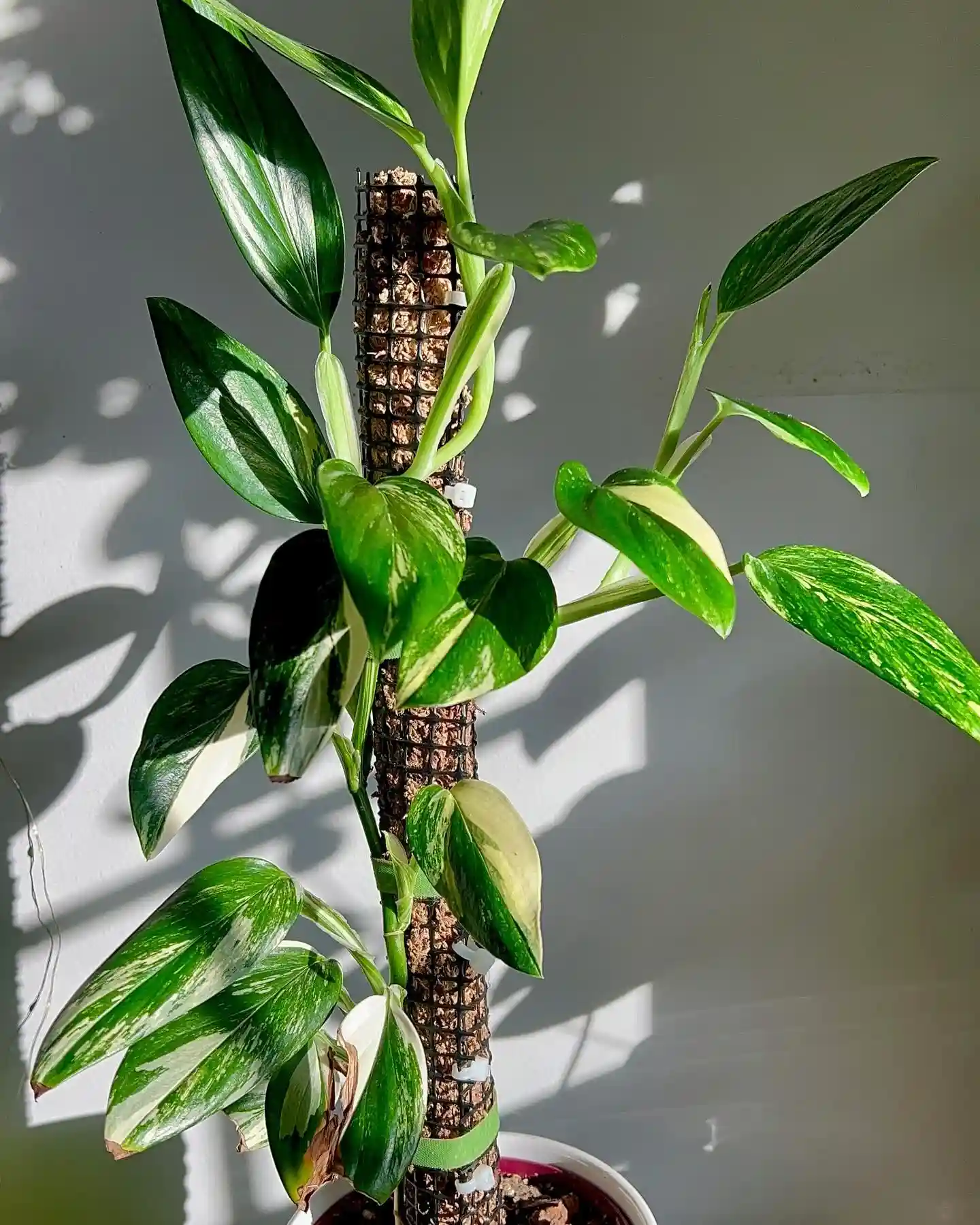
Monstera standleyana has long, narrow leaves that may be solid green or marked with cream and white patches.
It has an upright climbing habit and takes up less width than broad-leaved Monstera types. This makes it useful for narrow corners, plant shelves, and smaller rooms.
It is sometimes incorrectly sold as a philodendron, so check the plant label carefully before buying.
- Care level: Moderate
- Light: Bright, indirect light
- Growth habit: Upright climber
- Best feature: Long patterned leaves
- Best for: Narrow indoor spaces
- Helpful tip: Use a slim moss pole to keep the stems growing upward.
10. Monstera Peru
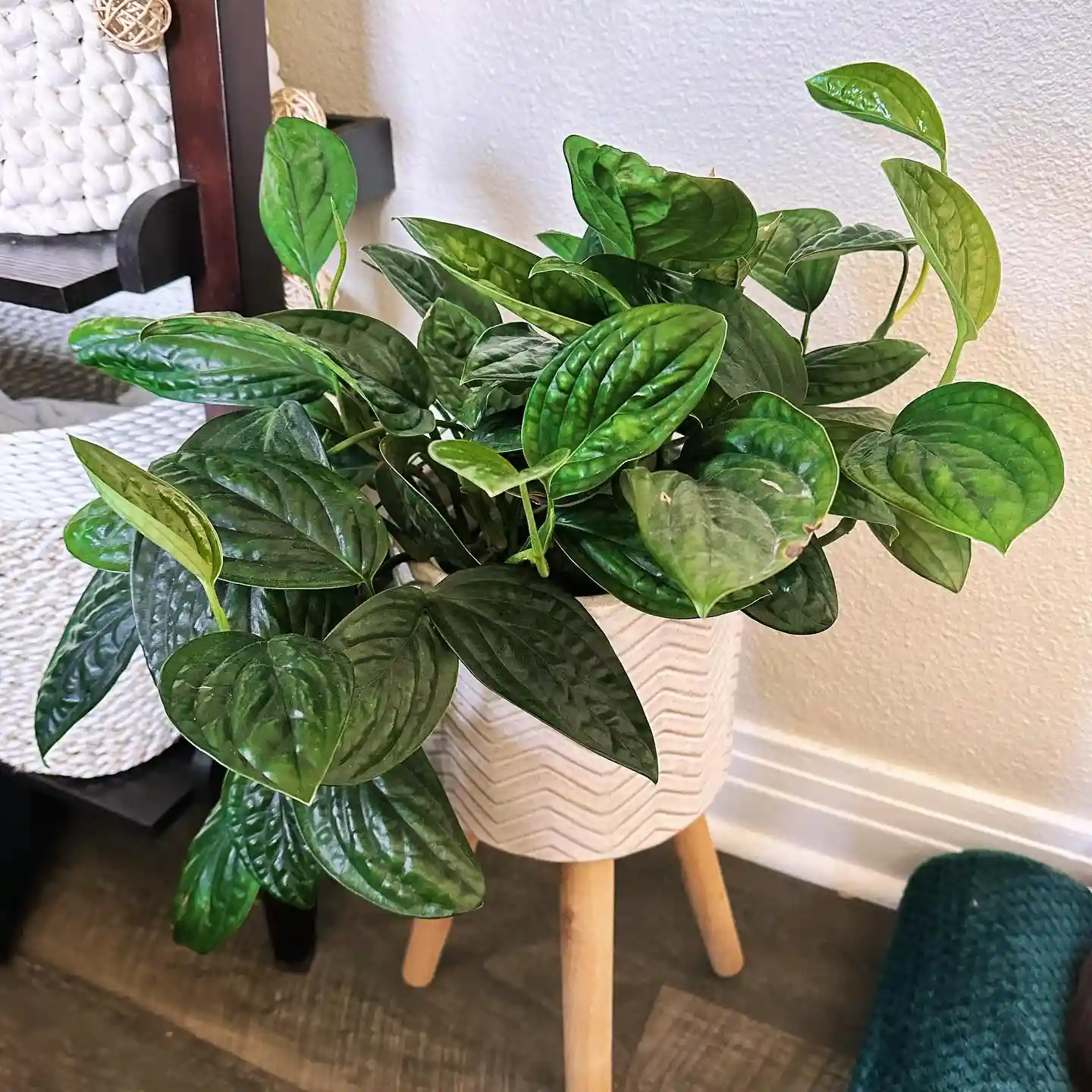
Monstera Peru has thick, deeply textured leaves without the large holes seen on many other Monstera plants.
Its dark green foliage has a raised, almost rippled surface that gives it a bold look without taking up too much room.
It grows well on a moss pole and usually handles average household conditions better than delicate collector plants. This makes it a good first unusual Monstera.
- Care level: Easy to moderate
- Light: Bright, indirect light
- Growth habit: Compact climber
- Best feature: Thick textured leaves
- Best for: Beginners wanting something different
- Helpful tip: Avoid keeping its heavy leaves in constantly wet soil.
11. Monstera Pinnatipartita
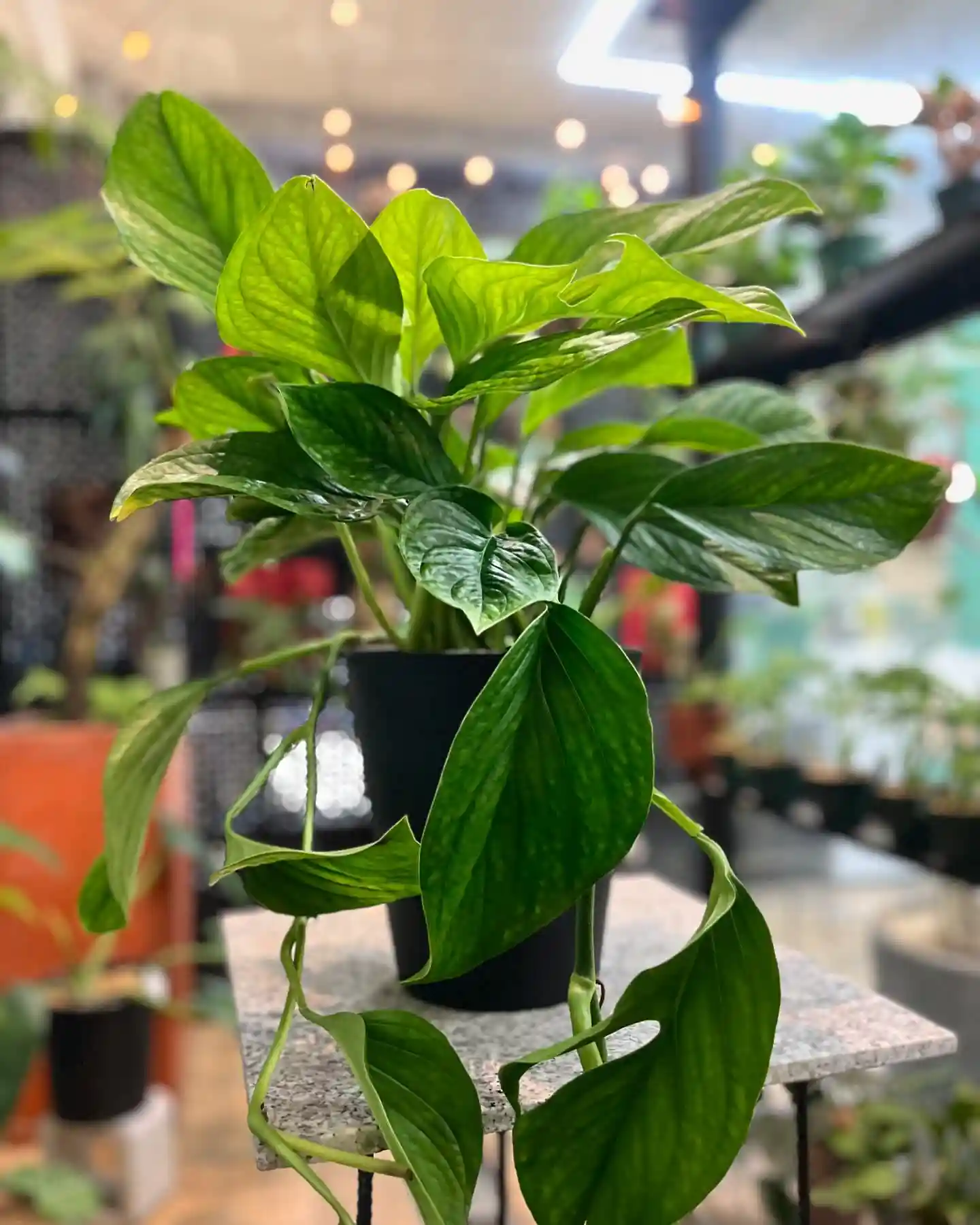
Monstera pinnatipartita begins with solid, glossy leaves that change as the plant matures. Older leaves develop deep divisions that reach close to the central vein, giving the plant a dramatic tropical shape.
It needs a sturdy support and enough vertical room to reach its mature form. This Monstera type suits growers who want a large statement plant but prefer something less common than Monstera deliciosa.
- Care level: Moderate
- Light: Bright, indirect light
- Growth habit: Large climber
- Best feature: Deeply divided mature foliage
- Best for: Spacious rooms and plant corners
- Helpful tip: Add a tall support while the plant is still young.
12. Monstera Subpinnata
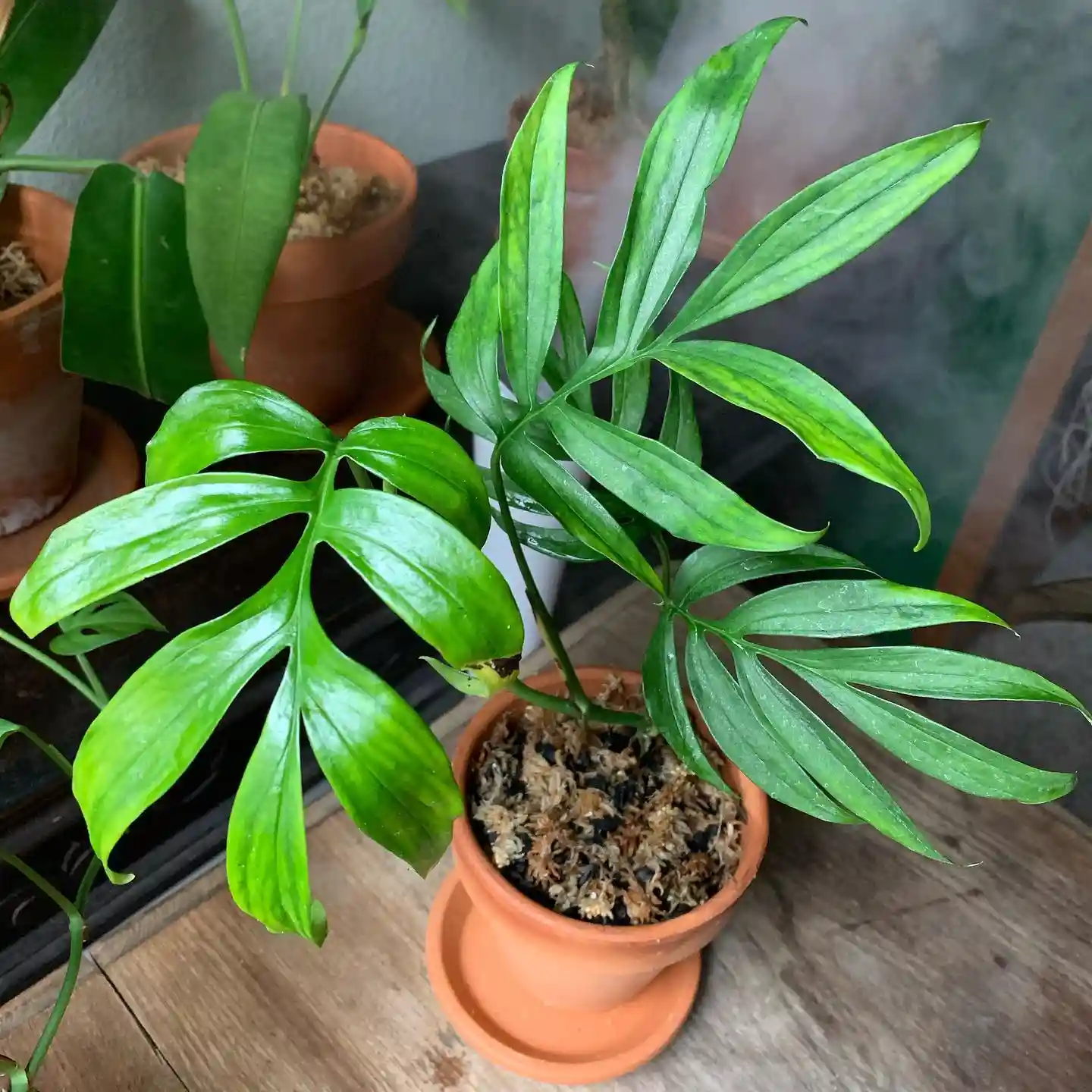
Monstera subpinnata has divided leaves that create a light, feather-like appearance. Its foliage looks softer and more open than the broad leaves of Monstera deliciosa.
The plant grows upward and needs a moss pole or trellis for support.
It prefers warm conditions, bright filtered light, and steady humidity. Its unusual leaf shape works well in tropical-style rooms and larger plant collections.
- Care level: Moderate
- Light: Bright, indirect light
- Growth habit: Climbing plant
- Best feature: Feather-like divided leaves
- Best for: Tropical indoor plant collections
- Helpful tip: Keep it away from cold windows and air-conditioning vents.
13. Monstera Acacoyaguensis
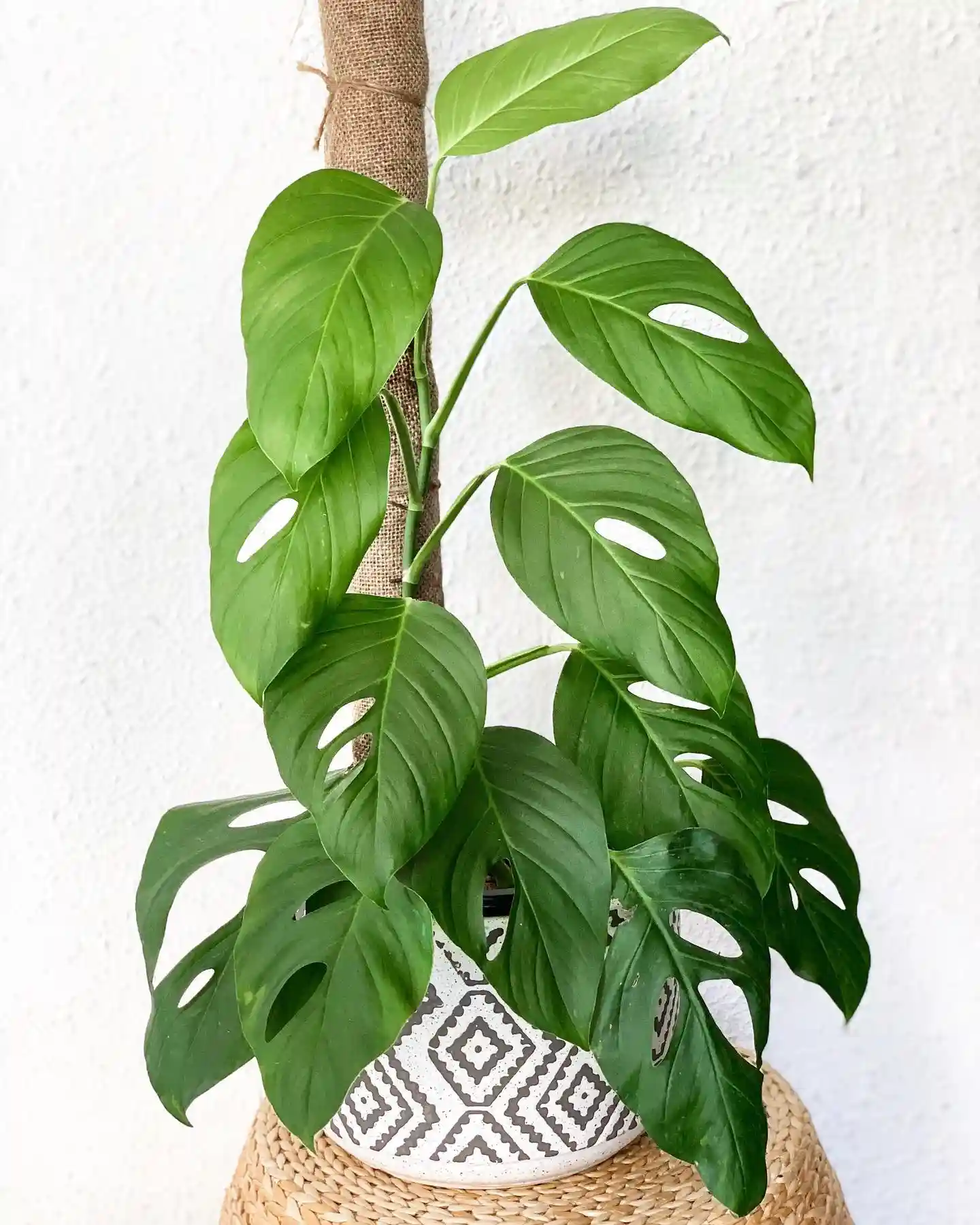
Monstera acacoyaguensis develops long leaves with large oval holes as it matures. It grows quickly when given bright, indirect light, warm temperatures, and a tall climbing support.
Because mature plants can become large, this type is better suited to rooms with plenty of height and open space. Its long foliage creates a bold look without appearing as dense as Monstera deliciosa.
- Care level: Moderate
- Light: Bright, indirect light
- Growth habit: Fast-growing climber
- Best feature: Long leaves with large holes
- Best for: Large rooms and collectors
- Helpful tip: Use a tall moss pole before the stems begin trailing.
14. Monstera Esqueleto
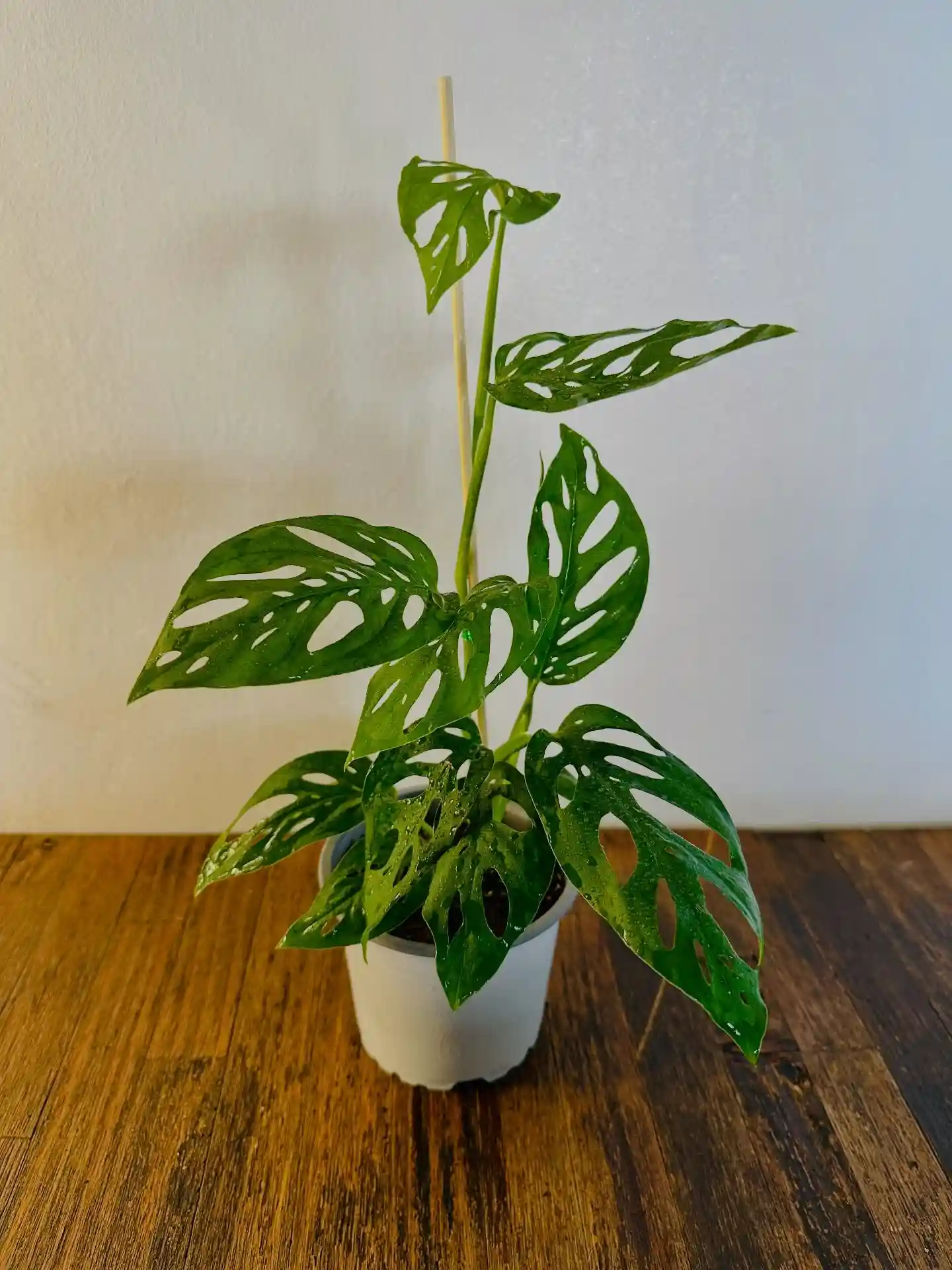
Monstera Esqueleto is grown for its large leaves and oversized openings. The holes take up much of the leaf surface, creating a bold and airy appearance.
It may look similar to Monstera adansonii when young, but mature Esqueleto leaves grow much larger.
A tall support, warm room, and steady humidity will help it produce its best foliage.
- Care level: Moderate
- Light: Bright, indirect light
- Growth habit: Large climbing plant
- Best feature: Oversized leaf holes
- Best for: Bold indoor plant displays
- Helpful tip: Do not let the stems trail if you want larger leaves.
15. Monstera Obliqua
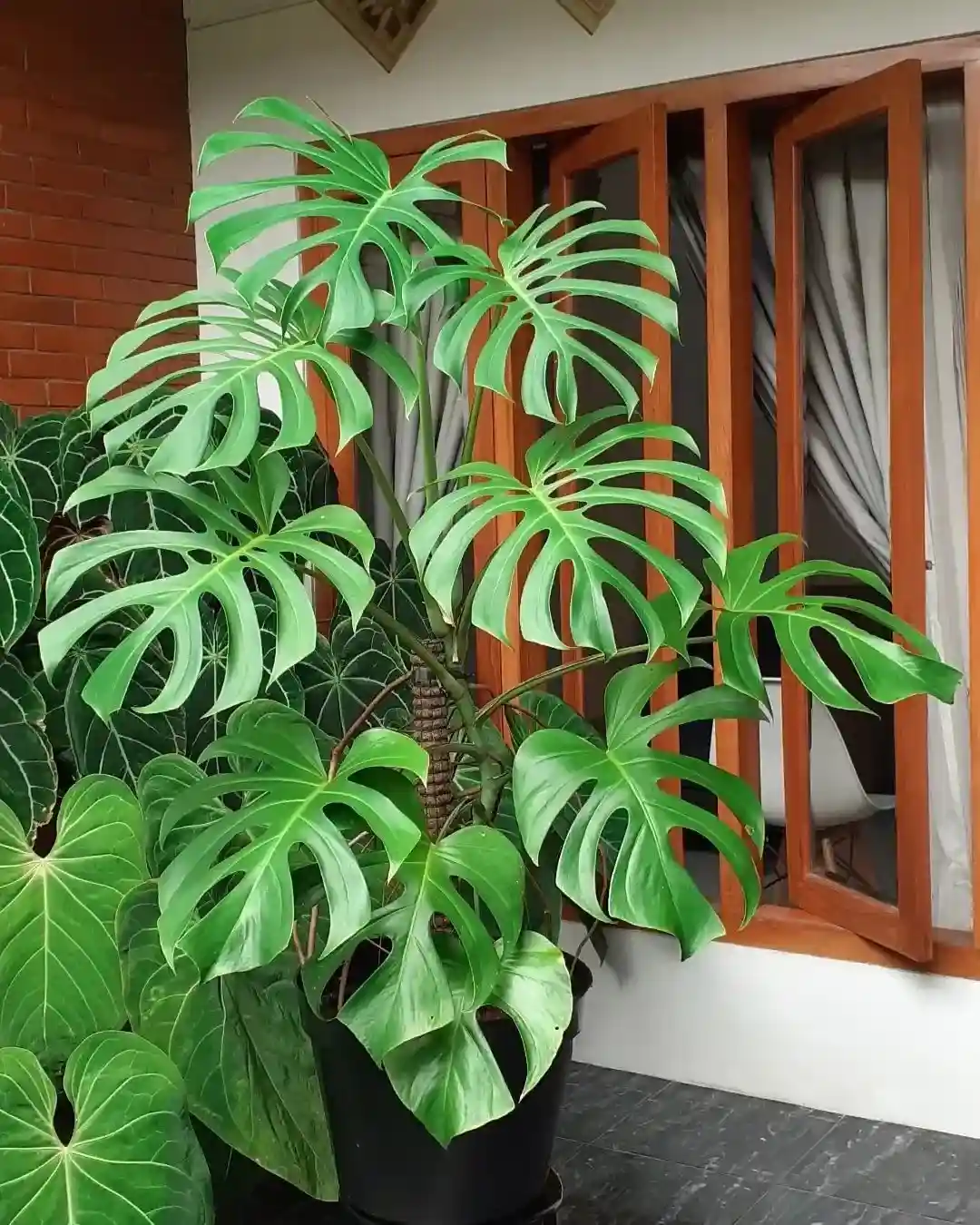
Monstera obliqua is one of the most delicate and uncommon Monstera types. Its very thin leaves contain large openings, sometimes leaving only narrow strips of green tissue.
It grows slowly and needs high humidity, warmth, and careful watering. Many plants sold under this name are actually Monstera adansonii, so buy only from a trusted specialist.
For most homes, adansonii is the easier and more practical option.
- Care level: Difficult
- Light: Bright, filtered light
- Growth habit: Delicate climbing plant
- Best feature: Extremely perforated leaves
- Best for: Serious plant collectors
- Helpful tip: Avoid buying one unless the seller can confirm its identity.
Frequently Asked Questions
What is the easiest Monstera type to grow?
Monstera deliciosa is usually the easiest choice for beginners. It grows well in bright, indirect light and is more forgiving than rare or heavily variegated types.
Which Monstera type stays small?
Monstera adansonii, Monstera siltepecana, and Monstera standleyana are easier to manage in smaller rooms. Regular pruning and a compact support can help control their size.
What is the rarest Monstera type?
Monstera obliqua is one of the rarest types commonly discussed by collectors. True plants are difficult to find, and many are incorrectly labeled as Monstera obliqua when they are actually Monstera adansonii.
Do all Monstera types develop holes?
No, not every Monstera develops large holes. Some types form deep splits, while others, such as Monstera Peru, are grown for their thick, textured leaves instead.
Which Monstera is best for low light?
Monstera deliciosa and Monstera adansonii can tolerate moderate light, but they will not grow their best leaves in a dark room. Brighter indirect light usually leads to faster growth and better leaf shape.
Is Monstera Albo better than Thai Constellation?
Thai Constellation is usually easier for someone buying their first variegated Monstera because its pattern is more stable. Monstera Albo has sharper white variegation, but its growth can be less predictable.
Why are variegated Monsteras expensive?
Variegated Monsteras grow more slowly because the pale sections contain less chlorophyll. Their price also depends on demand, rarity, plant size, and how strong the variegation appears on the stem and leaves.
Can Monstera plants grow without a moss pole?
Yes, but climbing types often produce larger and more mature leaves when given support. A moss pole, wooden plank, or trellis also keeps the plant growing upright.
Why does my Monstera have no holes?
Young Monstera plants often have solid leaves. Better light, healthy roots, enough time, and climbing support can help the plant produce more mature foliage.
Are Monstera plants safe for pets?
Monstera plants should be kept away from cats and dogs that may chew the leaves. Place them on a high stand or in a room your pets cannot access.