25 Shared Kids Room Ideas To Get Inspirations
Sharing a bedroom can be fun when each child has a comfortable place to sleep, store belongings, and show their personality. These shared kids room ideas include twin beds, bunk beds, clever built-ins, study areas, and color-coded zones.
Whether the room is small or spacious, you’ll find practical ways to create a tidy, cozy setup that works for siblings of different ages.
1. Build a Upholstered Twin-Bed Nook
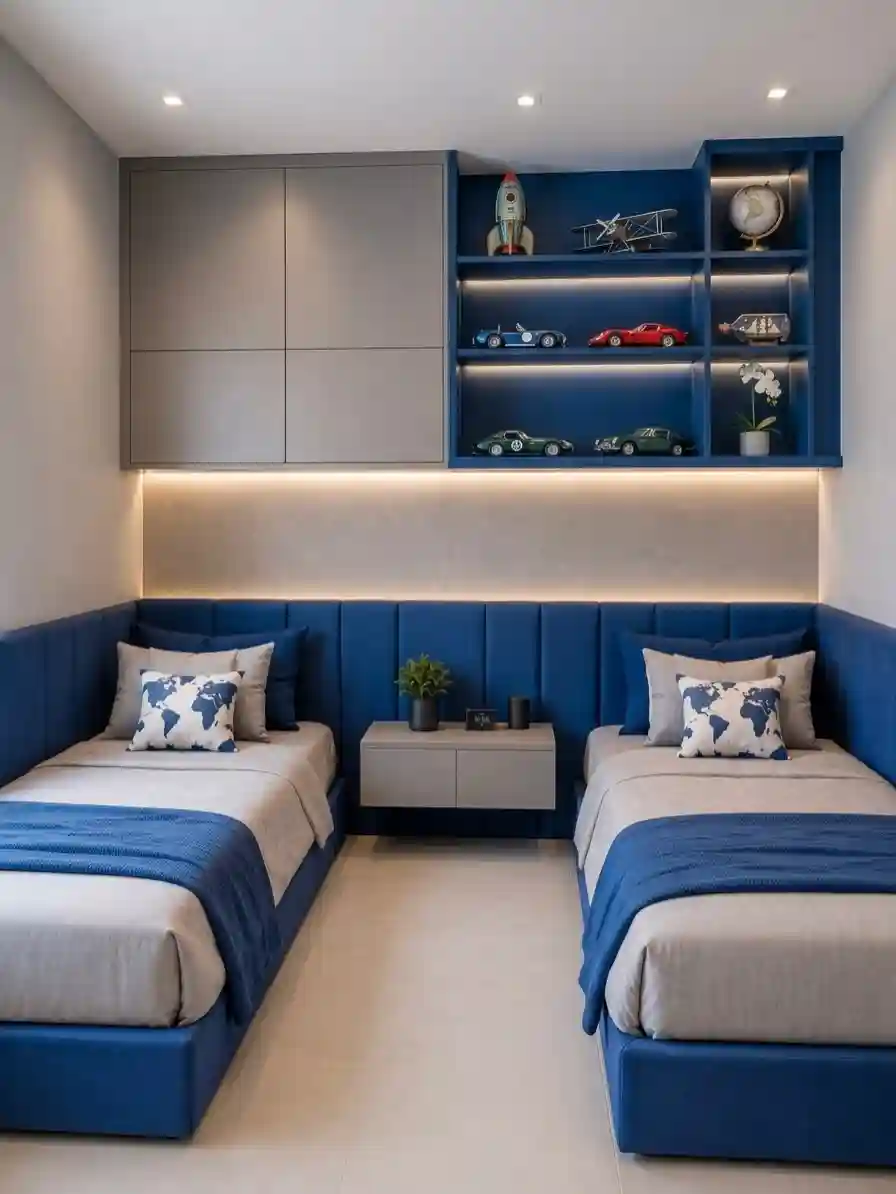
Wrapping two matching beds in deep-blue upholstery gives each child a cozy sleeping nook while keeping the room polished. The continuous padded wall also protects against bumps and makes bedtime reading more comfortable. Overhead cabinets and display shelves use the wall efficiently without taking away valuable floor space.
- Choose performance fabric that can handle stains and frequent cleaning.
- Give each child a separate overhead cabinet for personal belongings.
- Install warm LED strips behind the beds for soft nighttime lighting.
- Use a floating nightstand to keep the walkway open.
- Repeat one theme, such as travel, through pillows and shelf decor.
2. Personalize Matching Twin Beds
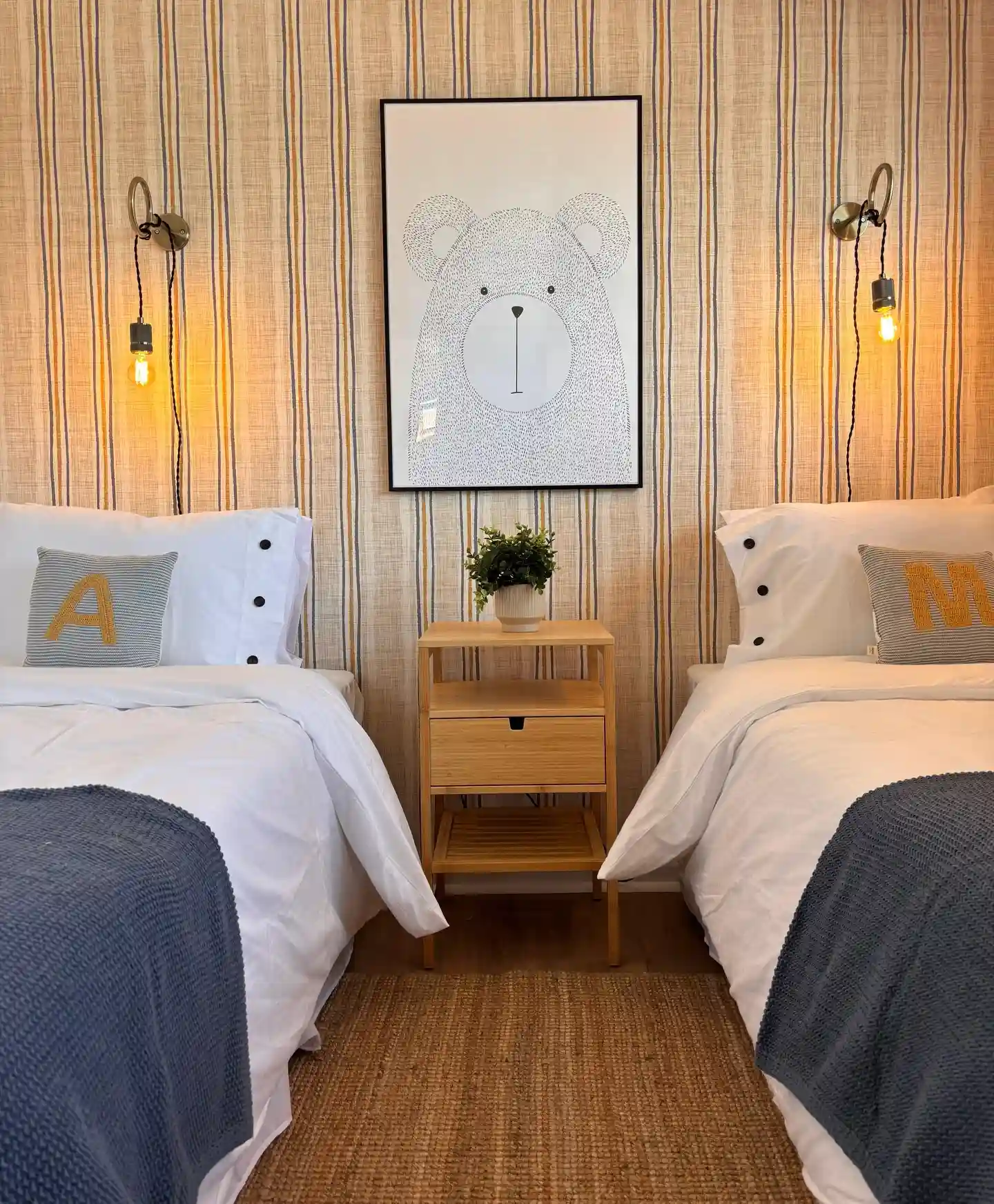
Matching beds create order, but small personal details stop a shared room from feeling impersonal. Here, initial pillows give each child a clear side without interrupting the calm design. Striped wallpaper, crisp white bedding, and navy throws create a timeless look that can grow with the children.
- Add monogrammed pillows or framed initials above each bed.
- Give both children their own wall-mounted reading light.
- Select washable white bedding with removable duvet covers.
- Use striped wallpaper to make a low ceiling appear taller.
- Keep the shared nightstand narrow enough for comfortable bed access.
Read also: 20 Toddler Girl Bedroom Ideas
3. Create a Two-Level Sleep Zone
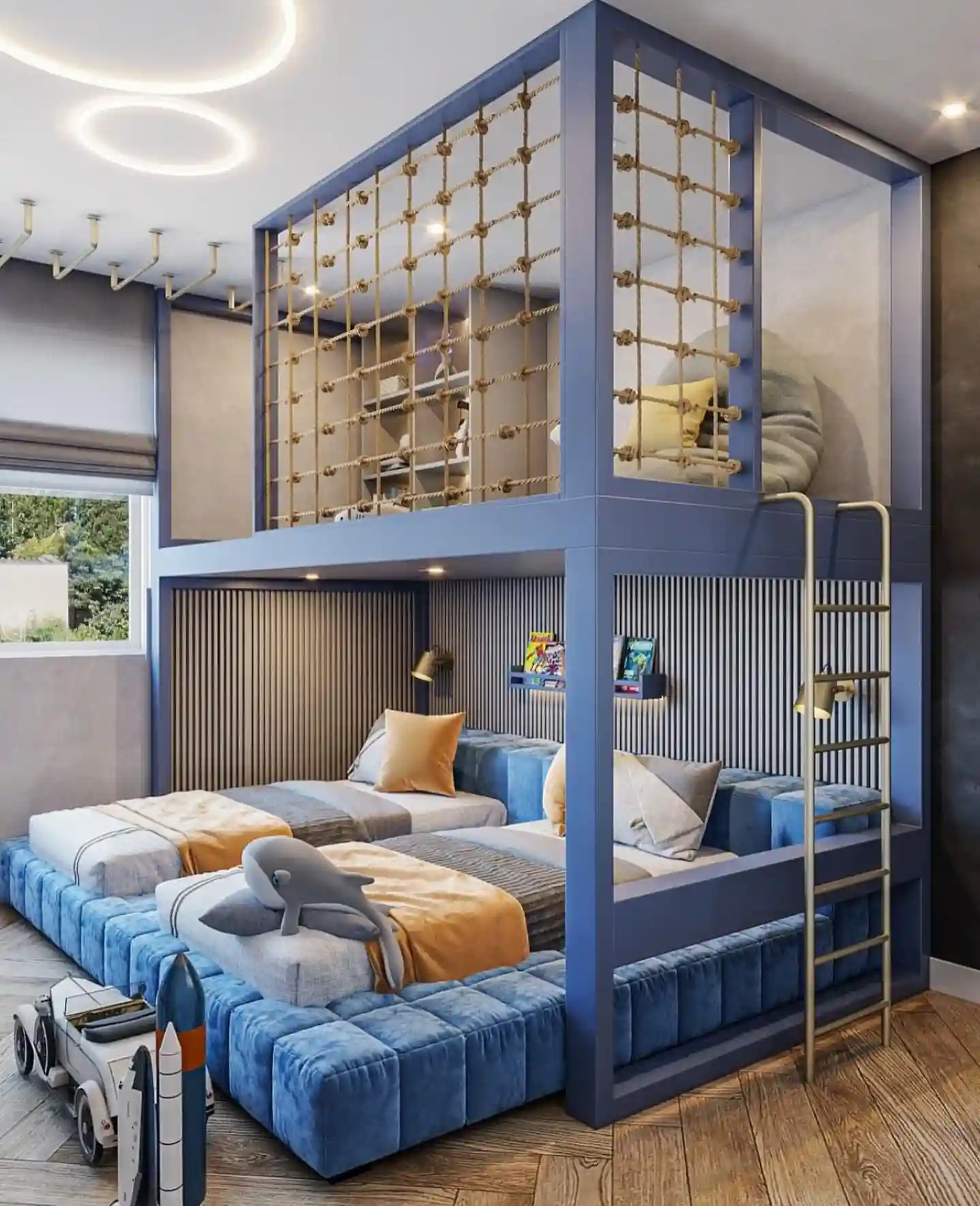
A lofted platform can turn one bedroom into two connected zones. The lower level holds side-by-side beds, while the upper retreat provides room for reading, quiet play, or an extra mattress. Rope-net panels keep the loft visually open and add a playful adventure-room feel without using bright themed decor.
- Have the loft structure planned and installed by a qualified professional.
- Use fixed guardrails and secure netting around every open edge.
- Add separate reading lights beside both lower beds.
- Keep climbing equipment away from ceiling fans and hanging fixtures.
- Reserve the upper level for older children who can climb safely.
4. Add One Continuous Headboard
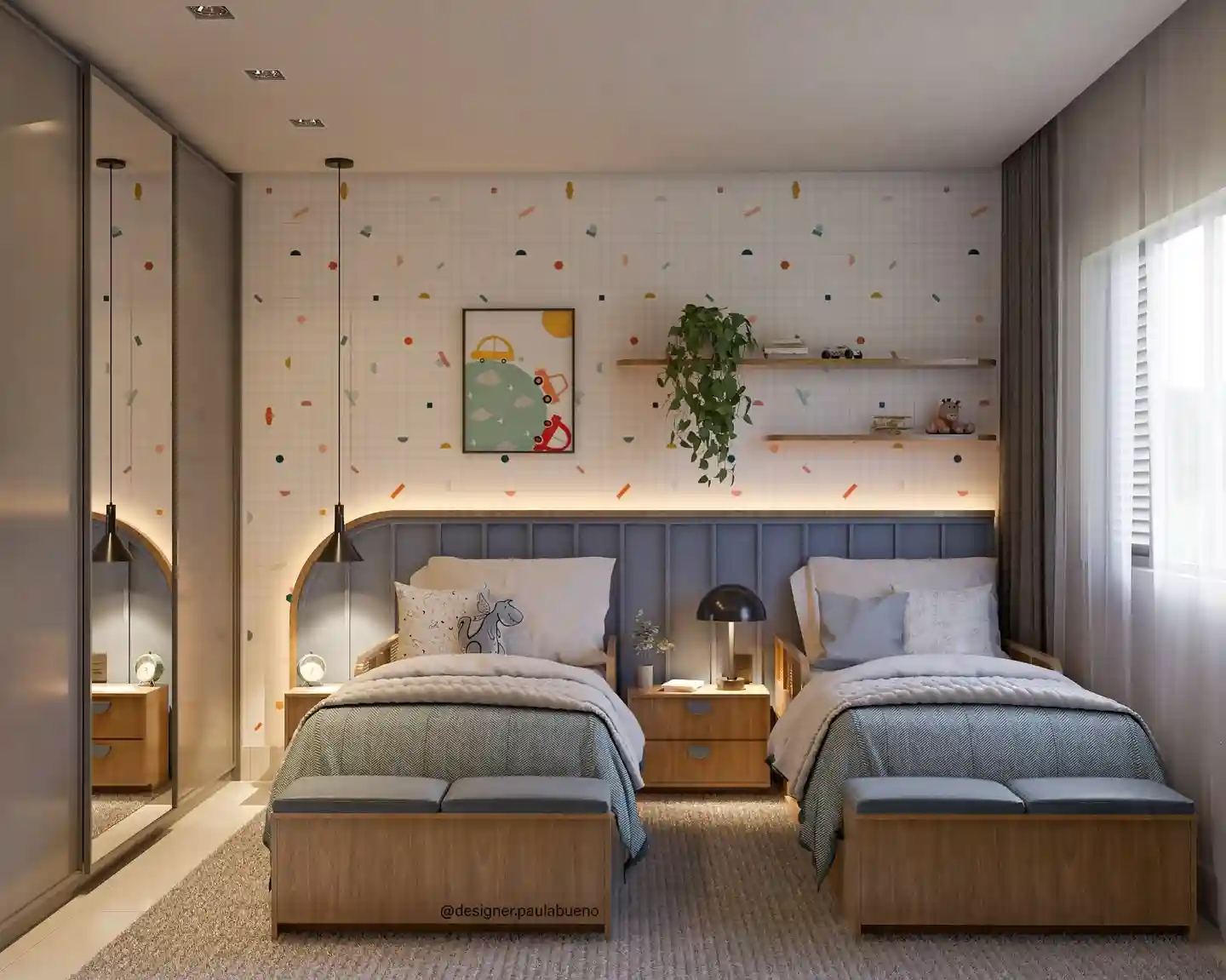
A single headboard visually connects two separate beds and makes a narrow shared room feel wider. The muted blue-gray finish works well with warm wood furniture and playful wallpaper. Matching benches at the foot of each bed also give the children equal storage and a convenient place to get dressed.
- Extend the headboard across both beds for a built-in appearance.
- Place a shared nightstand in the center to preserve symmetry.
- Give each bed its own reachable light for independent routines.
- Choose lift-top or drawer benches for toys and spare bedding.
- Use subtle wallpaper so the room remains restful at bedtime.
5. Mix Beds for Different Ages
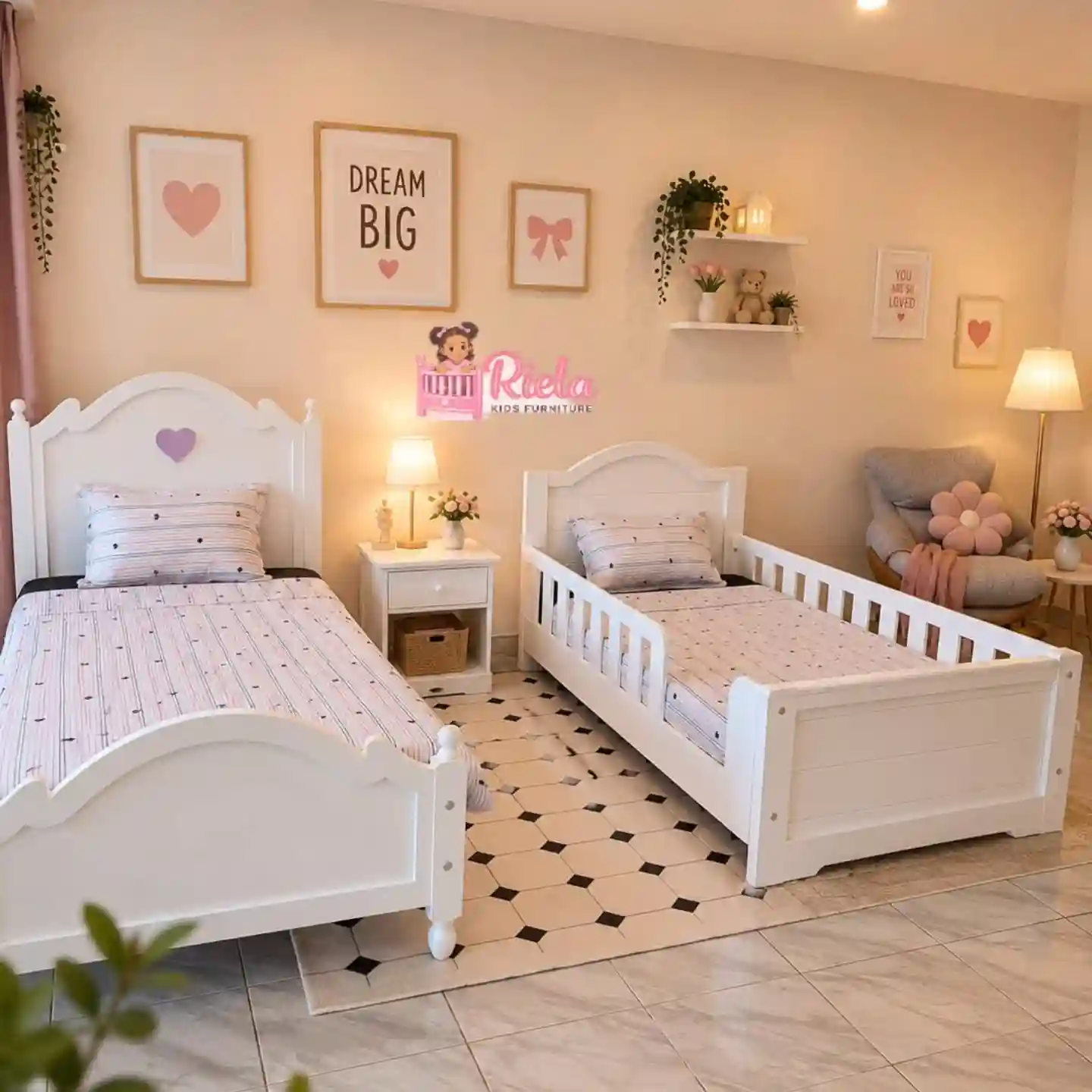
Children sharing a room do not always need identical beds. A standard single bed suits an older child, while a low toddler bed gives a younger sibling safer access. Matching white finishes and repeated striped bedding connect the two pieces, even though their heights and shapes are different.
- Keep the younger child’s bed low and clear of hard-edged furniture.
- Use matching sheets or colors to unite different bed styles.
- Position a shared nightstand where both children can reach it.
- Give each child wall art suited to their personality.
- Add a comfortable chair for stories, feeding, or bedtime supervision.
6. Layer a Vintage Cottage Look
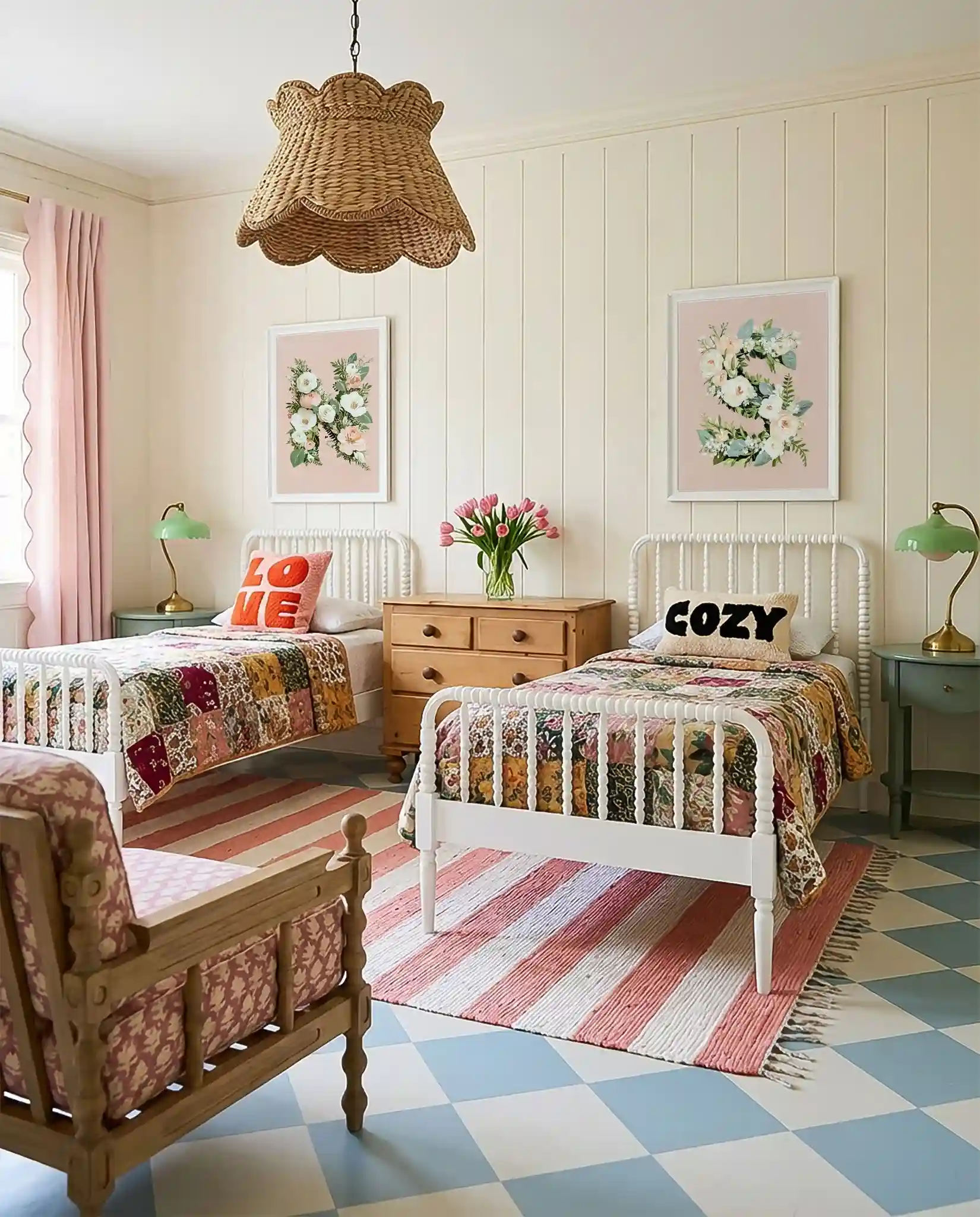
Matching spindle beds provide a neat foundation for a shared kids’ room filled with pattern and color. Patchwork quilts, floral artwork, painted tables, and a striped rug give the space a collected cottage character. Because the bed frames match, the richer mix of prints feels cheerful rather than untidy.
- Start with matching beds before introducing several patterns.
- Repeat pink, green, and cream across textiles and accessories.
- Give each child a bedside table for personal items.
- Anchor tall lamps and furniture to prevent tipping.
- Choose washable quilts that become softer with regular use.
7. Use an Awkward Architectural Space
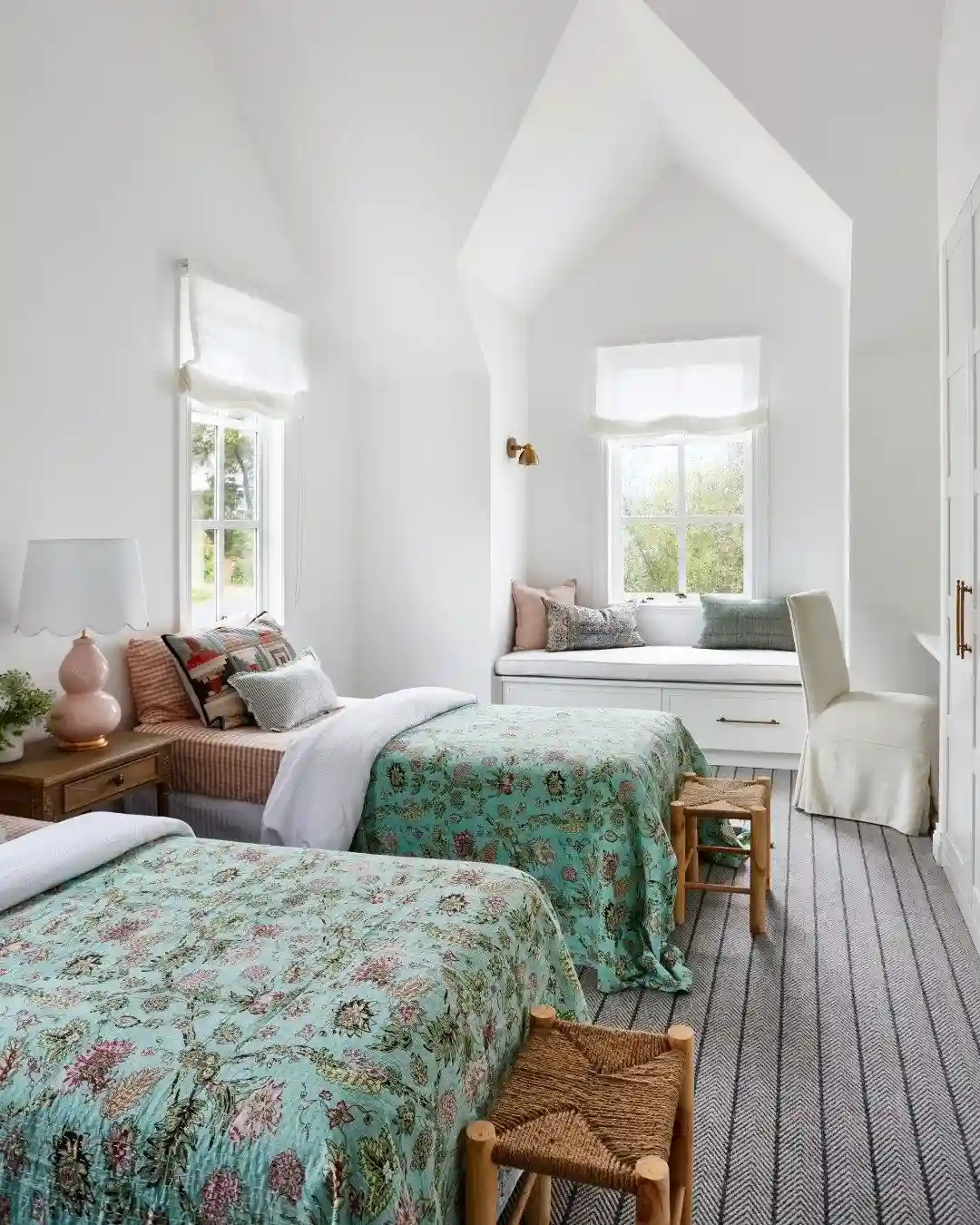
Sloped ceilings and unusual windows can make furniture placement difficult, but they can also give a shared bedroom real character. Placing the twin beds along one side leaves a clear path toward the window seat. Matching floral coverlets pull the room together while the built-in bench adds storage and seating.
- Measure ceiling height before placing beds beneath sloped areas.
- Keep the tallest furniture against full-height walls.
- Add drawers below a window seat for shared storage.
- Choose low stools or benches that do not interrupt the walkway.
- Use light walls and soft window shades to reflect natural light.
8. Raise Beds Above Storage
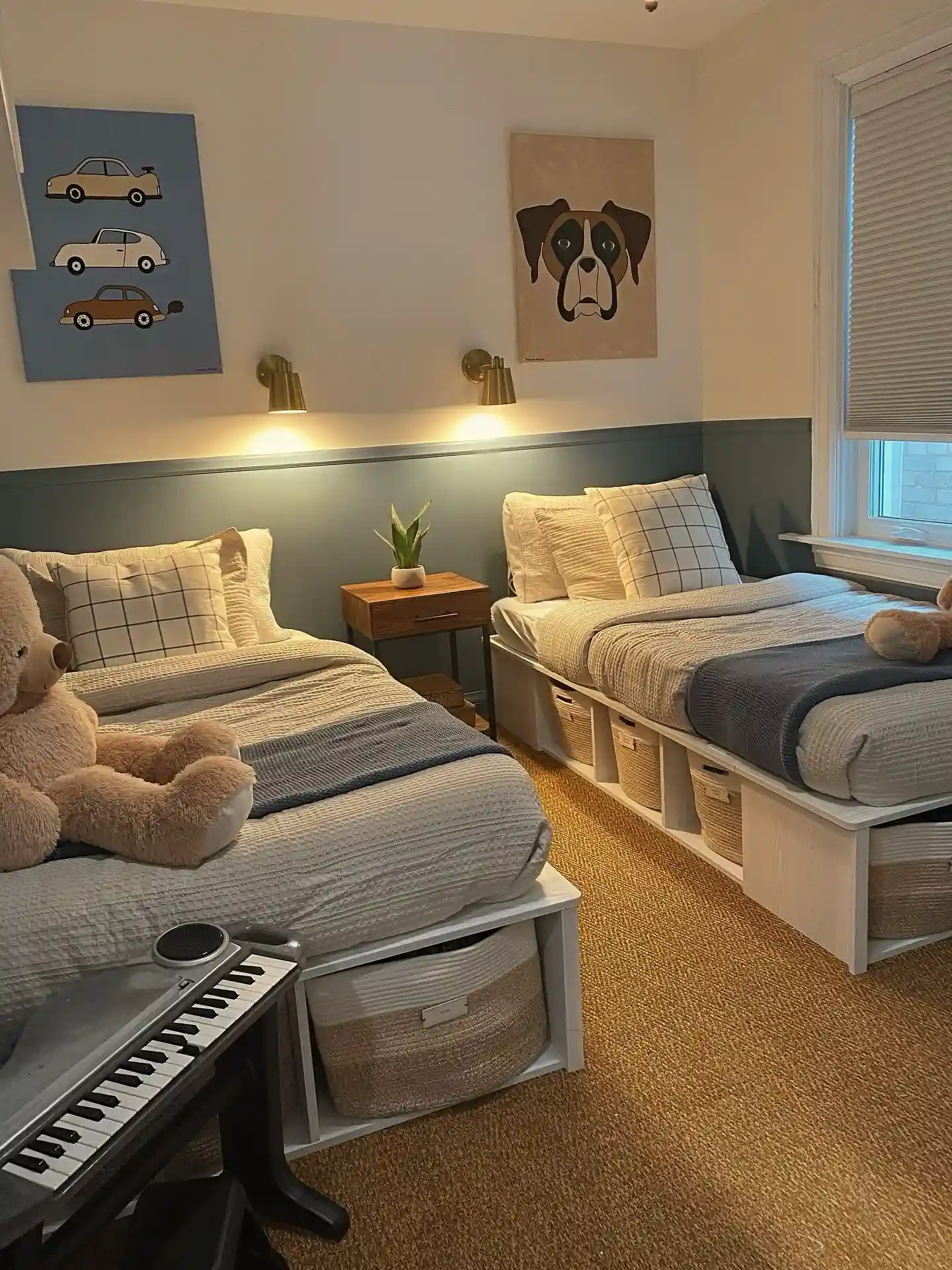
Platform beds with open cubbies solve one of the biggest problems in a shared kids’ room: where to put everything. Individual baskets create simple storage for clothing, toys, and school supplies. The raised beds also leave more of the room available for activities while keeping daily belongings within easy reach.
- Assign specific baskets to each child and add simple labels.
- Choose smooth, lightweight bins that children can pull out safely.
- Keep frequently used items in the easiest-to-reach cubbies.
- Secure platform units so they cannot shift during use.
- Repeat the same bedding to make practical storage look intentional.
9. Give Each Child a Color
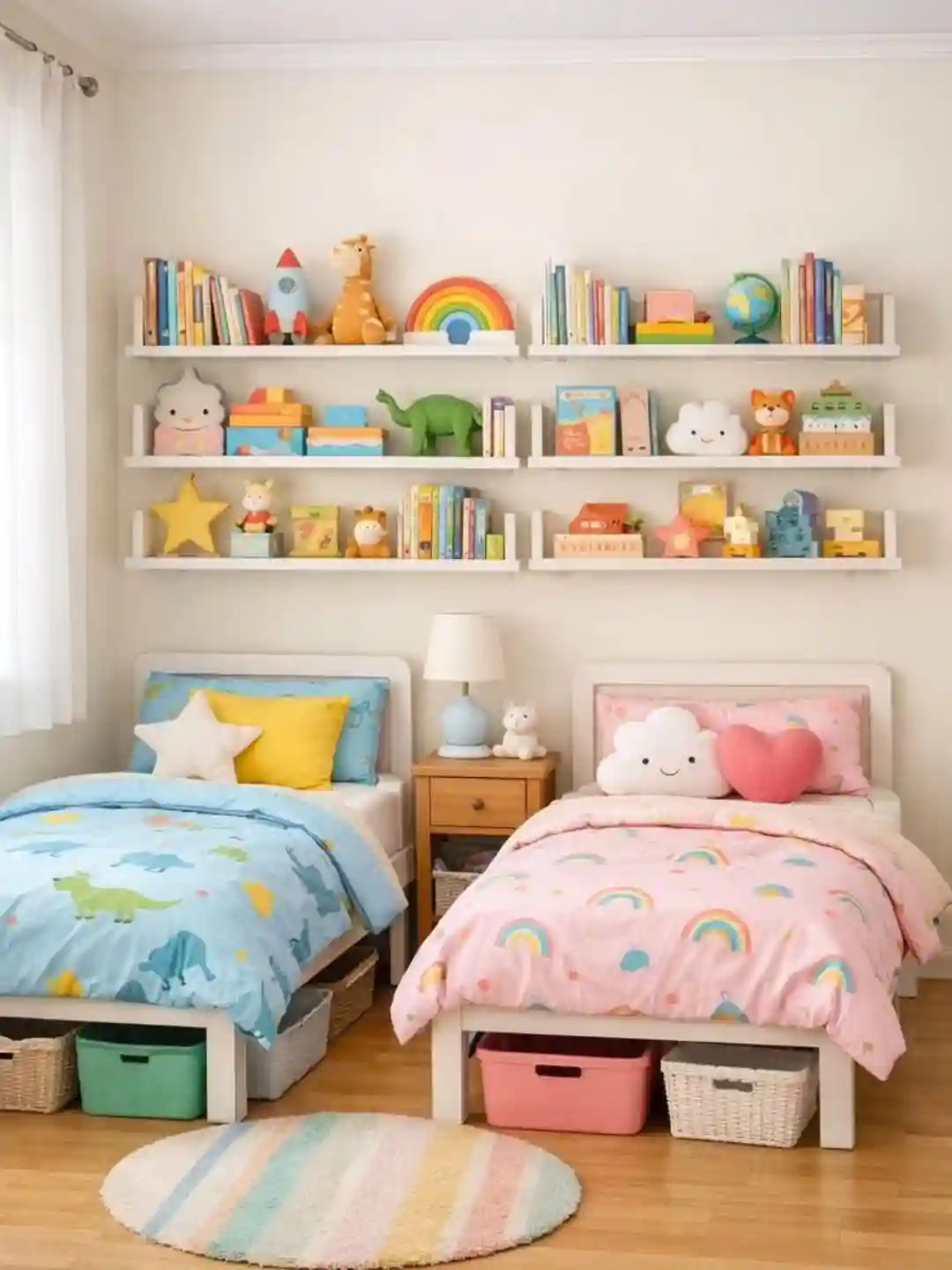
Using a different color for each bed helps children recognize their own area while keeping the room connected. Blue dinosaur bedding and pink rainbow bedding express separate interests, but the shared shelves bring both sides together. Color-coded under-bed bins make tidying easier because every item has an obvious home.
- Let each child choose one main color or bedding theme.
- Repeat both colors in shared artwork and accessories.
- Store toys in bins that match each child’s side.
- Keep heavy items off high shelves above sleeping areas.
- Leave some shelf sections for joint books and games.
10. Place a Dresser Between Beds
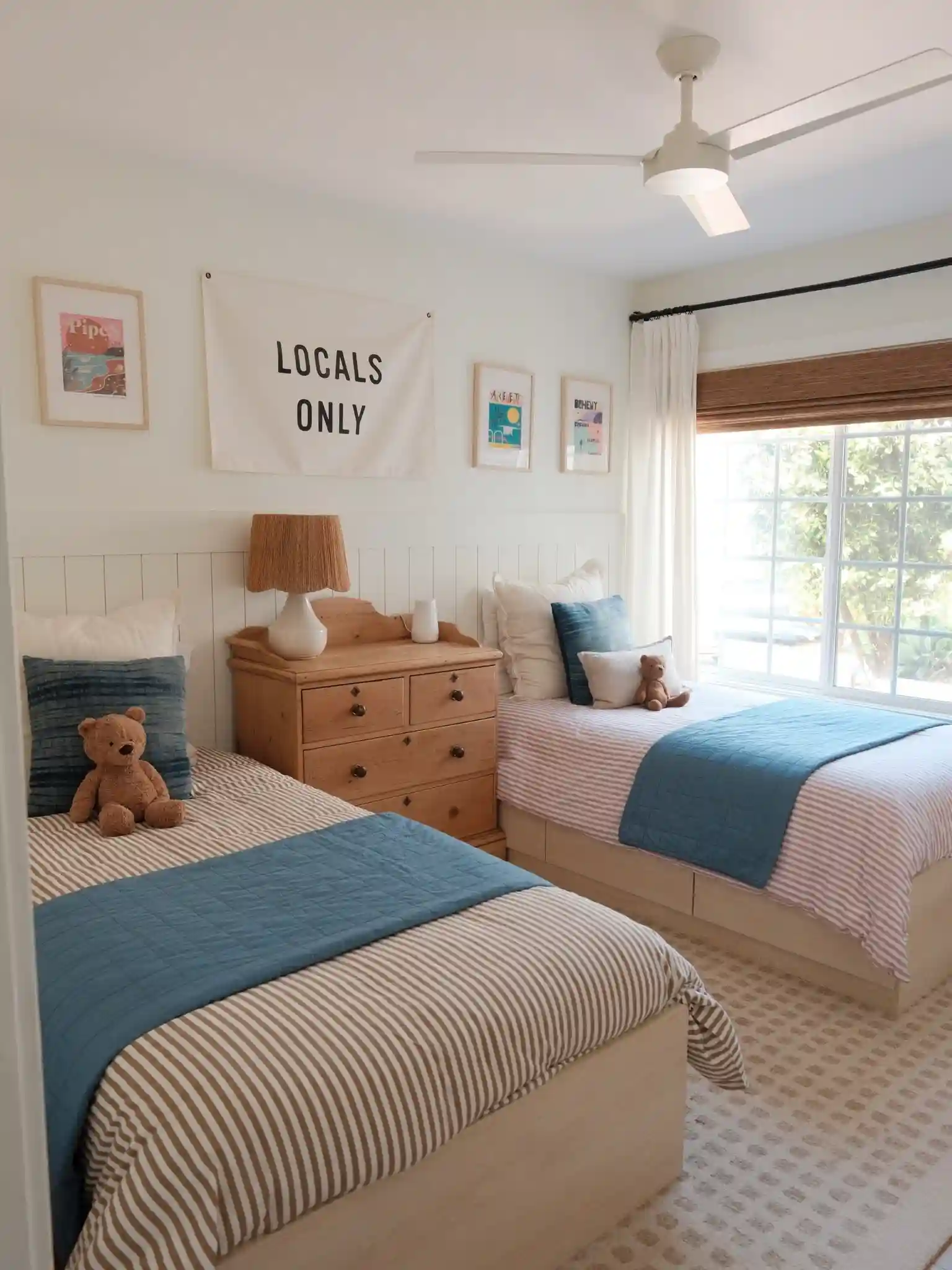
A dresser between twin beds provides more storage than a small nightstand and creates a natural divider. This arrangement gives each child a clear sleeping zone without adding a screen or partition. Matching striped bedding and blue coverlets maintain balance, while the warm wood dresser adds contrast to the white room.
- Check that drawers can open fully without touching either bed.
- Give each child an equal number of dresser drawers.
- Use drawer organizers to keep small clothing items separated.
- Anchor the dresser securely to the wall.
- Select a compact lamp that leaves space for bedtime essentials.
11. Try Soft Sage Stripes
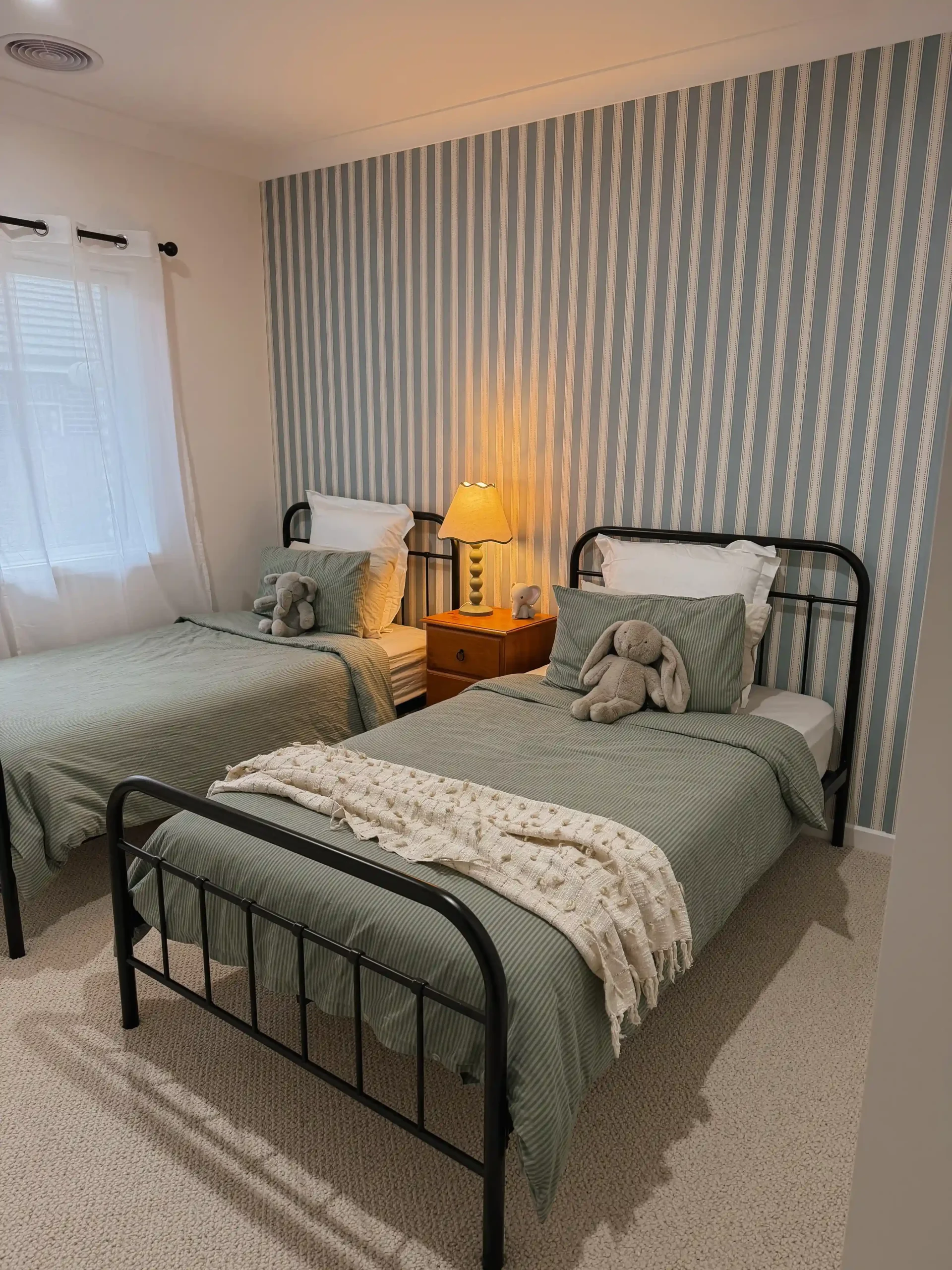
Sage-green bedding and striped wallpaper create a gentle shared bedroom that feels calm without looking plain. Black metal beds add definition, while matching soft toys keep the arrangement sweet and child-friendly. The limited palette also makes this room easy to update as the children get older and their interests change.
- Use vertical stripes to add a sense of height.
- Soften metal frames with thick pillows and layered blankets.
- Place a warm lamp between the beds for balanced lighting.
- Add subtle differences through each child’s toy or cushion.
- Choose a textured cream throw to break up repeated green.
12. Brighten the Room With Yellow
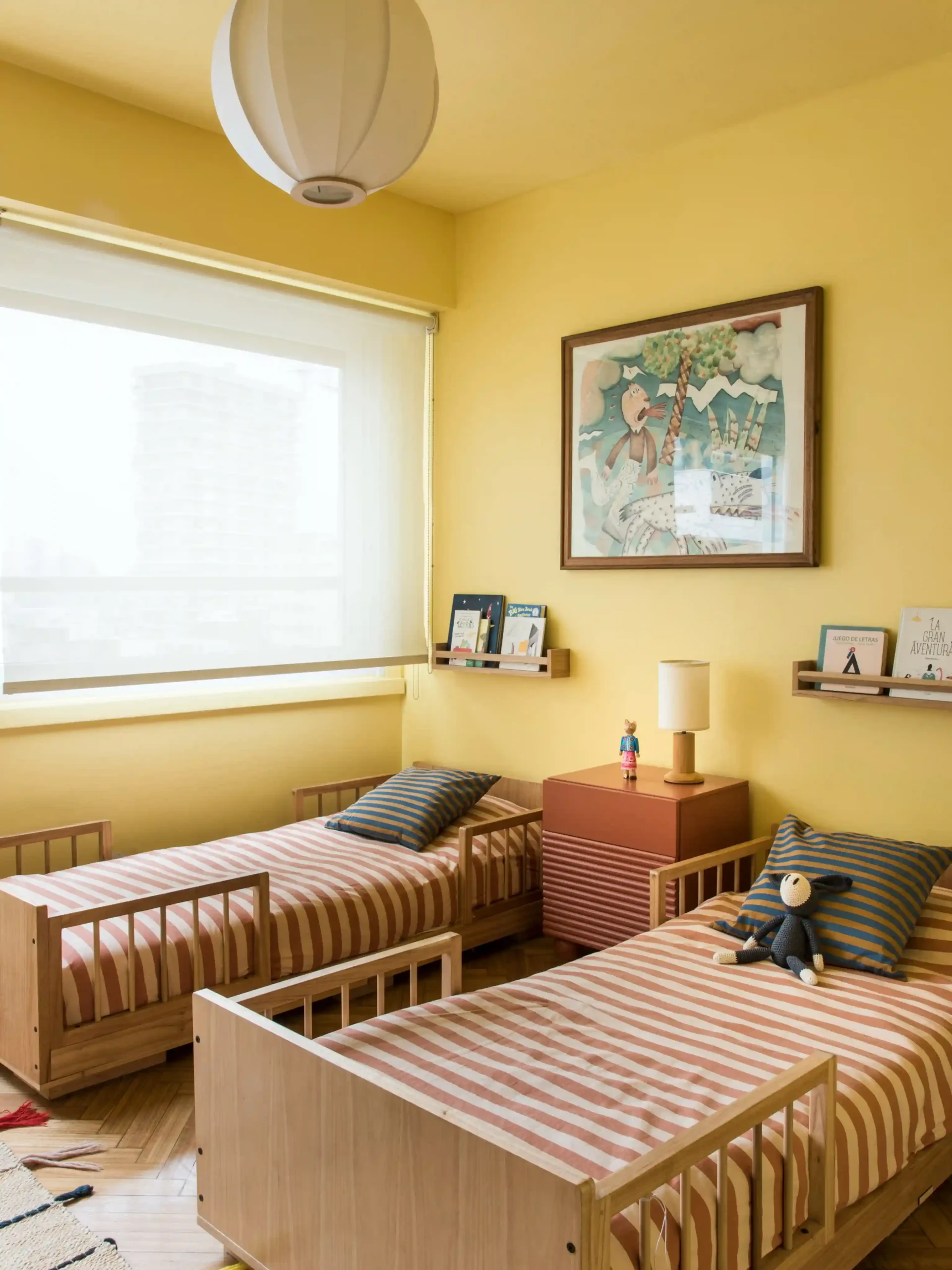
Yellow walls bring warmth and energy to a shared room, especially when balanced with natural wood furniture. Terracotta-striped bedding keeps the cheerful color from becoming overly bright, while blue-and-mustard pillows add contrast. Wall-mounted book ledges give both children easy access to favorite stories without needing bulky bookcases.
- Test yellow paint in daylight and lamplight before covering every wall.
- Choose a softened mustard or ochre shade for a restful result.
- Mount book ledges securely and within the children’s reach.
- Use matching guardrail beds for younger children moving from cribs.
- Add navy or deep teal accents to ground the warm palette.
13. Choose a Wave Wallpaper
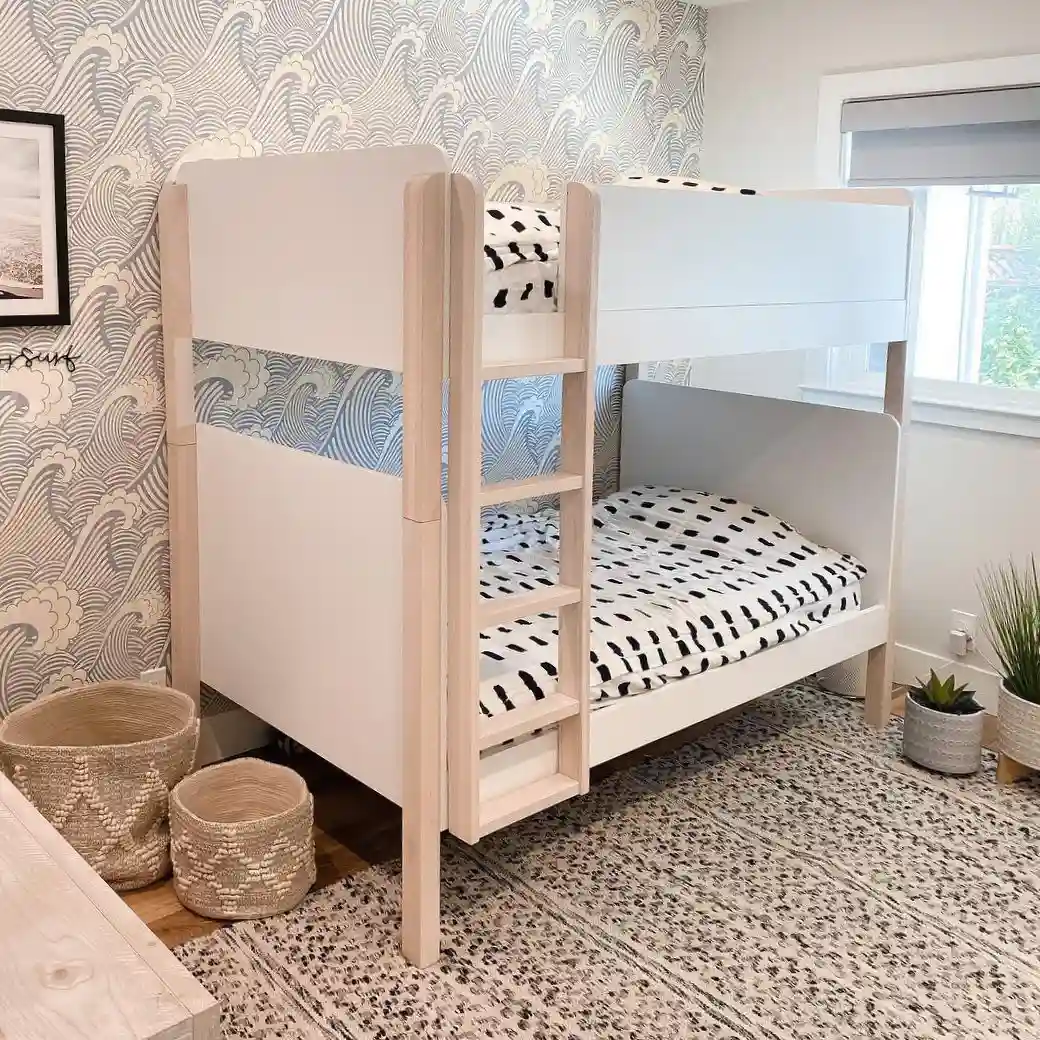
A gray wave-print wall gives a simple bunk-bed room plenty of movement without adding loud color. The white-and-natural-wood bunk bed keeps the look light, while black-and-white bedding repeats the graphic style. Woven baskets and potted plants soften the straight furniture lines and provide useful storage.
- Use one patterned wall so the compact room does not feel busy.
- Choose a bunk bed with tall guardrails and a secure fixed ladder.
- Place washable baskets near the bed for toys and laundry.
- Repeat the wallpaper colors through bedding and the area rug.
- Keep plants away from electrical outlets and climbing areas.
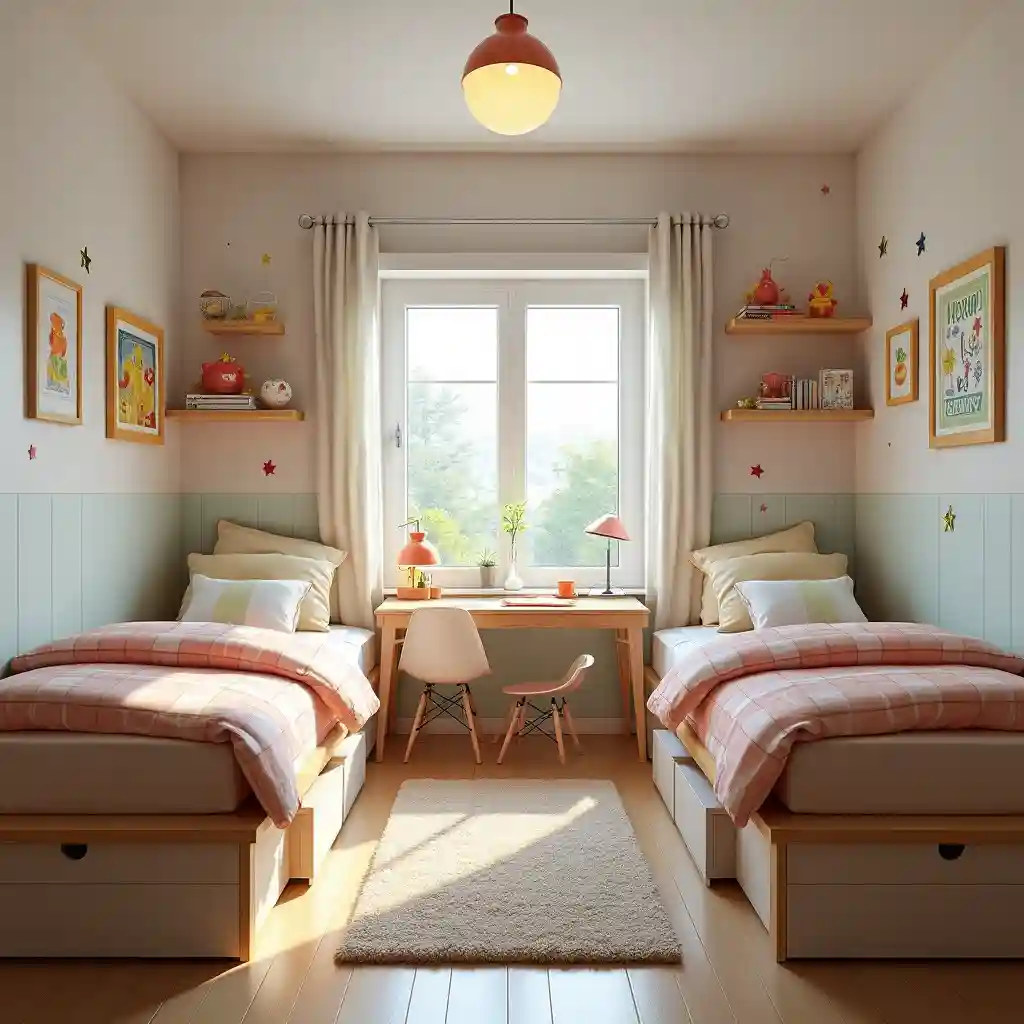
Placing a desk between matching beds gives both children a practical place for homework, drawing, or reading. The symmetrical layout feels orderly, while blush plaid bedding, pale-blue paneling, and warm wood shelves add gentle color. Under-bed drawers make smart use of space that might otherwise be wasted.
- Divide desk drawers or containers equally between both children.
- Add two chairs if the children often study at the same time.
- Use under-bed drawers for seasonal clothes or spare bedding.
- Mount floating shelves high enough to protect children while sitting up.
- Choose washable curtains and bedding in soft coordinating colors.
15. Layer Floral Coverlets
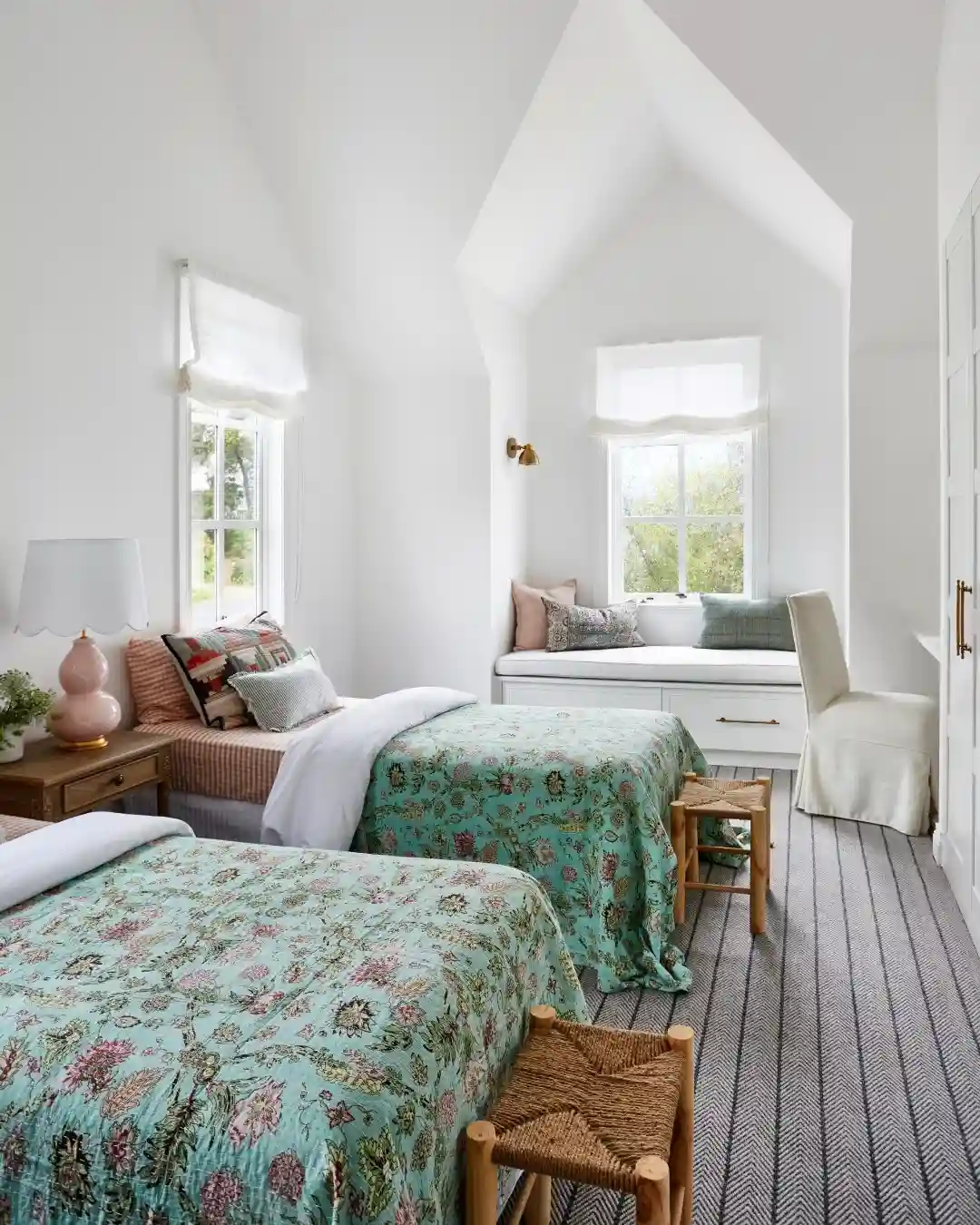
Floral coverlets bring color and an inviting, collected feel to this bright shared kids’ room. The two prints are similar without matching exactly, which gives each bed a little personality. A window seat, woven stools, gingham upholstery, and a striped rug add several useful textures without making the room feel crowded.
- Select floral patterns with two or three shared colors.
- Keep walls white to balance detailed bedding and patterned cushions.
- Add a drawer beneath the window seat for games or blankets.
- Use woven stools as lightweight seats or bedside surfaces.
- Leave enough clearance around both beds for easy sheet changes.
16. Add a Storybook Mural
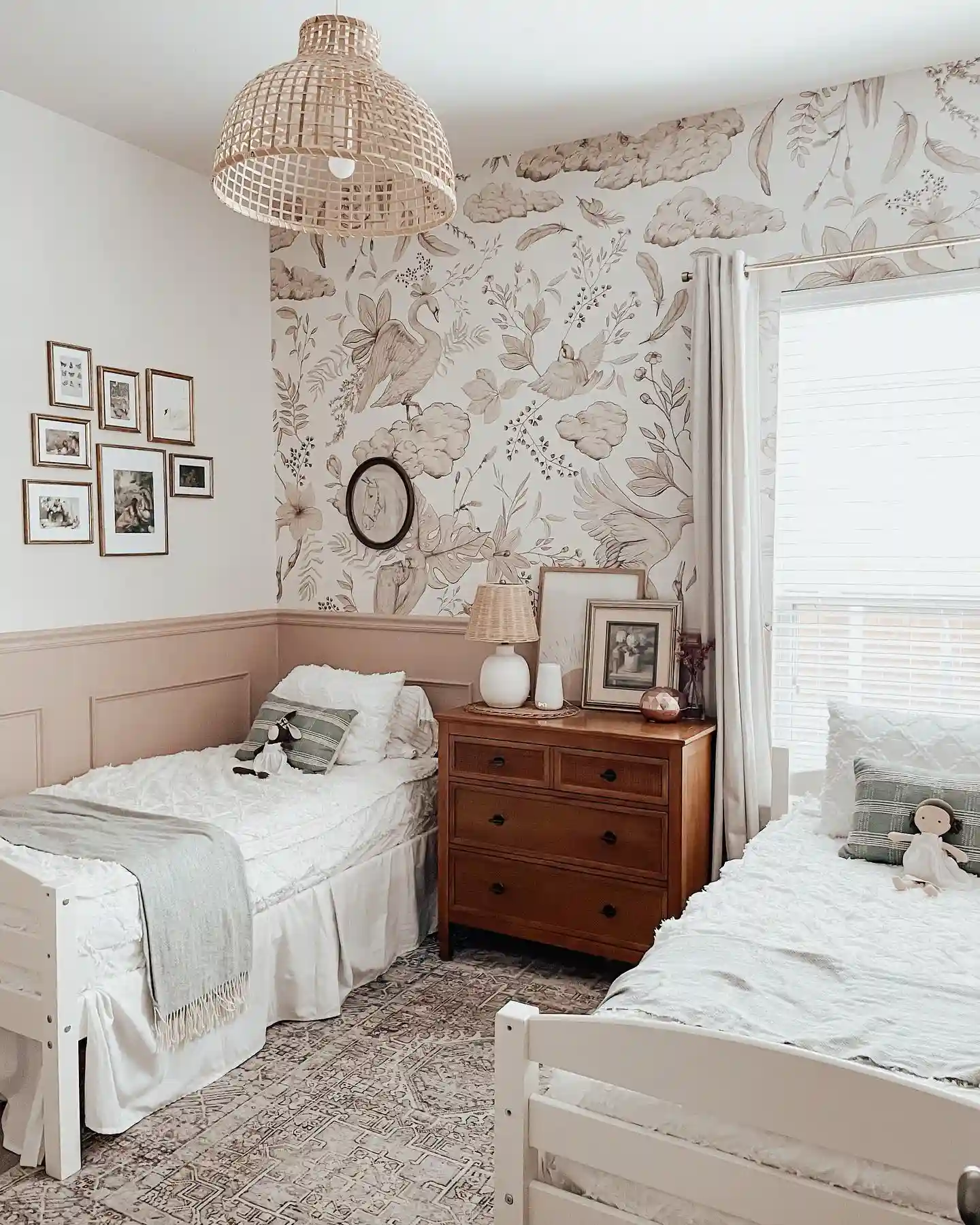
A soft bird-and-botanical mural turns the wall behind twin beds into a dreamy storybook scene. Dusty rose paneling grounds the delicate print, while white textured bedding keeps the sleeping areas calm. The wood dresser between the beds provides shared storage and adds warmth to the muted neutral palette.
- Choose a mural with soft colors that will age well.
- Use wipeable paint on the lower paneled section.
- Anchor the central dresser firmly to the wall.
- Give each child designated drawers for personal belongings.
- Repeat natural materials through wood furniture, rattan, and woven lighting.
17. Build a Sports Theme
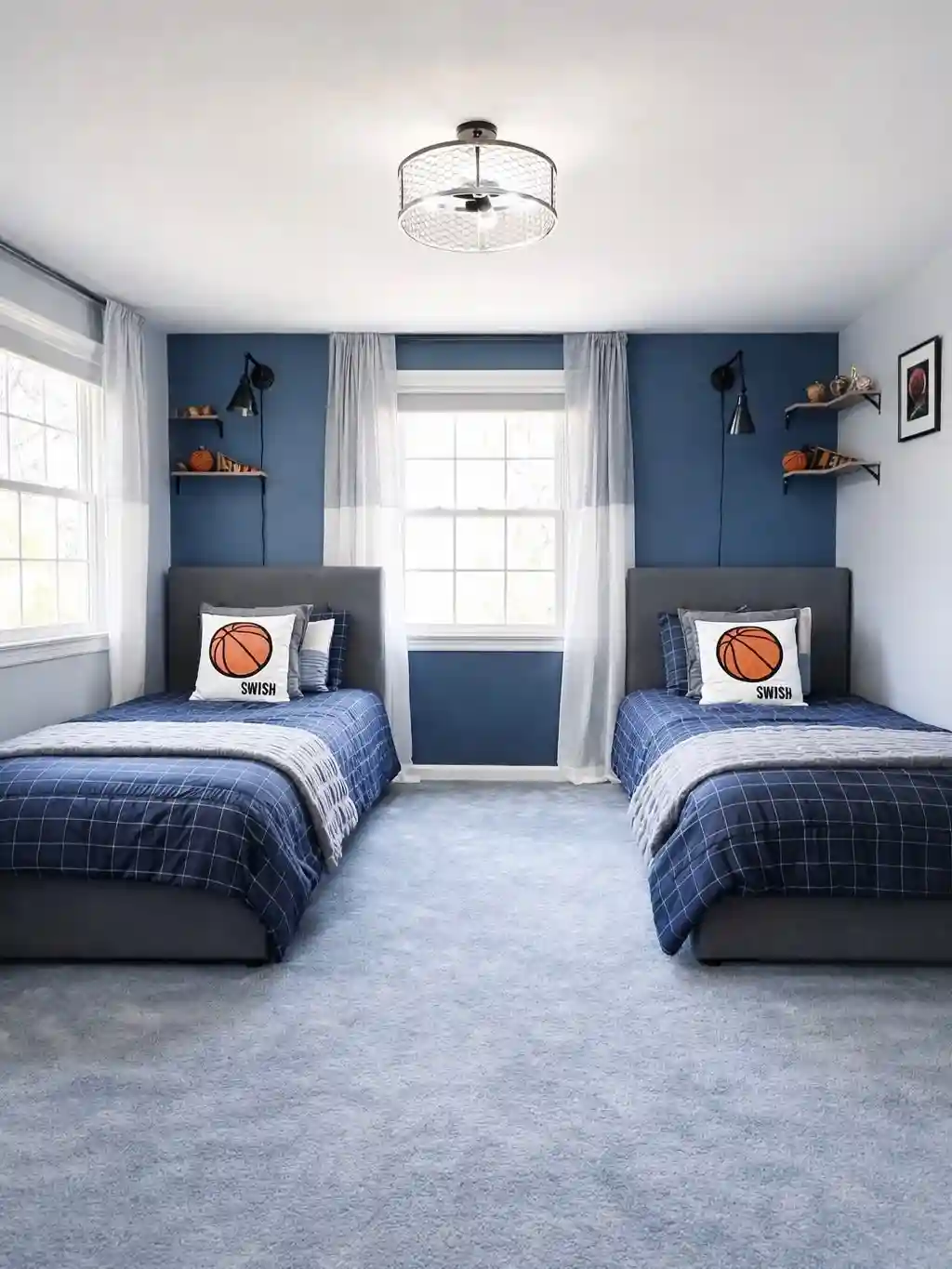
A deep-blue feature wall creates a confident background for this basketball-inspired shared bedroom. Matching grid-pattern bedding and basketball pillows make the theme clear, while gray upholstered beds keep it from looking overly playful. Slim shelves display sports items without taking up valuable floor space beside the two beds.
- Limit themed pieces to pillows, artwork, and shelf decor.
- Use matching beds and bedding to create visual order.
- Install wall shelves securely and avoid placing heavy objects above beds.
- Add individual reading lights for independent bedtime routines.
- Keep a large open center area for dressing and play.
18. Create a Warm Woodland Room
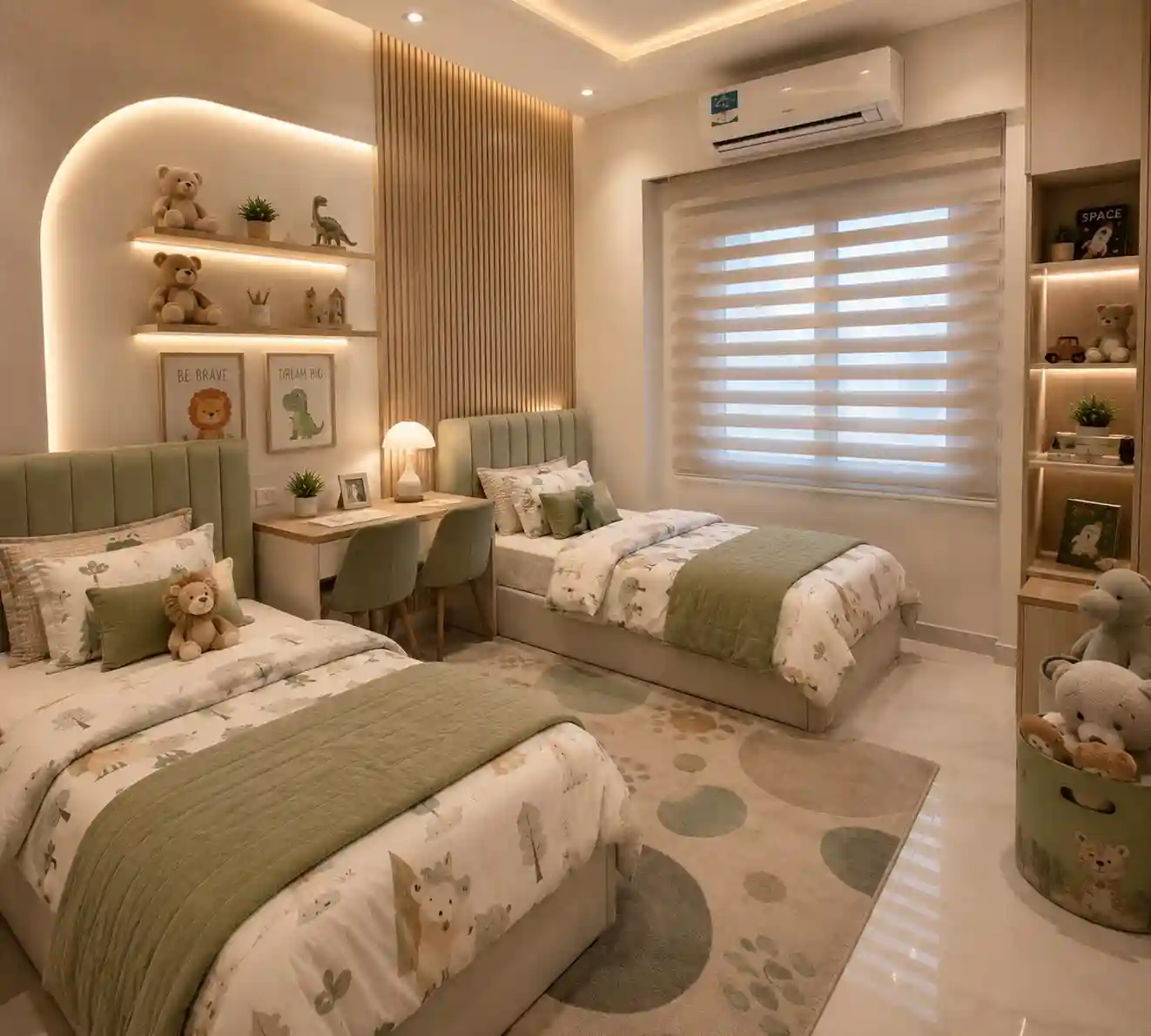
Sage-green upholstery, animal-print bedding, and light wood details give this shared room a warm woodland character. Built-in illuminated shelves keep books and toys organized while doubling as gentle mood lighting. A compact desk between the beds creates a shared activity station without interrupting the narrow central walkway.
- Choose warm LEDs to create a softer evening atmosphere.
- Store frequently used toys on low, accessible shelves.
- Use closed cabinets for clutter that does not need to stay on display.
- Give each bed a personal cushion or favorite stuffed animal.
- Secure tall built-ins and route lighting cables out of reach.
19. Mix Red and Blue
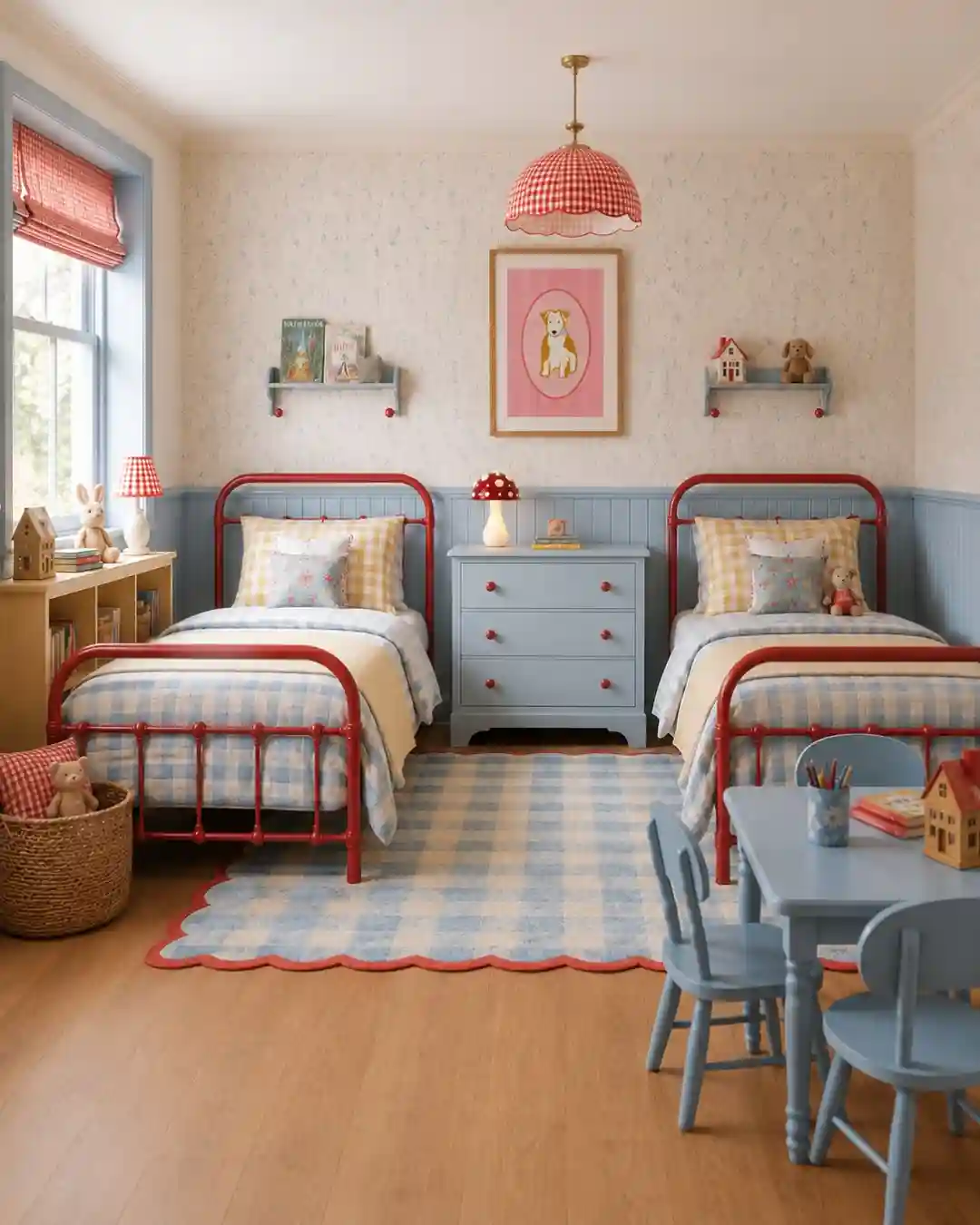
Red metal beds bring cheerful energy to this classic shared kids’ room, while powder-blue paneling cools the stronger color. Gingham bedding, a scalloped rug, and a checkered pendant create a playful country look. Matching furniture keeps the mix of checks, florals, and bright accents feeling neat and connected.
- Repeat red in small details such as knobs, lamps, and rug trim.
- Use pale blue as the main color to balance brighter accents.
- Add a central dresser so both children receive equal storage.
- Choose washable gingham and floral fabrics for everyday use.
- Keep wall shelves shallow and securely fastened.
20. Divide the Room With Pastels
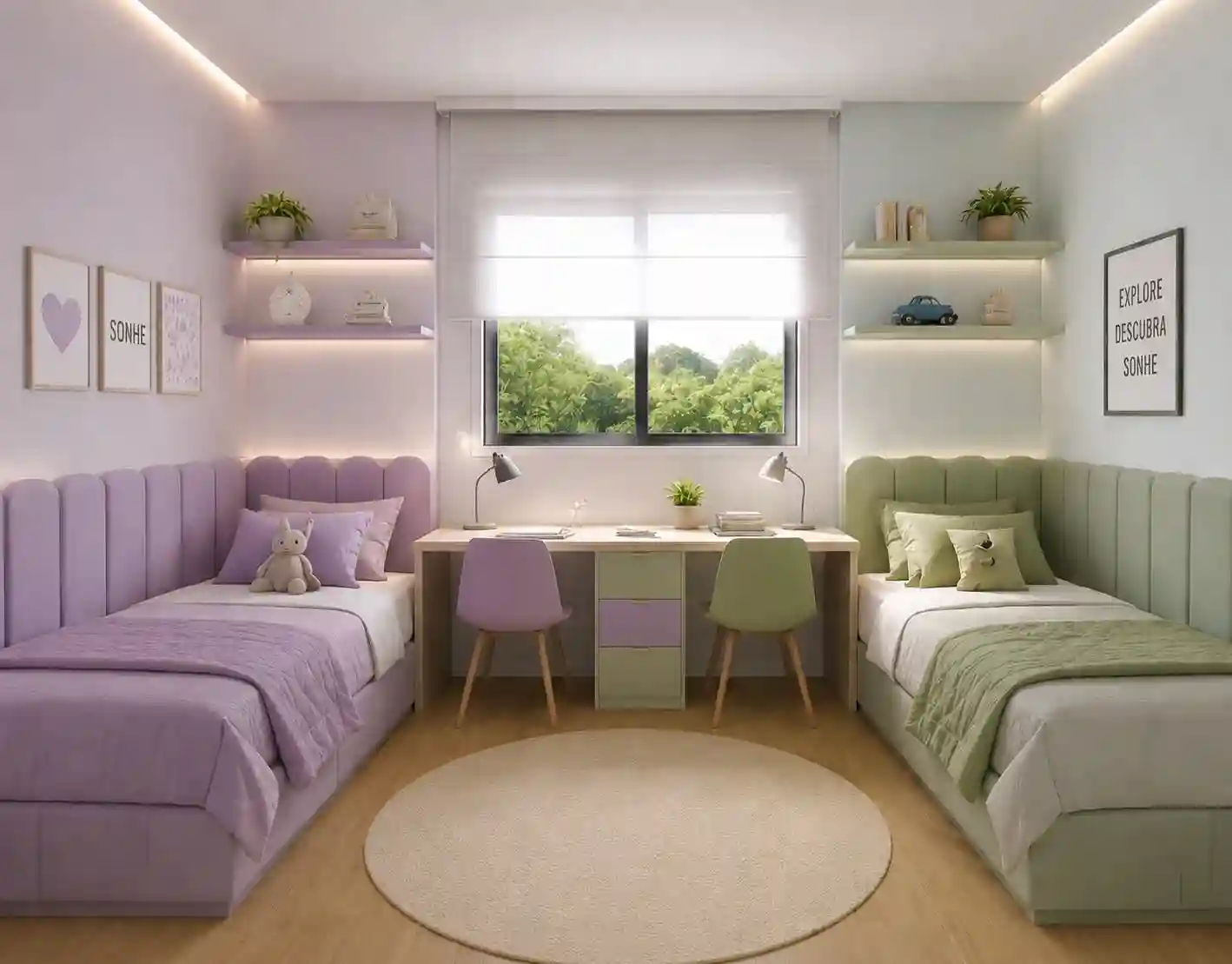
Lavender and sage give each child a recognizable side while maintaining a soft, connected palette. Tall upholstered headboards make both beds feel cozy, and the long shared desk creates two clear study stations. Matching shelves and hidden lighting preserve symmetry even though the bed colors are different.
- Let each child choose one pastel color for their zone.
- Repeat both shades in the desk drawers and chairs.
- Give each study space its own lamp and storage section.
- Use a neutral rug to connect the two color schemes.
- Add blackout or light-filtering blinds for comfortable sleep and homework.
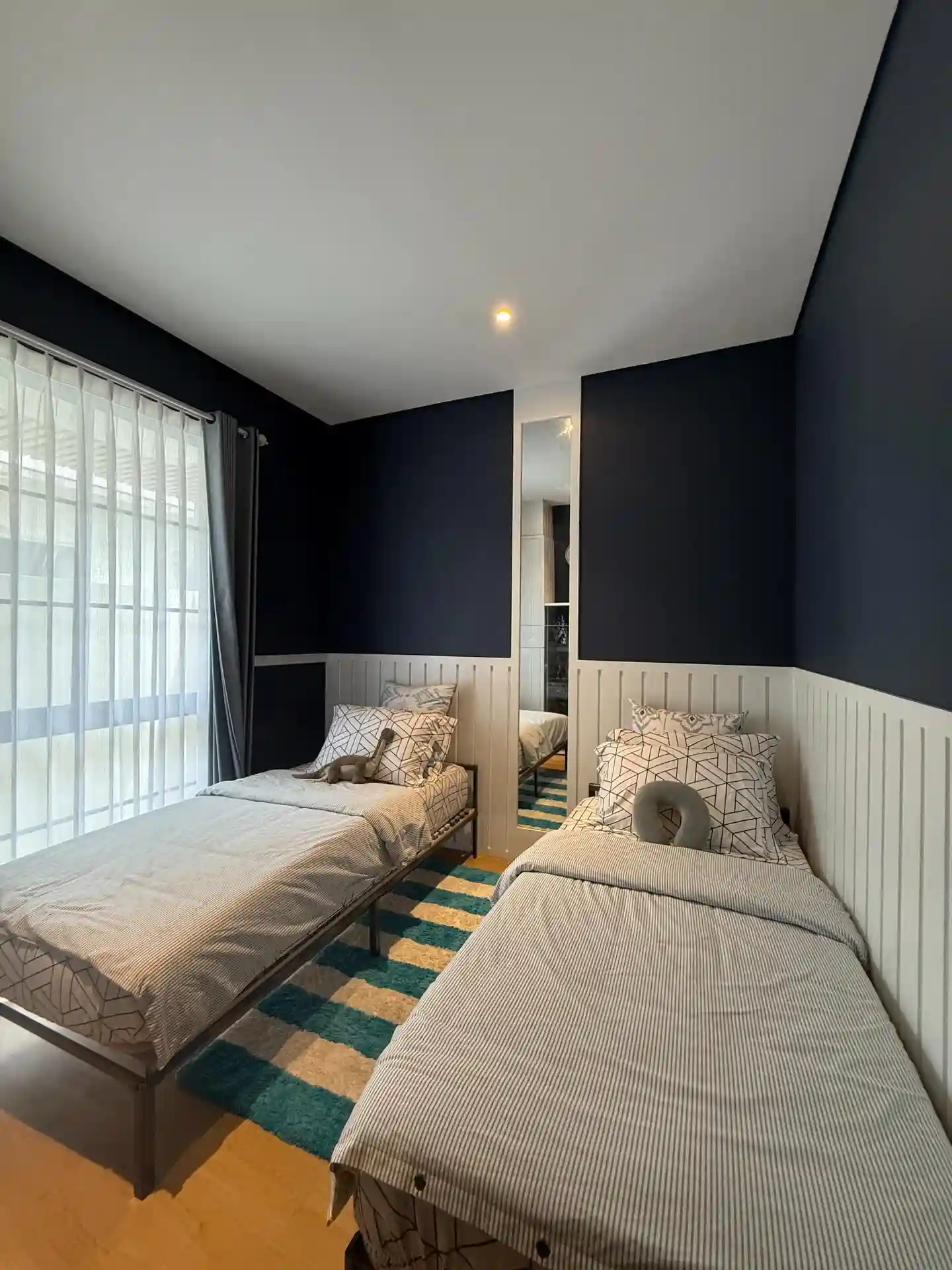
Navy walls make this narrow shared bedroom feel snug, while white wainscoting prevents the dark color from closing in the space. Simple metal beds and gray striped bedding keep the look easy to maintain. A tall central mirror reflects window light and visually separates the two sleeping zones.
- Use dark paint above lighter paneling for a balanced finish.
- Hang a full-length mirror with secure wall fixings.
- Choose slim bed frames to protect the narrow walkway.
- Add brighter bedside lighting if the room feels dark after sunset.
- Bring color into the room with a striped runner or small accessories.
22. Build Storage Around Beds
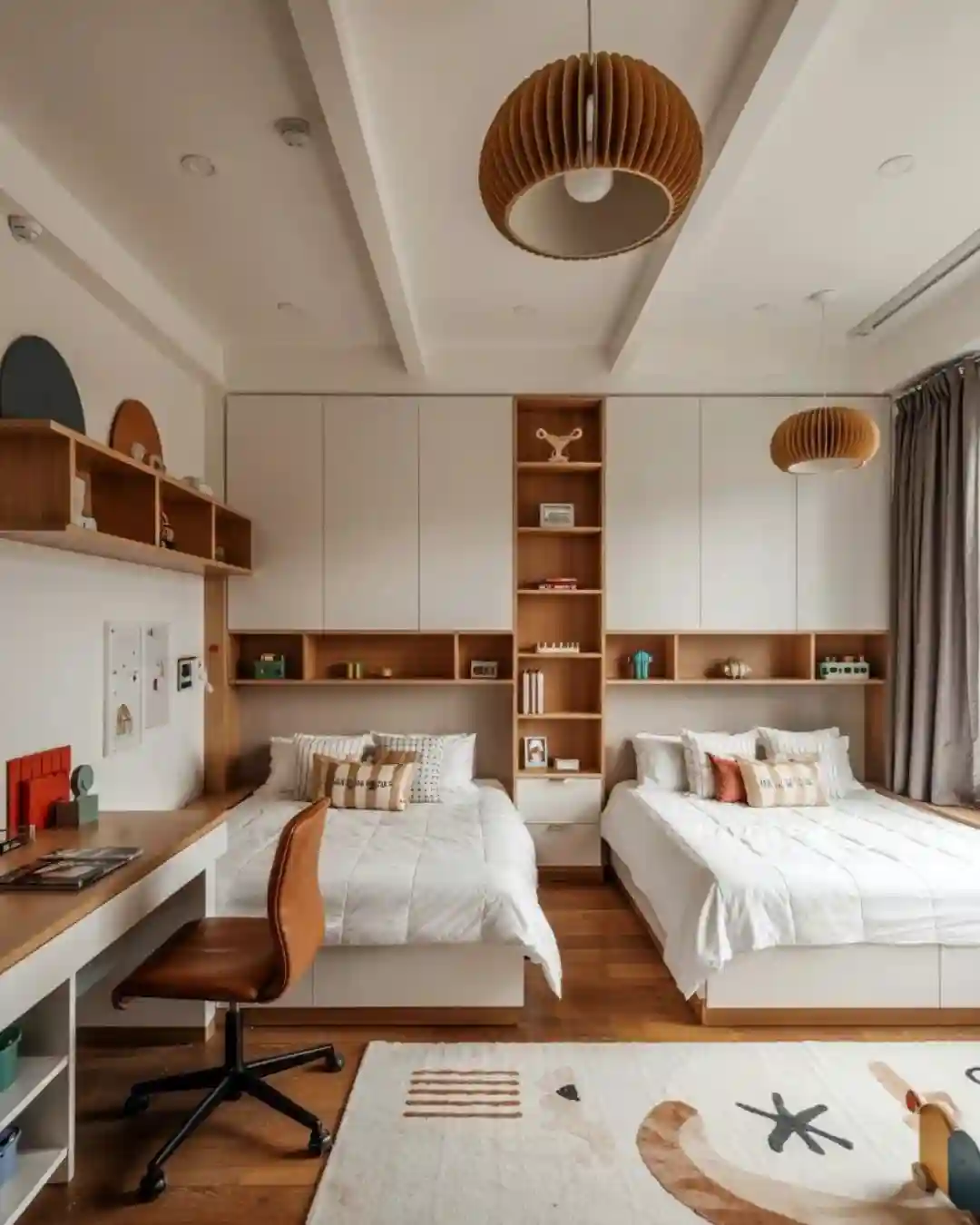
Wall-to-wall cabinetry gives this shared kids’ room generous storage without needing separate wardrobes or dressers. Open wood cubbies above each bed hold books and small decor, while closed white cupboards conceal clothing and clutter. The matching beds keep the layout calm, and the long desk creates an extra work area.
- Assign one cabinet section to each child.
- Keep heavy and rarely used items inside lower cupboards.
- Add soft-close hinges to reduce pinched fingers and noise.
- Leave open bedside cubbies for books and nighttime essentials.
- Plan outlets and reading lights before installing permanent cabinetry.
23. Combine Bunks and Twin Beds
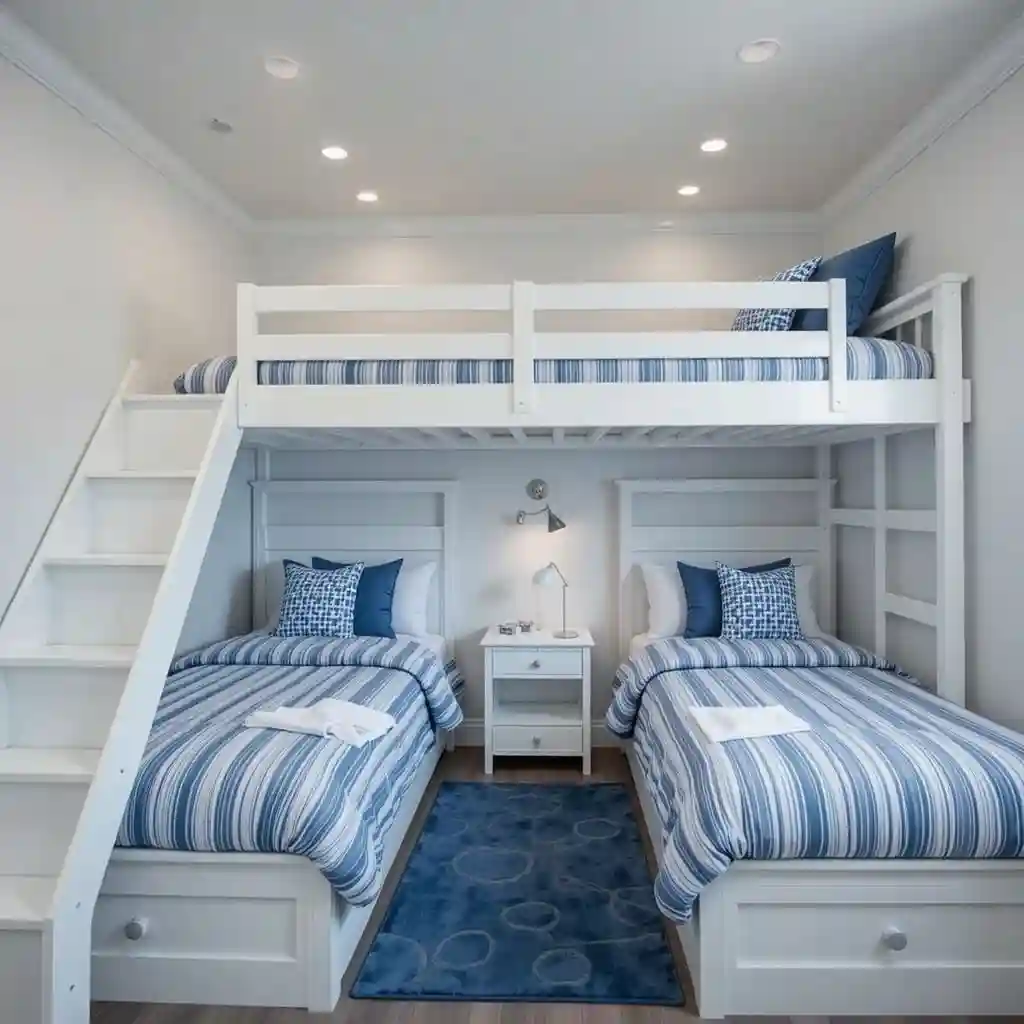
This layout sleeps three children while keeping the floor plan surprisingly open. A lofted bed runs across the top, with two separate beds underneath and a small nightstand between them. Blue striped bedding and white frames help the larger structure feel airy rather than heavy inside the compact shared room.
- Hire a qualified professional for custom loft-bed construction.
- Use full-height guardrails and stable stairs with secure handholds.
- Give every sleeping level its own safe reading light.
- Keep the upper bunk for a child old enough to use it safely.
- Add drawers beneath the lower beds for clothing or linens.
24. Add a House-Shaped Bunk
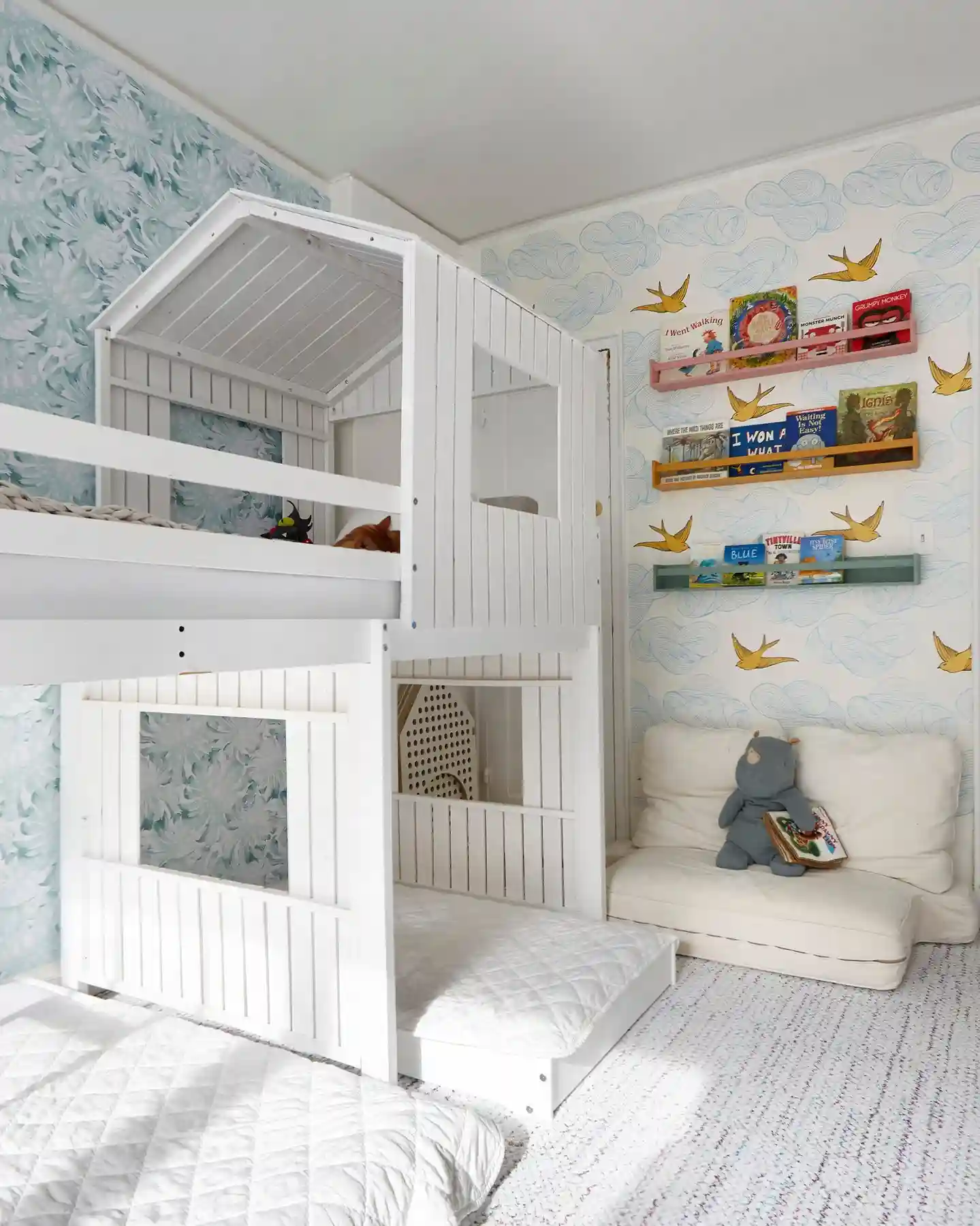
A house-shaped bunk bed makes bedtime feel playful without filling the room with themed accessories. White wood keeps the large structure visually light, while cloud-and-bird wallpaper adds gentle movement around it. Front-facing book ledges turn an empty wall into a colorful library children can browse independently.
- Check ceiling clearance before choosing a tall house-style bunk.
- Use sturdy guardrails around every raised sleeping surface.
- Mount book ledges at a child-friendly height.
- Create a floor cushion corner for quiet reading.
- Keep the bedding white so the wallpaper and books provide the color.
25. Color-Block Each Bed
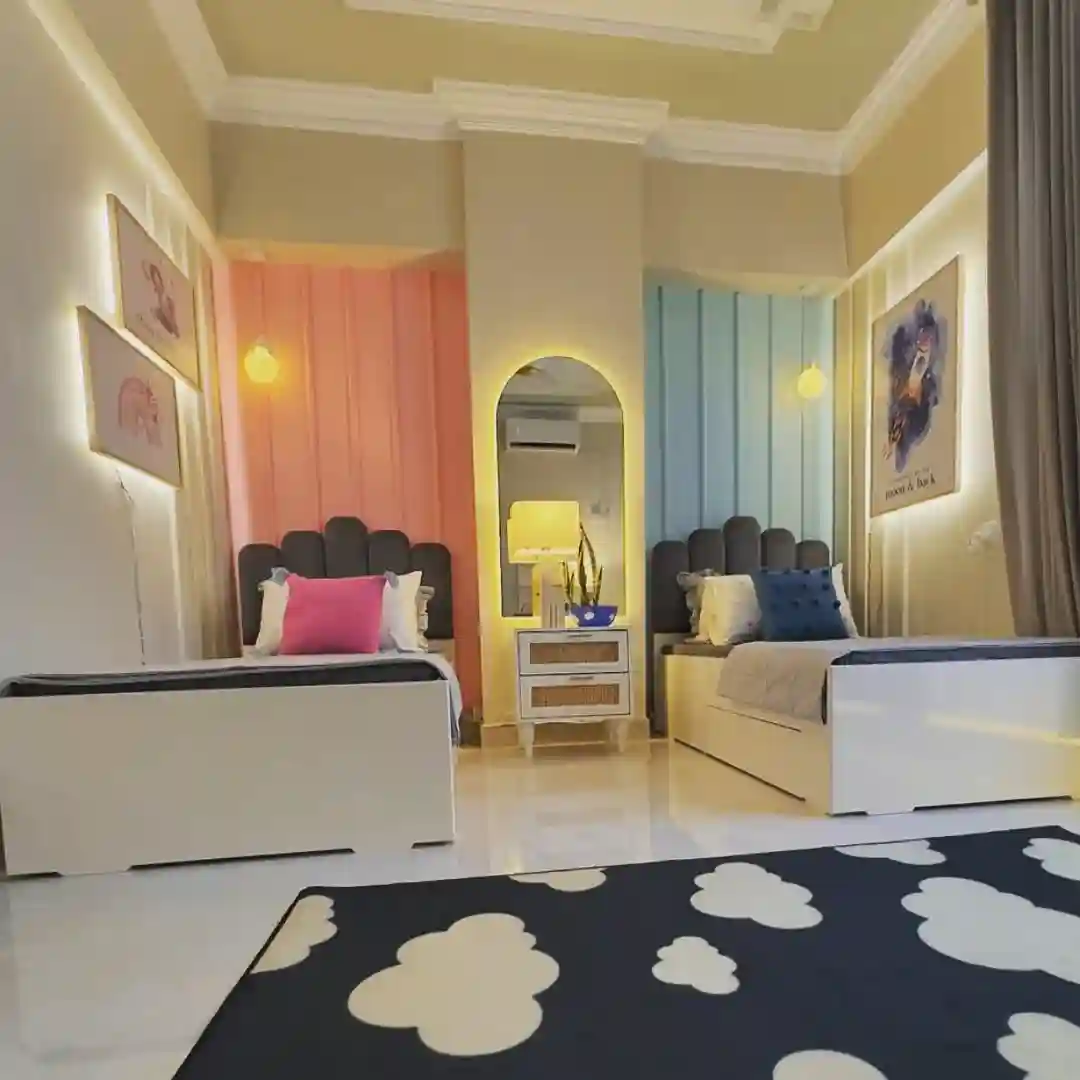
Coral and sky-blue wall panels give these matching beds separate identities while preserving an even layout. Dark scalloped headboards connect the two sides, and a slim arched mirror makes the central gap feel taller. Warm backlighting adds a cozy glow that works well during bedtime routines.
- Let each child select the color behind their own bed.
- Repeat both shades through cushions, artwork, or storage pieces.
- Use dimmable warm lights instead of harsh overhead lighting at night.
- Secure the central mirror to prevent tipping or movement.
- Keep the remaining walls neutral to balance the bold color blocks.