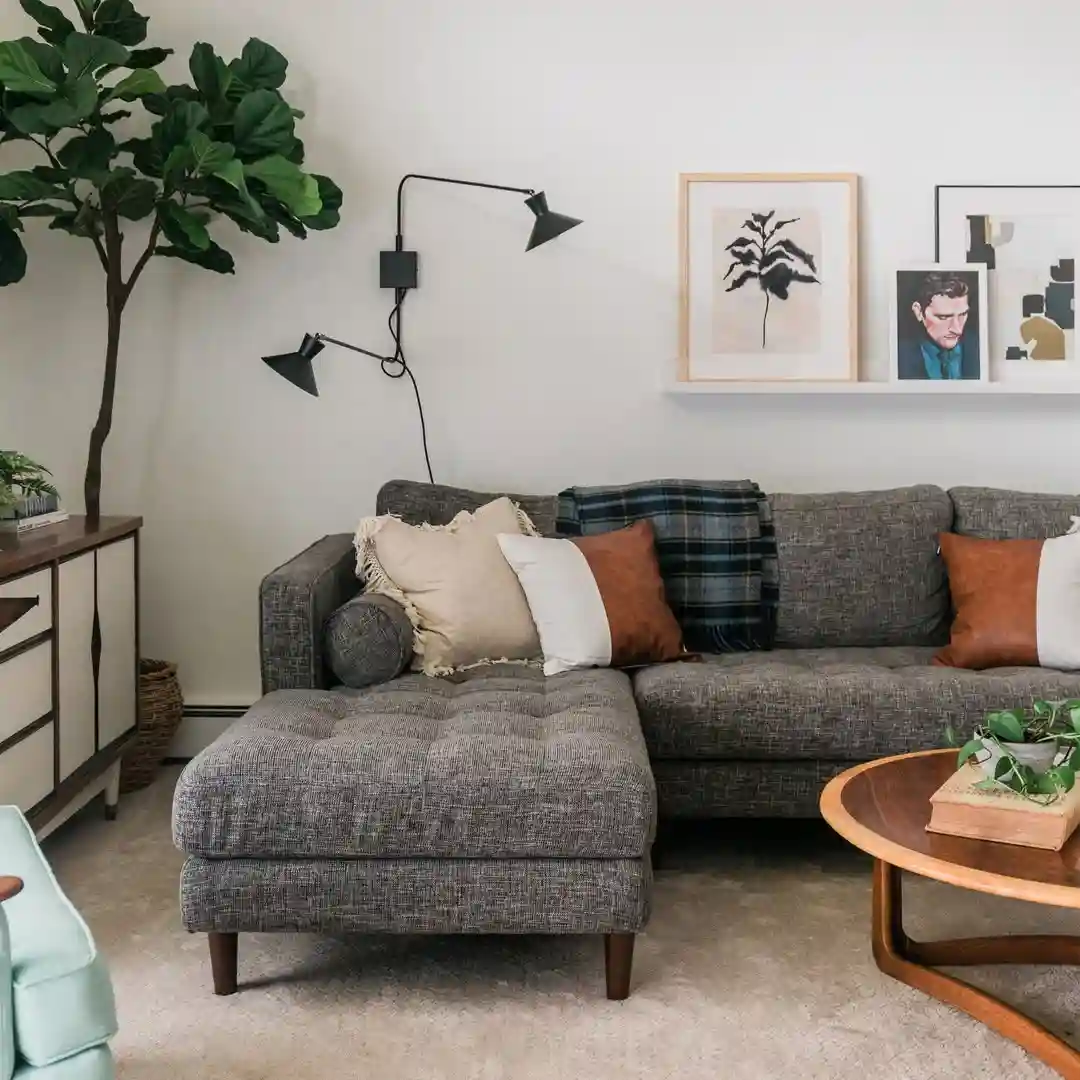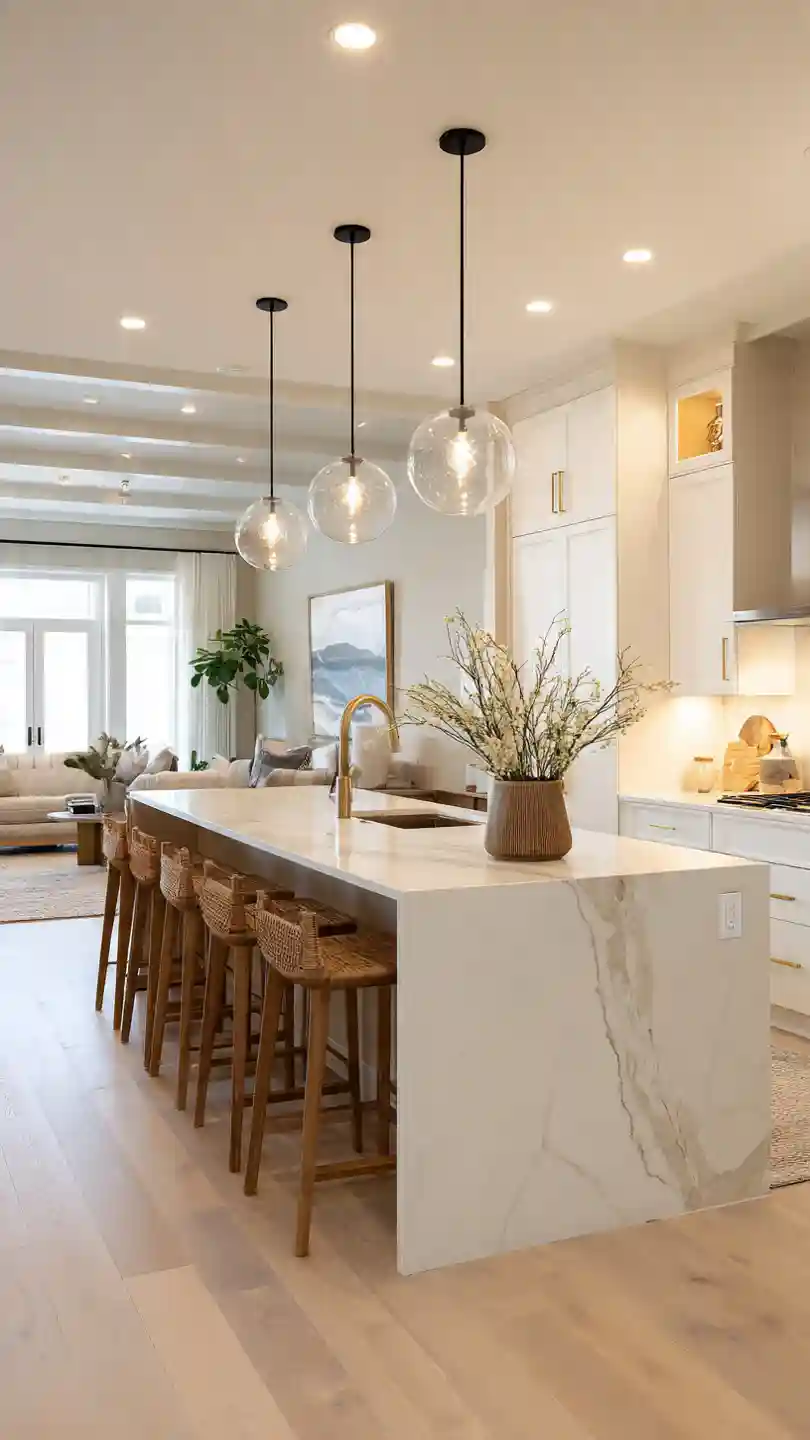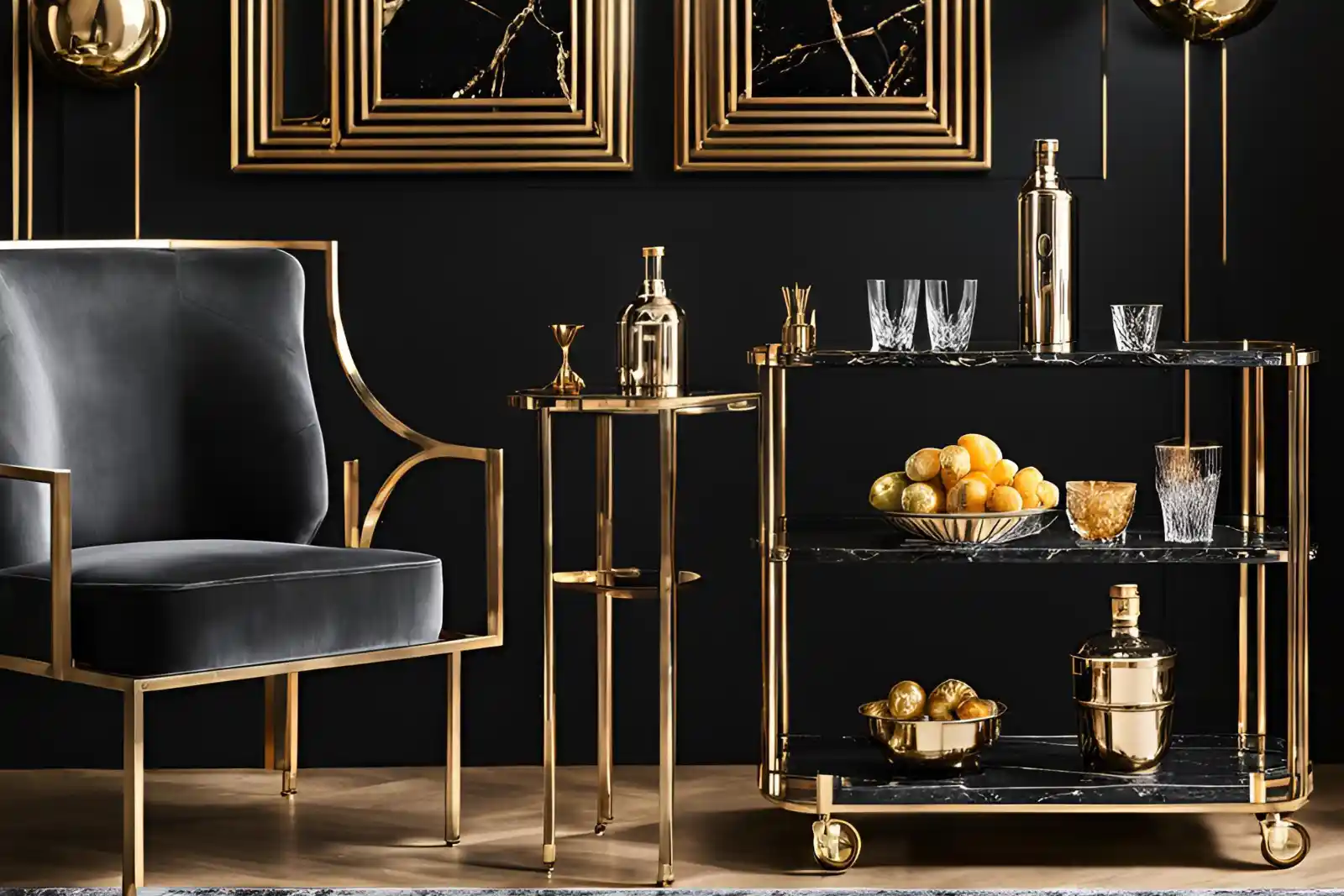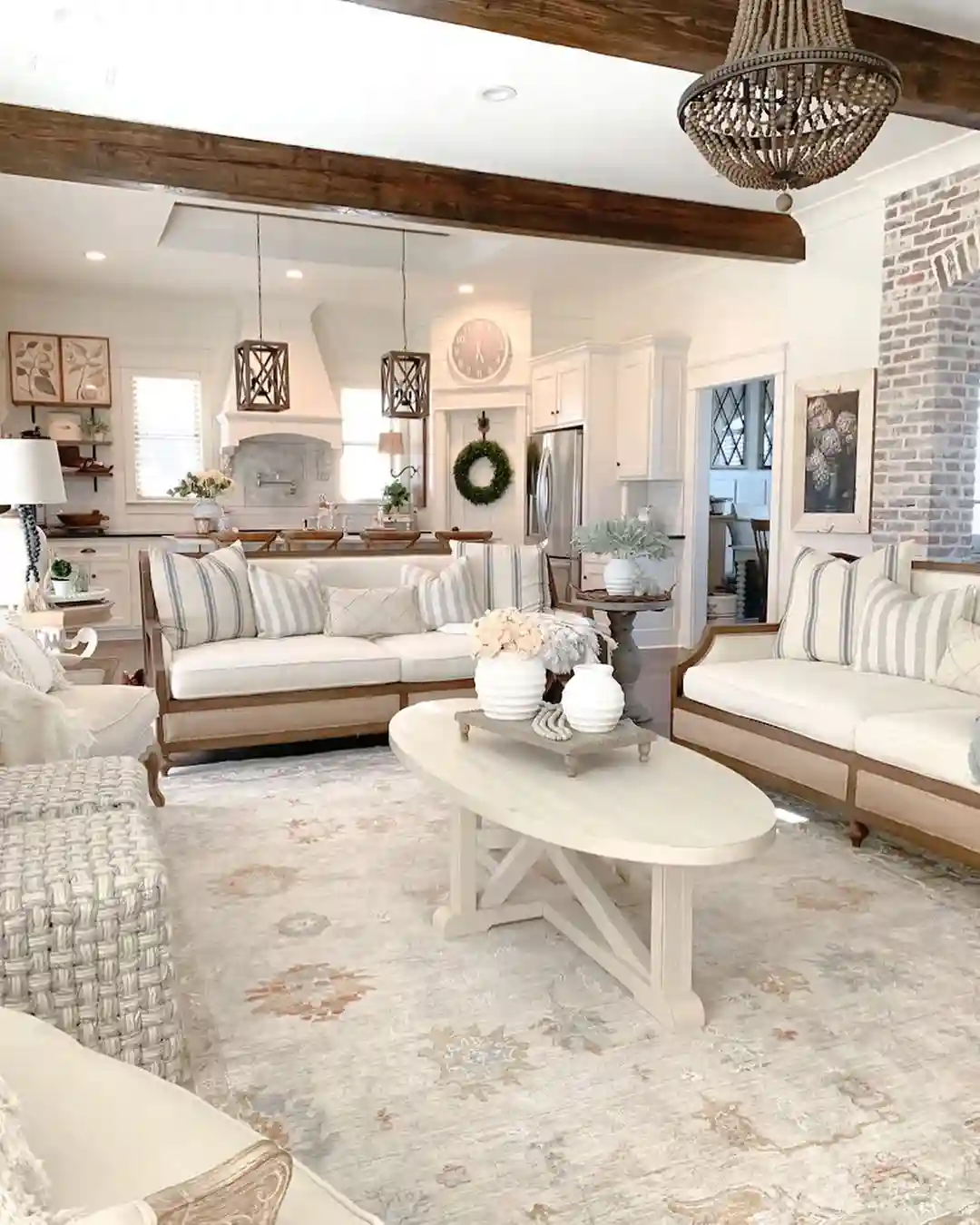
25 Living Room and Dining Room Combo Ideas

Sharing one room for both relaxing and dining can feel tricky at first, but the right layout makes everything flow naturally. When the sofa area and dining table work together visually, the room feels balanced instead of crowded. These living room and dining room combo ideas focus on layout, furniture placement, and small design choices that help define each area while still keeping the space open and comfortable.
1. Open Concept Living Room and Dining Room Combo
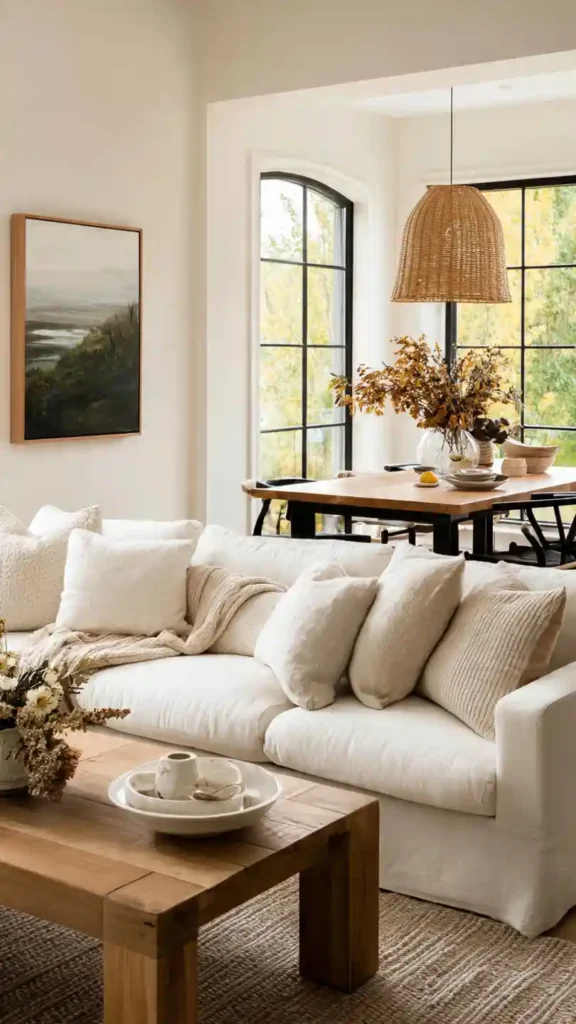
An open concept layout keeps the living and dining areas connected while allowing each space to feel functional. The living area typically sits closer to a focal point like a television, fireplace, or feature wall, while the dining table sits closer to the kitchen or a window. This layout keeps everyday movement easy and natural.
Using similar materials and colors across both spaces helps everything feel cohesive. For example, a wooden coffee table in the living area can echo the wood dining table behind it. Neutral walls, soft lighting, and minimal décor allow the room to feel airy rather than cluttered. The goal is to make both spaces feel like they belong together without blending them too much.
2. Rug Defined Living and Dining Zones
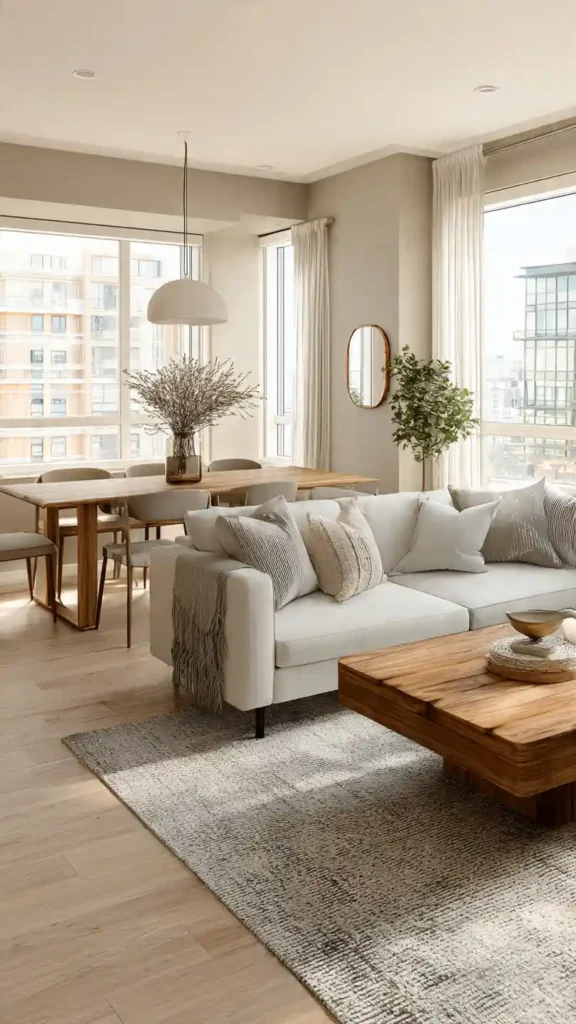
Area rugs are one of the easiest ways to visually separate two spaces in a shared room. Placing a large rug under the sofa and coffee table clearly defines the living area while the dining space remains on bare flooring or sits on a second rug. This subtle contrast helps the eye understand where each zone begins and ends.
Choosing rugs with complementary colors keeps the design connected while still creating distinction. For example, a textured neutral rug in the living area paired with a flatter woven rug under the dining table works beautifully. The room stays open and connected, but each section still feels purposeful.
Read also:
3. Sofa Divider Living Dining Layout
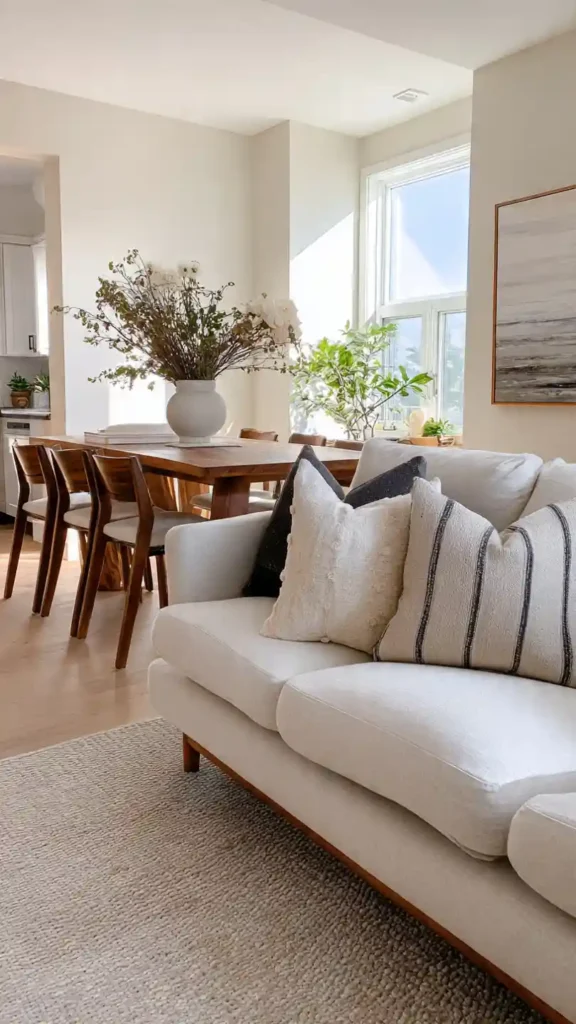
Placing the sofa between the living and dining areas naturally separates the two spaces without adding walls or bulky furniture. The back of the sofa faces the dining table, creating a gentle boundary while still allowing the entire room to feel open.
This layout works especially well in apartments and narrow rooms where every inch matters. A small console table behind the sofa can enhance the separation while adding a place for lamps or décor. The living area stays comfortable and relaxed while the dining space feels defined and organized.
4. Small Apartment Living Dining Combo
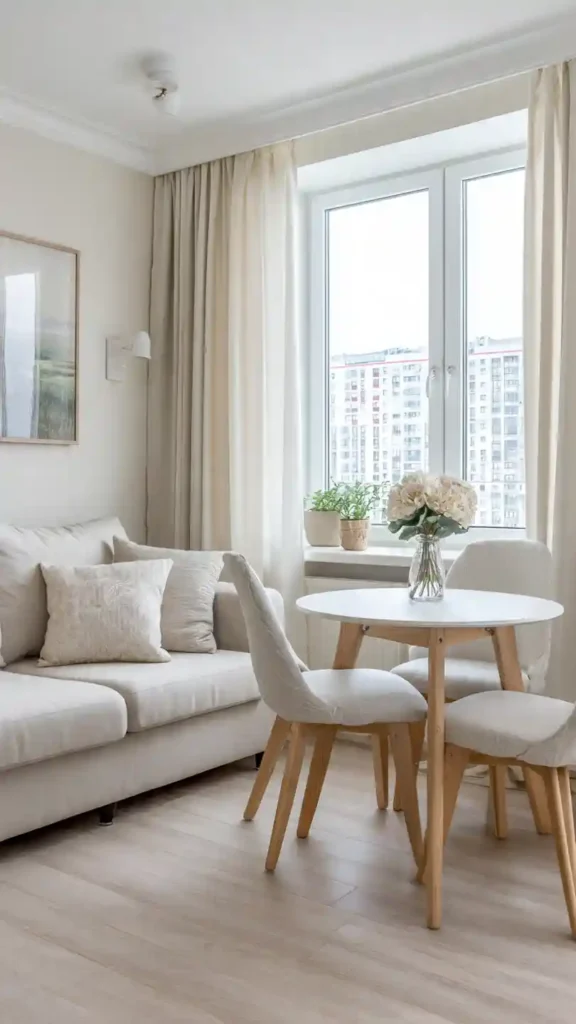
In a small apartment, the living room and dining room often share one compact area. The key is choosing furniture that keeps the room open while still providing enough seating for daily life. A compact sofa paired with a small dining table allows both spaces to function comfortably without overcrowding the room.
Light colors help the space feel bigger and brighter. Neutral walls, simple furniture, and minimal décor prevent the room from feeling busy. A round or small rectangular dining table works well because it leaves enough space to move around easily. When everything is kept simple and functional, the room feels balanced and comfortable despite the limited space.
5. Round Dining Table Living Room Combo
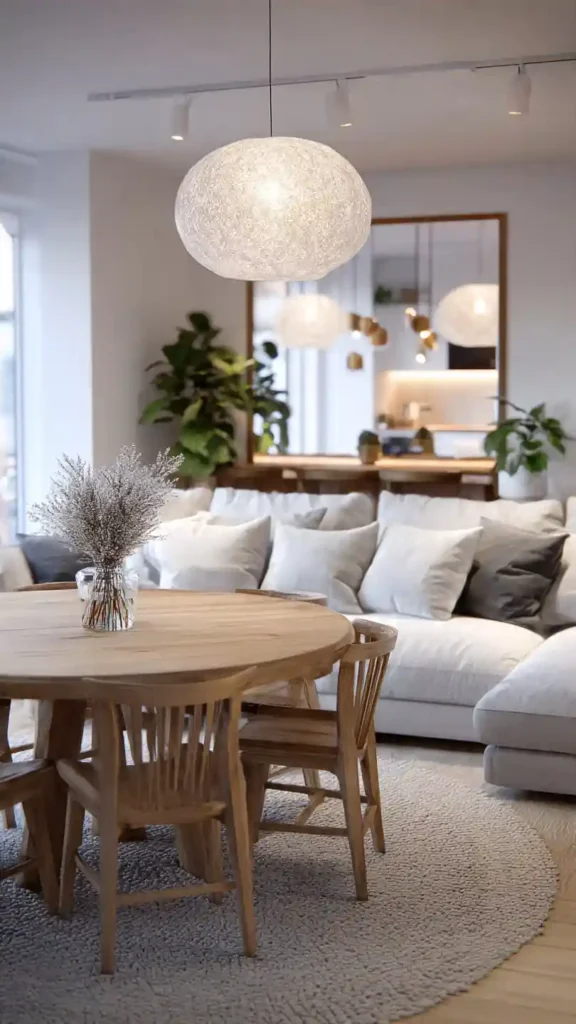
A round dining table can soften the overall layout of a shared living and dining room. Because it has no sharp corners, it creates a smoother flow between the two spaces and makes it easier to move around the room. This layout works especially well in smaller homes or apartments.
Placing the round table just behind the sofa or near a window keeps the dining area visible while still giving it its own place. Light wood or neutral finishes help the dining table blend naturally with the living room furniture. The result is a space that feels open, relaxed, and easy to use for both dining and relaxing.
6. Farmhouse Living and Dining Room Combo
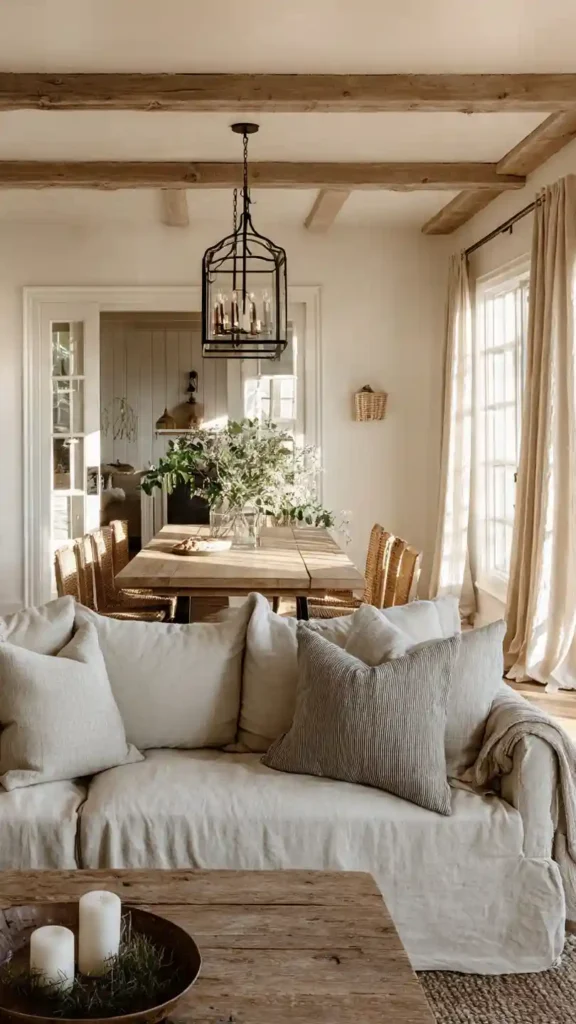
A farmhouse-inspired combo space focuses on warmth and comfort. Natural wood furniture, soft fabrics, and warm lighting help both the living and dining areas feel inviting. A sturdy wooden dining table paired with a cozy sofa creates a relaxed environment where the two spaces naturally connect.
Textures play an important role in this style. Linen cushions, woven baskets, and rustic wood accents add character while keeping the room comfortable. Neutral colors such as cream, beige, and warm wood tones help everything feel calm and cohesive. When done well, the living and dining areas feel like one welcoming gathering space.
7. Modern Minimalist Living Dining Combo
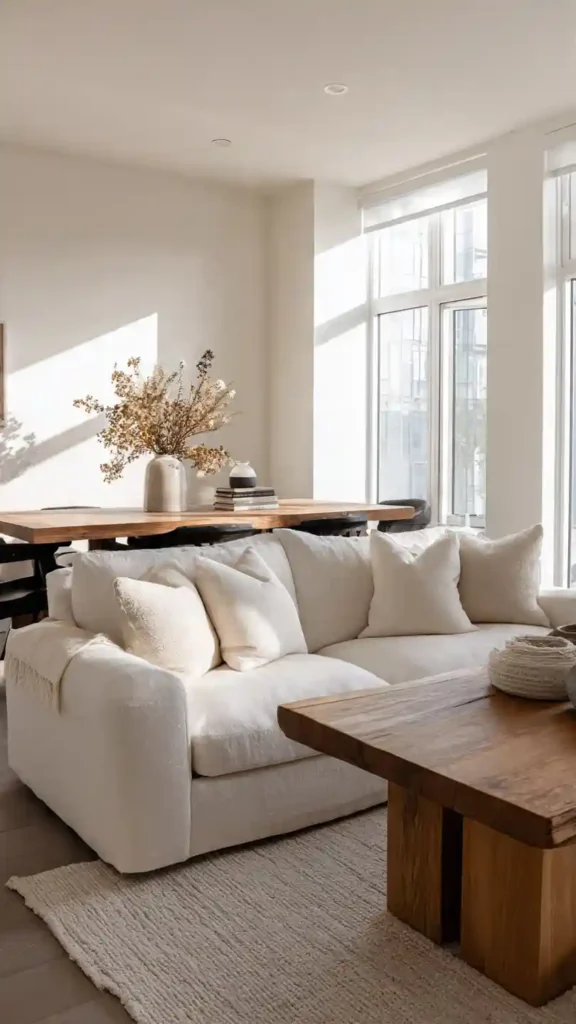
A modern minimalist approach keeps the space clean and uncluttered. Instead of filling the room with too many decorative pieces, the focus stays on simple furniture, neutral tones, and functional layout. A sleek sofa in the living area and a streamlined dining table behind it create a balanced and practical design.
Minimalist interiors often use light colors like white, soft gray, or warm beige. These shades help the room feel bright and open. Furniture with simple shapes and clean lines allows both areas to blend naturally while still serving different purposes. The result is a calm and organized space that feels modern and effortless.
8. Luxury Living Dining Combo Layout
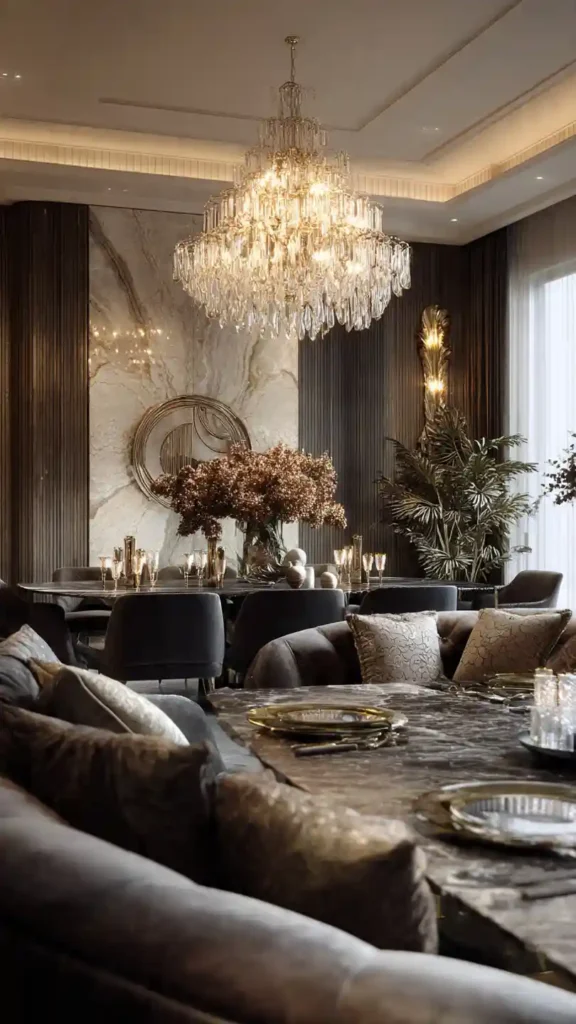
A luxury living and dining combo focuses on elegance and strong visual balance. Statement furniture pieces, rich textures, and layered lighting help define each area while still keeping the room connected. A stylish sofa with plush cushions creates a comfortable living zone, while a refined dining table becomes the highlight of the dining space.
Lighting often plays a major role in luxury interiors. A chandelier or pendant above the dining table draws attention to the dining area, while softer lighting in the living space keeps the room cozy. Materials like marble, velvet, and polished metal accents add sophistication without making the space feel overly formal.
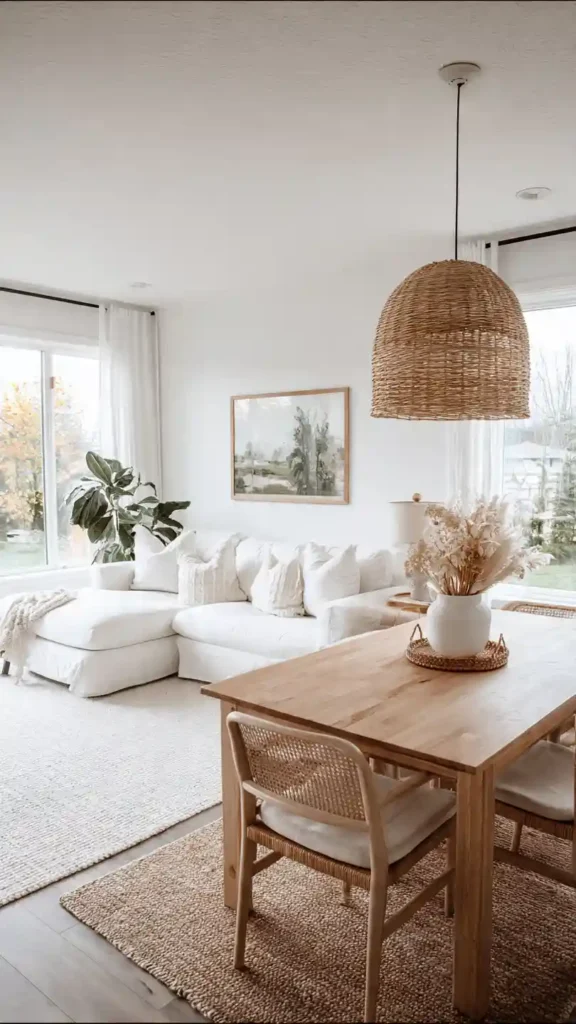
Scandinavian interiors are known for their calm and bright atmosphere. This style works beautifully in a shared living and dining room because it keeps everything simple and functional. Light wood furniture, soft neutral colors, and natural light help the entire space feel open and welcoming.
A light wood dining table paired with a comfortable sofa creates a relaxed environment where both spaces blend naturally. Minimal décor, soft textiles, and a few plants add warmth without cluttering the room. The overall look feels peaceful, practical, and perfect for everyday living.
10. Boho Living Dining Combo
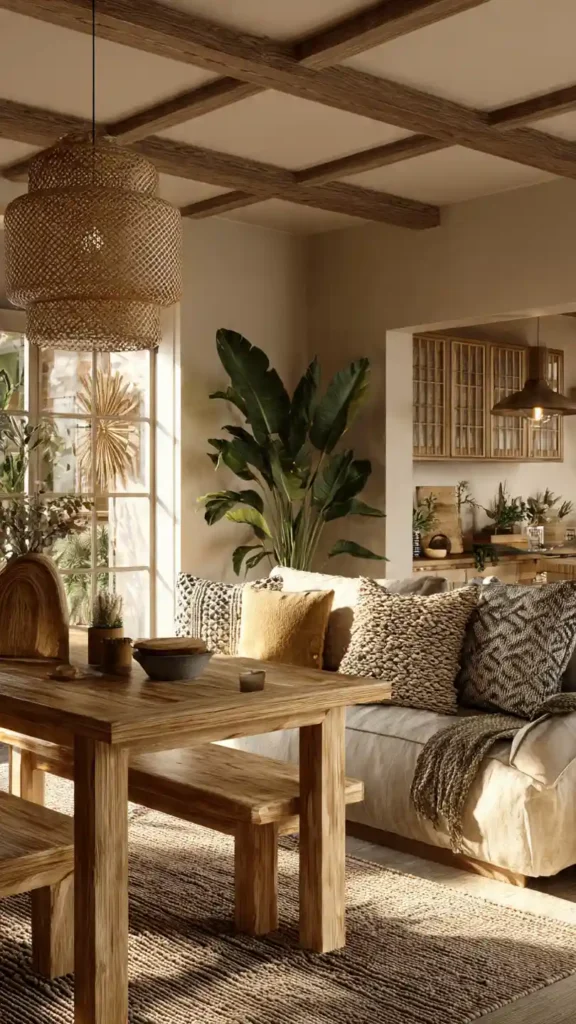
A boho-style living and dining combo creates a relaxed and creative atmosphere. This design focuses on layered textures, natural materials, and warm colors that make the entire space feel comfortable and inviting. A wooden dining table paired with a cozy sofa filled with patterned cushions helps both areas blend naturally.
Decorative elements such as woven baskets, macrame wall hangings, and indoor plants bring personality into the room. The living area can feature a soft rug and textured throws, while the dining space keeps a simple wood table with casual seating. Together, the two areas feel relaxed, artistic, and full of warmth.
11. Corner Dining Area Living Combo
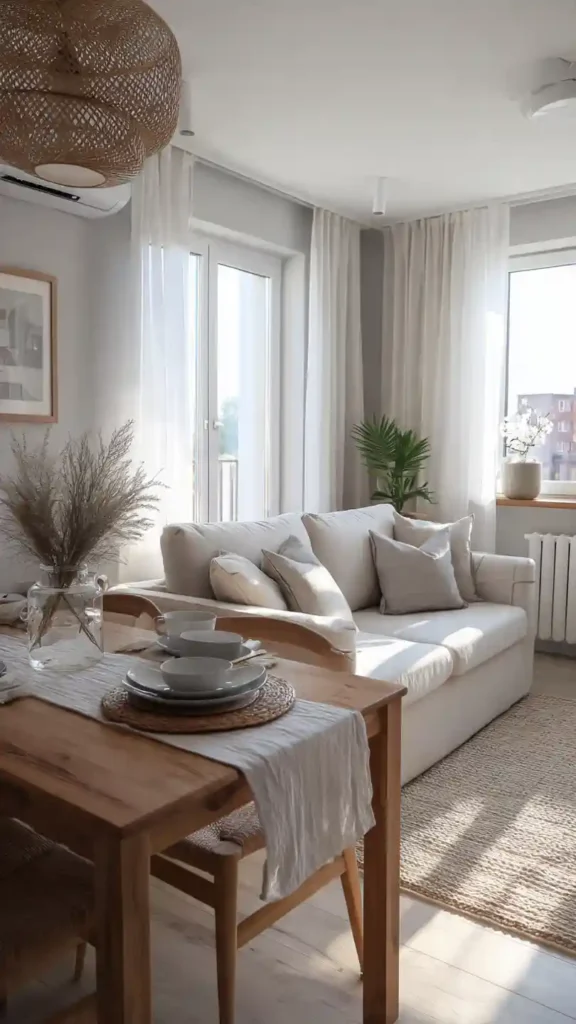
Using a corner for the dining space is a smart way to organize a shared living and dining room. A small table placed in the corner keeps the dining area tucked neatly out of the main living space while still remaining accessible. This layout works especially well in compact homes and apartments.
The living area can then take the center of the room with a comfortable sofa and coffee table. Simple wall décor or a mirror above the dining table can make the corner feel intentional rather than hidden. This arrangement keeps the space practical while allowing both areas to feel organized and comfortable.
12. Neutral Tone Living Dining Combo
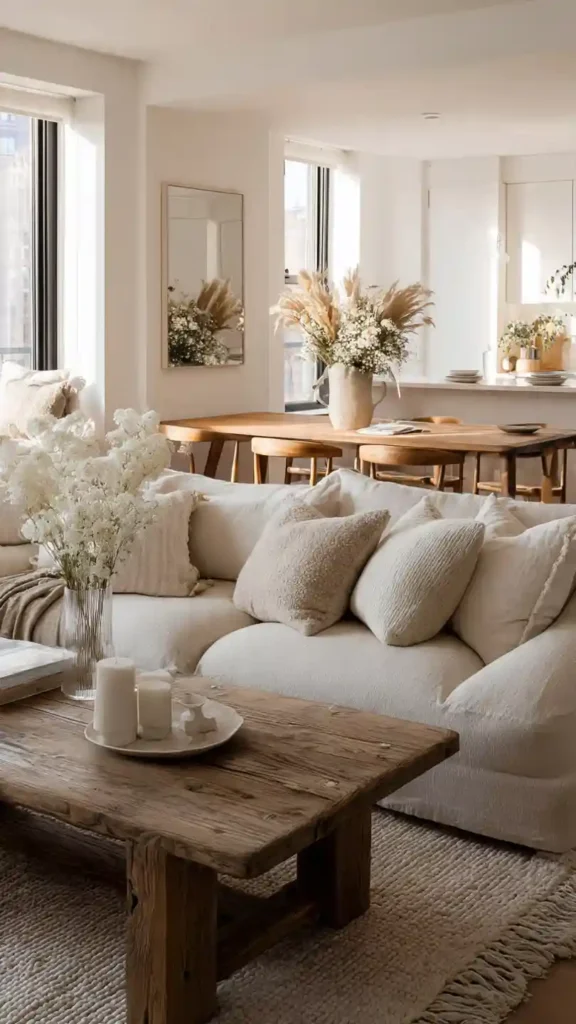
Using one consistent color palette across both the living and dining areas helps the entire space feel calm and connected. Neutral tones such as beige, cream, soft gray, and warm wood create a balanced environment that feels welcoming and timeless.
A neutral sofa in the living room paired with a natural wood dining table creates visual harmony. Light textiles, simple wall décor, and soft lighting help the space feel cozy without becoming overwhelming. When both areas share the same color palette, the room feels larger and more cohesive.
13. Glass Dining Table Living Combo
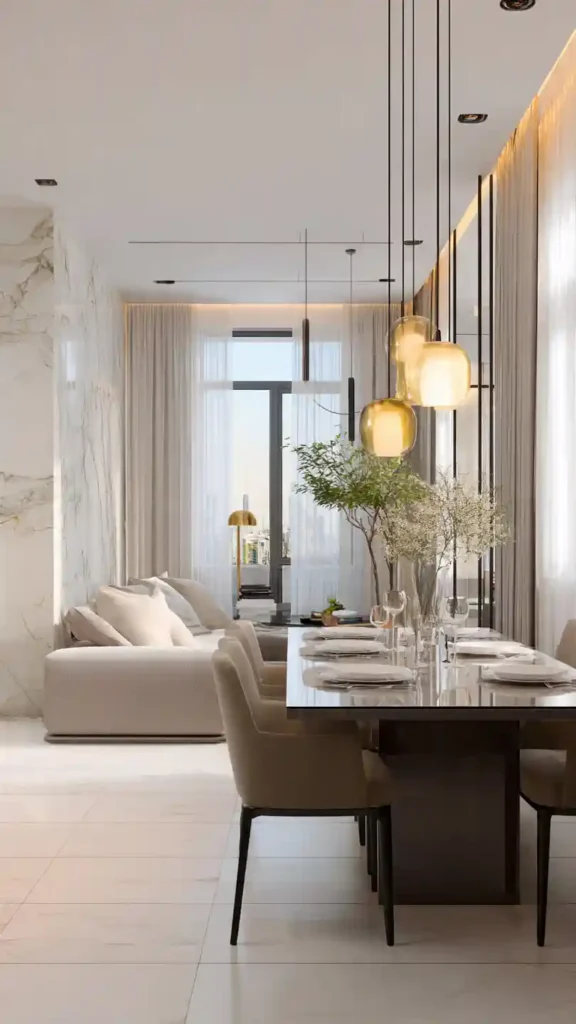
A glass dining table is a great choice for shared spaces because it keeps the room feeling light and open. Since the tabletop is transparent, it visually takes up less space, making the dining area appear less crowded.
This design works especially well in smaller homes where maintaining an open feeling is important. The living area can include a soft sofa and simple coffee table while the glass dining table sits nearby without blocking the visual flow of the room. The result is a space that feels modern, bright, and spacious.
14. Long Narrow Living Dining Layout
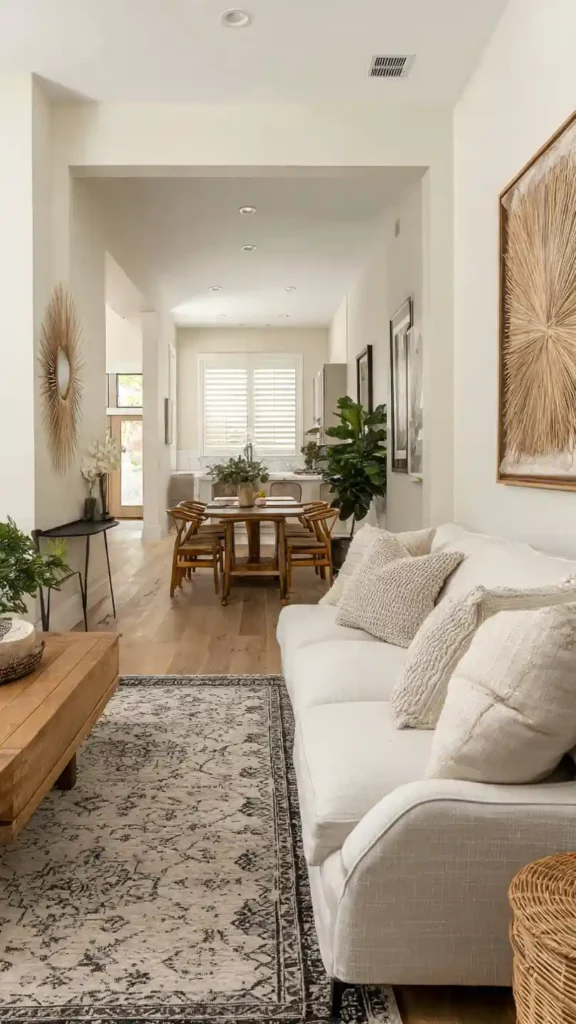
Long and narrow rooms often require careful planning so the space does not feel cramped. One effective layout is placing the living area at one end of the room and the dining area at the other. This creates clear zones while still keeping the overall layout simple.
The walkway between the two areas should remain open to allow easy movement. Light furniture and minimal décor help keep the room feeling spacious. With this arrangement, both spaces remain functional without competing for attention.
15. Statement Lighting Dining Area
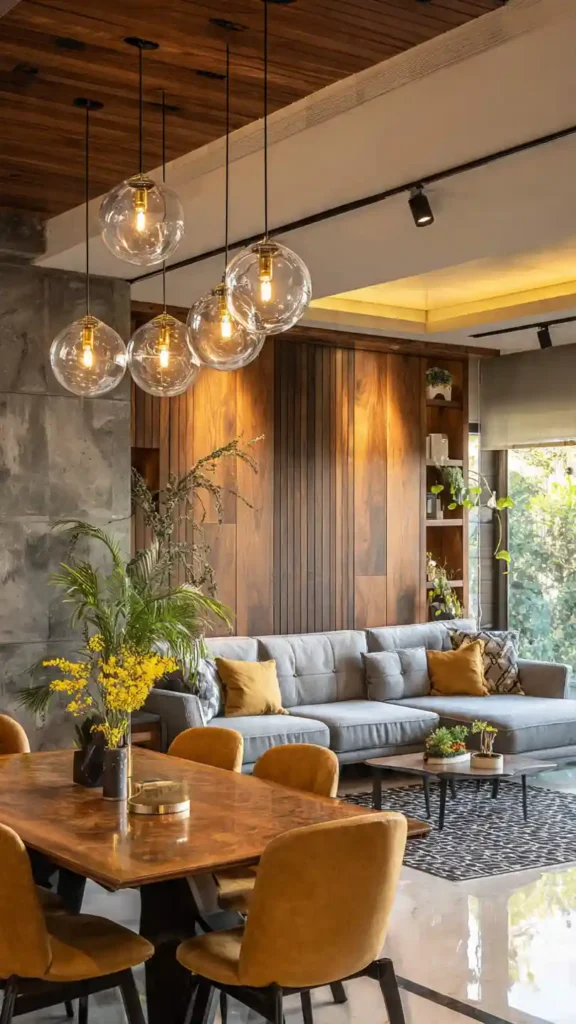
Lighting is one of the easiest ways to define a dining area within a shared room. A pendant light or chandelier above the dining table immediately draws attention and visually separates the dining space from the living room.
While the dining area features stronger lighting, the living area can use softer lamps or wall lighting to create a cozy atmosphere. This balance helps each space feel distinct without needing physical dividers. The room stays open while still feeling organized and thoughtfully designed.
16. Wood Accent Living Dining Combo
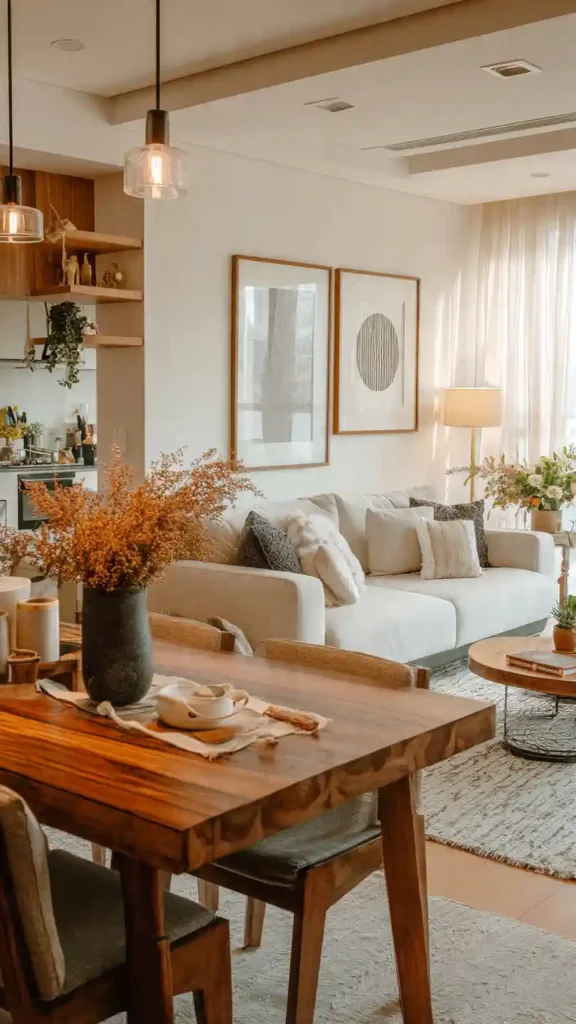
Adding wood accents is a simple way to bring warmth into a shared living and dining space. Natural wood elements such as a dining table, coffee table, or shelving help create a comfortable and welcoming atmosphere. When similar wood tones appear in both areas, the room feels visually connected.
A wooden dining table paired with a neutral sofa creates a balanced layout. Small details like wooden picture frames, side tables, or floor lamps help repeat the material throughout the space. These touches make the room feel cohesive while still allowing the living and dining areas to serve their own purpose.
17. Small Condo Living Dining Combo
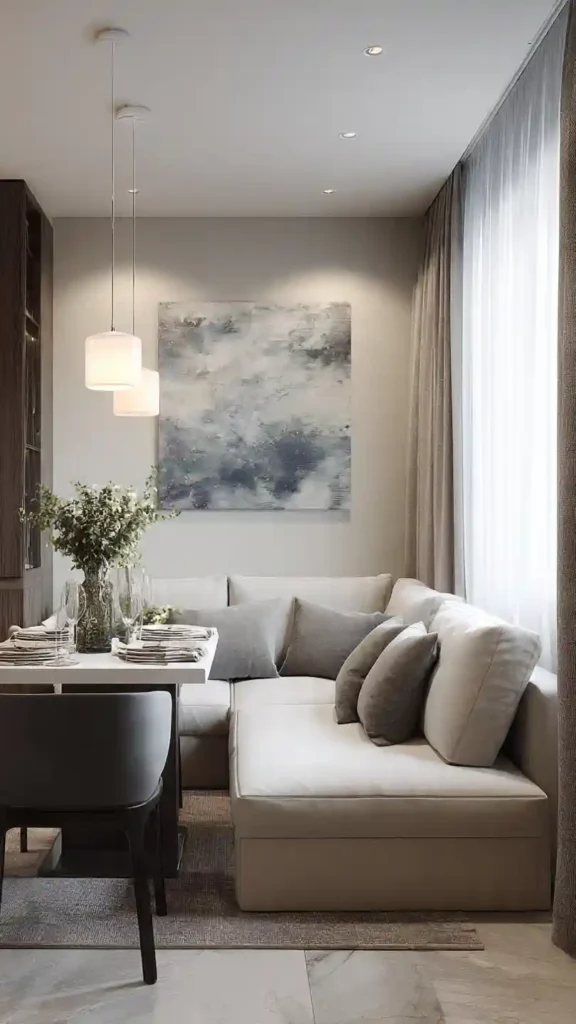
In a condo, the living room and dining room often share a single open space. Choosing compact furniture helps maintain comfort without overcrowding the room. A small sofa paired with a slim dining table allows both areas to function well in a limited layout.
Light colors and simple décor help the room feel larger and brighter. Keeping the furniture minimal also improves movement around the space. With the right balance, the condo living room and dining combo feels organized, practical, and comfortable for everyday use.
18. Elegant Neutral Living Dining Combo
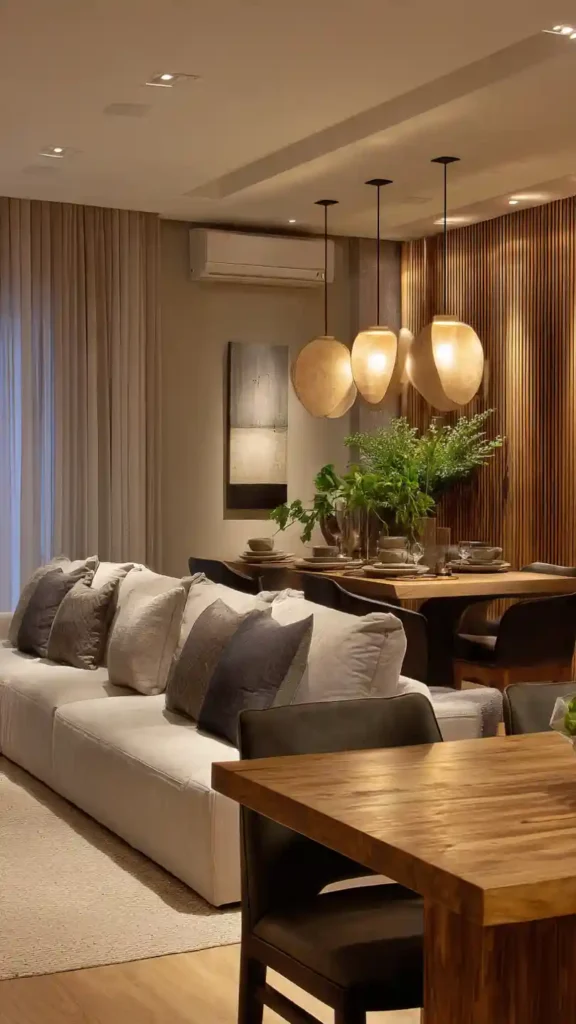
An elegant neutral design focuses on soft colors and refined furniture. Shades like cream, beige, and light gray create a calm atmosphere that works beautifully in a shared living and dining space. When both areas use the same palette, the room feels unified and sophisticated.
The living area might feature a comfortable sofa with textured cushions, while the dining space includes a stylish table and chairs with subtle detailing. Soft lighting and simple decorative pieces complete the look, making the entire space feel polished without being overly formal.
19. Modern Black Accent Living Dining Combo
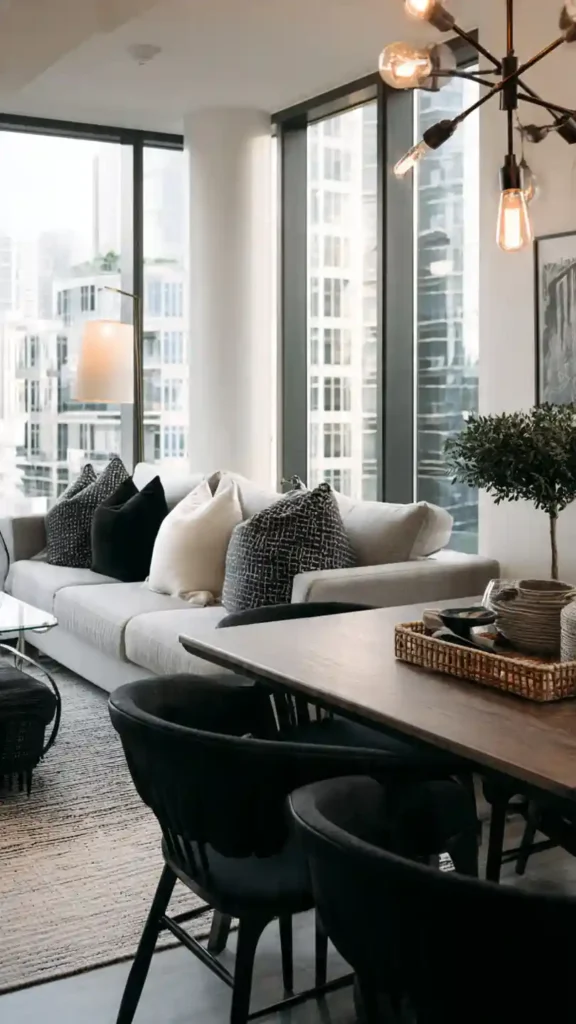
Adding black accents can bring contrast and depth to a neutral living and dining room. Black dining chairs, lighting fixtures, or décor pieces help define the dining area while still complementing the rest of the room.
When paired with light walls and neutral furniture, the black accents stand out in a balanced way. The living space can remain soft and comfortable while the dining area feels slightly more structured. This mix of light and dark tones creates a modern and stylish environment.
20. Large Open Living Dining Combo
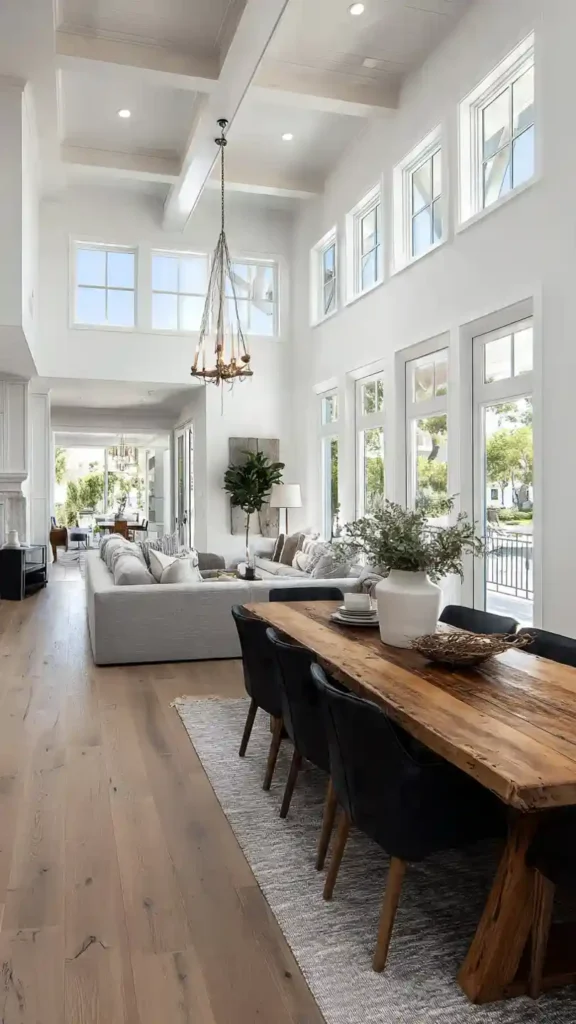
In larger homes, combining the living and dining areas allows the space to feel expansive and welcoming. A spacious sofa arrangement forms the living area, while a long dining table anchors the dining space. The open layout allows both areas to feel connected without competing for attention.
Large windows, soft lighting, and well-chosen furniture help maintain balance in the room. Decorative pieces such as artwork, plants, or shelves can tie both areas together. With thoughtful placement, the large open living and dining combo becomes a comfortable space for relaxing, dining, and gathering with family or guests.
21. Built-In Bench Dining Corner Combo
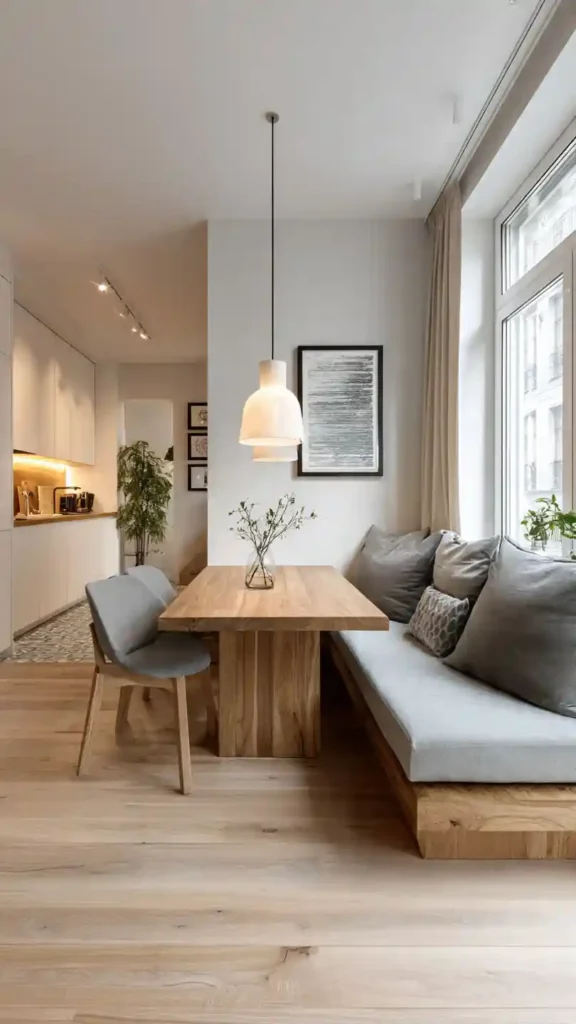
A built-in bench along the wall creates a cozy dining corner while keeping the living room open. The bench provides seating without requiring multiple chairs, which helps save space in shared layouts. Cushions and soft fabrics make the corner feel inviting and comfortable.
The living area can sit just a few steps away with a sofa and coffee table, allowing the room to remain connected. This layout works especially well in smaller homes where maximizing space is important. The dining corner feels intentional while the living area remains relaxed and open.
22. Open Shelving Divider Living Dining Combo
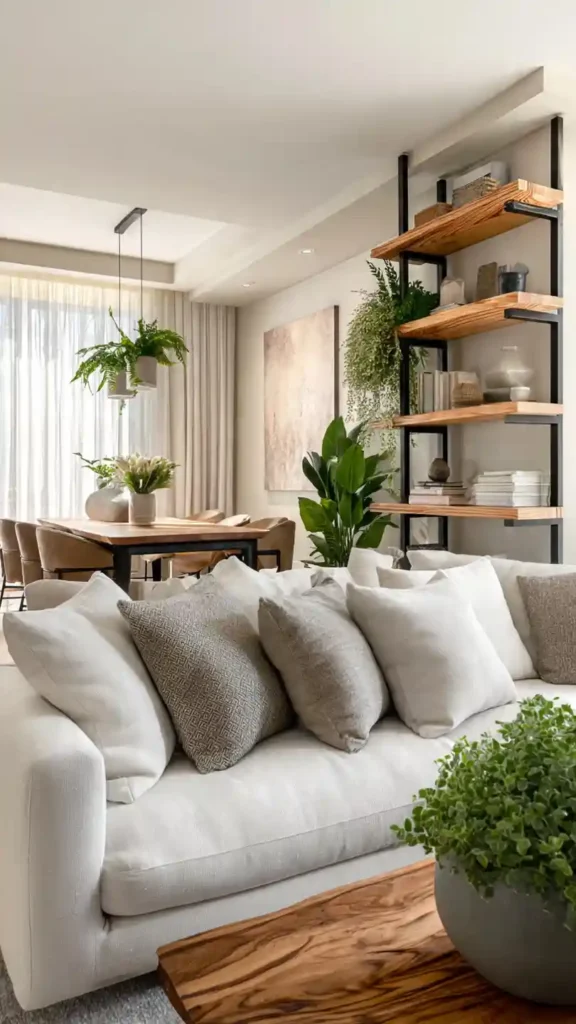
Open shelving can act as a gentle divider between the living and dining areas. Instead of blocking the space completely, the shelves allow light to pass through while still creating visual separation. Decorative objects, books, or plants can be displayed on the shelves to add personality.
The living area stays comfortable on one side with a sofa and seating arrangement, while the dining table sits just beyond the shelving. This layout keeps the room organized while maintaining an open and airy feel.
23. Window-Side Dining Area Layout
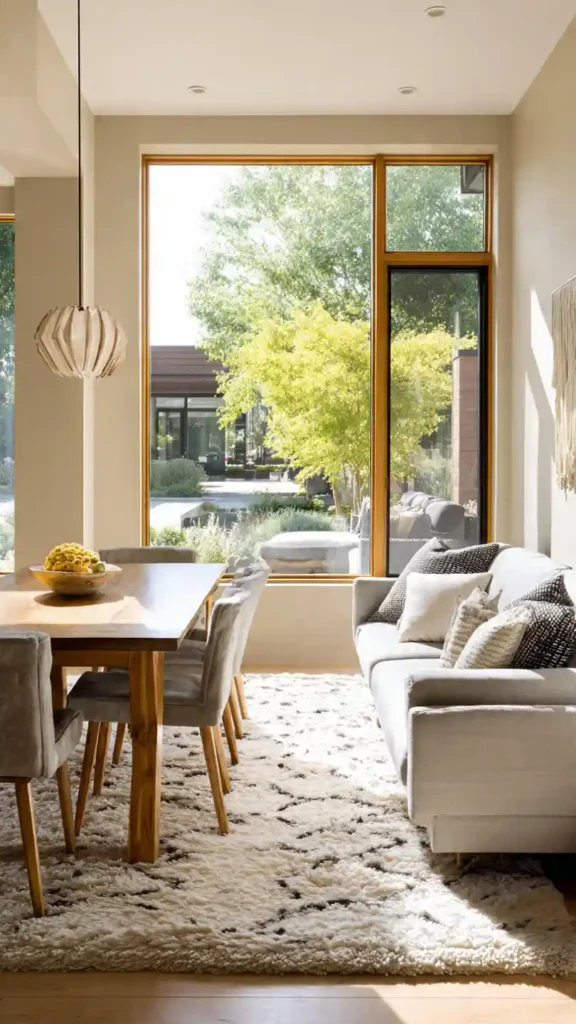
Placing the dining table near a window makes the dining space feel bright and welcoming. Natural light highlights the table during the day and creates a pleasant atmosphere for meals. Meanwhile, the living area can sit slightly farther into the room, providing a cozy space for relaxing.
Light curtains, simple décor, and natural materials help maintain the open feeling of the room. This arrangement allows both spaces to benefit from the available light while keeping the layout balanced.
24. Floating Console Divider Layout
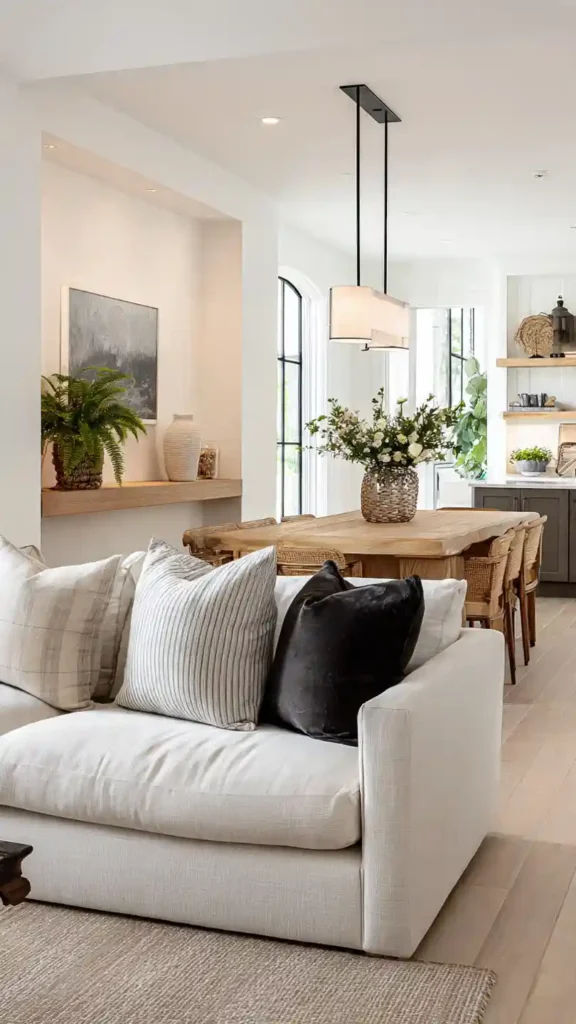
A console table placed behind the sofa can act as a subtle divider between the living and dining areas. The console provides a visual boundary while still keeping the room open and connected. It also creates a useful surface for lamps, books, or small decorative items.
With the sofa facing the living area and the console behind it, the dining table sits comfortably on the other side. This layout keeps both spaces organized while maintaining a smooth flow through the room.
25. Coastal Living Dining Combo
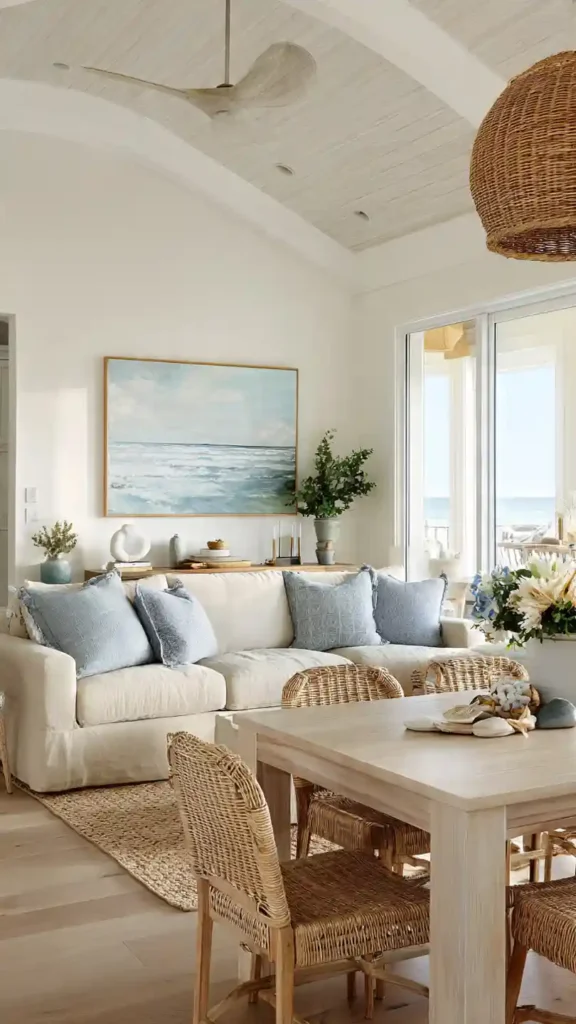
A coastal-inspired living and dining combo uses light colors and natural textures to create a relaxed atmosphere. Soft shades of white, beige, and pale blue help the room feel airy and calm. Natural materials such as wood and woven accents add warmth.
A light wood dining table paired with a comfortable neutral sofa creates a casual and inviting environment. Decorative touches like woven baskets, soft textiles, and simple wall art complete the coastal look. The result is a shared space that feels bright, peaceful, and perfect for everyday living.
FAQs
How do you separate a living room and dining room in the same space?
The easiest way to separate the two areas is through furniture placement and visual elements rather than walls. Placing a sofa between the spaces, using area rugs, or adding lighting above the dining table can help define each zone. Console tables, shelving, or different flooring textures also create subtle separation while keeping the layout open and connected.
What is the best layout for a living room and dining room combo?
The best layout usually places the living area closer to the main focal point such as a television, fireplace, or feature wall. The dining table is often positioned closer to the kitchen or near a window for natural light. Keeping a clear walking path between the two spaces helps the room feel organized and easy to move through.
How do you decorate a living room and dining room combo?
Decorating a shared space works best when both areas follow the same color palette and style. Matching materials like wood tones, fabrics, or metal accents can help the room feel cohesive. You can add rugs, artwork, lighting, and plants to give each area personality while still keeping the overall design balanced.
What dining table works best in a small living dining combo?
Round or compact dining tables usually work best in smaller shared spaces because they allow easier movement around the room. Glass tables or light wood tables can also help the room feel less crowded. Choosing chairs that slide easily under the table helps maintain an open layout when the dining area is not in use.
How do you make a living room and dining room combo look bigger?
Using light colors, simple furniture, and good lighting can make the space feel larger. Keeping décor minimal and choosing furniture that does not visually block the room helps maintain openness. Mirrors, glass tables, and large windows can also reflect light and create the feeling of a more spacious interior.