How to Grow Sunflowers
Sunflowers are one of the easiest flowers to grow, even for beginners. They grow fast, love full sun, and bring bold color to garden beds, borders, fences, and vegetable gardens. Some sunflowers stay short and compact, while others grow tall with huge golden heads. This easy guide covers how to grow sunflowers from seed, when to plant them, how much water they need, and simple care tips for strong stems and beautiful blooms.
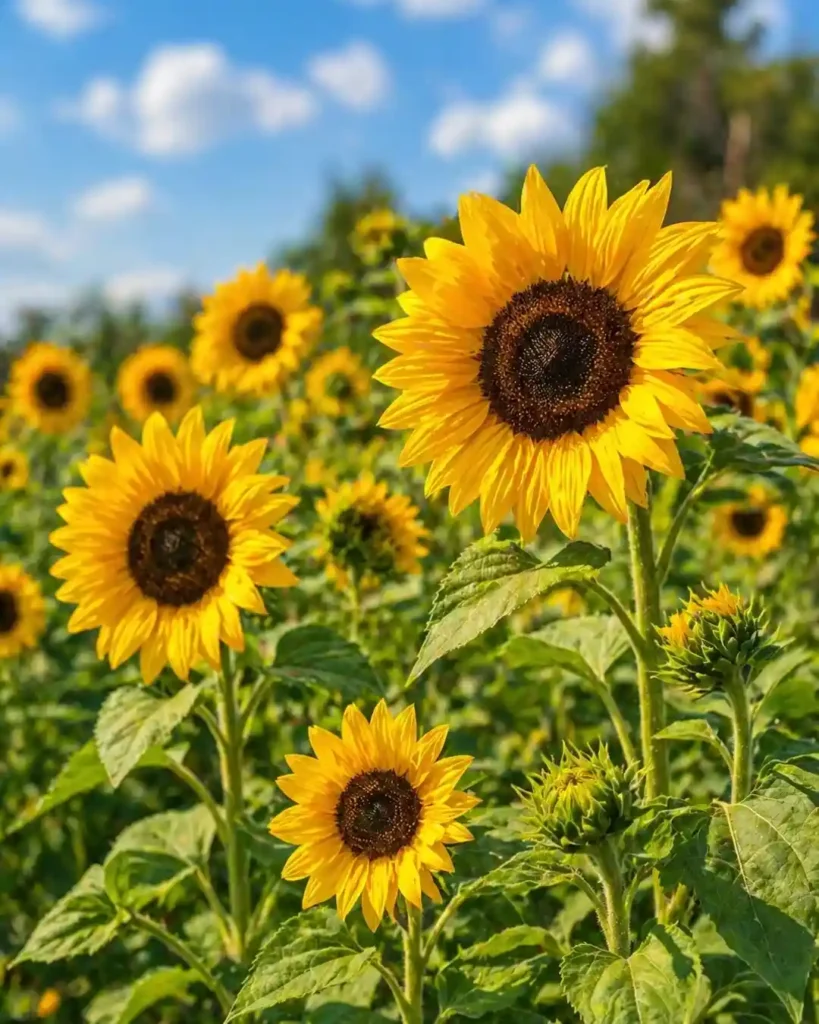
How to Grow Sunflowers
Sunflowers grow best from seed. They do not need complicated care, but they do need sun, space, and well-draining soil.
Most sunflower seeds can be planted directly in the garden after the danger of frost has passed. Once the soil warms up, they usually sprout quickly.
The main thing to remember is that sunflowers love light. If they do not get enough sun, the stems may grow weak, thin, or bend toward the light.
Best Place to Plant Sunflowers
Choose a bright, open spot that gets at least 6 to 8 hours of direct sunlight each day.
Sunflowers are tall, so place them where they will not shade smaller plants. They work well along fences, at the back of flower beds, beside vegetable gardens, or in a sunny corner that needs height.
If you are growing giant sunflowers, choose a spot protected from strong wind. Tall varieties can become heavy when the flower heads mature, so wind protection helps keep stems from snapping.
Best Soil for Sunflowers
Sunflowers are not too picky, but they grow best in loose, well-draining soil.
Before planting, loosen the soil and mix in compost. This helps young roots grow deep and strong.
Sunflowers do not like soggy soil. If water sits around the roots for too long, the plant can weaken or rot.
Good soil additions for sunflowers include:
- Compost
- Aged manure
- Leaf mold
- Organic garden fertilizer
- Worm castings
Avoid overfeeding with too much nitrogen. It can create lots of leafy growth but fewer strong blooms.
When to Plant Sunflowers
Plant sunflower seeds in spring after your last frost date. The soil should be warm enough for seeds to sprout well.
In many areas, sunflowers can be planted from spring through early summer. If your growing season is long, you can sow seeds every 2 to 3 weeks for a longer bloom season.
This is called succession planting. It keeps new flowers coming instead of having all your sunflowers bloom at the same time.
Growing Sunflowers from Seed
Sunflowers are best grown directly from seed in the garden.
Plant seeds about 1 inch deep in loose soil. Water gently after planting and keep the soil lightly moist until seedlings appear.
Most sunflower seeds sprout within 7 to 10 days when the soil is warm.
Once seedlings grow a few inches tall, thin them so each plant has enough space. Crowded sunflowers compete for light, water, and nutrients.
Can You Start Sunflowers Indoors?
Yes, you can start sunflowers indoors, but direct sowing is usually easier.
Sunflowers grow fast and develop long roots. If they stay in small pots too long, they can become stressed when moved outside.
If you start them indoors, use biodegradable pots and transplant them before the roots get crowded. Move seedlings carefully because sunflowers do not like root damage.
Start them indoors about 2 to 3 weeks before your outdoor planting time.
How Far Apart to Plant Sunflowers
Spacing depends on the type of sunflower.
Small dwarf sunflowers can be spaced around 6 to 12 inches apart. Medium varieties usually need 12 to 18 inches. Giant sunflowers may need 24 to 36 inches or more.
Good spacing gives the roots room to grow and helps air move around the plants.
If you want larger flower heads, give each plant more space. If you want a fuller, meadow-style look, you can plant them a little closer, but the blooms may be smaller.
How Often to Water Sunflowers
Sunflowers need regular water when they are young.
Keep the soil lightly moist while seeds are sprouting. Once the plants are established, water deeply rather than giving shallow water every day.
Deep watering helps the roots grow down into the soil. This makes the plant stronger and better able to handle heat.
During hot, dry weather, sunflowers may need water once or twice a week. Check the soil near the base. If it feels dry a few inches down, water well.
Do Sunflowers Need Fertilizer?
Sunflowers can grow in average soil, but they bloom better when the soil has enough nutrients.
Mixing compost into the bed before planting is often enough for many gardens.
If your soil is poor, you can use a balanced slow-release fertilizer. Avoid too much nitrogen because it can make the plant grow tall and leafy without strong flower heads.
For giant sunflowers, a little extra feeding can help, but do not overdo it. Strong stems matter more than fast, soft growth.
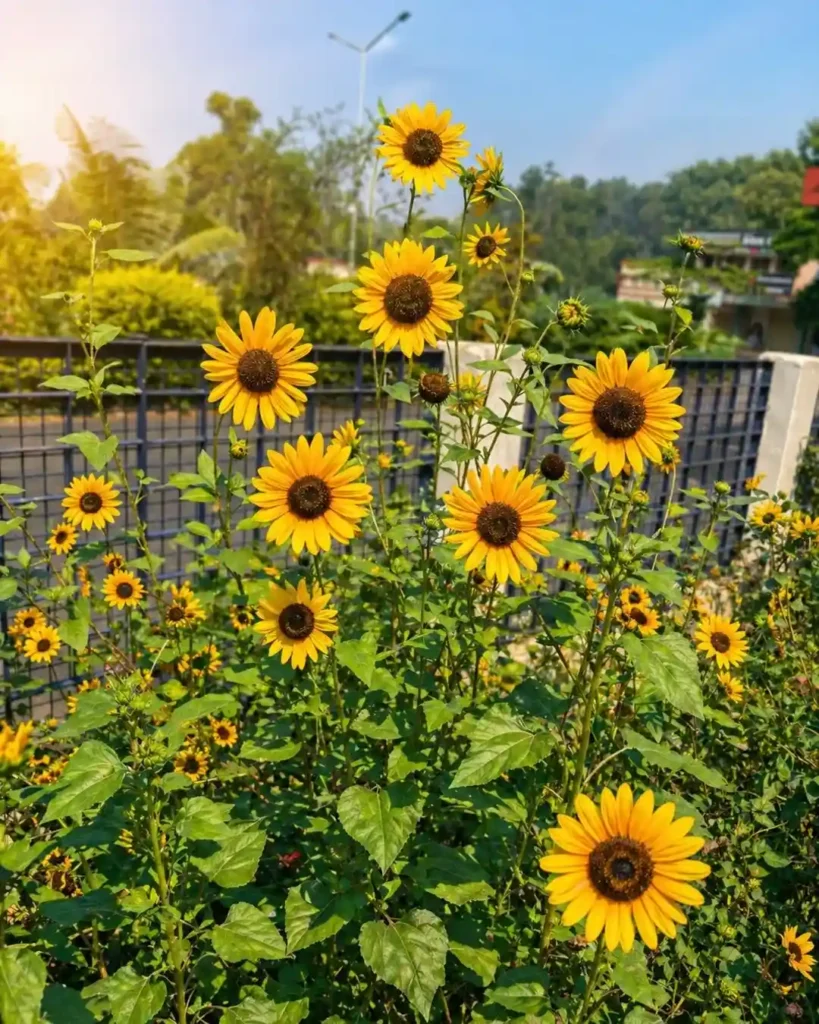
Types of Sunflowers
There are many sunflower varieties, and choosing the right type makes a big difference in your garden design.
Giant Sunflowers
Giant sunflowers can grow very tall, sometimes reaching 8 to 12 feet or more.
They are great for back borders, fences, children’s gardens, and seed harvesting. Because they get heavy, they may need staking in windy areas.
Dwarf Sunflowers
Dwarf sunflowers stay compact, often around 1 to 3 feet tall.
They are perfect for containers, small gardens, patios, raised beds, and front borders. They give the sunny sunflower look without taking over the space.
Branching Sunflowers
Branching sunflowers produce many smaller blooms on one plant.
They are great for cut flowers because they keep producing over a longer period. They also create a fuller garden look than single-stem types.
Pollen-Free Sunflowers
Pollen-free sunflowers are often grown for flower arrangements.
They are cleaner for indoor bouquets because they do not drop pollen on tables or fabric. However, they may not offer the same food value for pollinators as pollen-producing types.
Red and Orange Sunflowers
Not all sunflowers are yellow. Some varieties bloom in deep red, bronze, rust, orange, burgundy, or mixed tones.
These are beautiful in fall gardens, cottage borders, and warm color schemes.
Growing Sunflowers in Pots
Sunflowers can grow well in containers if you choose the right variety.
Dwarf sunflowers are best for pots because they stay shorter and do not need as much root space.
Use a container with drainage holes and fill it with good potting mix. Place the pot in full sun and water regularly, especially during hot weather.
Large sunflowers need big, heavy containers so they do not tip over. A small pot will dry out quickly and may not support tall stems.
Do Sunflowers Need Support?
Many sunflowers stand on their own, but tall types may need support.
Giant sunflowers can become top-heavy, especially when the seed head forms. If your garden gets wind, use a strong stake and soft garden ties.
Tie the stem loosely so it has support but can still move a little. Do not tie too tightly because the stem will grow thicker as the plant matures.
Planting tall sunflowers near a fence can also give them natural support.
How Long Do Sunflowers Take to Bloom?
Most sunflowers bloom about 70 to 100 days after planting, depending on the variety.
Some smaller types bloom faster, while giant types usually take longer.
Check the seed packet before planting. It usually lists the “days to maturity,” which helps you plan when flowers will appear.
For a longer bloom season, plant new seeds every few weeks through early summer.
How to Get More Sunflower Blooms
If you want more flowers, choose branching sunflower varieties. Single-stem sunflowers usually produce one large flower per plant.
Branching types can produce many blooms, especially if they have enough sun, water, and space.
You can also plant several rounds of seeds. This gives you waves of blooms instead of one short display.
To encourage healthy blooming:
- Plant in full sun
- Give enough space
- Water deeply
- Avoid too much nitrogen
- Choose branching varieties for more flowers
Should You Deadhead Sunflowers?
It depends on the type and what you want.
For branching sunflowers, deadheading faded blooms can encourage the plant to keep producing flowers.
For single-stem sunflowers, deadheading is not needed if you want to save seeds or feed birds.
If you want sunflower seeds, leave the flower head on the plant until the back of the head turns yellow or brown and the seeds look full.
Harvesting Sunflower Seeds
Sunflower seeds are ready to harvest when the back of the flower head turns yellow-brown and the seeds are plump.
You can leave the heads on the plant for birds, or cut them and dry them indoors.
To harvest, cut the flower head with several inches of stem attached. Hang it in a dry, airy spot. Once fully dry, rub the seeds loose with your hands.
Store seeds in a cool, dry place if you want to save them for planting or feeding birds.
Common Sunflower Problems
Sunflowers are usually easy, but a few problems can happen.
Birds Eating Seeds
Birds love sunflower seeds. If you want to harvest seeds, cover the flower head with a paper bag or mesh once seeds begin to mature.
If you are growing sunflowers for wildlife, leave the heads uncovered and let birds enjoy them.
Slugs and Snails
Young sunflower seedlings can be damaged by slugs and snails.
Check seedlings early in the morning or evening. Keep the area clean and avoid heavy mulch right against tiny plants.
Aphids
Aphids may gather on tender stems or buds. A strong spray of water can remove many of them.
Healthy plants usually handle small aphid problems well.
Powdery Mildew
Powdery mildew can appear as white powder on leaves, especially in humid weather.
Give plants enough space, avoid overhead watering, and plant them where air can move freely.
Weak or Leaning Stems
Weak stems often happen from too much shade, overcrowding, or wind.
Plant in full sun, thin seedlings properly, and stake tall varieties if needed.
Best Companion Plants for Sunflowers
Sunflowers look beautiful with warm, colorful plants that enjoy similar sunny conditions.
Good companion plants for sunflowers include:
- Zinnias
- Cosmos
- Marigolds
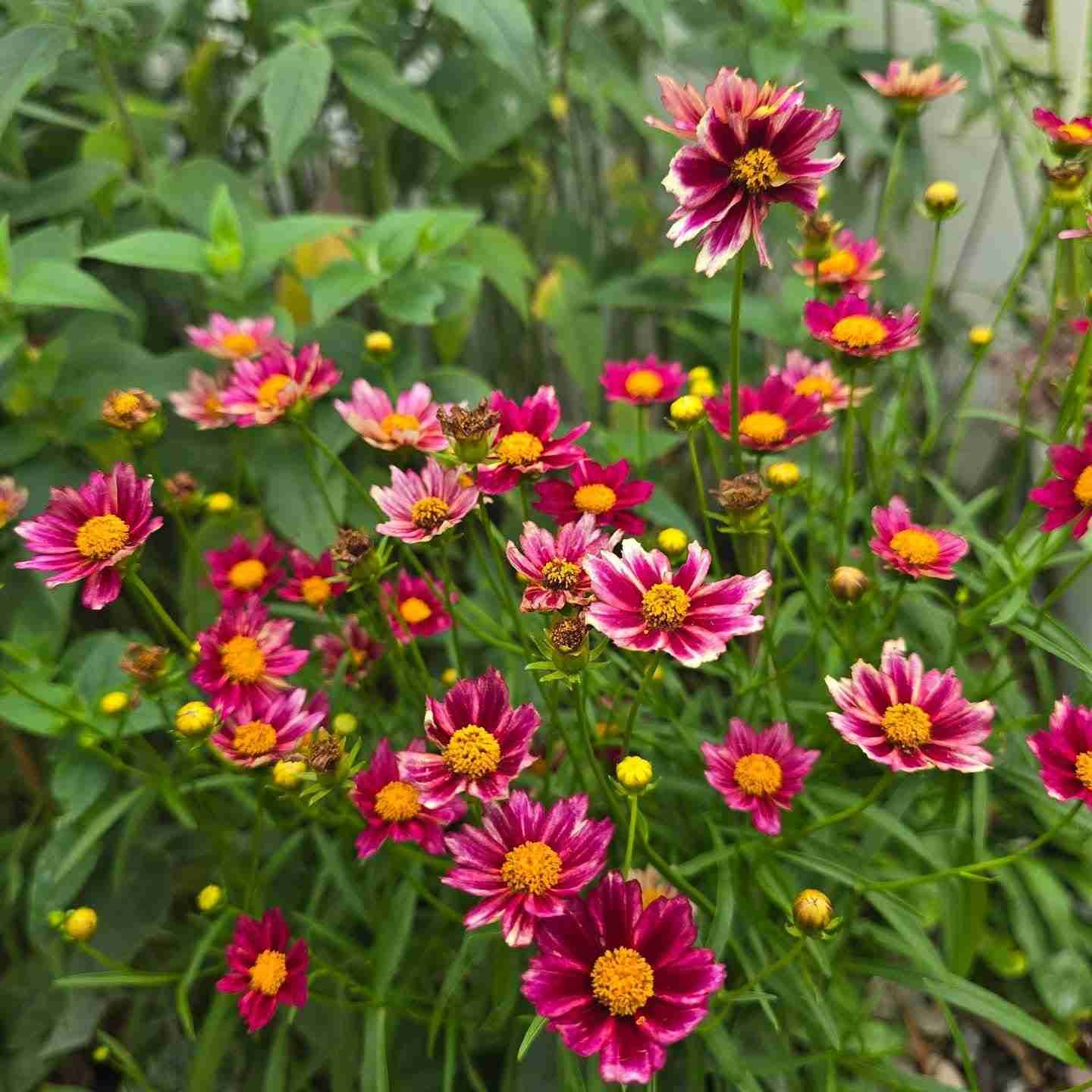
- Coneflowers
- Black-Eyed Susans
- Lavender
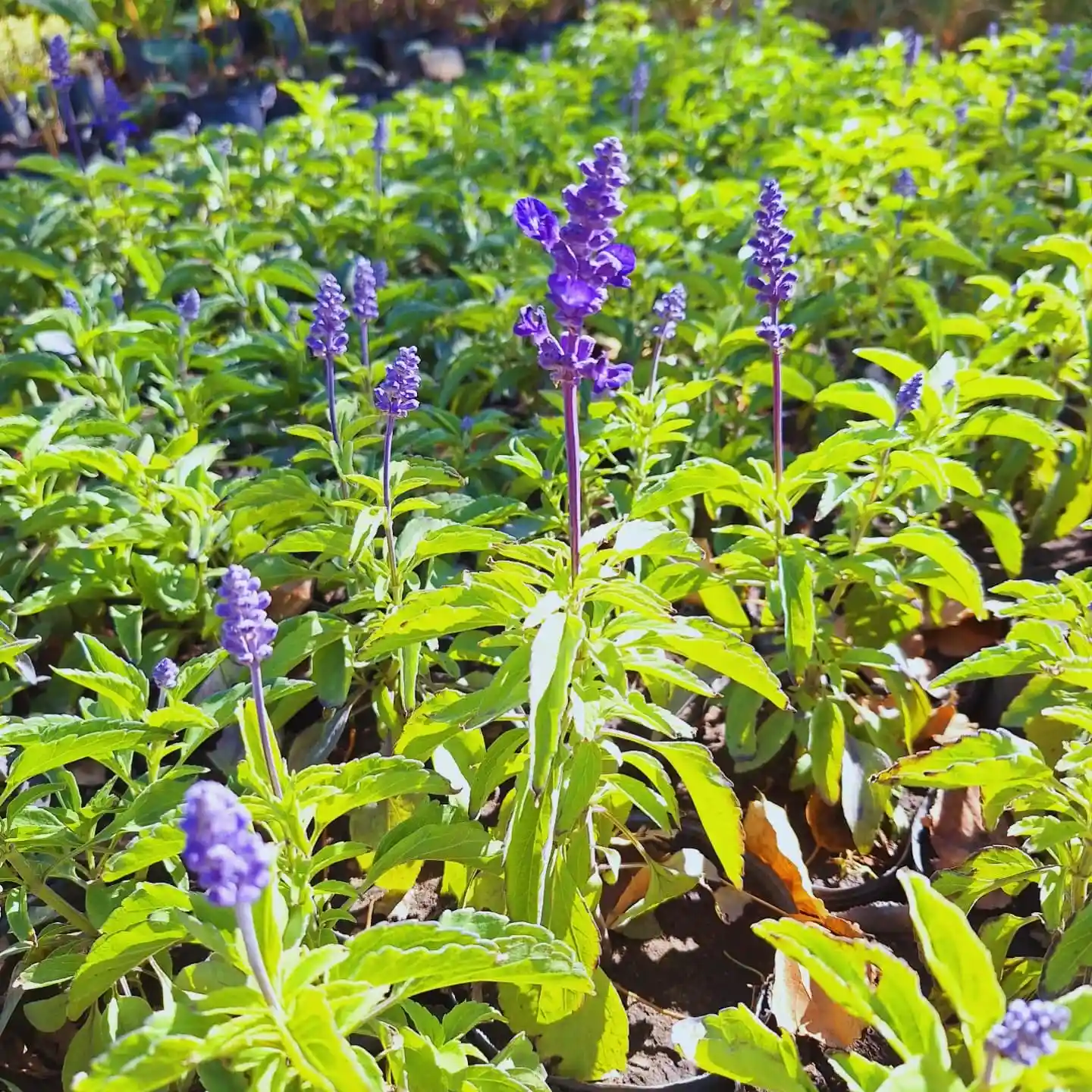
- Salvia
- Nasturtiums
- Coreopsis
- Calendula
- Bee balm
- Mexican sunflower
Sunflowers also work well near vegetable gardens because they attract pollinators.
Just avoid planting them where they will block too much light from smaller crops.
Seasonal Sunflower Care
Spring Sunflower Care
In spring, prepare the soil with compost and wait until frost danger has passed. Plant seeds when the soil is warm.
Keep the soil moist while seeds sprout.
Summer Sunflower Care
In summer, water deeply during dry weather and stake tall plants if needed.
Watch for pests on young stems and buds. Branching types can be deadheaded to keep blooms coming.
Fall Sunflower Care
In fall, let seed heads mature if you want to harvest seeds or feed birds.
Cut down old stems once the plant is finished. Thick sunflower stems can be chopped and composted if they are disease-free.
Are Sunflowers Annuals or Perennials?
Most garden sunflowers are annuals. This means they grow, bloom, set seed, and finish in one season.
There are also perennial sunflowers, but the common tall yellow sunflower most people grow from seed is usually an annual.
Annual sunflowers are still worth planting because they grow quickly and give a big summer display.
Are Sunflowers Good for Beginners?
Yes, sunflowers are one of the best flowers for beginners.
They are easy to grow from seed, sprout quickly, and do not need much special care. Kids also love growing them because the plants grow tall fast and are easy to watch.
If you are new to gardening, start with dwarf sunflowers in pots or medium-height varieties in a sunny garden bed.
Conclusion
Sunflowers are simple, cheerful, and perfect for sunny gardens. Give them full sun, loose well-draining soil, enough space, and deep watering while they grow. Choose dwarf types for containers, giant types for height, and branching types for lots of blooms. With the right variety and a sunny spot, sunflowers can bring bright color, pollinators, and even seeds for birds into your garden.
FAQs
Are sunflowers easy to grow?
Yes, sunflowers are very easy to grow. They grow well from seed, need full sun, and only require basic watering and spacing.
When should I plant sunflower seeds?
Plant sunflower seeds in spring after the danger of frost has passed. The soil should be warm for best germination.
How much sun do sunflowers need?
Sunflowers need at least 6 to 8 hours of direct sunlight each day. More sun usually means stronger stems and better blooms.
How often should I water sunflowers?
Water young sunflowers regularly until they are established. After that, water deeply when the soil feels dry a few inches down.
Can sunflowers grow in pots?
Yes, sunflowers can grow in pots. Dwarf varieties are best for containers because they stay shorter and need less support.
Why is my sunflower leaning?
A sunflower may lean because of low light, wind, shallow roots, or a heavy flower head. Plant in full sun and stake tall varieties if needed.
Do sunflowers come back every year?
Most common garden sunflowers are annuals, so they do not return from the same plant. However, dropped seeds may sprout the next year.