45 Genius Kitchen Organization Ideas You’ll Love
A well-organized kitchen doesn’t just look good it makes everyday cooking faster and less stressful. These kitchen organization ideas focus on smart storage, clean layouts, and simple upgrades that actually work in real homes.
From hidden cabinets to labeled pantry systems, each idea is practical and easy to copy. Whether you’re dealing with a small space or a full pantry, you’ll find ways to keep everything tidy, easy to reach, and visually calm.
Pull-Out Pantry Cabinet
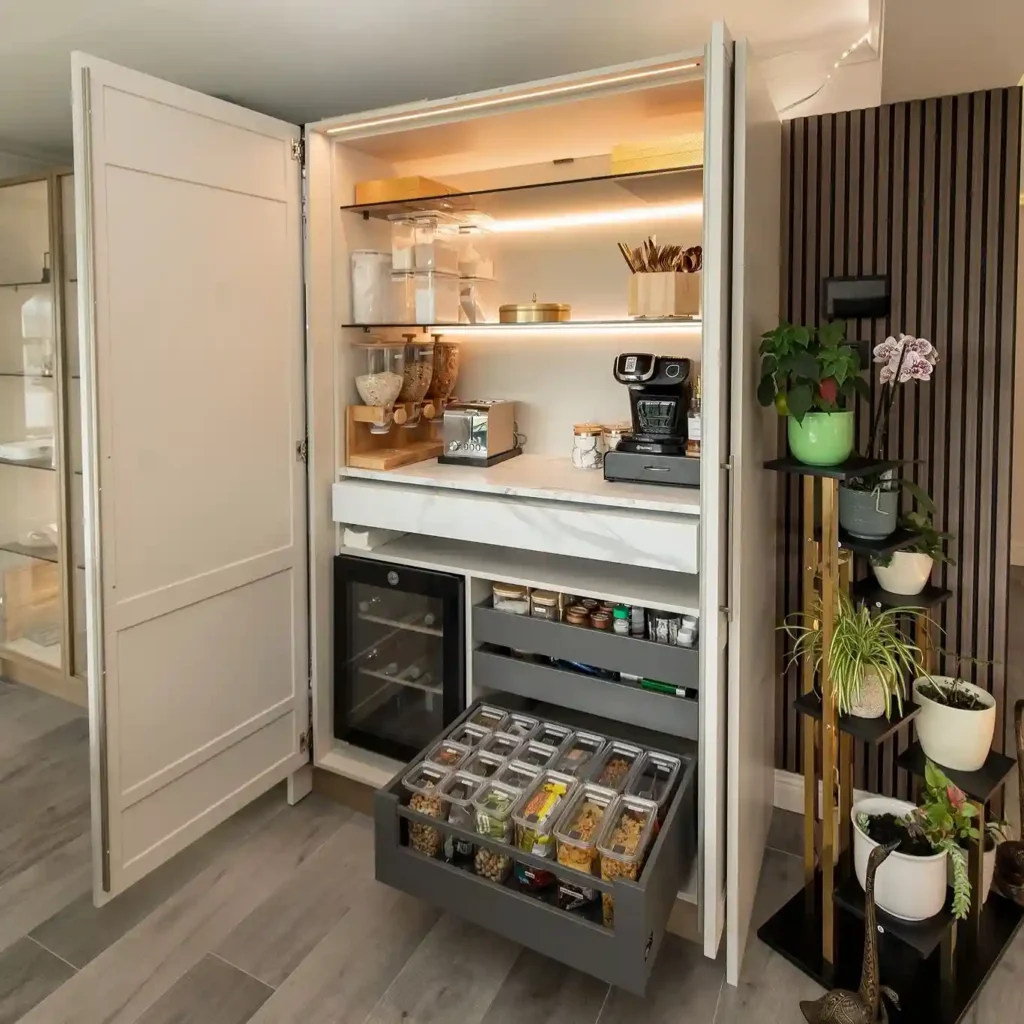
This setup turns a simple cabinet into a full working pantry with layered storage. You can see how pull-out drawers keep everything visible, from snacks to spices, while the upper shelves hold jars and daily essentials. The built-in lighting adds a warm glow, making it easy to find things even at night.
What really works here is the combination of open shelving and hidden storage. You get a clean look from the outside, but inside it’s fully functional and organized for daily use.
How to recreate this:
- Install pull-out drawers for lower cabinets
- Use clear containers for visibility
- Add LED strip lighting for better access
- Keep daily-use items at eye level
Built-In Pantry With Door Storage
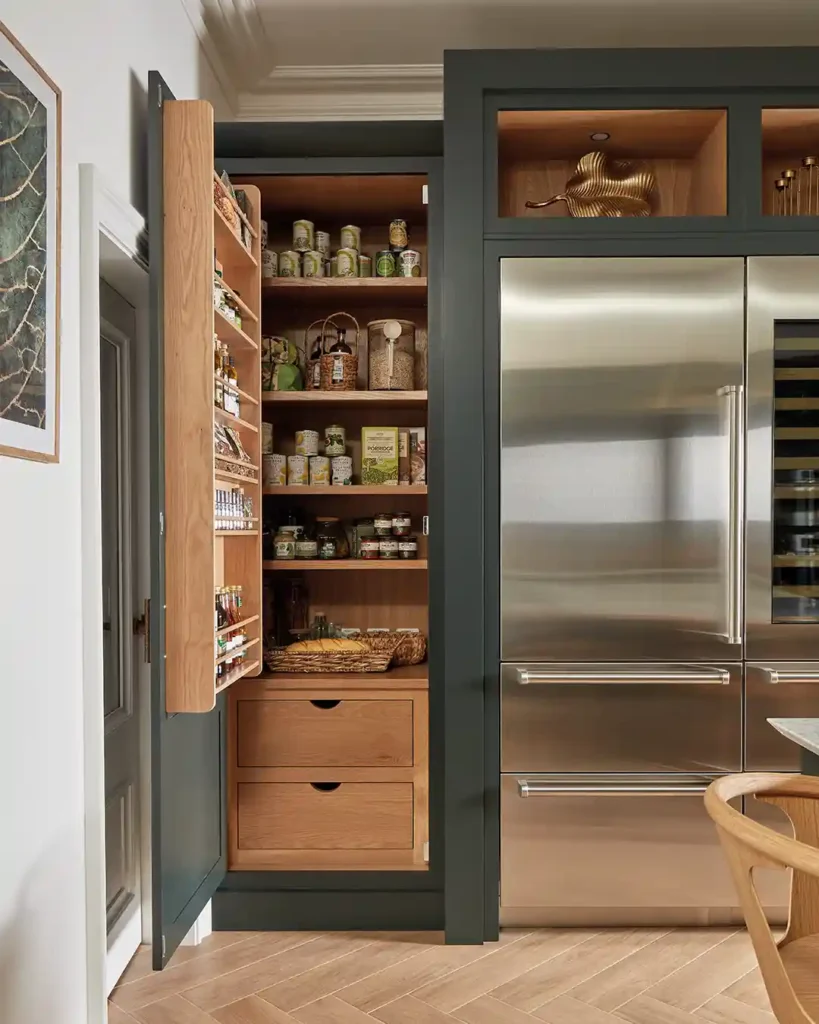
This pantry makes use of every inch, especially the inside of the cabinet door. Slim racks hold spices, oils, and small jars, while deeper shelves inside store baskets and bulk items. The warm wood interior gives it a custom, high-end feel.
It’s a smart way to solve space problems without adding more cabinets. Even a narrow pantry can feel twice as functional when you use vertical and door storage together.
How to recreate this:
- Add door-mounted spice racks
- Use baskets for grouping similar items
- Keep heavier items on lower shelves
- Use wood or neutral tones for a clean look
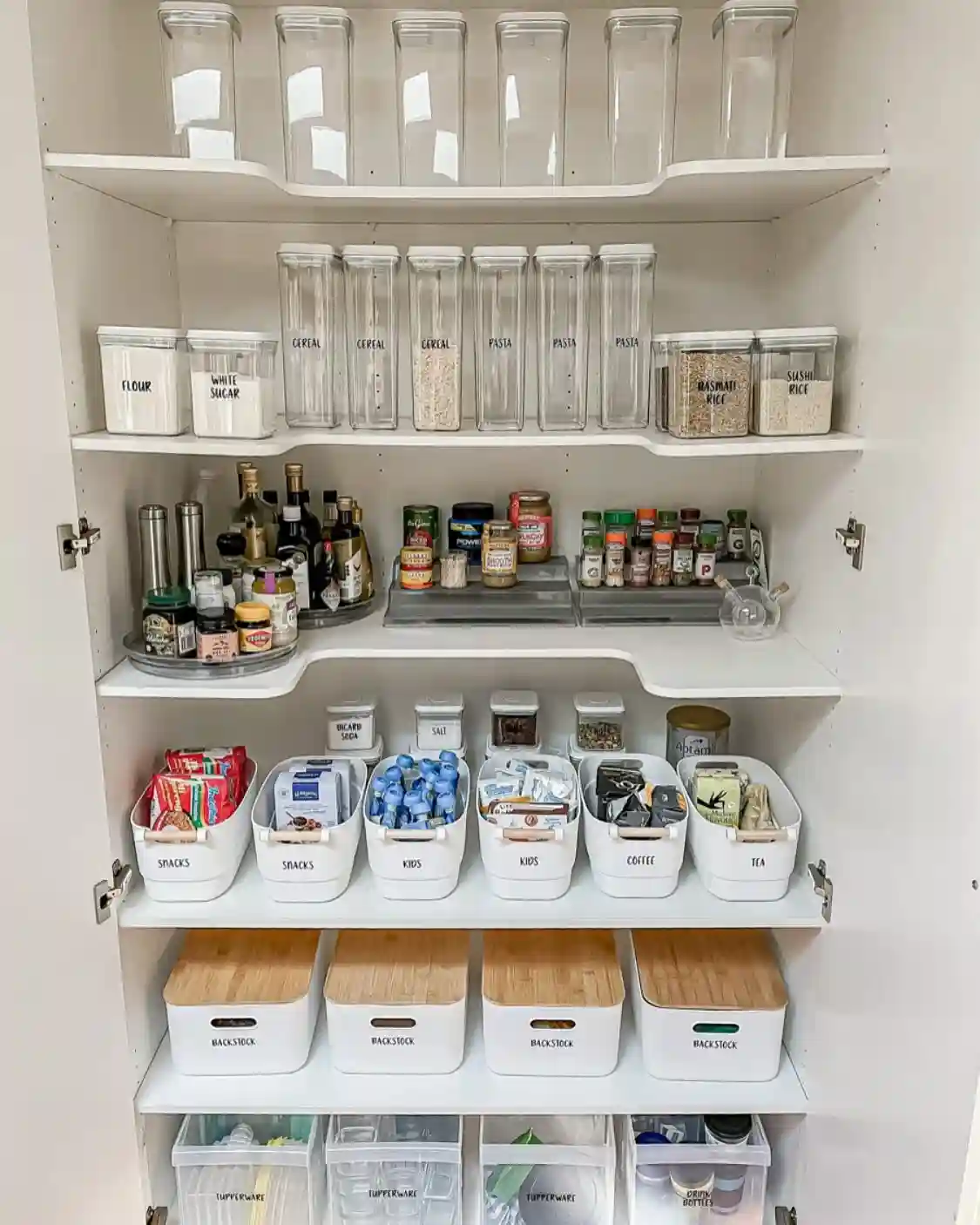
Clear Container Pantry System
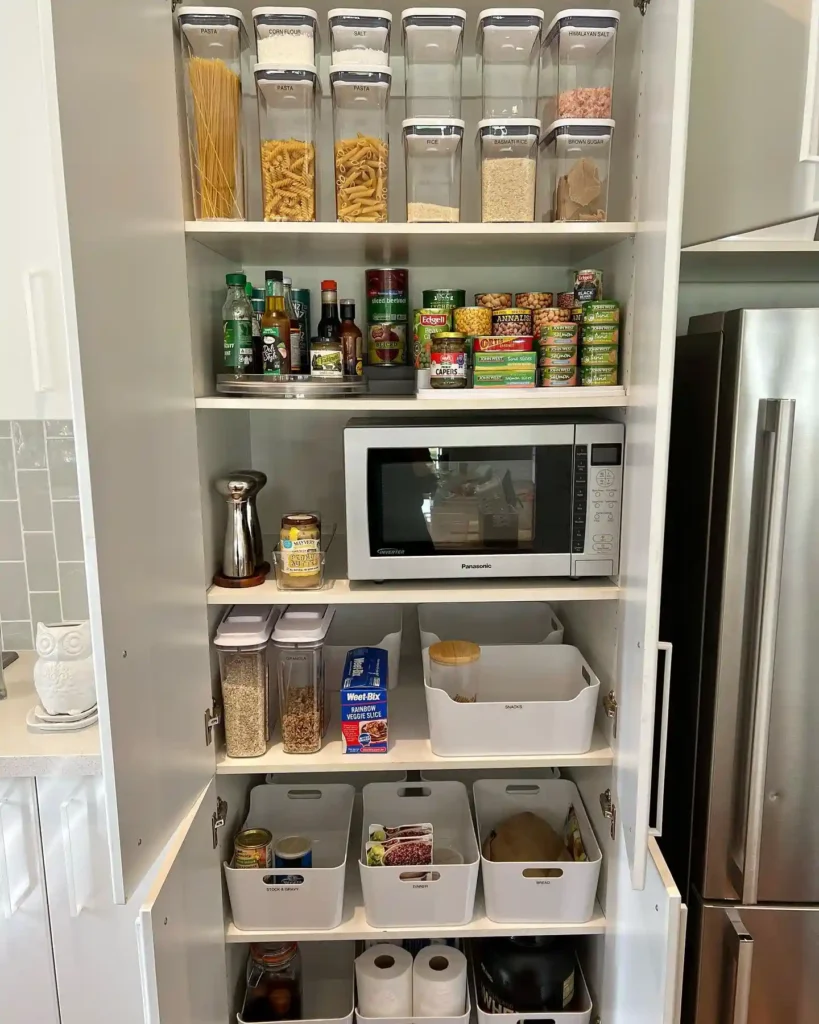
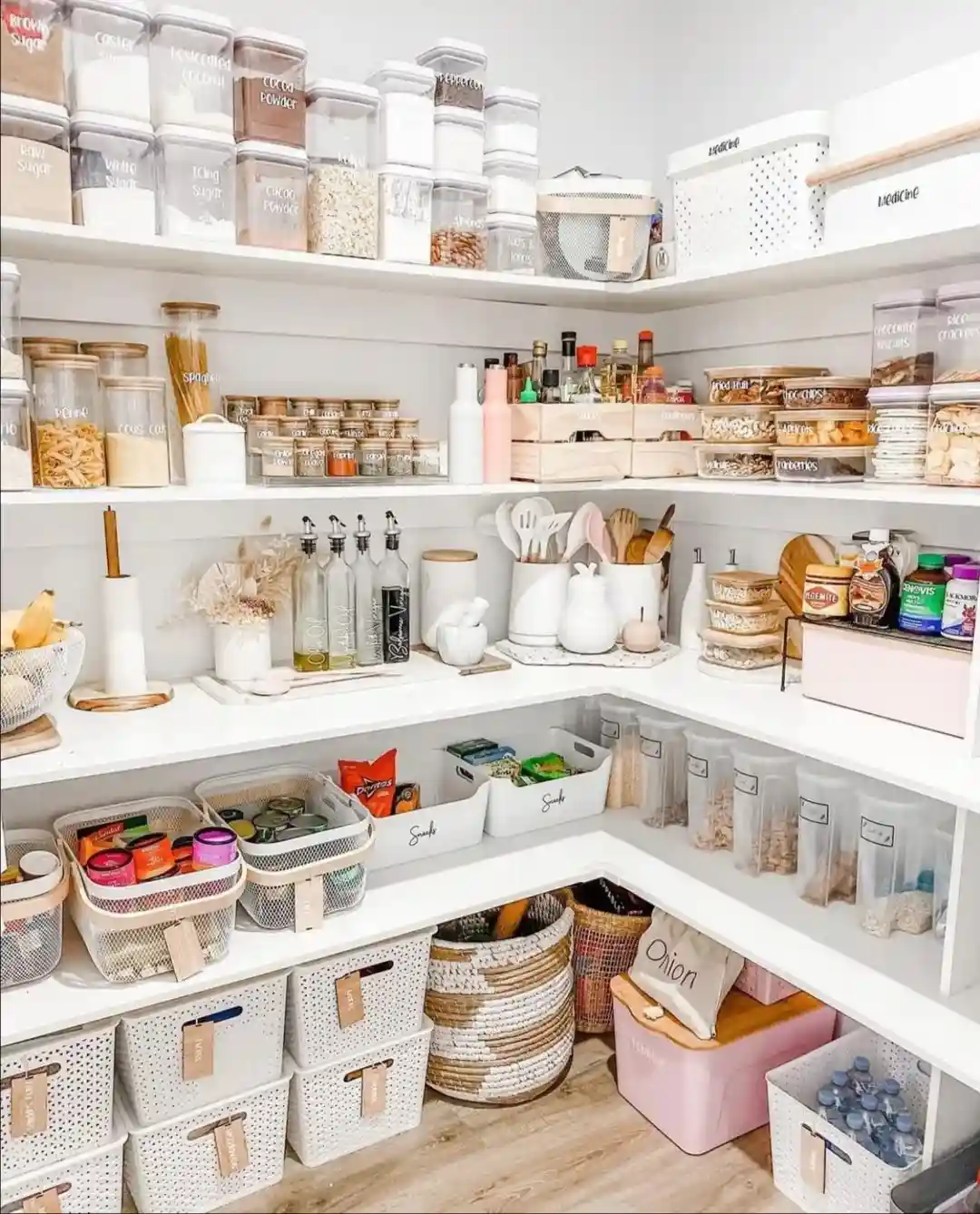
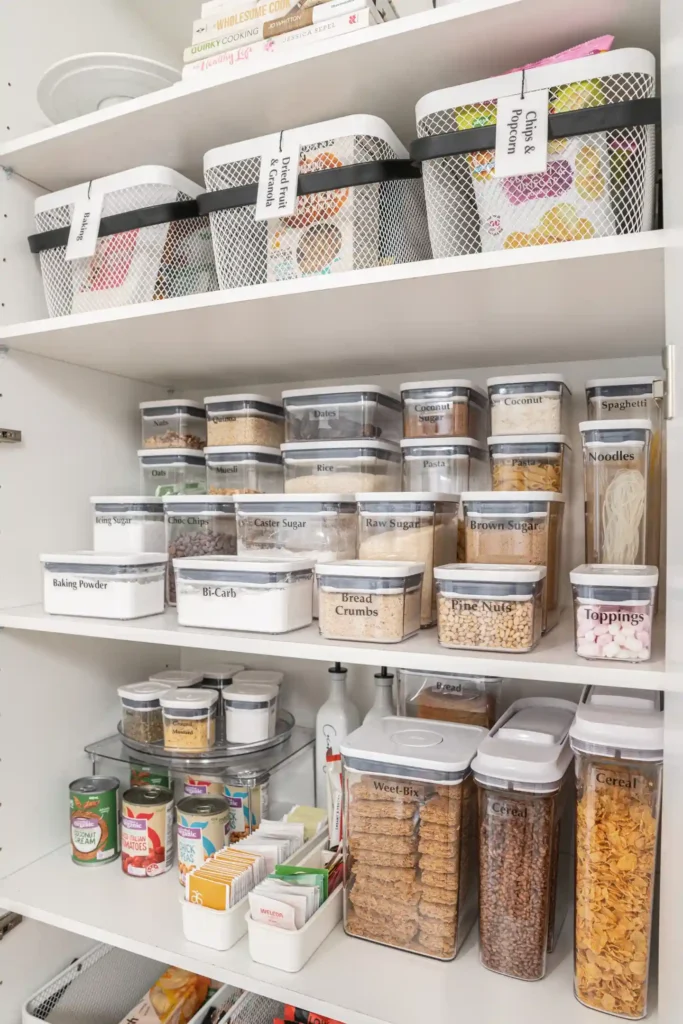
This pantry is all about uniform storage. Matching clear containers instantly make everything look neat while helping you see what’s running low. From pasta to grains, each item has its own labeled space, which cuts down on clutter.
It also makes everyday cooking faster. You don’t have to search through packaging, and the shelves stay visually calm and easy to maintain.
How to recreate this:
- Use airtight clear containers for dry goods
- Label everything clearly and simply
- Group similar items together
- Avoid mixing packaging with containers for a cleaner look
For more Organization ideas:-
- 15 Small Coastal Kitchen Ideas
- 25 Small Pantry Organization Ideas That Save So Much Space
- 20 Small Laundry Room Ideas That Maximize Space
- 25 Small Walk In Closet Organization Ideas
Drawer Organizer for Utensils
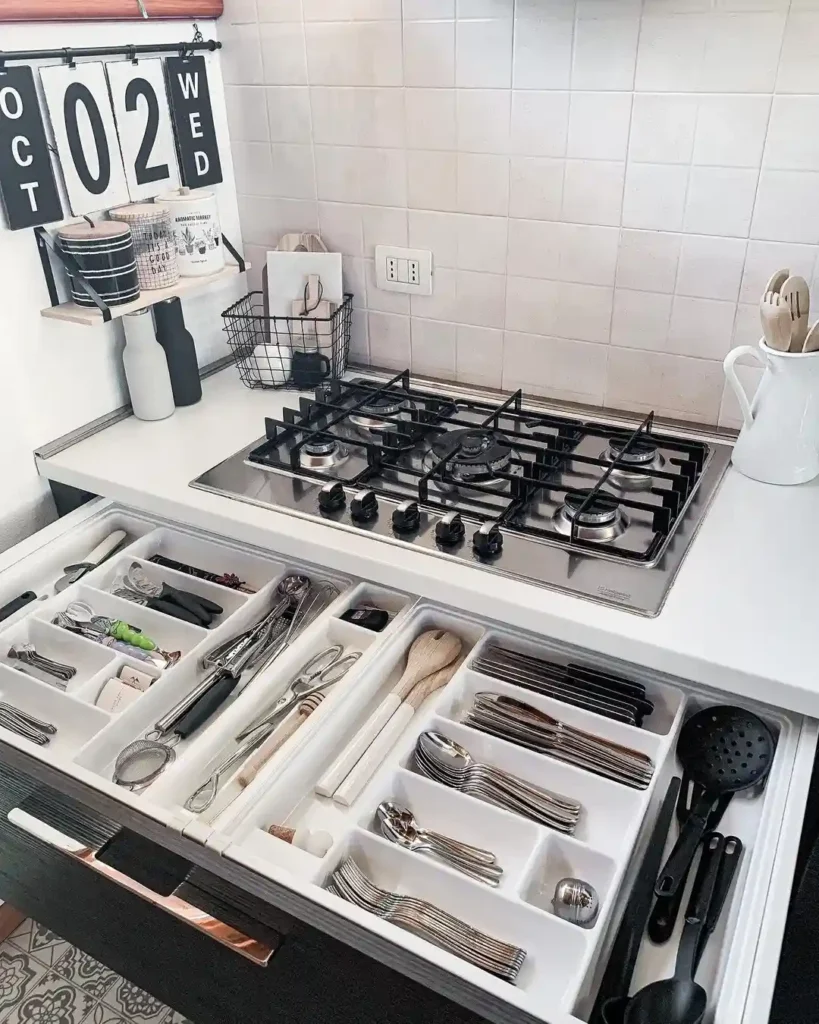
This drawer shows how much smoother your routine feels when everything has a fixed place. Each utensil sits in its own section, so you’re not wasting time digging around while cooking. The clean white divider also makes the drawer look instantly more put together.
It’s one of those small changes that has a big impact. Once you organize a drawer like this, it’s easier to keep it that way because the layout guides you.
How to recreate this:
- Use adjustable drawer dividers for flexibility
- Separate daily-use tools from rarely used ones
- Keep similar items grouped together
- Avoid overfilling to maintain the layout
Minimal Pantry Shelf Styling
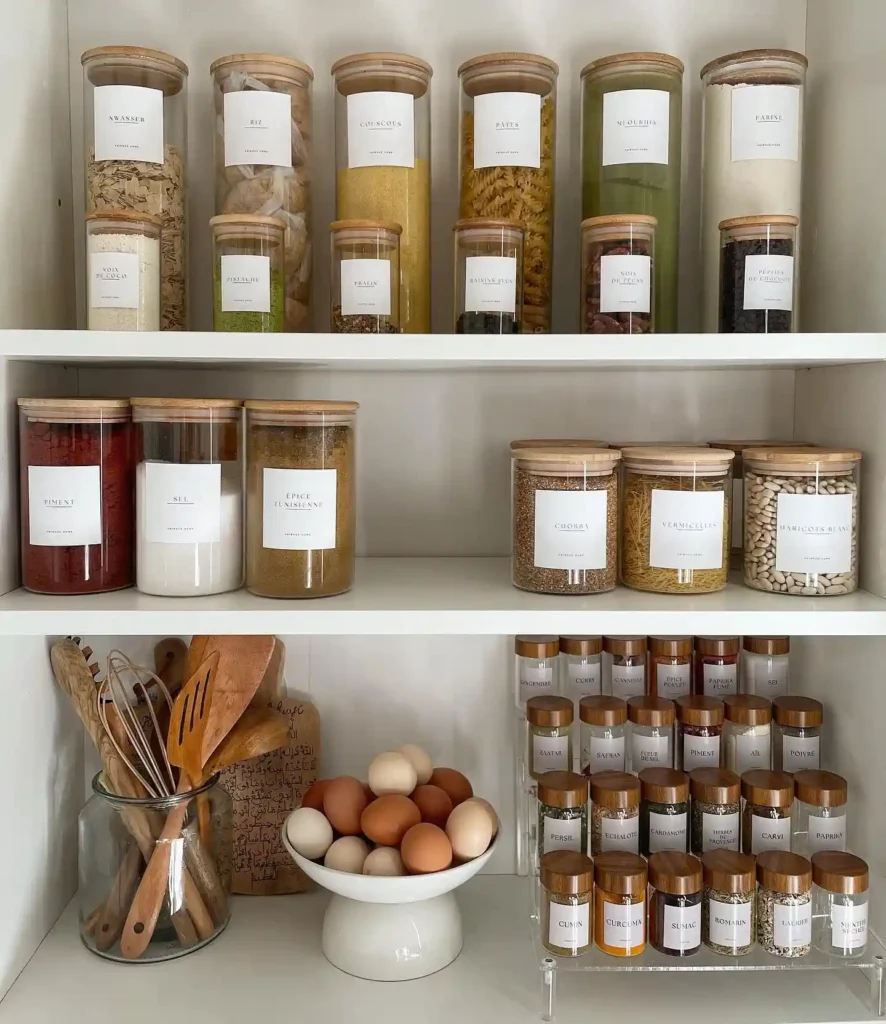
This setup feels calm because it doesn’t try to store everything in one place. A mix of labeled jars, wooden utensils, and a few open elements like a bowl of eggs creates a soft, lived-in look. It blends storage with styling without feeling forced.
The trick here is balance. You’re not hiding everything, but you’re also not overcrowding the shelves, which keeps the space easy on the eyes.
How to recreate this:
- Stick to a neutral color palette
- Mix closed containers with a few open items
- Use wood accents for warmth
- Leave some empty space to avoid clutter
Deep Pantry With Zones
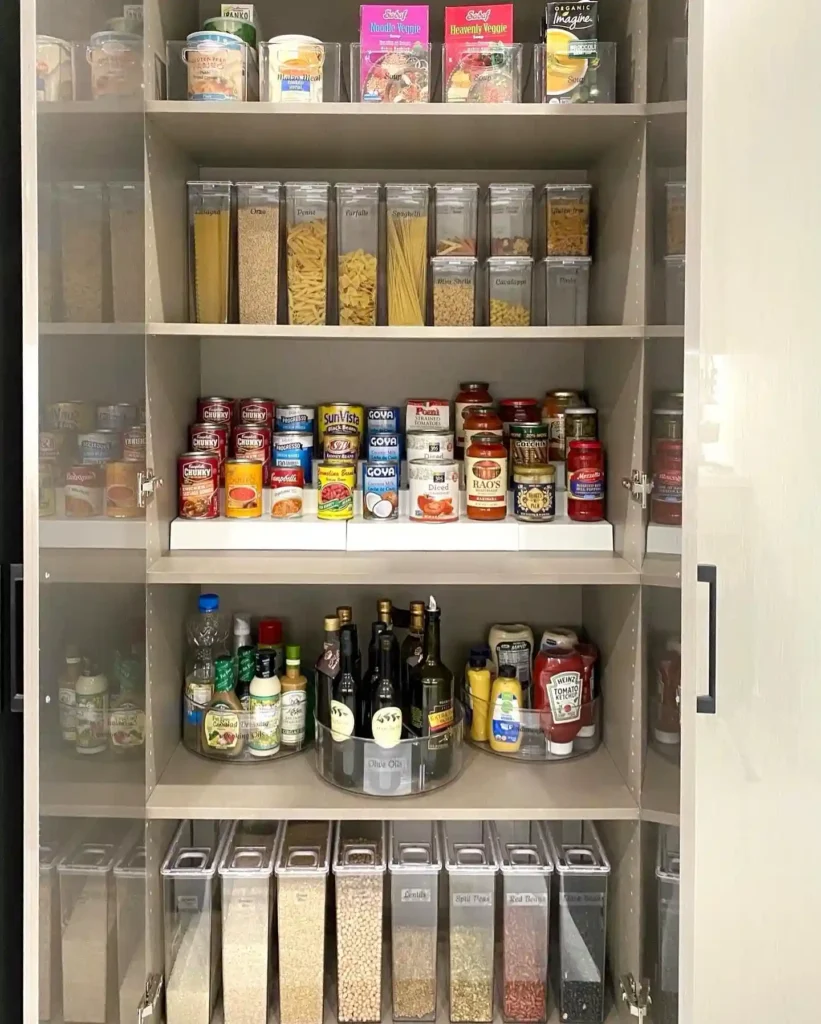
This pantry works because it’s divided into clear sections. Cans, grains, sauces, and snacks all have their own zones, so nothing gets lost at the back. Turntables and bins help bring items forward instead of stacking everything.
Zoning makes organizing easier long term. Instead of guessing where things go, you naturally return them to their category.
How to recreate this:
- Divide shelves into categories (snacks, baking, canned goods)
- Use bins or baskets for each zone
- Add lazy susans for oils and sauces
- Keep frequently used zones within easy reach
Multi-Level Drawer Storage
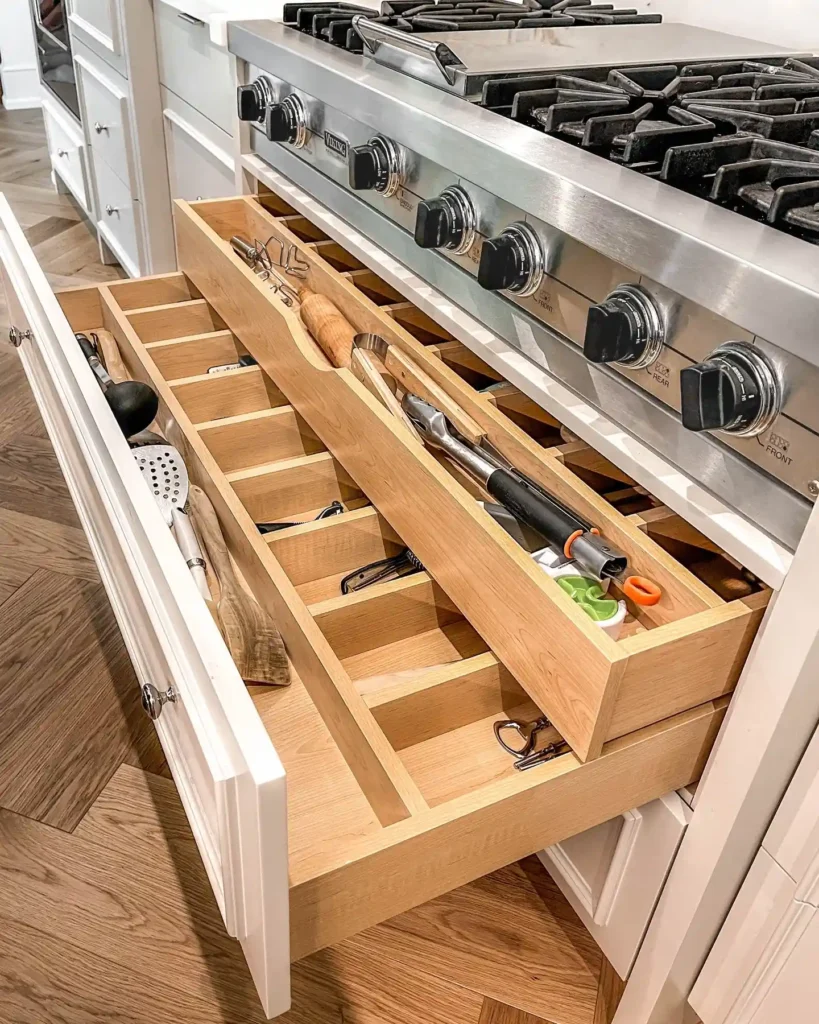
This drawer uses a smart layered design to double your storage without taking extra space. The top tray slides back to reveal deeper sections underneath, making it easy to store both small tools and bulky utensils in one place. It keeps everything visible instead of stacking items on top of each other.
It’s especially useful for deep drawers that usually turn messy. With this setup, every inch is used properly, and you don’t lose track of what’s inside.
How to recreate this:
- Add a sliding tray insert for layered storage
- Store small tools on top, larger ones below
- Choose wooden inserts for a clean, built-in look
- Avoid mixing too many item types in one section
Basket Pantry Organization
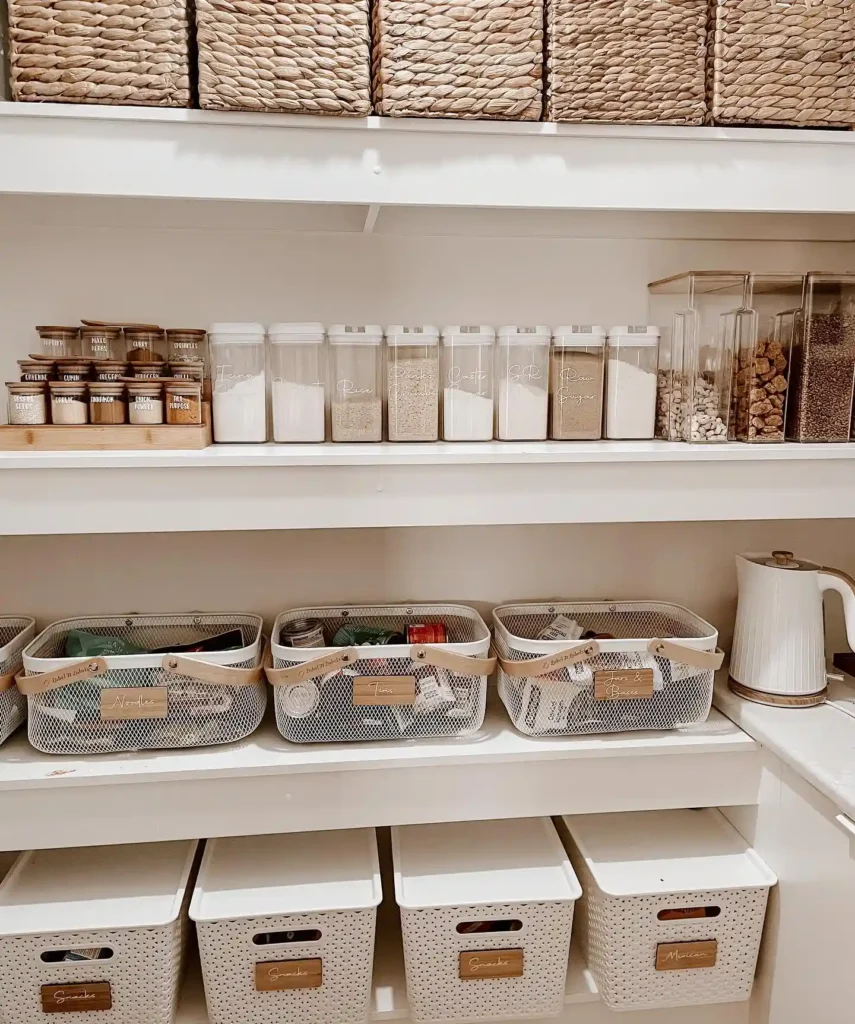
This pantry keeps things simple by grouping items into baskets. Snacks, packets, and loose items stay contained, so shelves don’t look cluttered. Labels on each basket make it easy to grab what you need without searching.
It’s a very practical system, especially for busy kitchens. Even if things aren’t perfectly arranged inside, the outside still looks neat.
How to recreate this:
- Use baskets to group similar items
- Label each basket clearly
- Choose stackable or uniform sizes
- Keep everyday items in easy-to-reach baskets
Open Shelf Pantry System
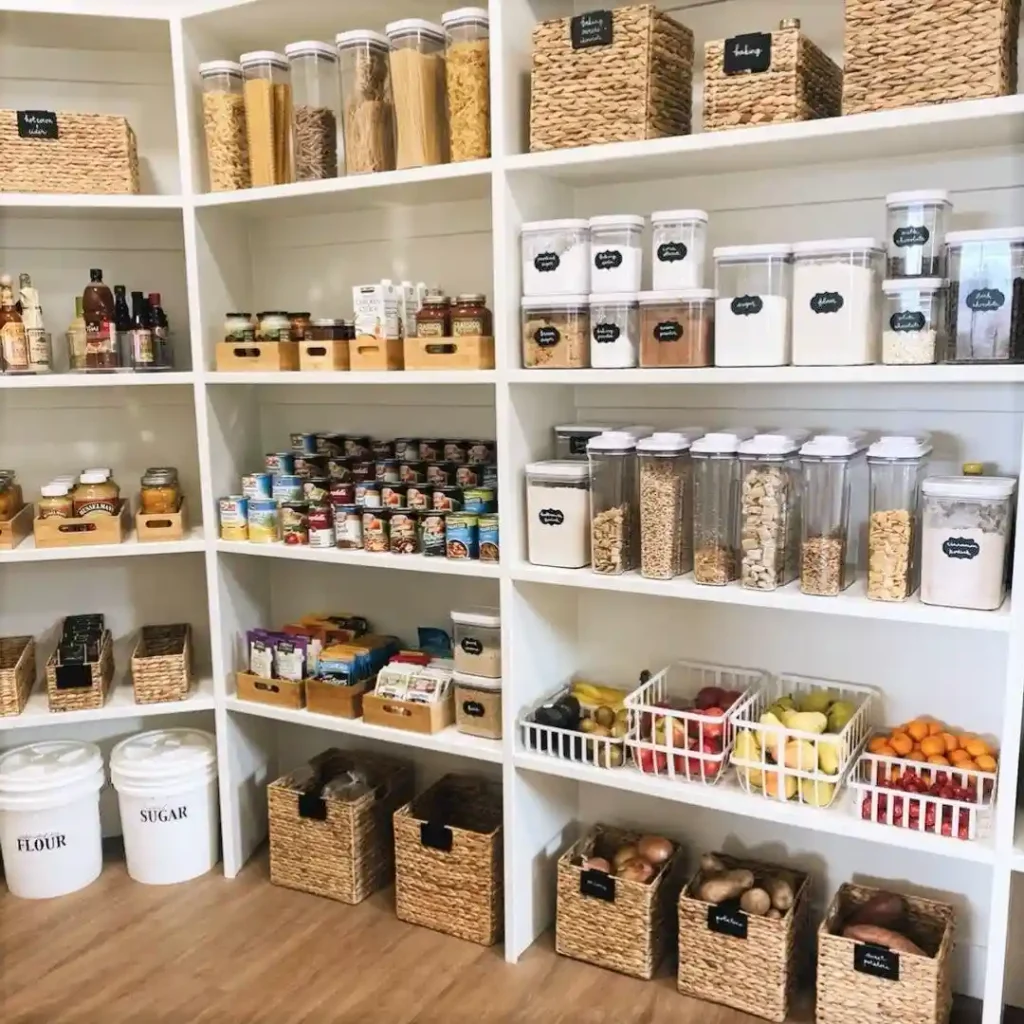
Open shelving makes everything easy to see at a glance. Containers, jars, and baskets are arranged in a way that feels organized but still relaxed. It avoids the heavy look of closed cabinets and makes the space feel bigger.
The key here is consistency. When containers and baskets follow a similar style, the whole pantry looks clean without much effort.
How to recreate this:
- Use matching containers for a uniform look
- Mix baskets and jars for texture
- Keep frequently used items at eye level
- Avoid overcrowding shelves to maintain balance
Styled Coffee Station Pantry
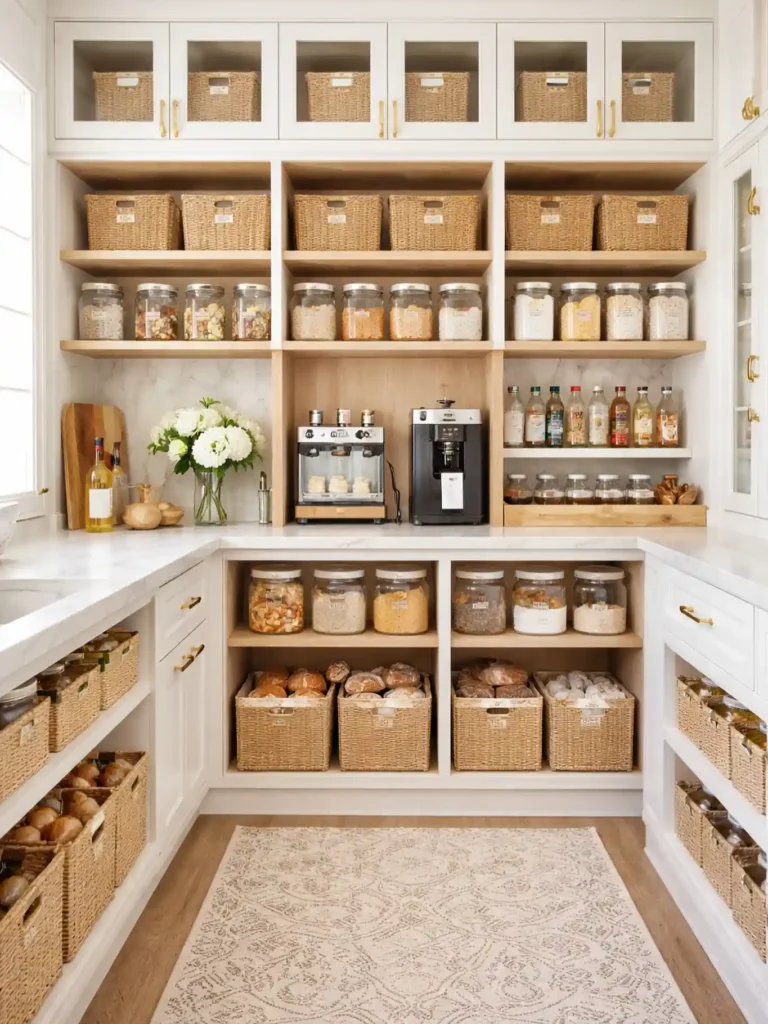
This setup turns part of the pantry into a cozy coffee zone. Everything you need—coffee machine, mugs, beans, and sweeteners—is kept in one place, which makes your morning routine feel effortless. The soft lighting and clean arrangement give it a warm, inviting feel rather than just storage.
It’s a great way to make your kitchen feel more personal. Instead of spreading items across counters, this keeps things organized while still looking styled and intentional.
How to recreate this:
- Dedicate one shelf or cabinet just for coffee essentials
- Use jars for beans, sugar, and pods
- Add under-shelf lighting for a cozy feel
- Keep mugs nearby for easy access
Pull-Out Spice Drawer System
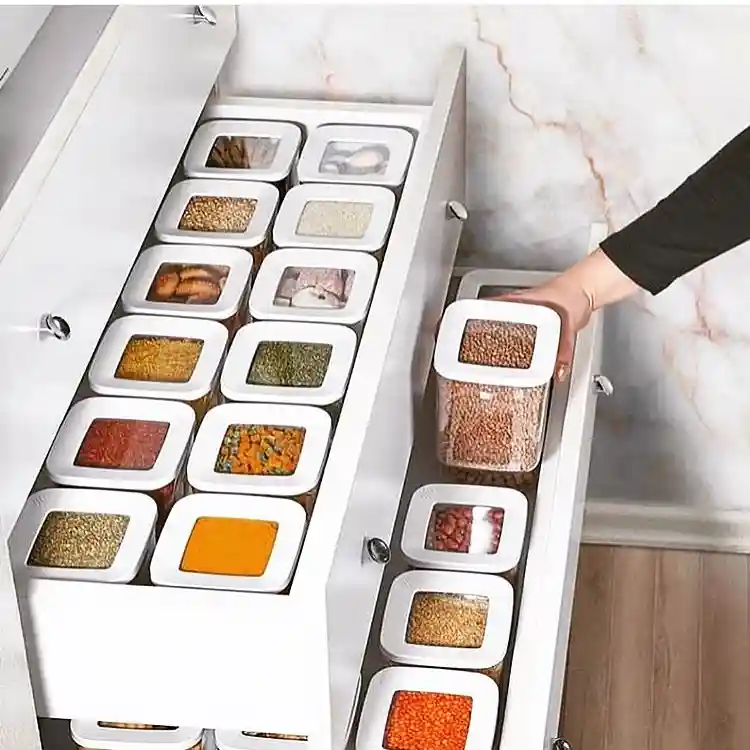
This setup makes spices incredibly easy to see and grab. Instead of stacking jars in cabinets, everything is laid out neatly in a drawer with uniform containers. The clear tops help you identify ingredients instantly, which saves time while cooking.
It also keeps your kitchen looking clean and consistent. No mismatched bottles, no clutter—just a simple, functional layout that actually works daily.
How to recreate this:
- Use uniform square spice containers
- Add drawer inserts to keep jars in place
- Label lids for quick identification
- Store near the cooking area for convenience
Minimalist Spice Drawer Layout
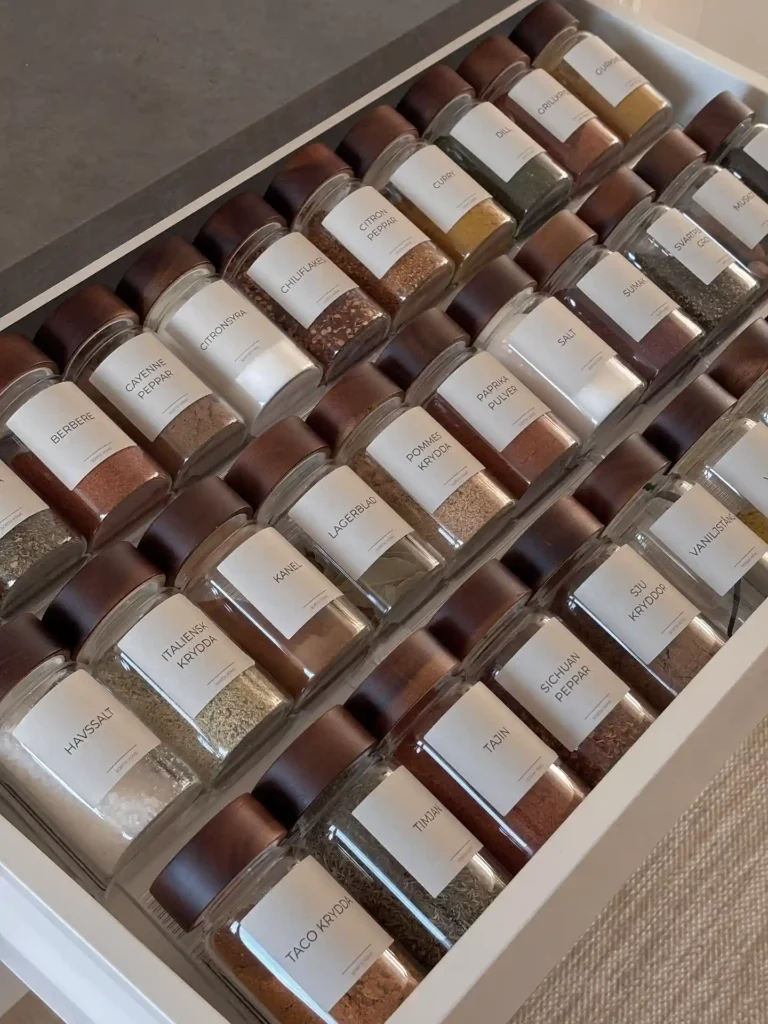
This drawer is all about clean lines and calm visuals. Matching glass jars with wooden lids create a warm, organized look, while simple labels keep everything easy to read. The horizontal layout ensures you can see every spice at once.
It’s one of the best upgrades if you cook often and hate digging through crowded cabinets.
How to recreate this:
- Choose matching jars for a uniform look
- Use minimal labels for a clean feel
- Arrange spices in rows for visibility
- Keep frequently used spices in front
Compact Walk-In Pantry Setup
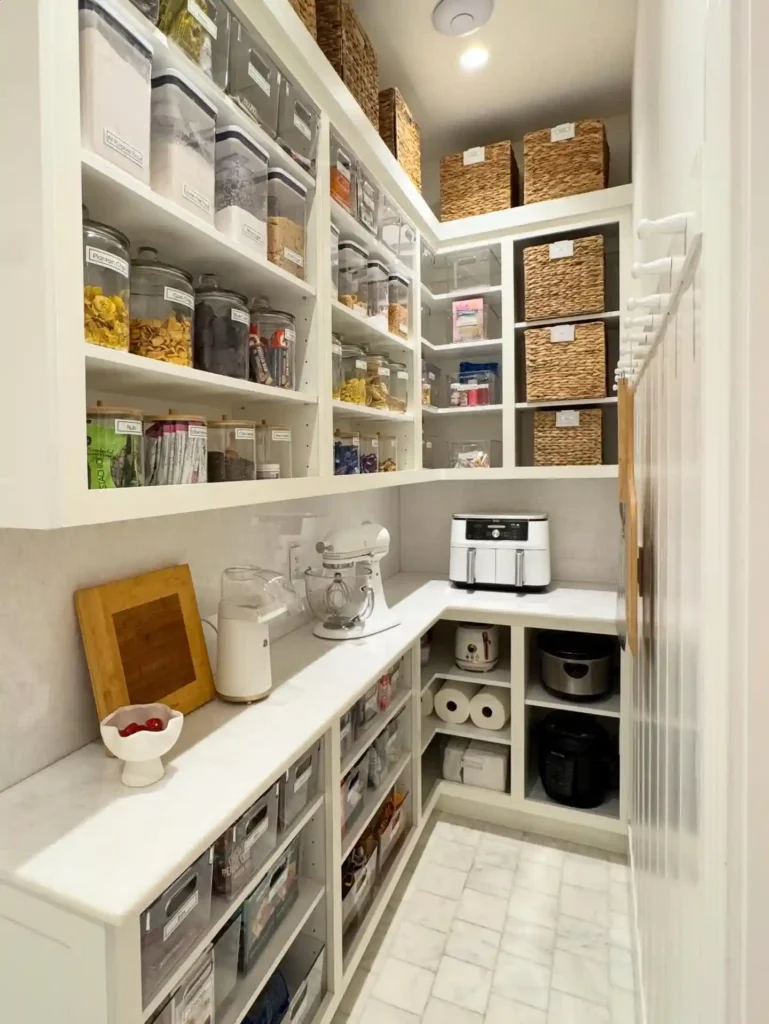
This narrow pantry uses every inch wisely. Shelves are lined with clear containers and baskets, making it easy to store both bulk goods and small items. The countertop adds a functional prep space for appliances like mixers or air fryers.
It’s a smart balance of storage and usability, especially for small homes.
How to recreate this:
- Install shelves from floor to ceiling
- Mix clear containers with baskets
- Add a small countertop for appliances
- Keep heavier items on lower shelves
Deep Pantry With Pull-Out Baskets
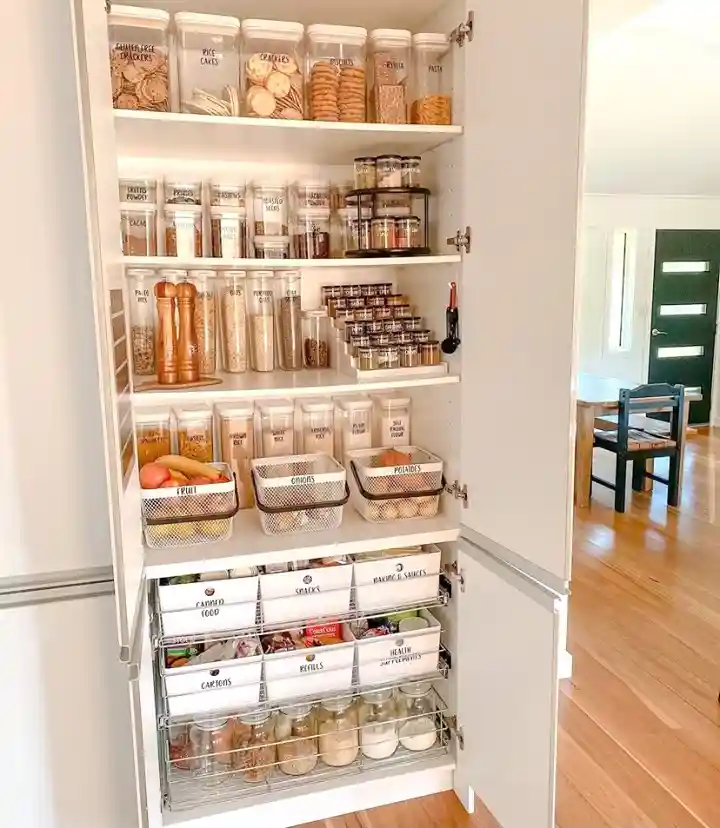
This cabinet combines open shelves with pull-out baskets, making deep storage much more accessible. You can easily slide out sections to grab items at the back without creating a mess.
It’s perfect for organizing snacks, produce, or bulk groceries in a way that actually stays tidy.
How to recreate this:
- Add sliding baskets inside cabinets
- Use labels for each section
- Store similar items together
- Keep daily-use items in easy reach zones
Clear Container Pantry System
This pantry uses transparent containers to keep everything visible and fresh. From cereals to baking ingredients, each item has its own container, which makes the shelves look neat and easy to manage.
You’ll always know when you’re running low, and it keeps packaging clutter out of sight.
How to recreate this:
- Transfer dry goods into clear containers
- Label each container clearly
- Stack containers to save space
- Use airtight lids to keep food fresh
Rustic Pantry With Wooden Crates
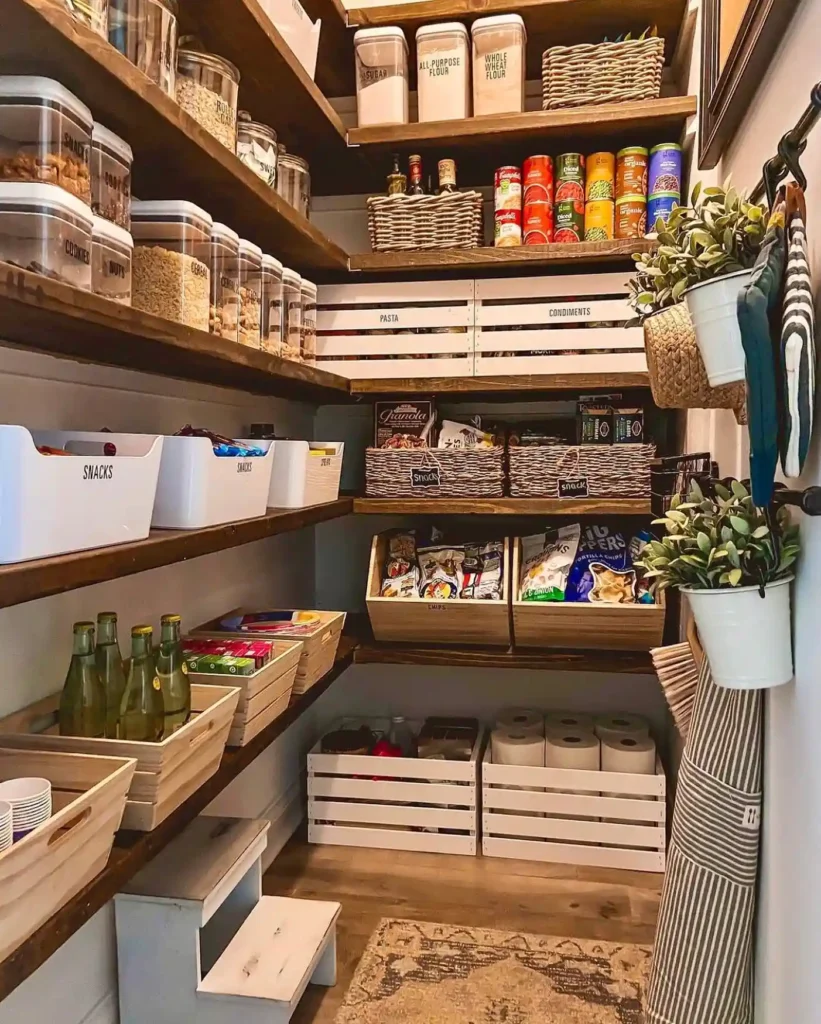
This pantry has a warm, cozy feel with wooden shelves and crates. Instead of plastic bins, it uses natural materials to store snacks, bottles, and pantry items. It feels less like storage and more like a styled space.
It’s a great option if you want organization without a strict or overly polished look.
How to recreate this:
- Use wooden crates or trays for grouping
- Mix open shelves with baskets
- Add small labels for clarity
- Keep frequently used items at eye level
Cabinet Door Storage Upgrade
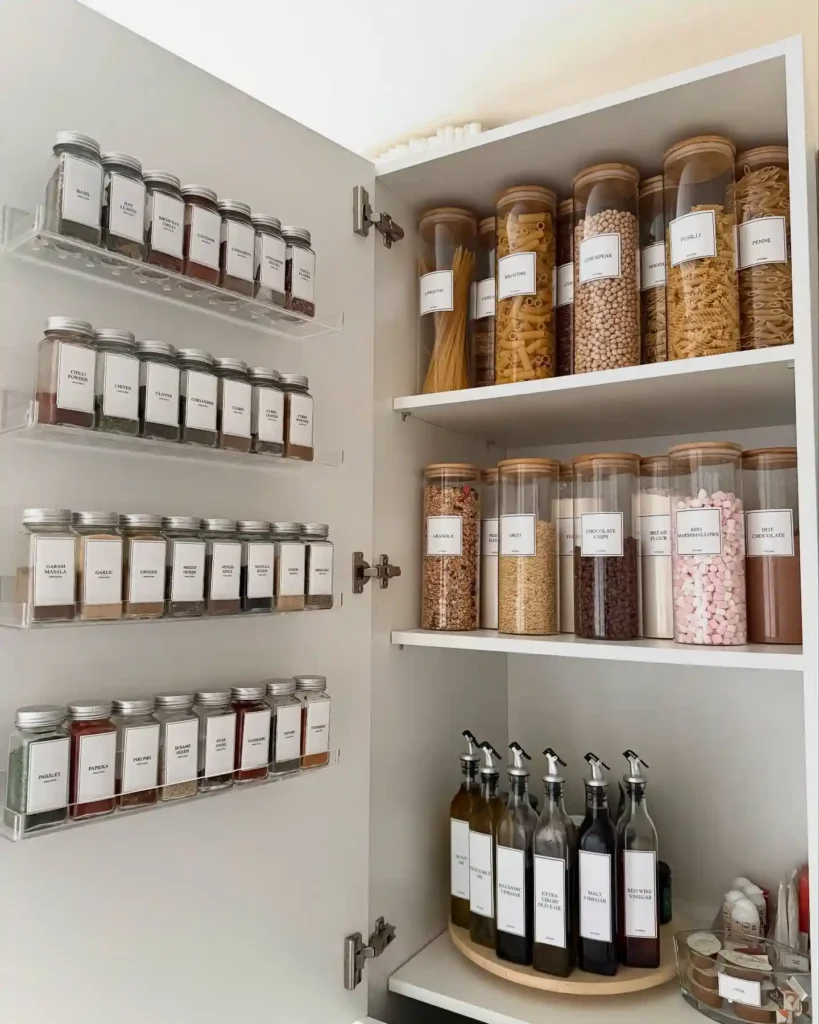
This idea turns cabinet doors into extra storage space. Slim racks hold spices, small jars, or packets, making use of an area that usually stays empty.
It’s a simple change, but it frees up a lot of shelf space inside the cabinet.
How to recreate this:
- Install slim racks on cabinet doors
- Store small, lightweight items here
- Keep labels facing outward
- Avoid overloading to prevent damage
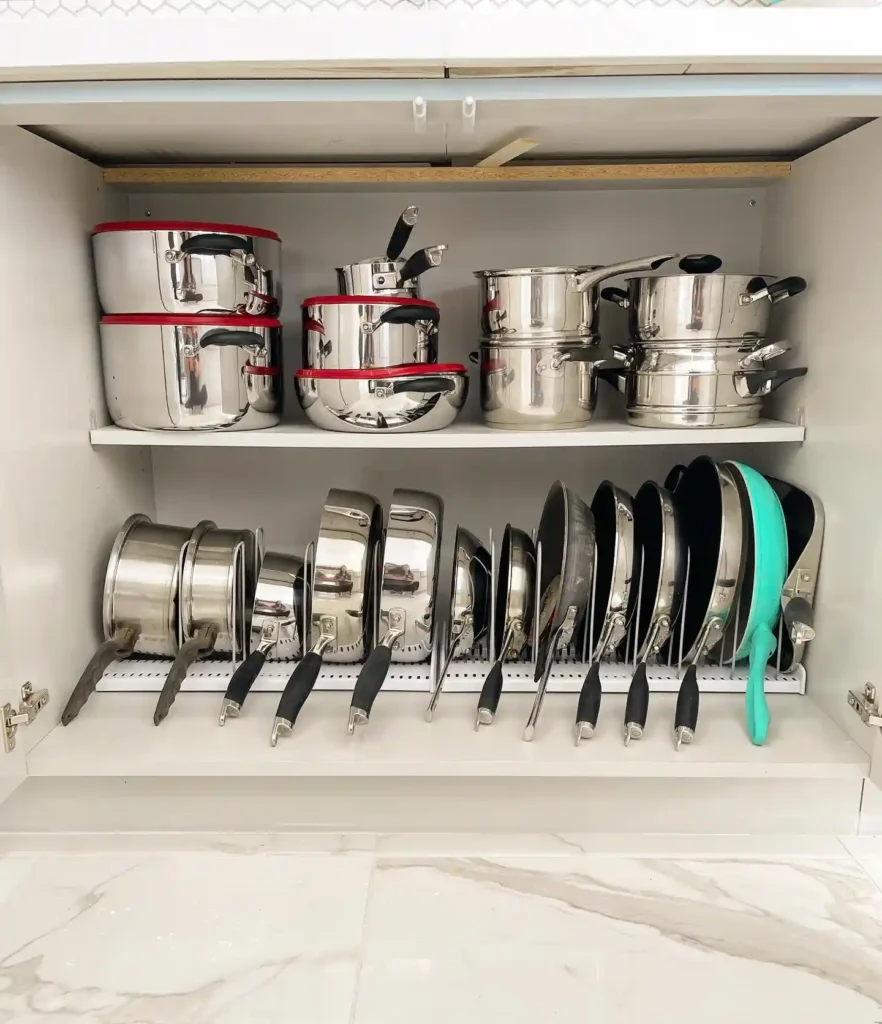
Organized Cookware Cabinet
This cabinet keeps pots and pans upright and easy to access. Instead of stacking everything, dividers hold each item in place, so you can grab what you need without moving others.
It also protects your cookware from scratches and keeps the cabinet looking tidy.
How to recreate this:
- Use vertical dividers for pans and lids
- Stack only similar items together
- Keep heavier cookware on lower shelves
- Maintain spacing to avoid clutter
Luxury Pantry With Lighting
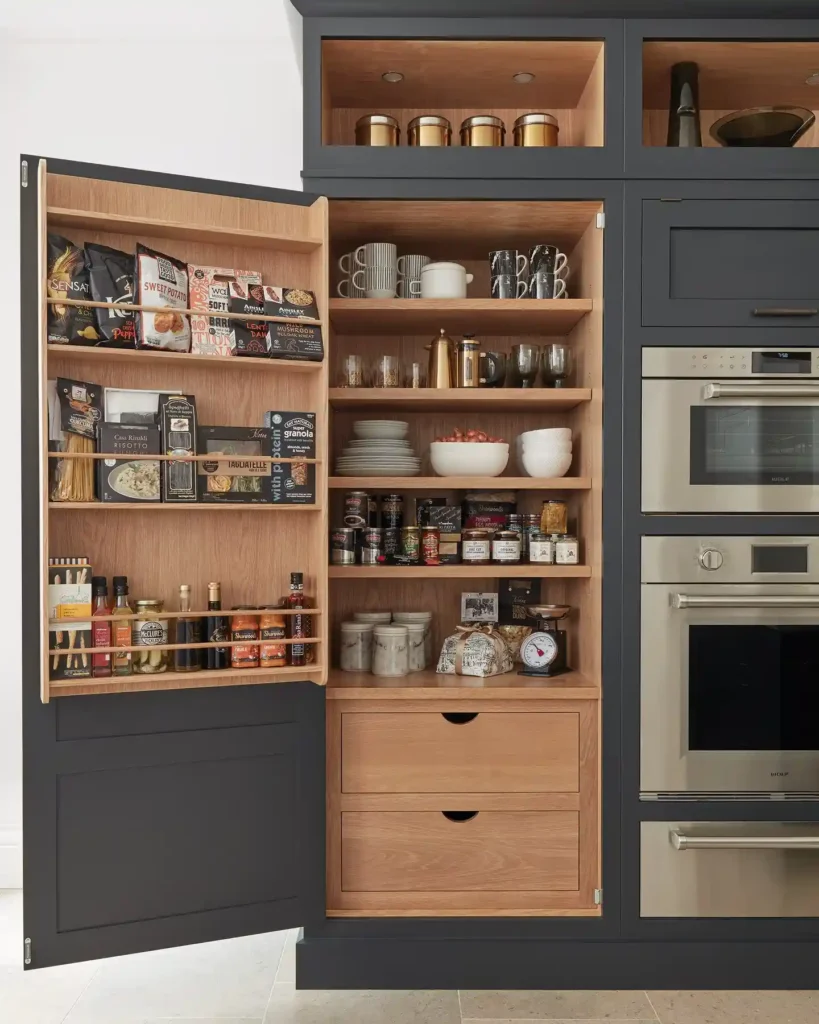
This pantry feels like a high-end kitchen upgrade. Built-in lighting highlights every shelf, while drawers and open storage keep everything visible and organized. It’s both practical and visually satisfying.
If you love a clean, styled kitchen, this setup makes a big difference.
How to recreate this:
- Add LED strip lighting under shelves
- Use drawers for hidden storage
- Keep items grouped by category
- Maintain a neutral color palette
This cabinet blends seamlessly into the kitchen but opens to reveal a fully organized storage space. Shelves, drawers, and door storage work together to maximize every inch.
It’s perfect if you want a clean kitchen look without sacrificing storage.
How to recreate this:
- Use tall cabinets with multiple sections
- Combine shelves, drawers, and door racks
- Keep items grouped by function
- Maintain a consistent container style
Deep Drawer Dish Organizer
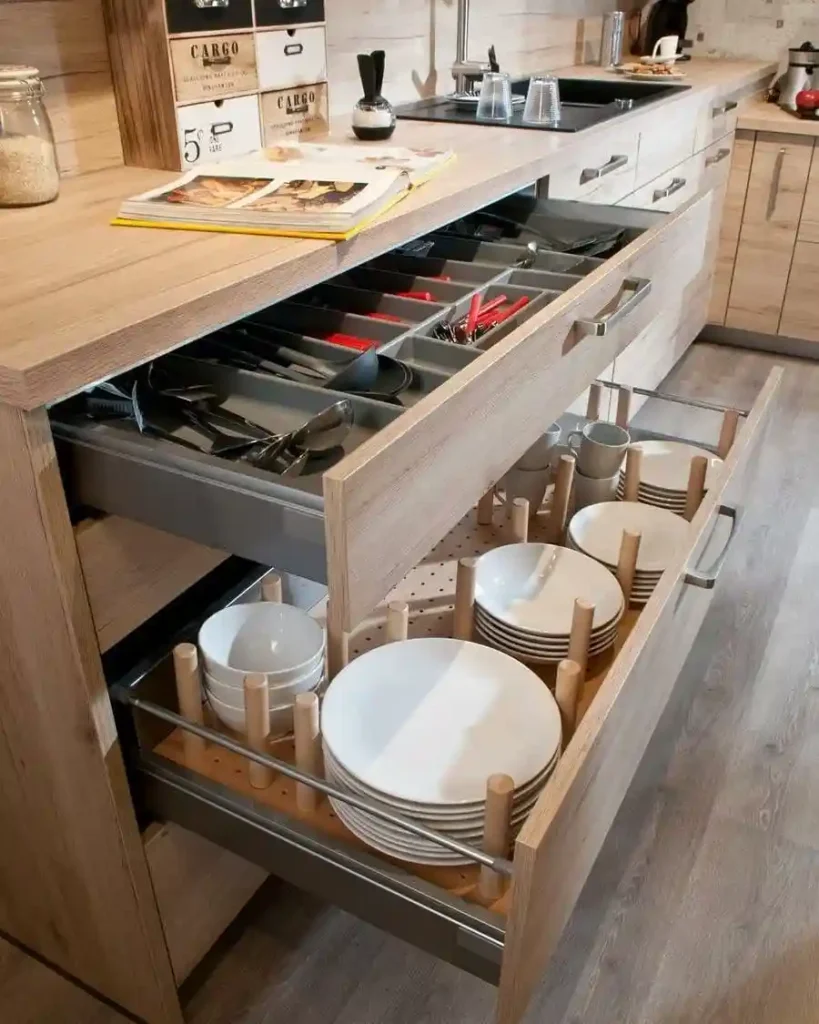
This setup turns a basic drawer into a smart storage zone for plates and bowls. Instead of stacking dishes in upper cabinets, everything is stored below the counter with wooden pegs holding each stack in place. It feels more practical, especially when unloading the dishwasher.
The natural wood finish also adds warmth, making the kitchen feel more thoughtful and organized without extra effort.
How to recreate this:
- Use adjustable pegboard drawer systems
- Group plates by size in separate sections
- Keep everyday dishes in lower drawers
- Add non-slip liners for stability
Walk-In Pantry With Pull-Out Storage
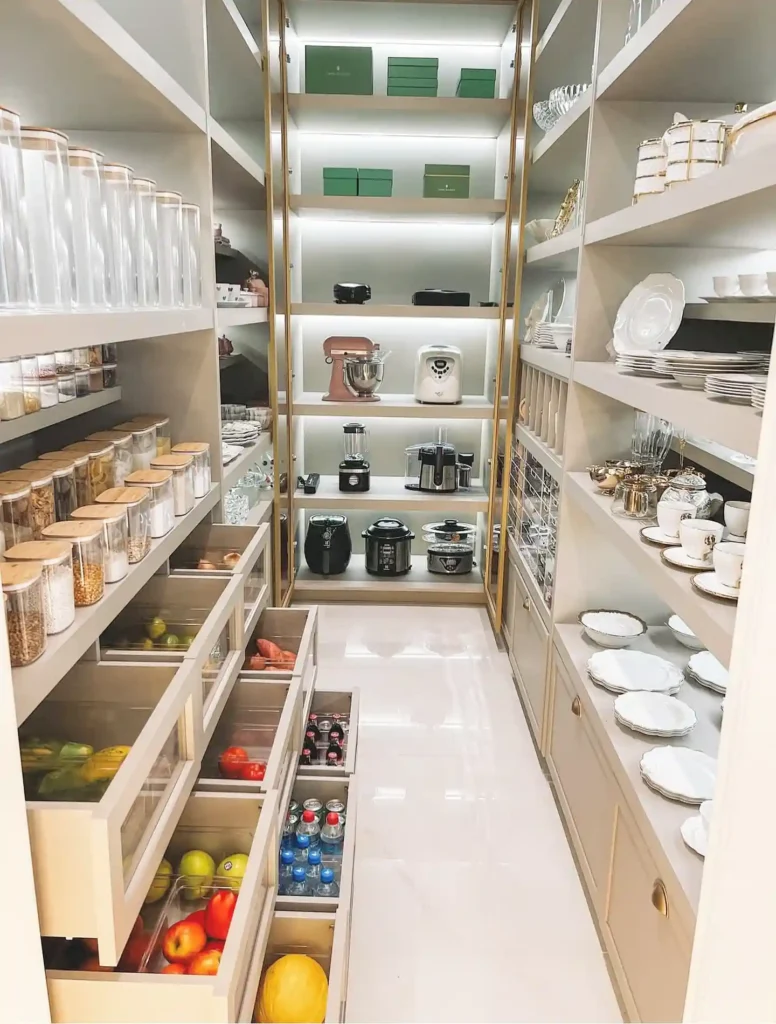
This pantry feels like a dream because everything is visible and easy to reach. The combination of open shelving, pull-out drawers, and built-in lighting creates a clean, high-end look while still being functional.
The lower drawers for fruits and drinks are especially useful, helping you avoid overcrowded shelves.
How to recreate this:
- Add pull-out drawers for lower sections
- Use lighting strips to brighten shelves
- Keep similar items grouped together
- Store heavy items at waist level
Wooden Spice Drawer Organizer
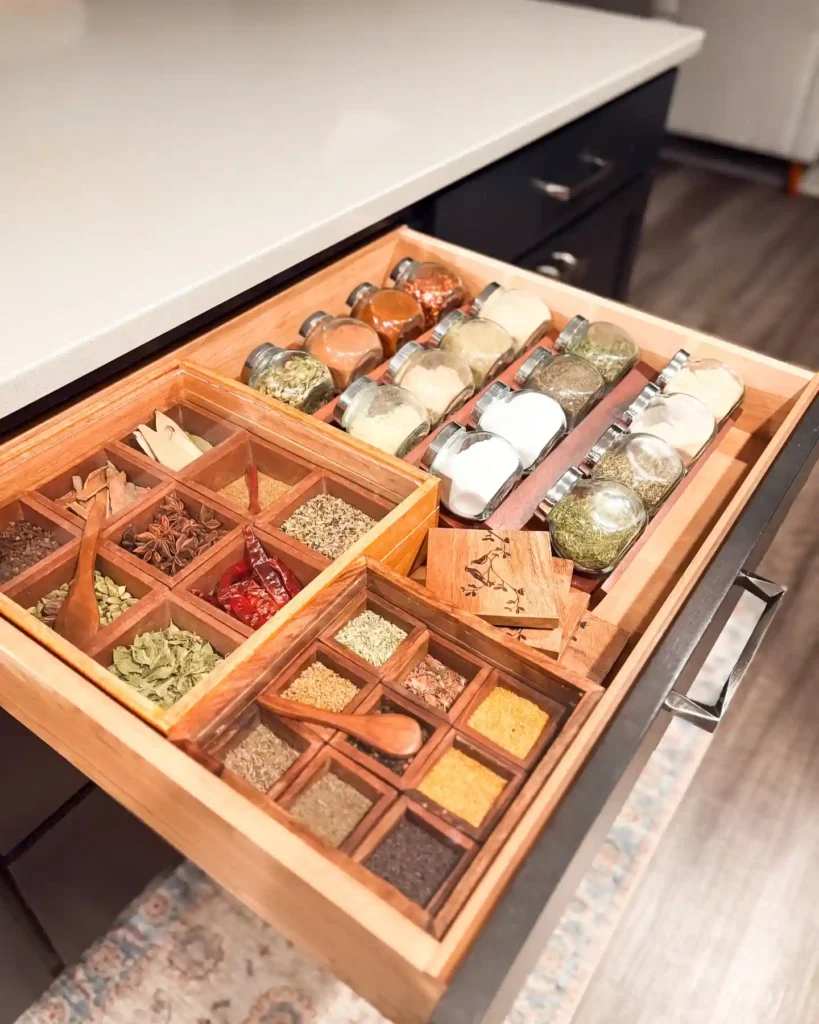
This drawer brings a more traditional feel with wooden compartments and small spice sections. It’s perfect if you like a mix of open spice storage and jar organization in one place.
Each section keeps spices separated, so cooking feels faster and more enjoyable since everything is within reach.
How to recreate this:
- Use wooden trays with divided sections
- Mix open spice compartments and jars
- Place near your cooking area
- Keep most-used spices in front rows
Corner Pantry Storage Solution
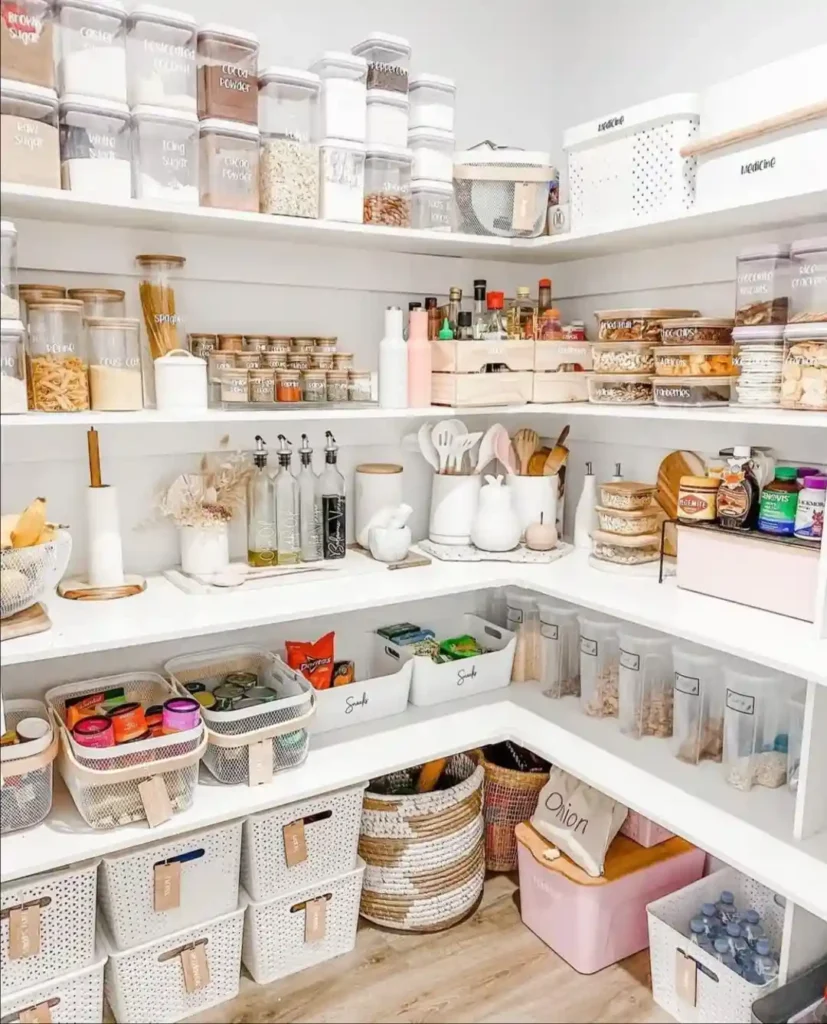
Corner shelves can easily turn into wasted space, but this setup makes full use of every angle. The mix of clear containers, baskets, and trays keeps everything visible without feeling crowded.
It’s a great example of how small changes can make a pantry feel much bigger and easier to manage.
How to recreate this:
- Use matching containers for a clean look
- Add baskets for loose items
- Use trays to group smaller jars
- Keep corners uncluttered with smart spacing
Grid-Style Pantry Organization
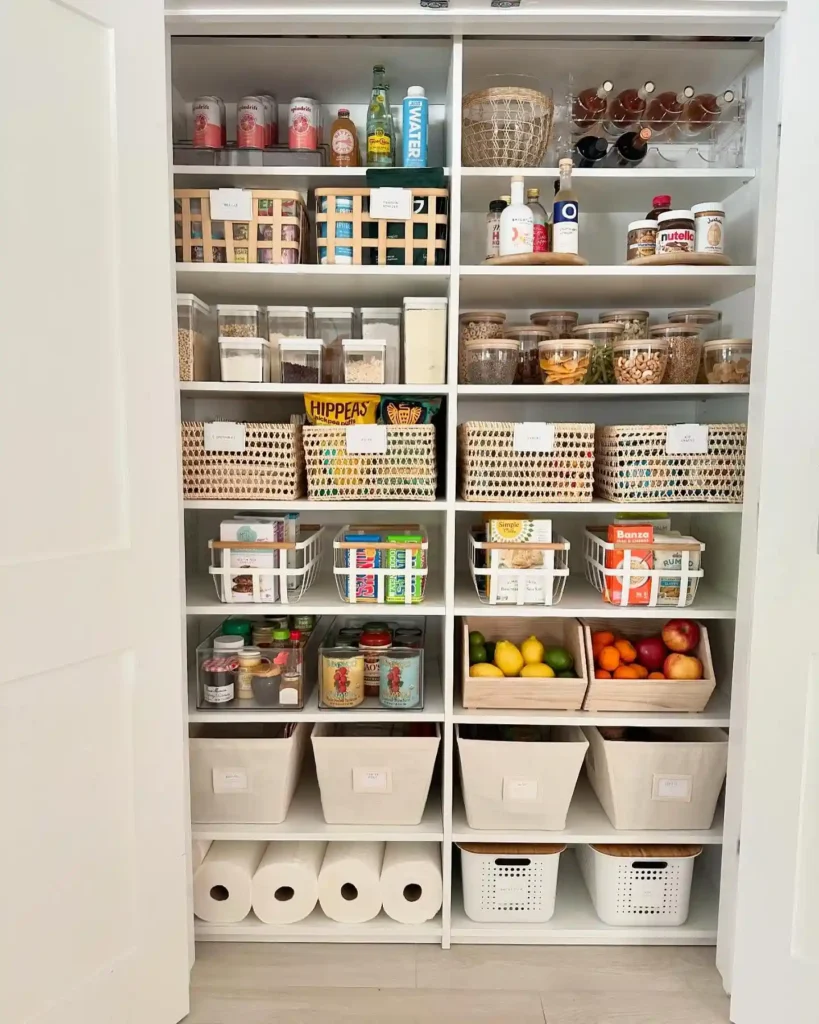
This pantry uses a simple grid layout, making it easy to assign a spot for every item. Baskets, bins, and containers all have their place, which keeps things from getting messy over time.
It’s one of the easiest systems to maintain because everything is clearly divided.
How to recreate this:
- Divide shelves into clear sections
- Use labeled bins for categories
- Store snacks and small items in baskets
- Keep frequently used items at eye level
Minimal Cabinet Pantry Organization
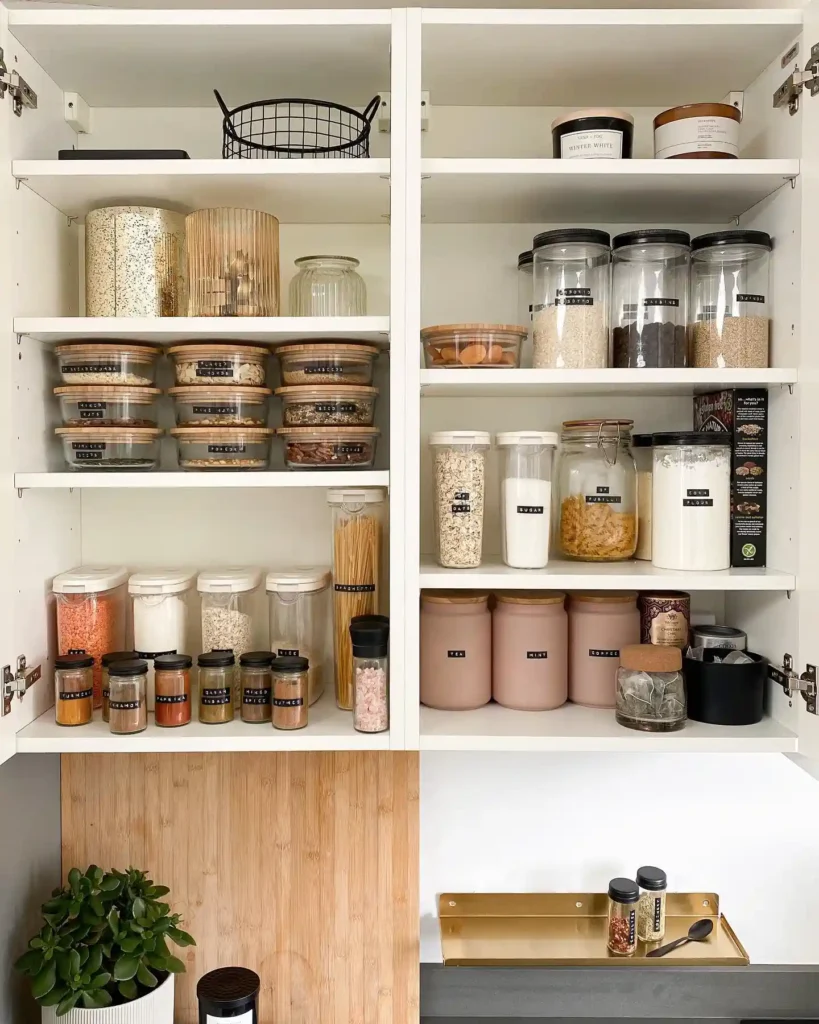
This cabinet setup feels calm and intentional, with every item placed in a way that’s easy to see and reach. Clear jars with simple labels create a clean look, while the mix of glass, wood lids, and soft neutral tones keeps it warm instead of sterile. The spacing between items makes a big difference too, nothing feels cramped or overwhelming.
It’s a great example of how a basic cabinet can look styled without being complicated.
How to recreate this:
- Use matching clear containers for dry goods
- Add simple labels for quick identification
- Leave small gaps between items to avoid clutter
- Store everyday items at eye level
- Mix textures like glass and wood for warmth
Drawer Divider Organization
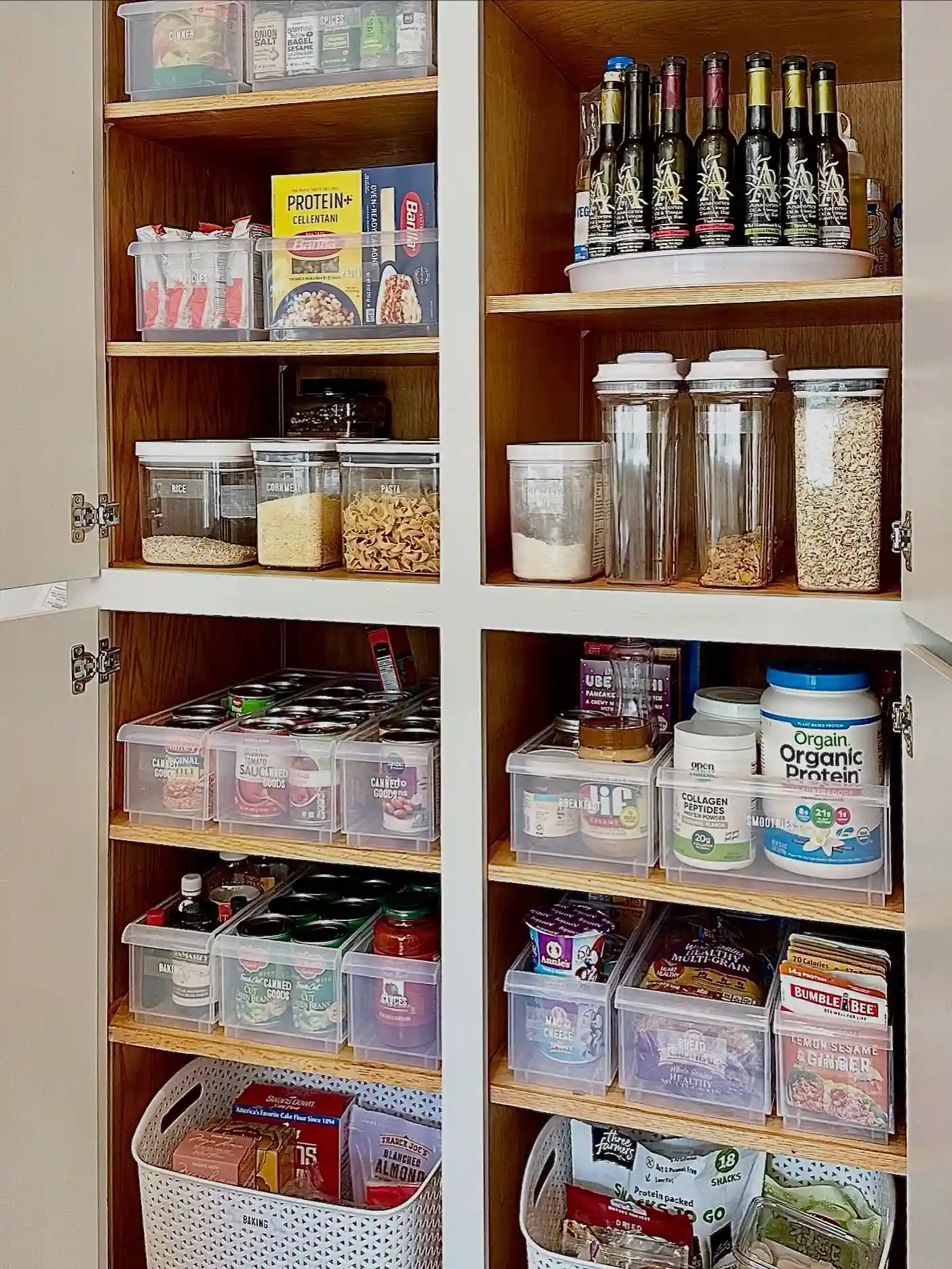
Small kitchen drawers get messy fast because everything lands in the same place. I love drawer dividers because they instantly give every spoon, peeler, clip, and measuring cup its own spot. It makes the kitchen feel easier to use, even when the cabinets are small.
- Use bamboo or clear dividers for a clean look.
- Keep daily tools in the top drawer only.
- Place sharp tools in one section for safety.
- Roll kitchen towels if the drawer is deep.
- Remove duplicate utensils you never use.
Spice Drawer Organization
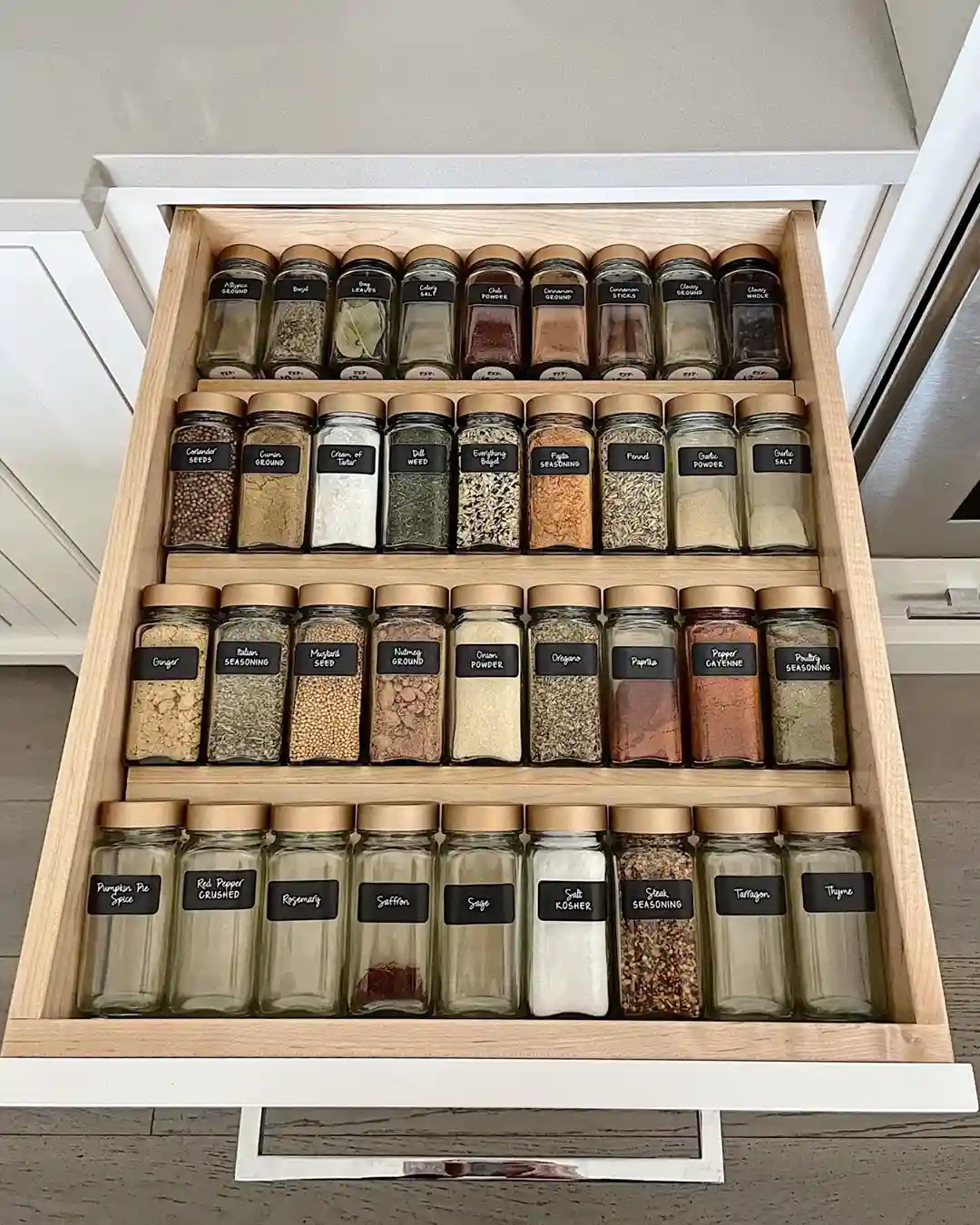
A spice drawer is one of my favorite small kitchen organization ideas because it saves cabinet space and makes cooking faster. Instead of digging through stacked jars, you can see every label at once. It also makes a tiny kitchen feel more planned and less cluttered.
- Use matching spice jars for a tidy look.
- Add labels on the lid if jars lie flat.
- Keep everyday spices in the front row.
- Store refill packets somewhere separate.
- Check old spices while organizing the drawer.
Under Sink Kitchen Storage
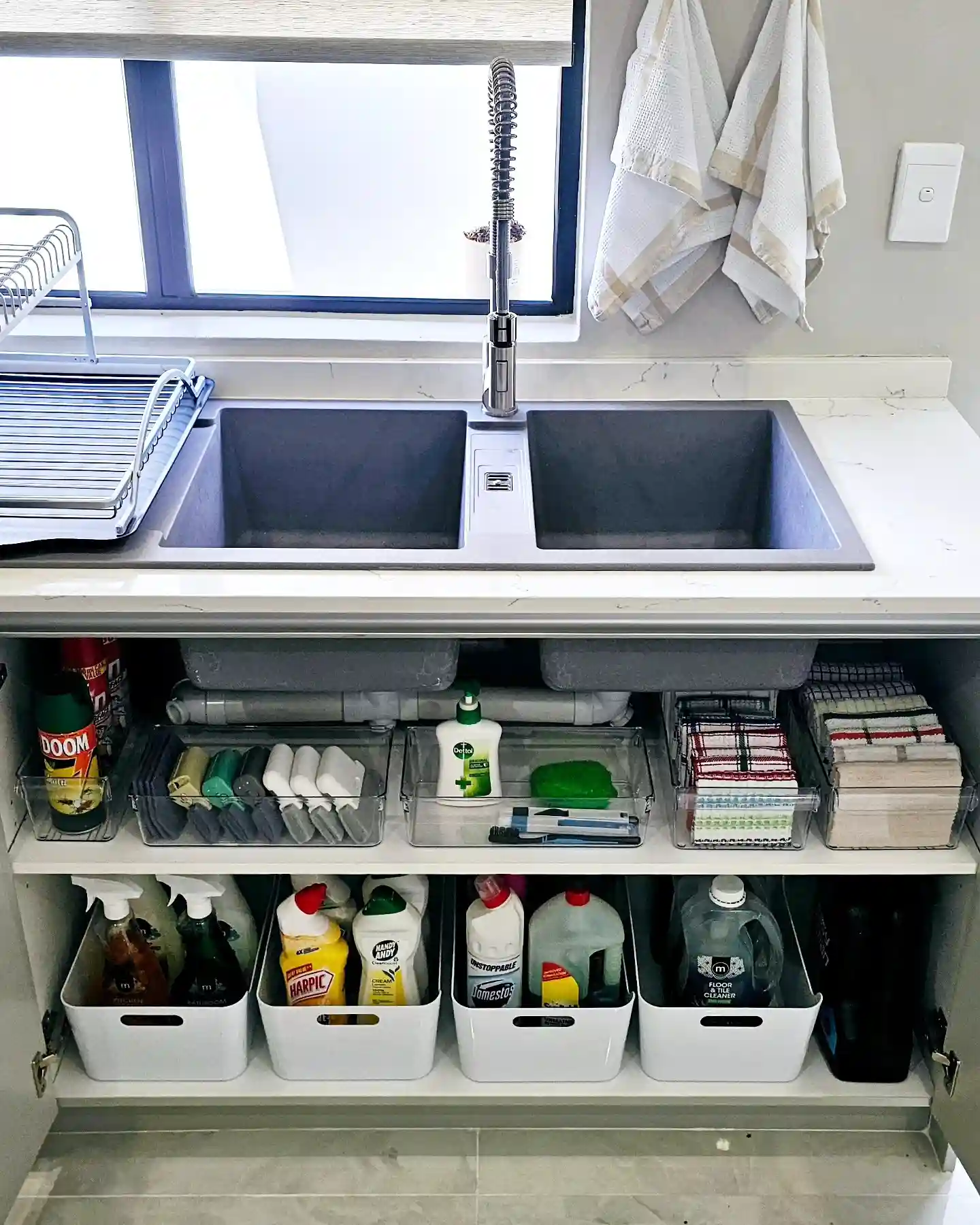
The under-sink area can turn into a messy pile of sprays, dish soap, trash bags, and sponges. I like using bins here because they make awkward plumbing space easier to handle. Even a small under-sink cabinet can hold more when everything is grouped by purpose.
- Use clear bins so you can see supplies fast.
- Add a tension rod for spray bottles.
- Keep dish tablets in a sealed container.
- Store backup sponges in one small basket.
- Leave space around pipes so nothing gets crushed.
Read also:-
- 25 Small Walk In Closet Organization Ideas
- 25 IKEA Closet Ideas That Make Small Spaces Feel Bigger
- 22 Small Bedroom Hacks
Small Pantry Organization
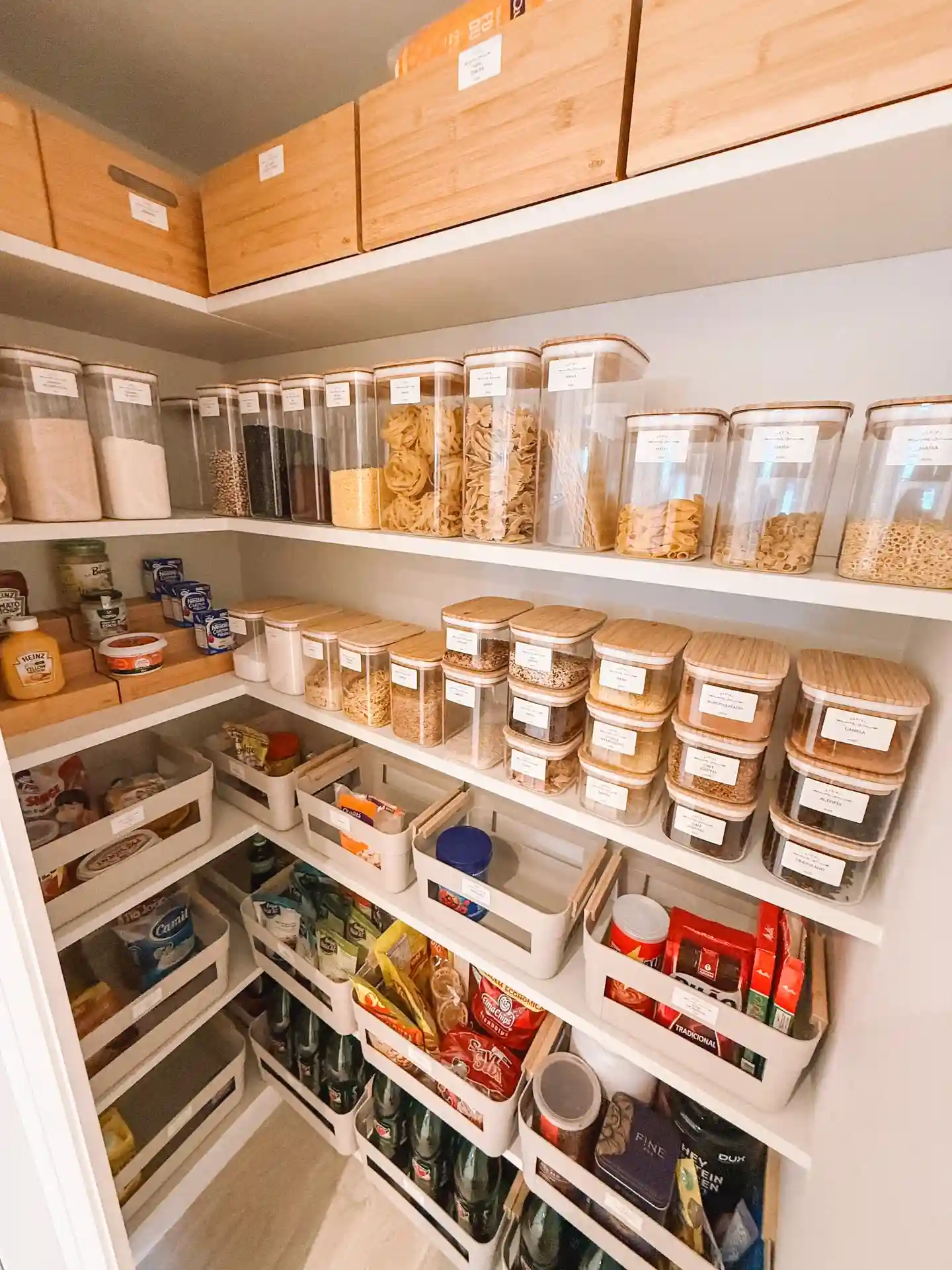
A small pantry needs zones more than it needs fancy products. When snacks, cans, baking items, and breakfast foods all have their own area, the shelves instantly feel easier to manage. This idea works even if your “pantry” is just one cabinet.
- Group food by meal or use.
- Use baskets for snacks and packets.
- Put tall containers at the back.
- Keep kids’ snacks on lower shelves.
- Add labels so everyone puts items back.
Lazy Susan Cabinet Storage
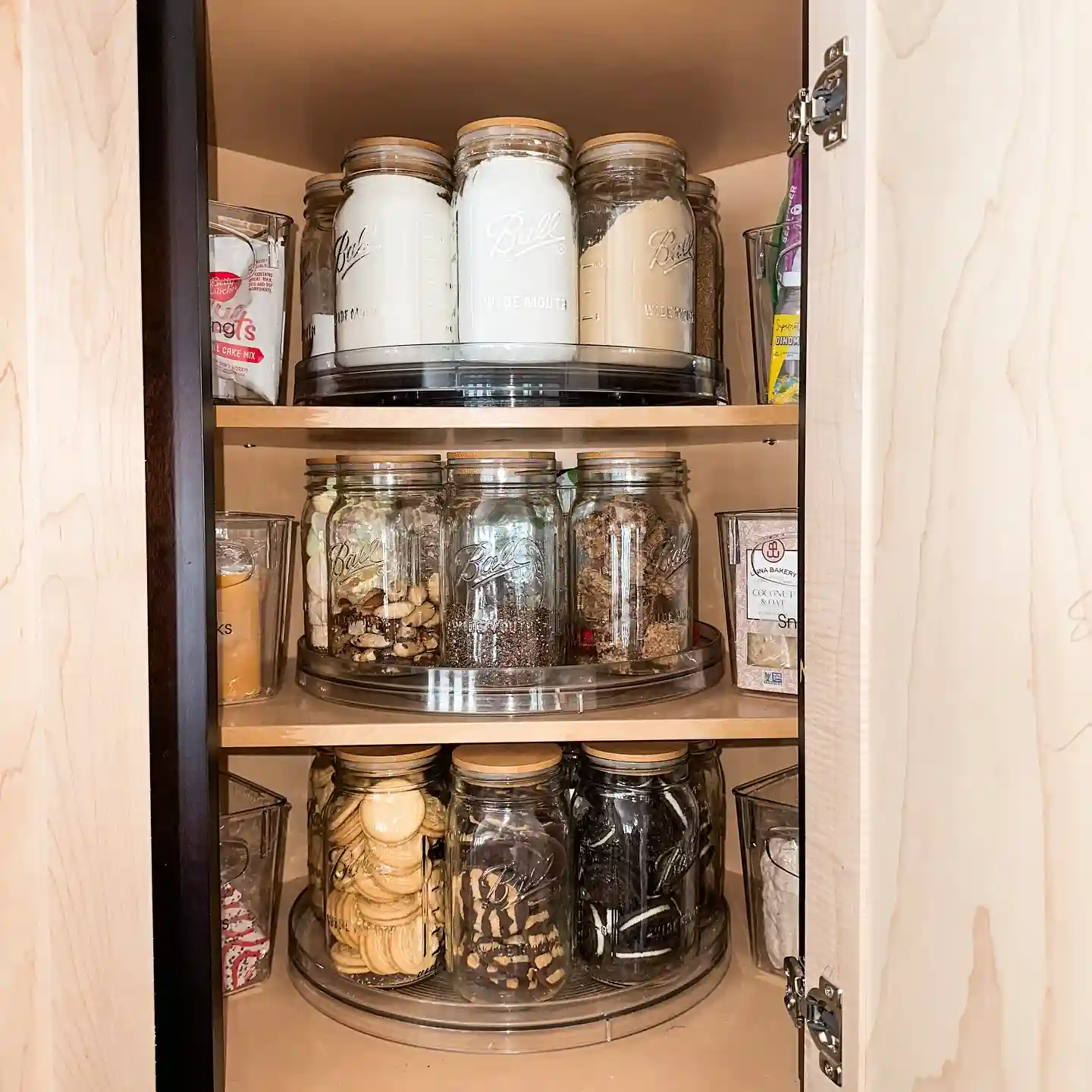
Lazy Susans are perfect for deep corners and tight cabinets because nothing gets lost in the back. I use them for oils, sauces, spices, or baking bottles. One simple turn lets you reach everything, which is exactly what a small kitchen needs.
- Use one for oils near the stove.
- Try a two-tier Lazy Susan for spices.
- Keep taller bottles on a wider turntable.
- Do not overload it or items will fall.
- Place sticky jars on a washable liner.
Pot And Pan Lid Organizer
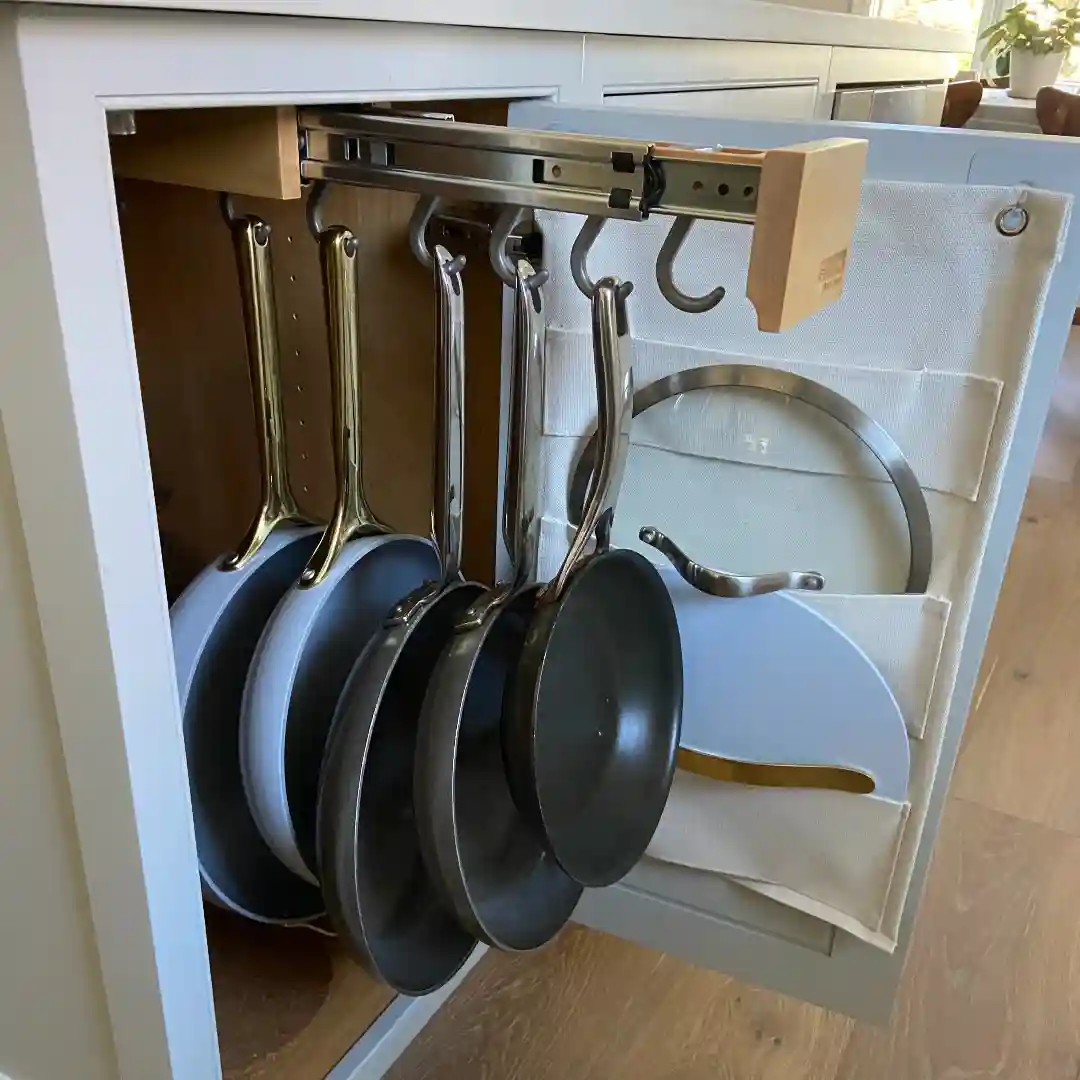
Pot lids are annoying because they slide, stack badly, and take up more space than they should. A lid organizer keeps them upright and easy to grab. This small change can make a crowded cabinet feel much cleaner without buying new cookware.
- Store lids vertically instead of stacked.
- Keep matching lids near their pans.
- Use an adjustable rack for different sizes.
- Place heavy lids at the back or bottom.
- Remove lids that no longer match anything.
Cutting Board Storage
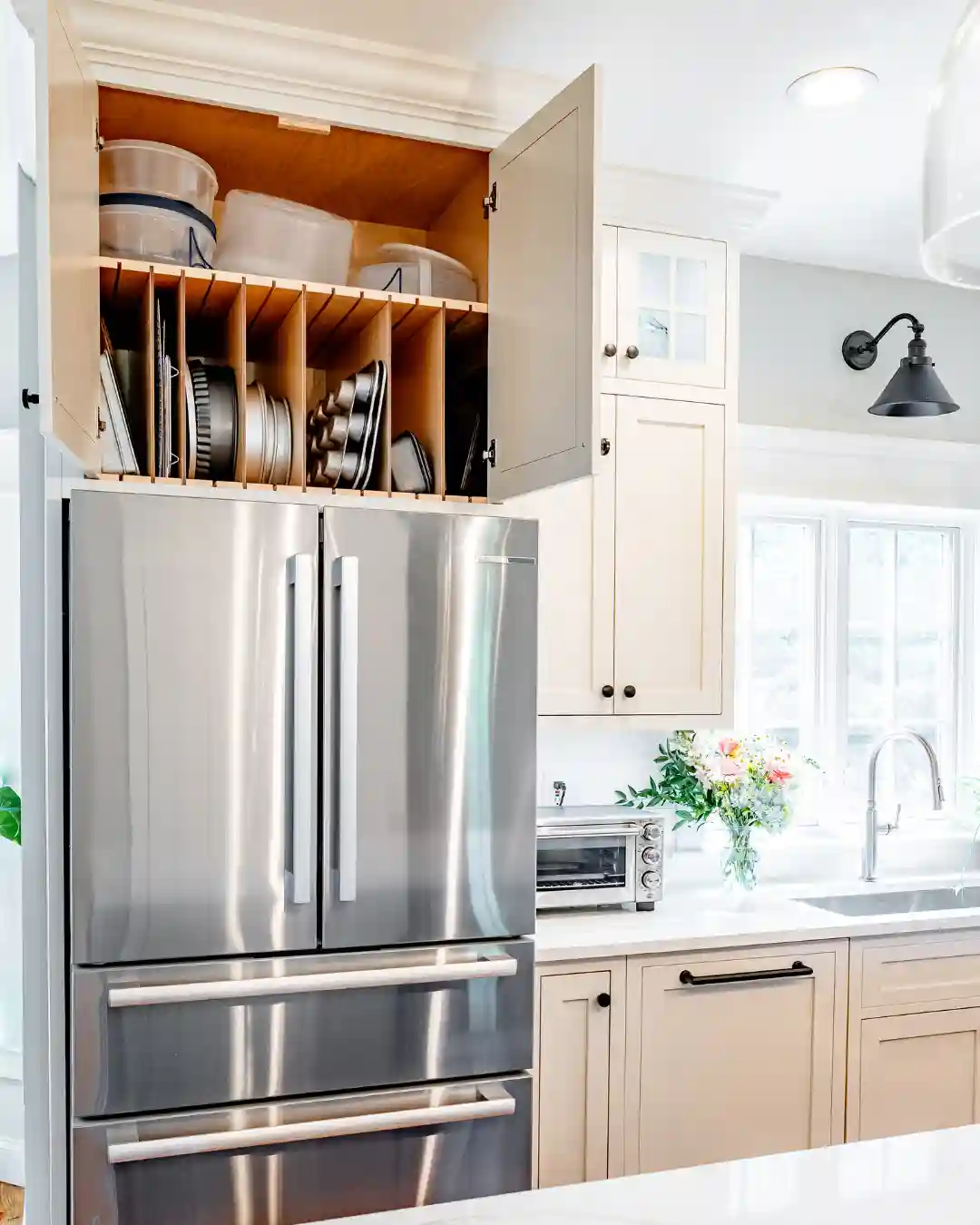
Cutting boards, baking sheets, and trays are much easier to store vertically. I like this idea because it uses narrow cabinet space that usually gets wasted. It also stops that loud crashing sound when you pull one board from the bottom of a stack.
- Use a vertical rack inside a cabinet.
- Store boards by size from tall to short.
- Keep the daily cutting board in front.
- Use the same rack for trays or cooling racks.
- Wipe boards before storing to avoid moisture.
Vertical Cabinet Storage
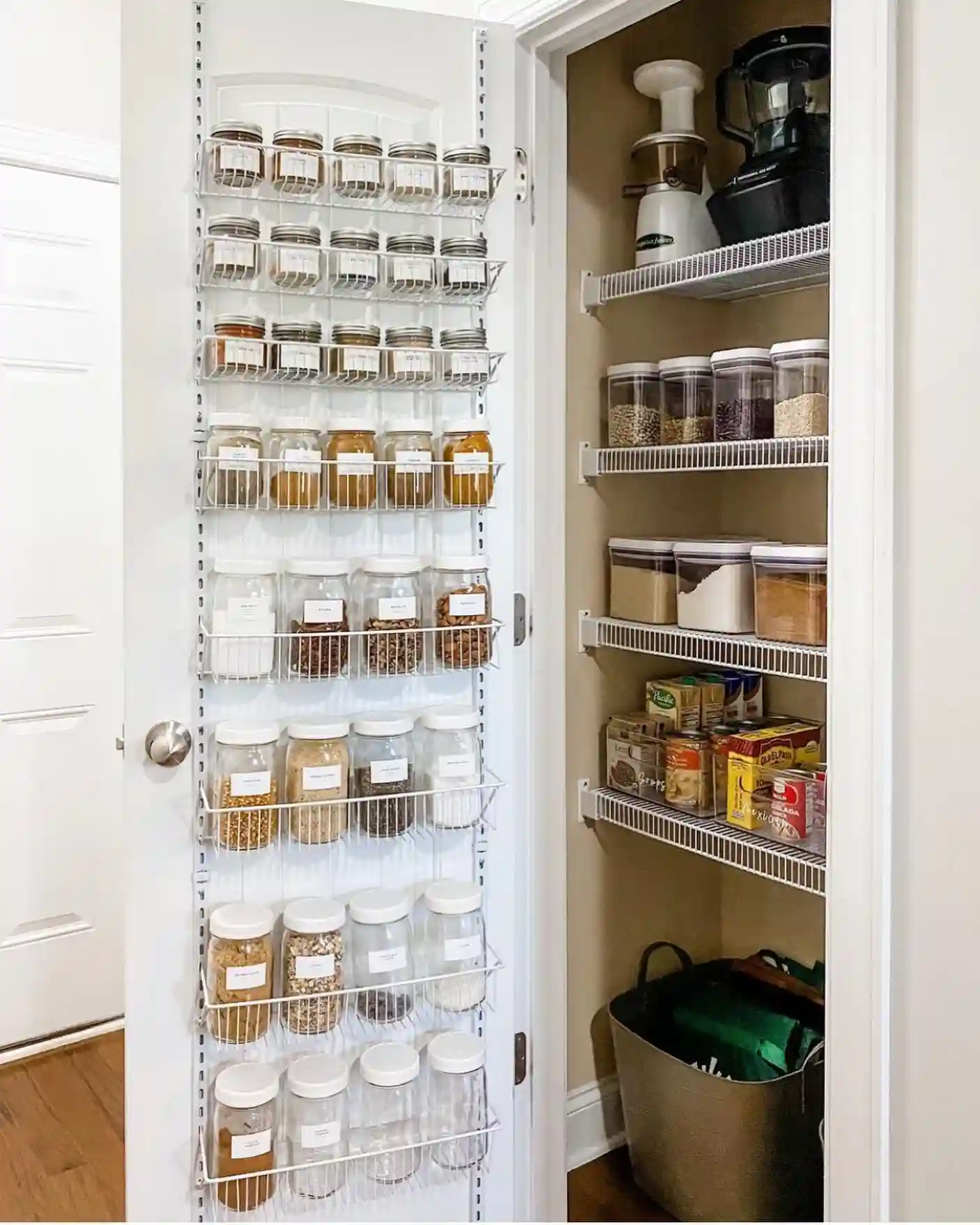
When a small kitchen has limited shelves, vertical storage can save the day. This works for trays, pans, cutting boards, lids, and even narrow baskets. Instead of piling everything flat, you stand items up so they are easier to see and pull out.
- Add wire racks inside deep cabinets.
- Use vertical slots for baking pans.
- Keep heavier items on lower shelves.
- Store similar shapes together.
- Avoid stacking more than three items flat.
Clear Pantry Containers
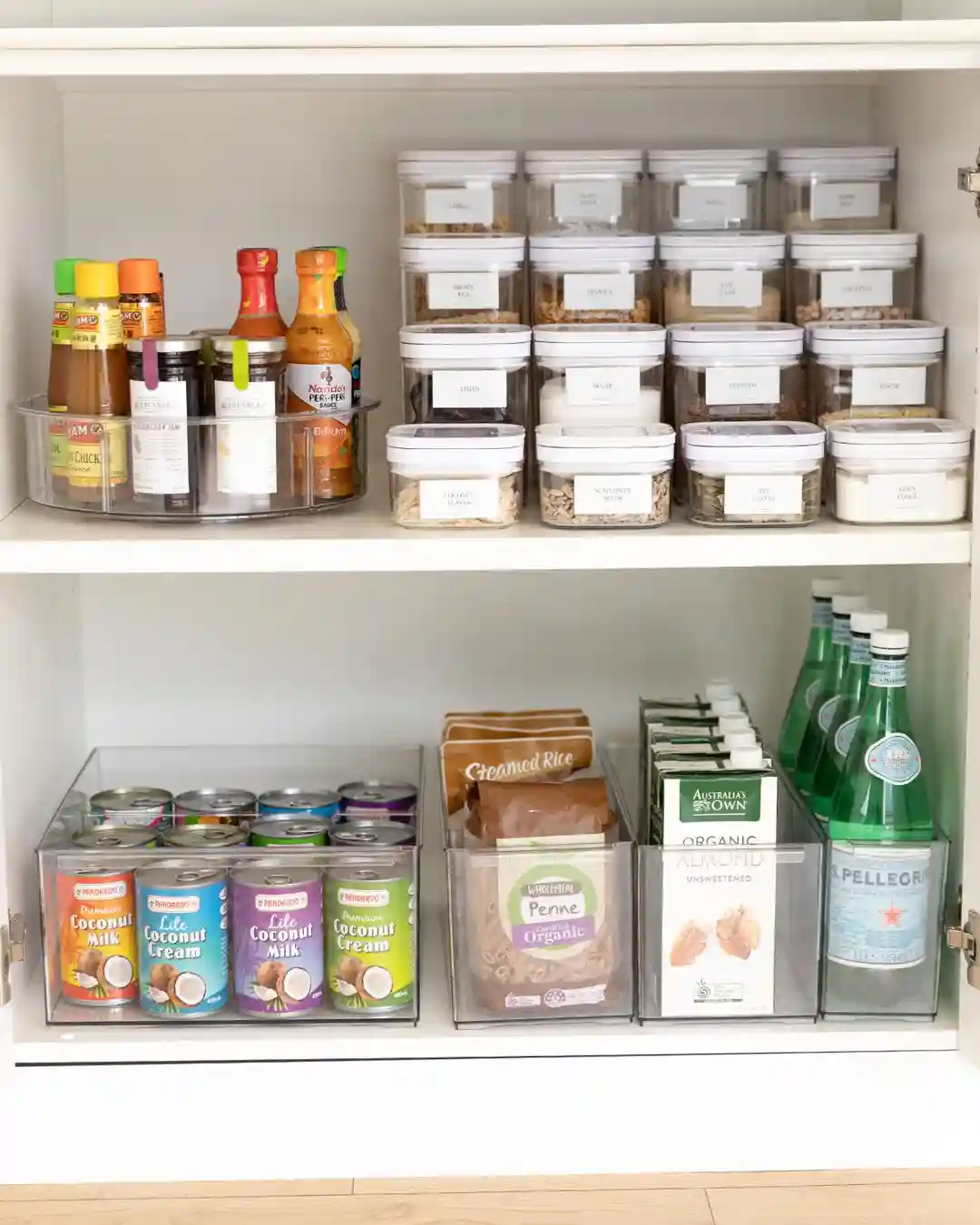
Clear containers make a small kitchen look cleaner and help you see what you already have. I like using them for rice, pasta, flour, cereal, lentils, and snacks. They reduce bulky packaging and make even one small shelf feel more organized.
- Choose square containers to save space.
- Use airtight lids for dry goods.
- Label the front and top if needed.
- Keep cooking staples at eye level.
- Refill before containers get fully empty.
Labelled Pantry Jars
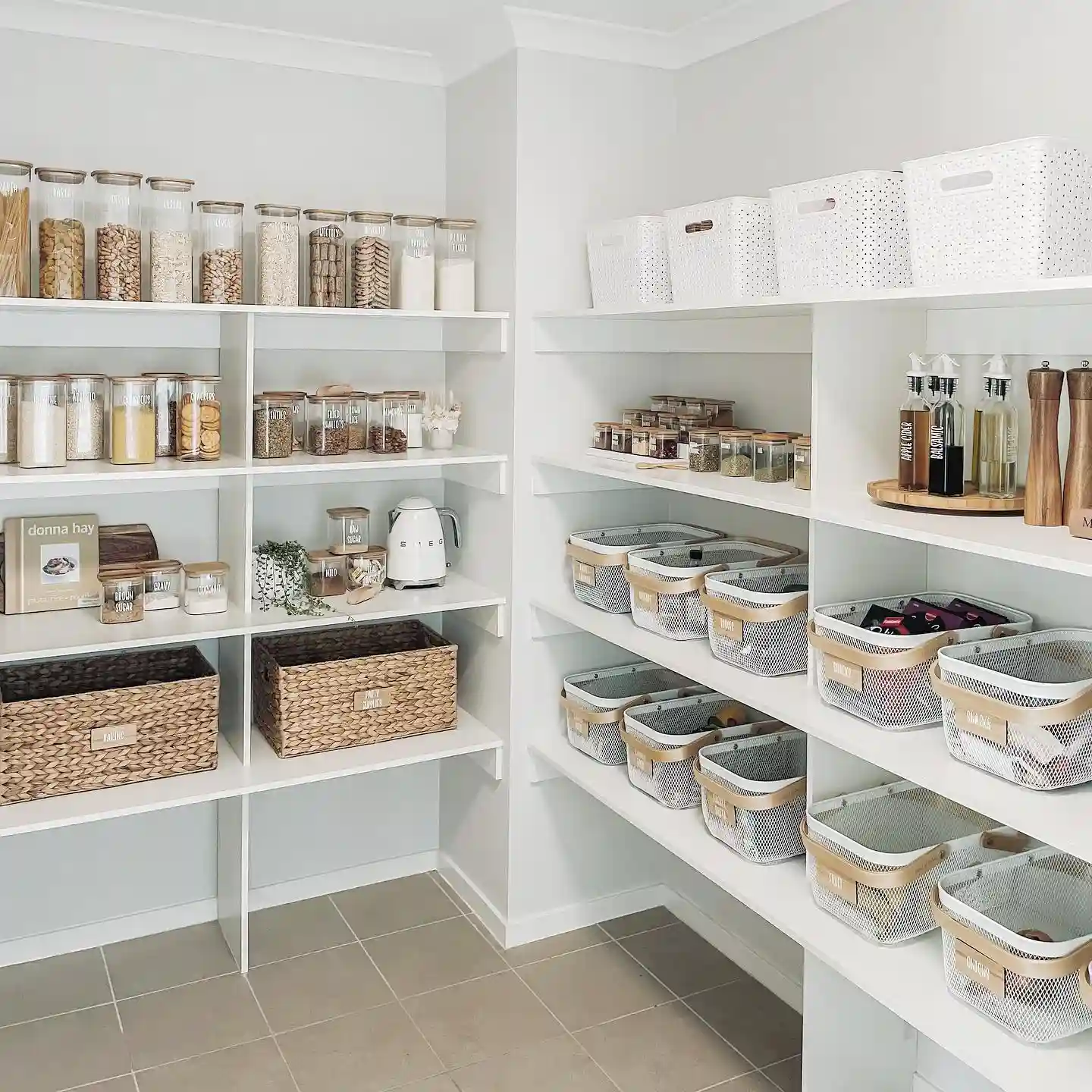
Labels may seem small, but they make a huge difference in a small kitchen. When every jar has a name, the pantry feels easier to use and nicer to look at. This also helps family members put things back in the right place.
- Use simple printed labels for a clean look.
- Label jars, baskets, and shelves.
- Add expiry dates for baking items.
- Keep label style the same for a neat finish.
- Use removable labels if you change items often.
Fridge Organization Bins
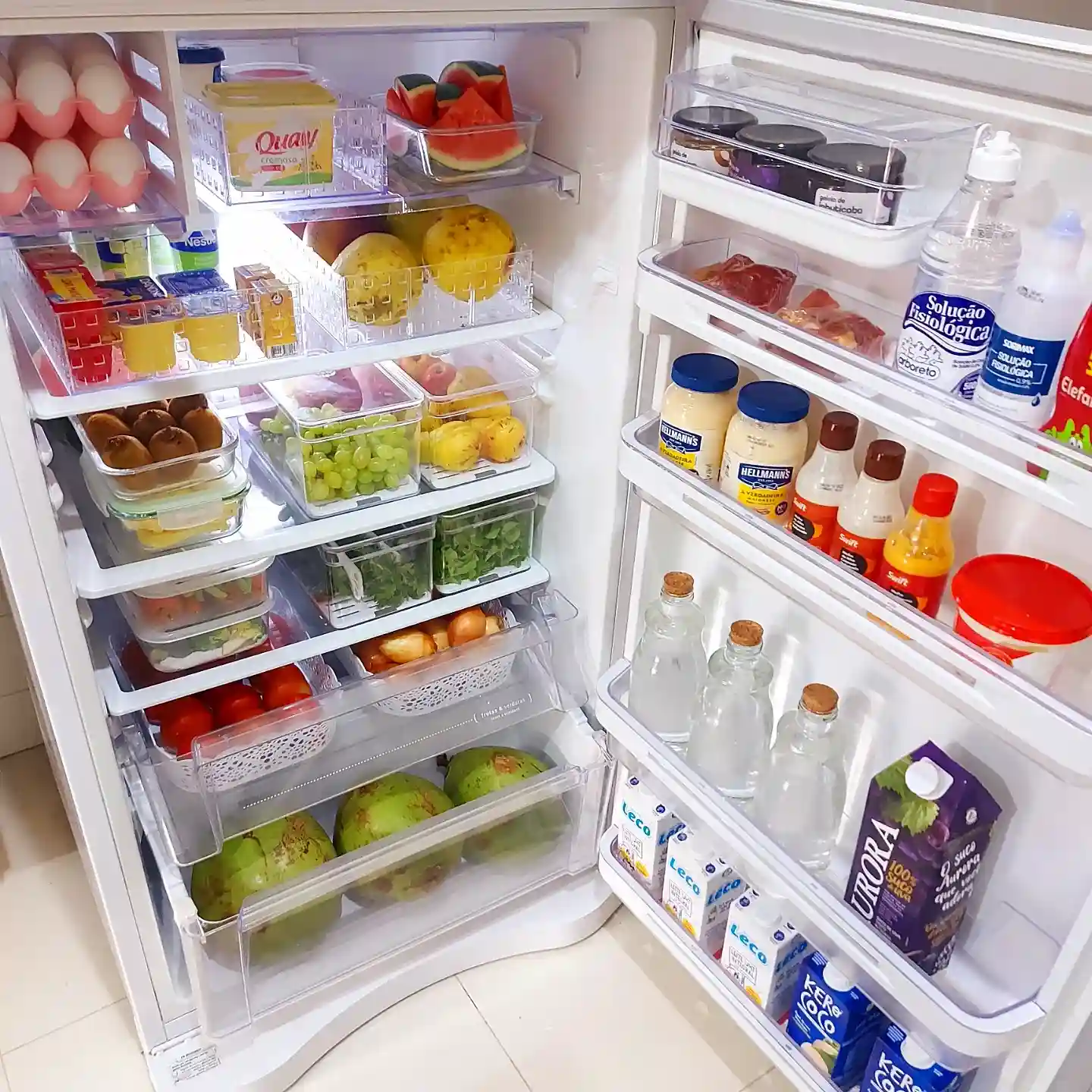
A small fridge can feel packed even when it is not full. Fridge bins help separate vegetables, snacks, drinks, sauces, and leftovers so nothing disappears in the back. I like this idea because it cuts waste and makes meal prep feel easier.
- Use clear bins for quick visibility.
- Keep breakfast items in one bin.
- Put sauces together on a turntable.
- Store leftovers at eye level.
- Clean bins weekly before grocery shopping.
Countertop Tray Organization
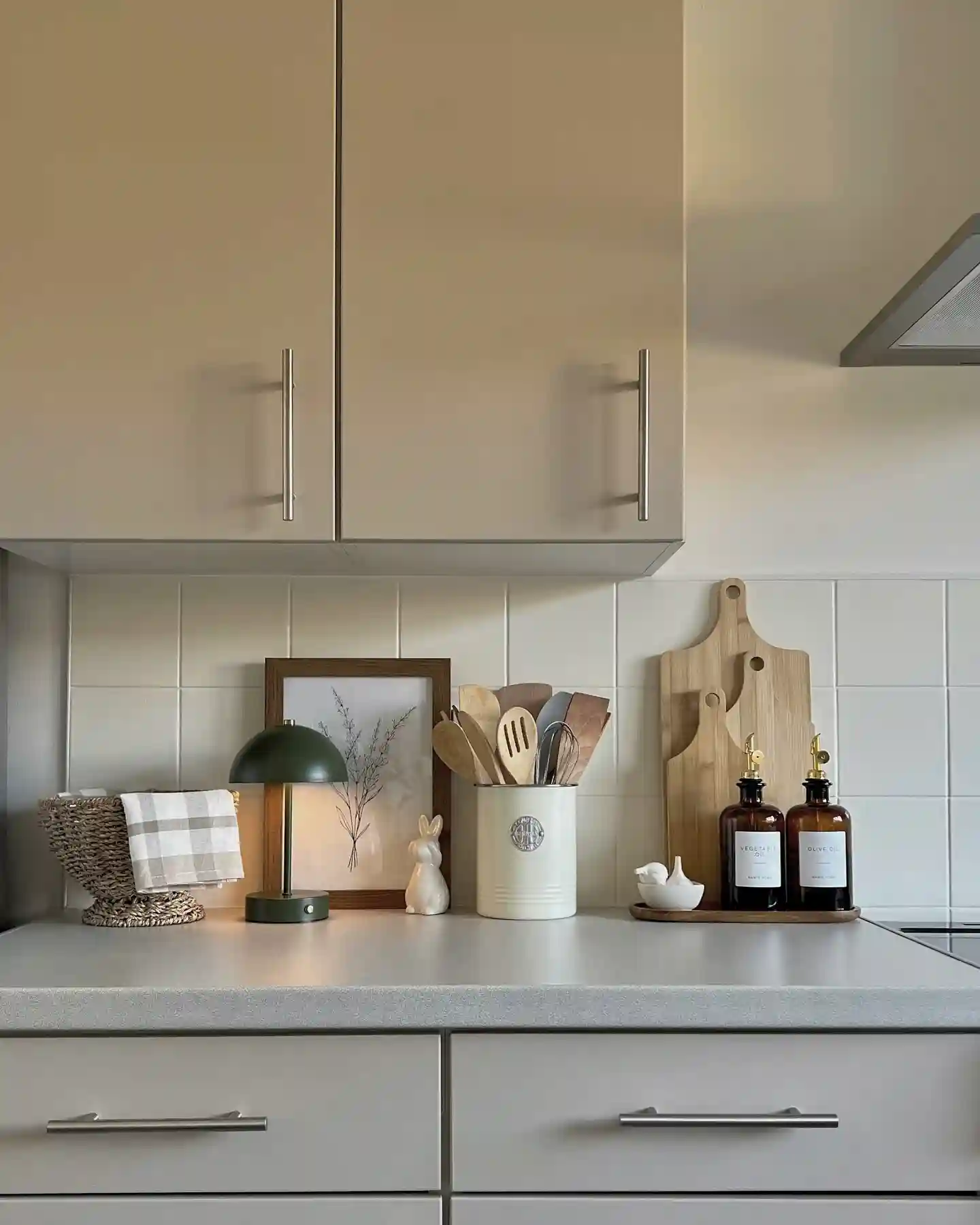
Small kitchen counters get messy because too many little items sit out. A tray makes those items look intentional. I use this trick for oil, salt, pepper, utensils, coffee items, or dish soap. It keeps the counter useful without making it feel crowded.
- Use one tray near the stove for cooking items.
- Keep only daily-use products on the counter.
- Choose a tray that matches your kitchen style.
- Wipe under the tray often.
- Avoid filling the tray with decor only.
Coffee Station Organization
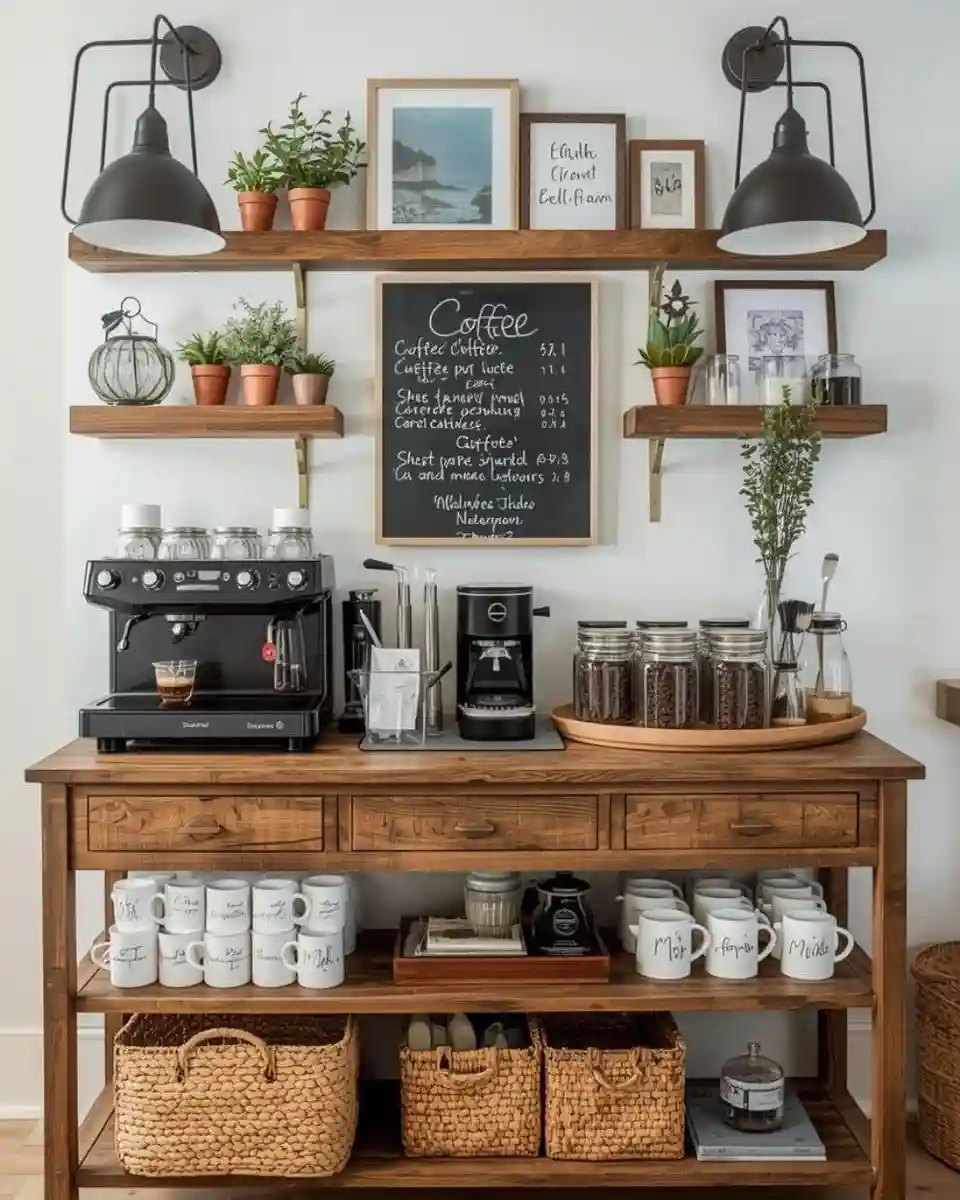
A coffee station is perfect for small kitchens because it keeps mugs, pods, sugar, spoons, and filters in one place. Instead of spreading coffee items across drawers and cabinets, you create one easy corner. It feels organized and makes mornings smoother.
- Use a small tray for mugs and sugar.
- Store pods in a drawer divider or jar.
- Keep spoons in a tiny cup.
- Add a basket for filters or tea bags.
- Do not let the station take over the counter.
Open Shelf Kitchen Storage
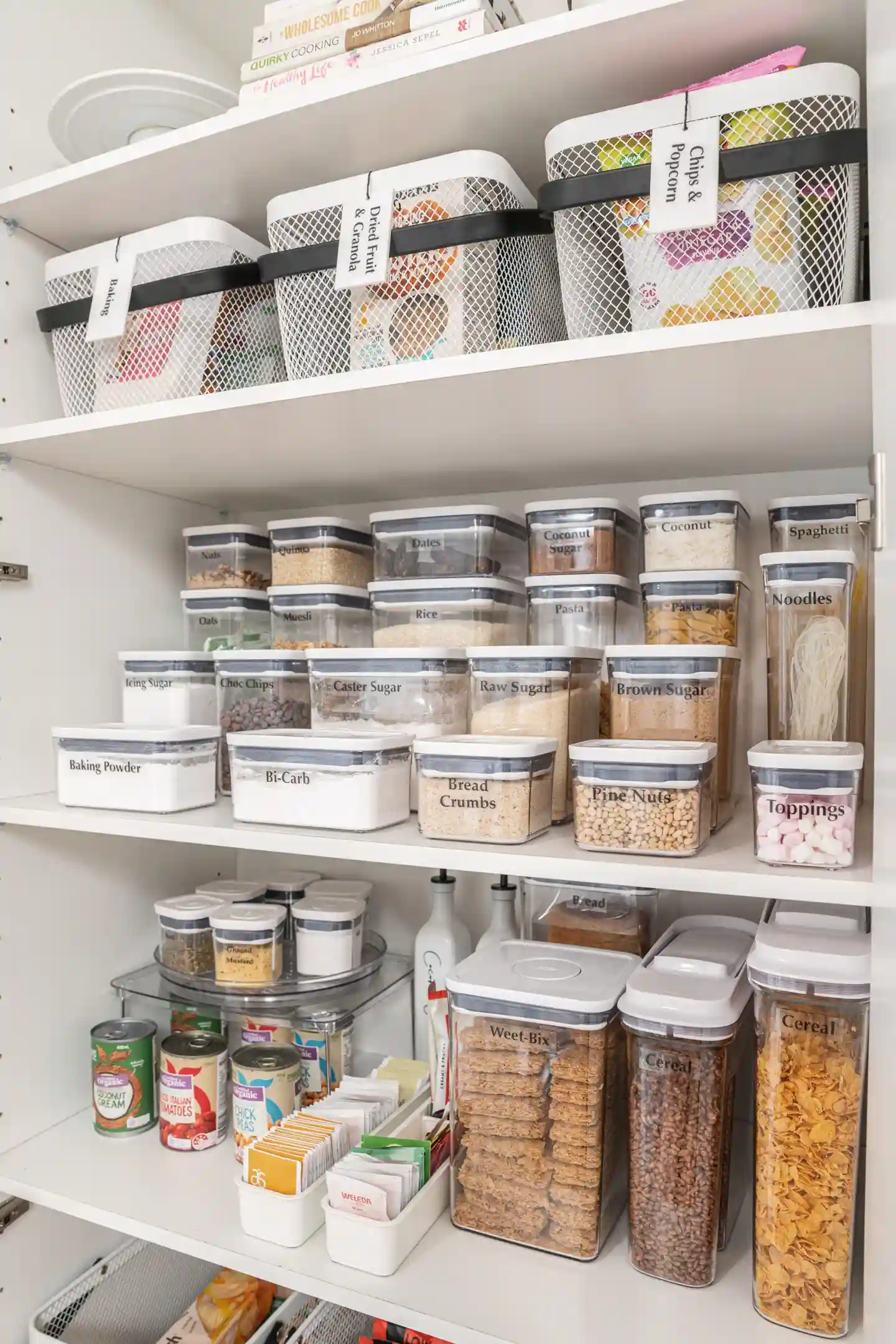
Open shelves can be both pretty and useful in a small kitchen. The key is not filling them with everything you own. I like using open shelves for daily plates, bowls, jars, and a small plant so the space feels light but still practical.
- Keep only your best-looking everyday items.
- Use matching plates or bowls for a clean look.
- Add one basket for hidden storage.
- Leave breathing room between objects.
- Wipe shelves often because they collect dust.
Sink Caddy Organization
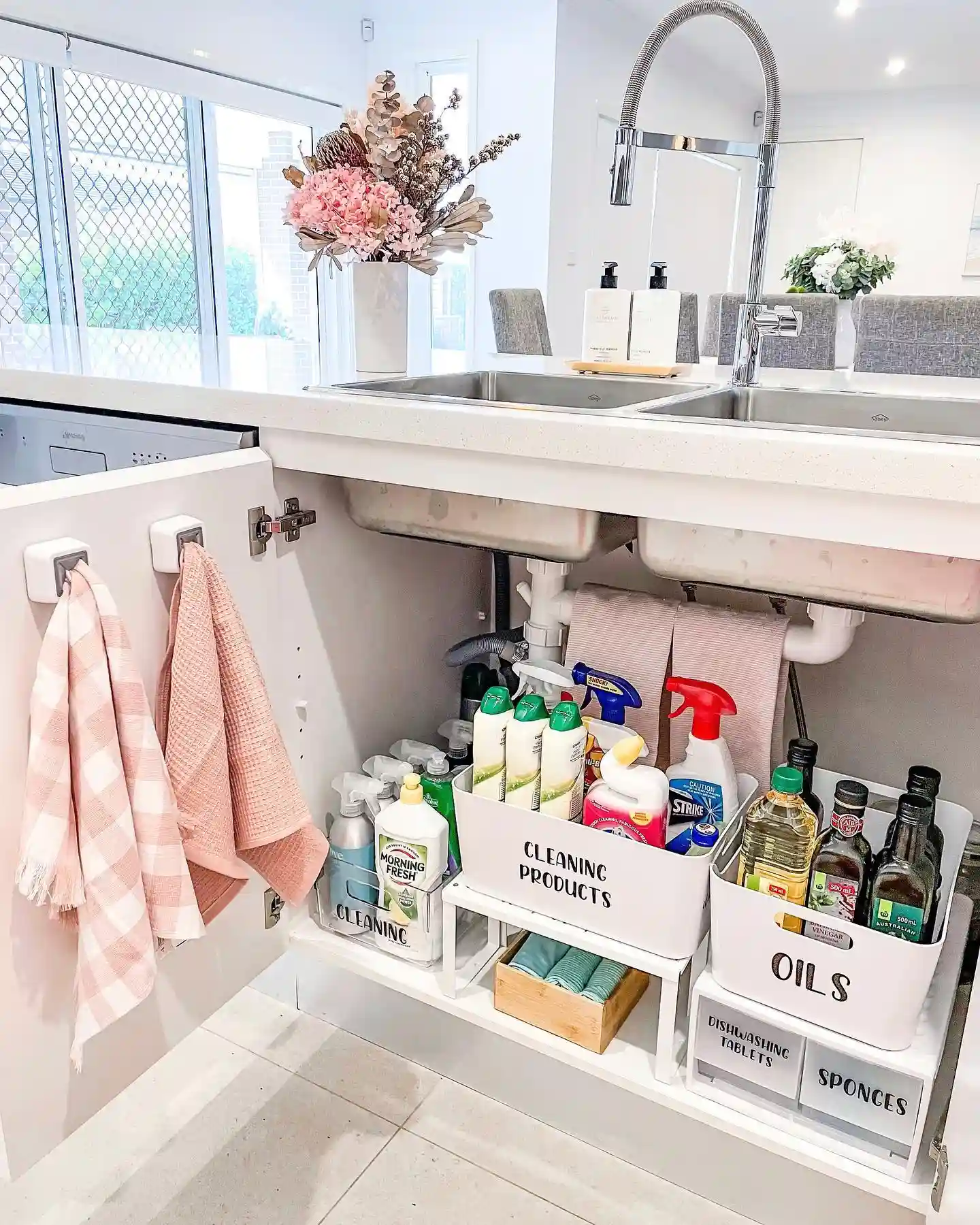
The sink area can ruin the whole kitchen if sponges, brushes, and soap are scattered everywhere. A sink caddy keeps wet items together and helps the counter dry faster. This is a small fix, but it makes the kitchen feel cleaner every day.
- Use a caddy with drainage holes.
- Keep only one sponge and one brush out.
- Store extra sponges under the sink.
- Choose a compact caddy for small sinks.
- Wash the caddy often to avoid buildup.
Pull-Out Cabinet Organizer
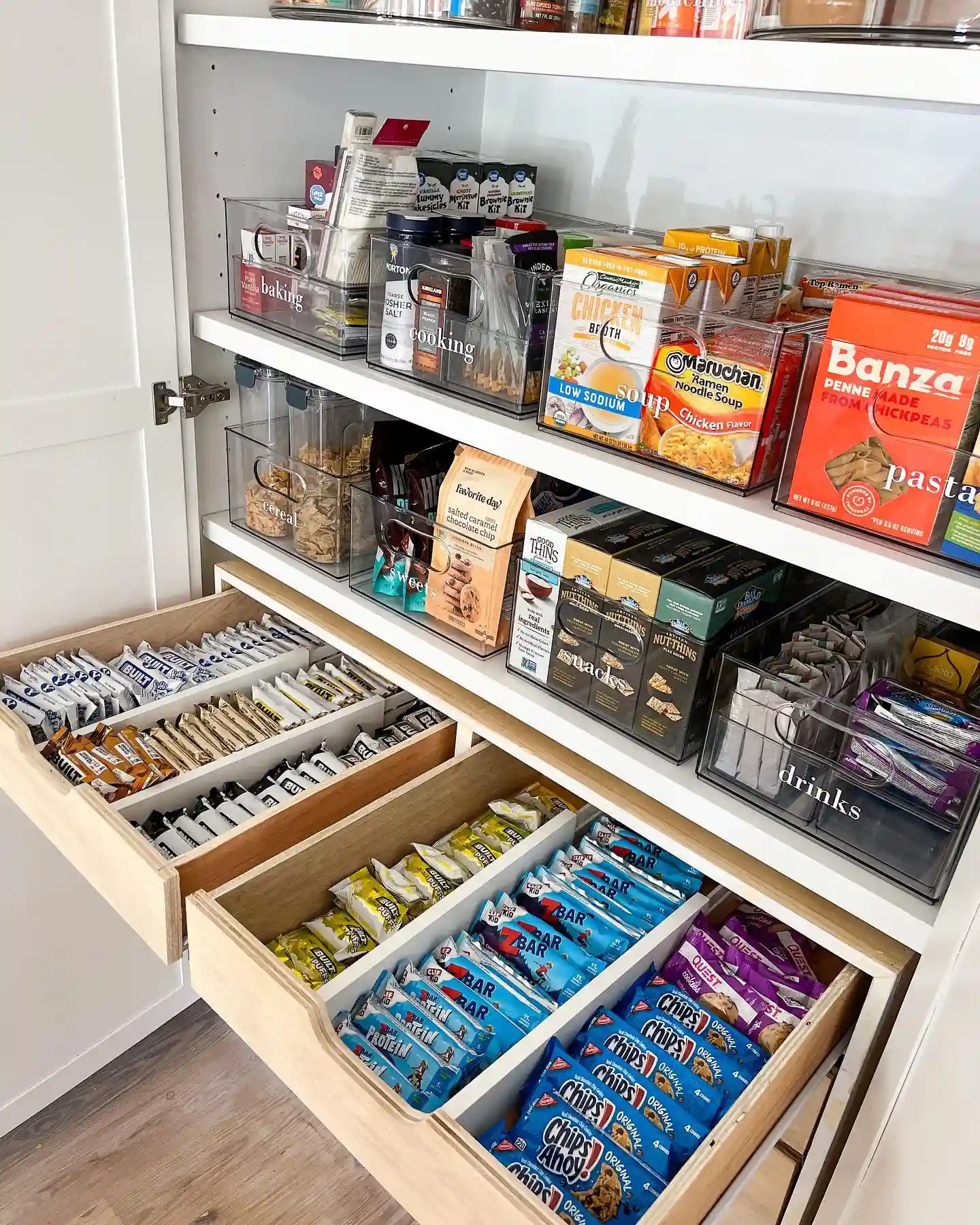
Pull-out organizers are great for small kitchens because they make deep cabinets easier to use. Instead of crawling around to reach the back, you slide the shelf out. I like them for spices, oils, cleaning supplies, snacks, or narrow pantry cabinets.
- Use pull-outs in deep lower cabinets.
- Store heavy bottles on the bottom level.
- Measure cabinet width before buying.
- Keep similar items together.
- Do not overload the track with too much weight.
Small Appliance Storage
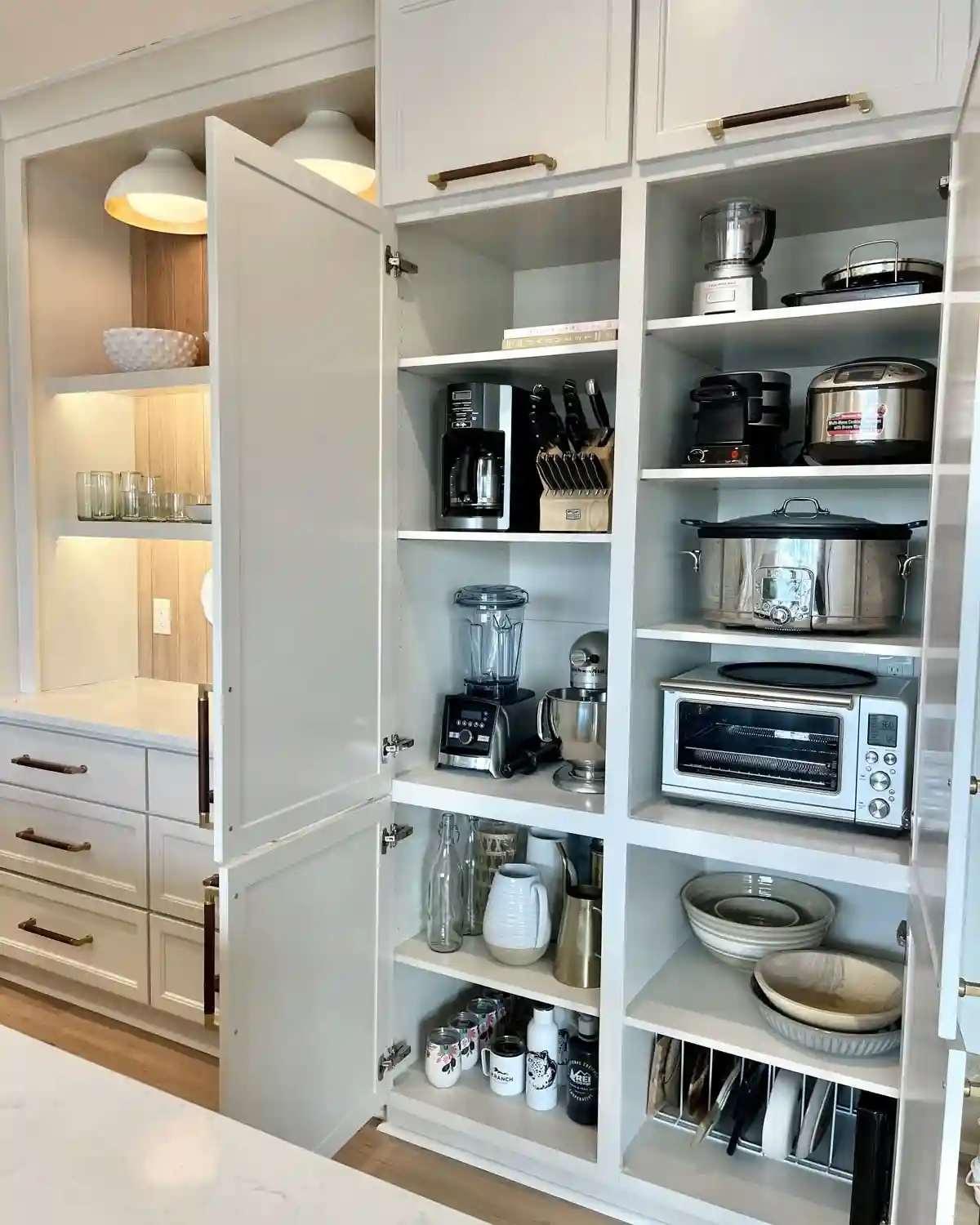
Small appliances take up a lot of space if they all live on the counter. I prefer keeping only the appliance I use daily outside and storing the rest in a cabinet, shelf, or appliance garage. It instantly makes a small kitchen feel bigger.
- Keep the coffee maker out if used daily.
- Store blender, toaster, or mixer together.
- Use lower cabinets for heavier appliances.
- Wrap cords neatly before storing.
- Donate appliances you have not used in months.
Mug And Cup Organization
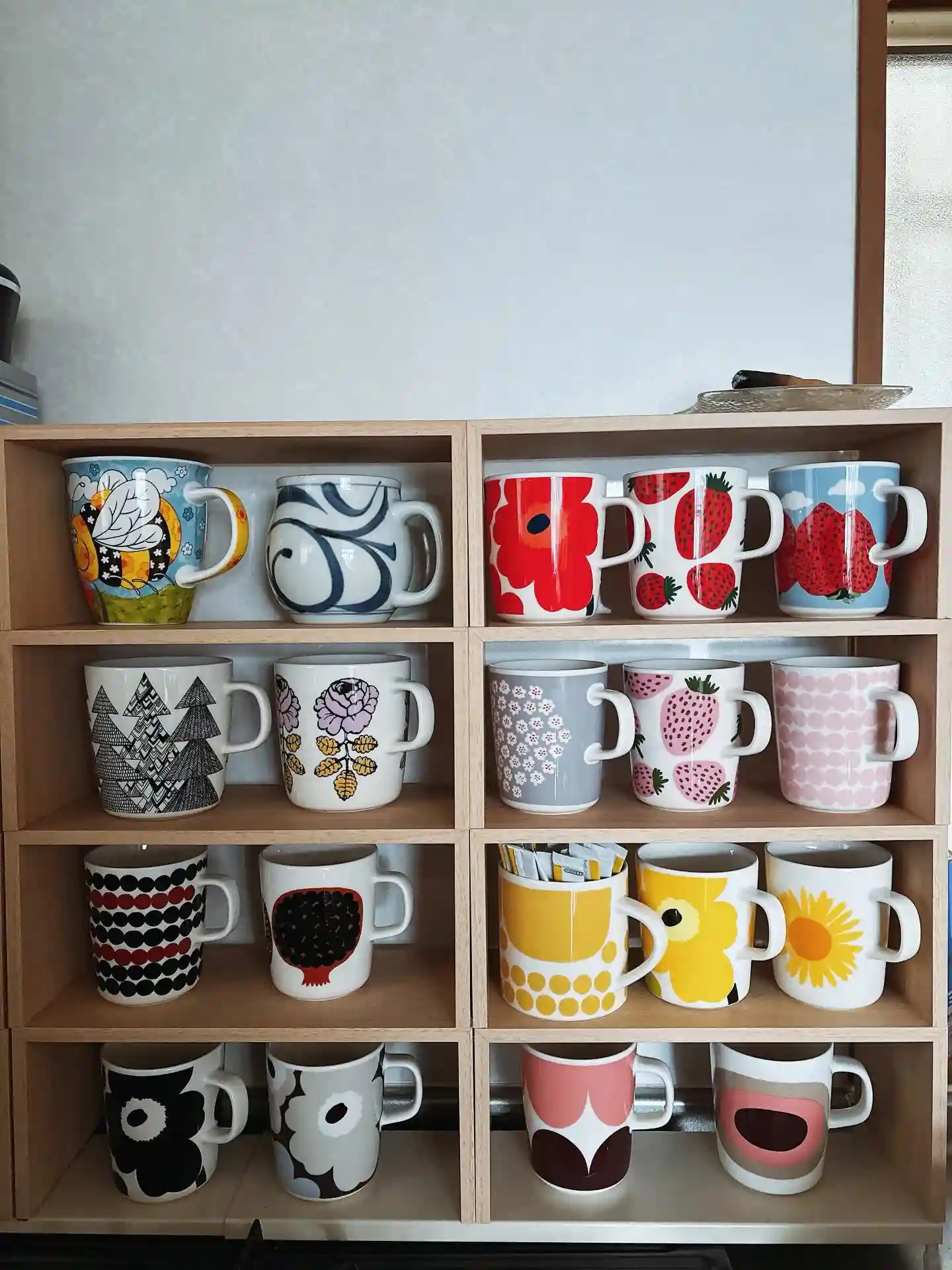
Mugs can quickly take over a small kitchen cabinet, especially when every mug has a different shape. Organizing them by size or using hooks can free up shelf space fast. I like this idea because it makes your drinkware easier to grab and prettier to see.
- Keep only mugs you actually use.
- Stack matching cups if they are safe to stack.
- Add under-shelf hooks for extra storage.
- Store special mugs on a higher shelf.
- Group water glasses, mugs, and travel cups separately.
Basket Pantry Storage
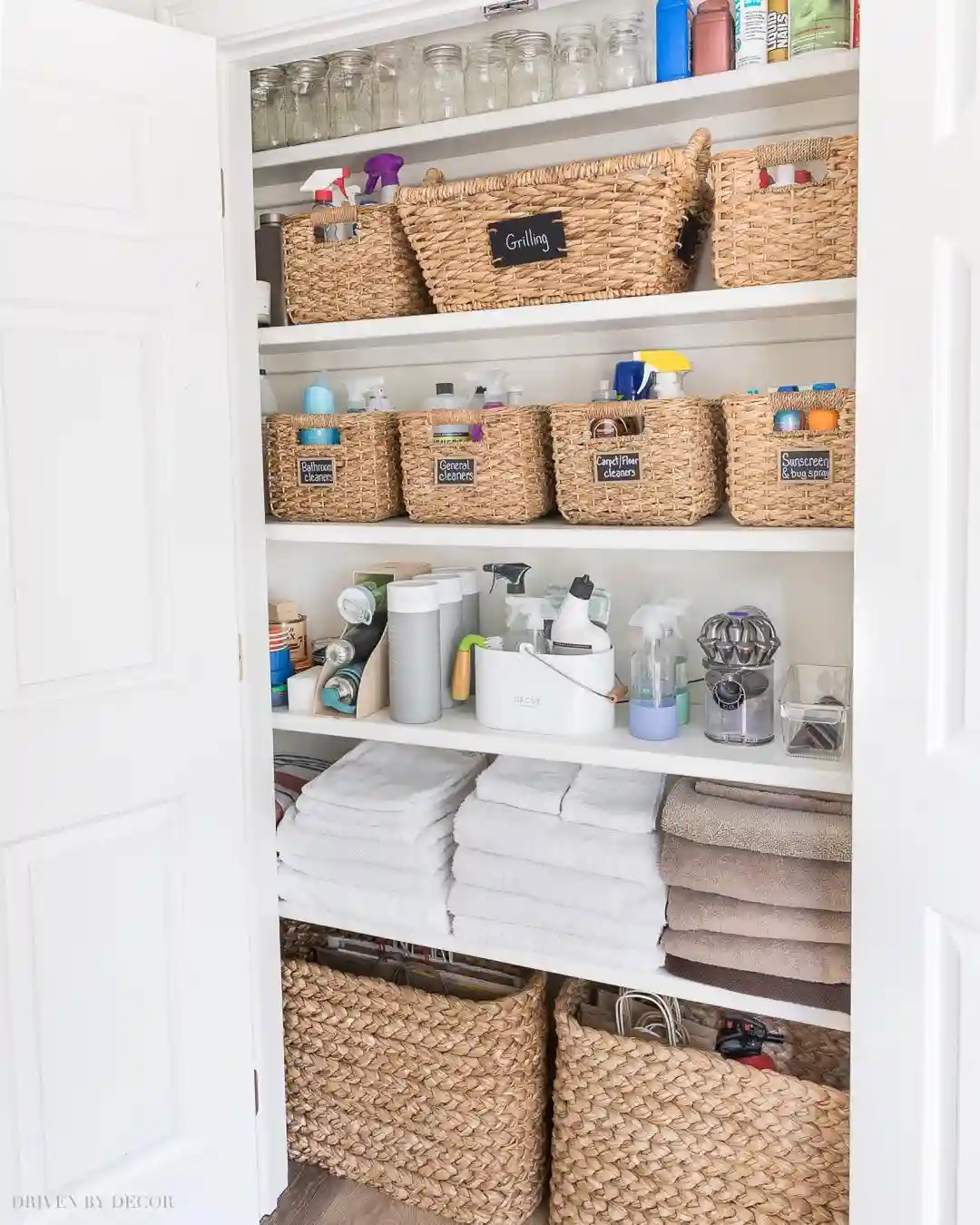
Baskets are one of the easiest ways to make a small pantry feel neat. They hide messy packaging and let you pull out a whole group of items at once. I especially like baskets for snacks, onions, baking packets, breakfast bars, and extra pantry refills.
- Use baskets for loose packets and snacks.
- Choose handles so they pull out easily.
- Label each basket by category.
- Keep heavy cans out of soft baskets.
- Use matching baskets for a cleaner shelf look.
Tiny Kitchen Organization
Tiny kitchens need every item to earn its place. The best setup is simple: clear counters, vertical storage, drawer zones, and smart cabinet space. I like this approach because it focuses on real daily use instead of trying to force too much stuff into a small room.
- Keep counters as empty as possible.
- Use walls, doors, and cabinet sides for storage.
- Store seasonal items outside the kitchen.
- Use clear bins so nothing gets lost.
- Edit your kitchen every few months to remove clutter.
FAQs
What is the best way to organize a small kitchen?
Focus on using vertical space, adding drawer organizers, and grouping similar items together. Even small upgrades like bins and labels can make a big difference.
Are clear containers really worth it?
Yes, they help you see everything instantly and reduce clutter from packaging. They also keep food fresher when airtight.
How do I keep my kitchen organized long term?
Keep things simple. Don’t overcomplicate systems. Make sure everything has a place so it’s easy to put items back after use.
What should I store in baskets vs containers?
Use baskets for bulky or loose items like snacks and produce. Use containers for dry goods like rice, flour, and pasta.
How can I make my kitchen look organized without spending much?
Start with decluttering, then use affordable bins, labels, and simple organizers. Even rearranging what you already have can improve the space a lot.