20 Best Climbing Plants for Pots
Can you grow climbing plants in pots? Yes, you can grow a lush vertical garden in containers by selecting non-invasive species with “climbable” root systems. While many traditional vines are too aggressive for pots, specific varieties like Arabian Jasmine (Mogra), Mandevilla, and Black-Eyed Susan Vine are perfectly suited for container life.
Successfully growing climbers in pots depends on matching the plant’s vigor to the container size and providing the correct support, such as a bamboo teepee or a moss pole. In this carefully curated guide, we break down 20 of the best pot-friendly climbers categorized by their light needs, fragrance, and ease of care.
At a Glance: Top Picks for Container Climbers
| Plant Name | Best Use Case | Light Needed | Pot Size (Min) |
| Arabian Jasmine | Fragrant Balconies | Full Sun | 12-inch |
| Dipladenia | Compact Trellises | Sun to Part Shade | 10-inch |
| Black-Eyed Susan | Rapid Color | Full Sun | 8-inch |
| Hoya (Wax Plant) | Indoor Verticality | Indirect Light | 6-inch |
| Blue Pea Flower | Edible/Herbal Garden | Full Sun | 10-inch |
1. Arabian Jasmine (Mogra)
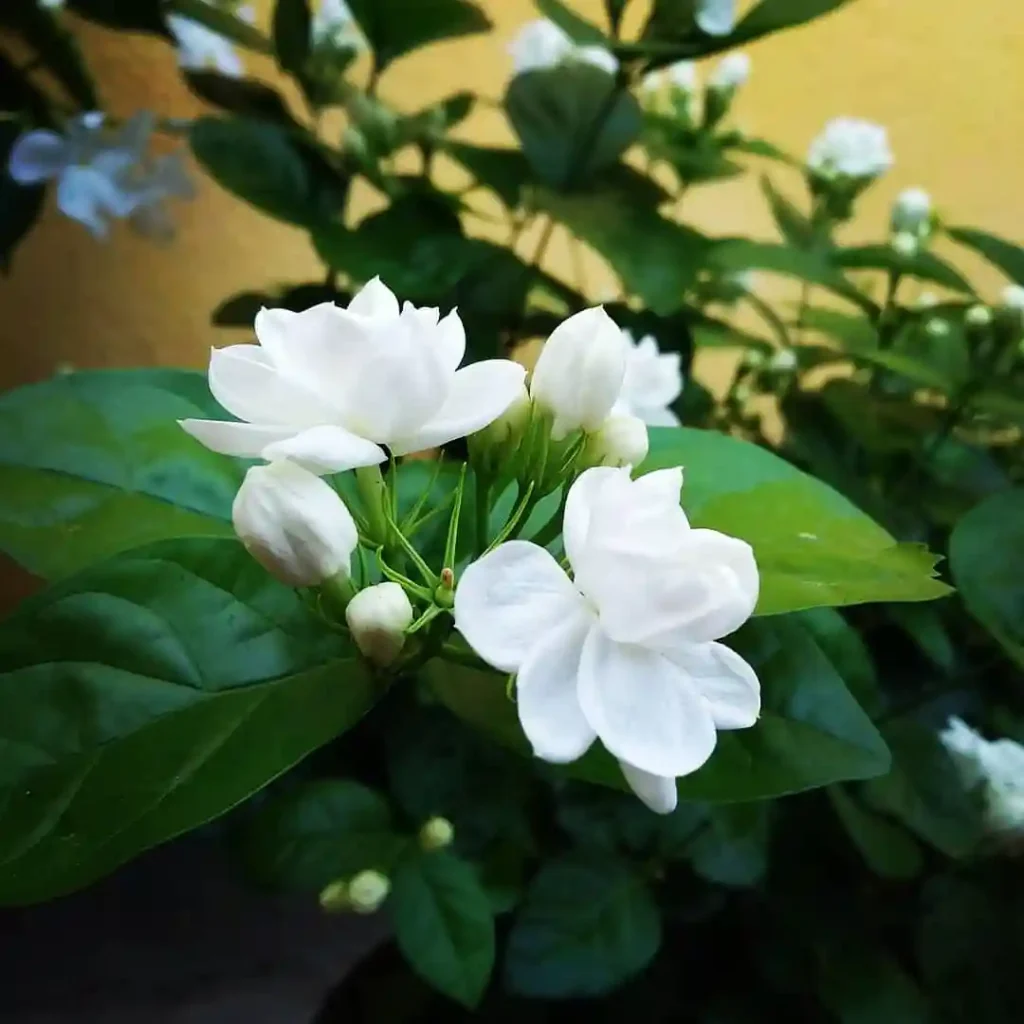
The Arabian Jasmine, widely known as Mogra, is the quintessential choice for anyone seeking a sensory-rich vertical garden in a confined space. Unlike its wilder counterparts, the Mogra is a well-behaved climber that thrives in the restricted root zones of a container. It is beloved for its waxy, snow-white blooms that release an intense, sweet fragrance, especially during the evening hours.
In a pot, it functions as a “scandent shrub,” meaning it grows as a thick bush but can be easily trained to scale a small trellis or hoop. Because it is a tropical native, it loves the heat and high humidity, making it perfect for balconies in sunny climates. With regular pruning and a bit of “deadheading” (removing faded flowers), a single potted Mogra can produce multiple flush cycles of blooms from spring through the end of the monsoon season.
Plant Specifications:
- Scientific Name: Jasminum sambac
- Growth Habit: Twining woody shrub (Scandent)
- Sun Requirement: Full Sun (6+ hours daily)
- Hardiness: Heat-tolerant; cold-sensitive
- Pot Size: 12–14 inches (Standard terracotta preferred)
- Flowering Season: Spring through late Monsoon
Expert Care Tips:
- Soil Mix: Use a blend of 50% garden soil, 30% compost, and 20% sand for drainage.
- Pruning Secret: Prune heavily in early spring to encourage new, flowering wood; pinch the tips of new growth to promote a bushier appearance.
- Watering: Water deeply when the top inch of soil feels dry; avoid soggy roots.
- Best Support: Works beautifully on a circular wire hoop or a tripod bamboo teepee.
2. Mini Climbing Rose (Patio Varieties)
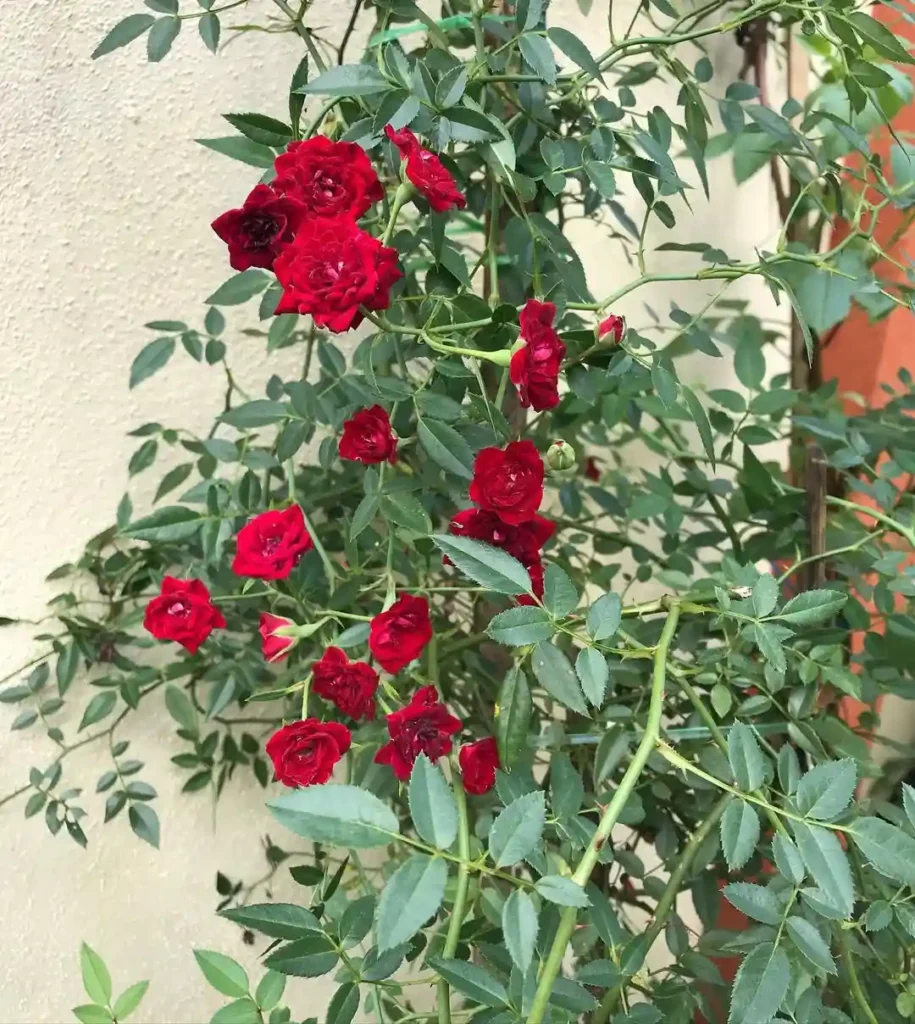
Miniature climbing roses are the perfect solution for gardeners who want the classic, romantic elegance of a rose garden without the massive space requirements. Unlike standard climbers that can reach 20 feet, patio varieties are genetically bred to stay compact while producing long, flexible canes that are easy to train. These roses are repeat bloomers, meaning they will provide multiple flushes of flowers throughout the growing season if properly fed and deadheaded.
In a container, the most important factor is the depth of the pot, as roses have a deep “taproot” system. Choosing a taller, “long tom” style pot will provide the space needed for the roots to stretch, leading to much healthier foliage and more abundant blooms. They offer a dense leaf structure and a variety of intoxicating scents, making them ideal for a sunny balcony or entryway.
Plant Specifications:
- Scientific Name: Rosa setigera (Miniature hybrids)
- Growth Habit: Upward-reaching canes (Must be tied/trained)
- Sun Requirement: Full Sun (Minimum 6 hours)
- Hardiness: Moderate; cold-hardy but needs winter protection in pots
- Pot Size: 15–18 inches (Deep/Tall pots are best)
- Flowering Season: Late Spring through Autumn
Expert Care Tips:
- Soil Mix: Rich, heavy-duty potting mix with added bone meal for root strength.
- Training Secret: Because roses don’t have tendrils, use soft garden twine to tie the canes to your trellis in a “fanned out” shape.
- Feeding: Use a high-potash liquid rose fertilizer every 2 weeks during the blooming season.
- Pruning: Remove faded flowers (“deadheading”) immediately to trigger the next flush of buds.
20 Fast Growing Climbing Plants to Transform Your Garden Today
3. Dipladenia (Mandevilla Compact Type)
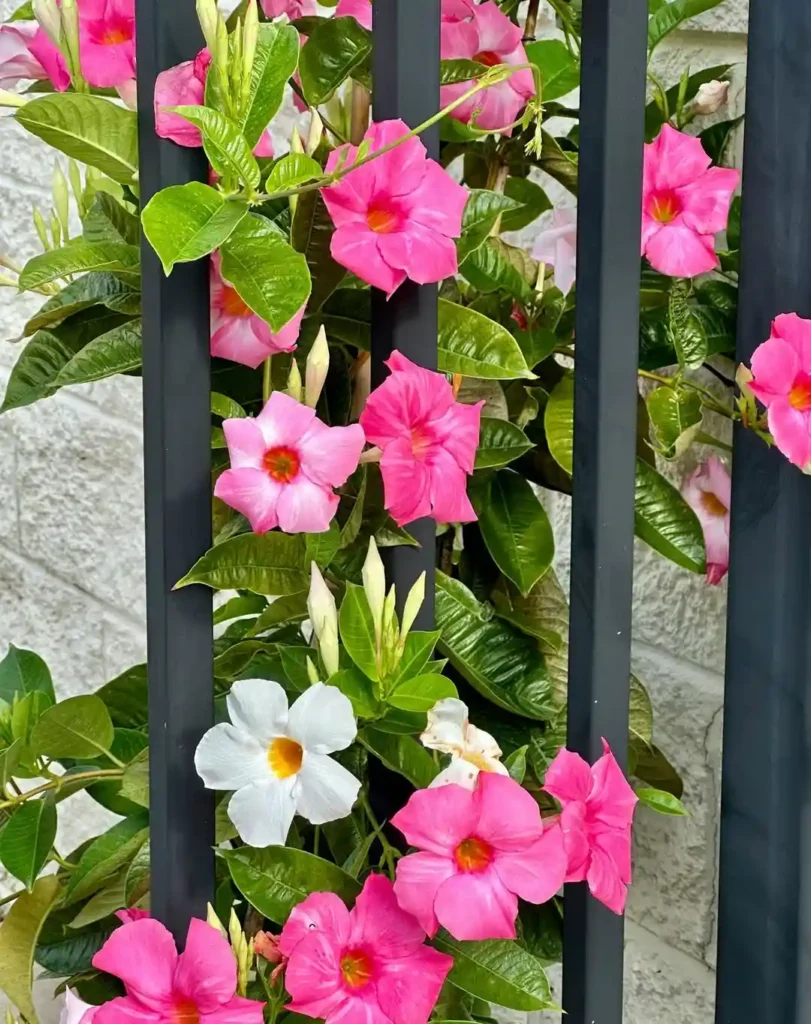
Dipladenia is often confused with its cousin, the Mandevilla, but it is much better suited for container life. It features smaller, glossier, leathery leaves and a more bush-like climbing habit. While Mandevillas want to scale a two-story house, Dipladenia is happy to stay within a 3-to-5-foot range. It produces trumpet-shaped flowers in vibrant reds, pinks, and whites that stand out beautifully against the dark green foliage.
One of the best features of Dipladenia is its drought tolerance. Its roots have specialized tuberous structures that store water, making it much more forgiving if you forget to water it for a day or two on a hot balcony. It is a “clean” climber, meaning it doesn’t drop a lot of messy leaves, keeping your patio looking tidy.
Plant Specifications:
- Scientific Name: Mandevilla sanderi
- Growth Habit: Scandent/Twining (Compact)
- Sun Requirement: Full Sun to Partial Shade
- Hardiness: High Heat/Drought tolerant; frost-sensitive
- Pot Size: 10–12 inches
- Flowering Season: Continuous through warm months
Expert Care Tips:
- Soil Mix: Well-draining cactus or succulent mix blended with regular potting soil.
- Watering: Allow the top 2 inches of soil to dry out completely before watering again.
- Pest Control: Keep an eye out for aphids and spider mites; a simple neem oil spray once a month works wonders.
- Best Support: Works best on a pre-made wire obelisk or a small wooden ladder trellis.
4. Thunbergia Erecta (King’s Mantle)
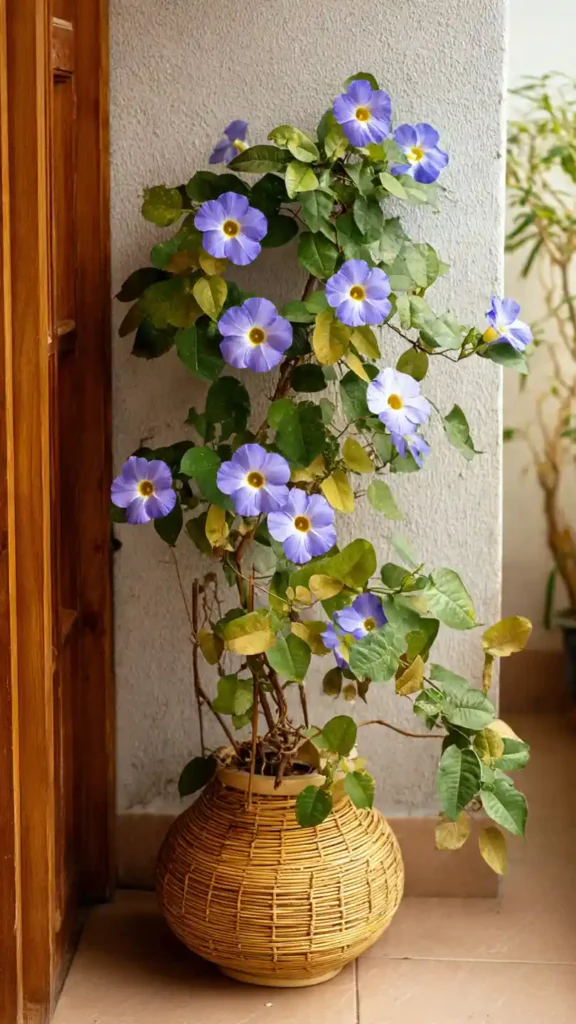
While often grown as a shrub in large landscapes, Thunbergia erecta is a hidden gem for vertical container gardening. It produces deep, velvety purple flowers with bright yellow throats that create a stunning color contrast. In a pot, you can “force” this plant into a climbing habit by selecting the most vigorous upright branches and securing them to a central support.
This plant is particularly valued for its tolerance to a variety of light conditions. While it flowers best in the sun, it can maintain its lush, dark green foliage even in semi-shaded corners of a porch. It is a woody perennial, so with proper care, it will become a permanent fixture of your container garden for many years.
Plant Specifications:
- Scientific Name: Thunbergia erecta
- Growth Habit: Woody shrub easily trained as a climber
- Sun Requirement: Full Sun to Partial Shade
- Hardiness: Tropical; thrives in high humidity
- Pot Size: 12 inches
- Flowering Season: Year-round in tropical climates; Summer elsewhere
Expert Care Tips:
- Soil Mix: Standard potting soil with 10% perlite for aeration.
- Training Secret: Use a “Single Pole” method—tie the main stem to a sturdy bamboo stake and let the side branches weep downward for a fountain effect.
- Watering: It is thirsty! Never let the soil dry out completely, or the leaves will wilt quickly.
- Best Support: A sturdy bamboo teepee or central moss pole.
5. Blue Pea Flower (Aparajita)
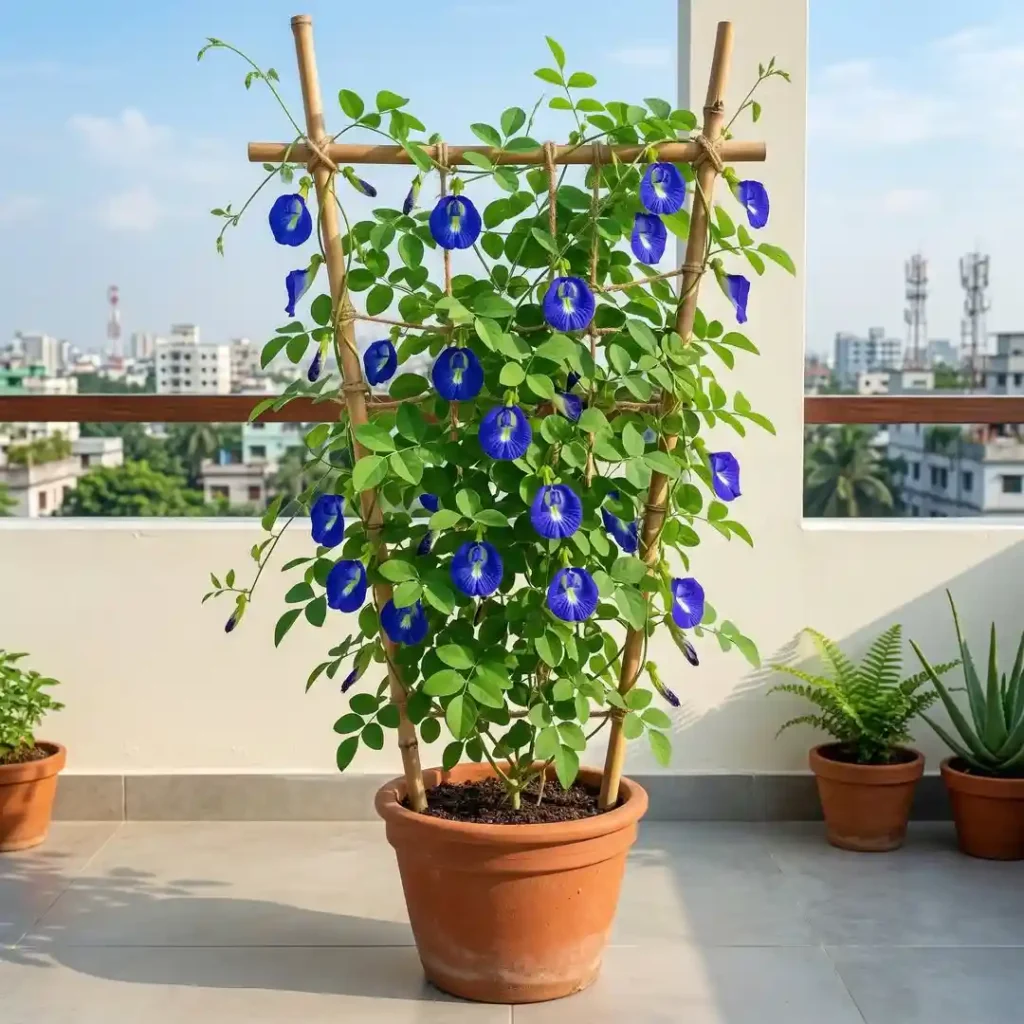
The Blue Pea Flower, or Aparajita, is a sacred and functional climber that is incredibly lightweight, making it safe for even the most delicate plastic pots. It is famous for its vivid, deep blue flowers which are not only beautiful but also edible. These flowers are often dried and steeped to create “Butterfly Pea Tea,” a brilliant blue herbal drink that changes color to purple when lemon is added.
Because it is a member of the legume family, it is a “nitrogen-fixer,” meaning it actually improves the soil health as it grows. It uses fine, thread-like tendrils to pull itself upward, so it requires a very fine support structure like a net or thin strings. It is an extremely fast grower that can go from a seed to a flowering vine in as little as 45 to 60 days.
Plant Specifications:
- Scientific Name: Clitoria ternatea
- Growth Habit: Fine twining vine (Very lightweight)
- Sun Requirement: Full Sun (Needs heat to bloom)
- Hardiness: Very hardy in tropical/subtropical zones
- Pot Size: 10 inches
- Flowering Season: Year-round in warm climates
Expert Care Tips:
- Seed Prep: For faster growth, nick the seed coat with a file and soak in water for 12 hours before planting.
- Harvesting: Pick flowers in the morning if you intend to use them for tea to ensure the highest color concentration.
- Soil Mix: Basic garden soil with a handful of compost; it is not a “fussy” eater.
- Best Support: Nylon bird netting or thin cotton strings attached to a wall.
6. Nasturtium (Climbing Varieties)
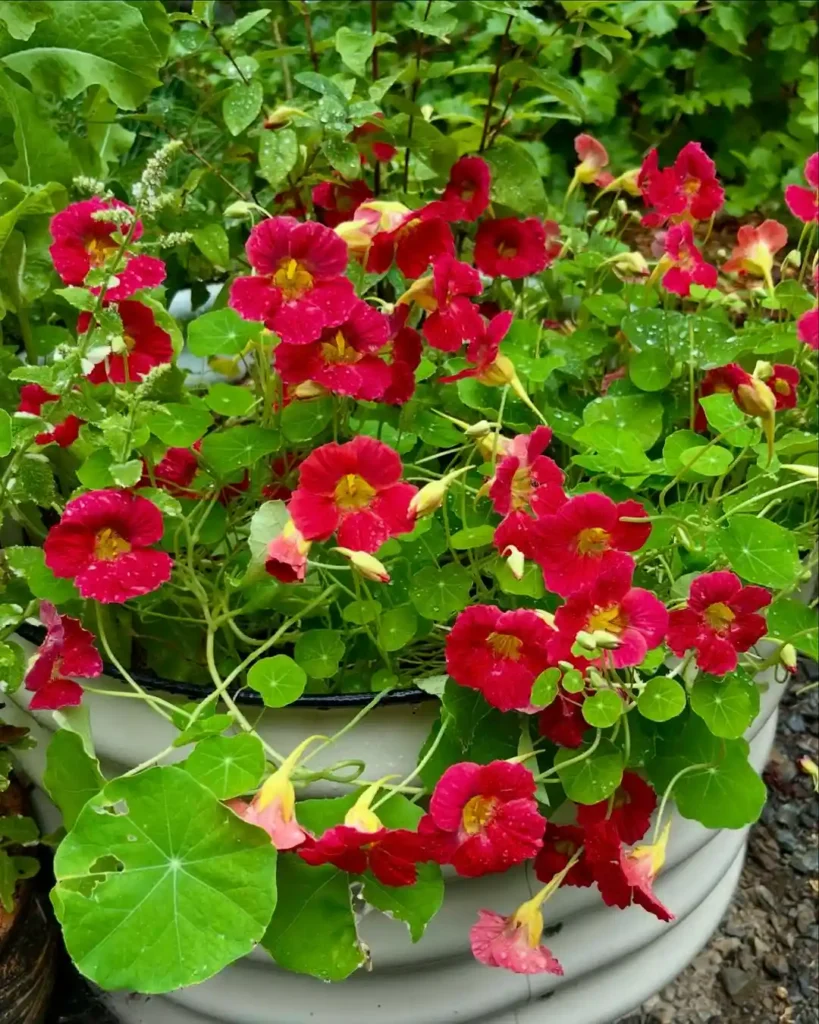
Nasturtiums are a gardener’s dream for quick, edible results. While many people think of them as ground-hugging plants, the “climbing” or “trailing” varieties can scale a 6-foot trellis in a single season. They are famous for their circular, shield-like leaves and bright, peppery-scented flowers in shades of sunset orange, yellow, and red.
In a pot, Nasturtiums are incredibly low-maintenance. In fact, they prefer “poor” soil; if the soil is too rich with fertilizer, the plant will produce massive green leaves but hide the flowers. Both the leaves and the blossoms are 100% edible, adding a spicy, radish-like kick to summer salads. They are also excellent “trap crops,” drawing aphids away from your other prized container plants.
Plant Specifications:
- Scientific Name: Tropaeolum majus
- Growth Habit: Trailing/Climbing (Uses leaf stalks to “hook” onto supports)
- Sun Requirement: Full Sun to Partial Shade
- Hardiness: Annual; sensitive to extreme heat and frost
- Pot Size: 8–10 inches
- Flowering Season: Spring through early Summer (Cooler months)
Expert Care Tips:
- Soil Mix: Standard potting soil with 30% sand; avoid adding extra compost.
- Feeding Secret: Do not fertilize. High nitrogen leads to a “leaf forest” with zero blooms.
- Watering: Water only when the soil is dry to the touch; they are quite drought-tolerant.
- Best Support: Light plastic netting or thin garden twine.
7. Sweet Pea (Dwarf/Container Varieties)
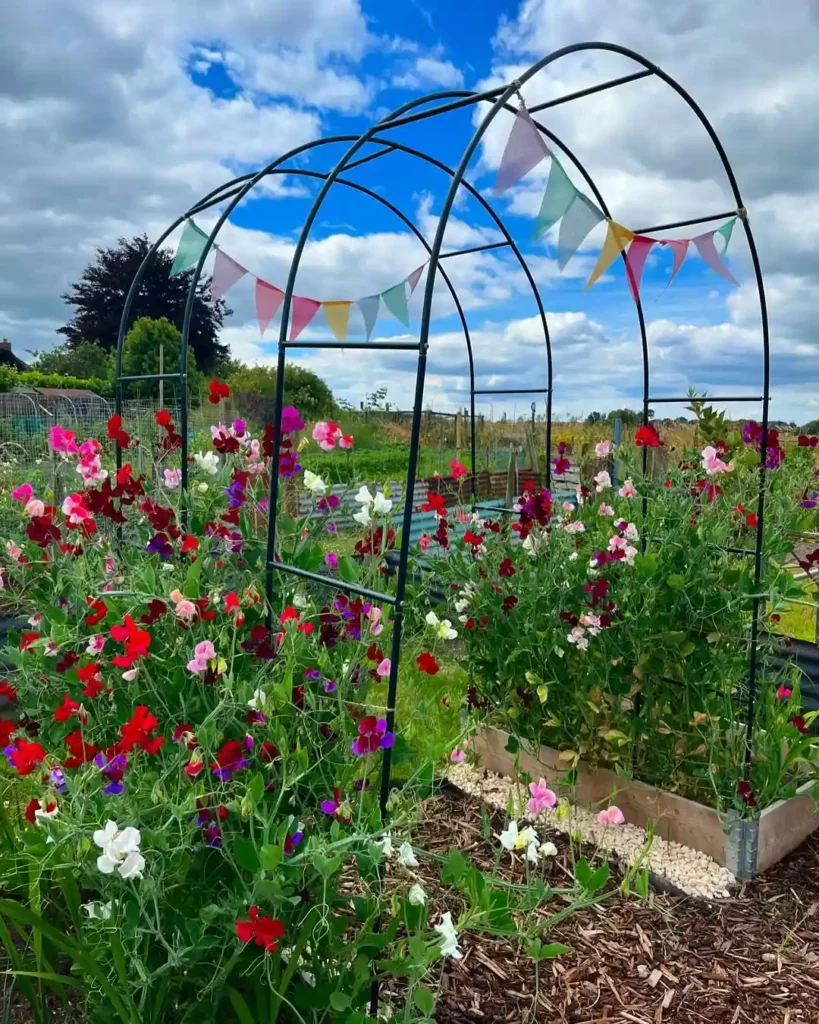
Sweet Peas are the sentimental favorites of the spring garden, known for their ruffled, butterfly-like petals and an intoxicating, old-fashioned perfume. For container gardening, look specifically for “Patio” or “Dwarf” climbing varieties like ‘Cupid’ or ‘Little Sweetheart’. These are bred to have stronger, shorter stems that won’t become top-heavy and topple your pot.
Sweet Peas love cool weather. To get the best results in a pot, you should plant them as early as possible in the spring (or autumn in tropical climates). They use fine tendrils to climb, so they need a very delicate support system. Regularly cutting the flowers for indoor bouquets actually stimulates the plant to produce even more blooms.
Plant Specifications:
- Scientific Name: Lathyrus odoratus
- Growth Habit: Climbing via tendrils
- Sun Requirement: Full Sun (Needs cool roots)
- Hardiness: Hardy annual; loves cool temperatures
- Pot Size: 10–12 inches
- Flowering Season: Late Winter to early Summer
Expert Care Tips:
- Seed Prep: Soak seeds in warm water for 24 hours before sowing to soften the hard outer shell.
- The “Cool Root” Trick: Place your Sweet Pea pot inside a larger decorative pot to insulate the roots from the sun’s heat.
- Pruning: “Pinch” the center growing tip when the plant is 4–6 inches tall to encourage multiple flowering side-shoots.
- Best Support: Pea netting or a delicate wire cage.
8. Black-Eyed Susan Vine
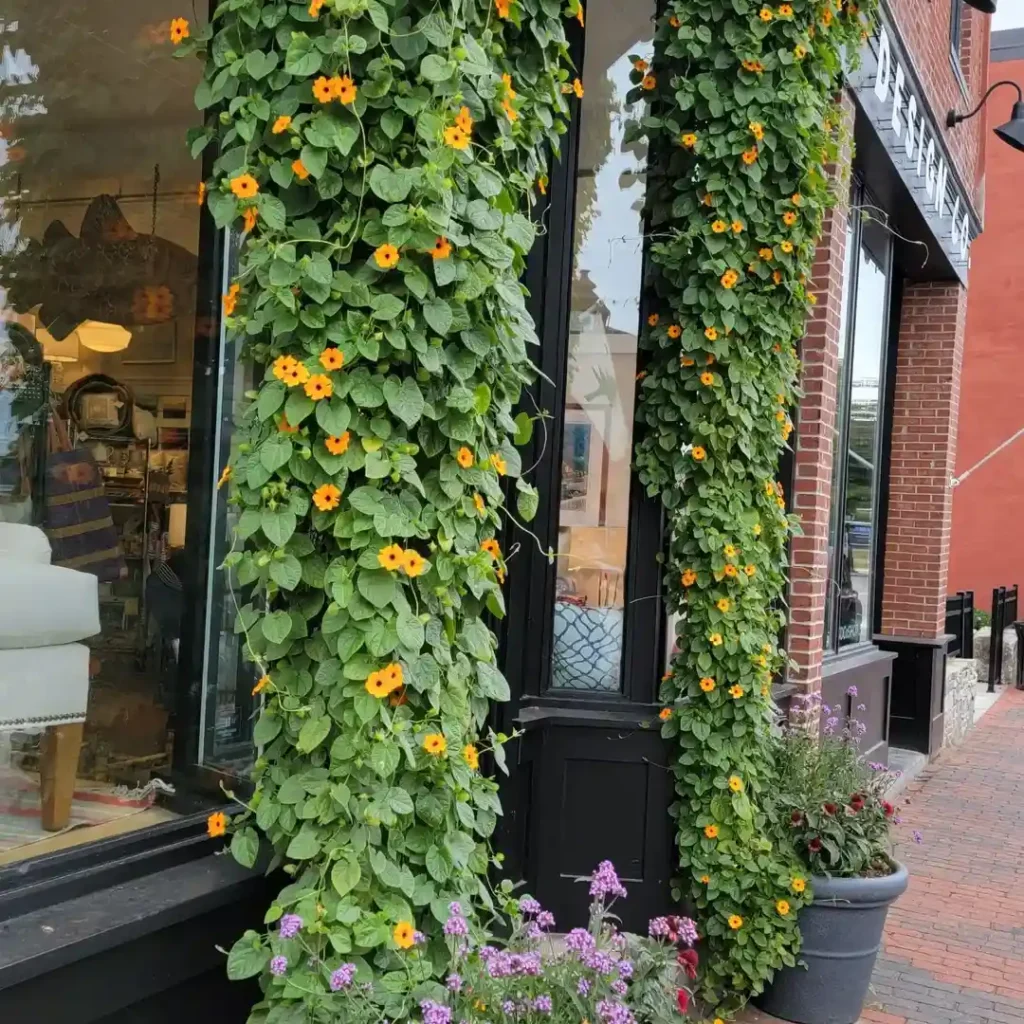
If you want a plant that will completely cover a balcony railing in just a few months, the Black-Eyed Susan Vine is the winner. It is a vigorous, twining climber that produces masses of flat, five-petaled flowers, usually in bright orange or yellow with a distinct, deep purple-black center (the “eye”).
In a container, it creates a dense “curtain” of heart-shaped foliage. It is a very “forgiving” plant, making it perfect for beginners. While it is technically a perennial in tropical zones, it is most often grown as a fast-paced annual. It is particularly effective when grown in a hanging basket and allowed to climb up the chains toward the ceiling.
Plant Specifications:
- Scientific Name: Thunbergia alata
- Growth Habit: Rapid twining vine
- Sun Requirement: Full Sun to Partial Shade
- Hardiness: Tender perennial (grown as annual in most zones)
- Pot Size: 10–12 inches
- Flowering Season: Summer through first frost
Expert Care Tips:
- Soil Mix: High-quality potting soil with added peat moss to retain moisture.
- Watering: It is a “thirsty” plant; if the soil dries out completely, it will wilt and drop its lower leaves.
- Feeding: Use a balanced liquid fertilizer (10-10-10) once a month to fuel its rapid growth.
- Best Support: Plastic garden mesh or a bamboo fan trellis.
9. Canary Creeper
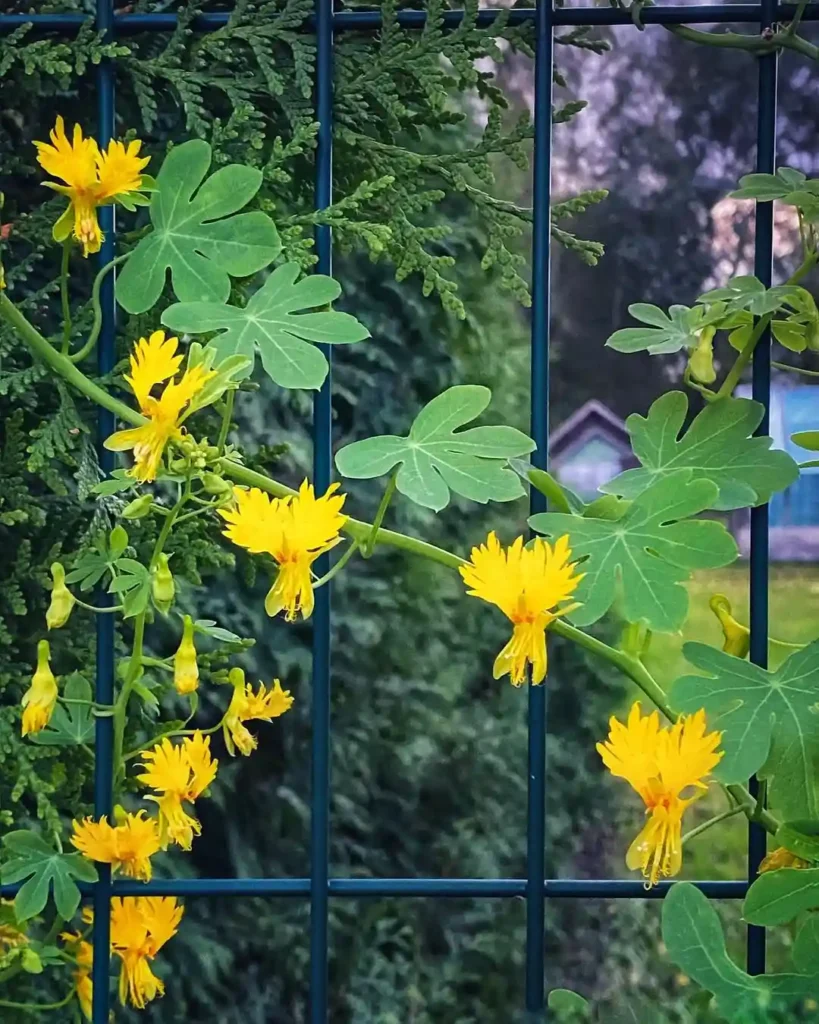
The Canary Creeper is a hidden gem in the world of climbers. A close relative of the Nasturtium, it features deeply lobed, fan-like leaves and bright yellow, fringed flowers that look like tiny birds in flight. It is a lightweight, delicate vine that brings a touch of “airy” elegance to a pot, allowing light and breeze to filter through.
This plant is ideal for smaller balconies because it is not an aggressive “choker” vine. It uses its leaf stalks to gently hook onto supports. Because it is so lightweight, you can grow it in smaller, decorative pots without fear of the plant becoming too heavy and causing the pot to crack or tip.
Plant Specifications:
- Scientific Name: Tropaeolum peregrinum
- Growth Habit: Lightweight twining/hooking vine
- Sun Requirement: Full Sun to Partial Shade
- Hardiness: Annual (prefers cooler summers)
- Pot Size: 8–10 inches
- Flowering Season: Summer through Autumn
Expert Care Tips:
- Location: Unlike other climbers, this plant appreciates a spot with some afternoon shade to keep its delicate flowers from scorching.
- Support Secret: Because it’s so fine, it can easily climb through other sturdier plants or shrubs in your garden.
- Watering: Keep the soil evenly moist but not soggy.
- Best Support: Thin bamboo sticks or fishing line.
10. Cup and Saucer Vine
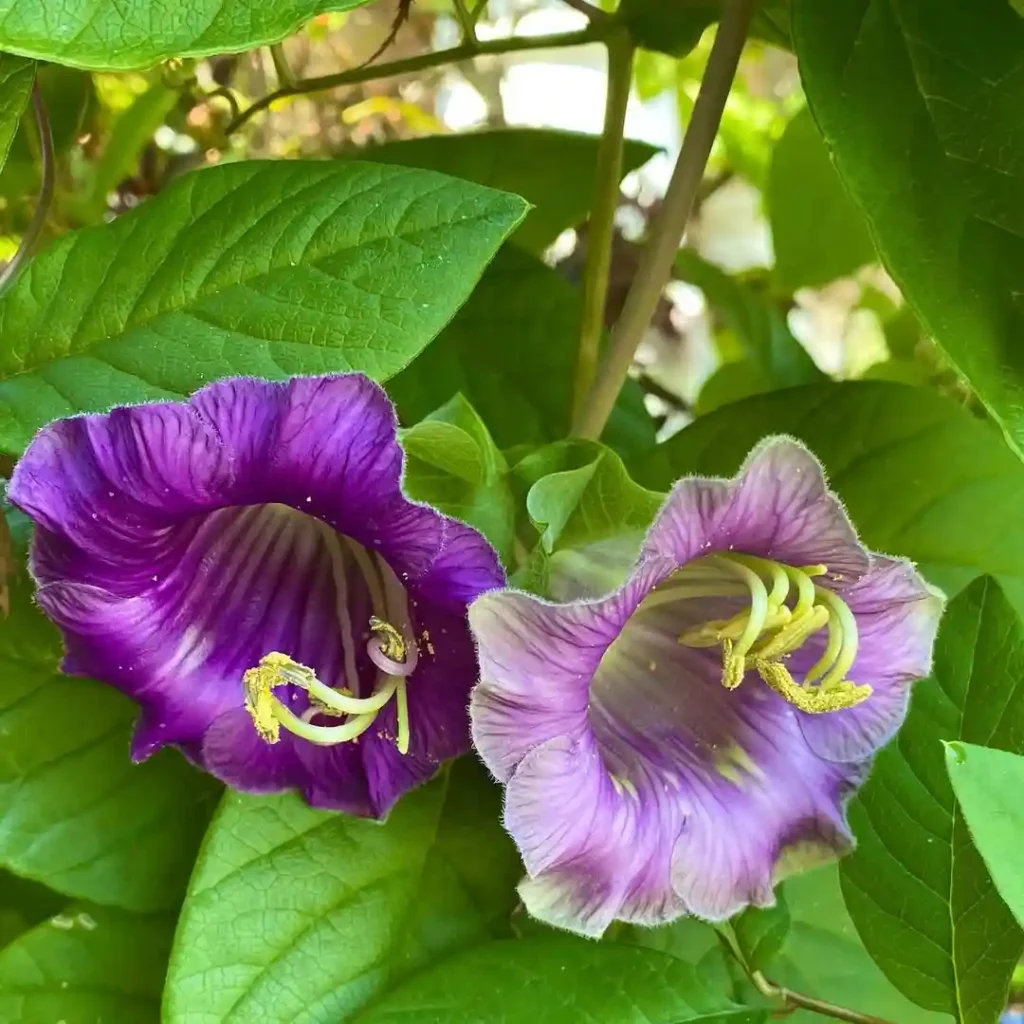
For a plant that truly makes a statement, the Cup and Saucer Vine is unmatched. It earns its name from the unique shape of its flowers: a large bell-shaped “cup” sitting on a leaf-like “saucer.” The blooms start out a pale creamy-green and slowly ripen into a deep, regal purple.
In the ground, this plant can grow 30 feet, but when its roots are restricted to a pot, it stays a much more manageable 6–8 feet. It is a very architectural plant with beautiful, large leaves. It uses branched tendrils to grip onto surfaces, so it requires a sturdy trellis to support the weight of its thick foliage.
Plant Specifications:
- Scientific Name: Cobaea scandens
- Growth Habit: Vigorous tendril climber
- Sun Requirement: Full Sun
- Hardiness: Tender perennial (Annual in cool zones)
- Pot Size: 14–16 inches (Needs room to breathe)
- Flowering Season: Late Summer to Autumn
Expert Care Tips:
- Sowing Trick: When planting seeds, push them into the soil on their “edge” rather than flat to prevent them from rotting before they sprout.
- Patience is Key: It takes a while to start blooming, but once it starts in late summer, it produces a spectacular show until the first frost.
- Feeding: Use a phosphorus-rich fertilizer (“Bloom Booster”) once it reaches 4 feet tall.
- Best Support: A sturdy wall-mounted trellis or heavy-duty wire obelisk.
11. Philodendron Climber (Heartleaf)
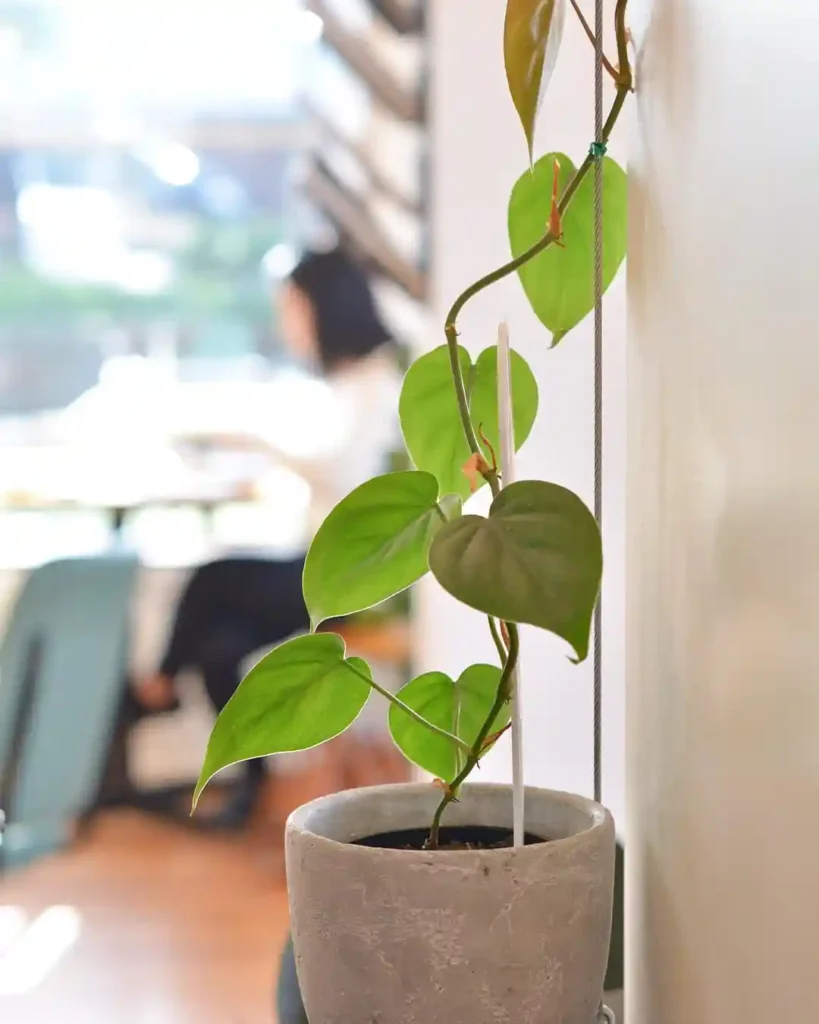
The Heartleaf Philodendron is the gold standard for indoor vertical gardening. While often grown in hanging baskets, it is naturally a “hemiepiphyte,” meaning it loves to climb. When given a vertical support like a moss pole, the plant’s nodes attach to the moisture, signaling the plant to produce significantly larger, more lush leaves than it would if left trailing.
In a pot, it is incredibly resilient to low light, making it the perfect climber for an apartment corner or a shaded office. It is a “clean” climber that doesn’t drop much debris, and its heart-shaped, waxy leaves are excellent at purifying indoor air.
Plant Specifications:
- Scientific Name: Philodendron hederaceum
- Growth Habit: Vining/Climbing (Uses aerial roots)
- Sun Requirement: Low to Bright Indirect Light
- Hardiness: Indoor/Tropical (Fails below 10°C)
- Pot Size: 8–10 inches
- Flowering Season: Rarely flowers indoors; grown for foliage
Expert Care Tips:
- Support Secret: Use a moistened moss pole. Keeping the pole damp encourages the aerial roots to “dig in,” which triggers the growth of giant leaves.
- Watering: Water only when the top 50% of the soil is dry; Philodendrons hate “wet feet.”
- Cleaning: Wipe the leaves with a damp cloth once a month to remove dust and keep the stomata open for breathing.
- Best Support: Coco-coir pole or cedar wood plank.
12. Syngonium (Arrowhead Vine)
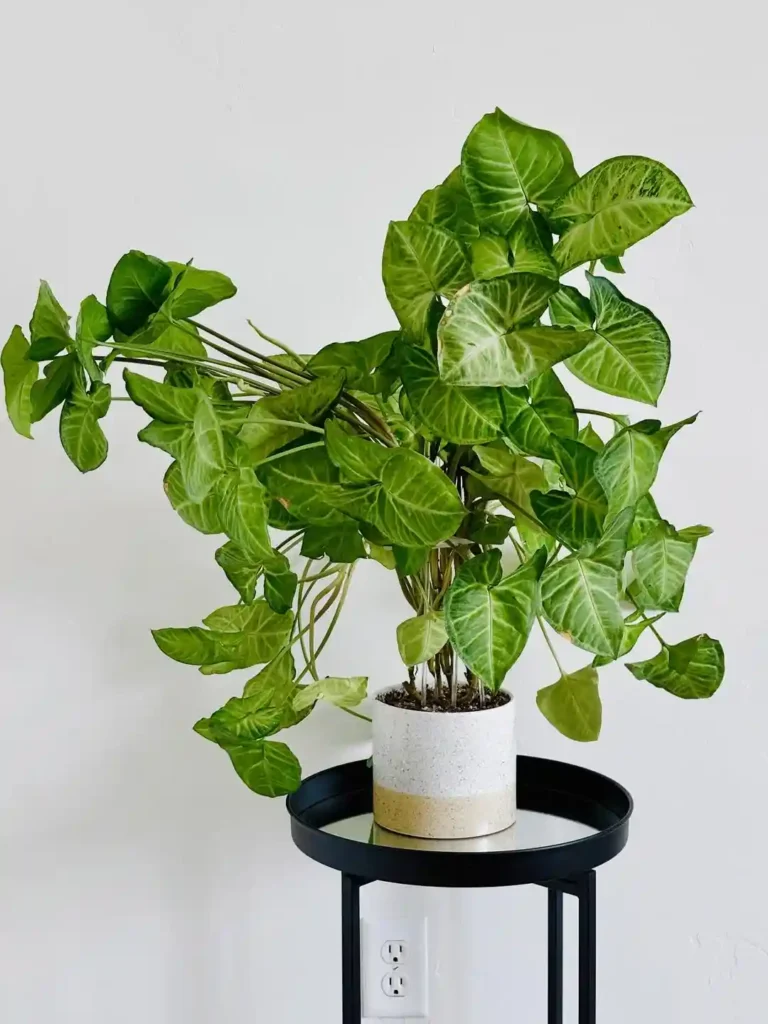
Syngoniums are fascinating because they change shape as they age. Young plants appear as compact mounds, but as they mature, they begin to send out long climbing “runners.” By providing a support early on, you can transform this common houseplant into a stunning green pillar that can reach 5–6 feet even in a medium-sized pot.
They come in a variety of colors, including “Neon Robusta” (pink) and “White Butterfly.” They are very easy to propagate; if your climber gets too tall, you can simply snip the top, root it in water, and plant it back into the same pot to make the base fuller.
Plant Specifications:
- Scientific Name: Syngonium podophyllum
- Growth Habit: Creeping/Climbing (Twining stems)
- Sun Requirement: Partial Shade to Bright Indirect Light
- Hardiness: Tropical Indoor (Frost sensitive)
- Pot Size: 8–10 inches
- Flowering Season: Foliage-focused
Expert Care Tips:
- Pruning: To keep the plant from looking “leggy,” prune the climbing stems back by 1/3 every spring to encourage bushier growth at the base.
- Humidity: They thrive in 50%+ humidity. If your home is dry, place the pot on a tray of pebbles and water.
- Feeding: Use a balanced liquid houseplant fertilizer once a month during spring and summer.
- Best Support: Bamboo stakes or a moss pole.
13. Hoya (Wax Plant)
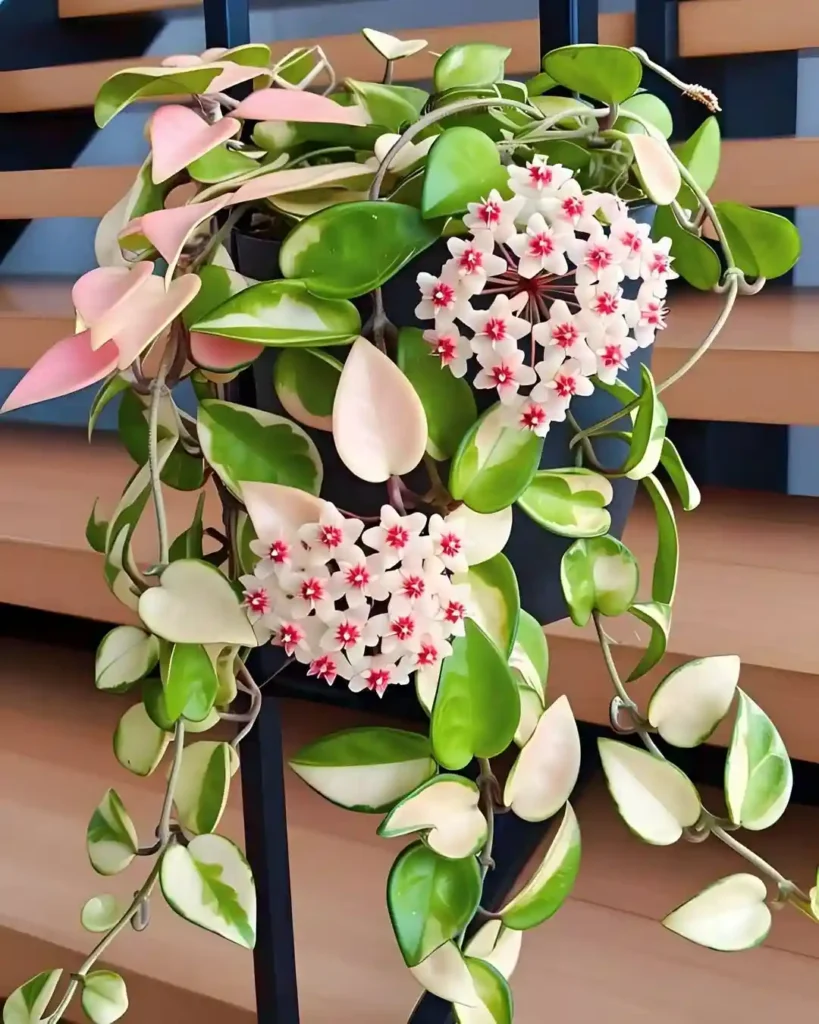
The Hoya is a collector’s favorite. It is a slow-growing, succulent-like climber that produces some of the most unique flowers in the plant kingdom—perfectly symmetrical, waxy stars that look like they are made of porcelain. Because they are slow growers, they are the best choice for small decorative pots on desks or bookshelves where you don’t want a plant to “take over” the room.
Hoyas are famously “loyal” plants; once they find a spot they like, they can live for decades. They actually prefer to be root-bound, so you don’t need to worry about repotting them every year. In fact, a slightly stressed, root-bound Hoya is much more likely to produce those famous fragrant flowers.
Plant Specifications:
- Scientific Name: Hoya carnosa
- Growth Habit: Woody twining vine (Slow)
- Sun Requirement: Bright Indirect Light (Needs some sun to bloom)
- Hardiness: Hardy indoor succulent
- Pot Size: 6–8 inches (Small pots preferred)
- Flowering Season: Late Spring to Summer
Expert Care Tips:
- The “No-Snip” Rule: Never cut off the long, leafless stems (peduncles) after the flowers fall. Hoyas bloom from the exact same spot year after year!
- Soil Mix: Needs an “orchid-style” mix: 50% potting soil, 25% orchid bark, and 25% perlite.
- Watering: Treat it like a succulent; let the soil dry out completely between waterings.
- Best Support: Circular wire hoop or small decorative trellis.
14. Rangoon Creeper (Madhumalti)
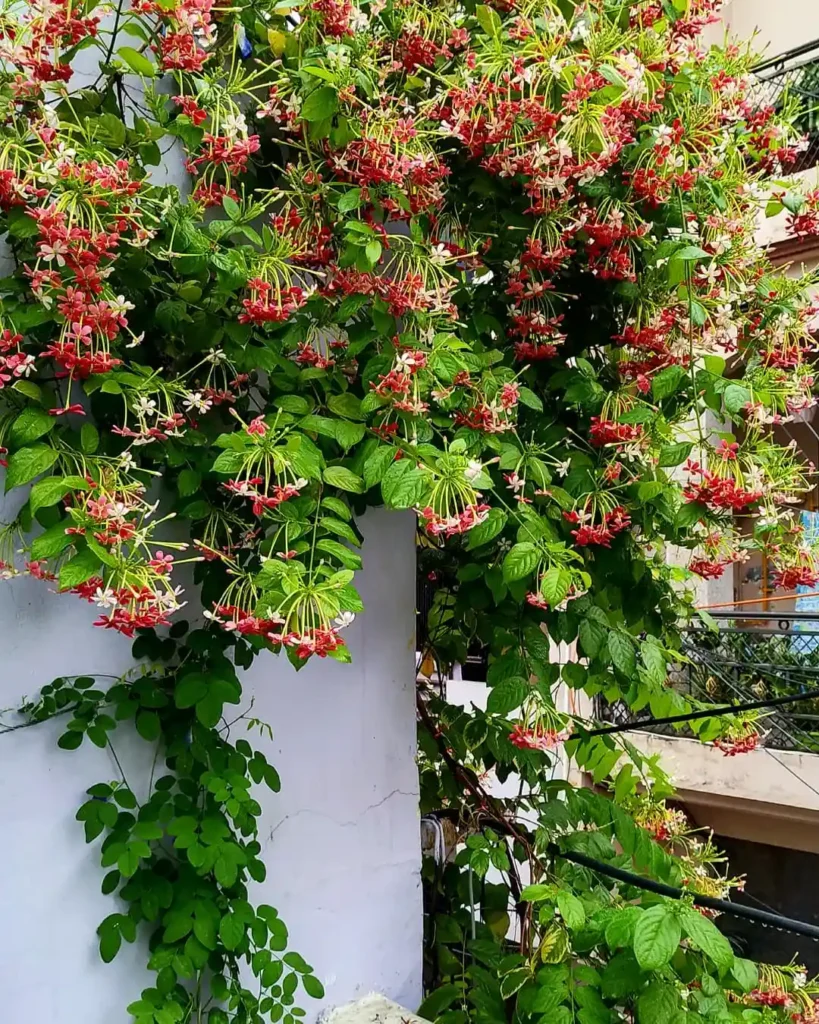
In tropical and subtropical regions, the Rangoon Creeper is the queen of fragrant climbers. It is famous for its color-shifting blooms that open white, turn pink by midday, and age to a deep red by evening. While it is naturally a massive vine, you can successfully grow it in a “Half-Barrel” or 18-inch pot if you are diligent with pruning.
The fragrance is most intense at night, filling an entire balcony or patio with a sweet, fruity scent. Because it is a heavy feeder and a vigorous grower, it requires a larger pot than most other climbers on this list to prevent it from becoming “pot-bound” too quickly.
Plant Specifications:
- Scientific Name: Combretum indicum
- Growth Habit: Aggressive woody climber
- Sun Requirement: Full Sun (Minimum 6 hours)
- Hardiness: Heat-loving tropical; dies back in frost
- Pot Size: 16–20 inches (Large heavy pots)
- Flowering Season: Summer through Monsoon
Expert Care Tips:
- Training Secret: Because it grows so fast, use a wall-mounted wire grid. Trying to support this in just the pot will eventually cause the pot to tip over.
- Feeding: Use high-phosphorus organic fertilizer (like bone meal) every 20 days to keep the flower cycles coming.
- Watering: Needs deep watering. If the leaves turn yellow, it’s often a sign of uneven watering or iron deficiency.
- Best Support: Wall-anchored trellis or heavy metal obelisk.
15. Garlic Vine
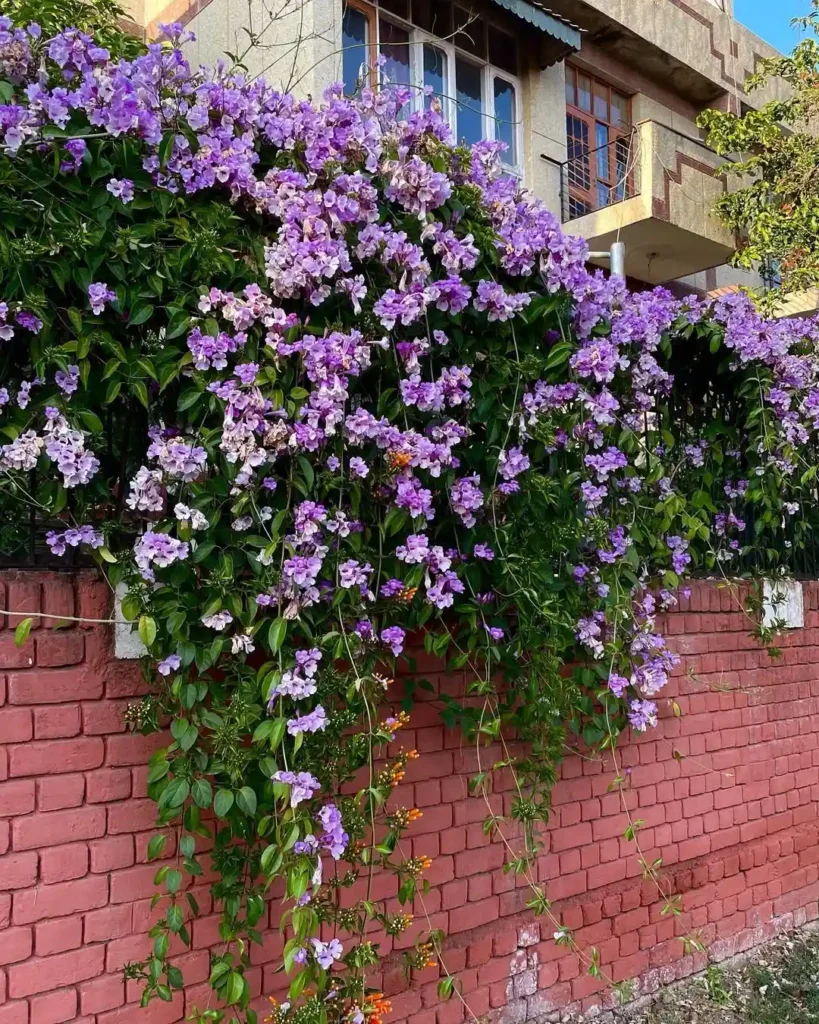
Don’t let the name fool you while the crushed leaves smell slightly of garlic (a great natural pest repellent!), the flowers are stunning lavender-to-purple trumpets that look like a floral waterfall. It is a very hardy tropical climber that adapts surprisingly well to life in a medium-sized container.
In a pot, it stays much more manageable, usually topping out at 5–7 feet. It is a “repeat bloomer,” meaning it doesn’t just flower once; it will give you 2 or 3 massive bursts of purple throughout the year, especially after a heavy rain or a deep pruning.
Plant Specifications:
- Scientific Name: Mansoa alliacea
- Growth Habit: Woody twining vine
- Sun Requirement: Full Sun to Partial Shade
- Hardiness: Very hardy in tropical/subtropical zones
- Pot Size: 12–14 inches
- Flowering Season: Twice/Thrice a year (Periodic bursts)
Expert Care Tips:
- Pruning: After each flowering cycle, prune back the tips by 6 inches. This triggers the plant to send out new shoots for the next bloom cycle.
- Soil Mix: Rich loamy soil with plenty of compost.
- Watering: High drought tolerance once established, but blooms best with regular moisture.
- Best Support: Bamboo tripod or wooden ladder trellis.
16. Betel Leaf Plant (Paan)
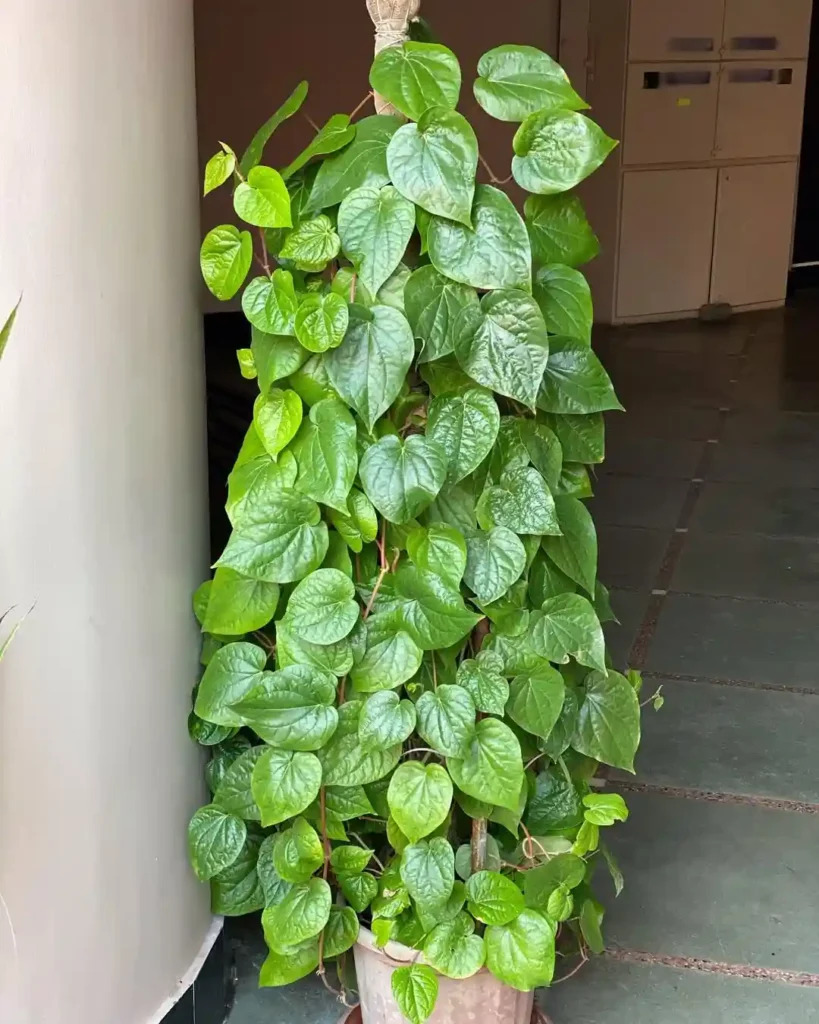
The Betel Leaf plant is an “edible ornamental” that is a staple in many Asian kitchen gardens. It features beautiful, glossy, heart-shaped leaves that look just as good in a decorative pot as they do in a garden. In a container, it is a slow-to-moderate grower, making it very easy to manage on a semi-shaded balcony or windowsill.
It is a shade-loving plant, which is rare for climbers. It uses tiny adventitious roots to cling to surfaces, so it loves a “rough” support like a moss pole or a piece of wood. It is also believed to have air-purifying qualities, making it a functional and beautiful addition to your home.
Plant Specifications:
- Scientific Name: Piper betle
- Growth Habit: Creeping/Climbing (Aerial roots)
- Sun Requirement: Partial Shade to Full Shade (No direct midday sun)
- Hardiness: Tropical; needs warmth and high humidity
- Pot Size: 10 inches
- Flowering Season: Grown for leaves; rarely flowers in pots
Expert Care Tips:
- Location: Keep it in the “brightest shade” possible. Direct sun will scorch the leaves and turn them yellow.
- Humidity: It loves being misted! Use a spray bottle on the leaves every morning to mimic a tropical rainforest.
- Soil: Needs very rich, organic soil; add leaf mold or vermicompost every two months.
- Best Support: Moss pole or rough wooden stake.
17. Dipladenia (Re-emphasized for Pots)
We conclude with the Dipladenia because it is truly the “King of Pot Climbers.” While we mentioned it earlier, it’s worth noting that for those in extremely hot, concrete-heavy urban environments, this plant is a survivor. It handles the “reflected heat” from balcony walls better than almost any other flowering vine.
Plant Specifications:
- Scientific Name: Mandevilla sanderi
- Growth Habit: Compact twiner
- Sun Requirement: Full Sun
- Pot Size: 10 inches
- Flowering Season: Continuous Summer
Expert Care Tips:
- Don’t Overpot: Dipladenia actually flowers better when its roots are slightly snug in the pot.
- Drainage: Use a “terracotta” pot to allow the roots to breathe; plastic pots can hold too much heat for this species.
18. Wisteria (Chinese or Japanese Varieties)
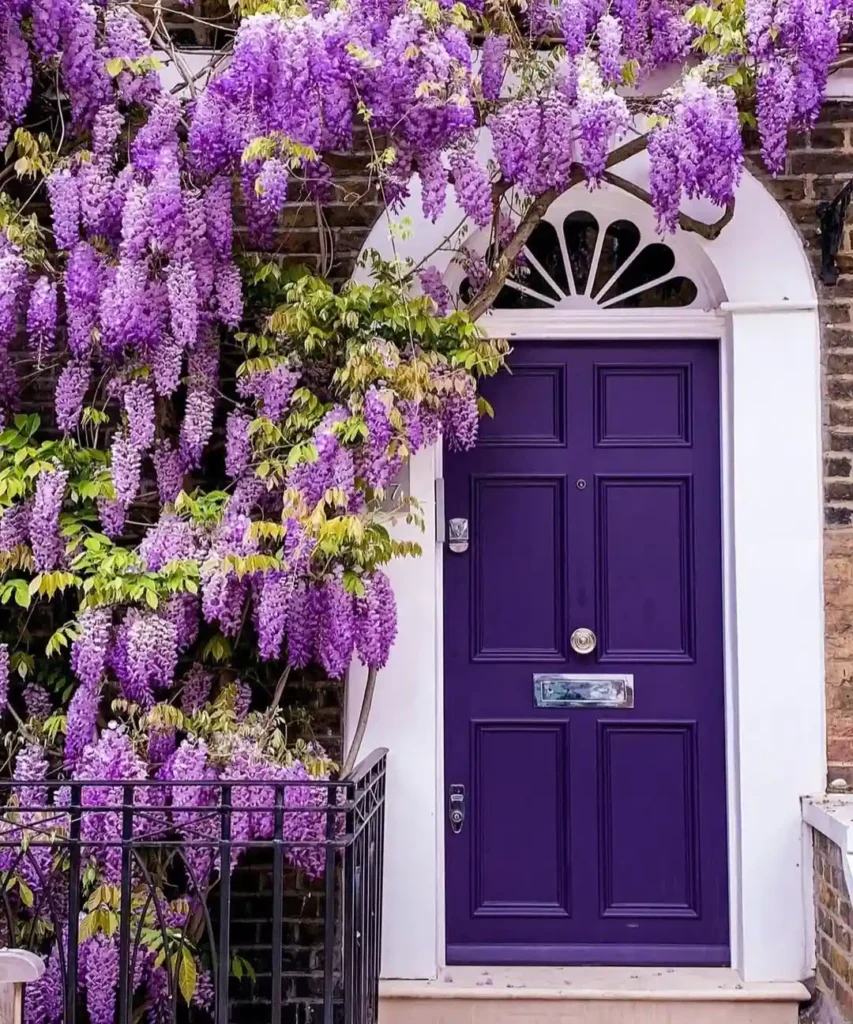
Wisteria is the undisputed “showstopper” of the climbing plant world. Known for its massive, cascading clusters of fragrant purple or white flowers, it creates a fairy-tale atmosphere in any garden. While typically seen covering massive estates, Wisteria can be successfully grown in a large, heavy pot (minimum 20 inches) if pruned into a “standard” or “tree” form.
In a container, the growth is naturally restricted, which actually encourages the plant to bloom sooner than those planted in the ground. It is a woody, heavy vine, so it requires a very sturdy, permanent support system. The scent is intoxicating and can fill an entire patio area during its peak spring bloom.
Plant Specifications:
- Scientific Name: Wisteria sinensis / Wisteria floribunda
- Growth Habit: Heavy woody twining vine
- Sun Requirement: Full Sun (Crucial for blooming)
- Hardiness: Very hardy; deciduous (drops leaves in winter)
- Pot Size: 18–22 inches (Large, heavy ceramic or stone)
- Flowering Season: Mid-to-late Spring
Expert Care Tips:
- Pruning Secret: Wisteria requires “Two-Stage Pruning.” Cut back new shoots to 6 leaves in summer, then down to 2–3 buds in mid-winter to stimulate flower spurs.
- The “Stress” Trick: If your Wisteria won’t bloom, stop fertilizing with nitrogen and slightly restrict water in late summer to “scare” the plant into flowering.
- Support: Needs a heavy-duty metal obelisk or a bolted wall trellis.
- Warning: The seeds and pods are toxic to pets; remove them after flowering.
19. Creeping Fig (Ficus Pumila)
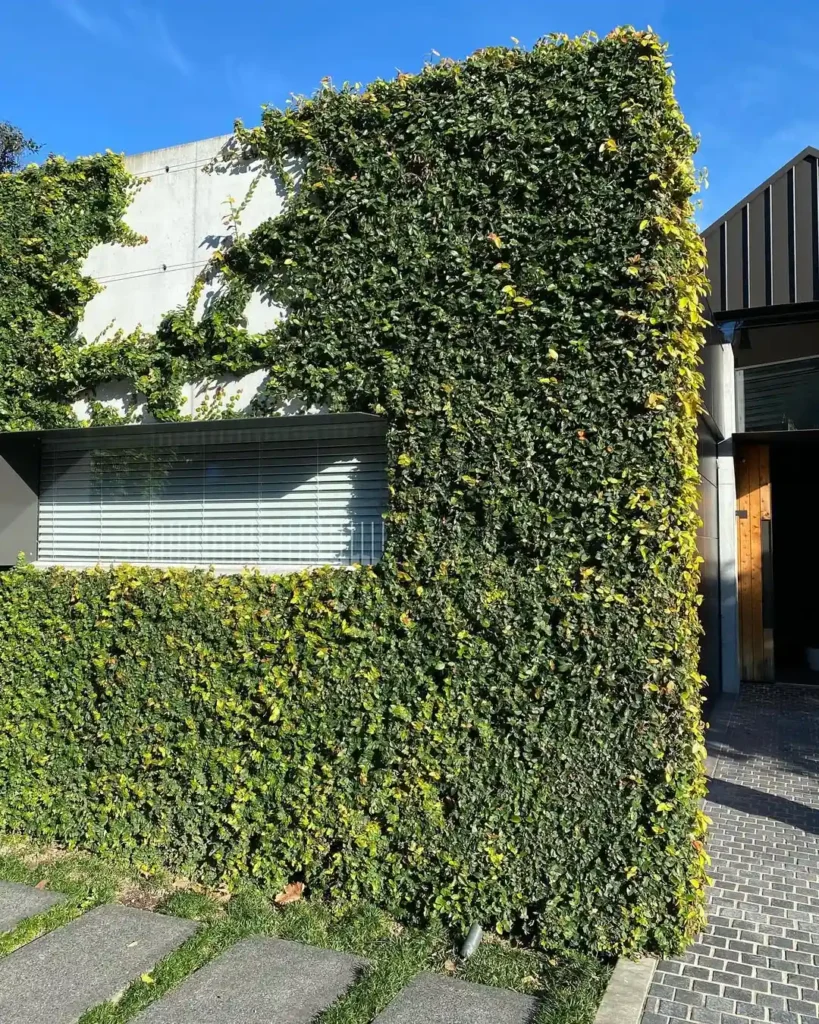
If you want a plant that creates a “living green wall” on a pot or a small trellis, the Creeping Fig is your best friend. It is a delicate-looking but incredibly tough evergreen vine with tiny, heart-shaped leaves. Unlike other climbers, it uses powerful adhesive “suction cups” to glue itself to any surface, including the side of its own pot or a nearby masonry wall.
In a container, it creates a very dense, formal look. It is often used in “Topiary” gardening to cover wire frames in the shapes of animals or spheres. It is extremely fast-growing and can tolerate lower light levels than most flowering vines, making it a great choice for shaded balconies or even indoor “green walls.”
Plant Specifications:
- Scientific Name: Ficus pumila
- Growth Habit: Self-clinging evergreen vine
- Sun Requirement: Partial Shade to Bright Indirect Light
- Hardiness: Hardy tropical; evergreen year-round
- Pot Size: 8–10 inches (Does not need deep soil)
- Flowering Season: Grown for foliage; rarely flowers
Expert Care Tips:
- Moisture is Key: Unlike succulents, the Creeping Fig hates drying out. If the leaves turn crispy, the vine rarely recovers, so keep the soil consistently damp.
- Pruning: It can become invasive if it reaches a wall. Keep it trimmed strictly to its support frame to prevent it from attaching to your house’s siding.
- Variegated Varieties: Look for ‘Variegata’ (white and green leaves) to brighten up dark corners.
- Best Support: Wire frames, moss poles, or the exterior of a terracotta pot.
20. Bleeding Heart Vine
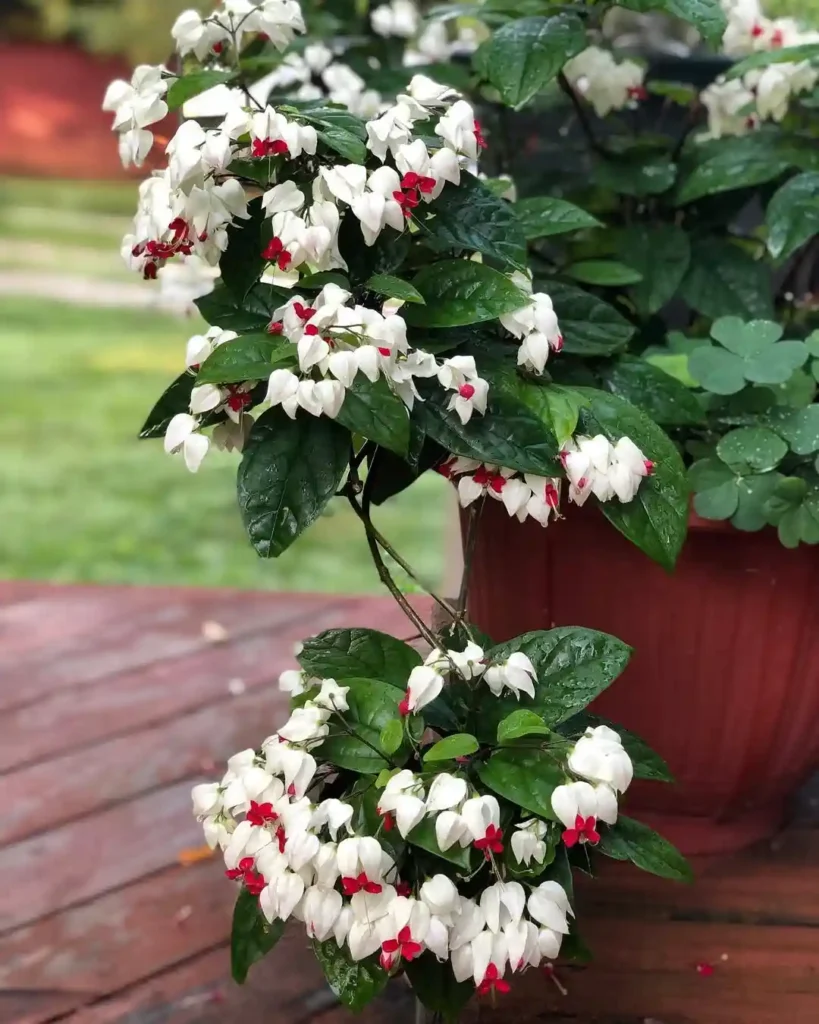
The Bleeding Heart Vine is a conversation starter. It is a subtropical beauty that produces unique, bi-color flowers: a white, heart-shaped calyx with a bright red petal peeking out from the center. It is a “twining” climber that is surprisingly manageable in a medium-sized pot, making it an excellent choice for a porch or a well-lit indoor sunroom.
In a container, it stays lush and green throughout the year in warm climates. It is a “clean” climber with smooth, deep-green leaves that contrast perfectly with its snowy-white and red flowers. It is relatively pest-resistant and provides a more “sophisticated” tropical look than the common Bougainvillea.
Plant Specifications:
- Scientific Name: Clerodendrum thomsoniae
- Growth Habit: Twining evergreen vine
- Sun Requirement: Partial Shade (Morning sun is best)
- Hardiness: Tender perennial; loves humidity
- Pot Size: 10–12 inches
- Flowering Season: Summer through Autumn
Expert Care Tips:
- The “Dormancy” Note: In winter, the plant may drop some leaves and look “tired.” Reduce watering and stop fertilizing until new growth appears in spring.
- Humidity Hack: Place the pot on a tray of wet pebbles. This provides the localized humidity this plant needs to keep its “hearts” from falling off early.
- Feeding: Use a balanced liquid fertilizer (20-20-20) every 3 weeks during the active blooming season.
- Best Support: Circular wire hoop or a small fan trellis.
Frequently Asked Questions
Can all climbing plants be grown in pots?
Technically, most can, but not all should. Highly aggressive woody vines like Wisteria or Trumpet Vine require massive containers (20+ gallons) and constant pruning to prevent them from becoming root-bound. For beginners, it is better to stick to “compact” climbers like Dipladenia or annuals like Black-Eyed Susan Vine.
How do I stop my potted climber from blowing over?
Vertical plants act like sails in the wind. To prevent tipping:
- Use Heavy Materials: Choose terracotta, ceramic, or stone pots instead of plastic.
- Add Weight: Place an inch of heavy river stones at the bottom of the pot before adding soil.
- Anchor the Trellis: Fasten your trellis to a wall or balcony railing rather than just sticking it into the soil.
Which potted climbers are best for full shade?
Most flowering vines need sun, but English Ivy, Creeping Fig, and Bleeding Heart Vine thrive in shaded areas. For indoors, Philodendron and Syngonium are the most reliable vertical options for low-light corners.
How often should I fertilize climbers in containers?
Plants in pots lose nutrients every time you water them. During the growing season (Spring/Summer), feed flowering climbers like Mogra or Mandevilla every 14–21 days with a balanced liquid fertilizer. For foliage plants like Hoya, once a month is sufficient.
Do I need to repot my climbing plants every year?
Not necessarily. Most climbers enjoy being slightly “snug” in their pots. However, if you see roots growing out of the drainage holes or the plant wilts daily despite watering, it is time to move up to a pot 2 inches wider than the current one.
Are any of these plants safe for pets?
Safety is vital for indoor and balcony gardens:
- Pet-Safe: Blue Pea (Aparajita) and Hoya are generally non-toxic.
- Toxic: English Ivy, Morning Glory (seeds), and Wisteria can be harmful if ingested by cats or dogs. Always check specific species before bringing them into a pet-friendly home.
What is the best support for a potted vine?
- Twining Vines (Jasmine/Honeysuckle): Bamboo teepees or thin wire obelisks.
- Tendril Climbers (Sweet Pea/Passion Flower): Thin netting or light mesh.
- Heavy Woody Vines (Roses/Wisteria): Sturdy wooden or metal trellises anchored to a structure.