
A small walk-in closet can either feel like a dream dressing space or a daily source of frustration. When storage isn’t planned well, even a walk-in can quickly feel cramped and cluttered. The good news? With the right layout tricks, smart shelving, and intentional styling, a small walk-in closet can actually feel bigger and more functional than a standard closet.
These small walk-in closet organization ideas focus on maximizing vertical space, improving visibility, and creating simple systems that work in real life. Whether your closet is narrow, compact, or builder-basic, these ideas will help you turn it into a space that feels calm, efficient, and easy to maintain.
How a Small Walk-In Closet Helps You Stay Organized
A small walk-in closet has one big advantage everything is visible and accessible. Unlike larger closets that hide clutter in deep corners, a compact layout forces you to use space more intentionally. When shelves, rods, and storage zones are clearly defined, it becomes easier to keep items in their place.
A well-organized small walk-in also improves daily routines. You can see your clothes at a glance, plan outfits faster, and avoid buying duplicates because nothing gets lost. By maximizing vertical storage, using hidden compartments wisely, and keeping the floor clear, even the smallest walk-in can feel structured and spacious.
The key isn’t adding more storage it’s creating better systems. When every section has a purpose, your closet works with you instead of against you.
1. Double Hanging Rod System
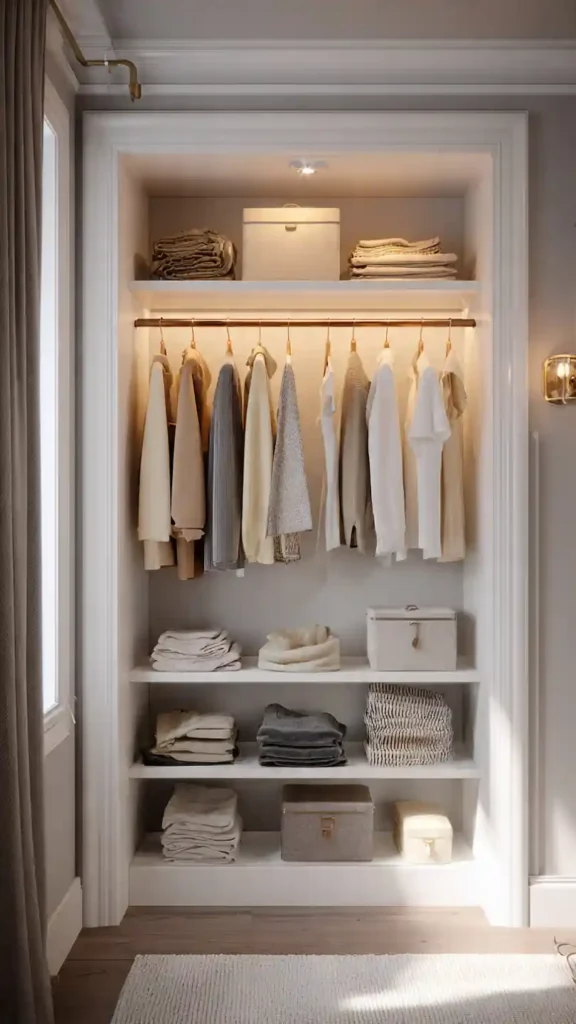
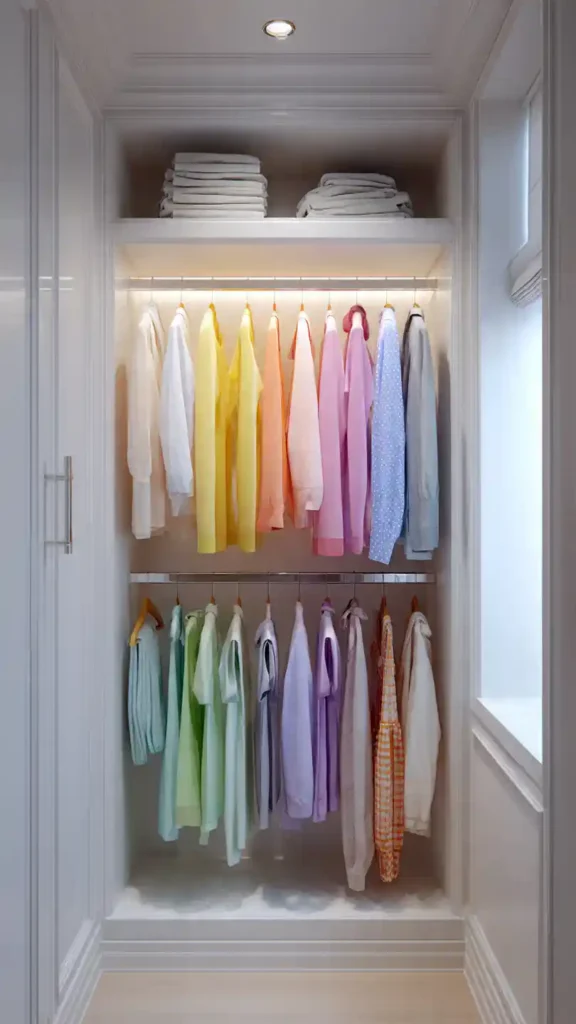
If your small walk-in closet only has one hanging rod, you’re wasting valuable vertical space. Installing a double hanging rod system one at the standard height and another directly below instantly doubles your capacity for shirts, blouses, and folded pants. It’s one of the simplest upgrades with the biggest visual impact.
This setup works especially well for shorter garments that don’t require full-length space. By separating tops on the upper rod and bottoms on the lower rod, you create structure and make daily outfit selection easier. The key is spacing the rods properly so clothes don’t overlap or feel cramped.
A double rod system keeps the floor clear, improves visibility, and gives your small walk-in closet a custom-built feel without a full renovation.
2. Slim Vertical Shoe Shelves
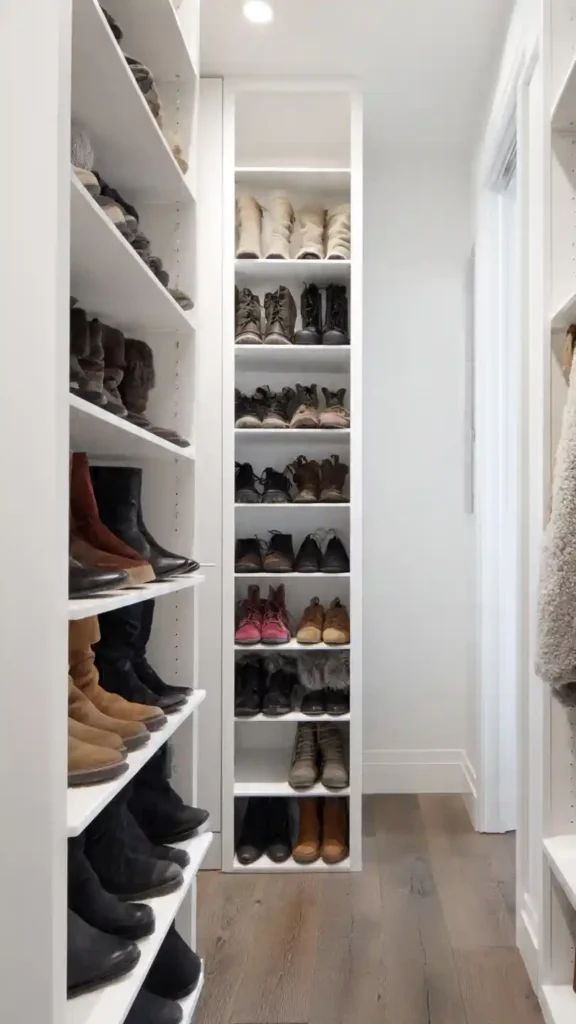
Shoes can easily take over a small walk-in closet, especially when they’re lined up along the floor. Installing slim vertical shoe shelves keeps everything visible without eating up valuable square footage. Instead of spreading shoes horizontally, you’re stacking them upward which makes the entire space feel taller and more organized.
This works particularly well for heels, sneakers, and flats that don’t need deep shelving. Narrow shelves also prevent overstuffing, which helps you see what you actually own. When shoes are neatly arranged in one dedicated zone, the closet instantly looks cleaner and more intentional.
3. Matching Storage Bins on Top Shelves
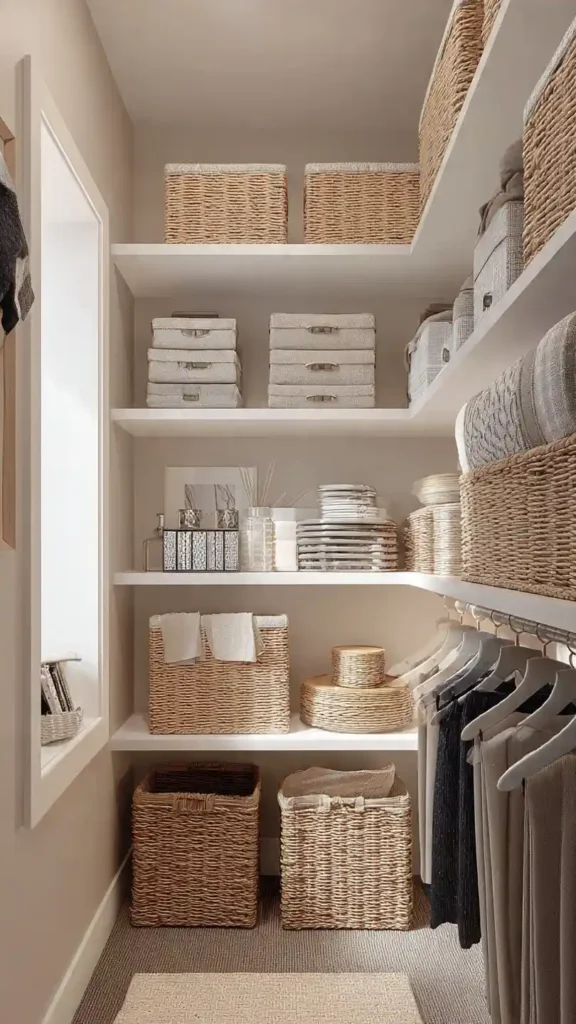
Upper shelves often become cluttered catch-all spaces. Matching storage bins solve that instantly. Choose woven, fabric, or neutral containers and label them clearly for seasonal clothing, travel bags, or rarely used accessories.
The reason this works is visual consistency. When bins match in color and style, the closet feels cohesive instead of chaotic. It also prevents items from toppling over or collecting dust. Keeping the highest shelves contained helps the rest of the closet stay calm and structured.
4. Built-In Corner Shelving
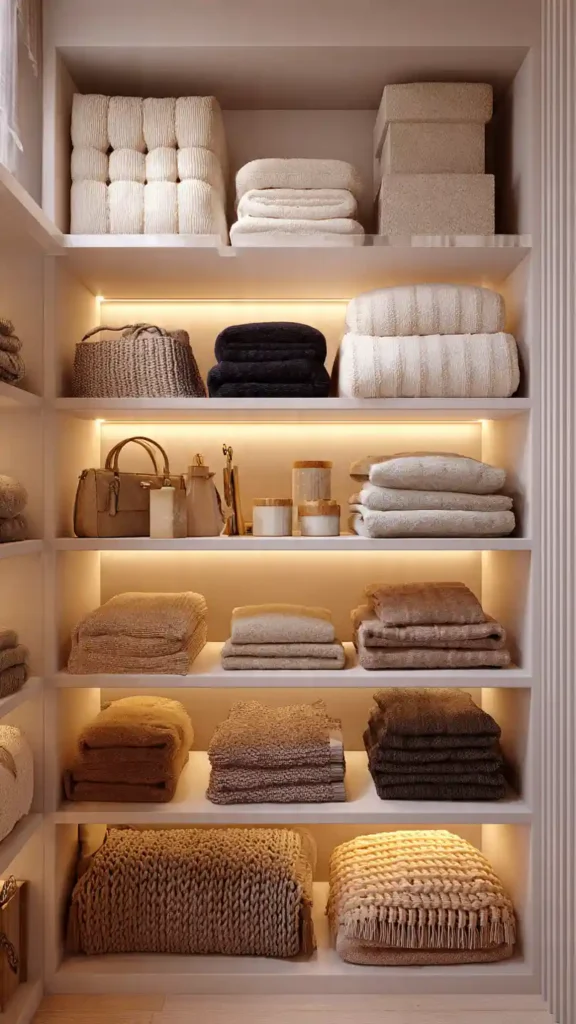
Corners are usually wasted space in small walk-in closets. Adding built-in corner shelving transforms that awkward area into useful storage for folded sweaters, handbags, or decorative baskets.
This upgrade makes the closet feel custom without expanding its footprint. It also breaks up long walls of hanging clothes, creating balance in the layout. When corners are used intentionally, the entire closet feels more efficient and less cramped.
5. Full-Length Mirror with Styling Zone
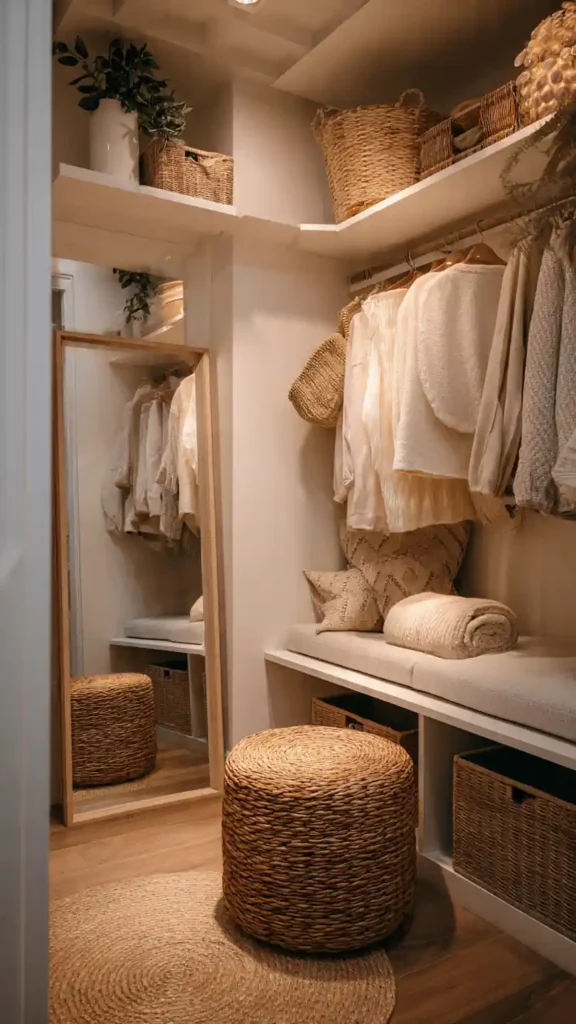
A small walk-in closet feels more functional when it includes a defined dressing area. Add a full-length mirror along one wall and place a small stool or basket beneath it. This creates a simple styling zone where you can check outfits comfortably.
This idea works because it turns your closet into a complete getting-ready space instead of just storage. Even in tight layouts, one mirror instantly adds depth and makes the room feel larger. It also keeps you from walking back and forth to another room to check your outfit.
6. Color-Coded Clothing Arrangement
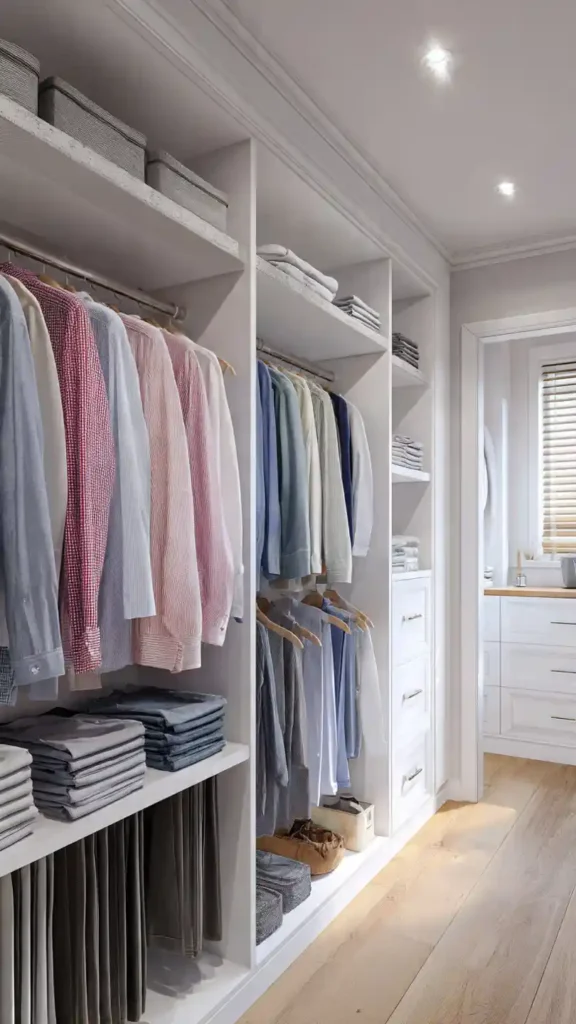
Arranging your clothes by color instantly makes a small walk-in closet feel more intentional. Instead of random groupings, organize garments from light to dark or by color families. This simple shift creates visual order and makes outfit planning faster.
Color coding works because your eye can quickly scan the space. It reduces decision fatigue and keeps everything looking tidy even if the closet isn’t perfectly minimal. When clothing flows naturally across the rod, the entire closet feels calmer and easier to maintain.
7. Hanging Handbag Display Hooks
Handbags often pile up on shelves or the floor. Installing simple hooks or pegs along one wall gives them a defined home while keeping them visible. Displaying them vertically also prevents stacking damage.
This solution works especially well in narrow walk-ins where shelf depth is limited. It turns empty wall space into functional storage and gives the closet a boutique-inspired feel without adding bulky furniture.
8. Over-the-Door Accessory Organizer
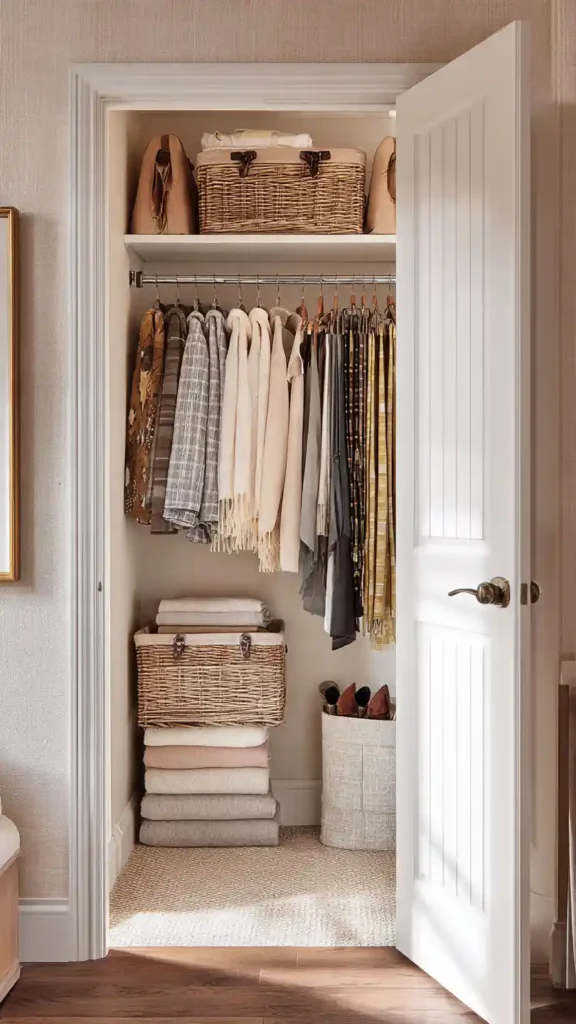
The back of the closet door is valuable real estate. An over-the-door organizer can hold belts, scarves, jewelry, or small accessories without taking up shelf space.
This idea is renter-friendly and incredibly practical. It keeps smaller items from getting lost in drawers while maintaining a clean overall look. When accessories are easy to see, you’re more likely to wear them regularly.
9. Slim Pull-Out Drawers
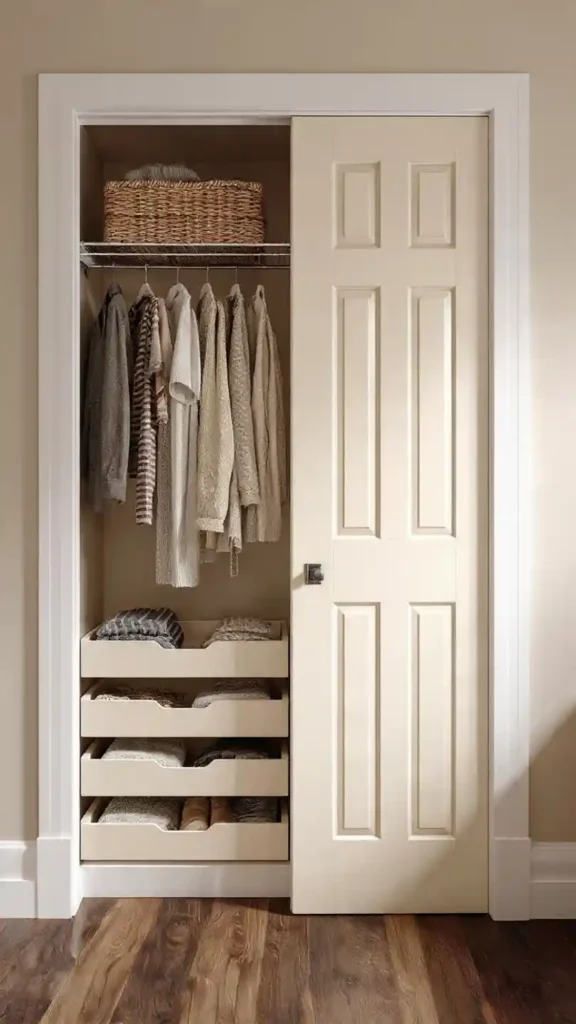
Slim pull-out drawers add hidden storage without making the closet feel heavy. They work beautifully for folded tees, undergarments, or workout clothes that don’t need hanging space.
Pull-out designs maximize depth while keeping everything accessible. Instead of stacking items where they disappear underneath each other, drawers allow you to separate categories neatly. This keeps your small walk-in closet functioning smoothly day after day.
10. Mirror with Hidden Storage
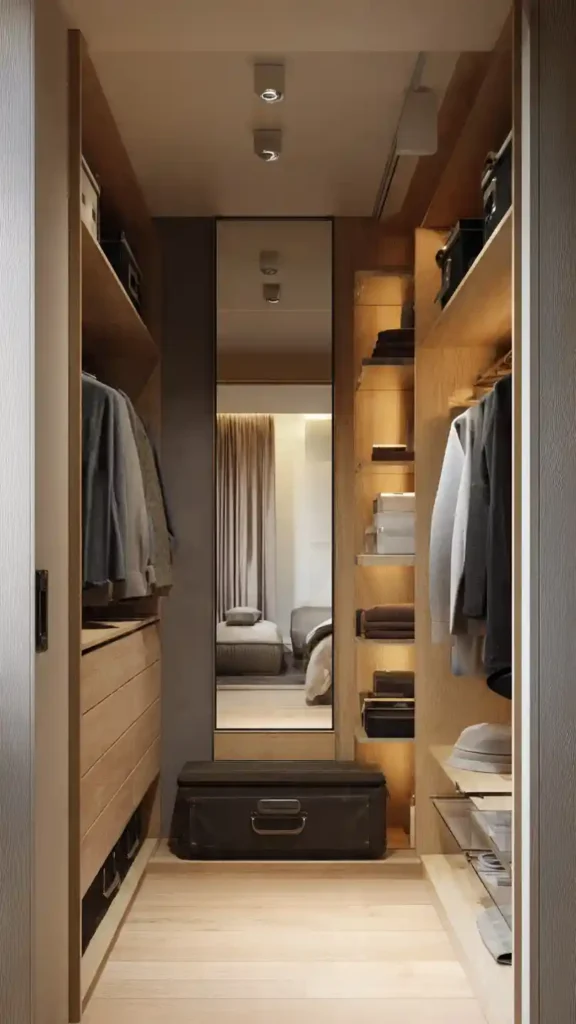
A mirror cabinet combines two essential elements in one compact feature. Behind the mirror, you can store jewelry, small accessories, or even everyday essentials like perfume.
This dual-purpose solution saves wall space while adding depth to the room. Hidden storage helps reduce visual clutter, which is especially important in small spaces. When surfaces stay clear, the closet feels larger and more refined.
11. Adjustable Shelf System
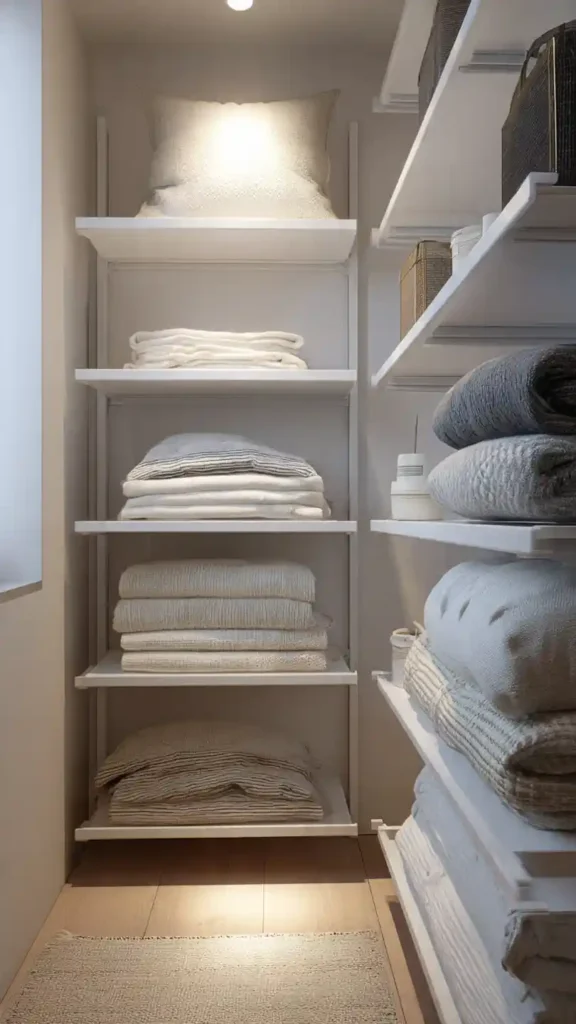
A small walk-in closet should evolve with your needs. Adjustable shelving allows you to raise or lower shelves depending on the season. In winter, you may need more space for bulky sweaters. In summer, lighter pieces require less height.
This flexibility keeps your closet efficient year-round. Instead of forcing items into fixed spaces, you adapt the layout to fit what you actually wear. That adaptability prevents overcrowding and keeps the closet feeling functional instead of cramped.
12. Slim Rolling Cart for Daily Essentials
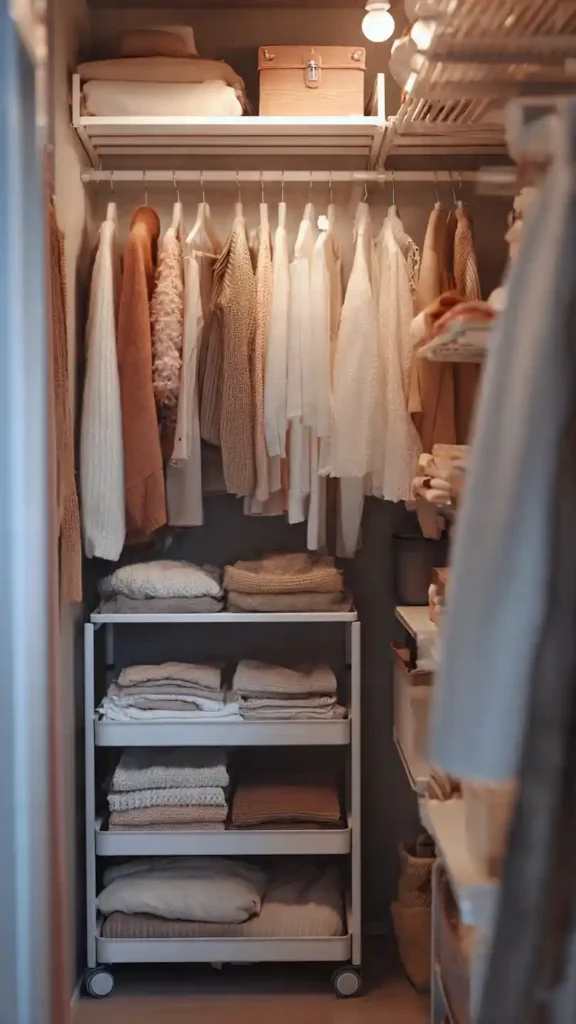
A narrow rolling cart can completely change how your small walk-in functions. Use it to store everyday items like folded tees, accessories, or perfume. When you need extra space, simply roll it aside.
This solution is ideal for renters or closets without built-ins. It adds flexible storage without permanent changes. Because it’s movable, the layout stays adaptable which is key in smaller spaces.
13. Glass-Front Cabinet Section
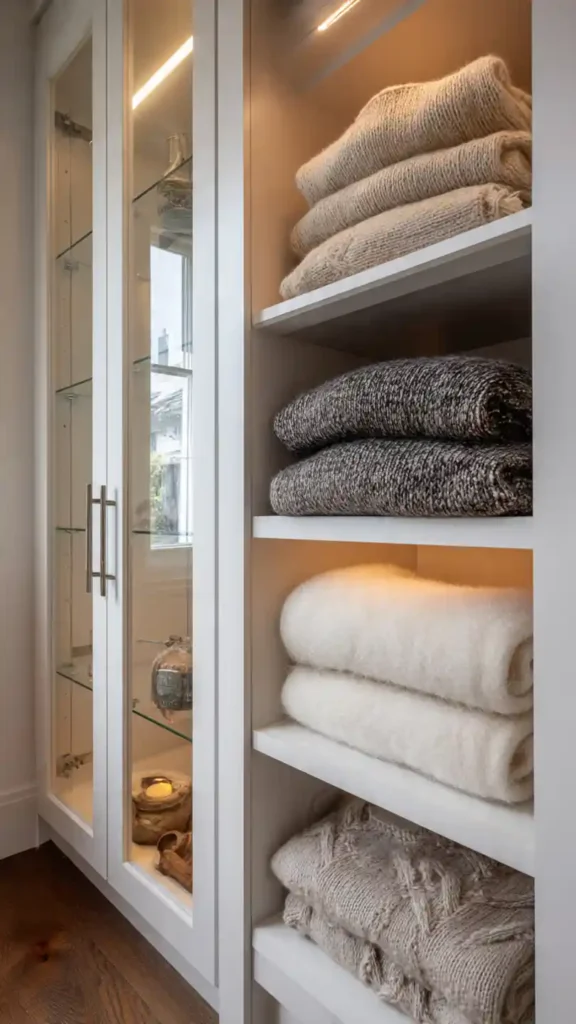
Adding one glass-front cabinet elevates the entire closet. Use it to display neatly folded sweaters or curated accessories. The transparency keeps items visible while protecting them from dust.
This idea works because it creates visual structure. The glass acts as a boundary, making the closet feel custom and intentional rather than purely functional. Even one small cabinet can make the space look more refined.
14. Dedicated Laundry Hamper Corner
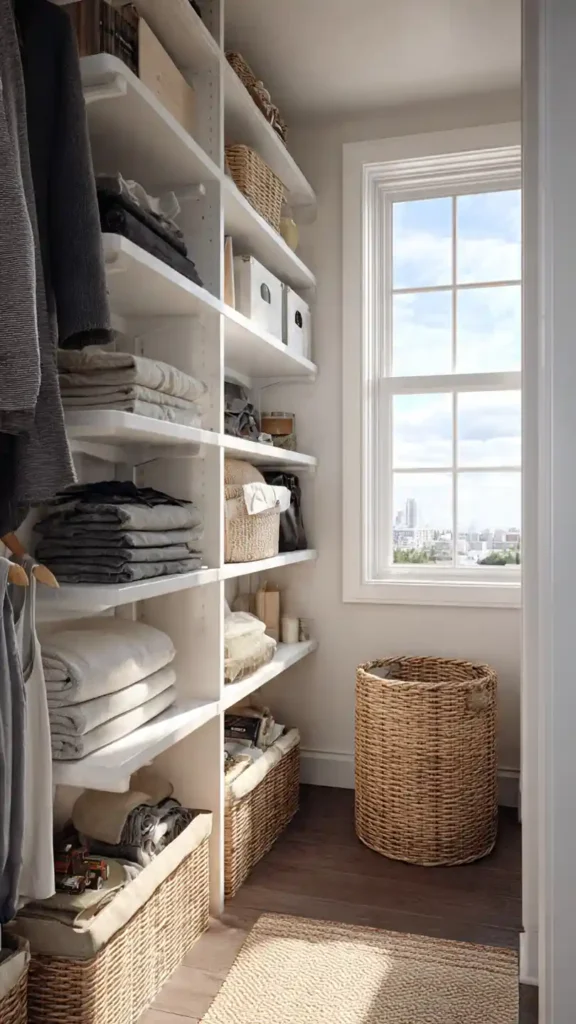
Designate a single corner for a slim laundry hamper. Keeping it contained prevents clothing from ending up on the floor — which is the fastest way for a small closet to feel messy.
Choose a narrow woven or fabric hamper that blends with your color palette. When laundry has a clear home, maintenance becomes easier and the space stays tidy longer.
15. LED Strip Shelf Lighting
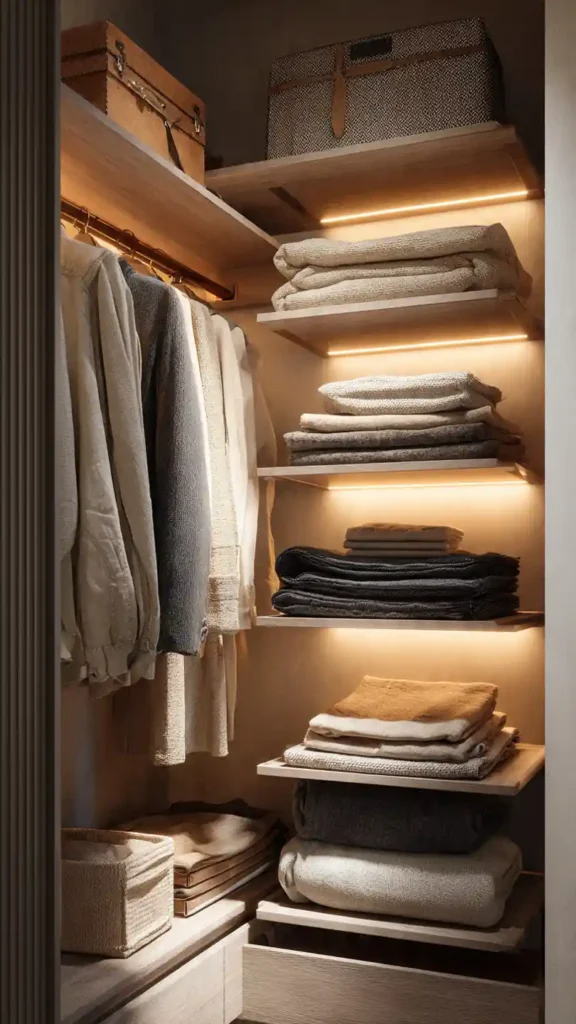
Lighting changes everything in a small walk-in closet. Installing soft LED strips under shelves improves visibility and adds warmth. It eliminates shadows and makes it easier to see darker clothing.
Beyond functionality, lighting creates a polished atmosphere. A well-lit closet feels more luxurious and thoughtfully designed. When the space feels inviting, you’re more likely to keep it organized.
16. Folded Sweater Cubby System
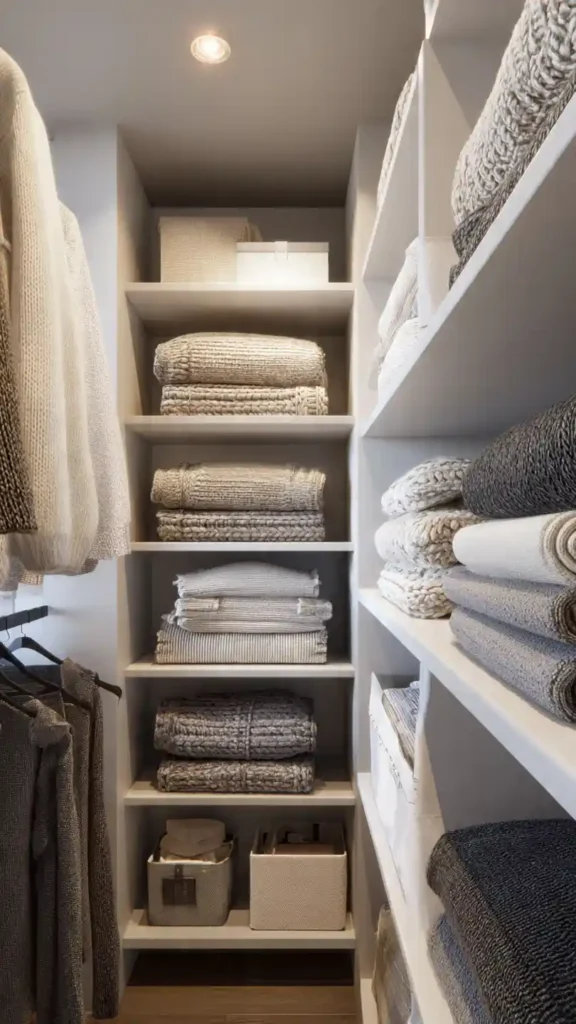
Open cubbies are perfect for storing folded sweaters, jeans, or handbags without stacking everything into one tall pile. Each cubby creates a defined category, which keeps items from collapsing into each other.
This system works especially well in small walk-ins because it replaces bulky dressers. When every stack has its own compartment, the closet feels structured and easier to maintain. It also makes grabbing what you need much faster.
17. Rotating Shoe Carousel
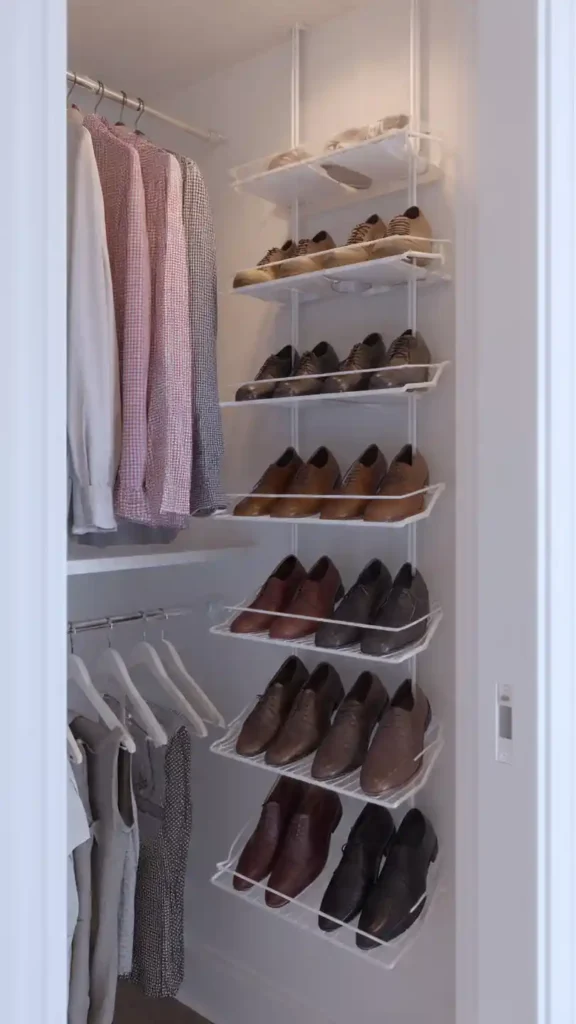
If your closet has a tight corner, a compact rotating shoe rack can maximize that space. Instead of losing visibility in the back, the rotating design allows you to spin and access every pair easily.
This solution works because it uses depth efficiently. In small closets, hidden corners often become clutter zones. A rotating system prevents wasted space while keeping everything accessible.
18. Belt & Tie Pull-Out Rack
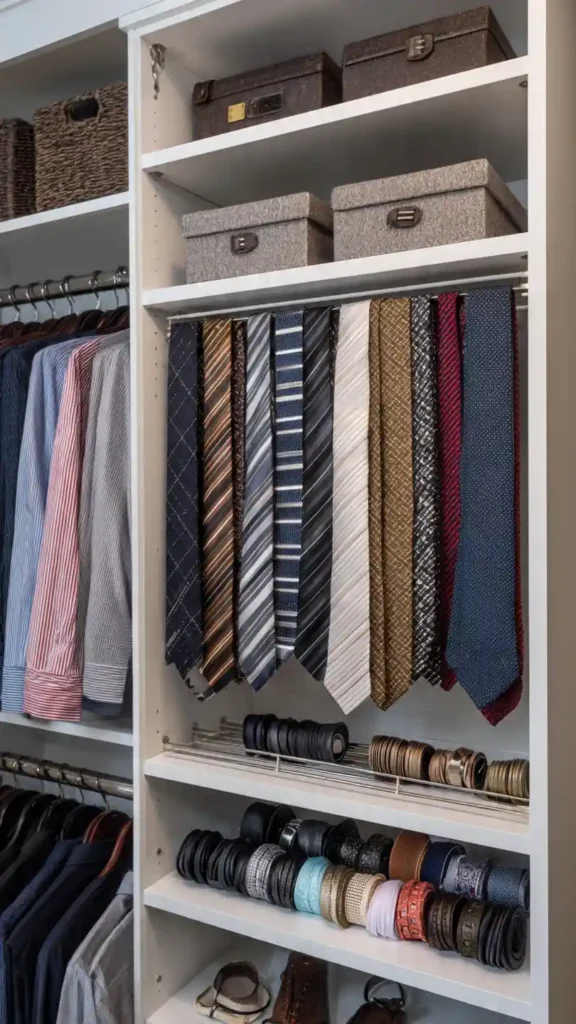
Accessories like belts and ties often end up tangled in drawers. A slim pull-out rack mounted inside a cabinet or along a wall keeps them visible and organized.
Because it slides out only when needed, it doesn’t take up permanent visual space. This small addition keeps accessories neat while maintaining a clean closet layout.
19. Seasonal Clothing Rotation Zone
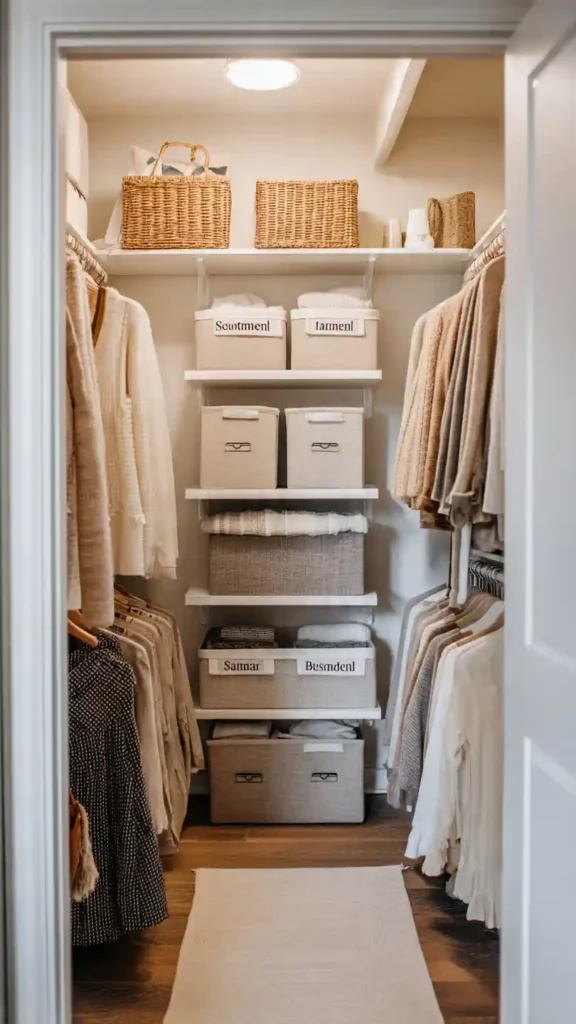
Designate one shelf or labeled bin for off-season items. When the weather changes, rotate clothing instead of storing everything at once.
This system prevents overcrowding and keeps only current-season pieces within easy reach. A small walk-in feels much more spacious when it’s not holding items you won’t wear for months.
20. Built-In Bench with Hidden Storage
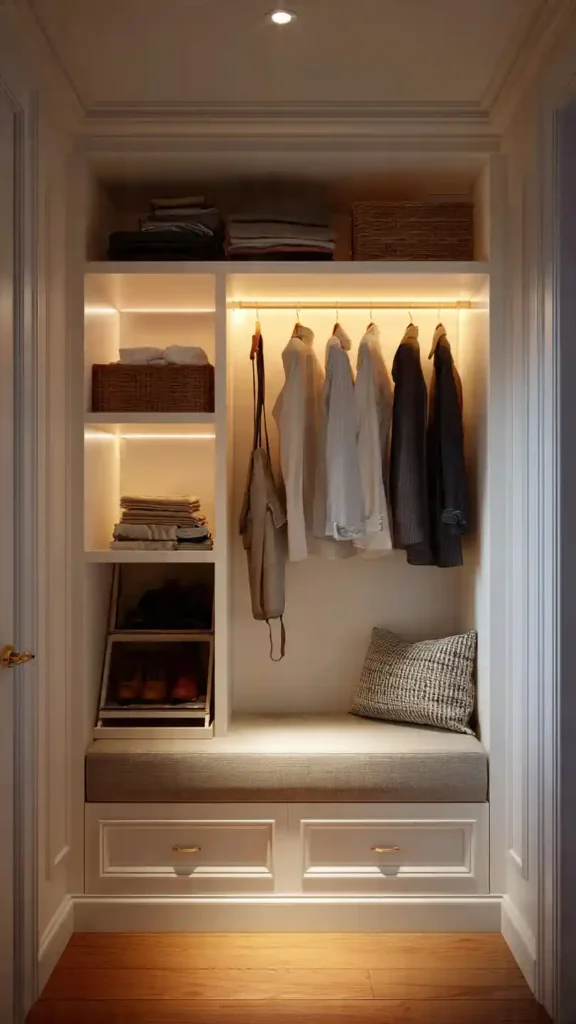
Adding a narrow bench beneath shelving gives you a place to sit while putting on shoes. Even better, choose one with lift-up storage inside for blankets, bags, or extra linens.
This idea works because it combines comfort and function. The bench anchors the space visually while adding concealed storage. In a small closet, multi-purpose pieces make a big difference.
21. Sliding Barn-Style Closet Door
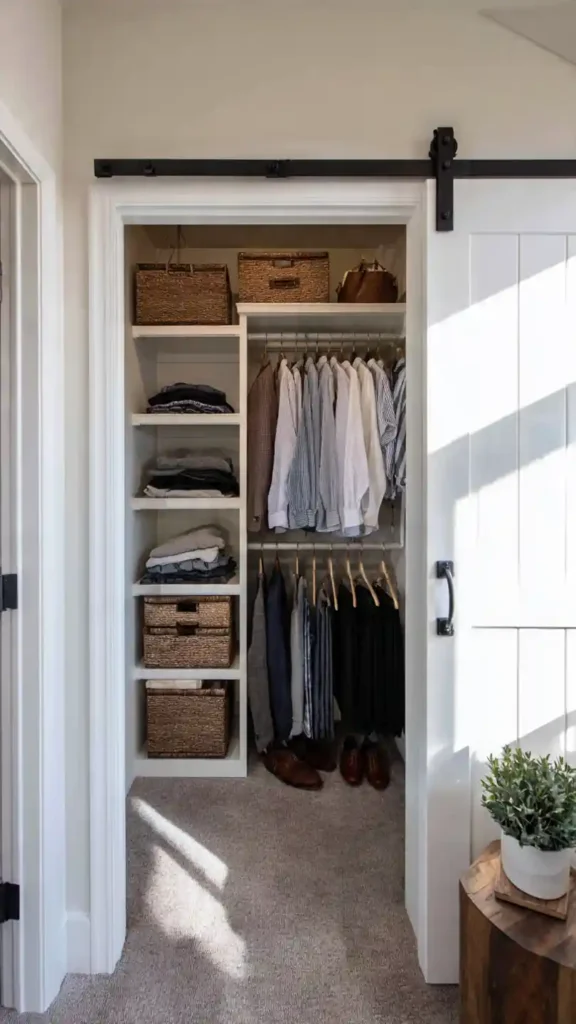
If your small walk-in has a traditional swinging door, it may be wasting usable space. Switching to a sliding barn-style door frees up the entry area and makes the closet easier to access.
This upgrade improves flow, especially in tight bedrooms where door clearance matters. It also gives the closet a more intentional design element while solving a functional problem at the same time.
22. Compact Vanity Corner
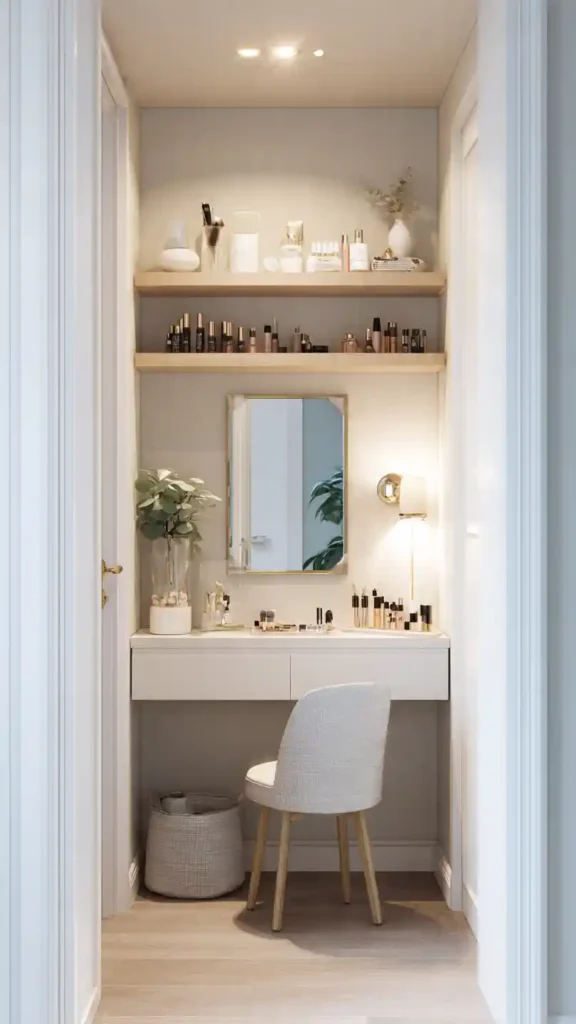
Even in a small walk-in, a slim floating shelf with a small mirror can create a compact vanity corner. Store daily jewelry, perfume, or makeup neatly in trays to keep the surface clean.
This works because it defines a zone for getting ready. Instead of spreading items across shelves, you create one focused area. That separation keeps the rest of the closet tidy and organized.
23. Hanging Storage Cubes
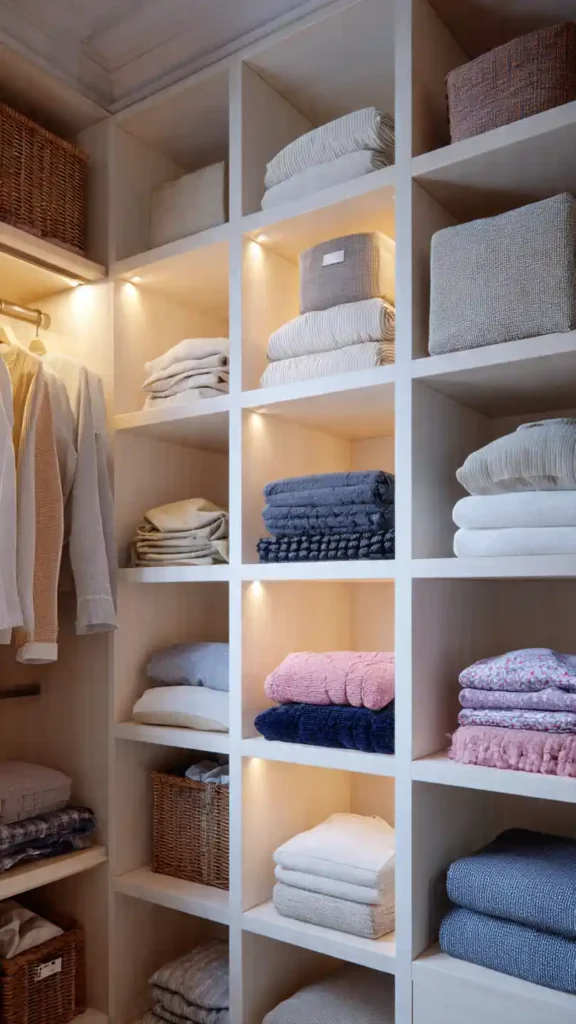
Fabric hanging cubes add vertical storage without permanent installation. Use them for folded tees, jeans, or workout clothes that don’t require hanging rods.
This solution works well in rental spaces or builder-basic closets. It adds structure instantly and prevents stacks from becoming messy. Because the cubes are lightweight, they keep the closet feeling open rather than heavy.
24. Wallpaper Accent Wall Inside Closet
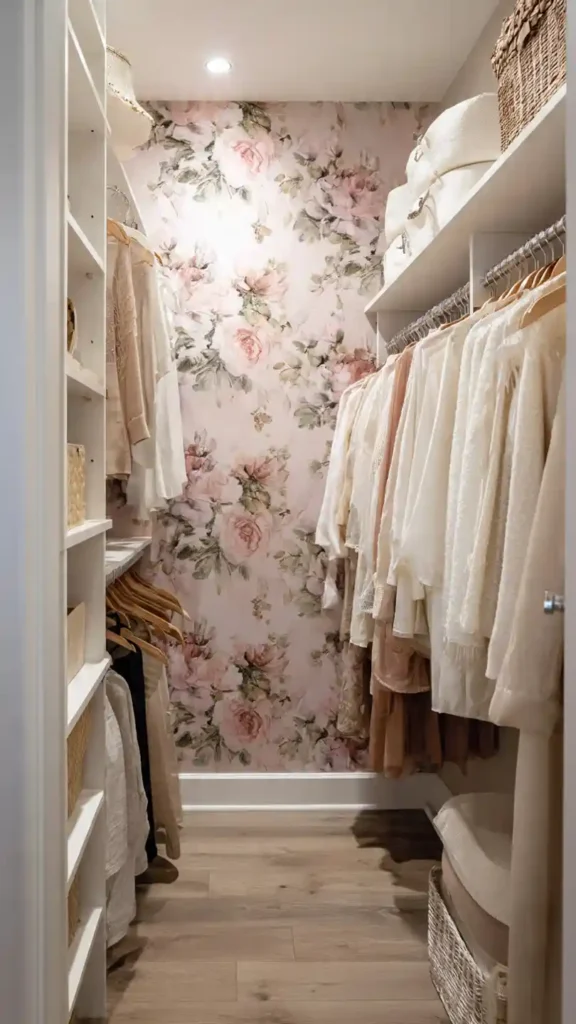
Adding wallpaper to the back wall transforms a small walk-in from purely functional to visually styled. Choose a subtle floral, soft stripe, or textured neutral pattern to add depth.
This idea works because it changes perception. A small space feels more curated and intentional when there’s visual interest behind the shelving. Even simple organization looks elevated against a styled backdrop.
25. Floor-to-Ceiling Custom Built-Ins
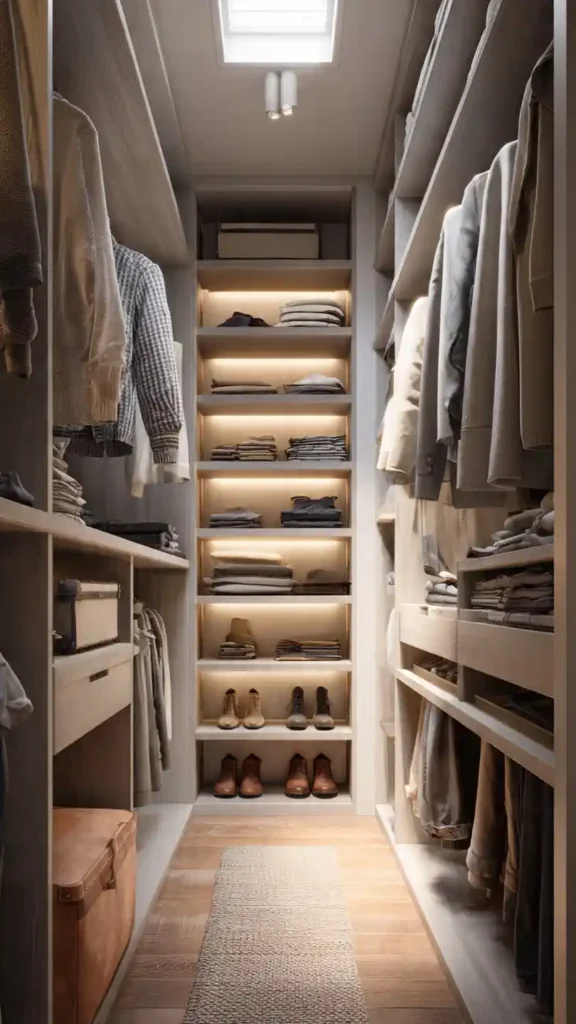
Maximizing vertical space is essential in a small walk-in. Floor-to-ceiling built-ins allow you to use every inch from hanging rods to upper storage shelves.
This approach eliminates wasted gaps and creates a seamless, cohesive look. When storage extends upward, the closet feels taller and more efficient. It’s one of the most impactful upgrades for long-term organization.