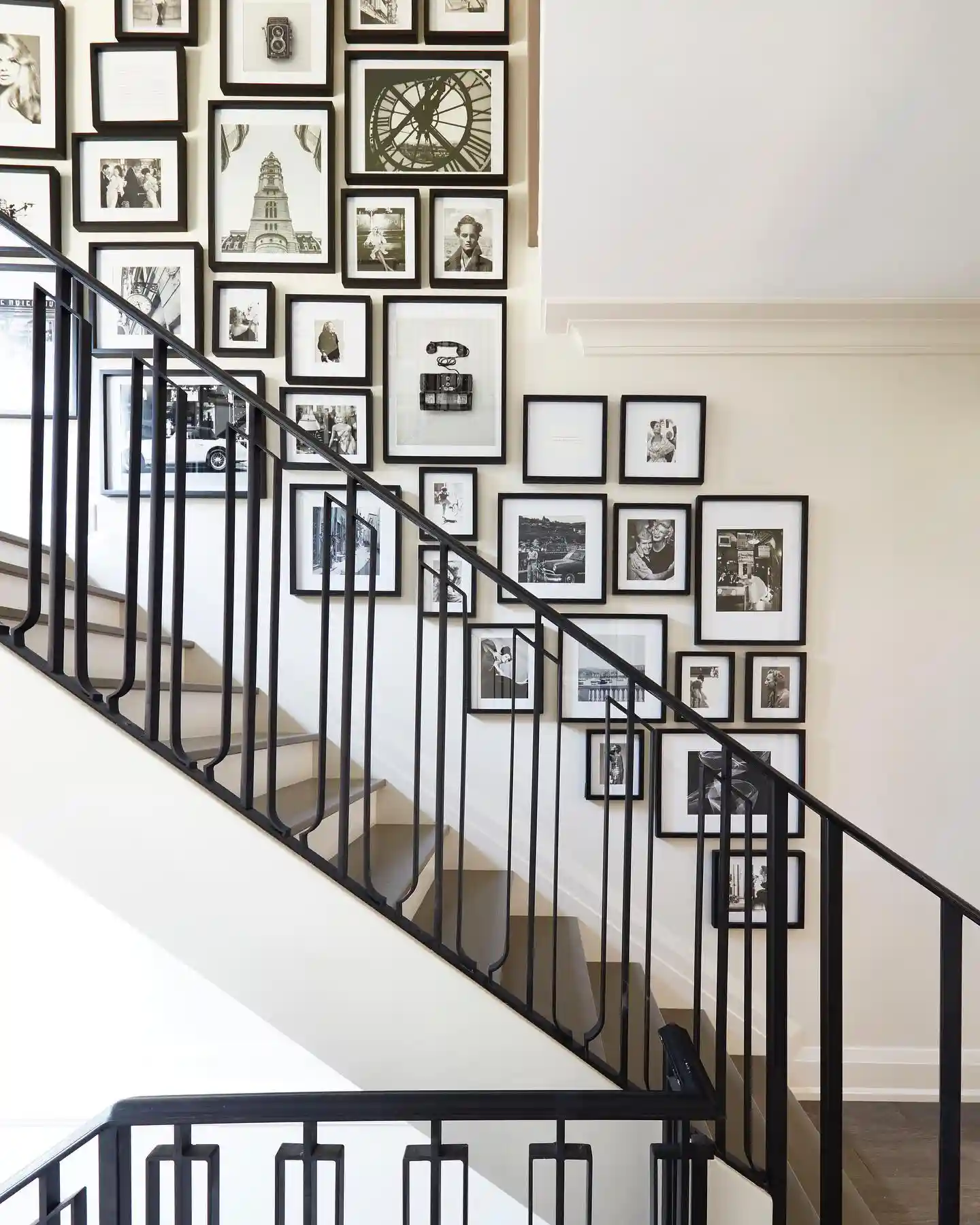
25 Front Entryway Ideas
A front entryway is the first pause before a home opens up. It’s where the pace slows slightly, where the outside world softens before you step inside.These exterior entryway ideas focus less on making a statement and more on creating a feeling calm, welcoming, and settled. Each one works because it feels intentional without being overworked, using balance, materials, and light in ways that quietly make sense over time.
1. Classic Symmetrical Front Entryway
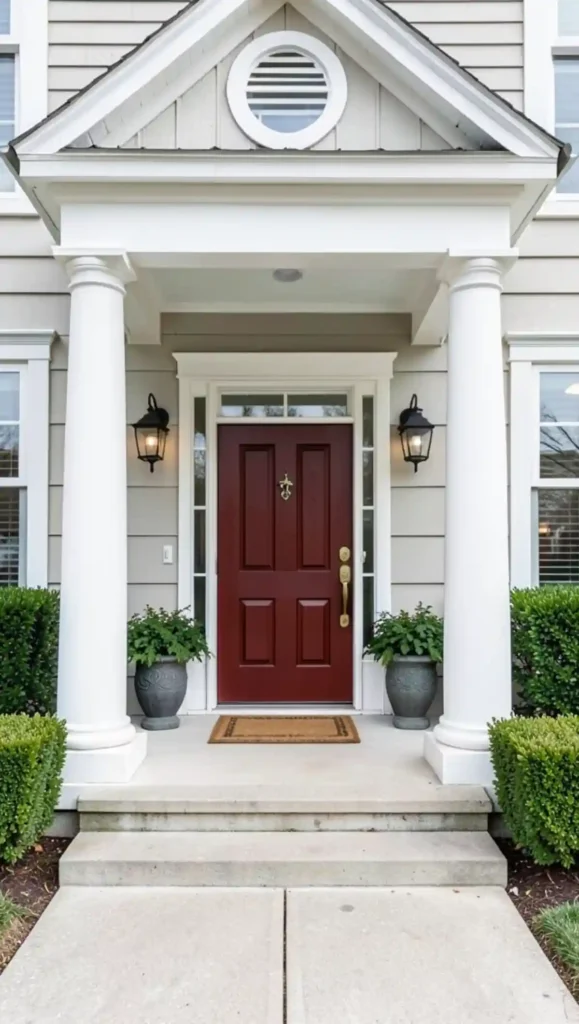
This kind of entryway feels steady and reassuring. The symmetry creates a sense of order before you even reach the door, which can make the home feel grounded and well cared for. Matching planters or columns frame the entry without pulling attention too hard in any direction. It works because everything feels balanced nothing feels rushed or added last minute. There’s a quiet confidence here, the kind that doesn’t rely on decoration but on proportion and repetition that naturally feels familiar.
2. Modern Minimal Front Entryway
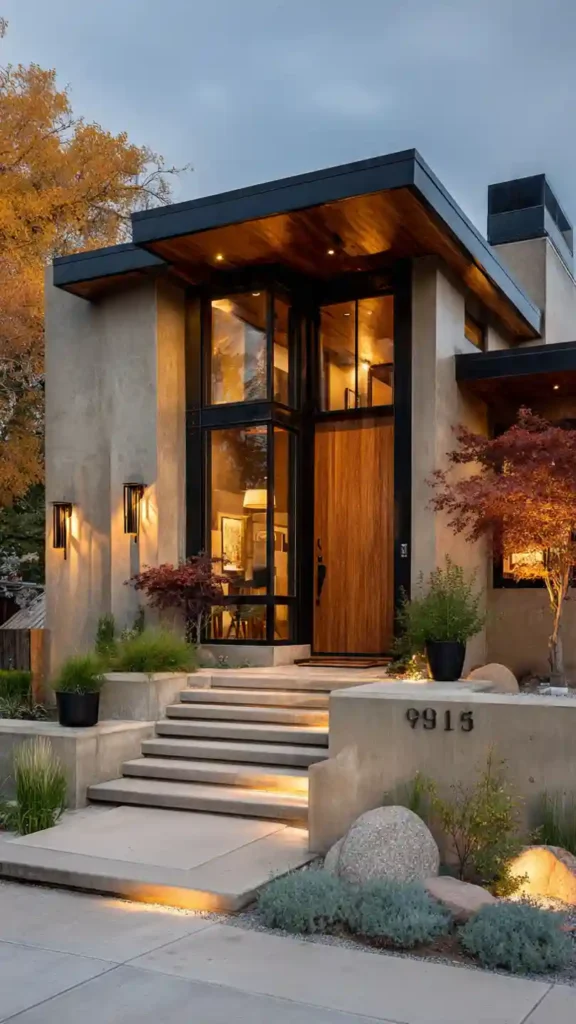
A modern minimal entryway feels calm because nothing competes for attention. Clean lines and open space allow the front door to breathe, and that simplicity makes the approach feel unhurried. Without extra ornament or clutter, the materials do the work concrete, wood, or stone standing on their own. This choice works because it removes friction. You arrive, you walk forward, and the space doesn’t ask you to process anything beyond the path ahead.
3. Cottage-Style Front Entryway
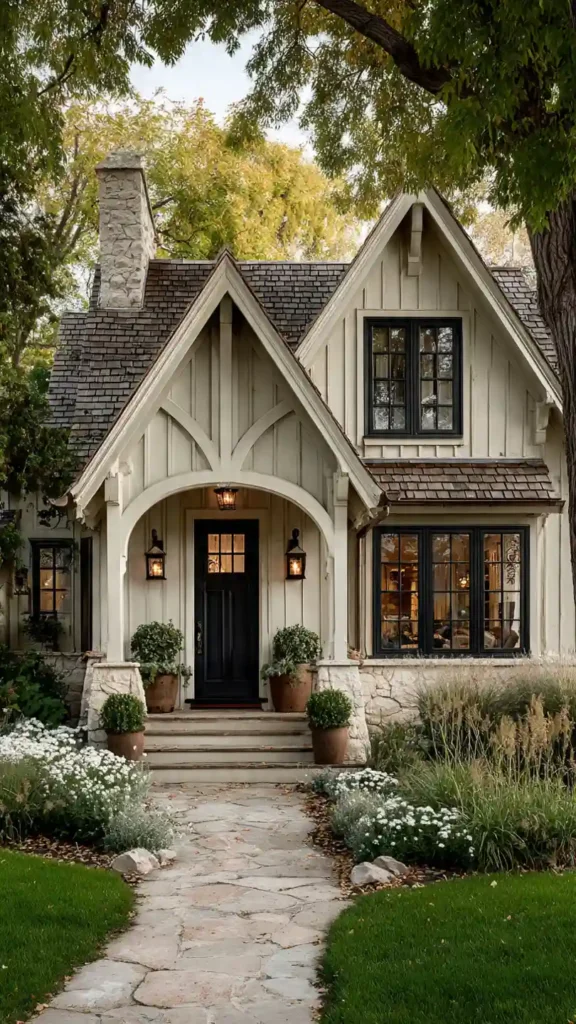
There’s something gentle about a cottage-style entryway. The roofline often feels slightly protective, and the scale stays human rather than grand. Small details a planter, a porch light, a painted door soften the transition from outdoors to indoors. It works because it feels personal, like the house is already aware of you arriving. Nothing feels oversized or sharp, and that warmth makes even a simple home feel settled and inviting.
Read also: 16 Small Entryway Ideas That Make a Big Impact
4. Farmhouse Front Entryway

A farmhouse front entryway often feels open but grounded at the same time. Wide steps, simple columns, and classic lighting create a sense of ease rather than formality.The materials usually feel honest wood, painted trim, natural greenery which gives the space a relaxed confidence. This works because it doesn’t try to impress. It feels like a place meant to be used every day, where arriving home feels familiar rather than staged.
5. Front Entryway with Statement Front Door
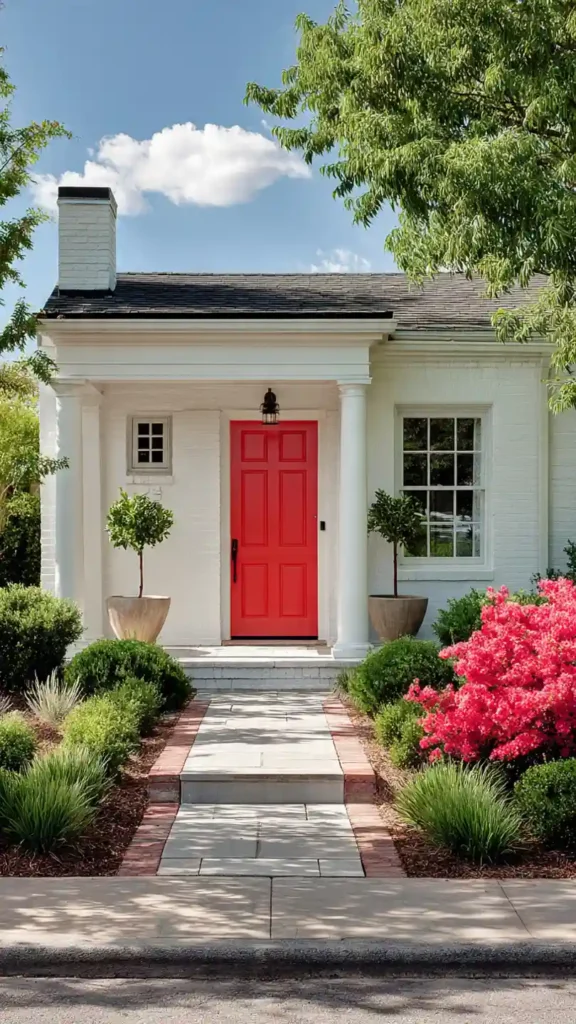
When the front door becomes the focus, the rest of the entryway can stay quiet. A strong door color or material draws the eye naturally, giving the entry a clear center.This works because it simplifies decisions the door leads, everything else supports. With clean surroundings and restrained landscaping, the entryway feels intentional without feeling busy. It’s a reminder that one thoughtful choice can carry the entire space.
6. Small Front Entryway with Steps
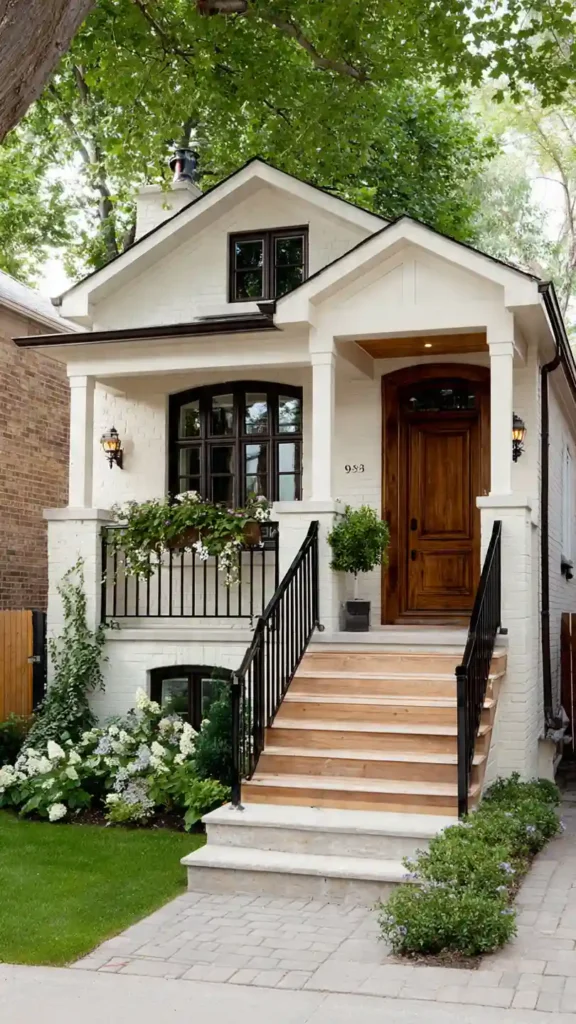
A small front entryway with steps feels practical and unpretentious. The scale keeps expectations realistic, and the steps create a gentle transition from ground level to the door. When the proportions are right, the space feels approachable instead of cramped. This works because nothing is trying to be more than it is. The simplicity makes the entry feel honest, and over time, that restraint tends to age better than excess detail.
Read also: 13 Stunning Hallway Decor Ideas to Elevate Your Home
7. Front Entryway with Covered Porch
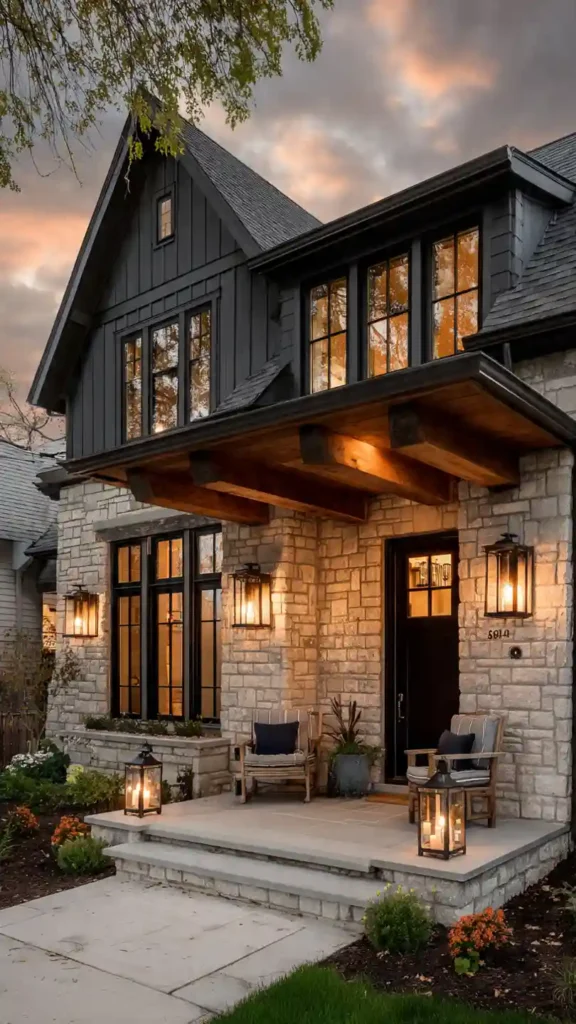
A covered porch changes how an entryway feels immediately. It offers a sense of pause a place to stop, even briefly, before going inside.The overhead structure creates shelter, which naturally feels welcoming. This works because it adds comfort without decoration. Rain, sun, or evening light all behave more gently here, making arrivals feel calmer and more considered rather than rushed.
8. Modern Entryway with Concrete Walkway
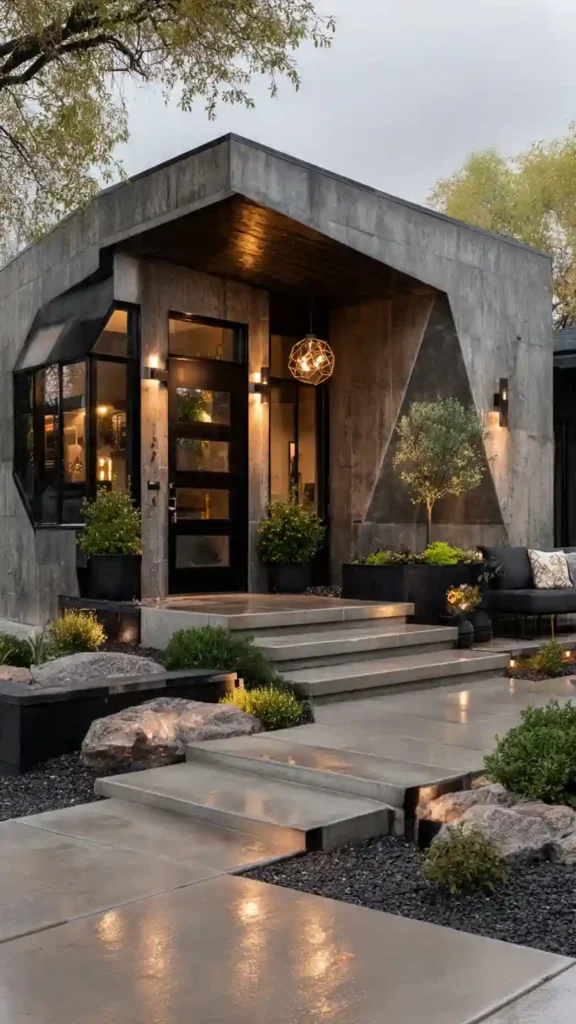
A concrete walkway leading to the front entry feels steady and intentional. The straight lines guide movement without distraction, and the surface feels reliable underfoot. This works because it creates a clear rhythm from street to door. Paired with simple landscaping, the approach feels composed rather than decorative. It’s an entryway that respects movement and function, which often makes it feel more peaceful over time.
9. Front Entryway with Natural Stone
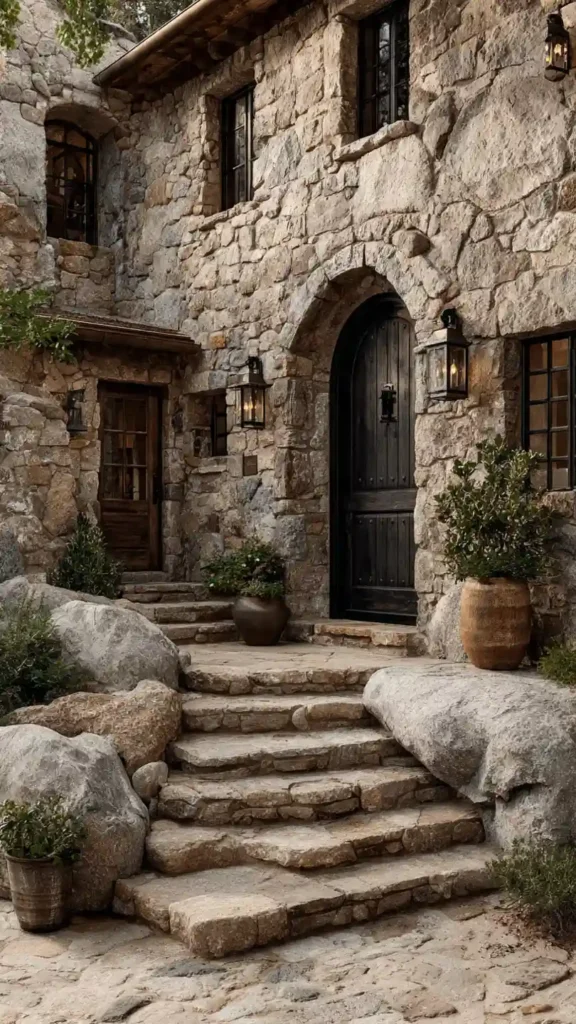
Natural stone brings a quiet weight to a front entryway. The texture and variation add depth without needing additional detail. Stone steps or surrounds tend to slow the eye, making the entry feel grounded and permanent. This works because stone doesn’t rush it settles into the landscape naturally. Over time, weather and use only add to its character, which makes the space feel lived in rather than finished.
10. Front Entryway with Lantern Lighting
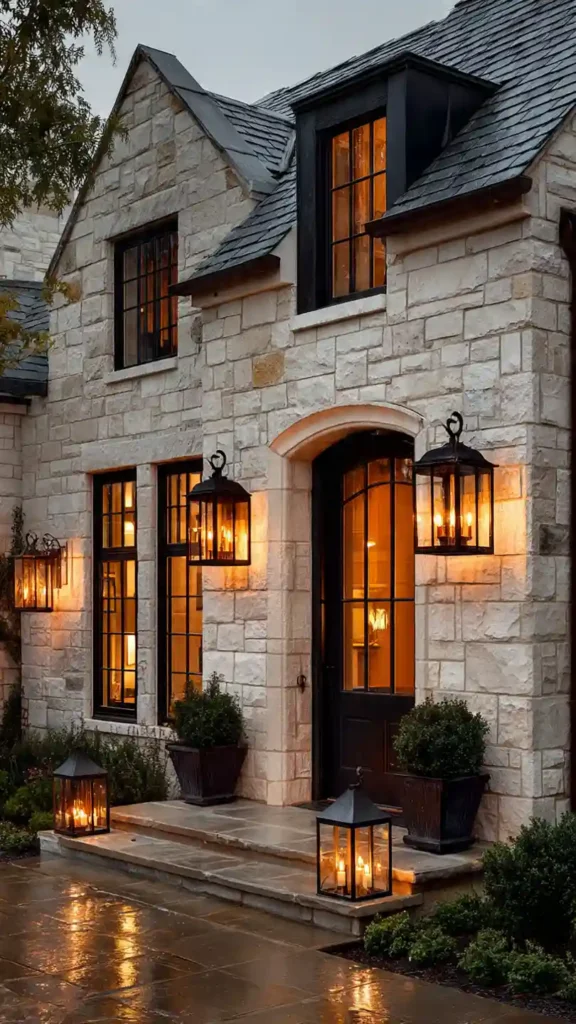
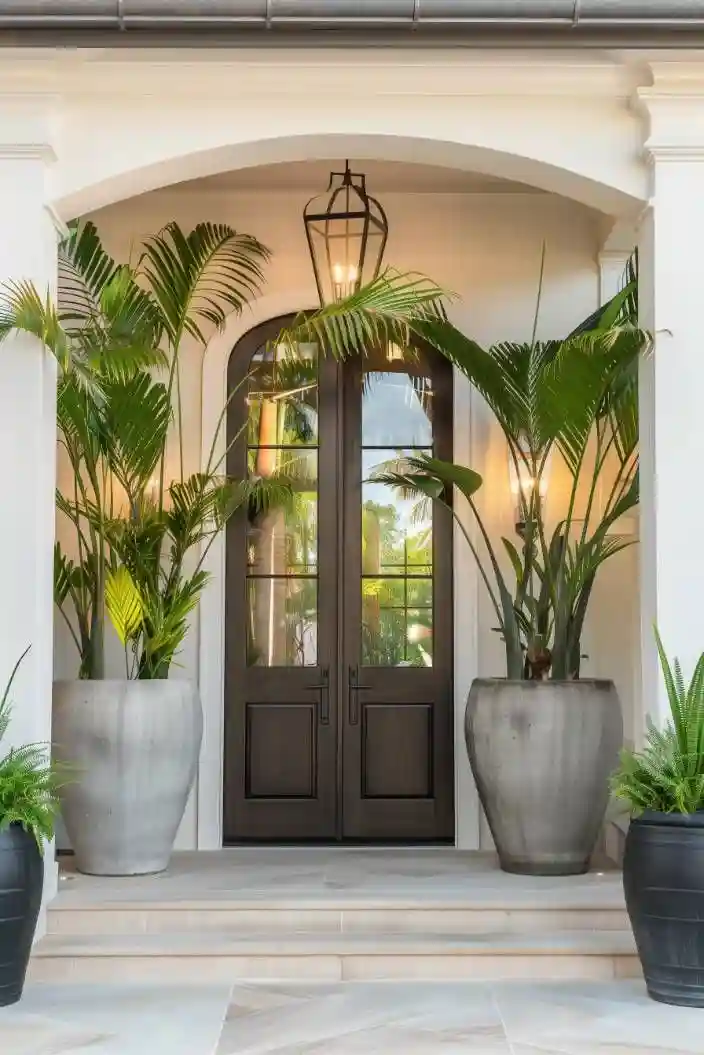
Lantern lighting softens the exterior entryway, especially in the evening. The glow feels warm rather than sharp, making the approach to the door feel more human. This works because the light isn’t trying to spotlight the space it simply makes it usable and calm. Lanterns often feel familiar, which helps the entryway feel welcoming without needing much else around it.
11. Front Entryway with Lush Greenery
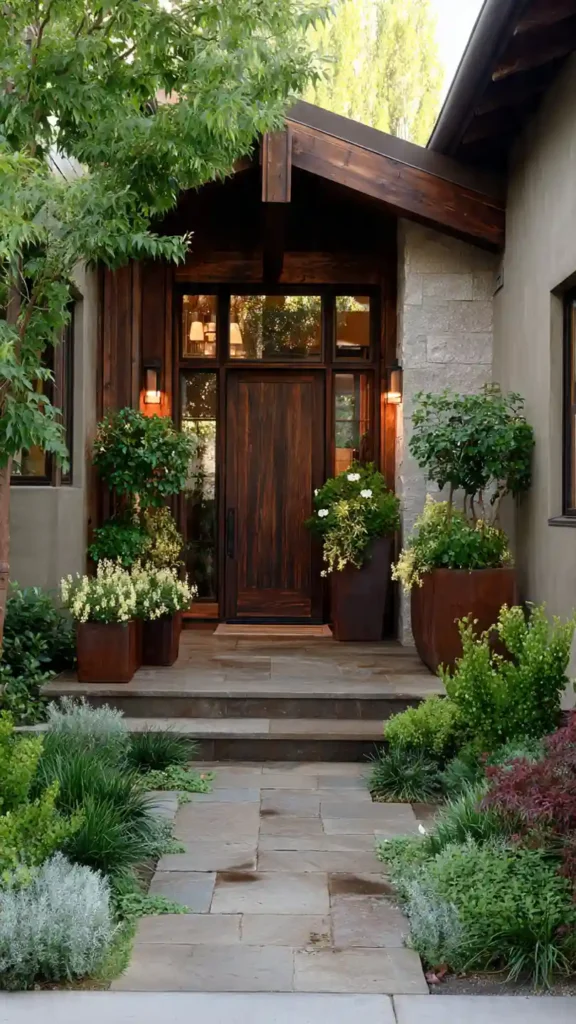
Greenery around a front entryway changes the mood instantly. Plants soften hard edges and slow the transition from outdoors to indoors. This works because nature does the visual work without feeling styled. The entry feels alive but not busy, and the greenery creates a gentle frame rather than a focal point. Over time, the growth adds a sense of continuity that makes the home feel settled.
12. Narrow Front Entryway Path
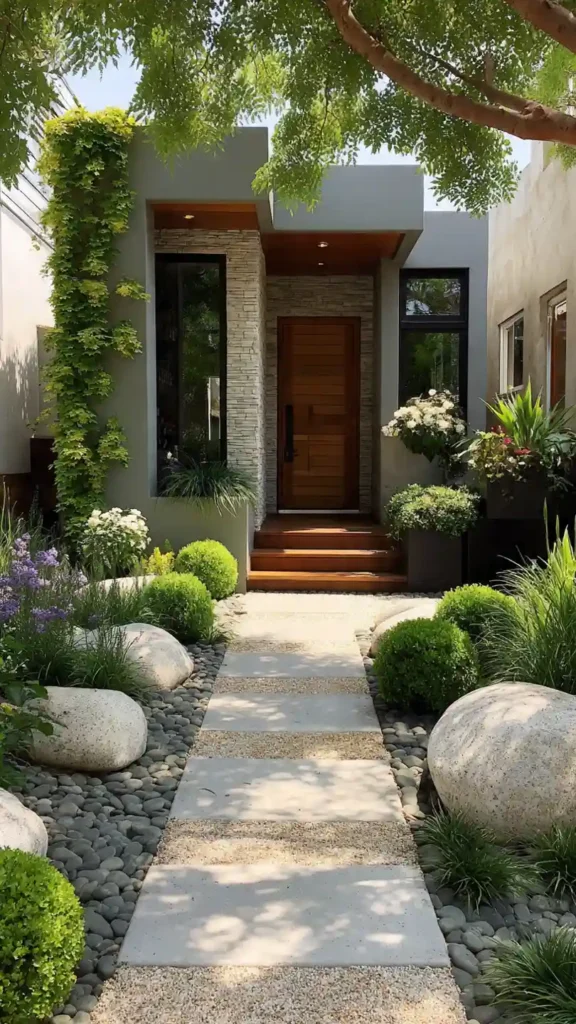
A narrow path to the front door can feel intentional when it’s handled simply. Clean edges and consistent materials guide the eye forward, reducing the feeling of constraint. This works because the design accepts the limitation rather than fighting it. By keeping distractions low, the path feels calm instead of tight. Movement becomes smooth, and the entry feels purposeful rather than compromised.
13. Front Entryway with Arched Doorway
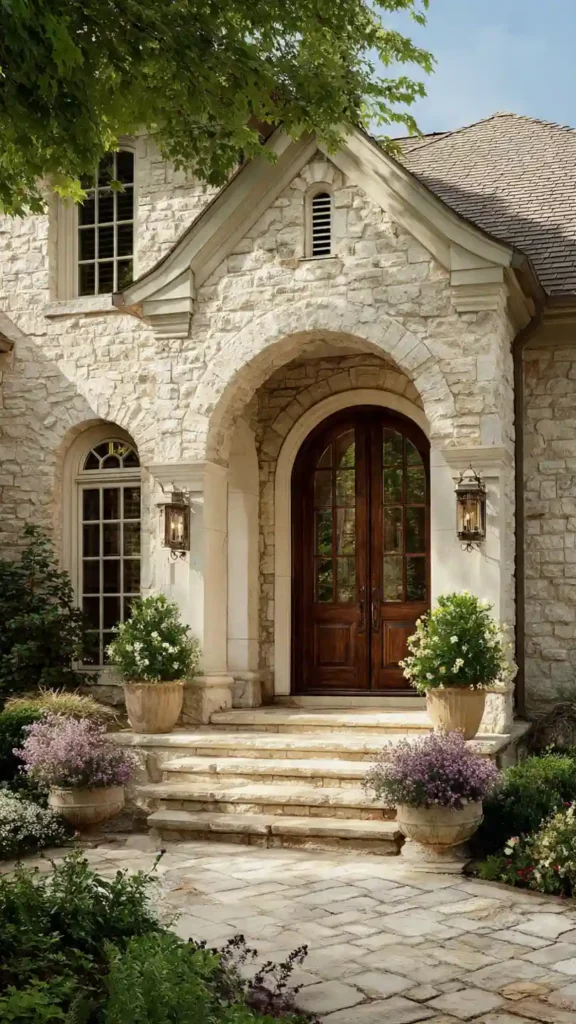
An arched doorway introduces softness without decoration. The curve naturally slows the eye and adds a sense of ease to the entry. This works because arches feel human they echo older building forms that were designed for comfort rather than speed. The shape alone adds character, allowing the rest of the entryway to stay quiet and restrained.
14. Modern Black Door Front Entryway
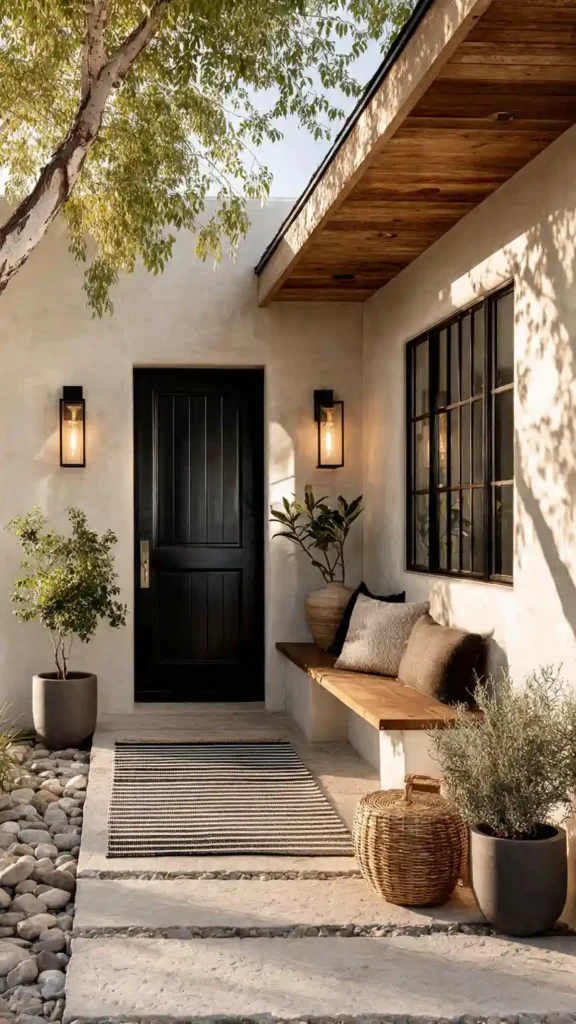
A black front door grounds the entryway visually. It adds contrast without feeling loud, especially when paired with light exterior walls. This works because black absorbs attention rather than scattering it. The door feels solid and dependable, which subtly affects how the whole entryway is perceived. Everything else can remain simple, letting the door quietly anchor the space.
15. Front Entryway with Wood Accents
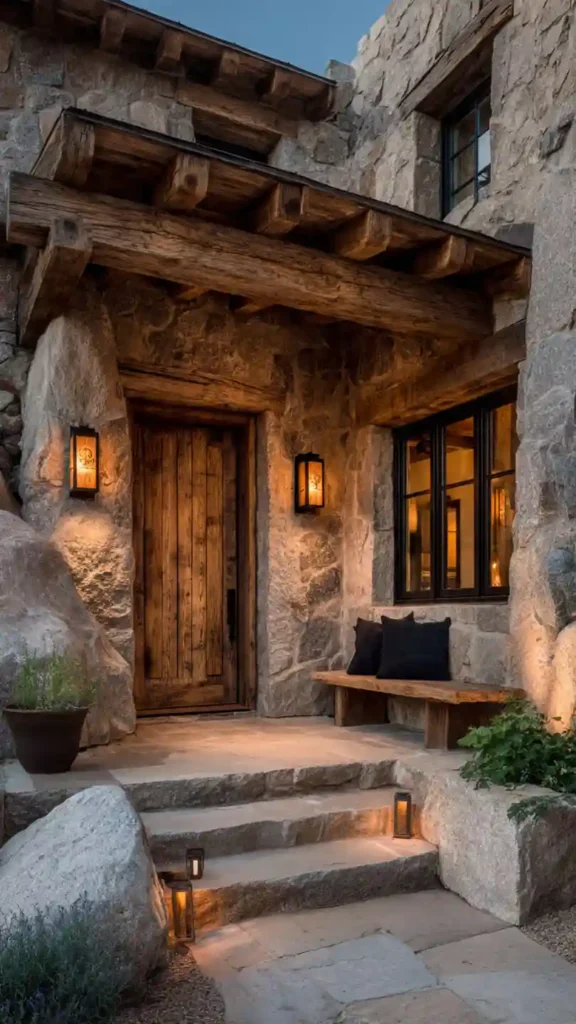
Wood accents warm up a front entryway immediately. Whether it’s a wood door or beams, the material adds texture and softness against harder surfaces. This works because wood feels familiar and tactile. It bridges the outdoors and indoors naturally, making the entry feel less like a boundary and more like a transition. Over time, the material tends to deepen rather than date.
16. Front Entryway with Brick Details
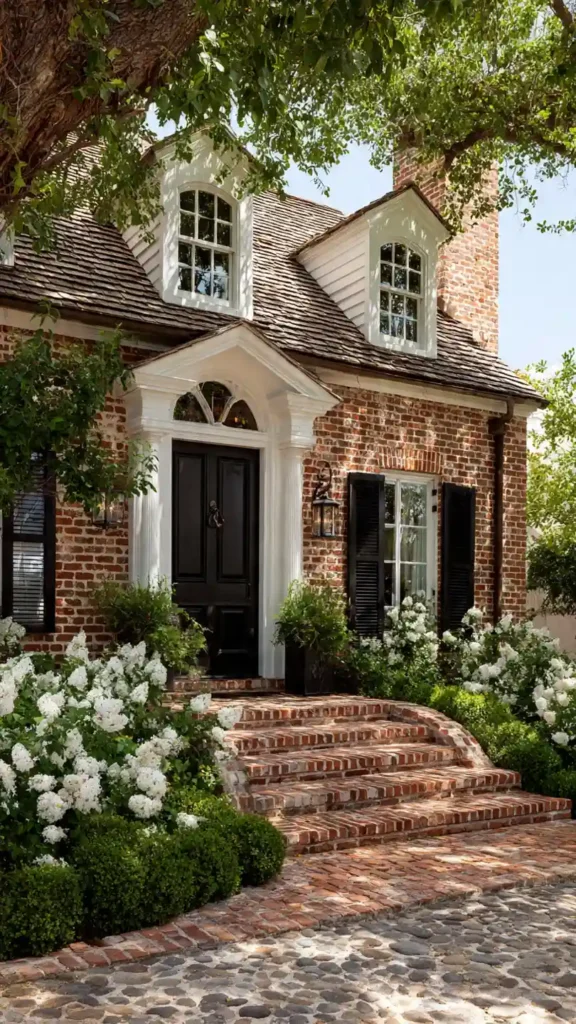
Brick details bring a sense of rhythm and history to a front entryway. The pattern adds interest without requiring decoration. This works because brick feels steady and proven it doesn’t demand attention, but it holds it. The entryway feels grounded, and the texture keeps the space from feeling flat or overly polished.
17. Front Entryway with Simple Landscaping

Simple landscaping allows the entryway to breathe. Low shrubs or clean lines keep the focus on movement rather than display. This works because it reduces visual noise. The approach feels calm and easy, which often makes the home feel more welcoming than overly styled planting ever could. It’s a quiet kind of clarity.
18. Coastal-Inspired Front Entryway
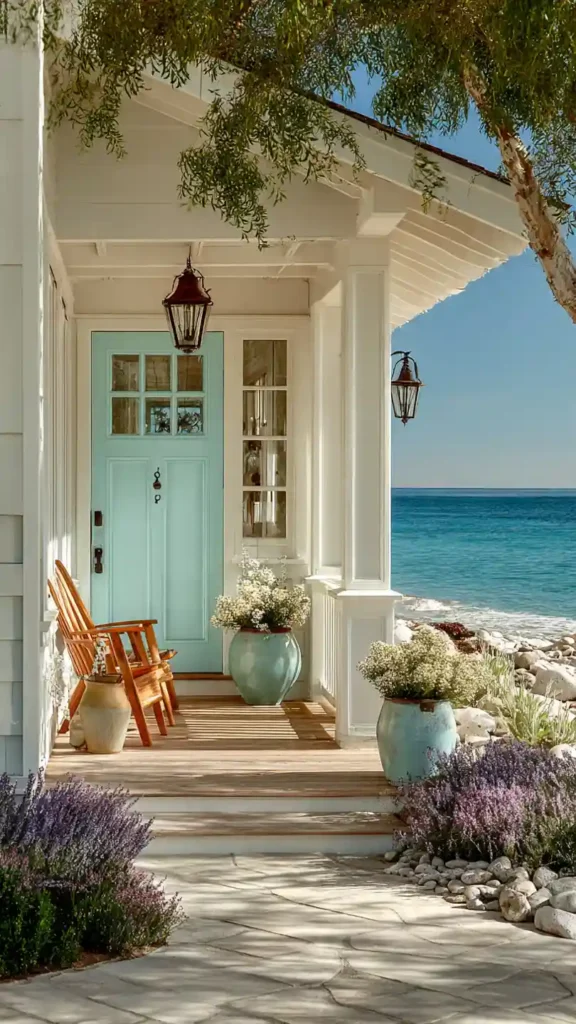
A coastal-inspired entryway feels light without being empty. Soft colors and relaxed planting make the space feel open and unforced. This works because the palette stays gentle, and the materials reflect light rather than absorb it. The result is an entry that feels easy to approach, as if the home isn’t asking much from you when you arrive.
19. Front Entryway with Double Doors

Double doors add width and balance to a front entryway. They feel generous without needing ornament. This works because the symmetry creates calm, and the scale feels intentional rather than dramatic. When the surrounding elements stay simple, the doors feel welcoming instead of formal, allowing the entryway to feel open rather than imposing.
20. Front Entryway with Pergola
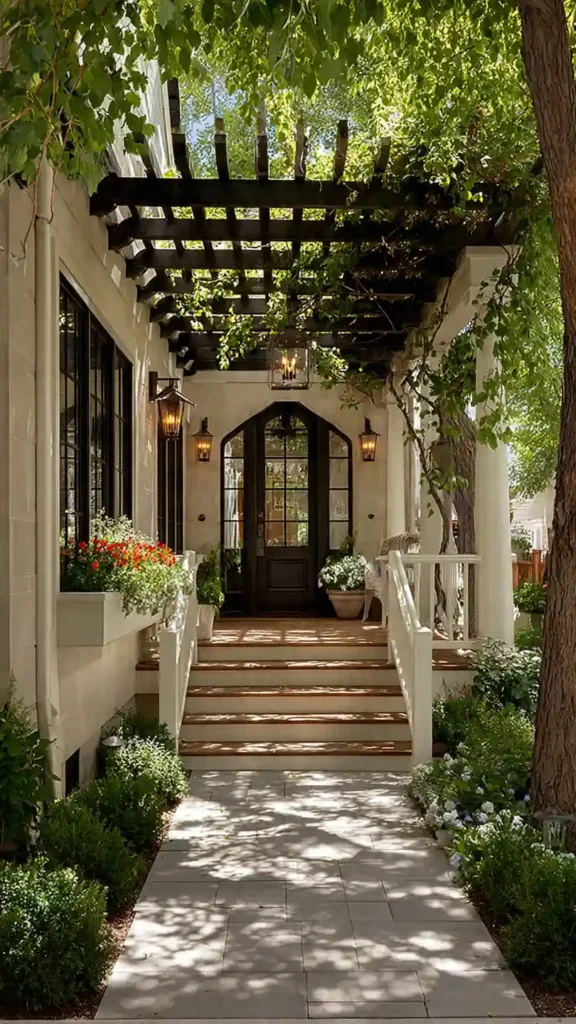
A pergola over the entryway introduces filtered light and gentle structure. It creates a sense of transition rather than enclosure. This works because the shadows shift throughout the day, adding movement without clutter. The entry feels softened, as if the space is easing you toward the door rather than directing you straight to it.
21. Modern Entryway with Vertical Cladding
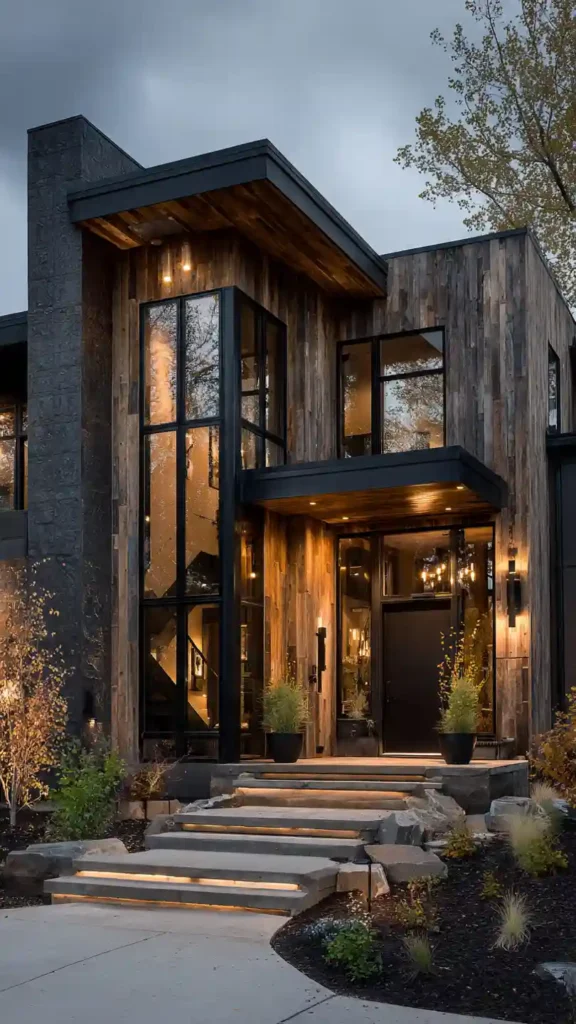
Vertical cladding draws the eye upward, making the entryway feel taller and more composed. This works because it subtly changes proportions without adding bulk. The lines feel intentional and calm, and the repetition creates quiet order. When paired with simple landscaping, the entryway feels modern without feeling cold.
22. Front Entryway with Raised Porch
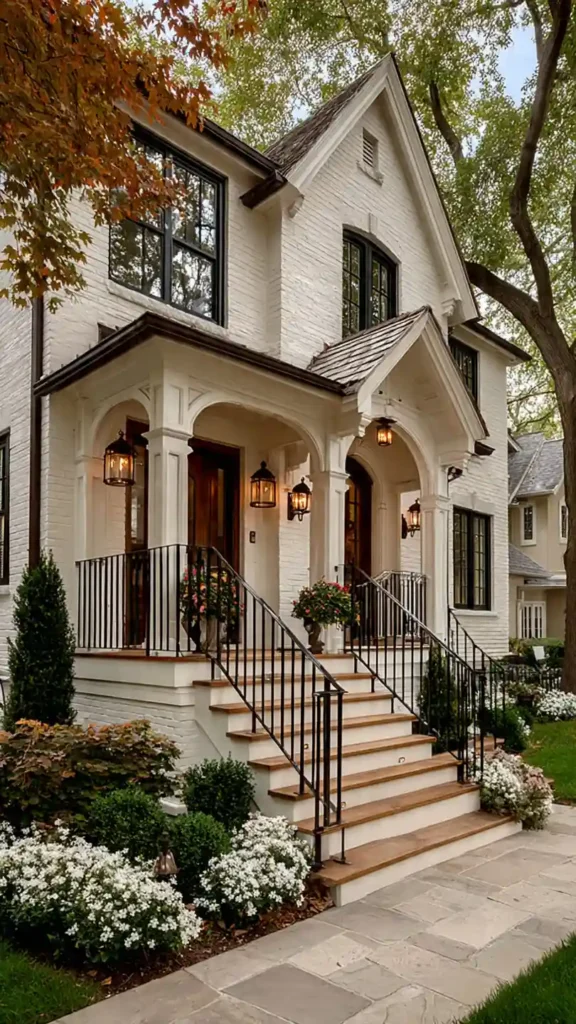
A raised porch adds a small moment of transition before the door. The steps slow arrival, which can make the entry feel more deliberate. This works because elevation naturally creates a pause. The porch doesn’t need much else its presence alone gives the entryway a sense of arrival rather than immediacy.
23. Front Entryway with Paver Walkway
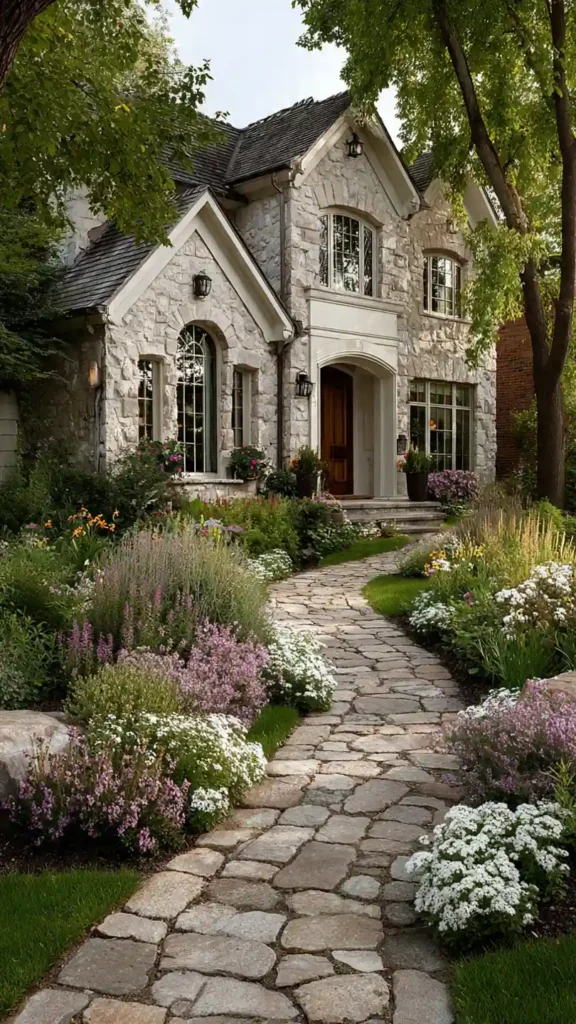
A paver walkway introduces rhythm underfoot. The repetition feels steady and reassuring as you approach the door. This works because the texture breaks up large surfaces without visual clutter. The path feels defined but relaxed, helping the entryway feel considered rather than decorative.
24. Front Entryway with Minimal Railings
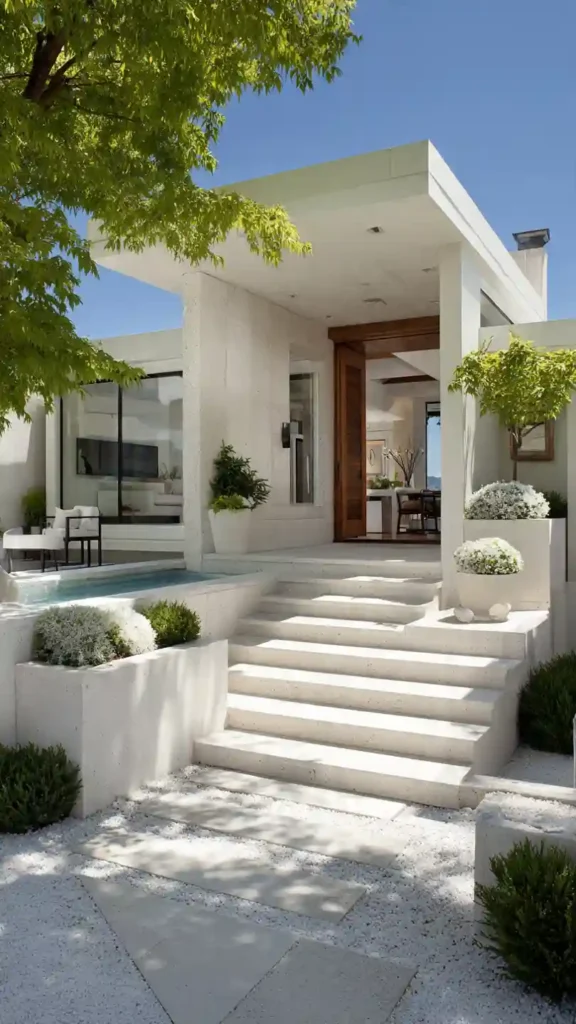
Minimal railings keep the entryway visually open. When safety is handled quietly, the space feels less interrupted. This works because the eye moves freely toward the door without stopping. The entry feels clean and calm, especially when paired with simple steps and natural materials.
25. Calm Luxury Front Entryway
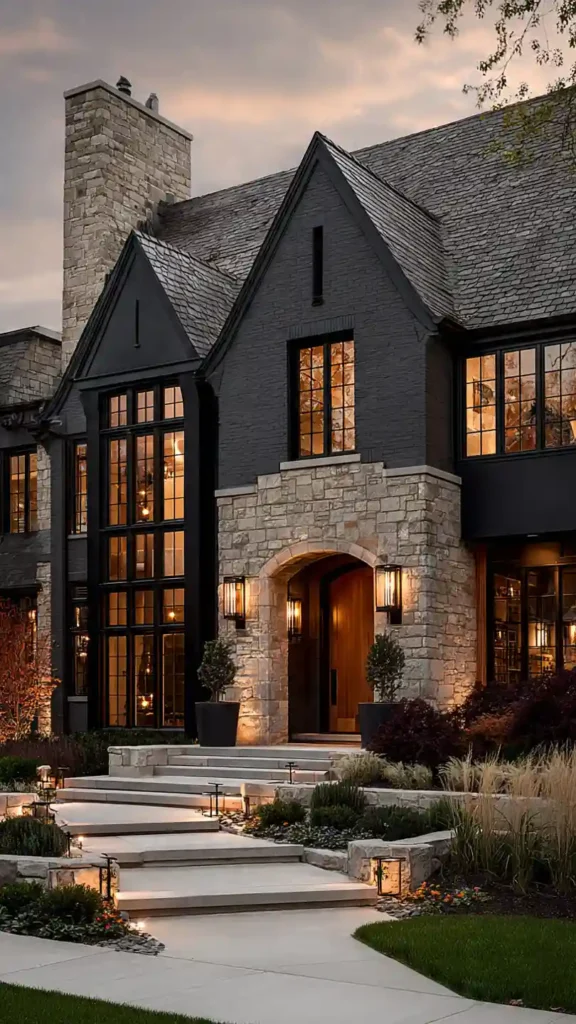
A calm luxury entryway doesn’t announce itself. The materials feel refined, the lighting soft, and the landscaping balanced. This works because restraint carries the space. Nothing feels excessive, and that quiet confidence makes the entry feel timeless. It’s an approach that values comfort and clarity over display.