20 Flower Bed Ideas in Front of House
Your front yard sets the tone for your entire home, and the right flower bed can completely transform its curb appeal. These flower bed ideas in front of house are designed to add structure, color, and balance without overwhelming your space.
Whether you have a compact lawn, a wide façade, or a sloped yard, smart layering, clean edging, and the right plant choices can make your entrance feel polished and welcoming. Below, you’ll find practical designs that are easy to maintain and tailored to different home styles.
1. Layered Foundation Flower Bed Along the Front Wall
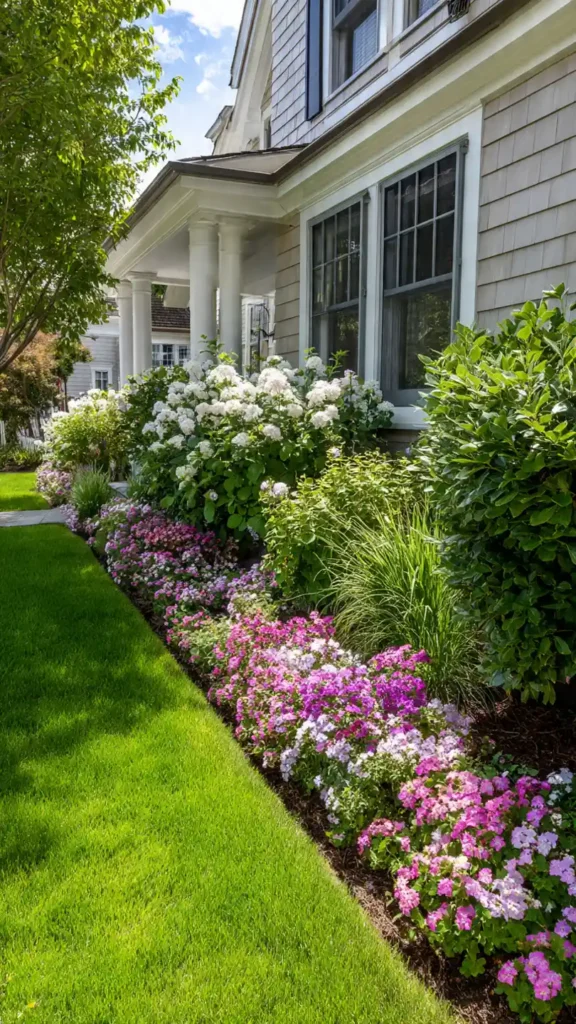
A layered foundation flower bed is one of the easiest ways to make the front of your house look finished and well-designed. Instead of planting everything at the same height, place taller shrubs closest to the wall, medium flowering plants in the middle, and low border flowers along the edge. This creates depth and keeps the house from looking flat.
Why It Works: Layering prevents windows from being blocked while still adding fullness. It also draws the eye upward, which makes the home feel more balanced from the street.
Best For: Traditional homes, brick exteriors, and wide front façades.
Pro Tip: Keep the bed about 2–3 feet deep for smaller homes and use mulch to maintain a clean, low-maintenance look. Stick to two main flower colors so the design feels cohesive rather than busy.
If you have small space you can used this flower beds Garden Bed Box
2. Curved Flower Bed Border for Soft Curb Appeal
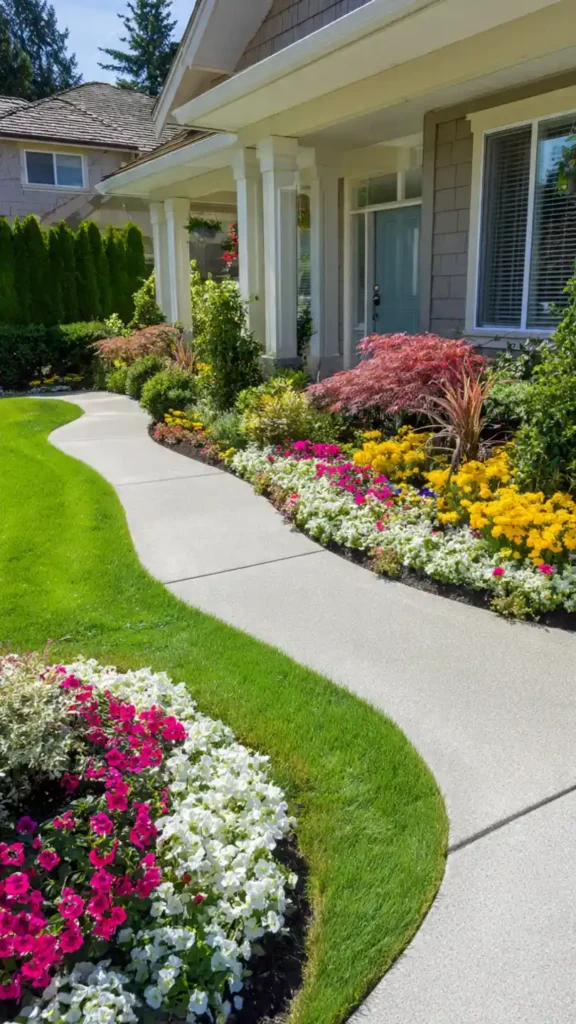
A curved flower bed instantly softens the front of your house and makes the yard feel more natural. Instead of sharp straight lines along the lawn or walkway, create a wide, flowing curve that gently frames the space. Plant lower-growing flowers along the outer edge and slightly taller blooms toward the inside to keep the shape visible from the street.
Why It Works: Curves break up rigid driveway lines and make the front yard look more inviting and organic.
Best For: Rectangular lawns, homes with straight concrete paths, or modern façades that need softness.
Pro Tip: Avoid tight waves or zigzag shapes. One smooth, intentional curve looks more professional and is easier to maintain.
Read also: 25 Small Backyard Garden Ideas
3. Low Maintenance Front Yard Flower Bed with Perennials
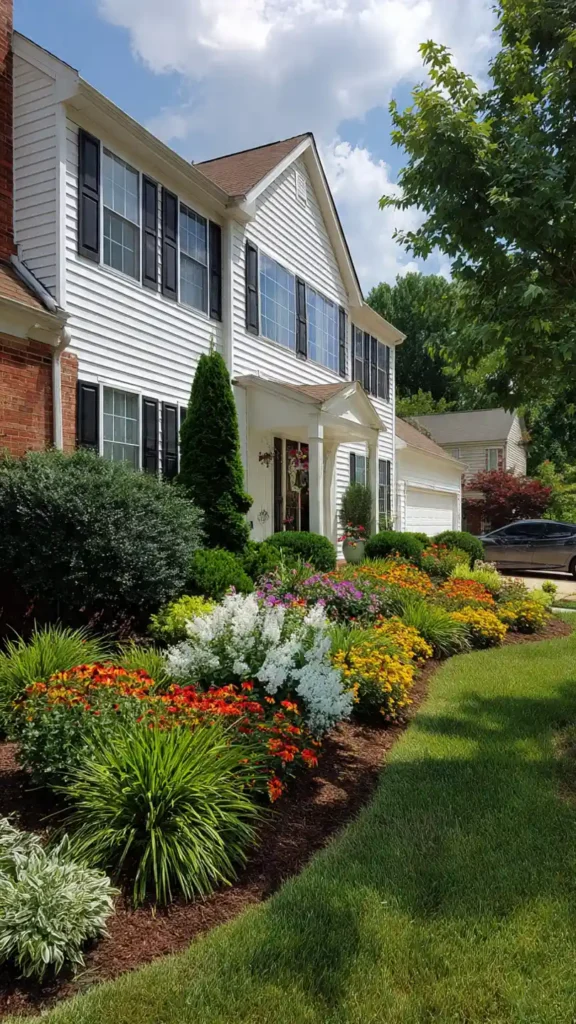
If you want long-lasting beauty without replanting each season, build your front flower bed around hardy perennials. Group the same plant types together instead of scattering many varieties. Add evergreen shrubs for year-round structure and finish with mulch to reduce weeds and watering needs.
Why It Works: Repeating plants create a clean, organized look and cut down on upkeep.
Best For: Busy homeowners, rental properties, or anyone who prefers simple garden care.
Pro Tip: Choose plants suited to your sunlight conditions and climate so they thrive without constant attention.
4. Symmetrical Flower Beds Framing the Entryway
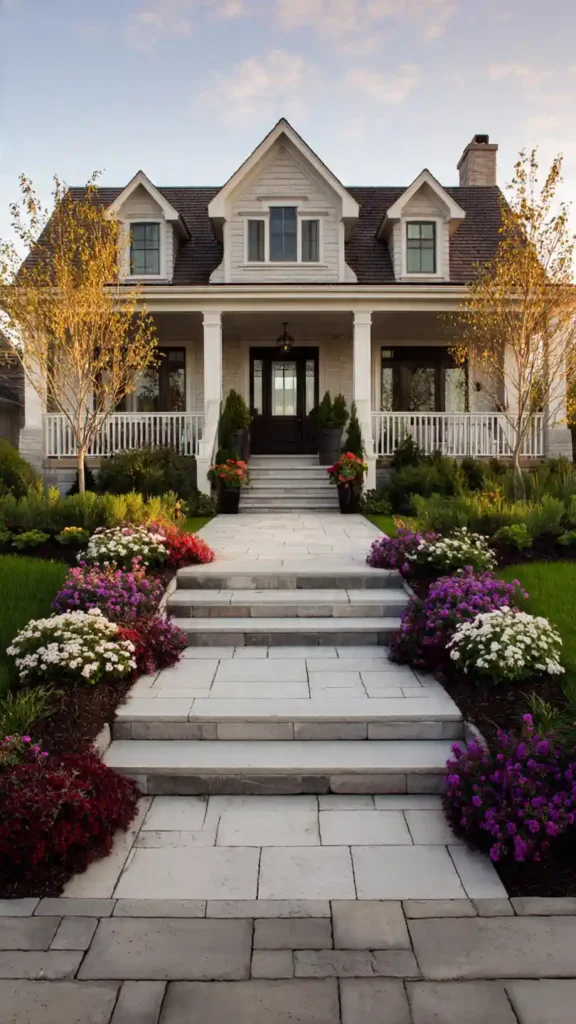
Matching flower beds on both sides of the front door create balance and structure. Use similar plant heights and color schemes on each side to keep the look cohesive. Low shrubs near the steps anchor the design, while medium-height blooms add color without overwhelming the entrance.
Why It Works: Symmetry naturally feels polished and welcoming, especially in traditional architecture.
Best For: Homes with centered doors, columns, or formal front porches.
Pro Tip: Keep plant heights below window level to avoid blocking natural light inside your home.
5. Small Flower Bed Around the Mailbox
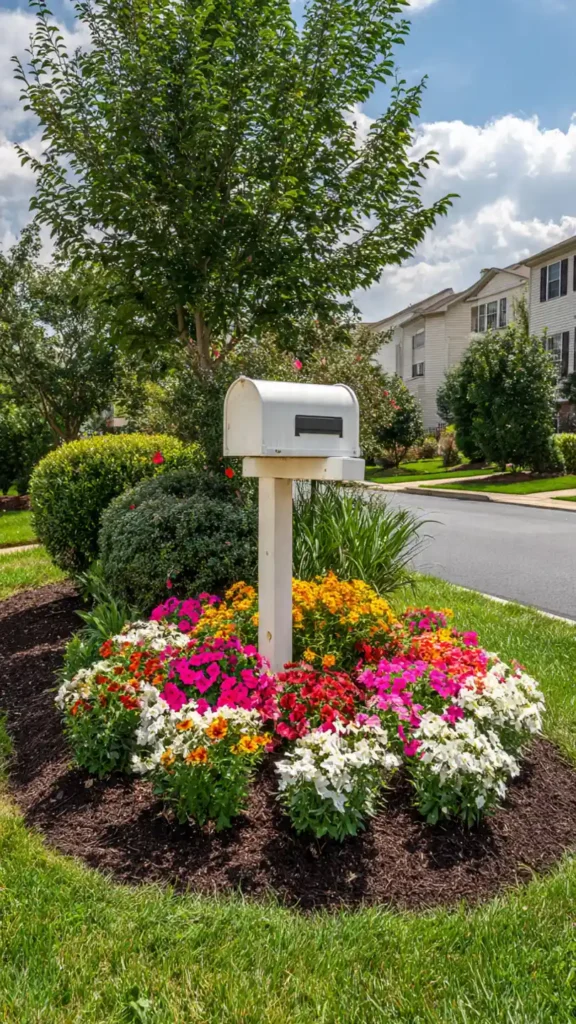
A simple circular or oval flower bed around your mailbox adds charm without taking up much yard space. Use compact, low-growing flowers to keep visibility clear. Add a defined edge with brick or stone so the shape stands out against the lawn.
Why It Works: It creates a focal point near the street and enhances curb appeal instantly.
Best For: Suburban homes with open front lawns.
Pro Tip: Stick to 2–3 plant types for a neat look and avoid tall plants that block mail access.
If you’d like, I’ll continue 6–10 in the same structure.
Read also: 25 Best Hanging Plants Ideas
6. Raised Flower Bed with Stone Edging
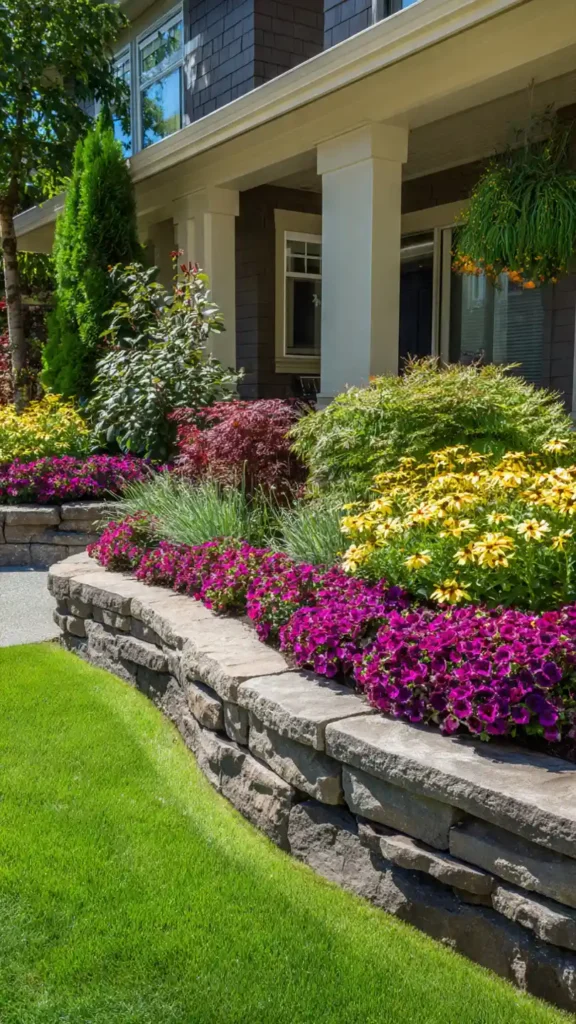
A raised flower bed adds depth and structure to the front of your home. Using natural stone or stacked blocks to lift the planting area slightly makes the bed stand out against the lawn. Layer shrubs toward the back and colorful flowers in front for balance. The elevation also improves drainage and keeps the bed looking tidy.
Why It Works: Raised beds create clean definition and make even simple plantings feel intentional.
Best For: Homes with uneven ground or sloped front yards.
Pro Tip: Keep the height moderate 6 to 12 inches is usually enough for a polished look without overwhelming the space.
7. Modern Minimalist Front Flower Bed
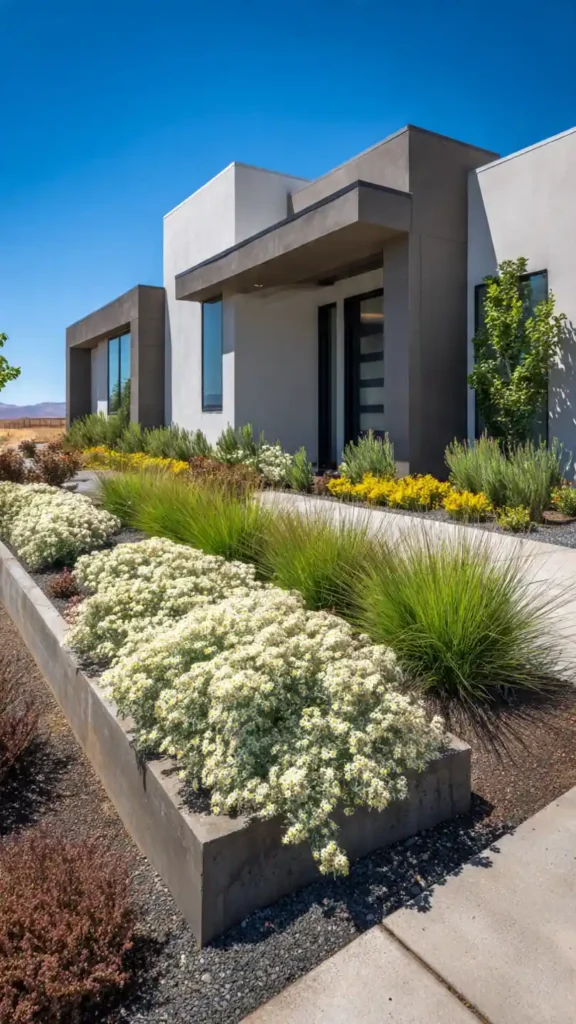
A minimalist flower bed focuses on clean lines and limited plant varieties. Choose structured shrubs or ornamental grasses and repeat them evenly across the bed. Keep borders straight and spacing consistent. Neutral-toned mulch or gravel enhances the contemporary look.
Why It Works: Simplicity creates a calm, organized appearance that complements modern architecture.
Best For: Contemporary homes or houses with neutral exterior colors.
Pro Tip: Stick to one or two plant types and avoid mixing too many colors to maintain a sleek finish.
8. Cottage Style Front Yard Flower Bed
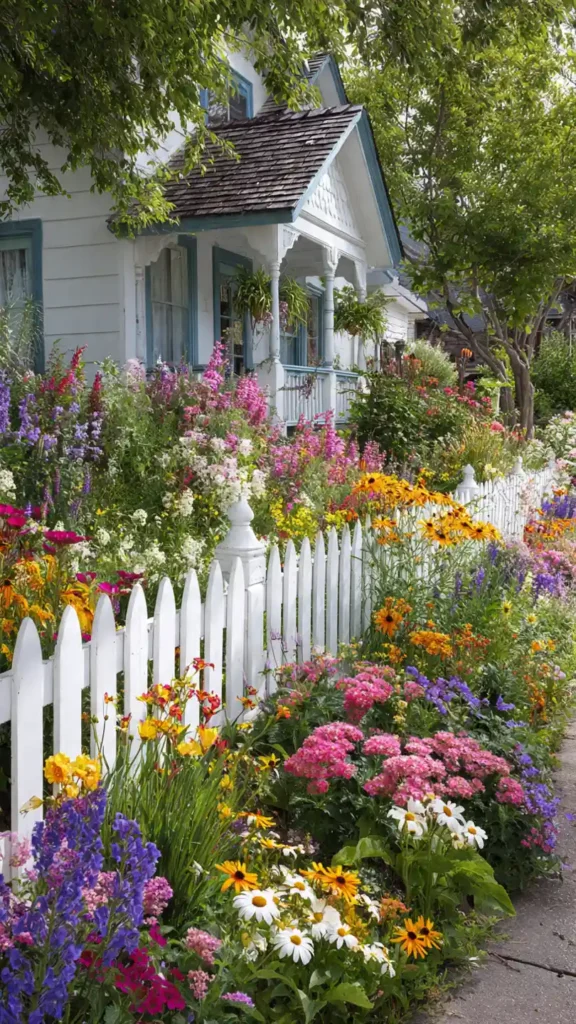
A cottage-style bed feels lush and welcoming. Layer colorful blooms closely together for a full, natural look. Mix soft pastels with greenery and allow plants to overlap slightly. A small decorative fence or natural stone edging adds charm.
Why It Works: Dense planting creates depth and warmth, making the front of your house feel inviting.
Best For: Older homes, brick houses, or charming suburban properties.
Pro Tip: Balance fullness with airflow don’t plant too tightly against walls to avoid moisture buildup.
9. Front Porch Flower Bed with Potted Accents
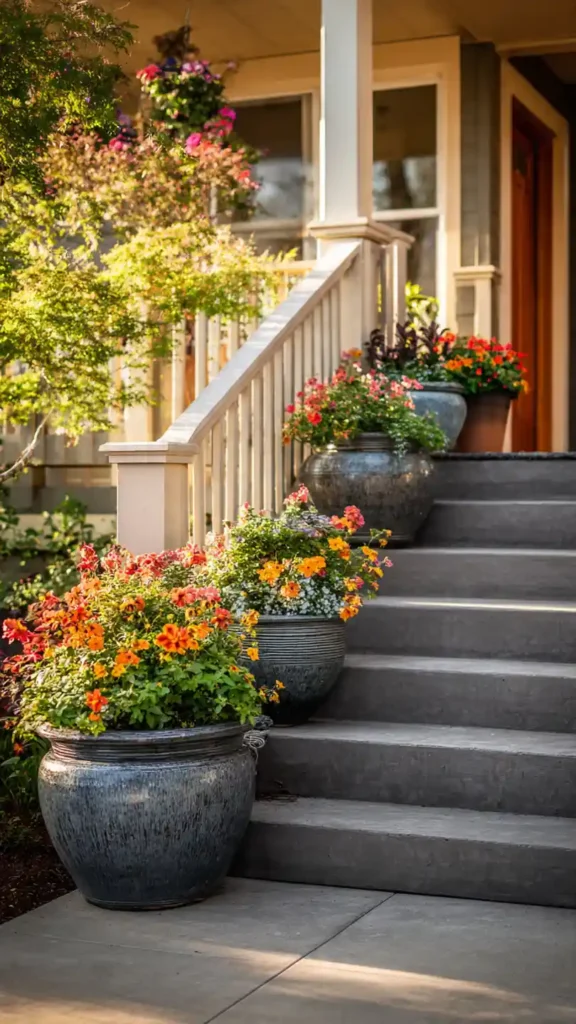
Blending in-ground planting with decorative pots near the porch steps adds height variation. Use taller plants in containers near columns and lower blooms in the bed itself. Coordinating pot colors with your home exterior keeps everything cohesive.
Why It Works: Layering heights draws attention to the entrance and makes the porch feel connected to the yard.
Best For: Homes with small porches that need added visual interest.
Pro Tip: Choose lightweight planters if you plan to rearrange seasonally.
10. Narrow Flower Bed Along the Walkway
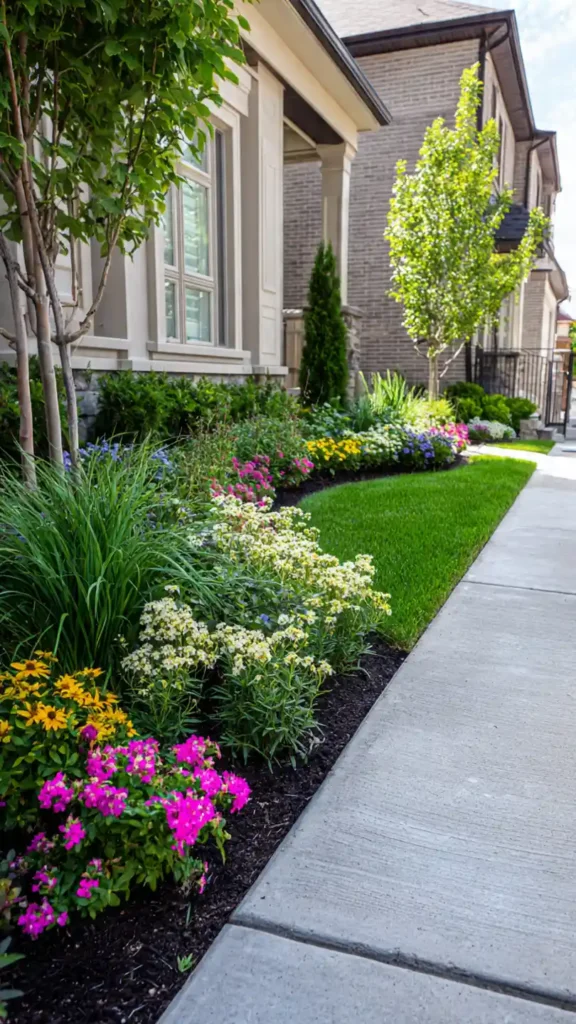
If your front yard is limited, a slim flower bed along the walkway adds charm without reducing lawn space. Use compact plants that won’t spill into the path. Repeating the same flower along the entire border keeps it tidy and structured.
Why It Works: Defined edges make the walkway feel intentional and improve overall curb appeal.
Best For: Townhouses or homes with narrow front lawns.
Pro Tip: Leave at least a few inches between plants and the path to prevent overgrowth blocking foot traffic.
11. Flower Bed with Decorative Brick Border
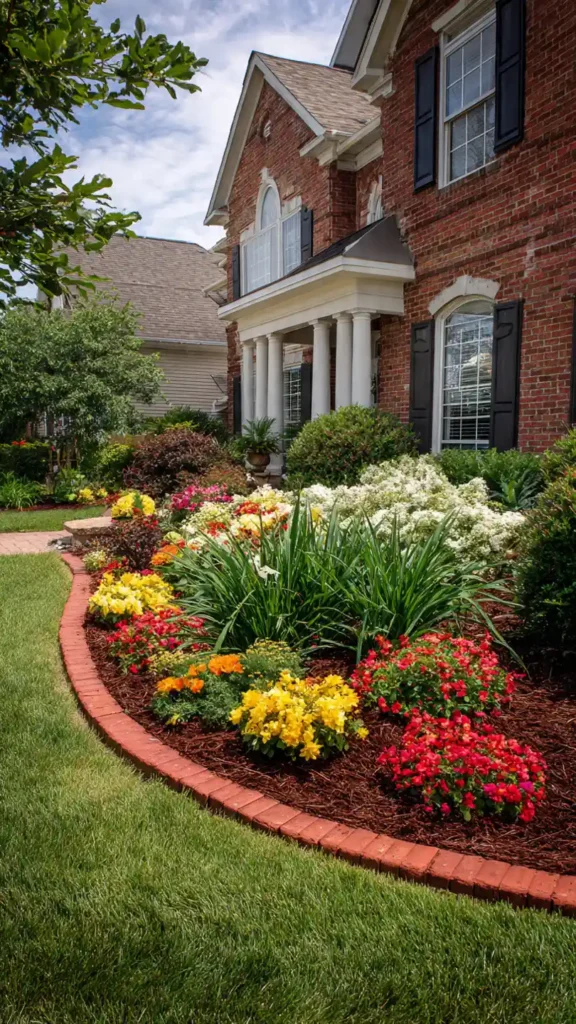
Adding a brick border instantly defines your flower bed and keeps the lawn from creeping in. Lay bricks evenly and slightly above soil level to create a clear separation. Fill the bed with layered flowers and low shrubs to contrast against the warm brick tones. This small detail makes the entire front yard look more structured.
Why It Works: Strong edging gives the bed a finished look and reduces maintenance.
Best For: Brick homes or traditional-style houses.
Pro Tip: Match the brick tone to your home exterior for a cohesive appearance.
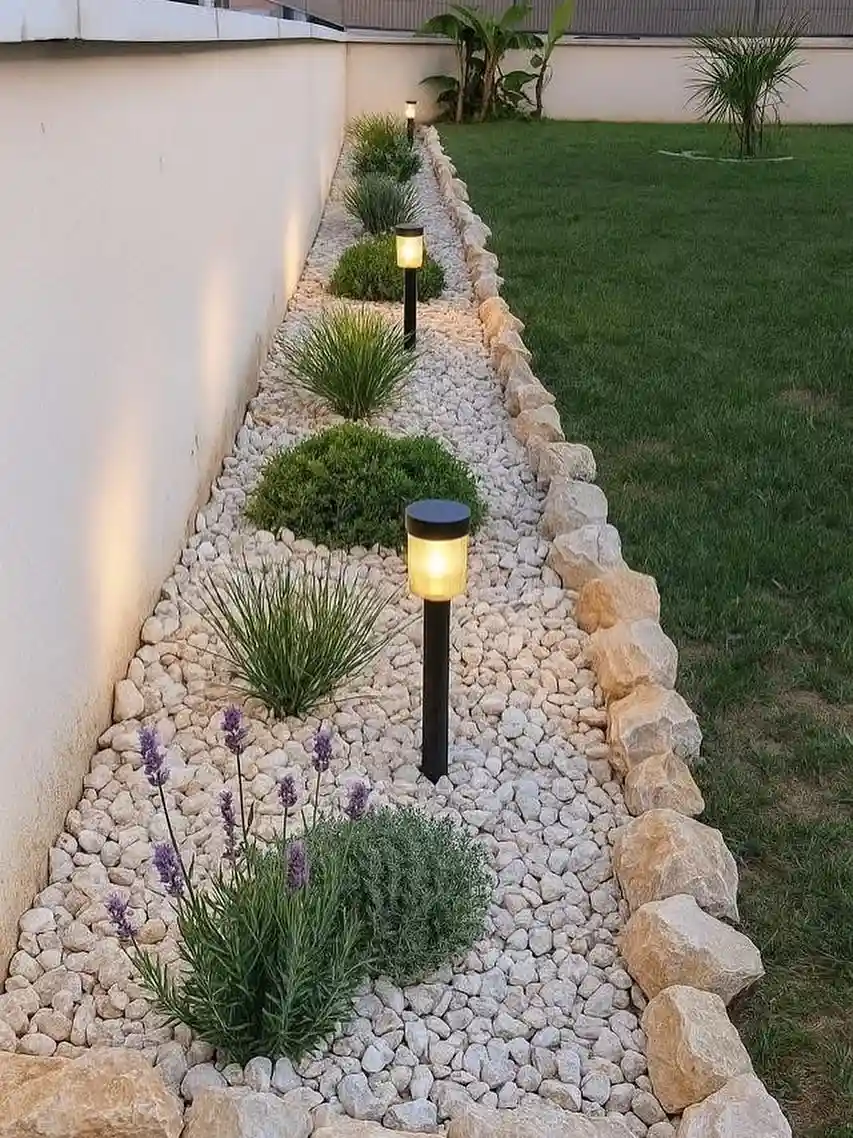
12. Rock and Flower Combination Bed
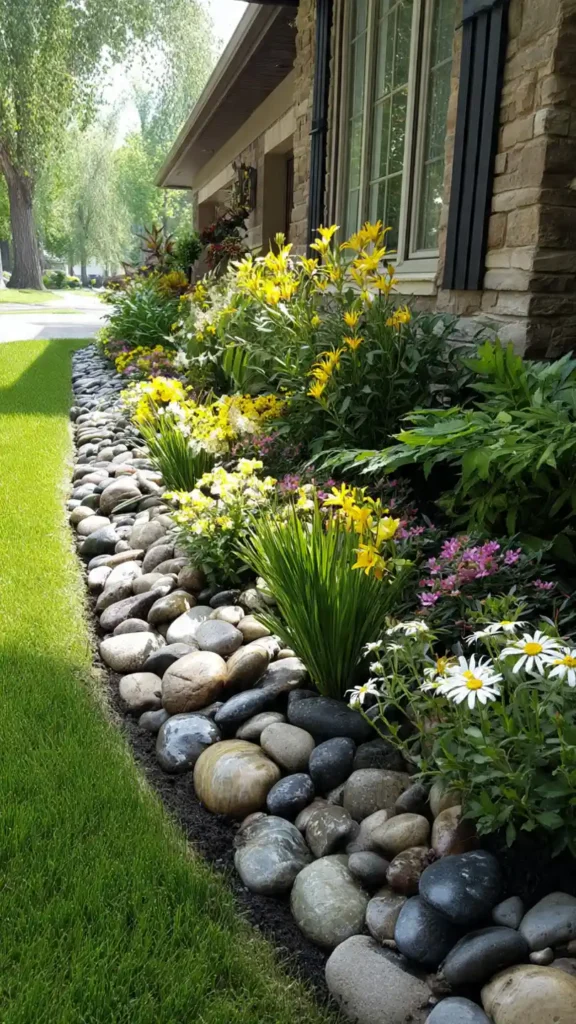
Mixing decorative rocks with flowers adds texture while lowering upkeep. Use stones around shrubs and create small clusters of blooms between them. This keeps the bed visually interesting without feeling crowded. Choose neutral rock colors so the flowers remain the focal point.
Why It Works: Rocks help retain moisture and reduce weeds while adding contrast.
Best For: Hot climates or areas where mulch fades quickly.
Pro Tip: Avoid covering the entire bed with rock leave room for soil so plants can thrive.
13. Shade-Friendly Flower Bed Under Windows
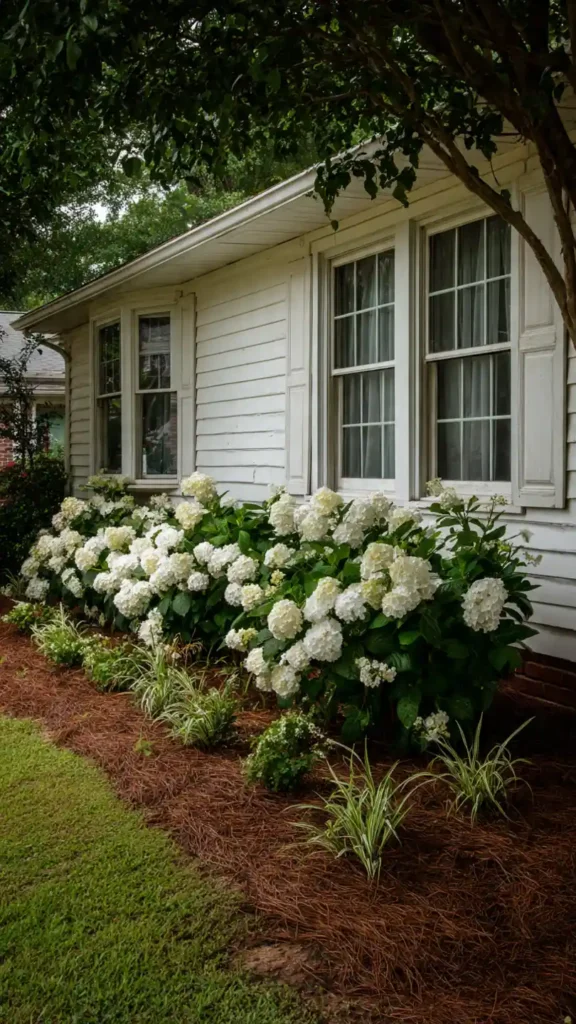
If your front windows don’t get direct sunlight, choose shade-tolerant plants with lighter blooms to brighten the space. Keep plants low enough so they don’t block light into your home. A neat mulch base keeps everything clean and defined.
Why It Works: Using the right plants prevents struggling growth and keeps the bed healthy.
Best For: North-facing homes or houses with deep overhangs.
Pro Tip: Check sunlight patterns throughout the day before choosing plants.
14. Front Yard Corner Flower Bed Design
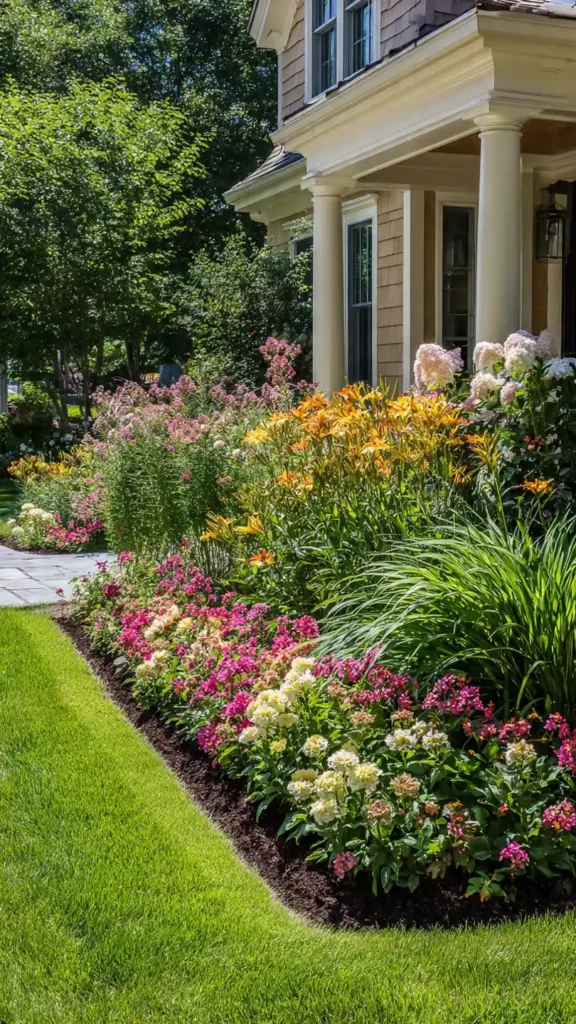
Front lawn corners are often unused but perfect for a triangular or curved flower bed. Place taller shrubs at the back corner and gradually lower plants toward the lawn. This creates a layered look that fills empty space without overwhelming the yard.
Why It Works: Corner beds balance open lawns and add depth to the overall landscape.
Best For: Wide front yards or corner lots.
Pro Tip: Keep the bed proportional to the yard size so it doesn’t look oversized.
15. Evergreen and Flower Mixed Bed
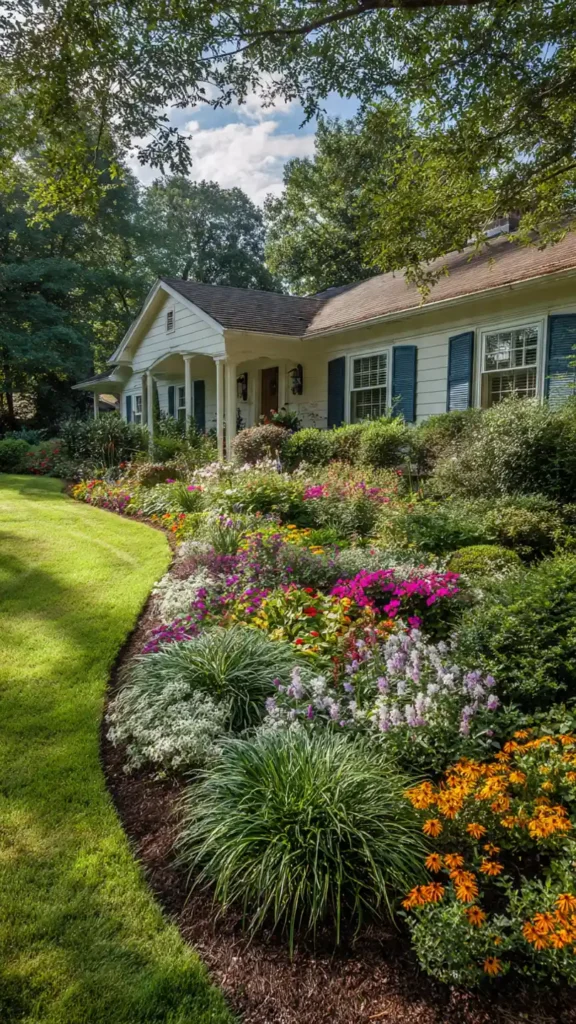
Combining evergreen shrubs with seasonal flowers keeps the bed looking attractive year-round. Evergreens provide structure during colder months, while flowers add color in spring and summer. Arrange shrubs first to create a backbone, then fill gaps with blooms.
Why It Works: This approach ensures the bed never looks empty, even off-season.
Best For: Homes in regions with changing seasons.
Pro Tip: Space shrubs properly at planting time to avoid overcrowding later.
16. Front Driveway Border Flower Bed
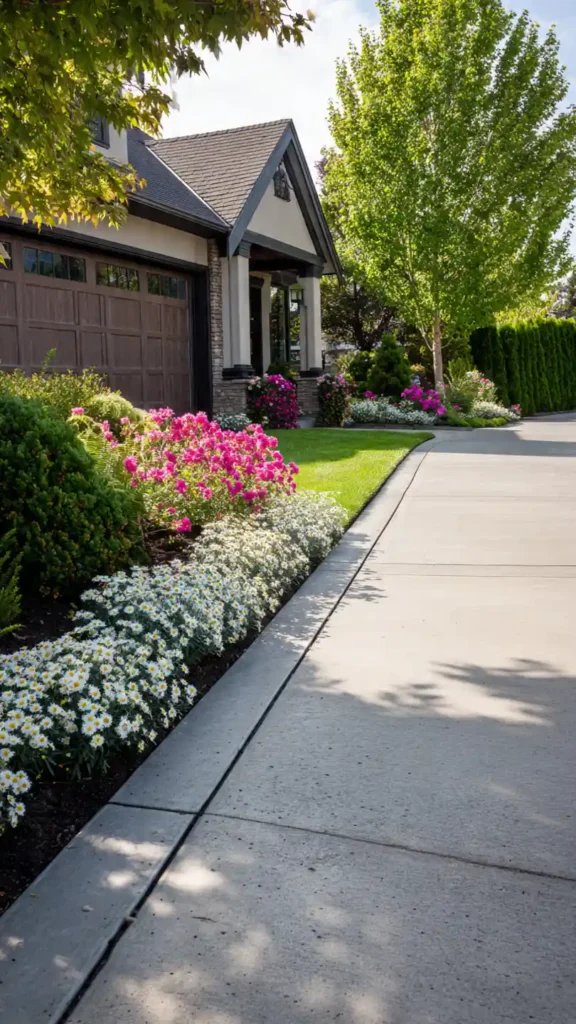
Planting along the driveway edge creates a clean boundary and upgrades the entrance instantly. Keep the bed narrow and use low-growing flowers so car doors can open easily. Repeating the same plant type along the entire stretch keeps the design neat and structured. Add mulch or small edging stones to clearly separate it from the lawn.
Why It Works: It frames the driveway and makes the whole property feel more polished.
Best For: Homes with long or plain concrete driveways.
Pro Tip: Leave at least 6–8 inches between plants and the driveway to allow for growth.
17. Monochrome Flower Bed for Elegant Curb Appeal
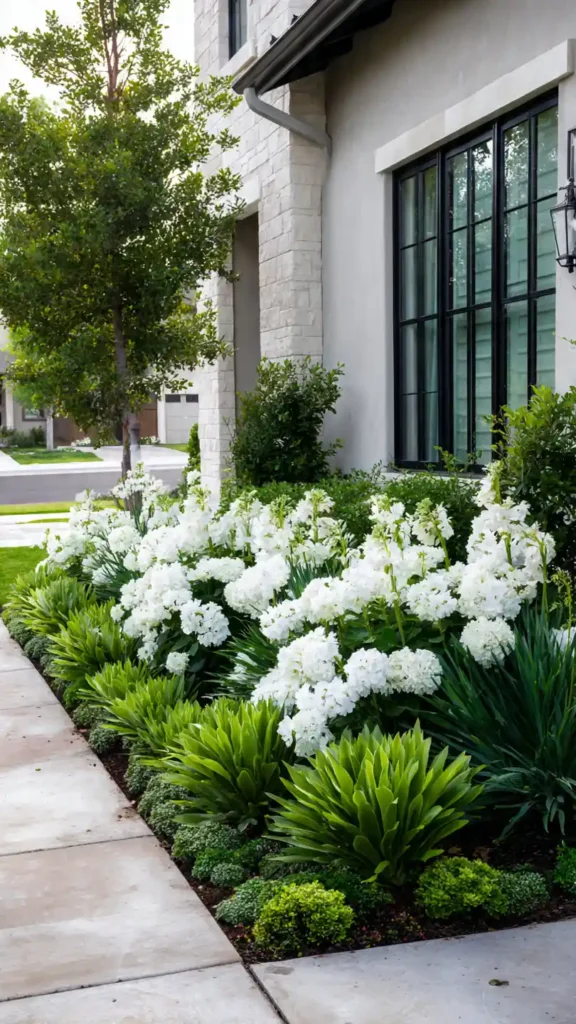
Choosing one color family like all white, soft pink, or purple creates a refined and cohesive look. Pair flowers with green foliage for contrast and avoid mixing too many shades. A monochrome palette feels intentional and clean, especially when combined with neat edging.
Why It Works: Limiting color reduces visual clutter and enhances elegance.
Best For: Modern homes or neutral exterior colors.
Pro Tip: Add subtle texture variation through leaf shapes rather than more flower colors.
18. Tropical Style Front Flower Bed
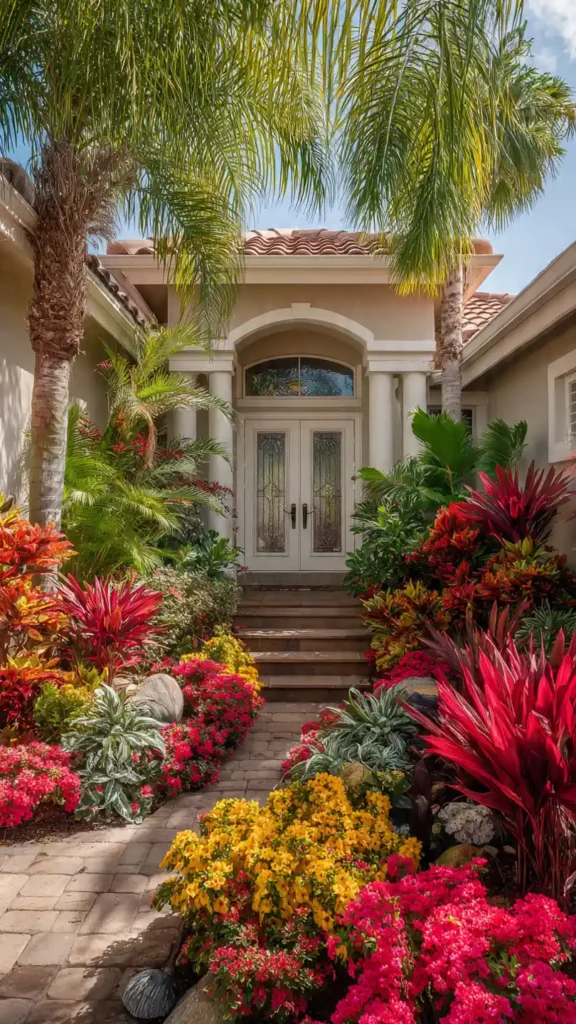
In warmer climates, bold leafy plants and vibrant flowers can transform the front of your home. Use larger foliage plants at the back and bright blooms toward the front. Keep spacing generous so each plant stands out instead of competing for space.
Why It Works: Large leaves and strong colors create instant impact from the street.
Best For: Homes in sunny regions or coastal areas.
Pro Tip: Balance bold plants with structured edging to prevent the bed from looking messy.
19. Small Front Yard Flower Bed for Compact Homes
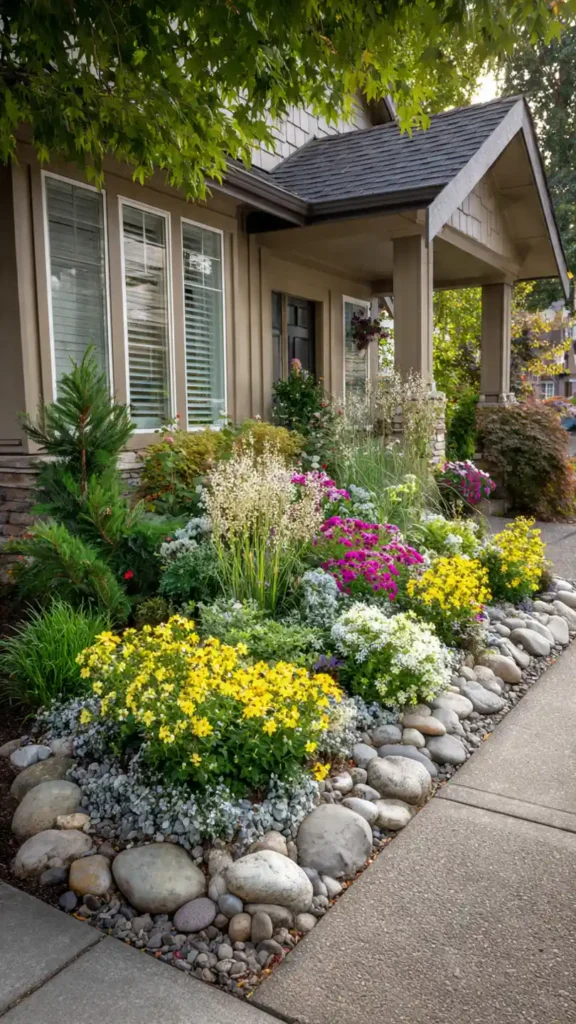
If your front yard is small, keep the bed simple and proportional. Choose two or three plant varieties and repeat them evenly. Clear borders and tidy spacing help the yard feel organized instead of crowded. Even a shallow bed can dramatically improve curb appeal when designed thoughtfully.
Why It Works: Simplicity makes compact spaces feel balanced and open.
Best For: Townhouses or homes with limited lawn space.
Pro Tip: Avoid tall shrubs that overpower the front façade.
20. Tiered Flower Bed on a Sloped Front Yard
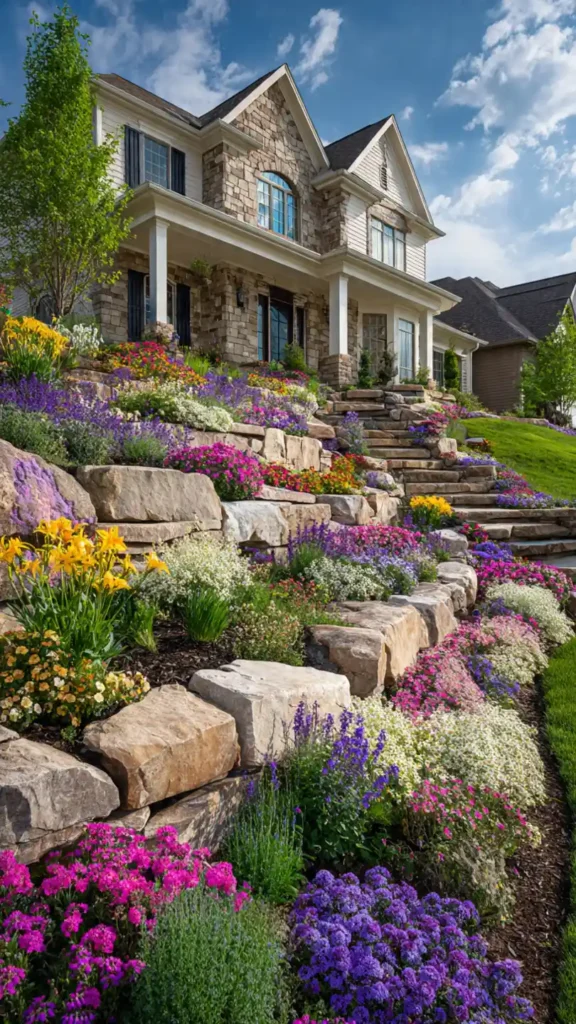
A sloped yard can become a design feature with tiered flower beds. Use stone or retaining blocks to create levels, then plant different flowers on each tier for depth. This prevents soil erosion while making the slope look intentional and structured.
Why It Works: Tiering adds dimension and keeps plants visible from the street.
Best For: Homes built on elevated lots or uneven terrain.
Pro Tip: Install proper drainage behind retaining blocks to protect plant roots.
FAQs
What are the best flowers to plant in front of your house?
The best flowers depend on your climate and sunlight. For sunny front yards, petunias, lavender, salvia, and daylilies work well. For shaded areas, consider hostas, impatiens, or begonias. Mixing perennials with a few seasonal annuals keeps your flower bed looking fresh year-round without constant replanting.
How do I design a front flower bed that looks professional?
Start with layering: tall plants in the back, medium in the middle, and low border flowers in front. Keep your color palette simple and repeat plant types instead of mixing too many varieties. Add clean edging like brick or stone to define the bed. Structure and spacing are what make a flower bed look intentional rather than random.
How wide should a flower bed be in front of a house?
For most homes, a depth of 2 to 4 feet works well. Smaller homes may only need 2–3 feet, while larger façades can handle deeper beds. The key is keeping the bed proportional to the house so it enhances rather than overwhelms the exterior.
What is the lowest maintenance front yard flower bed option?
Choose hardy perennials and evergreen shrubs that thrive in your region. Use mulch to reduce weeds and conserve moisture. Keep plant varieties limited and avoid high-maintenance blooms that require frequent trimming. A structured layout with simple repetition is usually the easiest to maintain.
How can I improve curb appeal on a budget?
Focus on one well-defined flower bed instead of redesigning the entire yard. Add fresh mulch, clean edging, and a few colorful plants near the entryway or mailbox. Even small upgrades, when neat and structured, can dramatically improve the look of your front yard without major landscaping costs.