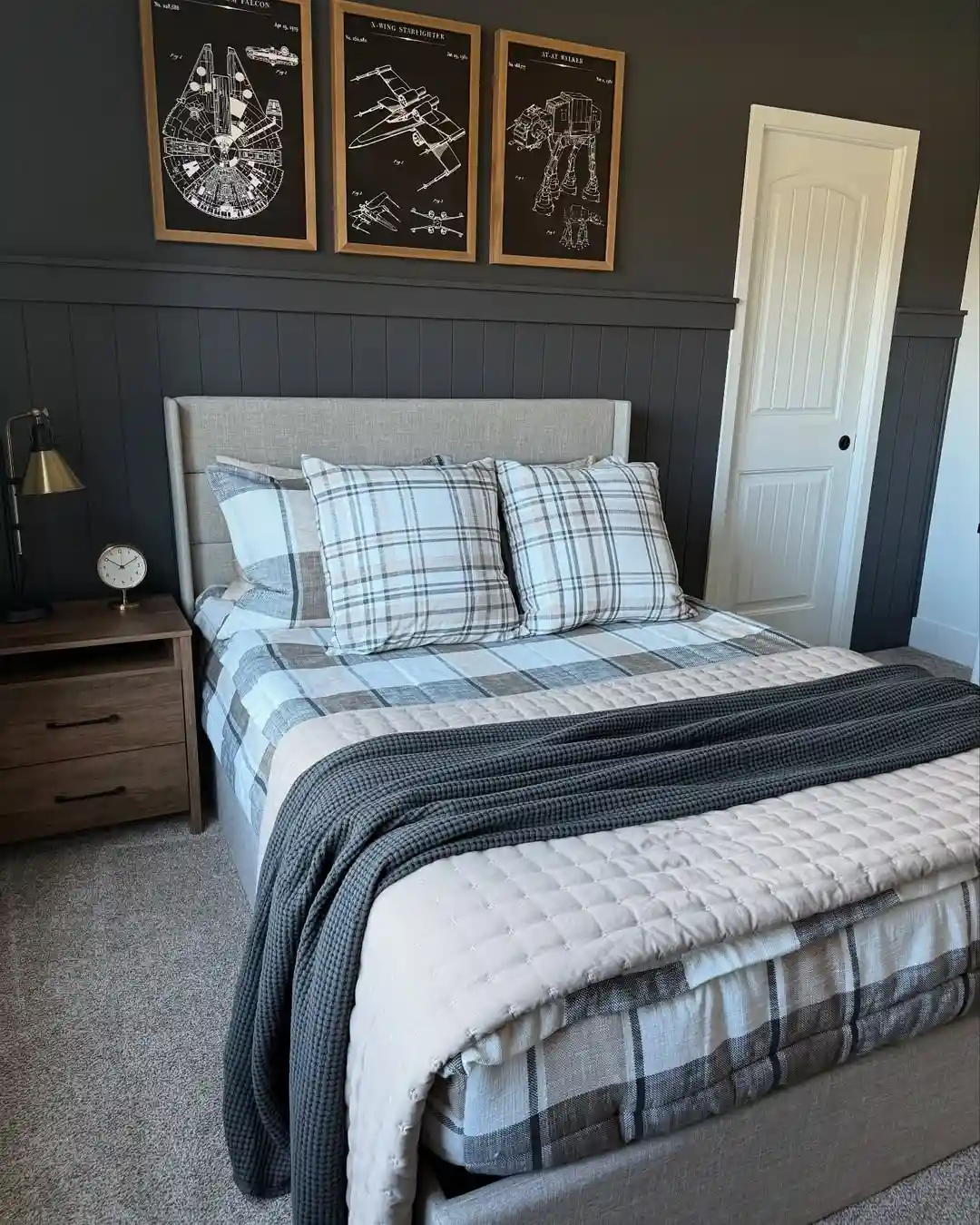
15 No Headboard Bedroom Ideas
A bedroom doesn’t need a headboard to feel complete. In many spaces, leaving it out actually makes the room feel lighter and more relaxed. No headboard bedroom ideas often work best when the focus shifts to mood how the room settles at night, how light moves across the walls, and how the bed fits into the space without feeling boxed in. These ideas explore quiet ways to give the bed presence, using texture, color, light, and layout to create bedrooms that feel intentional, comfortable, and easy to live with.
1. Oversized Statement Art Behind the Bed
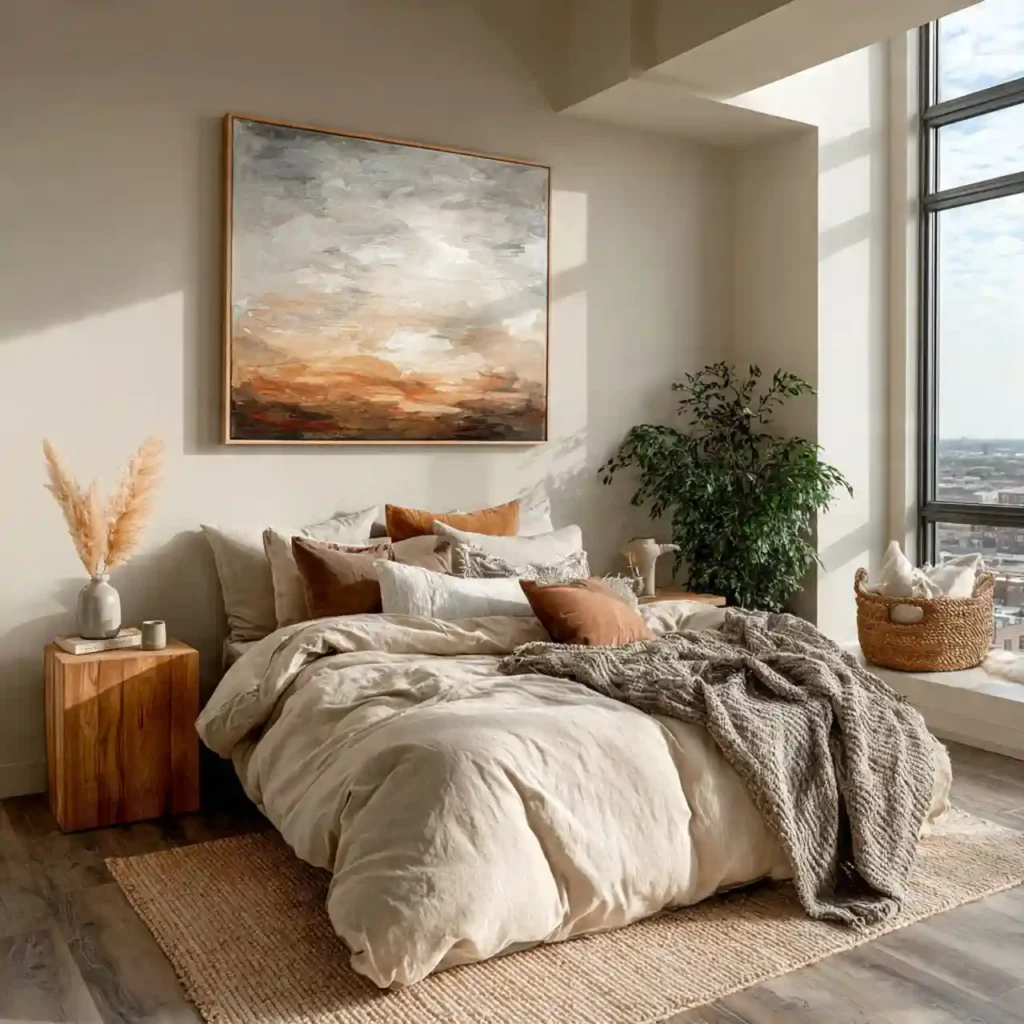
A large piece of art behind the bed changes the way the room settles. It gives the wall something to rest on, so the bed doesn’t feel exposed or unfinished. Instead of acting as furniture, the art feels more like atmosphere. It draws your eye upward and adds quiet personality without crowding the space. This works especially well in bedrooms that lean simple, where one thoughtful element can carry the whole room. The bed feels anchored, but still light, as if the room can breathe around it.
2. Painted Arch or Soft Color Block
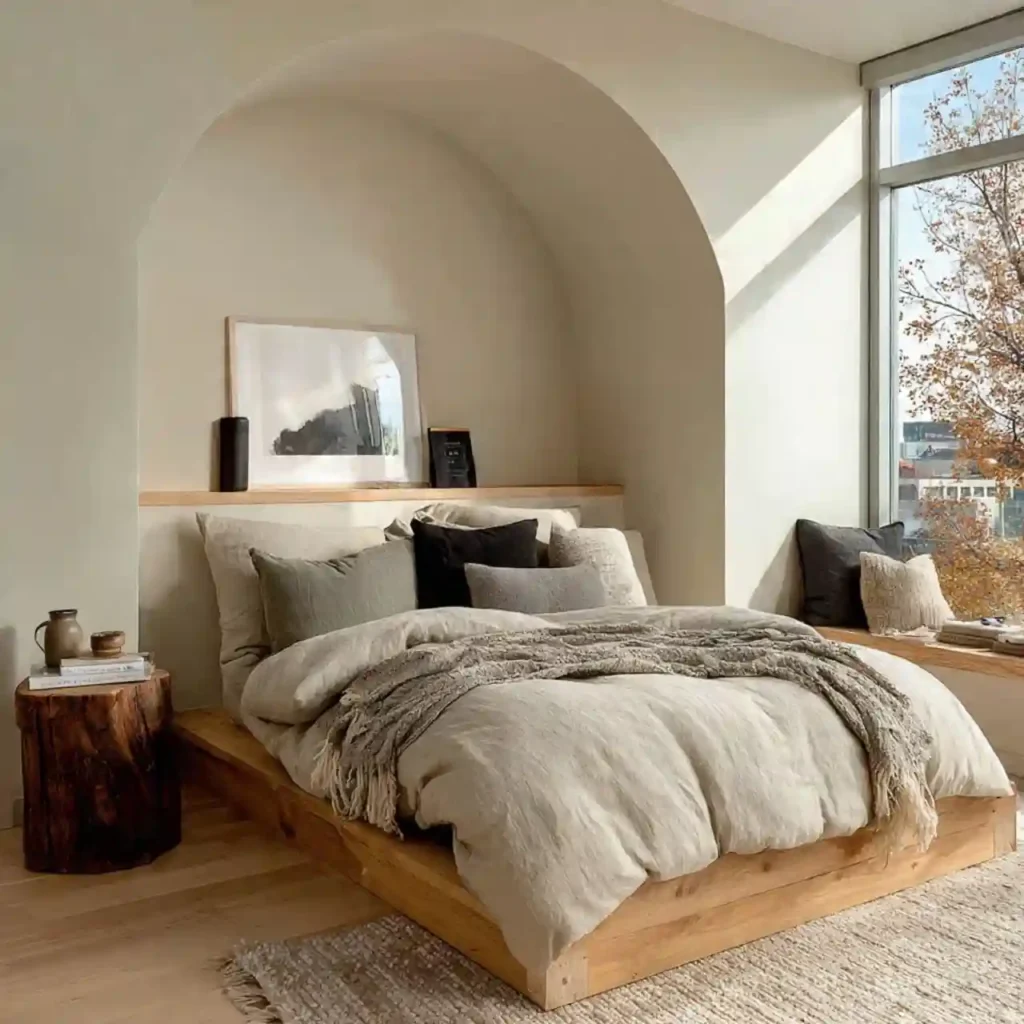
A painted shape behind the bed has a gentle, grounding effect. It creates a sense of place without adding weight or texture. The wall feels considered, but not busy. Because paint sits flat, the room stays open and calm, which is especially comforting in smaller bedrooms. The color quietly frames the bed, helping it feel intentional rather than temporary. It’s the kind of detail you don’t immediately notice, but you’d miss if it wasn’t there.
Read also:
3. Layered Euro Pillows Against the Wall

Stacked pillows soften the entire mood of the bed. Instead of a firm boundary, there’s a sense of ease—like the room is meant to be lived in, not just styled. The wall behind the bed fades into the background, while the bedding takes the lead. This setup feels especially comforting in the evenings, when the bed becomes a place to lean, read, or unwind. It’s flexible, forgiving, and quietly cozy without asking for anything permanent.
4. Floating Shelf Above the Bed
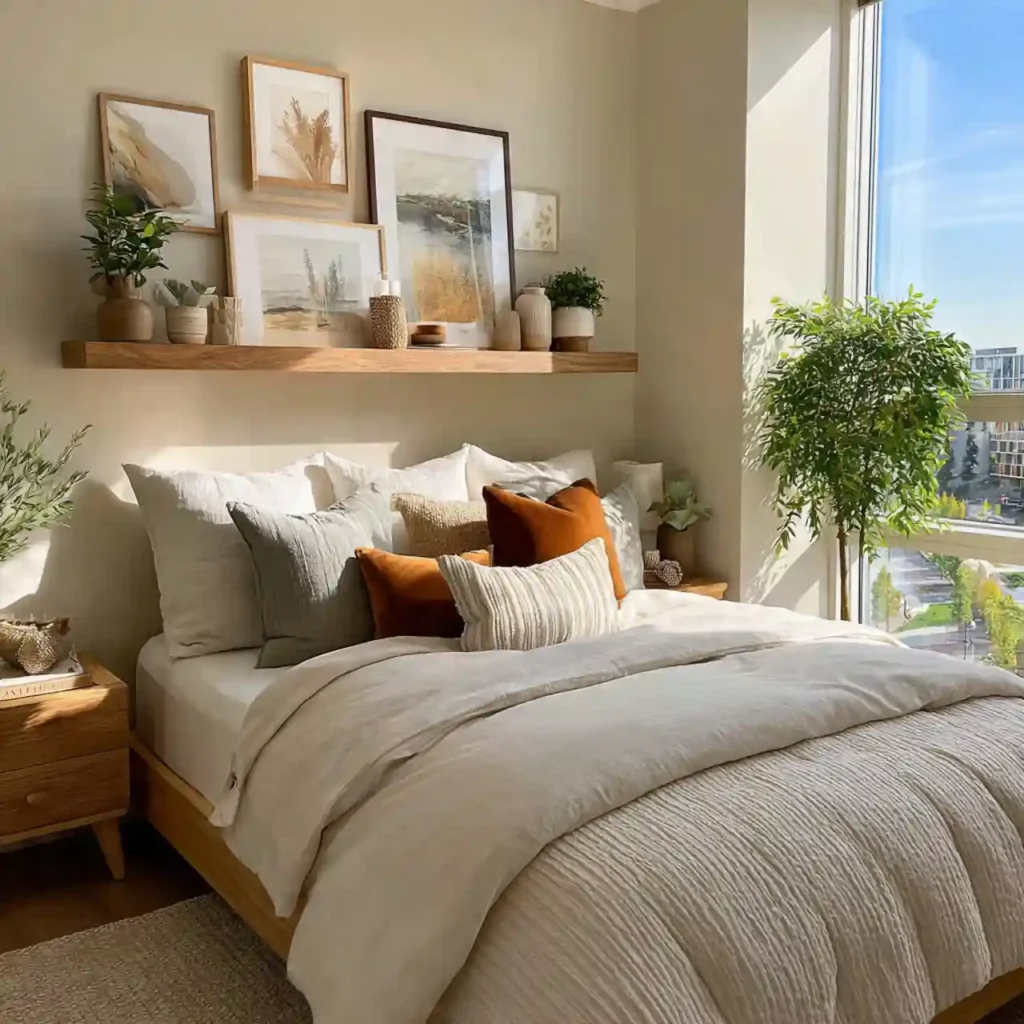
A slim shelf above the bed adds just enough presence to make the space feel balanced. It gives the wall purpose, but keeps the room feeling open. When styled simply, it almost disappears into the background, leaving behind a sense of calm order. A few meaningful objects or framed pieces bring warmth without clutter. The bed feels supported visually, yet nothing feels heavy or fixed. It’s a gentle way to define the space without closing it in.
5. Floor-to-Ceiling Curtains as a Backdrop
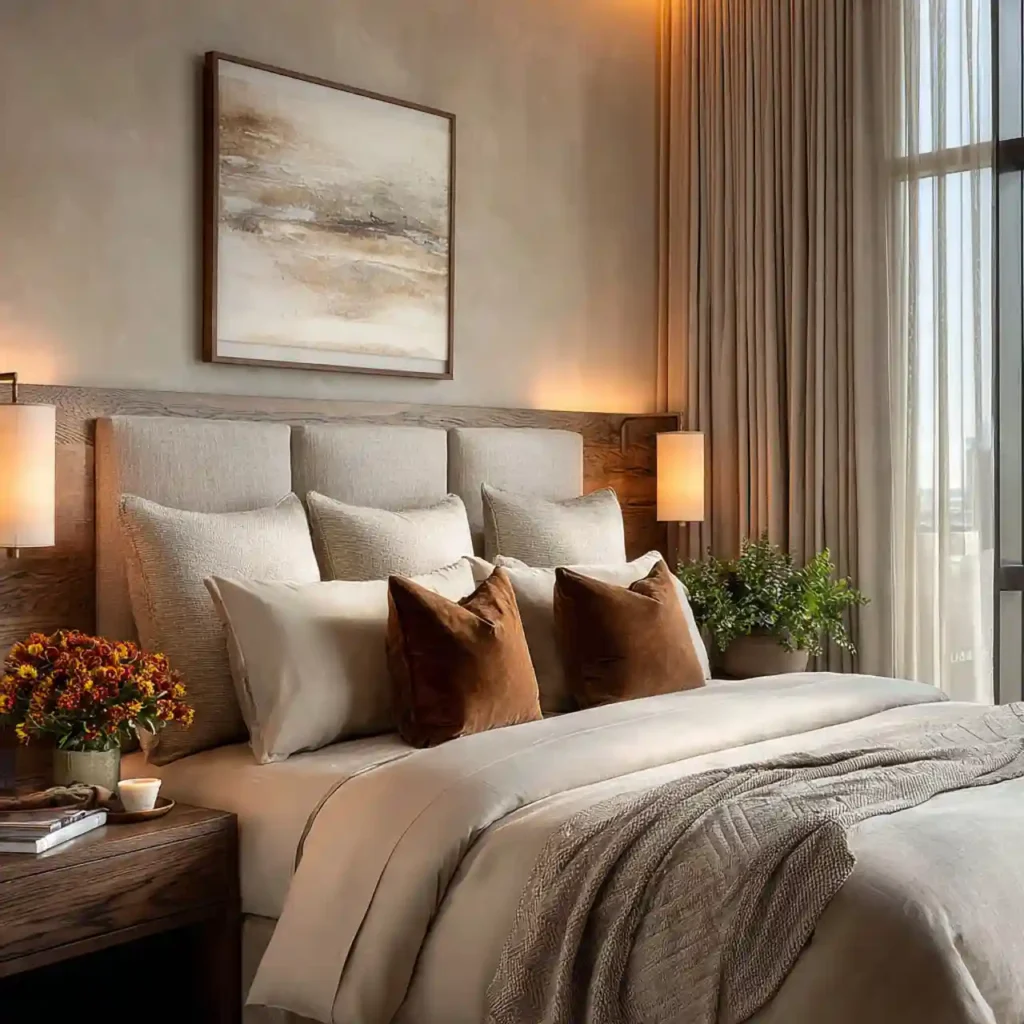
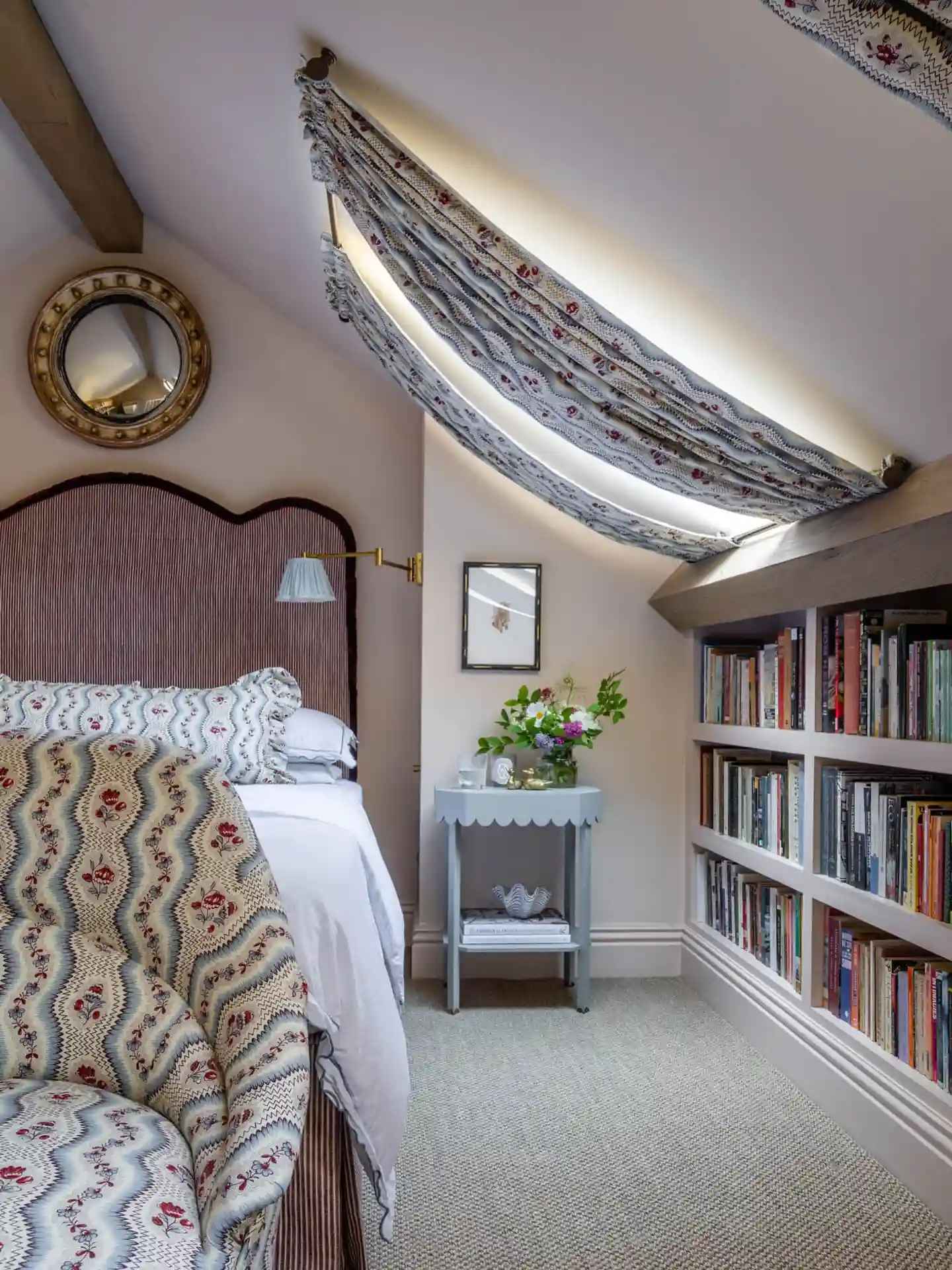
Curtains behind the bed soften everything they touch. They absorb light, reduce visual noise, and make the room feel quieter. Even without a window, fabric adds a sense of comfort that hard surfaces can’t. The bed feels tucked in, almost sheltered, while still staying open and airy. There’s a subtle rhythm when the fabric falls to the floor, which makes the room feel taller and more relaxed. It’s a backdrop that feels calm rather than decorative.
6. Wall Molding or Panel Details
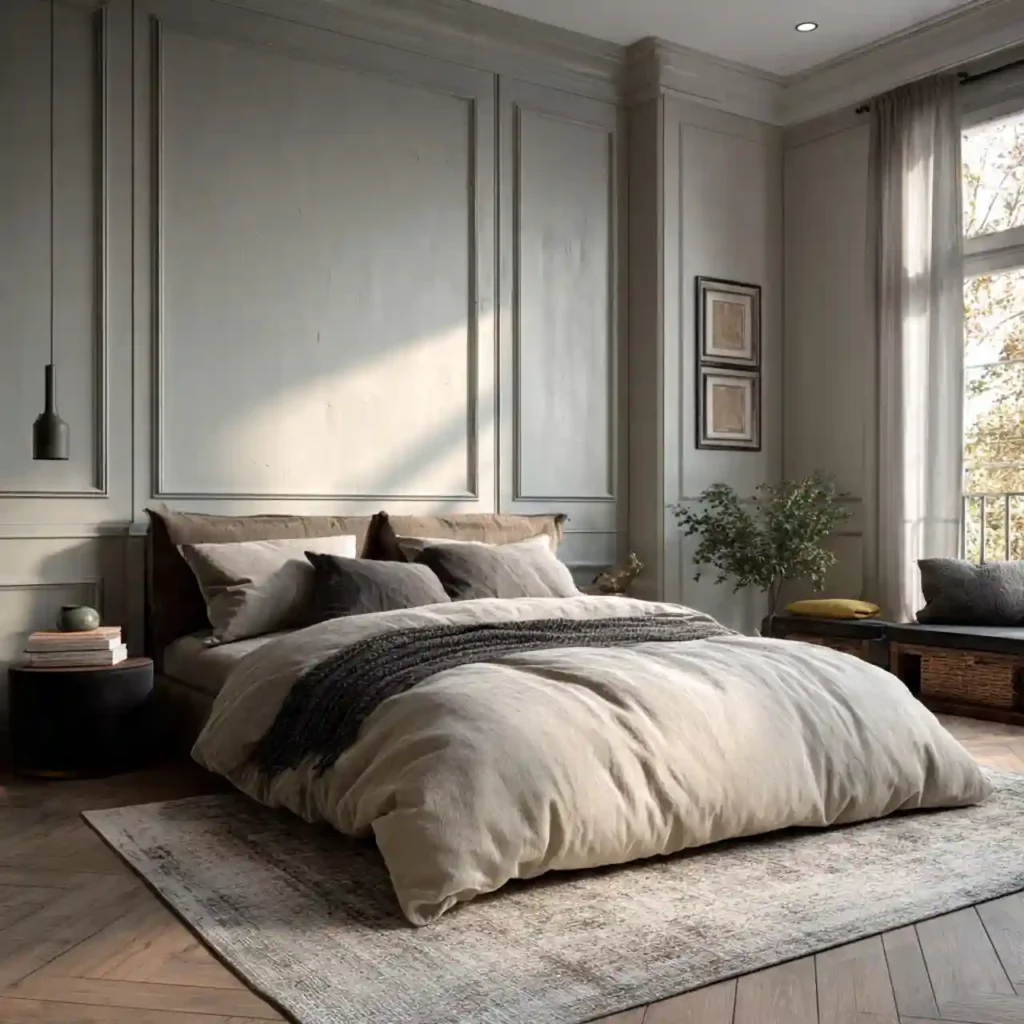
Wall molding brings structure without adding bulk. It gives the wall behind the bed a sense of rhythm and depth, which helps the bed feel grounded. The lines are subtle, so the room stays calm and uncluttered. This approach feels thoughtful rather than styled, like the room has evolved slowly over time. The bed blends into the architecture instead of standing apart from it, which creates a quiet sense of balance.
7. Upholstered Wall Panels
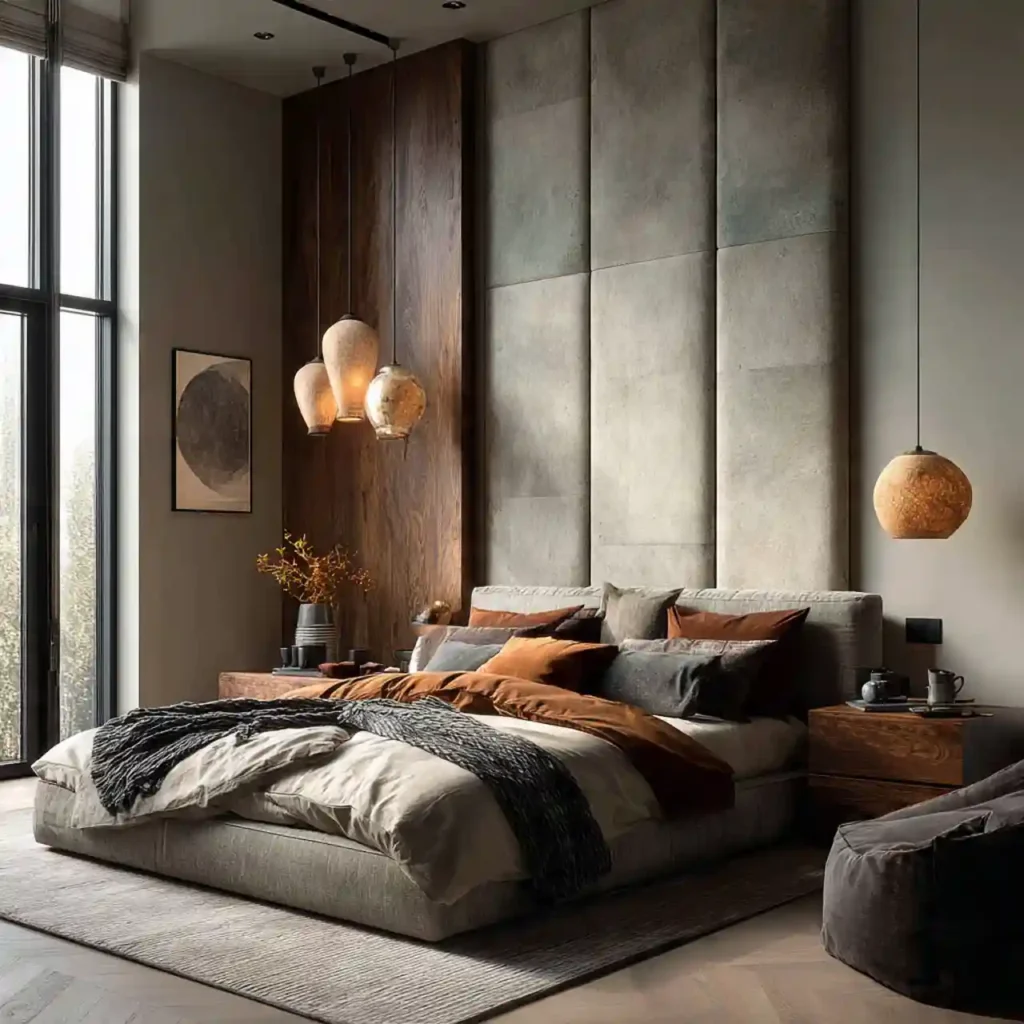
Soft wall panels behind the bed change the way the room feels, not just how it looks. They absorb sound, soften light, and make the bed area feel more restful. There’s a comfort in knowing the wall isn’t hard or cold behind you. The panels don’t compete with the room; they simply make it feel gentler. It’s a subtle choice that adds warmth and ease, especially in bedrooms meant for slow mornings and quiet evenings.
8. Tapestry or Textile Hanging

A fabric hanging introduces warmth in a very natural way. It feels relaxed, slightly imperfect, and personal. The texture breaks up the wall without making it feel busy, and the bed settles into the space more comfortably. This kind of backdrop often feels collected rather than designed, which gives the room a lived-in calm. The softness of the fabric helps the space feel less rigid, more forgiving, and quietly expressive.
9. Low Platform Bed with a Strong Frame
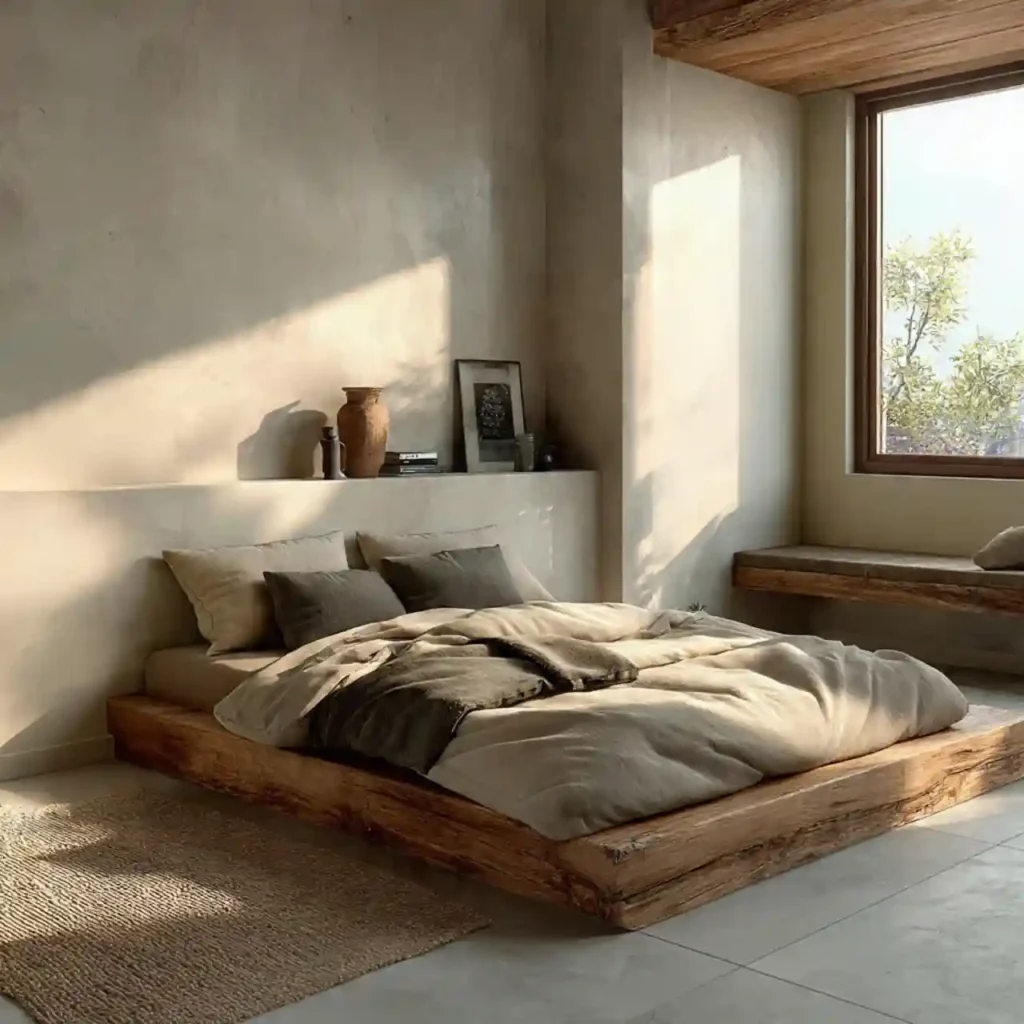
A low bed changes the whole balance of the room. With less height, the space feels grounded and calm, and the wall behind the bed doesn’t need to work as hard. The bed becomes part of the room rather than the main feature. Clean lines and solid materials give a sense of stability without drawing attention. Everything feels intentional, but nothing feels forced, which creates a peaceful, settled atmosphere.
10. Wall Sconces Framing the Bed

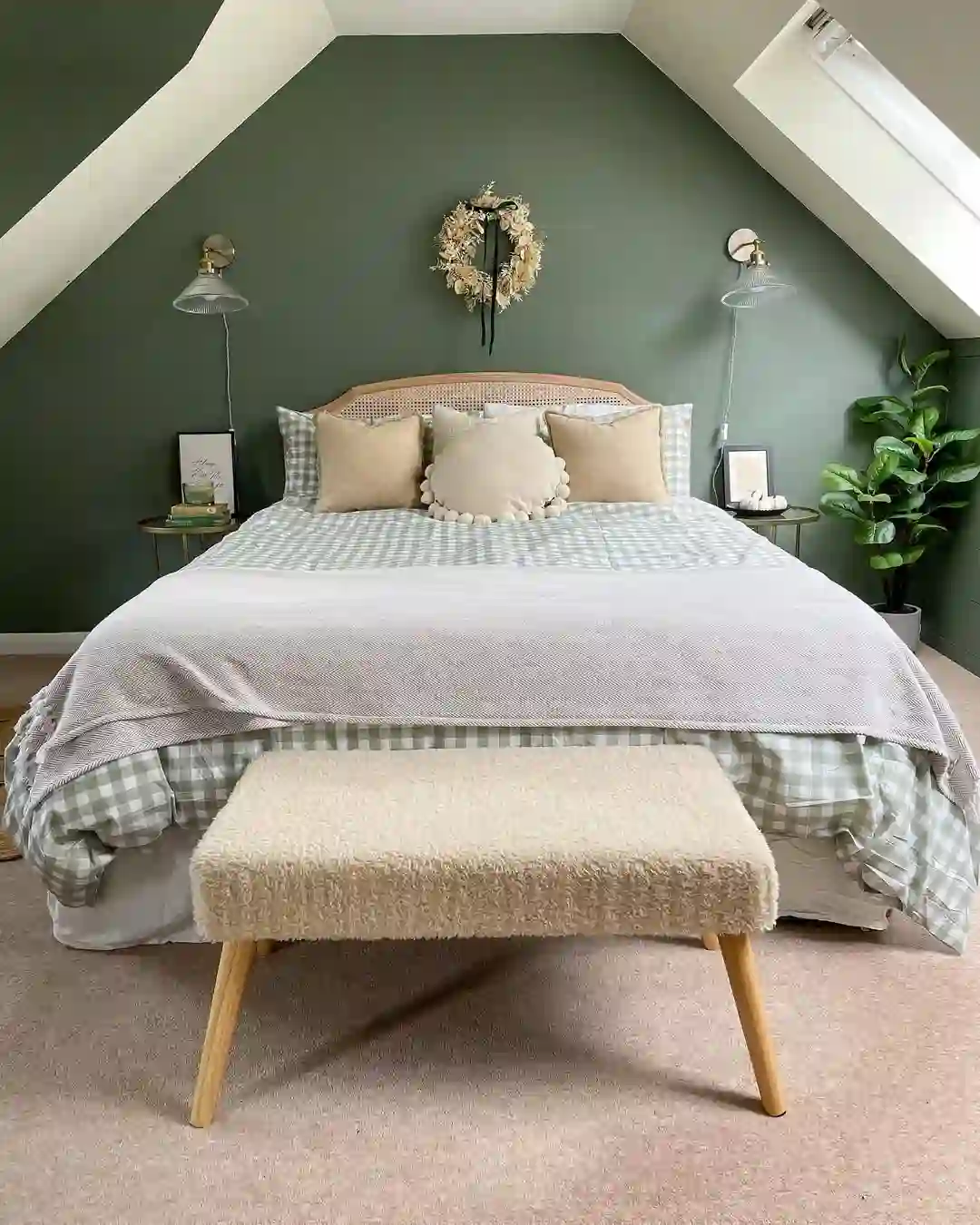
Lighting placed on either side of the bed creates a sense of symmetry that feels comforting. The wall doesn’t feel empty because the light defines the space softly. At night, the glow feels calm and contained, making the bed feel like a natural resting place. During the day, the fixtures quietly hold their place without demanding attention. It’s a subtle way to give the bed structure without adding visual weight.
11. Bed Positioned Under a Window
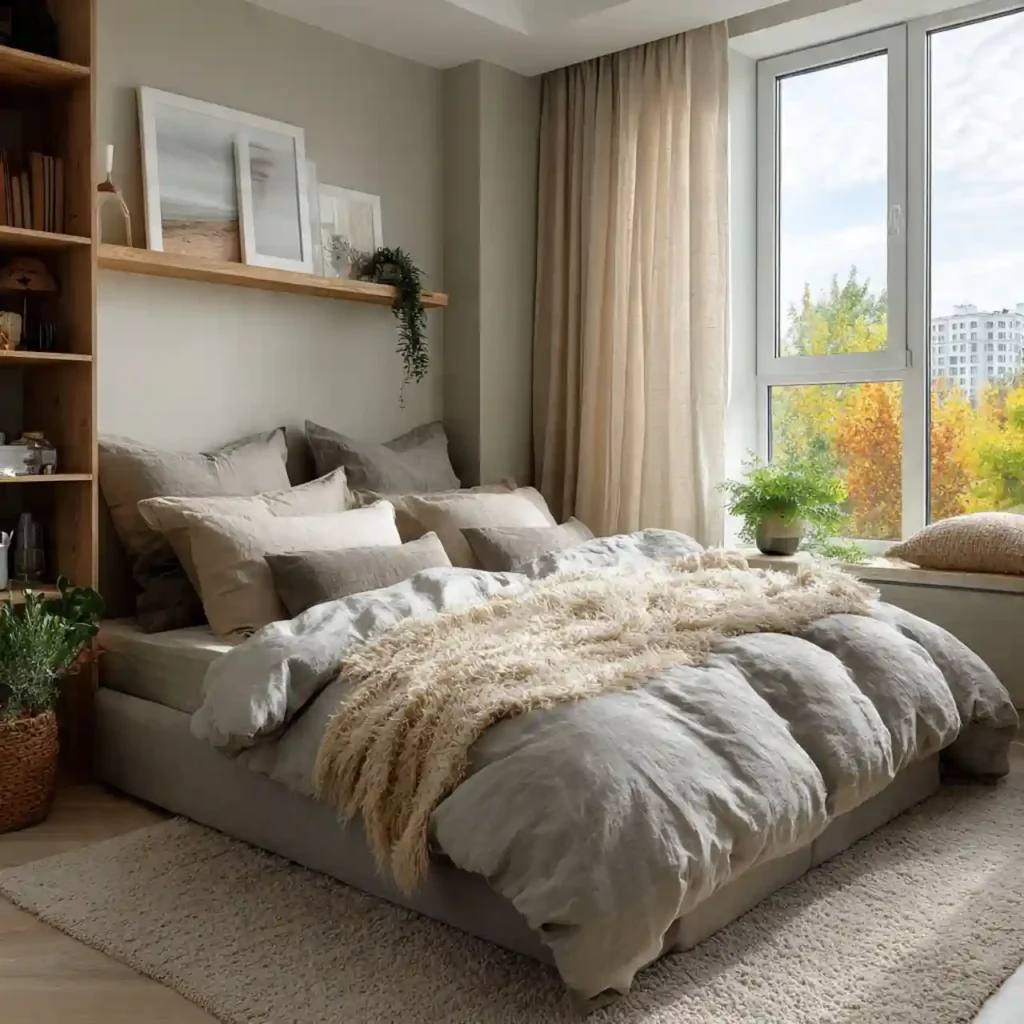
When the bed sits beneath a window, the room naturally finds its balance. Light becomes the backdrop, changing gently throughout the day. Curtains or shades soften the connection between the bed and the wall, making the space feel open but protected. There’s a quiet harmony when the bed aligns with the window, as if it was always meant to be there. The room feels airy, calm, and thoughtfully arranged.
12. Gallery Wall Above the Bed
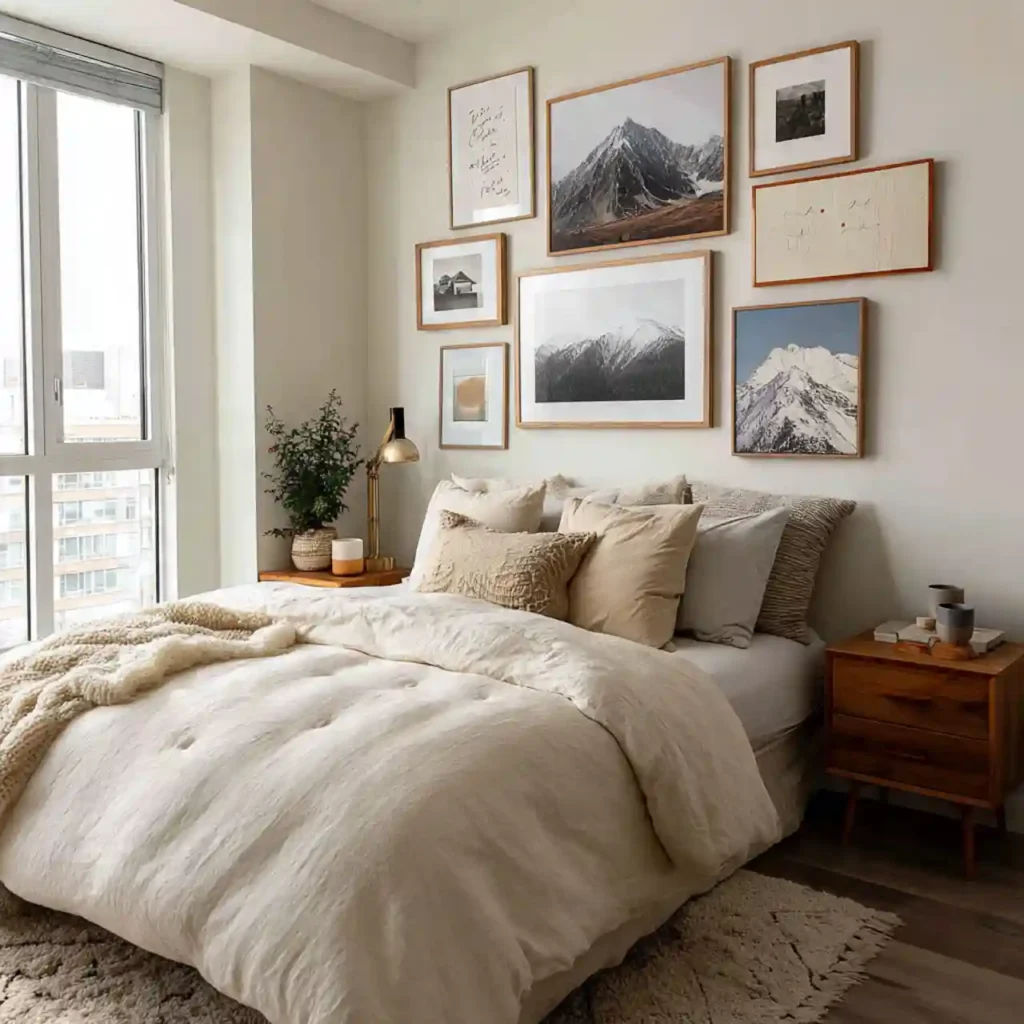
A small gallery above the bed adds presence without heaviness. Each piece contributes a little, rather than one element doing all the work. The wall feels personal and settled, as if it’s been added to slowly over time. The bed benefits from the visual weight above it, but nothing feels overwhelming. When the frames are simple and spaced with care, the room stays calm and balanced.
13. Leaning Art or Mirror on the Floor
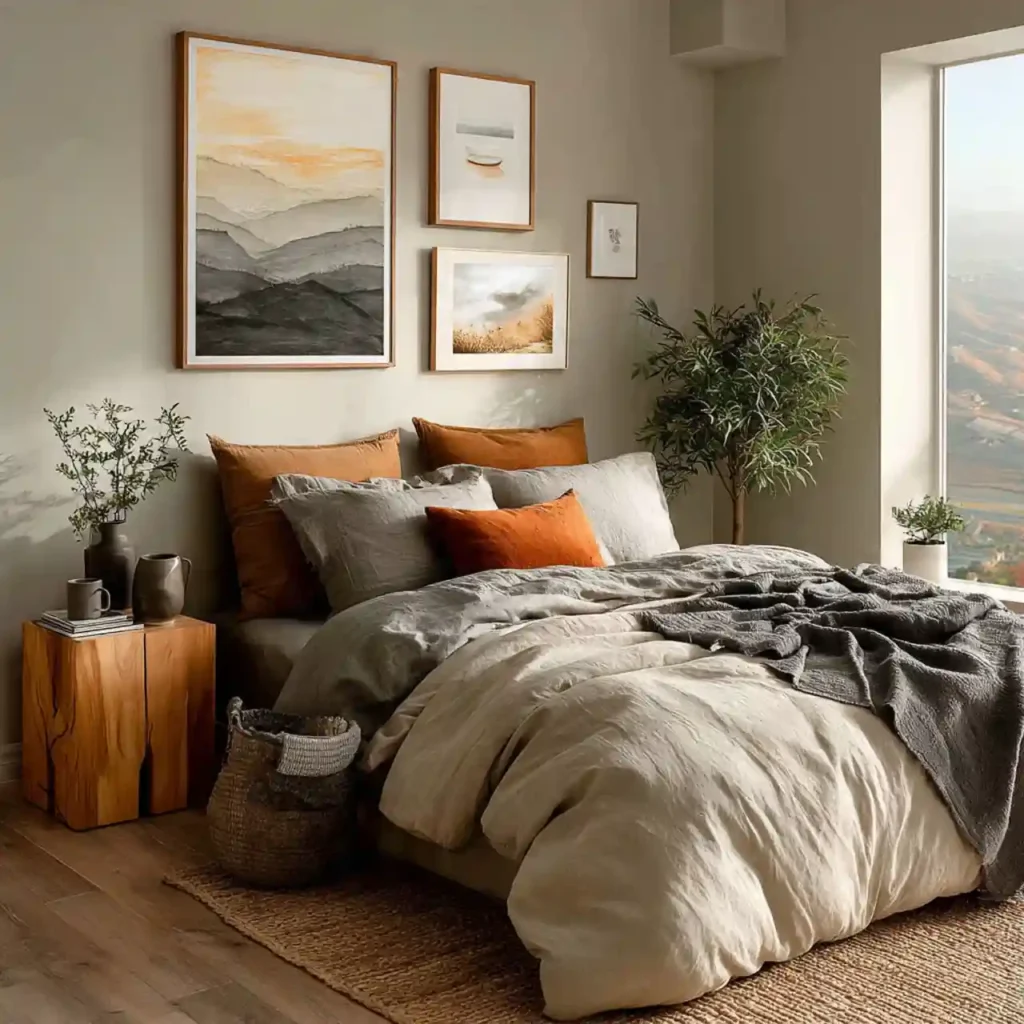
Leaning art behind the bed feels relaxed and unforced. Nothing is fixed, which gives the room a flexible, lived-in quality. The height of the piece helps the bed feel anchored, while the angle keeps it soft and informal. This approach works well in bedrooms that don’t want to feel overly designed. The space feels open to change, which brings a quiet sense of ease.
14. Textured Wallpaper Feature Wall

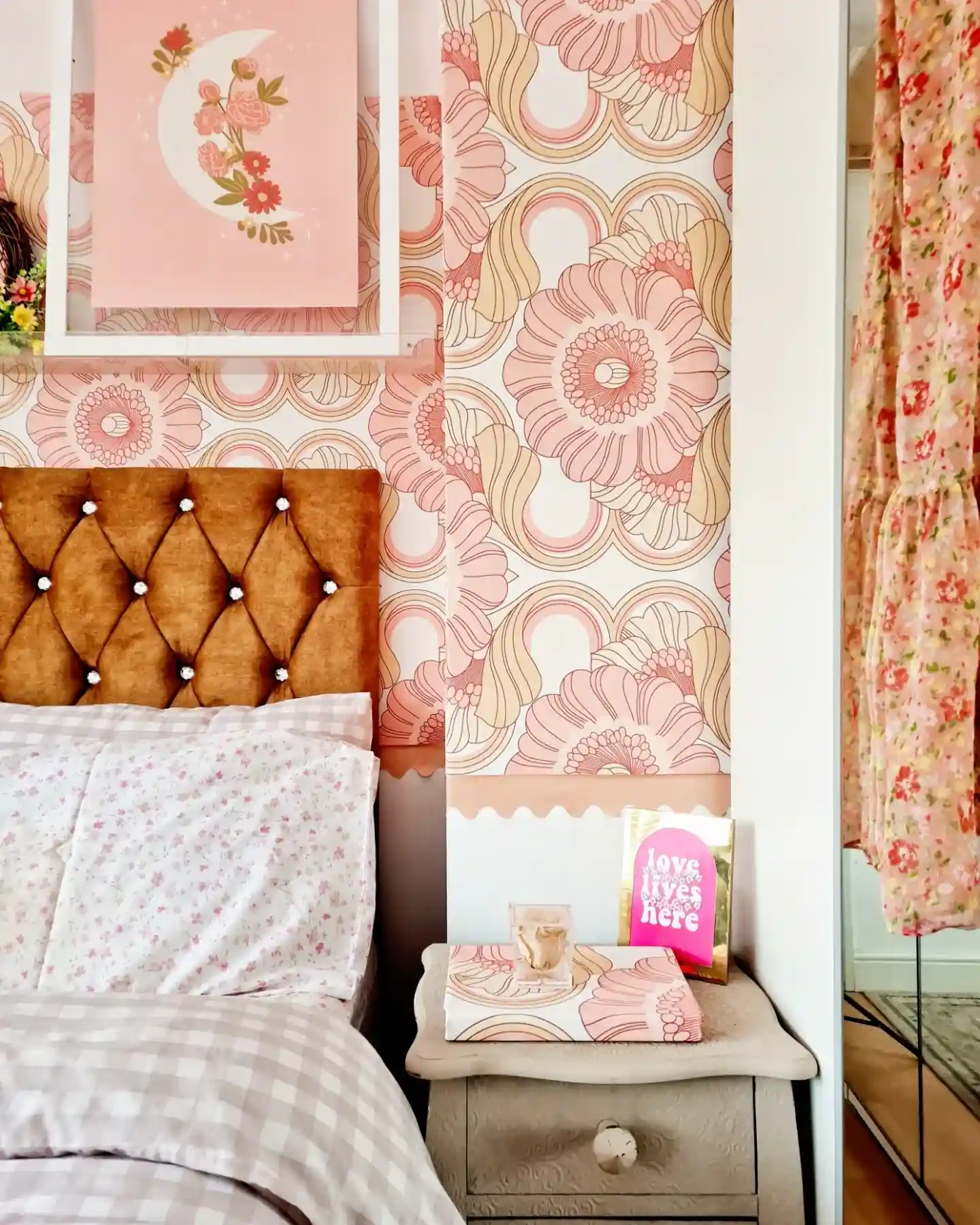
Textured wallpaper adds depth without shouting for attention. It changes how light moves across the wall, which gives the room a softer feel. The bed benefits from the added warmth behind it, even though there’s no physical structure. Subtle patterns or natural textures help the space feel calm and layered. It’s the kind of background that supports the room rather than defining it.
15. Layered Lighting as the Focus

When lighting becomes the focal point, the absence of a headboard barely registers. Soft overhead lights, warm bedside lamps, or gentle pendants create a sense of enclosure around the bed. The glow shapes the space emotionally, not visually. The room feels calm in the evenings and balanced during the day. Light replaces structure in a quiet way, making the bedroom feel intentional and deeply restful.